
Barbados Travel Guide — Platinum-Coast Beaches, Bajan Rum & the Atlantic-Wild East
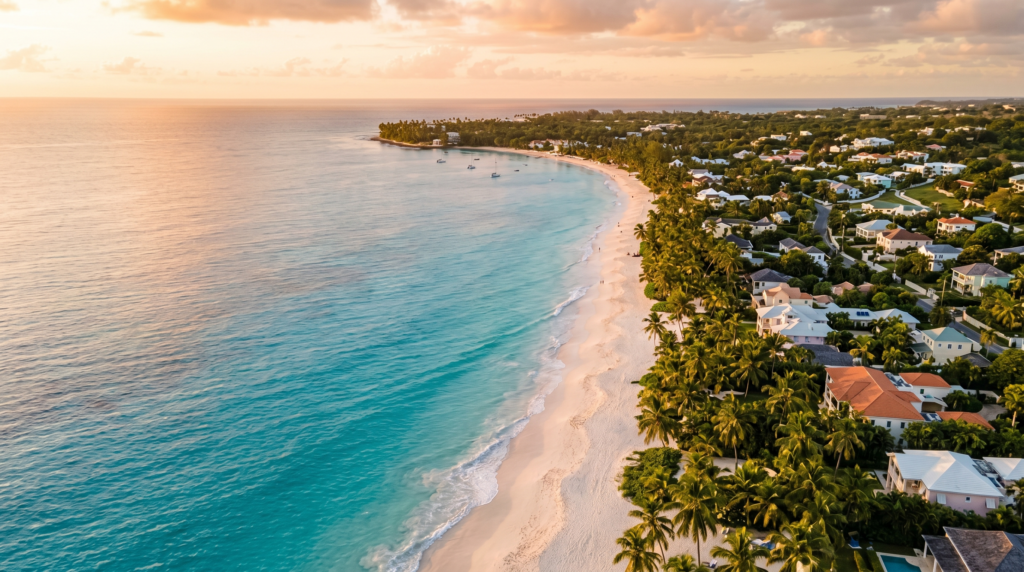
Barbados packs an improbable amount of variety into 166 square miles: a calm, luxurious Caribbean coast on one side and a wild, surf-battered Atlantic coast on the other, with rum shops, flying-fish lunches and a UNESCO-listed capital in between. The easternmost island in the Caribbean, it’s polished and easy for first-timers but rich enough to reward repeat visits — the birthplace of rum, of Rihanna, and of one of the region’s warmest welcomes.
📋 In This Guide
- Overview — Two coasts, one small island
- Crop Over — the Caribbean’s biggest summer festival
- Best time to visit (season by season)
- Getting there
- Getting around
- The coasts — west, south & the wild east
- Culture & people — Bajan pride, rum & cricket
- A food lover’s guide to Barbados
- Off the beaten path
- Practical information
- Budget breakdown — what Barbados costs in 2026
- Planning your first trip
- Frequently asked questions
Overview — Two Coasts, One Small Island
Barbados sits alone out in the Atlantic, east of the main Caribbean chain — a geographic quirk that gives it two utterly different shorelines. The sheltered west coast (the “Platinum Coast”) is the postcard Caribbean: calm, clear, turquoise water and a string of luxury resorts and beach clubs. The east coast faces the open Atlantic, where big swells, sea-sculpted rocks and green hills make for dramatic, wild scenery and world-class surf. In between is a developed, English-speaking island that’s safe, well-organised and easy to travel independently.
It’s a place that works for very different trips: honeymoon luxury on the west, lively nightlife on the south coast around St Lawrence Gap, surfing and hiking on the east, and rum-soaked local culture everywhere. Barbados became a parliamentary republic in 2021 but remains deeply Bajan and proudly itself.
Crop Over — The Caribbean’s Biggest Summer Festival
If you’re thinking about a summer trip, time it with Crop Over. Rooted in the end of the sugar-cane harvest, it has grown into one of the Caribbean’s great festivals, running from roughly June to early August and climaxing with Grand Kadooment — a riot of feathered costumes, soca music and street parades. Beyond the spectacle, summer is also shoulder season: prices drop well below the winter peak, the sea is warm, and the island is at its most alive. Just note it overlaps the start of hurricane season, so keep an eye on forecasts.
Best Time to Visit Barbados (Season by Season)
December – April — Peak (dry & sunny, priciest)
The classic window: warm days of 20–29°C, low rainfall (February to April are the driest months) and reliable sun. It’s also the busiest and most expensive — hotel prices roughly double, and the best places book out months ahead.
May & June, September – November — Shoulder (best value)
Warm and largely sunny with noticeably lower prices — rates drop around 25% from the winter peak in May–June. Brief showers are possible, but you trade a little rain risk for big savings and thinner crowds.
June – November — Rainy/hurricane season
Hotter and more humid (23–31°C) with the year’s heaviest rain late in the season, though showers are usually short. Direct hurricane hits are relatively rare this far east, but the risk is real from August to October.
Getting There
Grantley Adams International Airport (BGI) on the south coast is a major Caribbean hub with frequent nonstop flights from the US (Miami, New York, Charlotte and more), Canada, and the UK. It’s often the easiest Eastern Caribbean island to reach directly.
- ETA: US visitors need an Electronic Travel Authorisation, introduced in 2025 — apply online before you fly, alongside a valid passport and proof of onward travel.
- From the airport: the west and south coast hotel zones are 20–40 minutes away by taxi (fixed rates) or pre-booked transfer.
- Cruise: ships dock at the Bridgetown Cruise Terminal, a short ride from the beaches and capital.
Getting Around
Barbados is one of the easiest Caribbean islands to explore independently, thanks to a genuinely useful public-transport network.
- Buses: the blue government buses, yellow minibuses and privately run “ZR” vans crisscross the island for a cheap flat fare — a fun, local way to reach beaches and towns.
- Taxis: plentiful and unmetered with set government rates; agree the fare first.
- Rental car: worth it to explore the wild east and rugged north at your own pace — remember they drive on the left, and you’ll need a temporary local permit (issued with your licence).
The Coasts — West, South & the Wild East
The West (Platinum) Coast
Calm, clear and upmarket: Holetown, Speightstown and a string of beaches like Mullins and Paynes Bay, with turtle snorkelling, beach clubs and the island’s grandest resorts.
The South Coast
Livelier and better value: Oistins for the legendary Friday Night Fish Fry, St Lawrence Gap for nightlife and restaurants, and long swimming beaches like Accra and Miami (Enterprise).
The Wild East Coast
Bathsheba is the icon — giant mushroom rocks, crashing Atlantic surf and the Soup Bowl, a world-renowned surf break. Wild, windswept and beautiful, but the currents make it for looking and surfing, not casual swimming.
Bridgetown & the Interior
The UNESCO-listed capital mixes colonial architecture, the Garrison historic area and a working port. Inland lie Harrison’s Cave, lush gullies, and the green hills of the “Scotland District.”
Culture & People — Bajan Pride, Rum & Cricket
Bajan culture is a warm blend of African and British roots, expressed through music (calypso, soca, spouge), an obsession with cricket, and a rum-shop social life — there are reputedly more rum shops per capita here than almost anywhere. Barbados is the birthplace of rum, with Mount Gay tracing its history to 1703.
English is the official language, spoken alongside the rhythmic Bajan dialect. The island is developed, literate and famously polite; Sundays remain quiet and church-centred. National pride runs deep — from becoming a republic in 2021 to claiming Rihanna as a national hero — and visitors are met with genuine friendliness.
A Food Lover’s Guide to Barbados
Bajan food is one of the Caribbean’s best, built on fresh fish, local provisions and a national love of seasoning.
- Cou-cou & flying fish — the national dish: a cornmeal-and-okra polenta with gravy-rich flying fish.
- Macaroni pie, pudding & souse — beloved Saturday staples; rice and peas and fried plantain round out the plate.
- Oistins Fish Fry — Friday-night grilled marlin, mahi-mahi and lobster with music and rum punch; the quintessential Bajan night out.
- Rum & rum punch — Mount Gay and a glass-by-glass rum-shop crawl; pair with a cutter (a fried-fish sandwich in salt bread).
Off the Beaten Path
- Bathsheba & the Soup Bowl — the wild east coast at its most dramatic; come for sunrise and the giant sea-sculpted boulders.
- Animal Flower Cave — a sea cave at the island’s rugged northern tip with rock pools and Atlantic views.
- Speightstown — the quieter northern town with old-Barbados character and a low-key waterfront.
- Hunte’s Gardens — a lush, theatrical tropical garden carved into a gully, with classical music and rum punch.
- Rum-shop hopping — skip the resort bar and join locals at a roadside rum shop for dominoes, banter and a cold one.
Practical Information
- Money: the Barbadian dollar is fixed at US$1 = B$1.98 and US dollars are widely accepted (change comes in Bajan dollars). Cards are common; carry cash for buses, fish fries and rum shops.
- Driving: on the left; a temporary local permit is required (sold with car hire).
- Tipping: 10–15%; a service charge is often added — check the bill.
- Power: 115V, US-style plugs — no adapter needed for US travellers.
- Safety: Barbados is one of the safer Caribbean islands; use normal city sense in Bridgetown at night.
- Sea sense: the calm west and south coasts are for swimming; the Atlantic east coast is for surfing and photos, not casual bathing.
Budget Breakdown — What Barbados Costs in 2026
Barbados can be done on a range of budgets, though it skews upmarket on the west coast. Rough per-person, per-day estimates in USD:
| Style | Accommodation | Food | Total / day |
|---|---|---|---|
| Budget | $80–150 guesthouse | $25–40 (local) | $130–200 |
| Mid-range | $200–350 hotel | $50–90 | $300–450 |
| Luxury | $500–1,500+ | $100–200+ | $700–1,500+ |
A week for two averages around $6,000 all-in. Biggest savers: ride the buses, eat at Oistins and local cafes, base on the south coast rather than the west, and travel in shoulder season.
Planning Your First Trip
A great first week: base on the south coast for value and nightlife or the west coast for calm luxury, then mix beach days with a few set-pieces — the Friday Fish Fry at Oistins, a day trip to Bathsheba and the wild east, a Bridgetown and Garrison wander, and a rum distillery tour. Sort your ETA before you fly, plan to use the buses at least once, and leave time to do very little — Barbados is as much about the pace as the sights.
Frequently Asked Questions
Do US citizens need a visa for Barbados?
No visa is needed for stays of up to 90 days, but since 2025 US visitors must obtain an online Electronic Travel Authorisation (ETA) before arrival, along with a valid passport and proof of onward travel.
When is the best time to visit Barbados?
December to April for dry, sunny, peak-season weather (at the highest prices), or May–June and September–November for warm weather, lower prices and fewer crowds.
Can I use US dollars in Barbados?
Yes — US dollars are widely accepted at the fixed rate of US$1 = B$1.98, though change is usually given in Barbadian dollars. Cards work in most places; carry cash for buses and local spots.
Which coast should I stay on?
The west (Platinum) coast for calm water and luxury, the south coast for value, beaches and nightlife, and the east coast for wild scenery and surfing (not swimming).
Is Barbados good for non-beach travellers?
Very — between Crop Over, cricket, rum heritage, Bridgetown’s history, Harrison’s Cave, gardens and the dramatic east coast, there’s plenty beyond the sand.
Ready to Explore Barbados?
Two coasts, a world of rum, and a welcome that keeps people coming back. Tell us your dates and travel style and we’ll help you build the perfect Bajan week. Plan your trip →
Explore More
How This Guide Was Built
Researched and written by the Facts From Upstairs team, last updated . Prices and entry rules change — always confirm current details with official sources before you travel.
More country guides you might like


Plan your trip to Barbados
The booking tools we use ourselves. FFU may earn a commission at no extra cost to you.
Plan & book your trip to Barbados
Booking through these searches supports our guides at no extra cost to you.