
Languages of Dominican Republic
All languages of Caribbean →fluent beta classical · classes by phone with Maya at ranas.ai/maya
Dominican Republic Travel Guide — Six Countries Stitched to One Flag
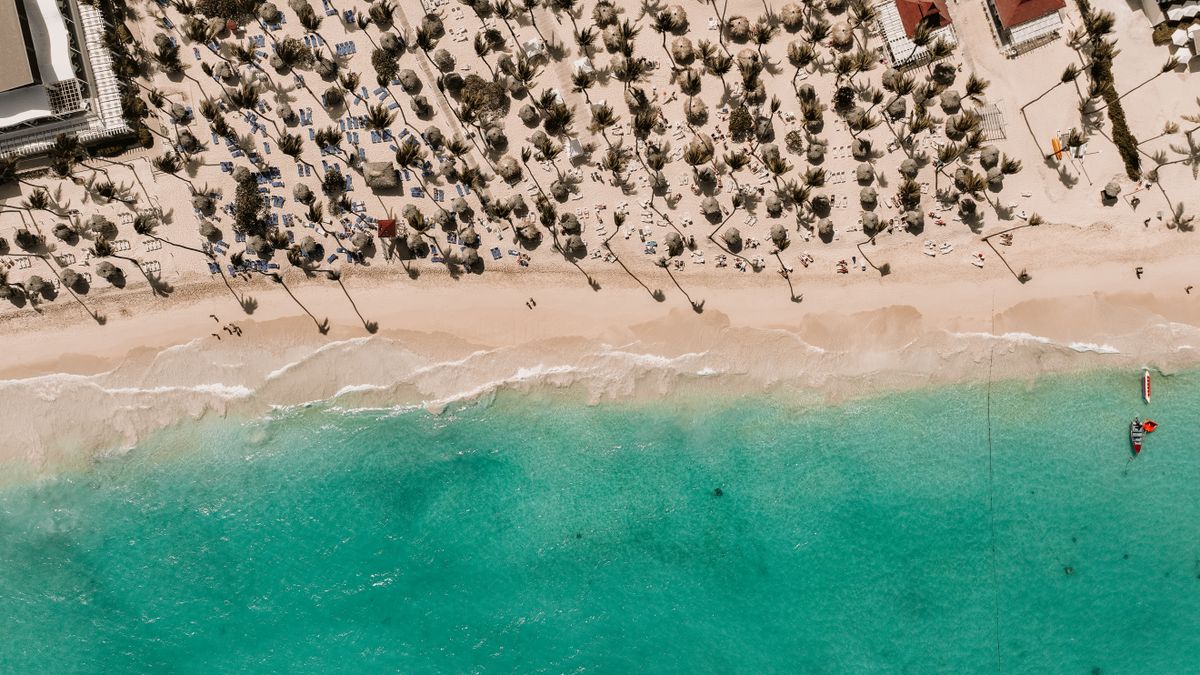
The trick to the Dominican Republic, I have decided after eight visits and one terrifying guagua ride down the Cordillera Central, is to stop thinking of it as a country and start thinking of it as a small federation of six wildly mismatched ones held together by merengue, a fond shared cynicism about traffic, and a passport that lets you travel between them without paperwork. There is a Punta Cana that is essentially a 48-kilometre Caribbean theme park where the cocktails come pre-printed on the wristband; there is a Zona Colonial in Santo Domingo where Diego Columbus’s house has been a museum since the 1950s and the cathedral was finished a generation before the Mayflower; there is a Samaná peninsula that has more humpback whales every January than it has Wi-Fi bars; and there is a Cordillera Central spine where the air thins, the pine trees shock you, and the best restaurant orders a shot of strawberry liqueur with the bill. My favourite Dominican argument is whether Punta Cana counts as the “real” DR (it doesn’t and it does), and my second favourite is whether mangú with three eggs is breakfast or a moral position. This guide is what I would hand my own brother before he flew JFK–PUJ on JetBlue.

In This Guide
- Overview — Why the DR Is Six Countries Stitched to One Flag
- Whale-Watching Season at Samaná Bay (Jan–Mar)
- Best Time to Visit the Dominican Republic
- Getting There — PUJ, SDQ, POP & the eTicket
- Getting Around — Guaguas, Caribe Tours & Domestic Hops
- Top Cities & Regions — Santo Domingo, Punta Cana, Samaná & More
- Dominican Culture — Merengue, Bachata & Béisbol
- A Food Lover’s Guide to the Dominican Republic
- Off the Beaten Path — Pico Duarte, Los Haitises, Constanza
- Practical Information
- Budget Breakdown — All-Inclusive vs. Independent
- Planning Your First Trip to the DR
- Frequently Asked Questions
- Ready to Explore
Overview — Why the DR Is Six Countries Stitched to One Flag
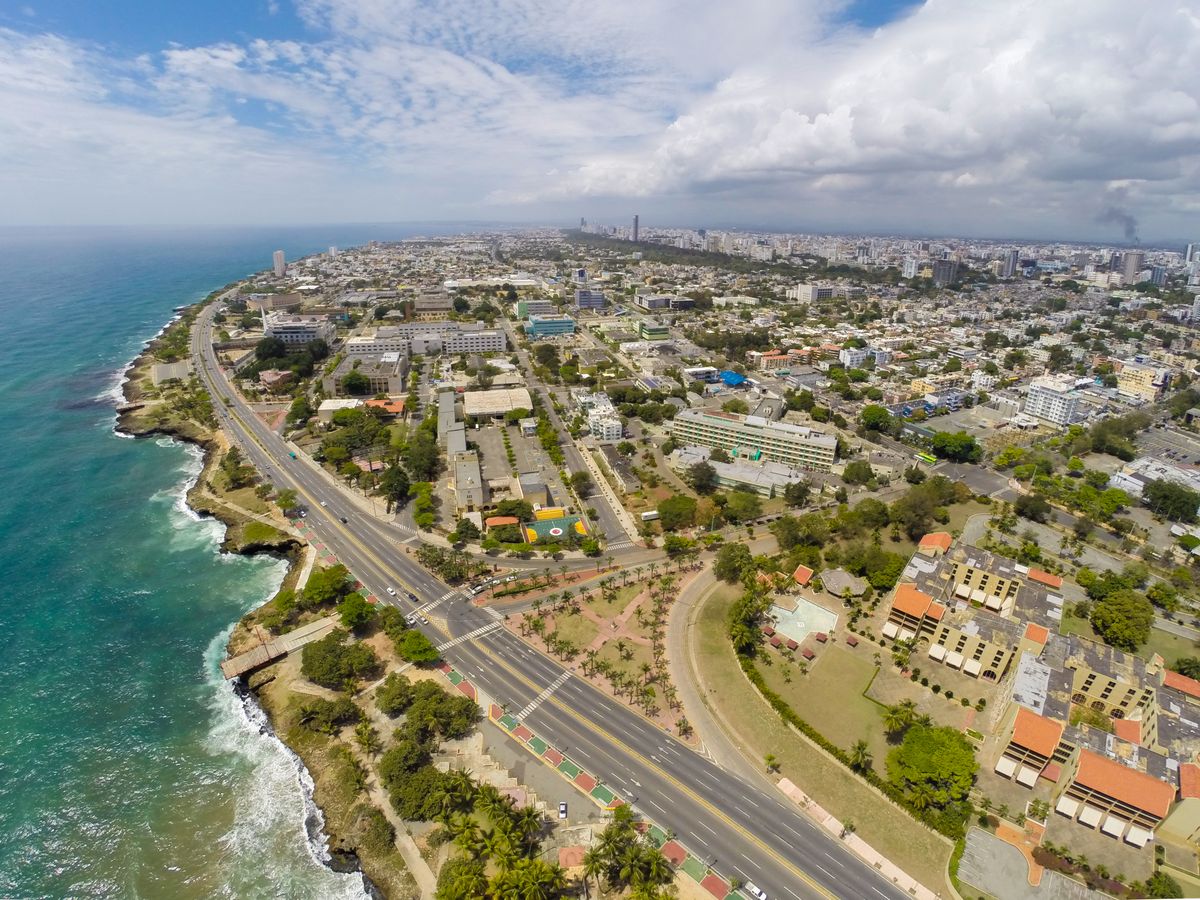
The Dominican Republic occupies the eastern five-eighths of Hispaniola, the second-largest island in the Caribbean after Cuba , sharing the rest of the island with Haiti to the west — the formal split was sealed by the 1697 Treaty of Ryswick, which handed France the western third (later Haiti) while Spain kept Santo Domingo. The republic covers roughly 48,671 square kilometres of mountains, valleys, mangrove and coral coast, with a 1,288-kilometre coastline that runs from the Mona Passage facing Puerto Rico in the east to the Haitian frontier near the Pedernales river in the south-west. Inside that footprint sits a topographic absurdity that almost no Caribbean visitor expects: four distinct mountain ranges with the Cordillera Central holding Pico Duarte at 3,098 metres — the highest peak in the entire Caribbean basin — while Lake Enriquillo on the southern side sits 46 metres below sea level, the lowest dry-land point on any island country in the world.
The country’s deep history is the part most all-inclusive travellers never see. Christopher Columbus made landfall on Hispaniola on 5 December 1492 , and his brother Bartholomew founded Santo Domingo on 5 August 1496 — relocated to its current site at the mouth of the Ozama River in 1502 — making it the oldest continuously inhabited European-built city in the Americas. The Cathedral of Santa María la Menor, begun 1512 and consecrated 1542, is the oldest extant cathedral in the New World; the Alcázar de Colón (1511–1514) is the first fortified European palace in the Americas; the Fortaleza Ozama is the oldest surviving European military structure on the continent. The Universidad Autónoma de Santo Domingo (UASD), founded by papal bull in 1538, is the oldest university in the Americas. UNESCO inscribed the 320-hectare Zona Colonial in 1990 .
The country won independence not from Spain but from Haiti — a 22-year occupation that ended on 27 February 1844, when Juan Pablo Duarte’s Trinitarios seized the Puerta del Conde gate and fired a flintlock blunderbuss at midnight to declare a republic. The 31 years of Rafael Trujillo’s dictatorship (1930–1961) and the brief 1965 civil war that triggered the second US occupation are still in living memory; the country has been a stable multi-party democracy since 1996 and is currently led by President Luis Abinader . The 2008 constitution describes the country as “free, independent, sovereign and democratic”; a 2010 amendment renamed the currency from peso oro to peso dominicano, the same RD$ that has hovered around 58–60 to the dollar since 2024.
For travellers, the practical magic is scale plus variety. The DR is the busiest tourism destination in the Caribbean — 10 million-plus arrivals in 2023, with tourism representing roughly 11.6% of GDP and the United States alone sending 2.7 million visitors in 2025. Punta Cana International (PUJ) handled 10.1 million passengers in 2024 alone, the busiest airport in the Caribbean and the world’s first privately owned international airport. The World Bank projects 3.6% growth for 2026 and 4.4% for 2027 , after a soft 2.1% in 2025; the central bank held its policy rate at 5.25% in May 2026 with year-on-year inflation at 4.63%, comfortably inside the 4 ± 1% target. Tap the wristband and order a Presidente if you must, but try, please, to spend at least one of your nights inside that 320-hectare colonial grid.
Whale-Watching Season at Samaná Bay (Jan–Mar)
If you can pick only one calendar window for the Dominican Republic, I would push you to mid-January through late-March, because that is when the entire North Atlantic humpback population sits in the warm shallows north and east of Samaná Bay courting, calving and singing — and you can be on a small boat in the middle of it within 90 minutes of the Las Galeras dock . The local Centro de Conservación de Mamíferos Marinos has run regulated whale-watch tours out of Samaná town since 1985, and the season opens officially on 15 January and closes on 25 March every year, with the peak number of whales typically passing through in the first two weeks of February.
- The science: the Silver Bank, an 80-kilometre-long submerged plateau roughly 100 km north of Cabarete, hosts the largest documented breeding aggregation of humpback whales in the North Atlantic — a count that researchers regularly put at 3,000 animals in any single season . The bay between the Samaná peninsula and Los Haitises National Park is the calving nursery on the southern flank of that gathering.
- Operators & price: tour boats from Samaná town and Las Galeras run twice-daily morning and afternoon departures (≈US$60–80 per adult including the conservation fee, ~3 hours). The Dominican Centre for Marine Mammal Studies pioneered local naturalist guiding and trains the boat captains; do not book a “whale tour” run by a hotel that does not name the operator’s permit number — overcrowding by undeclared boats has been the conservation headache of the last decade.
- Where to base: Samaná town for ferry-dock convenience, Las Galeras for the prettiest beaches and tiniest crowds, Las Terrenas for the French/Italian café culture and the easiest road from Las Américas (SDQ) airport. The 2012 boulevard linking Santo Domingo to Las Terrenas dropped the drive to about two hours.
- Bonus wildlife: the Los Haitises National Park boat tour from Sabana de la Mar (45 min from Samaná by ferry) crosses the same bay and adds 826 km² of mogote karst, brown pelicans, frigatebirds, and Taíno-era pictograph caves on a single morning out.
- If you miss the season: the Bayahíbe / Saona Island day trip on the south-east coast is the closest cruise-style alternative the rest of the year; sea-turtle nesting on Saona runs March through October.
Best Time to Visit the Dominican Republic
The DR is a tropical-maritime climate that runs roughly 25–28 °C year-round at sea level (the country’s annual mean is 26 °C), so the calendar is shaped by rainfall, hurricane risk and what the trade winds are doing rather than by any cold/warm flip. The classic answer “December to April” is correct for resort travellers, but the country has at least four useful windows depending on what you actually want to do.
December–April — high season, dry trade winds, best for everything except cheap flights
The driest months and the only ones that are reliably swimmable on every coast at once. North coast (Puerto Plata, Cabarete) sees daytime highs around 28 °C with cool 19 °C nights and consistent 20–25 knot trade winds — the reason Cabarete became the kitesurf capital of the Caribbean . South-east (Punta Cana, Bayahíbe) bakes around 30 °C with sea temperatures of 26–27 °C; Santo Domingo’s stone Zona Colonial is at its best, with the carnival parades climaxing on Independence Day, 27 February. Cordillera Central (Constanza, Jarabacoa) drops to 8–14 °C overnight; pack a fleece. Resort prices peak from 22 December through 6 January and again the week of US Spring Break (mid-March).
April–early June — green-season shoulder, the sweet spot for budget and biodiversity
The rains return slowly through April and May, which paints the Cordillera Central in jungle green and drops resort rates 25–35% off the high-season list. Showers are short and afternoon-heavy; mornings on the coast are usually clear. This is when I would tell a Cordillera-Central hiker to go: trails up to Pico Duarte are passable, the high-altitude pine forest is at its most photogenic, and you avoid the December cold-front mud. Mosquito-borne dengue risk starts to climb from May; pack the 20%+ DEET regardless of season.
June–early September — hot, cheap, and mostly fine if you watch the storm tracker
Temperatures push 32–34 °C on both coasts with humidity locked at 80–90%; rainfall climbs but the morning showers usually clear by lunch. June and July are statistically the lowest-named-storm months of the official Atlantic hurricane season (which runs 1 June – 30 November). Hotel rates hit annual lows in late August. The Cordillera Septentrional north coast gets the same trade winds as winter, so Cabarete and Sosúa actually surf better than they look on paper. If your budget is hard-capped under US$60 a day independent or US$160 a day all-inclusive, June is your month.
Mid-August–October — peak hurricane window, plan around it
Statistically the highest-risk months for Atlantic tropical systems on Hispaniola; 2025 was a brutal example, with Hurricane Melissa pushing 29 inches of rain onto Polo , knocking out 56 aqueducts and damaging 53 bridges country-wide between 24 and 29 October 2025 — RD$1.5 billion in damage and four deaths inside the DR. The CDC issued a post-Melissa advisory warning travellers to avoid floodwater because of leptospirosis and fungal-disease risk. Most years, of course, are nothing like 2025; book refundable rates, check NOAA’s National Hurricane Center morning briefing for the seven days before departure, and lean towards Punta Cana / Bayahíbe rather than the Samaná peninsula or the Cibao north coast if a system is brewing.
Festival pegs: February — Carnival every Sunday, climax on Independence Day 27 February, with La Vega’s parade (continuous since 1510) the largest. Late July — Santo Domingo Merengue Festival on the Malecón. October — Puerto Plata Cultural Festival. November — the Latin Music Awards traditionally use Punta Cana as their open-air stage.
Getting There — Flights to PUJ, SDQ, POP & the eTicket
The Dominican Republic has nine commercial international airports, more than any other country in the Caribbean. The three you actually need to know — Punta Cana, Las Américas (Santo Domingo) and Gregorio Luperón (Puerto Plata) — handle 95% of arrivals between them, and choosing the right one for your itinerary saves a four-hour ground transfer at the back end of a red-eye.
- Punta Cana International (PUJ) — east coast resort gateway — opened in December 1983 as the world’s first privately owned international airport, with its now-iconic palm-frond palapa terminal designed by Oscar Imbert. Handled 10.1 million passengers in 2024, the busiest airport in the Caribbean and the second-busiest after San Juan in all of Latin America & the Caribbean combined. Five terminals, two runways both above 3,000 m, and roughly 90 destinations across 26 countries. Closer to Bávaro and Bayahíbe than to anywhere else in the country — three to four hours by ground from Santo Domingo.
- Las Américas International (SDQ) — Santo Domingo — opened 1959 as the official airport of “Ciudad Trujillo,” 20 km east of the city centre. Handled 5.5 million passengers in 2024 and is the busiest cargo hub in the Caribbean and Central America; a US$250 million terminal expansion is scheduled to open by end of 2028. Best gateway for the Zona Colonial, the Cordillera Central and Las Terrenas.
- Gregorio Luperón International (POP) — Puerto Plata — the north-coast hub serving Cabarete, Sosúa, the 27 Charcos waterfalls, and the cruise terminals at Amber Cove and Taino Bay. Cheaper for European charters and the right entry point if your trip is north-coast surf, kitesurf or whale-season Samaná-side.
- Other commercial airports: El Catey (AZS) for Samaná, La Isabela (JBQ) for north-side Santo Domingo, Cibao (STI) for Santiago, Maria Montez (BRX) for Barahona, Arroyo Barril (EPS) for Samaná town, and La Romana (LRM) for Casa de Campo.
Flight times: JFK–PUJ is roughly 4 h non-stop on JetBlue, Delta or American (the airline pair pushed 30+ daily flights between New York and the DR in 2025). Miami–PUJ 2 h 15 min on AA. Toronto–PUJ 4 h 5 min on Air Canada or Westjet. Madrid–PUJ 8 h 40 min on Iberia or Air Europa. London–PUJ via Madrid or Frankfurt; the only nonstop is TUI’s seasonal LGW–POP. Bogotá–PUJ 3 h on Avianca, Panamá–PUJ 2 h 30 min on COPA.
Visa & entry — the eTicket is non-negotiable: almost all Western-Hemisphere passports plus all EU member states, the UK, Australia, Japan, South Korea and Israel get 30 days visa-free, with up to 90 additional days extension available through the Dirección General de Migración. Passport must be valid 6 months beyond arrival. Every traveller — child, infant, transit included — must complete the official eTicket at eticket.migracion.gob.do within 72 hours of arrival, and again within 72 hours of departure. The US$10 tourist card has been bundled into airfare since April 2018, but is still itemised on most ticket invoices. Overstay fines run RD$2,500–95,000 (≈US$42–1,600). UK FCDO note: the December 2025 update added a specific section on dual nationals returning to the UK; check this if you hold both DR and UK passports.
Getting Around — Guaguas, Caribe Tours & Domestic Hops
The country is small enough that nothing is more than 8 hours by road from Santo Domingo, and the highway network — anchored by the Autovía del Coral that links SDQ to Punta Cana, the Autovía Duarte that runs the entire Cibao spine, and the Autopista Juan Pablo II to Samaná — is honestly the best in the Caribbean. But how you choose to get around makes a much bigger difference to your week than which highway you take.
- Long-distance buses (Caribe Tours, Metro Tours, Expreso Bávaro): the cleanest, most reliable Caribbean bus network. Caribe Tours runs Santo Domingo–Santiago every 30 minutes (RD$400/≈US$7, 2½ hours), Santo Domingo–Puerto Plata 5×daily (≈US$11, 4½ hours), Santo Domingo–Samaná (≈US$10, 2½ hours via the new Autopista). Expreso Bávaro is the dedicated Punta Cana coach — Plaza Las Américas in Santo Domingo to Bávaro 9× daily for RD$450 (≈US$8). All operate from fixed terminals with assigned seats and overhead AC.
- Guaguas: the colectivo minivan network that locals actually use. Stops are unmarked; flag one down on any main road. Cheap (RD$50–150 for short hops) but cramped, hot and not a meaningful time-saver over Caribe Tours on long routes. The classic stretch is Santo Domingo–Boca Chica or Sosúa–Cabarete.
- Domestic flights: Arajet (the new low-cost flag carrier launched in 2022) and SkyHigh Dominicana run a handful of internal routes — most usefully PUJ–STI (Santiago) and SDQ–EPS (Samaná). One-way fares from US$60. Worth using only if a single connection saves a 6-hour drive. The dedicated tourist heliport at Higüey runs charter shuttles into the eastern resorts.
- Santo Domingo Metro & teleférico: the only metro in the Caribbean, opened 2009; Lines 1 and 2 cross at Juan Pablo Duarte for RD$20 a ride. The Santo Domingo cable-car (teleférico) opened in 2018 and crosses the Ozama River from Sabana Perdida to Charles de Gaulle in 8 minutes for RD$20 — Latin America’s first urban cable-car as integrated public transport.
- Taxis & Uber: Uber, Cabify and Didi all operate in Santo Domingo , Santiago and (post-2023) Punta Cana — substantially safer and cheaper than flagged taxis, with prices in DOP and a transparent receipt. Hotel-summoned taxis charge a flat US$ rate that is usually 2–3× the Uber equivalent. The official tourist taxi association is called SICHOTUR in Punta Cana — the one cab queue worth using if you don’t have rideshare data.
- Self-drive: the Autovía del Coral (SDQ–Punta Cana) is the easiest 200 km in the Caribbean — toll roads with proper Jersey barriers and emergency lanes. The country uses right-hand traffic; an International Driving Permit is technically required by law and waived in practice for under-90-day rentals. Avoid driving at night anywhere outside the autovía network — pothole density, livestock and unlit motorbikes are the country’s three leading non-fatal accident causes.
Apps you’ll want: Google Maps (offline-cache the whole country before arrival), Uber, Caribe Tours’ own booking app, the official eTicket migración app for arrival/departure forms, and Banco Popular or Banreservas if you want a Dominican-issued QR-payment wallet for Carnival weekend market stalls.
Top Cities & Regions — Santo Domingo, Punta Cana, Samaná & More
📍 Map of Dominican Republic: Every Place in This Guide
The Dominican Republic stretches 390 km east-to-west and 265 km north-to-south, with four mountain ranges separating six tourism regions that each function almost as a separate country. Eight destinations carry roughly 95% of all foreign visits.

Santo Domingo & the Zona Colonial — UNESCO 1990, the original New World capital
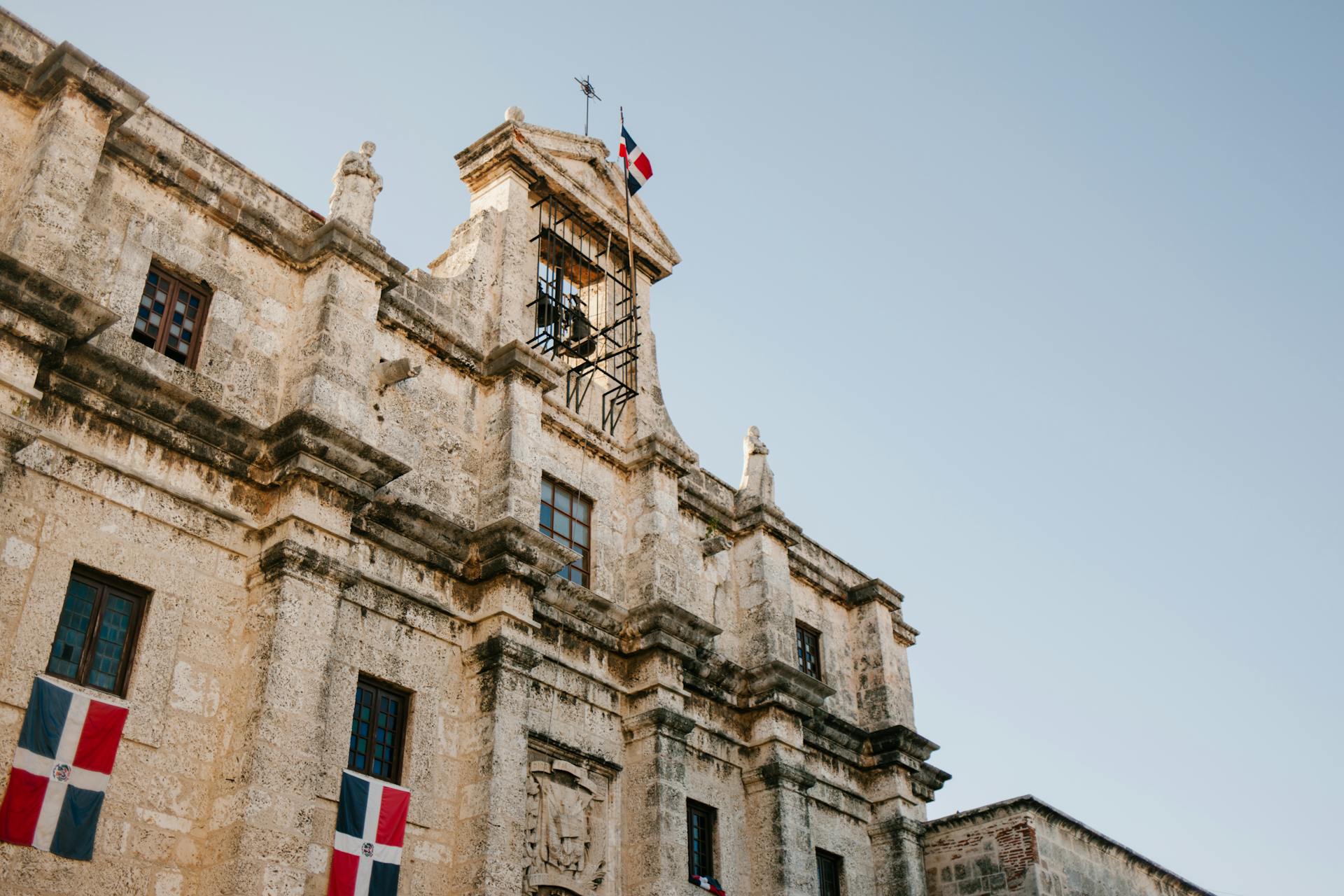
The capital metropolitan area is home to roughly 4.27 million people across the Distrito Nacional and Santo Domingo Province — about 38% of the country’s entire population. The 320-hectare Zona Colonial is the cultural anchor: founded by Bartholomew Columbus on 5 August 1496, relocated to its current site in 1502, and added to UNESCO’s World Heritage List in 1990 as the first permanent European city in the Americas. The Cathedral of Santa María la Menor (begun 1512, consecrated 1542) is the oldest cathedral in the New World; the Alcázar de Colón (1511–1514) is the only Gothic-Mudéjar palace in the Americas ; the Fortaleza Ozama is the oldest extant European fortification on the continent. The Calle Las Damas, “Street of the Ladies,” is reckoned to be the oldest paved street in the Americas — laid out for María de Toledo’s daughters in 1502.
- Catedral Primada de América — Christopher Columbus’s remains were housed here from 1544 until they were moved to Havana in 1795 (later to Seville).
- Alcázar de Colón — now the Caribbean’s most-visited museum, with the most important collection of Renaissance and medieval European art in the region.
- Faro a Colón (Columbus Lighthouse) — the controversial 210-metre-long cross-shaped 1992 monument east of the river, said to hold Columbus’s remains in a marble sarcophagus.
- Mercado Modelo — colonial-zone-edge market for Larimar, amber, mamajuana flasks and woven Dominican cigars.
Punta Cana & Bávaro — the Caribbean’s all-inclusive epicentre
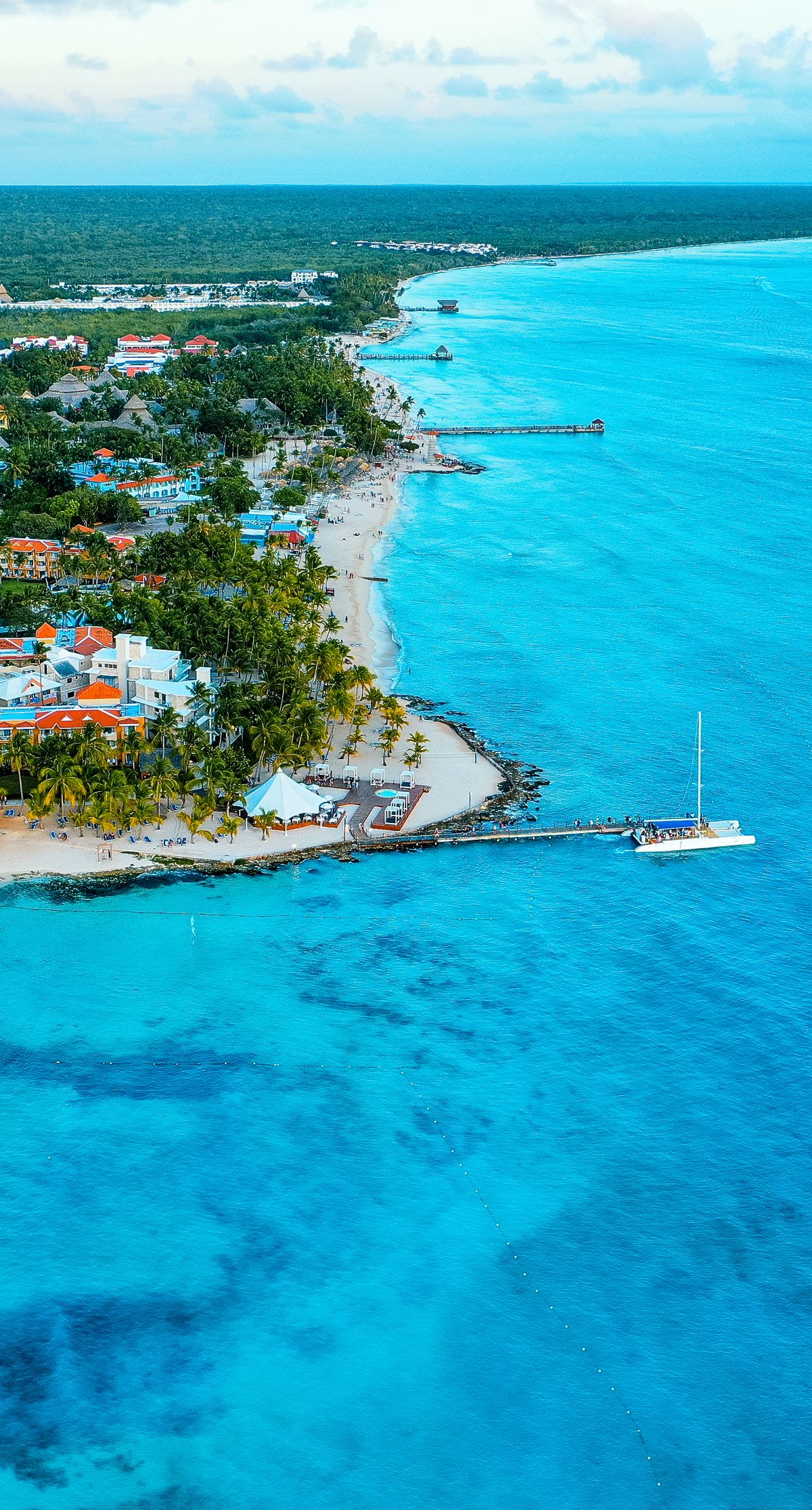
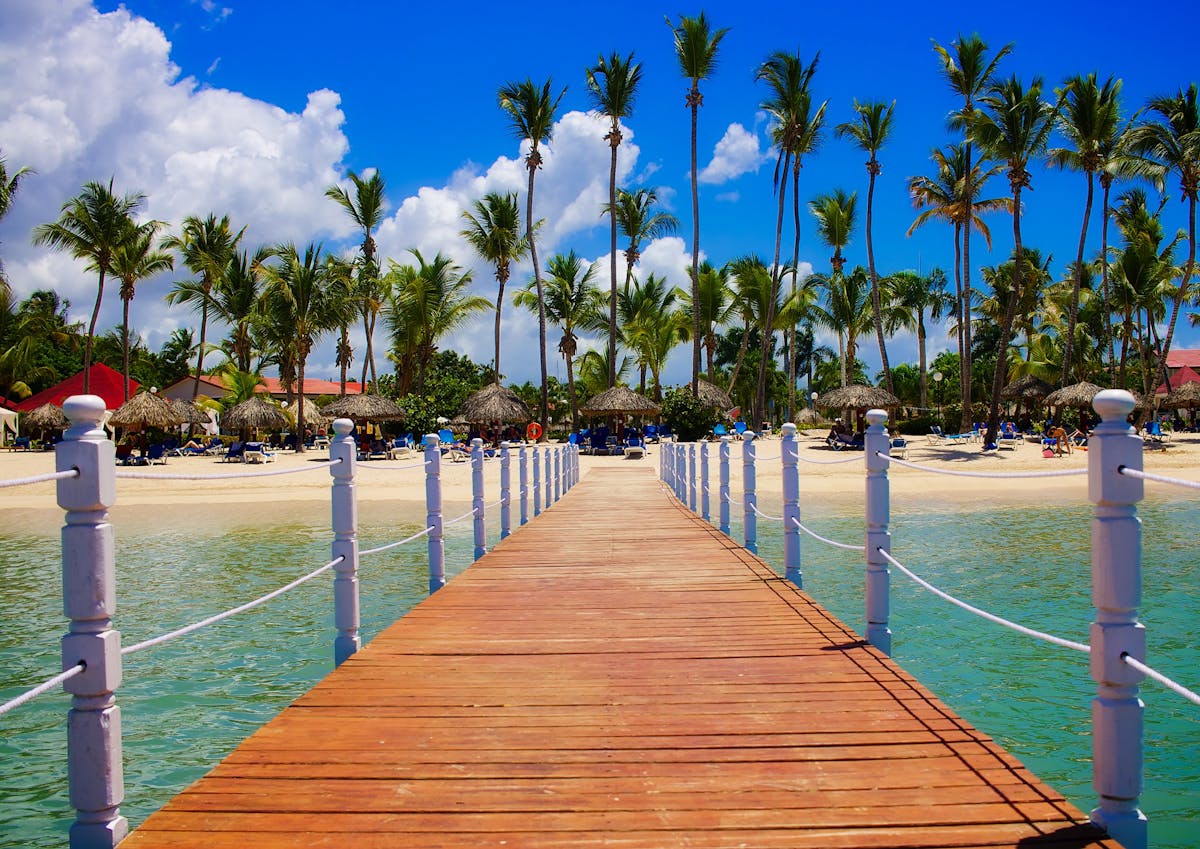
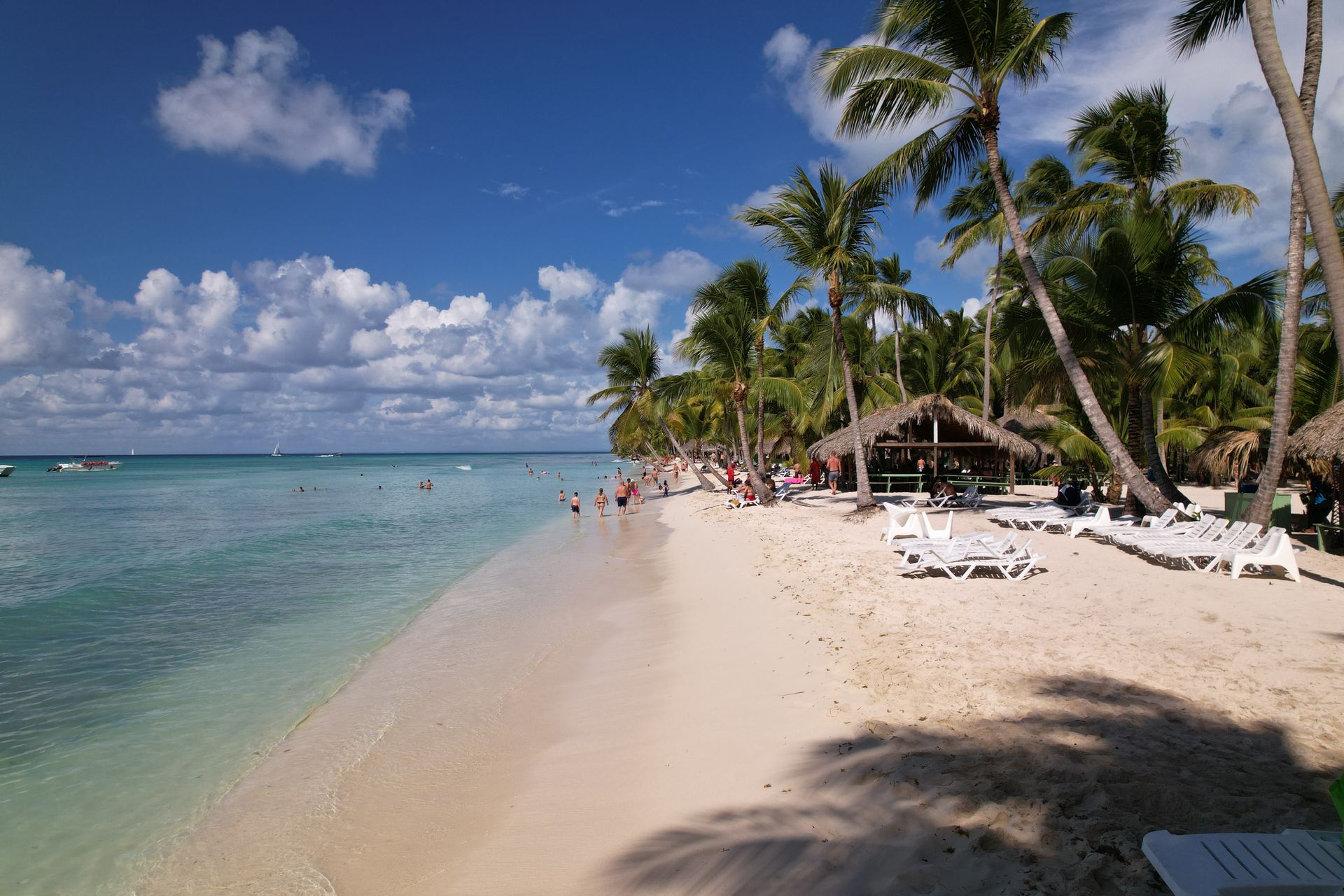
The 48-kilometre stretch from Cabeza de Toro south through Bávaro, Macao and Cap Cana to Juanillo Beach has more hotel rooms than any single coast in the Caribbean — roughly 50,000 rooms inside the La Altagracia Province alone, all within 30 minutes’ drive of PUJ. Frank Rainieri and Ted Kheel bought the original 58 million m² parcel for US$0.50 a square metre in 1969 and renamed it from “Punta Borrachos” to Punta Cana in 1970. Today the township has 138,919 residents (2022 census) and is the second-most-popular resort destination in all of Latin America after Cancún.
- Bávaro Beach — Blue Flag certified, 30+ all-inclusive resorts.
- Hoyo Azul — 14-metre cliff-rimmed cenote inside Scape Park at Cap Cana.
- Indigenous Eyes Ecological Park — 12 freshwater lagoons inside the Puntacana Foundation reserve.
- Corales Golf Course (PGA Tour stop), Punta Espada Golf Club (Jack Nicklaus signature) — two of the Caribbean’s top-five championship courses .
Samaná Peninsula — Las Galeras, Las Terrenas & Cayo Levantado
The 60-km hammer-shaped peninsula in the country’s north-east is the second-fastest-growing tourism region after Punta Cana and the only one with a substantial European-resident community — Las Terrenas alone has a 4,000-strong French and Italian expat population that gives the boulangeries, the gelato shops and the wine lists their distinctive flavour. The 2012 Boulevard Turístico del Atlántico cut the SDQ–Las Terrenas drive to about 2 hours. Cayo Levantado, the off-shore islet better known as “Bacardi Island” after the 1970s rum advertisements that filmed there, is reached by ferry from Samaná town. The Salto El Limón waterfall (40 m) is the peninsula’s marquee day-hike — most visitors reach it by horse from El Limón village.
Puerto Plata, Sosúa & Cabarete — north-coast Victorian town and watersports capital
Puerto Plata (officially San Felipe de Puerto Plata, founded 1502) is the country’s third tourism cluster and the gateway to the north coast. The 1577 Fortaleza San Felipe is the city’s main colonial monument; the Teleférico Puerto Plata (the Caribbean’s first and only commercial cable-car) climbs the 800 m Mount Isabel de Torres in 8 minutes to a botanical garden and Christ-the-Redeemer-style summit statue. The Amber Cove cruise terminal opened in 2015 (Carnival’s US$85-million investment) and now anchors the Puerto Plata Province cruise economy. East along the coast: Sosúa was a 1940s German-Jewish refugee settlement (Trujillo offered 100,000 Jewish visas at the 1938 Évian Conference), still visible in the synagogue at El Batey; Cabarete, 30 minutes further east, is the kitesurfing and windsurfing capital of the Caribbean and host of the annual Master of the Ocean five-discipline contest.
Santiago de los Caballeros & the Cibao Valley — cigar country
The country’s second-largest city (771,748 in the 2022 census, 1.26 million metro) sits in the Cibao Valley, the most fertile agricultural plain in the Greater Antilles and the source of roughly 70% of all premium hand-rolled cigars sold in the United States. Founded in 1495 as the first Santiago of the Americas. The 67-metre marble Monumento a los Héroes de la Restauración dominates the city skyline; the Centro León is the country’s best modern art museum and the only place to see the early Yoryi Morel and José Vela Zanetti murals together . La Aurora’s cigar factory at León Jimenes runs free tours that end with a hand-rolling demonstration; the Tabacalera de García in La Romana is bigger but Santiago is where the leaf is grown.
Bayahíbe & La Romana — Saona Island and Casa de Campo
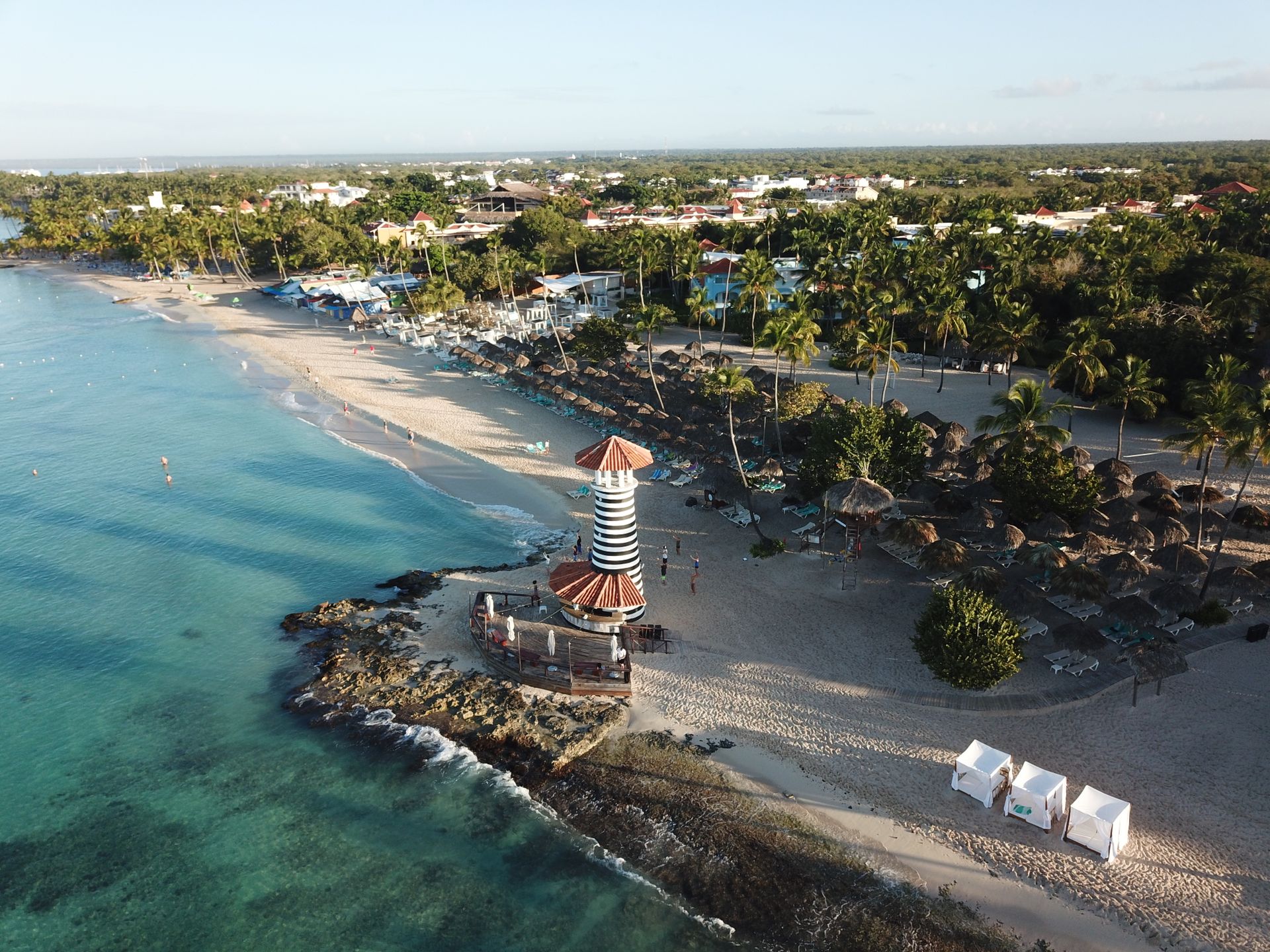
Bayahíbe is a 5,618-resident former fishing village 10 miles east of La Romana that has become the country’s most concentrated dive base — three accessible shipwrecks (Atlantic Princess, St George, Coco) within 30 minutes of the town pier, and the launching point for the catamarans to Saona Island. Cotubanamá National Park (formerly Parque Nacional del Este) protects the 110 km² Saona island and the surrounding Caribbean reef; Saona alone takes 45% of all visits to DR protected areas — the most-visited park in the country. 11 miles inland sits Casa de Campo, the 7,000-acre 1970s Gulf+Western resort with the iconic Pete Dye-designed “Teeth of the Dog” course and Altos de Chavón, the 16th-century-style Mediterranean village built as a film set in the late 1970s.
Jarabacoa & Constanza — the Caribbean’s mountain capital
Jarabacoa sits at 529 m in the Cordillera Central, with a population of 69,855 (2012) and a microclimate cool enough to grow strawberries, peaches and the country’s best coffee. It is the base camp for Pico Duarte (3,098 m, the highest peak in the Caribbean — see the off-piste section below) and the country’s white-water rafting capital, with class III–IV runs on the Yaque del Norte. 60 km further into the cordillera is Constanza, sitting at 1,200 m on the floor of an ancient volcanic caldera and producing 75% of the country’s strawberries, garlic and broccoli. Frost is regular in January (yes, frost — in the Caribbean) and a couple of cold-front nights drop into single-digit Celsius temperatures.
Las Terrenas — the French-Italian Caribbean
22,664 residents on the north coast of the Samaná peninsula, founded as a Trujillo agricultural colony in 1946 and reborn as a European-led tourism town from the 1980s. Playa Bonita and Playa Cosón are the marquee 3-km strands; the Salto El Limón waterfall and the El Pueblo de los Pescadores beachfront restaurant strip anchor the social life. The El Catey “Samaná-El Catey” international airport (AZS) is 25 minutes away.
Dominican Culture — Merengue, Bachata & Béisbol
The Dominican cultural cocktail is mostly Spanish-Andalusian (the Canary Island migrations of the 18th century shaped the rural Cibao dialect more than peninsular Castilian did) layered over substantial West African heritage from the colonial sugar economy and a real, recoverable Taíno-indigenous foundation. Roughly 13 million people speak Dominican Spanish worldwide, including 9 million inside the country and a 2-million-strong diaspora concentrated in New York, New Jersey, Florida and Massachusetts. Catholicism is recognised by Vatican concordat as the de facto state religion although there is no official state church; Pentecostalism and other evangelical denominations have grown fastest in the last 20 years.

Merengue — the national music since 1936
Merengue emerged in the mid-19th century in the Cibao region as a fusion of Andalusian-Spanish accordion melody, Taíno-derived güira rhythm and African tambora drumming, the trio that still defines the classic ensemble today. Trujillo’s regime (1930–1961) elevated the previously stigmatised rural genre to national-symbol status; Luis Alberti’s 1936 composition “Compadre Pedro Juan” became the standardising hit that pushed merengue into urban ballrooms and across Latin America via New York-based touring groups in the 1950s and 1960s. UNESCO inscribed merengue on the Representative List of the Intangible Cultural Heritage of Humanity on 30 November 2016.
Bachata — the rural ballad that conquered the world
Bachata grew out of the same rural Cibao milieu in the 1950s but was explicitly stigmatised as “vulgar” by the same Trujillo regime that promoted merengue — partly because of its bittersweet country-and-western lyrical mode, partly because of its association with brothels and back-yard bohío parties. José Manuel Calderón cut the first commercial bachata record in 1962 (“Borracho de amor” / “Que será de mi”). Juan Luis Guerra’s 1992 Grammy-winning Bachata Rosa made the genre internationally respectable; Aventura, led by Bronx-raised Anthony “Romeo” Santos , took it to multiple Madison Square Garden sell-outs from 2007. UNESCO added “Music and dance of Dominican Bachata” to the Intangible Cultural Heritage list in 2019.
Béisbol — the country’s other national religion
Baseball arrived with Cuban exiles in the 1880s and became Dominican by the time the first amateur teams formed in San Pedro de Macorís in the 1920s. The Liga Dominicana de Béisbol Profesional (LIDOM) — the country’s six-team winter league founded as a summer competition in 1951 and turned professional in 1955 — is the highest-level winter ball anywhere in the world; the LIDOM playoff champion goes on to play the Caribbean Series. Every MLB franchise runs a baseball academy inside the country (the Dodgers’ Campo Las Palmas in 1987 was the first). 83 of the MLB’s 868 opening-day players in 2015 were Dominican — roughly 10% of the league — and the country has produced Pedro Martínez (Hall of Fame, 2015), David Ortiz (HoF 2022), Sammy Sosa, Albert Pujols, Robinson Canó, Manny Ramírez, Vladimir Guerrero and Juan Soto, among many others. The economic ripple is on the order of US$1 billion a year.
Carnival — every Sunday in February, climaxing on Independence Day
Dominican Carnival is the oldest in the Americas — La Vega’s parade has run continuously since 1510, when Bartolomé de las Casas described masked devil-figures parading through the streets in his chronicles. Every Sunday in February brings local parades; Santo Domingo runs the national-stage parade on the first Sunday of March, immediately after the 27 February Independence Day fireworks at the Puerta del Conde. The two iconic costumes are the Diablo Cojuelo (Limping Devil) — sequined, mirror-encrusted, with a horn-spiked papier-mâché mask and a pig-bladder vejiga swung at spectators — and Roba la Gallina, a comic cross-dressed character handing sweets to children. La Vega is the loudest, La Romana the bawdiest, Cabral (Barahona province) the most folkloric.
The Taíno legacy — words you already use
The Taíno of Hispaniola were the first New World people Europeans recorded in detail, and the language gave English (and Spanish) more loan-words than any other Caribbean tongue: hammock (hamaca), hurricane (huracán/juracán), barbecue (barbacoa), canoe (kanoa), tobacco (tabaco), papaya, guava, iguana, cacique, maize. The five caciques who ruled Hispaniola at contact — Anacaona, Caonabo, Guarionex, Guacanagarí, Cotubanamá — give their names to dozens of streets, parks, ferries and at least one national park (Cotubanamá, formerly Parque Nacional del Este). Modern DNA work shows roughly 15% indigenous ancestry across the contemporary Dominican population — meaningfully higher than in the rest of the Caribbean.
A Food Lover’s Guide to the Dominican Republic
Dominican cooking is mestizo cuisine in the strictest sense — Spanish stews built on Taíno ingredients (cassava, corn, beans, papaya, guava) finished with the slow-cooking technique of West African home kitchens, plus regional borrowings from Lebanese-Syrian (the quipes meatballs you’ll see at every gas-station deli) and Italian-Cocolo (the macaroni gratin called pastelón de plátano) immigrants. The signature flavour profile is sweet plantain, garlic-cumin sofrito, fresh oregano and a hard squeeze of lime; the proteins lean heavily on chicken, pork and goat, with seafood reserved for coastal towns.
The Big Three you cannot miss:
| Dish | What it is | When/where |
|---|---|---|
| La Bandera | White rice + red beans + stewed beef/chicken/pork + green salad + slice of fried plantain. The country’s official everyday lunch — “the flag.” | Almost any comedor Mon–Fri 11:30–14:30 for RD$300–500. |
| Mangú con los Tres Golpes | Mashed boiled green plantain ringed with fried Dominican salami, fried cheese (queso frito), and over-easy eggs. The “three hits.” | Universal breakfast; best at small no-name comedores in Santo Domingo’s Gazcue and the Cibao. |
| Sancocho | The seven-meat stew — beef, chicken, pork, goat, beef ribs, longaniza sausage and bacon — slow-cooked with yam, yuca, plantain, corn and squash. | Sundays, family lunches; tourist version always available at Adrian Tropical and Mesón D’Bari. |
| Mofongo | Mashed fried green plantain pounded with garlic, pork crackling and chicharrón. Cousin to Puerto Rico’s mofongo but typically drier and with more pork. | Cibao roadside fritos; Mesón D’Bari (Santo Domingo) for the upscale version. |
| Locrio | Spanish-paella-style rice cooked in stock with chicken, pork, salami, longaniza or seafood. The Sunday dinner standard. Locrio de pollo is the most common. | Casa-style restaurants; takeaway counters in Mercado Modelo. |
| Chicharrón | Twice-fried pork belly cubes — crisp skin, melt-in-mouth fat. The country’s roadside snack. | Villa Mella (north Santo Domingo) is the spiritual home; every market town has a 24-hour fritura. |
| Pescado con Coco | Whole snapper or grouper poached in fresh coconut milk — Samaná peninsula speciality, Afro-Caribbean roots. | Las Galeras and Las Terrenas beachfront kioskos. |
| Pasteles en Hoja | Plantain-and-yuca tamale parcels stuffed with seasoned ground meat, wrapped in plantain leaves. | Christmas season especially; stalls outside the Mercado Nuevo. |
| Habichuelas con Dulce | Sweet creamy bean dessert — red kidney beans cooked with coconut milk, sugar, raisins, sweet potato and cinnamon. Eaten cold from a glass. | Easter Holy Week; sold by street vendors with a glass and a small spoon. |
| Tres Leches & Bizcocho Dominicano | The wedding cake of the Caribbean — extra-moist sponge, three-milk soak, marshmallow-meringue frosting (suspiro). | Every repostería; Pasteleria Yiya (Santo Domingo) is the definitive version. |
What to drink: Brugal (Puerto Plata, since 1888), Barceló (Santo Domingo, since 1930) and Bermúdez (Santiago, since 1852) are the three big rum houses; Brugal Añejo on the rocks with a slice of orange is the unwritten local default. Mama Juana — a Taíno-derived medicinal infusion of red wine, dark rum and honey steeped with herbs and tree bark — is sold in souvenir bottles everywhere; the supermarket version is sweeter than the country versions, which can taste startlingly bitter. Presidente Pilsner (Cervecería Nacional Dominicana, since 1935) is the lager — frosty, light, the only beer most resort bars stock. Café Dominicano is grown in the Cordillera Central (Constanza and Jarabacoa altitudes); Santo Domingo Brand and Café Santo Domingo are the supermarket workhorses, while the Tres Mariposas estate around Jarabacoa and Café Monte Alto from Polo are the speciality-grade alternatives.
Cigars: the country exports more premium hand-rolled cigars than any nation on earth, leveraging the volcanic-rich Cibao Valley tobacco belt. Fuente, La Aurora, Davidoff (Dominican-leaf since 1991) , Romeo y Julieta (Dominican Republic edition) and Arturo Fuente OpusX all roll here.

Off the Beaten Path — Pico Duarte, Los Haitises, Constanza, Bahoruco & the 27 Charcos
The all-inclusive coastline gets the press, but the country’s wildest, most unexpected travel sits inland and in the south-west. Five trips that change every visitor’s mental map of the DR.
Pico Duarte — the Caribbean’s highest summit
Pico Duarte at 3,098 metres (10,164 ft) is the highest peak anywhere in the Caribbean and on the entire island of Hispaniola , sitting in the Cordillera Central inside the José Armando Bermúdez National Park. The first recorded ascent was in 1851 by the German-British consul Robert Hermann Schomburgk; Trujillo’s regime briefly renamed it “Pico Trujillo.” The standard route from La Ciénaga (the trailhead 30 km from Jarabacoa) is a 23.1-km trek with 1,977 m of elevation gain — usually a 3-day expedition with mandatory licensed guide and a mule for your gear (US$200–300 all-in including park fees, food and pack mule). The summit is wind-blasted Caribbean pine, snow is recorded most winters, and pre-dawn arrivals see the entire island silhouetted between two coasts.
Los Haitises National Park — Caribbean karst with Taíno caves
826 km² of platform-karst conical hills rising 200–300 m above mangrove forest, with extensive cavern systems containing pre-Columbian Taíno pictographs and petroglyphs. The park spans the provinces of Hato Mayor, Monte Plata and Samaná along the south shore of Samaná Bay, and is reached by boat from Sabana de la Mar (90-minute crossings, US$45–65 per person on shared boats with a permit-holding operator). The park hosts the world’s largest population of the endangered Ridgway’s hawk , plus brown pelicans, frigatebirds, Hispaniolan amazons and two endemic mammals (the Hispaniolan hutia and the Hispaniolan solenodon). The Cueva de la Línea and Cueva de las Maravillas have the most accessible petroglyph panels.
Lake Enriquillo & the Sierra de Bahoruco — the south-west frontier
Lake Enriquillo is the lowest point on any island country in the world (46 m below sea level), the largest hypersaline lake in the Caribbean (375 km² in 2011, up from 164 km² in 2004 — it doubled inside seven years), and the home of the largest American crocodile population in the entire Caribbean basin. Isla Cabritos National Park sits in the centre of the lake; boat tours leave from La Descubierta. To the south rises the Sierra de Bahoruco, the country’s highest endemic-bird density and a Birdlife International Important Bird Area; the lonely lakeside road south to Pedernales runs alongside the Haitian border and turns up at Bahía de las Águilas, an 8-km pristine beach inside Jaragua National Park that is regularly listed in international “best beaches” rankings simply because there is nothing built on it.
27 Charcos de Damajagua — the Caribbean’s only canyoning waterfall
27 spring-fed limestone waterfall pools at the foot of the Cordillera Septentrional, 30 km south of Puerto Plata near Imbert , opened to the public in 2004 and now run as a community-managed conservation area requiring guided tours. Visitors hike up the canyon and then jump and slide back down through 7, 12 or all 27 of the cascades depending on the level of bravery and the season’s water flow — the higher pools are typically off-limits during dry winter months. The half-day tour from Puerto Plata cruise terminals runs about US$50 with helmet, life-jacket and certified guide.
Constanza — strawberries and frost in the Caribbean
The 1,200 m caldera valley in the heart of the Cordillera Central produces 75% of the country’s strawberries, garlic, broccoli, cabbage and lettuce — and the only frost regularly recorded in the entire Caribbean. The Valle Nuevo National Park around Constanza protects the highest-altitude pine ecosystem in the Greater Antilles, with the Pirámides de Trujillo (a quartet of stone obelisks marking the geographic centre of the country) as the marquee landmark. The drive up from Bonao on the Autovía Duarte is one of the most scenic mountain roads in the Caribbean.
Larimar — the gemstone you can only find here
Larimar is a blue variety of pectolite found nowhere else in the world except a single mountainside in the Sierra de Bahoruco above Barahona, where copper substitutes for calcium in the crystal structure to produce the distinctive Caribbean-sea blue. Father Miguel Domingo Fuertes Loren first requested the mining permit in 1916; Miguel Méndez “rediscovered” the stone in 1974 and combined his daughter Larissa’s name with the Spanish mar (sea) to create the trade name. The primary mine, Los Chupaderos, is now perforated with roughly 2,000 vertical shafts. The Larimar Museum in Santo Domingo’s Zona Colonial sells through the official cooperative — buy here rather than from a beach hawker.


Practical Information
One reference table covering the planning quirks that get asked most often. All figures verified against the central bank, the US CDC and US State Department, the UK FCDO and the official tourism portal as of May 2026.
| Currency & ATMs | Dominican peso (DOP, “RD$”). US$1 ≈ RD$59.5 (May 2026, Banco Central buy/sell midpoint). ATMs at Banco Popular, Banreservas and Scotiabank are universal in resort areas; foreign-card surcharge runs RD$100–250 (US$1.70–4.20) plus your home bank’s 1–3% FX. US dollars are accepted in tourist zones but at noticeably worse rates than at the central bank or a casa de cambio. |
|---|---|
| Plug type & voltage | Type A & Type B plugs (US flat-blade), 110V / 60Hz. No adapter needed for North American electronics; UK/EU travellers need a Type-A adapter and ideally a 110V-tolerant device. |
| Time zone | Atlantic Standard Time (UTC−4) year-round; the country does not observe daylight saving, so it is the same time as US Eastern in summer (EDT) and one hour ahead of US Eastern in winter (EST). |
| Phone & SIM | Country code +1 (NANP, like US/Canada/Caribbean). Major carriers: Claro and Altice — both sell tourist eSIMs at PUJ and SDQ arrivals (RD$500–1,200 / US$8–20 for 5–15 GB). T-Mobile US “Magenta MAX” includes free roaming. Airalo and Holafly eSIMs work nationwide. |
| Tap water | Not safe for visitors anywhere — bottled water is universal at RD$25–50 per litre; resorts supply filtered jugs and ice from filtered water. Most travellers’ diarrhoea cases come from ice and salads at non-resort venues, not from drinking water itself. |
| Vaccines | CDC strongly recommends Hepatitis A and Typhoid for most travellers ; Hepatitis B for travellers under 60. Yellow fever not required for direct travel from US/Canada/Europe. Malaria prophylaxis recommended for Azua, Elias Piña, La Altagracia, San Juan, Santo Domingo and parts of Distrito Nacional. |
| Mosquito-borne risk | Dengue, Zika, chikungunya all present and transmitted year-round ; risk peaks May–November. Use 20%+ DEET or 20% picaridin and treat clothes with permethrin if you’re spending time outside resort zones. |
| Tipping | 10% service is added by law to restaurant bills; an additional 10–15% in cash is the social norm for good service. Hotel housekeeping US$1–2 per day; bellhop US$1 per bag; tour-bus driver and guide US$3–5 per person per day; taxi 10% optional. |
| Emergency & embassies | 911 is the unified emergency number nationwide (police, fire, ambulance, civil defence). The US Embassy at Av. República de Colombia #57 in Santo Domingo (+1-809-567-7775) has consular agents in Punta Cana and Puerto Plata. |
| Safety overview | US State Dept Level 2 (“Exercise Increased Caution,” June 2025); UK FCDO advises against all but essential travel to within 10 km of the Haitian border. Tourist zones (Punta Cana, Bayahíbe, Bávaro, Santo Domingo Zona Colonial, Las Terrenas, Cabarete, Sosúa, Jarabacoa) have a substantial dedicated tourist police presence (CESTUR/POLITUR). Avoid dating-app meet-ups in remote locations; avoid display of expensive jewellery; use ATMs inside bank branches in daylight. |

Budget Breakdown — All-Inclusive vs. Independent
The Dominican Republic is two completely different price markets stitched together: the resort all-inclusive economy (where the marginal cost of a piña colada is zero and the daily total is locked at booking) and the independent economy that uses local colmados, guaguas, RD$300 lunches and casa-style hotels and runs at half the price of Costa Rica or a quarter of Barbados. The right answer for most first-timers is a hybrid — five resort nights in Punta Cana plus two independent ones in the Zona Colonial — and the budgets below assume that mix.
💸 Backpacker / Independent — US$50–80 per day
- Hostel dorm in Cabarete or Las Terrenas: US$15–25/night.
- Casa Particular guesthouse in the Zona Colonial: US$35–55/night for a private room.
- Three meals at comedores, fritos and street snacks: US$12–18/day.
- Long-distance bus (Caribe Tours) plus guaguas: US$5–10/day.
- One museum/park entrance: US$3–6/day.
This is the budget for travellers who want to get inside Dominican daily life — Carnival weekends in La Vega, beach days at Playa Frontón, sancocho in Mesón D’Bari. Dengue-prevention DEET and a 20-day Caribe Tours pass should sit inside the budget.
💰 Mid-Range / Boutique — US$130–220 per day
- Boutique hotel in Las Terrenas, Casa Colonial in Santo Domingo or boutique B&B in Jarabacoa: US$90–150/night.
- One nice dinner per day plus comedor lunch: US$35–60/day.
- Uber/Cabify around Santo Domingo and Santiago: US$10–18/day.
- One excursion every other day (Saona, whale tour, 27 Charcos): averages US$30–60/day.
The most rewarding tier for first-time visitors who want hot showers, fast Wi-Fi and a bespoke whale-watching trip rather than a 60-person catamaran. Casa de Campo’s “Casa de Campo Lite” rates and Tortuga Bay Punta Cana’s mid-week deals dip into this band in the May–June and September–November shoulder windows.
👑 Resort & Luxury — US$250–600+ per day
- Mid-tier all-inclusive (Iberostar, Bahia Principe, Riu, Be Live): US$200–350/night double-occupancy, includes all meals, drinks, non-motor watersports.
- 5-star all-inclusive (Excellence, Hard Rock, Hyatt Zilara): US$400–650/night.
- Luxury villas at Casa de Campo or Cap Cana: US$700–2,000/night for 3–4 bedroom villas with butler.
- Catamaran day-tour or private fishing charter: US$600–1,200/day for the boat.
The Caribbean’s most aggressive resort market — average resort daily rate at the chain all-inclusives in 2025 was the lowest in the region after factoring in food, drink and one tour per day. The Punta Cana resort coast added more 5-star inventory between 2020 and 2025 than any other Caribbean destination.
| Line item | Backpacker | Mid-range | Resort |
|---|---|---|---|
| Accommodation (7 nights) | $140 | $700 | $1,750 |
| Food & drink | $110 | $315 | included |
| Domestic transport | $45 | $95 | $0 (transfers included) |
| Excursions (2) | $70 | $160 | $220 |
| Misc (SIM, tips, fees) | $40 | $80 | $130 |
| Total / week | $405 | $1,350 | $2,100 |
Comparable yardstick: the same week-long template in Bahamas runs US$650 / US$1,950 / US$3,400; in Aruba US$700 / US$2,100 / US$3,200; in Costa Rica’s Pacific resort coast US$520 / US$1,650 / US$2,500 (2025 averages). The DR is consistently the cheapest top-tier Caribbean destination at every budget tier.
Planning Your First Trip to the DR
Five concrete steps that turn a vague Caribbean impulse into a properly working Dominican itinerary. The order matters: dates first, gateway second, the rest follows.
-
1. Pick the calendar window before the destination
The DR’s regional climates are so different that a January Cabarete trip and a June Punta Cana trip behave like different countries. Lock the dates first; choose between the four windows in the “Best Time to Visit” section above. If your week is January–March, work back from the Samaná whale season; if it’s August–October, build in a 7-day buffer either side and book refundable rates because of hurricane risk.
-
2. Pick the airport gateway, then the hotel
PUJ for east-coast resorts (Punta Cana, Bávaro, Bayahíbe). SDQ for Zona Colonial, Cordillera Central or Las Terrenas. POP for north-coast surf and Cabarete kitesurf. Booking the wrong gateway costs you 3–4 hours of ground transfer at the back of a red-eye and is the single most common DR planning mistake.
-
3. File the eTicket and verify your passport validity
Every traveller — child, infant, transit included — must complete the Dominican eTicket at eticket.migracion.gob.do within 72 hours of both arrival and departure. Passport must be valid 6 months past arrival; airlines will deny boarding for shorter validity. The US$10 tourist card is bundled into airfare, so do not pay it separately at any kiosk in PUJ — that is a long-running scam. Yellow-fever certificate not needed for direct flights from US/Canada/EU.
-
4. Book the two anchor experiences before flights — they sell out
If your trip is whale-season (mid-January to late March), book the Samaná Bay whale tour with a permitted operator at least four weeks ahead — peak-week (1–14 February) tours sell out otherwise. If your trip is Pico Duarte, the licensed-guide cooperatives in La Ciénaga and Mata Grande book up at Christmas and Easter. The Zona Colonial walking tour (the official Centro Cultural Las Casas Reales–run tour, not the freelance ones offered outside the cathedral) sells out every Carnival weekend.
-
5. Pre-load the apps and a working SIM
Install Google Maps offline-map of the entire country (≈900 MB), the eTicket app for arrival/departure forms, Uber, the Caribe Tours app, and Airalo or Holafly for an eSIM that activates on touch-down at PUJ/SDQ. Bring 20%+ DEET, a 110V US-plug power-strip, and a small wad of US$1, US$5 and US$10 bills for tipping (the resorts and tour operators expect dollars; cabs and comedores prefer pesos).
Frequently Asked Questions
Is the Dominican Republic safe to visit in 2026?
Yes for the standard tourist circuit — Punta Cana, Bayahíbe, Bávaro, Santo Domingo’s Zona Colonial, Las Terrenas, Cabarete, Sosúa, Jarabacoa — provided you take the same urban precautions you would in any major Latin American city. The US State Department’s June 2025 advisory keeps the DR at Level 2 (“Exercise Increased Caution”), with no Level 3 or Level 4 zones inside the country itself. The UK FCDO (December 2025 update) advises against all but essential travel only to within 10 km of the Haitian border — the south-western frontier provinces of Pedernales, Independencia, Elías Piña and Dajabón. Avoid dating-app meet-ups in remote locations, do not display expensive jewellery in non-resort districts, and use ATMs inside bank branches in daylight.
Do I need a visa for the Dominican Republic?
No, for most readers — US, Canadian, EU, UK, Australian, New Zealand, Japanese, South Korean and most Latin American passports get 30 days visa-free at arrival, with a further 90-day extension available through the Dirección General de Migración. Passport must be valid 6 months past your arrival date. The US$10 tourist card is bundled into airfare since April 2018; you should not be asked to pay it separately at the airport. The eTicket online form (eticket.migracion.gob.do) is mandatory for entry and exit and free.
Punta Cana or Santo Domingo — which should I base in?
Punta Cana for resort-and-beach holidays, golf, watersports and a kid-friendly all-inclusive structure — 64% of all Dominican arrivals start at PUJ for a reason. Santo Domingo for the Zona Colonial UNESCO sites, museums, restaurants, baseball games at Estadio Quisqueya, and easy day-tripping to the Cordillera Central or Las Terrenas. If you can swing both in one trip, do four resort nights in Punta Cana followed by three independent nights in the Zona Colonial — that mix delivers the country’s full bandwidth without doubling back.
Can I drink the tap water in the DR?
No — bottled water is universal, cheap (RD$25–50 per litre, ≈US$0.40–0.85), and standard at every resort and restaurant. Ice in tourist-area restaurants and resort bars is generally made from filtered water; ice in remote market stalls is not. Showering, brushing teeth and washing fruit in tap water are fine for most travellers but the most cautious will use bottled water for tooth-brushing too.
Is the $10 tourist card still required?
Yes, but it has been bundled into airfare since April 2018, so the $10 you used to pay at a kiosk on arrival now appears as a line item on your ticket invoice. Do not pay it twice — if anyone at PUJ or SDQ asks for $10 on arrival, point at your boarding pass and walk on. Cruise-ship arrivals into Amber Cove or Taino Bay are exempt entirely.
When can I see humpback whales at Samaná Bay?
The official Samaná whale-watching season runs 15 January to 25 March, with peak whale numbers in the first two weeks of February. The Silver Bank, the offshore plateau where the actual breeding aggregation forms, hosts an estimated 3,000 humpbacks per season — the largest documented in the North Atlantic. Tours from Samaná town run twice daily for US$60–80 per adult including the conservation fee; book directly with a permit-holding operator rather than through a hotel concierge.
Do I need malaria pills for the Dominican Republic?
Recommended for travel to certain inland provinces — Azua, Elías Piña, La Altagracia (which includes Punta Cana), San Juan, Santo Domingo and parts of Distrito Nacional — per current US CDC guidance. Approved options include atovaquone-proguanil (Malarone) , chloroquine, doxycycline, mefloquine and tafenoquine. Most North American family doctors will prescribe Malarone for a 7–14-day Punta Cana trip; resort-only travellers without inland excursions can reasonably skip pills and rely on aggressive DEET use. Yellow-fever vaccine is not required for direct travel from the US, Canada or Europe.
How much do I tip in the Dominican Republic?
Restaurants legally add a 10% service charge to every bill; an additional 10–15% in cash for good service is the social norm. Hotel housekeeping US$1–2/day; bellhop US$1/bag; tour-bus driver and guide US$3–5 per person per day; taxi 10% optional. Resort all-inclusives technically pre-include gratuities but US$1 per drink and US$5/day to housekeeping is standard practice — and conspicuously absent tipping is one of the few visitor habits that draws genuine local resentment.
Is the country still recovering from Hurricane Melissa?
Most tourist infrastructure is fully back to normal as of May 2026. Melissa caused four deaths in the DR and RD$1.5 billion (US$23.4 million) in damage between 24 and 29 October 2025, mostly to inland aqueducts (56 non-functional) and bridges (53 damaged); the Punta Cana, Bayahíbe and Santo Domingo resort zones reopened within 48 hours of the storm passing. The southern Pedernales province (Polo recorded 29 inches of rain) and central Constanza (where a hospital façade fell) had longer recoveries; the CDC’s December 2025 advisory warned travellers to avoid floodwater because of leptospirosis risk. All of those issues are resolved by the May 2026 dry season.
Should I leave the all-inclusive resort?
Yes, at least once. The all-inclusive model is excellent value, but the Dominican Republic has the most varied non-resort travel of any Caribbean country — the Zona Colonial is a UNESCO city, the Cordillera Central is the only place in the Caribbean you can hike to 3,000 m through pine forest, the Samaná peninsula has a rotation of beaches more pristine than anywhere on the resort coast. A single day-trip from Punta Cana to Santo Domingo (3 hours each way on the Autovía del Coral) or two nights with a private driver into Las Terrenas–Samaná unlocks an entirely different country. Casa de Campo’s Altos de Chavón and Saona Island are the closer-in middle paths if a full Santo Domingo day-trip is too much.
How long should I plan for a first visit?
7 nights is the comfortable minimum for a single-base resort holiday with one or two excursions; 10 nights is the optimal length for a Punta Cana + Zona Colonial split; 14 nights lets you add Samaná or the Cordillera Central without rushing. Beyond 14 nights you start hitting the country’s full diversity — Pedernales, Lake Enriquillo, Bahía de las Águilas, Pico Duarte and the southern frontier — territory most repeat visitors save for their second trip.
Ready to Explore the Dominican Republic?
The Dominican Republic is the Caribbean’s biggest, busiest, most varied destination — and the only one where you can summit the region’s tallest peak, watch 3,000 humpback whales, and check into a swim-up suite within a single week. Pick the calendar window first, lock the airport gateway second, and the rest of the country obliges.
Pair this guide with our city deep-dives below for street-level itineraries, neighbourhood maps, and our restaurant short-lists from Calle Las Damas to the kite beach in Cabarete.
Explore More
- Paris City Guide — plan a European leg of your wider trip
- Rome City Guide — ancient streets and trattorias
- Barcelona City Guide — Gaudí, beaches and tapas
- Tokyo City Guide — neon, temples and the world’s best transit
- London City Guide — museums, markets and royal parks
- Istanbul City Guide — where Europe meets Asia
- Dominican Republic Trip Cost Guide — three-tier breakdowns
- Cuba Travel Guide — the natural Caribbean comparison stop
- Jamaica Travel Guide — north-coast cruise pairing
- All Country Guides
More country guides you might like

Plan your trip to Dominican Republic
The booking tools we use ourselves. FFU may earn a commission at no extra cost to you.
Plan & book your trip to Dominican Republic
Booking through these searches supports our guides at no extra cost to you.