
Languages of Peru
All languages of South America →fluent beta classical · classes by phone with Maya at ranas.ai/maya
Peru Travel Guide — Inca Citadels, Amazon Rivers & Andean Skies
Peru Travel Guide
📋 In This Guide
- Overview — Why Peru Belongs on Every Bucket List
- ☀️ Inti Raymi & the Dry-Season Window 2026
- Best Time to Visit Peru (Season by Season)
- Getting There — Flights & Arrival
- Getting Around — Buses, Flights & the Rail to Machu Picchu
- Top Cities & Regions
- Peruvian Culture & Etiquette — What to Know Before You Go
- A Food Lover’s Guide to Peru
- Off the Beaten Path — Peru Beyond the Guidebook
- Practical Information
- Budget Breakdown — What Peru Actually Costs
- Planning Your First Trip to Peru
- Frequently Asked Questions
Overview — Why Peru Belongs on Every Bucket List
Peru is the country where a cloud-forest citadel hides at 2,430 metres above a river bend, where a city older than the Spanish conquest still speaks Quechua in its markets, and where the same afternoon can carry you from Pacific surf to a glaciated pass at 4,800 metres. Few countries pack this much altitude, climate and civilisation into a single border.
Stretched along the western spine of South America, Peru covers 1,285,216 square kilometres — about twice the size of Texas — and braids together three radically different worlds. The narrow Pacific coast is bone-dry desert punctured by green river valleys; the Andes rise behind it to peaks over 6,700 metres; and east of the mountains the Amazon Basin covers roughly 60% of the national territory in jungle that still hides uncontacted tribes. A single country contains the driest desert on Earth, the world’s highest navigable lake, and the richest slice of Amazonia outside Brazil.
The cultural layering is just as dense. Cusco was the capital of Tawantinsuyu, the Inca empire that ruled most of western South America in the 15th century, and its stonework still carries the lower courses of every colonial building in town. Lima’s cathedrals, balcony-front townhouses and Chifa restaurants tell a second story of Spanish conquest, African migration and Chinese indenture layered on top. Quechua is still spoken by roughly 3.8 million Peruvians, and Aymara survives around Lake Titicaca — both recognised as official languages alongside Spanish.
And then there is the food. Lima has been named the world’s top culinary destination at the World Travel Awards multiple times in recent years, and two Peruvian restaurants — Central and Maido — have traded the number-one slot on the World’s 50 Best Restaurants list. But the soul of Peruvian cooking lives in menú-del-día joints where a plate of ceviche runs S/25 (about USD 7), a lomo saltado costs S/20, and a pisco sour to wash it down is another S/15. Thirteen UNESCO World Heritage sites, 84 of the world’s 117 Holdridge life zones, and an archaeological record stretching back 5,000 years to Caral make Peru less a single trip and more a lifetime of return visits.
☀️ Inti Raymi & the Dry-Season Window 2026 — You’re Right on Time
If you’re planning Peru for 2026, the calendar is already shouting at you. Inti Raymi — the Inca Festival of the Sun — falls on 24 June 2026 in Cusco, and it opens the single best travel window of the year. The ceremony is a full-day re-enactment of the original solstice festival the Inca Pachacuti instituted in 1430, performed in Quechua by roughly 750 costumed actors across three sacred sites — Qorikancha at dawn, the Plaza de Armas at mid-morning, and Sacsayhuamán for the main afternoon pageant. The dry season in the Andes runs roughly May through September, which is also the only reliable window for trekking the Inca Trail, photographing Machu Picchu without clouds, and crossing high passes into the Sacred Valley. Book flights, trains and trail permits now; the best operators sell out six to eight months ahead, and every Cusco hotel raises rates 40–60% for the four-day window around the festival.
- First ceremonies: 24 June 2026, dawn at Qorikancha (former Inca Temple of the Sun), Cusco
- Festival peak: 22–25 June 2026 across Cusco city, with the main pageant at Sacsayhuamán on the 24th from 1pm
- Inca Trail dry window: May–September (trail fully closed every February for maintenance)
- Corpus Christi (Cusco): 4 June 2026 — fifteen saints carried through the streets, a cultural warm-up to Inti Raymi
- Fiestas Patrias (national): 28–29 July 2026 — Peru’s independence holiday, expect packed domestic flights
- Mistura food festival (Lima): traditionally September, confirm dates via PromPeru before booking
Best Time to Visit Peru (Season by Season)
Dry Season / Andean Winter (May–Sep)
This is Peru’s travel high season and the only window for serious Andean trekking. Days in Cusco run 18–20°C with brilliant sun; nights drop to 0–5°C and occasionally below freezing in the Sacred Valley. Inca Trail permits are gone four to six months in advance, Machu Picchu tickets sell out for the 6am entry slot, and hotels in Cusco routinely price 40–60% above shoulder-season rates. Fiestas Patrias (28–29 July) and Inti Raymi (24 June 2026) are the cultural anchors. Downside: everyone is here, and flights domestic from Lima spike.
Shoulder (Apr & Oct)
The sweet spot. April catches the tail of the rains — the Sacred Valley is dazzlingly green, ruins are empty, and Semana Santa (Holy Week) in Ayacucho is one of the most photographed religious festivals in Latin America. October brings dry-season skies back without the July–August crowds. Daytime temperatures in Cusco sit around 19°C and nighttime frosts are gone. Risk: trails can still be muddy in early April, and Inca Trail permits for late April disappear fast.
Wet Season / Andean Summer (Nov–Mar)
This is warmer and cheaper, but you are trading sunshine for drama. Cusco averages 19°C by day and gets drenched in afternoon thunderstorms. The Inca Trail is fully closed every February for maintenance. Landslides can cut the rail line to Aguas Calientes without warning, and river trips in the Amazon become high-water adventures that open up flooded forest by canoe. Lima, counter-intuitively, is at its sunniest and hottest (25–28°C) precisely when the Andes are wettest.
Coastal Counter-Cycle (Dec–Mar on the Coast)
If you’re coming for surf, desert, or beach time at Máncora (tropical north), December through March is the local summer: warm water, dry skies, and a completely different tempo. Lima’s winter grey (May–Oct) reverses; the capital finally sees sun. Trujillo and Chan Chan are pleasant year-round but most rewarding between November and April when the coast is bright.
Shoulder-season tip: If you can only pick one month, choose late April or early October. You get dry-season skies at the ruins, half the crowds, and rack rates 20–30% below July. Book Inca Trail permits the moment the Ministry of Culture opens the calendar each January.
Getting There — Flights & Arrival
Nearly every international visitor lands at Lima’s Jorge Chávez. Most travellers connect the same day onto a domestic flight to Cusco, Arequipa or Iquitos — Peru’s terrain is too folded for overland entry to be practical on a short trip.
- Jorge Chávez International (LIM) — Peru’s primary hub in Callao, 12 km from central Lima; a new terminal opened in 2025.
- Alejandro Velasco Astete International (CUZ) — Cusco, dense domestic service to Lima (1h 25m).
- Rodríguez Ballón International (AQP) — Arequipa, gateway to Colca Canyon and the altiplano.
- Coronel FAP Francisco Secada Vignetta (IQT) — Iquitos, the Amazon city with no road connection to the rest of Peru.
Flight times to Lima: Miami 5h 30m, New York 7h 45m, Los Angeles 8h 30m, Madrid 12h, Mexico City 5h 45m, São Paulo 5h 15m.
Major carriers: LATAM Perú, Sky Airline Perú, and JetSMART handle domestic; LATAM, American, Delta, United, Iberia and Air France run long-haul.
Visa / entry: Citizens of the US, Canada, UK, EU, Australia and New Zealand enter visa-free for stays of up to 183 days. No online pre-arrival registration; an electronic stamp is issued at immigration.
Getting Around — Buses, Flights & the Rail to Machu Picchu
Peru has no national rail network. Domestic flights are how most visitors bridge the big distances, long-distance buses handle the rest, and the one route every traveller ends up taking by train is the spectacular narrow-gauge line from the Sacred Valley into Aguas Calientes. Understanding how these modes stitch together saves days of wasted travel time on a trip that is already logistically ambitious.
- PeruRail & Inca Rail (Ollantaytambo → Aguas Calientes): top speed 35 km/h, journey 1h 30m through the Urubamba canyon.
- Lima → Cusco by air: 1h 25m (LATAM, Sky, JetSMART)
- Lima → Arequipa by air: 1h 40m; by overnight bus 15–17 hours
- Cusco → Puno by bus: 6h 30m via a scenic day route stopping at Raqchi and La Raya pass (4,335 m)
Transit pass: Peru has no national rail pass. PeruRail sells one-way Expedition class tickets to Aguas Calientes from approximately USD 70 one-way; the Vistadome with panoramic windows runs USD 110; the Hiram Bingham luxury train USD 550. Buy both legs (outbound and return) at booking — same-day availability is rarely guaranteed.
City transit: Lima’s Metropolitano BRT uses a rechargeable card and covers the north–south corridor from Chorrillos through Miraflores to the centro. Cusco, Arequipa and Puno rely on metered taxis, Uber (in Lima and Cusco), and colectivo minivans for Sacred Valley hops between Pisac, Urubamba and Ollantaytambo at S/5–10 per seat.
Apps: Uber and InDrive for cities, RedBus (or the PeruHop site) for long-distance bus tickets, Maps.me for offline hiking, and the official Boleto Turístico app for combined Cusco-region entry passes.
Top Cities & Regions
📍 Map of Peru: Every Place in This Guide
🏔️ Cusco
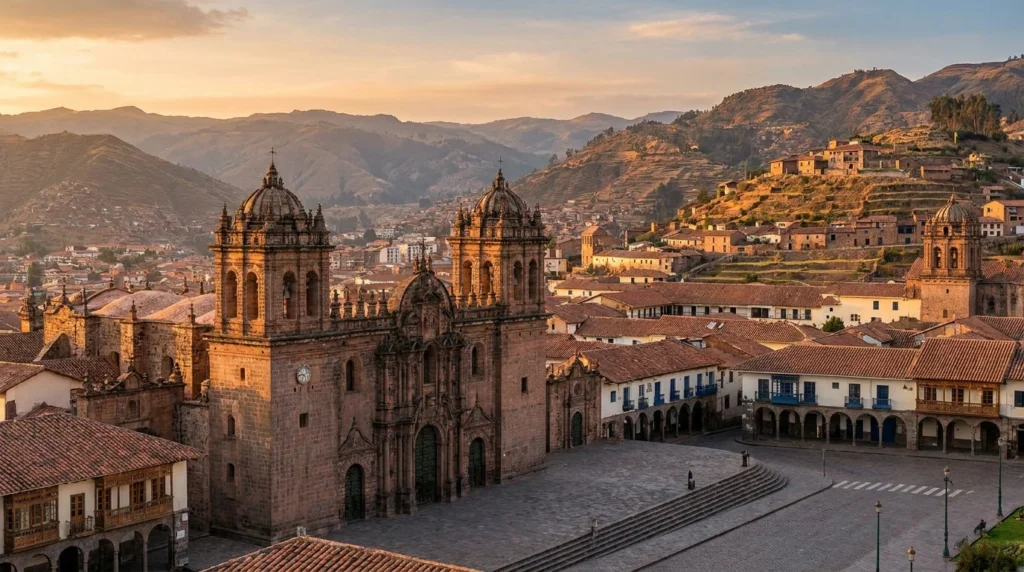
The Inca capital and Peru’s cultural heart, sitting at 3,399 metres in a bowl of mountains. Cobbled streets of Inca masonry, Spanish cloisters on top of temple foundations, and the base camp for every Machu Picchu trip.
- Plaza de Armas — the colonial heart, with the cathedral built on Inca stonework
- Qorikancha (Temple of the Sun) — the Inca sun temple, still visible beneath Santo Domingo church
- Sacsayhuamán — the zigzag fortress above town where Inti Raymi’s main pageant is held
Eat: chicharrón at Cicciolina, chiri uchu at San Pedro market, and alpaca skewers at the open-fronted picanterías of San Blas.
🌊 Lima
The capital and one of South America’s great food cities, sprawled along a cliff above the Pacific. Ten million people, a genuine colonial core, and the best restaurant scene in the Andes.
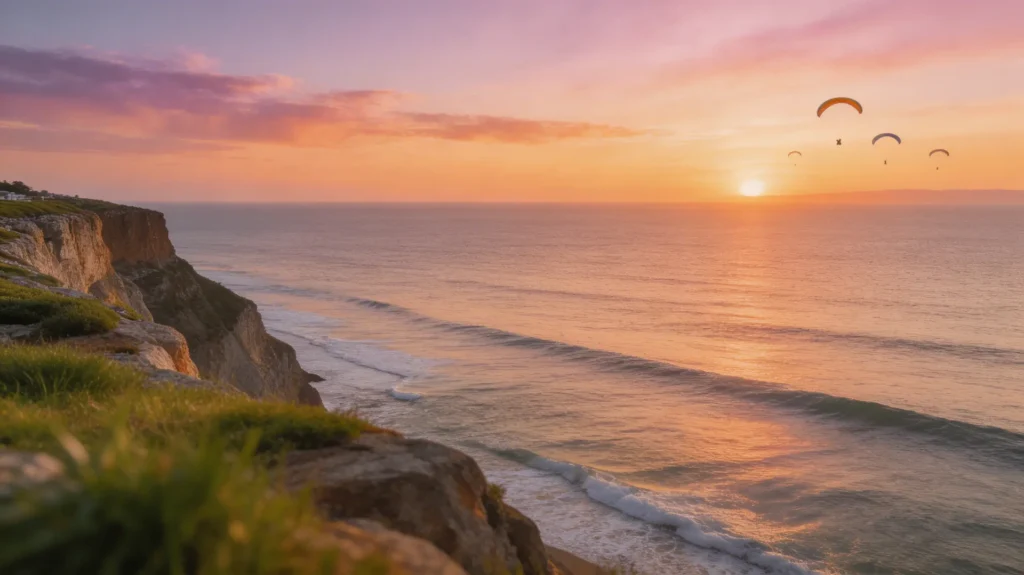
- Miraflores & Barranco — the oceanfront neighbourhoods with pisco bars, art galleries, and the Malecón paragliding launch
- Centro Histórico — UNESCO-listed colonial Lima, with the Plaza Mayor, San Francisco catacombs, and Casa de Aliaga
- Larco Museum — 5,000 years of pre-Columbian ceramics in a restored vice-regal mansion
Eat: ceviche at La Mar or a seaside cevichería, anticuchos at Grimanesa Vargas, and tasting menus at Central and Maido — the twin gravity wells of Lima’s Relais & Châteaux-level dining scene.
🌋 Arequipa
The “White City” of volcanic sillar stone at 2,335 m, framed by the perfect cone of El Misti. Peru’s most elegant colonial centre and the gateway to Colca Canyon — one of the world’s deepest.
- Monasterio de Santa Catalina — a 16th-century convent that functions as a miniature pastel-walled city within the city
- Plaza de Armas & Cathedral — built entirely from white volcanic stone with Misti volcano as a backdrop
- Colca Canyon — a 3–4 day side trip for Andean condors and terraced villages; depths exceed 3,270 m
Eat: rocoto relleno (stuffed spicy pepper) and chupe de camarones (river-shrimp chowder) in the picanterías of Yanahuara.
🛶 Puno & Lake Titicaca
The altiplano at 3,812 metres — the highest navigable lake in the world, straddled by Peru and Bolivia. Puno itself is a rough port town; the reason to come is what sits on and around the lake.
- Uros floating reed islands — Aymara-speaking communities living on constructed reed platforms
- Taquile & Amantaní islands — homestays with communities that still weave in Inca-era techniques
- Sillustani — a clifftop necropolis of stone burial towers (chullpas) on a peninsula above Lake Umayo
🌿 Iquitos & the Amazon
The largest city on Earth that can’t be reached by road — Iquitos sits deep in the Peruvian Amazon and is accessible only by plane or river boat. From here you reach the Pacaya-Samiria and Tambopata reserves for wildlife that rivals anywhere in the basin.
- Pacaya-Samiria National Reserve — 20,800 km² of flooded forest, pink dolphins, and piranha fishing
- Belén market & the Iron House — a wrought-iron building attributed to Gustave Eiffel’s workshop
- Ayahuasca retreats — increasingly regulated; go only with reputable, indigenous-led centres
🏔️ Huaraz & Cordillera Blanca
Peru’s trekking capital in the Ancash region, ringed by the Cordillera Blanca range — 22 peaks above 6,000 m, including Huascarán at 6,768 m. The Huascarán National Park is a UNESCO biosphere reserve.
- Laguna 69 — a turquoise glacial lake at 4,600 m reached by a stiff 12 km day hike
- Santa Cruz Trek — the classic 4-day circuit through glacier valleys
- Chavín de Huántar — pre-Inca UNESCO ruins with underground galleries dating to 1,200 BCE
Peruvian Culture & Etiquette — What to Know Before You Go
The Essentials
- Greetings are warm and physical. Expect a single cheek kiss between women and between men and women; men shake hands. A good “buenos días” or “buenas tardes” goes a long way, even in tourist areas.
- Tipping is customary but modest. Leave 10% at sit-down restaurants if service isn’t already included (servicio on the bill), round up for taxis, and tip porters on the Inca Trail generously — S/80–120 per porter is the accepted norm from a group.
- Spanish opens every door, Quechua opens hearts. In the Sacred Valley and rural Cusco, a handful of Quechua words — allillanchu (hello), sulpayki (thank you) — earns instant goodwill.
- Photographs of people are not free. In markets and around Cusco, women in traditional dress expect a small tip (S/2–5) if you photograph them. Ask first.
- Time runs on la hora peruana. Social arrivals comfortably late are the norm. Tours, flights and trains run on strict clock time — treat those like Swiss rail.
Inca & Quechua Cultural Context
- Respect Pachamama. Before drinking in the highlands, many locals pour a small splash on the ground as an offering to the earth mother. Follow suit and you’ll be welcomed at any table.
- Don’t touch or climb Inca stonework. At Machu Picchu, Sacsayhuamán and Ollantaytambo, guards enforce this strictly — fines apply and cameras are everywhere.
- Coca leaves are sacred, not a snack. Chewing coca or drinking mate de coca is culturally respectful and medicinally useful at altitude — accept an offering with both hands.
- Textiles tell stories. Every pattern on a Chinchero or Taquile weaving encodes a village, a family, and often a crop cycle. Buying from community co-operatives (not street resellers) keeps the knowledge alive.
- Festivals blend Catholic and Andean belief. Corpus Christi in Cusco and the Virgen de la Candelaria in Puno are both Catholic on paper and pre-Columbian underneath.
A Food Lover’s Guide to Peru
Peru is a food destination in its own right, not a side trip bolted onto an archaeological one. The cuisine braids indigenous Andean ingredients (potatoes, quinoa, corn, cuy, alpaca), a 500-year Spanish colonial layer (rice, onions, citrus, wine), a Japanese wave that created Nikkei cooking, and a 19th-century Cantonese immigration that gave the country Chifa. Two Lima restaurants — Central and Maido — have alternated the top spot on the World’s 50 Best Restaurants list in recent years.
Must-Try Dishes
| Dish | Description |
|---|---|
| Ceviche | Raw white fish “cooked” in lime juice with red onion, chili, coriander and sweet potato. Lima coastal style is the benchmark; S/25–45 at a solid cevichería. |
| Lomo Saltado | Chifa-influenced beef stir-fry with onion, tomato, soy sauce, fries and rice — Peru’s single best introduction to Chinese-Peruvian fusion. |
| Ají de Gallina | Shredded chicken in a creamy yellow-chili (ají amarillo) sauce with walnuts and Parmesan, served over rice and boiled potato. |
| Cuy | Roasted guinea pig, a 2,000-year-old Andean staple still served whole in Cusco and the Sacred Valley; try it at least once. |
| Rocoto Relleno | Arequipa’s signature — a hollowed-out spicy rocoto pepper stuffed with beef, raisins, olives and melting queso fresco. |
| Anticuchos | Marinated beef-heart skewers grilled on street corners; order two, add ají verde, and you’ve found Lima’s soul-food moment for S/10. |
| Causa Limeña | Cold mashed-potato terrine layered with chicken, tuna or crab salad and avocado — a cevichería opener. |
Markets & Everyday Eating
Peru’s food culture lives in markets and menú-del-día lunches, not fine-dining rooms. A two-course menú (soup plus a main plus a drink, sometimes dessert) at a neighbourhood spot runs S/12–20 (about USD 3–6) and is how most Peruvians eat midday. Anywhere with working-class locals eating elbow-to-elbow is a safe bet, and the menú almost always represents what the cook actually shops for that morning rather than what’s printed on a plasticised menu.
- Markets to prioritise: Mercado San Pedro (Cusco), Mercado Surquillo No. 1 (Lima), Mercado San Camilo (Arequipa). Go hungry, arrive before 10am, and sit at the juice counter for a fresh-blended tropical fruit breakfast under S/10.
- Must-drink items: pisco sour (the national cocktail, made with Peru’s grape brandy, lime, egg white and bitters), chicha morada (purple-corn cinnamon drink), and Inca Kola (fluorescent yellow, tastes like bubblegum, bizarrely perfect with lomo saltado).
- Regional specialties: pachamanca (Andean earth-oven feast with meats and tubers slow-cooked under hot stones), juane (Amazonian rice-and-chicken parcel steamed in bijao leaf), adobo arequipeño (Sunday pork stew in chicha vinegar), and papa a la huancaína (cold potatoes in creamy yellow-chili sauce).
Chifa restaurants — Peruvian-Chinese, born from 19th-century Cantonese migration — are ubiquitous, usually excellent, and the cheapest proper sit-down dinner you’ll find anywhere for about S/20–30. Nikkei cuisine (Japanese–Peruvian) lives higher on the scale: Maido in Miraflores is the temple, but any Lima tiradito — the Nikkei cousin of ceviche, sliced sashimi-thin and dressed in soy and citrus — is an affordable taste of what makes this 120-year-old hybrid work. Leave room for dessert: suspiro a la limeña (caramel-and-meringue), picarones (sweet-potato-and-squash doughnuts with chancaca syrup), and mazamorra morada round out any meal.
Off the Beaten Path — Peru Beyond the Guidebook
Chachapoyas & Kuélap
A cloud-forest civilisation that pre-dated the Inca by centuries. Kuélap is a fortified city of 400 circular stone houses sitting at 3,000 m on a limestone ridge, sometimes called “the Machu Picchu of the north.” A cable car from Tingo Nuevo makes it a day trip from the town of Chachapoyas. Add the 771 m Gocta waterfall — one of the tallest in the world — for a two-day loop that most visitors miss entirely.
Choquequirao
Machu Picchu’s sister city, less than half-excavated and reachable only by a brutal 4-day trek. Where Machu Picchu gets 5,600 visitors daily in high season, Choquequirao sees maybe 20. Plans for a cable car have been floated for years; for now, the trail crosses the Apurímac canyon and climbs 1,500 m to one of the most atmospheric ruins in South America.
Paracas & the Ballestas Islands
A three-hour drive south of Lima, Paracas sits on a desert coast where guano-whitened islands host sea lions, Humboldt penguins and thousands of nesting birds. It’s often called “the poor man’s Galápagos” — unfairly, because the combination of ocean, the Paracas candelabra geoglyph and the Nazca Lines two hours further south is one of Peru’s most underrated corridors.
Huacachina
A desert oasis with a single lagoon surrounded by 100 m-plus sand dunes, four hours south of Lima by bus. Sandboarding, dune buggies at sunset, and Ica’s pisco bodegas (the national spirit is distilled here) make this a lighthearted two-night break between Lima and the Andes. It’s touristy in a fun way, not a sell-out way.
Tarapoto & the High Jungle
Between the Andes and the Amazon sits the selva alta — a ribbon of cloud forest that most travellers skip on their way between Lima and Iquitos. Tarapoto is the anchor town, surrounded by 50-metre waterfalls (Ahuashiyacu), lagoons (Sauce), and cacao plantations that have replaced coca fields over the last 15 years under the government’s alternative-development programme. Flights from Lima take 1h 15m and hotel rates are roughly half of what you’ll pay in Cusco or Aguas Calientes. The single-origin chocolate coming out of the San Martín region has won multiple international prizes since 2015 and is sold direct from farm co-ops on the edge of town.
Cordillera Huayhuash
South of the Cordillera Blanca sits a far more rugged 30 km range of glaciated peaks that mountaineer Joe Simpson made famous in Touching the Void. The classic 8–10 day circuit crosses eight passes above 4,600 m and rewards trekkers with views of Yerupajá (6,635 m), Peru’s second-highest peak, from a chain of turquoise alpine lakes. Go only with a registered local guide; this is a serious high-altitude objective, not a hut-to-hut walk.
Practical Information
| Currency | Peruvian Sol (S/ or PEN); 1 USD ≈ S/3.76 (19 Apr 2026). US dollars widely accepted at hotels and tour operators. |
| Cash needs | Carry small bills in sol for taxis, markets, and rural areas. ATMs limit withdrawals to around S/700 per transaction. |
| ATMs | BCP, Scotiabank, Interbank and BBVA all have ATMs at airports and in tourist towns. Expect USD 4–8 per foreign-card withdrawal plus your home bank’s fee. |
| Tipping | 10% in sit-down restaurants if no servicio is added; round up taxis; S/80–120 per porter on multi-day treks from a group. |
| Language | Spanish (official), Quechua (official, ~3.8M speakers), Aymara (official, around Titicaca). English patchy outside tourist zones. |
| Safety | Petty theft is the main risk — common in Lima’s centro and around Cusco’s Plaza de Armas at night. Violent crime against tourists is rare; avoid wearing expensive jewellery and use registered taxis or Uber. |
| Connectivity | 4G/LTE is solid in cities and the Sacred Valley. Claro and Movistar offer prepaid SIMs; Airalo/Holafly eSIMs from USD 12 are simpler. |
| Power | Type A and C plugs, 220V / 60 Hz. US dual-voltage chargers work; single-voltage appliances need a converter. |
| Tap water | Not potable anywhere in Peru. Drink bottled or filtered only; brush teeth with bottled water in remote areas. |
| Healthcare | Lima and Cusco have good private clinics (Clínica Anglo-Americana, Clínica San Pablo) — bring travel insurance that covers altitude evacuation. |
Budget Breakdown — What Peru Actually Costs
💚 Budget Traveller
Peru is one of the best-value destinations in South America if you lean into hostels, menú-del-día lunches and long-distance buses. Expect USD 45–65 per day: a hostel bed in Cusco or Lima at S/45–75 (USD 12–20), two menús at S/15 each, a Peruvian SIM, and the odd cheap entry ticket. Big one-time hits (Machu Picchu ticket USD 45, Inca Rail USD 70, Inca Trail USD 750) blow the budget but are worth protecting around.
💙 Mid-Range
USD 120–180 per day gets you a well-located boutique hotel (Casa Cartagena in Cusco, Casa Andina in Lima at USD 90–140), table-service restaurants twice a day, domestic flights between the main hubs, and guided half-day tours. This is the tier most visitors land on and where Peru’s price-to-quality curve is sharpest — you are eating ceviche at La Mar, not at a tourist-trap on the plaza.
💜 Luxury
USD 400+ per day unlocks the Belmond properties (Hotel Monasterio Cusco, Sanctuary Lodge at Machu Picchu), the Hiram Bingham train at USD 550 one-way, private guiding through the Sacred Valley, and tasting-menu nights at Central and Maido (USD 300+ per person with pairings). A private 10-day guided itinerary with domestic flights and a Luxury Amazon lodge clears USD 8,000–12,000 per person all-in.
| Tier | Daily (USD) | Accommodation | Food | Transport |
|---|---|---|---|---|
| Budget | 45–65 | Hostel dorm, S/45–75 | Menú del día S/15 ×2 | Local bus + occasional Uber |
| Mid-Range | 120–180 | Boutique hotel USD 90–140 | Sit-down restaurants USD 25–40/day | Domestic flights + private transfers |
| Luxury | 400+ | Belmond / Sanctuary Lodge USD 500+ | Tasting menus USD 150–300 | Hiram Bingham, private 4WD |
Planning Your First Trip to Peru
- Lock in Machu Picchu and Inca Trail dates first. The Inca Trail has only about 500 total permits per day including porters — roughly 200 are for trekkers — and May–September sells out four to six months ahead.
- Fly into Lima, connect to Cusco the same or next day. Don’t try to drive. Sleep once in Lima, then take the 1h 25m hop to Cusco.
- Build in altitude days. Cusco sits at 3,399 m. Spend two nights in the lower Sacred Valley (Urubamba 2,870 m, Ollantaytambo 2,792 m) before heavy exertion.
- Book PeruRail or Inca Rail tickets from Ollantaytambo to Aguas Calientes together with your Machu Picchu entry. They don’t refund time mismatches.
- Pick two regions, not four. Lima → Cusco → Puno → Iquitos in 10 days is punishing. Two regions for 10 days; three for 14.
Classic 10-Day Itinerary: Lima 2 nights → Cusco & Sacred Valley 4 nights → Machu Picchu day trip → Puno / Lake Titicaca 2 nights → Lima 1 night. Extends to 14 days by adding Arequipa + Colca Canyon or a 3-day Amazon add-on from Puerto Maldonado.
Cities & Regions to Explore
Frequently Asked Questions
Is Peru expensive to visit?
No — Peru is one of the best-value countries in the region. Daily budget travel runs USD 45–65 and mid-range USD 120–180; only the Inca Trail (USD 750 guided), the Hiram Bingham train (USD 550) and tasting menus at Central or Maido push into premium territory. Book flights and Inca Trail permits early to protect the biggest line items.
Do I need to speak Spanish?
You’ll get by in Cusco, Lima’s tourist areas and Aguas Calientes, where English is common. Everywhere else — markets, rural towns, long-distance buses — Spanish is essential. Learn twenty key phrases and download Google Translate’s offline Spanish pack. In the Sacred Valley, a few words of Quechua earn you genuine warmth.
Do I need to book the Inca Trail in advance?
Yes. The government releases approximately 500 permits per day including porters, with around 200 for trekkers, and May–September dates disappear four to six months out. Go through a SERNANP-licensed operator. If permits are gone, the 2-day Short Inca Trail, Salkantay, and Lares treks are excellent alternatives.
Is Peru safe for solo travellers?
Broadly yes, with standard urban precautions. Petty theft is the main issue in Lima’s Centro and around Cusco at night; violent crime against tourists is rare. Use registered taxis or Uber, don’t flash phones on late-night streets, and take overnight buses with reputable companies (Cruz del Sur, Oltursa).
When is the best time to visit?
May–September is the Andean dry season and the only reliable window for the Inca Trail. June around Inti Raymi (24 June 2026) is the cultural peak. For sunshine without crowds, target late April or early October. November–March is cheaper but wet; the Inca Trail closes every February.
Can I get by as a vegetarian or vegan?
Easily in Lima, Cusco and Arequipa — every tourist-facing menu has vegetarian options, and Lima has world-class vegan restaurants (Veda, El Pan de la Chola). In rural and Amazonian areas it gets harder: expect heavy rice-and-potato plates. Quinoa soup, fried yuca, and avocado sandwiches are reliable staples.
How do I handle altitude sickness in Cusco?
Acclimate slowly. Sleep a night in the lower Sacred Valley (Urubamba, 2,870 m) before Cusco if you can. Skip alcohol on arrival day, drink coca tea, and walk slowly for the first full day. Acetazolamide (Diamox) is sold over the counter at Peruvian pharmacies — consult your doctor first. If symptoms worsen, descend.
Ready to Explore Peru?
Peru rewards travellers who plan the big logistics early and let the small moments happen on their own. Lock in your Machu Picchu entry, your Inca Trail permit and your Cusco acclimatization nights now — then leave the market afternoons, the picantería lunches and the starlight at 3,800 metres to themselves. Our Cusco, Lima and Arequipa city guides go deep on each, and the Peru trip-cost guide breaks down every major line item.
Explore More
Cities we cover in Peru
Cities to explore in Peru
Deep-dive guides to specific cities, neighbourhoods, and food scenes — written with the same magazine voice.
More country guides you might like
Plan your trip to Peru
The booking tools we use ourselves. FFU may earn a commission at no extra cost to you.
Plan & book your trip to Peru
Booking through these searches supports our guides at no extra cost to you.