
Peru · Pacific cliffs, ceviche capital, pisco country
Lima, Peru: Pacific Capital, Gastronomic Capital, the City of Kings
Part of our Peru travel guide.
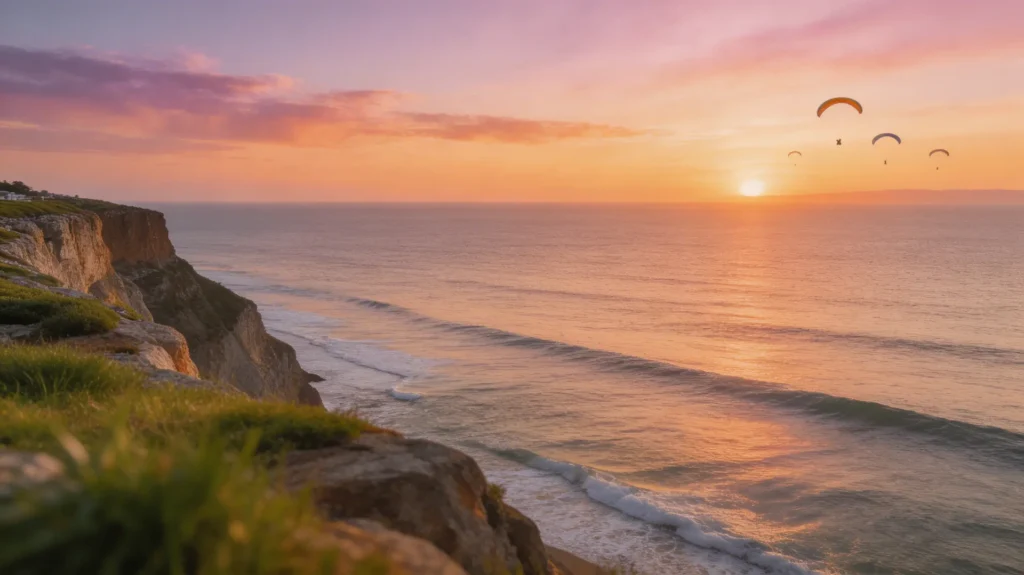
I have argued Lima’s case to enough sceptical first-time visitors to know the city sells itself badly. We tell travellers that Lima is not a one-night layover en route to Cusco — it is the gastronomic capital of South America, the colonial Spanish viceroyalty that ruled half a continent, and the only major Pacific capital between Santiago and San Francisco. My favourite hour in Lima is the cliff path at Miraflores at 5pm in October, with paragliders rising off the Costa Verde and a pisco sour at the Hotel B in Barranco an hour away. Treat this guide as the brief I would hand my own family on the taxi ride from Jorge Chávez.

Table of Contents
Why Lima?
Lima is the second-largest desert city on earth (after Cairo), the gastronomic capital of Latin America, and the only major Pacific capital between Santiago and San Francisco. Lima Metropolitana — the city plus the constitutional Province of Callao — holds around 10.7 million people, roughly a third of Peru’s population, on a coastal desert plain that receives less than 10 mm of rain a year and runs entirely on Andean meltwater piped down the Rímac valley.
What makes Lima feel like several cities at once is the layering of three separate urban grammars on the same coastline: the colonial Centro Histórico that Pizarro laid out in 1535 and that earned the UNESCO listing in 1991 ; the early-20th-century ‘Old Lima’ of San Isidro and Miraflores, with their Pacific-cliff malecón, art-deco apartments and embassy quarter; and the bohemian Barranco and creative-class Surco that came of age in the 2000s. The food map — Central, Maido, Astrid & Gastón, Kjolle, Mayta — is the world’s most concentrated three-Michelin-star equivalent district outside of Tokyo and Paris.
The city is also the launchpad for every Peru itinerary. Jorge Chávez International Airport (LIM) is in Callao 12 km from central Miraflores; the new second runway and terminal opened in 2025. LATAM’s domestic hub funnels flights to Cusco (1h 25m), Arequipa (1h 40m), Iquitos (2h) and Trujillo (1h 10m). Plan three full days in Lima as the bookend to your Peru trip, then fly south.
Neighborhoods: Finding Your Lima
📍 Lima Map: Every Place in This Guide


Centro Histórico (Cercado de Lima)
The colonial spine — laid out by Francisco Pizarro on 18 January 1535 around the Plaza Mayor and earning the UNESCO listing in 1991 for the largest and best-preserved colonial-Spanish urban core in the Americas. The Government Palace, Lima Cathedral and Archbishop’s Palace ring the Plaza Mayor; Jirón de la Unión runs five blocks south to Plaza San Martín; the Monastery of San Francisco holds the city’s most famous catacombs. Most visits run a half day on foot; sleeping here is rare among foreign visitors who base in Miraflores.
- Plaza Mayor with the Government Palace, Lima Cathedral, Archbishop’s Palace
- Monastery of San Francisco — Lima’s most famous catacombs, 25,000 burials
- Plaza San Martín (1921) — early-20th-century civic square
Best for: colonial architecture, history walks, the change-of-guard at noon. Access: Metropolitano BRT to Estación Central, then 10-minute walk; or taxi/Uber from Miraflores PEN 25–35.
Miraflores
The cliff-edge upper-middle-class neighbourhood that most foreign visitors use as base — eight kilometres of paved Pacific-cliff malecón (cliff path) with manicured parks every few hundred metres, the city’s safest streets at night, the densest concentration of foreign-friendly hotels and restaurants. The Larcomar shopping mall cantilevers over the Pacific; Parque Kennedy at the heart of the district holds Lima’s famous resident cats. Huaca Pucllana — a 25 m adobe pyramid built by the Lima culture between 200 and 700 CE — sits incongruously in the middle of the residential grid.
- Malecón de Miraflores — 8 km cliff path with Parque del Amor, Parque Salazar and Larcomar
- Huaca Pucllana — pre-Inca adobe pyramid in the residential grid
- Parque Kennedy — central plaza, the resident-cats park
Best for: base hotel, cliff walk, foreign-friendly restaurants. Access: Metropolitano BRT to Estación Ricardo Palma; or taxi from Centro Histórico.
Barranco
The bohemian district south of Miraflores — late-19th-century summer-villa neighbourhood that became the city’s artist quarter from the 1990s on. Painted timber houses, the Puente de los Suspiros (Bridge of Sighs, 1876) over the Bajada de los Baños ravine, the MAC Lima contemporary-art museum, the Mario Testino Foundation (MATE), and the densest gallery and live-music density in the city. Hotel B occupies a 1914 Belle Époque seafront mansion that is itself worth a drink.
- Puente de los Suspiros — 1876 wooden footbridge over the Bajada de los Baños
- MAC Lima — Museo de Arte Contemporáneo on Av Grau
- MATE — Museo Mario Testino, the photographer’s foundation
Best for: art galleries, live music, Sunday brunch. Access: 25-minute walk south from Miraflores along the malecón, or PEN 12–18 Uber.
San Isidro
The financial-and-embassy district north of Miraflores — Lima’s quietest upscale neighbourhood, with the Bosque El Olivar (a 16th-century olive grove planted by Antonio de Rivera, now a public park with 1,500 trees), the gold-and-pre-Columbian Museo Banco Central de Reserva, the Country Club Lima Hotel and the densest concentration of business hotels. Many travellers staying for work base here; for sightseeing-led trips, Miraflores is closer to the cliff path and the food scene.
- Bosque El Olivar — 16th-century olive grove turned public park
- Huaca Huallamarca — restored pre-Inca adobe pyramid
- Lima Golf Club and Country Club Lima Hotel — Belle Époque hotel, 1927
Best for: business travel, quiet residential base. Access: Metropolitano BRT to Estación Javier Prado (close to the financial district).
Pueblo Libre & Magdalena del Mar
The middle-class neighbourhoods west of San Isidro — home to the Larco Museum (in an 18th-century viceroyal mansion built atop a pre-Columbian pyramid) and the Museo Nacional de Arqueología, Antropología e Historia del Perú. Most travellers visit specifically for the museums; few base here. The Magdalena del Mar coastline has cheaper seafood lunch options than Miraflores.
- Museo Larco — 45,000 pre-Columbian artefacts in a vine-covered hacienda
- Museo Nacional de Arqueología, Antropología e Historia
- Antigua Taberna Queirolo — 1880 traditional bar at Av San Martín
Best for: Larco Museum, archaeology day. Access: Uber from Miraflores PEN 18–25, 25 minutes.
Chorrillos
The fishing-port neighbourhood at the south end of the Costa Verde — Lima’s working-class beach barrio. The Mercado de Pescadores (fish market) at Caleta de Chorrillos has the freshest ceviche in the city sold out of the back of family restaurants whose tiles haven’t been updated since 1985. The Pantanos de Villa wetland is a flamingo and migratory-bird reserve 5 km south.
- Mercado de Pescadores — Lima’s fish market and ceviche stalls
- Caleta de Chorrillos — fishing pier with morning catch
- Pantanos de Villa wetland reserve
Best for: ceviche lunch, off-tourist-track. Access: Metropolitano BRT to Estación Matellini; taxi from Miraflores PEN 25–35.
Callao Monumental
The reborn arts quarter inside the constitutional province of Callao — a colourful mural and gallery district in the old port-town centre, anchored on the Convento Casa Ronald (a former monastery converted to artist studios in 2014) and the Real Felipe Fortress (Spanish 1747, the largest colonial fortress on the Pacific Americas coast). Most travellers visit on a guided afternoon tour; independent visits are fine in daylight hours but check current safety advisories.
- Real Felipe Fortress — 1747 Spanish viceregal coastal defence
- Casa Ronald and Monumental Callao murals
- La Punta peninsula and the Cantolao yacht club
Best for: street-art day, fortress-and-port history. Access: Uber from Miraflores PEN 35–50, 30 minutes.
The Food

Peruvian Classics, Done Properly
Lima is the easiest place in Peru to taste the genuine national pantry — ceviche at every cevichería, lomo saltado at the chifa down the street, ají de gallina at the menú del día, and anticuchos (beef-heart skewers) on the corner from 7pm. The classics anchor every itinerary; everything below is layered on top.
- La Mar Cebichería (Miraflores) — Gastón Acurio’s flagship cevichería, lunch only, no dinner; the standard against which all Lima ceviche is now measured
- Punto Azul — the Miraflores chain that does the city’s best-priced ceviche tasting (PEN 35-65 a plate)
- Panchita (Miraflores) — Acurio’s anticuchos and grill house, the canonical version
Tasting Menus and the World’s 50 Best
Lima holds two restaurants in the World’s 50 Best top ten — Central (no. 1 in 2023, by Virgilio Martínez) and Maido (Mitsuharu ‘Micha’ Tsumura’s Nikkei kitchen). Reservations open 90 days ahead and the booking window matters more in Lima than in any other Latin-American capital. Astrid & Gastón (Acurio’s flagship), Kjolle (Pia León, Martínez’s wife), Mayta and Mérito complete the front rank.
- Central (Barranco) — Mater Iniciativa’s eco-altitudinal tasting menu; PEN 1,400-1,600 in 2026
- Maido (Miraflores) — Nikkei (Japanese-Peruvian) tasting menu; PEN 1,200-1,400
- Astrid & Gastón (San Isidro) — Acurio’s flagship in the 17th-century Casa Moreyra
- Kjolle (Barranco) — Pia León’s restaurant, sister to Central
Beyond Ceviche and Lomo Saltado
Lima’s food map runs from market puestos to chifa (Chinese-Peruvian) institutions to Nikkei (Japanese-Peruvian) izakayas to a strong third-wave coffee scene that arrived in 2018-2020. Mercado de Surquillo No. 1 is the city’s best public market for browsing produce; the chifa map is anchored on Wa Lok and Madam Tusan; the Nikkei izakaya scene by Maido and Hanzo.
- Mercado de Surquillo No. 1 — produce market; cevicherías upstairs do PEN 25 lunch
- Wa Lok (Chinatown) — chifa institution since 1986, the dim sum benchmark
- Picantería La Picantería (Surquillo) — Héctor Solís’s regional Peruvian (Chiclayo and Arequipa)
- Tostaduría Bisetti (Barranco) — Lima’s best third-wave coffee since 1958
Food Experiences You Cannot Miss
- A Mercado de Pescadores ceviche lunch in Chorrillos — PEN 35 for the morning catch
- Sunday lunch in Pueblo Libre’s Antigua Taberna Queirolo — pisco macerado with anticuchos and chicha morada
- An anticuchos cart on the corner of Av Pardo and Av Diagonal at 8pm
Cultural Sights

Museo Larco
The pre-Columbian art museum in an 18th-century vice-royal hacienda in Pueblo Libre — 45,000 catalogued objects spanning 5,000 years of Peruvian civilisation, with a famously open storage gallery (visitors walk through climate-controlled racks holding tens of thousands of objects). The gold-and-silver gallery and the upstairs erotic-pottery hall are the headline rooms; the Café del Museo terrace under the bougainvillea is itself a destination. Adult admission PEN 60 (verify on official site); plan three hours.
Plaza Mayor and the Government Palace
The colonial heart of Lima — Pizarro’s 1535 founding plaza with the Government Palace (the Casa de Pizarro, on the site of Pizarro’s original residence), Lima Cathedral (1535-1797), the Archbishop’s Palace and the Municipal Palace. The change-of-guard at the Government Palace runs at midday Monday to Saturday ; the cathedral interior holds the marble tomb of Francisco Pizarro (a 1985 reconstruction; his 16th-century original sarcophagus is in the Capilla de la Inmaculada).
Monastery of San Francisco and the Catacombs
The 17th-century Franciscan monastery two blocks east of the Plaza Mayor — the most-visited single sight in the Centro Histórico. The catacombs beneath the church hold an estimated 25,000 burials from the colonial era, displayed in geometric arrangements visible from a guided 30-minute walk. Above ground, the monastery library holds 25,000 antique volumes and an Andalusian-tiled cloister. Adult admission PEN 20; guided tours included; English available on request.
Huaca Pucllana
A 25 m adobe pyramid in the centre of Miraflores — built by the pre-Inca Lima culture between 200 and 700 CE, abandoned, and rediscovered in the 1980s when the surrounding residential grid was built around it. Daytime guided visits run hourly and last 45 minutes; the on-site Huaca Pucllana Restaurant on the western edge has the city’s most-photographed lit-pyramid dinner view. Adult admission PEN 20.
Plaza San Martín and the Hotel Bolívar
The early-20th-century civic plaza built for Peru’s centennial of independence in 1921 — granite and Beaux-Arts buildings ringing a square dominated by the Hotel Bolívar (1924, Lima’s most famous Art Deco hotel). Plaza San Martín Independence Day rallies fill the square on 28 July; on ordinary days it is a peaceful walking spot off Jirón de la Unión.
Museo Nacional de Arqueología, Antropología e Historia del Perú (MNAAHP)
The 1822 national archaeology museum in Pueblo Libre — the country’s primary collection of textiles, mummies and pre-Columbian objects from every Peruvian culture. Less polished than Larco but historically deeper; the Paracas textile gallery and the Lord of Sipán reproductions are essential. Adult admission PEN 15; combine with Larco for a full archaeology day.
MALI — Museo de Arte de Lima
The country’s flagship art museum in the Parque de la Exposición downtown — 17,000 works spanning 3,000 years from pre-Columbian textiles to contemporary Peruvian painting and photography. The Italian-Renaissance-style 1872 Palacio de la Exposición building is itself a sight. Adult admission PEN 30; closed Tuesday.
Entertainment

Magic Water Circuit (Circuito Mágico del Agua)
13 illuminated fountains at the Parque de la Reserva downtown — Guinness-recognised as the largest fountain complex in a public park. The headline ‘Túnel de las Sorpresas’ walk-through fountain and the ‘Fuente de la Fantasía’ light-and-water show run nightly with three timed shows. Adult admission PEN 15; family-favourite outing on Wednesday-Sunday evenings.
Bars and Pisco Sours
Lima invented the pisco sour, and the bar map runs from the historic Hotel Bolívar (where the ‘catedral’ double-pour version is the local order) to the contemporary Ayahuasca in Barranco (in a 19th-century mansion). The standard pisco sour is PEN 28-45 at a mid-range bar; Carnaval (Miraflores) is a recurring entry on the World’s 50 Best Bars list.
Live Music and Peñas
The peña — Peruvian live-music supper-club — is a Lima institution, with Afro-Peruvian, criolla and música andina nights running across Barranco and Surquillo. La Estación de Barranco is the canonical large-venue peña; Don Porfirio is the smaller Afro-Peruvian focus. Cover PEN 30-60; supper extra.
Football at Estadio Monumental
The 80,000-seat home of Universitario de Deportes in Ate, eastern Lima — the largest football stadium in Peru and the second-largest in South America. Match days for clásicos against Alianza Lima are the city’s loudest event of the year; tickets PEN 60-200; Estadio Nacional in the Centro hosts the national team.
Beaches and Surfing on the Costa Verde
The Costa Verde runs 8 km along the base of the Miraflores cliff and continues south to Chorrillos — Punta Hermosa, Playa Makaha and Playa La Herradura are the surf beaches. December to April is the warm-water season (water temperature 20-23°C); the rest of the year is wetsuit territory. Surfboard rental PEN 30-50/day from Makaha Surf Club.
Day Trips

Pachacamac (Half day, 40 km, by car)
The pre-Inca and Inca pilgrimage centre on the Pacific coast — a 465-hectare archaeological park with the Temple of the Sun, the Mamacona acllawasi, the Painted Temple and the on-site museum (renovated 2016). The site was the most important oracle on the central Andean coast for over a thousand years before the Spanish arrival. Adult admission PEN 15; allow three hours plus museum.
Caral (Full day, 200 km, by car)
The 5,000-year-old UNESCO archaeological site in the Supe Valley — the oldest urban centre in the Americas and broadly contemporary with the Egyptian Old Kingdom. The site holds six monumental platform mounds, two sunken circular plazas and an extensive irrigation system. A long day from Lima — 3 hours each way; better as an overnight in Barranca or Huacho. Adult admission PEN 11.
Paracas and Ballestas Islands (Long day, 245 km, by car or bus)
The Paracas National Reserve and the Ballestas Islands (‘the poor man’s Galápagos’) south of Lima — 2-hour boat tours circle the Ballestas at sunrise and see Humboldt penguins, sea lions, blue-footed boobies and the Candelabra geoglyph. The Paracas reserve has cliff-top lookouts and the Cathedral rock formation. Often combined with an overnight at the Hotel Paracas; same-day return is doable via the 06:00 Cruz del Sur bus.
Lunahuaná (Full day, 175 km, by car)
The Cañete-valley wine-and-pisco country south-east of Lima — the closest Peruvian pisco bodegas to the city, with rafting on the Río Cañete in the December-April rainy season. The bodegas at Lunahuaná run free tasting tours; the river-rafting outfits are based at the eponymous town centre.
Lomas de Lachay (Half day, 105 km, by car)
The unique fog-watered desert ecosystem 100 km north of Lima — six months a year an arid moonscape, six months (June to October) a green-carpet meadow with wildflowers triggered by garúa fog precipitation. A short day-hike circuit and the on-site visitor centre. Adult admission PEN 11.
Hot Springs at Churín (Full day, 200 km)
The Andean hot-springs town in the Huaura province — six different mineral-water complexes ranging from PEN 5 public pools to the upmarket Mamahuarmi resort. A long day from Lima but the best dry-altitude hot-springs option without flying south to Cusco.
Seasonal Guide

Summer (December – March, austral)
Peak season. Days are sunny and warm (24-29°C), Pacific water reaches 21-23°C, beaches in Punta Hermosa and Asia fill at weekends. The Mistura food festival ran historically in September but the largest contemporary food event is the Lima 50 Best week (timed around the November 50 Best Restaurants ceremony). Hotel rates 25-35% above winter; book Central, Maido and Kjolle 90 days ahead.
Autumn (April – May)
The shoulder window. Highs fall from 27°C to 21°C; the garúa coastal fog returns in late April. The April ‘Día de la Canción Criolla’ (31 October counterpart in spring) and Easter week are the civic peaks. Hotel rates 15-25% off summer.
Winter (June – September, austral)
Genuine off-season for the coast — six straight months of garúa fog, daytime highs 15-19°C, near-zero rainfall but constant low cloud. Most Lima itineraries can absorb the fog (museums, restaurants, indoor sights) but skip the beach plans. The 28 July Peruvian Independence Day (Fiestas Patrias) is the city’s biggest civic event of the year — Plaza Mayor military parade, embassies host receptions, restaurants run set patriotic menus and hotel rates climb 20-30% in the surrounding week.
Spring (October – November)
The underrated shoulder. The garúa lifts in late October, days warm from 18°C to 24°C , the World’s 50 Best Restaurants ceremony is held in Lima in some years (next confirmed Lima ceremony 2026). Booking-window remains tight at the front-rank kitchens.
Getting Around
Metropolitano (BRT)
Lima’s bus rapid-transit spine — 33 km of dedicated north-south corridor from Naranjal in the north to Matellini in the south, passing the Centro, San Isidro, Miraflores and Barranco. Single fare PEN 3.50 in 2026 (verify on official site); reload on the prepaid Metropolitano card sold at every station. The cleanest, fastest surface transit option in the city.
Lima Metro (Línea 1, with Línea 2 opening)
Línea 1 runs 26 stations in an L-shape from Villa El Salvador in the south to San Juan de Lurigancho in the north-east — useful for travellers heading to specific outlying museums but not for the standard tourist core. Línea 2 (the underground east-west line through the Centro and Callao) is in phased opening through 2026; verify current operational stations before relying on it.
Buses, Combis and Custers
The dense informal-bus network — useful for residents, opaque to most foreign visitors. Single fare PEN 1.50-2.50 (in cash to the cobrador). Most travellers skip these in favour of Uber, Cabify and the Metropolitano.
Airport Access
- Uber/Cabify from Jorge Chávez (LIM) to Miraflores — 30-50 minutes depending on traffic, PEN 60-100 in 2026 (verify in app).
- Airport Express Lima — official airport coach to Miraflores stations (Larcomar, Pardo, Kennedy) — PEN 28; 50 minutes; departures every 30 minutes
- Taxi Green — the official airport-licensed taxi at the LIM arrivals stand; PEN 70-100 to Miraflores
Taxis
Yellow-and-white street taxis are unmetered; agree the price before getting in. Most foreign travellers prefer Uber, Cabify and InDriver (all ubiquitous in Lima) over street taxis — the apps eliminate fare negotiation, route disputes and the risk of unlicensed vehicles. Surge pricing peaks Friday and Saturday evenings.
Walking
Miraflores, Barranco and the Centro Histórico are individually walkable end-to-end in 30 minutes; between Miraflores and Barranco the malecón is a continuous 3 km cliff walk. Pavements are even and pedestrian crossings work — Lima is among the more pedestrian-friendly Latin American capitals.
Navigation Tips
Apps: Uber, Cabify, InDriver, Google Maps, Citymapper (works in Lima). Lima’s Tomás Marsano-style addresses use jirón (Jr.) and avenida (Av.) prefixes; numbering follows the cuadra (city block) system, where ‘300 cuadra’ means the block numbered 300-399.
Budget Breakdown: Making Your Sol Count
| Tier | Daily | Sleep | Eat | Transport | Activities | Extras |
|---|---|---|---|---|---|---|
| Budget | USD $40-70 | Hostel/guesthouse PEN 50-90 | Menú del día PEN 15-30 | Metropolitano PEN 3.50/ride | Larco PEN 60, MNAAHP PEN 15 | Pisco sour at a peña PEN 25-35 |
| Mid-Range | USD $90-170 | 3-star Miraflores PEN 280-450 | Sit-down dinner PEN 80-180 | Uber PEN 100-180/day | Larco + MALI + Huaca Pucllana day | Magic Water Circuit PEN 15 |
| Luxury | USD $300+ | Country Club Lima from PEN 1,200 | Central tasting PEN 1,400-1,600 | Private driver PEN 700/day | Helicopter to Paracas from USD $1,200 | Hotel B drinks at Belmond’s Lima property |
Where Your Money Goes
Lima is moderately priced for a Latin American capital — significantly cheaper than Santiago or Buenos Aires for hotel rooms but with Central, Maido and the front-rank tasting menus pushing the city’s high end above Mexico City and Buenos Aires. The biggest line item for most mid-range travellers is the front-rank dinner reservations (PEN 1,200-1,600 per person at Central or Maido is the price of three nights at a four-star Miraflores room). The second-biggest is the Miraflores-to-Centro-to-Barranco Uber day. The third is hotel-rate inflation around Fiestas Patrias and Lima 50 Best week.
Money-Saving Tips
- Eat the menú del día (PEN 15-30, three courses) at lunch in any Miraflores or Barranco neighbourhood restaurant — the bargain that anchors Peruvian middle-class working life
- Use the Metropolitano BRT for the Centro-Miraflores-Barranco spine — saves PEN 200+ over a four-day Uber budget
- Book Central, Maido and Kjolle for lunch rather than dinner — same kitchen, often half the price
- Skip the standalone Magic Water Circuit ticket if budget is tight — the cliff malecón walk in Miraflores is free
Practical Tips
Language
Spanish is the lingua franca; English is widely used in Miraflores and Barranco at hotels, restaurants and Uber drivers; Quechua appears in markets and at altitude (less in Lima itself). Learn ‘gracias’, ‘por favor’ and ‘la cuenta por favor’ (the bill please). Tourist sites have multilingual signage; the bigger gap is taxi small-talk and combi-bus directions.
Cash vs. Cards
Lima is mixed — cards work at hotels, Miraflores/Barranco/San Isidro restaurants, supermarkets and Uber; markets, taxis and most cafés are cash only. Bring a working international debit card and withdraw soles at any bank ATM (BCP, BBVA, Interbank, Scotiabank). Decline dynamic currency conversion. ATM limits typically PEN 700-1,000 per withdrawal.
Safety
Lima is a mid-range Latin American capital for safety — Miraflores, Barranco, San Isidro and the Centro Histórico daytime are safe for tourists; petty theft (pickpocketing on the Metropolitano in rush hour, distraction theft at the Plaza Mayor) is the main risk. Avoid waving phones in public, do not hail unlicensed street taxis after dark, and keep daypacks zipped at the markets. Emergency 911. The Tourist Police (Policía de Turismo) operate at every major sight; their booth on Av Salaverry is the dedicated foreign-visitor station.
What to Wear
Lima dress code is casual-Western; the city is more formally dressed than Miraflores beach communities suggest. Smart-casual at Central, Maido and Kjolle (no shorts, no flip-flops, no athletic wear); business-casual at the Government Palace and the National Cathedral. Pack layers — winter mornings are 12-15°C and feel colder under the garúa, while summer afternoons reach 28-30°C.
Cultural Etiquette
Greet with ‘buenos días’, ‘buenas tardes’ or ‘buenas noches’ depending on time. Tipping (la propina) is 10% on restaurant bills (in cash even when service is on the bill), PEN 5-10 for bell-staff and taxi drivers when service is good. The Peruvian abrazo (one-cheek-kiss greeting between women, woman-and-man) is the standard introduction in social contexts; men shake hands. Punctuality is loose-Latin — arrive 15 minutes after the stated start of social events.
Connectivity
4G/5G coverage from Movistar, Claro and Entel is dense in Miraflores and most of greater Lima. eSIMs work everywhere; Movistar Pay-As-You-Go 10 GB PEN 50 in 2026 (verify on site). Free WiFi at every hotel, café, Larcomar, Real Plaza and at the Larco Museum.
Health and Medications
Pharmacies (boticas) are dense — Inkafarma and Mifarma are the two big chains, both with 24-hour branches. Tap water is not drinkable; bottled is universal (PEN 3-5 per 1.5 L). Lima is at sea level — soroche (altitude sickness) is not a concern here, only in Cusco. The Clínica Anglo Americana in San Isidro is the standard expat-quality private hospital; travel insurance is essential.
Luggage and Storage
LIM Airport has 24-hour storage in Terminal 1 (PEN 30-60/day per bag); most Miraflores hotels store luggage free for departing guests; the Larcomar mall has paid lockers. Useful if your night flight follows a daytime checkout.
Frequently Asked Questions
How many days do I need in Lima?
Three full days as a Peru-trip bookend — one for the Centro Histórico (Plaza Mayor, San Francisco catacombs, Government Palace) plus the Larco Museum, one for Miraflores (cliff walk, Huaca Pucllana, dinner at Central or Maido), one for Barranco (galleries, MATE, Sunday brunch). Add a fourth day for Pachacamac if you are travelling slowly.
Is Lima good for solo travellers?
Yes for both men and women, with the standard Latin American precautions. Miraflores, Barranco and San Isidro are safe for solo walking day and night; the Centro Histórico is safe in daylight and around major sites at night with a guided tour. Female solo travellers report Lima as more welcoming than expected; the bigger risk is petty theft on the Metropolitano in rush hour, not crime against tourists. Use Uber/Cabify after dark rather than hailing street taxis.
Is the Lima Pass or Lima Card worth it?
No standard ‘Lima Card’ exists in 2026 — Lima sights sell tickets individually. The closest equivalent is the GoCity Lima Pass (US$59-99 depending on tier), which bundles the standard headline sights with city tours; useful only for high-volume sightseers doing 4+ activities in 48 hours. Most travellers buy individual tickets at the gate.
What about the language barrier?
Manageable in Miraflores, Barranco, San Isidro and at major sights; harder in markets, taxis, combis and the Centro after dark. Hotel reception, Uber and tour-company staff are bilingual; learn the basic restaurant Spanish (‘una mesa para dos’, ‘la cuenta por favor’, ‘pisco sour por favor’) and Google Translate handles bills and signs.
When is Peruvian Independence Day?
28 July 2026 — the Fiestas Patrias holiday celebrating Peru’s 1821 declaration of independence by José de San Martín on the Plaza Mayor. The 28 July military parade fills the Centro from 8am; the 29 July Peruvian Armed Forces parade extends the celebration. The whole long weekend (typically 27-30 July) is a public holiday — hotel rates climb 20-30%, restaurants run set patriotic menus, and air travel within Peru sells out two months ahead.
Can I use credit cards everywhere?
Mostly. Visa, Mastercard and Amex work at every Miraflores/Barranco/San Isidro hotel, restaurant and supermarket; markets, street vendors, the Metropolitano and combi buses are cash only. Bring a card that does free international ATM withdrawals; BCP, BBVA and Interbank ATMs accept Visa and Mastercard.
Is Lima a one-night stopover or a real destination?
A real destination — the gastronomic capital of South America, the colonial Spanish viceroyalty for 300 years, and the home of Central (no. 1 in the World’s 50 Best Restaurants in 2023) and Maido. Three full days is the minimum to do Lima justice; one-night layovers en route to Cusco shortchange the city. The standard Cusco-anchored Peru itinerary that allocates Lima 24 hours misses the entire reason Lima earns its place on the South-American capital map.
Ready to Experience Lima?
Three days in the City of Kings, one Larco Museum afternoon, one Miraflores cliff walk at dusk, one Central or Maido tasting menu — that is the Lima rhythm. For the full country context, read the Peru Travel Guide; for the Inca highlands, read the Cusco City Guide.
Explore More City Guides
Where to Stay
- Cusco City Guide — the Inca capital at 3,399 m and the gateway to Machu Picchu
- Arequipa City Guide — the White City at 2,335 m, Peru’s volcanic colonial second city
- Trujillo City Guide — the colonial north-coast capital and the Chan Chan adobe city
- Iquitos City Guide — Peru’s Amazon capital, river-only access, jungle base
- Peru Country Guide
- All City Guides
Alex the Travel Guru
Alex has been writing destination guides for FFU since 2019 and has spent more nights in Lima than any other South American capital — five trips to date, three of them aligned with the November Lima 50 Best week. The cliff walk from Miraflores to Barranco at golden hour, the Larco Museum bougainvillea entrance, and the seafood lunch at the Mercado de Pescadores are Alex’s three Lima non-negotiables. For the full country context, read the Peru Travel Guide.
More city guides you might like
Plan your trip to Lima
The booking tools we use ourselves. FFU may earn a commission at no extra cost to you.
Plan & book your trip to Lima
Booking through these searches supports our guides at no extra cost to you.