
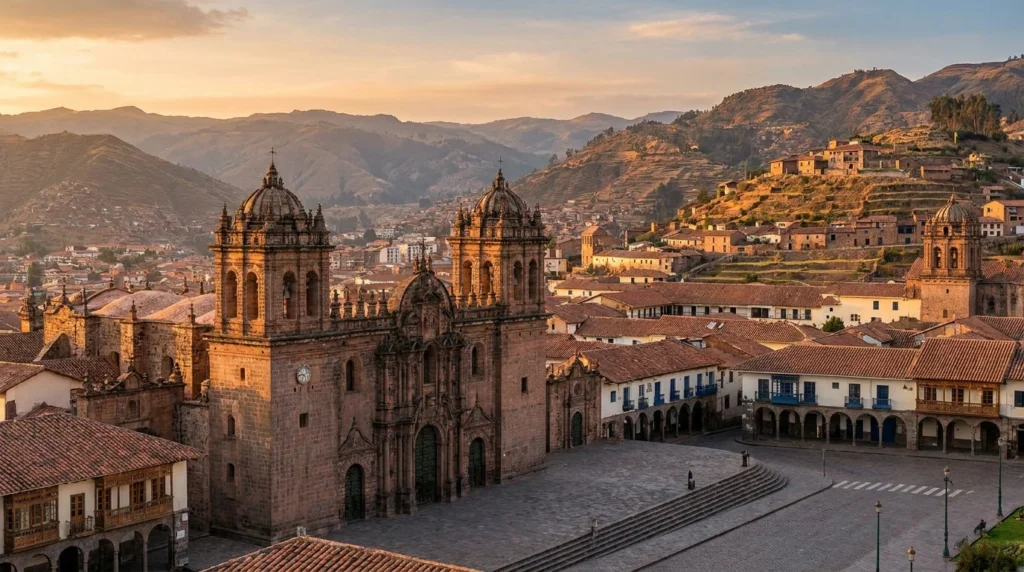
Cusco, Peru: Inca Capital at the Roof of the Andes
Part of our Peru travel guide.
Cusco City Guide
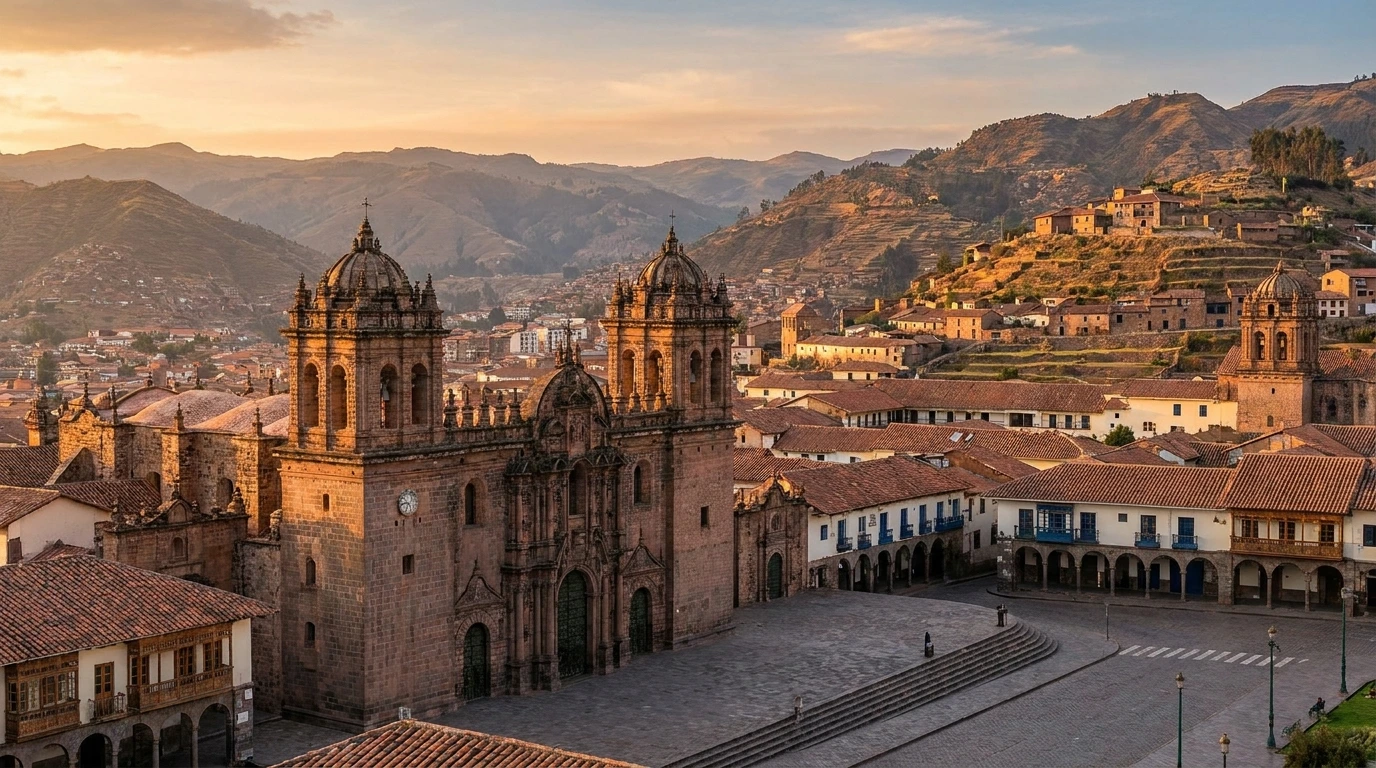
Table of Contents
Why Cusco?
Cusco is the former capital of Tawantinsuyu, the Inca empire that ruled most of western South America in the 15th and early 16th centuries, and it remains the single most historically layered city in the Andes. The old centre sits at 3,399 metres above sea level on a plateau rimmed by the snowfields of the Vilcanota range, and UNESCO inscribed its historic core on the World Heritage list in 1983 for the way Inca stonework, Spanish colonial architecture, and living Quechua culture are stacked inside the same block walls.
The metropolitan population is around 430,000 residents in the 2024 estimates published by Peru’s national statistics institute, which makes Cusco roughly a third the size of Lima’s central districts but by far the busiest highland tourist hub in the country. PromPeru, the national tourism body, identifies the Cusco region as the top international destination in Peru, driven almost entirely by the Machu Picchu gateway economy. A high-season day can see tens of thousands of visitors move through the Plaza de Armas between breakfast and the afternoon train departures to Aguas Calientes.
The contrasts are what define the experience. The walls of Qorikancha, the Inca Temple of the Sun, still carry the perfectly fitted andesite courses the Spanish built the Santo Domingo convent directly on top of. A San Pedro Market stall selling two-sol anticuchos sits three blocks from a boutique hotel whose lobby is an original 16th-century cloister. And the city that hosts some of South America’s most polished restaurants is also the high-altitude town where coca tea is the standard welcome drink in every guesthouse because roughly a quarter of arriving visitors feel the effects of the altitude within the first 24 hours.
Cusco is also the launch pad for an extraordinary cluster of day trips. Machu Picchu is roughly 3.5 hours away by rail via PeruRail or IncaRail, the Sacred Valley villages of Pisac and Ollantaytambo are 45 minutes by road, and the Rainbow Mountain trailhead at Vinicunca is a three-hour pre-dawn drive. This guide covers the eight neighbourhoods that hold the city’s character, the regional food built around corn, potato varieties and guinea pig, the Inca and colonial sights layered through the historic core, the day-trip logistics that reliably turn a five-day visit into the trip of a lifetime, and the practical altitude, permit and payment details that make the whole thing run smoothly on arrival from Alejandro Velasco Astete International Airport (CUZ).
Neighborhoods: Finding Your Cusco
📍 Cusco Map: Every Place in This Guide
Cusco is compact by Latin American standards; the historic core can be crossed on foot in about 25 minutes, but the altitude stretches every walk. The eight neighbourhoods below cover the widest range of traveller priorities, from first-time sightseeing around the Plaza de Armas to artisan shopping in San Blas, daily-life markets in San Pedro, and the quieter residential blocks of Wanchaq and Santiago. A base within a ten-minute walk of the Plaza puts almost every cultural sight within range and keeps the first-night altitude adjustment manageable.
Plaza de Armas (Historic Core)
The Plaza de Armas is the ceremonial and commercial centre of Cusco and has held that role continuously since the Inca period, when it was known as Huacaypata, the “square of weeping,” and hosted Inti Raymi and other state ceremonies. Today it is ringed by the Cathedral of Cusco, the Church of La Compañía de Jesús, arcaded colonial portales housing cafes and travel agencies, and municipal offices. The fountain at the centre is topped by a statue of the Inca ruler Pachacuti, who is credited with founding the imperial capital in the 15th century. Street vendors sell artwork, massage cards and tour brochures around the edges; a polite “no, gracias” is standard and works. The plaza is most photogenic at first light, when the colonial facades catch the sun against the dark andesite of the backdrop ridgeline, and again after nightfall when the cathedral and Compañía are floodlit. Two parallel arcaded streets — Portal de Panes and Portal de Confituría — hold the majority of the balcony restaurants looking down onto the square, and from March to November most nights see at least one free event in the plaza ranging from religious processions to municipal concerts.
- Cathedral of Cusco (admission S/40 / ~$10.60)
- Iglesia de la Compañía de Jesús
- Portal de Panes colonial arcades
- Fountain with Pachacuti statue
- Loreto and Hatun Rumiyoc alleys (Inca stone walls)
Best for: first-time sightseeing and central accommodation. Access: any taxi from the airport; arrival hotels typically within a 5-minute walk.
San Blas
San Blas sits on the hillside directly north-east of the Plaza and is the city’s artisan district, with steep cobblestone lanes, whitewashed colonial houses with blue balconies, and a dense concentration of textile cooperatives, silver workshops, ceramic studios and cafes. The small Plazoleta de San Blas at the top holds the Iglesia de San Blas (1563), a Spanish colonial church famous for its carved cedar pulpit. The seven-angled Inca stone on Hatun Rumiyoc street, on the route up from the main plaza, is one of the most photographed masonry joints in the Americas. Textile studios run by the Centro de Textiles Tradicionales — a cooperative drawing from nine highland weaving communities — host live-weaving demonstrations and stock naturally dyed alpaca and wool pieces with the origin community printed on each label. The neighbourhood also concentrates the city’s best slow-travel cafes, from Jack’s and The Meeting Place on Cuesta San Blas to Qura and La Valeriana higher up the hill, and the narrow lanes above the plazoleta end in miradores looking back across the red-tile roofs of the historic core to the cathedral.
- Plazoleta de San Blas and Iglesia de San Blas
- Hatun Rumiyoc street and the twelve-angled stone
- Centro de Textiles Tradicionales del Cusco
- Museo de Arte Precolombino (Plaza Nazarenas, nearby)
- Mercado San Blas for produce and bread
Best for: design-minded visitors, photographers and craft buyers. Access: 10-minute uphill walk from Plaza de Armas via Cuesta San Blas.
San Pedro Market
The San Pedro neighbourhood revolves around Mercado Central de San Pedro, the city’s main food market, which opened in 1925 in a cast-iron structure attributed to Gustave Eiffel’s workshop and still sells fresh produce, meats, cheeses, breads and hot-lunch plates to Cusqueños every morning. The menu-del-día counters along the south wall serve a three-course soup-plus-main-plus-drink set for roughly S/10–15 (~$2.65–4). The surrounding streets hold wholesale textile stalls, bulk dry goods, and the small Mercado de los Brujos corner where traditional Andean medicinal items are sold. The juice row at the market entrance presses granadilla, lúcuma, papaya, mango and pineapple blends for S/6 (~$1.60) each, and the bread rows show off the regional chuta and pan de tres puntas loaves along with salty queso paria wheels from the highland pastoral villages. Early mornings (6–9am) are the most local time to visit; by 10am the market fills with day-trippers, and by 2pm many of the produce stalls have already packed down for the afternoon.
- Mercado Central de San Pedro (6am–6pm daily)
- Menu-del-día counters for S/10–15 lunches
- Juice row for fresh papaya, lúcuma and granadilla blends
- San Pedro Station (historic PeruRail departure point for Machu Picchu)
- Wholesale textile lanes on the market perimeter
Best for: food travellers, market photographers and budget lunchers. Access: 10-minute walk from Plaza de Armas via Mantas street.
Santa Ana
Santa Ana climbs the hillside above San Pedro on the western edge of the historic core, with stepped lanes, laundry lines strung between balconies, and some of the cheapest guesthouses in town. The Iglesia de Santa Ana (1560), one of the earliest churches in Cusco, crowns the hill and offers a postcard view back across the terracotta roofs to the Plaza de Armas. The surrounding streets are residential rather than touristed, but the climb is rewarded with a genuine neighbourhood feel and frequent Quechua conversation in the doorways. The Arco de Santa Ana, a 16th-century stone archway at the foot of the climb, still marks the old colonial boundary between the Inca-era nobility districts on the plaza side and the artisan and service neighbourhoods beyond. The area is particularly popular with Spanish-school students on long stays and with photographers chasing golden-hour rooftop shots; the mirador just below the church is the single best panorama of central Cusco’s red-tile roofscape available without a drone.
- Iglesia de Santa Ana (1560)
- Mirador overlook across central Cusco
- Atoqsaycuchi and Arco de Santa Ana stone arch
- Budget guesthouses and pensions
- Staircase walks down to the San Pedro market
Best for: photographers and travellers prioritising views. Access: steep 15-minute climb from San Pedro or short taxi ride (S/6 / ~$1.60).
Santiago
Santiago is a large working-class district stretching west and south-west of the historic core, with local markets, long-distance bus terminals and the main intercity road network. It is where many Cusqueño families live and where a traveller finds the city’s cheapest rooms, pollo-a-la-brasa chicken houses, and Sunday football in public pitches. The district is rarely on a first-time visitor’s list, but it offers a clean-eyed view of non-tourism Cusco and is handy for overland arrivals from Puno or Arequipa. Mercado Vinocanchón on the southern edge is one of the largest agricultural and livestock markets in the city and runs at full tempo every Saturday and Wednesday. The Estadio Inca Garcilaso de la Vega, home of Club Cienciano, also sits in the Santiago side of Wanchaq, and match days draw thousands of supporters through the local streets. For travellers, the practical value of Santiago is the Terminal Terrestre — Cusco’s main long-distance bus station — from which Cruz del Sur, Oltursa and Civa run overnight services to Lima, Arequipa, Puno and Bolivia.
- Terminal Terrestre (main intercity bus station)
- Mercado Vinocanchón on the southern edge
- Estadio Municipal Garcilaso de la Vega
- Local pollerías on Belén and Tres Cruces avenues
- Paucartambo road corridor heading east
Best for: overland travellers and local-life seekers. Access: 10–15 minutes by taxi from Plaza de Armas (S/8–10 / ~$2.15–2.65).
Wanchaq
Wanchaq is the modern, middle-class district south-east of the historic core. It is organised on a grid, holds most of the city’s banks, offices, government ministries and contemporary restaurants, and contains Plaza Túpac Amaru, a large civic square used for concerts and political events. Hotels here are further from the main sights but are newer, larger and priced roughly 15–25% below comparable rooms in the historic core. The Centro Comercial Real Plaza on Avenida del Collasuyo is the city’s main modern mall with a supermarket, cinema and food court. The alleys around Avenida de la Cultura concentrate the contemporary restaurant and cafe scene aimed at a Cusqueño middle-class audience rather than at visitors — which makes Wanchaq an unexpectedly good place to eat well at prices 20–30% below historic-core menus. The airport, Clínica Pardo (the reference private hospital) and the Estación de Wanchaq historic rail building are all within the district, making Wanchaq the practical choice for business travellers, long-stay language students, and anyone prioritising a quiet night over proximity to the main sights.
- Plaza Túpac Amaru civic square
- Centro Comercial Real Plaza (supermarket, cinema, food court)
- Estación de Wanchaq (historic rail station, now cultural space)
- Avenida de la Cultura restaurant and bank corridor
- Clínica Pardo and Hospital Regional (principal medical facilities)
Best for: business travellers and longer stays with local errands. Access: 15-minute walk or S/6 taxi from Plaza de Armas.
Los Andenes
Los Andenes takes its name from the Inca agricultural terraces (“andenes”) that still scar the hillside above the north-east edge of the city. The neighbourhood sits on the road up to Sacsayhuamán and mixes older adobe homes with recent middle-class construction. Several of Cusco’s quieter boutique hotels and language schools are tucked into streets here, and the walk up continues past the Cristo Blanco statue and into the Sacsayhuamán archaeological park itself. The elevation is noticeably higher than the Plaza (around 3,500 metres), so it is worth saving for the second or third night after acclimatising.
- Entry road to Sacsayhuamán archaeological park
- Cristo Blanco statue viewpoint
- Inca terraces visible along the hillside
- Quiet boutique lodgings and Spanish schools
- Direct footpath down to San Blas
Best for: quiet stays and ruin-facing views. Access: 15-minute climb from San Blas or S/7 taxi from Plaza de Armas.
Lucrepata
Lucrepata lies immediately east of San Blas, stepping further up into the hillside residential blocks. It is one of the oldest continuously inhabited neighbourhoods in Cusco, with narrow stone-paved alleys, small bodegas, and homes whose foundations include reused Inca stones. The streets above climb to additional miradores looking across the entire historic core. The district is almost entirely residential with very few restaurants or shops catering to visitors, which is precisely its appeal for travellers wanting a quieter stay within walking distance of the main plaza.
- Residential alley network above San Blas
- Small neighbourhood bodegas and bakeries
- Mirador viewpoints over central Cusco
- Inca-foundation colonial houses
- Access paths to the Sacsayhuamán hillside
Best for: repeat visitors and long-stay travellers. Access: 15-minute walk east of Plaza de Armas via San Blas.
The Food
Cusco’s food culture sits at the crossroads of high-Andean ingredients — roughly 4,000 native potato varieties, hundreds of maize varieties, quinoa, kiwicha, alpaca, guinea pig (cuy) and river trout — and a Peruvian fine-dining scene that has put Lima at the top of international restaurant rankings for most of the last decade. What that means in practice is that a visitor can eat a S/12 menu-del-día plate of soup, lomo saltado and Inca Kola in a market stall at lunch, and a S/350 eight-course Andean tasting menu with pairings at a Relais & Châteaux dining room in the evening — both of which are legitimate, representative expressions of the regional cuisine. Cusqueño cooking also diverges from coastal Peruvian cooking in important ways: trucha (river trout) replaces ocean fish in most ceviches, mote (giant boiled corn kernels) sit alongside or instead of rice, and chicha de jora — a gently alcoholic fermented corn beer — is the region’s traditional mealtime drink. A pragmatic eating strategy for a five-day visit is to use the markets and menú-del-día counters at lunch when prices are lowest, and to save the evenings for sit-down regional restaurants and one or two tasting-menu splurges. Reservations are genuinely important at the top tier during May–September high season, and almost every well-reviewed venue now lists itself on WhatsApp-based booking lines rather than traditional phone reservations.
Andean Meats (Cuy, Alpaca, Trout)
Cuy (roast guinea pig) is the signature ceremonial dish of the Cusco region and is most commonly served whole with potatoes and huacatay (black mint) sauce. It is a dish of special-occasion rather than everyday eating in Cusqueño homes, and the two most common restaurant preparations are cuy al horno (oven-roasted with herbs) and cuy chactado (pressed and deep-fried under a flat stone, a rural preparation from the Arequipa tradition). Alpaca steak is leaner and milder than beef — roughly 20% less fat — and appears on almost every mid-range menu, usually grilled medium-rare with Andean herbs or in a chimichurri-style sauce. Trucha (rainbow trout) from the Vilcanota and Urubamba rivers is the default river-fish dish and is typically served pan-fried or in a light chicha broth. Beef, chicken and pork all remain staples — lomo saltado (beef stir-fry with onions, tomatoes and french fries) is arguably Peru’s national dish and appears on nearly every menu — but the Andean meats are what make a Cusco menu specifically Cusqueño. Cuy is ordered whole at most tourist-facing restaurants; the dish arrives on a platter with the head and feet intact, which is culturally the mark of authenticity rather than provocation. Most kitchens will quietly pre-butcher the cuy for squeamish diners if you ask.
- Pachapapa — cuy al horno in San Blas garden setting (S/110 / ~$29)
- Cicciolina — alpaca tenderloin with Andean herbs (S/75 / ~$19.95)
- La Chomba — traditional cuy chactado (S/95 / ~$25.30)
- Kusikuy — cuy and trucha in Procuradores alley (S/85 / ~$22.60)
Soups, Stews and Chicharrones
Cusco’s cold-night soups and slow-cooked stews are arguably the most comforting dishes in the regional canon, and they genuinely matter at altitude — a hot bowl at 3,399 metres is a different and more necessary experience than at sea level. Chupe de camarones (shrimp chowder, carried inland from Arequipa), sopa de quinoa, caldo de gallina (hen broth), sopa de morón (wheat-and-mutton broth) and puchero de carnaval (a dense carnival-season mutton-and-vegetable stew) appear on every local menu. Chicharrón — twice-fried pork served with mote (large-kernel corn) and mint-onion salsa — is a Sunday classic, and the pollo-a-la-brasa rotisserie chicken houses on Avenida Cultura and in Santiago are the after-school meal of choice for Cusqueño families. Adobo cusqueño, a Sunday-morning pork stew cooked overnight in red chicha and cumin, is the specific hangover breakfast of Cusco and appears on most weekend menus before 11am. Soups typically arrive first in every menú-del-día set lunch and are generous enough to count as a meal in their own right; a visitor who orders the full three-course menu will almost always struggle to finish the entire sequence.
- Chicha by Gastón Acurio — chupe de camarones (S/58 / ~$15.40)
- Restaurante El Paraíso — chicharrón with mote (S/28 / ~$7.45)
- Nuna Raymi — sopa de quinoa with Andean herbs (S/24 / ~$6.40)
- La Valeriana — caldo de gallina breakfast soup (S/18 / ~$4.80)
Beyond Cuy and Chicharrón
Ceviche travels inland to Cusco, where it is typically made with trout rather than ocean fish; it is a staple weekend lunch dish and features prominently on the city’s higher-end menus. Rocoto relleno (stuffed spicy pepper), anticuchos (grilled beef-heart skewers) and causa (potato-and-avocado terrine) round out the Peruvian classics that visitors will encounter on almost every menu. Street food on the Plaza Regocijo corners includes empanadas from a wood oven, choclo con queso (grilled corn and cheese), and chicha morada (purple-corn drink). Tanta bakeries and the queque de chancaca counters in San Pedro sell the regional breads and cakes; cuy-shaped sweet breads are a seasonal item in the weeks around Corpus Christi. The sweet kiosk chain Kusikay and the El Buen Pastor bakery-and-social-enterprise on Tandapata street in San Blas are reliable sources for empanadas, alfajores, tres leches cake and chocolate caliente in the evenings, and the coffee scene has matured considerably in the last five years, with three or four local roasters — Three Monkeys, Museo del Café and Qura — producing serious espresso-bar output from single-origin Amazonas-region beans. The fruit scene is genuinely unusual at this elevation: Sacred Valley imports, highland varieties of avocado (palta), and a range of Andean fruits rarely seen elsewhere — tumbo, aguaymanto, pacay — show up on menus, in juice counters and in the market displays. Vegetarian and vegan diners are increasingly well served in the city core, with Green Point, Organika and La Quinta Eulalia all offering full plant-based menus of native-ingredient dishes.
- Ceviche de trucha — river trout ceviche with tiger milk (S/35–45 / ~$9.30–12)
- Rocoto relleno — stuffed Andean chili pepper with queso paria (S/28 / ~$7.45)
- Anticuchos — beef-heart skewers at San Pedro market stalls (S/8–12 / ~$2.10–3.20)
- Causa limeña — yellow-potato terrine with chicken (S/25 / ~$6.65)
- Choclo con queso — grilled large-kernel corn with fresh cheese (S/5 / ~$1.35)
- Empanadas al horno — chicken or cheese empanadas (S/3–5 / ~$0.80–1.35)
Fine-Dining Tasting Menus
Cusco has a small but serious fine-dining scene built around native Andean ingredients, led by chefs drawing on the same biodiversity that put Lima’s Central and Maido on the World’s 50 Best list. Most tasting-menu restaurants require reservations 2–4 weeks ahead during high season (May–September) and sit at roughly S/280–450 per person with pairings. MIL Centro, the Virgilio Martínez restaurant adjacent to the Moray terraces at 3,500 metres, is the most internationally celebrated of the group and works through native ingredients by altitude zone across an eight-course menu. Cicciolina and Chicha (the latter run by Gastón Acurio’s group) both offer mid-tier Peruvian cooking at roughly half the tasting-menu price and are easier walk-up dinner options for visitors who did not reserve weeks in advance. The common denominator across these kitchens is a serious engagement with the Cusco region’s agricultural biodiversity — rare potato varieties from the Potato Park, native corn from the Urubamba valley, cushuro (a high-altitude edible algae), and the herb huacatay — that rarely appears on coastal Peruvian menus. Pairings at tasting-menu level often include chicha de jora, pisco macerados (infusions), and occasional mate de coca courses alongside Peruvian wines from the Ica valley and craft brews from the Sacred Valley. For travellers on a fine-dining budget but unable to reserve MIL or Central (Lima) ahead of time, Cicciolina and Nuna Raymi in the historic core both function as excellent substitutes at roughly a third of the tasting-menu cost.
- MIL Centro (Moray) — 8-course menu at 3,500 m (S/890 / ~$237)
- Map Cafe — contemporary Andean tasting in Museo de Arte Precolombino courtyard (S/320 / ~$85.10)
- Limbus Restobar — Andean small plates with panoramic view (mains S/55–85 / ~$14.60–22.60)
- Mauka — native-ingredient tasting menu in San Blas (S/280 / ~$74.50)
Food Experiences You Can’t Miss
Beyond the restaurants, five experiences genuinely add to a food traveller’s week in Cusco. Each one can slot into a half-day without disrupting the main sightseeing calendar, and together they provide the closest thing to a regional food survey a five-day visit can deliver.
- Breakfast at the San Pedro Market juice row — fresh granadilla, lúcuma and papaya blends for S/6 (~$1.60)
- Sunday chicharrón at a Saylla-road pork house (20-minute taxi from Cusco; S/35 / ~$9.30 all in)
- Andean cooking class with market tour (typically S/150–220 / ~$40–60 per person, 4–5 hours)
- Chicha de jora tasting at a traditional chichería marked with a red plastic bag on a pole (glasses S/2–3 / ~$0.55–0.80)
- Pachamanca (earth-oven) feast in the Sacred Valley — whole meal cooked on hot stones (S/95–150 / ~$25–40)
- Chocolate-making workshop at the ChocoMuseo on Calle Garcilaso (S/90 / ~$24 for a 2-hour class from bean to bar)
Cooking classes are the single best single-activity investment for food-curious travellers: most include a 90-minute walk through San Pedro Market with the instructor, ingredient-by-ingredient explanations of native tubers, corns and herbs, and a three- to four-course lunch built from the market haul. Marcelo Batata, Inkill and Ccapac run the three most established class programmes in the city, and each can be booked 24–48 hours ahead outside festival week. The chicha de jora tasting is worth pursuing specifically because it is the least commercial food experience available in Cusco: traditional chicherías are family-run homes that hang a red plastic bag on a pole outside when a fresh batch is ready, and they remain largely off the visitor circuit even though they are the oldest continuous food tradition in the region.
Cultural Sights
Cusco’s cultural density is unusual even by South American standards: the same 500 metres of cobblestone can carry an Inca temple wall, a 16th-century Spanish convent built on top of it, a 17th-century Baroque church next door, and a 21st-century museum of pre-Columbian art across the plaza. Most major sites are covered by the Boleto Turístico, a regional multi-site pass issued by Cosituc. The full pass costs S/130 (~$34.60) for 10 days and 16 sites; partial-circuit passes are S/70 (~$18.60) for one day. The pass covers Sacsayhuamán, Qenqo, Puca Pucara, Tambomachay, the Coricancha site museum, Moray, Pisac, Ollantaytambo, Chinchero and several smaller urban museums. Not covered: the Cathedral, the Compañía, Qorikancha itself, the Museo Inka and the Museo de Arte Precolombino, each of which has its own entry fee. Plan a full two days for the in-city cultural sights and budget an additional day each for Sacsayhuamán (half-day on foot) and the Sacred Valley ruin cluster. Almost every major site enforces no-flash photography; most also prohibit the use of drones without a prior permit from the Ministry of Culture, which is rarely granted.
Qorikancha (Temple of the Sun)
Qorikancha was the most important temple in the Inca empire and was said to have been covered in sheets of gold before the 1533 Spanish arrival. The Spanish built the Santo Domingo convent directly on the Inca foundations; the two structures are now a single combined site where the lower courses of perfectly fitted andesite blocks support 16th-century vaulted arches above. Founded in the 15th century; Spanish convent added 1534. Admission S/15 (~$4) for the Qorikancha site and museum. Best visited 9–11am before tour groups fill the cloisters.
Sacsayhuamán
Sacsayhuamán is the Inca ceremonial fortress on the hill directly above Cusco, built between roughly 1438 and 1500 during the reign of Pachacuti and his successors. The three-tiered zigzag walls are assembled from andesite blocks weighing up to 200 tonnes, fitted without mortar so tightly that a knife blade will not slide between them. The site hosts the main Inti Raymi festival on 24 June each year. Admission is included in the Boleto Turístico (S/70 or S/130). Best reached early morning or late afternoon to avoid the midday sun at 3,700 metres.
Cusco Cathedral (Catedral del Cusco)
The Cathedral of Santo Domingo sits on the north-east side of the Plaza de Armas and was built between 1560 and 1654 on the site of the Inca palace of Viracocha. It houses a significant collection of Cusco-school colonial paintings, including the famous Last Supper in which Christ and the apostles share a roasted cuy (guinea pig) at the centre of the table. Admission S/40 (~$10.60); open 10am–6pm. The cedar pulpit and the silver-sheathed high altar are the standout features to look for.
San Blas Church and the 12-Angled Stone
Iglesia de San Blas, built in 1563, is one of the oldest churches in Cusco and is famous for its 17th-century carved cedar pulpit, considered one of the finest Baroque pulpits in the Americas. A few steps downhill on Hatun Rumiyoc street sits the 12-angled stone, an Inca andesite block with twelve distinct faces fitted against neighbouring blocks so precisely that no mortar was used. Admission to the church is S/15 (~$4); viewing the 12-angled stone on the street is free.
Museo de Arte Precolombino (MAP)
MAP is housed in the Casa Cabrera on Plaza Nazarenas, a 16th-century colonial mansion built on Inca foundations, and shows a curated selection of ceramics, textiles, gold-work and wood objects spanning the Chavín, Nazca, Moche, Wari and Inca cultures. Founded 2003 as a sister institution of Lima’s Museo Larco. Admission S/25 (~$6.65); open 9am–10pm. The upper galleries hold some of the most photogenic Nazca and Moche ceramics in the country.
Iglesia de la Compañía de Jesús
La Compañía stands on the south side of the Plaza de Armas and was built by the Jesuits between 1576 and 1668 on the site of the Inca palace of Huayna Capac. Its Churrigueresque stone facade is considered one of the most ornate in colonial Peru, and for a period in the 17th century its scale rivalled the Cathedral, sparking a papal intervention. Admission S/15 (~$4); open 9am–5pm. Best visited with afternoon light striking the facade from the west.
Museo Inka
The Museo Inka occupies the Casa del Almirante, a late-16th-century colonial mansion at the top of Tucumán street, and is the principal institutional museum of Inca material culture in the country. Founded 1848; current site since 1946. Admission S/10 (~$2.65); open 8am–6pm weekdays. The ceramic, textile and metal-work galleries together form the most complete survey of Inca and pre-Inca Andean cultures in Cusco city. Star items include the Chimú gold masks, an unrolled Inca textile from Machu Picchu, and the largest collection of queros (Inca ceremonial wooden drinking cups) on public display anywhere. Traditional weavers are in residence in the courtyard most mornings and demonstrate backstrap-loom techniques that remain in active use in the Sacred Valley communities.
Sacsayhuamán Satellite Sites (Qenqo, Puca Pucara, Tambomachay)
Three smaller but significant Inca sites ring the hillside above Cusco along the road toward Pisac: Qenqo, a ceremonial complex built around a single large carved limestone outcrop; Puca Pucara, a small red-stone fort that controlled one of the old Inca roads into the city; and Tambomachay, an elegant water shrine with three carved niches and an aqueduct still flowing today. All three are covered by the Boleto Turístico. They are commonly combined with Sacsayhuamán in a single half-day city tour; walking between them covers roughly 5 km of uphill and downhill terrain at 3,500–3,700 metres.
Entertainment
Cusco is a small city and its after-dark scene reflects that: expect bars and clubs packed into a four-block radius around the Plaza de Armas, a handful of live-music venues, and folkloric dance dinner shows aimed at visitors. Things get going late by Lima standards — most clubs do not fill until 11pm and run until 3am on weekends — and the altitude means that two drinks in Cusco feel like three or four at sea level.
Folkloric Dance Shows
The Centro Qosqo de Arte Nativo has staged nightly folkloric music and dance performances since 1924, featuring highland dances from across the Cusco region in traditional costume. A second popular venue, Tunupa on the Plaza, combines a dance show with a Peruvian buffet dinner. Typical cost S/50–80 (~$13.30–21.30) for a 90-minute performance; S/110–160 (~$29.25–42.55) with dinner. Shows run nightly at 6:30pm; same-day tickets are usually fine outside of the June festival window. The performances rotate through signature Cusqueño dances — Wayno, Marinera, Qanchi, Diablada, Valicha and the Inca-themed historical ensemble pieces — and function as a useful primer on the regional costume, music and mask traditions that reappear in the streets during the big festival weeks of Corpus Christi, Inti Raymi and Señor de los Temblores.
Craft Beer and Cocktail Bars
Cusco has developed a small but solid craft-beer scene led by Cerveceria del Valle Sagrado, whose taproom on Triunfo street stocks altitude-brewed pale ales, quinoa stouts and Andean-botanical saisons. Museo del Pisco is the city’s reference pisco bar, with a menu of over 90 Peruvian piscos and the full range of classic and contemporary pisco cocktails. Typical cost S/18–28 (~$4.80–7.45) for a craft pint; S/30–45 (~$8–12) for a pisco sour. No booking needed outside festival week. The Norton Rat’s Tavern on the Plaza is the longest-running expat bar in town (since 1997), sitting on the second-floor balcony directly above the Portal de Panes and offering the single best upper-level plaza view available to a drinker. For cocktails, Limbus Restobar sits at the top of San Blas with a glass-walled panoramic terrace and a short list of contemporary Andean cocktails using herbs, fruits and coca-leaf infusions not available at sea level.
Nightclubs
The small cluster of clubs on Calle Plateros and Procuradores (the alleys off the Plaza) covers the mainstream dance-floor market with a mix of Latin pop, reggaetón and international dance music. Mama Africa, Mushrooms and Inka Team are the three longest-running. Entry is typically free or S/20 (~$5.30) and includes a welcome drink; beers run S/12–18 (~$3.20–4.80). Doors from 10pm; peak 12am–3am Thursday–Saturday. The clubs fill from about 11pm onwards and are strongly international in audience, with a rotating mix of backpackers, European long-stay travellers and younger Cusqueños. Drinks are cheaper than in the Plaza-facing cocktail bars, and the crowds usually spill onto the cobblestones outside around closing time. Standard pickpocket precautions apply: keep your phone out of sight when leaving, and prefer an app-based taxi back to the hotel over street-hailing.
Live Music
Live Andean folk — charango, quena flute, panpipes — rotates through the small-venue circuit most nights, while La Chupitería and Ukukus host louder rock, reggae and Latin-fusion sets. Typical cost S/15–30 (~$4–8) cover; drinks from S/15. Most venues start the band around 10pm and run two sets. Booking is rarely required.
Cinemas, Bookstores and Chill Venues
The Centro Comercial Real Plaza in Wanchaq holds Cineplanet, Cusco’s main multiplex, with tickets at S/18–25 (~$4.80–6.65) for evening screenings. SBS Librería on Avenida del Sol carries a small English and Spanish travel-literature selection. For quieter evenings, the Jack’s Café, La Valeriana and Meeting Place cafes around San Blas stay open until 10pm and are a fixture of the slow-travel scene in town.
Sports and Football
Club Cienciano is the home football club, based at Estadio Inca Garcilaso de la Vega in Wanchaq, with Primera División matches roughly every other weekend during the April–November season. Ticket prices start at S/25 (~$6.65) for general entry and rise to S/120 (~$31.90) for the covered seating. Cienciano famously won the Copa Sudamericana in 2003 — the first Peruvian club ever to win a major international trophy — and the stadium’s altitude of roughly 3,400 metres is widely credited with giving the home side a structural advantage against visiting lowland teams. Cusco FC, the city’s second Primera División club, also plays at Garcilaso and rotates home fixtures. Tickets are typically available at the stadium on match day; the local sports press (Diario del Cusco) lists fixtures a week ahead.
Day Trips
Cusco’s greatest asset may be its geography: within a 3.5-hour radius lie Machu Picchu, the Sacred Valley villages, Rainbow Mountain, the Maras salt pans and the circular agricultural terraces of Moray. Most visitors dedicate at least three of their five or six days in Cusco to day-trip logistics; some of these sites technically require an overnight if you want to do them unhurried. All five day trips below are well-established on the city’s tour-operator circuit, with dozens of agencies running each route daily; prices between reputable operators cluster in a narrow band, and differences are mainly about group size, guide quality and the number of photo stops. Negotiate in person in Plateros street or Calle Procuradores — agencies quoted online often drop their price 15–30% on a walk-in booking the day before.
Machu Picchu (3.5 hours by PeruRail from Ollantaytambo)
Machu Picchu is the 15th-century Inca citadel at 2,430 metres, UNESCO-listed in 1983, and the single most visited archaeological site in South America. The standard access is PeruRail or IncaRail from Ollantaytambo (roughly 1.5 hours by road from Cusco, then 1.5–2 hours by train to Aguas Calientes, plus a 25-minute bus up to the site). Tickets must be purchased in advance via the Ministry of Culture portal and operate on a two-circuit timed-entry system. Doable as a very long day trip (4am start, 10pm return); better as one overnight in Aguas Calientes to catch the 6am opening. Official guides are now mandatory at the gate; most visitors hire a guide on arrival at the archaeological site entrance for a 2-hour tour at S/80–150 (~$21.30–40) per group-share.
Sacred Valley & Pisac (45 minutes by colectivo)
The Sacred Valley of the Incas, tentatively listed by UNESCO as an extension of the Machu Picchu site, is the Urubamba river corridor between Pisac and Ollantaytambo at 2,800–3,000 metres. Pisac holds the best-preserved Inca agricultural terraces and a Sunday artisan market that has run continuously since the colonial period. Colectivo minibuses leave regularly from the Puputi bus stop for S/6 (~$1.60) and take 45 minutes. Full-day Sacred Valley tours covering Pisac, Urubamba, Ollantaytambo and Chinchero typically run S/80–150 (~$21.30–39.90) including transport, guide and Boleto Turístico admission.
Rainbow Mountain / Vinicunca (3 hours by tour bus)
Vinicunca, the “Rainbow Mountain,” sits at 5,200 metres on the flank of the Ausangate range, roughly 100 km south-east of Cusco. Its striped mineral bands — red (iron oxide), yellow (limonite), green (chlorite), purple (manganese) — were revealed by glacier retreat over the last two decades and turned the site into a day-trip staple around 2016. Tours leave Cusco at 3:30–4am, drive three hours to the trailhead at 4,800 metres, hike 90 minutes to the ridgeline, and return by 6pm. Typical cost S/70–140 (~$18.60–37.25) per person. Altitude hits hard at this elevation; do not attempt before spending at least three nights in Cusco.
Maras-Moray (1.5 hours by tour bus)
Moray is the Inca circular agricultural terrace complex, where concentric rings descend roughly 30 metres into the earth creating distinct microclimates at each level — a working Inca agricultural research station, in the consensus interpretation. The site sits at 3,500 metres, 50 km from Cusco via the Chinchero plateau. Admission is included in the Boleto Turístico (S/70 or S/130). Often combined with the Maras salt pans in a single half-day circuit for S/50–90 (~$13.30–23.95) per person.
Salineras de Maras (1 hour by tour bus)
The Salineras de Maras are approximately 4,500 terraced salt-evaporation ponds carved into the hillside above the Urubamba river, fed by a single saline hot spring the Incas already exploited pre-1500. The ponds are still worked by roughly 600 local families, each owning a portion by hereditary right. Admission S/15 (~$4); typically visited as part of a Maras-Moray half-day tour. Walking onto the pond surfaces is no longer permitted, but the viewpoint sits directly above the working salt terraces. The approach road from Maras village winds 4 km down toward the Urubamba river and provides the best long-distance photographs of the staggered white terraces set against the red-brown earth of the valley.
Seasonal Guide
Spring (March – May)
March and April are the tail end of Cusco’s rainy season, with thunderstorms most afternoons and roads to Rainbow Mountain occasionally closed by mud. Daytime highs sit around 19–20°C; nights drop to 3–7°C. By late April the rains clear and the Sacred Valley turns its most vivid green of the year. Semana Santa (Holy Week) in late March or April is an important religious festival in Cusco, with processions from the Cathedral through the historic core. The Inca Trail is closed every February for maintenance and reopens on 1 March. May marks the start of high season proper, and Señor de Qoyllur Rit’i — a Quechua pilgrimage to the Sinakara glacier at 4,600 m — takes place the week before Corpus Christi.
Summer (June – August)
These are the three coldest months — and the three most popular. Days are sunny and dry with highs of 19–21°C, but nights fall to -2 to +3°C, and frost is common in the Sacred Valley. Inti Raymi on 24 June 2026 anchors the festival calendar, and the full four-day window 22–25 June is the busiest of the year. Hotel rates climb 40–60% above shoulder-season pricing, Inca Trail permits for June–August sell out four to six months ahead, and Machu Picchu entry slots for the 6am opening regularly book up. Best for photographers and trekkers who can tolerate the crowds. Fiestas Patrias on 28–29 July add a second peak of domestic travel, as Lima-based Peruvians fly in for the long weekend.
Autumn (September – November)
September and October are the strongest shoulder months of the year: dry skies carry over from August but the European and North American summer holiday wave has passed, so the sites are notably less crowded and prices drop 15–25% from July peaks. Daytime highs edge back up to 20–21°C and nights warm to 3–6°C. November brings the first real rains and thicker clouds, though mornings are often still clear. The Señor de los Temblores procession in late October–early November is a culturally significant event built around the 17th-century crucifix credited with stopping the 1650 earthquake.
Winter (December – February)
The austral summer is Cusco’s rainy season, with heavy afternoon thunderstorms most days and genuine risk of landslides on rural roads. Daytime highs sit around 19–20°C; nights are milder at 6–8°C, which makes this the warmest time of year overall. Machu Picchu is open and far less crowded; hotel rates are at their lowest (30–40% below July). The Inca Trail is closed every February for maintenance so alternative treks (Salkantay, Lares) are the go-to. Bring full rain gear and expect flights to occasionally be delayed by Cusco weather.
Getting Around
Cusco’s historic core is small enough to walk, but the altitude and the steep lanes mean most visitors use a mix of walking, taxis and occasional colectivo minibuses. There is no metro or subway system; the city runs on an informal fleet of taxis and combis (minibus vans) supplemented by long-distance rail to Machu Picchu and scheduled flights from Alejandro Velasco Astete International Airport (CUZ). Traffic in the historic core is increasingly restricted — several blocks around the Plaza de Armas are pedestrian-only, and one-way streets dominate the rest of the old town — so a taxi from outside the centre will often drop passengers two or three blocks short of the plaza rather than going door-to-door.
Walking the Historic Core
Plaza de Armas to Qorikancha, San Blas, San Pedro Market and the Iglesia de Santa Ana are all 10–15 minutes on foot. The streets are paved with uneven Inca and colonial cobblestones, so closed-toe shoes with grip are important. Allow about 50% more time than a sea-level walk of the same distance while acclimatising — climbing the steps to San Blas genuinely takes the wind out of first-day arrivals. Sidewalks are narrow by Latin American standards, stepping off the kerb for oncoming traffic is expected, and the steepest streets (Cuesta San Blas, Resbalosa, Siete Diablitos) become slick when wet. A headlamp or torch is useful after dark; some of the lanes above the Plaza dim out once the shops close.
Taxis
Taxis in Cusco are unmetered; fares are agreed before getting in. A trip across the historic core is S/5–8 (~$1.35–2.15), historic core to airport is S/20–25 (~$5.30–6.65), and historic core to Terminal Terrestre or Poroy station is S/12–15 (~$3.20–4). Use app-based services (Cabify, InDrive) or taxis dispatched by your hotel rather than hailing on the street at night. Official airport taxis have yellow markings.
Colectivos and Combis
Colectivo minibuses are the local workhorse for trips to the Sacred Valley villages, Puno-road destinations and the southern suburbs. Cusco to Pisac runs S/6 (~$1.60) and 45 minutes from the Puputi bus stop; Cusco to Ollantaytambo is S/15 (~$4) and 90 minutes from Pavitos. Departures are constant during daylight — wait at the posted stop and the conductor will shout the destination.
Airport Access (CUZ)
Alejandro Velasco Astete International Airport (CUZ) sits 5 km south-east of the historic core in Wanchaq. There is no rail link.
- Official taxi — 15 minutes, S/25 (~$6.65)
- App taxi (Cabify/InDrive) — 15 minutes, S/18–22 (~$4.80–5.85)
Rail to Machu Picchu
PeruRail and IncaRail operate the two regional lines that connect Cusco to Aguas Calientes (Machu Picchu Pueblo). Services now originate from Poroy (30 minutes from Cusco by road, seasonal) or Ollantaytambo (90 minutes from Cusco by road, year-round). Expedition-class return tickets run roughly USD 130–180 per person; Vistadome with panoramic windows is USD 200–280; the premium Hiram Bingham service is USD 900+. Reserve 2–4 weeks ahead in high season.
Navigation Apps
Apps: Google Maps, Maps.me, Cabify, InDrive. Google Maps walking directions are reliable in the historic core; driving directions can be out of date on the Sacred Valley roads. Download offline maps before leaving the hotel Wi-Fi, since mobile coverage is patchy above 4,000 metres. WhatsApp is the default messaging channel for tour operators, restaurants and hotels — expect nearly every booking confirmation to arrive by WhatsApp text rather than email, and keep the app installed and signed in with a number that accepts international texts. The Claro and Movistar tourist eSIMs activate on arrival at CUZ with reasonable coverage across the whole Sacred Valley, and Holafly and Airalo both offer 7-day data eSIMs for USD 19–35 that work on most recent phones.
Budget Breakdown: Making Your Soles Count
Cusco is not a cheap destination by Peruvian standards — Machu Picchu logistics inflate the per-day average well above what Lima or Arequipa cost — but it remains strong value compared with any comparable international heritage city. The three-tier breakdown below reflects a 2026 mid-shoulder-season visit; expect the Mid-Range and Luxury lines to rise 15–40% in June–August high season and fall 15–25% in November–February.
| Tier | Daily | Sleep | Eat | Transport | Activities | Extras |
|---|---|---|---|---|---|---|
| Budget | S/180 (~$48) | S/50 (~$13.30) hostel dorm | S/40 (~$10.60) menú-del-día x3 | S/20 (~$5.30) walking + 1 taxi | S/50 (~$13.30) one site | S/20 (~$5.30) snacks/water |
| Mid-Range | S/600 (~$160) | S/280 (~$74.50) boutique double | S/150 (~$39.90) sit-down meals | S/60 (~$16) taxis | S/90 (~$24) Boleto + guide | S/20 (~$5.30) tips/souvenirs |
| Luxury | S/2,800 (~$745) | S/1,800 (~$478) 5-star suite | S/600 (~$160) tasting menus | S/150 (~$40) private driver | S/200 (~$53) private guide | S/50 (~$13) extras |
Where Your Money Goes
The biggest single line item in any Cusco budget is Machu Picchu logistics: the site ticket (roughly S/152 / ~$40 for foreigners), PeruRail or IncaRail return (USD 130–280 depending on service), the bus up from Aguas Calientes (USD 24 return), and a guide (S/80–150 / ~$21–40 per person in a group). A full Machu Picchu day including transport therefore runs USD 220–450 per person even before accommodation in Aguas Calientes. After that, the second-biggest line item is high-season hotel rates in June–August, which are 40–60% above October–April prices. Third is the Boleto Turístico at S/130 (~$34.60) for the full 16-site 10-day pass, which is unavoidable if you want to visit Sacsayhuamán, Moray, Pisac and Ollantaytambo. Fourth is the clustered day-trip cost for Rainbow Mountain, Maras-Moray and Sacred Valley tours, which together typically add USD 40–120 per person per tour. Food, taxis and incidental spending are genuinely cheap compared with Lima or Latin American coastal cities, and a mid-range visitor can comfortably eat well for S/100–150 (~$27–40) per day.
Money-Saving Tips
- Buy the S/70 partial Boleto Turístico if you only plan to see 4–5 sites rather than the full 16 (saves S/60 / ~$16).
- Eat the menu-del-día at lunch (S/12–18 / ~$3.20–4.80) and save restaurant budgets for dinners.
- Use colectivos for Sacred Valley travel (S/6–15 / ~$1.60–4) instead of full-day tours (S/80–150 / ~$21–40).
- Take the cheaper Expedition train to Machu Picchu and upgrade on the way back — you will be tired and appreciate the Vistadome view more on the return leg.
- Book hotels directly by email or WhatsApp rather than through international OTAs; rack rates in Cusco are often 10–15% lower booked direct.
- Travel shoulder season (April, October, early November) to avoid the 40–60% June–August high-season hotel premium.
- Share Rainbow Mountain and Maras-Moray tours in a small group of four — private-van pricing for four is often cheaper per person than individual seats on a larger bus tour.
- Carry cash in small denominations (S/10 and S/20 notes) for tips, taxis and market purchases — change for a S/100 note is often a problem for small vendors.
- Skip the expensive coffee-shop breakfasts and eat at San Pedro Market juice row (S/6 / ~$1.60) or in a hostel kitchen — Cusco’s best breakfast value is in the market and not in the Plaza cafes.
Practical Tips
Altitude Sickness
Cusco’s 3,399 metres is high enough that roughly a quarter of arriving visitors feel headaches, nausea or sleep disruption within 24 hours. Allow two full nights of rest before attempting Sacred Valley day trips and at least three before Rainbow Mountain or high-altitude treks. Drink coca tea or chew coca leaves (legal and culturally standard), hydrate heavily, eat light carbohydrate-forward meals, and avoid alcohol for the first 48 hours. Diamox (acetazolamide) prescriptions from your home doctor are the standard pharmaceutical option. A night in the Sacred Valley at 2,800 metres before returning to Cusco — flying into Lima, then to Cusco, then straight down to Ollantaytambo by road — is the single most effective altitude-management itinerary, and is used by most luxury operators. Oxygen canisters are sold in pharmacies for S/40–80 (~$10.60–21.30) and most mid-range hotels keep a canister and oxygen mask at reception for guests.
Machu Picchu Permits and Tickets
Machu Picchu operates on a two-circuit timed-entry system with limited numbers issued per day, and tickets must be booked in advance via the Ministry of Culture portal at machupicchu.gob.pe. Aim to book at least three months ahead for high-season (May–September) dates and longer for the 6am entry slot. The two circuit choices determine which part of the site you see; Circuit 2 is the most photogenic classic view. Bring your passport; ticket numbers are cross-checked against passport IDs at the gate.
Inca Trail Permits
The Classic 4-day Inca Trail is strictly capped at roughly 500 permits per day including porters and guides — meaning around 200 trekker permits per day actually reach clients. Book at least six months ahead for June–August departures. Permits are non-transferable and non-refundable, tied to the passport number at issue. The trail is closed every February for maintenance. Salkantay and Lares are the two main alternative treks and do not require the same advance permit.
Warm Layers Year-Round
Cusco’s daily temperature range is large regardless of season: days around 18–21°C, nights 0–8°C depending on month. Pack thermal base layers, a fleece mid-layer and a windproof shell even in June–August. A warm hat and gloves are genuinely useful for pre-dawn starts to Machu Picchu and Rainbow Mountain.
Cash vs. Cards
Mid-range and upscale restaurants, hotels and tour operators take Visa and Mastercard. Markets, colectivos, corner shops and small family guesthouses want cash in soles. ATMs are widely available around Plaza de Armas and Avenida del Sol; BCP and BBVA machines dispense up to S/700 (~$186) per withdrawal and tend to charge lower foreign-card fees than Globalnet. US dollars in small denominations are accepted at many tour agencies but local shops will not take them.
Language
Spanish is the working language; Quechua is widely spoken in the markets, particularly by older stall owners, and is co-official in the region. English is common among tour operators, mid-range and upscale restaurants and hotels but noticeably rarer in taxis, colectivos and San Pedro Market. A few phrases of Spanish go a long way; a greeting in Quechua (“Allillanchu”) at a market stall is genuinely appreciated.
Safety
Cusco is broadly safe by Latin American standards, but pickpocketing is persistent around Plaza de Armas, San Pedro Market and Terminal Terrestre, particularly on crowded Sunday market days. Keep valuables in an internal pocket, do not display phones on the street after dark, and use app-based taxis at night. Soroche (altitude) remains the bigger practical risk than crime for most visitors.
Connectivity
Claro, Movistar and Entel are the three main mobile networks; Claro has the strongest coverage in rural Cusco and Sacred Valley. Tourist SIMs and eSIMs (Airalo, Holafly) work well in the city core. Hotel Wi-Fi is standard and reliable in Wanchaq and the historic core; outside the city, signal thins quickly above 4,000 metres.
Cultural Etiquette
Ask before photographing people in traditional dress, particularly in San Pedro Market and around the Plaza; a small tip (S/2–5 / ~$0.55–1.35) is expected if they say yes. Remove hats inside churches. Don’t climb on Inca walls. If a woman offers coca leaves in a k’intu (a bundle of three perfect leaves), the traditional response is to touch it to your forehead and blow gently across it before chewing.
Frequently Asked Questions
How many days do I need in Cusco?
Five to six days is the practical minimum for a first visit: one day to arrive and rest (essential at 3,399 metres), one day for the city sights plus Sacsayhuamán, one day for the Sacred Valley circuit, one to two days for Machu Picchu (including an overnight in Aguas Calientes), and one flexible day for Rainbow Mountain or Maras-Moray. Seven days is notably more comfortable and allows for a full Sacred Valley overnight in Ollantaytambo. Three days is possible but forces hard trade-offs and leaves no margin for altitude adjustment.
Is Cusco good for solo travellers?
Cusco is one of the easiest solo-travel destinations in South America. The historic core is walkable, tour group infrastructure is built around mixed-nationality small groups, and the traveller cafe scene around San Blas and Plateros makes solo dining genuinely sociable. Hostels like Pariwana, Wild Rover and Loki run active social calendars. Solo women travellers report Cusco as comfortable by Latin American standards during the day; standard caution applies at night in the club alleys off the Plaza.
Do I need to book Machu Picchu tickets in advance?
Yes, and typically at least three months ahead for May–September dates. Machu Picchu operates a daily cap under a two-circuit timed-entry system and tickets must be purchased from the official portal at machupicchu.gob.pe. Walk-up tickets are no longer reliably available in high season. For the Inca Trail, book six months ahead: the daily cap of roughly 500 total permits (including porters) means only about 200 trekker permits reach clients per day.
What about the language barrier?
Spanish is the working language in Cusco; Quechua is co-official and widely spoken in the markets and the Sacred Valley. English is common among tour operators, mid-range and upscale restaurants and hotels in the historic core, but rarer in taxis, colectivos, San Pedro Market and rural Sacred Valley villages. Google Translate works offline if you download the Spanish pack in advance. Learning a few Spanish phrases — and one or two Quechua greetings — opens noticeably warmer interactions with locals.
When is the best time to visit Cusco?
Late May and September–October are the sweet spots: dry skies, clear mountain views, manageable crowds and shoulder-season pricing. June–August offers the most reliable weather and the biggest festivals (Inti Raymi on 24 June 2026 ) but brings 40–60% price premiums and booked-out Inca Trail permits. November–March is the rainy season, with lower crowds and prices but real risk of landslide-affected rural roads and muddy trekking. February in particular has the Inca Trail closed for maintenance.
Can I use credit cards everywhere?
No. Mid-range and upscale restaurants, hotels and most reputable tour agencies take Visa and Mastercard, but markets, colectivos, street food, small guesthouses and the tips circulating through the tour economy all want cash in soles. A daily float of S/100–200 (~$27–53) in cash handles most street-level spending; ATMs are common around Plaza de Armas and Avenida del Sol.
How bad is altitude sickness really?
For most visitors, Cusco at 3,399 metres is a noticeable first-day experience — headaches, mild breathlessness on stairs, disrupted sleep — that eases over 24–48 hours. A minority of visitors experience stronger symptoms (persistent headache, nausea, appetite loss) that can last three to four days. Acute Mountain Sickness is genuinely dangerous at higher altitudes — Rainbow Mountain at 5,200 m, high passes on the Inca Trail — but rarely at Cusco’s elevation. The standard advice: arrive early in the day if possible, drink coca tea, hydrate, take it easy day one, and descend to the Sacred Valley (~2,800 m) for a night if symptoms do not clear.
Is Cusco expensive?
Cusco sits in the middle of the South American price range. A budget traveller can cover the city on S/180 (~$48) per day; a mid-range traveller around S/600 (~$160); a luxury stay runs S/2,800+ (~$745) per day. The big non-discretionary expense for most visitors is Machu Picchu logistics (USD 220–450 per person for train, bus, ticket and guide even before accommodation in Aguas Calientes).
Are Quechua phrases useful?
Genuinely, yes. Quechua is co-official in the Cusco region and is the first language of a significant share of market stall-holders, Sacred Valley residents and older Cusqueños. A handful of greetings goes a long way: “Allillanchu” (“How are you?”), “Allillanmi, qam rí?” (“I’m fine, and you?”), “Sulpayki” (“Thank you”), “Allin p’unchay” (“Good day”). Using even one phrase in a San Pedro Market interaction produces an unusually warm response and often a discount. Quechua-language greetings at the top of a bargaining exchange almost universally shift the dynamic.
Do I need travel insurance for Cusco?
Yes, and specifically one that covers altitude-related illness, emergency helicopter evacuation from the Sacred Valley and Inca Trail, and trek coverage for the Salkantay, Lares or Inca Trail routes if you are hiking. The reference private hospitals in Cusco (Clínica Pardo, Clínica San Juan de Dios) will treat foreign visitors, but payment up-front is standard and reimbursement runs through your insurer. World Nomads and SafetyWing are the two most commonly used policies among travellers; both cover altitude sickness explicitly and include Inca Trail and Salkantay coverage at standard tiers.
Ready to Experience Cusco?
Five days and a willingness to move slowly for the first 48 hours is all Cusco really asks. The city rewards both the first-time visitor chasing Machu Picchu and the returning traveller who finally makes it out to Ausangate or the Choquequirao trek. For the full country context — including Lima, Arequipa, Lake Titicaca and the Amazon — read the Peru Travel Guide.
Explore More City Guides
Where to Stay
Alex the Travel Guru
Alex is the Facts From Upstairs travel editor and has spent more than a decade crossing the Andes between Cusco, La Paz and Quito. He researches every FFU city guide on the ground, verifies opening hours and admission prices against official municipal and ministry sources, and rewrites each page against the FFU quality rubric before publication. Questions, corrections and tip-offs are always welcome via the contact page.
More city guides you might like
Plan your trip to Cusco
The booking tools we use ourselves. FFU may earn a commission at no extra cost to you.
Plan & book your trip to Cusco
Booking through these searches supports our guides at no extra cost to you.