
Belgrade Travel Guide — Free Transit, All-Night Splavovi & Europe’s Most Fought-Over Fortress
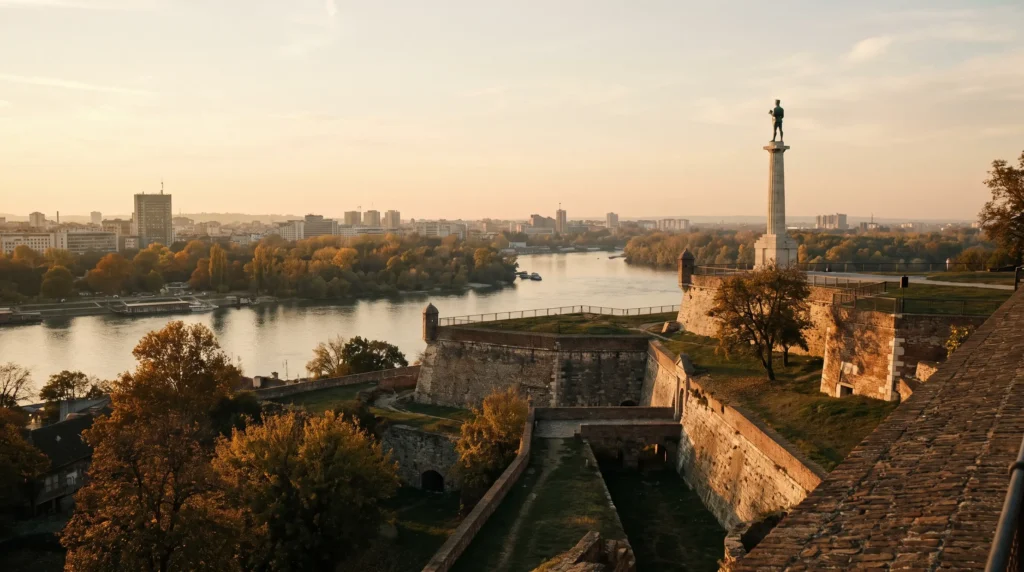
Belgrade does not ease you in. You land, you take a bus into a city that has been besieged, razed and rebuilt more times than any capital in Europe has any right to survive, and within an hour you’re standing on Kalemegdan’s ramparts watching the Sava pour into the Danube while a stranger tries to sell you a boat party for that same night. This is a city of roughly 1.2 million people that has been fought over in something like 115 wars and leveled 44 times across its history, and somehow the result isn’t grim — it’s one of the most unpretentious, hard-partying, genuinely welcoming capitals I’ve spent time in. I’ll be straight with you: Belgrade is rough around a few edges. The traffic is chaotic, some neighborhoods are still catching up architecturally from decades of underinvestment, and the tram network is mid-overhaul so expect replacement buses on more than one line. But it’s also cheap by European capital standards, endlessly walkable once you’re in the center, and as of last year, its entire public transit system is free to ride — which on its own makes it one of the easiest big cities in Europe to actually explore without a plan.
In This Guide
- Overview — Why Belgrade Rewards the Curious
- Belgrade Beer Fest — Late August at Ušće Park
- Best Time to Visit Belgrade (Season by Season)
- Getting There — BEG Airport & Overland Routes
- Getting Around — Free Trams, Buses & a Walkable Core
- Neighborhoods — Stari Grad, Zemun, New Belgrade & More
- Culture & People — A Crossroads Capital
- A Food Lover’s Guide to Belgrade
- Off the Beaten Path
- Day Trips — Novi Sad, Fruška Gora & Oplenac
- Practical Information
- Budget Breakdown — What Belgrade Actually Costs in 2026
- Planning Your First Trip to Belgrade
- Frequently Asked Questions
Overview — Why Belgrade Rewards the Curious
Belgrade sits at the confluence of the Sava and Danube rivers, at the meeting point of the Pannonian Plain and the Balkan Peninsula — a location so strategically valuable that it explains almost everything about the city’s turbulent history. It’s one of Europe’s oldest continuously inhabited cities, tracing back to a Celtic settlement called Singidunum founded around 279 BC, long before it became Serbia’s capital in 1841 and later the capital of Yugoslavia through the country’s entire, complicated 20th-century existence. Today it’s home to roughly 1.2 million people in the city proper and around 1.68 million across the wider metro area, making it comfortably the largest city in the former Yugoslavia and the political and economic center of Serbia.
The headline sight is Kalemegdan — the fortress and park complex sitting right where the two rivers meet, its walls dating back centuries through Celtic, Roman, Byzantine, Ottoman and Austro-Hungarian hands. Walk five minutes from there down Knez Mihailova, the pedestrian spine of the old town, and you’re in a European capital that looks and feels entirely ordinary in the daytime — cafés, bookshops, church bells — before the city’s real personality shows up after dark on the river barges. Belgrade isn’t a place of polished museums and manicured squares; large stretches of it, especially in New Belgrade, are unapologetically brutalist and a little worn. That’s part of the appeal. This is a working capital, not a theme park, and it has the nightlife, the food and the sheer unpretentiousness to prove it.
What Belgrade doesn’t have is Western European prices, crowds, or a tidy narrative. Serbia is an EU candidate country but not a member, so you’re outside the euro and outside Schengen even though the visa process for most Western travelers is a formality. That in-between status — European in feel, Balkan in pace, still finding its modern identity after Yugoslavia’s breakup — is exactly what makes wandering it interesting rather than just pleasant.
Belgrade Beer Fest — Late August at Ušće Park
If you want Belgrade at its loudest and most sociable, time a late-August trip around Belgrade Beer Fest, a five-day festival that’s run every August since it began at Kalemegdan Fortress in 2003 before outgrowing that site and relocating to the riverside Ušće Park in 2008. At its peak the festival has drawn crowds in the hundreds of thousands over its run, mixing rock, pop and electronic acts on multiple stages with beer stalls from Serbian and international breweries — it’s grown enough to catch international press attention as one of the region’s essential summer events.
Honest catch: entry was free for the festival’s first two decades, but that changed starting in 2023, so budget for a ticket rather than assuming a free walk-in like older guides describe. Book central accommodation early if your dates overlap — hotel prices near Ušće and the New Belgrade riverfront climb noticeably during festival week, and the surrounding splavovi (river barge clubs) run their own overlapping party schedule that makes for very late nights.
Best Time to Visit Belgrade (Season by Season)
Late April – June · Spring shoulder
Mild temperatures, blooming parks, and the best value window of the year — hotel rates haven’t hit summer peak and the city’s outdoor cafés and river islands are just coming back to life. This is arguably the most comfortable stretch for walking the old town and Kalemegdan without the August heat.
July – August · Peak summer, peak heat
This is when Belgrade Beer Fest happens and the splavovi scene runs hardest, but it’s also when temperatures regularly push past 30°C and the city can feel sticky and crowded with domestic tourists heading to and from the coast. Ada Ciganlija’s beaches fill up fast on hot weekends — arrive early or accept the crowds.
September – October · Autumn shoulder
My personal pick: warm days, cool evenings, thinner crowds, and grape and rakija season kicking off in the surrounding countryside, which makes day trips to Fruška Gora’s wine country especially good this time of year.
November – March · Winter
Cold, often grey, with occasional snow. Indoor museums, kafanas with live music, and Christmas markets in December make it worthwhile for travelers who don’t mind bundling up, and it’s by far the cheapest time to find a hotel room.
Getting There — BEG Airport & Overland Routes
Belgrade Nikola Tesla Airport (BEG) sits about 18 kilometres west of downtown, near the suburb of Surčin, and serves as the hub for Air Serbia with connections across Europe and a handful of intercontinental routes. From the airport, scheduled city buses run into the center — Line A1 to Slavija Square and Line 72 toward Zeleni Venac are the standard budget options — while licensed taxis are readily available for a faster if pricier ride. A rail link between the airport and the city has been in planning, so check current status before assuming it’s running by the time you travel.
Overland, Belgrade is a genuine regional hub: international trains and buses connect from Budapest, Zagreb, Sofia and Sarajevo, and the E75 motorway corridor makes a rental-car or bus arrival from Hungary or North Macedonia straightforward. If you’re combining Belgrade with the wider Balkans, buses tend to be more reliable and frequent than trains on most cross-border routes, though rail upgrades have been chipping away at that gap in recent years.
Getting Around — Free Trams, Buses & a Walkable Core
Here’s the detail that changes the whole budget calculation of a Belgrade trip: since 1 January 2025, all public transport within the city — buses, trams and trolleybuses run by GSP Belgrade and the integrated tariff system’s private operators — has been completely free to ride, no ticket, no card, no app. That makes Belgrade the largest city in Europe with fully free public transit, and it’s a genuinely useful perk for visitors hopping between the old town, Zemun and New Belgrade without thinking twice about fares.
The catch, and it’s a real one: Belgrade’s tram network is mid-renovation as new low-floor trams are phased in, and as of early 2026 several of the city’s thirteen regular tram lines were running replacement bus service instead of trams while corridor work continues. Check current line status before relying on a specific tram route, especially around the Sava riverfront. Beyond public transit, the historic center — Kalemegdan, Knez Mihailova, Skadarlija — is entirely walkable, and taxis are cheap enough that they’re a reasonable backup for late-night or cross-river trips; use a metered app-based service rather than flagging one down to avoid overcharging.
Neighborhoods — Stari Grad, Zemun, New Belgrade & More
Stari Grad (Old Town) & Kalemegdan
The historic heart, anchored by Kalemegdan Fortress and Park at the tip of the peninsula where the Sava meets the Danube — free to enter, open around the clock, and the best sunset spot in the city from the ramparts near the Victor Monument. Knez Mihailova, the pedestrian shopping street running from the fortress into the modern center, and Republic Square with the National Museum and National Theatre are all within easy walking distance.
Skadarlija
Belgrade’s bohemian quarter, sometimes nicknamed the city’s answer to Montmartre — cobbled, pedestrian-only lanes lined with kafanas, wine bars and live acoustic acts most evenings. It’s touristy by Belgrade standards, but the old-world atmosphere and traditional Serbian cooking still make it worth an evening, especially for classic dishes and rakija at one of the century-old taverns.
Zemun
Once a separate Austro-Hungarian frontier town on the Danube, Zemun still looks and feels distinct from the rest of Belgrade — red-tiled roofs, a small-town promenade along the river, Gardoš Tower on the hill above, and a genuinely local fish market and riverside restaurant scene. It’s an easy tram or bus ride from the center and one of the best places to feel Belgrade’s Austro-Hungarian side rather than its Ottoman or socialist one.
New Belgrade (Novi Beograd)
Built on reclaimed swampland across the Sava, New Belgrade is a sprawling showcase of Yugoslav brutalism — look for the Palace of Serbia and the striking Genex Tower. By day it’s business towers and shopping centers; by summer night, the Sava riverbank here turns into a strip of splavovi (floating river clubs) playing everything from turbo-folk to techno until sunrise.
Vračar
Home to the Church of Saint Sava, one of the largest Orthodox churches in the world at around 70 metres tall with room for roughly 10,000 worshippers, its interior mosaic project among the largest of its kind anywhere. The surrounding Vračar district is a pleasant, leafy residential area with good cafés and the excellent Nikola Tesla Museum a short walk away.
Savamala
A once-industrial riverside district turned arts and nightlife quarter, with converted warehouses hosting galleries, bars and the Mikser House creative space. It’s rougher around the edges than Stari Grad, which is exactly the draw for Belgrade’s younger, more alternative crowd.
Ada Ciganlija
Technically a river island turned peninsula on the Sava, nicknamed “Belgrade’s Sea” for good reason — a 4.2-kilometre artificial lake ringed by beaches, sports courts and cafés that can draw over 100,000 visitors on a hot summer day. It’s the city’s release valve in July and August, and one of the few genuinely free, family-friendly outdoor spaces in Belgrade proper.
Culture & People — A Crossroads Capital
Belgrade’s culture reflects its geography: a city that has passed through Roman, Byzantine, Ottoman, Austro-Hungarian and Yugoslav hands, and still visibly carries traces of each. Ottoman-era street patterns survive in pockets of the old town, Austro-Hungarian architecture defines Zemun, and the socialist-modernist ambitions of Yugoslavia are stamped across New Belgrade’s skyline. Serbian Orthodox Christianity remains central to civic identity — the Church of Saint Sava and the older Cathedral Church in Stari Grad are both active places of worship, not just monuments.
Rakija, the fruit brandy distilled across the Balkans (most commonly from plums as šljivovica), functions as something close to a cultural institution here — offered as a greeting, a toast, and occasionally a home remedy, and recognized by UNESCO as part of the region’s intangible cultural heritage. Nightlife is arguably Belgrade’s most internationally famous cultural export: the city’s reputation as a party capital, built on the splavovi scene and a genuinely late-running clubbing culture, draws visitors who might otherwise never have put Serbia on their itinerary. Football matters intensely here too — a Red Star or Partizan match at their respective stadiums is as much a cultural experience as a sporting one, loud in a way that’s hard to overstate.
A Food Lover’s Guide to Belgrade
Ćevapi — small grilled minced-meat sausages served in flatbread with chopped onion and kajmak (a rich clotted cream) — is the closest thing to a national fast-food dish, sold everywhere from grill stands to sit-down kafanas. Pljeskavica, Serbia’s answer to the burger, is the other everyday staple, and burek — a flaky filled pastry, usually meat or cheese, eaten with yogurt — is the standard breakfast on the go, best from a proper pekara (bakery) rather than a tourist-strip café.
For a sit-down meal, sarma (cabbage rolls stuffed with minced meat and rice) and mixed grill platters are kafana classics, and Skadarlija’s century-old taverns — Tri Šešira among the best known — serve them alongside live traditional music and, inevitably, rakija. Skip the coffee-chain strip on Knez Mihailova for a real Serbian coffee experience and look instead for a neighborhood kafić with outdoor seating. Belgrade’s craft and casual dining scene has grown fast in the last decade too, with modern Balkan restaurants putting a sharper spin on kajmak, grilled meats and regional wines from Fruška Gora and beyond — worth seeking out if you want the tradition with a contemporary edit.
Off the Beaten Path
Nikola Tesla Museum
A small but genuinely engaging museum in Vračar dedicated to the inventor, holding original documents, models and personal effects — a quieter, more substantive stop than most visitors expect from a museum of this size.
Zemun’s Gardoš Tower & riverside
Climb the Millennium Tower on Gardoš Hill for a view over the Danube that most day-tripping visitors to central Belgrade never bother to see, then walk the quiet river promenade below at sunset for a completely different pace than the New Belgrade splavovi scene across the water.
Savamala’s converted warehouses
Galleries, indie bars and creative spaces occupy former industrial buildings along the riverside here — a genuinely local arts scene rather than a curated tourist experience, and a good counterpoint to Skadarlija’s more polished bohemia.
Topčider Park & Košutnjak
Wooded parkland south of the center, popular with joggers and picnicking locals but rarely visited by tourists — a good half-day escape from the noise of the riverfront without leaving the city.
Day Trips — Novi Sad, Fruška Gora & Oplenac
Belgrade’s location in northern Serbia puts several distinct day trips within easy reach, most doable as a single guided or self-driven day out.
Novi Sad & Petrovaradin Fortress
Serbia’s second-largest city sits on the Danube around 90 minutes north of Belgrade, centered on the Petrovaradin Fortress, an 18th-century Austro-Hungarian military stronghold with sweeping river views. It’s an easy standalone day trip and often bundled with Sremski Karlovci on the same itinerary.
Sremski Karlovci & Fruška Gora
A small, well-preserved baroque town roughly 15 minutes from Novi Sad, historically significant as the site of the 1699 peace treaty between Ottoman and Habsburg forces and known today for a wine tradition running back more than 250 years, including the distinctive dessert wine bermet. Nearby, the wooded hills of Fruška Gora hold more than a dozen medieval Serbian Orthodox monasteries dating largely from the 15th and 16th centuries, many still active and open to respectful visitors.
Oplenac
South of Belgrade near the town of Topola, Oplenac Hill is dominated by the Church of St. George, mausoleum of the Karađorđević royal dynasty, famous for an interior covered almost entirely in mosaics reproduced from thousands of shades of colored glass — a striking, less-visited counterpoint to Belgrade’s own Church of Saint Sava.
Most operators run these as full-day tours with a mid-morning departure, typically eight hours door to door including hotel pickup — reasonable for a single-country add-on, though pairing two of these three in one day (Novi Sad plus Sremski Karlovci is the classic combination) makes for a fuller but still manageable itinerary.
Practical Information
Money. Serbia uses the Serbian dinar (RSD), managed by the National Bank of Serbia, and is not part of the eurozone despite its EU-candidate status. Card payment is widely accepted in Belgrade’s restaurants, hotels and shops, but carry some dinar cash for kafanas, markets and taxis — quoted prices sometimes float informally in euros for larger purchases, so confirm which currency you’re being quoted.
Safety. The US State Department rates Serbia “Level 2: Exercise Increased Caution,” citing crime connected to organized-crime disputes and sporting events, along with pickpocketing and occasional demonstrations in central areas. In practice, tourist areas of Belgrade are generally calm day to day; use licensed or app-based taxis, stay alert around large football matches and demonstrations, and check current UK FCDO and US State Department advice before you travel.
Health. The CDC recommends routine vaccinations plus hepatitis A and B for most travelers, and suggests tick-borne encephalitis protection if you’ll spend extensive time hiking or outdoors, along with standard insect-bite precautions. Tap water in Belgrade is generally considered safe to drink.
Connectivity, visa & logistics. A regional eSIM covers Belgrade and day-trip destinations without roaming charges. US, UK, EU/Schengen and Canadian passport holders can enter visa-free for up to 90 days within any 180-day period, but non-EU visitors are formally required to register their address with local police within 24 hours of arrival — most hotels handle this automatically, so ask your accommodation to confirm it’s been done. Plugs: Type F, 230V, 50Hz. Time zone: UTC+1 (CET), UTC+2 in summer (CEST).
Budget Breakdown — What Belgrade Actually Costs in 2026
Belgrade remains one of the better-value capital cities in Europe, noticeably cheaper than Vienna, Budapest or most Western European equivalents.
Budget (US$40–70/day): Hostel dorm or budget guesthouse in Stari Grad or Savamala, ćevapi and burek from grills and bakeries, free public transit doing all the moving, self-guided Kalemegdan and old-town walking.
Mid-range (US$90–160/day): Three-star hotel or well-located apartment rental, kafana dinners with rakija, a Nikola Tesla Museum visit, a splavovi night out, one guided day trip to Novi Sad or Fruška Gora.
Luxury (US$300+/day): Riverside four- or five-star hotels, upscale modern-Balkan dining, private guided day trips, VIP tables at the better-known splav clubs.
Fixed costs to expect: nothing like Western Europe’s tourist taxes or museum-hopping fees add up much here, since major sights like Kalemegdan are free to enter. Tipping 10% is appreciated but not obligatory where service isn’t already included, and taxis should always be metered or app-booked to avoid the overcharging that both the State Department and local guides flag as a recurring visitor complaint.
Planning Your First Trip to Belgrade
Three nights covers the essentials comfortably: Kalemegdan, Knez Mihailova and Skadarlija on day one, Zemun and the Church of Saint Sava on day two, and a splavovi night mixed in wherever your energy allows. Stretch to five nights and add a full-day trip to Novi Sad and Sremski Karlovci, or push on to Oplenac if royal history and mosaics interest you more than wine country. Belgrade pairs naturally with a wider Balkan loop — our Serbia country guide is the place to start for the bigger regional picture, and our Budapest and Zagreb city guides make sensible next stops up the Danube or across the old Yugoslav border.
Frequently Asked Questions
Is Belgrade safe for tourists in 2026?
The central tourist areas — Stari Grad, Zemun, Vračar — are generally calm and easygoing day to day. The US State Department’s “Level 2: Exercise Increased Caution” rating reflects crime tied to organized-crime rivalries and occasional sporting-event violence rather than a general threat to visitors; use licensed transport, stay alert around large football matches or demonstrations, and check current advisories before you go.
Do I need a visa?
US, UK, EU/Schengen and Canadian passport holders can enter Serbia visa-free for up to 90 days within any 180-day period. Non-EU visitors must register their address with local police within 24 hours of arrival — most hotels do this for you automatically, but confirm it.
Is public transport really free in Belgrade?
Yes — since 1 January 2025, all GSP Belgrade buses, trams and trolleybuses have been fare-free, making Belgrade the largest European city with completely free public transit. Just check current tram-line status first, since ongoing network upgrades have several lines running temporary replacement buses.
Does Belgrade use the euro?
No. Serbia uses the Serbian dinar (RSD) and is not in the eurozone, though it is an EU candidate country. Cards are widely accepted, but carry some dinar cash for kafanas, markets and taxis.
How many days do I need in Belgrade?
Two full days cover the old town, Kalemegdan and Zemun comfortably; three to four lets you add the Church of Saint Sava, the Nikola Tesla Museum and a proper night out on the splavovi; five gives you room for a day trip to Novi Sad or Fruška Gora without rushing.
Belgrade or Budapest?
Choose Belgrade for a rawer, cheaper, more unpolished capital with legendary nightlife and a genuinely complex history still visible on every block; choose Budapest for grander architecture, thermal baths and a more developed tourist infrastructure. Many travelers do both back to back along the Danube.
Ready to Explore Belgrade?
A fortress where three empires left their fingerprints, a river full of nightclubs on barges, and a public transit system that costs nothing to ride while you figure it all out. Belgrade isn’t trying to be pretty for you — it’s just being itself, loudly, at the meeting point of two rivers and a very long history. Go for the ćevapi, stay for the splavovi.
Explore More
- Serbia Travel Guide — the full country picture beyond the capital
- Budapest City Guide — up the Danube, a classic pairing
- Zagreb City Guide — across the old Yugoslav border
- Sofia City Guide — another underrated Balkan capital
How this guide was built
Published as part of Facts From Upstairs’ city guide series. Built from authoritative sources — Wikipedia entity pages for Belgrade, Nikola Tesla Airport, Transport in Belgrade, Trams in Belgrade, Belgrade Beer Fest, Ada Ciganlija, the Church of Saint Sava and the Visa policy of Serbia; the National Bank of Serbia for currency facts; the Tourist Organization of Belgrade (tob.rs) for on-the-ground sightseeing details; the US State Department Serbia travel advisory; the UK FCDO Serbia travel advice; the US CDC traveler page for Serbia; and World Standards for electrical plug and voltage specifications. Numeric claims carry inline citations.
Sources cited on this page
- Wikipedia — Belgrade
- Wikipedia — Nikola Tesla Airport
- Wikipedia — Transport in Belgrade
- Wikipedia — Trams in Belgrade
- Wikipedia — Belgrade Beer Fest
- Wikipedia — Ada Ciganlija
- Wikipedia — Church of Saint Sava
- Wikipedia — Visa policy of Serbia
- National Bank of Serbia
- Tourist Organization of Belgrade — What to See
- US State Department — Serbia Travel Advisory
- UK FCDO — Serbia Travel Advice
- US CDC — Serbia traveler page
- World Standards — Serbia plug & voltage
More city guides you might like
Plan your trip to Belgrade
The booking tools we use ourselves. FFU may earn a commission at no extra cost to you.
Plan & book your trip to Belgrade
Booking through these searches supports our guides at no extra cost to you.