
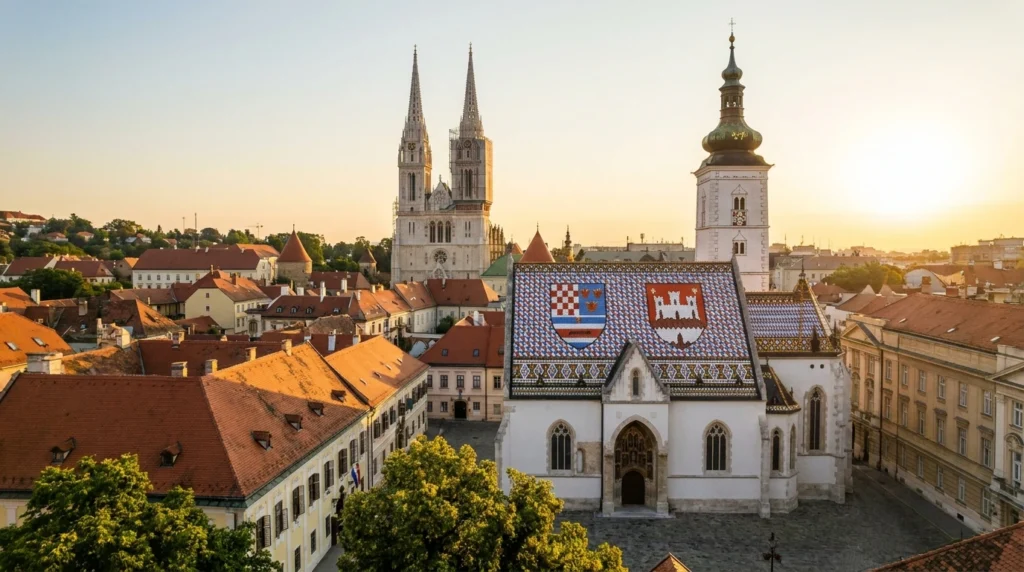
City Guide · Central Croatia
Zagreb, Croatia: Austro-Hungarian Cafes, the Tiled Roof of St. Mark’s, and the Most Underrated Capital in the Balkans
I always tell first-time travellers that Zagreb is the European capital nobody warns you you’ll love. We arrive expecting a quick stopover on the way to the coast and end up staying three days, because this is a compact, café-soaked Central European city — roughly 769,000 people in the city proper and about a million across the metropolitan area — that wears its Austro-Hungarian bones lightly and prices its pleasures like a secret. My favourite Zagreb ritual is the Saturday-morning špica: the whole city dresses up and spills onto the café terraces of Tkalčićeva and Cvjetni square to drink coffee and be seen, the unofficial national sport. Treat this guide as the brief I’d hand my own family the night before they flew into Franjo Tuđman Airport — the photogenic tiled roof of St. Mark’s Church, the funicular to the medieval Upper Town, the green horseshoe of Habsburg parks, the Dolac farmers’ market, and the easy day trips to Plitvice Lakes and the castles of the Zagorje hills .

Table of Contents
Why Zagreb?
Zagreb is the quiet overachiever of European capitals. While the cruise crowds funnel straight to Dubrovnik and Split, Croatia’s capital and largest city keeps its head down and gets on with being one of the most liveable, affordable and genuinely characterful cities in Central Europe. The city proper holds about 769,000 residents, with roughly 1.1 million across the wider metropolitan area, which makes it not only the political and economic heart of Croatia but the cultural one too . Yet it sees a fraction of the visitors of the coast, which is exactly why people who do come tend to leave evangelists.
What surprises first-time visitors is how Central European Zagreb feels — far closer to Vienna or Budapest than to the Venetian-tinged Adriatic towns most associate with Croatia. The city’s heart is split between two medieval hilltop settlements, Gradec and Kaptol, which merged into the Upper Town (Gornji grad), and the grand 19th-century Lower Town (Donji grad) laid out by the Habsburgs in a planned grid of boulevards, museums and parks . A diocese was founded here in 1094, but the city you walk today is overwhelmingly the confident, café-lined creation of the Austro-Hungarian era.
Zagreb is also unmistakably a city of rituals and small pleasures rather than blockbuster sights. The Saturday-morning špica — the see-and-be-seen coffee parade through the central streets — is practically a civic institution, and the café terrace is the true Zagreb monument. Add to that the daily theatre of the Dolac farmers’ market under its red umbrellas, the green horseshoe of Lenuci’s planned parks, and a museum scene that punches absurdly above its weight (including the cult Museum of Broken Relationships), and you have a city that rewards slowing down rather than ticking off.
This guide covers the neighbourhoods you’ll actually walk, the cheap and brilliant food — from štrukli to ćevapi to the Dolac market stalls — the marquee sights (St. Mark’s tiled roof, the funicular and the Upper Town, the Cathedral, the green horseshoe and the quirky museums), the day trips Zagrebačani themselves take on weekends, above all the Plitvice Lakes and the Zagorje castles, and the practical realities of Schengen rules, the euro, and the four genuinely distinct seasons. Zagreb is compact: almost everything on a first-timer’s list sits within a 25-minute walk or a short blue-tram ride of the central Ban Jelačić Square.
One orientation point worth absorbing early: Zagreb is a continental, four-season city, not a Mediterranean one. Summers are hot and can be humid, winters are genuinely cold with snow and one of Europe’s best Christmas markets, and the loveliest window is the long warm shoulder of late spring and early autumn, when the terraces are full and the parks are in leaf. Pack for the season you choose, and you’ll find a capital that feels lived-in and unhurried, with the prices and the warmth of a city that hasn’t yet learned to take its visitors for granted. For the wider Croatian context, this guide pairs with our Croatia Travel Guide and the sibling Dubrovnik, Split and Hvar city guides.
Getting There

Franjo Tuđman Airport (ZAG), about 17 kilometres southeast of the centre, is Croatia’s busiest, handling roughly 4.3 million passengers in 2024, and its striking 2017 terminal designed by Kincl, Neidhardt and IGH is a landmark in itself . It runs domestic links to Split and Dubrovnik plus European service on Croatia Airlines, Lufthansa, Ryanair, easyJet and others. The Plesoturist airport shuttle bus runs to the main bus station in about 30 minutes for a few euros; a taxi to the centre is roughly €25–€35.
Rail connects Zagreb to the rest of Central Europe, though services are slower than flying. HŽPP and partner railways run direct or connecting trains from Vienna, Budapest, Ljubljana and Munich, arriving at the grand 1892 Glavni kolodvor (Main Station) on the green horseshoe . Domestic rail to Split is scenic but long; most travellers fly or take the bus for the coast.
By road, Zagreb sits at the hub of Croatia’s modern motorway network, and the bus is often the fastest and cheapest surface option. FlixBus, Arriva and Croatia Bus run frequent intercity coaches from Ljubljana, Belgrade, Vienna and across Croatia into the main bus station (Autobusni kolodvor) southeast of the centre . Buses to Split take about 5 hours, to Ljubljana about 2.
Getting Around
Zagreb is one of the easiest capitals in Europe to navigate: an extensive blue-tram network run by ZET, a dense bus system, the historic funicular up to the Upper Town, and a flat, walkable centre . The core is compact — you can walk from the Main Station up to Ban Jelačić Square and on to the Dolac market in 20 minutes — so most visitors walk between the sights and use the trams mainly for longer hops, the bus station and Maksimir park.
Blue Trams (ZET)
Zagreb’s iconic blue trams are the backbone of city transport, running 15 day lines and four night lines across a network that’s been rolling since 1891 (electrified in 1910) . They’re frequent, cheap and genuinely useful for crossing the Lower Town and reaching Maksimir, the lakes at Jarun and the bus station. A single 30-minute ticket bought from a kiosk or the ZET app costs around €0.70–€0.90; a 90-minute or day ticket is better value if you ride more than twice.
Buses and the ZET Day Pass
ZET buses extend the network to the suburbs and the hilltop neighbourhoods the trams can’t reach, including the connection up to Medvednica’s lower slopes. Tickets are integrated with the trams — the same paper ticket or app fare works across both — and a day pass (around €4) covers unlimited tram and bus travel, paying for itself quickly on a sightseeing day . Validate paper tickets in the on-board machine when you board.
The Funicular
The Zagreb funicular, opened in 1890, links the Lower Town to the Upper Town up a 66-metre incline and, at 122 metres of track, is one of the shortest public funiculars in the world — the ride lasts barely 64 seconds . It’s a protected cultural monument and a charming way up to the Lotrščak Tower, though the parallel stairs are quick if there’s a queue. A single ride costs about €0.70.
Airport Access
- Plesoturist airport shuttle bus to the main bus station — about 30 minutes, roughly €8 one way
- Taxi ZAG to the centre — about 25 minutes, roughly €25–€35 by day
Taxis and Rideshare
Zagreb has a competitive taxi market: Bolt and Uber both operate widely and are usually cheaper and easier than flagging a street cab, with app fares for a cross-centre ride around €5–€8. Traditional taxi companies such as Radio Taksi and Eko Taxi are metered and reliable; agree or check the meter before you set off. Card payment is standard in app rides.
Navigation Tips
Zagreb is easy to read once you orient to Ban Jelačić Square, the central pivot from which the Upper Town rises north and the Lower Town’s grid spreads south to the Main Station. Google Maps handles the tram network well, and the ZET app sells tickets and shows live arrivals. Street signs are clear, and the historic core is small enough that you’ll rarely need transit for sightseeing — save it for Maksimir, Jarun and the bus station.
Neighbourhoods: Where to Base Yourself
📍 Zagreb Map: Every Place in This Guide
Zagreb’s character changes street to street, and choosing the right area shapes the whole trip. The centre is compact — you can walk from the Upper Town down to the Main Station in under half an hour — but each quarter has its own rhythm, price point and noise level. Below are the neighbourhoods most first-time visitors actually consider, with an honest read on who each suits.

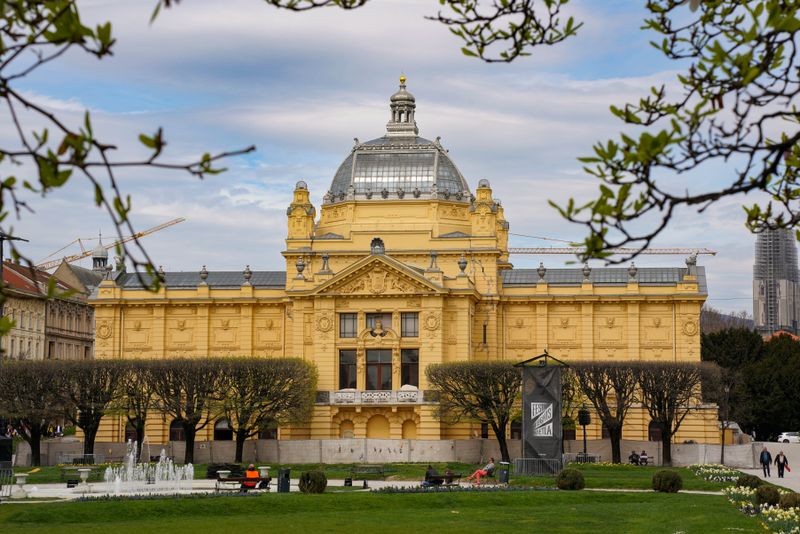
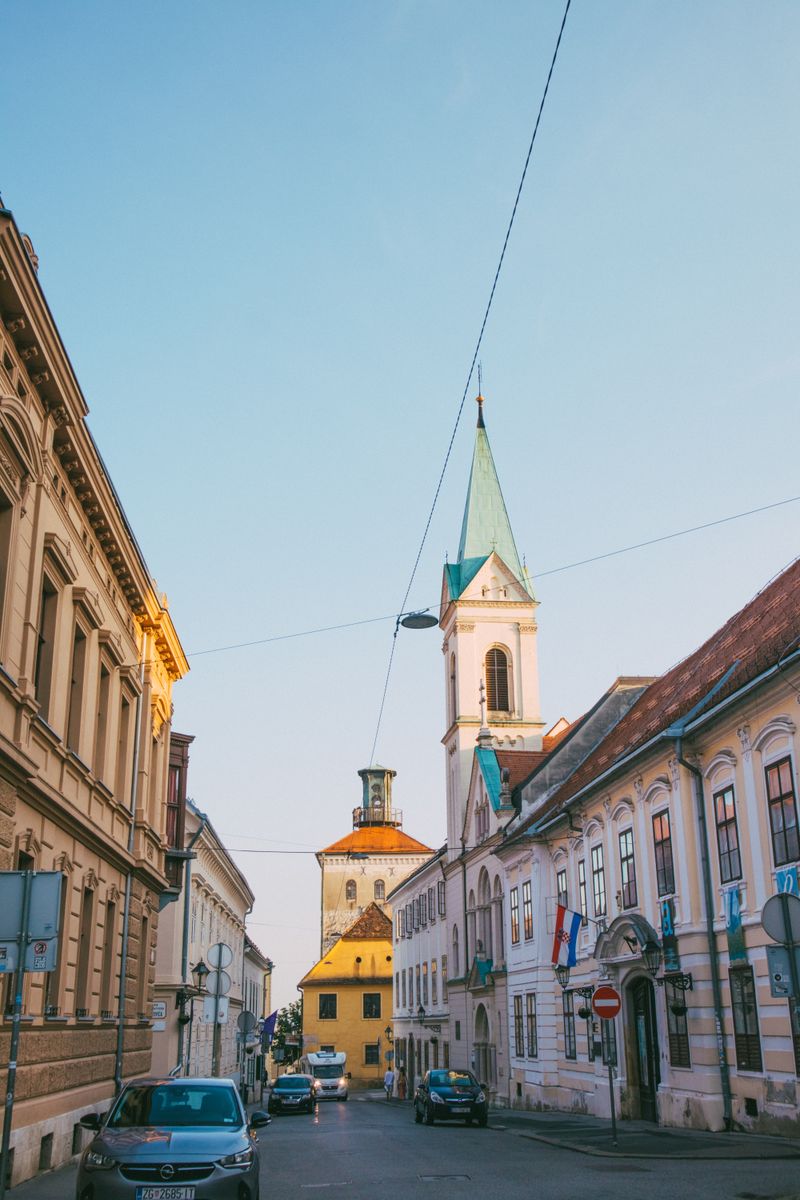
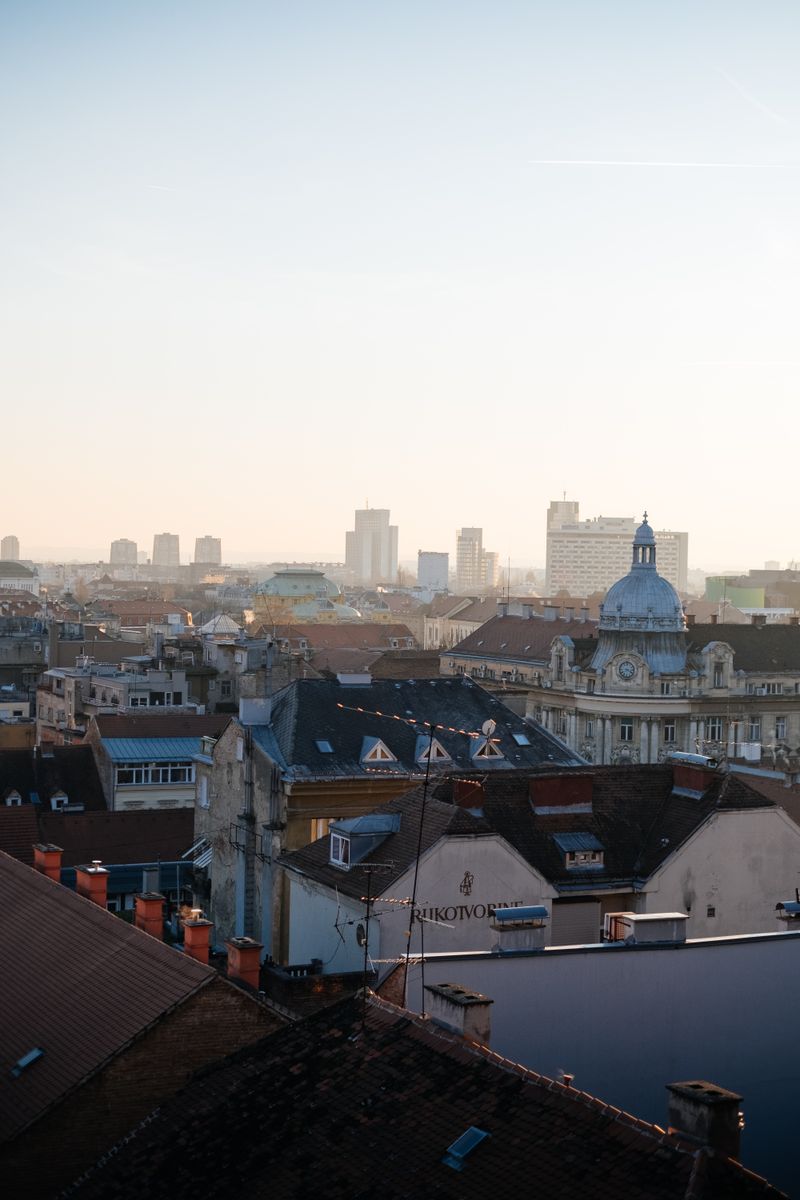
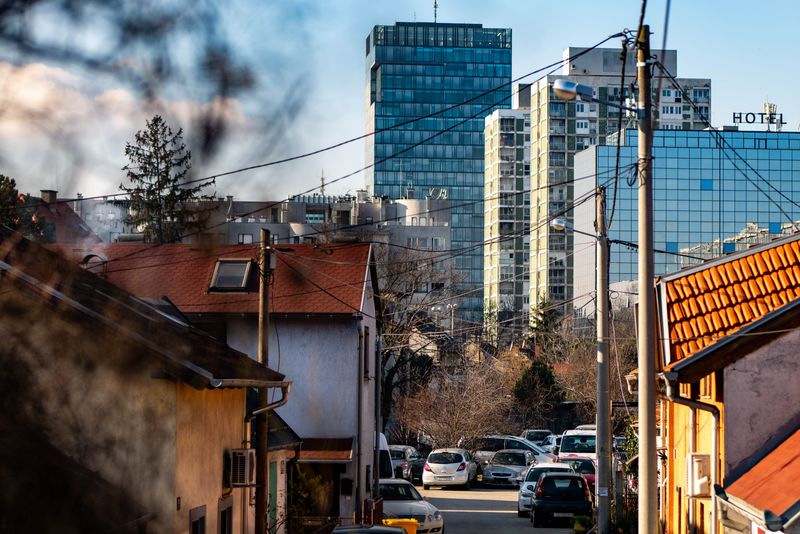
Upper Town (Gornji grad)
The medieval old town of Gradec and Kaptol is the atmospheric postcard Zagreb — cobbled lanes, gas lamps, St. Mark’s tiled roof, the Lotrščak Tower and a cluster of museums, all on the hill above the centre. Stay near here if it’s your first visit and you want the prettiest streets and the best views on your doorstep; accommodation is limited and a little pricier, and the steepest lanes are a workout with luggage.
Lower Town (Donji grad)
The Habsburg-planned grid south of Ban Jelačić Square is the city’s elegant commercial heart, with the green horseshoe of parks, the grandest hotels, the museums and the best shopping, and a flat, easy walk to everything. This is the most convenient and comfortable base for most visitors, with a wide range of mid-range hotels and apartments and the Main Station close at hand.
Tkalčićeva and Around
The pedestrianised Tkalčićeva street, just below the Upper Town, is the city’s nightlife and café spine — a near-continuous run of bars, terraces and restaurants that buzzes from late morning to late night. Staying nearby puts you in the thick of the action, with the trade-off that it can be lively and noisy after dark, especially on weekends.
Maksimir and the East
For a quieter, greener base, the residential districts around Maksimir park — the city’s grand 18th-century English-style park and the zoo — trade old-town buzz for leafy calm and lower prices, a 10-minute tram ride from the centre. It suits travellers who want space, families, and anyone happy to commute the short distance in for sightseeing.
Food and Drink: Štrukli, Ćevapi and Coffee
Zagreb’s food is continental Croatian — heartier and more Central European than the seafood-and-olive-oil cooking of the coast — and eating here is cheap by Western European standards and consistently good. The city’s signature ritual isn’t a dish at all but the coffee: the long, social café sit, taken seriously as a daily institution rather than a quick caffeine hit.

What to Order
- Štrukli — the Zagreb signature: baked or boiled dough parcels filled with fresh cottage cheese, served savoury or sweet.
- Ćevapi — grilled minced-meat fingers served with flatbread, raw onion and ajvar relish, a Balkan staple.
- Purica s mlincima — roast turkey with baked pasta sheets, the classic Zagorje Sunday lunch.
- Kremšnita — the towering custard-cream slice, best eaten on a day trip to nearby Samobor.
- Rakija — the potent fruit brandy, often homemade, that ends a Croatian meal.
Where to Eat
The Dolac market just off Ban Jelačić Square — the city’s main farmers’ market under its trademark red umbrellas, open daily since 1930 — is the best place to graze, with cheese, cured meats and fresh produce, plus štrukli and burek stalls nearby . For sit-down meals, the Upper Town and Tkalčićeva hold the most atmospheric taverns, while the Lower Town has the city’s growing fine-dining scene and the historic café houses. Konoba-style eateries serve hearty home cooking at gentle prices.
Timing and Etiquette
Croatians eat lunch from around 1pm and dinner from 8pm, and a café coffee can last an hour with no pressure to leave — lingering is the point. The Dolac market is liveliest in the morning and winds down by early afternoon. Tipping is light: rounding up or leaving around 10% for good table service is plenty, and a coffee or a quick bite needs no tip.
Cultural Sights: The Upper Town and Beyond
Zagreb’s sightseeing splits cleanly between the medieval Upper Town on its hill and the museum-rich Habsburg grid of the Lower Town, with a clutch of quirky, world-class small museums threaded through both. The headlines are charming rather than monumental, but the supporting cast — the market, the cathedral, the parks and the funicular — is what fills a satisfying two days.

St. Mark’s Church and the Upper Town
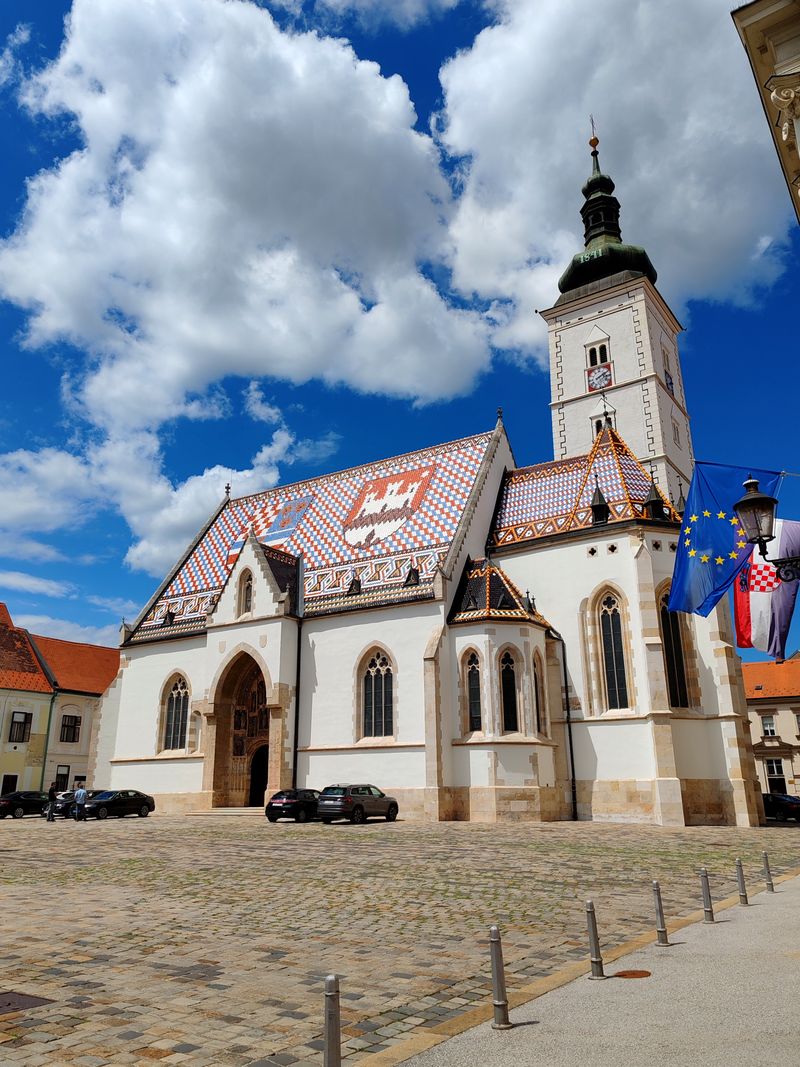
St. Mark’s Church, with its famous 1880 tiled roof bearing the coats of arms of Zagreb and of the medieval Triune Kingdom, sits at the heart of Gradec, the old town’s western hill . Around it cluster the Croatian Parliament, the Lotrščak Tower — whose Grič cannon has fired at noon every day since 1877 — and a warren of cobbled, gas-lit lanes that are the city’s most atmospheric. It’s reached on foot or by the 1890 funicular.
Zagreb Cathedral and Kaptol

The neo-Gothic Zagreb Cathedral, dedicated to the Assumption of Mary, dominates the Kaptol quarter — its twin spires are the tallest structure in Croatia . Damaged in the 2020 earthquake, it has been under careful restoration, with one spire dismantled for repair, but the building and its treasury remain the spiritual heart of the city and a fixture of its skyline.
Dolac Market and Ban Jelačić Square

Ban Jelačić Square, anchored by its 1866 equestrian statue, is the city’s living room and the point from which everything radiates . Just above it, the Dolac market — open daily since 1930 under its iconic red parasols — is the gastronomic heart of Zagreb, a riot of produce, cheese and flowers that’s as much daily theatre as shopping.
The Quirky Museums
Zagreb’s museums punch far above the city’s size. The Museum of Broken Relationships, a wildly original collection of objects and stories from failed romances, won the European Museum of the Year’s Kenneth Hudson Award and is now a global cult attraction . Add the Mimara art collection, the Museum of Contemporary Art and the Croatian Museum of Naïve Art, and you have a museum scene worthy of a far larger capital.
Culture, Festivals and Nightlife
Zagreb’s cultural life runs deeper than its compact size suggests. There’s a serious classical and theatre scene, a packed festival calendar, an Advent market that’s become a European phenomenon, and a nightlife rhythm built around the café terrace and the bar rather than the mega-club. The city stays out late, but it does so over coffee, wine and conversation as much as dance floors.
Classical, Theatre and the Lisinski
The grand 1895 Croatian National Theatre stages opera, ballet and drama in a gilded Habsburg-era hall, while the modern Vatroslav Lisinski Concert Hall is the home of the Zagreb Philharmonic and a year-round programme of orchestral and popular concerts . Tickets are excellent value compared with Western European capitals, and the standard is high.
Festivals and the Advent Market
Zagreb’s biggest draw is its Advent Christmas market, named Europe’s Best Christmas Market multiple times, which fills the squares, parks and Tkalčićeva with lights, food stalls, ice rinks and concerts through December . The summer calendar is just as busy, with the INmusic festival on the Jarun lakes, the Cest is d’Best street-performance festival and the Festival of Lights all drawing crowds.
Nightlife and the Terraces
Nightlife centres on Tkalčićeva and the Lower Town bars, with a relaxed, terrace-led rhythm that builds slowly through the evening. For late nights, the lakeside clubs at Jarun — nicknamed the city’s “sea” — run until dawn in summer, while craft-beer bars and wine bars cluster in the centre. It’s a sociable, unpretentious scene that’s easy to dip into solo.
Day Trips From Zagreb
Zagreb is the ideal base for inland Croatia, with fast motorways and frequent buses reaching national parks, castles and spa towns within two hours. With more than two days, give one to a day trip.

Plitvice Lakes (about 2 hours by bus or car)
Croatia’s most famous national park, the UNESCO-listed Plitvice Lakes, is a chain of sixteen turquoise terraced lakes linked by tumbling waterfalls and wooden boardwalks, about two hours south of Zagreb . It’s the essential Zagreb day trip; go early to beat the tour buses, buy timed tickets online in summer, and allow at least four hours on the trails, which include free shuttle boats and land trains around the lakes.
Zagorje Castles (about 1 hour by car)
The green Zagorje hills north of the city hold a string of romantic castles — the fairy-tale Trakošćan perched above its own lake and the baroque hilltop fortress of Veliki Tabor — along with the Krapina Neanderthal Museum, built on one of Europe’s richest prehistoric sites. It’s best done by car or an organised tour, since public transport between the sites is sparse.
Samobor and Varaždin (about 1 hour by bus)
Pretty little Samobor, half an hour west, is the locals’ weekend escape for its famous custard kremšnita and gentle hiking in the Žumberak hills. An hour north, the baroque town of Varaždin — Croatia’s 18th-century capital — is a jewel box of pastel palaces, a hilltop castle and a romantic old cemetery, and it hosts the renowned Špancirfest street festival each summer.
When to Visit: A Season-by-Season Guide
Zagreb’s continental climate gives it four genuinely distinct seasons — hot summers, cold and snowy winters, and long, lovely shoulder seasons. Here’s how the year actually feels on the ground.
Spring (March–May)
Fresh and increasingly warm, with the parks bursting into leaf and the café terraces filling up. Temperatures climb from the single digits to the low 20s°C by May, which is one of the loveliest months — longer days, blossom in the green horseshoe and reasonable prices. Pack layers; spring weather swings between warm sun and cool showers.
Summer (June–August)
Hot and sometimes humid, with highs in the high 20s to low 30s°C and many locals away on the coast, which paradoxically makes the city quieter. It’s festival season — INmusic at Jarun, open-air cinema and concerts — and the long evenings are made for terrace dinners. Midday heat can be intense, so plan museums and the funicular for the hottest hours.
Autumn (September–November)
Arguably the best balance: September is warm, golden and far quieter than summer, with the terraces still open and the parks turning copper. October and November cool down and turn wetter but stay atmospheric, and prices ease after the summer. A superb time for the city and for day trips to Plitvice.
Winter (December–February)
Genuinely cold and often snowy, with daytime highs around freezing and crisp, clear spells — but December transforms the city for its award-winning Advent market, with lights, ice rinks and mulled wine everywhere. January and February are quiet and cheap, with cosy cafés and the occasional ski day on nearby Sljeme. Bring proper winter layers.
Budget Breakdown: What Zagreb Actually Costs
Zagreb is excellent value — noticeably cheaper than the Croatian coast in summer and than most Western European capitals year-round. The figures below are per-person daily estimates excluding flights, in euros (Croatia adopted the euro in 2023), based on 2025–2026 prices .
Backpacker (€45–75/day)
A hostel dorm bed runs €18–30; market food, bakery burek and a daily set lunch keep food to €14–22; the Upper Town, parks and Dolac market are free or cheap. Budget one paid museum and you stay comfortably under €75.
Mid-Range (€100–170/day)
A three-star hotel or central apartment is €65–110 for a double; add €30–45 for restaurant meals, €12–20 for museum tickets and the occasional taxi. This is the typical comfortable-tourist band.
Luxury (€280+/day)
A four- or five-star room such as the Esplanade or the Westin runs €180–380+, fine dining at one of the city’s top restaurants adds €90–180, and private guides and day-trip drivers push the day past €280.
Key Fixed Costs
- Museum of Broken Relationships entry — about €7
- Funicular single ride — about €0.70
- Single 30-minute tram ticket — about €0.70–0.90
- ZET day pass (tram + bus) — about €4
- Airport shuttle bus to centre — about €8
Practical Tips and Safety
Zagreb is a safe, easy and welcoming city for visitors, but a handful of practical habits make the difference between a smooth trip and an avoidable headache. None of this is alarming — it’s the ordinary common sense of any popular European capital.
Money and Payments
Croatia uses the euro (since 1 January 2023); cards are accepted almost everywhere, including markets and cafés, but carry €15–25 in small notes for the Dolac stalls and the smallest kiosks . ATMs are plentiful; avoid the standalone “Euronet” machines, which apply poor exchange rates, in favour of bank ATMs.
Safety and Scams
Zagreb is one of Europe’s safer capitals; violent crime is rare and the realistic risk is opportunistic pickpocketing in crowds on Ban Jelačić Square, the Dolac market and at the Advent market. Use a zipped bag worn to the front. Both the UK and US governments rate Croatia a low-risk destination overall .
Health and Water
Tap water is safe and excellent to drink throughout the city. EU visitors should carry an EHIC/GHIC card; everyone else should have travel insurance. Pharmacies (ljekarna, marked with a green cross) are widespread and competent for minor ailments .
Practical Essentials
- Language: Croatian; English is common among younger people and in tourist areas.
- Plugs: Type C/F, 230V — bring an EU adapter.
- Tipping: light — round up or leave around 10% for good service.
- Weather: four real seasons — pack for summer heat or winter cold accordingly.
- Pace: coffee is a long, social ritual — don’t rush the café.
Frequently Asked Questions
How many days do you need in Zagreb?
Two full days covers the city comfortably: one for the funicular, the Upper Town, St. Mark’s and the Lotrščak Tower; one for the Dolac market, the Cathedral, the museums and the green horseshoe parks. Add a third day for a day trip to the Plitvice Lakes or the Zagorje castles, which most visitors find well worth it.
What is the best time of year to visit Zagreb?
Late May, June and September offer the best balance of warm terrace weather and manageable crowds. December brings the award-winning Advent Christmas market but cold weather; July and August are hot and quieter as locals head to the coast. Whenever you go, pack for the season — Zagreb has four genuinely distinct ones.
Is Zagreb worth visiting, or should I just go to the coast?
Absolutely worth it — and it’s the most underrated stop in Croatia. The Upper Town, the café culture, the Dolac market, the quirky museums and the easy day trip to Plitvice easily fill two or three days, and the prices and lack of crowds make it a relief after the busy coast. Many travellers arrive expecting a quick stopover and wish they’d booked longer.
Is Zagreb expensive?
It’s excellent value — noticeably cheaper than the Croatian coast in summer and than most Western European capitals. A mid-range trip runs roughly €100–170 per person per day excluding flights, and backpackers can manage on €45–75. The euro replaced the kuna in 2023, so prices are now in euros.
Do I need public transport, or is Zagreb walkable?
The historic core is very walkable — the Upper Town, market and the green horseshoe form a compact, mostly flat area. Most visitors use the blue ZET trams mainly for the bus station, Maksimir park and the Jarun lakes. A ZET day pass covers unlimited trams and buses and is worth it on a busy sightseeing day.
How do I get from Zagreb airport to the city centre?
The Plesoturist shuttle bus runs into the main bus station in about 30 minutes for roughly €8, while a taxi or Bolt/Uber takes around 25 minutes for €25–35 by day . Franjo Tuđman Airport (ZAG) handled around 4.3 million passengers in 2024 and is Croatia’s busiest .
Is Zagreb a good base for the rest of Croatia?
Yes for inland Croatia — the Plitvice Lakes are about two hours south, the Zagorje castles an hour north, and Samobor and Varaždin within an hour, all reachable by frequent bus or car. For the coast, Split is about five hours by bus or a short domestic flight, so most travellers treat Zagreb as a separate leg rather than a coastal hub.
What food is Zagreb famous for?
Štrukli above all — baked or boiled cheese-filled dough parcels — plus ćevapi (grilled minced-meat fingers), purica s mlincima (roast turkey with baked pasta) and the long, social coffee ritual. The Dolac farmers’ market is the city’s gastronomic heart, and the whole continental Croatian cuisine is hearty and excellent value.
Was This Guide Helpful?
We update our Zagreb guide as prices, transit and opening hours change. Let us know if it helped — your feedback shapes the next revision.
Ready to Experience Zagreb? Sit, Sip, Look Up
Zagreb rewards the curious traveller. Its headline pleasures are gentle — the tiled roof of St. Mark’s, the funicular’s 64-second climb, the noon cannon — but the city’s real magic is in the in-between: a štrukli and a coffee on a Tkalčićeva terrace, the red umbrellas of Dolac at dawn, the green horseshoe parks in golden light, the Advent lights in December. See the Upper Town, then stay for everything around it. For the wider picture, see our Croatia travel guide and the bare Croatia country page, and pair Zagreb with Dubrovnik, Split and Hvar for a complete regional trip.
Explore More City Guides
Zagreb is one stop in our growing library of Croatian and Central European city guides. Keep planning with these companion pages:
More city guides you might like
Plan your trip to Zagreb
The booking tools we use ourselves. FFU may earn a commission at no extra cost to you.
Plan & book your trip to Zagreb
Booking through these searches supports our guides at no extra cost to you.