
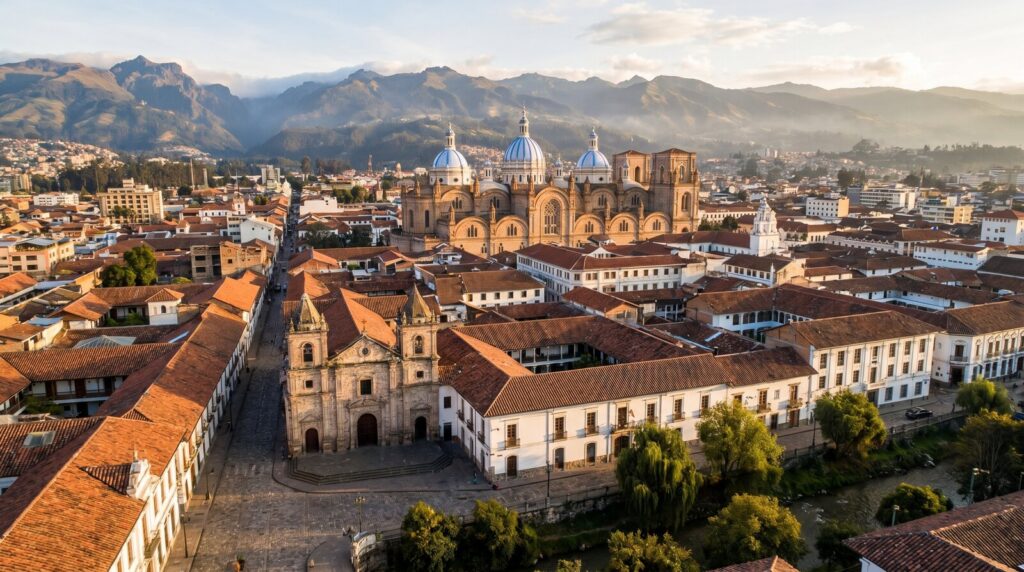
Cuenca, Ecuador: Colonial Charm, Panama Hat Birthplace & Andean Living
Five pastel-hued cliff-side villages connected by footpaths where medieval architecture meets Mediterranean magic
Cinque Terre—five villages (Monterosso, Vernazzo, Corniglia, Manarola, Riomaggiore) clustered within 12 kilometers of Italian Riviera coastline—represents one of Europe’s most visually spectacular destinations. Buildings painted in electric pastels (salmon, yellow, terracotta, cream) cascade down cliffsides toward turquoise Mediterranean waters, creating color combinations so saturated that photography appears hyperreal despite representing actual reality. The villages are accessible only by walking steep footpaths, narrow trains through tunnels, or boat—no car roads connect them, preserving isolation that attracts millions seeking respite from contemporary automotive excess.

What originated as medieval fishing settlements developed extraordinary wine production (Cinque Terre wine is world-renowned), agriculture (lemon production), and increasingly, tourism. The tension between preservation and development defines contemporary Cinque Terre—a UNESCO World Heritage Site theoretically protected but increasingly threatened by overtourism’s corrosive effects. Crowding reaches levels where afternoon pathways become human conga lines, restaurants become tourist mills, and the authentic village character that attracted visitors initially becomes increasingly elusive to those arriving during peak hours.
Exploring Cinque Terre
The Five Villages: Individual Character
Monterosso is the largest village, the only one with a significant beach, and the most developed tourism infrastructure. The old town area contains character (colorful buildings, steep alleys, small square), while the newer section developed in the 19th century with wider streets and modern buildings. Monterosso functions as Cinque Terre’s commercial hub—accommodation, restaurants, and amenities concentrate here. The beach creates social gathering space, making Monterosso feel more like Mediterranean resort town than isolated fishing village.
Vernazzo, the second village, represents the pinnacle of Cinque Terre’s romantic image—buildings tumbling directly to water, boats tied in the town square, narrow alleys, absence of vehicles, complete integration of built environment with natural setting. Vernazzo’s small piazza opens directly to harbor, creating intimate relationship between residents and sea. The village is almost comically picturesque—nearly every viewing angle creates postcard-worthy image. This photogenic nature attracts enormous crowds, particularly mid-day.
Corniglia, set back from the coast on a hillside peninsula, feels least accessible—reached by steep stairway (382 steps) or longer coastal path. This remoteness has preserved greater authenticity than lower villages. Fewer restaurants and shops creates less commercialized atmosphere. The village is primarily residential, with tourists treated as guests rather than commodities. The higher elevation provides panoramic views across the coast and toward neighboring villages.
Manarola and Riomaggiore, the southern villages, maintain strong fishing traditions (though increasingly tourism-dependent). Riomaggiore is accessed from the train station, making it accessible for day-trippers making brief stops. Manarola sits between Riomaggiore and Corniglia, offering balance between accessibility and preserving some isolation. Both villages maintain more working-village atmosphere than northern counterparts, with local fishing boats, casual waterfront culture, and less polished tourism presentation.
Ecuador’s most architecturally pristine city, unchanged for centuries
Cuenca exists outside contemporary time. Wander its narrow cobblestone streets, past colonial facades painted in salmon and cream, beneath cathedral domes that have presided for four centuries, and you’ll encounter a city where modernity arrived cautiously, respecting architectural heritage with unusual restraint. Unlike many Latin American cities that demolished colonial centers for commercial development, Cuenca doubled down on preservation—the entire historic district became a UNESCO World Heritage Site. Streets that hosted Spanish conquistadors and indigenous merchants now welcome travelers seeking escape from globalization’s sameness. Panama hats—those elegant straw creations genuinely manufactured in Ecuador despite the geographical irony of their name—originate here, made by artisans employing techniques passed through generations. Cuenca rewards slow travel: afternoons in flower-filled plazas, mornings exploring workshops where master weavers create museum-quality pieces, and evenings discovering why sophisticated travelers consider it Ecuador’s most livable city.
Quick Navigation
Colonial Architecture & UNESCO Heritage
Founded in 1557 on the site of the Inca city Tomebamba, Cuenca developed into a crucial crossroads between mountain and coastal Ecuador. Spanish conquistadors employed indigenous labor to construct ecclesiastical and administrative buildings employing European architectural principles adapted to Andean contexts. The result merged cultures—Spanish Renaissance design married with local materials and subtle indigenous design elements. Four-and-a-half centuries of building created a cohesive historical core rare in the Americas.
The cathedral complex anchors downtown Cuenca, with the imposing New Cathedral dominating the central plaza since 1885, its turquoise-blue domes visible from across the city. The adjacent Old Cathedral, constructed in the 1500s, now houses the Museum of Sacred Art, displaying religious works spanning colonial periods. Walking between them traces temporal layers—stepping from contemporary city streets into spaces where colonial aristocracy once attended mass.
UNESCO designated the historic core a World Heritage Site in 1999, acknowledging it as one of the Americas’ best-preserved colonial cities. This designation brought conservation requirements and modest tourism attention, yet Cuenca avoided the commercialization plaguing many UNESCO-listed cities. Genuine residents still inhabit colonial residences, run family businesses from ground-floor shops, and maintain neighborhood continuity that prevents heritage from becoming mere theater.
Coastal Hiking Trails & Via dell’Amore
The footpath network connecting Cinque Terre villages comprises roughly 12 kilometers split into segments of varying difficulty. The most famous is the Via dell’Amore (Path of Love), connecting Riomaggiore and Manarola—a relatively easy 20-minute walk carved into cliffside with Mediterranean sea views below. The path’s romantic name derives from couples historically using it for rendezvous, though contemporary traffic transforms it into crowded tourist walkway during daylight hours. The path has been damaged periodically by rockfalls and required temporary closures for repairs, but typically remains accessible.
The path from Manarola to Corniglia (Colle di Gritta) is steeper and less developed, requiring 90 minutes over terrain exposed to sun, lacking shade. This moderate difficulty deters casual day-trippers, reducing crowds compared to via dell’Amore. The path winds through olive groves and vineyards, passes small wayside shrines, and encounters occasional residents working terraced agriculture. The effort required generates sense of accomplishment and adventure less present in easier segments.
Corniglia to Vernazzo represents another section—longer (2 hours), more challenging, reaching elevations above villages before descending. The walk is steep, switchbacks numerous, and shaded sections few. However, the path reveals geology, terraced agriculture, and land management practices maintaining these cliff-side communities. Village architecture appears as you round curves, transforming from tiny colored dots to comprehensible structures. The effort creates appreciation that accessible paths cannot provide.
Strategic hiking minimizes crowds. Early morning departures (6-7 AM) mean encountering primarily fellow hikers rather than day-trippers. Hiking from south to north (Riomaggiore to Monterosso) positions you against tourist flow. Walking north from Monterosso before descending to later villages provides reverse perspective. Avoiding mid-day (10 AM-4 PM) transforms hiking experience from crowded obstacle course to contemplative natural engagement.
National Park Pass & Site Access
Cinque Terre is protected as a National Park, requiring entrance fees managed through a park card system. Day passes (€16.50) provide access to hiking trails, beaches, and limited train rides. Multi-day passes cost slightly more and are worthwhile if staying multiple nights. Cards are purchased at train stations or village entrances. Enforcement is inconsistent, but locals emphasize that purchasing passes directly supports conservation efforts and maintenance of trails, beaches, and facilities.
Train service between villages provides alternative to hiking, running roughly every 15-30 minutes. Tickets cost €4-5 for single journeys or are included with park pass. Trains travel through tunnels, providing quick transit but missing scenic coastal views hiking provides. Combining train and hiking (hiking one direction, training another) offers flexibility managing energy and time. Train schedules change seasonally, with reduced service during winter months.
Boat service during summer months connects villages, offering perspective from the sea. Ferries cost €8-15 per journey and allow observation of villages from water, revealing coastal geography and architectural relationships to natural landscape. Swimming directly from boats isn’t possible, but the experience provides photographic angles and vistas inaccessible from land.
Access Methods
Hiking: Most rewarding but requires fitness; allow 4-6 hours for full coast walk.
Train: Quick transit, tunnel passages; combine with hiking for efficiency.
Boat: Seasonal (May-September), provides scenic water perspective.
Park Pass Value
Day pass (€16.50) includes trail access and limited train rides. Multi-day passes worthwhile for stays 3+ days. Passes support maintenance and conservation of UNESCO site.
Panama Hat Weaving & Artisan Workshops
The misnomer of “Panama hats” manufactured in Ecuador represents one of travel’s great historical ironies. These straw hats originated as Ecuadorian products, gaining international fame when sold to Panama during canal construction in the early 1900s. Buyers associated them with Panama rather than their true origin, and the name stuck despite geographical inaccuracy. Contemporary Panama hats remain primarily Ecuadorian manufactured, with Cuenca as the preeminent production center.
Master hat makers employ a technique dating centuries. They begin with toquilla straw, harvested from palm plants grown in coastal Ecuador, which they meticulously split into hair-thin strips. Each strip is bleached, dried, and hand-woven using techniques requiring years to master. A quality Panama hat incorporates over 1,500 individual straw strands, each positioned precisely to maintain structural integrity while creating the distinctive lattice patterns. The finest examples can take weeks to complete, commanding prices exceeding $1,000.
Visiting artisan workshops offers insight into production techniques unchanged for generations. Master weavers demonstrate hand-splitting techniques using simple wooden implements, the splitting precision requiring decades of practice to achieve. Workshops range from single-artisan operations in residential neighborhoods to larger commercial producers. Supporting direct artisan purchases ensures fair compensation for skilled workers and preserves techniques that commercial mass-production would displace.
Museums, Churches & Cultural Institutions
The Museum of Sacred Art displays colonial religious paintings, sculptures, and liturgical objects spanning three centuries. The collection emphasizes Quito School art—a distinctive regional style blending European religious iconography with indigenous symbolic elements. Depictions of saints incorporate local flora and fauna, creating works that served dual purposes: instructing indigenous populations in Christian theology while incorporating cultural elements that felt native rather than foreign.
The Museum of Modern Art, housed in a converted colonial residence, showcases contemporary Ecuadorian artists working across multiple media. The building itself—with interior courtyards, tile-work, and original architectural details—offers architectural education alongside artwork appreciation. The museum’s small scale creates intimate viewing experiences impossible in vast institutional settings.
Churches dot the city—visitors typically encounter fifteen to twenty before exhausting readily accessible options. Each possesses distinct architectural features and artwork. San Blas Church exhibits particularly fine colonial altarwork; Jesuit Church displays ceiling frescoes and decorative elements; Franciscan Convent includes museum spaces highlighting monastic history. Rather than racing between religious sites, the optimal approach involves selecting three to four and lingering, absorbing architectural and artistic details that reveal themselves slowly.
Neighborhoods & Street Exploration
The city’s compact size—walkable end-to-end in thirty minutes—encourages exploration by foot. The historic core organizes around the central plaza, with radiating streets creating distinct neighborhoods. The northern districts feature residential areas with beautiful colonial residences, many now converted to small hotels and boutique restaurants. The southern neighborhoods encompass artisan workshops, local markets, and increasingly sophisticated dining establishments attracting culinary-minded visitors.
Calle Larga, the street running along the Tomebamba River, combines riverside parks with boutique shops, galleries, and cafes. Walking this thoroughfare at different hours reveals changing character—mornings bring joggers and students; afternoons host extended families in plaza picnics; evenings transition to couples and socializing groups. The river itself remains secondary to the street life, yet occasional water-level views remind visitors of water’s role in the city’s historical development.
Plaza San Sebastián hosts a traditional Indigenous market on particular mornings, where vendors from surrounding highlands sell agricultural products, crafts, and textiles. This remains functional market rather than tourist attraction—arrive early when indigenous sellers predominate and the market retains authentic commercial character rather than touristic performance.
Local Wine & Food Traditions
Cinque Terre wine, produced on steep terraced vineyards requiring labor-intensive cultivation, carries centuries of history. The white wine (sciacchetrà) is sweet, complex, and famous throughout Italy. Dry white wines (vermentino, albariola) provide everyday drinking accompaniments to seafood. Wine tastings appear throughout villages, though most are tourist-oriented marketing operations. Seeking out family-operated cantinas or enotecas (wine shops) where proprietors discuss production methods provides more authentic education.
Local cuisine emphasizes seafood reflecting maritime traditions. Pesto made from local basil features prominently (trofie al pesto), as does fresh pasta with seafood sauces. Focaccia, the regional flatbread, is ubiquitous—basic versions cost €1-2 from bakeries, providing inexpensive meals. Restaurants in villages dramatically overcharge for mediocre food, targeting day-trippers unlikely to return and reviews. Seeking out establishments serving locals, arriving for lunch before peak hours, and exploring back streets reduces tourist pricing while improving food quality.
Anchovies (acciughe) are local specialty—fresh anchovies grilled, salted and preserved, or incorporated into pasta and other dishes. Ligurian olives and olive oil feature in vegetable preparations. Lemons grown on hillsides create limoncello (lemon liqueur) and fresh lemon desserts. Traditional meals emphasize what the sea and land immediately provide—simplicity becoming sophistication through ingredient quality and proper preparation.
Cinque Terre Specialties
Sciacchetrà: Sweet white wine, famous throughout Italy, made from raisined grapes.
Trofie al Pesto: Handmade pasta with basil pesto, garlic, and pine nuts.
Focaccia: Flatbread with olive oil, salt, and sometimes rosemary—perfect casual meals.
Anchovies: Grilled fresh, preserved with salt, featured in pasta and salads.
Swimming, Boating & Water Culture
Mediterranean beaches and rocky swimming areas provide refreshing respite during warm months. Monterosso has the only significant beach; other villages require swimming from rocks or small coves. Water temperature ranges from 13°C (winter) to 24°C (August), making swimming most comfortable June-September. Early morning swimming (before tourist crowds) and evening swimming (as crowds disperse) offer peaceful water experiences. The water clarity allows snorkeling observation of marine life, though extensive snorkeling development has reduced species abundance in accessible areas.
Traditional fishing continues with boats moored in village harbors, though industrial fishing pressures and tourism have dramatically reduced catch volumes. Local fish stocks have declined significantly; many restaurants source seafood from other regions despite promoting “local catch.” This environmental reality complicates narratives of sustainable traditional fishing persisting alongside tourism.
Kayak rentals provide water-based exploration of coastline, accessing coves inaccessible from land. Paddling between villages offers unique perspective on architecture and landscape integration. Professional guides lead kayaking tours combining paddling with snorkeling and swimming at scenic locations.
Inca Ruins Nearby
Tomebamba archaeological site, three kilometers from downtown, preserves foundations of the Inca city that predated Spanish conquest. Day trips reveal architectural engineering of pre-Columbian civilization.
Botanical Gardens
Cuenca Botanical Garden showcases Andean flora, with walking paths through distinct elevational zones and a greenhouse featuring tropical plants grown in controlled conditions.
Flower Market
The daily flower market offers Ecuador’s cut flowers—roses, orchids, carnations—at prices reflecting production costs before export markup. The sheer abundance and color creates sensory overload.
Artisan Markets
Various markets distribute throughout the week, featuring indigenous textiles, pottery, jewelry, and agricultural products from surrounding communities.
Andean Surroundings & Day Trips
Cuenca sits at 2,530 meters elevation, surrounded by Andean valleys hosting several interesting day-trip options. Ingapirca, Ecuador’s most significant pre-Columbian archaeological site, sits ninety kilometers north, featuring Inca sun temple foundations and museum displaying artifacts from the site. The drive through highlands reveals agricultural landscapes—potatoes, quinoa, corn—grown using techniques largely unchanged since pre-Columbian times.
El Cajas National Park, thirty kilometers north, encompasses over 3,200 acres of high-altitude ecosystems hosting three hundred glacial lakes. Hiking trails range from two-hour walks to full-day treks passing through landscape increasingly dominated by páramo vegetation and thin air. The park’s high elevation (4,000+ meters) demands acclimatization; day trips from Cuenca are feasible but challenging for travelers unaccustomed to altitude.
Baños, two hours east via mountain roads, offers geothermal hot springs and waterfalls in cloud forest settings. The journey passes through progressively greener terrain as elevation decreases, creating botanical transition from highland to tropical forest systems. Baños serves as excellent counterpoint to Cuenca—younger, more touristy, focused on adventure activities rather than cultural heritage.
Practical Living & Extended Stays
Cuenca’s combination of cultural richness, architectural beauty, and low cost of living attracts extended-stay visitors and expatriate communities. Rental apartments in the historic center cost $400-800 monthly; quality restaurants average $6-12 per meal; and cultural activities remain inexpensive or free. This economic accessibility enables extended stays impossible in higher-cost destinations, allowing genuine integration into city rhythms rather than tourist hurrying.
Spanish-language schools operate throughout the city, offering immersion programs combining classroom instruction with cultural activities and home stays. Many students arrive for two-week programs and remain for months, attracted by the combination of pedagogical effectiveness and lifestyle quality. The presence of student communities makes Cuenca feel younger and more dynamic than its 400-year history might suggest.
Healthcare quality exceeds expectations for a city this size, with multiple hospitals and clinics serving both local and expatriate populations. This medical accessibility, combined with reasonable costs, appeals to retirees and travelers managing health conditions requiring regular professional attention. The city functions effectively as a long-term base rather than purely tourism destination.
The expatriate community in Cuenca deserves recognition for its complexity. Many retirees and extended-stay visitors have chosen Cuenca as permanent residence, attracted by climate, cost of living, and lifestyle quality. This community has stimulated economic development—renovations of colonial properties, opening of quality restaurants, investment in cultural programming—while simultaneously raising concerns about gentrification and cultural erosion. The balance between welcoming international visitors and residents while maintaining local character remains precarious. Respectful engagement with local communities, learning Spanish, and supporting locally-owned establishments rather than expat-focused businesses represent positive ways to participate in this evolving community dynamic.
The surrounding rural areas deserve exploration. Indigenous communities in surrounding valleys maintain traditional agricultural practices—potato cultivation at high elevations, diverse crop polyculture, and pre-industrial farming methods. Markets in satellite towns like Sigsig or Biblián reveal the agricultural foundation supporting Cuenca’s food supply. Saturday markets tend to be more vibrant than weekday commerce. Visiting rural markets and farms provides perspective on the agricultural systems and human labor sustaining contemporary society.
The rainy season (April-September) transforms Cuenca’s landscape from dramatic mountain vistas into lush green valleys with clouds frequently enveloping the city. While the views diminish, the rain creates refreshing relief from altitude-induced sun intensity. The climate’s consistency—mild year-round—eliminates seasonal travel pressures. This meteorological stability contributed to Cuenca’s development as significant pre-Columbian settlement; the climate supported reliable agriculture enabling sedentary civilization. Understanding Cuenca requires appreciating how geography shaped history in both pre-Columbian and colonial periods.
Experience Colonial Perfection
Cuenca rewards travelers uninterested in rushing. Plan to spend minimum three days—one exploring architecture and museums, one visiting artisan workshops and markets, one taking a day trip to surrounding highlights. The city’s slow pace encourages extended stays, revealing layers that quick visits miss. Come for the UNESCO heritage, stay for the lifestyle, and leave understanding why many visitors return season after season.
Strategic Visiting & Crowd Management
Cinque Terre’s reputation has created overtourism circumstances where managing crowds becomes essential to positive experience. Peak season (May-September) brings 1+ million annual visitors to 3,500 residents—massive imbalance creating unsustainable conditions. Weather-dependent tourism (concentrated on sunny days) creates feast-or-famine conditions—beautiful days are chaotic; rainy days see minimal visitors and authentic community life.
Staying overnight is dramatically preferable to day-tripping. Evening (after 5 PM) sees day-trippers departing via train, villages quieting, restaurants becoming social spaces for residents and guests, and walking becoming pleasure rather than obstacle course. Morning before 8 AM offers similarly peaceful conditions. Effective Cinque Terre visiting requires aligning activities with off-peak hours—hiking dawn/dusk, swimming early morning/evening, exploring villages during shoulder hours or rain.
Visiting shoulder seasons (April, May, early June, late September, October) offers optimal balance—warm enough for swimming and comfortable hiking, fewer tourists than peak summer, and less rainy than winter. Winter months are rainy, cold, and many tourism services close, though the trade-off is authentic community engagement unmediated by tourism.
Spending 3+ days allows appreciating Cinque Terre beyond tourist clichés. Full coastal hike, exploration of each village’s character, evening meals with locals rather than day-trippers, and swimming without crowds become possible with extended time. Many visitors pack Cinque Terre into day trips from nearby Monterosso hotels or La Spezia, limiting experience to crowded afternoon hours where the destination’s appeal is nearly invisible.
2026 Travel Update for Cuenca
Cuenca continues to attract expatriates and travelers seeking authentic South American culture at an affordable cost in 2026. The city’s UNESCO-listed historic center has benefited from ongoing restoration projects, with several colonial buildings reopened as cultural centers and boutique hotels. Ecuador’s dollarized economy remains attractive for North American and European visitors. The Cuenca tram system, now fully operational, makes getting around the city center easier than ever. New direct flight connections from Quito and Guayaquil have reduced travel times, and the surrounding countryside has seen growth in community tourism initiatives, including visits to indigenous communities and organic rose farms in the highlands.
Frequently Asked Questions About Cuenca
What is the best time to visit Cuenca?
Cuenca enjoys a pleasant spring-like climate year-round thanks to its 2,560-meter elevation, with daytime temperatures typically between 15–22°C. The driest months are June through September, making them ideal for sightseeing and outdoor activities. November is special for the Pase del Niño Viajero, one of Ecuador’s most vibrant Christmas parades. Rain is possible any time of year but usually falls in short afternoon showers.
Is Cuenca a good place to retire?
Cuenca is consistently ranked among the top retirement destinations in the world. The combination of affordable living costs, excellent healthcare, spring-like weather, rich culture, and welcoming community makes it ideal. Monthly living expenses for a couple average $1,500–2,500 including rent. Ecuador offers a retiree visa for those with pension income of at least $1,075 per month, and retirees enjoy discounts on public transportation, airfare, and entertainment.
How do I get to Cuenca from Quito?
The fastest way is a 50-minute flight from Quito to Cuenca’s Mariscal Lamar Airport. Airlines like LATAM and Avianca operate multiple daily flights. Alternatively, the bus journey takes about 8–10 hours through stunning Andean scenery and costs approximately $12–15. Some travelers break up the journey with stops in Riobamba or the Ingapirca ruins, Ecuador’s most important Inca archaeological site.
What is Cuenca known for?
Cuenca is famous for its beautifully preserved colonial architecture, blue-domed New Cathedral, vibrant flower markets, and as the birthplace of the Panama hat (locally called sombrero de paja toquilla). The city is also known for its thriving arts scene, traditional craft workshops, and proximity to Cajas National Park, a stunning high-altitude páramo ecosystem with over 200 lakes.
Is Cuenca safe for tourists?
Cuenca is generally considered one of the safest cities in Ecuador. The historic center is well-patrolled and feels comfortable for walking, even in the evening. Standard precautions apply: avoid displaying expensive electronics or jewelry, use registered taxis or ride apps at night, and stay aware of your surroundings in market areas. The expatriate community is active and welcoming, providing a ready support network for newcomers.