
Barcelona, Spain: Gaudí, Gothic Lanes, and the Mediterranean
Part of our Spain travel guide.
Barcelona City Guide
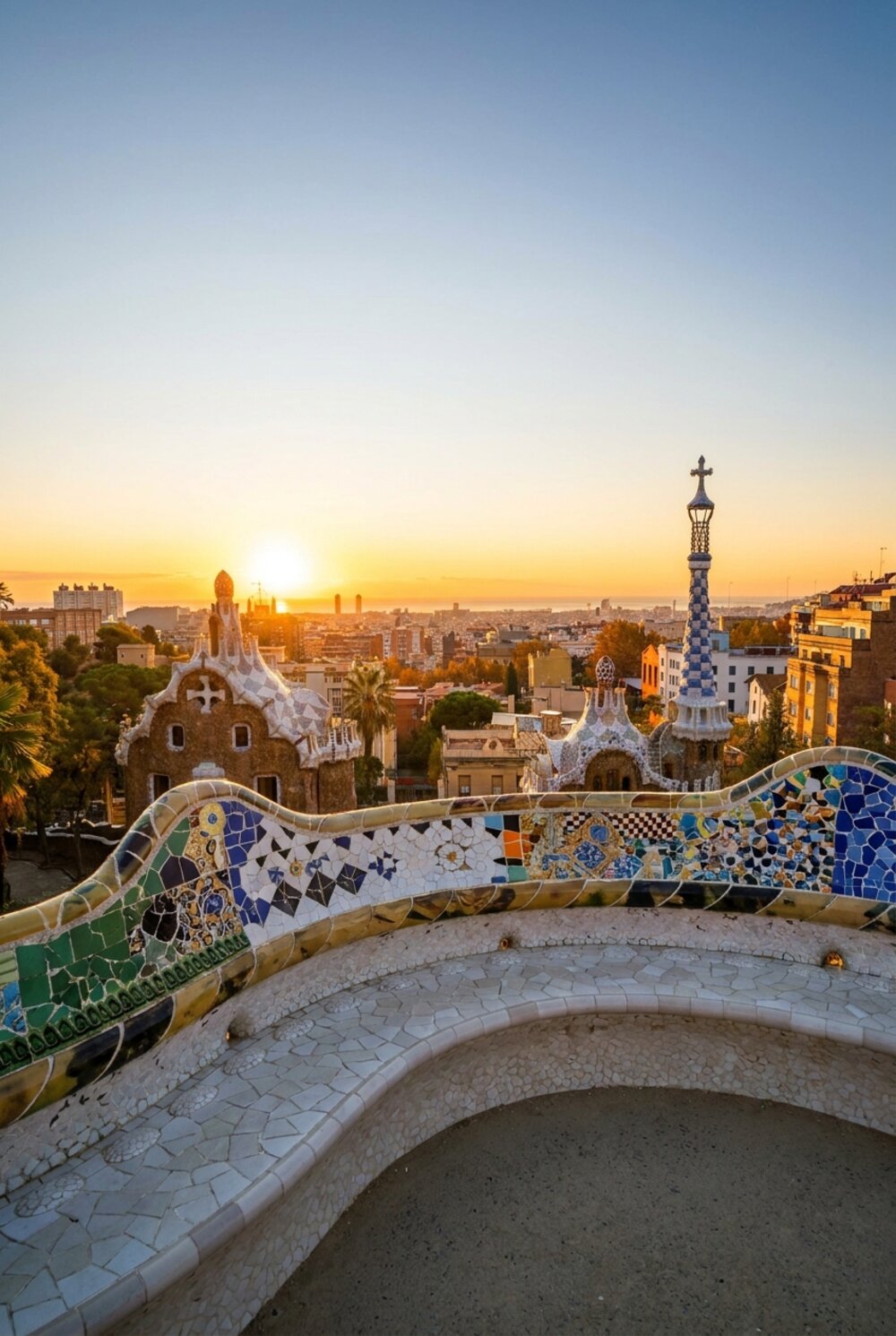
Table of Contents
Why Barcelona?
Barcelona is the rare capital-sized city that hands you a beach, a UNESCO-listed skyline, and a tasting-menu scene all within a forty-minute walk. The Catalan capital sits on the Mediterranean between the Collserola hills and the sea, compressing roughly 1.66 million residents into about 101 square kilometres of tight-gridded Eixample blocks, medieval lanes, and modernist apartments . Its metropolitan area stretches to roughly 5.6 million people, making it the second-largest urban region in Spain after Madrid . Unlike Madrid, it is anchored by water rather than by a royal palace, and unlike Valencia, it is anchored by a century-old bourgeois grid rather than a medieval core alone.
The city reads as a series of contradictions you learn to hold at once. It is Spain’s most famous tourist magnet — welcoming about 15.5 million overnight visitors in 2023 — yet its inhabitants voted in 2024 to phase out all 10,101 licensed tourist apartments by November 2028, a policy shift visible in the protest slogans painted across the Gothic Quarter . It is officially bilingual: street names default to Catalan, yet Spanish is understood everywhere and more than half of residents use it at home . It is Antoni Gaudí’s open-air museum, yet the single building he is most associated with — the Basílica de la Sagrada Família — has been under construction for more than 143 years and is only now, in 2026, scheduled to complete its central Tower of Jesus Christ . It is an Olympic city that redesigned its coastline in 1992 for 4.5 kilometres of public beach, and it is a medieval city whose Roman foundations still sit visible under the cathedral plaza.
The density of attractions per square kilometre is unusual. Barcelona holds nine UNESCO World Heritage sites tied to Gaudí and modernist architect Lluís Domènech i Montaner, more than 30 Michelin-starred restaurants, 68 municipal museums and cultural facilities, 39 covered food markets, about four kilometres of city-managed beach, and an integrated metro system that puts most neighbourhoods within a ten-minute walk of a station . What makes it feel cohesive despite all of that is scale: you can walk from the Sagrada Família to the Mediterranean in about 45 minutes, or cross from Barceloneta’s sand to the elevated bohemian rhythm of Gràcia in a single metro hop. This guide covers the nine districts you will actually walk, the dishes and tapas bars worth an hour of your day, the Gaudí sites priced and timed for real-world visits, the five day trips Catalans themselves take on weekends — Montserrat, Girona, Sitges, the Costa Brava coast, and Figueres for Dalí — and the practical realities of pickpocketing, siesta hours, tourist taxes, and the post-tourism-cap rental market you need to understand before you book.
Neighborhoods: Finding Your Barcelona
Weighing Barcelona against Madrid or Andalusia? Our guide to where to stay in Spain compares the best neighbourhoods in each city.
📍 Barcelona Map: Every Place in This Guide
Barcelona is administratively divided into 10 districts and 73 neighbourhoods, but travellers effectively cycle through nine of them — the old town’s Gothic Quarter, El Born, and El Raval; the 19th-century Eixample grid; hilly Gràcia; the seaside Barceloneta and Poblenou; and the ring of working neighbourhoods around Sant Antoni, Poble-sec, and Sants . Each one has a distinct rhythm, a different base price for coffee, and its own best-for-whom shorthand. First-timers gravitate to the Gothic Quarter and Eixample for proximity to the marquee sights; returning visitors usually trade that for the lower tourist density of Gràcia, Sant Antoni, or Poblenou, where a neighbourhood café at 10:00 feels like a neighbourhood café rather than a Google-reviewed tourist landmark. Accommodation rates, food pricing, and the share of locally owned shops track the distance from Plaça Catalunya — meaningfully cheaper and more local at a 25-minute walk than at a 5-minute walk.
Gothic Quarter (Barri Gòtic)
The oldest layer of the city, laid out over Roman foundations and medieval walls. Narrow lanes open onto small plazas, many of which host buskers by afternoon and outdoor dinners by night. Expect the densest crowds in Barcelona, especially on Carrer Ferran and Carrer del Bisbe. The neighbourhood is also the single densest pickpocketing zone in the city, particularly around Plaça Reial after midnight . What most visitors miss is that the Gothic Quarter as we know it was partially reconstructed in the 1920s and 1930s to romanticise the medieval era for tourism; several of the “gothic” façades were restored or assembled from salvaged fragments during that period. The Roman walls, however, are genuinely Roman — you can trace their course along Tapineria and Sotstinent Navarro.
- Barcelona Cathedral (Catedral de la Santa Creu i Santa Eulàlia)
- Plaça Reial — palm-lined 19th-century arcaded square with Gaudí lampposts
- Carrer del Bisbe Gothic bridge (added 1928, photogenic but not medieval)
- El Call — the former Jewish Quarter, with one of Europe’s oldest surviving synagogue buildings
- Plaça Sant Jaume — Catalan Parliament and City Hall face off across the square
Best for: first-time visitors, history walkers, solo travellers who like being within a five-minute stagger of dinner. Access: Metro L3 Liceu or L4 Jaume I.
El Born (La Ribera)
East of Via Laietana and immediately adjacent to the Gothic Quarter, El Born swapped its medieval commercial role for a mix of wine bars, small design shops, and tapas counters. It is quieter than the Gothic Quarter in the daytime and louder on weekend nights. The Picasso Museum sits here because the artist lived and studied in the neighbourhood in his late teens . The neighbourhood’s name comes from the medieval born (jousting tournament) held on the Passeig del Born; its late-night identity comes from an unusually high density of independently owned cocktail bars, a hangover of the early-2000s design-district period when rents were still low. Today’s rents are not, but the street mix held.
- Basílica de Santa Maria del Mar — 14th-century Catalan Gothic, built entirely by the neighbourhood’s longshoremen
- Passeig del Born — pedestrian boulevard terminating at the Mercat del Born cultural centre
- Museu Picasso — five linked medieval palaces, €14 admission
- El Born CCM — archaeological ruins of the 1714 neighbourhood under glass floors
- Chocolate Museum (Museu de la Xocolata) — ticket admits you with a chocolate bar
Best for: design-conscious travellers, couples, anyone who wants tapas without the Rambla crush. Access: Metro L4 Jaume I or Barceloneta.
Eixample
Designed by Ildefons Cerdà in 1859 as a rational grid with 20-metre-wide streets and chamfered corners at every intersection, the Eixample is where you will see most of Barcelona’s modernist architecture and spend most of your architecture day . The district splits into two halves: l’Esquerra (left, west of Passeig de Gràcia, more residential) and la Dreta (right, east, with the marquee Gaudí buildings). Passeig de Gràcia itself is the high-end shopping avenue; Rambla de Catalunya, one block west, is the quieter twin. The “superblock” (superilla) program launched in 2016 has pedestrianised segments of Consell de Cent, Girona, and Borrell, turning intersections into green plazas — a slow-motion redesign that is controversial among drivers but popular with residents and reshaping how travellers move through the grid.
- Sagrada Família — €26 base admission including audio guide
- Casa Batlló — €35 base, skeletal façade and dragon-spine roof
- Casa Milà (La Pedrera) — €28, Gaudí’s last civil project
- Hospital de Sant Pau — UNESCO-listed modernist hospital complex, under-visited
- Mercat del Ninot — covered market with prepared-food counters at lunch
Best for: architecture buffs, luxury shoppers, first-timers prioritising Gaudí. Access: Metro L2/L3/L4 Passeig de Gràcia.
Gràcia
An independent town until annexation in 1897, Gràcia still behaves like one: low rise, grid-free, cluster of small plazas, fewer chain stores. This is the neighbourhood where locals complain about the prices going up, which is a reliable indicator that you want to eat here. The annual Festa Major de Gràcia in mid-August turns streets into competing hand-decorated art installations . Gràcia was historically a centre of Catalan republicanism and cooperative worker associations; the plaques on the façades along Carrer Gran de Gràcia still commemorate 19th-century unions. The neighbourhood’s dense cinema culture, anarchist bookshops, and vermut bars combine into a texture you will not find in the Eixample or Gothic Quarter — slower, less photographed, intentionally un-touristy.
- Plaça del Sol — the reference-point square, cafés spill out onto it until 1am
- Plaça de la Vila de Gràcia — clock tower, more relaxed than Plaça del Sol
- Park Güell entrance (Carrer d’Olot) — Gaudí’s terraced park, €18 monumental zone
- Verdi and Verdi Park — paired independent cinemas showing original-language films
- Travessera de Gràcia — the food-and-bakery spine
Best for: slow travellers, families, anyone staying a week or more. Access: Metro L3 Fontana or Lesseps.
Barceloneta
Built in 1753 as a planned fishermen’s quarter on reclaimed land, Barceloneta is a narrow triangle of two-window-wide apartments between the old port and the sea. The beach that defines modern Barcelona — Platja de la Barceloneta — was essentially engineered for the 1992 Olympics, which cleared the industrial coast and opened about 4.5 kilometres of public sand . The neighbourhood remains one of Barcelona’s tightest-knit: residents share patron-saint processions (La Mercè, Sant Miquel del Port), a handful of family-run rice restaurants dating to the 1900s, and a shared complaint about the summer tourist density that every July triggers neighbourhood council petitions. Expect to find older women selling home-made granissat from folding tables in August; expect also to see anti-tourism graffiti between the Passeig Joan de Borbó bars.
- Platja de Barceloneta and Platja de Sant Sebastià — the most central beaches
- Passeig Marítim — 3.5 km seafront promenade
- Mercat de la Barceloneta — local market, lunch counters for seafood
- W Barcelona (Hotel Vela) — sail-shaped hotel at the harbour’s far end
- Torre del Rellotge — 19th-century lighthouse, meet-up landmark
Best for: beach days, families, seafood lunches. Access: Metro L4 Barceloneta.
Poble-sec
Wedged between Avinguda del Paral·lel and the Montjuïc hill, Poble-sec was the city’s working-class theatre district in the early 20th century; several music-hall venues still operate. Today it’s best known to travellers as home to Carrer de Blai, a pedestrianised street lined with pintxos bars where skewered snacks typically cost €1–€2.50 each . The neighbourhood has absorbed a lot of the displaced nightlife energy from the Gothic Quarter: independent wine bars, small live-music venues, and affordable Catalan restaurants cluster along Carrer de Margarit and Carrer Poeta Cabanyes. Paral·lel itself was nicknamed “Barcelona’s Broadway” in the 1920s for its vaudeville theatres; a handful — El Molino chief among them — survived or have been restored.
- Carrer de Blai — pintxos crawl, dozens of bars in 400 metres
- Mercat de la Sants / Mercat de Sant Pau del Camp area
- Teatre Grec — 1929-built Greek-style amphitheatre on Montjuïc, summer festival venue
- Funicular de Montjuïc — integrated into the metro system, your fastest route uphill
- Tickets — experimental Adrià-brothers bar (now closed; neighbourhood reference)
Best for: dinner-focused travellers, under-35 crowd, Montjuïc day access. Access: Metro L3 Poble-sec or Paral·lel.
Poblenou
A former industrial zone rebranded as the 22@ innovation district in 2000, Poblenou now mixes tech offices, brick factories-turned-lofts, and a long, calmer beach strip. Torre Glòries (formerly Torre Agbar), the 144-metre Jean Nouvel tower, is the district’s skyline anchor . Rambla del Poblenou is the neighbourhood’s low-key answer to La Rambla: local cafés, no human statues. The district was Barcelona’s textile-mill engine in the 19th century and was nicknamed “the Catalan Manchester” before deindustrialisation hollowed it out in the 1980s; visible residue includes the chimneys preserved along Carrer Pere IV and the converted Fabra i Coats mill, now a cultural centre. The beach strip here — Bogatell, Mar Bella, Nova Mar Bella — is wider, flatter, and markedly less tourist-crammed than Barceloneta, particularly north of the skating promenade.
- Rambla del Poblenou — 1 km of palm trees and neighbourhood cafés
- Torre Glòries observation deck — 125 metres up, €18 adult admission
- Disseny Hub Barcelona — city design museum at Plaça de les Glòries
- Platja del Bogatell and Platja de la Mar Bella — less crowded beaches
- Palo Alto Market — monthly design/food market in a converted factory
Best for: digital nomads, design travellers, beach-with-space seekers. Access: Metro L4 Poblenou or L1 Glòries.
Sants
The arrival district for most rail passengers — Barcelona Sants is the city’s main AVE high-speed station and the Madrid–Barcelona corridor terminus . Historically a separate town, Sants keeps a neighbourhood-local feel a short walk from the station, particularly along Carrer de Sants and around Plaça d’Osca. The area rewards travellers who book accommodation here for lower nightly rates than the Eixample while keeping three metro lines and the AVE platform within two blocks. Expect everyday cafés, family-owned shops, and a pedestrian high street that locals actually use for groceries and midweek errands rather than souvenirs.
- Estació de Sants — AVE, Rodalies, and three metro lines
- Parc de l’Espanya Industrial — postmodern 1985 park with a watchtower
- Mercat de Sants — everyday covered market
- Carrer de Sants — longest commercial street in Spain, per the district council
- Plaça d’Osca — local café square
Best for: transit-efficient travellers, early-train departures, budget stays. Access: Metro L1/L3/L5 Sants Estació.
Sant Antoni
The quiet-middle-child neighbourhood between the Eixample and the old town. Since the 2018 reopening of the Mercat de Sant Antoni — a 19th-century iron-and-glass hall rebuilt over nine years — Sant Antoni has become one of the city’s best food-shopping and Sunday-morning neighbourhoods, thanks to the rotating weekly book-and-coin market set up around the market perimeter . Carrer del Parlament is the neighbourhood’s defining spine — a 400-metre strip of brunch spots, vermuterias, craft-beer bars, and bakeries that has redefined the weekend-morning rhythm for under-40 residents across the city. Anti-tourism sentiment is lower here than in Barceloneta or the Gothic Quarter, but so is English fluency; this is the neighbourhood to practise your Spanish in.
- Mercat de Sant Antoni — food market weekdays, Sunday book market
- Carrer del Parlament — the tapas-and-brunch spine
- Ronda de Sant Antoni — the tree-lined ring road replacing old city walls
- Filmoteca de Catalunya — cinematheque programming restored classics
- Plaça del Pes de la Palla — small café square
Best for: repeat visitors, Sunday walkers, brunch budgets under €20. Access: Metro L2 Sant Antoni.
The Food
Eating in Barcelona is one of the primary reasons to come. Catalan cuisine has an independent culinary vocabulary, its own seasonal rhythms, and a Michelin footprint that made the city one of Europe’s three most-starred food capitals by 2024. Street food exists here in the form of market counter-service rather than outdoor stalls; family-run rice restaurants in Barceloneta have cooked the same seafood-rice dishes continuously since the 1830s; the modern experimental kitchen that produced Ferran Adrià and elBulli is still active under a new generation. None of this is expensive by North-American or Northern-European comparison. A typical lunch runs under €20; a spectacular one under €50; a once-in-a-lifetime tasting under €300.
Barcelona’s food identity is Catalan first, Spanish second, and Mediterranean underneath both. The seafood-centric kitchen on the coast plays against the inland Catalan mountain traditions of cured meats, mushrooms, and escudella stews; in between sit the tapas and pintxos imported from other Spanish regions and adapted for local ingredients. Prices range from €1 skewers on Carrer de Blai to €295 tasting menus at three-star Disfrutar — a spread that makes it one of the few European cities where you can eat at every budget for a week without repeating a dish. The local meal cadence matters too: lunch 13:30–15:30, dinner 21:00–23:00, with a vermut hour around 12:00–13:30 and an “esmorzar” (elaborate breakfast) concentrated between 09:00 and 11:30. Eating earlier than locals means eating with tourists; eating at local hours means a better table, a better plate, and often a better price.
Tapas and Pintxos
The distinction matters. Tapas are small plates ordered à la carte at a bar; pintxos are skewered bites you pick up yourself from a tray and are charged for by counting the toothpicks at the end. Barcelona hosts both traditions — Basque-style pintxos concentrated in Poble-sec, Catalan and Andalusian tapas spread across the city. A typical per-bite spend runs €1–€2.50 for pintxos and €4–€12 for tapas. The most common misconception tourists bring: that “tapas” is a cuisine. It isn’t — it’s a service style. Tapas in Barcelona cover everything from fried calamars a l’andalusa to Catalan salt cod esqueixada, from jamón-on-tomato-bread to ceviche in the more modern bars. Order three to four items per person for a full meal; two with drinks if you have dinner after.
- Quimet & Quimet (Poble-sec) — montaditos from tinned seafood and preserved flavours, €3.50–€5.50 each
- Bar del Pla (El Born) — modern tapas, oxtail canelones and jamón, plates €4–€12
- Bar Cañete (El Raval) — old-school service, seafood and grilled tapas, plates €6–€18
- Blai 9 (Carrer de Blai) — the representative pintxos bar on the city’s pintxos street, €1.30–€2.20 per skewer
- Tapeo del Born — tasting-forward tapas in El Born, plates €5–€14
- Ciudad Condal (Eixample) — busy all day, pa amb tomàquet and iberico, plates €4–€10
Paella and Seafood
Paella is Valencian by origin but Barcelona’s maritime restaurants have cooked it commercially since at least the 1830s. What you want in Barcelona, however, is not always paella: the local rice dish is arròs negre (squid-ink black rice) or fideuà (the same one-pan technique made with short noodles instead of rice). Order a minimum of two people per pan; lunch is when these kitchens cook best. Expect €20–€35 per person at proper rice-house restaurants. A genuine paella takes at least 20 minutes to cook — if yours arrives faster, it was pre-made . The socarrat (the crispy caramelised layer at the bottom of the pan) is the mark of quality; ask about it before you order. Avoid the display-paella restaurants along La Rambla and the Port Vell waterfront, where warmed-over seafood rice at €15 a plate is a consistent trap.
- 7 Portes — established 1836, the oldest continuously operating rice restaurant, paella from €24 per person
- Can Solé (Barceloneta, since 1903) — classic seafood rice, €22–€35 per person
- La Mar Salada (Barceloneta) — Michelin Bib Gourmand, rice dishes €20–€28
- Xiringuito Escribà (beachfront) — pan-to-table rice, €18–€32
- Barraca (Barceloneta) — seafront, sustainably sourced, rice €25–€30
- Els Pescadors (Poblenou) — old fishermen’s square, grilled fish mains €24–€38
Markets
Barcelona operates 39 municipal markets, more than any other city in Europe, and the network is the city’s most reliable eating strategy: sit at a counter, point at what looks good, drink vermut on tap . Most markets open 08:00–14:30 Monday to Saturday, with some extending to 20:00 on Thursday and Friday. Treat markets as a rotation rather than a one-stop: La Boqueria for the visual spectacle, Sant Antoni for the Sunday book market, Santa Caterina for the architecture, Barceloneta for seafood counters, and the neighbourhood markets (Sants, Ninot, Abaceria Central in Gràcia) for the experience of a market where no tour groups arrive. Every market has at least one counter-service stall called a bar — this is your lunch.
- Mercat de la Boqueria (La Rambla) — the famous one; busy but the stalls at the back are still priced for locals. Juice cups €2–€3, counter lunches €12–€20
- Mercat de Sant Antoni — post-2018 renovation, best Sunday book-and-coin market in the city (09:00–14:30)
- Mercat de Santa Caterina — Miralles-designed undulating tile roof, quieter alternative to Boqueria, lunch counters €10–€18
- Mercat de la Barceloneta — dockside seafood, lunch at La Cova Fumada for bombas €2.50 and grilled fish €14–€20
- Mercat del Ninot (Eixample) — tapas counters aimed at hospital workers nearby, €8–€15 lunch
- Mercat de Sants — neighbourhood scale, no tourist markup
Michelin and Fine Dining
Barcelona closed 2024 with more than 30 Michelin-starred restaurants in the city proper, including five with three stars — among them Disfrutar, which held the #1 spot on The World’s 50 Best Restaurants in 2024 . Reservations for three-star kitchens typically open 60 days out and fill within hours; most require a deposit per seat at booking. Dinner is the main service — lunch availability is usually easier but occasionally at a lower price point with the same menu. Catalonia’s modernist-cuisine lineage descends from Ferran Adrià’s elBulli era, and the current generation (the Adrià brothers, Jordi Cruz, Carme Ruscalleda) treats Disfrutar and Enigma as continuation experiments, not imitations. If you care about food history, a three-star tasting in Barcelona is as defensible an evening spend as a museum ticket.
- Disfrutar *** (Eixample) — tasting menu €295 per person, 30+ course experimental
- ABaC *** (Jordi Cruz, Sant Gervasi) — €245 tasting menu
- Lasarte *** (Martín Berasategui, Eixample) — €275 tasting menu
- Enigma * (Albert Adrià, Sant Antoni) — €245 tasting menu, post-pandemic reopening format
- Cinc Sentits ** (Eixample) — €195 tasting menu, more accessible booking
- Moments ** (Carme Ruscalleda, Mandarin Oriental) — €235
Beyond Tapas and Paella
Two plates you will see on every serious Catalan menu: pa amb tomàquet, bread rubbed with ripe tomato, olive oil, and salt, served as a near-automatic starter; and escalivada, roasted eggplant and pepper with anchovies. On weekends, look for calçots in season (late January–April), long charred scallions dipped in romesco sauce and eaten standing with a bib — this is the most Catalan thing you will eat all year. Catalonia’s culinary geography mixes inland, mountain, and sea; menus reflect that. A representative Catalan lunch in Barcelona might start with esqueixada or escalivada, continue with suquet de peix (fisherman’s stew) or fricandó (braised beef with wild mushrooms), and finish with crema catalana — a progression that is emphatically not the “tapas tapas tapas” stereotype. Ordering this way, in sequence, is what locals do.
- Botifarra amb mongetes — Catalan pork sausage with white beans, €9–€14
- Crema catalana — the pre-crème-brûlée version of a caramelised custard, €5–€8
- Esqueixada — raw salt-cod salad with tomato and onion, €9–€12
- Cava — Catalan sparkling wine, glasses from €3–€6 at bars
- Vermut — the 1pm pre-lunch ritual, €3–€5 a glass on tap
- Xuixo — Girona-origin pastry filled with crema catalana, €2.50–€4
Food Experiences You Can’t Miss
Building an itinerary around food in Barcelona is genuinely rewarding — the city rewards repeat visits to the same neighbourhood at different hours of the day. The ritual matters as much as the plate: stand at a bar, order una canya (a small beer) or un vermut, eat slowly, pay cash for small bills.
- Mid-morning vermut at Bodega Quimet in Gràcia or La Confitería in El Raval (€3–€5 a glass) before lunch
- Sunday arròs at a Barceloneta rice house — book two weeks out, order for the whole table
- Counter-standing pintxos crawl on Carrer de Blai, paying by toothpick count
- Pre-dawn market visit to Boqueria before the tour buses arrive (07:30–09:00)
- Cava at Can Paixano (La Xampanyeria) — standing-only, €1–€3 glasses, cash preferred
- Calçotada in late winter at a Gràcia taverna — €28–€40 fixed menu with wine
- A proper esmorzar de forquilla (fork breakfast) of botifarra and beans with red wine, typically served 10:00–12:00 at neighbourhood taverns like Bar Central la Boqueria or El Tros de la Masia, €12–€18
- Booking a half-day cooking class with La Boqueria tour included — €75–€110 per person through local operators, a reliable way to demystify the market’s less-familiar stalls
Wine, Cava, and Vermut
Catalonia produces the majority of Spain’s sparkling wine (cava), centred on the Penedès region about 45 minutes south of the city — a day-trip-worthy destination in its own right if you have a spare day, with major houses like Freixenet and Codorníu offering €20–€35 tastings. In the city itself, the wine-bar scene spans budget to geek: Can Paixano (La Xampanyeria) in El Born sells cava at €1–€3 a glass in a standing-only chaos that has barely changed since 1969, while Monvínic in the Eixample runs a 4,000-label list with flights from €18. Vermut — the 1pm pre-lunch aperitif — is the single most Barcelona-specific drinking ritual. Bars that serve it on tap (vermut de grifo) are a reliable quality indicator; expect €3–€5 a glass, usually served with an olive or anchovy.
- Can Paixano (La Xampanyeria) — cava €1–€3, mini-sausage sandwiches €2–€4
- Bodega E. Sepúlveda (Gràcia) — neighbourhood wine cellar, glasses €2.50–€5
- La Vinoteca Torres (Passeig de Gràcia) — Torres family bottles, flights from €16
- Bar Calders (Sant Antoni) — vermut on tap, tapas €4–€9
- Quimet & Quimet — also the city’s best small-batch cava list, €4–€8 a glass
Catalan Bakeries and Sweets
Barcelona’s pastry culture is under-advertised. Every neighbourhood has a forn de pa (bread bakery) and a pastisseria (pastry shop), often the same storefront, turning out daily cocas (flatbreads, sweet and savoury), ensaïmades, and neighbourhood-specific specialities that rotate with the saints’ calendar — panellets at All Saints’, tortell de Reis on Epiphany, mona de Pasqua at Easter. Pastisseries to know by name: Hofmann (El Born) for croissants that won the best-croissant-in-Spain title multiple years, Escribà (La Rambla and Gran Via) for xuixos and the chocolate bombs that opened the 1992 Olympics, Baluard (Barceloneta) for sourdough, and Pastisseria Foix de Sarrià for a 1886-founded traditional window display. Expect €2.50–€5 per individual pastry, €8–€14 for a small boxed assortment.
- Hofmann Pastisseria — croissants from €3, Mascarpone version €3.80
- Escribà — chocolate bombs, ensaïmades €2.50–€4
- Oriol Balaguer — modern Catalan patisserie, Turrón Club €14/slice
- Forn Baluard — sourdough loaves €4–€7
- Granja M. Viader — 1870-founded dairy bar, inventor of Cacaolat chocolate milk, cups €3–€5
Cultural Sights
Barcelona’s heritage list runs to nine UNESCO sites, seven of them Gaudí works, plus the Palau de la Música Catalana and Hospital de Sant Pau by Lluís Domènech i Montaner . Every one of the big four Gaudí buildings sells timed-entry tickets that routinely sell out for same-day visits during European school holidays; book at least 72 hours ahead in summer. A working itinerary pairs two Gaudí sites with one museum and one church in a single day — for example Sagrada Família at 09:00, Hospital de Sant Pau at 11:30, lunch at a nearby Eixample restaurant, Casa Milà at 16:00, and the Palau de la Música in the early evening. Avoid stacking three Gaudí tickets in a single day — the decorative density is genuinely fatiguing.
Sagrada Família
Antoni Gaudí’s unfinished basilica is the defining image of Barcelona and — for the first time since the first stone was laid on 19 March 1882 — genuinely on track to complete its central structure. The 172.5-metre Tower of Jesus Christ, which will make it the tallest church in the world, is scheduled to be topped out in 2026, marking the centenary of Gaudí’s death . Decorative work on the Glory Façade is expected to continue into the 2030s. Base admission is €26 including audio guide; tower access costs an additional €10 . Open daily 09:00–20:00 April–September, 09:00–18:00 November–February. The optimal visit combines the Nativity Façade (the eastern side, carved under Gaudí’s direct supervision, warm and organic) with the Passion Façade (the western side, later and starker, carved by Josep Maria Subirachs from the 1980s). Dress-code enforced: no bare shoulders or above-the-knee shorts.
Park Güell
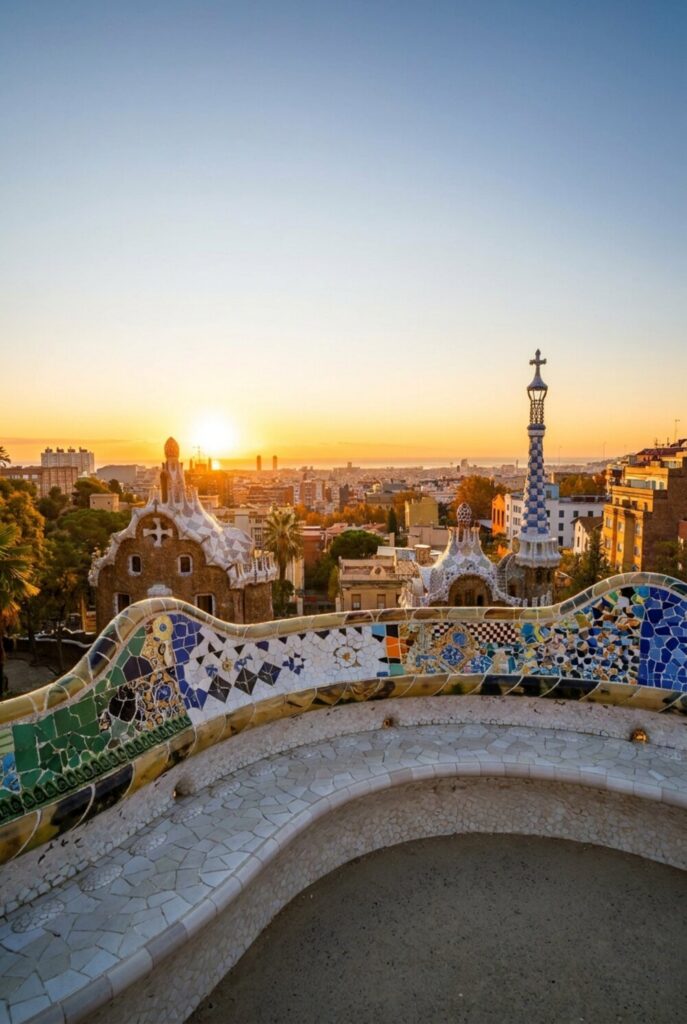
Commissioned in 1900 as a hillside housing estate that never sold its plots, Park Güell opened as a public park in 1926, the year after Gaudí died . The tiled-bench terrace, dragon staircase, and hypostyle hall all sit inside the ticketed “monumental zone” (€18 adult, €13 child), while the rest of the 17-hectare park remains free. Best time to visit: first entry at 09:30, or an hour before closing, to avoid tour-bus arrivals. The entry system caps visitors at roughly 400 per half-hour slot. From Metro L3 Lesseps it’s a 20-minute uphill walk; an alternative is the H6 bus, which stops closer to the side entrance. Gaudí himself lived in one of the unsold houses from 1906 to 1925; it is now the Casa-Museu Gaudí (separate €6 admission).
Casa Batlló
Gaudí’s 1904–1906 remodel of an earlier apartment block, sitting mid-block on Passeig de Gràcia. The skeletal façade (balconies shaped as skulls, columns as bones) and the dragon-spine tile roof reference Saint George’s slaying of the dragon, Catalonia’s patron saint. Base admission starts at €35; the “Gold” ticket bundling a video-mapping experience and rooftop access runs €45 . Open daily 09:00–20:00. The interior tour covers the Noble Floor’s curved oak doors, the fish-scale light well, and the attic with its parabolic-arch corridor; the rooftop chimneys are pound-for-pound the most photographed single surface in the city. Avoid the “Magic Night” live-music package unless you specifically want a cocktail-and-DJ version of the experience — the architecture is more interesting in silence.
Casa Milà (La Pedrera)
Gaudí’s 1906–1912 apartment building, nicknamed “the stone quarry” for its undulating limestone façade. Access includes the rooftop with its chimney sculptures, the attic, and a restored early-20th-century apartment. Admission from €28 day, €45 for the evening “Night Experience” with rooftop projection . Open daily 09:00–20:30 high season, 09:00–18:30 low season. The building was Gaudí’s last civil-project commission before he devoted himself exclusively to the Sagrada Família. Its inhabitants still live in roughly half the building — the upper floors remain private apartments, which is why parts of the rooftop terrace close unexpectedly. The attic’s parabolic-rib space, now housing the Espai Gaudí educational exhibit, is arguably more architecturally interesting than the rooftop itself.
Barcelona Cathedral (Catedral de la Santa Creu i Santa Eulàlia)
Built 1298–1420 on the site of earlier Roman and Romanesque churches, the cathedral is the seat of the Archbishop of Barcelona. The Gothic cloister houses 13 geese — one for every year Santa Eulàlia lived before her martyrdom in AD 303. Free entry for worship (generally 08:30–12:30 and 17:45–19:30); the €9 cultural visit includes roof access and the cathedral museum .
Picasso Museum
Opened in 1963, the museum occupies five contiguous medieval palaces in El Born. Its strength is the early-career collection — Barcelona blue-period and cubist-precursor works Picasso did before Paris. €14 general admission, free Thursday 16:00–19:00 and first Sunday of each month .
Palau de la Música Catalana
Domènech i Montaner’s 1905–1908 modernist concert hall, a UNESCO site since 1997 and still a working venue. Daytime guided tours run €22; attending a concert gives you the same architecture for €20–€35 a ticket and is the better-value visit .
Montjuïc Castle and MNAC
The 18th-century castle at the top of Montjuïc hill (€12 entry) and the Museu Nacional d’Art de Catalunya in the 1929 Palau Nacional beneath it (€12 general admission) together make a half-day pairing. Take the Montjuïc funicular from Paral·lel metro, then the cable car to the castle; views stretch from the port to the Tibidabo ridge . MNAC’s Romanesque fresco collection, relocated from mountain churches across the Pyrenees in the 1920s for preservation, is arguably the finest in Europe; the modernist wing (Gaudí furniture, Casas and Rusiñol paintings) gives context for the Eixample architecture you’ve already walked past. Entry is free on Saturdays from 15:00 and on the first Sunday of each month.
Entertainment
Barcelona’s entertainment rhythm is Mediterranean: dinner at 21:30, first drinks at 23:30, clubs fill at 02:00 and stay open until 06:00. The city permits residential-zone bars to operate until 02:30 weekdays and 03:00 weekends; music venues in designated entertainment districts (Port Olímpic, Poble Espanyol) run to 06:00 on weekends . Pace accordingly — a mid-evening siesta back at your accommodation is standard local practice. Culturally, the entertainment calendar splits into two halves: the high-tourism summer festivals (Sónar, Primavera, Grec, La Mercè) and the lower-key local year (castellers practices, neighbourhood patron-saint festivals, football matches, weekday music-hall programming). Travellers who align their visit with a specific festival rarely regret it, but the residual programming is strong enough that any week of the year offers at least three nights of something worth leaving the hotel for.
Flamenco
Flamenco is Andalusian rather than Catalan, but Barcelona has a century-old tablao tradition aimed at visitors and a newer circuit of authentic venues. Tablao Cordobés on La Rambla runs three shows nightly (18:00, 20:15, 22:30) with optional dinner pairings; Palau Dalmases in El Born keeps a single 45-minute 19:30 candle-lit set that holds 60 seats. Expect €30–€50 for a show-only ticket; dinner-included packages run €75–€110 . Book 48 hours ahead for weekend shows. If you want flamenco at its most uncompromising, wait for the Ciutat Flamenco festival in May or attend a “peña” (amateur club) session in El Raval; programming is in Spanish and schedules change week to week, so check the Instagram accounts of L’Antic Teatre and JazzSí Club (Taller de Músics) for listings.
FC Barcelona at the Spotify Camp Nou
Camp Nou, capacity 99,354 before its current reconstruction, is Europe’s largest football stadium; the ongoing Espai Barça renovation is scheduled to complete in 2026, with temporary matches played at the Estadi Olímpic Lluís Companys on Montjuïc in the interim . La Liga ticket prices start around €45 for upper-tier seats and climb past €250 for El Clásico. Matchday entry is via a digital ticket in the club app; arrive 90 minutes early.
Live Music and Concert Halls
The city’s three essential stages: Palau de la Música Catalana (classical and flamenco, €20–€50), L’Auditori (resident Barcelona Symphony, €15–€45), and Razzmatazz, a converted warehouse club with five rooms running simultaneous genres (indie, techno, disco) for a single cover, typically €15–€20. Primavera Sound in early June and Sónar in mid-June are the two flagship festivals, each drawing 250,000+ attendees across three days .
Rooftop and Beach Bars
Barcelona has made an art form of the hotel rooftop. Top of the standouts: Terraza Martinez (Montjuïc hillside), Ayre Rosellón’s terrace with a frontal Sagrada Família view, and the W Hotel’s Eclipse Bar at the harbour mouth. Cocktails run €14–€18. Beach xiringuitos — temporary wooden beach bars licensed April–October — serve sangria and grilled fish from about €8 a drink, €14–€24 a plate, directly on the sand .
Nightlife Districts
Three clusters organise the late-night scene. Port Olímpic was once the dominant nightclub strip; since a 2023 zoning reform removed several of its licences, the scene has shifted west. Poble Espanyol (on Montjuïc) hosts Opium and La Terrrazza, both open-air in summer with €15–€25 covers. El Raval’s Carrer de la Reina Amàlia and surrounds keep a more local, smaller-venue scene. The Gothic Quarter around Plaça Reial is the tourist default; locals avoid it.
Theatre and Cabaret
Catalan and Spanish-language theatre concentrates in the Paral·lel area around Teatre Apolo, Teatre Victoria, and El Molino (the historic cabaret venue reopened in 2010 after a long restoration). Tickets €20–€50. For English-speakers, look for productions at Teatre Lliure or the Grec Festival in summer, which programmes international touring work on the Montjuïc outdoor amphitheatre . The Gran Teatre del Liceu on La Rambla, the city’s opera house, runs a full season from September to July with ticket prices from €12 in the upper galleries to €300 for orchestra seats; discounted same-day seats (llocs de visibilitat reduïda) routinely go for €10 and offer surprisingly good acoustic experiences from partially obstructed views.
Parks and Outdoor Evening
Because Barcelona’s public life is genuinely outdoors, spending an evening in a park counts as an entertainment option most of the year. Parc de la Ciutadella hosts free weekend drumming circles; the Bunkers del Carmel (a WWII-era anti-aircraft site) give the city’s best free sunset view, 10 minutes uphill from Guinardó . Both are open-air and cost nothing; expect late crowds and arrive with your own water. Two more outdoor evenings to know: the Font Màgica de Montjuïc’s free music-and-water show, running Thursday–Sunday evenings in summer and weekends in spring/autumn (current schedule 21:00–22:00); and the Saturday-night sardana folk dance in front of Barcelona Cathedral, free to watch and free to join if you’re bold enough.
Comedy and Spoken Word
English-language comedy runs weekly at the Comedy Cellar Barcelona and Giggling Guiri (Antihéroes, El Raval), tickets €10–€15. Spanish and Catalan stand-up is concentrated at Sala Fizz and Luz de Gas, with tickets €12–€25. The Poetry Slam Barcelona circuit meets monthly at independent bookshop La Calders and, unusually for Europe, mixes Spanish, Catalan, and English performance in the same set — a good way to hear the city’s bilingual literary voice without committing to a full Catalan-language play.
Day Trips
Five destinations account for the vast majority of weekend-trip traffic out of Barcelona, each reachable before lunch and returnable before dinner. Rodalies regional trains (Renfe-operated, Catalonia-liveried) handle Sitges and the Costa Brava; the AVE high-speed service handles Girona and Figueres; Montserrat mixes regional train with a mountain-approach cremallera or cable car .
Montserrat (1 hour by R5 train + cremallera rack-railway)
The serrated-ridge mountain and Benedictine monastery that house La Moreneta, the 12th-century Black Madonna of Catalonia. Take Metro L1 to Plaça Espanya, board the R5 Ferrocarrils de la Generalitat train toward Manresa, and transfer at Monistrol de Montserrat to either the cremallera rack-railway or the Aeri cable car up to the monastery. A combined Trans Montserrat ticket bundles transport, museum, and lunch for €57.50 adult; train-plus-cremallera alone runs about €26.10 round-trip . Catch the 13:00 boys’-choir performance (the Escolania, one of Europe’s oldest at 700+ years old); hike the 45-minute trail to Sant Joan viewpoint. The mountain is a legitimately sacred site for Catalans — it appears on the regional coat of arms and is the traditional pilgrimage destination for newlyweds. Arrive by 10:30 to see it before the tour buses; the basilica itself is free to enter but the queue to touch the Madonna’s hand frequently runs 45 minutes on weekends .
Girona (38 minutes by AVE high-speed train)
Catalonia’s second historic capital, with an intact medieval Jewish Quarter (El Call), a Roman-and-Gothic cathedral famous for a 90-step staircase used in Game of Thrones filming, and the 600-metre-long Passeig de la Muralla walking circuit along the city walls. AVE tickets from €19.50 one-way booked in advance; the trip is too fast for a late start, so leave by 09:00 . Pair with the Rocambolesc ice cream counter of the El Celler de Can Roca brothers. Girona’s compact centre is entirely walkable in a single afternoon: cathedral (€7 admission including treasure museum), the Museu d’Història dels Jueus (€4), the Arab Baths (€3), and a full circuit of the city walls add up to roughly €15 in admissions plus two meals. In May, the Temps de Flors festival fills courtyards and stairways with flower installations — book the day trip a week earlier than you think.
Sitges (35 minutes by Rodalies R2 Sud)
The closest proper beach town south of Barcelona, a historic fishing port that grew into a bohemian artist colony in the late 19th century and a year-round LGBTQ+-friendly destination from the 1970s onward. Sixteen beaches line an 18-kilometre coast, the most central of which (Platja de la Fragata and Sant Sebastià) sit a 10-minute walk from the station. Return Rodalies fare ~€8.80 . The Sitges Film Festival in October is Europe’s leading fantasy-and-horror cinema festival. The town’s Cau Ferrat Museum, the former home of modernist painter Santiago Rusiñol, is an under-visited counterpart to Barcelona’s Gaudí circuit — €12 admission, closed Mondays. February’s Carnaval is the wildest party on the Catalan coast, with a Tuesday-night Rua del Extermini parade of 2,500+ costumed participants.
Costa Brava — Tossa de Mar (1h 20 min by bus)
The Costa Brava coast stretches from Blanes to the French border and is the most direct way to see medieval walled seaside villages without renting a car. Tossa de Mar — protected by its 12th-century Vila Vella walls, the only intact fortified medieval town on the Catalan coast — is the best single-day target. Moventis-operated buses depart from Estació del Nord, roughly hourly in summer, round trip ~€25 . The cove beach directly under the walls, Platja Gran, is public and free.
Figueres and the Dalí Theatre-Museum (55 minutes by AVE)
Salvador Dalí was born in Figueres in 1904 and built his self-designed theatre-museum over the ruins of the town’s old municipal theatre. Opened in 1974, it remains the largest surrealist object in the world by Dalí’s own description, housing about 1,500 works across painting, sculpture, jewellery, and installation. Admission €17 day, €19 if bundled with Púbol and Portlligat Dalí House museums. AVE one-way tickets from €22 if booked 30 days out . Dalí is buried in a crypt under the museum’s central dome. The town itself is small and honestly worth only 2–3 additional hours beyond the museum visit; consider extending the day trip to Cadaqués (one hour by bus from Figueres) where Dalí’s Portlligat house-museum is the second half of the Dalí pilgrimage and a better meal than anything in Figueres proper. Book Portlligat at least two weeks ahead — visits are limited to eight people per group.
Seasonal Guide
Spring (March – May)
Daytime highs move from 15°C in early March to 22°C by late May, with about 45 mm of rainfall per month . This is the sweet-spot season: Sagrada Família queues are manageable, beach bars open from April, and flights from northern Europe remain at shoulder-season prices. Sant Jordi (Catalonia’s book-and-rose day) on 23 April turns every plaça into a pop-up bookstore; around 7.5 million roses are sold across Catalonia in a single day . Easter week (Setmana Santa) draws Spanish domestic tourism; book accommodation 6 weeks out. Sagrada Família’s 2026 completion ceremony around the Gaudí centenary (10 June, commemorating his death) is expected to fall into late spring.
Summer (June – August)
High season. Daytime highs 27–30°C, sea temperatures climbing to 24°C by August, average humidity ~70% . Accommodation prices peak, queues for Gaudí sites stretch to 60+ minutes without advance tickets, and pickpocketing incidents correlate with crowd density — Metro L3 between Catalunya and Passeig de Gràcia is the single most-reported line. The two upsides: Grec Festival programmes outdoor performance across Montjuïc, and Festa Major de Gràcia in mid-August (13–21 Aug 2025) transforms a dozen Gràcia streets into decorated art installations, free to visit and locally run .
Autumn (September – November)
The best travel weather for most visitors. September highs still reach 26°C and the sea stays swimmable through mid-October. The city’s patron-saint festival La Mercè (around 24 September) fills six days with free human-castle castellers, giant papier-mâché parades, fire-runs (correfoc), and a rotating roster of free concerts across 12 city stages, typically drawing more than 2 million attendees . By November, rainfall picks up (~60 mm average) and the tourist volume halves. This is also wild-mushroom season inland — menus add rovellons and trompetes de la mort.
Winter (December – February)
Low season, but not cold by northern-European standards. Daytime highs 13–15°C, overnight lows 5–8°C, very little snow — it has fallen on Barcelona only a handful of times in the past two decades . The city’s Christmas market (Fira de Santa Llúcia), the Cavalcada de Reis procession on 5 January, and the late-winter calçotada season (late January through early April) are the cultural highlights. Flight and hotel prices are at their annual lows; Sagrada Família tickets are available for next-day visits. Bring a layered jacket and treat rain as probable on any given day. January and February are the two best months to visit for architecture and food without queues — a full Gaudí itinerary takes half the time it does in July, and the three-star tasting-menu kitchens still have 60–90-day reservations available where summer fills in minutes.
Getting Around
Barcelona’s public transport is among Europe’s cheapest by distance. TMB (Transports Metropolitans de Barcelona) runs the metro and city buses; FGC (Ferrocarrils de la Generalitat) operates several commuter lines that also act like metro inside the city; Rodalies de Catalunya runs regional trains including the airport link . Integrated fares cover transfers across all operators within 75 minutes on a single journey.
Metro
Twelve lines (L1–L5 plus L9/L10/L11 plus FGC lines L6, L7, L8, S1, S2) total about 165 kilometres and carry roughly 1.3 million passenger trips per weekday . Trains run 05:00–24:00 Sunday–Thursday, until 02:00 Friday, and 24 hours on Saturday night. Most tourist attractions lie on L3 (green, Drassanes to Lesseps), L4 (yellow), and L5 (blue). Stations announce in Catalan first and Spanish second.
TMB Cards and Fares
The paper single ticket costs €2.65. For any stay longer than a day, buy a T-casual, a non-transferable card with 10 rides valid 30 days for €12.55 — or about €1.26 per trip, less than half the single-ticket price . Travellers doing dense sightseeing should consider the Hola Barcelona Travel Card: €17.50 for 48 hours, €25.50 for 72 hours, €33.20 for 96 hours, €40.80 for 120 hours, all with unlimited metro, bus, tram, FGC, and Rodalies travel in Zone 1, including the airport metro connection. Contactless bank-card tap-to-pay launched on city buses and metro gates in 2024 and charges the single-ride rate automatically .
Airport Access (Barcelona–El Prat)
Aeroport Josep Tarradellas Barcelona–El Prat (BCN) handled a record 55 million passengers in 2024 and is Spain’s second-busiest airport . It sits 14 kilometres southwest of the city centre with two terminals (T1 and T2) connected by a free shuttle. Budget 45–60 minutes door-to-gate from most city centre accommodations; the metro L9 Sud option adds 10 minutes versus Aerobús but skips traffic entirely on the approach to Plaça Espanya.
- Aerobús A1/A2 — dedicated express bus to Plaça Catalunya, 35 min, €7.25 one-way
- Rodalies R2 Nord — regional train from T2 to Estació de Sants and Passeig de Gràcia, 25 min, €4.90 (or a T-casual ride)
- Metro L9 Sud — direct from both terminals via a dedicated airport fare, 32 min, €5.70 — note: Hola BCN card covers this; the standard T-casual does not
- Taxi — fixed official rate from Barcelona–El Prat Airport to the city centre, €39 flat including airport surcharge
Taxis
The metropolitan yellow-and-black taxi fleet uses regulated meters, not apps’ surge pricing. Flag-fall is €2.55 daytime (Monday–Friday 08:00–20:00) and €3.30 nights/weekends, plus €1.23/km daytime, €1.51/km night . A typical cross-city ride (Barceloneta to Gràcia) runs €12–€16. Free Now and Cabify both operate and call the same licensed fleet; Uber returned in 2021 under the Cabify-style model. Cash and card both accepted; drivers are required to issue a receipt on request.
Walking, Biking, and Navigation
The old town and Eixample are walkable in a half-day loop — expect 5–7 km across a full sightseeing day . Bicing, the municipal bike-share, is locals-only (Spanish residency required); visitors use Donkey Republic, Cooltra (mopeds), or Lime e-bikes, typically €0.15–€0.30 per minute. Citymapper and Moovit both support Barcelona’s full integrated network; Google Maps underweights the FGC lines and occasionally misses night-bus (NitBus) routes.
Long-distance and Regional Rail
Barcelona Sants is the AVE high-speed terminus; Madrid is 2h 30m away from €45 advance, Paris about 6h 40m direct from €89 . For the French and Pyrenean borders, consider the night bus services run by FlixBus and ALSA from Estació del Nord — slower but half the price of AVE daytime fares. Iryo and Ouigo Spain run competing high-speed services on the Madrid corridor from €19 advance tickets, undercutting Renfe on off-peak departures; all three operators share the same Sants platforms and the same Estació Sants security flow. Allow 20 minutes for boarding — AVE security is airport-style and separate from the Rodalies commuter gates.
Tram and Urban Buses
TMB operates about 80 bus routes, including the NitBus overnight network that runs roughly every 20 minutes after metro service ends . Two modern tram lines (T1–T3 via Trambaix west, T4–T6 via Trambesòs east) link the city to the inner suburbs and are integrated into the same fare system. Tourist-relevant routes include the H6 to the Park Güell side entrance, the V15 for Barceloneta-to-Gràcia crosses, and the 24 for direct Plaça Catalunya-to-Park Güell service.
Budget Breakdown: Making Your Euros Count
Barcelona sits in the mid-to-upper tier of European travel costs as of 2026 — cheaper than Paris, Amsterdam, or London, roughly level with Lisbon, more expensive than Valencia or Seville. Accommodation is the largest single lever because short-term rental licences will not be renewed after November 2028, meaning the Airbnb-equivalent inventory is already contracting . Food runs 20% cheaper than Madrid at the menú del día tier; transport is among the continent’s best value.
| Tier | Daily | Sleep | Eat | Transport | Activities | Extras |
|---|---|---|---|---|---|---|
| Budget | €70–€95 (~$76–$103) | Hostel dorm €30–€45 | Menú del día €12–€18, tapas €3–€6/plate | T-casual 10-ride €12.55 / 30 days | Park Güell €18, cathedral €9 | Water/coffee €5–€8 |
| Mid-Range | €160–€220 (~$173–$238) | 3-star hotel €110–€160 | Sit-down dinner €30–€45 + wine | Hola BCN 72h €25.50, airport taxi €39 | Sagrada Família €26, Casa Batlló €35 | Cocktails €12–€15 |
| Luxury | €400+ (~$432+) | 5-star €350+ (W Barcelona, Mandarin Oriental €550+) | Michelin tasting €195–€295 + pairing | Airport private transfer €65, Uber €20–€35/ride | Private Gaudí guide €250 half-day | Spa €120–€200 |
Where Your Money Goes
At the budget tier, accommodation swallows 40–50% of your daily total; at the luxury tier, food overtakes it. Barcelona’s €3 vermut, €1.20 café con leche, and €12–€18 menú del día keep mid-range eating costs below comparable Western European capitals. Activities are the swing variable: the big four Gaudí tickets bundled together run €124 full-price, but timed off-peak ticketing and the Articket BCN (6 museums, €38) bring meaningful savings. Food inflation has been notable: Idealista tracked a ~13% rise in Barcelona restaurant prices across 2023–2024, higher than the Spanish national average . Tip the lesson: budget like you’re spending 2025 prices, not 2019 prices, and keep a small buffer for airport taxes, tourist tax on hotels, and contactless-card surcharges that occasionally add 2–3% at small restaurants.
Money-Saving Tips
- Buy the T-casual, not single tickets — break-even at four rides
- Eat your main meal at lunch (menú del día €12–€18) and go light at dinner
- First Sunday afternoons and Thursday evenings many museums go free (MNAC, Picasso, MACBA)
- Book Sagrada Família direct at sagradafamilia.org; resellers add 30–60% markup
- Drink at vermut hour (12:00–14:00) before restaurant dinner prices kick in
- Skip taxi-ranks at Sants and Barcelona Airport (Terminal 1/2) and use Free Now for a 10–20% saving on the same yellow-and-black cabs
- The Articket BCN bundles six major art museums (MNAC, MACBA, Picasso, Fundació Miró, CCCB, Fundació Tàpies) for €38 — break-even at three visits
- Fill a reusable bottle at the city’s 2,000+ public fountains rather than paying €2–€3 for bottled water
Tourist Tax and Hidden Costs
Barcelona’s tourist tax is collected separately from your booking and has risen sharply. Current rates: €4.00 per person per night for 4-star hotels and above in the city centre, plus the regional Catalan tourist tax of €3.50 per night in premium properties — up to €7.50 per person per night before IVA. Airbnb-equivalent short-term rentals add €4.00 regardless of star rating. Children under 16 are exempt. Typical three-night stay in a 4-star hotel therefore adds €24–€45 in cash at check-in. Other hidden costs: 10% IVA on restaurant bills (already included in menu prices), an 0.20–0.40% “terraza” surcharge at sidewalk tables in some tourist-zone restaurants, and 10–15% couvert charges (bread and olive plate at the start of a meal) at certain sit-down restaurants — you can ask them to remove these before ordering if you don’t want them.
Neighbourhood Price Gradient
Hotel-price-per-night ranges by district, entry-level 3-star, low-to-mid season: Sants/Sant Antoni €85–€110, Gràcia/Poblenou €95–€130, Eixample/El Raval €110–€160, Gothic Quarter/El Born €130–€190, Barceloneta €150–€220 (beach-proximity premium). Menú del día by district: neighbourhood market cafés in Sants or Sant Antoni €10–€14, Eixample sit-down €14–€19, tourist-zone Gothic Quarter and Rambla €18–€25 with notable quality drop. A rule of thumb: each metro stop further from Plaça Catalunya subtracts roughly €5 from your hotel rate and €2 from your dinner rate without meaningfully affecting your access to sights.
Practical Tips
Language
Barcelona is officially bilingual. Catalan (català) is the language of regional government, street signage, and about 40% of daily home use; Spanish (castellano) is the language of most inter-city communication and is the first language of about 50% of residents . Locals code-switch constantly and expect tourists to use Spanish; Catalan effort is warmly received but not required. English works at every tourist-facing venue and in most restaurants; it works less well in neighbourhood markets and older taxi drivers. Useful Catalan: bon dia (good morning), si us plau (please), gràcies (thank you), adéu (goodbye).
Cash vs. Cards
Barcelona is effectively cashless at any chain, hotel, or sit-down restaurant. Visa and Mastercard work everywhere; Amex is accepted at upper-tier places but not universally. Small tapas bars, neighbourhood bakeries, and the standing-only cava bars (Can Paixano is the famous one) may still be cash-only or have a €10 card minimum. Keep €30–€50 in small notes for that tier. ATMs charge €2–€5 for foreign cards; BBVA, CaixaBank, and Santander generally beat standalone Euronet machines (which mark up exchange by 5–10%).
Safety and Pickpocketing
Violent crime against tourists is rare, but Barcelona has ranked as Europe’s leading pickpocketing city in multiple surveys for a decade. A 2019 ForwardKeys/GeoSure analysis and repeated Spanish-press studies place it ahead of Rome and Paris for reported per-capita incidents; Mossos d’Esquadra (Catalan regional police) recorded more than 150 pickpocket reports per day in the city during summer 2023 . Highest-risk zones: Metro L3 between Catalunya and Passeig de Gràcia, La Rambla, the approaches to Sagrada Família, Park Güell exits, and the beach lockers at Barceloneta. Carry a front-pocket wallet or zipped cross-body bag, keep phones off café tables (not zones where the drinks-offered distraction trick works), and never leave a bag unattended on the sand. No “helpful” stranger at an ATM is helpful.
Siesta and Business Hours
Barcelona does not observe a classical siesta the way smaller Spanish cities do, but small independent shops often close 14:00–17:00, and most restaurants close their kitchen 16:00–20:00 between lunch and dinner services . Dinner reservations before 20:30 are tourist-coded; locals eat from 21:00 onward. Sunday closures are shrinking but still real — many neighbourhood bakeries, bookshops, and non-tourist restaurants shut from Sunday lunch through Tuesday morning. Pharmacies rotate a 24-hour duty schedule; the one nearest you is posted on every pharmacy door.
Anti-Tourism Sentiment
In July 2024, resident demonstrators sprayed tourists with water pistols at Gothic Quarter tables — a genuine protest, not a stunt, and one anchored in the city’s affordability crisis. Barcelona’s housing prices rose about 68% between 2014 and 2024, and short-term rental licences have been blamed for much of the displacement . The municipal response has been concrete: all 10,101 tourist-apartment licences will not be renewed after November 2028. As a visitor, the practical implications are choosing licensed accommodation (ask for the HUTB/PUTT registry number), avoiding protest days (often June–September weekends), and simply behaving: no shirtless walking outside the beach, no rolling suitcases across residential cobblestones at 3am, no stopping in the middle of a pedestrian lane to take a group selfie.
Dress Code
Smart-casual covers 95% of situations. Sagrada Família and the cathedral enforce covered shoulders and knees for entry — they will turn you away at the door. Beachwear stays on the beach; the city issued €300 fines for shirtless city-centre walking under a 2011 ordinance that is actively enforced. Evenings in Eixample trend dressier than Gràcia or Barceloneta.
Connectivity
4G/5G coverage is universal across the city and its metro system — TMB equipped all 165 km of underground lines with full mobile signal by 2023 . EU-roaming applies for all EU SIMs at no extra cost. Visitors from outside the EU will find prepaid SIMs from Vodafone, Orange, and MásMóvil at the airport and at El Corte Inglés: a typical 30-day plan with 50 GB of data and EU roaming runs €15–€20. eSIMs from Airalo and Holafly remove the desk visit; expect ~€10 for 5 GB on a 30-day plan.
Luggage and Storage
Barcelona Sants, Estació del Nord, and most hostels offer lockers (€5–€10 per bag per day). The Bounce and Radical Storage networks place luggage drops at roughly 80 participating cafés and shops across the city from €5–€8 per bag per day. Airport left-luggage at T1 runs €8–€12 per bag per day depending on size .
Frequently Asked Questions
How many days do I need in Barcelona?
Four full days is the honest minimum for a first-time visit that covers the Gaudí core (Sagrada Família, Park Güell, the two Passeig de Gràcia houses), at least two old-town neighbourhoods, a Barceloneta beach afternoon, and one day trip. Three days is achievable but forces you to skip day trips and eat more quickly than you want to. Five to seven days gives you room for Montserrat and Girona, a full Montjuïc half-day with the MNAC museum, and the slow-travel time in Gràcia and Sant Antoni that makes the city stop feeling like a greatest-hits reel. More than seven days starts to repeat unless you’re adding a Costa Brava beach week at the end.
Is Barcelona good for solo travellers?
Yes, with caveats. The city’s walkability, 24-hour public transport on weekends, and hostel-dense old-town mean solo travel logistics are simple. Restaurant bar seating is culturally normal; dining alone at a tapas counter at 21:00 is not unusual. The caveats are pickpocketing (being alone with a phone out at a café is the textbook target) and the volume of group-oriented nightlife — Barcelona’s clubs skew toward mixed-gender groups, and showing up alone to a 02:00 Port Olímpic club is possible but less fun than Madrid’s more party-friendly solo scene. LGBTQ+ solo travellers report some of Europe’s most welcoming experiences, particularly in Eixample’s Gaixample corridor around Carrer de Consell de Cent.
Do I need a transit pass, and which one?
For 1–2 days, single tickets or contactless bank-card tap-to-pay at €2.65 per ride are fine. For 3–4 sightseeing days, the Hola Barcelona Travel Card (€25.50 for 72 hours or €33.20 for 96 hours) including airport metro access is the best value . For 5+ days or a stay at a residential rhythm, the T-casual 10-ride card (€12.55) lets you top up as needed at €1.26 per ride. Children under four travel free, and 4–11-year-olds ride free with a paying adult since 2023 — always check the T-Familiar calculation at a TMB info point if travelling with kids.
What about the language barrier?
Minimal for tourist-facing transactions. Menus, museum signage, and hotel desks operate in English, Spanish, and Catalan; TMB bilingual signage at every station; audio guides in 8+ languages at Sagrada Família and Casa Batlló. Where English breaks down: neighbourhood markets, older-generation taxi drivers, pharmacies outside the centre, and bureaucratic situations (police reports, lost-luggage at the airport). Google Translate’s camera mode handles handwritten market chalkboards adequately. Learning even ten Catalan words (bon dia, gràcies, si us plau, la compte si us plau) is appreciated in Gràcia and Sant Antoni more than in the Gothic Quarter.
When is the best time to visit?
Mid-April to mid-June and mid-September to early November are the peak-quality windows — warm enough for beach, cool enough for walking, smaller queues than July and August, and lower accommodation prices. If you can align with La Mercè in late September or Sant Jordi on 23 April, the city is at its cultural liveliest. Avoid the first two weeks of August if you can — many neighbourhood restaurants close for summer holidays (they post a handwritten “vacances” sign on the door), and the heat-humidity combination can push apparent temperatures above 35°C . November, February, and early March are the three cheapest months; hotel rates drop 35–50% versus July highs.
Can I use credit cards everywhere?
Nearly. Visa and Mastercard work at hotels, supermarkets, chain shops, sit-down restaurants, taxis, and all TMB vending machines and metro gates. Amex is widely accepted at mid-to-upper tier places but not universal. Contactless tap is the default. You still want €30–€50 in cash for: small tapas bars (Can Paixano, La Cova Fumada), the Sunday flea stalls at Mercat de Sant Antoni, beach xiringuitos, some neighbourhood cafés under €10 minimums, and public toilet facilities at major transit hubs (€0.50–€1). ATMs are on almost every block; use bank-affiliated ones rather than standalone Euronet/TravelEx machines to avoid 5–10% exchange markup.
Will Sagrada Família actually finish in 2026?
The central structural element — the Tower of Jesus Christ, bringing the basilica to 172.5 metres — is on track to be completed in 2026, marking the centenary of Gaudí’s death on 10 June 1926 . The main body of the basilica will be structurally complete. Decorative work on the Glory Façade and its monumental staircase, which would require demolishing existing apartment blocks on Carrer de Mallorca, is expected to continue well into the 2030s and is the subject of ongoing expropriation disputes. Practically speaking: from 2026 onward, you can say you visited the “finished” Sagrada Família, and the visual experience of the central tower with its illuminated cross will be dramatically different from what every tourist in the 2010s saw.
Is Barcelona safe at night?
Statistically yes, with the same pickpocket caveats as daytime. Violent crime is low by European capital standards; the 2023 homicide rate for the city was about 1.1 per 100,000 residents, below Paris and well below most US cities of comparable size . The old town around Plaça Reial and the lower La Rambla attract late-night petty scams more than actual danger. Women travelling alone report Barcelona as among the safer Southern European capitals. Use licensed taxis (yellow-and-black with “TX” licence plates) or Free Now/Cabify rather than unmarked private cars; avoid isolated Montjuïc paths after 22:00.
Ready to Experience Barcelona?
Barcelona rewards slow days as much as packed itineraries — a morning at the Boqueria, an afternoon in Gràcia, a late-dinner reservation in El Born. Build in the vermut hour, the long lunch, the 23:30 second wind. For the broader Iberian context and a seven-day Spain route that pairs Barcelona with Madrid and Andalusia, read the Spain Travel Guide.
Explore More City Guides
Where to Stay
Alex the Travel Guru
Alex has spent the better part of two decades turning a battered notebook and a tolerance for overnight buses into the FFU city guide archive. In Barcelona specifically, he has ridden the L3 at every hour (pickpocketed once, 2014, his own fault), stayed in six different neighbourhoods across a dozen trips, and sat through three sets of Sagrada Família scaffolding. He writes these guides to answer the questions he needed answered the first time — what to book, what to skip, where the locals actually eat, and how to respect a city that’s increasingly telling tourists it wants a different relationship.
More city guides you might like
Plan your trip to Barcelona
The booking tools we use ourselves. FFU may earn a commission at no extra cost to you.
Plan & book your trip to Barcelona
Booking through these searches supports our guides at no extra cost to you.