
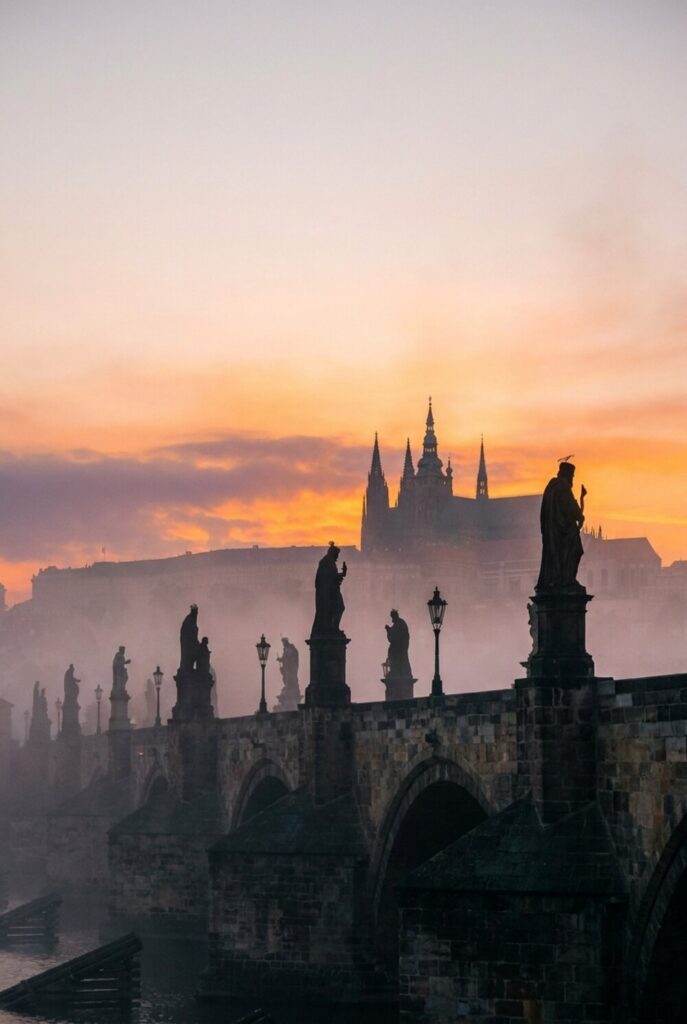
Prague, Czech Republic: A Thousand Years of Spires, Beer, and Bohemian Swagger
Part of our Czech Republic travel guide.
Prague City Guide
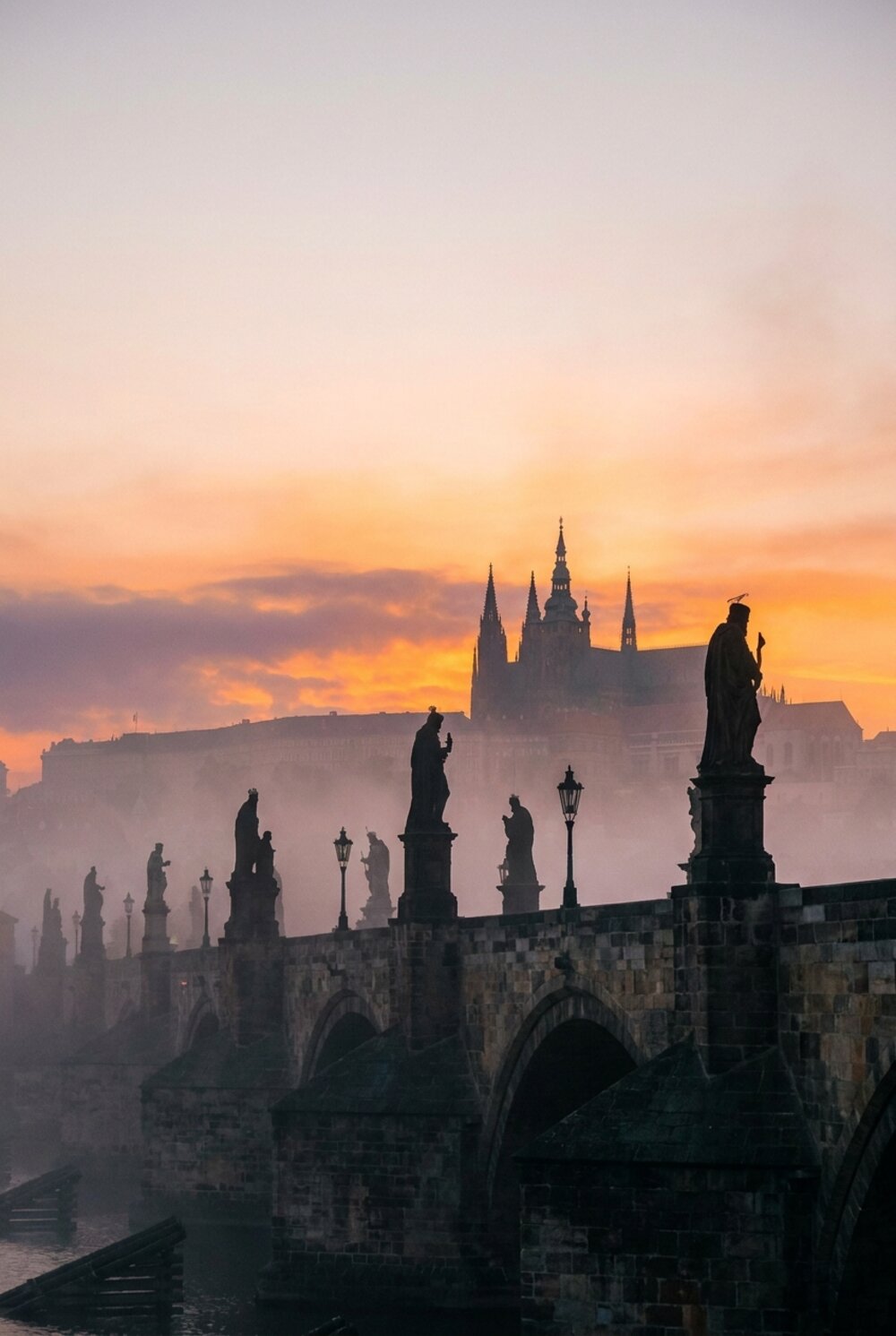
Table of Contents
Why Prague?
Prague is the capital of the Czech Republic and the political, cultural, and economic centre of Bohemia, with roughly 1.3 million residents inside the city limits as of 2024 and a metropolitan population of about 2.7 million across the surrounding Central Bohemian region. The city straddles a steep meander of the Vltava River, a valley that allowed its medieval core to grow in five architecturally distinct quarters — Old Town, New Town, Lesser Town, Castle Quarter, and Josefov — whose combined 866 hectares were inscribed on the UNESCO World Heritage List in 1992 as one of the most complete preserved medieval cityscapes in Europe.
The contrasts are what define the experience. Prague is nicknamed the “City of a Hundred Spires,” a count originally attributed to the 19th-century mathematician Bernard Bolzano; modern surveys put the actual total of spires, towers, and turrets at closer to 500. Yet the city is also the capital of a country that escaped communism only in 1989 and holds one of the youngest stock exchanges in Europe, a booming tech and film-production economy, and the highest per-capita beer consumption in the world. The result is a place where a 13th-century synagogue can sit one block from a third-wave coffee roaster, and where Gothic astrolabe mechanics ticking since 1410 share a square with skateboarders and the Saturday farmers’ market.
The scale is unusual in two directions at once. Prague Castle, at 70,000 square metres, is the largest ancient castle complex in the world by area and dominates the western skyline with the 124-metre spire of St. Vitus Cathedral. At the same time, the city has 18 bridges crossing the Vltava within its limits, the 515-metre Charles Bridge among them, and the longest urban tram network in the European Union, with 24 day lines covering the cobblestones that cars no longer fit through. Walking remains the primary transport in the historic core.
As a food-and-drink city, Prague holds two Michelin stars across two restaurants in the 2025 Guide — Field and La Degustation Bohême Bourgeoise — alongside tank-beer halls pouring unpasteurised Pilsner Urquell at 59 Kč a half-litre and a pub density that has earned Žižkov an unofficial “most bars per capita in Europe” title. As a transit city, three metro lines and 24 tram routes reach every quarter in under 25 minutes. As a destination, Prague rewards a tightly packed long weekend with the headline Gothic and Baroque spine, but layers well beyond the Old Town Square postcard for anyone who stays a week or more.
This guide covers the ten neighborhoods that shape the city, the beer halls and restaurants behind its food reputation, the castle and cathedral complex at its ceremonial heart, the day trips that turn Prague into a practical base for Český Krumlov, Kutná Hora, Karlštejn, Terezín, and Bohemian Switzerland, and the koruna, tram, and etiquette details that first-time visitors most commonly trip over on arrival at Václav Havel Airport.
Neighborhoods: Finding Your Prague
📍 Prague Map: Every Place in This Guide
Prague functions as a compact historic core ringed by 19th- and 20th-century quarters that each carry a distinctive mood. The five UNESCO-listed inner quarters — Old Town, Jewish Quarter, Lesser Town, Castle Quarter, and New Town — cluster in a 30-minute walking radius across the two banks of the Vltava. Beyond them, Vinohrady, Žižkov, Karlín, Holešovice, and Smíchov form the modern city where residents actually live, drink, and eat. A base near any metro-A station or on tram lines 9, 22, or 17 keeps every district below within 20 to 25 minutes of your door.
Old Town (Staré Město)
Old Town is the cobblestoned Gothic-to-Baroque heart of Prague and the place almost every visitor starts. The central Old Town Square (Staromestské náměstí), laid out in the 12th century as a market, is ringed by the twin towers of Týn Church, the Old Town Hall with its Astronomical Clock, and a pastel ring of merchant houses whose vaulted Romanesque cellars sit two floors below street level. The 1410 Astronomical Clock still chimes hourly with its twelve apostles. Off the square, the Royal Route runs west along Karlova to Charles Bridge, past the Klementinum’s 18th-century Baroque library. The Havelská open-air market has been trading in this exact location since 1232, making it one of the oldest continuously operating markets in Europe.
- Old Town Square (Staromestské náměstí) and the 1410 Astronomical Clock
- Týn Church (Týnský chrám, 14th-century twin Gothic towers)
- Charles Bridge eastern approach and the Old Town Bridge Tower
- Municipal House (Obecní dům, Art Nouveau, 1912) and the Powder Tower
- Havelská open-air market (operating since 1232)
Best for: first-timers, architecture photographers, and Gothic-Baroque completists. Access: Staroěstská station (Metro Line A) or tram stops Náměstí Republiky and Staroěstská.
Jewish Quarter (Josefov)
Josefov is the best-preserved former Jewish quarter in Europe, occupying ten blocks directly north of Old Town Square. Six of its synagogues survive in working order, anchored by the Old-New Synagogue (Staronová synagoga), completed in 1270 and the oldest continuously active synagogue in Europe. The Old Jewish Cemetery, with roughly 12,000 visible tombstones layered up to twelve deep because burials were forbidden outside the quarter walls, has been a pilgrimage site since the 15th century; Rabbi Judah Loew ben Bezalel — the legendary creator of the Prague Golem — is buried here in a 1609 tomb. The Pinkas Synagogue is now a Holocaust memorial listing 77,297 names of Czech and Moravian Jews killed by the Nazi regime. The surrounding Pařižská Street has, since the 2000s, become the city’s luxury-fashion flagship strip.
- Old-New Synagogue (Staronová synagoga, completed 1270)
- Old Jewish Cemetery (approx. 12,000 tombstones)
- Spanish Synagogue (Moorish revival, 1868)
- Pinkas Synagogue Holocaust memorial (77,297 names inscribed)
- Pařižská Street flagship boutiques
Best for: history and Jewish heritage visitors, plus luxury shoppers. Access: Staroěstská metro (Line A), four minutes on foot from Old Town Square.
Lesser Town (Malá Strana)
Lesser Town sits on the castle-side bank of the Vltava and is the quieter, more Baroque counterpart to Old Town. The western end of Charles Bridge leads straight into Mostecka Street and up to Malostranské náměstí, whose St. Nicholas Church (completed 1755) holds one of Central Europe’s most ornate Baroque interiors with a 70-metre dome. Kampa Island, separated from Malá Strana by the narrow Certovka (Devil’s Channel), carries the John Lennon Wall — a 1980 graffiti memorial that is repainted continuously. Nerudova Street climbs from the square toward the castle lined with 17th-century house-sign reliefs (a golden lion, two suns, the violet lobster) that served as addresses before street-numbering reached Prague in 1770. Wallenstein Garden (Valdštejnská zahrada), free and open April through October, holds the country’s most photogenic Baroque terrace along with resident peacocks.
- Charles Bridge western approach and the Lesser Town Bridge Towers
- St. Nicholas Church (Baroque, completed 1755, 70-metre dome)
- Kampa Island and the John Lennon Wall
- Wallenstein Garden (free, April–October, with peacocks)
- Nerudova Street with its 17th-century house-sign reliefs
Best for: Baroque architecture and golden-hour photography. Access: Malostranská metro (Line A) or tram 22 stop Malostranské náměstí.
Castle Quarter (Hradčany)
Hradčany is the royal axis above the river, dominated by the 70,000-square-metre Prague Castle — Guinness-recognised as the largest ancient castle complex in the world by area. Inside the castle walls sit St. Vitus Cathedral (begun 1344, finally completed 1929), the Old Royal Palace, St. George’s Basilica, and the row of 16th-century craftsmen’s cottages on Golden Lane (Zlatá ulička), where Franz Kafka lived at No. 22 from 1916 to 1917. Outside the gates, the Loreta pilgrimage site holds the country’s most famous carillon of 27 bells (cast 1694, playing the Marian hymn hourly), and Strahov Monastery, founded 1143, owns two of Europe’s most ornately frescoed Baroque library halls. The ceremonial Changing of the Guard at the first courtyard, daily at noon, features a fanfare by Czech composer Miloš Vacek.
- Prague Castle complex (70,000 m²) with St. Vitus Cathedral
- Golden Lane (Zlatá ulička, Kafka’s 1916–17 residence)
- Loreta pilgrimage site with its 27-bell carillon
- Strahov Monastery Theological and Philosophical library halls
- Changing of the Guard at noon (first courtyard)
Best for: royal history and panoramic viewpoints. Access: Malostranská metro (Line A), then tram 22 to Pražský hrad, or walk up Nerudova.
New Town (Nové Město)
New Town is only “new” in the medieval sense — founded in 1348 by Charles IV as a planned extension that doubled the city’s area. It now holds most of Prague’s 19th- and 20th-century grand architecture and two of the defining public squares in Czech political memory. Wenceslas Square (Václavské náměstí) runs 750 metres from the Old Town end to the National Museum and is where 200,000 demonstrators gathered on November 17, 1989, triggering the Velvet Revolution and the end of communist rule. Josef Myslbek’s 1912 equestrian statue of St. Wenceslas marks the site, and a bronze relief at the fountain commemorates Jan Palach’s 1969 self-immolation. Frank Gehry’s Dancing House (Tančící dům, 1996) sits on the river four blocks south. The reopened National Museum (2019, after a seven-year, 2.8-billion-koruna restoration) crowns the square with the 70-metre Pantheon dome.
- Wenceslas Square (Václavské náměstí, 750 m)
- National Museum (reopened 2019 after 7-year restoration)
- Dancing House (Tančící dům, Frank Gehry, 1996)
- National Theatre (Národní divadlo, 1881) and Café Slavia
- Lucerna Palace with David Černý’s Upside-Down Horse
Best for: 20th-century history buffs and modern shopping. Access: Muzeum metro (Lines A and C) and Mustek metro (Lines A and B).
Vinohrady
Vinohrady — the name means “vineyards,” referring to royal wine estates that occupied the hill before 19th-century urban expansion — is Prague’s Belle-Époque residential district and its modern café-and-wine-bar heartland. The anchor is Náměstí Míru (Peace Square) and its 1932 Church of the Most Sacred Heart, designed by the Slovene architect Jože Plečnik — a severely geometric, stripped-classical building that is now on UNESCO’s list of modern Czech heritage proposals. Riegrovy sady, the 11-hectare park north of the square, has one of the city’s two most-photographed sunset panoramas over Old Town from its south-facing beer garden. The grid of Korúní and Mánesova streets holds most of the city’s natural-wine bars, third-wave coffee roasters (Mam Coffee Roasters, La Bête), and independent bakeries (Antoninúv chléb).
- Náměstí Míru and Plečnik’s 1932 Church of the Most Sacred Heart
- Riegrovy sady park and summer beer garden
- Vinohradský pivovar on-site tank brewery
- Korúní and Mánesova café-and-natural-wine strip
- Vinohrady Theatre (Divadlo na Vinohradech, 1907)
Best for: modern café culture and long residential walks. Access: Náměstí Míru metro (Line A), four minutes from Wenceslas Square.
Žižkov
Žižkov is the working-class-turned-bohemian quarter directly east of New Town, named after the 15th-century Hussite general Jan Žižka, whose 16.5-tonne bronze equestrian statue on Vítkov Hill is the largest of its kind in the world. The neighborhood is widely cited as having the highest density of bars per capita in Europe, though no one has rigorously counted them — what is verifiable is that Husítská and Bořivojova streets alone host more than 30 independent pubs and micro-clubs open past 02:00. The 216-metre Žižkov TV Tower (1992), complete with David Černý’s ten crawling-baby sculptures scaling the shaft, holds a rooftop restaurant and observation deck. Olšany Cemetery, the city’s largest burial ground, contains the grave of Jan Palach, the Charles University student who self-immolated in January 1969 in protest against the Soviet occupation.
- Žižkov TV Tower (216 m) with David Černý’s crawling-babies
- National Monument on Vítkov Hill with Jan Žižka’s equestrian statue
- Husítská and Bořivojova late-night pub strips
- Olšany Cemetery (Jan Palach’s grave)
- Vinohradská/Seifertova tram corridor (lines 5, 9, 26)
Best for: late-night drinkers and contrarian neighborhood explorers. Access: Jiřího z Poděbrad metro (Line A) or trams 5, 9, and 26.
Karlín
Karlín, immediately east of the main railway station along the Vltava, is the most transformed neighborhood in the city. A 500-year flood in August 2002 devastated the quarter’s entire ground-floor retail base, and the reconstruction that followed has turned Karlín into Prague’s tech, design, and new-restaurant district. Eska, the bakery-and-bistro that Bib-Gourmand-listed chef Martin Štangl operates on Perněrova Street, anchors the dining scene alongside Sansho, Kro Kitchen, and Emissář. Forum Karlín (opened 2014) holds 5,000 concertgoers in what used to be a locomotive repair hall. Kasárna Karlín, a former barracks, reopened in 2017 as an open-air courtyard cinema and bar. The riverside promenade running east to Libeň is the city’s new cycling-and-jogging corridor and was rebuilt on reinforced flood-resistant terraces in 2019.
- Eska, Sansho, and Kro Kitchen new-wave bistros
- Forum Karlín concert hall (5,000 capacity, opened 2014)
- Kasárna Karlín cultural centre and open-air cinema
- Invalidovna (1737 military hospice, now a cultural venue)
- Riverside promenade to Libeň with container-art installations
Best for: new-wave dining and riverside cycling. Access: Křižíkova and Florenc metros (Line B) plus tram 8 from Old Town.
Holešovice
Holešovice occupies the northern bend of the Vltava and has rebuilt itself around contemporary art and Saturday markets. DOX Centre for Contemporary Art (admission 220 Kč / ~$9.65) converted a 1930s former machine factory into the city’s leading rotating-exhibition space. Veletržní Palace, the 1928 Functionalist landmark now housing the National Gallery’s 19th-, 20th-, and 21st-century collections, is where Alfons Mucha’s 20-canvas Slav Epic cycle is permanently displayed — each canvas measures up to 8 by 6 metres. The Prague Market (Pražská tržnice), a 10-hectare former Victorian slaughterhouse complex, hosts a year-round Saturday farmers’ market and a cluster of Vietnamese restaurants reflecting Prague’s long-standing Vietnamese community. Stromovka, at 95 hectares the largest park in inner Prague, is the neighborhood’s running and family weekend anchor. Letná Beer Garden, on the cliff overlooking Old Town, is the other classic sunset panorama.
- DOX Centre for Contemporary Art (220 Kč)
- Veletržní Palace with Mucha’s Slav Epic
- Pražská tržnice Saturday farmers’ market
- Stromovka Park (95 hectares, largest in inner Prague)
- Letná Beer Garden panorama over Old Town
Best for: contemporary art, weekend markets, and runners. Access: Vltavská and Nádraží Holešovice metros (Line C) plus trams 12 and 17.
Smíchov
Smíchov lies on the left bank of the river directly south of Malá Strana. It was Prague’s 19th-century industrial district and remains the home of Staropramen brewery, which has produced on the same site since 1869 and runs a public visitor centre with factory tours. The Náplavka riverside (the name means “floodplain embankment”) hosts the city’s most popular Saturday farmers’ market every week from April through November, with producer-direct Czech cheeses, smoked pork, sourdough, and Moravian wines from 08:00 to 14:00. MeetFactory, the contemporary arts and live-music venue founded by sculptor David Černý in 2001, programmes experimental music and installations in a former glass-factory compound. Petřín Hill’s lower funicular station is reached by a 15-minute walk north from Smíchov across the Legion Bridge.
- Staropramen brewery and visitor centre (brewing since 1869)
- Náplavka riverside Saturday farmers’ market
- MeetFactory contemporary arts centre (David Černý, 2001)
- Nový Smíchov shopping mall at Anděl metro
- Legion Bridge crossing to Petřín Hill funicular
Best for: breweries, riverside markets, and Petřín Hill access. Access: Anděl metro (Line B) and trams 9, 12, and 20.
The Food
Prague’s food scene runs on two separate tracks that barely speak to each other: the traditional Czech table of roast meats, dumplings, and tank beer served in wood-panelled hospoda rooms that have not changed their menu in 40 years, and an ambitious modern-bistro wave that has put two restaurants in the 2025 Michelin Guide and built a national-wine and natural-wine scene from almost nothing over the past decade. The city also sits at the centre of the country with the highest per-capita beer consumption in the world, which means a pint of Pilsner Urquell, served from a pressurised tank at 4°C within 72 hours of leaving Plzeň, sets a standard nearly impossible to match abroad. The categories below cover the headline Czech kitchen, the city’s beer culture, the Michelin and fine-dining tier, dishes beyond the classics, and five experiences that are distinctive to Prague. Across all tiers, the cost ratio of food-to-hotel runs about half what a traveller would pay in Vienna or Berlin for a meal of comparable quality, which is arguably Prague’s biggest dining advantage.
Czech Classics & National Dishes
Every Czech restaurant hierarchy begins with svíčková na smetaně — beef sirloin braised slowly with carrot, parsnip, and celeriac, then finished in a silky cream sauce, served over slices of houskový knedlík (bread dumpling) with a curl of whipped cream, a slice of lemon, and a spoonful of cranberry compote. It is how locals judge a new restaurant, and the benchmark price in Prague runs roughly 220–320 Kč (~$9.65–14.05) at a serious kitchen. Guláš is the other headline, thicker and darker than its Hungarian cousin — beef slow-stewed with onion, paprika, marjoram, and caraway, with six slices of dumpling soaking up the sauce.
- Lokál Dlouhá — svíčková na smetaně with bread dumplings and cranberry (259 Kč, ~$11.35). The reference modern hospoda in Old Town, tank Pilsner served at 4°C.
- U Modré kačničky (The Blue Duckling) — pečená kachna, roast duck with red cabbage and potato dumplings (645 Kč, ~$28.30). Malá Strana, upmarket setting, the benchmark for ceremonial Czech roast dinners.
- Restaurace Mlejnice — vepřo-knedlo-zelo, the Sunday-lunch trinity of roast pork, dumplings, and sauerkraut (289 Kč, ~$12.70). Cellar setting in Old Town, reliable English-language staff.
- Kantýna — tatarák, Czech-style beef tartare with toast, raw egg yolk, and rubbed-garlic black bread (229 Kč, ~$10.05). New Town butcher-shop-and-restaurant hybrid, cash-and-card meal-voucher counter system.
- Havelská Koruna — guláš with houskový knedlík in a cafeteria format (179 Kč, ~$7.85). Cheapest serious sit-down Czech meal in Old Town, since 1993.
Beer Halls (Hospoda) & Tank Beer
Czechs drink more beer per capita than any other nation on earth, and Prague is the capital of that culture. The distinction that matters to visitors is between tank beer (pivo z tanku) and keg beer. Tank beer is unpasteurised Pilsner Urquell — or occasionally Budějovický Budvar — delivered fresh from the brewery in pressurised road tankers, stored in stainless steel on-site, and poured within 72 hours. Tank pubs are certified by the brewery and are clearly marked. The flavour difference from bottled or keg Pilsner is genuinely noticeable: softer, fuller, less bitter, almost cream-like in the head. Prices at a real Prague hospoda run 42–60 Kč (~$1.85–2.65) per half-litre, about one-third of what a pint costs in Old Town tourist bars.
- U Zlatého tygra (The Golden Tiger) — tank Pilsner Urquell (55 Kč per 0.5 L, ~$2.40). Bohumil Hrabal’s local, where the novelist drank with US President Bill Clinton and Czech President Václav Havel on January 11, 1994.
- U Fleku — in-house dark 13° lager (89 Kč per 0.4 L, ~$3.90). In operation since 1499, the oldest continuously brewing brewery in Prague. Beer-and-song-halls atmosphere, tourist-heavy but genuinely historical.
- Pivovarský dům — experimental on-site brews including nettle, banana-wheat, and coffee-infused lagers (65 Kč per 0.5 L, ~$2.85). New Town micro-brewery.
- Lokál Dlouhá (U Dlouhá) — tank Pilsner served at 4°C (59 Kč per 0.5 L, ~$2.60). The purist’s benchmark for tank-served Pilsner.
- U Medvídků — own-brand X-33 (world’s strongest lager, 12.6% ABV) plus Budvar on tap (69 Kč per 0.5 L regular, ~$3.00). Old Town, since 1466.
- Vinohradský pivovar — tank Vinohradský ležák 12° brewed on site (55 Kč per 0.5 L, ~$2.40). Serious neighborhood pub in Vinohrady with real Czech clientele.
Michelin & Modern Fine Dining
Prague’s ambitious-modern scene is genuinely young — the first Michelin star for any Prague restaurant was awarded in 2012 — but the 2025 Guide Czech Republic lists two one-starred restaurants and four Bib Gourmand venues in the city. The tasting-menu price floor for a Michelin-starred meal in Prague sits well below equivalent stars in Vienna or Berlin, which makes Prague one of the more accessible starred cities in Europe. Lunch sets at the modern-bistro tier routinely run 450–650 Kč (~$19.75–28.50), a fraction of dinner.
- Field — seasonal 7-course tasting menu (3,450 Kč, ~$151.30). One Michelin star since 2016, Old Town, chef Radek Kaspárek.
- La Degustation Bohême Bourgeoise — 11-course reimagined Czech cookbook menu (3,900 Kč, ~$171.05). One Michelin star since 2012, based on the 1894 M.D. Rettigova cookbook.
- Eska — Bib Gourmand Czech-Nordic bistro in Karlín (mains from 650 Kč, ~$28.50). Chef Martin Štangl’s sourdough programme is the city benchmark; the beetroot with buttermilk and the slow-roasted pork neck are signatures.
- Divinis — Italian counter-dining near Old Town Square (mains 590 Kč, ~$25.90). Bib Gourmand, a 10-seat counter, Sicilian-influenced fresh pasta with Moravian wines.
- Kro Kitchen — rotisserie-forward seasonal kitchen (mains 750 Kč, ~$32.90). Chef Marek Fichtner, Vinohrady.
- Sansho — pan-Asian market-menu bistro (mains 695 Kč, ~$30.50). Paul Day’s other venue (after The Real Meat Society butcher shop), Bubenska Street.
Beyond Svíčková and Guláš: Other Czech Classics
Beyond the headline two dishes, Czech kitchens run on a familiar set of pub staples, pickled bar snacks, and sweet-baked desserts. The six below cover the most common items visitors will encounter across hospody, markets, and cafés in Prague, with honest flags on which of them are actually traditional and which are tourist reinventions.
- Smažený sýr — deep-fried Edam or hermelín cheese in golden breadcrumbs, served with tartar sauce and boiled potatoes or fries (159 Kč, ~$7.00). Hospoda staple, vegetarian fallback in an otherwise pork-heavy cuisine.
- Česnečka — garlic soup with potato, marjoram, a crouton-and-cheese cap (79 Kč, ~$3.45). A cornerstone hangover cure; served at essentially every traditional hospoda.
- Koleno (roasted pork knuckle) — a 1-kilo roast knuckle with horseradish, mustard, and dark bread (389 Kč, ~$17.05). Shareable, cooked slow with beer in the braise (a process of several hours), typical at U Medíviků, U Vejvodu, and U Pinkása.
- Chlebíčky — open-faced sandwiches on white bread, toppings including ham-salad, potato-salad with egg and pickle, or roast-beef with horseradish (45 Kč each, ~$1.97). Sisters Bistro (Dlouhá Street) and Lahůdky Zlatý kříž are the benchmarks.
- Medovník — Czech honey-walnut layer cake (95 Kč per slice, ~$4.15). Most cafes carry a version; Cukrárna Myšák is the historical reference.
- Trdelník (the tourist asterisk) — spit-roasted cinnamon-sugar pastry sold on every corner of Old Town (100–160 Kč, ~$4.40–7.00). Widely marketed as “traditional Czech” but the chimney-cake format is Hungarian and Slovak in origin (kürtőskalács), was only popularised in Prague in the 2000s, and locals do not eat it. Include for honest completeness: it is entertaining, photogenic, and completely inauthentic.
Food Experiences You Can’t Miss
Prague’s food culture runs deeper than restaurant meals. Five experiences are genuinely distinctive to the city and difficult to replicate elsewhere, from unpasteurised tank beer poured to strict temperature standards to a century-old confectioner preserving pre-war pastry recipes.
- Tank-beer pilgrimage — Lokál Dlouhá, U Zlatého tygra, and Kolkovna pour tank Pilsner Urquell at a strict 4°C, unpasteurised and unfiltered, within 72 hours of leaving Plzeň. Order “Maličká” for a 0.3 L taster or simply “jedno pivo” for a 0.5 L. The texture of the head — dense, creamy, three fingers high — is the benchmark no bottled Pilsner ever matches.
- Náplavka Saturday farmers’ market — every Saturday 08:00–14:00 from early April through late November on the Smíchov-side embankment, producer-direct Moravian wines, Czech cheeses, smoked hams, sourdough loaves, apples, and seasonal mushrooms. The most locally attended market in the city.
- Cukrárna Myšák — a 1904 confectioner on Vodičkova (relaunched 2008 after a 50-year Communist-era closure) serving classic věnečky, laskonky, medovník, and honey cake paired with turek (Turkish-style unfiltered coffee). The most complete surviving window into pre-war Czech café culture.
- Beer-spa experience — Beer Spa Bernard and Original Beer Spa operate private hop-and-malt baths at 34–36°C with unlimited tank pivo on a bathtub tap, typically 1,990–3,500 Kč (~$87–154) per session. A specifically Czech invention and more widely available in Prague than anywhere else.
- Brewery tour at U Fleku — the working brewery, operating on the same site since 1499, runs hourly tours for 180 Kč (~$7.90) that end in the historic beer-hall with a tasting of the dark 13° lager. The Pilsner Urquell Original Visitor Centre in Plzeň is a more comprehensive half-day trip, but U Fleku is walkable from Old Town.
Cultural Sights
Prague’s cultural headline sites run across a thousand years, from the 9th-century foundation of Prague Castle to the 2019 reopening of the fully restored National Museum. Admission to the major sites runs affordable by European-capital standards, with most paid attractions between 150 and 450 Kč (~$6.60–19.75). The nine below cover the royal-castle axis, the religious-and-Jewish heritage anchor, the astrolabe and bridge spine of the city, and the 19th- and 20th-century civic architecture that framed the Velvet Revolution — roughly in the order most first-time visitors include them in a 3-to-4-day itinerary.
Prague Castle (Pražský hrad)
Founded around 870 and continuously occupied since, Prague Castle is the seat of the Czech President and covers 70,000 square metres — the largest ancient castle complex in the world by area per the Guinness-recognised measurement. Admission Circuit B (St. Vitus, Old Royal Palace, St. George’s Basilica, and Golden Lane) is 250 Kč (~$11.00); Circuit A adds Rosenberg Palace and rotating exhibitions for 450 Kč (~$19.75). Grounds open 06:00–22:00 year-round; buildings 09:00–17:00 April–October and 09:00–16:00 November–March. Look for the daily noon Changing of the Guard at the first courtyard, which features a purpose-written fanfare by Miloš Vacek.
Charles Bridge (Karlův most)
Commissioned in 1357 by Charles IV and completed in 1402, the 515-metre Charles Bridge is lined with 30 Baroque statues installed mostly between 1683 and 1714. Most statues are high-quality replicas; the originals live in the Lapidarium at Vystaviště. Admission to the bridge itself is free and it never closes; the Old Town Bridge Tower climb costs 190 Kč (~$8.35) and gives the postcard view. The bronze relief of St. John of Nepomuk, thrown from this bridge in 1393, is said to guarantee return to Prague if touched — it is the most polished patch of bronze on the bridge. Arrive before 07:00 or after 22:00 for photography without crowds.
Astronomical Clock (Pražský orloj)
Installed in 1410 on the Old Town Hall’s southern wall and the oldest astronomical clock still in operation anywhere in the world. The hourly apostle-procession show (08:00–23:00) features a walk of twelve wooden apostles behind two small windows, a crowing cock, and a skeleton figure pulling the hourglass rope — the full sequence takes about 45 seconds. The astrolabe dial displays old Bohemian time, modern Central European time, Babylonian time, and zodiac positions simultaneously on a single face. Admission to view the show is free; Tower climb plus visit to the mechanism is 300 Kč (~$13.15).
St. Vitus Cathedral (Katedrála sv. Víta)
Begun in 1344 under Charles IV and finally completed in 1929 — a 585-year construction timeline — St. Vitus Cathedral is the seat of the Archbishop of Prague and the burial site of fourteen Bohemian kings and several Holy Roman Emperors. Admission is included in Prague Castle Circuit B at 250 Kč (~$11.00); the Great South Tower climb is an additional 200 Kč (~$8.80). Alfons Mucha’s 1931 Art Nouveau stained-glass window on the north nave combines Art Nouveau flow with Gothic tracery. The Czech Crown Jewels are stored here, displayed publicly only once every five to eight years by presidential decree.
Old-New Synagogue (Staronová synagoga)
Completed in 1270 and the oldest continuously active synagogue in Europe. The early Gothic twin-nave design is structurally unusual, and the building remains a working congregation with services every Friday evening. Combined Jewish Museum + Old-New Synagogue admission is 650 Kč (~$28.50) and covers the Spanish Synagogue, Pinkas Synagogue, Klausen Synagogue, Maisel Synagogue, and the Old Jewish Cemetery. Open Sunday through Friday; closed Saturdays and Jewish holidays. Local legend holds that the golem built by Rabbi Judah Loew ben Bezalel in 1580 rests in the attic, which remains sealed by centuries-old tradition.
Petřín Hill & Lookout Tower
The 63.5-metre Petřín Tower was built in 1891 as a scaled-down reply to the Eiffel Tower for the Jubilee Exhibition. On clear days the view reaches 100 km to the Krkonoše mountains. Tower admission is 220 Kč (~$9.65); the Petřín Funicular from Újezd up the hill is included in the DPP public-transit ticket. The hillside holds a mirror maze, a Baroque rose garden, the Stefanik Observatory, and the Hunger Wall — a 14th-century city fortification commissioned by Charles IV during a famine specifically to provide relief employment. Open 10:00–22:00 (April–September) and 10:00–20:00 (October–March).
National Museum (Národní muzeum)
Founded in 1818 and housed in the current neo-Renaissance main building since 1891 at the head of Wenceslas Square. The museum reopened in October 2019 after a seven-year, 2.8-billion-koruna reconstruction. Combined Main + Historical building admission is 260 Kč (~$11.40), open 10:00–18:00 daily. The 70-metre Pantheon dome rings the Bohemian hall of fame with 48 busts of Czech scientists, writers, and political figures. Look for the 1968 bullet holes from the Soviet invasion, preserved as conservation scars on the south facade at roughly third-floor height.
Strahov Monastery Libraries
The Premonstratensian monastery was founded in 1143; the Theological Hall was completed in 1679 and the Philosophical Hall in 1794. Library entry is 150 Kč (~$6.60); a photography permit is an additional 50 Kč. Open 09:00–12:00 and 13:00–17:00 daily (closed during Mass). The Philosophical Hall’s 14-metre ceiling fresco, painted by Anton Maulbertsch in 1794, depicts the “Intellectual Progress of Mankind.” The adjacent library restaurant serves the monastery’s on-site Strahov Brewery beers at market prices, which is the only surviving monastic brewery inside the Prague city limits.
Wenceslas Square (Václavské náměstí)
Wenceslas Square was laid out in 1348 as Charles IV’s New Town horse market and renamed in 1848. Access is free and the square is open 24/7. Josef Myslbek’s 1912 bronze equestrian statue of St. Wenceslas, patron of Bohemia, marks the southern end and the spot where 200,000 demonstrators gathered on November 17, 1989, triggering the Velvet Revolution. A bronze-relief memorial at the fountain marks the January 16, 1969 self-immolation site of Jan Palach, the Charles University student protesting the Soviet invasion. Evening crowds peak on Friday and Saturday; tourist-targeted restaurant touts are most aggressive here.
Entertainment
Prague’s entertainment scene is unusually classical-heavy for a European capital of its size: the Czech Philharmonic plays at the Rudolfinum on a programme that sells out six weeks ahead, Mozart’s Don Giovanni still runs at the theatre where he personally conducted its 1787 premiere, and nightly black-light theatre productions in UV-lit puppet format are a distinctly Prague-invented art form that no other city offers at this scale. Beyond the classical core, the city runs on beer gardens from April to October, a surprisingly strong jazz scene in basement clubs, late-opening dance clubs, and a winter ice-hockey calendar with two top-flight teams. Prices across the whole spectrum run considerably lower than in Vienna, Berlin, or Paris.
Classical Music & Opera
The Rudolfinum, completed in 1885 on the Vltava embankment, has been the home of the Czech Philharmonic since 1896 and hosts around 100 concerts a year in the Dvořák Hall (seating 1,100). The Municipal House (Obecní dům) Smetana Hall is the second-largest classical venue, with the Prague Spring International Music Festival opening every May 12 at Smetana’s Má vlast performed here. The Estates Theatre (Stavovské divadlo), opened 1783, still runs Don Giovanni in a production that nods to the 1787 world premiere Mozart personally conducted in this same hall. Typical ticket prices run 500–2,500 Kč (~$22–110). Book Smetana Hall and the Don Giovanni production 2–4 weeks ahead in peak season; Rudolfinum same-week availability is usually possible for chamber programmes.
Black Light Theatre
Black Light Theatre is a specifically Prague-invented performance form from the 1960s where puppeteers dressed entirely in black operate luminous props under UV light against a black backdrop, producing the illusion of floating objects and characters. The three long-running venues are Ta Fantastika on Karlova Street, Image Theatre near Republic Square, and the Black Light Theatre of Jiří Srnec (the form’s inventor). Tickets run 450–700 Kč (~$20–31), shows last roughly an hour, and walk-up or same-day booking is usually fine. Programmes are entirely visual-and-music with no dialogue, making this the most language-neutral show in the city.
Jazz Clubs
Prague has a disproportionately strong jazz scene for its size, anchored by Reduta on Národní třída — the basement club where US President Bill Clinton famously jammed on saxophone with President Václav Havel and the Czech jazz band on January 11, 1994. Jazz Dock on the Smíchov bank of the river programmes the widest range of international acts, often with two sets per night at 19:00 and 21:30. AghaRTA Jazz Centrum, operating in an Old Town cellar since 1991, focuses on Czech jazz and fusion. Cover charges at all three run 250–500 Kč (~$11–22) plus a drink-minimum, and Friday and Saturday table reservations should be booked 2–3 days ahead.
Beer Gardens (Pivní zahrady)
Open-air beer gardens are Prague’s defining summer institution, running from late April or early May through late October depending on weather. The three reference locations are Letná Beer Garden (on the cliff directly opposite Old Town, sunset panorama over the Vltava bridges), Riegrovy sady in Vinohrady (south-facing, the classic late-afternoon hang), and the smaller garden inside Stromovka Park in Holešovice (family-friendly, shaded by old chestnuts). Beer prices run 42–60 Kč (~$1.85–2.65) per half-litre, paid cash-first at a counter window for tokens. Hours typically run 11:00 until 22:00, weather-dependent.
Nightclubs & Late Bars
Karlovy Lázně, next to Charles Bridge, is reportedly the largest nightclub in Central Europe with five floors each programming a different genre (hip-hop, Czech pop, house, oldies, top-40). Roxy on Dlouhá Street is the city’s reference techno and art-house club, opening from 22:00. Cross Club in Holešovice is the most visually distinctive — an industrial-steampunk assemblage of welded kinetic sculpture and UV-lit staircases — opening from 14:00 as a coffee bar and switching to dance club from 22:00. For cocktails rather than dance floors, Hemingway Bar (Karolíny Světlé 26) made the 2024 World’s 50 Best Bars list. Typical club cover charges run 200–300 Kč (~$9–13); cocktails 200–350 Kč (~$9–15).
Ice Hockey & Sport
Prague holds two top-flight Extraliga ice-hockey teams — HC Sparta Praha and HC Slavia Praha — whose Prague Derby sells out 1–2 weeks ahead every season. Sparta plays at the O2 Arena (17,383 seats, the largest indoor arena in Central Europe); Slavia plays at the O2 Universum nearby. Regular-season tickets run 200–1,200 Kč (~$9–53) depending on seating tier; season runs September through April, with playoffs into May. The atmosphere is noisy, beer-heavy, and family-friendly, and a stand-up Sparta home game is one of the cheapest top-flight professional-sport tickets available in any European capital.
Day Trips
Prague’s central position in Bohemia, the efficiency of Czech Railways (ČD) and RegioJet inter-city coaches, and a dense road network put several of the country’s most-visited destinations within 40 minutes to 2h 45 minutes of the city. The five below are the most practical as same-day round trips, each with at least one UNESCO-listed or nationally significant anchor sight, and all accessible by public transport without a rental car. Prague Main Station (Praha hlavní nádraží), Florenc coach station, and Na Knížecí bus terminal handle essentially all of these routes.
Český Krumlov (2h 45min by RegioJet direct coach)
A UNESCO-listed South Bohemian town wrapped inside a single oxbow bend of the Vltava, Český Krumlov holds the country’s second-largest castle (after Prague Castle itself) and one of only three surviving 18th-century Baroque theatres in the world, with its original stage machinery intact. Direct RegioJet coaches from Prague Na Knížecí run 10+ times daily at 215 Kč (~$9.45) one way; the train alternative via České Budějovice takes about 3 hours 15 minutes. Castle admission runs 250 Kč (~$11.00) for the full circuit. The Egon Schiele Art Centrum commemorates the Austrian painter who lived here in 1911 and whose erotic drawings got him briefly jailed by local authorities. Book the 07:00 coach outbound for 7+ hours on-site and the 17:30 return to be back in Prague by 20:30.
Kutná Hora (55 min by direct express train)
Kutná Hora, once the richest silver-mining city in medieval Bohemia and a UNESCO-listed ensemble since 1995, is best known for the Sedlec Ossuary (Kostnice v Sedlci) — a small chapel decorated since c. 1870 with the artistically arranged bones of approximately 40,000 plague and war victims, including a chandelier containing every bone in the human body and a Schwarzenberg family coat of arms executed in scapulae and finger joints. Direct express trains from Prague Main Station run hourly at 134 Kč (~$5.90) one way in about 55 minutes. St. Barbara’s Cathedral (begun 1388, Vladislav Jagiellon Gothic) sits 20 minutes on foot from the ossuary. The ossuary has used a timed-entry reservation system since 2020 (book at sedlec.info); weekend slots sell out 5–7 days ahead. Combined three-site ticket 220 Kč (~$9.65).
Karlštejn Castle (40 min by direct Os/R train)
Karlštejn Castle was built between 1348 and 1365 by Charles IV as a high-security fortress to house the Imperial Crown Jewels and his personal collection of Christian relics. Direct Os or R trains from Prague Main Station reach Karlštejn station in about 40 minutes at 55 Kč (~$2.40) one way, followed by a 25-minute uphill walk through the village to the castle gate. Circuit I (standard visit) runs 270 Kč (~$11.85) walk-up. Circuit II, which includes the Chapel of the Holy Cross and its 129 gilded and crystal-studded panel paintings by Master Theodoric, is limited to 12 visitors per 30-minute slot and costs 580 Kč (~$25.45) — reservations sell out 2–3 weeks ahead in peak season. The nearby Křivoklát Castle makes a full second-day add-on from Karlštejn.
Terezín Memorial (1 h by direct Florenc bus)
Terezín was an 18th-century Habsburg fortress town that the Nazi regime converted into a Jewish ghetto and transit concentration camp during WWII, holding approximately 155,000 people of whom 33,000 died on site and approximately 88,000 were deported onward to Auschwitz and other extermination camps. Direct bus line 100 or 24 from Prague Florenc coach station reaches Terezín in about 1 hour at 132 Kč (~$5.80) one way. The combined Small Fortress + Ghetto Museum + Crematorium ticket is 250 Kč (~$11.00); allow 5–6 hours on-site. This is a memorial, not an attraction: visitors observe a no-photography rule inside exhibition rooms and maintain quiet behaviour throughout. Verify the last bus back to Prague (typically 17:45) at idos.cz the night before.
Bohemian Switzerland (2 h by train to Děčín + local bus)
Bohemian Switzerland National Park (České Švýcarsko) is a sandstone-formation park directly on the German border, 90 kilometres north of Prague. The signature sight is Pravčická brána, the largest natural sandstone arch in Europe at 26.5 metres wide, filmed as Narnia in the 2005 BBC adaptation of The Lion, the Witch and the Wardrobe. Round-trip train to Děčín via Praha-Holesovice runs 380 Kč (~$16.65); park entry to Pravčická brána is 150 Kč (~$6.60). Best done as a 12-hour day — 07:00 outbound, 19:30 last reliable return. Full-day organised tours with minivan transfer and a local guide run from 1,500 Kč (~$65.80) and skip the two transit transfers.
Seasonal Guide
Prague has four sharply differentiated seasons, with a continental climate that delivers cold, dry winters and warm, occasionally hot summers. The following notes cover the city specifically; Bohemia’s rural wine regions, mountain ranges, and southern UNESCO towns follow different patterns addressed in the Czech Republic country guide. Hotel pricing and airline demand both track the seasonal calendar closely, with Christmas Markets and Prague Spring Festival producing the year’s sharpest peaks.
Spring (March – May)
Daytime highs rise from about 5°C in early March to 18°C by late May (41–64°F), with moderate rainfall and increasingly long daylight. Easter Markets on Old Town Square and Wenceslas Square run late March through mid-April 2026 with hand-painted eggs (kraslice), honey wine (medovina), and traditional willow braids (pomlázka). The Prague Spring International Music Festival runs May 12 to June 2, 2026, opening with Smetana’s Má vlast at the Municipal House. Magnolias flower in early April on Kampa Island; chestnut blossoms line Petřín Hill in early May. Hotel rates rise from April and peak in the first week of May alongside the festival opening.
Summer (June – August)
Daytime highs sit between 17 and 26°C (63–79°F), with sunset reaching 21:15 at the June solstice. June 14 and 15 hosts the free-entry United Islands festival across Kampa, Střelecký Ostrov, and Žofín islands. Letní scéna (summer-stage) programming runs at Letná, Riegrovy sady, and Stromovka beer gardens. July and August draw the year’s heaviest tourist crowds — expect 30-minute waits for the Astronomical Clock hourly show and Prague Castle queues from 09:30. Heat waves over 30°C have become noticeably more frequent since 2018, and air conditioning remains rare in older apartment rentals. Hotel rates sit at 80–90% of peak spring pricing.
Autumn (September – November)
September and October deliver the year’s most comfortable walking weather, with daytime highs of 6–18°C (43–64°F) and the year’s clearest skies. Stromovka and Letná beech leaves peak in late October. The Signal Festival, the city’s large-scale projection and light-art festival, runs for four nights in mid-October 2026 free to view across Old Town and Karlín. St. Martin’s Day (Svatý Martin) on November 11 opens the year’s new svatomartinské wines at pop-up tasting stands across the city, traditionally uncorked at 11:11. Hotel rates drop 25–30% from peak summer pricing, making autumn the sweet-spot window for first-time visits.
Winter (December – February)
Winter highs sit between -3 and 4°C (27–39°F) with overnight lows regularly below freezing. Christmas Markets run November 28, 2026 through January 6, 2027 on Old Town Square, Wenceslas Square, Náměstí Míru in Vinohrady, and Republic Square, with hot wine (svařák), grilled klobása, and a live Bethlehem animal stable on Old Town Square. Snowfall is light but the Baroque skyline under a dusting is the year’s most-photographed view. New Year fireworks are banned in the central zone since 2021 for historic-building protection; the city’s official drone show on January 1 runs from Letná plain. Late January and February are the year’s cheapest hotel window.
Getting Around
Prague’s public transport system, operated by DPP (Dopravní podnik hl. m. Prahy), is the longest urban tram network in the European Union and one of the most efficient in Central Europe. It integrates three metro lines, 24 day tram lines plus 9 night lines, and an extensive bus network under a single ticket. A DPP 24-hour pass at 120 Kč (~$5.25) is all most visitors need; the historic core is almost entirely walkable between Old Town, Malá Strana, and the Castle. Taxis are useful only late at night or for airport runs.
The Metro
DPP runs three metro lines — A (green, crossing the core east-to-west through Staroěstská and Mustek), B (yellow, running north-south through Náměstí Republiky and Anděl), and C (red, running north-south through Hlavní nádraží and Muzeum). The network has 61 stations across 65 kilometres and trains run every 2–3 minutes during rush hour and every 4–10 minutes off-peak. Service runs 05:00 to 00:00 daily. After midnight, night trams (marked with 9xx numbers) replace the metro, converging on Lazarská stop in New Town as the central hub.
Trams
Prague’s tram network is the longest urban tram system in the European Union at 142 route kilometres, and it handles the most scenic and practical routes through the historic core. Tram 22 is the signature tourist line — Malostranská to Pražský hrad via Hradčanská, with the climb up to the Castle and panoramic Vltava views — but it is also the most notorious pickpocket line in the city, with the densest theft activity between Náměstí Republiky and Pražský hrad. Tram 9 runs through New Town, Žižkov, and Vinohrady; tram 17 runs along the Vltava embankment; tram 5 connects Vinohrady, Žižkov, and the east.
Tickets & Validation
DPP runs an integrated zone system across metro, trams, and buses with a single rechargeable PID Lítačka card or paper tickets bought at metro machines or in trams via contactless bank card on the onboard validators. Core fares are: 30-minute short-hop 30 Kč (~$1.30), 90-minute full-network 40 Kč (~$1.75), 24-hour pass 120 Kč (~$5.25), and 72-hour pass 330 Kč (~$14.50). Crucial rule: every paper ticket must be validated in the yellow stamping machines at the metro entrance or on board the tram at first boarding. A non-validated ticket is treated as no ticket and the fine is 1,000 Kč (~$43.85) on-the-spot or 1,500 Kč (~$65.80) paid later — inspectors in plainclothes check frequently on Line A and the tourist tram routes.
Airport Access
Václav Havel Airport Prague (PRG) sits 17 kilometres west of the city centre. Three practical options cover most transfers.
- Airport Express (AE) coach to Prague Main Station — 33 minutes, 100 Kč (~$4.40).
- Bus 119 + Metro Line A via Nádraží Veleslavín interchange — 35–40 minutes, 40 Kč single DPP 90-minute ticket.
- Taxi via FIX Prague Airport Taxi stand or Bolt/Uber/Liftago apps — 25–30 minutes off-peak, 45–60 minutes in rush hour, 700–950 Kč (~$30.70–41.65).
Taxis
Prague taxis are metered, with flag-fall 60 Kč (~$2.65), a per-kilometre rate of 39 Kč (~$1.70), and waiting time at 7 Kč (~$0.30) per minute. Use the Bolt, Uber, or Czech-native Liftago apps for transparent pricing — all three dispatch quickly in the central zone. Avoid hailing unmarked cars on the street at tourist sites (Old Town Square, Charles Bridge) where overcharging scams persist despite regulation. Taxis are most useful late at night between the 00:00 metro close and the 04:30 first tram, or for direct airport departures with luggage.
Navigation & Apps
PID Lítačka is DPP’s official app, handling ticket purchase via contactless card and real-time arrivals. IDOS covers nationwide train and coach schedules including all intercity services. Mapy.cz is the Czech-made mapping app with excellent offline support for walking and trail maps outside the city; Google Maps handles Prague public transit accurately including platform numbers and delays. Last metro trains run about 00:00; first metros from 05:00. The 00:00–04:30 gap is covered by the 9xx night tram network routed through Lazarská stop.
Budget Breakdown: Making Your Koruna Count
Daily costs in Prague run considerably lower than in Western European capitals but have risen steadily since 2019. USD conversions below use 1 USD = 22.8 CZK (FX_DATE 2026-04-19). The table is per person, per day, for a solo traveller; shared rooms reduce per-person sleep costs by 30–50%. Accommodation is the single biggest lever — moving from a hostel to a 3-star hotel roughly doubles daily spend, and moving from 3-star to a riverfront 5-star triples it again.
| Tier | Daily | Sleep | Eat | Transport | Activities | Extras |
|---|---|---|---|---|---|---|
| Budget | 1,300–1,900 Kč (~$57–83) | 350–1,400 Kč (~$15–61) hostel dorm or private room | 250–400 Kč (~$11–18) hospoda lunch + street food | 120 Kč (~$5.25) DPP 24h pass | 0–250 Kč (~$0–11) free views + 1 paid sight | 150–250 Kč (~$7–11) two tank beers |
| Mid-Range | 3,000–5,000 Kč (~$132–219) | 1,700–3,000 Kč (~$75–132) 3-star or boutique B&B | 700–1,200 Kč (~$31–53) sit-down lunch + dinner | 120–330 Kč (~$5.25–14.50) transit + taxis | 500–1,000 Kč (~$22–44) 2–3 paid sights | 350–600 Kč (~$15–26) cocktail + concert |
| Luxury | 7,500–18,000 Kč (~$329–789) | 5,500–14,000 Kč (~$241–614) 5-star | 2,500–5,000 Kč (~$110–219) Michelin tasting menu | 500–2,000 Kč (~$22–88) private car | 1,500–3,000 Kč (~$66–132) private guide | 1,500–3,000 Kč (~$66–132) spa + premium concert |
Where Your Money Goes
Accommodation is the largest line item and the primary lever on total cost. A hostel dorm in New Town or Karlín sits at 350–600 Kč (~$15–26) per night; a solid 3-star hotel inside the UNESCO core runs 1,700–3,000 Kč (~$75–132); a riverfront 5-star like the Four Seasons, Mandarin Oriental, or Augustine starts at 5,500 Kč (~$241) and climbs past 14,000 Kč (~$614) in May and December. Food costs are notably low for European standards: a full hospoda lunch with soup, a main, and a beer rarely exceeds 250 Kč (~$11), and the city’s two Michelin-starred tasting menus at 3,450–3,900 Kč (~$151–171) are roughly half what equivalents cost in Vienna or Berlin. Transit costs are minimal — even an intensive 7-district day stays under 120 Kč (~$5.25) on the 24-hour pass.
Seasonal variation drives the biggest swings. Christmas Markets week (December 20–January 2) and Prague Spring Festival week (May 12–19) both push mid-range hotel rates up 40–60% above shoulder pricing. November and February are the cheapest booking windows. Advance booking 6–8 weeks out on flights and 3–4 weeks on hotels produces the single largest cost reduction. For a 4-day mid-range Prague trip excluding international flights, budget 12,000–20,000 Kč (~$527–877) per person for accommodation, meals, transit, and 4–5 paid attractions with margin for one Michelin meal or concert.
Money-Saving Tips
- DPP 72-hour pass at 330 Kč (~$14.50) covers most 3-night itineraries and pays back after six rides.
- Free viewpoints: Letná Beer Garden, Riegrovy sady, and Kampa Island deliver Old Town panoramas at no cost.
- The Prague Card at 1,800–2,400 Kč (~$79.00–105.25) bundles 70+ attractions plus transit — pays off after four paid sights.
- Lunch sets at modern-bistro restaurants are 30–50% cheaper than dinner; same kitchens, same produce.
- Avoid Euronet ATMs (blue/yellow booths) — use bank-branch ATMs (ČSOB, Česká spořitelna) and decline dynamic currency conversion.
- Change money only at banks or ATMs; street exchange booths marked “no commission” use 15–20% hidden spreads.
- Tank beer at Lokál Dlouhá or Vinohradský pivovar runs 55–59 Kč (~$2.40–2.60) per half-litre; Old Town tourist bars charge 80–100 Kč for the same beer.
Practical Tips
The items below cover practical concerns specific to Prague; country-level visa, holiday, and intercity-rail guidance lives in the Czech Republic country guide. Prague is easy to navigate for non-Czech speakers, but several city-specific norms around koruna scams, tram ticket validation, and pickpocket awareness catch first-time visitors out.
Language
Czech is the sole official language and one of the more demanding Slavic languages for English speakers, with seven grammatical cases. English is widely spoken in central Prague among under-40s, hotel and restaurant staff, and museum desks; it thins in older neighbourhood pubs, with tram drivers, and in small shops outside the tourist core. Useful phrases: Dobrý den (good day), Děkuji (thank you), Prosím (please / you’re welcome), Na zdraví (cheers), Jedno pivo prosím (one beer please), and Zaplatím (the bill please).
Cash vs. Cards
Prague is heavily cashless. Contactless Visa and Mastercard are accepted at most sit-down restaurants, every hotel, all DPP ticket machines, most museums, and all chain stores. Cash remains required at some small hospoda, trdelník stands, non-app taxis, and for tipping; carry 500–1,000 Kč (~$22–44) in small bills. Avoid Euronet ATMs (blue-and-yellow booths), which apply 10–15% hidden FX margin. Use bank-branded ATMs (ČSOB, Česká spořitelna, Komerční banka) and always decline the dynamic currency conversion prompt.
Koruna Scam Awareness
Never change money at street booths marked “no commission” or “best rate.” These shops run a dual-rate model where the advertised rate applies only to amounts over roughly 200,000 Kč (~$8,770); tourists exchanging 100 or 200 euros receive a “tourist rate” with a 15–20% hidden spread. Change money only at bank branches or ATMs and cross-check against xe.com. Always pay in koruna when a card machine asks, not in your home currency.
Safety
Prague is among the safest large cities in Europe for violent crime — the 2024 Global Peace Index ranked the Czech Republic 10th worldwide. The main risks are pickpocketing on tram 22 and at the Charles Bridge and Old Town Square chokepoints, the currency-exchange scams above, and inflated-bill scams at Wenceslas Square “gentlemen’s clubs” promoted by street touts. Decline flyer handouts and walk past.
What to Wear
European-casual. Opera and classical concerts at the Rudolfinum and Estates Theatre lean formal (jackets preferred, not enforced). St. Vitus Cathedral enforces a covered-shoulders-and-knees rule. Walking shoes are essential — cobblestone across Old Town, Malá Strana, and Hradčany is uneven and slippery in rain. Winter requires a warm coat and waterproof footwear; summer can touch 32°C with humidity.
Cultural Etiquette
Greet shopkeepers and hospoda neighbours with Dobrý den on entering and Na shledanou on leaving — this is a strong cultural expectation and skipping it reads as rude. At beer halls, sit anywhere a coaster slot is empty. The server marks a running tally on the coaster and brings refills automatically — placing your coaster face-down on the empty glass signals “no more.” Tip by rounding up to the next 10–20 Kč and stating the total aloud as the server collects; do not leave coins on the table. Speakerphone calls in trams and metro are a faux pas.
Connectivity
Prague ranks among the top EU capitals for public Wi-Fi density, with free access (prague_free_wifi SSID) at every DPP metro station and most cafés. eSIM from Airalo, Ubigi, or Saily starts at about $5 for 1 GB / 7 days and activates on landing at PRG. O2 CZ, Vodafone CZ, and T-Mobile CZ sell prepaid starter kits from 200 Kč (~$8.80) at airport kiosks. 5G coverage is near-complete inside the city ring road.
Health & Medications
Pharmacies (lékárna — green cross sign) are on every second or third block. Lékárna U Anděla in Smíchov and Lékárna Palackého near Wenceslas Square operate around the clock. EU and UK visitors’ EHIC or GHIC cards cover state medical care; non-EU travellers should carry travel insurance. Tap water across Prague is consistently excellent.
Luggage & Storage
Coin lockers at Prague Main Station run 60–90 Kč (~$2.65–3.95) per day; the staffed left-luggage counter operates 06:00 to 22:00 at 120 Kč per bag per day. Bounce and LuggageHero apps run drop-point networks across Old Town and Malá Strana at 110–150 Kč per bag per day. Most hotels hold luggage free before check-in and after check-out.
Frequently Asked Questions
How many days do I need in Prague?
Three full days covers the historic core — Prague Castle and St. Vitus Cathedral, Charles Bridge, Old Town Square with the Astronomical Clock, the Jewish Quarter, and Malá Strana. Four to five days adds one or two day trips (Kutná Hora and Karlštejn are the most practical half-day options), modern neighborhoods like Vinohrady, Karlín, and Holešovice, and a classical concert or Black Light theatre evening. Seven days or more makes sense if you plan to pair Prague with a longer Bohemia circuit including Český Krumlov, Karlovy Vary, or Bohemian Switzerland. Two days is feasible but requires tight prioritisation and leaves little room for the hospoda culture, café mornings, and quiet early-hour walks that give Prague much of its depth.
Do I need a city transit pass?
For any two-or-more-day visit, yes. The DPP 24-hour pass at 120 Kč (~$5.25) pays for itself after three rides. The 72-hour pass at 330 Kč (~$14.50) is the best value for typical 3-night itineraries and covers metro, all trams including line 22 to the Castle, buses, and the Petřín Funicular. The crucial rule is to validate every paper ticket in the yellow stamping machines at the metro entrance or onboard the tram at first boarding; a non-validated ticket is treated as no ticket and the fine is 1,000 Kč (~$43.85) on-the-spot or 1,500 Kč (~$65.80) paid later. Inspectors in plainclothes check frequently on Line A and the tourist tram lines.
Is Prague good for solo travellers?
Prague is among the best large cities in Central Europe for solo travel. Hostel dorms and capsule-style stays cluster in New Town and Žižkov from 350 Kč (~$15) per night. Solo counter dining at Lokál, Kantýna, and Havelská Koruna is completely normal — beer halls run on shared tables with strangers by default, and striking up a conversation with a neighbour over a fresh pilsner is the social norm rather than an imposition. Walking-tour culture is strong (Sandemans and Prague Free Tour run daily tip-based meetups at the Astronomical Clock). The city is safe at any hour in the central zone, and public transport runs late enough that late-night returns rarely require a taxi.
What about the language barrier?
Smaller than most visitors expect. All transit signage is bilingual Czech-English; restaurant menus inside the tourist core and most mid-range restaurants carry English versions; museum information boards are at minimum bilingual, often also in German and French. Older taxi drivers, some neighborhood hospodas in Žižkov or Vršovice, and certain ticket-machine screens at smaller stations may be Czech-only — Google Translate’s camera mode handles menus and signs offline after a one-time Czech-language pack download. A handful of learned phrases (Dobrý den, Děkuji, Prosím, Jedno pivo) smooths most interactions and is reliably rewarded with noticeably warmer service.
When are the Christmas Markets and how crowded are they?
Christmas Markets run November 28, 2026 through January 6, 2027 across five main sites: Old Town Square, Wenceslas Square, Náměstí Míru in Vinohrady, Republic Square, and the Prague Castle courtyards. Old Town Square is the largest and most photographed but also the most crowded — visit weekdays before 12:00 or after 21:00 for the best experience. Náměstí Míru in Vinohrady and Republic Square are the locally favoured alternatives with equally good svařák (hot wine), grilled klobása, and medovina. December 23–26 and December 30 through January 1 are the absolute peak, with Old Town Square standing-capacity by 16:00. New Year fireworks are banned in the centre since 2021 for historic-building protection; the city’s official drone show on January 1 runs from Letná plain.
Can I use credit cards everywhere?
At the vast majority of sit-down restaurants, all hotels, all DPP ticket machines, most museums, and all chain stores, yes — Visa and Mastercard are interchangeable and contactless is near-universal. At small neighborhood hospoda, some trdelník stands, and rural day-trip restaurants, carry 500–1,000 Kč (~$22–44) in small bills. Always decline the dynamic currency conversion “pay in USD or EUR?” prompt on card terminals and pay in CZK — the conversion markup is 4–8% versus your bank’s own FX rate. Avoid Euronet ATMs (blue and yellow booths); use bank-branded ATMs (ČSOB, Česká spořitelna, Komerční banka).
Is trdelník actually a traditional Czech pastry?
No — and this is the single most common factual trap for Prague visitors. Trdelník, the spit-roasted cinnamon-sugar pastry sold at every corner of Old Town and Charles Bridge, was popularised in Prague only in the 2000s as a tourist snack. The chimney-cake format originates in Hungary (kürtőskalács) and Transylvanian Slovak communities, and has no place in genuine Czech culinary tradition. Locals do not eat it and several food historians have publicly objected to the “traditional Czech pastry” labelling. The genuine Prague sweet tradition runs through medovník (honey-walnut cake), laskonky, and věnečky at Cukrárna Myšák or Café Savoy. If you want a real Czech pastry, order those instead.
How do I avoid the Old Town Square tourist traps?
Three practical rules cover 90% of the risk. First, avoid restaurants with menu boards in six or more languages and photographs of every dish on the board — these are consistently overpriced and the cooking is low-effort. Second, any bar directly on Old Town Square charges roughly 120% of the Vinohrady or Karlín price for identical Pilsner Urquell — walk 400 metres in any direction and prices halve. Third, change money only at bank branches or bank-branded ATMs (ČSOB, Česká spořitelna), never at street booths marked “no commission.” If you follow these three rules, your daily spend drops by roughly one-third without giving up a single Old Town sight.
Ready to Experience Prague?
Prague rewards both a tightly-packed long weekend and an open-ended week of Baroque wandering. The dense historic core, the tank-beer culture, the modern-bistro and Michelin scene, the extraordinary classical-music programme, and the day-trip radius out to Kutná Hora, Karlštejn, Terezín, Český Krumlov, and Bohemian Switzerland combine to make Prague one of the highest-density cultural destinations in Central Europe. For the broader country context — Moravian wine country, Brno’s Functionalist architecture, Karlovy Vary’s spa calendar, Bohemian visa and rail specifics — read the Czech Republic Travel Guide before booking. Reservations at Field, La Degustation Bohême Bourgeoise, and the Chapel of the Holy Cross at Karlštejn should be arranged 3–6 weeks ahead; most other experiences, including Prague Castle and the Astronomical Clock hourly show, need no booking at all.
Explore More City Guides
Where to Stay
Prague hotels guide — best neighborhoods for first-time visitors, boutique 3- and 4-star options, and luxury riverfront properties.
- Český Krumlov City Guide
- Brno City Guide
- Karlovy Vary City Guide
- Czech Republic Country Guide
- All City Guides
Alex the Travel Guru
Alex is the lead author behind the Facts From Upstairs city and country guides. The FFU editorial desk researches each destination through government tourism boards, transit authorities, UNESCO filings, Michelin-published data, and independent in-city reporting, then publishes neutral informational guides that are updated on a rolling schedule. All prices, opening hours, and transit rules in this Prague guide were verified against Prague City Tourism, DPP, the Czech Statistical Office, Václav Havel Airport Prague, Prague Castle Administration, UNESCO World Heritage records, and the Michelin Guide Czech Republic edition current at the time of writing.
More city guides you might like
Plan your trip to Prague
The booking tools we use ourselves. FFU may earn a commission at no extra cost to you.
Plan & book your trip to Prague
Booking through these searches supports our guides at no extra cost to you.