
Languages of Belize
All languages of Central America →fluent beta classical · classes by phone with Maya at ranas.ai/maya
Belize Travel Guide — Barrier Reef, Maya Ruins & the Caribbean’s Most Underrated Coast
Belize keeps confusing people, and that confusion is exactly why it stays good. It sits on the Caribbean but it is Central American; it borders Mexico and Guatemala but the official language is English; it has the second-largest barrier reef on Earth but a population smaller than a single London borough. You can snorkel beside nurse sharks at nine in the morning, eat stew chicken with rice and beans at noon, and stand on top of a Maya pyramid taller than anything else in the country by mid-afternoon. Nowhere else in the region packs this much into a territory you can drive across in a day — and nowhere else makes it this easy for a first-time visitor, because everyone you meet already speaks your language.
In This Guide
- Overview — Why Belize Is the Caribbean’s Best-Kept Open Secret
- Lobster Season Opens June 15 — Festival Calendar
- Best Time to Visit Belize (Season by Season)
- Getting There — BZE, Border Crossings & Water Taxis
- Getting Around — Puddle-Jumpers, Chicken Buses & Golf Carts
- Top Regions — Cayes, Coast & Cayo
- Culture & People — Kriol, Garifuna, Maya & Mennonite
- A Food Lover’s Guide to Belize
- Off the Beaten Path
- Practical Information
- Budget Breakdown — What Belize Actually Costs in 2026
- Frequently Asked Questions
Overview — Why Belize Is the Caribbean’s Best-Kept Open Secret
Belize is the only country in Central America with no Pacific coast and the only one where English is the official language — a legacy of its history as British Honduras, independent only since 1981. That single fact reshapes the entire travel experience: menus, bus signs, dive briefings and police reports all happen in English, while the street soundtrack flips between Kriol, Spanish and Garifuna.
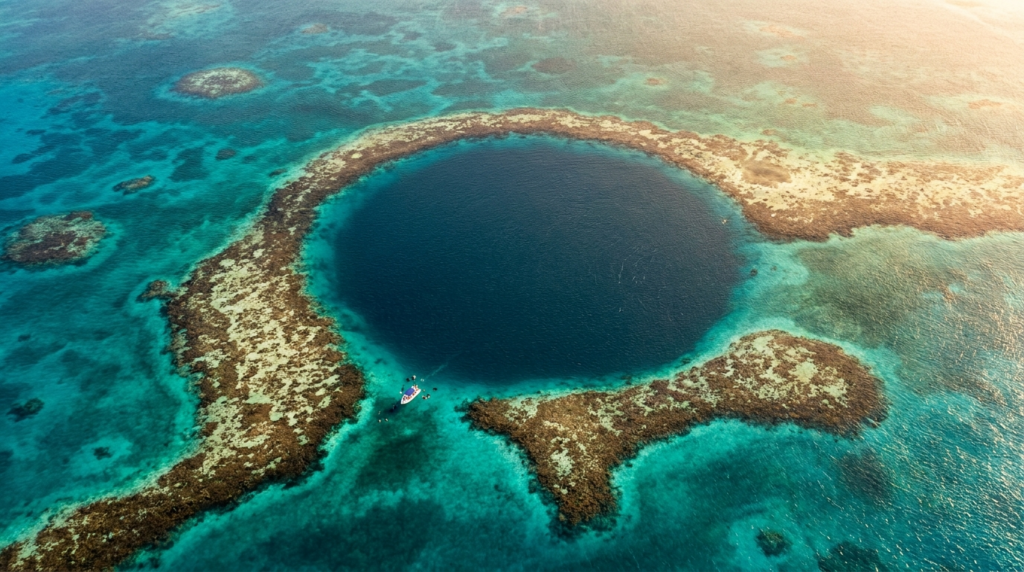
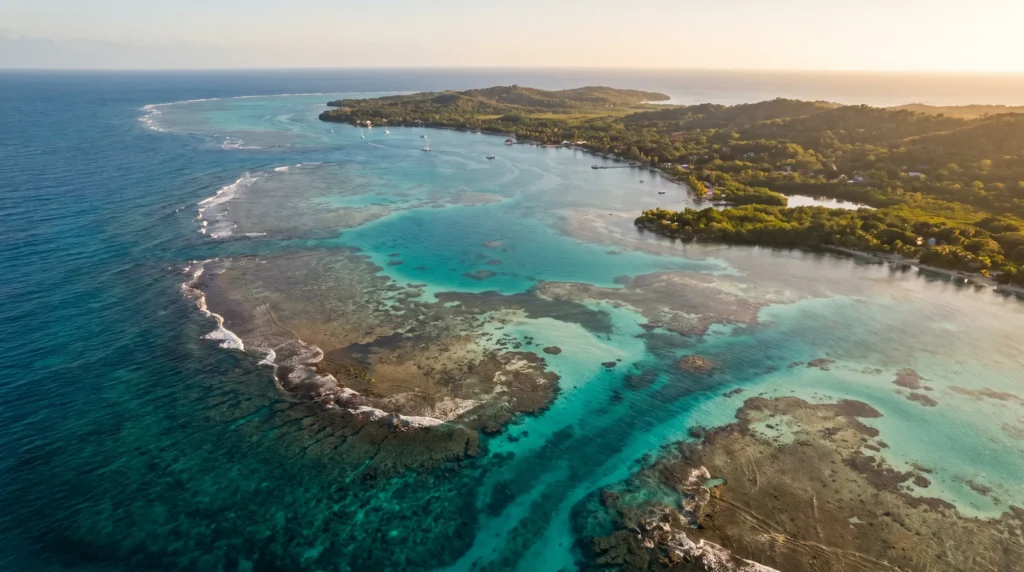
The headline act is the Belize Barrier Reef Reserve System, a UNESCO World Heritage site since 1996 and the largest barrier reef in the northern hemisphere, running roughly 300 kilometres along the entire coastline. Offshore sit some 450 cayes — sandy, palm-stubbled islands ranging from resort-sized to picnic-sized — plus three of the Caribbean’s four coral atolls. Inland, the Cayo District hides jungle rivers, waterfalls and more Maya sites than the country has traffic lights, including Caracol, whose Caana pyramid remains one of the tallest man-made structures in Belize at around 43 metres.
What Belize does not have is mass tourism infrastructure — and that is the pitch. No high-rise strips, no all-inclusive walls, no cruise-crowd beaches outside a couple of well-contained port days in Belize City. It is more expensive than Guatemala or Mexico next door, but what you are buying is space: a two-tank dive where yours is the only boat on the site, a pyramid summit you share with toucans.
Lobster Season Opens June 15 — Belize’s Tastiest Month
Time a June or July trip around one date: 15 June, the opening of spiny lobster season, which runs to mid-February. The opening weeks are celebrated with full-blown Lobsterfests — San Pedro on Ambergris Caye, Caye Caulker and Placencia each throw their own, with grilled lobster plates, curried lobster, lobster ceviche and lobster fritters sold from beach stalls at prices that would make a Miami waiter faint. The festivals typically roll across late June and early July, one weekend per town.
June also marks the tail end of whale shark season at Gladden Spit off Placencia, where the giants gather around the full moons of April, May and June to feed on snapper spawn. If you are reading this in early June: book the flight, you can still catch both.
Best Time to Visit Belize (Season by Season)
Late November – April · Dry season (peak)
Reliable sun, calm seas, the best underwater visibility on the reef — and peak prices, especially Christmas through Easter. Book cayes accommodation two to three months out.
May – June · Shoulder sweet spot
Hot, mostly dry, mango season inland, whale sharks at Gladden Spit, lobster season opening, and room rates 20–40% below winter. This is the value window most first-timers miss.
July – November · Green season
Short afternoon downpours, lush jungle, the year’s lowest prices. August to October is the statistical heart of hurricane season in the western Caribbean — direct hits are rare but travel insurance is non-negotiable, and some island restaurants close for September. September is also Belize’s patriotic month: St. George’s Caye Day (10 Sep) and Independence Day (21 Sep) fill the streets with parades.
Getting There — BZE, Border Crossings & Water Taxis
Philip S. W. Goldson International Airport (BZE), 16 kilometres northwest of Belize City, is the only international gateway, with nonstops from Miami, Houston, Dallas, Atlanta, Charlotte, Newark, LA, Toronto and seasonal European charters. From the airport, domestic puddle-jumpers (Tropic Air and Maya Island Air) connect to San Pedro, Caye Caulker, Placencia, Dangriga and Punta Gorda in 15–35 minutes.
Overland, the northern border at Santa Elena/Chetumal links to Mexico’s Yucatán (ADO buses run Cancún–Belize City), and the western border at Benque Viejo connects San Ignacio to Flores, Guatemala — the standard route for pairing Belize with Tikal. Water taxis from Belize City reach Caye Caulker in about 45 minutes and San Pedro in roughly 90. Note the exit fee when leaving overland, payable in cash.
Getting Around — Puddle-Jumpers, Chicken Buses & Golf Carts
Belize is small — about the size of Wales — but roads are few and flights are cheap enough to matter. The domestic air network is the most useful in Central America: hops cost US$60–130 and turn a four-hour drive into twenty minutes with a view of the reef.
On the mainland, repurposed American school buses (“chicken buses”) run the George Price and Hummingbird Highways for a few Belize dollars; the Hummingbird between Belmopan and Dangriga is genuinely one of the prettiest bus rides in the region. Rental cars (US$70–100/day) unlock Cayo’s ruins and waterfalls. On the cayes there are no cars at all — golf carts and bicycles rule San Pedro, and Caye Caulker is entirely walkable, which is exactly how its “Go Slow” motto wants it.
Top Regions — Cayes, Coast & Cayo
Ambergris Caye & San Pedro
The biggest island and the country’s tourism engine, with the widest range of hotels, restaurants and dive shops. Hol Chan Marine Reserve and Shark Ray Alley sit minutes offshore — turtles, rays and nurse sharks in three metres of water.
Caye Caulker
Ambergris’s barefoot little sibling: sandy lanes, no cars, fresh-caught lunch grilled at The Split. Backpacker prices with the same reef on its doorstep.
Placencia Peninsula
Sixteen miles of the mainland’s best beaches, a fishing-village core, and the launch point for Gladden Spit whale sharks and the Silk Cayes. The luxury end of Belize is quietly concentrating here.
Hopkins & Dangriga
The heartland of Garifuna culture — drumming schools, hudut suppers, and access to Cockscomb Basin Wildlife Sanctuary, the world’s first jaguar preserve.
San Ignacio & Cayo District
Belize’s adventure capital: the ATM cave, Xunantunich and Cahal Pech ruins, Barton Creek, the Mountain Pine Ridge waterfalls, and day trips to Tikal across the Guatemalan border.
Belize City
The commercial hub and transport node. See the swing bridge and the Museum of Belize between connections, but base yourself elsewhere.
Orange Walk & the North
Sugar-cane country and the jump-off for Lamanai, reached by a wildlife-thick boat ride up the New River — crocodiles, spider monkeys and a 33-metre High Temple at the end.
Toledo & Punta Gorda
The deep south: rainforest Maya villages, cacao farms behind Belize’s craft-chocolate boom, and almost no other tourists.
Culture & People — Kriol, Garifuna, Maya & Mennonite
For a country of roughly 420,000 people, Belize runs astonishing cultural bandwidth: Kriol, Mestizo, three Maya peoples (Yucatec, Mopan, Q’eqchi’), the Garifuna of the southern coast, East Indian and Chinese communities, and German-speaking Mennonite farming towns like Spanish Lookout that grow much of the country’s food.
Garifuna Settlement Day on 19 November — commemorating the 1802 arrival of the Garifuna from St. Vincent — is the cultural event of the year, biggest in Dangriga and Hopkins, with dawn reenactments, drumming and punta dancing. UNESCO inscribed Garifuna language, dance and music on its Intangible Cultural Heritage list. Sunday drumming circles in Hopkins are open to respectful visitors; ask before photographing ceremonies.
A Food Lover’s Guide to Belize
The national plate is rice and beans — coconut-milk rice cooked with red kidney beans, served with stew chicken and potato salad, distinct from “beans and rice,” which Belizeans will firmly tell you is a different dish. Breakfast means fry jacks: puffed fried dough with eggs and refried beans. On the coast, ceviche and grilled snapper rule; from June to February, lobster everything.
Seek out hudut in Garifuna towns — fish simmered in coconut broth with mashed plantain — and Yucatec staples like salbutes and escabeche in the north. Every table in the country carries Marie Sharp’s habanero sauce, made near Dangriga and a genuinely great souvenir. Toledo’s cacao farms run bean-to-bar chocolate tours, and the local beer is Belikin, brewed since 1969.
Off the Beaten Path
Actun Tunichil Muknal (ATM) Cave
A guided wade-swim-climb through an underground river to a ceremonial chamber where Maya sacrificial remains, including the calcite-sparkling “Crystal Maiden,” lie where archaeologists found them. Cameras are banned entirely; group sizes are capped; it is routinely called the best cave experience in the Americas.
Caracol
The largest Maya site in Belize, deep in the Chiquibul Forest, once a city that defeated Tikal in war — and today receives a fraction of Tikal’s visitors.
Glover’s Reef Atoll
The remotest of Belize’s atolls, a marine reserve with off-grid eco-camps where the itinerary is snorkel, paddle, repeat.
Sarteneja & Shipstern
A Mestizo fishing village in the far northeast beside Shipstern Conservation Area’s lagoons and flamingo-pink horizons. No crowds. Possibly no other tourists.
Practical Information
Money. The Belize dollar is pegged 2:1 to the US dollar, and US cash is accepted almost universally — confirm which dollar a quoted price means. Cards work in tourist hubs; carry cash for villages, buses and street food.
Safety. Tourist areas — the cayes, Placencia, San Ignacio, Hopkins — are generally relaxed. Standard advisories concentrate on specific Belize City neighborhoods; check your government’s current travel advice before you go.
Health. Drink bottled or filtered water outside resorts; bring reef-safe sunscreen (oxybenzone sunscreens harm the reef you came to see) and strong repellent for jungle lodges.
Connectivity. An eSIM with regional coverage saves roaming pain; island Wi-Fi is decent, jungle-lodge Wi-Fi is aspirational. Plugs: US-style, 110V. Time zone: UTC-6, no daylight saving.
Budget Breakdown — What Belize Actually Costs in 2026
Belize is the priciest country in Central America — think Caribbean pricing, not Guatemala pricing.
Budget (US$60–110/day): Caye Caulker hostel or guesthouse, street food and rice-and-beans plates, chicken buses, snorkel trips over dives.
Mid-range (US$150–280/day): Boutique hotel on Ambergris or a Cayo jungle lodge, restaurant dinners, a two-tank dive (US$120–160) or ATM cave tour (~US$110–130 with transport), one domestic flight.
Luxury (US$500+/day): Private-island resorts, Blue Hole dive or scenic flight (the aerial view is the famous one), guided Caracol expeditions, chef-led cacao dinners.
Fixed costs to expect: marine-reserve entry fees on most snorkel/dive trips, and conservation/departure fees when exiting. Tipping 10–15% is standard where service isn’t included.
Planning Your First Trip to Belize
The classic first-timer split is reef + ruins: fly into BZE, head straight to San Ignacio for three nights (ATM cave, Xunantunich, optional Tikal day trip), then cross to Caye Caulker or San Pedro for four nights of reef time, returning by water taxi. Seven nights covers it without rushing; ten lets you add Placencia or Hopkins for the Garifuna south. Pair it with our Guatemala guide for Tikal and Lake Atitlán, or continue north into Mexico’s Yucatán via Chetumal.
Frequently Asked Questions
Is Belize safe for tourists in 2026?
The places tourists actually go — the cayes, Placencia, Hopkins, San Ignacio — are generally safe and easygoing. Advisory cautions concentrate on parts of Belize City; transit it rather than basing there, use licensed taxis and registered tour operators, and check current government advice before travel.
Do I need a visa?
US, UK, EU, Canadian and most Commonwealth passports get visa-free entry, typically stamped for up to 30 days and extendable at immigration offices. Carry proof of onward travel.
Can I dive the Great Blue Hole as a beginner?
Operators generally want Advanced Open Water certification or equivalent experience for the 40-metre profile. Newer divers get more marine life on Hol Chan, Turneffe or Lighthouse Reef’s other sites anyway — or take the scenic flight, which is how the Blue Hole earned its fame.
Belize or Costa Rica?
Choose Belize for reef, ruins and English-speaking ease in a compact package; Costa Rica for volcanoes, cloud forests and developed eco-tourism infrastructure. Belize feels emptier — that’s its advantage.
What’s the cheapest way to do the cayes?
Water taxi to Caye Caulker, guesthouse off the front street, snorkel Hol Chan with a co-op operator, eat where the sign is hand-painted.
Ready to Explore Belize?
Fifteen-minute flights over a turquoise reef, pyramids above the jungle canopy, lobster festivals on sandy lanes with no cars in sight. Belize is the rare destination that is exactly as advertised — there’s just less of it left every year, so go while “Go Slow” is still the national speed limit.
Explore More
- Guatemala Travel Guide — Tikal, Antigua and Lake Atitlán next door
- Mexico Travel Guide — continue north through the Yucatán
- Costa Rica Travel Guide — Central America’s other coast
- Jamaica Travel Guide — more Caribbean soul
How this guide was built
Published as Facts From Upstairs’ 100th country guide. Built from authoritative sources — the Belize Tourism Board (travelbelize.org), UNESCO’s Belize Barrier Reef Reserve System inscription, the Central Bank of Belize, the US State Department and UK FCDO Belize pages, the US CDC traveler page for Belize, Britannica’s Belize country and People articles, and Wikipedia entity pages for Belize’s geography, reef, ruins and airports. Numeric claims carry inline citations.
Sources cited on this page
- Belize Tourism Board
- UNESCO — Belize Barrier Reef Reserve System
- Central Bank of Belize
- US State Department — Belize
- UK FCDO — Belize
- US CDC — Belize traveler page
- Britannica — Belize
- Wikipedia — Belize
- Wikipedia — Great Blue Hole
- Wikipedia — Caracol
- Wikipedia — Actun Tunichil Muknal
- Wikipedia — Lamanai
- UNESCO ICH — Garifuna
More country guides you might like
Plan your trip to Belize
The booking tools we use ourselves. FFU may earn a commission at no extra cost to you.
Plan & book your trip to Belize
Booking through these searches supports our guides at no extra cost to you.