
City Guide · Turkish Riviera
Antalya, Turkey: Roman Gates, a Turquoise Coast, and the Capital of the Turkish Riviera
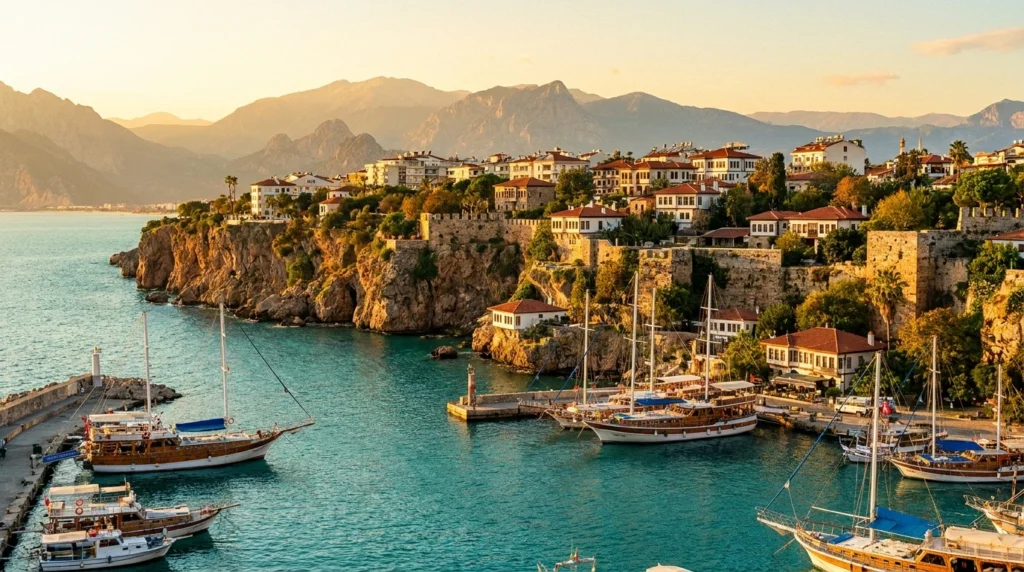
I have walked into Antalya’s old town through Hadrian’s Gate at dawn, swum off Konyaaltı’s pebble beach in the shadow of the Taurus Mountains, and eaten grilled sea bass on the old harbour as the yachts came in, and I still think this is the most underrated big city on the Mediterranean. We tell first-time travellers that Antalya is two places at once: a working Turkish metropolis of more than 2.7 million people across its province, and a sun-bleached resort coast that pulls in over sixteen million foreign visitors a year . My favourite way in is to ignore the all-inclusive sprawl and base myself in Kaleiçi, the walled Ottoman quarter where cobbled lanes tumble down cliffs to a Roman-era marina. Treat this guide as the brief I would hand my own family before they flew into Antalya Airport — the Hadrian’s Gate and Yivli Minaret history, the Düden waterfalls that pour straight off the cliffs into the sea, the Konyaaltı and Lara beaches, the day trips to ancient cities like Perge and Aspendos, and the practical realities of Turkish visas, the fierce summer heat and getting around a city built on top of its own ancient ruins .

Table of Contents
Why Antalya?
Antalya is the destination that quietly does everything. Most travellers arrive thinking of it as a beach-resort airport — the gateway to the all-inclusive strips of Lara, Belek and Side — and leave having discovered a genuine ancient Mediterranean city, a walled Ottoman old town, and a coastline where the Taurus Mountains drop straight into turquoise water. It is the capital of the Turkish Riviera and, by foreign arrivals, one of the most-visited cities on earth, drawing more than sixteen million international visitors in a single recent year .
The history is the first surprise. The city was founded around 150 BC by King Attalos II of Pergamon, who named it Attaleia after himself, and it has been continuously inhabited ever since — Roman, Byzantine, Seljuk and Ottoman layers all stacked into the same streets . The modern city was built directly on top of the ancient one, which is why the best-preserved monuments cluster inside the old walled quarter of Kaleiçi: the triple-arched Hadrian’s Gate, raised to honour the emperor’s visit in the 2nd century, and the fluted Yivli Minaret, the Seljuk landmark that has become the city’s symbol.
The second surprise is the sheer scale and contradiction of the place. The province is home to more than 2.7 million people, making it one of Turkey’s largest, yet the historic core you actually visit is small enough to walk across in twenty minutes . A working Turkish city of malls, tram lines and university campuses wraps around a cliff-top old town of carpet shops and boutique cave-cellar hotels, and beyond the suburbs the Düden waterfalls pour off the cliffs straight into the sea.
It is also one of the sunniest cities in the Mediterranean, with roughly 300 days of sunshine a year and a sea warm enough to swim in from May into November . That climate is why the resorts came, but it is also why a city break here works: you can pair a morning of Roman ruins with an afternoon swim off Konyaaltı, then dinner on the old harbour, all in walking and tram distance.
This guide covers the neighbourhoods worth basing in, the food beyond the hotel buffet, the unmissable sights (Hadrian’s Gate, the Antalya Museum, the Düden falls), the ancient cities that make perfect day trips (Perge, Aspendos, Termessos), and the practical realities of Turkish visas, the brutal summer heat and getting around. For the wider context, this guide pairs with our Turkey Travel Guide and the sibling Istanbul and Cappadocia city guides.
Getting There

Antalya Airport (AYT) is the obvious arrival point and one of the busiest in the country — in recent years it has handled more international passengers than Istanbul’s secondary airports, with two international terminals and a domestic one . It sits about 13 kilometres east of the centre, roughly a 20–30 minute drive. Direct seasonal flights connect it with most of Europe, plus year-round domestic links to Istanbul and Ankara on Turkish Airlines, Pegasus and SunExpress.
From the airport, the cheapest route into town is the AntRay tram, whose line runs from the airport stop toward the centre for the price of a single transit fare; a taxi to Kaleiçi runs roughly ₺400–600 depending on traffic and time of day. Most resort hotels include or sell airport transfers, which are worth it if you are heading to Lara, Belek or Side rather than the old town.
Overland, comfortable intercity coaches run by operators such as Pamukkale and Metro link Antalya with Istanbul (about 11–12 hours), Cappadocia and the coast, arriving at the main otogar northwest of the centre; from there the tram and city buses reach Kaleiçi. There is no passenger rail into Antalya, so air or bus are the realistic options.
Getting Around
Antalya is a real city, not a single resort, so getting around means combining a modern tram, city buses, taxis and a lot of walking in the compact old town. The good news is that the historic core — Kaleiçi, the old harbour and the cliff-top parks — is entirely walkable, and a single tram line links it to Konyaaltı beach, the Antalya Museum and the airport. For the ancient cities and beaches further out, you will want a bus, a tour or a rental car.
The Tram (AntRay and the Nostalgic Tram)
Antalya has two trams. The historic “Nostalgic Tram” is a single antique line that trundles along the cliff-top from Kaleiçi past the Antalya Museum to Konyaaltı — cheap, slow and genuinely useful for the museum-and-beach combo. The modern AntRay light-rail network is faster and more extensive, running from the airport through the centre and out to the suburbs and the otogar. Both use the AntalyaKart prepaid card, and a single ride costs only a few lira.
AntalyaKart and City Buses
The AntalyaKart is the city’s contactless transit card, sold and topped up at kiosks and machines around the tram stops, and it covers both trams and the extensive city-bus network. Buses reach the beaches, the suburbs and nearby towns the tram does not, though routes can be confusing for visitors; for most short trips the tram plus walking is simpler. Tap the card on boarding and transfers within a window are discounted.
Rental Cars
A rental car is the single best way to reach the ancient cities — Perge, Aspendos, Termessos and the ruins along the coast — which public transport serves poorly. Small-car day rates run roughly €25–45 plus fuel in shoulder season, the coastal roads are good, and parking at the sights is easy and usually free. In the old town itself a car is a liability: the lanes are narrow, one-way and largely pedestrianised, so park outside the walls.
Airport Access
- AntRay tram from the airport stop to the centre — about 30–40 minutes, the price of a single AntalyaKart fare
- Taxi or hotel transfer from the airport to Kaleiçi — about 20–30 minutes, roughly ₺400–600 by taxi
Taxis and Rideshare
Metered yellow taxis are everywhere and reasonable by European standards, but insist on the meter (“taksimetre”) rather than a quoted fare, especially from the airport and tourist spots. App-based hailing through BiTaksi and the iTaksi platform is increasingly common in Antalya and removes the haggling; Uber operates only as a taxi-dispatch layer. For a group, a metered taxi to a nearby beach or ruin can be cheaper than several bus fares.
Navigation Tips
Google Maps covers the trams, buses and walking routes well, and the old town is small enough to wander without it. The orientation landmarks are Hadrian’s Gate on the inland edge of Kaleiçi and the clock tower on Kale Kapısı square, the main entrance to the old town and the hub for the Nostalgic Tram. Download an offline map before you head out to the ruins, where signal can be patchy in the hills around Termessos.
Neighborhoods: Where to Base Yourself in Antalya
📍 Antalya Map: Every Place in This Guide
Choosing a base in Antalya shapes the entire character of your trip, because the city splits into genuinely different worlds: the historic old town, the beach districts west and east, and the modern centre. Most independent travellers should anchor in or near Kaleiçi; package travellers usually land in the resort strips. Below are the areas first-time visitors actually consider, with an honest read on who each suits.




Kaleiçi (The Old Town)
The walled Ottoman quarter is the default base for independent travellers and the most atmospheric place to stay in the city. Its cobbled lanes hold boutique hotels in restored mansions, the old harbour, Hadrian’s Gate and a dense run of restaurants and bars, all pedestrian and walkable. It is the choice for first-timers who want history, character and a short walk to the harbour; the trade-off is summer-evening crowds and some bar noise near the centre.
Konyaaltı
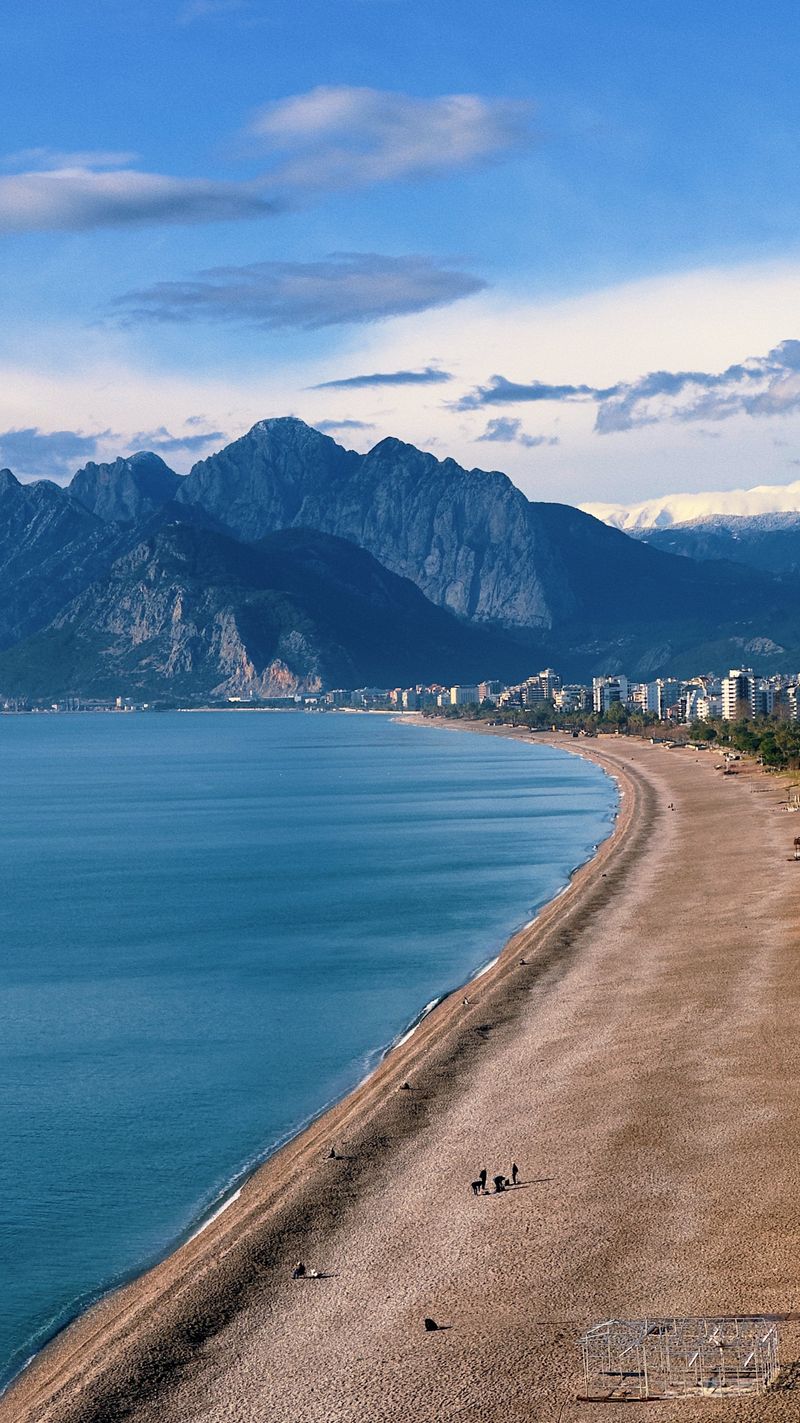
West of the centre below the cliffs, Konyaaltı is the long pebble beach district, backed by a landscaped promenade, the Antalya Museum and apartment blocks. It is greener and more local-feeling than the eastern resorts, with the Taurus Mountains as a backdrop and the Nostalgic Tram linking it to the old town. Stay here for easy beach days and a calmer, more residential base within tram reach of Kaleiçi.
Lara and the Eastern Resorts
East of the centre, Lara is the sandy-beach resort strip, home to the big themed five-star hotels and the all-inclusive trade, continuing out to Belek and Side. It is the package-holiday heart of Antalya: long sand, huge pools and family resorts, but a taxi or bus ride from the old town and short on local character. Choose Lara if a beach-resort holiday with day trips into the city is the plan.
The Modern Centre and Lara Cliffs
Around the centre proper — the districts of Muratpaşa near the malls, tram lines and university — you get a working Turkish city of shopping streets and everyday restaurants at lower prices than the old town. The cliff-top parks at the Lower Düden falls and the Lara clifftops give dramatic sea views without the resort price. This is the base for travellers who want value and local life over postcard atmosphere.
Food and Drink: Mezze, Grilled Fish and Mediterranean Citrus
Antalya’s cooking is southern-Mediterranean Turkish: olive-oil vegetable dishes, fresh grilled fish from the harbour, generous mezze spreads, and the citrus and pomegranate that grow all around the region. It is lighter and more vegetable-forward than the meat-heavy fare of central Anatolia, and the long resort history means standards in the tourist core are high — though the best meals are in the side-street lokantas, not the harbour-front tourist traps.
What to Order
- Piyaz — the Antalya signature: a white-bean salad with tahini, vinegar, egg and onion, unlike the version found elsewhere in Turkey.
- Grilled fish (balık) — sea bass (levrek) and bream (çipura), simply grilled with lemon, best at a harbour or Konyaaltı fish restaurant.
- Mezze — cold and hot starters: stuffed vine leaves, smoky aubergine, fava, octopus, designed for sharing with rakı.
- Hibeş and şakşuka — regional dips and olive-oil vegetable dishes that show off the local produce.
- Tahinli piyaz and citrus desserts — the region’s oranges, lemons and pomegranates turn up in drinks, salads and sweets.
Where to Eat and Drink
For the famous piyaz, head to the long-running bean-salad specialists near the old market rather than the harbour. For grilled fish, the meyhane (tavern) tables of Kaleiçi and the seafood spots along Konyaaltı are the safe bets; for everyday Turkish food at local prices, walk inland to the lokantas of the modern centre. Rakı, the aniseed spirit, is the classic pairing with mezze and fish, and the region’s wines and fresh-squeezed citrus juices are widely available.
Timing and Etiquette
Lunch is flexible and dinner runs late, often from 20:00 onward in summer. Turkish tea (çay) is offered constantly and is part of the social fabric — accept it. Tipping is light: round up or leave 5–10% in a sit-down restaurant. Alcohol is freely available in the tourist core but pricier than soft drinks, and a few family restaurants do not serve it; the harbour-front spots charge a view premium, so eat there for the setting, not the value.
Cultural Sights: Roman Gates, Seljuk Minarets and Cliff-Top Waterfalls
Antalya’s sights span two thousand years and three empires, most of them packed into or just around the old town. The city’s monuments are on Turkey’s UNESCO tentative list, recognising the density of Roman, Byzantine, Seljuk and Ottoman heritage layered into a single living city . A couple of days covers the headline sights; here are the ones no first-time visitor should miss.

Hadrian’s Gate
The single most photographed monument in the city: a triple-arched triumphal gate of white marble built into the old walls to commemorate the Roman emperor Hadrian’s visit in the 2nd century AD . You walk through it to enter Kaleiçi, the worn ancient paving still rutted by chariot wheels beneath the arches. It is free, always open, and best photographed early before the crowds and the midday glare.
Antalya Museum
One of Turkey’s finest archaeological museums, on the cliff-top tram line toward Konyaaltı, displaying the spectacular Roman statuary and sarcophagi recovered from the nearby ancient city of Perge, plus regional finds spanning prehistory to the Ottomans. Budget a couple of hours; the Hall of Gods and the Perge sculptures alone are worth the trip, and it is the essential context for the ruins you will visit on day trips.
Yivli Minaret and the Old Town Mosques
The fluted Yivli Minare, a 13th-century Seljuk minaret of red brick ringed by blue-tiled flutes, is the symbol of Antalya and the landmark of the old town skyline. Around it cluster the small Ottoman mosques, the Kesik Minare (the “broken minaret” built atop a Roman temple turned Byzantine church), and the clock tower on Kale Kapısı square — a compact walk through the city’s layered religious history.
The Düden Waterfalls

Antalya’s signature natural sight comes in two parts. The Upper Düden Falls, in a leafy park northeast of the centre, tumble through a cave you can walk behind; the Lower Düden Falls pour off the coastal cliffs straight into the Mediterranean, best viewed from a boat trip or the Lara clifftop park . Both are short trips from the centre and a refreshing contrast to the ruins and beaches.
The Old Harbour and City Walls
The restored Roman-era harbour at the foot of the Kaleiçi cliffs is the loveliest part of the old town: a yacht-filled marina ringed by cafés, with the old walls and Ottoman houses rising above. Walk the surviving stretches of city wall, take a short harbour boat trip for the cliff and waterfall views, and time a drink here for sunset.
Entertainment: Harbours, Beach Clubs and Ancient Theatres
Antalya’s entertainment runs from sunset drinks on the old harbour to summer concerts in a 2,000-year-old Roman theatre, with beach clubs, boat trips and a lively old-town bar scene in between. It is more relaxed than Istanbul’s nightlife but far livelier than the quiet of Cappadocia — a resort city that knows how to fill a warm evening.
The Old Harbour and Kaleiçi Bars
The cobbled lanes of Kaleiçi hold the densest run of bars, from rooftop cocktail terraces with minaret-and-sea views to live-music meyhanes and laid-back garden cafés. The old harbour itself is the place for an early-evening drink as the boats come in; the bars climb in volume and energy as you move inland toward the centre. It is walkable, safe and easy to dip into for one drink or a full night.
Boat Trips and Sunset Cruises
The signature Antalya experience after dark-falls is a sunset boat trip from the old harbour, cruising past the cliffs and the Lower Düden waterfalls as the light goes gold. Day cruises run to nearby coves and beaches for swimming, while evening cruises lean toward dinner-and-drinks; both are widely sold along the harbour and best booked the day before for a good boat.
Beach Clubs and Summer Nightlife
Out along Konyaaltı and the Lara strip, beach clubs run loungers by day and music by night, and the big resort hotels host their own shows and clubs. This is the package-holiday nightlife heart of the coast; for something more local, the bars of the modern centre around the universities are cheaper and livelier with a younger Turkish crowd.
The Aspendos Theatre and Summer Festivals
The best-preserved Roman theatre in the world sits at Aspendos, a short drive east, and still hosts the Aspendos International Opera and Ballet Festival in summer — seeing a performance in a 2nd-century theatre that seats thousands is unforgettable . Antalya city also runs film and music festivals through the warmer months; check listings when you arrive.
Day Trips From Antalya
Antalya is a fine base for the ancient cities and beaches of the Turkish Riviera, with Roman ruins, mountain canyons and resort coves within a day’s reach. A rental car or an organised tour opens the best of them.
Perge (about 30 minutes by car)
The vast Greco-Roman city of Perge lies just east of the centre, its colonnaded main street, stadium, theatre and baths spread across a wide site — the source of the spectacular statues now in the Antalya Museum . It is the easiest and most rewarding ruin day trip; go early before the heat and pair it with the museum for context.
Aspendos and Side (about 45–60 minutes by car)
Aspendos holds the best-preserved Roman theatre in the world, still used for summer performances, while the seaside town of Side adds Roman temples right on the beach . The two pair naturally on one eastern loop, finishing with a swim and dinner among the ruins at Side.
Termessos (about 45 minutes by car)
High in the Taurus Mountains, Termessos is a dramatic, half-wild ruined city that even Alexander the Great declined to besiege, with a theatre perched on a ridge above pine forest . It involves a steep walk and is the most atmospheric ruin near Antalya — bring water and proper shoes.
Alanya (about 2 hours by car)

Further east, Alanya is crowned by a hilltop Seljuk castle and the octagonal Red Tower (Kızıl Kule) above a long sandy bay . The longer drive suits an overnight, but castle and harbour make a fine full day by car.
Köprülü Canyon (about 90 minutes by car)
For a break from ruins, the Köprülü Canyon national park offers white-water rafting on the Köprüçay river through a pine-clad gorge, plus the Roman bridge and the ruins of Selge. It is the region’s top adventure day trip and runs as an easy excursion in the warmer months.
When to Visit: A Season-by-Season Guide
Antalya’s hot-summer Mediterranean climate, with roughly 300 sunny days a year, makes it a long-season destination — but the experience changes sharply between the baking peak and the mild shoulders . Here is how the year actually feels on the ground.

Spring (March–May)
One of the two best windows: warm sunny days, wildflowers in the ruins, the Taurus peaks still snow-capped, and a sea that warms enough to swim by May. Crowds and prices are lower than summer, and the ancient cities are at their loveliest before the heat. Early March can still be cool and wet, but late spring is close to ideal.
Summer (June–August)
Hot, humid and packed. Afternoon highs push past 35°C with strong sun and warm, crowded beaches; this is peak resort season, with the highest prices and busiest sights. The sea is at its warmest and the nightlife at its liveliest, but plan ruins and walking for early morning and late afternoon and treat the searing midday hours as beach-or-shade time.
Autumn (September–November)
The other sweet spot, and many travellers’ favourite: the sea stays warm into November, the fierce heat eases, and the summer crowds thin through September and October. Light is golden, the ruins are comfortable to walk again, and prices fall back. Late November brings the first cooler, wetter spells as the season winds down.
Winter (December–February)
Mild, green and quiet by Mediterranean standards — daytime highs around 15°C, occasional rain, and a sea too cool for most swimmers. The resorts wind down but the city lives on: the old town is calm and cheap, the museum and ruins are crowd-free, and you can ski in the Taurus and see the coast in the same week. A fine off-season city break, just not a beach holiday.
Budget Breakdown: What Antalya Actually Costs
Antalya is excellent value by Mediterranean standards, cheaper than the resort coasts of Spain, Italy or France for comparable sun and sea. The figures below are per-person daily estimates excluding international flights, in US dollars, based on 2025–2026 prices.
Backpacker ($35–55/day)
A hostel dorm or basic guesthouse bed in or near the old town runs $12–25; lokanta meals and street food keep food to $10–18; the tram and city buses are a few lira a ride, and Hadrian’s Gate, the harbour and the beaches are free. Add one paid sight a day and you stay comfortably under $55.
Mid-Range ($90–170/day)
A boutique cave-cellar or restored-mansion hotel room in Kaleiçi runs $60–130 for a double (more in peak season); add $25–45 for restaurant meals, the museum, a boat trip and the occasional taxi. This is the typical comfortable-traveller band and where most independent visitors land.
Luxury ($300+/day)
A five-star resort suite in Lara or a top old-town boutique runs $200–500+, fine harbour-front dining and private guides to the ancient cities add $100–200, and premium experiences push the day well past $300.
Key Fixed Costs
- Antalya Museum entry — a modest single ticket, one of the country’s best-value museums
- Perge or Aspendos ancient-city entry — modest single tickets each
- Sunset harbour boat trip — roughly €15–30 per person
- AntalyaKart transit ride — a few lira per journey
- Bottled water — about ₺5–10 for 1.5 litres
Practical Tips and Safety
Antalya is a safe, easy, well-equipped city for visitors, used to handling millions of tourists a year. The realistic concerns are heat, sun and the usual big-city petty theft rather than anything alarming — this is the ordinary common sense of a major Mediterranean resort city.
Money and Payments
Turkey uses the lira (TRY); the rate has been volatile, recently around ₺46 to the US dollar, so check before you travel and carry some cash for trams, markets and tips . Cards are widely accepted in hotels, restaurants and shops; ATMs are everywhere. Some harbour boats and small lokantas are cash-only, and tour prices are often quoted in euros.
Safety and Heat
Violent crime is rare and Antalya is very safe for travellers; watch for ordinary pickpocketing in crowded tourist spots and overcharging by unmetered taxis. The real risk in summer is the heat — highs above 35°C with strong sun — so carry water, sunscreen and a hat, and plan ruins for the cool hours. Check current government travel advice before you go .
Health and Water
Tap water is officially treated but heavily chlorinated and hard, so most visitors and locals drink cheap bottled water . Pharmacies (eczane) are well stocked, and Antalya has modern private hospitals used to treating tourists. Carry travel insurance.
Practical Essentials
- Visa: US/UK/EU/Canada visa-free 90/180; others apply at evisa.gov.tr before arrival .
- Plugs: Type C/F, 230V — bring an EU adapter.
- Tipping: light; round up or 5–10% in restaurants.
- Dress: beachwear on the coast, modest cover for mosques; light layers for cool evenings in shoulder season.
- Connectivity: a local Turkish eSIM gives the cheapest data; hotel and café Wi-Fi is widespread.
Frequently Asked Questions
How many days do you need in Antalya?
Three to four days is the sweet spot: one for the old town, Hadrian’s Gate and the Antalya Museum, one for a beach day at Konyaaltı or Lara, and one or two for the ancient cities of Perge, Aspendos and Termessos. Two days covers the city itself in a rush; the extra days let you reach the ruins and the coast that make Antalya special.
What is the best time of year to visit Antalya?
May and late September to early October offer the best balance of warm sea, comfortable sightseeing weather and manageable crowds. Summer (June–August) has the warmest sea and liveliest nightlife but fierce heat and peak prices; winter is mild, green and cheap but too cool for swimming — better for a culture-focused city break.
Where should I stay in Antalya?
For atmosphere and walkability, stay in Kaleiçi, the walled old town, in a restored-mansion boutique hotel near the harbour. For beach days, Konyaaltı is greener and more local; Lara and the eastern strip suit package resort holidays. Independent travellers should anchor in Kaleiçi and treat the beaches and ruins as day trips.
Is Antalya just a beach resort?
No — that is the common misconception. Antalya is a genuine ancient Mediterranean city with a Roman gate, a Seljuk minaret, one of Turkey’s best museums and a walled Ottoman old town, surrounded by spectacular ancient cities like Perge and Aspendos. The resorts are only one part of it; base in the old town and you will find a real, layered city.
Do I need a car in Antalya?
Not for the city itself — the tram, buses and your own feet cover the old town, museum and beaches. But a rental car (or organised tours) is the best way to reach the ancient cities of Perge, Aspendos and Termessos and the canyon at Köprülü, which public transport serves poorly. Rent a car for one dedicated ruins day rather than the whole trip.
Do I need a visa to visit Antalya?
Antalya follows Turkey’s national rules. Citizens of the US, UK, EU and Canada are visa-free for up to 90 days in any 180; other nationalities apply online at evisa.gov.tr before travel, as walk-up visa-on-arrival windows no longer exist .
What food is Antalya famous for?
Antalya’s signature dish is piyaz, a white-bean salad made here with tahini, vinegar and egg — unlike the version found elsewhere in Turkey. The region is also known for fresh grilled Mediterranean fish, generous mezze spreads eaten with rakı, and the citrus and pomegranate that grow all around the coast.
Is Antalya safe for tourists?
Yes, very. Violent crime is rare and the city is used to handling millions of visitors. The realistic risks are ordinary pickpocketing in crowds, overcharging by unmetered taxis, and summer heat rather than crime; insist on the taxi meter, carry water and sunscreen, and use normal big-city common sense .
Was This Guide Helpful?
We update our Antalya guide as prices, transit and opening hours change. Let us know if it helped — your feedback shapes the next revision.
Ready to Experience Antalya? Walk in Through Hadrian’s Gate
Antalya rewards travellers who look past the resort strip. Walk into Kaleiçi through Hadrian’s Gate, sleep in a restored mansion above the old harbour, swim off Konyaaltı with the Taurus Mountains behind you, and give a day to the ancient cities of Perge and Aspendos. It is the Mediterranean’s best-value city break — history, beaches and turquoise sea in one. For the wider picture, see our Turkey travel guide, and pair Antalya with Istanbul and Cappadocia for the classic Turkey loop.
Explore More City Guides
Antalya is one stop in our growing library of Turkish and eastern-Mediterranean guides. Keep planning with these companion pages:
More city guides you might like
Plan your trip to Antalya
The booking tools we use ourselves. FFU may earn a commission at no extra cost to you.
Plan & book your trip to Antalya
Booking through these searches supports our guides at no extra cost to you.