
Montego Bay Travel Guide — Jamaica’s Resort Coast, Rose Hall Legends & the Road Back From Melissa
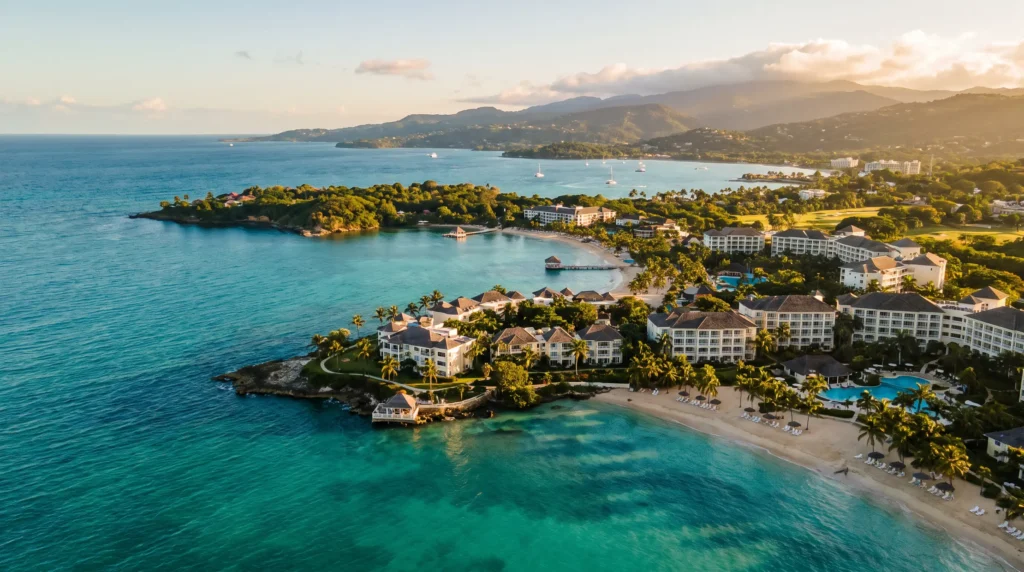
Montego Bay is where most people’s Jamaica actually happens — more resort rooms, more direct flights, more reasons to never leave the beach chair than anywhere else on the island, including Kingston, the capital. I love it for the same reason some travel snobs turn their nose up at it: it is unapologetically built for tourists, and it does that job extremely well, from the reggae blasting off Gloucester Avenue to a “haunted” plantation great house that’s more theater than history. But I’m not going to pretend 2026 is a normal year here. Hurricane Melissa tore through Jamaica in October 2025 as the strongest storm ever recorded to hit the island, and Montego Bay took a harder hit than most of the north coast. The comeback has been genuinely fast — tourism officials put recovery north of 80% of pre-storm levels by mid-2026 — but go in with eyes open, book through recovered properties, and you’ll still get the sun, the sound system and the jerk smoke that made this coast famous in the first place.
In This Guide
- Overview — Why Montego Bay Is Jamaica’s Tourism Engine
- Reggae Sumfest & the Jerk Festival — MoBay’s Calendar
- Best Time to Visit Montego Bay
- Getting There — MBJ Airport & Transfers
- Getting Around — Taxis, Route Taxis & Rental Cars
- Neighborhoods — Hip Strip, Rose Hall, Downtown & More
- Culture & People
- A Food Lover’s Guide to Montego Bay
- Off the Beaten Path
- Day Trips From Montego Bay
- Practical Information
- Budget Breakdown — What Montego Bay Actually Costs in 2026
- Frequently Asked Questions
Overview — Why Montego Bay Is Jamaica’s Tourism Engine
Montego Bay — “MoBay” to everyone who’s been — sits on Jamaica’s northwest coast in St. James Parish and is, by most measures, the second-largest English-speaking city in the Caribbean after Kingston. That population figure undersells its actual footprint: this is the address on file for Sandals Resorts’ headquarters, a cluster of Hyatt, Hilton and Half Moon-style luxury properties, and Donald Sangster International Airport, the busiest airport in the English-speaking Caribbean. Cruise ships call regularly, and the entire local economy — from taxi drivers to jerk stall owners — runs on the assumption that a plane full of tourists lands here every few minutes.
The city’s history runs deeper than the resort strip suggests. It was a major sugar and slave-trading port under British rule from 1655, and it was the epicenter of the 1831–32 Christmas Rebellion led by Samuel Sharpe, now a Jamaican National Hero whose name sits on the main square downtown. Montego Bay only became an official city by act of parliament in 1980 — younger, on paper, than most people assume for a place this famous.
I have to be straight with you about the current chapter, too: Hurricane Melissa made landfall in western Jamaica on 28 October 2025 as a Category 5 storm with sustained winds around 190 mph, the strongest hurricane ever recorded to strike Jamaica, surpassing 1988’s Hurricane Gilbert. Montego Bay took some of the worst damage on the north coast — downed trees, stripped roofs, damaged health infrastructure — though the storm’s core hit harder further south and west. The rebuild has moved fast: Jamaica’s tourism minister put the destination’s recovery above 80% of pre-hurricane levels by mid-2026, and major MoBay names — Half Moon, S Hotel, Round Hill, RIU, Princess properties — are back open, some freshly renovated. Confirm your specific resort’s status before you book; a few are still finishing repairs into 2027.
Reggae Sumfest & the Jerk Festival — MoBay’s Music and Food Calendar
Montego Bay is the historic home of Reggae Sumfest, Jamaica’s biggest annual music festival, normally staged at Catherine Hall Stadium in the city. Because Catherine Hall itself took hurricane damage, the 2026 edition shifted to a single “Taste of Sumfest” night at Plantation Cove in neighboring St. Ann on 18 July, with organizers describing Montego Bay as still “the home of Reggae Sumfest” for the festival’s future. Most attendees still base themselves in MoBay hotels and shuttle to the venue, so check the current year’s location before you book, not just the festival name.
If you’d rather eat your way through the city, time a visit to early August for the Montego Bay Jerk & Food Festival (1 August 2026) or late July for Dream Weeknd (30 July 2026), both staged in the city and both listed on the official Jamaica tourism calendar.
Best Time to Visit Montego Bay
Mid-December – April · Dry season (peak)
The most reliable weather, the busiest beaches, and the highest resort rates of the year — Christmas through New Year and February half-term weeks book out first. Average highs sit around 30°C (86°F) even in the “cool” months.
May – June · Shoulder season
Warm, increasingly humid, rates start dropping, and this is genuinely one of the better value windows if you don’t mind an afternoon shower.
July – November · Green season and hurricane risk
Lush, cheap, and the Atlantic hurricane season’s danger zone — August through October is statistically the riskiest stretch, and it’s exactly when Hurricane Melissa struck in late October 2025 as Jamaica’s strongest storm on record. Travel insurance with hurricane/cancellation coverage is not optional if you’re booking this window; check your resort’s current storm-season refund policy before you pay a deposit.
Getting There — MBJ Airport & Transfers
Donald Sangster International Airport (MBJ) sits about 5.6 km (3.5 miles) — under 15 minutes by car — from downtown Montego Bay, and most beach resorts along the Rose Hall/Ironshore strip are a similar short hop. It’s the busiest airport in the English-speaking Caribbean, handling around 4.3 million passengers as of 2017, with direct flights from Miami in roughly 70 minutes and under four hours from New York, Toronto or Washington, D.C.
Because MBJ sits right on the resort corridor, most visitors never need to touch Kingston’s Norman Manley Airport on the other side of the island — a genuine advantage over destinations where the international gateway and the beach are hours apart. Pre-book a licensed resort transfer or JUTA taxi; arrivals halls can be chaotic and unlicensed touts are persistent.
Getting Around — Taxis, Route Taxis & Rental Cars
The Hip Strip (Gloucester Avenue) and downtown around Sam Sharpe Square are walkable in daylight, but Montego Bay’s resort geography is spread thin along the coastal road toward Rose Hall and Ironshore, so most visitors rely on wheels. Licensed red-plate JUTA taxis and hotel-arranged transfers are the standard for tourists; shared “route taxis” (white-plate cars running fixed local routes) are cheap but aimed at residents, not sightseers, and best avoided if you don’t know the route.
Rental cars unlock day trips to Negril, Ocho Rios or Cockpit Country, but remember Jamaica drives on the left, road markings can be inconsistent outside main routes, and night driving on unlit rural roads is genuinely best avoided. Many travelers skip renting entirely and book a driver for day trips instead — worth the extra cost for the peace of mind.
Neighborhoods — Hip Strip, Rose Hall, Downtown & More
The Hip Strip & Doctor’s Cave
Gloucester Avenue is Montego Bay’s tourist spine — beach clubs, jerk stands, souvenir stalls and nightlife packed along a walkable strip facing the water. Its anchor is Doctor’s Cave Beach, a bathing club founded in 1906 when Dr. Alexander McCatty donated his beachfront property; a British osteopath’s claims about its “curative” mineral waters made it internationally famous by the 1920s and effectively launched Montego Bay’s tourist trade.
Rose Hall & Ironshore
The luxury resort corridor east of the airport, home to Half Moon, Hyatt Ziva/Zilara, Iberostar and more, plus Rose Hall Great House — a restored 1770s Georgian plantation mansion built for planter John Palmer. Its “White Witch” ghost tour, centered on the supposedly murderous Annie Palmer, is Montego Bay’s most popular paid attraction — and almost entirely fiction, lifted from a 1929 novel written a century after Annie actually lived. Go for the architecture and the view, enjoy the theater, don’t mistake it for a history lesson.
Downtown & Sam Sharpe Square
The working city center, named for the enslaved Baptist preacher who led the 1831 Christmas Rebellion. Market stalls, the Cage (a former slave lock-up turned small museum), and daily commerce rather than curated tourist polish — worth an hour with a guide, less appealing to wander solo after dark.
Freeport & the Cruise Port
Home to the cruise terminal and a mix of mid-range hotels; convenient for ship days but the least characterful of MoBay’s tourist zones.
Catherine Hall & Northern Neighborhoods
Catherine Hall Stadium, Reggae Sumfest’s home venue, sits here along with residential districts. Some inland neighborhoods — including Salt Spring, Flankers, Rose Heights, the Hart Street area, Norwood and Mount Salem — carry an elevated US State Department advisory for crime risk; they are not places tourists have reason to wander into, and resort staff can tell you plainly which streets to skip.
Culture & People
English is Jamaica’s official language, but Jamaican Patois is what you’ll actually hear on the street, in dancehall lyrics and in casual banter with your taxi driver — a distinct English-based creole, not a dialect of “bad English,” and locals appreciate visitors who don’t try to fake it but do listen for it. Reggae and dancehall are the cultural exports everyone knows, and Montego Bay leans hard into that identity — sound systems on the Hip Strip most nights, and Reggae Sumfest each summer drawing the genre’s biggest names.
Rastafarian influence runs through food, music and philosophy across the island, though Kingston and the eastern parishes are the movement’s spiritual home more than MoBay itself. Tourism is the dominant employer here, which shapes daily life in both directions — genuine warmth toward visitors sits alongside real economic pressure, and a hard sales pitch on the beach is more a symptom of that pressure than personal hostility.
A Food Lover’s Guide to Montego Bay
Jerk is the reason people fly here for lunch — chicken or pork slow-smoked over pimento wood with a Scotch bonnet-and-allspice marinade, sold from roadside pits and proper restaurants alike. Pair it with festival (sweet fried dumpling), rice and peas, or a side of roasted breadfruit. Jamaica’s actual national dish is ackee and saltfish — a savory breakfast of the ackee fruit sautéed with salted cod, onions and Scotch bonnet — worth ordering at least once even if it sounds unfamiliar.
Curry goat, brown stew chicken and escoveitch fish (fried and pickled with peppers and onion) round out the classics; patties — flaky, curry-yellow pastry stuffed with spiced beef, chicken or vegetables — are the ubiquitous grab-and-go. Wash it down with Red Stripe lager or Jamaica’s own Appleton Estate rum, and finish with a Blue Mountain coffee if a café stocks the real thing rather than a blend.
Off the Beaten Path
Rocklands Bird Sanctuary
A quiet hillside garden south of the city where hummingbirds land on your outstretched hand at a feeding station — a genuinely calm counterpoint to the Hip Strip’s energy.
Cornwall Beach
Doctor’s Cave’s quieter, cheaper neighbor along the same stretch of sand, popular with locals and far less crowded on cruise-ship days.
Great River Tubing & Zip-Lining
Inland from the resort strip, bamboo rafting and river tubing operators run trips through jungle scenery most beach-only visitors never see.
Falmouth’s Luminous Lagoon
A short drive east, this bioluminescent lagoon glows blue-green when disturbed at night thanks to naturally occurring microorganisms — a genuinely strange, low-key evening trip away from the resort bars.
Day Trips From Montego Bay
Negril
About 1.5–2 hours west along the coast road: Seven Mile Beach and the Rick’s Café cliff-diving scene, plus a laid-back reputation MoBay doesn’t chase.
Ocho Rios
Roughly 1.5 hours east: Dunn’s River Falls’ famous climbable cascade and easy cruise-day access, though it can feel more scripted-tour-group than MoBay’s own beaches.
Cockpit Country
The karst interior south of Falmouth — Maroon heritage sites, caves and hiking for travelers who want Jamaica beyond the coastline.
YS Falls & Black River
A longer day trip southwest into St. Elizabeth Parish for waterfall swimming and a boat safari past crocodiles on the Black River — doable, but budget most of a day for the drive.
Practical Information
Money. The Jamaican Dollar (JMD) floats freely against the US dollar rather than being pegged, and rates move — check a current conversion before you travel rather than relying on last year’s numbers. US cash and cards are widely accepted at resorts and in tourist zones; smaller vendors and route taxis expect JMD.
Safety. As of mid-2026, the US State Department rates Jamaica overall at Level 2, “Exercise Increased Caution,” citing violent crime, armed robbery and sexual assault risk — including in tourist areas — with several specific Montego Bay neighborhoods (Salt Spring, Flankers, Rose Heights, the Hart Street area, Norwood, Mount Salem) flagged at the higher Level 3, “Reconsider Travel.” This isn’t a reason to skip Montego Bay — millions of tourists visit without incident — but it is a reason to stick to your resort’s recommended taxis, avoid walking unfamiliar streets after dark, and skip the beach vendors selling anything stronger than a t-shirt.
Health. Routine vaccinations should be current, and the CDC additionally recommends Hepatitis A and, for many travelers, Hepatitis B and typhoid; mosquito-borne dengue and Zika are real risks, so pack strong repellent. Stick to bottled or filtered water outside of resort properties.
Connectivity & logistics. Resort Wi-Fi is generally solid; an eSIM covers you outside the property. Plugs: US-style, 110V. Time zone: UTC-5 year-round — Jamaica does not observe daylight saving.
Budget Breakdown — What Montego Bay Actually Costs in 2026
Montego Bay runs on an all-inclusive resort economy, which skews the math compared to backpacker-friendlier parts of the Caribbean.
Budget (US$50–90/day): Small guesthouse or budget hotel away from the resort strip, jerk stalls and local cook shops, route taxis or the occasional JUTA fare, free beaches like Cornwall.
Mid-range (US$150–250/day): A mid-tier all-inclusive or boutique hotel room, a Rose Hall Great House tour, a rental car day or a guided day trip to Negril or Ocho Rios.
Luxury (US$400+/day): Top-tier suites at recently reopened properties like Half Moon, where post-renovation ocean rooms were listed around US$761/night and ocean suites above US$1,251/night in mid-2026 — private-villa and butler-service territory.
Tipping 10–15% is customary where service isn’t already included, and many all-inclusive resorts fold gratuities into the room rate — check your specific package.
Planning Your Montego Bay Trip
Four to five nights covers the classic MoBay trip well: a base on the Hip Strip or Rose Hall corridor, one Rose Hall Great House morning, a day trip to either Negril’s beaches or Ocho Rios’s falls, and the rest of the time on the sand. Confirm your resort’s post-Melissa reopening status directly before booking, and pair Montego Bay with our broader Jamaica travel guide if you’re island-hopping toward Kingston or the Blue Mountains, or with our Bahamas guide if you’re comparing Caribbean resort bases.
Frequently Asked Questions
Is Montego Bay safe for tourists in 2026?
Resort areas, the Hip Strip and Rose Hall are generally geared toward tourists and heavily visited without incident, but Jamaica overall carries a Level 2 “Exercise Increased Caution” US advisory, and specific Montego Bay neighborhoods are rated Level 3 for crime. Stick to licensed transport and resort-recommended areas after dark.
Has Montego Bay recovered from Hurricane Melissa?
Largely, yes, though it’s an ongoing process. Melissa hit as a Category 5 storm in October 2025 — Jamaica’s strongest on record — and Montego Bay took significant damage. By mid-2026, Jamaica’s tourism ministry reported recovery above 80% of pre-storm levels, with most major resorts reopened. Confirm your specific property’s status before booking.
Do US, UK and Canadian citizens need a visa?
No — visa-free entry for tourism up to 90 days, plus an online C5 passenger declaration completed before arrival.
Is the Rose Hall “White Witch” ghost story real?
Almost certainly not as told. Historical research traces the murderous Annie Palmer legend to a 1929 novel written a century after she lived, with no contemporary evidence she killed anyone. Go for the Georgian great house and the guided theater, not the history.
All-inclusive resort or independent guesthouse?
All-inclusive is the path of least resistance in Montego Bay — the infrastructure, food safety and transfers are built around it — and post-Melissa it’s also where the newest renovations are. Guesthouses save real money but put more responsibility on you for food, transport and neighborhood awareness.
Montego Bay, Negril, or Ocho Rios?
Choose Montego Bay for the widest resort selection and best flight access; Negril for a slower, beach-bar pace at Seven Mile Beach; Ocho Rios for Dunn’s River Falls and cruise-day convenience. Many trips do MoBay as a base with one of the others as a day trip.
Ready to Explore Montego Bay?
Reggae on the Hip Strip, jerk smoke drifting off roadside pits, and a “haunted” great house that’s more fun than history — Montego Bay earned its reputation as Jamaica’s resort capital honestly, and it’s clawing its way back from a brutal 2025 hurricane season with real momentum. Book a recovered property, keep your street smarts on, and go.
Explore More
- Jamaica Travel Guide — Kingston, the Blue Mountains and the rest of the island
- Bahamas Travel Guide — another Caribbean resort powerhouse
- Cancún City Guide — the Caribbean’s other all-inclusive capital
- Miami City Guide — the closest major US gateway, 70 minutes by air
How this guide was built
Published . Built from authoritative sources — Wikipedia entity pages for Montego Bay, Jamaica, Sangster International Airport and Hurricane Melissa; the US State Department’s Jamaica travel advisory; the US CDC’s Jamaica traveler page; the Jamaica Tourist Board (visitjamaica.com) for entry requirements and event dates; the Bank of Jamaica’s foreign exchange pages; Reggae Sumfest’s official venue page; the Jamaica Gleaner on the 2026 festival relocation; Doctor’s Cave Bathing Club’s own history page; and travel-trade reporting (TravelAge West, Caribbean Magazine) on post-Hurricane Melissa resort reopenings and pricing. Numeric and safety claims carry inline citations.
Sources cited on this page
- Wikipedia — Montego Bay
- Wikipedia — Jamaica
- Wikipedia — Sangster International Airport
- Wikipedia — Hurricane Melissa
- Wikipedia — Annie Palmer (White Witch of Rose Hall)
- US State Department — Jamaica Travel Advisory
- US CDC — Jamaica traveler page
- Jamaica Tourist Board — Entry Requirements
- Jamaica Tourist Board — visitjamaica.com
- Bank of Jamaica — Foreign Exchange
- Reggae Sumfest — Catherine Hall Stadium venue page
- Jamaica Gleaner — Reggae Sumfest 2026 venue change
- Doctor’s Cave Bathing Club — Our History
- TravelAge West — Jamaica Hurricane Melissa recovery update
- Caribbean Magazine — Half Moon Jamaica reopening & pricing
More city guides you might like
Plan your trip to Montego Bay
The booking tools we use ourselves. FFU may earn a commission at no extra cost to you.
Plan & book your trip to Montego Bay
Booking through these searches supports our guides at no extra cost to you.