Panama Travel Guide — Two Oceans, One Canal & Cloud-Forest Coffee
Panama Travel Guide
📋 In This Guide
- Overview — Why Panama Belongs on Every Bucket List
- 🎭 Carnaval de Panamá 2026
- Best Time to Visit Panama (Season by Season)
- Getting There — Flights & Arrival
- Getting Around
- Top Cities & Regions
- Panamanian Culture & Etiquette
- A Food Lover’s Guide to Panama
- Off the Beaten Path
- Practical Information
- Budget Breakdown
- Planning Your First Trip to Panama
- Frequently Asked Questions
Overview — Why Panama Belongs on Every Bucket List
Panama is the country where two oceans meet, two continents join, and one shipping canal quietly runs the rhythms of global trade. Travellers arrive for the Canal, stay for the Caribbean islands and coffee highlands, and leave wondering why so few Latin-American itineraries ever get around to Central America’s most connected, most cosmopolitan, most underestimated country.
The geography is almost improbable. Panama is a narrow S-shaped isthmus that curves east-to-west — not north-to-south as most first-time visitors assume — so the Pacific and Caribbean coasts often run parallel rather than opposite. You can watch sunrise on the Caribbean in Portobelo and sunset on the Pacific in Panama City on the same day without ever driving more than 80 kilometres. Volcán Barú rises to 3,475 metres in the western Chiriquí highlands, the country holds 218 mammal species and 957 bird species in an area smaller than South Carolina, and Darién National Park on the Colombian border contains some of the most intact tropical rainforest left in the Americas.
Culturally, Panama is three countries layered on top of each other. Cosmopolitan Panama City is a bilingual, banked, bitcoin-curious financial capital with a Miami-meets-Medellín skyline and a 500-year-old colonial quarter, Casco Viejo, a ten-minute taxi ride from it. The Azuero Peninsula in the south is the country’s cultural heart — pollera dresses, tamborito drumming, and the four-day Carnaval that most Panamanians consider their real national holiday. And threaded through both are seven Indigenous peoples including the Guna of the San Blas archipelago, whose autonomous comarca still issues its own tourism permits and insists — politely, firmly — that you sleep in a sand-floored cabaña and cannot bring in plastic bottles.
The superlatives keep arriving. Panama is home to the Panama Canal, which opened in 1914 and still handles roughly 6% of all world maritime trade. It is one of only two places in the Americas that uses the US dollar as legal tender (alongside the US Virgin Islands) — a quiet perk that removes every FX-rate argument from your trip. Its national airline, Copa, operates the most connected hub in Latin America from Tocumen International Airport. And a pound of Panama Geisha coffee from Boquete’s Hacienda La Esmeralda has sold at auction for over USD 10,000 — the most expensive coffee on Earth. Expect sancocho for USD 5, a Canal transit view for free, and a country that rewards travellers who actually show up.
🎭 Carnaval de Panamá 2026 — Four Days Las Tablas Doesn’t Sleep
If you are in Panama between February 14 and February 17, 2026, clear your diary and get to Las Tablas. Panama’s Carnaval is the country’s biggest annual event — an official four-day national holiday that culminates on Fat Tuesday, with the small Azuero Peninsula town of Las Tablas universally recognised as the best, loudest and most culturally intense celebration in the country. Las Tablas (pop. around 10,000) swells to more than ten times its usual size as two rival street factions — Calle Arriba and Calle Abajo — compete with duelling carnival queens, floats, fireworks and full orchestras for four straight days.
- Saturday Feb 14: Coronation night — Calle Arriba and Calle Abajo queens are crowned on their rival stages in Las Tablas, each backed by custom-built orchestras.
- Sunday Feb 15: Pollera and folkloric parade — traditional hand-embroidered pollera gowns and tamborito drumming through the streets.
- Monday Feb 16: Lunes de Carnaval — the famous culecos, water-tanker trucks that spray the crowd through the tropical afternoon.
- Tuesday Feb 17: Martes de Carnaval — the grand parade of floats, rival queens in their final gowns, and midnight fireworks before Ash Wednesday.
- Beyond Las Tablas: Panama City, Penonomé, Chitré and Ocú also run their own Carnaval parades, smaller but easier to book a room for on short notice.
Best Time to Visit Panama (Season by Season)
Panama sits entirely within the tropics, so the calendar splits into two seasons rather than four: a dry “summer” (verano) from mid-December through mid-April, and a rainy “winter” (invierno) from late April through early December. Altitude and coast matter more than the month.
Dry Season (Dec–Apr)
The flagship window. Panama City hovers around 24-31 °C with minimal rain, the Pacific coast is reliably sunny, and the Boquete highlands get their clearest mornings for quetzal spotting and Volcán Barú summit attempts. This is also when hotel prices peak, and when the country’s biggest event — Carnaval (Feb 14-17 2026) — pulls domestic tourism to Las Tablas. Book accommodation six to eight weeks ahead and expect dry-season surcharges of 15-25% in Bocas and Boquete.
Shoulder (May–Jul)
The rains return, but gently — short, intense afternoon downpours that rarely disrupt a morning hike or canal tour. The countryside turns its most vivid green, orchids bloom in the cloud forests, and humpback whales arrive off the Pacific coast at Pedasí and the Pearl Islands from June onwards. Hotel prices drop 20-30% and the Festival de la Pollera in Las Tablas (July 22) is a quieter, more traditional alternative to Carnaval.
Rainy Peak (Aug–Oct)
The wettest stretch, and the most local. Bocas del Toro oddly gets its best weather of the year in September and October — the Caribbean archipelago is counter-cyclical to the Pacific side. The Festival Nacional de la Mejorana in Guararé (late September) showcases Panama’s entire folk-music tradition in one weekend. Coiba and Pacific dive trips peak for hammerhead and whale-shark sightings.
Return of the Dry (Nov–early Dec)
The rains taper off by early December. November hosts three consecutive independence holidays (from Colombia on the 3rd, from Spain on the 28th) and Panamanian flags hang from every balcony. Caribbean Bocas remains warm and clear; the Pacific side finishes drying out. A quiet, photogenic month before the late-December high season kicks in.
Shoulder-season tip: Mid-May and early November are the sweet spots — dry-season weather at rainy-season prices, and domestic flights to Bocas, David and the Pearl Islands are half-full rather than overbooked.
Getting There — Flights & Arrival
Panama is the most connected arrival point in Latin America. Tocumen International (PTY) is Copa Airlines’ hub and functions as the “Hub of the Americas,” linking 80-plus cities across 34 countries in North, Central and South America. If you are flying between the two continents, you are probably connecting through Panama whether you planned to or not.
- Tocumen International Airport, Panama City (PTY) — primary hub, 24 km east of central Panama City; 30-45 minutes by taxi on the Corredor Sur tollway.
- Panama Pacífico International Airport (BLB) — 20 km west of Panama City, serves low-cost carriers and some regional flights.
- Enrique Malek International Airport, David (DAV) — the Chiriquí highland gateway; fly here for Boquete rather than drive from Panama City.
- Bocas del Toro Isla Colón (BOC) — Caribbean archipelago airport, served by Air Panama from Albrook domestic terminal.
Flight times: Miami to Panama City is roughly 3h; New York 5h 15m; Los Angeles 6h 30m; Madrid 10h direct on Iberia; Bogotá 1h 20m; São Paulo 6h 45m.
Flag carrier: Copa Airlines, headquartered in Panama City. Air Panama and Wingo handle additional regional and budget routes.
Visa / entry: Over 100 nationalities including US, Canadian, UK, EU and Australian passport holders enter visa-free for up to 180 days. No electronic pre-arrival form is required for standard tourist entry.
Getting Around — Metro, Regional Flights & the Pan-American Highway
Panama is small, but its geography — jungle on one coast, mountains inland, archipelagos on both sides — means regional flights beat overland travel almost everywhere outside Panama City and the Azuero. The capital has the only metro in Central America; everywhere else you rely on domestic flights, the Pan-American Highway, or a Carti 4×4 plus boat to reach the islands.
- Panama Metro: Línea 1 opened April 5, 2014; Línea 2 opened in 2019 — fares USD 0.35 per ride with a rechargeable Metrobus card.
- Panama City → David (bus): 7 hours on the Pan-American Highway from Terminal de Albrook.
- Panama City → David (flight): 1h 10m on Air Panama.
- Panama City → Bocas del Toro (flight): 1 hour from Albrook domestic to Isla Colón.
- Panama City → Colón (Canal Railway): 1 hour on the scenic Panama Canal Railway along the full length of the Canal watershed.
Metrobus card: rechargeable USD 2 contactless card, used on both metro lines and the integrated Metrobus surface-bus network in Panama City.
San Blas (Guna Yala) access: mandatory 4×4 transfer from Panama City to Puerto Carti (2 hours, USD 30-40 each way) followed by a panga boat to your island cabaña. There are no roads between the 365 islands.
Apps: Uber (legal and widely used in Panama City), InDrive (cheapest), Moovit for bus-route planning.
Domestic airlines: Copa (Panama City to David and international), Air Panama (Bocas, David, Changuinola, Guna Yala airstrips) and regional charters to the Pearl Islands.
Top Cities & Regions
🏙️ Panama City
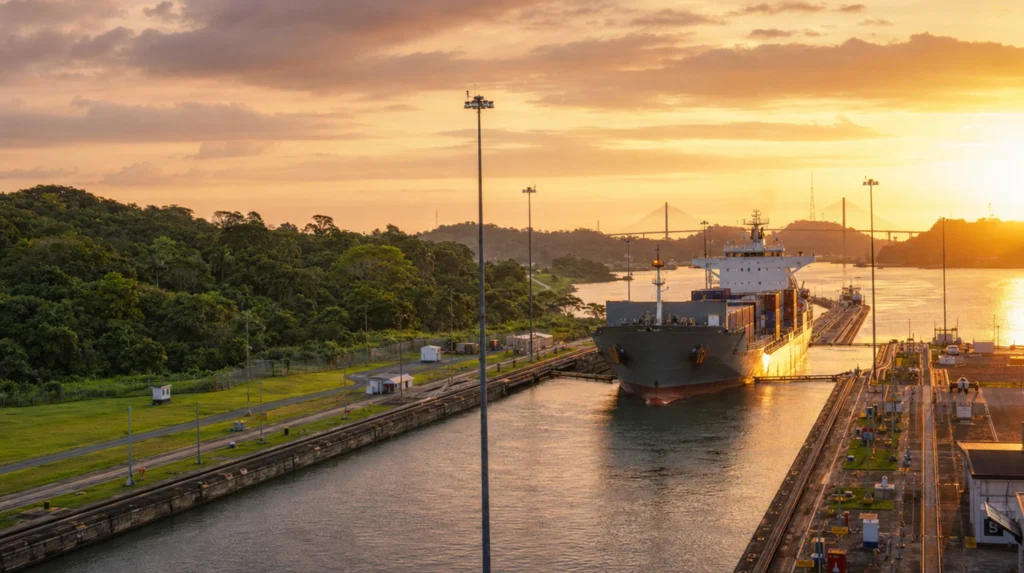
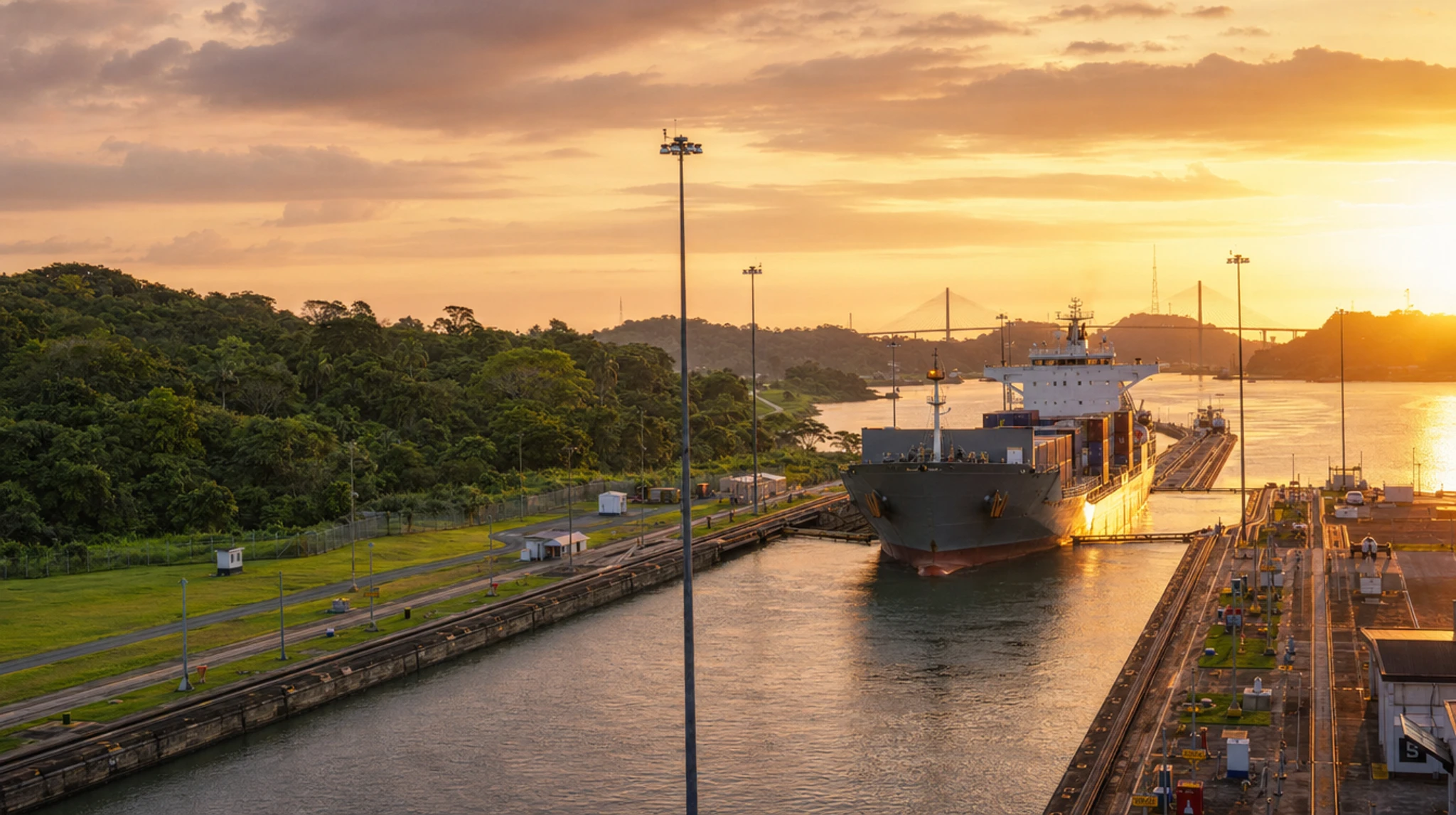
Latin America’s most vertical skyline meets a 500-year-old Spanish colonial quarter meets the locks of the world’s most important shipping shortcut — all inside one metropolitan area. Panama City is the only capital in the world where you can watch Neopanamax container ships transit a canal in the morning and eat ceviche beside a glass tower at night.
- Casco Viejo (Casco Antiguo) — UNESCO-listed 17th-century colonial quarter with Iglesia San José’s golden altar
- Miraflores Locks visitor centre on the Panama Canal — the best single place to watch a Neopanamax transit
- Panamá Viejo — the ruins of the original 1519 city, sacked by Henry Morgan in 1671, also UNESCO-listed
Eat: sancocho, ropa vieja, patacones from the Mercado de Mariscos fish-market canteens.
🏝️ Bocas del Toro
A nine-island Caribbean archipelago in Panama’s far northwest — Afro-Antillean culture, jungle-backed beaches, overwater bungalows on Bastimentos and some of the country’s best snorkelling reef. Slower, cheaper and noticeably less dressed-up than the Pacific side.
- Red Frog Beach on Isla Bastimentos — named for the tiny red strawberry poison-dart frogs
- Zapatilla Cays inside Bastimentos Island National Marine Park — white-sand cays and reef
- Starfish Beach (Playa Estrella) on Isla Colón — shallow turquoise water full of cushion sea stars
Eat: rondón (coconut fish stew), ceviche, johnny cakes.
☕ Boquete
A cool cloud-forest town on the slopes of Volcán Barú (3,475 m) in the Chiriquí highlands — Panama’s coffee capital, famed for Geisha varietal beans that routinely break world auction records above USD 10,000 per pound.
- Volcán Barú summit hike — the only point in the world to see both the Atlantic and Pacific on a clear morning
- Sendero Los Quetzales — a 9 km cloud-forest trail where resplendent quetzals are regularly spotted
- Finca Lerida and Hacienda La Esmeralda coffee tours — cupping Panama Geisha lots at origin
Eat: arroz con pollo, chicheme (maize drink), locally roasted Geisha pour-over.
🐚 San Blas Islands (Guna Yala)
A 365-island Caribbean archipelago that forms the autonomous Comarca de Guna Yala — governed by the Indigenous Guna people, who hold the land collectively and issue their own tourism permits. Barefoot-simple over-water cabañas, no resorts, no plastic bottles.
- Cayos Holandeses — uninhabited sandbars with palm trees and shipwreck snorkelling
- Guna villages on Carti Sugtupu and Nalunega — mola textile shops and community homestays
- Isla Perro — swim directly over a shallow sunken tugboat
Eat: fresh Caribbean lobster and spiny crab grilled on the beach, coconut rice.
🏖️ Pedasí
A sleepy Pacific fishing village on the Azuero Peninsula’s eastern tip — the launchpad for Isla Iguana wildlife reserve and some of Panama’s best white-sand beaches without the Bocas crowds.
- Isla Iguana Wildlife Refuge — magnificent frigatebird colony and turquoise coves
- Playa Venao — Central America’s best-known right-hand surf point, hosts the ISA World Surfing Games
- Humpback whale watching off Isla Iguana, June through October
Eat: ceviche de corvina, pescado frito, arroz con pollo.
🌊 Santa Catalina
A one-road Pacific fishing hamlet in Veraguas that doubles as the gateway to Coiba National Park — Central America’s largest marine park and a UNESCO site — plus Panama’s best beginner-to-advanced surf break.
- Coiba National Park day trip — former penal-colony island with world-class dive sites and hammerhead schools
- Playa Estero right-hand point break — consistent swell year-round
- Isla Cébaco snorkel and bioluminescence night tours
Eat: ceviche, whole grilled snapper, patacones.
Panamanian Culture & Etiquette — What to Know Before You Go
Panamanian culture is warm, bilingual, and unusually layered for a country of four and a half million people. Cosmopolitan Panama City codes Miami-adjacent; the Azuero Peninsula in the south is the folkloric heart of the country; the Caribbean coast speaks Antillean English; and seven Indigenous peoples maintain their own languages, dress and governance structures. Reading the room matters — and a few words of Spanish go a long way outside the capital.
The Essentials
- Greet every time. Buenos días, buenas tardes or buenas noches when entering any shop, taxi or lift. In rural Azuero, a spoken greeting is the price of admission.
- Physical greetings. Handshake with a new acquaintance; one cheek kiss (right side) between women and between a man and a woman who already know each other. Men shake or give a back-pat abrazo.
- US dollars, not Balboa math. Prices are in USD. Balboa coins (B/. 1, 0.50, 0.25, 0.10, 0.05) circulate interchangeably at 1:1. Do not ask for “exchange” — there is none to do.
- Tip modestly. 10% is often added as propina; an extra 5% for exceptional service is appreciated. Taxis are not tipped.
- Dress up in the city. Panama City codes business-casual even at weekends — shorts and flip-flops signal tourist. Casco Viejo rooftop bars often apply dress codes.
Indigenous & Regional Etiquette
- In Guna Yala, ask before photographing people — the Guna charge USD 1 per photo of anyone in traditional dress, and the request is a cultural right, not a hustle.
- No plastic bottles in San Blas. Fill reusable bottles before the 4×4 transfer from Panama City.
- On the Azuero during Carnaval, Calle Arriba / Calle Abajo loyalty is taken seriously — picking a side is part of joining in, and switching teams mid-parade is the local equivalent of a faux pas.
- In Bocas, Antillean English is spoken in the Afro-Caribbean community and Spanish remains the civic language. Either is fine; mixing is normal.
A Food Lover’s Guide to Panama
Panamanian cooking is Caribbean-meets-Pacific-meets-Andean, built on rice, plantain, yuca, seafood and slow-cooked beef. It lacks the international recognition of Mexican or Peruvian cuisine but rewards travellers willing to wander past the Canal-zone steakhouses: the Azuero highlands turn out the country’s best sancocho, the Caribbean coast cooks in coconut milk, and Panama City’s Mercado de Mariscos on Avenida Balboa serves some of the freshest ceviche in the Americas for under USD 3 a cup. The new-wave fine-dining scene led by Mario Castrellón at Maito — ranked among Latin America’s 50 Best Restaurants — has pulled native ingredients like culantro, ñame and Panama Geisha coffee into the global conversation.
Must-Try Dishes
| Dish | Description |
|---|---|
| Sancocho | Panama’s national dish — a clear, herb-heavy chicken soup with ñame (yam), cilantro and a side of white rice. The Azuero version uses free-range gallina de patio and simmers for hours over wood fire. |
| Ropa vieja | Shredded beef slow-cooked with tomato, onion, peppers and cumin — the Panamanian version is slightly drier than its Cuban cousin and typically served over coconut rice. |
| Patacones | Twice-fried smashed green plantain discs — the near-universal Panamanian side, usually served with a garlic-lime dipping sauce or as a vehicle for ceviche. |
| Ceviche de corvina | Sea bass cubed and cured in lime juice with onion, cilantro and habanero — sold in small paper cups at Panama City’s Mercado de Mariscos for USD 1.50-3. |
| Arroz con pollo | Panama’s Sunday-lunch staple — chicken braised with saffron-yellow rice, peas, carrots and olives. Every family has its own recipe, and fierce opinions about it. |
| Carimañolas | Deep-fried yuca turnovers stuffed with seasoned ground beef — Panama’s favourite breakfast and street-cart snack, eaten with a wedge of lime. |
Coffee & Convenience Culture
Panama is not a coffee producer on Colombia’s scale, but the high-altitude Boquete microclimate produces Geisha — the variety that has held the world coffee auction record multiple times, with Hacienda La Esmeralda lots selling above USD 10,000 per pound. Panama City’s third-wave coffee scene (Unido, Bajareque, Café Unido’s Casco branch) now roasts single-estate Geisha in-country so you can taste what the rest of the world is bidding for. Quick-snack culture runs on bakeries (panaderías) and Central American convenience chains.
- Chains: Super 99 (Panama’s dominant supermarket, owned by former president Ricardo Martinelli’s family), Rey, and Riba Smith
- Signature items: empanadas de pollo, hojaldras (fried dough breakfast), bolas de carne, chicheme cold maize drink, raspados (shaved-ice cones) from street carts in the old city
- Pay with Yappy. Panama’s dominant mobile-money app (Banco General) is now accepted at most Panama City street carts and corner tiendas — ask if you can pay por Yappy if you are running low on cash.
Off the Beaten Path — Panama Beyond the Guidebook
Portobelo & San Lorenzo
Two crumbling 17th-century Spanish fortresses on the Caribbean coast, together inscribed on the UNESCO World Heritage list as the Fortifications on the Caribbean Side of Panama. Portobelo was the shipping point where the silver of Peru was loaded onto Spanish galleons for the return to Seville; Francis Drake is buried in a lead coffin somewhere in the bay offshore. Also home to the Cristo Negro (Black Christ) pilgrimage each October 21, one of Panama’s most intense religious festivals.
Pearl Islands (Archipiélago de las Perlas)
A 220-island Pacific archipelago 50 km off Panama City, reached by a 90-minute ferry from Amador or a 20-minute Air Panama flight. Contadora is the old playground of the 1970s Shah of Iran and 1980s jet set; the outer islands (Mogo Mogo, Chapera, Saboga) are near-empty. Humpback whales calve here between July and October, and the biggest Pacific nursery in Central America sits inside the archipelago.
Parque Nacional Volcán Barú
Panama’s highest point at 3,475 m — and, crucially, the only summit on Earth from which both the Atlantic and Pacific oceans are visible on a clear morning. The standard approach is an overnight hike from Boquete starting around midnight to reach the summit for dawn. Temperatures drop to near freezing; the pay-off is two oceans at sunrise and a panorama that stretches from Colombia’s Darién to Costa Rica’s Osa Peninsula.
Coiba National Park
Central America’s largest marine park and a UNESCO World Heritage site, off the Pacific coast from Santa Catalina. A former penal colony (closed 2004) whose isolation accidentally preserved roughly 80% of the park’s original flora and fauna. Hammerhead schools, whale sharks and humpbacks; about 760 fish species have been recorded inside the marine zone. Day trips leave from Santa Catalina; live-aboard dive boats operate from Puerto Mutis.
Emberá Villages on the Chagres
The Emberá are one of Panama’s seven Indigenous peoples, and several Chagres River communities — Emberá Drua, Parara Puru, Quera — host cultural day trips from Panama City. Visitors arrive by dugout canoe, share a traditional lunch of fried tilapia and patacones on plantain leaves, and leave with hand-woven cocobolo and chunga baskets. The river passes through Chagres National Park, the protected watershed that literally supplies the Panama Canal’s fresh water.
Practical Information
Panama runs on dollars, American-style plug sockets, and a hybrid of modern infrastructure and improvisation. Panama City is tap-to-pay everywhere; the Azuero and the Caribbean coast are cash-small-bills-and-WhatsApp-first. The table below is the first-timer cheat sheet; most travellers reach for it in the PTY arrivals line.
| Currency | US Dollar (USD) and Panamanian Balboa (B/.); 1 USD = 1 B/. fixed parity (2026-04-19) |
| Cash needs | Cards accepted in Panama City, Boquete and Bocas hotels. Keep small bills (USD 1, 5, 10) for taxis, San Blas fees, Azuero rural and street food. |
| ATMs | Banco General, Banistmo and BAC widely available; most dispense USD 20 bills. Rural ATMs can empty on long holiday weekends. |
| Tipping | 10% propina often added to restaurant bills; extra 5% for excellent service. Taxis not tipped. Guna boat operators and Canal guides: USD 5-10. |
| Language | Spanish (sole official); Antillean English widespread in Bocas del Toro; English common in Panama City business districts and Boquete expat zone. |
| Safety | US State Department Level 2; avoid Colón’s historic centre at night and do NOT attempt to cross the Darién Gap overland. |
| Connectivity | 4G nationwide on +Móvil, Claro and Digicel; Airalo and Holafly eSIMs activate on arrival. |
| Power | Type A/B plugs, 110V — identical to US/Canada, no adapter needed for North American travellers. |
| Tap water | Potable in Panama City, Boquete, David and most of the interior; bottled recommended in Bocas del Toro and San Blas. |
| Healthcare | Panama City hospitals (Punta Pacífica, Hospital Nacional) are JCI-accredited and serve a fast-growing US medical-tourism market. Travel insurance recommended. |
Budget Breakdown — What Panama Actually Costs
Panama is priced in US dollars, which makes it more expensive than neighbouring Nicaragua or Colombia — but still well below mainland US levels in most categories. A favourable caveat for US travellers: there is no currency conversion math and no foreign-transaction surprises, so the numbers on the menu are the numbers on your card statement.
💚 Budget Traveller
Hostel dorms in Casco Viejo or Bocas Town run USD 15-30 a night. Lunch at a fonda or menú del día (soup, rice, protein, drink) costs USD 4-7. Panama City metro rides are USD 0.35; Albrook-to-Bocas on an overnight bus plus ferry runs USD 40. Plan USD 35-65 per day.
💙 Mid-Range
A boutique room in Casco Viejo, Boquete or Bocas sits at USD 100-180. Restaurant dinners, craft-coffee brunches and a Miraflores Canal visitor-centre ticket push daily spend to USD 100-180. One-way Panama City → David flights run USD 80-140 if booked a fortnight ahead.
💜 Luxury
American Trade Hotel in Casco Viejo and Tranquilo Bay in Bocas start around USD 350 a night and climb past USD 800. Maito and Fonda Lo Que Hay tasting menus cost USD 80-160 per person. Private drivers run USD 200-350 a day; chartered flights to Guna Yala airstrips or the Pearl Islands USD 400+ one way.
| Tier | Daily (USD) | Accommodation | Food | Transport |
|---|---|---|---|---|
| Budget | $35-65 | Hostel dorm, simple guesthouse ($15-35) | Fonda menú del día, street ceviche ($4-10) | Metro, chicken buses, colectivos ($1-10) |
| Mid-Range | $100-180 | Casco Viejo boutique, Boquete lodge ($100-180) | Restaurant dinner, cocktails ($15-35) | Domestic flights, Uber ($30-140 per leg) |
| Luxury | $300+ | American Trade Hotel, Tranquilo Bay ($350+) | Tasting menus at Maito, Fonda Lo Que Hay ($80-160) | Private driver, charter flights ($200+/day) |
Planning Your First Trip to Panama
- Pick your coasts. A first Panama trip should hit the Canal (Panama City), one Caribbean island cluster (Bocas or San Blas), and one highland stop (Boquete). Add the Azuero if you are chasing Carnaval or the pollera folk culture.
- Fly between regions. Air Panama covers Panama City → Bocas → David in 60-70 minutes per leg. Don’t waste a 10-day trip on an overnight bus to Bocas unless you actively enjoy that.
- Pack for both climates. Panama City and Bocas are 24-31 °C year-round; Boquete’s cloud forest drops to 13 °C and Volcán Barú near-freezing. One fleece, one rain shell.
- Book San Blas through a Guna-owned operator. Access requires a USD 20 community fee, a mandatory 4×4 Carti transfer, and a stay in a designated island cabaña. Independent hopping is not permitted.
- Skip Darién overland. The Darién Gap is one of the most dangerous stretches of jungle on Earth — no road, active smuggling and migrant routes. Fly over it.
Classic 10-Day Itinerary: Days 1-2 Panama City (Casco Viejo, Miraflores Locks, Panamá Viejo). Days 3-4 San Blas Guna Yala (boat hopping, overnight cabaña). Day 5 fly to David → Boquete. Days 6-7 Boquete (Volcán Barú dawn hike, coffee tour, Sendero Los Quetzales). Day 8 fly to Bocas del Toro. Days 9-10 Bocas (Red Frog Beach, Zapatilla Cays, fly home via PTY).
Frequently Asked Questions
Is Panama expensive to visit?
More than Nicaragua or Colombia, less than the mainland US. A mid-range traveller spends USD 100-180 a day including a boutique hotel, restaurant meals and the occasional domestic flight. Budget travellers get by on USD 35-65 with hostel dorms, fonda lunches and metro rides. Bocas and Boquete during December-April high season cost 20-30% more than shoulder months.
Do I need to speak Spanish?
A little helps, a lot pays off. English is widely spoken in Panama City’s banking district, Boquete’s expat zone and the Bocas Afro-Caribbean community (where Antillean English is a home language), but limited in the Azuero, David and San Blas. Twenty essential phrases plus Google Translate offline will carry a first-time traveller comfortably. A week of Duolingo beforehand makes restaurants and taxis dramatically easier.
Is domestic flying worth it over buses?
Almost always, except for the Azuero. Air Panama’s flights to David and Bocas take 60-70 minutes and cost USD 80-140 one way, versus 7-10 hours by bus on the Pan-American. The exception: Panama City → Pedasí / Las Tablas is a straightforward 4-hour drive with no commercial airport.
Is Panama safe for solo travellers?
Yes, with region-by-region care. Panama City (Casco Viejo, Punta Pacífica, Marbella), Boquete, Bocas del Toro and Guna Yala are well-trodden and safe in daylight. The US State Department places Panama at Level 2 overall and Level 4 (‘Do Not Travel’) specifically for the Mosquito Gulf and the Darién region east of Metetí — stay out of those zones. Use Uber rather than hailing street taxis in Panama City at night.
When is the best time for the Panama Canal?
Year-round — the Canal operates 24/7, 365 days a year, and has done since 1914. For the best visitor-centre experience, arrive at Miraflores Locks around 9am or 3pm when scheduled Neopanamax transits queue up. Dry season (December-April) gives you reliably clear mornings for the Agua Clara locks on the Atlantic side.
Can I get by as a vegetarian or vegan?
Easier than it used to be. Panama City, Boquete and Bocas all have dedicated vegan spots (Mahalo, Átomo Sushi, Super Gourmet). Traditional fondas default to rice, beans, plantain and a protein — ask for sin carne, sin pollo. Patacones, carimañolas de vegetales, arroz con guandú and tamales de olla are quietly vegetarian-friendly.
Do I need a Guna-owned operator for San Blas?
Yes. The Comarca de Guna Yala is autonomous Indigenous territory — access requires a USD 20 community tourism fee, a mandatory 4×4 transfer to Puerto Carti (about 2 hours), and a booked cabaña on a designated island. Independent hopping is not permitted, and there are no resorts. The trade-off is one of the least-commercial Caribbean experiences left.
Ready to Explore Panama?
Panama is the country where two oceans meet in under an hour — a Canal that runs global trade, Caribbean islands without a single resort, cloud-forest coffee that breaks world records, and a capital priced entirely in US dollars. Book Bocas two months out, clear four days for Carnaval, and come ready to move between the two coasts.