
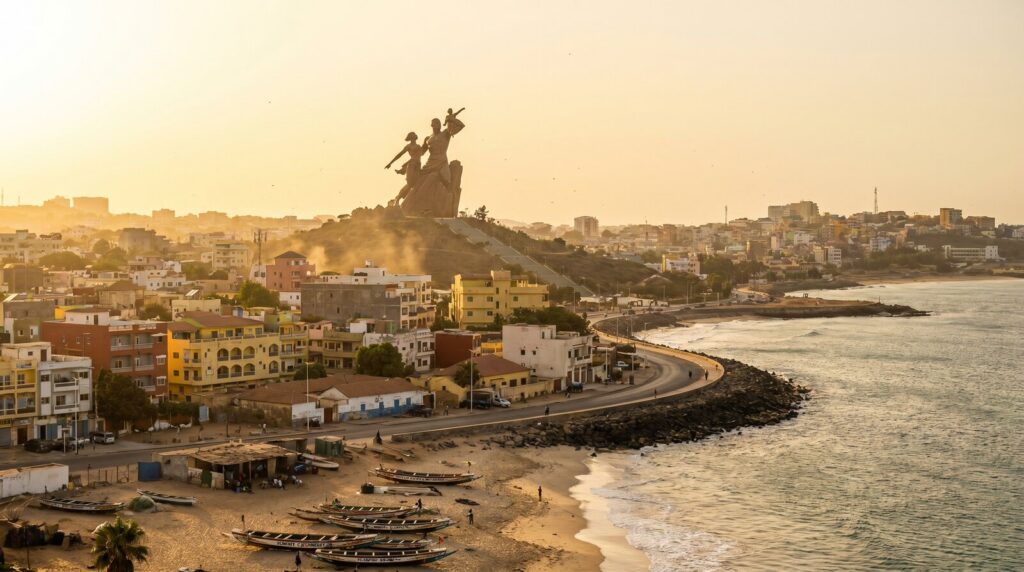
Dakar, Senegal: West African Hub, Teranga Hospitality & Gorée Island
Experience Senegal’s vibrant capital where Atlantic energy meets colonial history, Wolof culture, and pan-African influence
Dakar, Senegal’s capital and West Africa’s most westerly city, sits on the Cape Verde Peninsula projecting into the Atlantic Ocean. The city’s geographic position—literally at Africa’s westernmost tip—positioned it historically as a crucial trading post, colonial outpost, and contemporary transportation hub connecting West Africa to global commerce. With approximately 3.1 million residents in the metropolitan area, Dakar functions as an intellectual, cultural, and economic engine driving Senegalese development and projecting pan-African influence throughout the region and beyond.
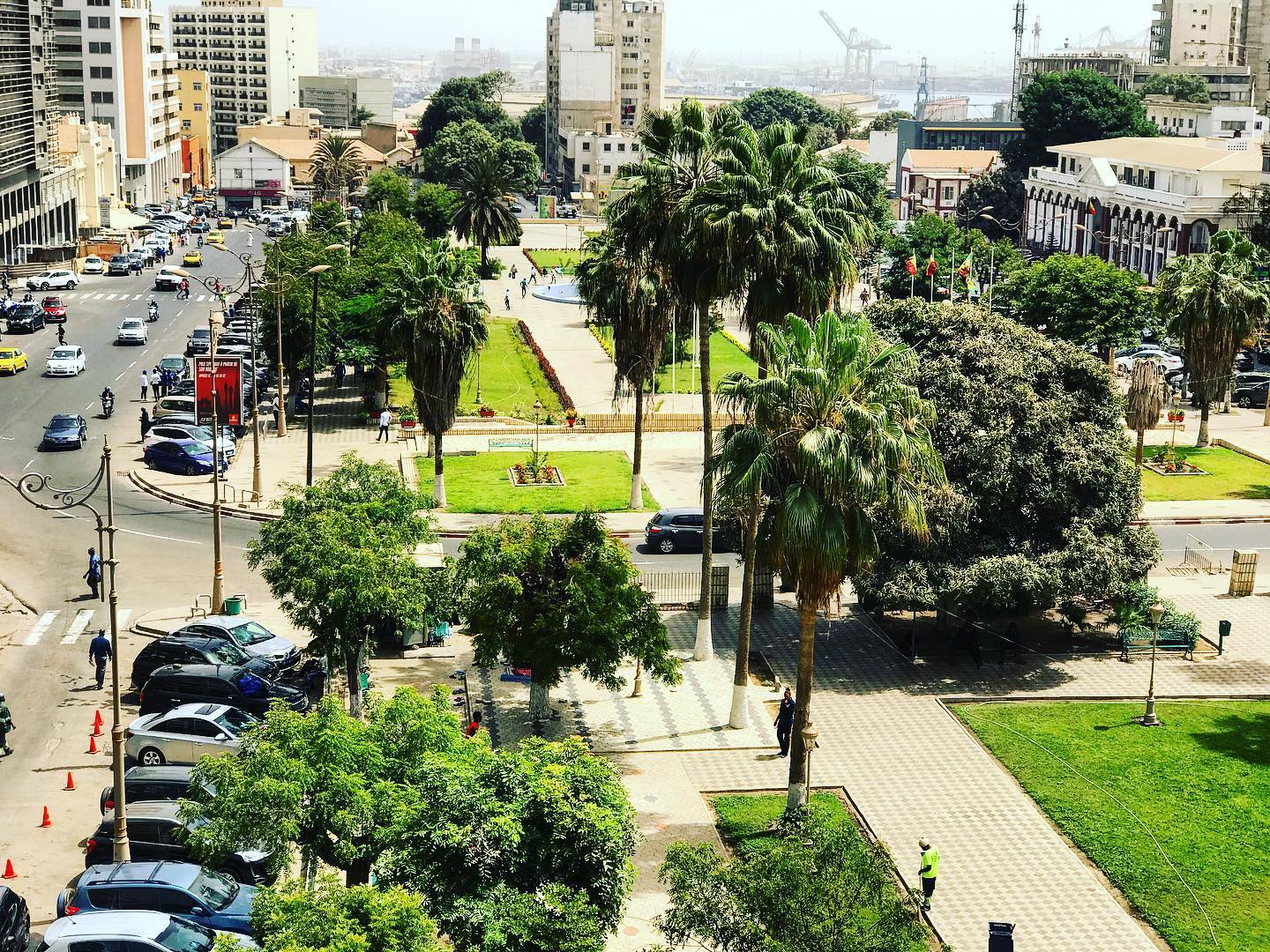
The city embodies contradictions defining contemporary African urban development. High-rise apartment buildings rise alongside traditional compounds. French colonial architecture—pastel-hued buildings with shuttered windows—anchors the Plateau district alongside contemporary glass structures. Street traffic mixes Mercedes sedans with colorful rapid-transit minibuses (cars rapides), motorcycles, and hand-drawn carts. This urban texture reflects Dakar’s history as a colonial capital and contemporary transformation into a modern West African metropolis maintaining cultural authenticity amid globalization.
What You’ll Discover
Goree Island & Colonial Heritage
Goree Island, positioned two kilometers offshore from central Dakar, looms large in historical consciousness as a major slave-trading hub during the Atlantic slave trade era. The island’s strategic position made it attractive to successive European colonial powers—Portuguese, Dutch, English, and finally French—each establishing forts and trading posts. Between the 16th and 19th centuries, an estimated two million enslaved Africans passed through Goree’s slave houses before forced transport across the Atlantic. The historical enormity of this experience—human suffering mechanized and industrialized at scale—infuses contemporary Goree with emotional weight extending beyond typical historical tourism.
The Island features preserved colonial architecture including the famous Slave House—the dark doorway opening directly onto the ocean representing the final passage for enslaved people awaiting transport. Walking through narrow streets lined with pink, blue, and yellow pastel buildings creates cognitive dissonance between aesthetic beauty and historical atrocity. The contradiction forces confrontation with historical complexity—the same colonial period that enabled tragic human trafficking also created architectural heritage and cultural exchanges reshaping global development trajectories.
Contemporary Goree Island hosts approximately 1,200 residents, with tourism representing increasing economic importance. The island remains car-free—transportation occurs via foot, bicycle, or traditional boats. This car-free character creates village atmosphere distinct from Dakar’s urban intensity. Visitors arrive by regular ferry service (approximately 20 minutes from downtown Dakar), creating easy day-trip accessibility while maintaining separation from mainland commercial hustle.
The Diop Museum, established in a colonial mansion, documents slavery’s economic systems and human experiences. Rather than sensationalism, the museum approach emphasizes historical documentation, personal narratives, and broader context situating Goree within transatlantic trade structures. The museum’s curatorial philosophy acknowledges that confronting historical atrocity requires serious engagement rather than morbid spectacle.
Beyond slavery sites, Goree preserves significant French colonial architecture spanning two centuries. The Fort—the island’s original Portuguese fortification later expanded by French occupation—remains partially intact. Colonial mansions featuring distinctive shuttered windows, interior courtyards, and external color schemes adapted to African climate demonstrate how European architectural traditions modified through environmental adaptation. Walking the island’s narrow streets provides embodied understanding of colonial-era daily life and spatial organization.
Markets, Food & Street Commerce
Dakar’s street markets pulse with economic activity and sensory intensity. The Grand Marche (central market) sprawls across multiple city blocks, with vendors organizing by category—fish, vegetables, fabric, shoes, household goods—creating districts within the larger market. The fish market section—olfactorily overwhelming for newcomers—concentrates fishing activity near the waterfront. Vendors arrange fresh catches in spectacular displays, with prices negotiated through established cultural protocols. The market operates daily with particularly heavy activity mornings when merchants set up and shoppers arrive early for optimal selection.
Street food vending constitutes crucial food culture component and economic activity. Thieboudienne—seasoned fish with rice and vegetables—represents the national dish and appears throughout street vending and restaurant contexts. Yassa—meat or fish marinated in citrus and onions—provides another staple. Millet-based porridges, roasted meats on skewers, and fresh tropical fruits sold by street vendors provide affordable, authentic cuisine. The street food experience offers immersion into daily Dakar life while engaging directly with food producers maintaining cultural culinary traditions.
The Medina neighborhood hosts a frenetic fabric market where textile merchants display colorful prints, traditional wax cloth, and modern synthetic fabrics. The vibrant fabrics reflect African artistic expression and global trade—wax cloth originated in Indonesia, traveled to Europe where manufacturing was established, then returned to Africa through colonial trade networks. Contemporary Dakar fashion integrates these fabrics into boubous (traditional robes) and contemporary Western-style clothing creating distinctive Senegalese aesthetic.
Restaurant dining experiences range from formal French colonial establishments to casual street-side informal eateries. The city’s culinary reputation stems partly from French colonial influence combined with West African ingredients and Senegalese culinary traditions. Contemporary Dakar hosts fine dining establishments alongside neighborhood grills serving excellent seafood. The Plateau district concentrates the highest restaurant density, though excellent food is available throughout the city at dramatically different price points.
Museums & Cultural Institutions
The Musee Theodor Monod houses the Institut Fondamental d’Afrique Noire collection, one of West Africa’s most significant art museums. The collection spans ancient African sculpture through contemporary art, documenting cultural production across centuries. The museum’s strength is pre-colonial and colonial-era artifacts offering historical depth often absent from tourist-oriented cultural presentations. The building itself—colonial architecture adapted to tropical climate—deserves attention beyond its contents.
The Musee de la Femme Henriette Bath showcases women’s artistic production and cultural contributions, addressing historical bias toward male-centered narrative. The museum documents textile arts, jewelry, pottery, and artistic practices traditionally associated with women, elevating these skills to recognized artistic status. The curatorial approach emphasizes African women’s creative agency and cultural value rather than applying Western frameworks for artistic legitimacy.
La Galerie Nationale d’Art showcases contemporary African artists and facilitates international cultural exchange. The gallery’s programming includes exhibitions, artist residencies, and cultural events making Dakar a recognized contemporary art center. The contemporary art scene reflects pan-African influence and international artistic dialogue, positioning Dakar as a significant cultural producer rather than merely consuming global art trends.
Historical Museums
Theodor Monod Museum, Goree Island sites. Focus on African history, pre-colonial cultures, colonial impact. Serious historical engagement rather than surface tourism.
Contemporary Art
Galerie Nationale, independent galleries, artist studios. Pan-African artistic production, international dialogue. Reflects contemporary Dakar cultural vitality.
The Akon Lighting Africa Foundation headquarters in Dakar demonstrates contemporary African entrepreneurship and renewable energy innovation. The facility and organization represent pan-African business development model combining entertainment sector credibility with development infrastructure investment. Visiting contemporary development initiatives provides perspective on contemporary Africa beyond historical tourism and poverty narratives.
Wolof Culture & Contemporary Society
Wolof represents the dominant ethnic group in Senegal (approximately 36 percent of population), with the Wolof language widely spoken as first or second language across the nation. Wolof cultural values emphasize community, respect for hierarchy (particularly toward elders), and hospitality codified through the concept of teranga. This cultural orientation shapes daily interactions—strangers are welcomed respectfully, guests are offered food and drink generously, and social connections develop through extended conversation rather than efficiency-focused transaction.
Contemporary Senegalese society reflects complex negotiation between traditional Islamic culture, French colonial legacy, and globalized modernity. Approximately 95 percent of Senegalese identify as Muslim, with Islam providing moral and social framework for daily life. However, Senegalese Islam integrates Sufi mystical traditions and saint veneration creating distinctive religious expression differing from Middle Eastern Islamic practice. The annual Grand Magal pilgrimage to Touba attracts hundreds of thousands to venerate Sheikh Amadou Bamba, the historical Islamic scholar establishing Mouride Brotherhood tradition.
Dakar’s contemporary cultural scene reflects pan-African consciousness and global artistic exchange. Hip-hop culture has deep roots in Dakar, with local artists developing distinctive West African hip-hop idioms combining Wolof language, griots (traditional historian-musician) narrative traditions, and global production techniques. The music scene functions as cultural commentary on contemporary issues—inequality, corruption, diaspora experience—while maintaining entertaining musicality.
Women’s entrepreneurship constitutes crucial economic element. Women organize savings associations (tontines), operate market stalls, manage trading enterprises, and increasingly establish formal businesses. This economic activity combines with cultural expectations regarding family, creating complex negotiations between traditional roles and contemporary economic participation. Conversations with women entrepreneurs reveal sophisticated understanding of business, community responsibility, and personal autonomy balancing.
Urban Neighborhoods & Daily Life
Le Plateau constitutes Dakar’s colonial center with administrative buildings, hotels, restaurants, and shops. The Plateau’s architectural heritage—pastel colonial buildings, tree-lined avenues, ocean vistas—creates distinct character differentiating it from surrounding neighborhoods. Walking the Plateau provides historical immersion and access to formal cultural institutions. However, the neighborhood’s tourism infrastructure can create distancing from authentic daily Senegalese life.
The Medina neighborhood, south of Plateau, represents residential and commercial center with lower tourism infrastructure than downtown. Walking Medina streets reveals daily commerce, household activities, and urban texture absent from touristic zones. The neighborhood’s textile market, street food vendors, and informal economy display contemporary Dakar vitality. Medina requires comfort with crowds, traffic, and negotiating cultural norms unfamiliar to international visitors, but rewards with authentic immersion.
Fann and Ngor represent more affluent residential neighborhoods with villa-style housing, international schools, and diplomatic presence. These areas preserve green spaces and quieter character than dense urban center. Ngor beach provides swimming and beach bar experiences in relatively developed setting. The neighborhoods maintain sufficient commercial activity for visitor access while avoiding extreme tourism development.
Yoff, in northern Dakar, hosts the Yoff Fishermen’s Association and traditional pirogue fishing boats. The beach area concentrates fishing activity with boats visible at dawn and late afternoon. The neighborhood maintains fishing culture traditions while experiencing urban development pressure. Visiting fishermen’s communities provides perspective on traditional maritime economy adapting to contemporary changes.
Practical Visitor Information
Dakar is served by Blaise Diagne International Airport (DSS), located approximately 50 kilometers south of downtown. The airport connects to Europe, Middle East, and other African cities through multiple airlines. Transport from airport to downtown involves taxi, negotiated pricing (approximately 15,000-20,000 CFA francs), or organized shuttle services. Ride-sharing applications operate in Dakar, providing alternative transport with predictable pricing though potentially higher costs than negotiated taxis.
Public transport consists of minibuses (cars rapides) running established routes through fixed stops, urban buses operating through transit authority, and taxi services. The system functions with minimal English signage requiring either pre-planned routing or local assistance. Walking remains viable in central neighborhoods though Dakar’s traffic and heat demand adaptation. Motorcycle taxis (motos) provide rapid point-to-point transport at negotiated pricing.
Currency is West African CFA Franc (XOF), with approximately 600 CFA equaling 1 USD in 2026. ATMs distribute throughout downtown and neighborhoods, accepting international cards. French language skills prove valuable as English remains limited outside tourist establishments. French colonial legacy ensures French-language signage, menu descriptions, and commercial interactions. Many younger people speak English particularly in tourism sector, but French fluency significantly enhances communication accessibility.
Accommodation ranges from international hotel chains through locally-owned boutique hotels and budget guesthouses. The Plateau district offers centrality and formal facilities. Neighborhood hotels in Medina, Fann, and Ngor provide authentic atmosphere with reasonable amenities. Budget travelers find guesthouses with shared facilities offering affordable lodging and social environment connecting travelers.
Best visiting periods are November through February when temperatures are moderate and dry season conditions prevail. March-May sees temperatures rising considerably with occasional dust storms (harmattan winds). June-October constitutes rainy season with heavy rainfall, high humidity, and occasional flooding in low-lying areas. Tourism infrastructure is less crowded during rainy season with accommodations offering discounted rates.
Mobile phone networks provide prepaid SIM cards with data service available at reasonable rates. Internet cafés remain prevalent despite mobile data availability. Visa requirements vary by nationality—most Western passport holders receive 90-day tourist visas on arrival, though travelers should confirm current requirements prior to travel.
Experience Dakar’s Atlantic Energy
Dakar embodies West African vitality, historical complexity, and contemporary development dynamism. From Goree Island’s sobering historical significance through markets pulsing with daily commerce to cultural institutions documenting artistic production, the capital rewards travelers with genuine West African encounter beyond stereotypical safari experiences. The legendary teranga hospitality ensures that visitors transform from tourists into welcomed guests.