
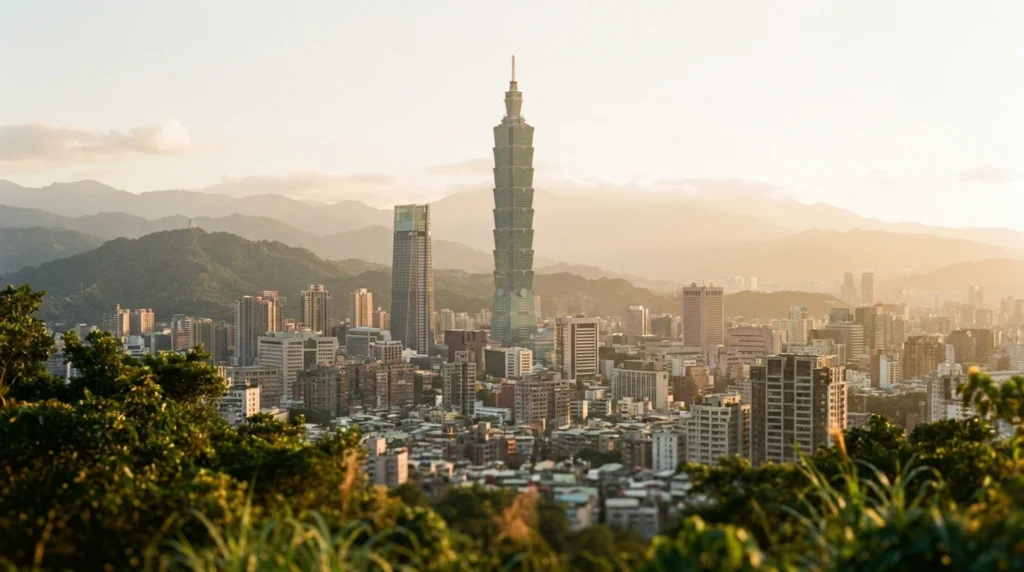
Taipei, Taiwan: Night Markets, Hot Springs and a 508-Metre Skyscraper
Part of our Taiwan travel guide.
Taipei City Guide
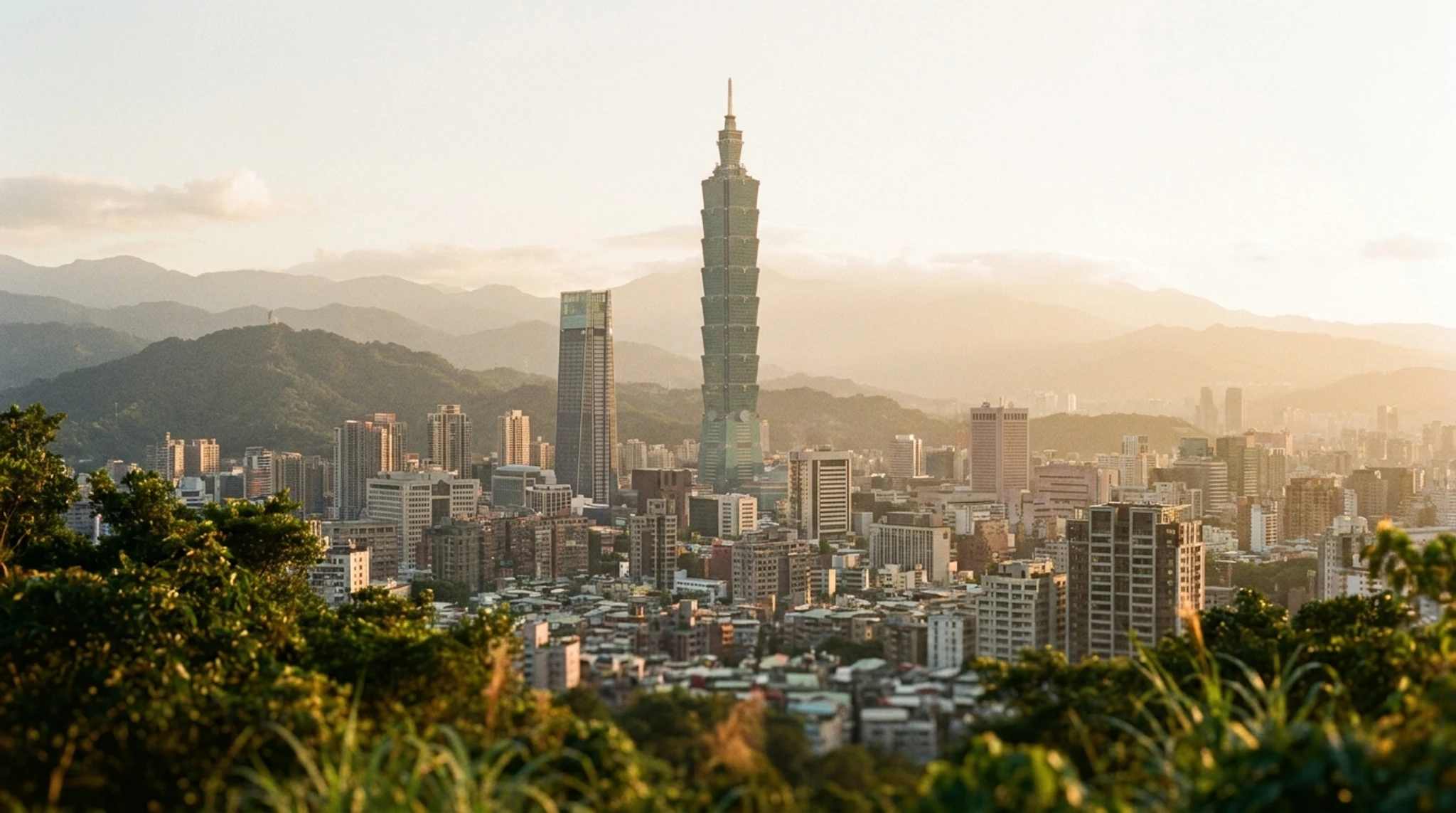
Table of Contents
Why Taipei?
Taipei is the capital that turned its night markets into a national sport and keeps a 1738 Qing-dynasty temple to the goddess Guanyin alive a six-minute MRT ride from a 508-metre skyscraper that once held the title of the tallest building in the world. Few cities compress four centuries of island history — Indigenous, Dutch-Spanish, Qing, Japanese colonial, post-war Republic of China — into a basin this small, yet Taipei does it in a single 146-kilometre Metro network and eighteen-plus working night markets that still define the East Asian street-food template from Seoul to Singapore. The contradiction that hits every first-time visitor is not scale — the city is manageable — but density: more vegetarian restaurants per capita than Bangkok, the highest convenience-store density on earth, Asia's first marriage-equality law on the books since 2019, and a 660-tonne golden sphere hanging inside Taipei 101 as a tuned-mass damper to counteract typhoons that arrive between June and October with reliable annual force.
At roughly 2.5 million residents inside the formal city limits and around 7 million across the Taipei–New Taipei–Keelung metropolitan area, Taipei is one of East Asia's ten largest urban agglomerations — but because the habitable basin is walled on three sides by volcanic ridges it feels at most a fraction of that. You can be standing barefoot inside a 1913 Japanese-era sulfur bathhouse in Beitou at 10:00, eating pepper buns at Raohe Night Market by 19:00, and drinking a NT$75 pearl milk tea on a pedestrianised lane in Ximending by 22:00, all on a single EasyCard tap-in and roughly NT$350 in total transport. The city's Michelin Guide, now in its seventh year, recognises one three-star room (Le Palais), more than thirty starred restaurants across Taipei and Taichung, and a Bib Gourmand list that extends deep into night-market stalls where a Michelin inspector has certified the pepper bun you are queuing for.
Taipei is also the only Asian capital where a legislative-grade marriage-equality statute has been in force continuously since 2019, where iTaiwan public WiFi is free in every MRT station, and where roughly 13–14% of residents keep a Buddhist-influenced vegetarian diet — the highest share in Asia and the reason meatless kitchens line entire blocks. Over the next 10,000 words this guide walks you through the nine neighbourhoods worth structuring a visit around, the full night-market-to-Michelin food spectrum, the five day trips the MRT and the TRA regional railway put in easy range, Pingxi's 17 February–3 March 2026 sky-lantern festival, and the practicalities of typhoon season, earthquake safety, convenience-store rituals and the Taiwanese Hokkien phrases that will earn a smile from any taxi driver over sixty.
Neighborhoods: Finding Your Taipei
📍 Taipei Map: Every Place in This Guide
Taipei is administratively divided into 12 districts (qu) inside the formal city boundary and surrounded by the much larger New Taipei City, which ring-fences it on every side except the Yangmingshan volcanic massif to the north. Travellers only need to learn a shortlist of nine. The Tamsui River and its Keelung River tributary carve the basin north-east to south-west, and the MRT lays a reliable colour-coded grid across it: Red Line runs north–south through the old port quarter, Blue Line east–west through the commercial core, Green Line threads the youth-and-nightlife strip, and the driverless Brown Line loops Songshan Airport and the 101 tower. Distances between neighbourhoods look longer on the map than they run — Taipei 101 to Longshan Temple is 22 minutes end-to-end on the Blue Line, and Ximending to Shilin Night Market is 28 minutes with one transfer. The nine neighbourhoods below cover every itinerary from a two-night stopover to a fortnight, and every heading below anchors to a specific MRT station so you can drop the name into your route without a map. Together they touch all of Taipei's headline assets — the 101 skyline, the National Palace Museum, the Longshan Temple, the Dihua Street heritage row, the Beitou hot springs, and the Shilin/Raohe/Ningxia night-market triangle — and several form a natural east-west hotel line along the Blue Line for travellers who prefer a single base.
Xinyi
Xinyi is the corporate-tower district and the neighbourhood most first-time visitors use as a daytime base, anchored by Taipei 101 — the 508-metre supertall that held the title of world's tallest building from 2004 to 2010 and still houses one of the planet's fastest passenger lifts at 60.6 km/h. The six square blocks south of the tower pack the Shin Kong Mitsukoshi A11, Breeze Xinyi, Taipei 101 Mall, Eslite Xinyi flagship, and ATT 4 Fun nightlife tower into a single pedestrian-podium network, all reachable without crossing a street at surface level. The Xiangshan (Elephant Mountain) Trail behind the tower is a 20-minute staircase climb to the classic skyline photograph; the Sun Yat-sen Memorial Hall two MRT stops north hosts hourly changing-of-the-guard ceremonies. Hotels here run from the W Taipei and Grand Hyatt at the high end through the Humble House and the three-star Taipei Garden Hotel. Xinyi's strengths are convenience and scale; its weakness is that the street grid is corporate rather than lived-in after 22:00.
- Taipei 101 Observatory — NT$600 (~$18.50) for floors 88-91; NT$3,000 for Skyline 460 outdoor deck.
- Elephant Mountain Trail — free 20-minute climb from the trailhead near Xiangshan MRT Exit 2.
- Shin Kong Mitsukoshi A11 / Breeze Xinyi — department-store core with tax-free counters.
- Sun Yat-sen Memorial Hall — 10-minute walk west; ceremonial hourly guard change.
Best for: first-timers, skyline views, corporate-hotel base. Access: MRT Red Line Taipei 101/World Trade Center Station (R03).
Ximending
Ximending — sometimes called the Harajuku of Taipei — is the pedestrianised entertainment-and-fashion block that older Taipei residents associate with Japanese colonial-era cinemas and younger residents treat as the city's default Saturday-night street. The streets around the Red House (Ximen Hongloû), a 1908 octagonal brick-and-stone building originally built as a public market, are closed to cars weekends and packed with teen-focused boutiques, Mister Donut, Modern Toilet themed restaurant, and the queue at Ah Chung Mian Xian — a standing-only noodle stall that sells roughly 3,000 bowls of vermicelli soup a day for NT$70 each. The block immediately behind the Red House is the LGBTQ+ nightlife anchor of Taiwan, which since 2019 has been the first jurisdiction in Asia to legalise same-sex marriage; a dozen open-air bars spill chairs onto the plaza after 21:00. Ximending's strengths are density, under-30 energy, and late hours; its weaknesses are noise and tourist markups of roughly 10–15% on food compared with Da'an or Dadaocheng.
- Ximen Red House (1908) — heritage theatre, craft market on weekends.
- Ah Chung Mian Xian — NT$70 standing-only oyster vermicelli.
- Wannian Commercial Building — 10-storey indoor mall of indie fashion and arcade floors.
- Red House LGBTQ+ plaza — Asia's largest open-air gay-bar cluster.
Best for: youth fashion, late-night snacks, LGBTQ+ nightlife. Access: MRT Blue/Green Line Ximen Station, Exit 6.
Da'an
Da'an is the leafy residential district that plays the Upper West Side to Xinyi's Midtown — parks, university campuses, tree-lined cafe streets, and the single most famous dumpling house on earth. The Din Tai Fung Xinyi flagship, which opened in 1972 at the corner of Xinyi Road Section 2, is where the 18-pleat standard xiaolongbao was codified; a NT$250 (~$7.70) ten-piece basket still defines the Taipei soup-dumpling reference point. Yongkang Street runs south from Dongmen MRT for three blocks of third-wave coffee shops, traditional mango shaved-ice stall Smoothie House, the original Yong Kang Beef Noodle, and a row of independent bookstores and ceramic studios. Da'an Forest Park — often called the "Central Park of Taipei" — is a 26-hectare green lung with a lotus pond, an open-air performance venue, and free weekend bird-watching walks organised by the Wild Bird Society. National Taiwan University's main campus sits immediately south, and the Shida Night Market behind it caters to the student crowd with NT$35 stinky-tofu stalls and NT$120 three-cup-chicken sets.
- Yongkang Street food row — Din Tai Fung flagship, Smoothie House mango ice, Yong Kang Beef Noodle.
- Da'an Forest Park — 26 ha, free, open 24h.
- National Taiwan University campus — historical banyan-lined avenue.
- Shida Night Market — student-priced stalls, quiet weekdays.
Best for: cafes, long-stay travellers, university atmosphere. Access: MRT Red/Orange Line Dongmen Station, Exit 5 or Da'an Park Station.
Zhongshan
Zhongshan is the Japanese colonial-era civic district on the north side of the old town, still defined by the broad Zhongshan North Road boulevard the Japanese administration laid out in 1901. The Shin Kong Mitsukoshi Nanxi cluster of three interconnected department stores runs east from the MRT station and includes the rooftop food courts where Taipei's office workers eat lunch; MOCA Taipei, the Museum of Contemporary Art, occupies a 1921 Japanese-era primary school building two blocks east and rotates exhibitions every eight to ten weeks. SPOT Taipei Film House at the southern edge of the neighbourhood is the former US ambassador's residence — a 1926 white-clapboard villa — repurposed since 2002 as an arthouse cinema with a garden cafe. Ningxia Night Market, Taipei's smallest major night market by area but its densest by stall count, runs along the north edge; it is the reference for oyster omelettes (Liu Yu Zai) and taro balls.
- MOCA Taipei — admission NT$100 (~$3), closed Mondays.
- Shin Kong Mitsukoshi Nanxi — three-mall department store row.
- SPOT Taipei Film House — arthouse cinema in a 1926 villa.
- Ningxia Night Market — oyster omelettes, taro balls, Liu Yu Zai stall.
Best for: design-focused day plans, shoppers, dense MRT access. Access: MRT Red/Green Line Zhongshan Station.
Dadaocheng
Dadaocheng (literally "big rice-drying yard") was the Qing-era and Japanese colonial port of Taipei on the Tamsui River, and is now the heritage-and-creative district for travellers who prefer tea-shop wood floors over mall atriums. Dihua Street, the main historic artery, is lined with 200-year-old brick-and-stucco shophouses still selling dried seafood, Chinese medicinal herbs, and premium pu-erh tea; the block becomes the Taipei Xia-Hai Lunar New Year Market for two weeks before Lunar New Year (which falls on 17 February 2026), drawing hundreds of thousands of shoppers a day. Xiahai City God Temple, founded 1859, is the matchmaker temple where unmarried Taiwanese leave petitions to the Yue Lao deity for romantic partners — the temple accepts petitions in English. ASW Tea House occupies a restored 1920s hardware warehouse on Minsheng West Road and pours Taiwanese high-mountain oolong for NT$400 a pot. Yongle Fabric Market fills a mid-century concrete block with 50 vendors of Taiwanese and imported textiles.
- Dihua Street — Qing-era shophouses, dried-goods lanes.
- Xiahai City God Temple (1859) — matchmaker shrine.
- ASW Tea House — NT$400 oolong pot in a restored 1920s warehouse.
- Yongle Fabric Market — 50-vendor textile block.
Best for: heritage architecture, tea, slow shopping. Access: MRT Green Line Beimen Station, Exit 3 (10 min walk north).
Shilin
Shilin, on the north bank of the Keelung River, is the neighbourhood anchored by two of Taipei's biggest tourist magnets — the National Palace Museum and Shilin Night Market — plus Chiang Kai-shek's former Shilin Official Residence and the Taipei Children's Amusement Park. The Palace Museum is twenty minutes by bus R30 or 255 from Shilin MRT and is worth at least three hours for the Jadeite Cabbage, Meat-Shaped Stone, and the rotating paintings from the 700,000-object Qing imperial collection that was evacuated from Beijing in 1948. Shilin Night Market itself is the largest night market by area in Taipei and the reference for small-sausage-in-large-sausage (sticky-rice sausage wrapped around a pork sausage), oyster vermicelli, and flame-torched beef cubes; a full dinner runs NT$250–400. Tianmu, the expat and diplomatic quarter east of the night market, is where Japanese and American international-school families cluster.
- National Palace Museum — NT$350 (~$11) admission; 09:00-17:00 daily.
- Shilin Night Market — largest in Taipei by area; opens 16:00.
- Shilin Official Residence — Chiang family residence and rose garden, free.
- Tianmu expat strip — SOGO, Starbucks, international grocery.
Best for: museum day, family night-market dinner. Access: MRT Red Line Shilin Station, Exit 1.
Songshan
Songshan is the neighbourhood that combines Taipei's downtown domestic airport, the Raohe Night Market strip, and the former Japanese-era tobacco factory now converted into the Songshan Cultural & Creative Park design complex. Taipei Songshan Airport (TSA) handles domestic and regional short-haul flights — primarily Tokyo Haneda, Shanghai Hongqiao, and Seoul Gimpo — and is one MRT stop from the city centre on the Brown Line, an unusually convenient configuration by world-capital standards. Raohe Street Night Market is the narrow, 600-metre pedestrian strip that many locals consider the best night market in Taipei: the pepper-bun stall at the Ciyou Temple entrance, Fuzhou Shizu Hujiao Bing, holds a Michelin Bib Gourmand and sells roughly 1,500 pepper buns a night. Ciyou Temple, founded 1753, sits at the western entrance with five floors of carved wooden Mazu iconography. Songshan Cultural Park behind the strip hosts rotating design exhibitions, the Taiwan Design Museum, and a branch of Eslite Bookstore.
- Raohe Street Night Market — 600 m pedestrian strip; pepper buns at the Ciyou entrance.
- Ciyou Temple (1753) — Mazu shrine at the market's west gate.
- Songshan Cultural & Creative Park — design museum + Eslite branch.
- Taipei Songshan Airport (TSA) — domestic/regional, one MRT stop away.
Best for: night-market dinner without Shilin crowds, design walk. Access: MRT Green Line Songshan Station, Exit 5.
Beitou
Beitou is the hot-spring suburb 35 minutes by MRT north of central Taipei and the only Taipei district where Japanese colonial bathhouse architecture still defines the street plan. The Beitou Hot Spring Museum (a 1913 public bathhouse built by the Japanese administration, restored 1998 and free to enter) is the symbolic anchor; Thermal Valley (Dìrè Gǔ), a roiling 90°C sulfur pond locals once called the "Hell Valley," sits four minutes' walk up the hill. The Beitou Public Hot Spring charges NT$40 for gender-segregated nude bathing in tiered sulfur pools and is where older Taipei residents still soak daily; the Villa 32 resort and Spring City Resort offer private rooms from NT$1,800 per session. Xinbeitou Park, the former Japanese garden that divides the station from the springs, is the traffic-free spine linking all of the above. Take the Red Line north to Beitou, transfer to the one-stop Xinbeitou branch line, and the springs are a five-minute walk up from the terminus.
- Beitou Hot Spring Museum (1913) — free, 09:00-17:00 closed Mondays.
- Thermal Valley — free viewing platform over a 90°C sulfur pond.
- Beitou Public Hot Spring — NT$40 (~$1.20) nude pools, gender-segregated.
- Villa 32 / Spring City Resort — private rooms NT$1,800-3,000 (~$55-92).
Best for: hot-spring half-day, heritage architecture. Access: MRT Red Line to Beitou + Xinbeitou branch.
Wanhua (Bangka)
Wanhua, historically called Bangka, is the oldest continuously inhabited quarter of Taipei, settled by Han Chinese migrants from Fujian in the early 18th century and still the neighbourhood where the city's most important working Buddhist-Daoist temple, Longshan, draws thousands of worshippers daily. Longshan Temple, founded 1738 and dedicated to the bodhisattva Guanyin, sits directly above the MRT station exit and opens 06:00–22:00 with free admission; the main Guanyin hall survived a 1945 Allied bombing raid that destroyed the rest of the temple, a detail locals still recount as a miracle. Bopiliao Historic Block, two streets south, is a preserved Qing-Japanese shophouse district repurposed as a free cultural-heritage centre; the adjacent Qingshui Temple dates to 1787. Huaxi Street Night Market, also known as Snake Alley for its former live-snake stalls, is a covered market running north from the temple — it is the grittiest of Taipei's night markets and worth a quick pass for context rather than a full dinner.
- Longshan Temple (1738) — free, 06:00-22:00.
- Bopiliao Historic Block — free preserved Qing shophouses.
- Huaxi Street Night Market ("Snake Alley") — covered market, grittier than Shilin.
- Qingshui Temple (1787) — secondary temple two minutes south.
Best for: Qing-era heritage, temple-ritual observation. Access: MRT Blue Line Longshan Temple Station, Exit 1.
The Food
Taipei eats in public more than any other major Asian capital. The NT$70 bowl of oyster vermicelli you slurp standing on a sidewalk stool at Ah Chung Mian Xian and the NT$6,800 tasting menu at Le Palais use many of the same underlying Taiwanese ingredients — the difference is composition and ceremony, not caste. The 2024 Michelin Guide Taipei & Taichung awards 36 stars across both cities, with one three-star (Le Palais), a handful of two-star rooms, and a Bib Gourmand list that extends into night-market stalls where inspectors ate while standing under the same corrugated-iron roof as everyone else. What follows is the rough order most first-time visitors actually eat: night markets after sundown, beef noodles at lunch, xiaolongbao at least once, a bubble tea between temples, and one splurge. Taipei's food culture leans communal, but unlike Korean or Japanese tables, hot-pot-style ordering (for 2+) is less dominant; many of the city's best dishes — beef noodles, lu rou fan, oyster omelette — are single-portion, eat-in-twenty-minutes meals designed for a working lunch crowd.
Night Market Street Food (Shilin, Raohe, Ningxia)
Taipei's night markets are the single most distinctive thing the city does and the category most travellers will remember longest. The Taipei City Government recognises more than eighteen major night markets; Shilin is the largest by area and the most-visited by tourists, Raohe is the densest and the locals' pick, Ningxia is the smallest of the trio but has the highest stall-to-customer ratio for serious food-ranking dinners, and Tonghua (Linjiang Street) is the weeknight residential market closest to Xinyi. Most stalls open 16:00-17:00 and run to 24:00-01:00, with the busiest hour between 19:00 and 21:00. The vocabulary to know: xiaochi ("small eats"), the umbrella term for snack-sized portions served on paper plates with disposable wooden chopsticks; and banyang hezhuan, the term for "small-sausage-in-large-sausage," a Shilin invention of sticky-rice sausage wrapped around a pork sausage (NT$60-70). The pepper bun (hújiāo bǐng) at Raohe's Fuzhou Shizu Hujiao Bing holds a Bib Gourmand and sells out most nights by 21:30. Cash is strongly preferred at all stalls; carry NT$100 and NT$500 notes.
- Shilin Night Market — small-sausage-in-large-sausage (NT$60, ~$1.85), flame-torched beef cubes (NT$150, ~$4.60), Hao Da XXL fried chicken (NT$90, ~$2.75). Opens 16:00, peaks 20:00.
- Raohe Street Night Market — Fuzhou Pepper Buns (NT$60, ~$1.85, Michelin Bib Gourmand), stinky tofu (NT$60, ~$1.85), medicinal pork-rib soup (NT$150, ~$4.60). 600-metre pedestrian strip.
- Ningxia Night Market — Liu Yu Zai oyster omelette (NT$80, ~$2.50), taro balls (NT$55, ~$1.70), sesame-oil chicken (NT$160, ~$4.90). Smallest but densest.
- Tonghua / Linjiang Night Market — mochi (NT$50, ~$1.55), lu rou fan (NT$40, ~$1.25), local weeknight crowd near Xinyi.
- Huaxi Street (Snake Alley) — covered market, grittier; worth a 20-minute pass.
Beef Noodle Soup & Dumplings (Din Tai Fung Legacy)
Beef noodle soup (niúròu miàn) is Taiwan's unofficial national dish and Taipei hosts an annual Beef Noodle Festival every November in which dozens of restaurants compete on broth composition. Two lineages dominate: the braised style (hóngshāo), with a soy-spice-tomato broth around chunks of brisket and tendon, and the clear-broth style (qiīngdun), a paler, bone-heavy consommé. Yong Kang Beef Noodle on Yongkang Street is the braised reference point at NT$260 (~$8) a bowl; Lin Dong Fang near Zhongxiao Xinsheng does clear broth at NT$220 (~$6.80). Xiaolongbao ("small-basket buns") are the companion dish, and the Din Tai Fung Xinyi flagship — founded in Taipei in 1958 as an oil retailer that pivoted to dumplings in 1972 — is the venue that codified the 18-pleat, 5-gram-skin, 16-gram-filling ratio now standard across Asia. A ten-piece basket at the flagship runs NT$250 (~$7.70) for pork and NT$310 (~$9.50) for crab-and-pork. Reservations are walk-in only (via the in-lobby digital kiosk) and lunch waits run 40-60 minutes weekends.
- Din Tai Fung (Xinyi Flagship) — xiaolongbao 10-piece NT$250 (~$7.70), one Michelin star.
- Yong Kang Beef Noodle — braised, NT$260 (~$8). Yongkang Street, Da'an.
- Lin Dong Fang Beef Noodles — clear-broth, NT$220 (~$6.80). 24-hour, line-out-the-door weekends.
- Kao Chi Dumplings — xiaolongbao NT$220 (~$6.80), Yongkang-adjacent Din Tai Fung rival.
- Liu Shandong Beef Noodle — 50-year-old traditional braised, NT$230 (~$7).
Cafés & the Bubble-Tea Legacy (Chun Shui Tang)
Bubble tea (zhēnzhū n ichá, literally "pearl milk tea") was invented in Taichung in 1986 — Chun Shui Tang and Hanlin both claim the discovery, and the dispute has never been resolved — and Taipei is now the densest city for the drink per capita. The original Chun Shui Tang format is a cold-shaken black tea with milk and large tapioca pearls for NT$130 (~$4) at branches across Taipei; the newer 50 Lan, Tiger Sugar, and The Alley chains lean into brown-sugar variations with syrup stripes on the cup walls for NT$75-90. Taipei's coffee scene is independently strong: Fong Da Coffee, established in 1956 on Chengdu Road in Ximending, still pours siphon coffee for NT$160 (~$5) in a wood-panelled room that predates Taipei's first MRT line by forty years. Simple Kaffa and VWI by CHADWANG are the contemporary third-wave reference points, both run by former World Barista Championship competitors. A typical Taipei coffee-shop visit pairs a NT$180 pour-over with a Taiwanese shortbread pineapple cake (fènglí sū) at NT$35 each; the SunnyHills and Chia Te bakery pineapple cakes are the airport-souvenir benchmark.
- Chun Shui Tang (multiple branches) — original pearl milk tea NT$130 (~$4), invented 1986 Taichung.
- Fong Da Coffee (est. 1956) — siphon coffee NT$160 (~$5), Ximending heritage room.
- Simple Kaffa — Fu Zhou Street; ex-WBC champion's cafe, NT$180 (~$5.50) pour-over.
- Tiger Sugar / 50 Lan / The Alley — brown-sugar pearl milk NT$75-90 (~$2.30-2.80).
- Chia Te Bakery (Nanjing) — pineapple cakes NT$35 each (~$1.10); airport-souvenir benchmark.
Michelin Taipei & High-End
The Michelin Guide Taipei & Taichung 2024 lists 36 starred restaurants across both cities, with one three-star, seven two-stars, and the remainder at one star; the Bib Gourmand list extends a further 58 addresses. The Taipei three-star is Le Palais (君品頤宮) inside the Palais de Chine Hotel, a Cantonese fine-dining room where the tasting menu runs NT$6,800 (~$210) at dinner and the signature BBQ duck is portioned three ways across the meal. Sushi Amamoto in Zhongshan is the two-star reference omakase at NT$8,800 (~$270). RAW — chef André Chiang's inventive-Taiwanese restaurant in the Zhongshan district — holds two stars and is the only Taipei restaurant on the 2024 Asia's 50 Best list; tasting menu NT$3,780 (~$116), reservations open on the first of each month on the restaurant's own site and sell out in under three minutes for weekend slots. Mume (1 star, modern Taiwanese) and JL Studio (Taichung, 3 stars but worth the 50-minute HSR trip) round out the top tier. Dress code at three-star rooms is smart casual; jackets are suggested but not enforced.
- Le Palais (君品頤宮) — three Michelin stars, Cantonese; tasting menu NT$6,800 (~$210).
- Sushi Amamoto — two Michelin stars, omakase NT$8,800 (~$270).
- RAW — two Michelin stars, modern Taiwanese, NT$3,780 (~$116).
- Mume — one Michelin star, modern Taiwanese, NT$3,280 (~$101).
- Ta Wa Yao — one Michelin star, Taiwanese-Sichuan, NT$2,600 (~$80).
Beyond Beef Noodles and Xiaolongbao
Beyond the headline dishes, Taipei offers an under-appreciated deep catalogue. Lu rou fan (braised minced-pork over rice) is the comfort-food baseline at every corner noodle shop for NT$40-70 (~$1.25-2.15); Jin Feng Lu Rou Fan on Roosevelt Road is the reference and serves 800 bowls a weekday lunch. Oyster omelette (óushiān jiān) is the night-market classic — small oysters folded into a sweet-potato-starch batter with sweet chili glaze, NT$80 (~$2.50) at Raohe's Ningxia, and Ah Cai Sai. Stinky tofu (chòu dòufŪ) is fermented tofu deep-fried and topped with pickled cabbage, NT$60 (~$1.85); the smell is strong the taste is milder than the odour suggests. Pineapple cake (fènglí sū) is the gift-box airport souvenir at NT$35 each from SunnyHills or Chia Te. Three-cup chicken (sānbēi jī) is the braise of chicken, soy, sesame oil, rice wine, and basil cooked in a cast-iron pot at NT$380 (~$11.70) for a 2-person portion at restaurants like San Bei Ji Specialty. Taiwanese shaved ice (tsua bing) in summer at Ice Monster (NT$250, ~$7.70) and in the Ximen alleys is an essential July-August order. Convenience-store food deserves its own note: 7-Eleven and FamilyMart sell tea eggs (NT$12, ~$0.37) and microwave bento (NT$70-120, ~$2.15-3.70) that locals treat as regular meals rather than fallback.
Vegetarian & Buddhist Cuisine
Taipei has one of the world's highest per-capita vegetarian populations — an estimated 13-14% of Taiwanese eat fully vegetarian driven by a mix of Tai-Buddhist observance and younger-generation wellness practice — and the infrastructure is correspondingly deep. Look for the Chinese character 素 (sù, "plain") on storefronts to identify kitchens that run fully vegetarian menus with no meat broth in sight. Vege Creek is the chain-restaurant benchmark where you hand-pick ingredients and staff prepare them in a clear bone-free broth (NT$120, ~$3.70); Sunny Vegetarian Buffet is the by-weight buffet format, NT$180-220 per plate; Loving Hut is the international vegan chain operated by a Buddhist congregation. On temple fast days many Taipei kitchens add 素 sections to their regular menus. Taiwanese vegetarian cuisine also has a specific shared vocabulary: it traditionally excludes allium (garlic, onion, leek, scallion) for its association with heat and restlessness in Buddhist tradition, so "vegetarian" in Taiwan is often stricter than "vegan" in the West. The Shipin Buddhist vegetarian hot-pot chain with branches in Zhongshan and Da'an runs a NT$480 (~$14.80) all-you-can-eat dinner buffet that doubles as the cheapest full-service temple-cuisine introduction for travellers staying more than three nights.
Food Experiences You Can't Miss
Beyond eating the headline dishes, Taipei offers a handful of food-related experiences that belong on any first-visit itinerary. The Beef Noodle Festival held annually in November across the city turns thirty-plus restaurants into competitive entries judged by both celebrity chefs and public voting; the winning bowl each year becomes the most-booked lunch for the following twelve months. A hands-on xiaolongbao class at the Chin Chin Food Cooking Studio (NT$1,800, ~$55) teaches the 18-pleat Din Tai Fung folding technique over a two-hour session and includes a steamer basket to take home. The Dihua Street dried-goods tour walks three blocks of Qing-era shophouses where you can taste-test high-mountain oolong (NT$300-1,200 per 150 g), dried persimmons, Chinese medicinal herbs, and single-estate soy sauces before packing them for souvenir. The Maokong Gondola from Taipei Zoo climbs into the tea-growing hills south of the city; the NT$120 round-trip ride ends at a cluster of teahouses where you can drink Tieguanyin tea at 400 metres elevation with views back down over the Taipei 101 skyline. And the Taipei Rose Fine Wine & Food Festival each October turns the Songshan Cultural Park into a three-day outdoor tasting of the city's top Michelin and Bib Gourmand kitchens, tickets NT$1,500 (~$46) per day.
- Taipei Beef Noodle Festival — November, thirty-plus restaurants compete for the year's top bowl.
- Xiaolongbao cooking class at Chin Chin Food Cooking Studio — NT$1,800 (~$55).
- Dihua Street dried-goods tour — oolong tastings NT$300-1,200 per 150 g.
- Maokong Gondola to tea hills — NT$120 (~$3.70) round-trip.
- Taipei Rose Food Festival — October, Songshan Cultural Park, NT$1,500 (~$46) per day.
Cultural Sights
National Palace Museum (國立故宮博物院)
The National Palace Museum holds what is widely considered one of the five most important Chinese-art collections in the world — roughly 700,000 objects drawn from the Qing imperial archive that the Republic of China government evacuated from the Forbidden City in Beijing in 1948 and finally opened to the public at the current Shilin site in 1965. Admission NT$350 (~$11). Hours 09:00-17:00 daily with Friday and Saturday late opening until 21:00. The Jadeite Cabbage, a Qing-era vegetable carved from single block of Burmese jadeite with a locust hidden among the leaves, and the Meat-Shaped Stone, a banded jasper carved to resemble braised pork belly, are the two pieces most visitors photograph; both are on permanent display in the main gallery halls (3F). Only about one per cent of the full collection is shown at any time, so rotating exhibitions are worth checking before the visit. The museum sits in Waishuanxi on the northern edge of Shilin; take the Red Line to Shilin Station, Exit 1, then bus R30 or 255 (NT$15, 15 minutes).
Chiang Kai-shek Memorial Hall (中正紀念堂)
Completed in 1980 and still the most-visited monument in Taipei, the Chiang Kai-shek Memorial Hall is a 70-metre-high white-marble structure topped with an octagonal blue-glazed roof, sitting at the eastern end of a 240,000 m² public plaza flanked by the National Concert Hall and National Theatre. Admission is free. Hours 09:00-18:00 daily. The hourly changing-of-the-guard ceremony inside the main chamber, performed on the top of each hour 09:00-17:00, draws crowds; the three guards from the ROC Army, Navy, and Air Force rotate through choreographed rifle drill lasting about ten minutes. The underground exhibition floor documents Chiang's life from 1887 to 1975, and context is more politically contested here than at any other Taipei sight — the site was renamed "National Taiwan Democracy Memorial Hall" briefly under the Chen Shui-bian administration before reverting in 2009. Take the Red or Green Line to Chiang Kai-shek Memorial Hall Station, Exit 5.
Longshan Temple (艋舺龍山寺)
Longshan, founded 1738 by Fujianese immigrants and dedicated to the bodhisattva Guanyin, is the oldest continuously operating temple inside Taipei city proper and the liturgical centre of Wanhua district. Admission free. Hours 06:00-22:00 daily. The current main hall is a post-war reconstruction — the original was destroyed by a 31 May 1945 Allied bombing raid, with the exception of the Guanyin statue itself, which survived unscathed and is still the principal object of worship, a detail locals recount as divine intervention. The complex follows a classical Fujianese three-hall layout with a front hall, main hall, and rear hall; some 165 deities are housed across the three, including the matchmaker Yue Lao in the rear hall where single Taiwanese leave written petitions for romantic partners. Evening chanting services run 19:00-21:00 and visitors are welcome to sit quietly at the rear. Take the Blue Line to Longshan Temple Station, Exit 1.
228 Peace Memorial Park & Museum (二二八和平紀念公園)
228 Peace Memorial Park is a 71,520 m² urban park in the Zhongzheng district , originally laid out in 1908 during the Japanese colonial era as Taihoku New Park and renamed after Taiwan's most politically consequential 20th-century event — the 28 February 1947 uprising in which ROC forces from the mainland killed an estimated 18,000-28,000 Taiwanese civilians in the following weeks, triggering the decades-long "White Terror" martial-law period that ended only in 1987. Park admission is free 24 hours; the 228 Memorial Museum inside the park charges NT$20 (~$0.60) and runs 10:00-17:00, closed Mondays. The symbolic trigger-incident site is marked by an obelisk near the park's north entrance. The museum documents the uprising and the subsequent martial-law decades through photographs, oral histories, and confiscated personal effects. Take the Red Line to NTU Hospital Station, Exit 1.
Dalongdong Baoan Temple (大龍峒保安宮)
Baoan Temple, founded 1742 and rebuilt in its present three-hall form starting in 1805, is dedicated to Baosheng Dadi — the deified Song-dynasty medical reformer Wu Tao, regarded as the patron deity of healing — and is the only Taipei temple to have won a UNESCO Asia-Pacific Heritage Award for Cultural Heritage Conservation, received in 2003 for a decade-long restoration led by the community foundation. Admission free. Hours 06:30-22:00 daily. The wood-carved scenes on the main-hall doors — particularly the Zhou dynasty battle panels — are considered the finest surviving examples of Fujianese temple carving in northern Taiwan. The annual Baosheng Cultural Festival runs mid-March to late June each year with Peking-opera performances and the fire-lion procession at the April 14 birthday celebration; the temple is less tourist-heavy than Longshan, making it the preferred choice for travellers who want to observe active worship without crowds. Take the Red Line to Yuanshan Station, Exit 2 and walk 10 minutes north.
Entertainment
KTV Karaoke
KTV — the Taiwanese term for private-room karaoke, borrowed in turn from Japan — is the single most Taiwanese post-dinner activity and the default social plan for groups aged 18 to 60. Cashbox Partyworld (錢櫃), founded 1993 in Taipei and now the largest chain with 13 city-wide branches, runs private rooms sized 2 to 30 people and charges roughly NT$400-800 (~$12-25) per person for a three-hour block with buffet drinks and snacks. The song libraries handle Mandarin, Taiwanese Hokkien, English, Japanese, Cantonese, and Korean, and the weekly-updated top-40 pulldown is usable without any Chinese reading. Holiday KTV is the slightly more mid-market competitor. Rooms come with a smart-ordering tablet, a rotating disco ball, and a chef-on-call kitchen; most rooms are booked 2-6 hours and the opening-night 22:00-04:00 block is the cheapest slot of the week (the 19:00-22:00 dinner window is the most expensive). ID required at check-in — bring passport.
Beitou Hot Springs
The Beitou hot-spring valley is the single most distinctive piece of entertainment inside Taipei city limits, and one of a very small number of urban hot-spring quarters in the world where 90°C sulphur water from an active volcano (Datun Volcano Group) is piped directly into both public and private bathhouses. Prices span three orders of magnitude. The Beitou Public Hot Spring charges NT$40 (~$1.20) for gender-segregated nude bathing in tiered pools; Spring City Resort and similar mid-range resorts charge NT$800-1,500 (~$25-46) for swimsuit-friendly mixed pools; Villa 32 and the Gaia Hotel at the top end charge NT$3,000+ (~$92+) for private tatami-floored rooms with in-room soaking tubs. The etiquette at public pools is nude-bathing (mixed swimsuit pools exist only in resorts); shower thoroughly before entering; and keep bathing time under 20 minutes to avoid over-heating. Take the Red Line to Beitou and transfer to the single-stop Xinbeitou branch.
Taipei 101 Observatory
Taipei 101, at 508 metres, was the world's tallest building from its completion in 2004 until the opening of the Burj Khalifa in 2010, and remains the tallest building in Taiwan and one of the structural benchmarks in typhoon-and-earthquake-zone supertall engineering. Standard Observatory admission covers the 88F-91F indoor decks at NT$600 (~$18.50); the Skyline 460 outdoor deck on the 101st floor roof runs NT$3,000 (~$92) and is weather-gated. The pressurised elevator from the basement to the 89th floor covers 382 vertical metres in 37 seconds at 60.6 km/h, and the 660-tonne golden tuned-mass damper — a pendulum-steel ball that counteracts typhoon sway — is visible on the 88F observatory floor and is the tower's unofficial mascot. Open 10:00-22:00 daily. Sunset is the highest-demand slot year-round; book online at least 24 hours ahead for evening tickets.
CPBL Baseball
Taiwanese professional baseball, run under the CPBL (Chinese Professional Baseball League) since 1990, is the most accessible live-sport experience in Taipei and the fan culture — full-inning dedicated-player chants, synchronised cheer squads behind home plate, and late-season fried-chicken delivery to seats — is arguably the draw over the on-field action itself. The Taipei Dome, a 40,000-seat covered stadium next to the Taipei World Trade Center that opened in December 2023 after a decade-plus of construction delays, hosts most major Taipei home games; the Tianmu Baseball Stadium in Shilin is the open-air secondary venue. The CTBC Brothers and Rakuten Monkeys are the Taipei-regional favourites. Season runs March-October. Tickets NT$300-1,200 (~$9-37) via ibon kiosks at any 7-Eleven or online at tickets.com.tw.
Ximending Pubs & LGBTQ+ Nightlife
Taiwan legalised same-sex marriage in May 2019, becoming the first jurisdiction in Asia to do so, and Ximending's Red House plaza is the country's most visible LGBTQ+ nightlife cluster. The plaza behind the 1908 Red House theatre holds a dozen open-air gay and lesbian bars that set out chairs on the brick pedestrian zone after 21:00 and run until 02:00 weekends; beers run NT$150-250 (~$4.60-7.70) and cocktails NT$350-500 (~$10.75-15.40). Roxy Rocker in Da'an is the vinyl-bar reference point for travellers over 35 (cover NT$500 with two drinks included), and Pawnshop on Linsen North Road is the natural-wine cocktail room. Taipei Pride, the largest Pride parade in East Asia, draws more than 180,000 participants in late October each year. Taiwan's legal equality framework means same-sex couples travelling together can book any hotel without the workarounds common in Japan or South Korea.
Day Trips
Jiufen (1 hour 15 minutes by TRA + bus)
Jiufen is the former gold-mining mountain town perched on a hillside 50 kilometres east of Taipei, compressed onto a narrow lantern-lit staircase of shophouses with views down to the East China Sea. Take a Taiwan Railway Administration (TRA) train from Taipei Main Station to Ruifang (45-55 minutes, NT$76 ~$2.35) and transfer to Keelung Bus 788 or 1062 for the 20-minute climb up to Jiufen Old Street (NT$30, ~$0.95). The A-Mei Tea House at the top of Shuqi Road is the wooden red-lantern teahouse that inspired key scenes in Hayao Miyazaki's 2001 "Spirited Away" (the director has politely declined the connection but it has driven two decades of Japanese tourism); an oolong-tea session with snacks runs NT$300 (~$9.25) per person. Jiufen Old Street is famous for taro-balls (yùyǍan) at Ah Gan Yi Taro Balls and black-sesame rolls. Arrive after 16:00 for the lantern-lit dusk, and leave by 20:00 to catch the last Ruifang-bound bus — the 21:30 is the final connection back to central Taipei.
Pingxi Sky Lantern Villages (1 hour 40 minutes by TRA + Pingxi Branch Line)
The Pingxi Branch Line is the single-track 12.9-kilometre railway spur that climbs inland from Ruifang into the old coal-mining valley, and is the stage for Taiwan's best-known nighttime image: the release of paper sky lanterns, which visitors paint with wishes and launch during the annual Pingxi Sky Lantern Festival. The 2026 festival runs 17 February to 3 March, coinciding with Lunar New Year through Yuanxiao (Lantern Festival), with six major release nights culminating on 3 March 2026. Daytime lantern releases run year-round at Shifen Old Street for about NT$150-250 (~$4.60-7.70) per lantern depending on how many coloured panels you choose (each colour is a different wish category). The Pingxi One-Day Pass covers unlimited branch-line travel for NT$80 (~$2.45). Shifen Waterfall, a 20-metre-wide horseshoe cascade, is a 15-minute walk from Shifen Station. Come on a weekday afternoon to avoid the Yuanxiao-night crush of 100,000+ visitors.
Yehliu Geopark (1 hour 20 minutes by Kuo-Kuang Bus)
Yehliu Geopark on the north coast is a narrow 1.7-kilometre sandstone-and-shale promontory jutting into the East China Sea, eroded by ocean wave and wind into a gallery of mushroom-shaped rock formations. The Queen's Head, a 4,000-year-old pedestal-and-bust formation that is the park's signature rock, has been eroding at roughly 1 cm per year and is widely expected to collapse within the next decade — ropes now prevent touching it, and queues for photograph slots run 30-60 minutes on weekends. Take Kuo-Kuang Bus 1815 from West Gate Station of Taipei Main Station for the 80-minute direct ride (NT$96, ~$3); park admission NT$120 (~$3.70). Visit on a weekday morning before the Jiufen/Shifen tour buses disgorge afternoon crowds after 11:00. Pair with Keelung's Miaokou Night Market on the return leg — Keelung is 30 minutes by bus from the park entrance.
Tamsui (40 minutes by MRT Red Line)
Tamsui (also written Danshui) sits at the mouth of the Tamsui River and is the terminus of the MRT Red Line — the single easiest half-day trip out of central Taipei, reachable with nothing more than an EasyCard tap-in. Fare NT$50 (~$1.55) one-way, journey 40 minutes from Taipei Main. Fort San Domingo (紅毛城), the 1629 Spanish-and-Dutch colonial fort rebuilt in brick by the British in 1867 and used as a British consulate until 1980, is the headline historical sight (admission NT$80, ~$2.45, closed Mondays). The Tamsui Old Street riverside boardwalk is lined with aboriginal mountain-pig sausage carts and coffin-bread (棺材板) stalls; Fisherman's Wharf, 15 minutes further by Red Line shuttle bus, has the pedestrian Lover's Bridge and the best sunset photograph on the north coast. Return trains run until the last MRT departure at 00:00. Budget 4-5 hours and treat it as a late-afternoon-to-sunset itinerary.
Beitou Hot Springs (35 minutes by MRT — half-day)
Beitou is technically inside Taipei municipality and closer to a long afternoon than a full day trip, but it is the single most-visited escape from central Taipei and belongs on this list. Take the Red Line to Beitou and transfer to the Xinbeitou single-stop branch line; fare NT$50 (~$1.55), journey 35 minutes from Taipei Main. The Beitou Hot Spring Museum, a 1913 Japanese-era bathhouse restored in 1998 with free admission, is the walking-tour anchor; Thermal Valley (the 90°C sulfur pond) is a four-minute walk up the hill; and the Beitou Public Hot Spring charges NT$40 (~$1.20) for the tiered soaking pools with the locals. Villa 32 and Spring City Resort offer private rooms NT$1,800-3,000 for a 90-minute booking. Pair with a late lunch or early dinner at one of Xinbeitou's Japanese-era wooden-floor inns and return to central Taipei by 19:00 in time for a night-market second course.
Seasonal Guide
Spring (March – May)
Taipei spring is mild and damp, with average temperatures between 18 and 26°C and occasional plum-rain showers from late April. Cherry blossoms at Yangmingshan National Park peak mid-February to mid-March, with the formosan cherry (Taiwan's native pink variety) flowering earliest and the Yoshino cherries around the Yangmingshan flower clock peaking early March. The Azalea Festival at National Taiwan University's campus and Da'an Forest Park runs mid to late March with free outdoor concerts. Crowds are moderate, hotel rates are 10-15% below summer peak, and the air quality is at its best for the year — the monsoonal winds have not yet started and the winter-northeast haze has cleared.
Summer (June – August)
Taipei summer is hot and wet, with average highs of 27-34°C and humidity routinely above 80%. Typhoon season peaks July to September; the Central Weather Administration issues warnings 24-48 hours ahead and Taipei City typically declares a formal taifong jia (typhoon holiday) closing offices and schools when sustained winds exceed specific thresholds. Daily afternoon thunderstorms between 15:00 and 17:00 are the norm; plan museum and mall visits for that window. Dragon Boat Festival (9 June 2026) brings dragon-boat races at the Dajia Riverside Park and the ritual of standing-eggs at noon. Hotel rates are peak; air conditioning in MRT stations and 7-Elevens is the universal refuge.
Autumn (September – November)
Autumn is the single best weather window of the year, with temperatures dropping to 22-28°C, humidity easing, and clear blue skies more days than not once typhoon season ends in mid-October. Mid-Autumn Festival (25 September 2026) is the second-largest Chinese holiday after Lunar New Year and brings moon-cake giveaways, outdoor-BBQ gatherings in every city park, and a nationwide sense of family reunion. Taipei Pride in late October (date varies year-to-year; 2026 likely around 31 October) draws 180,000+ participants. The Taipei Marathon runs early December with a course past 101 and the Keelung River. Hotel rates dip 15-20% from the August peak and flights from North America settle after the summer school-holiday surge.
Winter (December – February)
Taipei winter is cool and damp, with temperatures dropping to 13-20°C and occasional three-day rain stretches but no snow below about 1,500 metres elevation (Yangmingshan occasionally sees frost). The great event of winter 2026 is the Pingxi Sky Lantern Festival, running 17 February – 3 March 2026 and coinciding with Lunar New Year (17 February) through Yuanxiao Lantern Festival (3 March). Taipei's Lunar New Year is a week of closures (museums, most restaurants, some MRT timetable changes) but an open opportunity for the quiet-Taipei photograph. The Taipei Lantern Festival runs concurrently in the city's central axis. Bring a light waterproof layer and a sweater; central heating is rare, so indoor temperatures in older buildings match outdoor.
Getting Around
Taipei Metro (MRT)
The Taipei Metro — MRT, 台北捷運 — is the single most important travel tool in Taipei and one of Asia's highest-rated urban rail systems, consistently ranking in the top three globally for on-time rate and cleanliness. Six colour-coded lines (Red, Blue, Green, Orange, Yellow, and the driverless Wenhu Brown Line) plus the separately-operated Taoyuan Airport MRT cover 146 route-kilometres and carry roughly 2.1 million riders a day. Fares are distance-based and run NT$20-65 (~$0.60-2) per single ride; hours are 06:00 to 00:00 with last trains 00:30 at peripheral stations. Every station, every train announcement, and every map carries Mandarin-English bilingual signage, and many add Japanese and Korean; the Google Maps transit layer is fully integrated. Eating, drinking, and chewing gum are forbidden on platforms and trains and the NT$1,500-7,500 fines are actively enforced.
EasyCard
EasyCard (悠遊卡) is Taipei's contactless-IC transit card and the single most practical first-day purchase in Taiwan. Buy at any MRT station information desk or 7-Eleven for a NT$100 (~$3) non-refundable deposit plus whatever stored value you want (NT$500 covers 4-5 days of typical tourist MRT use). EasyCard automatically applies a 20% discount to every MRT single fare, which beats the day-pass maths for anyone who takes fewer than 6 rides a day. It also pays for buses, YouBike rentals, Taoyuan Airport MRT, 7-Eleven and FamilyMart purchases, some taxis, some THSR high-speed-rail journeys, and Tamsui-Bali ferries. Top up at the machines inside every station or at any 7-Eleven counter. iPASS is the Kaohsiung-issued equivalent; both work interchangeably across the island.
YouBike Rentals
YouBike 2.0, the second-generation public bike-share introduced in 2020 and now operated across Taipei and New Taipei, has more than 1,400 docking stations across the two municipalities and an easy tap-in via EasyCard or the YouBike mobile app. Pricing: first 30 minutes NT$10 (~$0.30), each subsequent 30 minutes NT$10, daily cap NT$70 typical use. Bikes are 7-speed hubs, suitable for the flat Taipei basin but steep on Beitou and Yangmingshan climbs. The riverside parks network is the best use case — dedicated bike paths run continuously for 23 kilometres along both banks of the Keelung and Tamsui rivers. Register once in-app with a Taiwanese phone number or your EasyCard before first rental. Helmets not legally required in Taiwan but strongly recommended outside the bike-path network.
Taoyuan Airport MRT
Taoyuan International Airport (TPE), Taiwan's main international airport, sits 35 kilometres southwest of Taipei and is reached in 35-40 minutes on the Taoyuan Airport MRT Express service for a flat NT$150 (~$4.60) fare. The Airport MRT runs 06:00-23:00 with trains every 15 minutes; the final stop at Taipei Main Station connects to Red, Blue, Green, and Orange Line MRTs plus the HSR and the TRA national railway. The Commuter service stops at all stations and takes 50 minutes for the same fare. In-town early check-in for China Airlines and EVA Air is available at Taipei Main Station up to 3 hours before departure, which lets you drop bags before the airport run. The alternative is the Kuo-Kuang Bus 1819 (NT$135, 60-75 minutes depending on traffic).
Taxis & Scooters
Taipei yellow taxis are plentiful, metered, and significantly cheaper than Japan or Singapore equivalents — flag-fall is NT$85 (~$2.60) for the first 1.25 kilometres and NT$5 (~$0.15) per 200 metres thereafter. Uber operates in Taipei and uses the same yellow-taxi fleet under the "Uber Taxi" product line — the app is often the easiest way to hail and pay without cash. Most drivers speak limited English; have your destination written in Chinese or bookmarked in Google Maps. Scooter rental is possible for travellers with an International Driving Permit plus an original license (both required at pickup) at NT$500-700 (~$15-22) per day, but scooters run in ubiquitous traffic clusters and are not recommended for first-time Taipei visitors — take the MRT instead.
Budget Breakdown: Making Your New Taiwan Dollars Count
Taipei is one of the best-value major Asian capitals — consistently 30-40% cheaper than Tokyo or Seoul on restaurant food, 50% cheaper than Singapore on mid-range hotels, and comparable to Bangkok on the cheap end while offering noticeably better infrastructure. A realistic day-by-day budget depends heavily on whether you plan to eat Michelin or night-market, sleep hostel or Mandarin Oriental, and whether you include Taipei 101 or limit yourself to free temples and parks. The 7-column table below uses an exchange rate of 1 USD = NT$32.5 as of April 2026.
| Tier | Daily | Sleep | Eat | Transport | Activities | Extras |
|---|---|---|---|---|---|---|
| Budget | NT$1,200-1,800 (~$37-55) | NT$600-1,000 hostel dorm (~$18-31) | NT$300 night markets (~$9) | NT$100 MRT + bus (~$3) | NT$200 free temples, 228 Park (~$6) | NT$100 convenience-store snacks (~$3) |
| Mid-Range | NT$3,000-5,000 (~$92-155) | NT$2,500 business hotel Nanxi/Ximen (~$77) | NT$800 local restaurants (~$25) | NT$150 EasyCard + Uber (~$4.60) | NT$600 NPM + Taipei 101 (~$18.50) | NT$300 bubble tea + pineapple cakes (~$9.25) |
| Luxury | NT$8,000+ (~$245+) | NT$6,000 Mandarin Oriental / W Taipei (~$185) | NT$4,000 Le Palais / RAW (~$123) | NT$500 taxis (~$15) | NT$3,000 Skyline 460 + private guide (~$92) | NT$1,000 cocktail bars (~$31) |
Where Your Money Goes
Accommodation is the dominant single line item. Taipei hotel prices increased roughly 18% between 2022 and 2024 as post-pandemic tourism recovered faster than supply; budget hostels have grown in quality (the Star Hostel Ximending and Taipei Flip Flop are Airbnb-quality properties at dorm prices) and the mid-range 3-4 star business-hotel bracket around NT$2,500-3,500 a night is where most foreign visitors land. Food can be compressed remarkably hard — three full night-market meals a day run NT$350-500 total — or expanded remarkably high — a two-person Le Palais dinner clears NT$14,000 with wine. Transport is cheap at every tier; a week of unlimited MRT runs under NT$1,000 for all but the hardest-working commuter. The one hidden cost is SIM card or eSIM data: a 10-day unlimited tourist SIM from Chunghwa Telecom runs NT$500 (~$15) and is essential for everything from EasyCard top-ups to ride-hailing. Neighbourhood choice also drives cost: a Ximending or Zhongshan mid-range room typically runs NT$500-1,000 below the Xinyi/101 equivalent for the same star rating, and the MRT connection from either neighbourhood to the 101 tower is under fifteen minutes.
A useful internal rule of thumb: Taipei runs roughly 55-65% of Tokyo's daily spend for the same comfort tier, 65-75% of Seoul's, and broadly comparable to Bangkok at the budget end but 15-20% more at the mid-range bracket where the quality of build is noticeably higher in Taipei. A seven-day Taipei trip at the mid-range tier (hotel, three restaurant meals, a museum a day, one Michelin dinner) budgets realistically at NT$35,000-45,000 (~$1,075-1,385) per person excluding flights, which is often less than a long weekend in Tokyo. The luxury tier is where Taipei returns the greatest value — a Mandarin Oriental or W Taipei weekend typically lists 40-50% below the Tokyo equivalent in the same chain, and the Taipei omakase and Cantonese fine-dining bracket hovers NT$6,000-10,000 a person where Tokyo two-star sushi counters often clear twice that.
Money-Saving Tips
- Buy an EasyCard on day one — the automatic 20% MRT discount saves roughly NT$20 a day over the day-pass alternative.
- Eat lunch at xiaochi noodle shops (NT$60-120) and save the splurge for one evening night-market binge or one Michelin dinner.
- Book Taipei 101 Observatory tickets online 24 hours ahead for a 10-15% discount over the walk-up gate price.
- Use 7-Eleven ibon kiosks for HSR, baseball, and concert tickets — the 4% credit-card surcharge at venue counters is waived.
- Base in Ximending or Zhongshan rather than Xinyi for a NT$500-1,000/night saving at the same star rating; MRT links keep every sight within 15-25 minutes.
- Split a Le Palais lunch instead of dinner — the lunch set menu runs NT$2,800 (~$86) against a NT$6,800 dinner, with the same three-star kitchen and duck course.
Practical Tips
Language (Mandarin + Taiwanese Hokkien)
Mandarin Chinese is the official language and the language of all formal signage, education, and broadcast media; Taiwanese Hokkien (Taiyu, Holo) is widely spoken as a first language by older residents and is the everyday language in many traditional markets and temple contexts. MRT signage, station announcements, and most museum labels are bilingual Mandarin/English. For written menus outside the tourist core, Google Translate camera mode and Pleco (the reference Chinese dictionary app) handle 95% of cases. Taxi drivers over sixty often respond better to Taiwanese Hokkien — a simple "li ho" (hello) or "do siaH" (thank you) earns surprisingly warm reception.
Convenience Stores (7-Eleven, FamilyMart) Do Everything
Taiwan has roughly 13,700 convenience stores — the highest per-capita density on earth — and 7-Eleven and FamilyMart between them run essentially a parallel public-service infrastructure. They handle EasyCard top-ups, national bill payment (water, gas, parking fines), HSR and THSR ticket pickup, domestic package receipt and dispatch, photocopying, hot-food counter sales (tea eggs at NT$12 each, oden skewers at NT$30), ATM cash withdrawal for foreign cards (NT$100 per-transaction fee typical), and printed photographs from the ibon kiosk. Plan on using one at least three times a day.
Cash vs. Cards
Taipei is noticeably less cashless than Seoul or Tokyo. Chain stores, hotels, and mid-range restaurants accept Visa and Mastercard; American Express is spottier. Night-market stalls, traditional markets, the Pingxi railway, small noodle shops, and most temple donation boxes are cash-only. Keep NT$1,000-2,000 (~$30-60) in small bills — the NT$100 and NT$500 denominations are the working currency at markets. LINE Pay, Jko Pay, and T Wallet mobile payment systems are gaining ground among locals but are generally not set up for foreign visitors.
Typhoon Season (June – October)
Typhoon season runs June to October with peak activity July through September; the Central Weather Administration issues storm warnings 24-48 hours ahead of landfall. When sustained winds or rainfall exceed specific municipal thresholds, the Taipei City Government declares a taifong jia (typhoon holiday) closing schools, offices, and often the MRT and HSR for 24-48 hours. Build one flex day into any August itinerary, install the Central Weather Administration app (CWA, free), and keep an eye on the English-language Focus Taiwan news feed for typhoon-day announcements. Flights at Taoyuan are typically the last to be cancelled, unlike the surface-rail network.
Earthquake Preparedness
Taiwan sits on the Pacific Ring of Fire and experiences thousands of small tremors a year; the April 2024 Hualien 7.2 earthquake, the largest in Taiwan since the 1999 Jiji quake, was felt as prolonged swaying in Taipei but caused minimal damage here because the capital is on the relatively stable Taipei Basin west of the main plate-boundary zone. Taiwanese buildings meet high seismic codes (Taipei 101's 660-tonne damper is the engineering icon). If a quake strikes, stand under a reinforced door frame or beside a solid structural beam, move away from windows and heavy hanging fixtures, and wait for the shaking to end before moving outdoors. Most tremors pass in under 30 seconds.
Tap Water (Boil First)
Taipei Water Department certifies tap water as safe at treatment source, but variability in the distribution pipes means most Taipei residents still boil or filter tap water as a matter of habit. Hotels provide electric kettles; convenience-store 600 ml bottled water runs NT$25 (~$0.75). Brushing teeth with tap water is fine citywide. Ice in chain coffee shops and bubble-tea chains is made from filtered municipal water and is safe.
Dress Code
Casual year-round. Shorts, T-shirts, and sneakers are the default even at Taipei 101 Observatory, the National Palace Museum, and most restaurants below the three-star tier. For temples, knee-length shorts are fine; skip sleeveless tops and visible midriff for Longshan and Baoan temple inner halls. Summer demands a light sweater for MRT cars and malls (air conditioning routinely hits 22°C); winter demands a light waterproof layer for damp rain.
LGBTQ+ — Asia's First Marriage Equality
Taiwan became the first jurisdiction in Asia to legalise same-sex marriage in May 2019 and the 2023 Full Adoption Amendment extended adoption rights to same-sex couples on an equal basis. Public attitudes in Taipei are noticeably warmer than elsewhere in the country; Taipei Pride in late October is the largest in East Asia with 180,000+ participants in 2024. Same-sex couples can book any hotel without the workarounds common in Japan or South Korea, and Ximending's Red House plaza is the country's most visible LGBTQ+ nightlife cluster.
Connectivity (iTaiwan free WiFi)
iTaiwan and Taipei Free are the two overlapping free public WiFi networks covering MRT stations, city hall, libraries, tourism information centres, most major museums, and many 7-Elevens. Register with a passport number at the airport i-Center desk or online at itaiwan.gov.tw before you leave arrivals; login persists across all municipalities. A 10-day unlimited tourist SIM from Chunghwa Telecom or Taiwan Mobile runs NT$500 (~$15) at the Taoyuan airport kiosks in arrivals; eSIMs from Airalo and Holafly run $15-20 for 7 days unlimited.
Frequently Asked Questions
How many days do I need in Taipei?
Four full days covers the core of Taipei proper — one day for the Xinyi/101 skyline plus Da'an cafes, one for the National Palace Museum paired with a Shilin night-market dinner, one for the Longshan Temple, 228 Park, Dihua Street heritage route, and one for Beitou hot springs plus Ximending nightlife. Five days adds a Jiufen-Pingxi sky-lantern day trip. Seven days lets you bolt on Taroko Gorge via Hualien (TRA Puyuma train, ~2h10m from Taipei) or Sun Moon Lake via Taichung (HSR + bus, ~2h total). Ten to fourteen days allows the full Taiwan west-coast HSR loop (Taichung, Tainan, Kaohsiung) plus Hualien on the east coast; see the Taiwan country guide for the full 10-day itinerary template.
Is Taipei good for solo travellers?
Yes, among the best in Asia. Taiwan routinely ranks in the world's ten safest countries in the Global Peace Index (33rd of 163 in 2024) and Taipei specifically has a well-established late-night solo-traveller culture — the 24-hour 7-Eleven network, late-running MRT (until 00:00 with last trains 00:30), and high walkability make solo dinners at night markets, jjimjilbang-style bathhouse visits in Beitou, and solo temple visits entirely mainstream. Single-seat counter dining at Din Tai Fung, Yong Kang Beef Noodle, and nearly every neighbourhood noodle shop is standard. Women travellers report Taipei as more walkable and lower-harassment than Tokyo or Seoul.
Do I need the Taipei MRT Fun Pass?
Usually no. The Taipei Fun Pass comes in 1/2/3/5-day variants (NT$180-1,200) and covers unlimited MRT, buses, and entry to select attractions — but the EasyCard's automatic 20% MRT discount plus pay-as-you-go cash works out cheaper for anyone who takes fewer than 6 MRT rides a day, which covers most tourist itineraries. The Fun Pass is worth considering only if you plan a museum-heavy day that bundles three or more Fun Pass-eligible attractions (Taipei 101, the zoo, the Maokong Gondola) in a single day. Get an EasyCard (NT$100 non-refundable + stored value) as your first-day purchase and leave the Fun Pass alone.
What about the language barrier?
Taipei has the best English coverage in Taiwan — MRT signage, station announcements, major sights, chain restaurants, and all international hotels operate comfortably in English. The gap narrows at traditional markets, older noodle shops, and taxi dispatch; Google Translate camera mode handles menus and Pleco handles written Chinese. Taiwanese Hokkien is widely spoken by older residents and you will hear it more in Wanhua than in Xinyi, but English is not expected outside the tourist core. Knowing a handful of greetings ("nǐ hǎo" — hello; "xièxiè" — thank you) goes a long way.
When is peak tourism season and should I avoid it?
Peak season is Lunar New Year week (17 February 2026), the Pingxi Sky Lantern Festival (17 February – 3 March 2026), cherry-blossom season at Yangmingshan (mid-February to mid-March), and the first ten days of October which combine Taiwan's National Day holiday with Mid-Autumn Festival slippage. Lunar New Year itself is tricky: many restaurants, small shops, and some museums close for up to a week, and domestic travel surges. The best-weather window with moderate crowds is late October through early December.
Can I use credit cards everywhere?
Chain stores, hotels, MRT ticket machines, convenience stores, and mid-range restaurants accept Visa/Mastercard; American Express is spottier. Night-market stalls, traditional markets, Pingxi railway ticket offices, small noodle shops, and most temple donation boxes are cash-only. Card usage is noticeably lower than in Japan or Korea, but higher than China outside the major cities. Carry NT$1,000-2,000 in small bills for the cash-only contexts and use EasyCard for all MRT, bus, YouBike, and convenience-store purchases — EasyCard top-up is accepted at every 7-Eleven counter.
Is Taipei vegetarian-friendly?
Taipei has among the best vegetarian infrastructure of any major Asian capital — an estimated 13-14% of the Taiwanese population eats fully vegetarian, driven by a mix of Tai-Buddhist observance and younger-generation wellness practice, the highest share in Asia. Look for the Chinese character 素 (sù, "plain") on storefronts to identify fully vegetarian kitchens. Vege Creek, Loving Hut, and Sunny Vegetarian Buffet are the chain references. Be aware that traditional Taiwanese Buddhist vegetarian cooking excludes allium (garlic, onion, leek, scallion); if you are vegetarian-flexible on allium, look for "vegan" (纯素) or "western-style vegetarian" (西式素) menus which do include them.
What about the earthquake risk after the April 2024 Hualien quake?
Taipei was barely affected. The April 2024 Hualien 7.2 was the largest quake in Taiwan since 1999 and closed parts of Taroko National Park (on the east coast of Hualien county, not near Taipei), but damage in the capital was minimal — some prolonged swaying on upper floors of high-rises, a handful of cracked walls, no deaths, no major infrastructure closures. Taipei 101's 660-tonne tuned-mass damper kept the tower within operating parameters. Continue with your Taipei plans; only re-evaluate Taroko itself — many park trails remain closed or restricted through 2026.
Ready to Experience Taipei?
Taipei rewards the traveller who eats dinner standing up and still has time for a sunset at Taipei 101 and a midnight bubble tea in Ximending. Start with the four-day core itinerary, add a Pingxi-Jiufen day trip if the 2026 sky-lantern dates align, and keep an EasyCard in your pocket. For the full island context — Taroko Gorge, Sun Moon Lake, Tainan's four-century culinary heritage and the HSR spine that connects them — read the Taiwan Travel Guide.
Explore More City Guides
Where to Stay
- 🚢 Kaohsiung City Guide
- 🏯 Tainan City Guide
- 🫖 Taichung City Guide
- 🇹🇼 Taiwan Country Guide
- 🌏 All City Guides
Alex the Travel Guru
Alex the Travel Guru has spent more than a decade chasing borderless cuisine and urban transit systems across Asia. Taipei is a recurring obsession — there are few cities where a four-dollar beef noodle soup, a 1738 Guanyin temple, and an elevator hitting sixty-plus kilometres per hour all sit within a single MRT ride. When not queueing for Fuzhou pepper buns at Raohe he is most likely at Yangmingshan's cherry-blossom ridge or under a Beitou sulphur cloud.
More city guides you might like
Plan your trip to Taipei
The booking tools we use ourselves. FFU may earn a commission at no extra cost to you.
Plan & book your trip to Taipei
Booking through these searches supports our guides at no extra cost to you.