

Languages of Egypt
All languages of Northern Africa →fluent beta classical · classes by phone with Maya at ranas.ai/maya
Egypt Travel Guide — Pyramids, Pharaohs & the Eternal Nile
Egypt Travel Guide
📋 In This Guide
- Overview — Why Egypt Belongs on Every Bucket List
- 🏛️ Grand Egyptian Museum & Cooler Season 2026
- Best Time to Visit Egypt (Season by Season)
- Getting There — Flights & Arrival
- Getting Around
- Top Cities & Regions
- Egyptian Culture & Etiquette
- A Food Lover’s Guide to Egypt
- Off the Beaten Path
- Practical Information
- Budget Breakdown
- Planning Your First Trip to Egypt
- Frequently Asked Questions
Overview — Why Egypt Belongs on Every Bucket List
Egypt is a country shaped almost entirely by a single green ribbon — the Nile — that runs 6,650 km from the Ethiopian highlands to the Mediterranean, and for thousands of years every pharaoh, farmer, and city built a life within walking distance of its banks. Today’s Arab Republic of Egypt holds roughly 110 million people, more than 95% of them clustered along that same river valley and the Nile Delta, leaving vast stretches of Saharan desert nearly empty on either side.
The scale of what a visitor can see is almost absurd. Egypt is one of only a handful of countries where a continuous civilisation — Pharaonic, Ptolemaic, Roman, Coptic, Islamic — has left monumental architecture every few centuries for more than 5,000 years. The Giza pyramids are roughly 4,500 years old; the tombs of the Valley of the Kings were cut into limestone cliffs 3,500 years ago; Cleopatra VII ruled from Alexandria until 30 BCE; and the walled Fatimid quarters of Islamic Cairo date to the 10th century CE. All sit within an afternoon’s driving of each other.
Two characteristics strike most first-time visitors. The first is the sheer pace and texture of Cairo — a 22-million-strong megacity where a medieval souk, a 9th-century mosque, and a high-rise Four Seasons share a block, and where the call to prayer still reshapes the day five times. The second is the welcoming, negotiation-forward character of Egyptian hospitality: tea is constantly offered, baksheesh (small tips) oils almost every interaction, and conversation starts easily in a taxi queue. Egypt holds 7 UNESCO World Heritage Sites — Memphis and its pyramid fields, Ancient Thebes, Historic Cairo, the Nubian Monuments from Abu Simbel to Philae, Abu Mena, St Catherine’s, and Whale Valley.
There is also a timing angle that makes 2026 unusually good. The Grand Egyptian Museum at the foot of the Giza Plateau — the world’s largest single-civilisation museum — is now fully open, and the Egyptian pound’s March 2024 devaluation has pushed a typical Cairo dinner down to roughly 200-400 EGP and a full bowl of koshari to about 50-70 EGP, making Egypt perhaps the cheapest major cultural destination in the world right now. What follows is a practical primer for planning the country end to end.
🏛️ Grand Egyptian Museum & Cooler Season 2026 — You’re Right on Time
Two things make 2026 an exceptional year to be in Egypt. The Grand Egyptian Museum (GEM) on the Giza Plateau is now fully open after a phased 2024-2025 launch, with all 12 main galleries — including the complete Tutankhamun collection of roughly 5,400 objects shown together for the first time since the boy-king was buried in 1323 BCE — accessible to the public. And the comfortable travel window of October through April is wide open, meaning Cairo and Luxor daytime highs sit at a forgiving 18-28°C rather than the 40°C-plus of a Nile Valley summer. For anyone who has been waiting for the right moment to see the pyramids, 2026 is it.
The year also lines up neatly with the twice-yearly Abu Simbel Sun Festival, which in 2026 falls on 22 February and 22 October — two of the most photogenic mornings of the Egyptian calendar if you can be in Aswan at dawn.
- Grand Egyptian Museum: fully open Giza-side in 2026 with Tutankhamun’s complete 5,400-object collection
- Abu Simbel Sun Festival: 22 February and 22 October 2026 — sunrise aligns through the temple to light three of four inner-sanctuary statues
- Ramadan 2026: evening of 17 February – 19 March; tourist sites open, restaurants reopen at iftar
- Cool-season window: October-April, 18-28°C in Cairo and Luxor
- Coptic Christmas: 7 January — public celebration, churches open to respectful visitors
- Nile flood festivals: late August through September — agricultural and religious processions across Upper Egypt
Best Time to Visit Egypt (Season by Season)
Spring (Mar–May)
A strong second peak after winter. Cairo rises from 15°C mornings to 28°C afternoons, Luxor sits at a comfortable 17-33°C, and the Red Sea warms to 24°C — ideal for diving without a wetsuit. Expect higher Nile-cruise rates through April and a late-March khamsin wind event that can dump Saharan sand on Cairo for a day or two. Ramadan 2026 runs 17 February – 19 March, so factor shortened daylight opening hours into the first half of spring. Book Luxor hotels 6-8 weeks ahead for the peak-spring window.
Summer (Jun–Aug)
Hot and relentless in the interior. Cairo routinely tops 35°C; Luxor and Aswan regularly hit 40-42°C with almost no shade at ruins. Sinai and Hurghada stay in the high 20s to mid 30s with Red Sea water at 27°C — genuinely the best dive season. Pyramid and temple visits require a 06:00 start and a midday break. Hotel rates are the lowest of the year outside the Red Sea coast, and domestic flights on EgyptAir Cairo-Luxor or Cairo-Aswan are easy to find for under USD 80 one-way.
Autumn (Sep–Nov)
The shoulder season sweet spot. Daytime highs drop back through 30°C in September to a comfortable 18-25°C by late November, and Luxor returns to tolerable 20-34°C. Nile cruises restart their main-season schedules; the Abu Simbel Sun Festival lands on 22 October with the equinox-aligned light show at sunrise. Crowds are thinner than February-March, hotel rates are 20-30% lower, and the desert oases reopen for overnight trips after the summer break. A very solid alternative to winter for travellers with flexibility.
Winter (Dec–Feb)
The canonical peak. Cairo daytime highs are 18-22°C and Luxor is a flawless 7-23°C — cool mornings in the Valley of the Kings, short-sleeve temple afternoons. Sharm El-Sheikh stays at 14-22°C and is Europe’s premier winter-sun swap, though the Red Sea water cools to 21°C. This is when Nile cruises and Cairo hotels charge their highest rates — book 3-4 months ahead for Christmas, New Year, and Coptic Christmas on 7 January. Pack layers for desert cold at night, especially in Siwa and the White Desert.
Shoulder-season tip: Late October and late March are the sweet spots — warm enough for a light shirt at Abu Simbel, cool enough for a jacket on the felucca after sunset, with hotel rates 15-25% below the winter peak.
Getting There — Flights & Arrival
Egypt has four international airports that matter for tourism — Cairo for the pyramids, Luxor for the Nile Valley ruins, Sharm and Hurghada for the Red Sea. Most first-time visitors fly into Cairo, head south to Luxor and Aswan, and fly home from Cairo or a Red Sea resort.
- Cairo International (CAI) — Egypt’s primary gateway, 15 km northeast of downtown; three terminals handle roughly 25 million passengers a year, with a 45-minute taxi or Uber into central Cairo.
- Sharm El-Sheikh International (SSH) — the Red Sea resort gateway, 18 km north of Na’ama Bay, heavy on European charters.
- Luxor International (LXR) — 6 km east of Luxor town and the typical entry point for a Nile cruise; EgyptAir runs 4-5 Cairo-Luxor flights a day.
- Hurghada International (HRG) — the other Red Sea beach gateway, 5 km southwest of the city.
Flight times: London Heathrow to Cairo is about 5 hours non-stop, Frankfurt is 4.5 hours, New York JFK direct on EgyptAir is about 11 hours, Dubai is 4 hours, and Istanbul is 2.5 hours.
Flag carrier: EgyptAir (Star Alliance), plus low-cost regional options including Pegasus and flydubai.
Visa / entry: Most Western passport holders can either buy a 30-day visa on arrival for USD 25 cash, or apply online through the official e-Visa portal.
Getting Around — Sleeper Trains, Nile Cruises & Domestic Flights
Egypt is long — Alexandria on the Mediterranean to Abu Simbel on the Sudan border is 1,300 km — so covering it means a mix of overnight sleeper trains, a Nile cruise, and occasional domestic flights. Egyptian National Railways (ENR) runs the north-south spine through Cairo and Luxor; EgyptAir covers the same corridor in 45 minutes.
- Egyptian National Railways (ENR): the Alexandria-Cairo-Luxor-Aswan spine, with the Watania Sleeping Train for Cairo-Luxor overnight.
- Cairo → Luxor: 9-10 hours overnight sleeper or ~10 hours day train
- Cairo → Alexandria: ~2 hours on the fast Turbo train
- Luxor → Aswan: 3-4 hours by train or a 3-4 night Nile cruise with stops at Edfu and Kom Ombo
- Aswan → Abu Simbel: 3 hours by road convoy (280 km south) or a 45-minute EgyptAir domestic flight
Nile cruise: The 3-4 night Luxor-Aswan cruise is the canonical Egypt transport experience — a floating hotel visiting Edfu’s Temple of Horus and Kom Ombo’s double temple en route. Standard cabins run USD 400-700 per person for 4 nights; Oberoi and Sanctuary operate the top-tier boats.
Cairo Metro: Three lines cover greater Cairo with fares at 6-10 EGP per ride depending on zone; Line 1 is the useful tourist line for Coptic Cairo and downtown.
Apps: Uber and Careem both operate in Cairo, Alexandria, Luxor, and Hurghada and are cheaper and less stressful than haggling with yellow cabs. Google Maps works everywhere.
Top Cities & Regions
📍 Map of Egypt: Every Place in This Guide
🏙️ Cairo
The 22-million-strong megacity on the Nile, wrapping the Giza pyramids on its western edge and Islamic Cairo on its eastern side. Plan 3-4 days: one for the Grand Egyptian Museum and Giza, one for Islamic Cairo and Khan el-Khalili, one for Coptic Cairo and the Citadel, and a half-day in Saqqara and Dahshur. Cairo is also where most travellers transit in and out of Egypt, even if the rest of the trip is elsewhere.
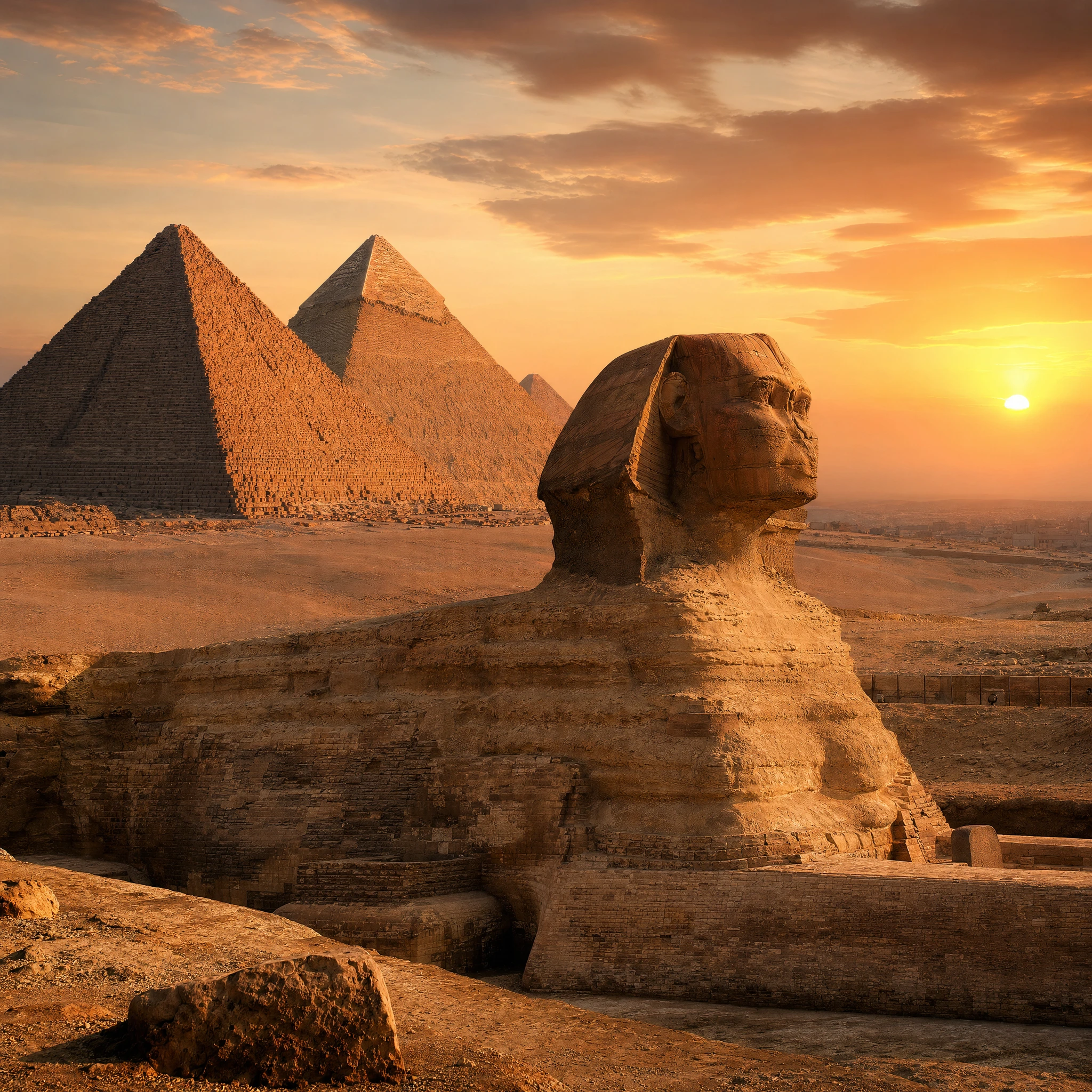
- Giza Pyramids and the Sphinx — Khufu’s Great Pyramid is the only surviving Ancient Wonder of the World
- Grand Egyptian Museum (GEM) on the Giza Plateau — the world’s largest single-civilisation museum
- Khan el-Khalili bazaar, Al-Azhar Mosque, Sultan Hassan, and Ibn Tulun in Islamic Cairo
- Signature dishes: koshari at Abou Tarek, ful and taameya at Felfela, molokhia at Abou El Sid
🏛️ Luxor
Ancient Thebes — a small Nile-side town where 200 acres of Karnak temple, Luxor Temple, and the Valley of the Kings sit on opposite banks. Plan 2-3 full days: one for the West Bank (Valley of the Kings, Hatshepsut’s temple, the Colossi of Memnon), one for Karnak and Luxor Temple, and an early-morning hot-air balloon over the necropolis if budget allows.
- Valley of the Kings — 63 royal tombs including KV62 (Tutankhamun) and KV17 (Seti I)
- Karnak Temple complex — 200 acres built over 1,500 years of pharaonic history
- Hatshepsut’s Temple at Deir el-Bahari and the Colossi of Memnon
- Signature dishes: hamam mahshi (stuffed pigeon), molokhia, fresh taameya
⛵ Aswan
Egypt’s southern frontier on the Nile’s First Cataract and the transfer point for Abu Simbel. Aswan is quieter and more Nubian in character than Luxor — granite islands sit mid-river, feluccas drift at sunset, and the High Dam controls the Nile’s annual flood. Plan 2 nights plus a dawn road or flight transfer to Abu Simbel.
- Philae Temple on Agilkia Island — relocated block by block from the flooded original site
- Abu Simbel — Ramses II’s 13th-century-BCE rock-cut temples, 280 km south
- Felucca sail at sunset and a visit to the Nubian villages of Elephantine Island
- Signature dishes: fiteer baladi, ful, Nubian-style stuffed pigeon
🌊 Alexandria
Egypt’s 5-million-strong Mediterranean port, Alexander the Great’s ancient capital. The seafront Corniche, a revived Bibliotheca Alexandrina, and layered Greco-Roman ruins make for a striking 1-2 day stop, and a 2-hour Turbo train from Cairo makes it an easy extension.
- Bibliotheca Alexandrina — the modern library built on the site of the ancient one, opened 2002
- Citadel of Qaitbay on the site of the destroyed Pharos lighthouse
- Catacombs of Kom El Shoqafa and the Roman Amphitheatre
- Signature dishes: sayadeya (fisherman’s rice), grilled Mediterranean seafood, foul
🐠 Sharm El-Sheikh
Egypt’s flagship Red Sea resort on the southern tip of Sinai — 350 days of sun a year, Ras Mohammed coral walls, and direct European low-cost flights. Families and divers base themselves at Na’ama Bay or the quieter Nabq Bay. A 2-hour overland run reaches St Catherine’s Monastery at the foot of Mount Sinai.
- Ras Mohammed National Park — Shark Reef and Yolanda Reef drift dives
- Na’ama Bay and Old Market (Sharm el Maya) for dining and nightlife
- Day trip to St Catherine’s Monastery and the sunrise hike up Mount Sinai
- Signature dishes: grilled Red Sea fish, koshari, seafood tagine
🏜️ Siwa Oasis
A Berber-speaking salt-lake oasis near the Libyan border — 560 km west of Cairo, a full day’s drive, with Cleopatra’s Spring, the Oracle of Amun consulted by Alexander the Great in 331 BCE, and the mud-brick Shali Fortress. Siwa is culturally and linguistically distinct from the Nile Valley and is worth a 2-3 night stop for travellers chasing something quieter.
- Oracle of Amun at Aghurmi — where Alexander was reportedly hailed as the son of Zeus
- Shali Fortress ruins and Cleopatra’s Spring for a pre-dusk swim
- Salt-lake floating and Great Sand Sea dune safaris
- Signature dishes: Siwan date dishes, tagine, olive-oil-drizzled breads
Egyptian Culture & Etiquette — What to Know Before You Go
The Essentials
- Dress modestly in public. Egypt is Muslim-majority and socially conservative outside resort zones. Shoulders and knees covered for men and women in towns, museums, and at religious sites; women should carry a scarf for mosque visits. Red Sea resort beaches and Dead Sea-style hotel pools are relaxed.
- Right hand only for eating and giving. The left hand is traditionally considered unclean. Accept tea, hand over money, and eat shared koshari or molokhia with the right hand.
- Greetings matter. As-salamu alaykum (“peace be upon you”) is the universal greeting; the reply is wa-alaykum as-salam. Handshakes are standard between men; wait for a woman to extend her hand first.
- Baksheesh is everywhere. Tipping oils almost every interaction: 10-15 EGP for a museum attendant opening a shut chamber, 10-15% in restaurants on top of any service charge, 20-30 EGP for hotel porters. Carry a stack of small EGP notes (5, 10, 20).
- Ramadan sensitivity. During the holy month (17 Feb – 19 Mar 2026) do not eat, drink, or smoke in public during daylight, including in your car at traffic lights. Hotels still serve guests discreetly and iftar at sundown is a highlight.
Religion & Heritage
- Coptic Christian context. Roughly 10% of Egyptians are Coptic Orthodox Christians — one of the oldest Christian communities in the world. Their churches, festivals (Coptic Christmas on 7 January), and Coptic Cairo’s Hanging Church are a major part of the cultural landscape and welcome respectful visitors.
- Mosque etiquette. Remove shoes, cover shoulders and knees, and women cover their hair. Most major mosques (Al-Azhar, Ibn Tulun, Muhammad Ali at the Citadel) welcome non-Muslim visitors outside prayer times.
- Photographing people. Ask before photographing anyone — especially women and in small-town Upper Egypt. A smile and a gesture usually suffices, and a small tip is sometimes expected for a posed photo with a costumed guard at a site.
- Pharaonic pride. Modern Egyptians are immensely proud of their 5,000-year heritage; a small knowledge of Cleopatra, Ramses II, or Tutankhamun is a great ice-breaker in any taxi or souk.
A Food Lover’s Guide to Egypt
Egyptian food is heartier and more bean-forward than Levantine mezze: chickpeas and fava beans anchor breakfast, rice and lentil dishes anchor lunch, and slow-simmered meat stews anchor family dinners. Meals are communal and bread (aish baladi, the puffed flatbread) is a utensil — used to scoop dip, wrap a falafel, or mop up a tagine. The single best cheap move in Cairo is a late-morning plate of koshari at Abou Tarek for 50-70 EGP followed by a mint tea in an alley cafe in Khan el-Khalili; the most memorable Nile Valley move is a slow hamam mahshi dinner in Luxor.
Must-Try Dishes
| Dish | Description |
|---|---|
| Koshari | Egypt’s national street dish: rice, lentils, chickpeas, macaroni, and fried onions topped with spicy tomato sauce and garlic-vinegar dressing. A full bowl at Abou Tarek downtown costs 50-70 EGP. |
| Ful medames | The default breakfast: slow-cooked fava beans mashed with olive oil, lemon, cumin, and garlic, usually scooped into baladi bread. From a street cart: 10-20 EGP. |
| Taameya | Egyptian falafel — made from mashed fava beans rather than chickpeas, deeper green inside, crispier outside, and coated in sesame. 5-10 EGP per piece from street vendors. |
| Molokhia | A dark-green stew of jute leaves simmered in garlic and coriander broth, served over rice with chicken or rabbit on the side. Pharaonic-era dish still on every home table. |
| Fiteer baladi | “Egyptian pizza”: flaky, multi-layered ghee pastry served either sweet (honey and clotted cream) or savoury (white cheese, sausage, minced meat). |
| Hamam mahshi | A Luxor and Nile Valley speciality: whole pigeon roasted with freekeh or rice packed into the cavity; rich, gamey, and the canonical Upper Egypt feast. |
| Umm Ali | The national dessert: a bread-pudding-like dish of flaky pastry soaked in hot sweetened milk with coconut, raisins, and pistachios. |
Street Food & Café Culture
Egypt’s street food layer is cheap, plentiful, and almost entirely pork-free. A shawarma wrap runs 30-60 EGP, a full foul-and-taameya breakfast plate is 30-50 EGP, and a plate of grilled kofta at a downtown cart is 80-120 EGP. Coffee is central to the day: bitter ahwa turki (Turkish-style Egyptian coffee) in small brass pots, sweet mint tea (shai bi na’na’), and sahlab (hot milk thickened with orchid root) in winter. A sit-down coffee in a Jabal-side Cairo café costs 40-70 EGP; a fresh-squeezed mango juice from a Downtown stand is 20-30 EGP. Alcohol is available at hotels, licensed restaurants, Red Sea resorts, and Stella-brand bars in tourist zones; a local Stella or Sakara lager at a bar runs 60-100 EGP.
- Chains and institutions: Abou Tarek (downtown Cairo koshari), Felfela (tourist-friendly Egyptian classics), Abou El Sid (mid-range molokhia and grills), Gad (all-day chain)
- Signature items: koshari with extra sauce, ful with olive oil, taameya with tahini, shai bi na’na’ (mint tea), umm ali at room temperature, Stella beer in bottles
Off the Beaten Path — Egypt Beyond the Guidebook
White Desert (Sahara el Beyda)
Five hours southwest of Cairo via the Bahariya Oasis, the White Desert is a protected national park of wind-sculpted chalk formations — mushroom-shaped towers and pinnacles that glow soft pink at sunrise and stark white under a full moon. Overnight 4×4 camping tours from Bahariya typically run 3,000-5,000 EGP (roughly USD 60-100) per person including a Bedouin guide, dinner around a fire, and bedding under the stars.
Dendera & Abydos Temples
Two extraordinarily well-preserved late-period temples 1.5 to 3 hours north of Luxor. Dendera’s painted ceiling with its zodiac is still vividly coloured after 2,000 years; Abydos’s Seti I Temple contains the King List of 76 pharaohs carved into the wall by Ramses II, and hieroglyphs so sharp they look just cut. Both are visited as a single long day trip from Luxor and still draw a fraction of the Valley of the Kings crowds.
Bahariya Oasis
260 km southwest of Cairo on the desert road, Bahariya is the staging point for the White Desert and home to the Valley of the Golden Mummies — a necropolis excavated in 1999 that yielded more than 250 gilded Greco-Roman mummies. The oasis itself is a cluster of date palm groves, hot springs, and small mud-brick villages, and most travellers base themselves here for one or two nights around a desert safari.
Dahab
A laid-back Bedouin town 85 km north of Sharm El-Sheikh on the Sinai east coast, Dahab is the cheap, quiet alternative to the big Red Sea resorts. The Blue Hole free-dive site just north of town is a world-class draw for technical divers, but the real reason to come is the slow rhythm — seafront cafés on cushions, camel rides into Wadi Gnai, and a desert-to-sea landscape that still feels un-packaged.
Saqqara & Dahshur
An hour south of Giza — and astonishingly, most Cairo visitors skip it. Saqqara is the home of the Step Pyramid of Djoser, completed around 2670 BCE and the oldest major stone building in the world; the recently opened Serapeum houses the massive granite sarcophagi of sacred Apis bulls. A further 10 km south at Dahshur are the Red Pyramid and the Bent Pyramid of Sneferu — Khufu’s father — usually visited in near-solitude.
Practical Information
Quick reference; values current as of April 2026.
| Currency | Egyptian Pound (EGP); 1 USD ≈ 48-50 EGP (19 Apr 2026); volatile after the March 2024 devaluation. |
| Cash needs | Cash-heavy. Cards work at hotels and supermarkets; small museums, taxis, street food, and baksheesh are cash-only. Carry 500-1,000 EGP in small notes. |
| ATMs | Widespread in Cairo, Alexandria, Luxor, Aswan, and resorts. NBE, CIB, and Banque Misr ATMs accept foreign cards; 50-100 EGP fee and a 4,000-8,000 EGP per-transaction cap. |
| Tipping (baksheesh) | Expected everywhere. 10-15% in restaurants, 10-20 EGP for porters and attendants, small-note tips for museum staff and cruise crew. |
| Language | Arabic official; Egyptian Arabic is the spoken dialect. English is widely spoken in tourism. |
| Safety | U.S. State Department currently Level 3 “Reconsider Travel” with stricter sub-advisories for North Sinai and the Western Desert; Nile Valley and Red Sea resorts operate normally. |
| Connectivity | 4G/5G solid in Cairo, Alexandria, and the Red Sea; patchier in Upper Egypt. Tourist SIMs 300-500 EGP; eSIMs (Airalo, Holafly) work on landing. |
| Power | Type C/F plugs, 220V, 50Hz |
| Tap water | Not potable anywhere, hotels included. Drink bottled water (10-15 EGP per 1.5 L bottle); use it for teeth brushing in budget accommodation. |
| Healthcare | Good private hospitals in Cairo (As-Salam International, Cleopatra, Dar Al Fouad). Travel insurance strongly recommended. |
| Emergencies | 122 police, 123 ambulance, 126 Tourism Police. |
Budget Breakdown — What Egypt Actually Costs
💚 Budget Traveller
Expect roughly USD 40-70 per day on hostels (Cairo has several good ones at 200-400 EGP for a dorm), street koshari and ful meals for 30-70 EGP, 2nd-class AC trains between cities, Uber for 30-50 EGP per urban ride, and single-entry site tickets paid à la carte. Stretch the budget further with the Cairo Metro at 6-10 EGP per ride, free walking through Khan el-Khalili and Islamic Cairo, and sleeping-train fares that double as a hotel night.
💙 Mid-Range
Plan USD 90-180 per day for a 3-4 star Nile-side hotel in Cairo (1,500-3,000 EGP a night), a 4-night Nile cruise between Luxor and Aswan (USD 400-700 per person all-inclusive), sit-down dinners at Abou El Sid or Felfela (200-400 EGP per person), an Egyptologist guide at 800-1,500 EGP per day, and occasional domestic EgyptAir hops Cairo-Luxor or Cairo-Aswan. This tier is where most first-time independent visitors land.
💜 Luxury
USD 400+ per day unlocks pyramid-view stays at Marriott Mena House Giza or Four Seasons Cairo at First Residence (USD 350-700 a night), top-tier Sanctuary Sun Boat IV and Oberoi Philae Nile cruises (USD 1,200-2,500 per person for 4 nights), a dedicated Egyptologist private guide, and domestic flights linking Cairo, Aswan, and Abu Simbel in a single day.
| Tier | Daily (USD) | Accommodation | Food | Transport |
|---|---|---|---|---|
| Budget | $40-70 | Hostel dorm 200-400 EGP / basic Nile cruise cabin | Koshari, ful, taameya ($2-5/meal) | 2nd-class trains + Uber ($5-12/day) |
| Mid-Range | $90-180 | 3-4 star hotel 1,500-3,000 EGP / mid-range Nile cruise | Sit-down dinners, cafes ($15-30/meal) | Sleeper train + domestic flights ($25-60/day) |
| Luxury | $400+ | 5-star pyramid-view / top-tier Nile cruise ($350+) | Fine dining, cocktails ($60+/meal) | Private driver + domestic flights ($180+/day) |
Planning Your First Trip to Egypt
A first trip to Egypt works best at 10-14 days. That window fits Cairo, a Nile cruise between Luxor and Aswan, Abu Simbel, and a few Red Sea days without feeling rushed. Shorter 7-day trips can cover Cairo + Luxor + Aswan only.
- Apply for the e-Visa before you fly. USD 25 for a 30-day single-entry visa through visa2egypt.gov.eg. Alternatively buy it on arrival at CAI, HRG, SSH, or LXR for USD 25 cash. Save the QR code offline.
- Book your Nile cruise 2-3 months ahead. Luxor-Aswan 4-night boats fill their October-April schedules quickly — expect USD 400-700 per person for mid-range, USD 1,200+ for top-tier Oberoi and Sanctuary vessels.
- Pre-book the Grand Egyptian Museum. Entry tickets are timed and the Tutankhamun galleries sell out in peak season.
- Check Ramadan dates. Ramadan 2026 covers 17 February – 19 March. Tourist sites stay open but plan meals around iftar and pack snacks for day trips.
- Layer your packing. Modest clothing for city and temple visits, sturdy shoes for the Valley of the Kings, a light fleece for Cairo winter nights and desert camps, and a full stack of USD small bills for the arrivals visa and baksheesh.
Classic 10-Day Itinerary: Cairo 3 nights (+ Saqqara day trip) → overnight sleeper train → Luxor 2 nights → Nile cruise 3 nights Luxor → Aswan → Aswan 1 night + Abu Simbel day trip → fly Cairo and out.
Frequently Asked Questions
Is Egypt expensive to visit?
Egypt is one of the cheapest major cultural destinations in the world after the March 2024 Egyptian pound devaluation. A filling plate of koshari is 50-70 EGP (about USD 1-1.50), a mid-range Cairo hotel runs 1,500-3,000 EGP a night, and a 4-night Luxor-Aswan Nile cruise sits around USD 400-700 per person all-inclusive — roughly half of a comparable trip to Jordan or Israel.
Do I need to speak Arabic?
No. Arabic is official and Egyptian Arabic is the spoken dialect, but English is widely understood in tourism, hospitality, and museums. Learn shukran (thank you), lo samaht (please), and as-salamu alaykum (the universal greeting) and you will be welcomed warmly even with no other Arabic.
Is a site pass worth it?
Egypt does not sell a single national monument pass. Luxor sells a combined West Bank ticket at the Valley of the Kings gate; Giza and the Grand Egyptian Museum each require separate tickets. Abu Simbel (~540 EGP for foreigners) is paid separately from Aswan’s Philae Temple. Most independent visitors budget 2,000-3,000 EGP in site tickets across a 10-day trip.
Is Egypt safe for solo travellers?
The Nile Valley tourist corridor — Cairo, Luxor, Aswan — the Red Sea resorts, and Alexandria are considered safe for tourism with standard urban precautions, and tourism police protect the major sites. The U.S. State Department currently assigns Egypt a Level 3 “Reconsider Travel” advisory with stricter “Do Not Travel” sub-advisories for North Sinai and the Western Desert along the Libyan border. Solo women routinely visit and should expect more street attention than elsewhere — modest dress and firm boundaries help.
When is the peak season?
October through April is peak, with daytime highs of 18-28°C in Cairo and Luxor. June-August sees Luxor and Aswan routinely top 40°C. November to February is the absolute sweet spot for sites; the Red Sea is warmest April-October.
Can I get by as a vegetarian or vegan?
Yes, easily. Koshari, ful, taameya, molokhia (ask without meat), baba ghanoush, and fiteer all work. Strict vegans need to ask about ghee and eggs in pastries. Coptic fasting seasons produce excellent vegan dishes at local restaurants.
Is the Grand Egyptian Museum open in 2026?
Yes. The GEM began phased openings in 2024-2025 and is fully open in 2026 with all 12 main galleries including the complete Tutankhamun collection shown together for the first time. Tickets are timed — book online before arrival, especially during peak season and around the October and February Abu Simbel festivals.
Ready to Explore Egypt?
Start with our city guides to Cairo, Luxor, and Aswan, or jump straight to the full Egypt trip-cost breakdown.
Explore More
Cities we cover in Egypt
More country guides you might like
Plan your trip to Egypt
The booking tools we use ourselves. FFU may earn a commission at no extra cost to you.
Plan & book your trip to Egypt
Booking through these searches supports our guides at no extra cost to you.