
Languages of El Salvador
All languages of Central America →fluent beta classical · classes by phone with Maya at ranas.ai/maya
El Salvador Travel Guide — World-Class Surf, the Land of Volcanoes & Central America’s Big Comeback
El Salvador is the Central American comeback story of the decade: once a place travellers skipped, now reclassified to the safest U.S. advisory level — the same as Japan or Switzerland. Pack that turnaround together with point-break surf, a string of smoking volcanoes and turquoise crater lakes, flower-route coffee towns, Maya ruins and the friendliest pupusa stands in the Americas, all paid for in U.S. dollars, and you have one of the region’s most exciting — and easiest — new destinations.
📋 In This Guide
- Overview — Big country experiences, tiny distances
- The comeback — from skipped to safest
- Best time to visit (season by season)
- Getting there & entry
- Getting around
- Where to go — surf coast, volcanoes & the Flower Route
- Culture & people
- A food lover’s guide to El Salvador
- Off the beaten path
- Practical information
- Budget breakdown — what El Salvador costs in 2026
- Planning your first trip
- Frequently asked questions
Overview — Big Country Experiences, Tiny Distances
El Salvador is the smallest country in Central America, but it punches far above its size. In a single day you can surf a world-class point break in the morning, hike a steaming volcano to a turquoise crater lake in the afternoon, and eat pupusas in a mural-painted mountain town by night — because nothing here is more than a few hours apart. It’s the only Central American country with just a Pacific coast (no Caribbean side), and that coast happens to deliver some of the best and most consistent surf in the Americas.
The bigger story, though, is the transformation. After years as a destination travellers avoided, a dramatic fall in violent crime led the U.S. to move El Salvador to its lowest travel-advisory tier in 2026. Tourism has surged, infrastructure is improving fast, and the welcome is genuine — this is the moment to visit before the secret is fully out.
The Comeback — From Skipped to Safest
El Salvador’s headline isn’t a festival or a season — it’s a turnaround. Once labelled one of the most dangerous countries in the world, it has seen violent crime plummet over the past few years, and in 2026 the U.S. State Department placed it at Level 1 — Exercise Normal Precautions, the same rating as Japan, Switzerland and Australia. For travellers that means the surf, volcanoes and colonial towns that were always here are finally easy to enjoy, with new boutique hotels, beach hostels and tour operators springing up to meet the rush. (As with anywhere, use common sense and check the latest official advice before you go.)
Best Time to Visit El Salvador (Season by Season)
November–March — Dry season (best for sightseeing)
Clear skies, lower humidity and green post-rains landscapes — ideal for volcanoes, the Ruta de las Flores and the colonial towns. Cool mountain nights, so pack a light layer for the highlands.
March–October — Surf season
The Pacific swells build through the warmer months, with May to October bringing the biggest, most consistent waves for surfers at El Tunco, Punta Roca and beyond.
September–October — Green/value
The wettest stretch, with afternoon downpours but the lowest prices and lush scenery — great value if you plan around the rain.
Getting There & Entry
Monseñor Óscar Arnulfo Romero International Airport (SAL) near San Salvador is the main gateway, with frequent nonstop flights from US hubs (Miami, Houston, Los Angeles, Atlanta) — it’s one of the easiest Central American capitals to reach.
- Visa: US citizens don’t need a visa for stays of up to 90 days; you buy a $12 tourist card in cash on arrival (this also covers the CA-4 region of Guatemala, Honduras and Nicaragua).
- Passport: valid for your stay; bring proof of onward travel.
- From the airport: the surf beaches (El Tunco, El Zonte) are about 45 minutes away; San Salvador is around an hour.
Getting Around
- Tourist shuttles: the easiest way to link the surf coast, San Salvador, the Ruta de las Flores and the volcanoes — comfortable and cheap.
- Chicken buses: colourful, ultra-cheap public buses for the adventurous and budget-minded.
- Rental car: excellent for a small country — you can see a lot in a week, with short drives between regions.
- Rideshare & taxis: apps work in San Salvador; agree fares elsewhere.
Where to Go — Surf Coast, Volcanoes & the Flower Route
The Surf Coast (El Tunco & El Zonte)
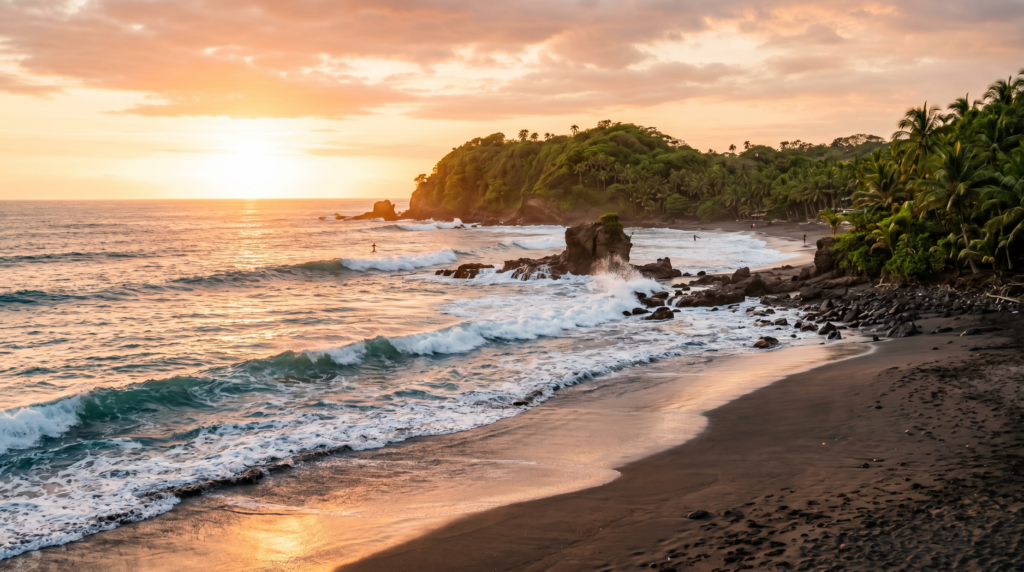
The travellers’ hub: El Tunco’s lively beach scene and the famous Punta Roca point break, plus mellow El Zonte (“Bitcoin Beach”) for surf lessons, sunsets and a laid-back vibe.
Santa Ana Volcano & Lake Coatepeque
Hike Ilamatepec (Santa Ana), the country’s highest volcano, to a glowing turquoise crater lake, then cool off in the vast blue caldera of Lake Coatepeque — one of Central America’s most beautiful lakes.
Ruta de las Flores
A scenic mountain route of coffee fincas and colourful towns — Ataco’s murals, Apaneca’s cool air and Juayúa’s famous weekend food festival — threaded with waterfalls and viewpoints.
San Salvador & the Maya Past
The capital’s historic centre and markets, plus the nearby UNESCO-listed Joya de Cerén (the “Pompeii of the Americas”) and the Tazumal pyramids — the country’s Maya heritage.
Culture & People
Salvadorans — guanacos, as they fondly call themselves — are famously warm, hard-working and proud of their country’s revival. The culture is predominantly mestizo and Catholic, with deep Maya and Pipil roots, expressed in mural art, marimba music and a strong tradition of poetry and storytelling. After a difficult recent history, there’s a palpable sense of optimism, especially among the young.
Daily life revolves around family, faith and food, and visitors are met with genuine curiosity and friendliness. Spanish is universal; English is increasingly spoken in the surf towns and tourism. The pace is relaxed, the welcome is real, and a few words of Spanish go a long way.
A Food Lover’s Guide to El Salvador
- Pupusas — the national dish and obsession: thick handmade corn tortillas stuffed with cheese, beans, pork (chicharrón) or loroco, served with curtido slaw and salsa, for around a dollar each.
- Yuca frita & pastelitos — fried cassava with slaw, and crispy stuffed pastries — the classic street snacks.
- Seafood & fresh fruit — ceviche and grilled fish on the coast, plus tropical fruit and fresh licuados (fruit shakes).
- Coffee — some of Central America’s best, grown on the volcanic slopes of the Ruta de las Flores; take a finca tour at source.
Off the Beaten Path
- Suchitoto — a beautifully preserved colonial town above Lake Suchitlán, with cobbled streets, art galleries and birdlife.
- El Imposible National Park — rugged, biodiverse cloud-and-dry forest in the west, great for hiking and birding.
- La Ruta de Paz — the eastern “Peace Route” around Perquín, telling the story of the country’s history with striking honesty.
- Tamanique waterfalls — a refreshing jungle waterfall hike just inland from the surf coast.
- Playa El Cuco & the east — quieter, wilder beaches away from the El Tunco crowds.
Practical Information
- Money: the US dollar is the official everyday currency, so US travellers need no exchange; ATMs dispense dollars. Bitcoin is accepted by some businesses but entirely optional — it is no longer required legal tender.
- Safety: now rated Level 1 by the US (exercise normal precautions); violent crime has fallen sharply. Use standard city sense in San Salvador and check current advice before travel.
- Power: 120V, US-style plugs — no adapter needed for US travellers.
- Health: drink bottled or filtered water; standard tropical precautions and travel insurance recommended.
- Connectivity: good 4G in towns and surf hubs; cheap local SIMs available.
- Surf: mostly rocky reef and point breaks — bring or rent booties, and take a lesson if you’re new.
Budget Breakdown — What El Salvador Costs in 2026
El Salvador is affordable and dollar-priced, so there are no exchange surprises. Rough per-person, per-day estimates in USD:
| Style | Accommodation | Food | Total / day |
|---|---|---|---|
| Budget / surf hostel | $12–30 | $8–15 (pupusas & markets) | $30–50 |
| Mid-range | $45–90 hotel | $20–35 | $70–120 |
| Comfort | $120–250+ | $40–70 | $150–300+ |
Pupusas cost about a dollar, surf lessons run $20–30, and most natural sites are free or a few dollars. A week of surf, volcanoes and food towns is genuinely cheap.
Planning Your First Trip
A great first week: base a few nights on the surf coast (El Tunco/El Zonte) for waves and sunsets, then head inland to Santa Ana for the volcano hike and Lake Coatepeque, and finish along the Ruta de las Flores for coffee towns and food. Add Suchitoto or Joya de Cerén if you have time. Distances are short, the dollar makes budgeting easy, and shuttles link it all — just pack a light layer for cool volcano nights.
Frequently Asked Questions
Is El Salvador safe to visit in 2026?
It’s far safer than its old reputation suggests — the U.S. moved it to Level 1 (Exercise Normal Precautions) in 2026 after a sharp fall in violent crime. Use normal city sense in San Salvador, and always check the latest official advisory before you travel.
Do US citizens need a visa for El Salvador?
No visa is required for stays of up to 90 days. You buy a $12 tourist card in cash on arrival, which also covers the wider CA-4 region. Bring a valid passport and proof of onward travel.
What currency does El Salvador use?
The US dollar is the official everyday currency, so US travellers need no exchange. Bitcoin is accepted by some businesses but is entirely optional and no longer required legal tender.
When is the best time to visit?
November to March for dry, clear weather and sightseeing; May to October for the biggest surf. The shoulder months offer the best value.
Is El Salvador good for non-surfers?
Very — volcanoes and crater lakes, the Ruta de las Flores coffee towns, Maya ruins, colonial Suchitoto and superb food make it rewarding well beyond the waves.
Ready to Explore El Salvador?
World-class surf, smoking volcanoes and a remarkable comeback — all in U.S. dollars and a short flight from home. Tell us your dates and travel style and we’ll help you plan the perfect week. Plan your trip →
Explore More
How This Guide Was Built
Researched and written by the Facts From Upstairs team, last updated . Travel advisories, prices and entry rules change — always confirm current details with official sources before you travel.
More country guides you might like
Plan your trip to El Salvador
The booking tools we use ourselves. FFU may earn a commission at no extra cost to you.
Plan & book your trip to El Salvador
Booking through these searches supports our guides at no extra cost to you.