
Saint Lucia Travel Guide — The Pitons, Rainforest & the Caribbean’s Most Romantic Island
Saint Lucia is the Caribbean island that looks the way you imagine the Caribbean should: twin volcanic spires — the Pitons — rising straight from a turquoise sea, rainforest tumbling to the shore, a drive-in volcano with steaming mud baths, and some of the region’s most luxurious (and most romantic) hideaways. Honeymooners adore it, but beyond the resorts lies a lush, warm, deeply Creole island that rewards every kind of traveller.
📋 In This Guide
- Overview — Rainforest, volcano & the Pitons
- The Pitons & the drive-in volcano
- Best time to visit (season by season)
- Getting there
- Getting around
- Where to go — Soufrière, the north & Marigot Bay
- Culture & people — Creole soul
- A food lover’s guide to Saint Lucia
- Off the beaten path
- Practical information
- Budget breakdown — what Saint Lucia costs in 2026
- Planning your first trip
- Frequently asked questions
Overview — Rainforest, Volcano & the Pitons
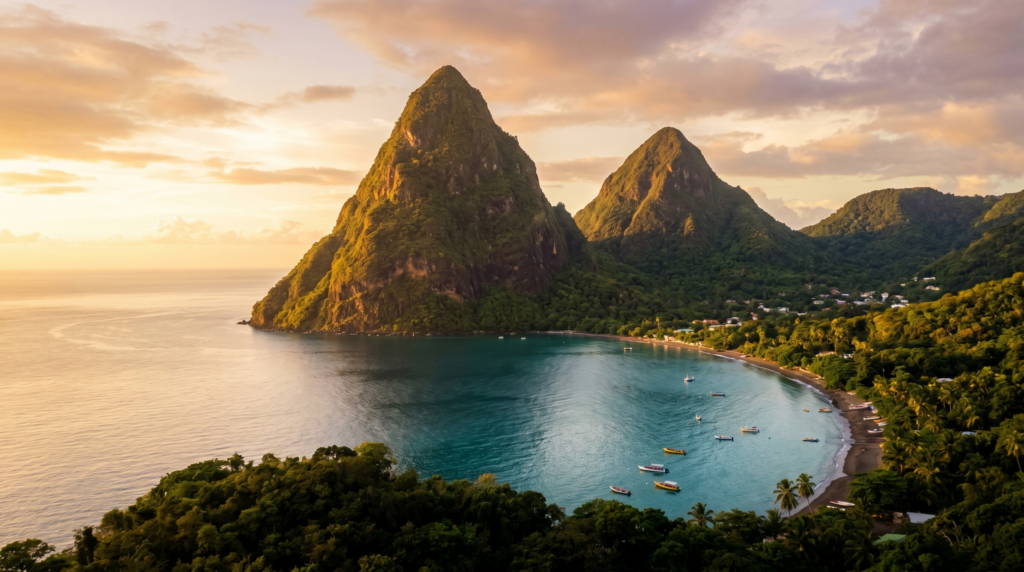
A small, mountainous island in the Eastern Caribbean’s Windward chain, Saint Lucia is defined by drama: the rainforested interior climbs to volcanic peaks, and at Soufrière the twin Pitons — Gros Piton and Petit Piton — soar from the sea in the most photographed view in the Lesser Antilles. Between them sit luxury resorts, a steaming sulphur-spring volcano, hot waterfalls and some of the Caribbean’s best diving.
The island has two faces: the lush, scenic, resort-rich southwest around Soufrière, and the livelier north around Rodney Bay and the capital, Castries, with beaches, marinas and nightlife. It’s famous as a honeymoon destination, but it’s just as good for hikers, divers, foodies and anyone after that perfect blend of nature and Caribbean warmth.
The Pitons & the Drive-In Volcano
Saint Lucia’s signature is geological. The Pitons — Gros Piton (786m) and Petit Piton (740m) — are a UNESCO World Heritage Site and the island’s emblem; you can admire them from a catamaran, a clifftop bar or the Tet Paul nature trail, or hike Gros Piton itself. Just inland, Sulphur Springs is billed as the Caribbean’s only “drive-in volcano,” where you can bathe in warm, mineral-rich mud and soak in geothermal pools, with hot waterfalls and botanical gardens nearby. It’s the most concentrated dose of natural wonder in the region.
Best Time to Visit Saint Lucia (Season by Season)
Mid-December–April — Dry season (best, peak)
The most reliable sunshine, calm seas and ideal hiking weather — and the busiest, priciest time. Book well ahead for the holidays and winter escape season.
May & June — Shoulder (the sweet spot)
Warm seas, the Saint Lucia Jazz & Arts Festival in May, fewer crowds and lower rates, with rain still mostly brief — arguably the best value-to-weather window of the year.
July–November — Wet/hurricane season
Hotter and wetter, with the lushest landscapes and lowest prices, but a real hurricane risk from August to October. Travel insurance is wise.
Getting There
Hewanorra International Airport (UVF) in the south handles most long-haul and US flights (Miami, New York, Charlotte, Atlanta), while George F. L. Charles Airport (SLU) near Castries serves regional hops.
- Visa: US citizens don’t need a visa for short tourist stays (around six weeks); bring a passport valid six months and proof of onward travel.
- Transfers: Hewanorra is about 90 minutes by road from Soufrière and the Pitons — many resorts offer a faster boat or helicopter transfer.
- Cruise: ships dock at Castries (Pointe Seraphine) in the north.
Getting Around
- Taxis: plentiful with fixed government rates; agree the fare up front (often quoted in US or EC dollars).
- Tours & boat transfers: the easy way to reach Soufrière and the Pitons; catamaran day trips combine the views with snorkelling and the mud baths.
- Rental car: gives freedom for the scenic west-coast road, but driving is on the left and the mountain roads are steep and winding.
- Minibuses: cheap public vans connect the main towns for budget travellers.
Where to Go — Soufrière, the North & Marigot Bay
Soufrière & the Pitons
The scenic heart: Piton views, Sulphur Springs mud baths, Diamond and Toraille waterfalls, botanical gardens, and the superb diving and snorkelling at Anse Chastanet. Home to the island’s most spectacular resorts.
The North — Rodney Bay & Castries
Beaches, the marina and the liveliest scene, including the famous Friday-night “jump up” street party at Gros Islet, plus Pigeon Island National Landmark and the capital’s markets.
Marigot Bay
A storybook hurricane hole of yachts and palms — once called the prettiest bay in the Caribbean — with upscale hotels and waterfront dining.
The Rainforest Interior
Zip-lines, nature trails and birdwatching for the endemic Saint Lucia parrot, plus hikes through dense tropical forest in the island’s green heart.
Culture & People — Creole Soul
Saint Lucia’s culture is warm, musical and proudly Creole, blending African, French and British heritage — the island changed hands between France and Britain fourteen times, and both legacies linger. English is official, but everyday life runs on Saint Lucian Creole (Kwéyòl), and French place names dot the map. The island has produced two Nobel laureates, including the poet Derek Walcott — a remarkable record for so small a place.
Friday nights belong to the Gros Islet “jump up,” and the calendar bursts with the May Jazz festival, July Carnival and October’s Creole heritage celebrations. The pace is relaxed, the welcome is genuine, and music is never far away.
A Food Lover’s Guide to Saint Lucia
- Green fig & saltfish — the national dish: green banana with salted cod, the classic Saint Lucian breakfast or lunch.
- Bouyon & callaloo — a hearty one-pot stew and a rich dasheen-leaf soup, Creole comfort food.
- Fresh seafood & the Friday fish fry — grilled snapper, lobster (in season) and the Gros Islet and Anse La Raye fish-fry street parties.
- Cocoa, fruit & rum — estate-grown chocolate, tropical fruit, and local Chairman’s Reserve and Bounty rums.
Off the Beaten Path
- Tet Paul Nature Trail — an easy walk with the island’s best up-close Piton views and a glimpse of rural farm life.
- Anse Mamin & secret beaches — quiet, dive-rich coves near Soufrière beyond the resort sands.
- Edmund Forest Reserve — a rainforest hike for serious walkers and birders seeking the Saint Lucia parrot.
- Anse La Raye Friday fish fry — a more local alternative to Gros Islet’s big street party.
- Sugar Beach — the dramatic white-sand beach set right between the two Pitons.
Practical Information
- Money: the East Caribbean dollar is fixed at US$1 = EC$2.70 and US dollars are widely accepted (change may come in EC dollars). Cards work at hotels and restaurants; carry cash for taxis, markets and the fish fry.
- Driving: on the left; roads are steep and winding — allow extra time and confidence.
- Tipping: 10–15%; a service charge is often added — check the bill.
- Power: 240V, UK-style three-pin plugs — US travellers need an adapter (some resorts have US outlets).
- Safety: Saint Lucia is generally safe and welcoming; use standard precautions in Castries at night and on quiet beaches.
- Hurricane season runs June–November — insurance is sensible for summer trips.
Budget Breakdown — What Saint Lucia Costs in 2026
Saint Lucia spans backpacker Soufrière to ultra-luxury Piton-view resorts. Rough per-person, per-day estimates in USD:
| Style | Accommodation | Food | Total / day |
|---|---|---|---|
| Budget | $40–90 guesthouse | $20–35 (local) | $65–100 |
| Mid-range | $120–250 hotel | $40–70 | $150–220 |
| Luxury | $400–1,500+ | $80–200+ | $350–750+ |
Activities add up: a Soufrière tour with mud baths and waterfalls runs $100–130, and a Pitons catamaran cruise $80–150. Base in Soufrière town or the north and use local eateries to keep costs down.
Planning Your First Trip
For a first visit, split your time: a few nights around Soufrière for the Pitons, mud baths, waterfalls and diving, then the north (Rodney Bay) for beaches, the Friday jump-up and easy dining — or stay put at a Piton-view resort if romance is the goal. Travel in the dry season or the May–June sweet spot, pre-book a fast transfer from Hewanorra, and don’t miss a sunset with the Pitons in view.
Frequently Asked Questions
Do US citizens need a visa for Saint Lucia?
No visa is required for short tourist stays (around six weeks). You need a passport valid for at least six months, proof of onward travel, and you’ll fill in an immigration form on arrival.
When is the best time to visit?
Mid-December to April for the driest, sunniest peak season, or May–June for warm seas, the Jazz festival and better value before the wetter months.
Can you climb the Pitons?
Yes — Gros Piton is a guided half-day hike (steep but achievable for fit walkers); Petit Piton is steeper and more technical. For the views without the climb, take the Tet Paul trail or a catamaran cruise.
Is Saint Lucia just for honeymooners?
It’s a top honeymoon island, but it’s equally rewarding for hikers, divers and foodies — rainforest trails, the drive-in volcano, reef diving and the Gros Islet street party suit every traveller.
Can I use US dollars?
Yes — US dollars are widely accepted at the fixed rate of US$1 = EC$2.70, though change may be given in East Caribbean dollars. Cards work in most established places.
Ready to Explore Saint Lucia?
The Pitons, a drive-in volcano and the Caribbean at its most romantic — Saint Lucia delivers postcard scenery with real island soul. Tell us your dates and travel style and we’ll help you plan it. Plan your trip →
Explore More
How This Guide Was Built
Researched and written by the Facts From Upstairs team, last updated . Prices and entry rules change — always confirm current details with official sources before you travel.
More country guides you might like
Plan your trip to Saint Lucia
The booking tools we use ourselves. FFU may earn a commission at no extra cost to you.
Plan & book your trip to Saint Lucia
Booking through these searches supports our guides at no extra cost to you.