
City Guide · Andalusia
Seville, Spain: Orange-Blossom Streets, the World’s Largest Gothic Cathedral, and the Capital of Flamenco
I have lost whole afternoons in the lanes of Santa Cruz, and I still find a tiled patio or a tapas counter I have never seen. We tell first-time travellers that Seville is bigger than it feels — about 686,000 people inside the city, roughly 1.55 million across the metropolitan area — yet the historic core is so walkable you can cross it in twenty minutes if you resist the orange trees and the ceramic shopfronts. My favourite Seville ritual is the 09:00 cafe-con-leche and tostada with crushed tomato on a side street near the Alameda, before the heat arrives and the Cathedral queue forms. Treat this guide as the brief I would hand my own family the day before they boarded the AVE from Madrid — the Real Alcazar timed ticket, the Triana flamenco peñas, the Semana Santa and Feria de Abril 2026 dates back to back, and everything in between .
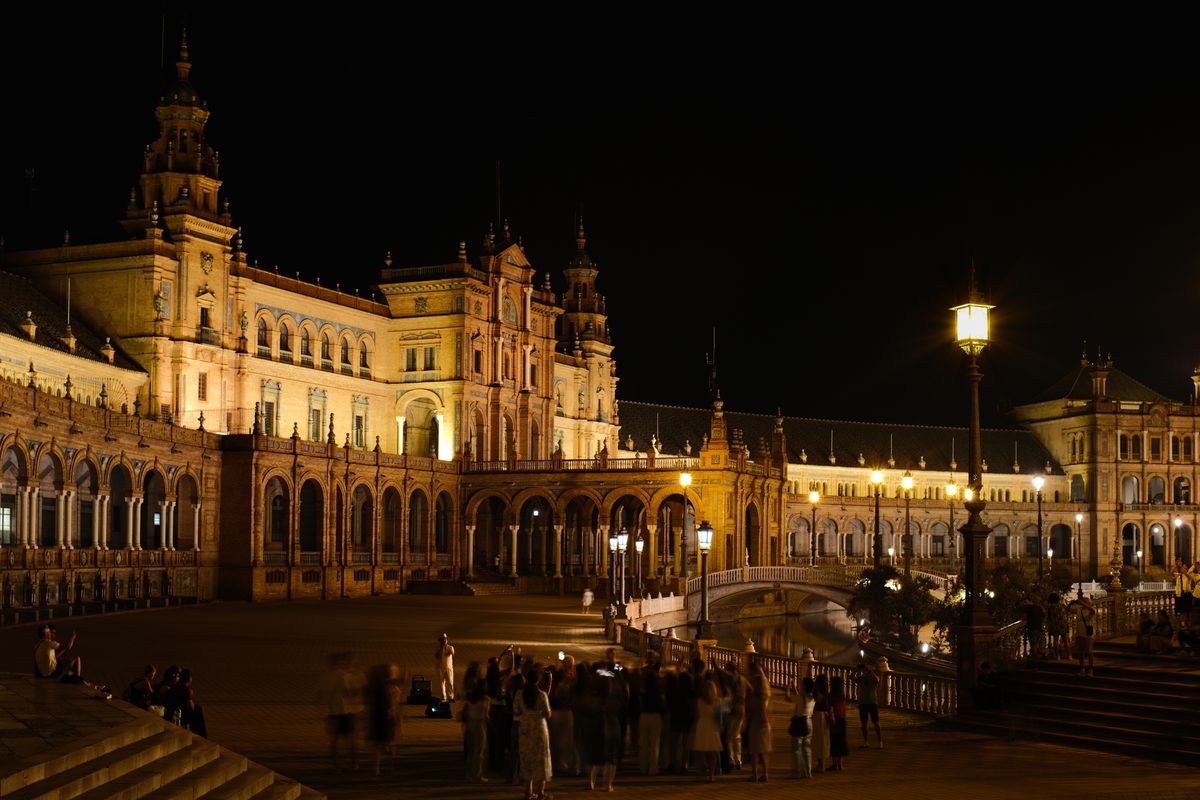
Table of Contents
Why Seville?
Seville is the rare European capital-of-a-region that has spent more than two thousand years absorbing every civilisation that ruled the western Mediterranean — Roman Hispalis, Visigothic, Islamic Ishbiliya, and Christian Castilian — and layered them into a single walkable old town. The city proper holds about 686,000 residents, with roughly 1.55 million across the metropolitan area, which makes Seville the fourth-largest city in Spain after Madrid, Barcelona and Valencia, and the capital of Andalusia, the country’s most populous autonomous region with around 8.7 million people . It sits on the Guadalquivir, the only major navigable river in Spain, about 80 kilometres from the Atlantic — the geography that made it the monopoly port for the entire Spanish New World trade for two centuries.
The city reads as a stack of productive contradictions. It is monumental on a scale that surprises first-time visitors — the Cathedral is the largest Gothic church in the world by volume, the Giralda bell tower is a recycled 12th-century Almohad minaret, and the Real Alcazar is the oldest royal palace still in use in Europe . Yet daily life happens at the scale of the tiled tapas bar, the orange-tree plaza, and the shaded callejón barely wide enough for two people. Three of its monuments — the Cathedral, the Alcazar and the General Archive of the Indies — were jointly inscribed as a single UNESCO World Heritage site in 1987 . It is also the cradle of flamenco, recognised by UNESCO as Intangible Cultural Heritage in 2010, and the home of two of Spain’s most intense annual festivals .
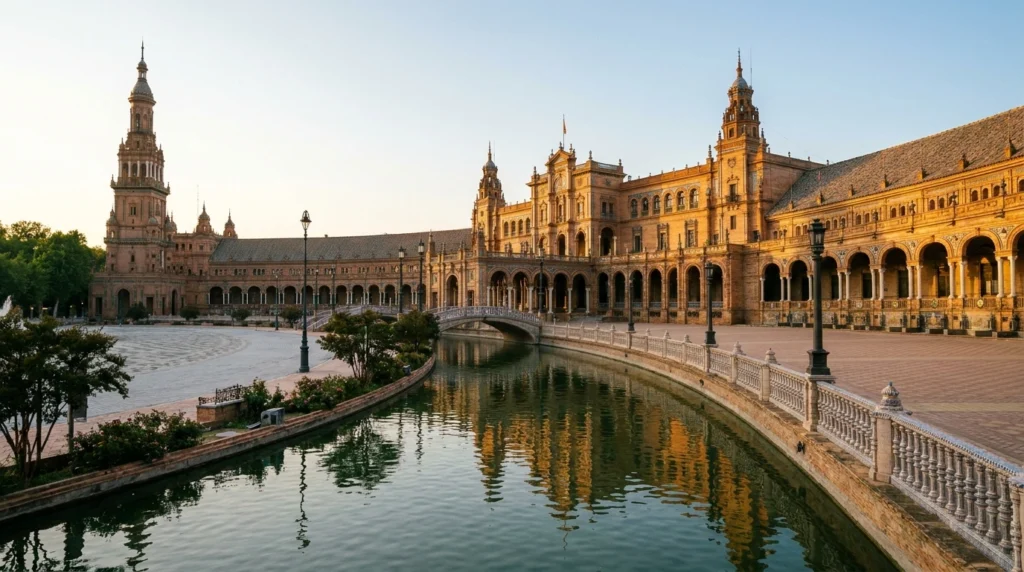
The density of heritage per square kilometre is unusual even by Spanish standards. The Casco Antiguo — one of the largest old towns in Europe — packs the Cathedral, the Alcazar, the medieval Jewish quarter of Santa Cruz, the riverside Torre del Oro, and the 1920s Plaza de España into an area you can cross on foot. The Alcazar alone, with its 14th-century Mudejar Pedro I palace and its layered gardens, draws well over two million visitors a year and has stood in for film-set fantasy kingdoms more than once. What keeps it all coherent rather than overwhelming is the human scale: the historic centre is overwhelmingly low-rise, the streets were laid out for shade rather than cars, and almost every sight on a first-timer’s list sits within a 25-minute walk of the Cathedral.
This guide covers the neighbourhoods you will actually walk, the tapas counters and Triana ceramics worth seeking out, the cathedral-and-palace tier (Cathedral, Giralda, Real Alcazar, Setas de Sevilla, Torre del Oro), the day trips Sevillanos themselves take on weekends, and the practical realities of Schengen rules, the brutal summer heat, and the two back-to-back spring festivals. Seville’s calendar peaks hard in spring 2026: Semana Santa (Holy Week) runs 29 March to 5 April, and the Feria de Abril follows from 12 to 18 April, with the midnight alumbrado lighting on Monday 13 April . Everything else flows from there.
One more orientation point: Seville is built around the afternoon and the evening, not the morning. The heat — July and August routinely sit at 36–37°C and often higher — shapes the entire rhythm of the day. Locals shop and sightsee early, retreat indoors through the worst of the afternoon, and come back to life after 20:00, when the tapas bars fill and the plazas stay busy past midnight. For visitors, the lesson is simple: front-load the monuments before noon, surrender the afternoon to a long lunch and a siesta, and save the streets for the cool of the evening. Do that, and a Seville week stops feeling like a heat endurance test and starts feeling like the city locals actually live in. For the wider Spanish context, this guide pairs with our Spain Travel Guide and the sibling Madrid and Barcelona city guides.
Getting There

Seville Airport (SVQ), about 10 kilometres northeast of the centre, is Andalusia’s busiest hub after Málaga, handling roughly 9.08 million passengers in 2024, up 13.1% year-on-year . It runs domestic links to Madrid and Barcelona plus European low-cost service on Ryanair, Vueling, easyJet and others. The EA airport bus runs to the centre in about 35 minutes for a few euros; a taxi to the historic core is a fixed-style fare of roughly €23–€25 by day.
Rail is often the smarter inbound from elsewhere in Spain. Renfe’s high-speed AVE has linked Madrid and Seville’s Santa Justa station since 21 April 1992 — the original line that launched Spanish high-speed rail — covering the 472 kilometres in about 2 hours 20 minutes . Advance AVE fares start around €30; expect €60–€90 last-minute. Santa Justa also carries regional Media Distancia trains to Córdoba (about 45 minutes), Cádiz and Jerez.
By road, ALSA and other operators run intercity coaches from Madrid, Granada, Málaga and the Costa del Sol into the Plaza de Armas and Prado de San Sebastián bus stations . Coaches are the cheapest option and the most useful for towns the train does not reach, such as Ronda and the smaller pueblos blancos.
Getting Around
Seville’s historic centre is built for walking, and the network beyond it is small, modern and easy to read: one metro line, a single tram, an extensive TUSSAM bus system, and the Sevici public-bike scheme that the city pioneered in 2007 . The flat terrain and the compact core mean most visitors barely use public transport inside the old town — the Cathedral, Alcazar, Santa Cruz, the river and the Setas are all within a 20-minute walk of each other. Transit matters mainly for the airport, Santa Justa station, Triana across the river, and the Plaza de España / María Luisa park edge.
Metro and Cercanías
Seville Metro Line 1 opened on 2 April 2009, running 18 kilometres across 22 stations from the southwestern suburb of Aljarafe through the city to the southeast, and carries around 23.4 million riders a year . It is genuinely useful for connecting Triana and the university area to the centre, but a single line cannot replace walking inside the old town. Renfe Cercanías commuter trains add suburban reach toward Lebrija and Utrera. A single metro fare runs roughly €1.35–€1.80 depending on zones, cheaper with a rechargeable card.
Tram (MetroCentro) and Buses
The MetroCentro tram opened in October 2007 and runs a short 3.5-kilometre line of eight stops from Plaza Nueva past the Cathedral to San Bernardo, carrying about 2.91 million passengers in 2023 . It is most useful as a shuttle along the pedestrianised Avenida de la Constitución. TUSSAM runs the city bus network, including the C-lines that circle the centre and the EA airport bus; a single ride is about €1.40, and the rechargeable tarjeta multiviaje brings it well below €1 per trip .
Sevici Public Bikes and Cycling
Seville’s flat, compact geography makes it one of Spain’s most cycle-friendly cities, and the Sevici bike-share scheme — launched in 2007 with the city’s then-new segregated bike lanes — remains a cheap way to cover ground. A short-term subscription costs a few euros for a week, with the first 30 minutes of each ride free. The dedicated cycle lanes run along the river and through María Luisa park, and the absence of hills means even casual riders can manage the whole core.
Airport Access
- EA airport bus (TUSSAM) to the centre — about 35 minutes, roughly €4
- Taxi SVQ to the historic centre — about 20 minutes, roughly €23–€25 by day
Taxis and Rideshare
Licensed Seville taxis are white with a diagonal yellow stripe; flag-fall and per-kilometre rates are municipally regulated, and airport runs use a fixed-fare structure. A typical cross-centre ride runs €6–€10. Cabify operates in the city; Uber’s presence in Seville has been intermittent, so taxis remain the reliable default. Card payment is increasingly standard, but carry small notes for shorter trips.
Navigation Tips
The Casco Antiguo’s medieval street plan defeats a sense of direction quickly — lanes bend, dead-end and rename themselves within a block. Google Maps and Citymapper both handle Seville’s transit, but the single most useful trick is to navigate by the Giralda, which is visible from much of the old town and always points you back toward the Cathedral. Many central streets are pedestrian-only or restricted to residents, so do not plan to drive into the core.
Neighbourhoods: Where to Base Yourself
Choosing between Seville, Granada and the big two? See our guide to where to stay in Spain.
📍 Seville Map: Every Place in This Guide
Seville’s character changes street by street, and choosing the right barrio shapes the whole trip. The historic core is compact — you can walk it end to end in under half an hour — but each quarter has its own rhythm, price point and noise level. Below are the five neighbourhoods most first-time visitors actually consider, with an honest read on who each suits.


Barrio Santa Cruz
The old Jewish quarter is the postcard Seville — whitewashed alleys, hidden plazas, orange trees and the Cathedral two minutes away. It is also the most touristed and the priciest per square metre. Stay here if it is your first visit and you want everything on your doorstep; avoid it if you want quiet evenings, because the lanes echo with footfall until late.
Triana
Across the Guadalquivir, Triana is the historic heart of Sevillano flamenco and ceramics, with a working-market soul that the centre has partly lost. The riverside Calle Betis is the city’s best sunset spot, looking back at the Torre del Oro and the Giralda. It is a ten-minute walk to the Cathedral over the Isabel II bridge, and prices run noticeably lower than Santa Cruz.
Alameda and La Macarena
North of the centre, the Alameda de Hércules — laid out in 1574 and one of Europe’s oldest public gardens — anchors Seville’s most bohemian district, full of late-opening bars and a younger crowd . La Macarena, around its basilica, mixes everyday Sevillano life with Semana Santa fervour. Good value, lively, and a short walk to Las Setas.
El Arenal and the Centro
El Arenal sits between the Cathedral and the river around the Maestranza bullring and theatre — central, walkable and slightly calmer than Santa Cruz. The wider Centro, around Calle Sierpes and Plaza Salvador, is the shopping and tapas spine of the city. Both put you within five to ten minutes of every major sight, with a mix of mid-range hotels and apartments.
Food and Drink: Tapas, Standing Up
Seville claims to be the birthplace of tapas, and whether or not that is literally true, eating here follows its own grammar: small plates, eaten standing at a zinc-topped bar, washed down with cold fino or manzanilla sherry, and rarely before nine at night. The trick is to order two or three things, move to the next bar, and repeat — a tapeo rather than a sit-down dinner.

What to Order
- Espinacas con garbanzos — spinach and chickpeas, a Moorish-rooted Sevillano classic.
- Pescaíto frito — lightly floured, flash-fried fish, the Andalusian summer staple.
- Solomillo al whisky — pork loin in a garlic-and-whisky sauce, deceptively addictive.
- Salmorejo — the thicker, Córdoba-style cold tomato soup, served with egg and ham.
- Jamón ibérico de bellota — acorn-fed cured ham, the benchmark of any decent bar.
Where to Eat
The Centro and Alameda hold the densest tapas runs; Triana’s Calle San Jacinto and the riverside Betis bars are the best mix of quality and value. For sherry, look for a bar with barrels behind the counter and a chalkboard of finos and amontillados. The covered Mercado de Triana and the Lonja del Barranco food hall are good for grazing across several vendors in one stop.
Timing and Etiquette
Lunch peaks around 2–4pm and dinner rarely starts before 9pm; bars that serve at 7pm are usually catering to tourists. Tapas are ordered at the bar and tallied on the counter; you pay at the end. A caña is a small draught beer, a tinto de verano the locals’ summer answer to sangria. Tipping is light — rounding up or leaving small change is plenty.
Cultural Sights: The Unmissable Three (and More)
Seville’s UNESCO World Heritage listing — inscribed in 1987 — covers the Cathedral, the Alcázar and the Archivo de Indias as a single ensemble, and those three sit within a five-minute walk of one another . Add the Giralda, the Setas, the Torre del Oro and a couple of palaces and you have two full days of sightseeing without ever taking a bus.

Seville Cathedral and the Giralda
The largest Gothic cathedral in the world by volume, built over the city’s former main mosque between the 15th and 16th centuries, holds the tomb of Christopher Columbus and a staggering gilded altarpiece. Its bell tower, the Giralda, began life as a 12th-century Almohad minaret; you climb it by ramp rather than stairs — designed so a rider on horseback could ascend — to the best rooftop view in the city .
The Royal Alcázar

A working royal palace — the upper floors are still used by the Spanish royal family — the Alcázar is the finest surviving example of Mudéjar architecture in Spain. The Palace of Pedro I, completed in 1366, layers Islamic craftsmanship onto a Christian court, and the gardens run to several hectares of pools, hedges and pavilions. Book a timed ticket online; the queue at the Puerta del León can swallow an hour in high season .
Las Setas de Sevilla (Metropol Parasol)

Jürgen Mayer’s giant timber lattice, completed in April 2011, rises 26 metres over the Plaza de la Encarnación on a footprint of roughly 150 by 70 metres. Sevillanos call it Las Setas (“the mushrooms”). The undulating rooftop walkway gives a 360-degree panorama, and the basement museum (the Antiquarium) preserves Roman and Moorish ruins found during construction .
Torre del Oro and the Riverfront

The 13th-century Torre del Oro, built by the Almohads around 1220–1221 as a riverside watchtower, now houses a small naval museum and marks the start of the Guadalquivir promenade. A short walk away, the Plaza de Toros de la Real Maestranza is one of Spain’s oldest and most storied bullrings. Round out a cultural day with the Casa de Pilatos, an Andalusian palace begun in 1483 that blends Mudéjar, Gothic and Renaissance styles .
Flamenco, Festivals and Nightlife
Flamenco is not folklore in Seville — it is living culture, inscribed by UNESCO on its Representative List of the Intangible Cultural Heritage of Humanity on 16 November 2010 . The city’s two great spring festivals, the solemn Semana Santa and the joyous Feria de Abril, bracket the calendar’s emotional extremes. Between them, the bars of the Alameda keep Seville up far later than its sightseeing hours suggest.
Where to See Flamenco
There are three tiers: the polished tablao (ticketed dinner-and-show venues), the intimate peña (members’ clubs that sometimes admit visitors), and the spontaneous bar performance. For a first taste, a Triana or Santa Cruz tablao like the Casa de la Memoria gives a serious, musically honest hour; for the real thing, ask in Triana about a peña night. Avoid the touristic dinner spectacles that prioritise sangria over song.
Semana Santa (Holy Week)
Seville’s Holy Week — running 29 March to 5 April in 2026 — is among the most famous in the world, with brotherhoods (hermandades) carrying ornate pasos through the streets in processions that last well into the night . It is overwhelming, moving and crowded; if you visit, expect closed streets, packed bars and rooms booked months ahead.
Feria de Abril
Two weeks after Easter, the mood flips entirely. The Feria de Abril 2026 runs 12–18 April, opening with the alumbrado — the lighting of the main gate — on the night of Monday 13 April . A purpose-built fairground of casetas (decorated marquees) fills with flamenco dresses, sherry, horses and dancing the sevillanas until dawn. Many casetas are private, but the public ones welcome visitors.
Day Trips From Seville
Seville is the natural base for western Andalusia, with fast trains and good buses reaching the region’s other great cities in well under two hours. If you have more than three days, give one of them to a day trip — the contrast sharpens your sense of what makes Seville itself distinct.
Córdoba
The high-speed AVE reaches Córdoba in about 45 minutes, making the Mezquita — the great mosque-cathedral with its forest of striped arches — an easy day return . Add the flower-filled Judería and a Roman bridge over the Guadalquivir, and Córdoba rewards a single full day.
Cádiz
About an hour and forty minutes south by train, Cádiz is one of the oldest continuously inhabited cities in Western Europe, an Atlantic port wrapped almost entirely by sea walls and beaches. Its compact old town, golden cathedral and seafood make it the best coastal counterpoint to inland Seville.
Ronda and the White Villages
Perched over the El Tajo gorge and split by the dramatic Puente Nuevo, Ronda is the most spectacular of Andalusia’s pueblos blancos. It is roughly two hours by bus or a scenic regional train; combine it with one of the smaller white villages such as Zahara or Grazalema if you hire a car.
Jerez and Italica
Jerez de la Frontera, the home of sherry and Andalusian horsemanship, sits about an hour away by train. Closer still, the Roman ruins of Italica — birthplace of the emperors Trajan and Hadrian, and another Game of Thrones location — lie just nine kilometres north at Santiponce, reachable by city bus in around 40 minutes.
When to Visit: A Season-by-Season Guide
Seville’s climate is the single biggest factor in timing a trip. It is one of the hottest cities in Europe, with summer highs that regularly top 40°C, and a glorious but crowded spring. Here is how the year actually feels on the ground.
Spring (March–May)
The peak season and, weather-wise, the best: orange blossom scents the streets in March and April, temperatures sit in the low-to-mid 20s°C, and the city’s two great festivals fall here. The trade-off is crowds and price — Semana Santa and the Feria push hotels to their annual peak. Book months ahead or aim for the quieter shoulders of early March or late May.
Summer (June–August)
Brutally hot. Daytime highs frequently exceed 40°C, and locals retreat indoors for a long midday siesta, with life resuming after dusk. Hotels are cheapest now, and if you adopt the Sevillano rhythm — sights early, pool or shade at midday, tapas late — summer is survivable and good value. The riverside and shaded María Luisa park become essential.
Autumn (September–November)
The best-kept secret: the heat breaks through September into pleasant high-20s, the spring crowds are gone, and prices ease. October in particular offers warm days, mild evenings and uncrowded monuments — arguably the ideal month to visit if you are not tied to the festivals.
Winter (December–February)
Mild by European standards — daytime highs of 15–17°C, rarely freezing — with the lowest prices and thinnest crowds of the year. Some rain, shorter days and cooler evenings, but the major monuments stay open and you can have the Alcázar nearly to yourself. Bring a jacket for the evenings.
Budget Breakdown: What Seville Actually Costs
Seville is one of the better-value major cities in Western Europe, noticeably cheaper than Madrid or Barcelona for food and drink. The figures below are per-person daily estimates excluding flights, in euros, based on 2025–2026 prices.
Backpacker (€50–75/day)
A hostel dorm bed runs €18–30; tapas-bar meals and a menú del día lunch keep food to €15–25; the old town is free to walk. Budget one or two paid monuments and you stay comfortably under €75.
Mid-Range (€120–180/day)
A three-star hotel or central apartment is €70–120 for a double (more in spring); add €35–50 for restaurant meals, €15–25 for monument tickets and the occasional taxi, and a flamenco show. This is the typical comfortable-tourist band.
Luxury (€300+/day)
A four- or five-star room such as the Hotel Alfonso XIII runs €250–500+, fine dining adds €80–150, and private guides and premium experiences push the day well past €300. Spring festival weeks can double these figures.
Key Fixed Costs
- Alcázar entry — about €15.50 general admission
- Cathedral and Giralda — about €12
- Las Setas rooftop — about €15
- Single bus/tram fare — about €1.40
- Airport bus (EA) to centre — about €4
Practical Tips and Safety
Seville is a safe, easy city for visitors, but a handful of practical habits make the difference between a smooth trip and an avoidable headache. None of this is alarming — it is the ordinary common sense of any popular European destination.
Money and Payments
Spain uses the euro; cards are accepted almost everywhere, but small tapas bars and markets still prefer cash for low-value orders, so carry €20–30 in small notes. ATMs are plentiful; avoid the standalone “Euronet” machines, which apply poor exchange rates, in favour of bank ATMs.
Safety and Scams
Violent crime is rare; the realistic risk is pickpocketing in crowds around the Cathedral, on busy buses and during festivals. Use a zipped bag worn to the front, and be wary of the “rosemary sprig” women near the Cathedral who press herbs on you and then demand payment. The UK and US governments rate Spain a low-risk destination overall .
Health and Water
Tap water is safe to drink throughout the city. EU visitors should carry an EHIC/GHIC card; everyone else should have travel insurance. Pharmacies (farmacias, marked with a green cross) are widespread and competent for minor ailments. In the summer heat, carry water and respect the midday sun.
Practical Essentials
- Language: Spanish; English is common in tourist areas, less so in neighbourhood bars.
- Plugs: Type C/F, 230V — bring an EU adapter.
- Tipping: not expected; rounding up is plenty.
- Siesta: many smaller shops close roughly 2–5pm.
- Dress: shoulders and knees covered for the Cathedral.
Frequently Asked Questions
How many days do you need in Seville?
Three full days is the sweet spot: one for the Cathedral, Giralda and Alcázar; one for Triana, the river and Las Setas; and one for a day trip to Córdoba or Cádiz. Two days covers the essentials at a rush; four or more lets you slow to the city’s actual pace.
What is the best time of year to visit Seville?
October and late May offer the best balance of warm weather, manageable crowds and reasonable prices. Spring (March–April) is the most beautiful but coincides with the peak-price festivals; summer is very hot and cheapest; winter is mild, quiet and the best value of all.
Is Seville expensive?
No — it is one of the better-value big cities in Western Europe, cheaper than Madrid or Barcelona for food and drink. A mid-range trip runs roughly €120–180 per person per day excluding flights, and backpackers can manage on €50–75. Prices spike sharply during Semana Santa and the Feria de Abril.
Do I need to book the Alcázar and Cathedral in advance?
Yes. Both sell timed-entry tickets online, and walk-up queues in spring and autumn routinely exceed an hour. Booking the Alcázar for the 9.30am opening slot is the single best move to beat both the crowds and the heat.
Is Seville walkable, or do I need public transport?
The historic centre is exceptionally walkable — flat, compact and largely pedestrianised. Most visitors use public transport only to and from the airport. The Metro Line 1 and the MetroCentro tram are useful for the suburbs and the university area, but you can see almost everything on foot.
How do I get from Seville airport to the city centre?
The EA airport bus runs by TUSSAM into the centre in about 35 minutes for roughly €4, while a taxi takes around 20 minutes for €23–25 by day on a fixed-fare structure . Seville airport (SVQ) handled over nine million passengers in 2024 .
Is Seville safe for tourists?
Yes, very. Violent crime is rare and the main risk is pickpocketing in crowds. Both the UK and US governments rate Spain a low-risk destination. Take the usual precautions with bags in busy areas and during festivals, and watch for the rosemary-sprig scam near the Cathedral.
Where should I stay in Seville?
For a first visit, Barrio Santa Cruz puts everything on your doorstep but is pricey and noisy; Triana and El Arenal offer better value, quieter nights and a ten-minute walk to the Cathedral. The Alameda suits a younger, nightlife-minded crowd.
Can I see flamenco for free in Seville?
Sometimes — spontaneous performances break out in certain Triana and Alameda bars — but for a reliable, serious show you will pay for a tablao. Intimate venues like the Casa de la Memoria give an honest hour of song and dance; avoid the touristic dinner spectacles.
What food is Seville famous for?
Tapas above all — Seville claims to have invented them. Local specialities include espinacas con garbanzos (spinach and chickpeas), pescaíto frito (fried fish), solomillo al whisky (pork in garlic-whisky sauce) and cold sherry from nearby Jerez. Eat standing at the bar and move from place to place.
Was This Guide Helpful?
We update our Seville guide as prices, transit and opening hours change. Let us know if it helped — your feedback shapes the next revision.
Ready to Experience Seville? Walk It Slowly
Seville rewards a slow traveller. Its monuments are world-class — the Cathedral, the Alcázar, the Giralda — but the city’s real magic is in the in-between: the orange-scented lanes of Santa Cruz, a cold fino at a tiled bar, the river at dusk from Triana, the rooftop walk on Las Setas as the heat finally lifts. Plan the big three, then leave room to get lost. For the wider picture, see our Spain travel guide, and pair Seville with Madrid and Barcelona for a complete Iberian trip.
Explore More City Guides
Seville is one stop in our growing library of Iberian and European city guides. Keep planning with these companion pages:
More city guides you might like
Plan your trip to Seville
The booking tools we use ourselves. FFU may earn a commission at no extra cost to you.
Plan & book your trip to Seville
Booking through these searches supports our guides at no extra cost to you.