
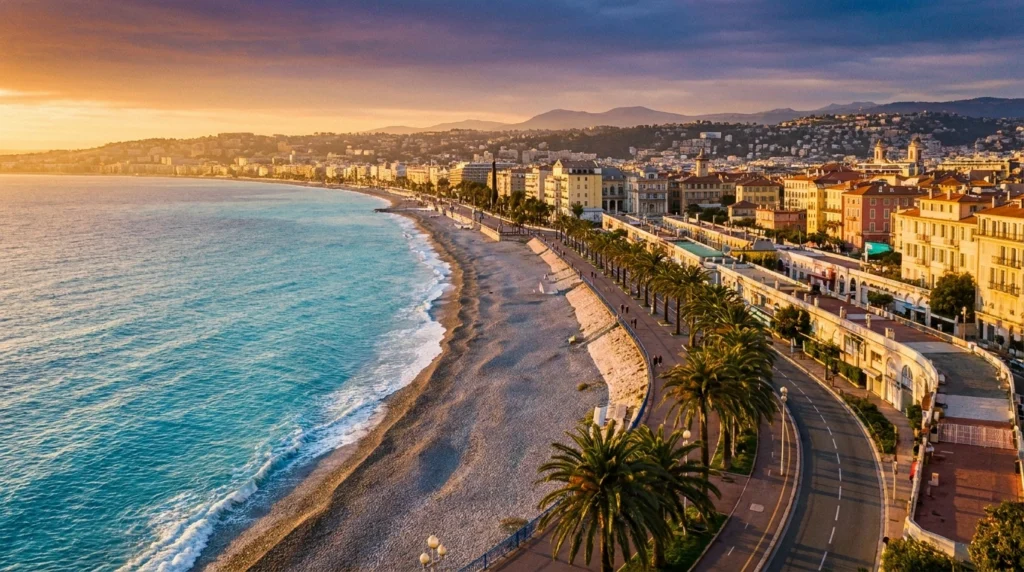
City Guide · Provence-Alpes-Côte d’Azur
Nice, France: Belle Époque Promenade, Vieux Nice Lanes, and the Capital of the Côte d’Azur
I have arrived in Nice by overnight train, by the airport tram, and once on foot from Villefranche over the hill, and the first thing I always do is walk down to the Promenade des Anglais to check the colour of the sea. We tell first-time travellers that Nice is the most useful base on the whole French Riviera — about 350,000 people inside the city, the fifth-largest commune in France , with a tram line, a budget-airline airport, and a railway station that puts Monaco, Cannes, and the perched villages all within an hour. My favourite Nice ritual is a 09:00 socca counter on the Cours Saleya before the flower market fills up, eating chickpea pancake off greaseproof paper with a glass of rosé that nobody questions at that hour. Treat this guide as the brief I would hand my own family the day before they flew into Terminal 2 — the Vieux Nice lanes, the Baie des Anges colour, the Ligne d’Azur tram pass, the Matisse and Chagall museums on the Cimiez hill, and the day trips that make Nice worth a full week rather than a stopover .
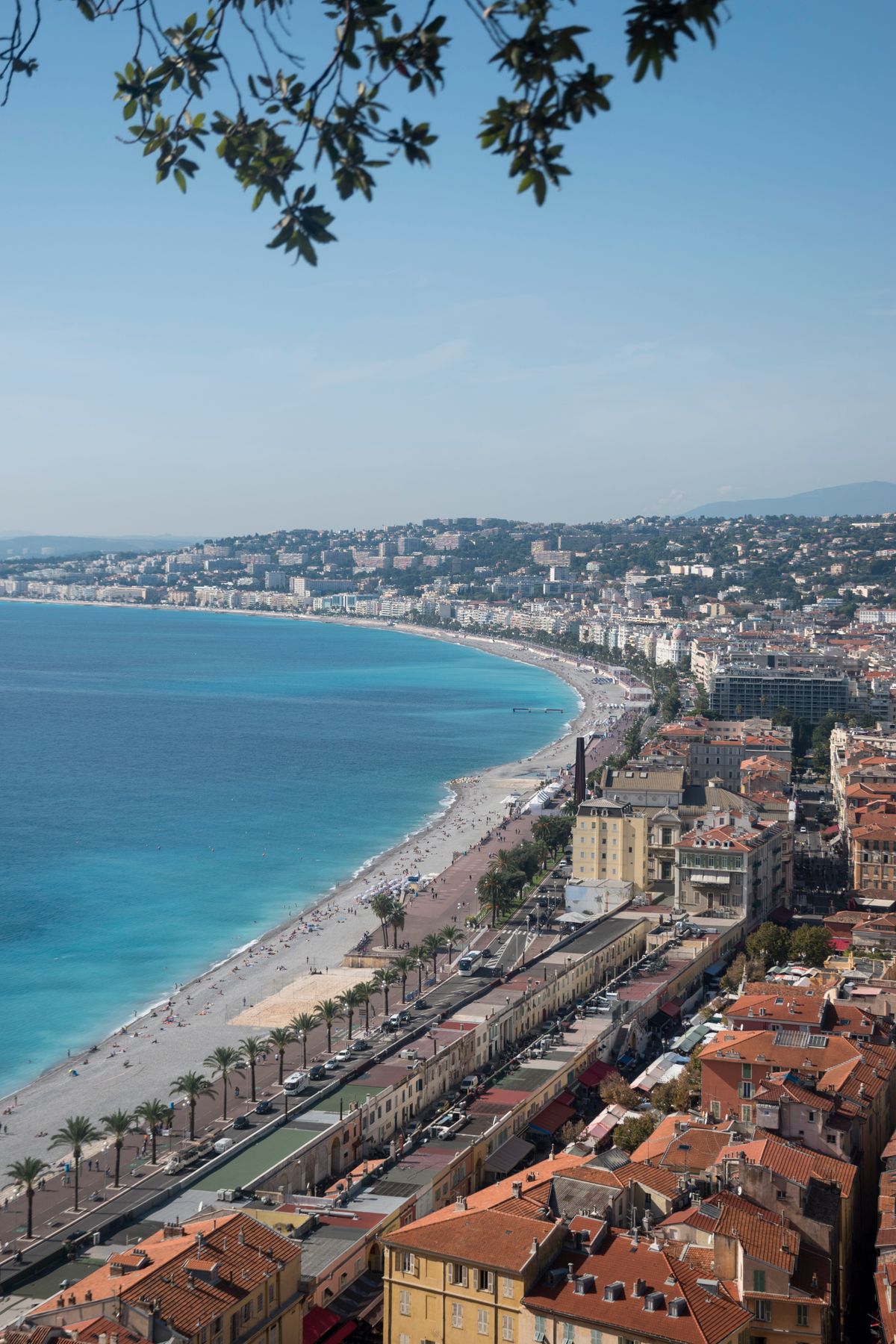
Table of Contents
Why Nice?
Nice is the rare resort city that works as a genuine base rather than a postcard — the fifth-largest commune in France, with roughly 350,000 residents inside the city and close to a million across its metropolitan area, yet small enough that you can walk from the railway station to the sea in twenty minutes . It is the unofficial capital of the Côte d’Azur, the stretch of Mediterranean coast that drew Russian aristocrats, English wintering invalids, and a century of painters chasing the light. That light is not a marketing line: the city averages well over 300 days of sunshine a year, one of the sunniest figures in mainland France .
The city reads as a layered contradiction. It was Italian — part of the House of Savoy and the Kingdom of Sardinia — until it was ceded to France in 1860, and the old town still feels Ligurian, with ochre-and-terracotta façades, green shutters, and a cuisine built on chickpea flour and olive oil rather than butter and cream. Around that medieval core, the 19th-century English and Russian visitors built a second city of Belle Époque hotels, palm-lined promenades, and the onion-domed Cathédrale Saint-Nicolas. In 2021, UNESCO inscribed “Nice, Winter Resort Town of the Riviera” on the World Heritage List, recognising exactly this fusion of climate, cosmopolitan tourism, and architecture .
What makes Nice worth a full week rather than a stopover is its reach. The TER coastal railway and the Ligne d’Azur tram put Monaco, Cannes, Antibes, Menton, and the perched villages of Èze and Villefranche all within an hour, mostly for the price of a few euros . The airport — France’s third-busiest, sitting right on the western end of the bay — connects directly to most of Europe and several long-haul hubs, so you can land, take a 26-minute tram into the centre, and be eating socca by lunch .
This guide covers the neighbourhoods you will actually walk, from the Vieux Nice lanes to the Carré d’Or and the museum hill of Cimiez; the Niçard food that is genuinely distinct from the rest of France; the Matisse and Chagall collections that justify a half-day each; the five day trips locals themselves take on weekends; and the practical realities of the tram pass, the pebble beaches, and the Carnaval crowds. Everything else flows from the sea.

Neighborhoods: Finding Your Nice
📍 Nice Map: Every Place in This Guide
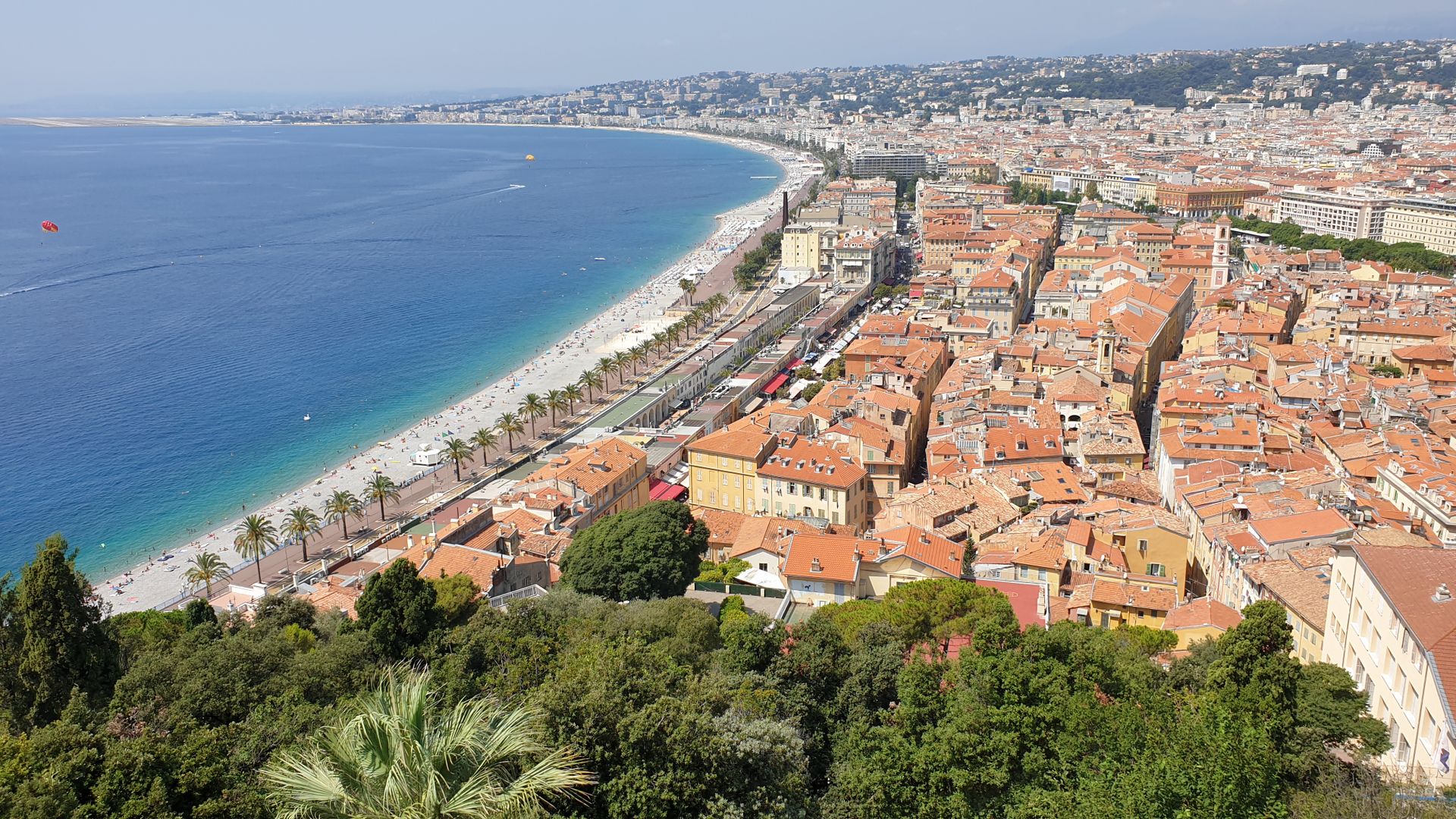
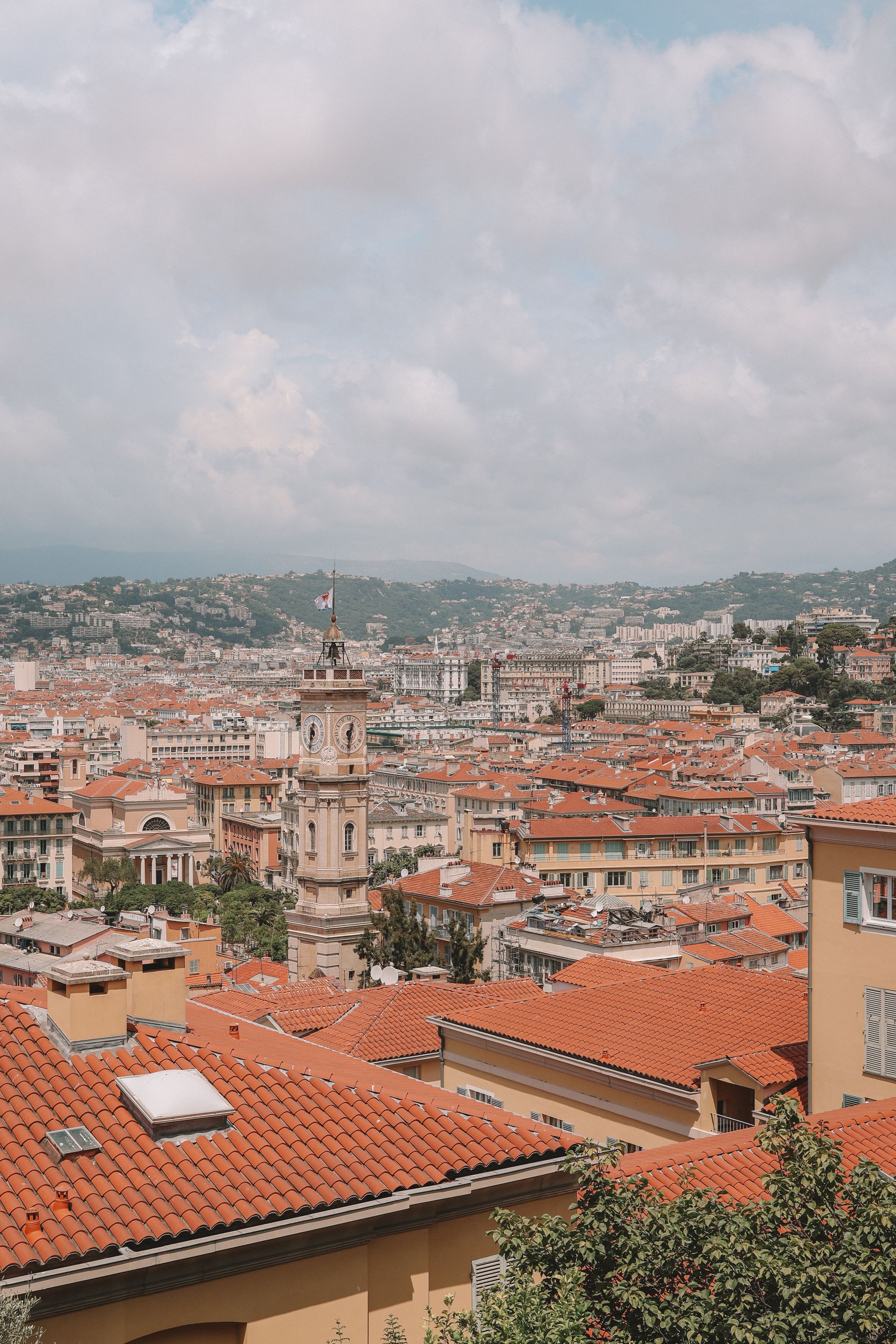
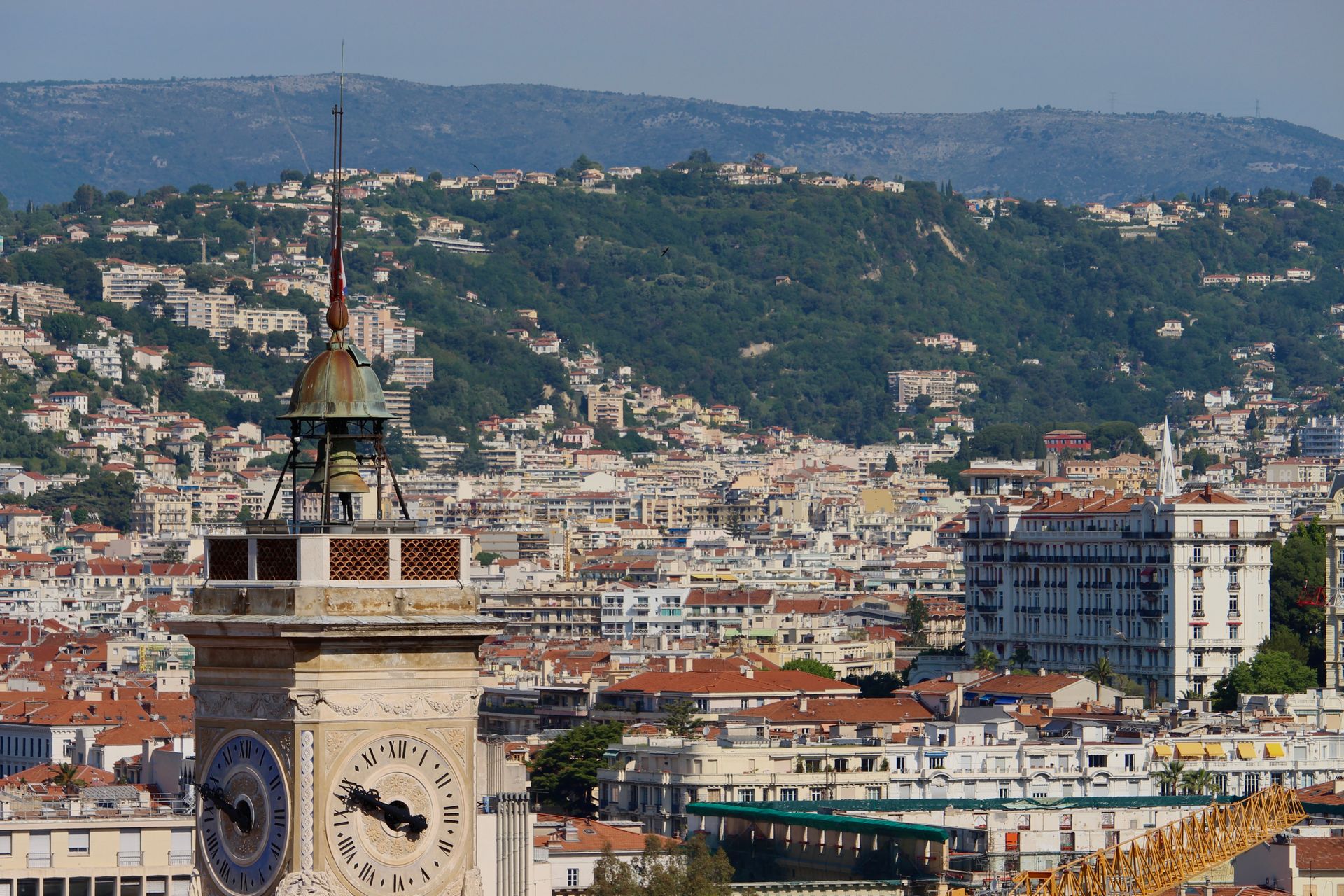
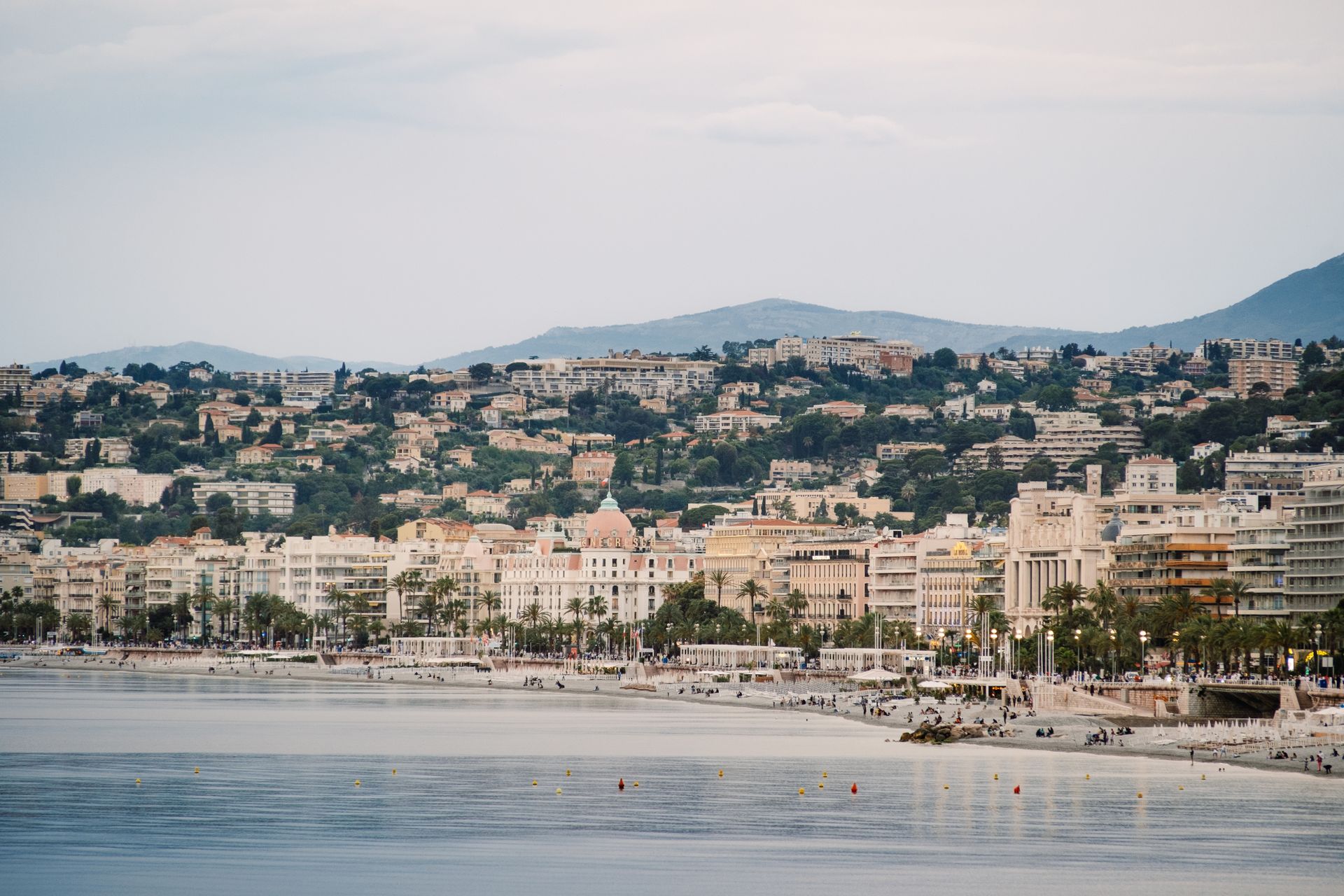
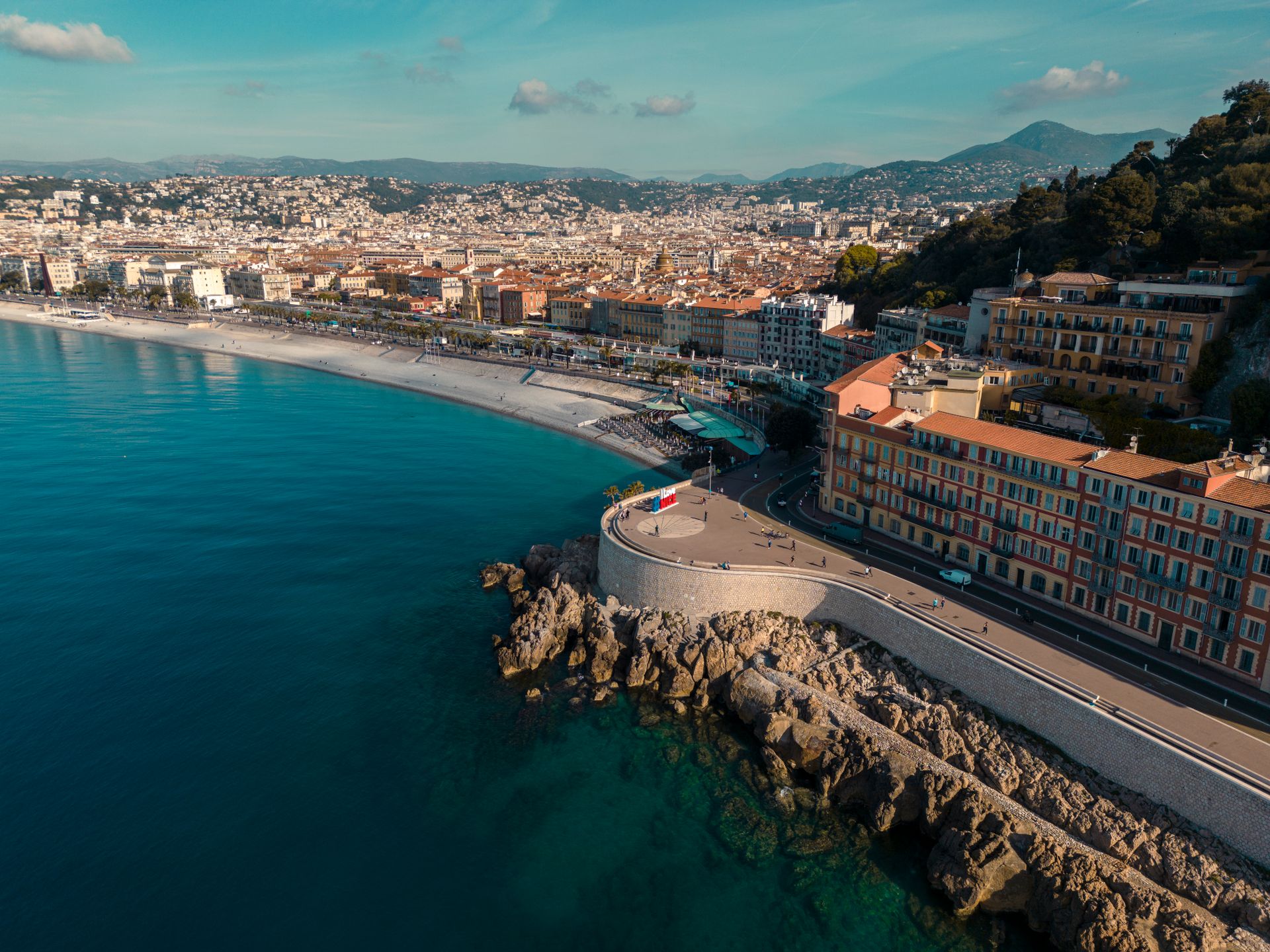
Nice is compact enough that no neighbourhood is more than a 25-minute walk or a few tram stops from another, so you do not choose a base to be near one thing — you choose it for the rhythm you want at night. The broad split runs west to east along the bay: the airport and the modern Arénas business quarter at the far west, the long Promenade des Anglais and the bourgeois Carré d’Or in the centre, the medieval Vieux Nice and its market at the eastern end of the seafront, the railway-station Libération and Gare-Thiers quarters inland, and the museum hill of Cimiez climbing north above the centre. Staying anywhere between the Place Masséna and the old town puts you within a 15-minute walk of the beach, the market, and the tram . The single most useful orientation fact is that the whole sightseeing core sits between the airport in the west and the port in the east, and the tram threads that entire line — so wherever you sleep, the city is genuinely walkable and the tram covers the rest.
The character shift across those bands is real and worth planning around. The seafront and the Carré d’Or are grand, expensive, and busiest with visitors; the old town is dense, noisy at night, and the most atmospheric; the inland Libération and Riquier quarters are where Niçois actually live and shop, with lower rents and better everyday food; and the Cimiez hill is quiet, leafy, and a tram-and-bus ride above the action. Returning visitors almost always trade a first-trip seafront hotel for an old-town or Libération apartment on later trips — the prices drop, the markets are better, and you stop feeling surrounded by other tourists. This section walks the six districts you will actually use, with the access notes that matter.
One practical note on choosing where to stay: because the city is so walkable and the tram so efficient, the difference between neighbourhoods here is far more about atmosphere than about convenience. Almost nowhere central is genuinely “far” from the sights. So decide first what you want your evenings to feel like — the buzz and noise of the old town, the calm of Cimiez, the local rhythm of Libération, or the design-led port — and let that drive the choice, rather than worrying about being a few hundred metres further from the beach. The one real trade-off is price against quiet: the most central and seafront-adjacent rooms cost the most and, in the old town’s case, can be the loudest at night.
A useful mental map for first-timers: think of the city as a fan opening from the seafront. The Promenade des Anglais and Carré d’Or form the polished face you arrive at; behind them the streets get progressively more residential and better-value as you walk inland toward Jean-Médecin, Libération, and the station; the old town and the port flank that fan to the east; and Cimiez rises behind it all to the north. Two tram lines do almost all the heavy lifting — line 1 runs north–south from the station down to the old town and port, and line 2 runs east–west underground beneath the centre out to the airport in roughly fifteen minutes — so a single rechargeable ticket and a pair of comfortable shoes are genuinely all the transport planning most visitors need . Below are the six districts you will actually choose between, with the trade-offs that matter for each.
Vieux Nice (Old Town)
The Italianate medieval core — narrow lanes, ochre façades, and the daily Cours Saleya market — is where most first-time visitors want to be, and for good reason. The streets follow their pre-1860 layout and stay shaded and cool even in August, which is part of the appeal; the alleys are too narrow for cars, so the whole quarter is effectively pedestrian. Mornings belong to the Cours Saleya flower and produce market, afternoons to the gelato counters around Place Rossetti, and evenings to the densest bar scene in the city. The trade-off is noise: rooms facing the lanes can be loud past midnight, so ask for a courtyard side if you are a light sleeper. It is also the cheapest place to eat well, with socca counters and small nissarde bistros on almost every corner.
- Cours Saleya flower and produce market (Tuesday–Sunday)
- Cathédrale Sainte-Réparate — the 17th-century Baroque cathedral on Place Rossetti
- Place Rossetti and the city’s best gelato counters
- The Palais Lascaris — a 17th-century Baroque palace and instrument museum
Best for: first-time visitors, food lovers, nightlife within walking distance. Access: Tram 1 Opéra–Vieille Ville or Cathédrale–Vieille Ville.
Carré d’Or & Jean-Médecin
The Golden Square between the Promenade and Avenue Jean-Médecin is Nice’s smart-shopping and Belle Époque hotel district, with the Place Masséna and its red-ochre arcades at its heart. This is the city’s grand-architecture quarter — wide avenues, the chequerboard Place Masséna, and the Promenade du Paillon green corridor that replaced a covered river and a bus station in 2013. The tram runs straight up Avenue Jean-Médecin, the main shopping spine, to the Gare Thiers, so it is the most convenient base for arrivals by train. Hotels here run mid-range to upscale, the streets are quieter at night than the old town, and you are still only a five-minute walk from the beach. It suits travellers who want central comfort without the old-town clamour.
- Place Masséna — the city’s grand square, redesigned around the tram in 2007
- Avenue Jean-Médecin — the main shopping spine, with Galeries Lafayette and the Nice Étoile mall
- Promenade du Paillon — the green “coulée verte” park with fountains and a children’s play zone
- The Place Masséna Apollo fountain and the seated light statues by Jaume Plensa
Best for: shopping, central hotels, easy tram and rail access. Access: Tram 1 Masséna or Jean Médecin.
Cimiez
The quiet, leafy hill north of the centre was the Belle Époque’s aristocratic quarter — Queen Victoria wintered here — and is now the city’s museum district. Grand former palace-hotels line the slopes, an ancient olive grove hosts the summer jazz festival, and the apartment where Henri Matisse spent his final decades sits among Roman ruins. It is a residential, almost suburban neighbourhood, so it suits visitors who want gardens and galleries over nightlife, or families who prefer space and quiet. The catch is that it is uphill and you will rely on the bus to reach the centre, so it works best for a longer or second-trip stay rather than a one-base sightseeing blitz.
- Musée Matisse and the surrounding Roman site of Cemenelum
- Musée National Marc Chagall, with the Biblical Message cycle, lower down the hill
- The Jardins du Monastère de Cimiez and the Franciscan monastery
- The Roman amphitheatre and the summer Nice Jazz Festival olive grove
Best for: museums, quiet stays, gardens, families. Access: Bus 5 or 33 from the centre to Arènes-Musée Matisse.
Le Port (Lympia)
East of the Colline du Château, the working harbour district has quietly become the city’s most fashionable eating quarter. Antique dealers, natural-wine bars, design shops, and the ferries to Corsica all share the colourful quays around the 18th-century basin. The grand arcaded Place Garibaldi anchors its inland edge, and the whole district has a lower-key, more local feel than the seafront. It is a short tram ride or a 15-minute walk from the old town, so it makes an excellent quieter base for travellers who want good dinners and a residential atmosphere without giving up central access. The streets behind the quay hold some of the best modern Niçard restaurants in the city.
- Port Lympia and its 18th-century harbour basin with the Corsica ferries
- Place Garibaldi — the grand arcaded square on the edge of the port
- The monthly antiques and brocante market along the quays
- The restaurant streets behind the port, a magnet for modern nissarde cooking
Best for: dinner, design shopping, a quieter central base. Access: Tram 2 Port Lympia.
Libération & the Riquier station quarter
Inland around the historic Gare du Sud, the Libération quarter has the city’s best everyday food market and a more residential, lower-cost feel that returning visitors often prefer to the seafront. This is where ordinary Niçois shop, eat, and live, so prices for both food and rooms drop a tier from the centre, and the restored Gare du Sud now houses a covered food hall. The tram lines 1 and 2 cross here, giving direct access to both the airport and the port, which makes it surprisingly convenient despite being away from the beach. It rewards a longer stay or a self-catering trip, when daily market mornings and lower rents matter more than a sea view.
- Marché de la Libération — the largest daily produce market in the city
- The restored Gare du Sud food hall and cultural space
- Tram 1 and 2 interchange for direct airport and port access
- Lower-cost apartment rentals among working residential streets
Best for: value stays, market mornings, longer or self-catering trips. Access: Tram 1 Libération.
Fabron & the western beaches
West of the centre toward the airport, the Fabron and Magnan slopes hold the larger family hotels and a string of quieter public beaches reachable on foot from the western Promenade. The area is greener and more spread out than the dense centre, with sea-view apartment buildings climbing the hillside and easy tram and bus access running along the coast. It is the most practical base for drivers, families needing space, and longer self-catering stays, since rates run lower than the centre and the western beaches are far less crowded than the central Promenade in summer. The trade-off is distance: you will use the tram or bus for most sightseeing rather than walking everywhere.
- The quieter western public beaches below Fabron and Magnan
- Easy tram line 2 and coastal bus access to the airport and centre
- Sea-view apartment rentals at lower rates than the centre
- The hilltop Parc Carol de Roumanie and quiet residential streets
Best for: families, drivers, longer self-catering stays. Access: Tram 2 toward the airport, or bus 8 along the coast.
The Food

Niçard cuisine — cuisine nissarde — is genuinely distinct from the rest of France. Built on chickpea flour, olive oil, anchovy, salt cod, and the vegetables of the surrounding hills rather than butter and cream, it owes far more to neighbouring Liguria than to Paris. The flavours are sun-and-sea Mediterranean: garlic, basil, olives, tomato, and the small purple artichokes of the back-country. The city even maintains a “Cuisine Nissarde — le respect de la tradition” label awarded to restaurants that cook the classic recipes faithfully, so look for the plaque in the window when you choose where to eat — it is a reliable filter against tourist-trap kitchens on the Cours Saleya . This is one of the few places in France where the regional cooking is genuinely its own tradition rather than a local accent on the national repertoire, and that is reason enough to come hungry.
What makes eating in Nice so rewarding is the spread of price points. You can eat extremely well for under €10 a meal on street food alone — socca, pan-bagnat, pissaladière, a slice of tourte de blettes — and you can also book a serious sit-down dinner of regional classics for a fraction of what the equivalent would cost in Paris. The market mornings, the wood-oven socca counters, and the small no-frills bistros all reward curiosity over budget, and the produce is genuinely local: the hills behind the city supply the vegetables, the sea supplies the anchovy and the daurade, and the Bellet vineyard inside the city limits supplies the rosé.
It helps to understand the geography of eating here. The Cours Saleya and the old-town lanes hold the most famous names but also the most tourist traps, so the “Cuisine Nissarde” plaque and a quick look at whether locals are eating there are your best filters. The port district behind the quays has become the city’s serious dining quarter, with modern takes on the regional repertoire. The inland Libération and Riquier streets are where you eat cheapest and most authentically, alongside the people who actually live here. And the beach restaurants along the Promenade trade on the view more than the cooking — pleasant for a rosé and a salad, less so for a memorable meal. Knowing which is which saves both money and disappointment.
Street Food & Socca
The signature dish is socca — a thin chickpea-flour pancake poured into a vast copper pan, baked in a screaming-hot wood oven, scraped off in blistered pieces, peppered hard, and eaten with your fingers off greaseproof paper. It is pure street food, cheap, and only good in the first few minutes out of the oven, so the best counters bake in continuous rotation through the morning. A portion runs about €3, and a glass of rosé to go with it rarely raises an eyebrow even before noon. The same counters usually sell pissaladière, beignets, and small fried vegetables, so a socca run easily becomes a standing lunch.
Socca’s origins are Genoese — it is essentially the same dish as Ligurian farinata across the border — and that shared heritage runs through all of the city’s street food. The vendors who do it best are the ones with a dedicated wood oven, often tucked just off the market square, with a moped or a porter shuttling the hot trays the last few metres to the counter so the socca never sits. Eat it as the locals do: standing, with a generous grind of black pepper, washed down with a small glass of chilled rosé or a beer, as a mid-morning snack rather than a sit-down meal. It is one of the great cheap pleasures of the Mediterranean.
- Chez Pipo — the most famous socca counter, near the port, baking since 1923 (a portion runs about €3)
- Chez Thérésa — the long-running socca and pissaladière stall on the Cours Saleya, with the wood oven a block away (about €3 a portion)
- Lou Pilha Leva — a Vieux Nice institution for socca, beignets, farcis, and pan-bagnat at shared outdoor benches (small plates around €3–5)
Sit-Down Niçard
For a full meal of regional dishes — petits farcis, daube niçoise, stockfish stew (estocaficada), beignets de fleurs de courgette — the old town and the port have the best tables. The classic nissarde bistro is small, family-run, and unpretentious; the most famous of them do not take cards or reservations and fill within minutes of opening, so arrive early or be prepared to queue. Expect generous portions, a short hand-written menu that changes with the market, and a carafe of local wine rather than a long list. This is comfort cooking, not haute cuisine, and it is all the better for it.
- La Merenda — a tiny no-phone, cash-only Vieux Nice institution for classic nissarde cooking; arrive at opening (mains around €18–22)
- Le Bistrot d’Antoine — a consistently excellent bistro just off the Cours Saleya, reservations essential (mains around €20–26)
- Peixes — a modern ceviche-and-seafood bar in the old town for a lighter, contemporary take (small plates €9–16)
- La Femme du Boulanger — a reliable everyday spot for farcis and daube near the centre (mains around €16–20)
Beyond Socca and Salade Niçoise
The real salade niçoise is a point of local pride and a genuine source of argument — purists insist on no boiled potato, no cooked green beans, traditionally raw vegetables, anchovy or tuna but never both, and never any lettuce-heavy filler. The chef Jacques Médecin, a former mayor of Nice, codified the “correct” version in his cookbook, and old-town restaurants will happily tell you why the tourist version is wrong. Beyond the two famous dishes, the everyday repertoire is deep and rewards exploration; many of these are sold by the slice or the piece from bakeries and market stalls, so you can graze your way through the lot over a couple of days without ever sitting down to a full meal. Look out too for the seafood side of the cuisine — the small fried fish, the stockfish stew, and the daurade grilled whole — which the port restaurants do best.
- Pan-bagnat — a salade-niçoise sandwich on a round bun soaked in olive oil, the city’s lunch staple, best from a bakery at midday (€5–7)
- Pissaladière — slow-cooked onion tart with anchovy and black olives, sold by the slice from market counters (€3–4)
- Petits farcis — small vegetables (courgette, tomato, onion, pepper) stuffed and baked, a classic starter or light meal (€10–14)
- Tourte de blettes — a sweet-savoury Swiss-chard pie with pine nuts and raisins, unique to Nice and served both ways (€3–5)
- Daube niçoise — a slow beef-and-red-wine stew, traditionally served over fresh ravioli or gnocchi (€14–18)
Markets & Where to Shop for Food
Two markets define eating in Nice. The Cours Saleya market in the old town runs Tuesday to Sunday, switching between flowers, produce, and a famous flea market on Mondays; it is the most photogenic but also the most touristy, so prices run higher. The Marché de la Libération, inland by the old Gare du Sud, is the city’s biggest genuine produce market and where Niçois actually do their shopping — fishmongers, cheese stalls, and the local artichokes, courgette flowers, and Menton lemons in season. Both are best in the morning, and both make an easy, cheap lunch from a pan-bagnat and a paper cone of socca eaten on the move.
If you are self-catering, the markets are also the cheapest and most rewarding way to eat in Nice. A few euros buys a ripe tomato, a wedge of pissaladière, a slice of tourte de blettes, and a handful of olives that together make a better lunch than most beachfront restaurants, and the stallholders will happily tell you what is in season and how to cook it. Go early — the best produce is gone and the fishmongers are packing up well before lunch — and bring small cash, as not every stall takes cards. The Libération market also has a covered hall in the restored Gare du Sud where you can sit down to eat what you have just bought, which makes it the more practical of the two for a proper market meal rather than a photo stop.
Sweets, Pastries & What to Drink
Beyond the savoury repertoire, Nice has a distinct sweet tooth. The tourte de blettes turns up in a sweet version dusted with sugar, the candied fruits of the back-country (Maison Auer has made them since 1820) are a local specialty sold from a gloriously old-fashioned shopfront, and the old-town gelato counters around Place Rossetti rival anything across the Italian border. Olive oil from the surrounding hills, jars of anchovy and tapenade, and the small purple artichokes turn up in every market and make the easiest edible souvenirs. To drink, the standout is Bellet — one of France’s smallest appellations, grown on terraced hills inside the city’s own administrative limits, and a rare chance to drink a wine you genuinely cannot find anywhere else. A chilled glass of Bellet or Provence rosé is the default accompaniment to almost everything here, including, at any hour, a portion of socca.
Food Experiences You Can’t Miss
- An early socca run on the Cours Saleya before the flower market crowds arrive and the oven gets backed up
- A morning at the Marché de la Libération, the city’s biggest everyday produce market, where Niçois actually shop
- A glass of local Bellet rosé — Nice has one of the very few vineyards still operating inside a French city’s own limits
- A scoop from a Place Rossetti gelato counter in the old town on a hot afternoon
- A market pan-bagnat eaten on the pebbles, the cheapest perfect lunch in the city
Cultural Sights
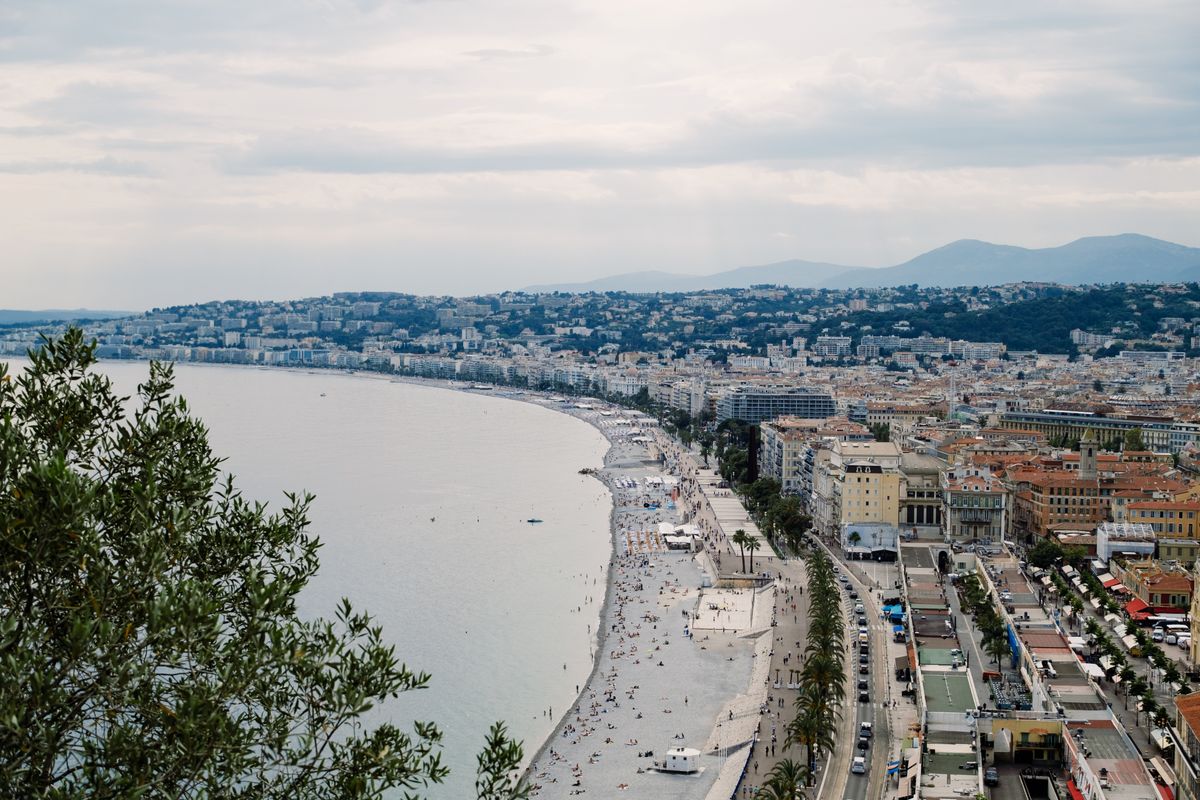
Promenade des Anglais
The seven-kilometre seafront walk is the city’s defining sight, laid out from the 1820s with money raised by the English winter colony — hence the name, the “walk of the English.” The signature blue chairs (the chaises bleues), the broad pebble beach, the palm trees, and the row of Belle Époque hotels like the pink-domed Negresco line its full length. It is free to walk, cycle, or skate at any hour, and the daily ritual of an evening passeggiata along the seafront is part of the city’s rhythm. Detour into the Negresco’s lobby to see the chandelier and the period interiors, and look for the memorial near the site of the 2016 attack, which the city has folded quietly into the promenade.
Musée Matisse
Set in a 17th-century red Genoese villa among the olive trees and Roman ruins of the Cimiez hill, the Matisse museum holds one of the world’s largest collections of the artist’s work, gathered from the decades he lived and worked in Nice until his death in 1954. The collection spans his whole career — early paintings, the famous paper cut-outs, drawings, and the studies for the Vence chapel — and the villa setting itself is a pleasure. Admission is about €10, it is closed on Tuesdays, and it pairs naturally with the Roman amphitheatre and the Chagall museum on the same hill for a full museum morning.
Musée National Marc Chagall
A purpose-built national museum below Cimiez, opened in 1973 with the artist’s involvement, houses Chagall’s seventeen-canvas “Biblical Message” cycle — the largest public collection of his work anywhere. The light-filled galleries were designed around the paintings, and the building also holds stained glass, a mosaic, and a small concert auditorium. It is one of the most rewarding small museums in France, easily done in an hour or two. Admission is about €10 and it is closed on Tuesdays; it sits within walking distance of the Chagall tram-and-bus stops below the Cimiez hill.
Colline du Château
The wooded hill at the eastern end of the seafront has no castle left — the fortress was razed by Louis XIV’s troops in 1706 — but it holds the city’s single best viewpoint, looking west down the whole sweep of the Baie des Anges and east over the port, with the terracotta old-town rooftops directly below. There is an artificial waterfall folly at the top, shaded gardens, and a children’s playground. You can climb the stairs from the old town, take the free lift built into the cliff near the Hôtel Suisse, or walk up the gentler road from the port side; the park itself is free and best at sunset, when the low light turns the bay gold and the old-town roofs deep red. It is the one sight in Nice that almost every visitor agrees is worth the small effort to reach.
Cathédrale Saint-Nicolas (Russian Orthodox Cathedral)
The onion-domed cathedral west of the centre, completed in 1912 and funded in part by Tsar Nicholas II, is the largest Russian Orthodox church in Western Europe and a vivid legacy of the city’s Romanov-era winter visitors. The six coloured domes and the richly painted interior are unlike anything else in Nice, and the building is a short walk from the Gare Thiers. Modest dress is required to enter — covered shoulders and knees — and there is a small entry contribution. It is one of the clearest reminders that Nice was a cosmopolitan winter capital long before it was a summer beach town.
Place Masséna & the Promenade du Paillon
The heart of the modern city is the chequerboard Place Masséna, with its red-ochre arcaded buildings, the Apollo fountain, and the seven seated illuminated figures by the artist Jaume Plensa perched on poles above the tram. Running inland from it, the Promenade du Paillon — the “coulée verte” — is a long green park of lawns, water mirrors, and fountains built over a buried river and a former bus station in 2013. Both are free, lively day and night, and the natural link between the old town, the beach, and the shopping streets.
Musée des Beaux-Arts & the Villa Masséna
Beyond the headline museums, two more are worth a visit. The Musée des Beaux-Arts, in a former Belle Époque villa west of the centre, holds a strong collection of 17th-to-19th-century painting and is rarely crowded. The Villa Masséna, a seafront Belle Époque mansion beside the Negresco, houses the city history museum and lets you walk through the kind of palatial interior the wintering aristocracy actually lived in. Both are inexpensive — around €10 or covered by the city museum pass — and together they fill in the story of how a small Italian-Savoyard port became an international winter capital.
Entertainment

Beaches & Plages Privées
The Baie des Anges is lined with about fifteen free public beaches interleaved with private beach clubs, where a lounger-and-parasol day with waiter service runs roughly €20–35. The pebbles are real — large, smooth grey stones rather than sand — so water shoes and a thick mat are genuinely worth packing, and the drop-off into deep water is quick. The water is clean and famously clear, the swimming season runs roughly June to October, and the central beaches are busiest; the western beaches below Fabron are calmer. Typical cost is free to €35 depending on whether you take a club lounger. The free public stretches have showers and lifeguards in season, so there is no real need to pay for a club unless you specifically want the lounger and table service — many regular visitors never bother, spreading a mat on the public pebbles and walking up to the Promenade kiosks for a drink instead.
Opéra de Nice & the Théâtre National
The grand 19th-century opera house on the edge of the old town runs a full season of opera, ballet, and symphonic concerts in a gilded Italianate auditorium; tickets start around €15 and rise for premieres and big names. The Théâtre National de Nice and the Acropolis convention centre add drama and large-scale shows. For visitors, the opera is the most atmospheric night out in the city, and last-minute seats are often available for matinee or weeknight performances. Book ahead for opening nights and the most popular productions.
Nightlife in Vieux Nice & the Port
The old town’s narrow lanes and the port quays hold the densest concentration of bars, natural-wine spots, and late-night terraces in the city, with drinks running €6–12. The scene is lively but compact, so you can hop between a dozen venues on foot in a single evening without ever needing a taxi. Rue Droite and the streets around Place Rossetti buzz until late, while the port has a slightly more grown-up, design-led crowd. Summer adds open-air bars along the beach, and the whole city stays out late once the heat drops, with terraces filling well past midnight from June through September.
Nice Jazz Festival & Summer Events
Every July the Nice Jazz Festival — one of Europe’s oldest, dating to 1948 — brings several nights of concerts to the Place Masséna and the Cimiez gardens, with international headliners across jazz, soul, and pop; tickets run roughly €35–55 a night. The summer calendar also fills the Théâtre de Verdure and the seafront with free open-air concerts and Bastille Day fireworks over the bay on 14 July, making July and August the city’s most event-heavy months despite the heat.
Carnaval de Nice
The February carnival — one of the world’s three major carnivals alongside Rio and Venice — fills the Place Masséna with giant illuminated floats, costumed parades, and the famous flower-battle (batailles de fleurs) along the Promenade for roughly two weeks; grandstand seats run roughly €26–45 and free standing zones line the route. It is the single biggest event in the city’s calendar and the main reason to visit in winter, drawing crowds back to a city that is otherwise quiet between December and March.
Family & Daytime Activities
For families and slower days, the city offers more than beaches. The Promenade du Paillon park has fountains and play areas children love, the Parc Phoenix botanical garden near the airport packs tropical glasshouses and a small zoo, and the Colline du Château hill has a playground beside its viewpoint. Boat trips run from the port along the coast to Villefranche and the Cap Ferrat bays in summer, giving a sea-level view of the Riviera that you cannot get from land. Most of these cost little or nothing, making them an easy way to break up museum-and-restaurant days with children in tow. The seafront itself is the cheapest entertainment of all — the daily ritual of strolling, skating, and people-watching along the Promenade is something locals and visitors do in equal number, and it costs nothing but a pair of comfortable shoes.
Day Trips

Monaco (about 25 min by train)
The TER coastal railway reaches Monaco-Monte-Carlo in around 25 minutes for only a few euros, dropping you in the marble underground station a short walk from the Casino de Monte-Carlo, the Prince’s Palace, the cathedral, and the cliff-top Oceanographic Museum. It is the single most-photographed half-day on the whole coast — the harbour full of superyachts, the Grand Prix circuit you can trace through the streets, and the changing of the guard at the palace at 11:55. Go by train rather than car; parking in the principality is expensive and scarce.
Èze (about 25 min by bus)
The perched medieval village of Èze clings to a rock high above the sea on the Moyenne Corniche, its car-free lanes spiralling up to an exotic cactus garden at the summit that gives one of the most famous panoramas on the Riviera. It is reachable by bus 82 or 602 from the Vauban tram stop in around 25 minutes; the fitter can walk down the steep Nietzsche Path to the seaside Èze-sur-Mer station and catch the train back. Go early to beat the tour buses, which arrive mid-morning.
Villefranche-sur-Mer (about 10 min by train)
A near-perfect deep-water bay just one stop east, Villefranche has a steep Genoese old town, the covered medieval Rue Obscure, a 16th-century citadel, and some of the calmest, clearest swimming anywhere near the city. The train takes barely ten minutes, making it the shortest genuinely worthwhile day trip from Nice — easy to combine with a morning swim, a harbour lunch, and an afternoon back in the city. The waterfront is lined with pastel houses and small fish restaurants.
Cannes (about 40 min by train)
The festival town to the west has the broad La Croisette seafront, the sandy beaches that Nice lacks, the old hilltop Le Suquet quarter, and ferries out to the quiet, traffic-free Îles de Lérins, where you can walk the pine woods of Sainte-Marguerite and visit the monastery on Saint-Honorat. It is reachable in about 40 minutes by frequent TER and makes the best half-day if you want actual sand underfoot rather than Nice’s pebbles.
Menton (about 35 min by train)
The last French town before the Italian border, Menton is famous for its February lemon festival, its lush gardens, and the most colourful stacked old town on the entire coast, rising in apricot and ochre tiers above the harbour. The TER reaches it in about 35 minutes, passing Monaco on the way, so it chains naturally with a Monaco stop into a single eastbound day. It is noticeably warmer and quieter than Nice, with a gentler, more Italian rhythm.
Saint-Paul-de-Vence & the back-country (about 1 hr by bus)
Inland, the fortified hill village of Saint-Paul-de-Vence — long a haunt of artists, with the world-class Fondation Maeght art museum just outside it — and the cathedral town of Vence make a rewarding day away from the coast. They are reachable by regional bus in around an hour and offer a cooler, greener contrast to the seafront, with medieval ramparts, galleries, and Matisse’s Rosary Chapel in Vence. It is the best choice when you have already done the coastal villages and want something quieter and more rural. The buses inland are less frequent than the coastal trains, so check the return times before you set out and allow a full day rather than trying to squeeze the back-country in alongside a coastal stop.
Seasonal Guide
Spring (March – May)
The sweet spot for many visitors. Daytime highs climb from about 15°C in March to the low 20s by late May, the sea is still cool for swimming but the café terraces are fully open, the gardens are at their best, and the shoulder-season crowds stay light . The one big caveat is late May, when the Monaco Grand Prix just down the coast locks out accommodation and pushes up prices across the entire Riviera, so book early — or deliberately avoid that fortnight — if you travel then. Otherwise spring offers the best balance of warm sun, manageable crowds, and pre-summer prices.
Summer (June – August)
High season, and genuinely hot — daytime highs of 27–30°C, a warm swimmable sea, peak crowds on the beaches and through the old-town lanes, and the busiest, priciest accommodation of the year . July brings the Nice Jazz Festival and Bastille Day fireworks; August is the single busiest and most expensive month, when the beach clubs run at full capacity and some local shops close for the holidays. Book accommodation months ahead, start sightseeing early to beat both the heat and the queues, and save the indoor museums for the hottest midday hours.
Autumn (September – November)
Arguably the best window of the whole year after late spring. September keeps the summer’s warm sea while the crowds thin out, the light turns golden through October, and prices ease back from their August peak . The catch is rainfall: the Côte d’Azur gets its heaviest, most concentrated downpours in October and November, when a single storm can drop a remarkable amount of rain in a day, so pack a proper waterproof for any shoulder-season trip. Early autumn is ideal; late November tips into the quiet low season.
Winter (December – February)
Mild but quiet, and far gentler than most of Europe. Daytime highs hold around 12–14°C, the famous sunshine largely continues, snow is essentially unheard of at sea level, and hotel rates drop well below the summer peaks . The sea is too cold to swim, but the Promenade is still walkable in a coat and the museums are blissfully empty. February’s two-week Carnaval de Nice is the season’s headline event, drawing big crowds back to the Place Masséna for illuminated night parades and the daytime flower battles along the seafront. Outside the carnival fortnight, winter is the cheapest and calmest time to have the city largely to yourself — ideal for a museum-and-café trip if sea swimming is not the point of your visit.
Getting Around
Coastal Rail (TER)
The single most useful tool in Nice is the SNCF TER coastal railway, which runs frequently — typically two to four trains an hour in daytime — between Cannes and Ventimiglia on the Italian border, stopping at Antibes, Nice, Villefranche, Monaco, and Menton. Fares to the nearby towns run only a few euros, journeys are 10–40 minutes, and no advance booking is needed, which makes car-free day trips along the whole coast genuinely effortless . The two main stations are Nice-Ville (the central terminus near the centre) and the smaller Nice-Riquier on the east side, handy for the port.
Tram & Bus (Lignes d’Azur)
The city’s three tram lines and extensive bus network are run by Lignes d’Azur. Tram line 1 runs north–south up Avenue Jean-Médecin and links the centre to the Libération market; line 2 runs east–west underground through the centre, connecting the airport in the west to the port in the east; and line 3 serves the stadium and exhibition district. A single ticket is €1.70, a 24-hour pass is €5, and a ten-trip ticket offers a further discount, all valid across both tram and bus . The trams are frequent, modern, and the fastest way across the centre.
Multi-Day & Regional Passes
For a longer stay, the Lignes d’Azur seven-day pass and the regional Zou! tickets cover the buses out to the perched villages such as Èze and Saint-Paul-de-Vence, where the train does not reach. The €1.70 single fare also covers unlimited transfers within 74 minutes of validation, so a short chain of hops across tram and bus costs nothing extra beyond the one ticket . Day-trippers heading along the coast usually find the TER train cheaper and faster than the regional buses for the same destinations.
Airport Access
Nice Côte d’Azur is France’s third-busiest airport and sits right on the western end of the bay, so the transfer into the centre is short and cheap .
- Tram line 2 — airport to the centre and the port, about 26 minutes, €1.70 single fare
- Taxi — fixed-zone fares to the centre, typically around €32 in the daytime
- Express airport buses also serve Monaco and Cannes directly from the terminals
Taxis
Licensed taxis use regulated flag-fall and metered fares within the city, with fixed-zone pricing to and from the airport; insist on the meter for in-town rides and confirm the fare to the airport in advance. Taxis are most useful late at night after the tram stops running, since ride-hailing coverage is thinner here than in Paris. Ranks sit outside the station, the airport terminals, and the main squares. For the airport run specifically, the tram-2 fare of €1.70 is so much cheaper than the roughly €32 taxi that most visitors without heavy luggage simply take the tram, which runs from very early until late and reaches the centre in under half an hour.
Navigation Tips
The essential apps are Lignes d’Azur for local transit and SNCF Connect for the coastal trains; both work in English and show live times. The compact centre is genuinely walkable end to end in under half an hour, so most visitors only use transit for the airport run, the uphill trip to the Cimiez museums, and day trips along the coast. Walking the seafront and the old town is almost always faster than waiting for a bus. A good rule of thumb is to walk anything inside the centre, take the tram for the airport and the longer cross-town hops, and save the coastal train for everything east or west of the city; that simple split covers almost every journey a visitor needs to make and keeps transport costs to a handful of euros across a whole trip.
Budget Breakdown: Making Your Euro Count
| Tier | Daily | Sleep | Eat | Transport | Activities | Extras |
|---|---|---|---|---|---|---|
| Budget | €80–120 | €30–55 hostel/budget | €20–30 | €5 day pass | €10–20 | €10 |
| Mid-Range | €170–280 | €100–160 hotel | €45–70 | €5–10 | €20–40 | €20 |
| Luxury | €450+ | €280+ Belle Époque hotel | €120+ | €30 taxis | €60+ | €40+ |
Where Your Money Goes
Nice is meaningfully cheaper than Paris but not a budget destination — accommodation is by far the swing cost, peaking sharply in July and August (and during the Monaco Grand Prix in late May) and dropping 30–40% in the November-to-March low season . Food, by contrast, can be very cheap if you lean on the street-food repertoire: socca, pan-bagnat, pissaladière, and market produce keep a day’s eating well under €20, while a seafront restaurant dinner with wine easily runs €40–60 a head. The €1.70 tram fare and the city’s walkability mean transport is a rounding error, and the most expensive single line item for many visitors is the private beach club at €20–35 a day — which the free public beaches make entirely optional. Museums are modest at around €10 each, and the best sights — the Promenade, the Colline du Château, Place Masséna, the markets — are free. A realistic budget trip leans hard on those free sights, the cheap street food, the €1.70 tram, and a low-season or shoulder-season hotel, which together can keep a comfortable day well under €120 a head; the same trip in August, with a seafront room and a beach-club lounger, easily triples that. The single biggest lever on the total is therefore when you come and where you sleep, not what you do once you arrive — get those two right and Nice is one of the better-value bases on the whole Riviera.
Tipping is not expected in the way it is in North America — service is included by law in the bill (service compris), and locals simply round up or leave a euro or two for good service. This keeps the real cost of eating out lower than first-time visitors expect, since the menu price is the price you pay. Museum and attraction prices are modest and consistent, mostly clustered around €10, and many of the city’s best experiences cost nothing at all: walking the Promenade, climbing the Colline du Château, browsing the morning markets, and watching the evening passeggiata along the seafront are all free. The main way a Nice trip gets expensive is through July–August accommodation and daily private-beach-club fees, both of which are avoidable with a little planning.
Money-Saving Tips
- Eat socca, pan-bagnat, and pissaladière from market counters instead of seafront terraces — better food for a fraction of the price
- Use the free public beaches rather than the €20–35 private clubs, and bring your own mat and water shoes for the pebbles
- Buy a Lignes d’Azur multi-day pass and do day trips by the frequent, cheap TER trains instead of renting a car
- Travel in May–June or September–October, when rates fall well below the July–August peak but the weather stays warm
- Order the carafe d’eau (free tap water) and the lunchtime formule menus, which run far cheaper than à la carte dinner
Practical Tips
Language
French is the official language; the historic Niçard dialect (a variety of Occitan) survives in street names, signage, and the names of dishes, but you will rarely hear it spoken day to day. English is widely spoken across hotels, restaurants, the tram, and the tourist office, so the practical language barrier is low. Even so, opening any interaction with “bonjour” and a few words of French is genuinely appreciated and changes the tone of the service you get.
Cash vs. Cards
Cards are accepted almost everywhere, including contactless tap-to-pay on the tram and in the vast majority of shops, restaurants, and museums. The exceptions are the smallest market socca counters, some old-town bakeries, and a few cash-only bistros like La Merenda, so it is worth carrying €30–40 in small notes and coins for those. ATMs are plentiful in the centre; use bank machines rather than the standalone “Euronet” boxes, which charge poor rates.
Safety
Nice is generally a safe city, but pickpocketing and bag-snatching occur on crowded trams, along the Promenade, around the railway station, and on the busiest beaches; the official advisories rate France as low-risk overall while consistently flagging petty theft in tourist areas . Keep valuables zipped and out of sight, never leave a bag unattended on the pebbles while you swim, and be alert in tram crushes. Violent crime against visitors is rare. The old town and the Promenade stay busy and well-lit late into the evening, so walking back from dinner is comfortable; the quieter streets behind the station are the one area worth a little extra care after dark.
What to Wear
Light, breathable clothing in summer with water shoes for the pebble beaches and a hat for the strong sun; a light jacket or layer for spring and autumn evenings, which cool quickly by the sea. Winters are mild but can be wet, so a waterproof is worth packing from October on. Modest dress — covered shoulders and knees — is required to enter the churches and the Russian Orthodox cathedral. Nice is a stylish city, so smart-casual will rarely feel out of place at dinner.
Cultural Etiquette
A simple “bonjour” before any request is expected in shops, cafés, and at counters, and dropping it is read as rude. Lunch (roughly 12:00–14:00) and dinner (from 19:30 or later) run later than in northern Europe, and many kitchens close between services, so plan meals around those windows. The long midday meal is still a real thing here, and a slower, more relaxed pace at the table is the norm rather than the exception.
Connectivity
EU roaming rules apply for European SIMs, so most European visitors use their home plans at no extra cost, and 4G/5G coverage is strong across the city and the coastal rail corridor. Free public Wi-Fi is common in cafés, the tourist office, and many public spaces; non-EU visitors staying a while may find a local prepaid eSIM cheaper than international roaming.
Health & Medications
EU and UK travellers should carry the EHIC or GHIC card for reciprocal care; everyone else needs travel insurance, since French healthcare is excellent but not free to non-residents. Pharmacies, marked by green crosses, are plentiful and the pharmacists can advise on minor ailments; a rota of pharmacies stays open at night and on Sundays. The tap water is safe to drink citywide, so refillable bottles are fine .
Luggage & Storage
The Gare de Nice-Ville has staffed left-luggage lockers, and several private bag-storage services near the station, the centre, and the port hold luggage by the hour or day — useful for day-trippers and for the common gap between an early hotel checkout and a late-evening flight or train. The airport also has short-term storage in the terminals, which is handy if you arrive early and want to explore before checking in to your hotel. Booking a storage slot online in advance is worth it in high summer, when the busiest near-station services can fill up.
Frequently Asked Questions
How many days do I need in Nice?
Four nights is the practical minimum for the city itself plus one or two coastal day trips, and a full week lets you add Monaco, Cannes, Menton, Villefranche, and the perched villages of Èze and Saint-Paul-de-Vence without ever feeling rushed. Nice works best as a slow base from which you explore the whole Côte d’Azur by train and bus, rather than as a one-night stop. Even a long weekend covers the old town, the Promenade, the Cimiez museums, and a single day trip, but you will leave wanting more time. If your trip is built around the Riviera generally rather than the city specifically, Nice is the obvious base to sleep in for the whole stay, since its train and bus links beat staying in any of the smaller towns.
Is Nice good for solo travellers?
Yes — it is one of the easiest cities in France for solo travel. It is compact and walkable, exceptionally well-connected by tram and coastal train, generally safe, and has a sociable old-town and port scene where eating or drinking alone is completely normal. The street-food culture makes cheap solo meals effortless, eating at a counter or standing never feels awkward, and day trips are simple to do independently on the frequent coastal trains. The compact, well-lit centre is comfortable to walk in the evening. Apply the usual city precautions against pickpockets on crowded trams and beaches, keep an eye on your belongings, and you will find Nice one of the most relaxed and welcoming cities in the south of France for travelling alone.
Is the tram and bus pass worth it?
For most visitors, yes. A single Lignes d’Azur fare is €1.70 and covers 74 minutes of transfers across tram and bus, while a 24-hour pass at €5 pays for itself after just three rides — easily reached on an airport-arrival day. Longer stays should look at the seven-day pass or the regional Zou! tickets for the villages. That said, the sightseeing core is so walkable that many visitors only buy transit for the airport, the Cimiez hill, and day trips beyond the centre. If you are mostly staying in the walkable centre and old town, you may find a handful of single tickets cheaper than any pass; if you are hopping out to the museums and coastal villages most days, the multi-day pass quickly wins. Work out roughly how many rides you expect and let that decide.
What about the language barrier?
It is minimal in practice. English is widely spoken across hotels, restaurants, the tram, the tourist office, and the train system, the signage is clear, and the official transit apps work in English. A polite “bonjour” on entering and “merci” on leaving go a long way socially and are genuinely expected. You will manage entirely in English, but a handful of French courtesies noticeably improves the warmth of the welcome.
When is the best time to visit and avoid crowds?
Late spring (May–June) and early autumn (September–October) are the sweet spots — warm weather, a swimmable sea (especially in September), and far thinner crowds than the July–August peak. Winter is mild, quiet, and cheap apart from the two-week Carnaval in February. Avoid late May if you dislike crowds, since the nearby Monaco Grand Prix fills accommodation across the whole Riviera, and book months ahead for any July or August trip.
Can I use credit cards everywhere?
Almost everywhere, including contactless tap-to-pay on the tram and in the great majority of shops, restaurants, and museums. The exceptions worth knowing are the smallest market socca counters, a few old-town bakeries, and one or two cash-only bistros, so carry €30–40 in small notes and coins as a backup. Use bank-branded ATMs rather than the standalone currency boxes, which give noticeably worse exchange rates.
Are the beaches sandy?
No — Nice’s beaches are pebble, not sand, made up of large smooth grey stones along the whole Baie des Anges. Bring water shoes for getting in and out and a thicker mat rather than a thin towel for comfort. Both the free public beaches and the private clubs sit on the same stones. If you specifically want sand, take the short train west to Cannes or Antibes, which have proper sandy beaches; otherwise the clear, deep water off the pebbles is excellent for swimming, and the stones have the advantage of staying far cleaner than sand. Bring something to lie on, as the pebbles are hard, and a dry bag for valuables since you should never leave belongings unattended while you swim.
Ready to Experience Nice?
Pack water shoes, learn the word “socca,” and give yourself a week so the day trips don’t feel rushed. For the full country context, read the France Travel Guide.
Explore More City Guides
Where to Stay
Alex the Travel Guru
Alex has spent two decades writing field-tested travel guides from the road, arriving in Nice by overnight train, airport tram, and once on foot over the hill from Villefranche. Every figure in this guide is paired with an authoritative source, and every photo and video is verified before it ships.
More city guides you might like
Plan your trip to Nice
The booking tools we use ourselves. FFU may earn a commission at no extra cost to you.
Plan & book your trip to Nice
Booking through these searches supports our guides at no extra cost to you.