
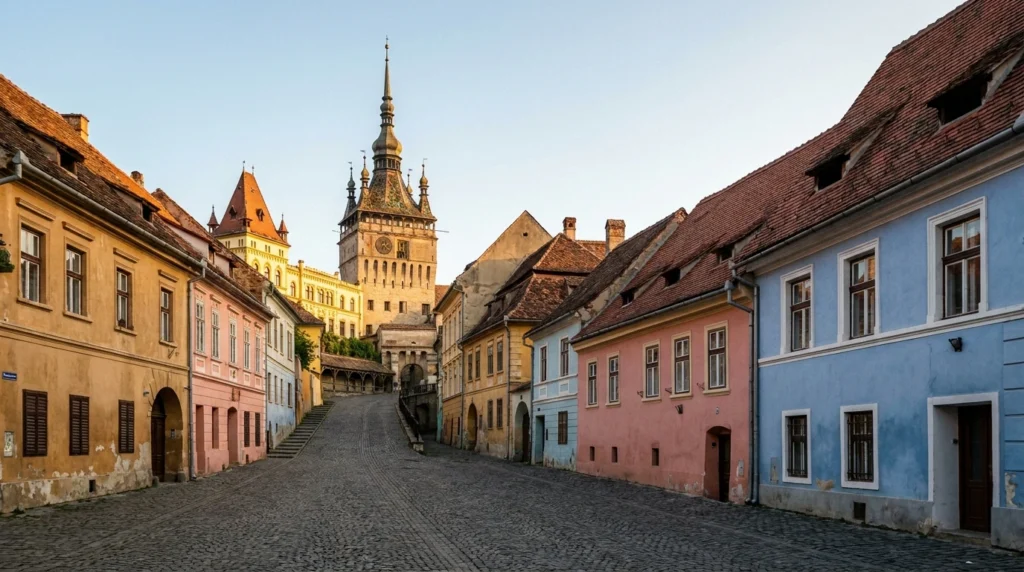
City Guide · Mureș County · Transylvania
Sighișoara, Romania: Europe’s Last Inhabited Medieval Citadel, the Clock Tower & the Saxon Heart of Transylvania
I climbed up to Sighișoara’s citadel expecting a film-set version of medieval Transylvania and instead found people still living inside it — laundry on lines behind 16th-century burgher houses, a primary school at the top of a covered wooden staircase, the same nine surviving guild towers that the Saxon craftsmen built to defend the hill. UNESCO inscribed the Historic Centre of Sighișoara in 1999 as “an outstanding example of a small fortified medieval town” and the only one in this corner of Europe that has never stopped being lived in. The 64-metre Clock Tower (Turnul cu Ceas) still drives a 1648 wooden-figure mechanism above its museum, the Covered Staircase still shelters 175 steps up to the Church on the Hill, and a mustard-yellow house on Piața Cetatii claims to be where Vlad III Dracula was born around 1431 — a real birthplace wrapped in a literary myth Bram Stoker never set foot in. It is small — a half-day to a full day — and most travellers fold it into the Brașov–Sibiu–Cluj rail corridor. Treat this as the brief I would hand my own family before they boarded the train; for the wider frame — the leu, the Schengen 2024 land-border note, the Carpathian context — read it alongside our Romania country guide.

Table of Contents
- Why Sighișoara?
- Best Time to Visit Sighișoara
- Getting There — Train, Brașov, Sibiu & Cluj
- Getting Around the Citadel
- Neighborhoods of the Citadel & Lower Town
- Cultural Sights
- Entertainment & the Medieval Festival
- Day Trips from Sighișoara
- Food & Drink in Sighișoara
- Practical Information
- Budget & Costs
- Frequently Asked Questions
Why Sighișoara?
Sighișoara is the one place in Transylvania where the medieval town is not a reconstruction or a museum-piece but a living settlement — roughly 24,000 people live in the modern city , several hundred of them inside the walls of the 12th-century citadel itself, which makes it the last continuously inhabited medieval fortified town in Europe. UNESCO inscribed the Historic Centre of Sighișoara on the World Heritage List in 1999 (Reference 902) as “an outstanding testimony to the culture of the Transylvanian Saxons,” the German settlers invited east by the Hungarian crown in the 12th century to defend and farm the frontier. The Saxons called the place Schäßburg; the Hungarians Segesvár; the Romanians Sighișoara — three names layered onto one hill, and the layering is the point.
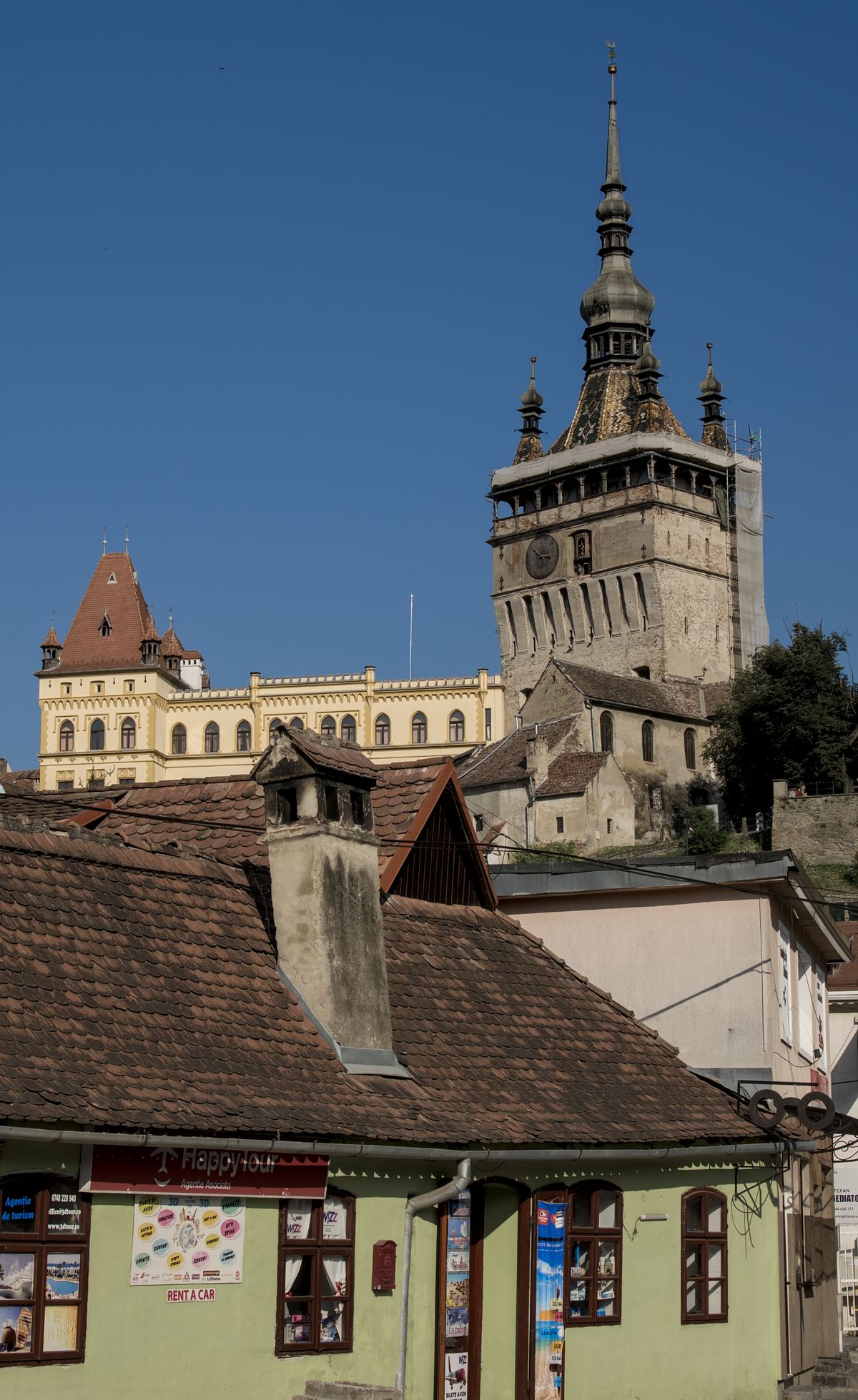
The citadel wears its defensive past on the surface. The fortified upper town was once ringed by 14 towers, each built and maintained by a different craft guild — the tailors, the tinsmiths, the butchers, the furriers, the ropemakers — and nine of those guild towers still stand today around a wall that climbs the hill. The greatest of them is the Clock Tower (Turnul cu Ceas), 64 metres tall, built in the 14th century as the main gate and raised over the centuries into the town’s symbol; its 1648 clockwork still turns a set of carved linden-wood figures — the seven gods of the days of the week — on the gallery above the dial. Inside, the History Museum of Sighișoara fills the tower’s storeys, and the topmost gallery gives the single best panorama in town — the whole patchwork of terracotta roofs falling away to the Târnava Mare river below.
And then there is the myth. A mustard-yellow house on Piața Cetății, a few steps from the Clock Tower, is traditionally identified as the birthplace of Vlad III — Vlad Țepeș, “the Impaler,” the 15th-century Wallachian prince whose father Vlad Dracul lived in Sighișoara in exile, and who was probably born here around 1431. This is the historical Vlad, a real and ruthless ruler. The “Dracula” of the vampire story is a literary invention — Bram Stoker borrowed the name and the Transylvanian setting for his 1897 novel but never visited Romania and based almost nothing on the actual man. Sighișoara leans gently into the connection (there is a restaurant in the house and a small exhibit), but the town’s real draw is its intact Saxon fabric, not the fiction.
What guidebooks under-rate is the scale. The citadel is tiny — you can walk from the Clock Tower gate across Piața Cetății, past the Vlad Dracul house and the Monastery Church, to the foot of the Covered Staircase in under ten minutes, then climb the 175 covered steps to the Church on the Hill and its hilltop cemetery in another ten. Half a day covers the headline sights; an overnight inside the walls lets you have the cobbles to yourself after the day-trip coaches leave. The town sits on the main Brașov–Sibiu–Cluj–Mediaș rail corridor , which is exactly why most travellers see it as a stop on a wider Transylvanian loop rather than a base in itself.
The closing argument for Sighișoara is atmosphere per square metre. No other town in Romania packs a UNESCO-listed citadel, a working medieval clock mechanism, a covered scholars’ staircase, a hilltop Gothic church with a painted-vault interior, nine guild towers and a genuine (if mythologised) Dracula birthplace into a hill you can cross in ten minutes. Romania itself sits on US State Department Travel Advisory Level 1 — the lowest tier — and the UK FCDO advisory keeps the country at “see our advice before travelling” with no general restriction.
Best Time to Visit Sighișoara
Sighișoara has a temperate continental climate softened by its position in the Târnava Mare valley — warm, green summers and cold, often snowy winters. Because the citadel is built on a hill of cobbled lanes and covered stairs, the practical question is less about temperature than about footing and crowds: late spring and early autumn give you dry cobbles, long light and manageable visitor numbers, while the late-July Medieval Festival weekend is the single busiest — and most atmospheric — date on the calendar. Use the four-season breakdown below as the realistic timeline.
Spring (March – May) — greening, quiet, ideal late
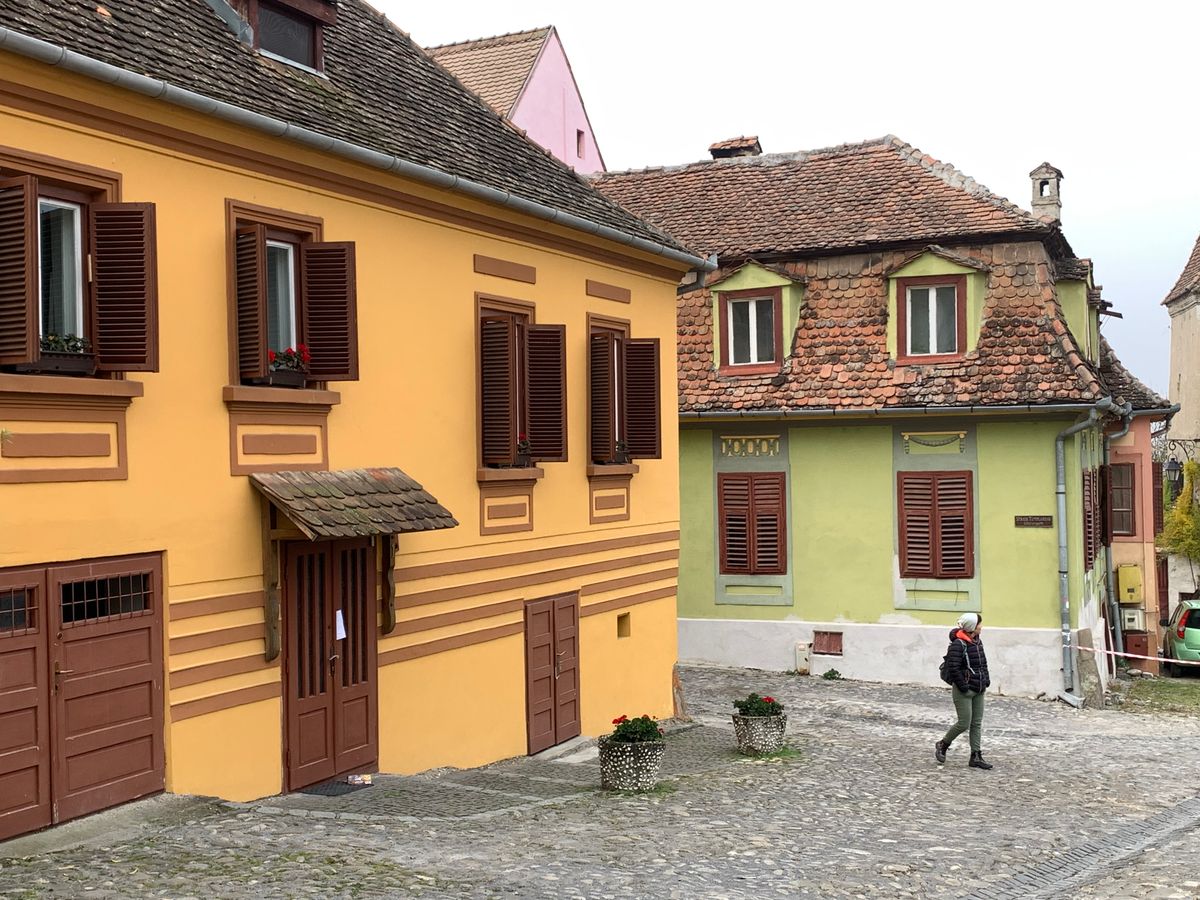
Early spring is cool and damp — March highs of 10–14°C and the citadel cobbles often wet — but by May the valley is green, daytime highs reach 18–22°C, and the visitor numbers have not yet peaked. May is one of the two best months of the Sighișoara year: long daylight, reliably open museum hours at the Clock Tower and the Church on the Hill, and hotel rates 20–30% below the July festival peak. The hilltop cemetery behind the Church on the Hill is at its most photogenic in late spring. Pack a light layer for the cooler evenings and shoes with grip for the covered staircase, which can stay damp after rain.
Summer (June – August) — warm, festival peak, busiest
The peak of both the weather and the visitor season. June–August daytime highs sit at 24–28°C with warm evenings ideal for sitting out on Piața Cetății. The headline event is the Sighișoara Medieval Festival, held over a late-July weekend, when the citadel fills with costumed performers, period-music stages, craft stalls and a parade through the gate — the single most vivid time to be in town and also the most crowded, with citadel hotels booked out months ahead. Day-trip coaches from Brașov and Sibiu run heaviest in July–August; arrive early or stay overnight to get the cobbles to yourself. Hotel rates run 30–50% above shoulder over the festival weekend.
Autumn (September – November) — golden, calm, second-best
September is the other ideal Sighișoara window — warm-but-not-hot days of 20–24°C, golden light on the terracotta roofs, the festival crowds gone, and the Târnava valley turning. October cools quickly to 12–16°C and brings the first rains, but the citadel under autumn colour is one of the most atmospheric sights in Transylvania, and the hilltop cemetery is especially evocative. November turns grey and damp, museum hours start to shorten, and the first frosts make the covered staircase slippery; it is the quietest and cheapest visit window before the winter season proper.
Winter (December – February) — snowy, icy, short hours
Cold and frequently snowy, with December–February highs of 0–5°C and overnight lows well below freezing; the citadel under snow is genuinely beautiful but the cobbles and the covered staircase ice over and demand careful footing. Museum hours at the Clock Tower and the Church on the Hill contract in winter, and some citadel restaurants close mid-week. The pay-off is the lowest rates of the year and an almost-empty old town — if you bundle up and watch your step, a clear winter afternoon on the hill is the most peaceful version of Sighișoara there is. The Christmas-week and New-Year window sees a small local uptick.
Getting There — Train, Brașov, Sibiu & Cluj
Sighișoara sits on the main Transylvanian rail corridor, which is the single best reason it is so easy to fold into a wider Romania loop. The town has no airport of its own; almost every visitor arrives by train or car from Brașov, Sibiu or Cluj-Napoca, the three regional hubs that bracket it. The nearest airports are Târgu Mureș (TGM, ~55 km), Sibiu (SBZ, ~95 km) and Cluj-Napoca (CLJ, ~150 km, the largest in Transylvania), with Bucharest’s Otopeni (OTP) the main international gateway five to six hours away by train.
By train — the default option
Sighișoara station (Gara Sighișoara) is in the lower town, about a 15-minute walk or a short taxi from the citadel hill, and sits on the CFR Călători line that links Brașov, Sighișoara, Mediaș, Sibiu (via a change) and Cluj-Napoca. Typical journey times: Brașov–Sighișoara about 2h15–2h45 on InterRegio services; Sibiu–Sighișoara about 2h–2h30 (often via Copșa Mică or Mediaș); Cluj-Napoca–Sighișoara about 3h–3h30; and Bucharest–Sighișoara about 4h30–5h30 on the through trains that climb over the Carpathians via Brașov. Second-class fares are inexpensive by Western standards (Brașov–Sighișoara is typically 40–60 lei, about $9–13). Book and check live times on the CFR Călători site or app; the Mediaș–Sighișoara stretch is one of the prettier valley rides in Transylvania.
From the station to the citadel
- On foot (default) — the citadel is roughly 1.2 km from the station, a 15–20-minute uphill walk through the lower town to the base of the citadel hill; manageable with light luggage.
- Taxi — a short metered taxi from the station to the lower town below the citadel runs roughly 15–25 lei ($3–5); cars cannot drive up into the pedestrianised upper citadel itself, so you will walk the final cobbled stretch.
- Ride-hail — Bolt operates in the Sighișoara area and is often cheaper and easier than flagging a taxi; confirm the app shows nearby drivers before relying on it, as coverage is thinner than in Brașov or Cluj.
By car
Sighișoara lies just off European route E60 (DN13/DN14), the main road artery linking Brașov, Sighișoara, Mediaș and Sibiu. Driving times roughly mirror the train: Brașov about 1h45–2h15, Sibiu about 1h30–2h, Cluj-Napoca about 2h30–3h. A car gives you flexibility for the Saxon-village day trips (Biertan, Viscri) that are awkward by public transport. Note that you cannot drive into the upper citadel — park in the lower town and walk up; paid car parks sit near the base of the hill. A Romanian motorway/road vignette (rovinieta) is required for the national-road network and is bought online or at fuel stations.
By bus and as a day trip
Long-distance buses connect Sighișoara to Brașov, Sibiu, Târgu Mureș and Cluj, but the train is generally more comfortable and scenic on this corridor. Many visitors come on an organised day trip from Brașov or Sibiu, or as a half-day stop on a Transylvania tour, which is why the citadel is busiest between roughly 11:00 and 16:00 and empties in the evening — the strongest argument for arriving early or staying the night.
Getting Around the Citadel

Getting around Sighișoara is refreshingly simple: there is no metro, no tram and no need for one. The town divides into the walled upper citadel on its hill — entirely pedestrian — and the flat lower town below, where the station, shops and most large hotels sit. Everything a visitor wants is within a fifteen-minute walk, and the only real transport decisions concern luggage and the out-of-town day trips. Comfortable, grippy shoes matter far more here than any timetable.
On foot — the only real way
The citadel is entirely pedestrian: a compact hill of cobbled lanes, the central Piața Cetății, and the Covered Staircase up to the Church on the Hill. You can walk the whole upper town end to end in about ten minutes, and the steep, uneven cobbles mean sensible shoes matter more than any transit plan. Cars are barred from the upper citadel; residents and a handful of citadel hotels have restricted access permits, but visitors park below and climb up on foot through the Clock Tower gate or the Tailors’ Tower. The gradient is gentle by Carpathian standards but the surface is unforgiving — worn river cobbles polished by centuries of feet.
The Covered Staircase & the hill
The single most useful piece of navigation is the Covered Staircase (Scara Acoperită / Scholars’ Stairs), a roofed wooden stairway of 175 steps built in 1642 (originally around 300 steps) to let students and churchgoers reach the Church on the Hill and its school in any weather. It is the main route up to the hilltop church, cemetery and viewpoints; take it slowly, especially when the wood is damp or icy. There is no step-free alternative to the very top of the hill, which is worth knowing if mobility is a concern — the rest of the upper citadel, though cobbled, is broadly level once you are inside the walls.
Lower town & taxis
The lower town — where the train station, most shops and the larger hotels sit — is flat and walkable, connected to the citadel by a short uphill climb of about 1.2 km. For luggage, the airport runs or the Saxon-village day trips, use a metered taxi or the Bolt ride-hail app; local taxi hops within town are typically 10–25 lei ($2–5), and a taxi can take you to the base of the citadel hill but not into the pedestrian core. There is no public bus you will need as a visitor — the town is simply too small.
Neighborhoods of the Citadel & Lower Town
📍 Sighișoara Map: Every Place in This Guide
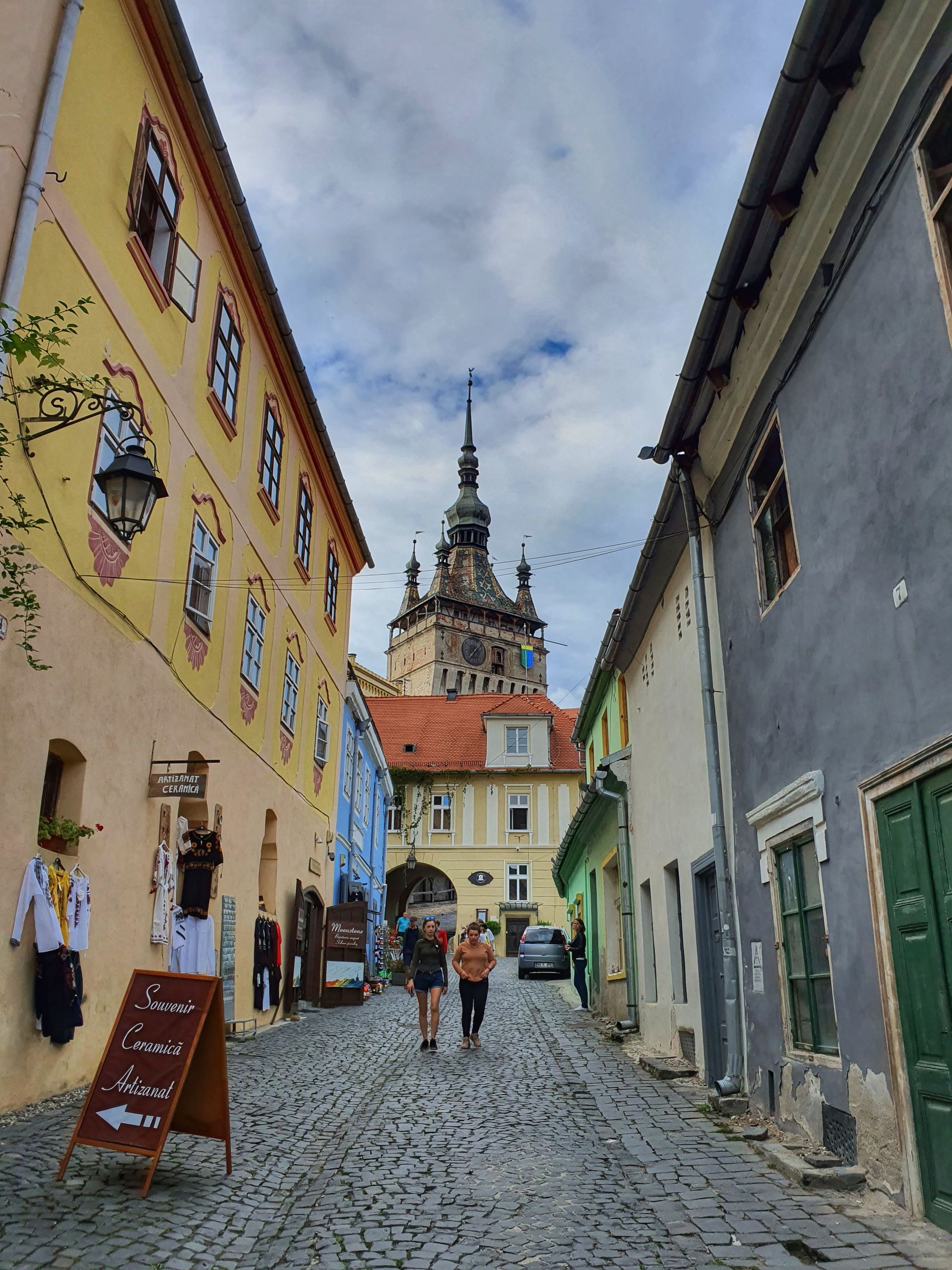
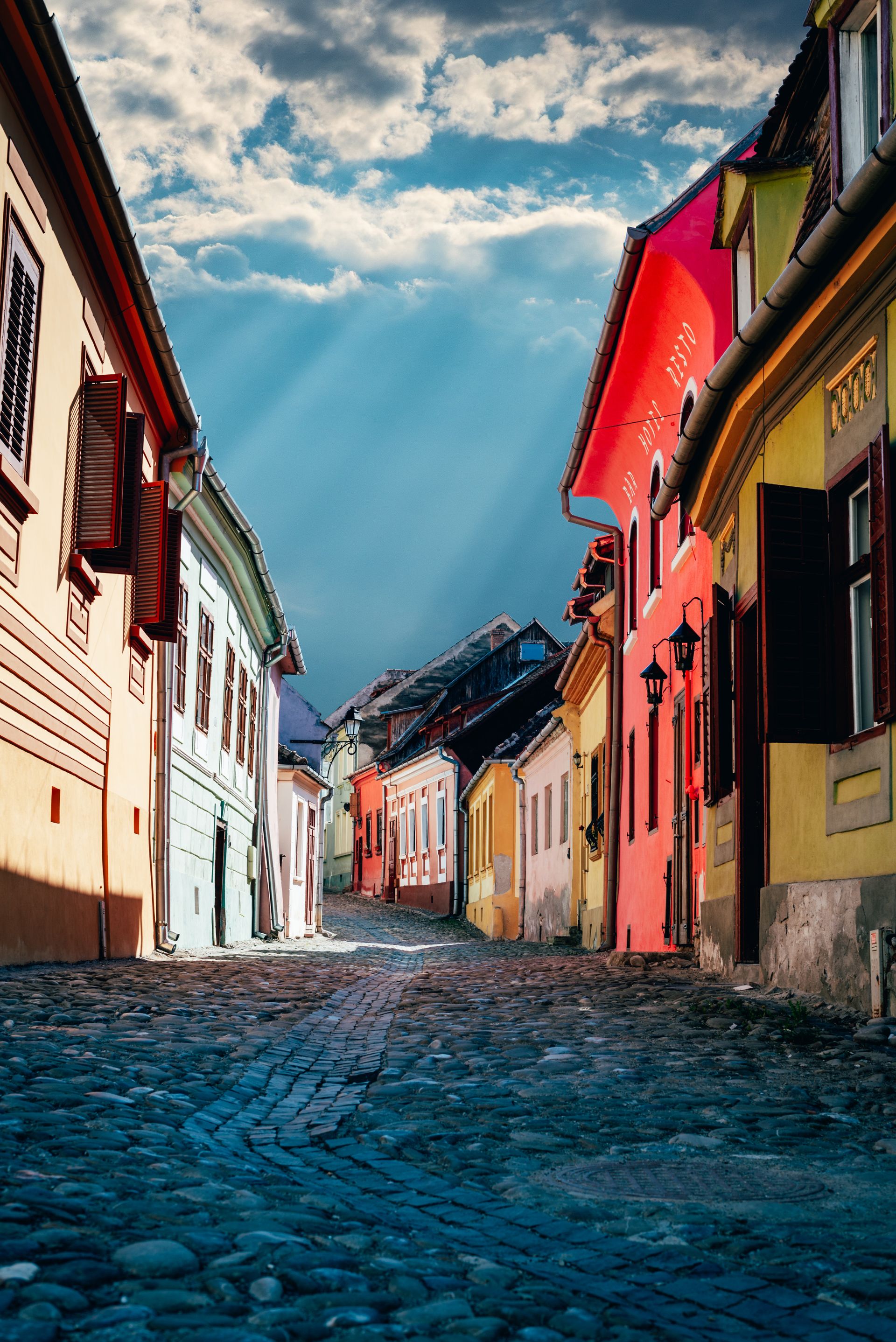
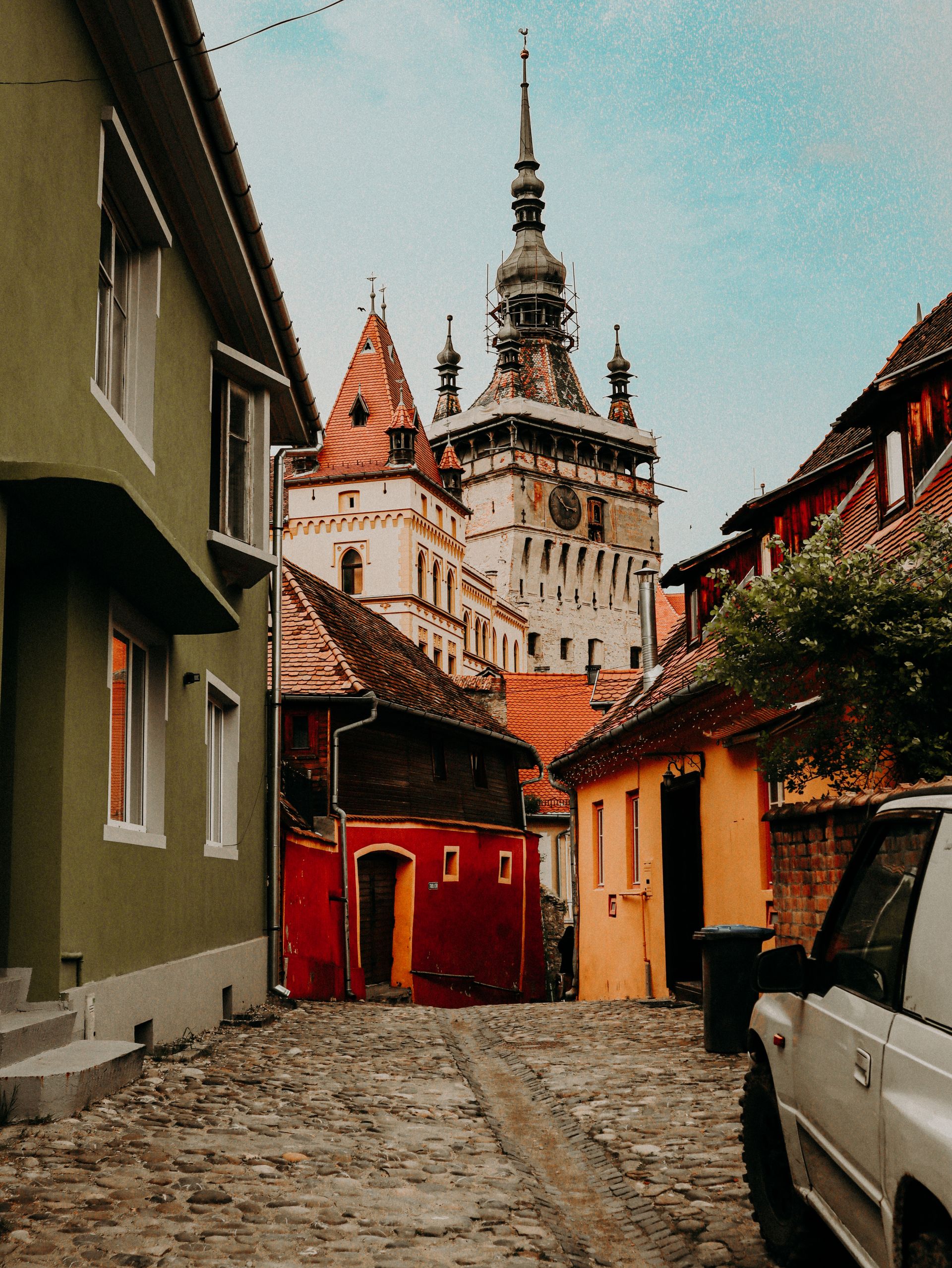
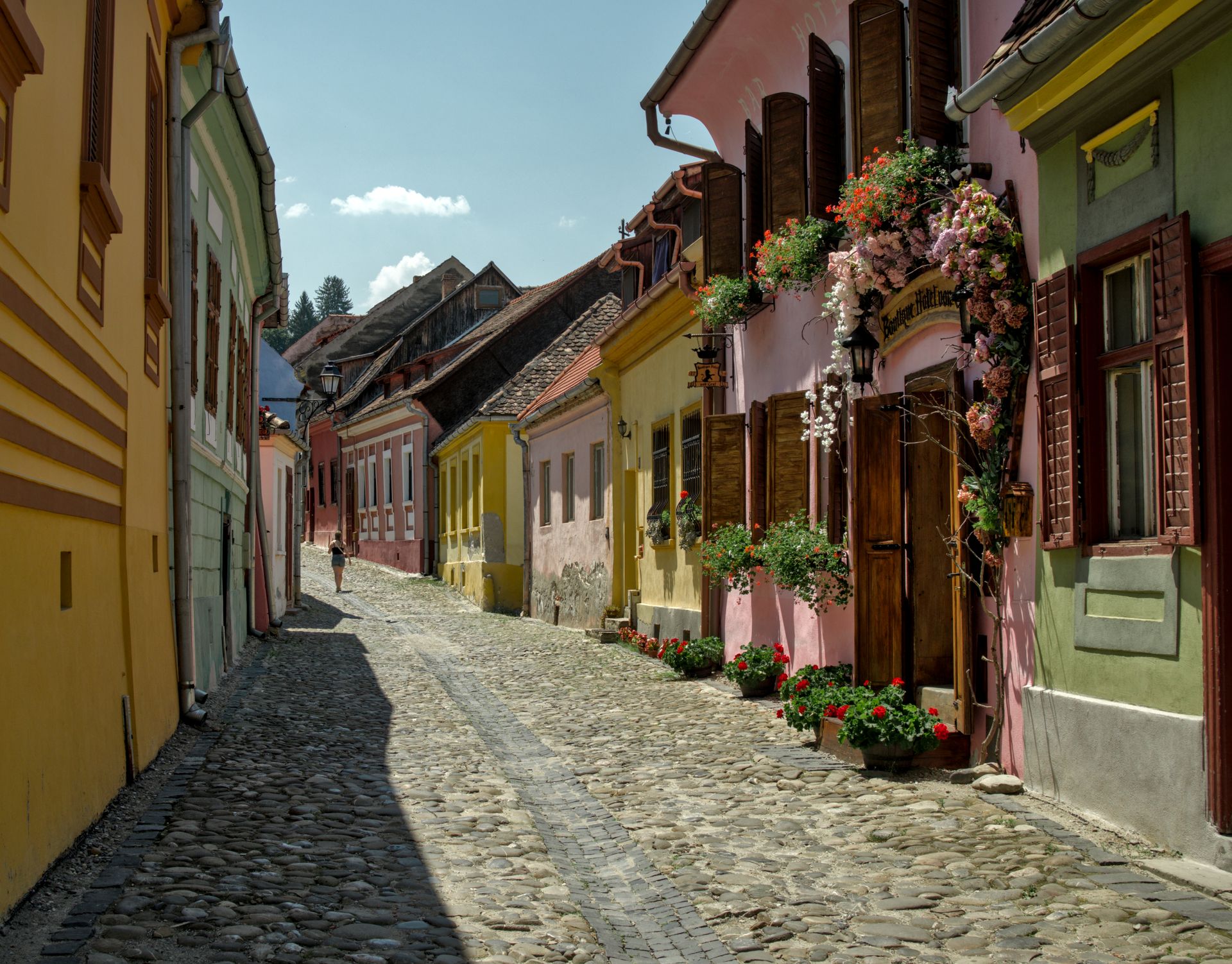
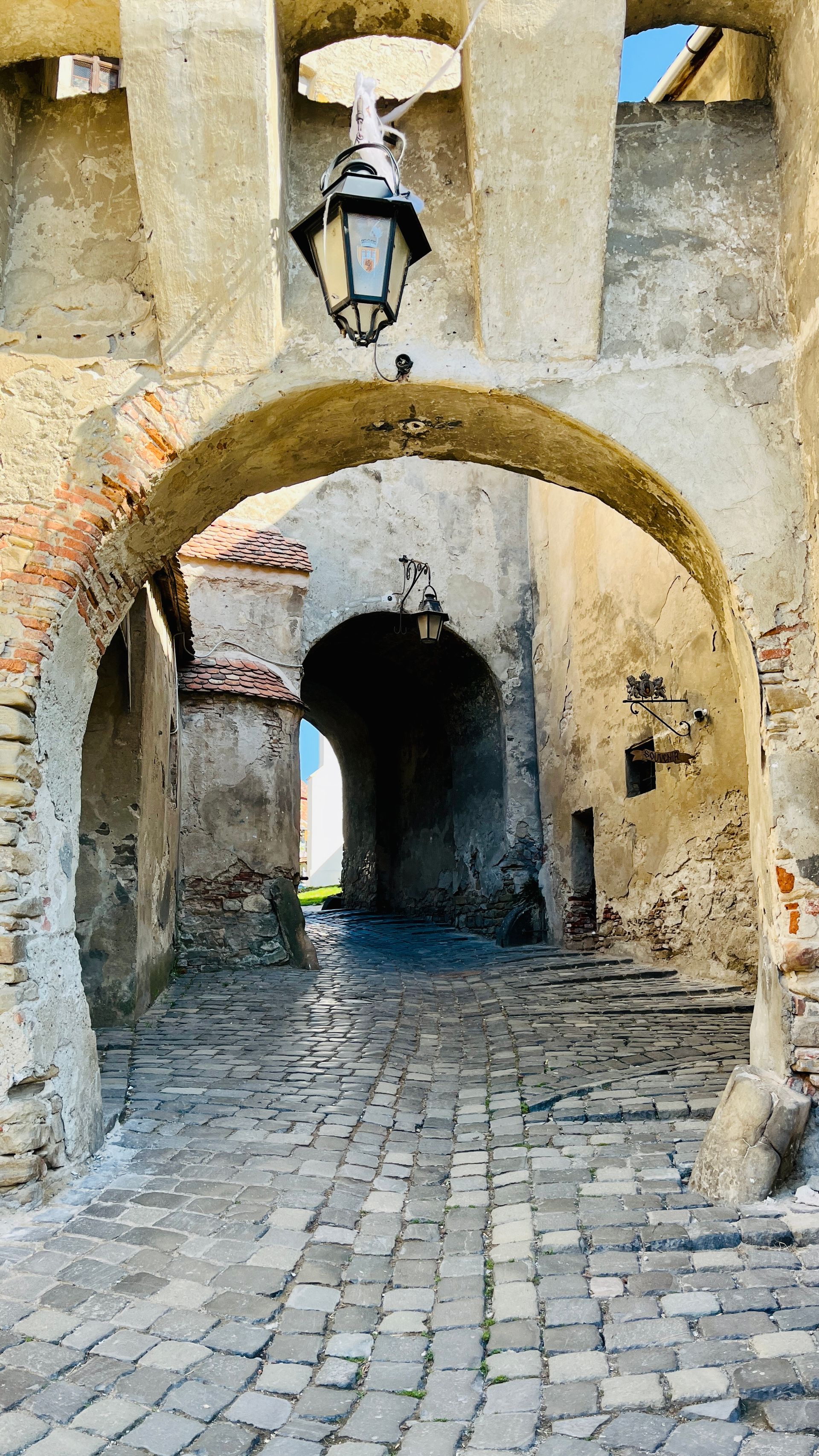
Sighișoara is small enough that “neighborhoods” really means a handful of distinct zones on and around one hill. The walled upper citadel holds almost everything you came to see; the lower town spreads flat below it around the river and station. Understanding how the two relate — and the few pockets within the citadel itself — is the key to planning your hours, because the difference between a postcard lane and an everyday street is sometimes just one flight of cobbled steps. Here is how the town breaks down.
Cetatea (The Upper Citadel)
The walled hilltop is the reason you came — the UNESCO-listed core of colour-washed burgher houses, guild towers and cobbled lanes where several hundred people still live behind 12th-century walls. This is where the headline sights cluster within a five-minute walk of each other, and it is genuinely inhabited — children walk to school past the Clock Tower and laundry hangs from windows above the tourist lanes, which is exactly what makes it feel alive rather than embalmed.
- Clock Tower & the History Museum
- Piața Cetății & the Vlad Dracul house
- The Covered Staircase up to the hill
Best for: first-timers and history lovers. Access: on foot through the Clock Tower gate from the lower town.
Piața Cetății (Citadel Square)
The small central square of the upper town, ringed by pastel facades, cafe terraces and the famous mustard-yellow Vlad Dracul house; the social heart of the citadel and the natural place to sit with a coffee between sights.
- Casa Vlad Dracul (birthplace house & restaurant)
- Cafe terraces under the burgher facades
- The Monastery Church just off the square
Best for: people-watching and a slow lunch. Access: the open square just inside the Clock Tower gate.
Dealul Şcolii (The Church Hill)
The highest point of the citadel, reached by the Covered Staircase — home to the Gothic Church on the Hill, the old school that gave the stairway its “Scholars’” name, and a romantic, overgrown hilltop cemetery shaded by old trees, with views over the whole patchwork of terracotta roofs. It is the quietest corner of the citadel and the one most visitors skip for lack of legs — which is precisely why it rewards the climb, especially in late-afternoon light.
- The Church on the Hill (Biserica din Deal)
- The Saxon hilltop cemetery
- The viewpoint over the terracotta roofs
Best for: views, atmosphere and quiet. Access: 175 covered wooden steps up from the upper citadel.
The Guild-Tower Walls
The ring of surviving towers — the Tailors’, Tinsmiths’, Butchers’, Furriers’, Ropemakers’ and others — that each guild was responsible for building and defending; a slow loop of the wall is the best way to read the citadel’s medieval logic.
- The Tailors’ Tower (second gate)
- The Tinsmiths’ and Butchers’ towers
- The Ropemakers’ Tower by the cemetery
Best for: photographers and slow walkers. Access: follow the wall circuit from Piața Cetății.
Orașul de Jos (The Lower Town)
The flat town below the citadel hill, where the train station, the Orthodox cathedral, everyday shops, markets and many hotels sit; less postcard-perfect than the citadel but where ordinary Sighișoara life happens.
- The Holy Trinity Orthodox Cathedral by the river
- The train station & bus links
- Everyday restaurants and supermarkets
Best for: transport, value lodging and local life. Access: a short walk downhill from the citadel.
The Târnava Mare Riverside
The river that loops below the hill, with a bridge linking the lower town to the station side and a riverside walk that gives you the classic up-the-hill view of the citadel and the Orthodox cathedral.
- The river bridge & cathedral view
- Riverside walking path
- The classic citadel-on-the-hill photo angle
Best for: the panoramic photo and a gentle stroll. Access: on foot from the station or lower town.
Cultural Sights
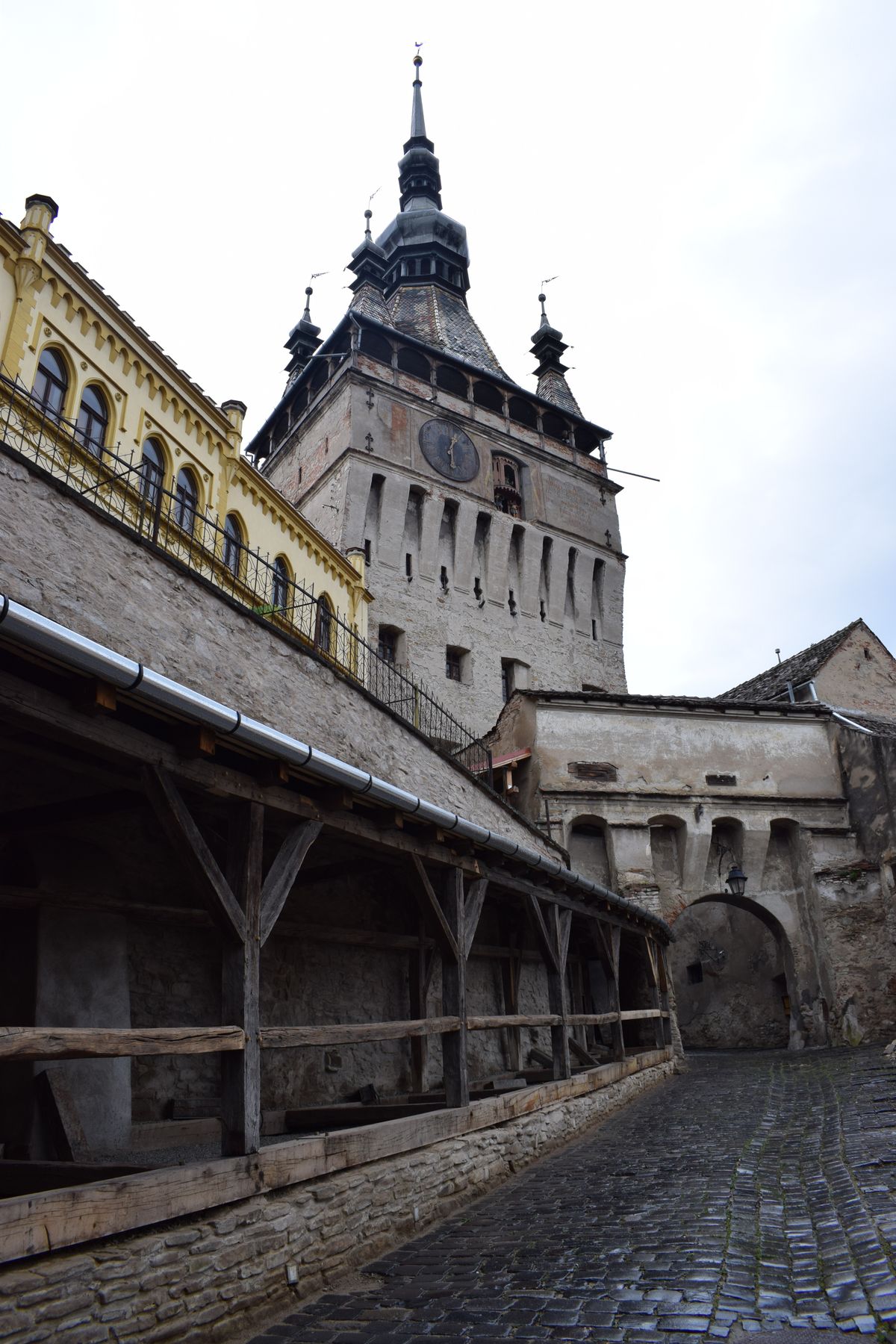
The Clock Tower (Turnul cu Ceas) & History Museum
The town’s emblem and tallest tower at 64 metres, built in the 14th century as the citadel’s main gate and progressively raised. Its great draw is the 1648 clock mechanism that turns carved linden-wood figures — the seven gods of the days of the week and allegorical figures of Peace, Justice and Day/Night — on the gallery above the dial. Inside is the History Museum of Sighișoara across several storeys, topped by an open gallery with the best panorama in town. Admission to the museum is roughly 30 lei (about $6.50); the top gallery is the highlight. Best visited early before the day-trip crowds.
The Covered Staircase (Scara Acoperită)
A roofed wooden stairway built in 1642 to shelter students and churchgoers climbing to the Church on the Hill in winter; originally 300 steps, now 175 after a 19th-century shortening. Free to climb and one of the most photographed features of the citadel; the timbered tunnel is atmospheric in any weather. Look for the worn treads and the way the structure frames the church at the top. Best at quiet hours, and take care when the wood is damp.

The Church on the Hill (Biserica din Deal)
The Gothic Lutheran church crowning the citadel hill, built between the 14th and 16th centuries, with a high vaulted interior, restored medieval frescoes and a crypt — the only church crypt in Transylvania. Reached by the Covered Staircase. Admission roughly 15 lei (about $3.25). Beside it lies the evocative Saxon hilltop cemetery shaded by old trees. Best in late-afternoon light.
Casa Vlad Dracul (Vlad’s Birthplace House)
The mustard-yellow house on Piața Cetății traditionally identified as the home where Vlad Dracul lived in exile and where his son Vlad III — the historical figure behind the “Dracula” name — was probably born around 1431. Today it houses a restaurant and a small upstairs exhibit. Frame it honestly: this is the real, ruthless 15th-century Wallachian prince; the vampire is Bram Stoker’s 1897 fiction, written by a man who never visited Romania.
The Monastery Church (Biserica Mănăstirii)
The large Gothic hall-church just off Piața Cetății, once part of a Dominican monastery and now a Lutheran church known for its baroque organ, painted Anatolian carpets and bronze baptismal font. A small admission applies; it sometimes hosts classical and organ concerts in summer.
The Guild Towers & Citadel Walls
The ring of surviving guild towers — the Tailors’, Tinsmiths’, Butchers’, Furriers’, Cobblers’, Ropemakers’ and others — each built and defended by its namesake craft guild. Free to walk the circuit; the Tailors’ Tower forms the citadel’s second gate, and the Ropemakers’ Tower sits beside the hilltop cemetery. A slow loop of the wall is the best way to understand the medieval defensive plan.
The Holy Trinity Orthodox Cathedral
The large neo-Byzantine Romanian Orthodox cathedral in the lower town, built in the 1930s on the bank of the Târnava Mare, its white walls and silver domes forming the classic foreground to the citadel-on-the-hill view. Free to enter outside services; a striking counterpoint to the Saxon Gothic of the upper town.

Entertainment & the Medieval Festival

Sighișoara is not a nightlife town — it is a small place where the entertainment is the setting itself. The rhythm is gentle: cafe terraces and church concerts by day, a slow loop of the lamplit cobbles after dark, and one explosive weekend in July when the whole citadel becomes a medieval stage. Set your expectations to atmosphere rather than bars and you will not be disappointed; the citadel after the day-trip coaches leave is the quiet headline act.
The Sighișoara Medieval Festival (July)
The town’s headline event, held over a late-July weekend: costumed knights and craftspeople, period-music and dance stages, a parade through the Clock Tower gate, craft and food stalls, fire shows after dark, and the whole citadel turned into a living medieval set. It is the longest-running festival of its kind in Romania and draws performers and visitors from across the country. Typical cost: most street programming is free; some staged shows and the night events carry a small ticket. Book accommodation months ahead — it is comfortably the busiest weekend of the year, and the small stock of citadel guesthouses sells out first.
Live music & church concerts
The Monastery Church and other citadel venues host classical, organ and choral concerts through the summer, making the most of the Gothic acoustics. Typical cost 20–60 lei ($4–13); check posters around Piața Cetății for dates.
Citadel cafes & terraces
The pastel terraces around Piața Cetății are the social centre after dark — coffee, local wine and beer under the burgher facades, with the Clock Tower lit above. Typical cost: a coffee 8–15 lei, a glass of Romanian wine 15–30 lei. The evening, once the coaches leave, is the citadel at its most relaxed.
Wine & the Târnava cellars
Sighișoara sits in the Târnave wine region, one of Transylvania’s best for crisp whites (Fete ască, Riesling, Traminer); citadel restaurants pour local labels and some run informal tastings. Typical cost: a tasting flight 40–80 lei ($9–17).
Evening photography walk
The single best free “entertainment” in Sighișoara is a slow dusk loop of the empty citadel — the lit Clock Tower, the Covered Staircase, the wall towers and the view from the hill. Typical cost: nothing but time. Best in the half-hour after sunset.
Day Trips from Sighișoara

Sighișoara’s position on the main Transylvanian rail corridor and at the edge of the Saxon-village country makes it one of the best day-trip bases in Romania. The split is simple: the fortified Saxon villages reward a car or organised tour, while the bigger cities are cheap, scenic and direct by train. Below are the trips that justify a day away from the citadel, roughly in order of how easily they pair with a Sighișoara stay.
Biertan (about 30 minutes by car)
The grandest of the fortified Saxon churches, a triple-walled hilltop complex inscribed on the UNESCO list in 1993 and famous for its carved altarpiece and a sacristy door with a 19-bolt lock that once secured the town treasury. The complex was for centuries the seat of the Transylvanian-Saxon Lutheran bishopric, and the rings of defensive walls climbing the hill show exactly how these villages doubled as refuges in a siege. It is the single best half-day from Sighișoara; easiest by car as buses are infrequent. Combine with a village lunch and a walk up to the church for the view over the vineyards.
Viscri (about 1 hour by car)
The tiny Saxon village with a whitewashed fortified church, also UNESCO-listed, made famous by King Charles III, who bought and restored a traditional blue-painted house here and champions the area’s conservation. Viscri is the place to see rural Transylvanian life almost unchanged — horse carts on the single lane, women selling hand-knitted wool socks, a working blacksmith, and homemade food in guesthouse kitchens. The access road is rough and the public-transport return schedule is impractical; a hired car or an organised tour is essential, but the reward is the most authentic Saxon village in the region.
Brașov (about 2h15–2h45 by train)
The largest medieval-Gothic city of the region — the Black Church, Council Square, the Rope Street and the Tâmpa cable car, and the gateway to Bran and Peleș castles. A full day or, better, a base in its own right; see our Brașov city guide. Easy and direct by train.
Sibiu (about 2h–2h30 by train)
A former European Capital of Culture with two beautifully preserved squares, the “eyes”-windowed rooftops, the Bridge of Lies and the Brukenthal museum. A rewarding full day or overnight; see our Sibiu city guide. Direct trains run on the corridor.
Mediaș (about 30–45 minutes by train)
The nearest sizeable Saxon town, with its own fortified church precinct (Saint Margaret’s) and a leaning tower, plus the heart of the Târnave wine country. An easy short hop on the main line and a genuinely under-visited alternative to the bigger cities — you get a walled Saxon centre without the coach crowds, and it pairs naturally with a Târnave wine-cellar stop.
Sighșoara’s surrounding Saxon countryside
Beyond the headline villages, the rolling hills of the Târnava Mare are dotted with smaller fortified-church villages — Saschiz (UNESCO-listed, with a distinctive Clock Tower modelled on Sighișoara’s), Criț and Mălâncrav among them — and some of the last species-rich hay meadows in Europe, protected as a conservation landscape. With a car, a slow loop linking two or three of these villages, a meadow walk and a village lunch makes a rewarding full day and shows you the rural world the citadel once defended.
Food & Drink in Sighișoara

Sighișoara is a small town, so don’t come expecting a sprawling fine-dining scene — come for honest, hearty Romanian and Transylvanian-Saxon home cooking served in atmospheric citadel houses and good-value lower-town bistros. The regional table is built on the cuisine of three communities — Romanian, German-Saxon and Hungarian — layered over centuries on the same hill, and it shows up as a mix of slow-cooked meats, sour soups, polenta, fresh sheep’s cheese and serious cake. The other thing to know is geography: the citadel-square restaurants charge for the postcard setting, while the lower town feeds locals the same dishes for noticeably less — so plan one memorable dusk dinner up top and eat the rest of your meals down the hill.
Romanian & Transylvanian classics
Sighișoara’s kitchens lean into hearty Romanian and Transylvanian-Saxon cooking — sour soups (ciorbă) often soured with borș, polenta (mămăligă) with sheep’s cheese and sour cream, sarmale (minced-pork-and-rice cabbage rolls slow-cooked for hours), grilled mititei (skinless seasoned-meat rolls) and tochitură (a pork stew served with polenta and a fried egg). Portions are generous and prices gentle by Western-European standards; the Saxon influence surfaces in heavier roasts, smoked meats and dense breads, while the Hungarian thread brings paprika-rich stews to menus across Mureș County.
- Casa cu Cerb — Transylvanian classics in a historic citadel house (mains ~40–70 lei, ~$9–15)
- Casa Wagner — Saxon-Romanian fare on Piața Cetății (mains ~40–75 lei, ~$9–16)
- Concordia / citadel taverns — sarmale, ciorbă and grilled meats (mains ~35–65 lei, ~$8–14)
Citadel-square dining & the Dracula house
Piața Cetății is the heart of citadel dining, including the restaurant inside Casa Vlad Dracul — touristy but a fun once-only for the location.
- Casa Vlad Dracul (restaurant) — Romanian mains in the birthplace house (~45–80 lei, ~$10–17)
- Square terrace cafes — coffee, cake and light lunch (~15–40 lei, ~$3–9)
- Lower-town bistros — better value away from the square (~30–55 lei, ~$7–12)
Beyond sarmale and mămăligă
The Saxon and wider Transylvanian table runs deeper than the headline dishes — this is a region of fermented soups, shepherd’s cheese, fried doughnuts and spit-roasted pastry, much of it best eaten in the small family-run places rather than the square’s tourist terraces.
- Papanași — fried doughnuts with sour cream and jam, the classic dessert (~18–28 lei, ~$4–6)
- Kürtőskalács / chimney cake — the spit-roasted sweet pastry sold from citadel stalls (~12–20 lei, ~$3–4)
- Bulz — baked polenta stuffed with cheese, a shepherd’s dish (~25–40 lei, ~$5–9)
- Ciorbă de burtă / răduțeancă — the sour soups, often served in a bread bowl (~20–35 lei, ~$4–8)
Wine & the Târnave cellars
Sighișoara sits inside the Târnave wine region, one of Transylvania’s best for crisp, aromatic whites — Fete ască, Riesling Italian, Traminer Roz and Sauvignon Blanc grown on the cool valley slopes around the Târnava Mare and Târnava Mică rivers. Citadel restaurants pour local labels by the glass, and the higher altitude and continental climate give the wines a bright acidity that pairs neatly with the region’s rich, meaty cooking. A glass of Târnave white on a Piața Cetății terrace at dusk is one of the simplest pleasures in town.
Food Experiences You Can’t Miss
- A glass of Târnave white wine on a Piața Cetății terrace at dusk, under the lit Clock Tower
- Papanași for dessert in a citadel restaurant after a Transylvanian main — warm, with sour cream and tart fruit jam
- A chimney cake (kürtőskalács) bought hot off the spit from a festival or weekend stall on the cobbles
- A bowl of ciorbă soured with borș, served in a hollowed bread loaf in a lower-town bistro
Practical Information

Language
Romanian is the language — a Romance language written in the Latin alphabet, more familiar to Spanish, Italian or French speakers than its Slavic neighbours. German is still spoken by the small Saxon community and Hungarian across Mureș County; English is common in citadel hotels and restaurants. A few words — bună ziua (hello), mulțumesc (thank you) — go a long way.
Cash vs. Cards
The currency is the Romanian leu (RON), roughly 4.6 to the US dollar. Cards (including contactless) are widely accepted in hotels and most restaurants, but carry small lei notes for museum tickets, market stalls and the occasional cash-preferred cafe. ATMs are in the lower town; avoid Euronet-style standalone machines with poor rates and prefer bank ATMs.
Safety
Sighișoara is a safe, low-crime small town; Romania sits on US State Department Travel Advisory Level 1 (Exercise Normal Precautions). The realistic hazards are physical, not criminal: the worn cobbles and the Covered Staircase are slippery when wet or icy. Watch your footing, and keep an eye on belongings in festival-weekend crowds.
What to Wear
Comfortable, grippy walking shoes are the single most important item — the whole citadel is uneven cobbles and stairs. Layer for the continental climate: warm days, cool evenings, cold and snowy winters. Modest cover (shoulders, knees) is appreciated when entering the churches.
Cultural Etiquette
Romanians are warm and fairly formal with strangers; a handshake and a greeting open most interactions. Respect that the citadel is a living neighbourhood — keep noise down in residential lanes at night and don’t photograph into private homes. Tipping around 10% in restaurants is customary.
Connectivity
Romania has excellent, fast and cheap mobile internet; 4G/5G coverage is strong even in this small town, and EU roaming applies for EU SIMs. Wi-Fi is standard in hotels and cafes. A local prepaid SIM (Orange, Vodafone, Digi) is inexpensive if you need lots of data.
Health & Medications
Tap water is safe to drink. Pharmacies (farmacie) are in the lower town for routine needs; the EHIC/GHIC covers EU/UK visitors for state care. The CDC flags routine vaccines and a tick-borne-encephalitis risk for those hiking the surrounding hills and forests in spring–summer — use repellent and check for ticks if you walk the countryside.
Luggage & Storage
Because cars can’t enter the upper citadel, plan to carry or wheel your bag up the cobbled climb, or have your guesthouse arrange help. The train station and some hotels can hold luggage for a day-trip stop. Pack light if you’re staying inside the walls.
Budget Breakdown: Making Your Lei Count
| Tier | Daily | Sleep | Eat | Transport | Activities | Extras |
|---|---|---|---|---|---|---|
| Budget | $35–55 | $20–35 guesthouse / hostel | $10–15 casual | $3–6 walk + local train | $6–12 museums | $3–6 coffee |
| Mid-Range | $70–120 | $45–80 citadel boutique | $20–35 sit-down | $8–15 taxi / day-trip train | $12–25 museums + tasting | $8–15 wine |
| Luxury | $180+ | $110+ top citadel hotel | $45+ best restaurants | $40+ private car / driver | $50+ private guide | $25+ extras |
All prices in USD; the local currency is the Romanian leu (RON), roughly 4.6 to the dollar. Sighișoara is genuinely inexpensive by Western-European standards — a comfortable mid-range day with a citadel-boutique bed, sit-down meals and museum tickets lands around USD $70–120, while budget travellers sleeping in a lower-town guesthouse and eating casually can run a full day under $55. The two cost levers that move your daily total most are how central your bed is and whether you hire a car for the Saxon-village day trips.
Where Your Money Goes
Accommodation is the biggest variable: a citadel-wall boutique inside the UNESCO core commands a clear premium for the location and the after-hours quiet, while lower-town guesthouses a ten-minute walk downhill cost markedly less for a similar standard. Food is cheap unless you eat every meal on Piața Cetății, where the location premium is real. Museums are inexpensive — most tickets run 15–30 lei (roughly $3–7) — so the sightseeing budget is small even if you see everything. The single largest discretionary line is a hired car or private driver for Biertan and Viscri, which public transport can’t reach conveniently and which can add $40–90 for a day. Trains for the city day trips to Brașov, Sibiu and Mediaș are very cheap.
Money-Saving Tips
- Sleep in the lower town and walk up to the citadel — same town, materially lower rates
- Visit Sighișoara as a day trip from a Brașov or Sibiu base if budget is tight, but stay over if you can for the empty evening citadel
- Eat lunch down the hill where locals do; reserve a citadel-square table only for the one dusk-view dinner worth the markup
- Use the cheap, scenic trains for the city day trips and save the hired car for the Saxon villages that need one
Frequently Asked Questions
How many days do I need in Sighișoara?
Half a day covers the headline sights — the Clock Tower and History Museum, the Covered Staircase, the Church on the Hill, the Vlad Dracul house and a loop of the guild towers. One overnight is the sweet spot: it lets you have the citadel cobbles to yourself in the evening after the day-trip coaches leave, which is when the town is at its most atmospheric. Two nights make sense only if you want to base here for the Saxon-village day trips to Biertan and Viscri.
Is Sighișoara good for solo and family travellers?
Yes to both. It is a safe, compact, walkable small town — Romania sits on US State Department Travel Advisory Level 1 — and the citadel is easy to explore on foot. Families should note the steep cobbles and the 175-step Covered Staircase are hard going with a stroller; a baby carrier is easier. Solo travellers will find citadel cafes sociable, especially in the evening and during the July festival.
Do I need to buy tickets for the citadel?
The citadel itself is free to walk — it’s a living neighbourhood, not a gated attraction, and the Covered Staircase and guild-tower circuit cost nothing. You pay only for the individual museums and churches: the Clock Tower History Museum (~30 lei), the Church on the Hill (~15 lei) and the Monastery Church (small fee). Carry small lei notes for these, as not every ticket desk takes cards.
What about the language barrier?
Manageable. Romanian is a Latin-alphabet Romance language, so signage is readable to many Western visitors, and English is widely spoken in citadel hotels and restaurants. German lingers in the Saxon community and Hungarian across Mureș County. A translation app handles menus; bună ziua and mulțumesc earn goodwill.
When is the Sighișoara Medieval Festival?
The Sighișoara Medieval Festival is held over a weekend in late July, filling the citadel with costumed performers, period music, craft stalls and a parade through the Clock Tower gate. It is the most vivid time to be in town and also the busiest — book accommodation months ahead, and stay overnight so you catch the night programming after the day-trippers leave.
Can I use credit cards everywhere in Sighișoara?
Mostly. Hotels, citadel restaurants and supermarkets take Visa/Mastercard and contactless, but museum ticket desks, market stalls and some small cafes are cash-preferred. Carry 100–200 lei in small notes for a day of tickets and stalls; bank ATMs in the lower town give the best rates.
Is the Dracula connection real — or just a tourist gimmick?
Both, honestly. Vlad III — the historical Vlad Țepeș, “the Impaler” — was a real 15th-century Wallachian prince, and his father lived in Sighișoara, so the claim that Vlad was born here around 1431 is a genuine (if not perfectly documented) tradition. The vampire “Dracula” is pure fiction — Bram Stoker borrowed the name and the Transylvanian setting for his 1897 novel but never visited Romania and based his Count on almost none of the real man. Enjoy the yellow house on Piața Cetății, but the town’s real treasure is its intact Saxon citadel.
Is Sighișoara better as a day trip or an overnight stay?
An overnight wins if you can manage it. By day, Sighișoara fills with coaches from Brașov and Sibiu between roughly 11:00 and 16:00; the citadel is small and the crowds concentrate. Stay the night and you get the lanes, the lit Clock Tower and the hilltop views almost to yourself in the evening and early morning. If you’re tight on time, a day trip on the direct train from Brașov (about 2h30) or Sibiu (about 2h) still delivers the highlights — just arrive early.
Ready to Experience Sighișoara?
Sighișoara rewards travellers who slow down, stay the night inside the walls, climb the Clock Tower for the rooftop panorama, take the Covered Staircase up to the Church on the Hill at golden hour, wander the empty cobbles after the coaches leave, and raise a glass of Târnave white on Piața Cetății under the lit tower. Pair this guide with the wider Romania country guide for the trans-country frame (the leu, Schengen entry, the Carpathian rail loop) and with our Brașov, Sibiu and Bucharest companions for the rest of a classic Transylvania-and-capital sweep.
Explore More City Guides

Where to Stay
Browse our Sighișoara hotels guide for citadel-wall boutiques inside the UNESCO core, value guesthouses in the lower town, and the handful of hotels with restricted drive-up access on the hill.
- Romania Country Guide — the wider Romanian frame: the leu, Schengen entry, the Carpathian rail loop (see also the Romania guide)
- Brașov City Guide — the Gothic gateway city: Black Church, Council Square, Bran & Peleș castles
- Sibiu City Guide — the former European Capital of Culture: two great squares, the “eyes” rooftops, Brukenthal
- Bucharest City Guide — the capital: the Palace of Parliament, the Old Town and the country’s main international gateway
- All City Guides
Alex the Travel Guru
Alex has been climbing up to Sighișoara’s citadel for the better part of two decades — in the late-July festival crush, in the quiet of a September dusk, and once on an icy January afternoon when the Covered Staircase was a skating rink and the whole hill was empty. He’s eaten papanași on Piața Cetății, climbed the Clock Tower for the rooftop view more times than he can count, and learned the hard way that the citadel is a day-trip magnet by day and a private medieval town by night. The Sighișoara brief here reflects the rhythm of those visits, the Romanian national tourism guidance, the UNESCO World Heritage record for site 902, the UK FCDO and US State Department advice, and the ground-truth on what works for a one-night stay in 2026 — with a soft spot for the hilltop cemetery, the Târnave whites, and the empty cobbles after the last coach leaves.
More city guides you might like

Plan your trip to Sighișoara
The booking tools we use ourselves. FFU may earn a commission at no extra cost to you.
Plan & book your trip to Sighișoara
Booking through these searches supports our guides at no extra cost to you.