
City Guide · Basque Country
San Sebastián, Spain: La Concha Bay, the Parte Vieja, and the World’s Densest Constellation of Michelin Stars
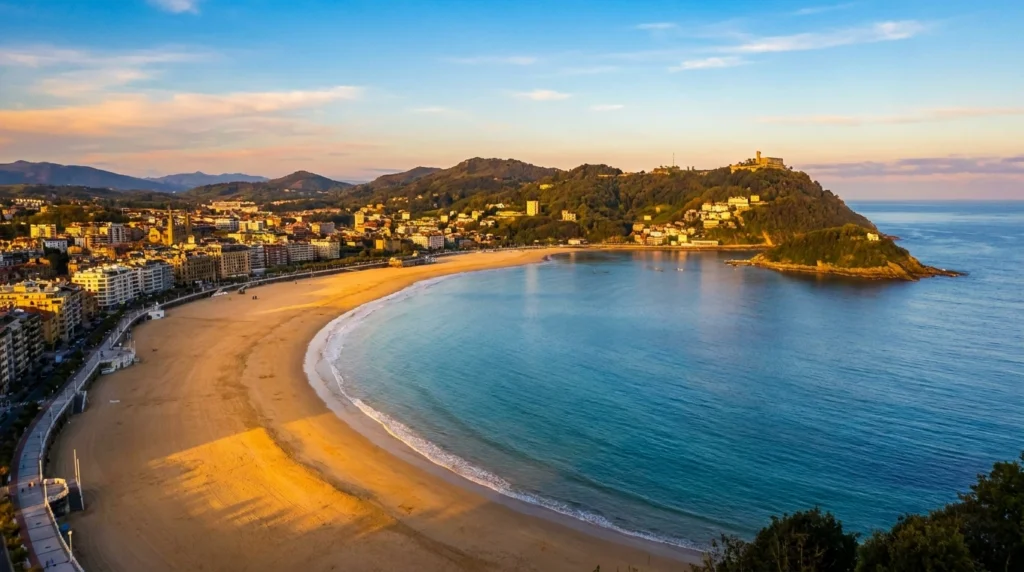
I have walked the curve of La Concha more times than I can count, and it still stops me every single visit. We tell first-time travellers that this is a small city — roughly 188,000 people inside the municipality, set on a perfect shell-shaped bay on Spain’s Atlantic Basque coast — that eats better, per square metre, than almost anywhere on earth. My favourite San Sebastián ritual is the early-evening poteo: a slow crawl through the pintxos bars of the Parte Vieja, ordering one skewer and a short glass of Txakoli at each marble counter before drifting to the next. Donostia, as locals call it in Basque, holds one of the highest densities of Michelin stars on the planet, yet its soul lives in standing-up bar food and a Belle Époque promenade. Treat this guide as the brief I would hand my own family the night before they flew into Hondarribia — La Concha and the Bahía de la Concha, the old town’s tiled bars, the Monte Igueldo and Monte Urgull viewpoints, the surf at Zurriola, and the easy hop to Bilbao and the French Basque coast .

Table of Contents
Why San Sebastián?
San Sebastián is the city Spaniards themselves dream about. Officially Donostia / San Sebastián, it sits on the Bay of Biscay near the French border, the elegant seaside capital of Gipuzkoa province in the Basque Country, with a population of roughly 188,000 . For more than a century it has been Spain’s most fashionable beach resort — the place where the Spanish royal family summered in the Belle Époque, leaving behind a curving promenade, ornate balustrades and the shell-shaped sweep of La Concha, regularly named one of the best city beaches in Europe .
But the beauty is only half the story. San Sebastián is also one of the great food cities of the world. The surrounding Gipuzkoa province holds an extraordinary concentration of Michelin stars, including three-starred temples such as Arzak and Akelarre, while the bars of the old town serve pintxos — the elaborate Basque answer to tapas — that rival anything on a tasting menu . The city’s relationship with food borders on devotional, expressed in its famous members-only gastronomic societies, the txokos, where Basques cook elaborate meals among friends.
San Sebastián is unmistakably Basque. Locals call it Donostia, speak Euskara — one of Europe’s oldest, non-Indo-European languages, co-official with Spanish — and hold their food, festivals and identity fiercely . The city was named European Capital of Culture in 2016, and its September film festival, founded in 1953, is among the most prestigious in the world, drawing Hollywood stars to the Kursaal each autumn .
This guide covers the neighbourhoods you will actually walk, the pintxos counters and Txakoli worth seeking out, the marquee sights (La Concha and its promenade, the Parte Vieja, the Monte Igueldo and Monte Urgull viewpoints, the Peine del Viento sculptures and the Kursaal), the day trips Donostiarras themselves take — above all Bilbao, the French Basque coast and the coastal villages of Getaria and Hondarribia — and the practical realities of Schengen rules, the wet Atlantic weather and the packed September festival season. The city is compact: almost everything sits within a 30-minute walk along the bay.
What surprises many first-time visitors is how genuinely small and walkable the city is for somewhere so famous. The whole arc of the bay, from the surf at Zurriola to the Peine del Viento at the far western tip, is barely four kilometres, and the dense old town where you will spend most evenings is a tight grid you cannot really get lost in. There is no metro, no sprawl, no need to plan logistics around traffic; you orient yourself once to the curve of La Concha and the rest of the trip falls into place. That compactness is part of why Donostiarras themselves rate quality of life here so highly, and why the city consistently appears near the top of liveability and wellbeing rankings in Spain .
One orientation point worth absorbing early: San Sebastián is a northern, Atlantic city, not a sun-baked Mediterranean one. It rains — often, and in any month — and the green hills that cradle the bay are green precisely because of it. The upside is a temperate climate that rarely turns brutally hot, lush surroundings and a soft, silvery light off the water. Pack a compact umbrella, accept that a grey morning can give way to a golden afternoon, and you will find the weather suits the city’s character: refined, unhurried and quietly confident. For the wider Spanish context, this guide pairs with our Spain Travel Guide and the sibling Bilbao, Barcelona and Madrid city guides.
Getting There

San Sebastián Airport (EAS), at Hondarribia about 20 kilometres east near the French border, is small, handling around 0.3 million passengers a year, with limited domestic links to Madrid and Barcelona . Many travellers instead fly into Bilbao Airport (BIO), about 100 kilometres west and far better connected internationally, then take a bus; Biarritz Airport (BIQ) in France, around 50 kilometres east, is another common gateway with budget European flights.
Rail is scenic but slow from the south. Renfe runs long-distance trains from Madrid to the San Sebastián station in around 5 to 6 hours, while a high-speed “Basque Y” line is under construction to cut that dramatically later this decade . More useful day to day is the regional narrow-gauge Euskotren, which links San Sebastián to Bilbao, Hendaye on the French border and the coastal towns of Gipuzkoa.
By road, ALSA and PESA run frequent intercity coaches from Bilbao (about 1 hour 15 minutes), Madrid, Barcelona and across the Basque Country into the central bus station beside the Renfe rail terminal . Coaches from Bilbao are the cheapest and often fastest option, running roughly hourly throughout the day.
Getting Around
San Sebastián is one of the easiest cities in Spain to navigate on foot: the bay, the old town and the main beaches sit within a flat, walkable arc, served by a dependable Dbus city bus network, a regional Euskotren rail line and two historic funiculars and lifts to the surrounding hills . The centre is compact, so most visitors walk between La Concha, the Parte Vieja and Gros, using transit mainly for the airport, the hill viewpoints and day trips along the coast.
Dbus City Buses
Dbus runs the city’s bus network, with frequent lines threading the bay, the old town, Gros and the outer neighbourhoods, plus night búho services on weekends . A single ride is about €1.85, falling to well under €1 with the rechargeable Mugi transport card, which works across Dbus, Euskotren and the regional buses. For a city this walkable, most visitors use the bus mainly for the funicular base at Igueldo or for reaching the airport corridor.
Euskotren and Regional Rail
The narrow-gauge Euskotren (“El Topo”) runs from the Amara and Easo stations west toward Bilbao and east to Hendaye on the French border, making it the backbone for coastal day trips to Zarautz, Getaria and across into France . It is slower than the bus to Bilbao but scenic, hugging the green Gipuzkoan coast. The Mugi card covers it at a discount.
Funicular de Igueldo
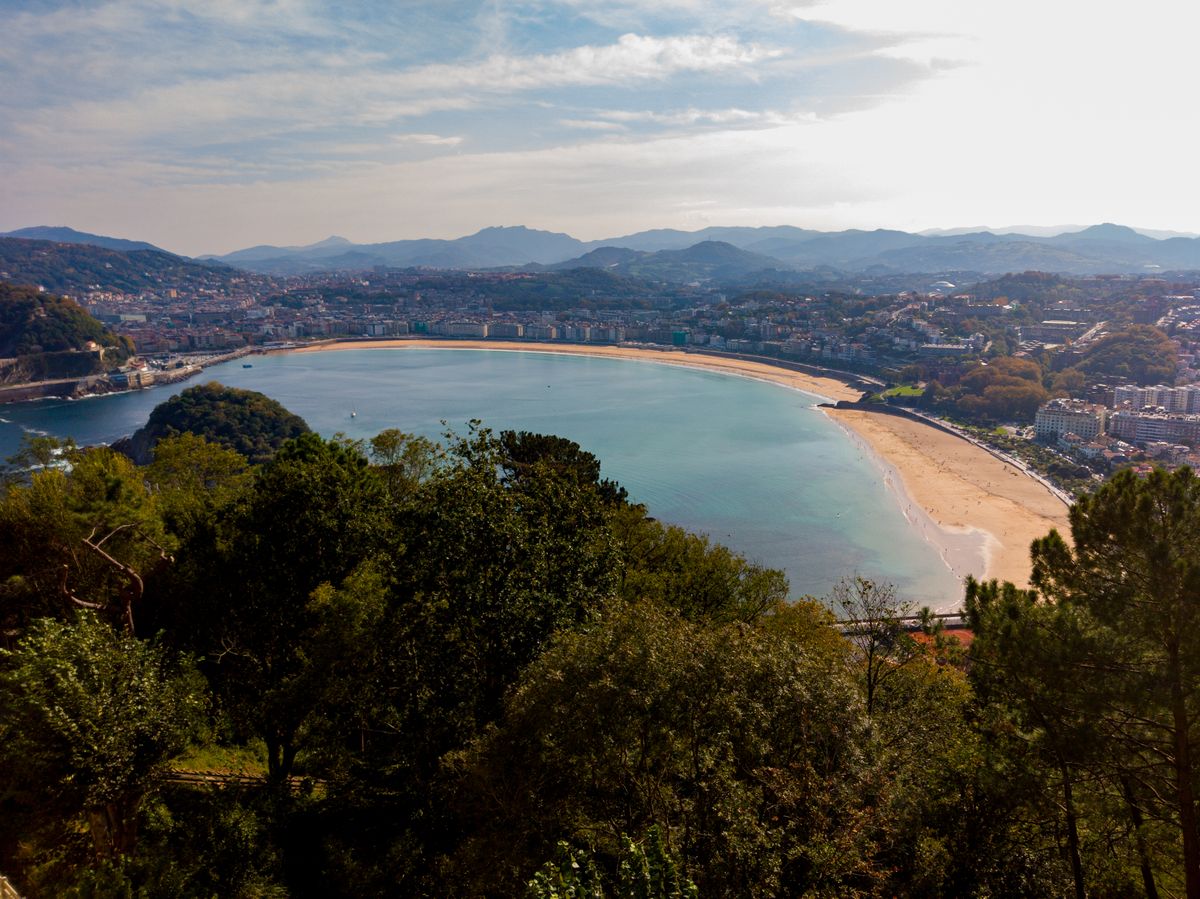
The Funicular de Monte Igueldo has climbed the hill at the western end of La Concha since 1912, one of the oldest working funiculars in Spain, rising to a small vintage amusement park and the single best panorama of the bay . The ride takes a few minutes and costs only a few euros return. It is the classic San Sebastián photograph — the whole shell of La Concha laid out below — and unmissable near sunset.
Airport Access
- Lurraldebus E21/E25 from Hondarribia airport (EAS) to the centre — about 35 minutes, roughly €2.55
- PESA/ALSA bus from Bilbao Airport (BIO) to San Sebastián — about 1 hour 15 minutes, roughly €17
Taxis and Rideshare
Licensed San Sebastián taxis are white; fares are municipally regulated. A typical cross-centre ride runs €7–€12. Rideshare presence is limited, so taxis and the bus remain the reliable defaults. Card payment is increasingly standard, but carry small notes for shorter trips and late nights.
Cycling and the Promenade
San Sebastián is one of Spain’s most cycle-friendly cities, with a flat, continuous bike lane (the bidegorri) running the length of the bay and along the Urumea river, plus a dockless and station-based bike-share scheme . Renting a bike for a half-day is one of the best ways to cover La Concha, Ondarreta and Zurriola in a single relaxed loop, and the promenade itself is a pedestrian-first space where walking is genuinely the fastest way between the beach, the old town and Gros.
Navigation Tips
San Sebastián is easy to read once you orient to the bay: La Concha and the elegant promenade curve along the south, the Parte Vieja and Monte Urgull sit at the bay’s eastern corner, and the surf beach of Zurriola lies just east in Gros across the Urumea river. The Urumea cuts the centre roughly in two, crossed by several handsome bridges — the Zurriola, Santa Catalina and María Cristina — so if you keep the river and the sea in mind you will never be more than a few minutes from a recognisable landmark. Google Maps and the Dbus app both handle the city well, and signs appear in both Spanish and Basque, so a few words of either go a long way.
Neighbourhoods: Where to Base Yourself
📍 San Sebastián Map: Every Place in This Guide
San Sebastián’s character changes street to street, and choosing the right area shapes the whole trip. The centre is compact — you can walk from the surf beach in Gros to the western end of La Concha in under 40 minutes — but each quarter has its own rhythm, price point and noise level. Below are the neighbourhoods most first-time visitors actually consider, with an honest read on who each suits.


Parte Vieja (Old Town)
The car-free old town beneath Monte Urgull is the atmospheric heart of San Sebastián — narrow lanes, the densest run of pintxos bars in Spain, the Baroque Santa María church and the arcaded Plaza de la Constitución. Stay here if it is your first visit and you want the best food and nightlife on your doorstep; it can be lively and noisy late, especially on weekends and during festivals.
Centro and Área Romántica
Just inland from La Concha, the 19th-century Centro is the city’s elegant commercial core — the grand Belle Époque grid of the Área Romántica around the cathedral, with the best shopping, mid-range and upscale hotels, and an easy walk to both the beach and the old town. This is the most convenient and comfortable base for most visitors.
Gros and Zurriola
Across the Urumea river east of the centre, Gros is the city’s relaxed, youthful quarter, fronted by the Zurriola surf beach and the modernist Kursaal cultural centre. It has a strong independent pintxos and surf-café scene, fewer crowds than the old town, and is the best base for surfers and travellers who want a local, lower-key feel.
Ondarreta and Igueldo
At the western, quieter end of La Concha lies Ondarreta beach, the genteel residential district below Monte Igueldo, with the Peine del Viento sculptures, leafy streets and a calmer, family-friendly mood. It trades old-town buzz for sea air and space, and suits travellers who want a beach base a short walk or bus ride from the centre.
Food and Drink: Pintxos, Txakoli and Michelin Stars
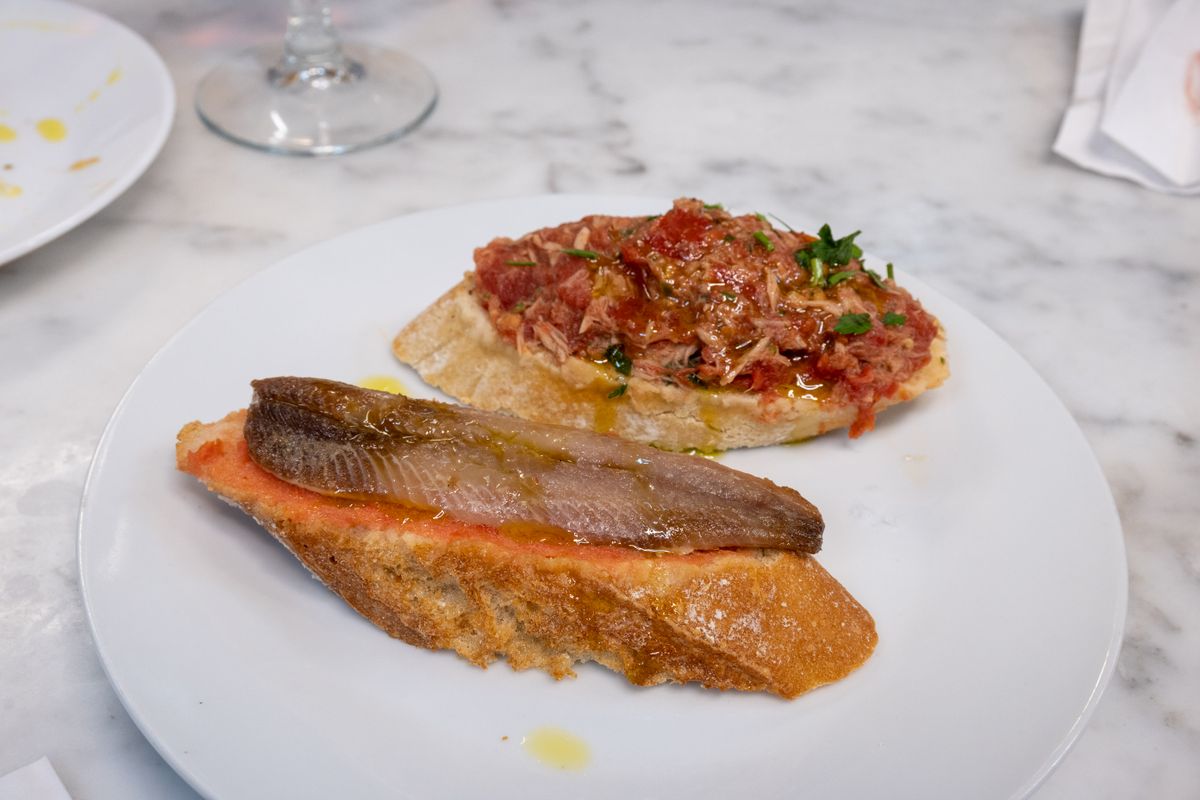
Basque food is the reason many travellers come to San Sebastián at all, and eating here follows its own grammar: pintxos — elaborate small bites, often skewered on bread with a toothpick — eaten standing at the bar, washed down with a short glass of the local sparkling white wine Txakoli, and crawled rather than sat through. The trick is the poteo: order one or two pintxos, a small drink, then move to the next bar and repeat.
What to Order
- Gilda — the original pintxo, invented in San Sebastián: olive, anchovy and guindilla pepper on a skewer.
- Txuleta — the famous aged Basque beef chop, grilled rare over coals.
- Bacalao — salt cod, served al pil-pil or a la vizcaína, a Basque signature.
- Kokotxas — hake or cod cheeks, a prized local delicacy.
- Tarta de queso — the burnt Basque cheesecake made famous at La Viña, now copied worldwide.

Where to Eat
The Parte Vieja around Calle 31 de Agosto and Calle Fermín Calbetón holds the densest classic pintxos run — legendary bars like La Cuchara de San Telmo, Gandarias and Bar Néstor for the txuleta and tomatoes. Gros offers a more modern, experimental scene around Bar Bergara. For a once-in-a-lifetime meal, Gipuzkoa province holds one of the world’s highest densities of Michelin stars, including three-star Arzak, Akelarre and Martín Berasategui just outside the city .
Timing and Etiquette
Pintxos bars fill from around 1pm for lunch and again from 8pm; the poteo peaks early evening. Many pintxos sit on the bar — take a plate and a napkin, eat, and tell the bartender what you had so they can tally your bill. A zurito is a small beer, a txikito a small glass of wine. Tipping is light — rounding up is plenty. Book Michelin restaurants weeks, sometimes months, ahead.
Cultural Sights: La Concha and Beyond
San Sebastián’s sightseeing splits cleanly between the beaches and promenade, the old town beneath Monte Urgull, and the two hilltop viewpoints that bookend the bay. The headline is the beach itself, but the supporting cast — the old town, the funicular view, the Peine del Viento and the Kursaal — is what fills a satisfying two days.
La Concha Beach and Promenade
The crescent of La Concha — “the shell” — is the city’s defining sight: a perfect arc of golden sand framed by an ornate white promenade, the barandilla ironwork, the islet of Santa Clara offshore, and the two green headlands of Igueldo and Urgull. Free, open and central, it is regularly rated among Europe’s best city beaches, and the promenade walk at any hour is the essential San Sebastián experience .
Parte Vieja and Monte Urgull

The Parte Vieja grew beneath Monte Urgull, the wooded headland topped by the Castillo de la Mota and a giant statue of Christ overlooking the bay. The old town holds the Baroque Santa María del Coro basilica, the neoclassical San Vicente church, the arcaded Plaza de la Constitución (once a bullring) and the San Telmo Museum of Basque culture . It is the city’s social heart and the place to spend an evening.
Monte Igueldo and the Peine del Viento

At the western end of La Concha, the 1912 Funicular de Monte Igueldo climbs to a vintage amusement park and the definitive bay panorama. At the hill’s foot, Eduardo Chillida’s celebrated Peine del Viento (Comb of the Wind) — three rusted-steel sculptures anchored into the rocks where the waves crash through stone blowholes — is one of the great works of Basque public art .
The Kursaal and Zurriola

Across the Urumea in Gros, Rafael Moneo’s Kursaal — two translucent glass cubes on the seafront, opened in 1999 — is the home of the San Sebastián International Film Festival and the Jazzaldia jazz festival, and a striking piece of modern architecture in its own right . Beside it, Zurriola is the city’s surf beach, livelier and younger than La Concha.
Culture, Festivals and Nightlife
San Sebastián’s cultural life runs deeper than its beach. There is a world-class film festival, a serious jazz tradition, a fierce local festival calendar, and a nightlife rhythm built around the pintxos bar rather than the club. The city stays up late, but it does so over wine and conversation more than dance floors.
San Sebastián Film Festival
Founded in 1953, the San Sebastián International Film Festival is one of the world’s most prestigious, an A-list event that fills the Kursaal each late September with premieres, retrospectives and a parade of Hollywood and European stars collecting the Donostia Award . The city books out months ahead; even non-cinephiles feel the buzz on every street.
Jazzaldia and the Festival Calendar
The Jazzaldia, held each July on stages including the Plaza de la Trinidad and free seafront concerts, is one of Europe’s oldest jazz festivals . The wild local highlight is the Tamborrada on 20 January, the city’s patron-saint festival, when thousands of drummers march through the streets for 24 hours straight — a uniquely Donostiarra spectacle.
Bars, Surf and the Poteo
Nightlife here is the poteo writ large: bar after bar of pintxos and Txakoli in the Parte Vieja, drifting to the livelier late spots around Calle Fermín Calbetón and then to the cocktail bars of the Centro and Gros. Zurriola’s surf culture gives Gros a relaxed beach-bar scene, and the city’s many gastronomic societies, the txokos, keep its food obsession alive behind closed doors .
Day Trips From San Sebastián
San Sebastián is the ideal base for the Basque Country and the Gipuzkoan coast, with fast buses and regional trains reaching the region’s highlights in under an hour and a half. If you have more than two days, give one to a day trip — the contrast with the city sharpens what makes each place distinct.

Bilbao and the Guggenheim (1h15 by bus)
About 1 hour 15 minutes west by bus, Bilbao is the Basque Country’s largest city and home to Frank Gehry’s titanium Guggenheim Museum, the building that rewrote the region’s story . It is the essential San Sebastián day trip; see our full Bilbao city guide for a slower visit.
Getaria and Zarautz (30–45 min by Euskotren)
West along the coast, the fishing village of Getaria — birthplace of fashion designer Cristóbal Balenciaga and the explorer Elcano, famous for whole grilled turbot and its own Txakoli vineyards — pairs with the long surf beach of Zarautz, both an easy regional-train ride away.
Hondarribia and the French Coast (40–60 min)
East toward the border, the walled medieval town of Hondarribia, with its painted balconies and harbour, sits across the bay from France. Cross over to the elegant resort of Biarritz and the Basque town of Bayonne for a taste of the French side, easily reached by Euskotren to Hendaye.
When to Visit: A Season-by-Season Guide
San Sebastián’s Atlantic climate is the single biggest factor in timing a trip. It is mild and green but genuinely rainy in any season, never as hot as southern Spain and never bitterly cold. Here is how the year actually feels on the ground.
Spring (March–May)
Cool, fresh and showery, with the hills at their greenest and the city uncrowded. Temperatures climb from the low teens to the low 20s°C by May, which is one of the loveliest months — longer days, fewer tourists and reasonable prices. Pack layers and a compact umbrella; the weather changes hour to hour, and the sea is still cold for swimming.
Summer (June–August)
The warmest and busiest season, with highs in the low-to-mid 20s°C, the Jazzaldia in July and the beaches at their best. It is the prime time for La Concha and Zurriola, but rooms are dearest and the old town is packed. Even in summer, pack a rain layer — this is the Atlantic, not the Mediterranean, and grey mornings are common.
Autumn (September–November)
Arguably the best balance: September is warm, golden and still good for the beach, with the glamorous film festival late in the month. October and November turn wetter and cooler but stay mild, and the autumn light over the bay is superb. Prices ease after the summer peak once the festival crowds leave.
Winter (December–February)
Mild but wet — daytime highs of 11–14°C, rarely freezing, with frequent rain and grey skies. The upside is the lowest prices and thinnest crowds of the year, cosy pintxos bars, and the extraordinary Tamborrada drum festival on 20 January. Bring proper waterproofs and embrace the moody northern atmosphere.
Budget Breakdown: What San Sebastián Actually Costs
San Sebastián is one of the pricier cities in Spain — dearer than Bilbao, comparable to Barcelona, driven up by its resort status and food fame. The figures below are per-person daily estimates excluding flights, in euros, based on 2025–2026 prices.
Backpacker (€60–95/day)
A hostel dorm bed runs €28–45; pintxos and a menú del día lunch keep food to €20–32; La Concha, Monte Urgull and the promenade are free. Budget one paid sight and you stay comfortably under €95.
Mid-Range (€140–230/day)
A three-star hotel or central apartment is €100–160 for a double (much more in summer and festival season); add €50–70 for restaurant meals, €10–25 for sights and the occasional taxi. This is the typical comfortable-tourist band.
Luxury (€350+/day)
A four- or five-star room such as the Hotel María Cristina runs €260–500+, a tasting menu at a three-star Basque restaurant adds €250–350, and private guides push the day well past €350.
Key Fixed Costs
- San Telmo Museoa entry — about €6 general admission
- Funicular de Monte Igueldo — about €4.20 return
- Single Dbus fare — about €1.85
- Bus from Bilbao Airport — about €17
- Airport bus from Hondarribia (EAS) — about €2.55
Practical Tips and Safety
San Sebastián is a safe, easy and welcoming city for visitors, but a handful of practical habits make the difference between a smooth trip and an avoidable headache. None of this is alarming — it is the ordinary common sense of any popular European destination.
Money and Payments
Spain uses the euro; cards are accepted almost everywhere, including in pintxos bars, but carry €20–30 in small notes for markets and the smallest counters. ATMs are plentiful; avoid the standalone “Euronet” machines, which apply poor exchange rates, in favour of bank ATMs.
Safety and Scams
San Sebastián is one of Spain’s safer cities; violent crime is rare and the realistic risk is opportunistic pickpocketing in crowds in the old town at night, on packed beaches and during the festivals. Use a zipped bag worn to the front and never leave valuables unattended on the sand. Both the UK and US governments rate Spain a low-risk destination overall .
Health and Water
Tap water is safe to drink throughout the city. EU visitors should carry an EHIC/GHIC card; everyone else should have travel insurance. Pharmacies (farmacias, marked with a green cross) are widespread and competent for minor ailments.
Practical Essentials
- Language: Spanish and Basque (Euskara) are co-official; English is common in tourist areas.
- Plugs: Type C/F, 230V — bring an EU adapter.
- Tipping: not expected; rounding up is plenty.
- Weather: rain is possible any day — always pack a compact umbrella.
- Pace: meals run late; dinner rarely before 9pm.
Frequently Asked Questions
How many days do you need in San Sebastián?
Two full days covers the city comfortably: one for La Concha, Monte Urgull and an evening poteo in the Parte Vieja; one for the Monte Igueldo funicular, the Peine del Viento and a long pintxos lunch. Add a third day for a day trip to Bilbao or along the coast to Getaria, which most visitors find well worth it.
What is the best time of year to visit San Sebastián?
June and September offer the best balance of warm, beach-friendly weather and manageable crowds. July and August are warmest but busiest and dearest; late September brings the film festival; winter is wet and quiet but cheapest. Whenever you go, pack for rain — San Sebastián’s Atlantic climate is showery year-round.
Is San Sebastián worth visiting beyond the beach?
Absolutely. La Concha is the headline, but the Parte Vieja’s pintxos bars, the Monte Igueldo and Urgull viewpoints, the Peine del Viento sculptures, the San Telmo Museum and the city’s world-class food scene easily fill two days. Many travellers arrive for the beach and leave wishing they had booked longer.
Is San Sebastián expensive?
It is one of the pricier cities in Spain — dearer than Bilbao and comparable to Barcelona, driven by its resort status and food fame. A mid-range trip runs roughly €140–230 per person per day excluding flights, and backpackers can manage on €60–95. Prices spike sharply during the September film festival and peak summer.
Do I need to book Michelin restaurants in advance?
Yes — the three-star tables such as Arzak, Akelarre and Martín Berasategui book out weeks, sometimes months, ahead, especially on weekends and in festival season. Reserve as soon as your dates are fixed. For spontaneous eating, the pintxos bars of the old town need no booking at all — that is their whole appeal.
How do I get from the airport to the city centre?
From the small Hondarribia airport (EAS), the Lurraldebus E21/E25 runs into the centre in about 35 minutes for roughly €2.55 . Many travellers instead fly into Bilbao (BIO) and take the PESA/ALSA bus, about 1 hour 15 minutes for around €17 .
Is San Sebastián walkable, or do I need public transport?
The core is very walkable — the beach, old town and Gros form a compact, flat arc along the bay. Most visitors use the Dbus city bus mainly for the Monte Igueldo funicular base and the airport. A rechargeable Mugi card covers the bus and the regional Euskotren at a discount.
What food is San Sebastián famous for?
Pintxos above all — the elaborate Basque small bites eaten standing at the bar — plus the Gilda (invented here), txuleta beef chop, salt cod and the burnt Basque cheesecake. The surrounding Gipuzkoa province holds one of the world’s highest densities of Michelin stars, including three at the city’s doorstep.
Was This Guide Helpful?
We update our San Sebastián guide as prices, transit and opening hours change. Let us know if it helped — your feedback shapes the next revision.
Ready to Experience San Sebastián? Swim, Walk, Eat
San Sebastián rewards the curious traveller. Its headline is world-class — the shell of La Concha — but the city’s real magic is in the in-between: a Gilda and a glass of Txakoli at a tiled bar in the Parte Vieja, the bay at dusk from Monte Igueldo, the waves roaring through the Peine del Viento, the long promenade walk under the ironwork lamps. See the beach, then stay for everything around it. For the wider picture, see our Spain travel guide and the bare Spain country page, and pair San Sebastián with Bilbao, Barcelona and Madrid for a complete Spanish trip.
Explore More City Guides
San Sebastián is one stop in our growing library of Spanish and European city guides. Keep planning with these companion pages:
More city guides you might like
Plan your trip to San Sebastián
The booking tools we use ourselves. FFU may earn a commission at no extra cost to you.
Plan & book your trip to San Sebastián
Booking through these searches supports our guides at no extra cost to you.