
Languages of Guatemala
All languages of Central America →fluent beta classical · classes by phone with Maya at ranas.ai/maya
Guatemala Travel Guide — 27 Volcanoes, 22 Mayan Languages & the Land of Eternal Spring
I have stood on the cone of Acatenango at 04:30 in February — gloved hands wrapped around a tin mug of black coffee, headlamp pointed at my own boots — and watched Volcán de Fuego spit incandescent lava every fourteen minutes against a sky so dark the Pleiades looked close enough to hand down to my hiking partner. Guatemala does that. Twelve hours after the dunes of cooled ash on Acatenango we were ducking under a baroque arch in Antigua to watch a sawdust alfombra being laid out for a Semana Santa procession; eight hours after that we were on a lancha bouncing across Lake Atitlán toward a Tz’utujil weaver’s courtyard; and twenty-four hours later we were watching a howler-monkey troop scream above Tikal’s Temple I at sunrise. Treat this guide as the brief I’d hand my own sister before she boarded her first flight into La Aurora — kakik soup at the airport diner, malaria pills only if she planned to sleep in Petén lowland jungle, a phrase or two of K’iche’ so she greets the elders correctly when she steps off the chicken bus in Chichicastenango on a Thursday morning.

In This Guide
- Overview — Why Guatemala Belongs at the Top of Every Latin-America Bucket List
- Best Time to Visit Guatemala (Season by Season)
- Acatenango Volcano Hike Season 2026 — Watching Fuego Erupt at 3,976 m
- Getting There — La Aurora (GUA), Overland & the CA-4 Visa-Pact
- Getting Around — Chicken Buses, Shuttles, Atitlán Lanchas & the Tikal Flight
- Top Cities & Regions — Antigua, Atitlán, Tikal, Xela & the Caribbean Coast
- Mayan Culture, Cofradías & the Living Highland Tradition
- A Food Lover’s Guide — Pepián, Kak’ik, Jocón & the Tamal Universe
- Off the Beaten Path — El Mirador, Yaxhá, Pacaya & Río Dulce
- Practical Information
- Budget Breakdown
- Planning Your First Trip to Guatemala
- Frequently Asked Questions
Overview — Why Guatemala Belongs at the Top of Every Latin-America Bucket List
Guatemala is the demographic and cultural heart of Central America — a 108,889 km² republic wedged between Mexico, Belize, Honduras and El Salvador, with a long Pacific coastline, a tiny Caribbean shoulder at the Bahía de Amatique, and a chain of 27 volcanoes running diagonally across its southern half from Tacaná on the Mexican border to Suchitán above El Salvador. The country had an estimated population of 18.6 million in 2025, the largest in Central America, with about 41.7% of inhabitants identifying as Maya at the 2018 census — proportionally the largest indigenous population in any Latin-American country except Bolivia. The capital, Guatemala City, sits in the Valle de la Ermita mountain valley at 1,500 metres elevation and houses about 1.2 million inside the city limits with roughly 3 million across the metropolitan area, making it the largest urban region between Mexico City and Bogotá.
The first story of Guatemala is the Maya. The Classical Maya civilization (250–900 AD) reached its monumental peak in the lowland Petén jungle that today fills the country’s northern third, building cities of more than 100,000 inhabitants whose pyramids — Tikal’s Temple IV at 70 metres, El Mirador’s La Danta complex covering 16 km², Quiriguá’s Stela E at 10.6 metres (the tallest free-standing pre-Columbian monolith in the Americas) — have outlived everything Spain ever built on the same continent. The Maya gave the world one of the earliest documented uses of zero as a positional digit, a 365-day solar calendar that pegs the spring equinox more accurately than the Gregorian one, and the only fully-developed writing system to evolve in the pre-Columbian Americas. Modern descendants speak 22 living Mayan languages — K’iche’, Q’eqchi’, Mam, Kaqchikel, Tz’utujil and seventeen more — all of them recognised as national languages under the 2003 Languages Law that finally codified what colonial Spanish had spent five centuries trying to erase.
The second story is the colonial-and-conflict layer. The Spanish conquistador Pedro de Alvarado defeated K’iche’ forces at the 1524 battle of El Pinar near present-day Quetzaltenango and founded the first Spanish capital at Iximché within months; the third capital — present-day Antigua, then called Santiago de los Caballeros — was founded on 10 March 1543 and served as the seat of the Captaincy General of Guatemala until two earthquakes in 1773 forced relocation to today’s Guatemala City. Guatemala declared independence from Spain in 1821, joined and then left the United Provinces of Central America, and spent most of the twentieth century under military and authoritarian governments. The 1954 CIA-backed coup against the democratically elected Jacobo Árbenz triggered a thirty-six-year civil war that killed an estimated 200,000 people — the great majority of them indigenous Maya — and ended only with the 1996 peace accords brokered by the United Nations. In August 2023 the social-democratic Movimiento Semilla candidate Bernardo Arévalo won the presidential run-off against Sandra Torres in a 60–40 result, becoming the country’s first openly progressive president since Árbenz; the transition was contested in court for four months, but Arévalo took office on 14 January 2024 and continues to lead the government in 2026.
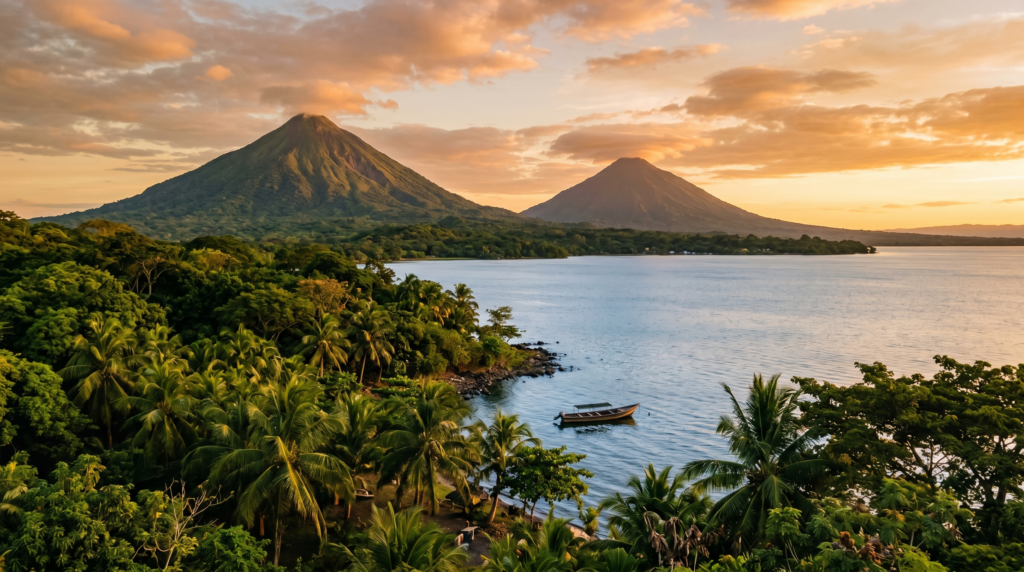
The third story is the volcanic spine, and it is the one that shapes everything visible on a Guatemala holiday. Twenty-seven officially catalogued volcanoes run along the Sierra Madre, four of them currently active: Pacaya, an almost-permanent lava lake 30 km south-west of Guatemala City; Santiaguito, the dome growing inside the 1902 collapse-crater of Santa María; Volcán de Fuego, which throws a small ash plume every fourteen to twenty minutes from its 3,768-metre summit; and Tacaná on the Mexican border. The country’s high point, Tajumulco in San Marcos department, reaches 4,220 metres and is the tallest peak in Central America. Lake Atitlán, an enormous caldera lake formed by a supervolcanic eruption around 79,500 years ago, is the deepest lake in Central America at 340 metres and is ringed by three more volcanoes — San Pedro, Tolimán and Atitlán — and twelve Tz’utujil and Kaqchikel Maya villages whose women still weave huipiles whose patterns identify their home village to anyone who can read them.
The fourth story is climate and altitude. Guatemala straddles 14° to 18° north latitude, but altitude does the work the latitude doesn’t: the highlands sit between 1,500 and 3,000 metres, the Petén lowlands at 100–300 metres, and the Pacific lowlands at sea level — so the same November Tuesday can deliver 28 °C heat in Tikal, 19 °C spring weather in Antigua, and 8 °C cloud forest at the top of Acatenango. The dry season runs roughly mid-November to late April, the rainy “Invierno” runs May to October with afternoon convective storms and a peak hurricane risk in September–October, and the country’s celebrated nickname — “the Land of Eternal Spring” — refers specifically to the highland-altitude band where temperatures sit at 18–24 °C year-round. Tourism reflects this: international arrivals reached 2.51 million in 2024 according to INGUAT, of which roughly 60% came from neighbouring Central American countries and the United States, while overseas markets are led by Spain, Germany, France and the United Kingdom. Independent reporting from Reuters, the BBC, the Guardian, the New York Times, the Associated Press, Al Jazeera and Deutsche Welle tracks the country’s politics and security situation in detail.
Practically, Guatemala in 2026 is one of the most legible Latin-American destinations for first-timers despite the lurid headlines. Spanish is the working language of tourism — almost everyone in Antigua, Atitlán, Flores and Guatemala City speaks usable English — and a whole micro-industry of tourist shuttle vans, language schools, volcano-trek companies and family-run guesthouses has grown up since the 1996 peace accords. The currency is the Quetzal (GTQ), pegged loosely around 7.7 to the US dollar in 2026 and named after the resplendent quetzal, the national bird, whose iridescent green tail-feathers were used as currency by the pre-Columbian Maya. Plugs are the US-style flat-pin Type A and Type B at 120 V / 60 Hz, the country drives on the right, and the road network connects every flagship sight without you ever needing a 4×4 — Lonely Planet, National Geographic, Condé Nast Traveler, Travel + Leisure, AFAR, Bradt Guides, Rough Guides and Fodor’s all maintain dedicated Guatemala desks with current 2026 itineraries. Pack a fleece for highland nights, a head-torch for the Acatenango pre-dawn, and a Spanish phrasebook even if you’ve travelled in Mexico or Costa Rica before — Guatemalan Spanish is gentler-spoken and uses far more Maya loanwords than any of its neighbours.
Best Time to Visit Guatemala (Season by Season)
Guatemala has the most legible weather pattern in northern Central America: a long, dry, sunny “Verano” from mid-November to late April, and a hotter, wetter “Invierno” from May to October during which storms generally roll in mid-afternoon and clear by 18:00. Temperatures, though, are governed almost entirely by altitude, not season — the same Tuesday in February can deliver 30 °C heat in Tikal, 22 °C spring weather in Antigua, and a 6 °C frost on the Acatenango summit. Plan around altitude AND season — and time the hurricane months carefully if you’re heading to the Caribbean.
Cool-Dry Verano (December–February) — Peak Season & Volcano-View Window
This is the postcard window. Daytime highs in Antigua sit at 22–24 °C, evenings drop to 9–12 °C, and the highland sky is reliably cloudless from breakfast through to mid-afternoon. Lake Atitlán is mirror-flat at dawn before the daily Xocomil afternoon wind kicks up, and Acatenango’s summit views of Volcán de Fuego erupting are at their most reliably clear of cloud — December and January average more than 27 cloudless mountain days. Tikal and the Petén jungle are noticeably drier but still warm (28–32 °C), with reliably packed-dirt access roads and lower mosquito loads. Lodge prices peak from 20 December to 3 January and again across Semana Santa; flagship Antigua hotels like Casa Santo Domingo, Posada del Ángel and Hotel Casa Encantada routinely sell out 6–9 months ahead for these dates.
Warm-Dry Verano Late (March–April) — Semana Santa & the Heat Build-up
March is one of the two best windows in the calendar. Daytime temperatures climb back into the high 20s in the highlands and 35 °C+ in Tikal, the haze from agricultural-burning season can make distant volcano photography frustrating, and the Sierra Madre cloud forest gets dustier than first-time visitors expect. The pay-off is Semana Santa: the week before Easter sees Antigua mount the largest Catholic Holy-Week processions outside Spain, with sawdust alfombras laid every morning across cobblestones, andas (anda statues) carried by 80 cucuruchos at a time, and a Good Friday programme that runs from 03:00 reenactment of the Garden of Gethsemane through to a sunset crucifixion procession watched by half a million people. If your Easter falls in the second half of April you’ll also catch the very last of the dry-season ash plume conditions on Acatenango — pristine clarity, then the rain arrives. Book Antigua hotels for Semana Santa nine months ahead, minimum.
Wet-Warm Invierno (May–August) — Emerald Season & Lower Prices
The “Invierno” rainy season is the Guatemala the locals love and the international guidebooks under-sell. Daytime highs sit at 24–26 °C in the highlands, the convective storms generally roll in between 14:00 and 18:00 and clear before dinner, and the country turns green in the literal sense — coffee bushes flower in May, the Pacaya cinder cone glows at night through the cloud, and Lake Atitlán’s surrounding hillsides shimmer like a New Zealand fjord with twelve villages tucked into the folds. Tikal is harder going (humidity above 90% and ankle-deep mud on the access roads after July storms), the Caribbean coast at Lívingston runs hot and wet, and dengue risk rises across the lowlands. Hotel prices fall 25–35% versus December and January, the volcano-trek companies offer shoulder-season discounts, and the Atitlán lanchas are blissfully half-empty on weekdays.
Wet-Hurricane Invierno Late (September–November) — Highest-Risk & Greenest Stretch
September and October are the wettest months on the calendar — the Pacific lowlands receive 200–300 mm of rain in each month, the Caribbean coast sits in the Atlantic hurricane corridor, and Hurricane Stan in October 2005 killed more than 1,500 people and gave the country its modern reference point for tropical-cyclone vulnerability. The pay-off is silence: Tikal is nearly empty, Antigua hotels run their lowest rates of the year, and the highlands turn an absurd brilliant green that no postcard captures. November is the under-rated sweet spot — the rains taper from the second week, the Día de los Santos / All-Saints’ Day kite festivals at Sumpango and Santiago Sacatepéquez (1 November) launch giant 10-metre handmade barriletes gigantes against a clearing sky, and you’ll be in Antigua’s main plaza for fewer dollars than at any other dry-window moment. The country’s National Institute of Seismology, Volcanology, Meteorology and Hydrology (INSIVUMEH) publishes daily weather and volcanic-activity bulletins worth checking before you book; the Ministry of Foreign Affairs and the Pan-American Health Organization track conditions across the region.
Acatenango Volcano Hike Season 2026 — Watching Fuego Erupt at 3,976 m
If you can pick only one window in 2026, pick the dry-season Acatenango trek window — roughly 10 November through 15 April — and aim it at a last-quarter-moon weeknight. Acatenango is a 3,976-metre stratovolcano in the Sierra Madre 25 km west of Antigua, the third-tallest peak in Central America after Tajumulco and Tacaná, and the only volcano on the planet whose summit camp sits eye-level with another active volcano’s eruption column on the same ridge. The “other” volcano is Volcán de Fuego, 3,768 metres tall, separated from Acatenango by a 2,800-metre saddle, and almost continuously active — small ash explosions every fourteen to twenty minutes from a vent in the upper crater, larger Strombolian episodes every few hours, and incandescent lava arcs visible for up to 800 metres.
The trek is genuinely demanding but it does not require technical mountaineering skill. Most outfitters — OX Expeditions, Wicho & Charlie’s, Tropicana, Soy Tours and the cooperative-run Trek Acatenango — depart Antigua at 08:00, drive to the La Soledad trailhead (2,400 m) by 09:30, and have you climbing through cornfields, then cloud forest, then alpine grassland, to a base camp at roughly 3,600 metres by mid-afternoon. Total ascent is around 1,500 metres in 6 km — about five-to-seven hours of climbing for an unfit hiker, three-to-four for a fit one. Base camp is rustic but warm — A-frame plywood huts or canvas tents, sleeping bags rated to −10 °C, hot soup and a campfire facing the Fuego summit. The 04:00 final push to the Acatenango summit (370 metres ascent in 90 minutes, mostly volcanic scree at 30°) earns you a sunrise from the rim looking east over Antigua, west to Lake Atitlán, and south straight down on Fuego’s smoking crater 800 metres below.
The numbers behind the spectacle are extraordinary, and they explain why Acatenango has gone from a niche backpacker climb in 2014 to a half-million-Instagram-post bucket-list item by 2026. INGUAT and the visitor logs at La Soledad recorded around 80,000 trekkers in 2024, more than triple the 2018 number, with operator capacity now capped to protect the trail; the Guatemala Tourism Institute and the Ministry of Foreign Affairs publish current safety advisories every dry season. Fuego’s June 2018 paroxysm — the deadliest Guatemalan volcanic event since 1929 — killed at least 159 people in the village of San Miguel Los Lotes when pyroclastic flows raced 12 km down the south flank in under three minutes; the volcano resumed elevated activity in mid-2025 and remains on Yellow Alert with INSIVUMEH publishing daily ash-and-tremor bulletins. CONRED, the national civil-protection agency, maintains a 7-km exclusion radius from Fuego’s summit and publishes evacuation maps for the 17 communities on the volcano’s flanks. The exclusion radius does NOT extend to the Acatenango ridge or summit, which sits well outside it; reputable outfitters monitor INSIVUMEH bulletins and reroute via the eastern ridge during heightened activity.
The practical play for 2026 is to arrive in Antigua two nights before your trek (acclimatise to 1,545 m), book a two-day-one-night package through a single reputable operator (USD $80–110 per person all-inclusive, including gear and meals), and leave a buffer day after the descent so you can climb the easier 2,552-metre Pacaya half-day trek for a contrast experience. Skip the trek altogether if you have any cardiac, severe asthma or recent altitude-sickness history — the 1,500-metre vertical gain on day one combined with cold, sleep deprivation and a 4,000-metre summit is a genuine workout. December through February is the most reliably clear window; March and the first half of April still work but the agricultural-burning haze can swallow distant Fuego shots; May to October trips encounter daily rain and frequent cloud below the summit. The standard packing list — sub-zero sleeping bag (operators provide), three thermal layers, a Gore-Tex shell, headlamp with spare batteries, two litres of water, sunblock and a balaclava — is non-negotiable; lodge slippers and a borrowed fleece won’t cut it.

Getting There — La Aurora (GUA), Overland & the CA-4 Visa-Pact
Almost every visitor enters Guatemala through La Aurora International Airport (IATA: GUA), 6.4 km south of the city centre on Avenida Hincapié and named after the surrounding La Aurora park-and-zoo precinct. The airport handled 4,919,850 passengers in 2024 — its highest-ever figure — operates a 2,987-metre runway at 1,509 m elevation, and ranks as the fourth-busiest airport in Central America after Panama City Tocumen, San José Costa Rica, and San Salvador. The Civil Aeronautics Directorate (DGAC) under the Ministry of Communications, Infrastructure and Housing publishes monthly traffic statistics.
Long-haul access is short and increasingly direct. From the United States the daily nonstop network covers Houston, Dallas, Miami, Atlanta, Newark, Chicago, Los Angeles and New York-JFK on United, American, Delta, Spirit, Frontier, JetBlue and Aeromexico (via Mexico City). Houston (3 hr 15 min from IAH) and Miami (2 hr 50 min from MIA) are the two cheapest gateways from the broader Eastern US in 2026. From Europe there are no direct flights — every routing connects through Madrid (Iberia / Air Europa), Frankfurt or Amsterdam (KLM-Delta partnership) onto a US or Mexican hub, with one-stop times of 14–17 hours from London or Paris. From within Latin America Avianca dominates the network with hourly Bogotá rotations and twice-daily San Salvador, San José, Panama City and Lima links; Copa Airlines runs four daily Panama City flights with global onward connections; and Aeromexico runs Mexico City five times daily.
The country’s secondary international gateway is Mundo Maya International Airport (IATA: FRS) at Flores in Petén — the airport that puts you 60 km from Tikal in 90 minutes by van. Avianca, TAG, and Copa run daily Guatemala City–Flores rotations (one hour); Aerolínea Maya World runs occasional charters to Belize City, Cancún and Mérida. Most first-time visitors fly into GUA, drop their bags in Antigua for two nights, then take a one-hour internal flight to Flores or — if budget is tight — an eight-hour overnight bus from Antigua. The internal flight saves a full travel day in each direction and runs USD $130–180 round-trip booked 2–3 months ahead.
Land borders are extensive and well-trafficked. The four main crossings are: La Mesilla / Ciudad Cuauhtémoc on the Mexican border (24-hour, the main Chiapas–Quetzaltenango route); Tecún Umán / Ciudad Hidalgo (also Mexico, busiest commercial crossing); Melchor de Mencos / Belize (24-hour, used by overland Cancún–Tikal travellers); and El Florido / Honduras (the Copán-archaeology route, daylight only). The Pedro de Alvarado / La Hachadura crossing into El Salvador and the Frontera / Agua Caliente crossing into Honduras handle Central American shuttle traffic and the international Tica Bus / Pullmantur services that connect San José, Costa Rica all the way through to Tapachula, Mexico in 36 hours of overland riding.
Visa policy is unusually generous. Citizens of more than 85 countries — including the United States, the United Kingdom, all European Union member states, Canada, Australia, New Zealand, Japan, Israel and the United Arab Emirates — receive a free 90-day tourist stamp on arrival, and Guatemala is part of the CA-4 single-border treaty alongside Honduras, El Salvador and Nicaragua, so that 90-day stamp covers all four countries combined and the time clock keeps running when you cross between them. Passport validity must extend at least six months beyond entry; an electronic immigration form (the SAT/IGM e-form) must be completed within 72 hours of arrival, but most travellers fill it in at the gate. Visas are required for nationals of mainland China, Russia, Iran, India and most African states; consult the Ministry of Foreign Affairs for the current list before booking. The US State Department, the UK FCDO, Canada’s Travel and Tourism portal, Australia’s Smartraveller and the New Zealand SafeTravel page all maintain current Guatemala advisories.
Getting Around — Chicken Buses, Shuttles, Atitlán Lanchas & the Tikal Flight
Guatemala has the most genuinely diverse local-transport menu in Central America: a colour-saturated chicken-bus network that descends from retired US school buses, a parallel tourist-shuttle van industry purpose-built for backpackers, a small fleet of decent first-class “Pullman” intercity coaches, lake lanchas (motor launches) on Atitlán, internal flights to Tikal, and Uber inside the capital. Driving is on the right, the road network runs to roughly 17,200 km of asphalt plus a sprawling unsurfaced network maintained by the Ministry of Communications, Infrastructure and Housing (MICIVI), and the typical first-time visitor will use the shuttle vans rather than a self-drive — but renting a car is straightforward at GUA if you want one.
Chicken Buses (Camionetas) — Decommissioned American School Buses
The chicken bus, locally camioneta, is the country’s defining ground-transport image: an ex-US-school-bus repainted in fluorescent oranges, blues and greens, lashed with chrome trim and roof-rack speakers, driven by a man whose right hand is permanently on a gear lever and a horn, and accompanied by an ayudante who stuffs passengers and packages through the door at 80 km/h. They cover almost every market town in the western highlands at 30–50% of the cost of a tourist shuttle. The downsides are real: the buses are routinely overloaded, accidents are common on mountain switchbacks, and the western-highlands routes have been the site of robberies. The State Department explicitly recommends that foreign tourists avoid intercity chicken buses in favour of tourist shuttles or first-class Pullman coaches. The compromise position taken by most experienced travellers: do one short chicken-bus hop in daylight (Antigua to Chimaltenango is 45 minutes and feels exactly as you imagine), then default to the shuttle network for everything longer.
Tourist Shuttles — The Default for Foreigners
The tourist-shuttle industry barely existed in 1996 and now runs hundreds of vans every day on the major sightseeing arteries: Antigua–Atitlán (3 hr 15 min), Antigua–Lanquín/Semuc Champey (8 hr), Atitlán–Quetzaltenango (3 hr), Lanquín–Flores (8 hr) and the popular cross-border runs to San Cristóbal de las Casas, Belize City and Copán Ruinas. Vans seat 10–14, charge USD $15–55 per leg depending on distance, run hotel-to-hotel pickup, and are operated by tourism-board-licensed companies (Antigua Tours, Atitrans, Adrenalina Tours, GuateGo) that you can book on the same day at any Antigua agency or 24 hours ahead online. The shuttles are not glamorous but they are a magnitude safer and faster than the chicken buses for the standard tourist circuits, and they remove the only-Spanish friction that makes intercity public transport hard for first-time visitors.
Pullman Coaches & Long-Distance Buses
For longer hauls — Guatemala City to Quetzaltenango, Cobán, Río Dulce, Flores or the cross-border services into El Salvador, Honduras, Nicaragua, Costa Rica and Mexico — first-class “Pullman” buses operated by Línea Dorada, ADN, Fuente del Norte and Tica Bus are the better option. Reclining seats, on-board toilets, in-flight movies and ID-checked seating make the eight-hour Guatemala City–Flores overnight (USD $30–45 one-way) more comfortable than a North-American Greyhound, and at a fraction of the air-fare. Tica Bus’s all-Central-America services connect Tapachula (Mexico) through Guatemala City to San José in 36 hours of total transit time over four legs.
Lake Atitlán Lanchas, the Tikal Flight & Inside-the-Capital Transport
Lake Atitlán is served exclusively by lanchas — open public motor-launches running every 20–40 minutes between Panajachel, San Marcos, San Pedro La Laguna, San Juan, Santiago Atitlán, San Antonio Palopó and Santa Cruz. Fares are GTQ 25–40 per leg (≈USD $3–5), there are no schedules outside the rough every-half-hour convention, and the boats run from sunrise to about 18:00 (less in the rainy season once the Xocomil afternoon wind picks up). For Tikal the practical play is the 50-minute internal Avianca or TAG flight from GUA to Mundo Maya International (FRS) at Flores; round-trip USD $130–180, far less stressful than the eight-hour overnight bus, and it leaves an extra day for the Yaxhá or El Mirador add-on. Inside Guatemala City the Transmetro bus rapid transit (since 2007, five lines, dedicated lanes) is the cheapest way to move; Uber operates city-wide and is what nearly all foreign visitors use for door-to-door transfers, especially after dark.

Top Cities & Regions — Antigua, Atitlán, Tikal, Xela & the Caribbean Coast
📍 Map of Guatemala: Every Place in This Guide
Guatemala is small enough that a focused 10-day itinerary can take in three of its four signature regions; a 14-day trip can do all four with a buffer day. The standard route flies into GUA, transfers to Antigua for two nights, takes a shuttle to Lake Atitlán for two-or-three lake-village nights, returns through the western highlands via Chichicastenango, then flies to Flores for two nights at Tikal before returning to Guatemala City. A 21-day extension adds Río Dulce, Lívingston and the Caribbean coast or — if cave-and-pool combinations are the goal — Lanquín and Semuc Champey.
Map of Guatemala — Guatemala City + Antigua (south-central), Lake Atitlán & Quetzaltenango (western highlands), Tikal & Flores (Petén / north), Río Dulce + Lívingston (Caribbean east), Semuc Champey (Alta Verapaz). Loads as Leaflet + OpenStreetMap on mount.
Guatemala City & Zone 1 Historic Centre
Most travellers underestimate Guatemala City and arrive intending to spend less than a day. That is broadly correct — the capital is loud, traffic-bound and uneven on safety — but the Zone 1 historic centre repays a focused half-day. The Plaza Mayor de la Constitución (also called Parque Central) is the symbolic heart, anchored by the Metropolitan Cathedral (consecrated 1815, the columns inscribed with the names of villages destroyed during the 1980s civil war), the Palacio Nacional de la Cultura (built 1939–1943, free to tour Tuesday to Sunday), and the Portal del Comercio’s nineteenth-century arcade. The Museo Popol Vuh and the Museo Ixchel del Traje Indígena (both on the Universidad Francisco Marroquín campus in Zone 10) are the city’s two essential indoor stops — pre-Columbian ceramics, codices, and an extraordinary archive of Mayan textiles. Avoid Zones 18, 21 and 24 entirely, which carry the city’s highest crime rates and are Level-4 “Do Not Travel” rated by the US State Department; stay in Zone 10 (Zona Viva), Zone 14 or Zone 4 (Cuatro Grados Norte) for hotels and dining.
Antigua Guatemala — UNESCO Colonial Capital
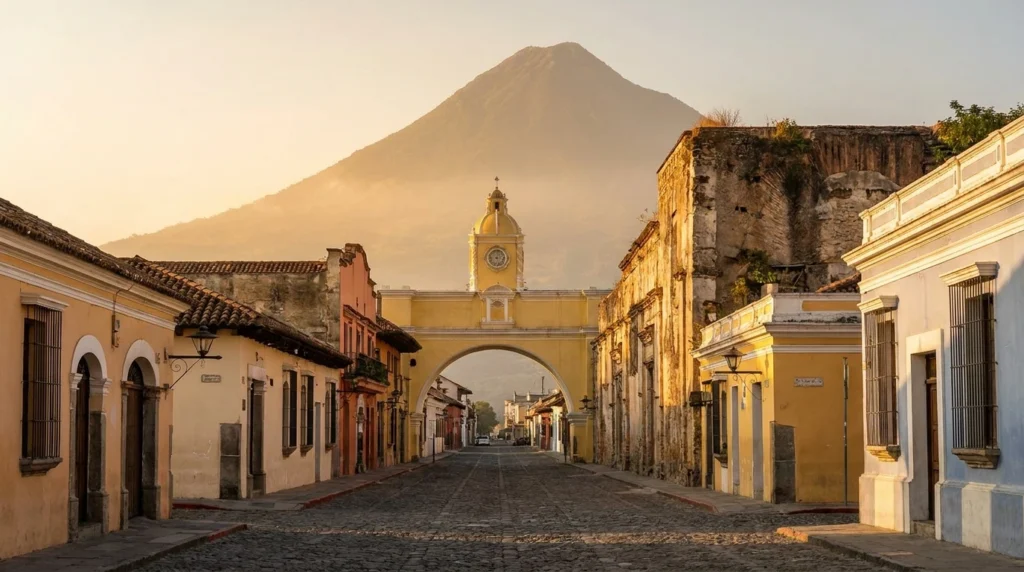
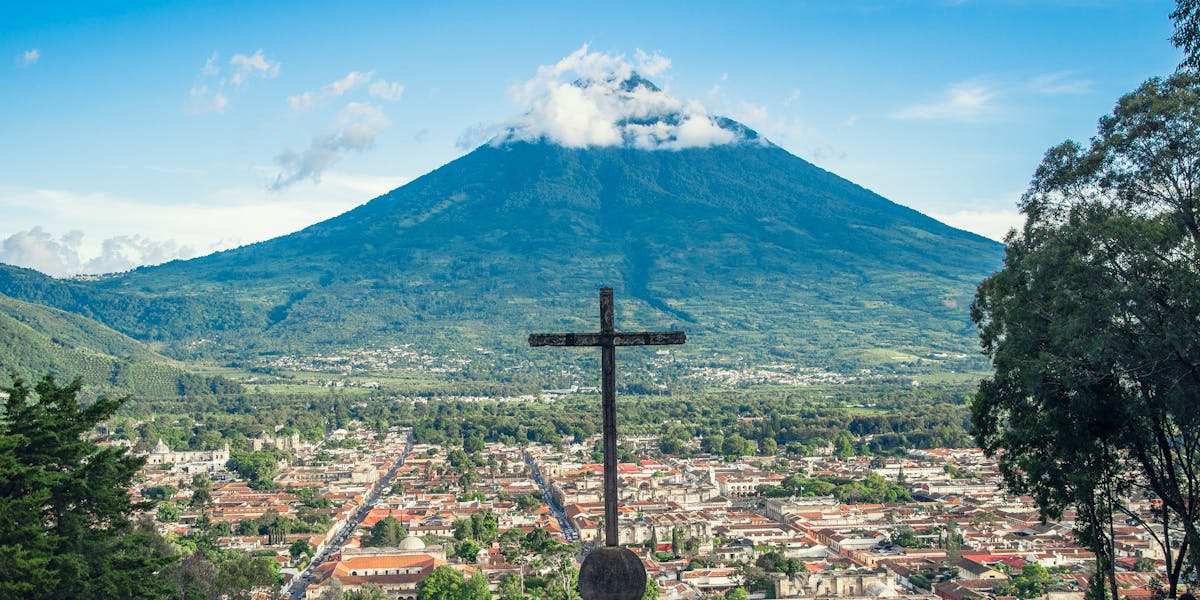
Antigua is the country’s signature postcard and the place every first-time visitor falls hardest for. Founded in 1543 as the third Spanish capital of Central America under the name Santiago de los Caballeros, devastated by earthquakes in 1717, 1751 and 1773, abandoned by royal decree in 1776 and re-inscribed as a UNESCO World Heritage city in 1979, it sits at 1,545 m elevation in a perfect highland valley framed by three volcanoes — Agua, Fuego and Acatenango. The grid is intact, the cobblestones are intact, the Iglesia de San Francisco, La Merced (1767), the Capuchinas Convent, the Cathedral, Las Capuchinas and Casa Santo Domingo (now a hotel-museum) all still stand or stand as picturesque ruins. The Santa Catalina Arch on 5a Avenida Norte, painted Antigua-yellow with a clock tower added in 1830, is the single most photographed landmark in the country. Antigua is also the country’s culinary high point — Casa Santo Domingo, Mesón Panza Verde, Bistrot Cinq, Hector’s Bistro and Caoba Farms have re-positioned highland Mayan ingredients into menus that compete with Mexico City’s tasting-menu scene.
Lake Atitlán & the Maya Villages
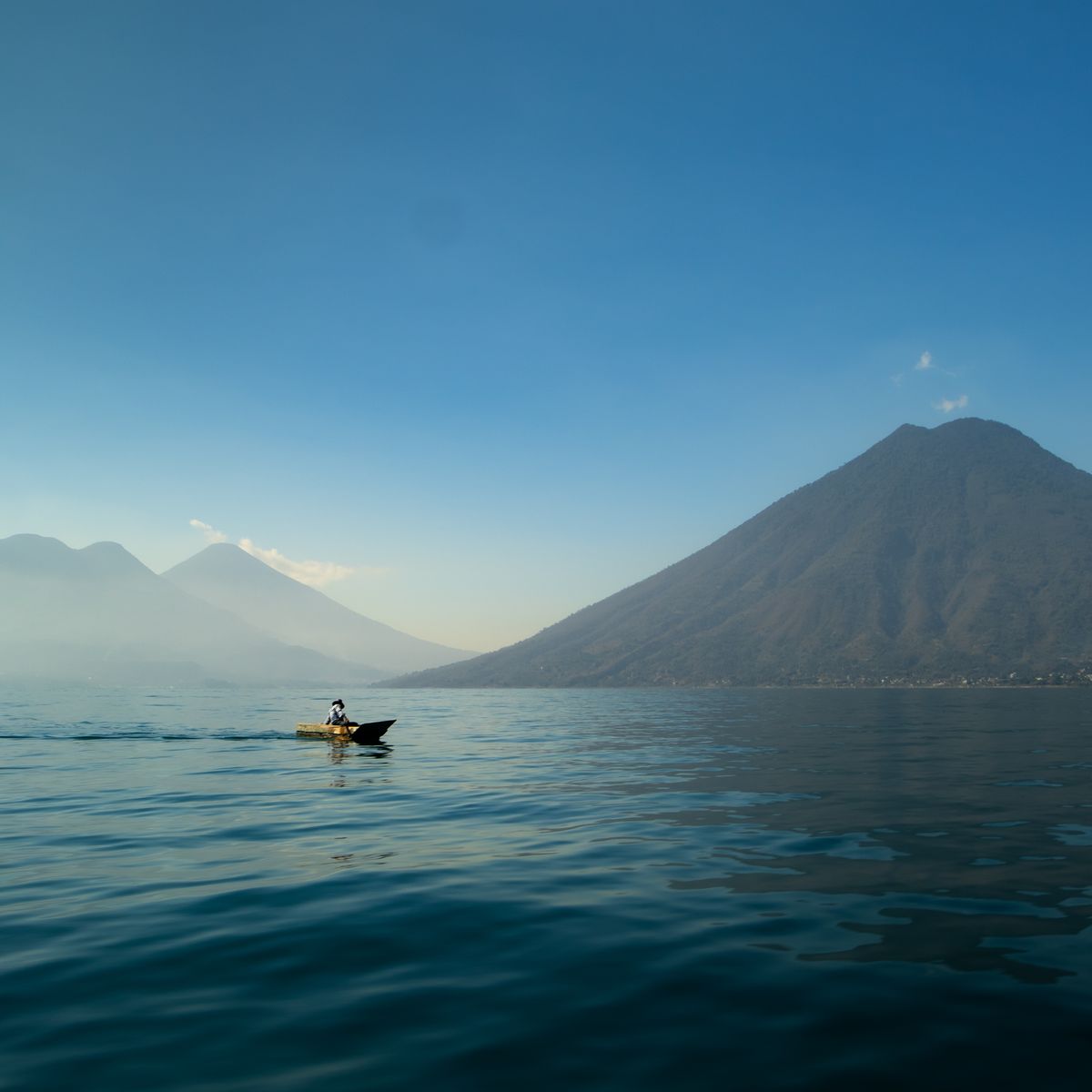
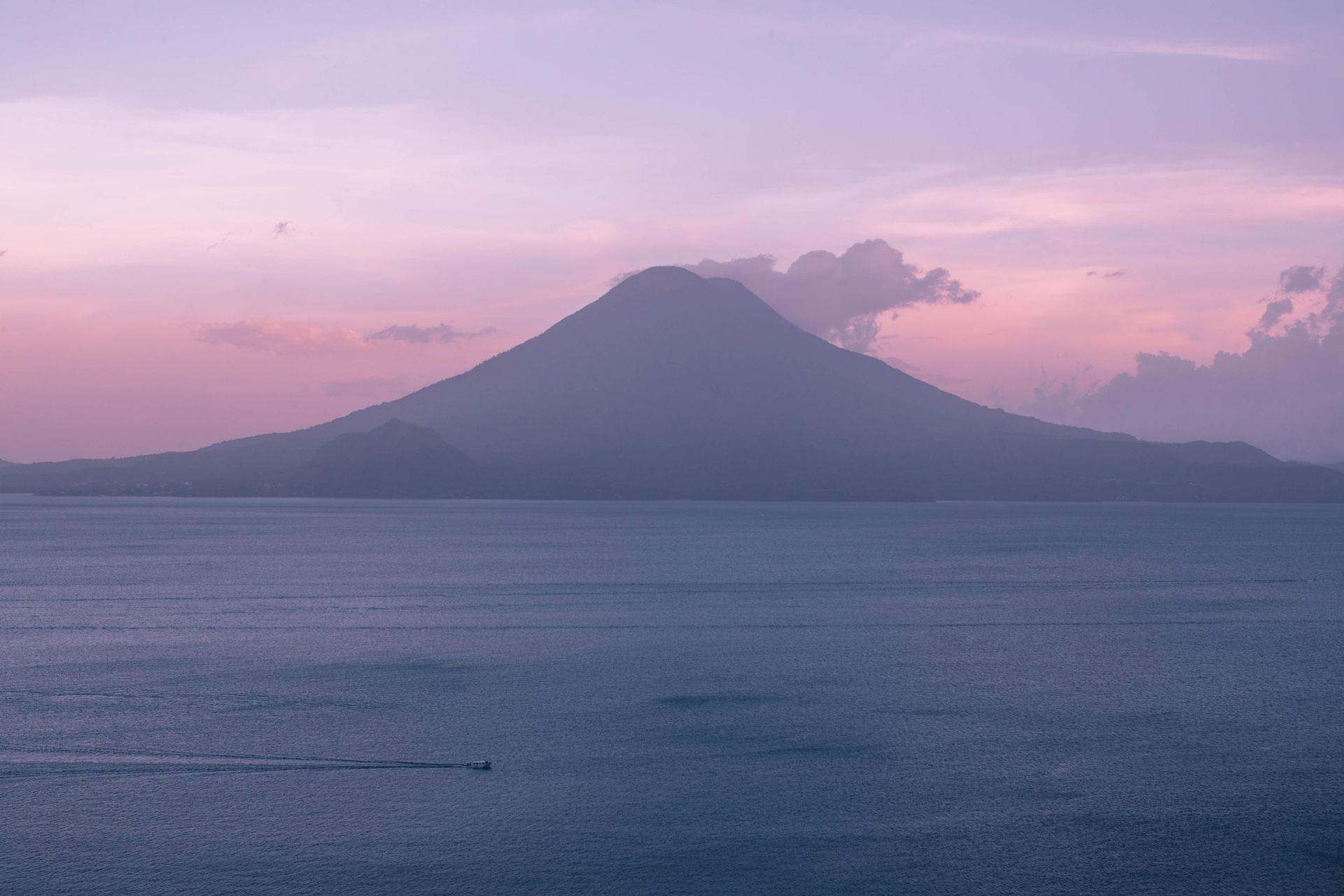
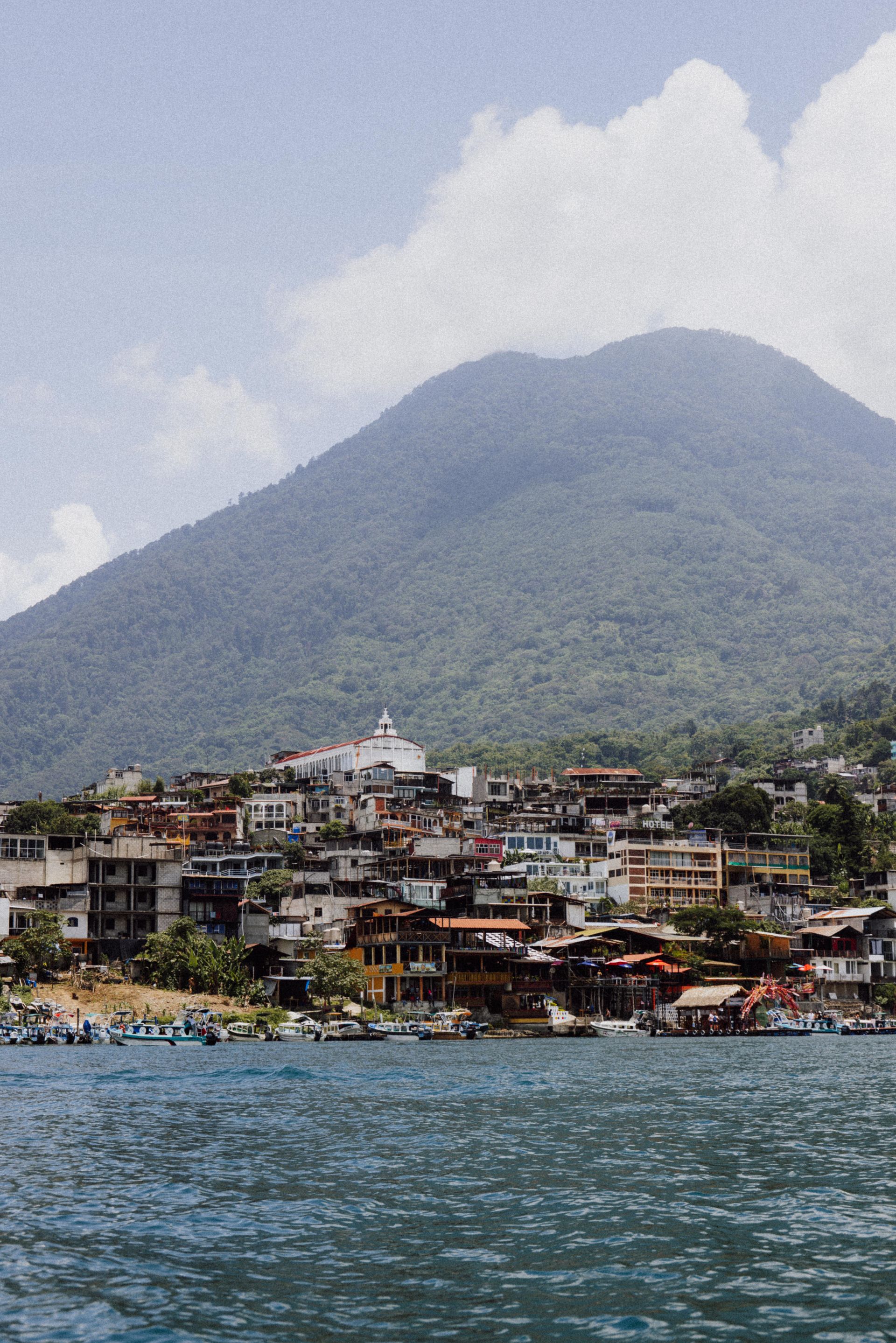
Lake Atitlán is geologically extraordinary — a 130 km² caldera lake formed by a supervolcanic eruption around 79,500 years ago, 340 metres deep at its centre (the deepest lake in Central America), 18 km long, 8 km wide, sitting at 1,562 m elevation, and ringed on its southern shore by three more volcanoes (San Pedro 3,020 m, Tolimán 3,158 m, and Atitlán 3,535 m). Aldous Huxley described it in 1934 as “really too much of a good thing… Como with the additional embellishment of several immense volcanoes,” and ninety years on the description still lands. Twelve villages line the shore, each with a distinctive Maya identity: Panajachel (“Pana”) is the gringo-friendly transport hub on the north shore; San Pedro La Laguna is the Tz’utujil Maya backpacker capital with Spanish schools and lakeside bars; San Marcos La Laguna is the meditation-retreat-and-yoga village; San Juan La Laguna is the textile-cooperative artisan stronghold (more than 80 active weavers); Santiago Atitlán is the largest Tz’utujil town and home to Maximón, the syncretic deity worshipped in a private cofradía house that moves annually. The lake’s water quality has been threatened since 2009 by cyanobacteria blooms triggered by agricultural run-off; the Authority for the Sustainable Management of the Lake Atitlán Basin (AMSCLAE) and the Universidad Rafael Landívar’s environment institute publish water-quality reports worth checking before swimming.
Tikal National Park & the Petén Jungle
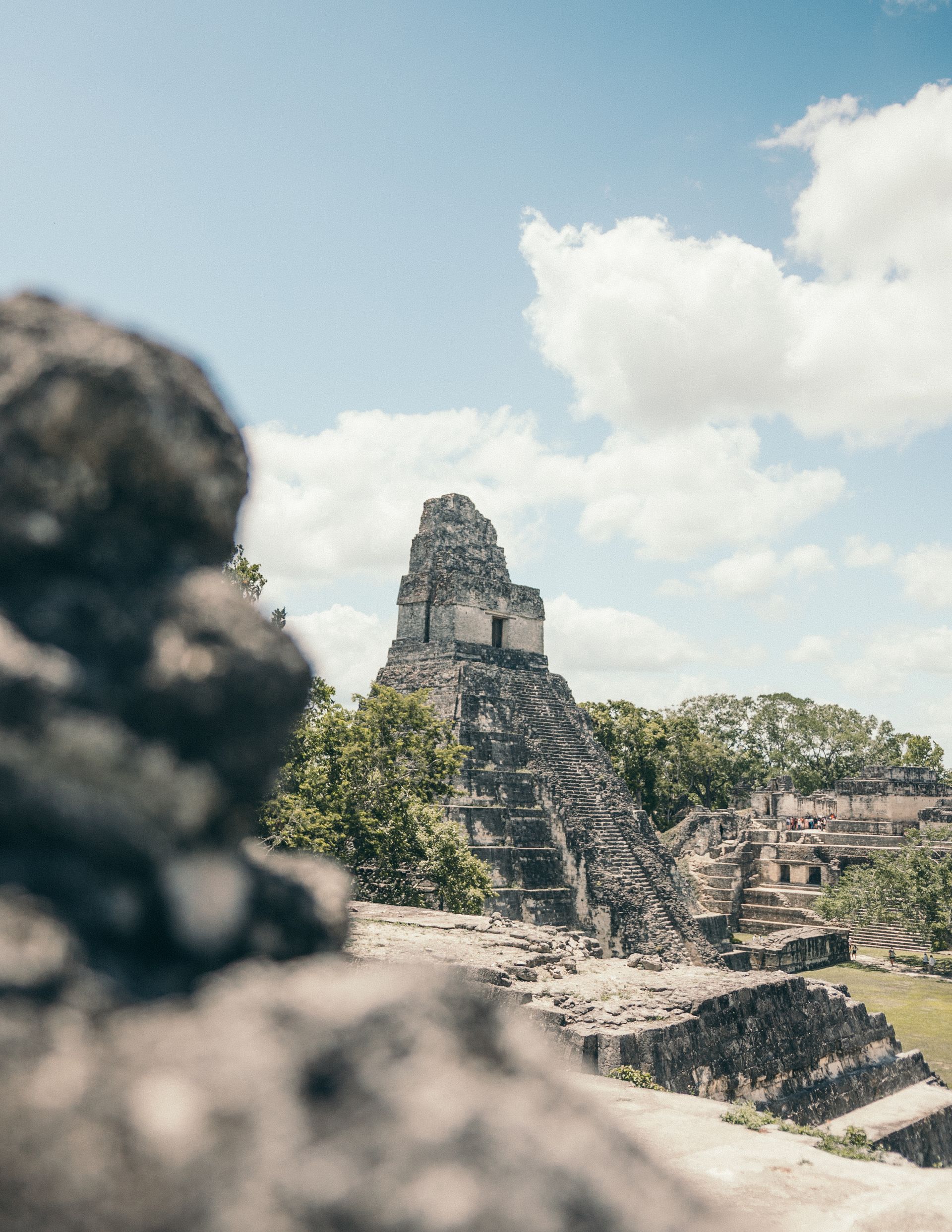
Tikal is a UNESCO mixed cultural and natural property — one of only 39 mixed sites on Earth and Guatemala’s premier archaeological treasure. Inscribed in 1979 (#64), it covers 575 km² of dense Petén rainforest centred on the ruins of one of the largest Classic Maya cities, occupied from roughly 200 BC to 900 AD with a peak population estimated at 100,000. Six monumental temples dominate the central acropolis: Temple I (the Great Jaguar, 47 m, royal tomb of Jasaw Chan K’awiil I, ca. 740 AD); Temple II (the Mask, 38 m, ca. 700 AD); Temple III (Jaguar Priest, 55 m); Temple IV at 70 metres (the tallest pre-Columbian structure in the Americas, used by George Lucas as the Rebel Alliance base view in Star Wars: A New Hope); and Temple V at 57 m. Within the park’s 575 km² CONAP-managed protected area visitors regularly see ocellated turkeys, spider and howler monkeys, coatis, the elusive jaguar (rarer at midday than at dusk), and more than 300 bird species including the keel-billed toucan and harpy eagle. The standard play is to fly into Flores (1 hr from GUA), stay one night at the Hotel Jungle Lodge or Tikal Inn inside the park itself for the dawn entry, do a sunrise tour at Temple IV, and a daylight visit to the central plaza, then return to Flores for a second night before flying back.
Quetzaltenango (Xela) & the Western Highlands
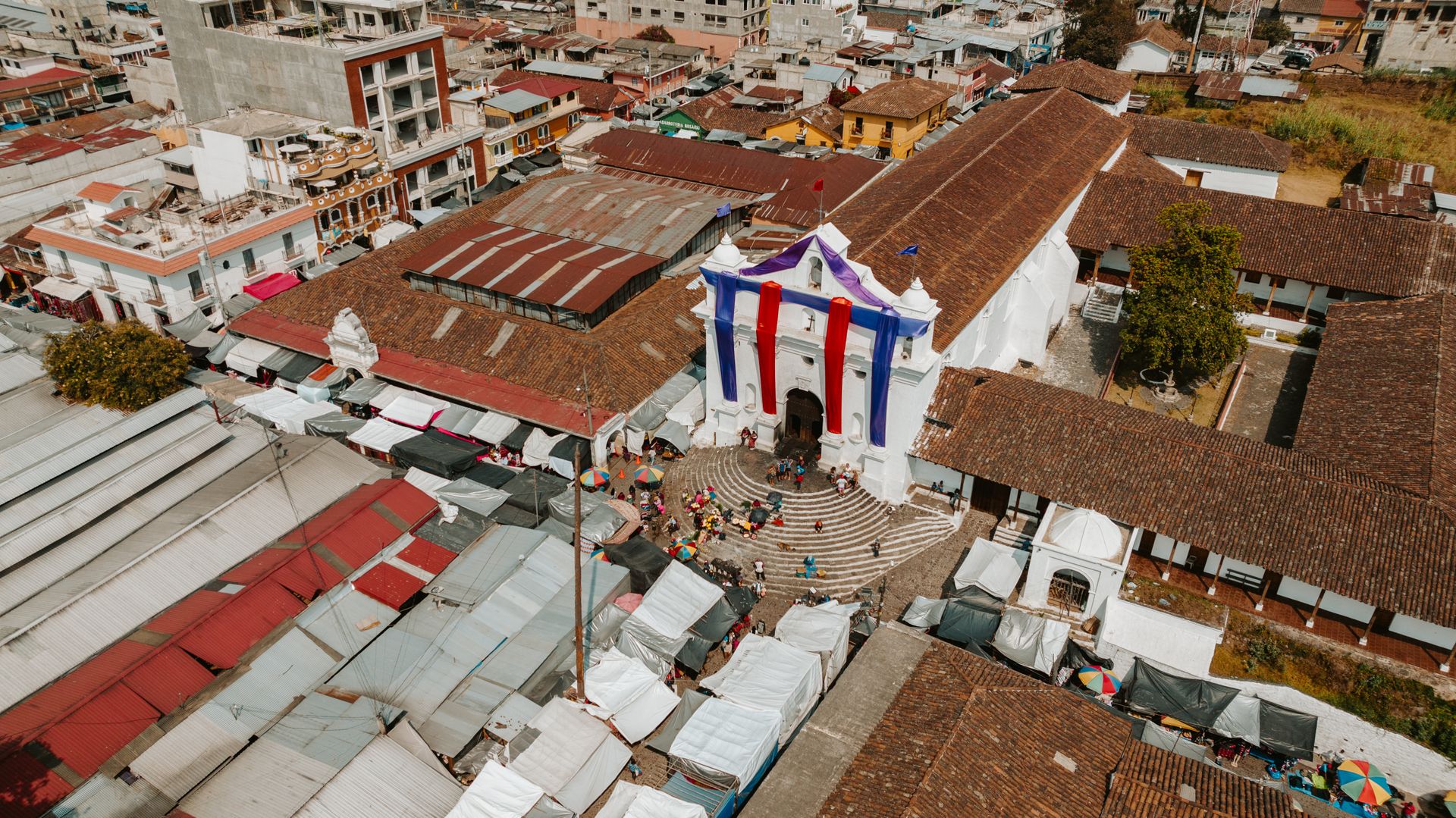
Quetzaltenango — universally called Xela (“SHEH-lah,” from the K’iche’ Xelajú meaning “under ten mountains”) — is Guatemala’s second city, a 180,000-resident university town in a high mountain valley at 2,330 m elevation. The city was founded in 1524 on a Mam Maya settlement, served briefly as the capital of an independent state (Los Altos) from 1838 to 1840, and is the country’s coolest major city — average highs sit at 22.5 °C, cold-season morning lows around 5 °C — making it a popular acclimatisation stop and the long-standing centre of Guatemala’s volunteer-and-Spanish-school sector. The colonnaded Parque Central, the neoclassical Pasaje Enríquez (now home to bars and a microbrewery), and the Casa de la Cultura are the obvious central stops; the surrounding region holds the country’s highest peaks (Tajumulco at 4,220 m, Tacaná at 4,060 m), the Fuentes Georginas hot-spring complex on the flank of Volcán Zunil, and the Thursday-and-Sunday Chichicastenango market — possibly the largest indigenous market in the western hemisphere. Chichicastenango sits 1.5 hours by shuttle from Xela; the K’iche’ town’s 400-year-old Iglesia de Santo Tomás is built on a pre-Columbian pyramid, with twenty stairs (one per Maya calendar month) leading to its main door.
Pacific Coast & the Monterrico Turtle Reserve
Guatemala’s 254-km Pacific coast is mostly black volcanic-sand beach backed by mangrove channels, fishing villages and an inland strip of sugar and palm-oil plantations. The flagship visitor destination is Monterrico (Santa Rosa department), 130 km south of Guatemala City and 90 minutes by shuttle from Antigua via the cross-canal lancha at La Avellana. The Monterrico-Hawaii Multiple Use Reserve protects nesting beaches for olive ridley, leatherback and green sea turtles — the peak nesting season runs July to November, with hatchling releases organised through the Tortugario Monterrico in association with CONAP and the Universidad de San Carlos. The Pacific surf is heavy and frequently rip-current dangerous; this is a turtle-and-mangrove destination, not a swim-and-build-a-sandcastle one. Sipacate (further west) draws Central America’s small surfing community for the consistent left-hand reef breaks; El Paredón (Escuintla) has emerged since 2018 as the country’s most-talked-about beach village with surf hostels and a low-rise sustainable-tourism profile.
Río Dulce & Lívingston — The Garifuna Caribbean Corner
Guatemala’s tiny Caribbean coast is its most culturally distinct corner — barely 100 km of Atlantic shoreline divided between the Bay of Amatique and the Río Dulce (“Sweet River”), the river that drains Lake Izabal (Guatemala’s largest at 590 km²) into the sea. The town of Río Dulce sits where the road ends; the only way down to Lívingston at the river mouth is a 30 km lancha trip through a 200-m-deep limestone gorge — one of Central America’s most spectacular river canyons. Lívingston is the country’s only Garifuna-majority town, an Afro-Indigenous people whose ancestors arrived in Central America from Saint Vincent in 1797 and whose distinctive language, music and punta dance was inscribed on UNESCO’s Intangible Cultural Heritage list in 2001. Lívingston has no road access — every visitor arrives by lancha from Río Dulce or Punta Gorda (Belize) — and the town’s defining dish is tapado, a coconut-milk seafood stew served with mashed plantain and unmistakably Caribbean. Inland, the 13th-century Q’eqchi’ Maya site of Quiriguá (UNESCO 1981, #149) sits 50 km west of Río Dulce on the road to Guatemala City, holding the tallest carved monolith in the pre-Columbian world — Stela E at 10.6 metres.
Semuc Champey & the Lanquín Caves
Semuc Champey (“where the river hides under the earth” in Q’eqchi’ Maya) is a 300-metre limestone bridge in Alta Verapaz department over which a series of turquoise terraced pools cascade while the much larger Cahabón River disappears underground into a thunderous limestone tunnel. Designated a National Monument in 2005 and managed by CONAP and the Lanquín municipality, the 17.14 km² protected area attracted around 50,000 visitors in 2024 — almost all of them via the small backpacker town of Lanquín, which sits 11 km away on a steep, partly unpaved road that requires 4×4 transfer in the rainy season. The El Mirador viewpoint (45 minutes uphill on a slick limestone path) provides the postcard angle. The Grutas de Lanquín cave network 11 km away is the second draw — limestone caves where bats emerge in a wave at sunset, daily, year-round. Most travellers reach Semuc on a 6–8-hour shuttle from Antigua or Cobán, sleep two nights in Lanquín hostels, and shuttle onward to Flores or back to Antigua.
Mayan Culture, Cofradías & the Living Highland Tradition
Guatemala’s culture is the most layered in Central America: a pre-Columbian Maya civilization that never died — only adapted under five centuries of Spanish-Catholic overlay — combined with a small but visible Garifuna Caribbean culture, a Ladino (mestizo) majority on the coast and in the cities, a German-descended coffee-aristocracy in the highlands, and a politically fraught but visible identity-renaissance among the country’s twenty-two Mayan-language-speaking communities since the 1996 peace accords. The 2018 census recorded the population as 56.0% Ladino, 41.7% Maya, 1.77% Xinca, 0.13% Garifuna and 0.43% other, with the Maya majority concentrated in the western highlands (Quiché, Huehuetenango, Totonicapán, Sololá, Quetzaltenango), the Q’eqchi’ Maya dominating Alta Verapaz and northern Petén, and the Ladino majority on the south coast and in the capital.
The Maya — Twenty-Two Living Cultures, Not One
“Maya” in modern Guatemala is not a single people but a family of twenty-two distinct linguistic-cultural groups whose languages diverged from a common Proto-Mayan ancestor between 4,000 and 2,200 years ago — a deeper internal divergence than the gap between Spanish and Romanian, or between Hindi and Persian. The four largest groups by population are the K’iche’ (around 1.6 million speakers, concentrated in El Quiché, Totonicapán and parts of Sololá), the Q’eqchi’ (around 1.1 million, in Alta Verapaz, Izabal and southern Petén), the Mam (around 600,000 in Huehuetenango and San Marcos), and the Kaqchikel (around 500,000 around Lake Atitlán’s eastern and northern shores and the Antigua–Tecpán corridor). Smaller communities — Tz’utujil at Lake Atitlán’s south shore, Chuj in northern Huehuetenango, Ixil in the “Ixil Triangle” of Nebaj-Chajul-Cotzal, Achi in Baja Verapaz, Pocomam south of Guatemala City, Sakapulteko, Sipakapense and Tektiteko — each maintain distinct dress, weaving codes and festival calendars. The Mayan ceremonial calendar (the 260-day Tzolk’in) is still observed by ajq’ij (day-keeper priests) at active ceremonial sites including Iximché, Mixco Viejo, Pascual Abaj at Chichicastenango and Q’umarkaj near Santa Cruz del Quiché.
Cofradías & the Syncretic Catholic-Mayan Calendar
Walk into any highland Maya town and you will eventually find a cofradía house — a Catholic religious brotherhood that is also, simultaneously, a continuation of pre-Columbian deity worship under saint-shaped covers. Each cofradía houses a particular saint’s statue (San Andrés in Sololá, San Pedro in San Pedro La Laguna, Santiago in Santiago Atitlán) for one year before passing the responsibility to the next family — the saint’s image is dressed daily in fresh clothes, served candles and copal incense, and brought out for processions on the saint’s feast day. The most internationally famous cofradía-housed deity is Maximón (also called San Simón or Rilaj Mam), worshipped in Santiago Atitlán in a private home that changes annually — pilgrims bring him cigarettes, aguardiente and quetzal notes; his face changes shape across communities (the Maximón of Zunil dresses Western, smokes pipes, and accepts cash; San Simón at San Andrés Itzapa is more shamanistic). The Catholic calendar slots cleanly over the older Maya one: Easter aligns with maize-planting, Día de los Santos (1 November) with a maize-related ancestor-honour day at Sumpango and Santiago Sacatepéquez where 10-metre handmade barriletes gigantes (giant kites) carry messages to the dead, Christmas falls on the Maya winter solstice, and the August Asunción processions in Sololá overlay onto Yum Kaax (the maize god).
The Huipil — Reading Mayan Identity in Cloth
Mayan women’s traditional dress — the huipil (woven blouse), corte (wrap skirt), faja (sash) and tzute (head-wrap or carry cloth) — is one of the most information-dense visual systems in the world: each village has its own huipil pattern, its own corte palette, and its own combination, and an experienced eye can identify a woman’s home village within fifteen seconds of seeing her dressed. The Museo Ixchel del Traje Indígena in Guatemala City holds the country’s reference collection — over 8,000 traditional pieces — and is the single best two-hour stop a textile-curious traveller can make. The cooperatives at San Juan La Laguna (Lake Atitlán), Quetzaltenango (Trama Textiles) and San Antonio Aguas Calientes near Antigua all run weaving demonstrations where you can see backstrap-loom work in person; UNESCO inscribed the Garifuna language and dance separately on its Intangible Cultural Heritage list in 2001 and continues to support the Rabinal Achí pre-Columbian dance-drama, also listed as ICH.
Etiquette & Photography
Greetings matter. The standard Spanish “buenos días” / “buenas tardes” / “buenas noches” carries you through almost every interaction, but learning a Maya greeting in the appropriate language earns far warmer responses — “saqarik” (good morning, K’iche’), “ma sa awach” (how are you, K’iche’), “wakam paam” (hello, Q’eqchi’). Tipping is universal in tourist contexts (10% in restaurants is standard, USD $5–10 per person per day for guides). Photography of indigenous people, ceremonies and children is a sensitive topic — always ask permission before raising the camera, never photograph cofradía interiors or active ceremonies without explicit consent from the day’s alguacil, and don’t publish identifying photographs of children on social media without parental permission. The country’s photography taboos are strongest in Santiago Atitlán (around Maximón), in the Ixil Triangle, and in the Cuchumatanes — and they are taken seriously enough that several towns have signs at the entrance reminding visitors. The Ministry of Culture, the Academy of Mayan Languages of Guatemala (ALMG), and the Pop Wuj Foundation all publish current guidance.

A Food Lover’s Guide — Pepián, Kak’ik, Jocón & the Tamal Universe
Guatemalan cuisine is a layered argument between three traditions: the indigenous Maya kitchen built on corn, beans, chiles, squash and cacao; the Spanish-colonial overlay of pork, beef, wheat-flour bread and dairy; and the small but visible Caribbean-Garifuna influence on the Atlantic coast. The base technique is older and stranger than most newcomers expect: nixtamalization, the alkaline soaking of corn in lime-water that the Maya invented around 1500 BC, frees the niacin and methionine in maize and is the reason a corn-based diet doesn’t cause pellagra. The masa harina that emerges from the ancient comales (clay griddles) becomes tortillas, tamales, atoles and chuchitos — and you will eat all four in your first three days here.
Pepián, Kak’ik & the Country’s National Dishes
Pepián is the most-cited candidate for “Guatemalan national dish” — a thick reddish-brown meat stew made with chicken or beef in a sauce of tomatoes, tomatillos, sesame seeds, pumpkin seeds, ancho chiles, dried cilantro and toasted corn tortillas, served over rice with tortillas on the side. The Ministry of Culture and Sports declared pepián part of the Intangible Cultural Heritage of Guatemala in 2007; INGUAT promotes it on the national tourism homepage; and at least 18 distinct regional variations are documented across the country. Kak’ik is the Q’eqchi’ Maya regional rival — a turkey soup the colour of dried blood, made with achiote, cilantro, tomato, mint and a dozen toasted ground spices, traditionally served at funerals and celebrations in Cobán; it was inscribed on the same Intangible Cultural Heritage list in 2007. Jocón is the third member of the holy trinity — a chicken stew thickened with tomatillos, green chiles and cilantro, common in Huehuetenango. The three dishes — pepián, kak’ik, jocón — define the Guatemalan stew tradition the way mole defines the Mexican one.
Tamales — The Sunday-Night Universe
Guatemalans eat tamales on Saturday nights and Sunday lunches the way Spaniards eat paella — a weekend ritual built around a steam-pot of banana-leaf-wrapped masa parcels. Three styles dominate: tamales colorados (a red recado of tomato, achiote and chiles, with chicken or pork inside, banana-leaf wrap, signature Christmas Eve and Easter offering), tamales negros (a dark, sweetish chocolate-and-prune recado, eaten especially around Christmas), and chuchitos (smaller, drier, corn-husk-wrapped tamales of the highlands, a workday breakfast or street snack). Add tamales de elote (sweet fresh-corn tamales eaten as dessert), paches (potato-based tamales from Quetzaltenango, traditionally on Thursdays), and tayuyos (bean-stuffed) and you have a tamal universe with more variations than the dumpling family of any country except possibly China.
Fiambre, Atoles & the Festive Calendar
Fiambre is the country’s most peculiar single dish — a vast cold platter of fifty-or-more pickled meats, sausages, vegetables, cheeses, olives and capers eaten exactly once a year, on 1 November (Día de los Santos), to honour the dead. Recipes vary by family but always include caldillo (the spiced vinegar dressing), at least three meats, several pickled vegetables, beets and cheese; some families prepare two separate fiambres (“blanco” without beets, “rojo” with). The dish is the gastronomic centrepiece of the year and you can usually find it on Antigua restaurant menus for the week around 1 November. Atol is the country’s signature warm drink — a thick corn-based porridge-beverage served from street stalls in cardboard cups, particularly atol de elote (sweet fresh corn) and atol blanco (savoury, often with beans).
Coffee, Cacao & Drink
Guatemala is the cradle of cacao — the bean was domesticated here and in southern Mexico more than 4,000 years ago — and remains a serious specialty-coffee producer with eight officially recognised growing regions (Antigua, Acatenango, Cobán, Atitlán, Huehuetenango, Fraijanes, Nuevo Oriente and the San Marcos region). Antigua and Huehuetenango produce the country’s most internationally recognised single-origin beans; the Antigua region’s Finca El Injerto and Finca La Folie regularly score above 90 in Cup of Excellence competitions. The standard tasting is a half-day tour on a working finca — Finca Filadelfia north of Antigua, Finca Santa Clara, La Azotea, or De La Gente cooperative tours through Antigua-based agencies. Beer is dominated by Gallo (a 4.2% lager owned by Cervecería Centroamericana), with growing competition from Antigua Cerveza and a handful of microbreweries; rum drinkers should know Ron Zacapa Centenario (aged in the highlands at 2,300 m elevation) which has won World’s Best Rum in international competitions four times.
Signature Dishes & Where to Eat Them
| Dish | What it is | Where to eat the canonical version |
|---|---|---|
| Pepián | Thick recado-sauce stew, chicken or beef, sesame & pumpkin seeds, ancho chiles | Casa Santo Domingo or Mesón Panza Verde, Antigua |
| Kak’ik | Q’eqchi’ Maya turkey soup, achiote & mint base | Casa Duranta, Cobán (Alta Verapaz) |
| Jocón | Chicken stew in tomatillo-cilantro green sauce | Highland comedores, Huehuetenango |
| Tamales colorados | Red-recado tamale, banana-leaf-wrapped | Christmas Eve at any abuela’s house; failing that, Frida’s in Antigua |
| Chuchitos | Small dry corn-husk tamales, hard cheese & tomato sauce | Street vendors after dark in Antigua’s Parque Central |
| Fiambre | Cold pickled platter (50+ ingredients) | Día de los Santos (1 November) only — any market or family home |
| Tapado | Garifuna coconut-milk seafood stew with plantain | Buga Mama or Restaurante Ubafu, Lívingston |
| Atol de elote | Sweet fresh-corn warm porridge-drink | Mercado Central, Guatemala City Zone 1 |
| Antigua single-origin coffee | SHB Antigua washed Bourbon | Fernando’s Kaffee or Bella Vista, Antigua |

Off the Beaten Path — El Mirador, Yaxhá, Pacaya & Río Dulce
Even Guatemala’s flagship sights are uncrowded by Mexican-Yucatán standards, but the country has another tier of places that almost no one on a 10-day standard route ever sees. The five below repay the extra travel time and the extra patience in full.
El Mirador — The Largest Pre-Columbian City in the Americas
El Mirador is a Late Pre-classic Maya megacity buried under jungle in the far north of Petén, 7 km from the Mexican border, accessible only by a 5-day round-trip jungle trek from Carmelita village or — since 2024 — by helicopter charter from Flores. The site covers around 16 km², holds the largest pyramid by volume in the Maya world (La Danta complex, 70 m tall and 0.9 km³ — bigger than Cheops at Giza by sheer volume), and was occupied from roughly 600 BC to 150 AD before being mysteriously abandoned. The trek through the Maya Biosphere Reserve crosses bajos (seasonal swamps), encounters jaguar tracks, parrots, spider monkeys and the occasional tapir, and concludes with sunrise from the top of La Danta watching the sun come up over the Yucatán with five other Late Preclassic city-clusters visible above the canopy. The 2024 helicopter alternative (FAS) costs around USD $700 per person round-trip from Flores and remains controversial with the local trekking-cooperative communities.
Yaxhá & the Petén Lakes
Yaxhá is the third-largest Classic Maya city in Guatemala — peak population around 42,000 — sitting on a low ridge above the lake of the same name 70 km east of Flores, easy to combine with Tikal as a one-day add-on. The site has 500 mapped structures, nine temple-pyramids (Temple 216 catches the best sunset light over Lake Yaxhá), 40 stelae and a still-functioning sacbé (raised limestone causeway) connecting it to Topoxté on a small island in the lake. The park is considerably quieter than Tikal — even at peak season Yaxhá rarely sees more than 200 visitors in a day — and the wildlife (howler monkeys, ocellated turkeys, crocodiles in the lake) is more visible because the trail traffic is lighter.
Pacaya Volcano — The Half-Day Lava Hike
If Acatenango sounds too demanding, Pacaya is the manageable alternative: a 2,552-metre stratovolcano 30 km south-west of Guatemala City and 50 km from Antigua, more or less continuously active since 1961, with lava flows you can usually get within 15 metres of and a still-warm 2010 lava field where guides will walk you out across cooled-but-still-hot rock and sell you a marshmallow to roast in a fissure. Trips run as half-day excursions from Antigua (USD $20–40 per person all-in including park entry), feature a 90-minute uphill hike from the trailhead at San Francisco de Sales, allow horse-rides for the unfit, and are operated by INGUAT-licensed guides. Pacaya National Park covers 20 km² and is managed by CONAP. The volcano remains seismically active and on Yellow Alert; INSIVUMEH posts daily updates.
The Ixil Triangle — The Country’s Most Resilient Maya Heartland
Nebaj, Chajul and San Juan Cotzal — the three towns of the Ixil (“EE-sheel”) Triangle in northern Quiché — are the centre of the Ixil Maya region, an area so remote and so politically distinct that it took the heaviest casualties of the 1980s civil war (entire villages burned by the army, more than 17,000 deaths according to the UN’s 1999 truth commission report). Today the area is one of the most rewarding off-piste highland visits — the Cuchumatanes Mountains rise to 3,800 m above the towns, the local huipiles are among the most ornate and least Westernised in Guatemala, and Nebaj’s Saturday market draws Ixil women from a dozen surrounding aldeas. The Plaza Pública digital archive maintains the historical record of the area’s 20th-century history. Reaching Nebaj is a 90-minute shuttle from Sacapulas off the western-highlands route; the country’s small-scale community-tourism cooperative El Quetzal runs guided trekking out of Nebaj across the Cuchumatanes to Todos Santos in the most spectacular multi-day highland walk in Central America.
Iximché — The Last Kaqchikel Capital
Iximché (“Tree of Maize” in Kaqchikel) was the capital of the Kaqchikel Maya kingdom from 1470 until Pedro de Alvarado captured and burned it in 1524 and re-founded it briefly as the first Spanish capital of Central America. The site sits on a plateau 90 minutes by shuttle from Antigua near the modern town of Tecpán Guatemala, has four ceremonial plazas, two ball courts and an active Mayan altar where ajq’ij priests still perform ceremonies — visitors are welcome to observe at a respectful distance. The 35-hectare site is managed by the Ministry of Culture and Sports; entry is GTQ 50 (≈USD $6.50), open daily 09:00–17:00, no reservations needed. Combine it with the Saturday tianguis market at Tecpán and lunch at Kapé Paulinos restaurant overlooking the valley — a half-day excursion most travellers skip in favour of Antigua’s volcanoes, which is exactly why it remains uncrowded.


Practical Information
The cheat-sheet below covers the questions your travel-insurance agent, your phone provider and your border-control official are about to ask. Pin it.
| Field | 2026 Detail | Source |
|---|---|---|
| Visa | Free 90-day tourist stamp on arrival for ~85 nationalities (US/UK/EU/Canada/Australia/NZ/Japan); CA-4 single-region applies (covers Honduras, El Salvador, Nicaragua) | |
| Currency | Quetzal (GTQ); ~7.7 GTQ = USD $1; USD widely accepted at tourist prices; ATM access universal in towns over 5,000 population | |
| Phone & data | Tigo and Claro tourist SIMs at GUA airport for GTQ 80 (≈USD $11) for 5GB; eSIM via Airalo or Holafly works countrywide except Petén jungle and Cuchumatanes | |
| Tap water | Not safe to drink anywhere; Salvavidas (5-gallon refills) in every hotel; bottle water at restaurants always; pump-filtered water OK | |
| Malaria zones | Risk in Alta Verapaz, Baja Verapaz, Escuintla, Izabal, Petén (rainy season); 99% P. vivax; ZERO risk in Antigua, Lake Atitlán, Guatemala City, Quetzaltenango, Tikal park itself (low elevation but mosquito-low) | |
| Vaccinations | Routine + Hepatitis A & B + Typhoid for rural travel; MMR; rabies if Petén jungle expedition; yellow fever NOT required (only if arriving from a yellow-fever country) | |
| Plug type | Type A (flat 2-pin) and Type B (3-pin grounded), 120V / 60Hz — same as US/Canada/Mexico | |
| Time zone | UTC−6 (Central Standard Time year-round; Guatemala does not observe daylight savings) | |
| Drives on | Right (US/Latin-American standard); valid international driving permit accepted; speed limit 80 km/h on highway, 40 km/h in town | |
| Emergency & tourist police | 110 (police), 122 (fire), 128 (ambulance/Bomberos Voluntarios); ASISTUR tourist police 1500 (24/7, English-speaking); CONRED 119 for natural-disaster updates |
Cross-checks against the United Nations Statistics Division, the World Health Organization country profile, the Pan American Health Organization, the World Bank’s Guatemala dashboard and INE confirm Guatemala’s “Reconsider Travel” Level-3 USA advisory baseline for 2026 — driven primarily by zone-specific gang-violence concerns in Guatemala City zones 18, 21 and 24 plus parts of Huehuetenango/San Marcos and emphatically NOT applying to the standard tourist corridor of Antigua–Atitlán–Tikal–Quetzaltenango. Currency conversion is published daily by Banco de Guatemala and tracked by XE.com and OANDA; the IMF and the African Development Bank carry comparative macroeconomic data.
Budget Breakdown — What Guatemala Actually Costs in 2026
Guatemala is the cheapest of Central America’s “big” tourist countries — comfortably less expensive than Costa Rica, Panama or Belize, slightly less than Mexico (because the Quetzal has held more value than the peso since 2020), and broadly similar to Honduras and Nicaragua at the bottom end of the price ladder. The cost gap between backpacker hostels and luxury colonial-hotel travel is wide, and the swing factor is whether you fly the internal Tikal leg or take the eight-hour overnight bus. The numbers below assume a couple sharing accommodation and transport; solo travellers add roughly 30% per day, families with two children subtract about 20% per person.
Budget — Backpacker / Chicken-Bus & Hostels (USD $35–60 / day)
Hostels in Antigua’s central blocks (Three Monkeys, Maya Papaya, Yellow House) run USD $12–18 per dorm bed including breakfast; Lake Atitlán dorm hostels in San Pedro La Laguna and San Marcos sit at USD $9–14. Comedor street meals (the typical USD $3–4 lunch of grilled chicken, rice, beans, salad and a hand-pressed tortilla) are universal; a 500-ml beer at a local cantina is GTQ 15 (≈USD $2). Chicken buses cost GTQ 2–5 per hour of travel; tourist shuttles where chicken-bus runs are unavailable cost USD $15–25 per leg. Park entries (Tikal GTQ 150 = USD $19, Semuc Champey GTQ 50 = USD $6.50) are the largest single line items. Eight-hour overnight bus to Flores from Guatemala City: USD $30. Total daily budget can run as low as USD $35 in low season, more typically USD $50–55 once you factor in occasional shuttles and a beer.
Mid-Range — Boutique Hotels & Tourist Shuttles (USD $90–160 / day)
The country’s middle market is its strongest in 2026. Boutique hotels in Antigua (Hotel Casa Encantada, Pensativo House Hotel, El Convento) run USD $90–150 per double per night including breakfast; Lake Atitlán hilltop boutiques (Casa Palopó, Hotel Bambú in Santiago Atitlán) sit at USD $130–200; and the Tikal in-park hotels (Jungle Lodge, Tikal Inn, Jaguar Inn) run USD $80–140 per double per night with their famous power-cut-at-21:00 restriction. Tourist shuttles (Antigua–Atitlán USD $20, Antigua–Cobán USD $35, Antigua–Lanquín USD $45) replace chicken buses. A standard sit-down dinner at a popular Antigua restaurant runs USD $20–30 per person with a glass of Argentinian Malbec; a one-hour Mayan-cooking class is USD $35. Most travellers in this band land at USD $115–135 daily once they add a Tikal day-tour and one Acatenango trek (USD $80–110).
Luxury — Colonial Hotels, Private Drivers & Internal Flights (USD $300+ / day)
Guatemala’s luxury segment is small but real. Casa Santo Domingo in Antigua, Casa Palopó on Lake Atitlán’s hilltop, Las Lagunas Boutique Hotel near Flores, and the new Wilderness Safaris–style fly-in lodges in the Maya Biosphere Reserve sit at USD $300–650 per double per night including most meals. Add a private bilingual driver-guide at USD $180–250 per day (covers fuel, parking, Spanish-translation), the GUA–FRS internal flight at USD $130–180 round-trip, and private Tikal sunrise-tour entry at USD $70 per person. The country’s signature seven-night luxury circuit (Antigua-Atitlán-Tikal-Antigua) runs around USD $5,800–9,200 per couple all-in including flights, transfers, hotels, guides and most meals. Tipping for guides at USD $20–30 per person per day, drivers at USD $10 per day, hotel staff at USD $3–5 per day is customary.
| Item | Budget | Mid-Range | Luxury |
|---|---|---|---|
| Bed (per person) | USD $9–18 dorm | USD $45–90 boutique double | USD $150–325 colonial hotel |
| Tourist shuttle (per leg) | $15–25 shared | $15–25 shared | $180–250 private driver/day |
| Comedor lunch | $3–4 | $8–12 cafe | $25–45 tasting menu |
| Tikal entry | GTQ 150 ($19) | +$45 guided 4-hour | +$70 sunrise + $130-180 flight |
| Acatenango trek | $80 with Soy Tours | $110 with OX Expeditions | $300+ private guide |
| 500ml beer | $2 cantina | $3.50 restaurant | $6 hotel bar |
| Day on Lake Atitlán | $25 hostel + lanchas | $60 boutique + lunch | $200+ Casa Palopó half-board |
Planning Your First Trip to Guatemala — Five Steps
-
1. Pick the right window — November to early March
For first-timers in 2026 the single best stretch is roughly 10 November to 5 March — Acatenango summit views are reliably clear, Lake Atitlán is mirror-flat at dawn, Tikal is dry enough underfoot to cover the central plaza in a morning, and the November Día de los Santos giant-kite festival at Sumpango (1 November) and the December Quema del Diablo (7 December — the country’s bonfire-and-fireworks night) bracket the ideal arrival window. Avoid 20 December–3 January and the entire Semana Santa week if you want lower prices and any chance of last-minute hotel availability.
-
2. Book Antigua & Tikal first, everything else flexes
Antigua’s boutique hotels, the Acatenango overnight slots, and the in-park Tikal lodges (Jungle Lodge, Tikal Inn, Jaguar Inn) sell out 4–6 months ahead in dry season — especially around Easter and Christmas. Reserve those three anchors the same week you book your international flight. Lake Atitlán village hostels and Antigua secondary-tier hotels can be booked 2–4 weeks out without losing options.
-
3. Skip the visa paperwork — but read the IGM e-form
Citizens of more than 85 countries (US, UK, EU, Canada, Australia, NZ, Japan and the rest of Latin America) need only a passport with at least six months of validity to receive a free 90-day stamp on arrival. The Guatemalan Migration Institute (IGM) requires an electronic immigration declaration — fill it in on the IGM website 24–72 hours before flight, save the QR-coded PDF to your phone, and present it to the immigration officer at GUA. Avoids a 20-minute counter wait after a long flight.
-
4. Reserve a tourist-shuttle network, not a rental car
A first-time Guatemala visitor almost never benefits from a self-drive: the road signage is in Spanish only, intercity-after-dark advisories rule out evening driving, and the Antigua–Atitlán–Lanquín–Flores chain is more comfortable on a tourist shuttle van. Book the shuttle legs through Antigua-based agencies (Adrenalina Tours, GuateGo, Atitrans) 24–48 hours ahead; for the Tikal day, fly Avianca round-trip from GUA-FRS rather than overnight bus.
-
5. Build the route around the four anchors
Day 1–2 Antigua (acclimatise, museum, Mayan cooking class, evening market). Days 3–4 Acatenango overnight trek + recovery. Day 5–7 Lake Atitlán (Panajachel arrival, San Marcos meditation morning, San Juan La Laguna textile cooperative, Santiago Atitlán Maximón visit). Day 8 highland day-trip via Chichicastenango on a Thursday or Sunday market morning, return to Antigua. Days 9–11 fly to Flores → Tikal sunrise + day visit + Yaxhá afternoon → fly back to GUA. Pad an extra night either side if you can — Guatemala’s distances always look shorter on a map than they drive.
Frequently Asked Questions
Is Guatemala safe to visit in 2026?
The honest answer is: yes for the standard tourist corridor (Antigua, Lake Atitlán, Tikal, Quetzaltenango, Cobán, Río Dulce), no for specific Guatemala City zones (18, 21, 24) and no for parts of San Marcos and Huehuetenango departments along the Mexican border. The US State Department rates Guatemala overall at Level 3 (Reconsider Travel) for crime, but the day-to-day experience inside Antigua, the Atitlán villages and the Tikal park itself is closer to the experience of touring rural Mexico — visibly poorer, occasionally chaotic, but genuinely warm and well-policed for foreigners. The country had 2.51 million international visitors in 2024 with extremely low rates of violent crime against tourists in those corridors. Use Uber instead of street taxis in Guatemala City after dark, never travel intercity routes after sunset, and don’t flash phones or jewellery in the capital.
Do I need a visa as a US, UK, EU, Canada or Australia citizen?
No. Citizens of more than 85 countries — including the United States, the United Kingdom, all EU member states, Canada, Australia, New Zealand, Japan and Israel — receive a free 90-day tourist stamp on arrival. Guatemala is also part of the CA-4 single-region treaty, so the same 90-day stamp covers Honduras, El Salvador and Nicaragua and the clock keeps running when you cross between them. Bring a passport valid for at least six months past your arrival date and complete the IGM e-form online within 72 hours of flight.
When is the best month to visit Guatemala?
February. The rainy season has been over for three months by then, agricultural-burning haze hasn’t yet kicked in (March), Lake Atitlán’s water has settled to its clearest reading, the Acatenango summit has its highest probability of cloudless dawns (around 80% of February days are clear at 04:00 according to INSIVUMEH meteorology data), and the Christmas-New-Year price spike has eased. December and early January are nearly as good but more expensive; March is excellent if you can take the haze; November works for those willing to gamble on the last storms. Avoid May to October if photography of distant volcanoes is a priority — clouds frequently cover the summits from 11:00 onward.
Should I climb Acatenango — is Volcán de Fuego dangerous?
Acatenango itself (where you camp and summit) is statistically very safe — the trail is well-marked, INGUAT-licensed operators run it daily, and there have been no fatalities on the standard La Soledad route in 2025 or 2026 to the date of this guide. Volcán de Fuego, the volcano you watch from Acatenango’s ridge, is a different matter — its 2018 eruption killed 159 in the village of San Miguel Los Lotes 12 km below, and the 2025-26 reactivation has CONRED maintaining a 7-km exclusion radius around its summit. The Acatenango summit and overnight base camp sit OUTSIDE that exclusion radius. The actual risks on the trek are altitude sickness (3,976 m is high enough to cause serious AMS in unacclimatised hikers — sleep one night in Antigua at 1,545 m before climbing), hypothermia (sub-zero summit temperatures December–February) and exhaustion. Choose a reputable operator that monitors INSIVUMEH bulletins, brings sub-zero sleeping bags, and reroutes if Fuego’s alert level escalates.
Is altitude sickness a real risk in the Guatemalan highlands?
Mild altitude sickness is common and serious altitude sickness is uncommon but possible. The country’s two main highland tourist hubs — Antigua at 1,545 m and Lake Atitlán at 1,562 m — are both below the 2,000-metre threshold where AMS becomes statistically likely. Quetzaltenango at 2,330 m starts to push it for some travellers. The volcano summits — Acatenango 3,976 m, Tajumulco 4,220 m — are squarely in AMS territory and require acclimatisation: spend at least one night above 1,500 m before climbing, drink 4 litres of water on the climb day, descend immediately if symptoms (headache, nausea, shortness of breath at rest) escalate. Diamox / acetazolamide is the standard prophylaxis; consult your physician before flying.
Can I drink the tap water?
No, anywhere in Guatemala. Even in the upmarket Antigua hotels and Guatemala City Zone 14 boutiques, the standard is purified Salvavidas brand bottled or 5-gallon-jug refilled water (the green-and-white branded jugs are visible in every kitchen). Brushing teeth with tap water in Antigua and Atitlán is broadly OK; using it for drinking, ice or fruit-rinsing is not recommended. Lodge ice almost always uses purified water — restaurant ice in tourist-frequented locations does too — but ask if you’re unsure. Salvavidas is sold in 600 ml bottles for GTQ 5 (≈USD $0.65) and 5-gallon refills for GTQ 25 (≈USD $3.25); refilling rather than buying disposable bottles is the more environmentally responsible play.
How do I visit Tikal — fly or bus?
Fly. The 50-minute Avianca or TAG flight from GUA to Mundo Maya International (FRS) at Flores costs USD $130–180 round-trip booked 2–3 months ahead, and saves a full day of overnight-bus transit in each direction. The eight-hour overnight bus from Guatemala City costs USD $30–45 and is a perfectly viable backpacker option — Línea Dorada and ADN run reclining-seat first-class coaches with on-board toilets — but it eats two nights of usable trip time. From Flores, transfer 60 km by tourist shuttle (USD $10–15) to Tikal park gate; the in-park hotels (Jungle Lodge, Tikal Inn, Jaguar Inn) let you do the dawn entry without a 04:30 ride from Flores town. The full park visit takes a long day — temple climbs, central plaza, Lost World complex, Temple IV sunrise viewpoint — and most travellers stay one or two nights inside the park.
Is Lake Atitlán swimmable?
Yes, but check current conditions before diving in. The lake suffered serious cyanobacteria blooms in 2009 and intermittently since; the Authority for the Sustainable Management of the Lake Atitlán Basin (AMSCLAE) and the Universidad Rafael Landívar’s environment institute (IARNA) post quarterly water-quality reports. In 2024-26 the lake has been broadly safe to swim at most public docks, with the south-shore Tz’utujil villages (San Pedro, Santiago, San Juan La Laguna) cleaner than the more agricultural north shore. Avoid swimming after heavy rain (pollution flushes in from streams) and never near the Panajachel Río San Francisco outflow. Several lakeshore hotels — Casa Palopó, Hotel Bambú, La Iguana Perdida — have private dock access at clearer parts of the lake.
What does Guatemala actually cost per day?
Less than Costa Rica, less than Mexico’s Riviera Maya, broadly comparable to Honduras and Nicaragua. A backpacker couple sharing dorm beds and chicken-bussing the country lives on USD $35–60 per person per day; a mid-range couple staying in boutique hotels and using tourist shuttles lives on USD $90–160 per person per day; a luxury seven-night colonial-hotel-and-private-driver circuit runs USD $5,800–9,200 per couple all-in. Park fees are reasonable (Tikal GTQ 150 ≈ USD $19, Semuc Champey GTQ 50 ≈ USD $6.50), restaurant prices are 30–40% below US-equivalents, and the Antigua specialty-coffee scene is genuinely first-rate at a quarter of the price of San Francisco. The single line-item that ruins backpacker budgets is the Acatenango trek — non-negotiable USD $80–110 even at the cheapest operators — but the experience justifies the spend.
What about the political situation under President Arévalo?
President Bernardo Arévalo of the social-democratic Movimiento Semilla won the August 2023 run-off with 60% of the vote and was inaugurated on 14 January 2024 after a four-month transition that the constitutional court eventually validated against attempts to suspend his party’s legal status. His anti-corruption agenda has been broadly welcomed by international observers and the OAS but contested in Congress; periodic protests and short-term road blockades have occurred but tourism has continued uninterrupted, and the standard tourist corridors have not been affected. The April 2026 fifteen-day “State of Prevention” in seven departments — flagged by the UK FCDO — restricted public gatherings in mining-protest areas of Izabal, San Marcos and Huehuetenango but did not affect Antigua, Atitlán or the Tikal route. Reuters, BBC and AP carry current coverage.
Ready to Explore Guatemala?
Three UNESCO World Heritage Sites — Tikal, Antigua and Quirigua — twenty-two living Mayan languages, twenty-seven volcanoes including the only one on Earth where you can sleep at 3,600 m and watch its neighbour erupt every fifteen minutes, the deepest lake in Central America rimmed by twelve weaving-cooperative villages, and a Caribbean Garifuna town reachable only by lancha. Book Antigua, Acatenango and Tikal the same week your international flight is confirmed, time the trip for late November through early March, drink only Salvavidas water and learn five words of K’iche’ before you board the plane — and let the country that calls itself the Land of Eternal Spring rearrange your sense of how rich a small republic can actually be.
Explore More
- Paris City Guide — plan a European leg of your wider trip
- Rome City Guide — ancient streets and trattorias
- Barcelona City Guide — Gaudí, beaches and tapas
- Tokyo City Guide — neon, temples and the world’s best transit
- London City Guide — museums, markets and royal parks
- Istanbul City Guide — where Europe meets Asia
- Tikal National Park Deep-Dive
- Acatenango Volcano Hike Guide
- Chichicastenango Market Guide
- Guatemala Trip Cost Guide
- All Country Guides
More country guides you might like

Plan your trip to Guatemala
The booking tools we use ourselves. FFU may earn a commission at no extra cost to you.
Plan & book your trip to Guatemala
Booking through these searches supports our guides at no extra cost to you.