
Languages of Uganda
All languages of Eastern Africa →fluent beta classical · classes by phone with Maya at ranas.ai/maya
Uganda Travel Guide — Mountain Gorillas, the Source of the Nile & the Pearl of Africa
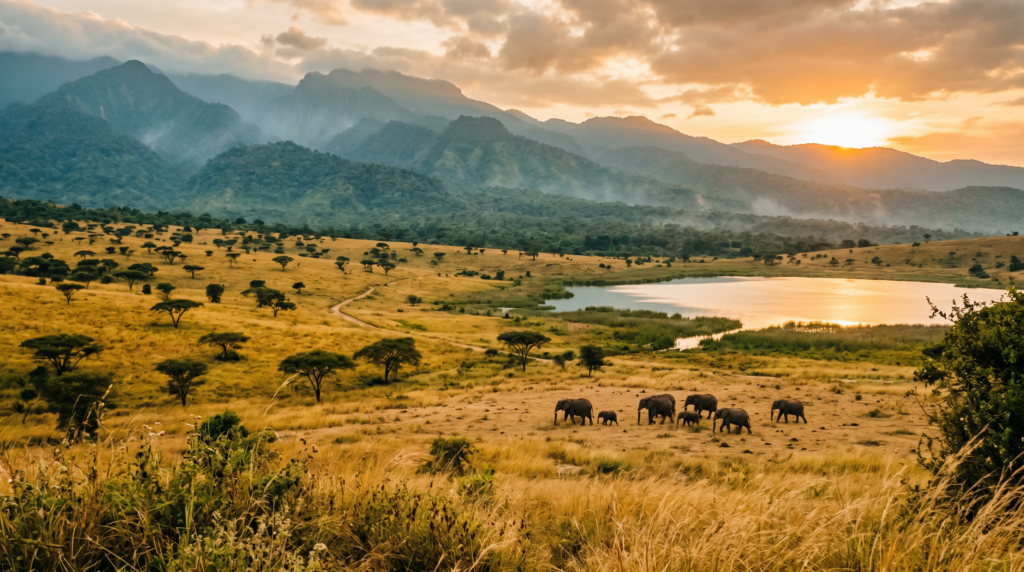
Winston Churchill called Uganda “the Pearl of Africa,” and the name still fits: a lush, green, improbably diverse country where you can track mountain gorillas through misty rainforest in the morning and watch elephants on golden savanna by afternoon. It holds roughly half the world’s remaining mountain gorillas, the dramatic source of the Nile, snow-capped equatorial peaks and some of the friendliest people on the continent — all at a fraction of the cost of better-known safari destinations.
📋 In This Guide
- Overview — Africa’s most diverse small country
- Gorilla trekking — the trip of a lifetime
- Best time to visit (season by season)
- Getting there, the e-Visa & yellow fever
- Getting around
- Where to go — Bwindi, Queen Elizabeth, Murchison & Jinja
- Culture & people — the Pearl’s warm welcome
- A food lover’s guide to Uganda
- Off the beaten path
- Practical information
- Budget breakdown — what Uganda costs in 2026
- Planning your first trip
- Frequently asked questions
Overview — Africa’s Most Diverse Small Country
Straddling the Equator in East Africa, Uganda squeezes an astonishing range into a relatively compact area: tropical rainforest alive with gorillas and chimpanzees, classic savanna with lions and elephants, the mighty Nile, the snow-dusted Rwenzori “Mountains of the Moon,” and the vast inland sea of Lake Victoria. It’s a green, fertile, water-rich country — a world away from the dry plains most people picture when they think “African safari.”
For travellers, the headline is primates: this is one of only three countries where you can trek mountain gorillas, plus the best place in the world to track wild chimpanzees. But Uganda also delivers Big-game safaris, white-water rafting at the source of the Nile, and a famously warm welcome — all for noticeably less than Kenya or Tanzania.
Gorilla Trekking — The Trip of a Lifetime
Standing a few metres from a wild mountain gorilla family in Bwindi Impenetrable Forest is, for most who do it, the single most moving wildlife experience on Earth. A permit (US$800 for foreign visitors, with $600 low-season deals in April, May and November) buys a guided trek through dense forest and one precious hour with a habituated gorilla group. Numbers are strictly limited, so book months ahead — especially for the June–September and December–February dry seasons when trails are firmest. For the truly committed, the full-day Gorilla Habituation Experience ($1,500) offers four hours with a group.
Best Time to Visit Uganda (Season by Season)
June–September & December–February — Dry (best overall)
The prime windows: firmer forest trails for gorilla and chimp trekking, easier wildlife viewing on the savanna, and the most reliable weather. These are also the busiest months for permits — book well ahead.
April, May & November — Wet (green & discounted)
The “long rains” and November “short rains” bring lush landscapes, fewer crowds and discounted gorilla permits ($600), at the cost of muddier, more challenging treks and afternoon downpours.
Year-round on the Equator
Temperatures are mild and stable thanks to Uganda’s altitude — warm days and cool nights, with no real “off” season for travel, just wetter and drier stretches.
Getting There, the e-Visa & Yellow Fever
Entebbe International Airport (EBB), on the shore of Lake Victoria near Kampala, is the main gateway, with connections via Nairobi, Addis Ababa, Doha, Istanbul and Amsterdam.
- e-Visa required: apply online before travel (the single-entry tourist e-Visa is about $50; the East Africa Tourist Visa covers Uganda, Kenya and Rwanda). Visa-on-arrival has been phased out — carry your printed approval.
- Yellow fever: a valid yellow fever vaccination certificate is mandatory for entry — get vaccinated at least 10 days before arrival.
- Onward planning: most visitors arrive on a pre-arranged safari with a driver-guide, given the distances and permit logistics.
Getting Around
- Safari with driver-guide: by far the most common (and practical) way to travel, given long, bumpy road distances and park logistics.
- Domestic flights: light aircraft link Entebbe with airstrips near Bwindi, Queen Elizabeth and Murchison Falls, saving long drives.
- Public transport: buses and shared “matatu” minivans connect towns cheaply for independent travellers, plus boda-boda (motorbike) taxis in cities.
- Self-drive: possible but demanding — rough roads and navigation make a guide the easier choice for first-timers.
Where to Go — Bwindi, Queen Elizabeth, Murchison & Jinja
Bwindi Impenetrable Forest
The gorilla capital: ancient, mist-wrapped rainforest sheltering nearly half the world’s mountain gorillas, plus superb birdlife. The reason most people come to Uganda.
Queen Elizabeth National Park
Classic savanna safari: elephants, buffalo and hippos, the famous tree-climbing lions of the Ishasha sector, and a boat cruise on the wildlife-packed Kazinga Channel. Kibale Forest nearby offers world-class chimp trekking.
Murchison Falls National Park
Uganda’s largest park, where the Nile is forced through a 7-metre gap and explodes over the falls. Big game on the plains, a dramatic boat trip to the falls’ base, and giraffes by the score.
Jinja & the Source of the Nile
The adventure capital, where the White Nile begins its journey: world-class white-water rafting, kayaking, bungee jumping and sundowner cruises on Lake Victoria.
Culture & People — The Pearl’s Warm Welcome
Uganda is one of Africa’s most diverse nations, home to more than 40 ethnic groups and languages, from the Baganda kingdom around Kampala to the Batwa forest people near Bwindi. English and Swahili are official, but Luganda and dozens of local languages flavour daily life. Despite a turbulent 20th-century history, modern Uganda is welcoming, youthful and resilient, with a reputation for genuine friendliness that visitors remember as much as the wildlife.
Life is community-centred and faith is important — mostly Christian, with a significant Muslim minority. Music and dance are woven into celebrations, markets buzz with energy, and the pace, especially outside Kampala, is relaxed. A respectful, curious traveller is met with real warmth.
A Food Lover’s Guide to Uganda
- Matoke — steamed and mashed green plantains, the national staple, served with groundnut (peanut) or meat sauce.
- Rolex — the beloved street snack: a chapati rolled around a fried egg and vegetables (the name is a pun on “rolled eggs”).
- Luwombo & posho — meat or groundnut stew steamed in banana leaves, plus posho (maize meal) and beans.
- Fresh produce & coffee — superb tropical fruit, Nile perch and tilapia, and excellent Ugandan coffee from the slopes of Mount Elgon and the Rwenzori.
Off the Beaten Path
- Kidepo Valley National Park — Uganda’s remote, wild north, regularly rated one of Africa’s most beautiful and least-visited parks.
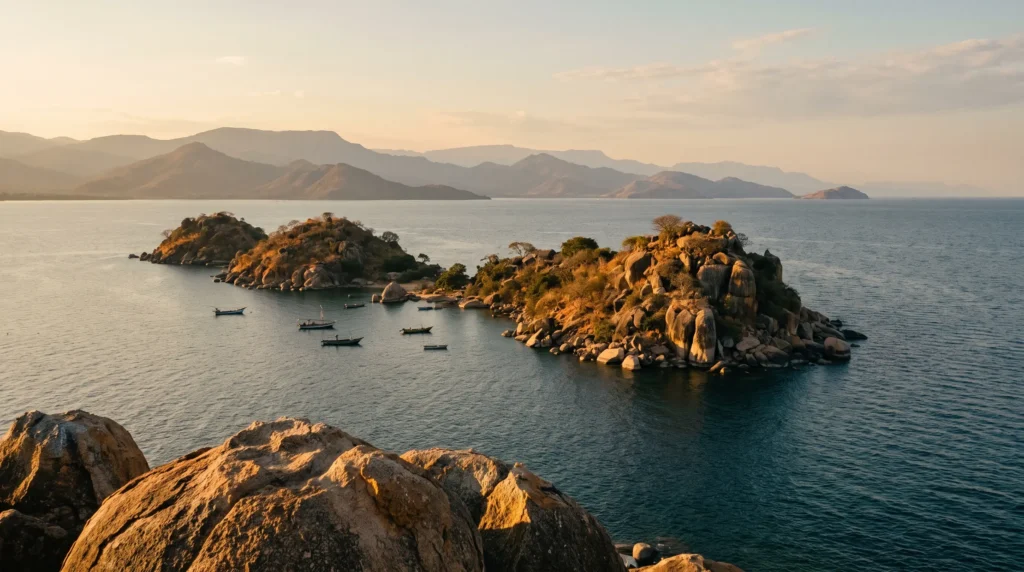
- Lake Bunyonyi — a serene, terraced-hill lake dotted with islands, perfect to unwind after gorilla trekking.
- Sipi Falls — a trio of waterfalls on the slopes of Mount Elgon, with coffee tours and hiking.
- Rwenzori Mountains — the snow-capped “Mountains of the Moon,” for serious multi-day trekking on the Equator.
- Ziwa Rhino Sanctuary — track white rhinos on foot, completing Uganda’s Big Five.
Practical Information
- Gorilla permits: book months ahead through a licensed operator or the Uganda Wildlife Authority; full payment is now required at the time of booking.
- Health: yellow fever certificate mandatory; take malaria prophylaxis and pack insect repellent. Bring any medication you need.
- Money: the Ugandan shilling is the local currency; crisp, post-2013 US$ notes ($50/$100) are widely accepted and get the best rates.
- Power: 240V, UK-style three-pin plugs — US travellers need an adapter.
- Safety: Uganda is generally safe and welcoming for tourists; use standard city precautions in Kampala and check current advice for remote border regions.
- Packing: for trekking, bring sturdy boots, long sleeves, gardening gloves and a rain layer — the forest is dense and wet.
Budget Breakdown — What Uganda Costs in 2026
Uganda is excellent value for an African safari — outside the headline gorilla permit. Rough per-person estimates in USD:
| Item | Budget | Mid-range | Luxury |
|---|---|---|---|
| Lodging / night | $80–150 | $150–350 | $500–1,000+ |
| Gorilla permit | $800 (foreign non-resident); $600 low season; habituation $1,500 | ||
| Typical 3–4 day gorilla trip | from ~$1,200 | $2,000–3,000 | $4,000–6,000 |
The permit is the big fixed cost; everything else — food, transport, mid-range lodges — is reasonable. Combining gorillas with a savanna park and Jinja makes the trip far better value per dollar.
Planning Your First Trip
A classic 7–10 day route loops from Entebbe through Queen Elizabeth (savanna and chimps at nearby Kibale) to Bwindi for the gorillas, with an optional finish at Jinja for the Nile, or a northern add-on to Murchison Falls. Book your gorilla permit and dry-season dates many months ahead, sort your e-Visa and yellow fever certificate early, and travel with a reputable operator who handles permits and logistics. Build in slow road days — distances are deceptive.
Frequently Asked Questions
Do US citizens need a visa for Uganda?
Yes — apply online for an e-Visa before travel (around $50 for the single-entry tourist visa, or the East Africa Tourist Visa for the region). Visa-on-arrival has been phased out, and a yellow fever certificate is mandatory.
How much does gorilla trekking cost?
A permit is US$800 per person for foreign non-residents (with $600 deals in April, May and November), buying a guided trek and one hour with a gorilla family. The full-day habituation experience is $1,500. Book months ahead.
When is the best time to visit Uganda?
The dry seasons of June–September and December–February are best for trekking and wildlife, with firmer trails and easier viewing. The wet months are greener, quieter and cheaper.
Is Uganda safe for tourists?
Yes, it’s generally safe and very welcoming. Use normal precautions in Kampala, follow your guide’s advice, and check current travel guidance for remote border areas.
Uganda or Rwanda for gorillas?
Both are superb. Uganda’s permits are cheaper ($800 vs Rwanda’s $1,500) and it offers more variety (savanna, chimps, the Nile); Rwanda’s trek is often shorter and more polished. Many combine the two.
Ready to Explore Uganda?
Mountain gorillas, the source of the Nile and the warmest of welcomes — the Pearl of Africa is one of the world’s great adventures. Tell us your dates and travel style and we’ll help you plan it. Plan your trip →
Explore More
How This Guide Was Built
Researched and written by the Facts From Upstairs team, last updated . Permit prices, visa rules and health requirements change — always confirm current details with official sources before you travel.
More country guides you might like
Plan your trip to Uganda
The booking tools we use ourselves. FFU may earn a commission at no extra cost to you.
Plan & book your trip to Uganda
Booking through these searches supports our guides at no extra cost to you.