Languages of Thailand
All languages of Southeast Asia →fluent beta classical · classes by phone with Maya at ranas.ai/maya
Thailand Travel Guide — Golden Temples, Tuk-Tuks & Turquoise Island Dreams
Thailand Travel Guide
📋 In This Guide
- Overview — Why Thailand Belongs on Every Bucket List
- 💦 Songkran Thai New Year Water Festival 2026
- Best Time to Visit Thailand (Season by Season)
- Getting There — Flights & Arrival
- Getting Around
- Top Cities & Regions
- Thai Culture & Etiquette
- A Food Lover’s Guide to Thailand
- Off the Beaten Path
- Practical Information
- Budget Breakdown
- Planning Your First Trip to Thailand
- Frequently Asked Questions
Overview — Why Thailand Belongs on Every Bucket List
Thailand is the Southeast Asian traveller’s first love, second trip, and eventual long-term home — a kingdom of roughly 71 million people that has managed, almost uniquely in the region, to absorb centuries of outside influence without ever being colonised. Few countries pack this much variety into a single visa: saffron-robed monks at dawn in a moated northern city, a sleeper train rolling south through rice paddies overnight, a longtail boat easing into turquoise water beneath a 400-metre limestone cliff by breakfast.
Geography does the heavy lifting. The country stretches roughly 1,650 km from the Golden Triangle border with Laos and Myanmar in the north to the Malaysian frontier in the south, covering about 513,120 square kilometres — a land area comparable to France. That span gives you three wildly different travel regions: cool northern highlands with hill-tribe villages and teak monasteries, the central rice-belt plains around Bangkok and the ruined royal capitals, and the southern peninsula where the Andaman Sea meets the Gulf of Thailand in postcard island clusters.
Cultural rhythm is the second unforgettable layer. Around 93.5% of Thais are Theravada Buddhist, and more than 40,000 wats (temple compounds) dot the country — gilded chedis, lotus-filled ponds, cats asleep on cool tiled floors. That is Thailand’s quiet side. The loud side is the country that welcomed 35.5 million international visitors in 2024, making it one of the top-five most-visited nations on Earth and, by a wide margin, the most-visited in Southeast Asia.
Seven UNESCO World Heritage sites anchor the cultural itinerary: the ruined capitals of Ayutthaya and Sukhothai, the Bronze Age settlement of Ban Chiang, the tropical forests of Thungyai-Huai Kha Khaeng and Dong Phayayen-Khao Yai, the Kaeng Krachan forest complex, and the newly inscribed Si Thep historical town. Expect food that alone justifies the flight: a bowl of boat noodles at a Bangkok canal stall for ฿50–70, a proper green curry with jasmine rice at an evening market for ฿80–120, a plate of mango sticky rice in season for ฿60–100. Few destinations pair temple, beach, jungle, street-food capital, and night train inside a single two-week trip — and fewer still reward independent travel as generously.
💦 Songkran Thai New Year Water Festival 2026 — You’re Right on Time
If you are picking dates for Thailand in 2026, the single biggest draw is Songkran — the Thai New Year and the largest public water fight on the planet. Three consecutive days of nationwide street soakings, blessing rituals, temple visits, and monsoon-level wetness transform every major city into a rolling parade. Chiang Mai’s moat becomes one continuous 7-km waterline, Bangkok’s Silom Road and Khao San Road close to traffic, and Phuket’s Patong strip runs from lunchtime until long after dark. Loy Krathong in November follows as Thailand’s other calendar anchor — a quieter lantern-and-river-offering festival, at its most spectacular in Chiang Mai where it overlaps with the Lanna Yi Peng sky-lantern release.
- Songkran Thai New Year: 13–15 April 2026 (public holidays nationwide)
- Loy Krathong (river offerings): 5 November 2026 (full-moon night of the 12th lunar month)
- Yi Peng Lantern Festival, Chiang Mai: early-to-mid November 2026, overlapping Loy Krathong
- Dry-season island peak: November 2025 – March 2026 on both the Andaman and Gulf coasts
- Chiang Mai Songkran: 13–16 April 2026, with the Old City moat as the main splash zone
Songkran 2026 is the strongest single reason to travel in April despite the heat. Expect 35–40°C, daily afternoon water fights, and a devotional morning-temple side — sand-stupa building at neighbourhood wats and rod nam dam hua (pouring scented water over elders’ hands).
Best Time to Visit Thailand (Season by Season)
Cool Dry Season (Nov–Feb)
The peak travel window — sunshine across Bangkok, Chiang Mai, Phuket, and Krabi, with daytime coastal temperatures of 27–32°C and pleasantly cool northern nights of 12–18°C in Chiang Mai and the Mae Hong Son loop. This is prime time for Phi Phi island-hopping, Railay rock climbing, and the north’s cultural circuit (Chiang Mai, Chiang Rai, Sukhothai). Expect the year’s highest hotel prices between 20 December and 5 January on Phuket and Koh Samui, and book domestic flights and sleeper trains at least six weeks in advance to secure reasonable fares.
Hot Season (Mar–May)
The hottest stretch of the year, with Bangkok and the central plains regularly hitting 35–40°C and the heat index pushing past 45°C on still afternoons. Songkran (13–15 April) is the biggest domestic-travel surge; airfares within Thailand can double around the long weekend. Escape to altitude — Doi Inthanon, Pai, and Mae Hong Son stay cooler — or lean into the water festivals. March and April haze from northern agricultural burning can reduce air quality sharply in Chiang Mai.
Southwest Monsoon (Jun–Aug)
The wet season begins, but rarely ruins a trip. Expect short, intense afternoon downpours, daytime temperatures of 28–33°C, and markedly lower hotel rates across Bangkok, Chiang Mai, and the Andaman coast. The Gulf-side islands — Koh Samui, Koh Phangan, Koh Tao — catch much less rain than Phuket and Krabi in this window, flipping the usual island calculus. July’s Asalha Puja and Khao Phansa (start of Buddhist Lent) are important temple holidays but do not disrupt travel.
Peak Monsoon (Sep–Oct)
The wettest stretch on the Andaman coast — Phuket, Krabi, and Phi Phi see frequent all-day rain, choppy seas, and occasional ferry cancellations. Expect 28–32°C and savings of 30–50% on pre-peak hotel rates. Flip to the Gulf (Koh Samui, Koh Phangan) which enters its own dry window through September. The Vegetarian Festival in Phuket (late September or early October) is an underrated cultural spectacle of body-piercing processions and nine days of all-vegan street food.
Shoulder-season tip: Target late November or late May. You will catch the overlap between post-monsoon green landscapes and lower pre-peak prices, beat the Christmas rush, and still have reliable visibility for Railay climbing and Phi Phi day tours.
Getting There — Flights & Arrival
Most visitors arrive at Bangkok’s Suvarnabhumi (BKK), but Thailand has five significant international gateways. Flag carrier Thai Airways runs long-hauls; Thai AirAsia, Thai Vietjet, and Nok Air dominate budget routes.
- Suvarnabhumi International (BKK) — Bangkok; 30 km to city centre, Airport Rail Link to Phaya Thai BTS in 26 min (฿45), taxi 40–60 min
- Don Mueang International (DMK) — Bangkok’s second airport; 24 km north, 30–90 min by taxi
- Phuket International (HKT) — 32 km to Patong, airport bus ฿150, taxi ฿800–1,000
- Chiang Mai International (CNX) — 4 km to the Old City, Grab ฿150–200
- Krabi International (KBV) — 30 km to Ao Nang, airport bus ฿150, taxi ฿500–600
Flight times: Singapore–Bangkok about 2 hr 25 min; London–Bangkok roughly 11 hr 30 min nonstop on Thai Airways; Los Angeles–Bangkok around 17–19 hr with one stop.
Flag carrier: Thai Airways (TG); domestic budget is Thai AirAsia, Thai Vietjet, Nok Air, and Bangkok Airways.
Visa / entry: Since July 2024, citizens of 93 countries enter visa-free for up to 60 days. All foreign arrivals must submit the Thailand Digital Arrival Card (TDAC) within 72 hours before entry.
Getting Around — Trains, BTS Skytrain & Island Boats
Thailand’s transport backbone combines long-distance overnight trains, short domestic flights, and Bangkok’s rail grid. The State Railway of Thailand (SRT) runs the flagship Bangkok–Chiang Mai sleeper; Thai AirAsia, Nok Air, and Bangkok Airways cover tourist hubs by air; Andaman and Gulf islands connect via Lomprayah, Seatran, and Chaokoh ferries.
- BTS Skytrain (Bangkok): fares ฿17–62, Sukhumvit and Silom lines
- MRT Blue + Purple Line (Bangkok): fares ฿17–45; links Chatuchak and the airport rail link
- Bangkok ↔ Chiang Mai: 12–14 hr overnight sleeper (฿941–1,453 2nd-class A/C) or 1 hr 20 min by air
- Bangkok ↔ Phuket: 1 hr 25 min by air
- Phuket ↔ Phi Phi Don: 1 hr 30 min by Chaokoh ferry (฿450–600)
Rail / transit pass: No national pass — SRT tickets are sold one-way by route. In Bangkok, load a Rabbit Card for BTS or MRT Plus for the subway.
Ride-hailing: Grab dominates Bangkok, Chiang Mai, and Phuket for cars and motorbike taxis. Bolt is the rising competitor. Songthaews in Chiang Mai run ฿30–50 inside the moat.
Tuk-tuks vs Grab: Tuk-tuks are worth one photogenic ride, but fares run two to three times a metered Grab, and drivers near the Grand Palace push commission-based gem-shop detours. Open Grab first.
Apps: Grab, Bolt, 12Go Asia, Google Maps.
Top Cities & Regions
📍 Map of Thailand: Every Place in This Guide
🛕 Bangkok
Thailand’s capital and sensory overload — around 10.7 million people in the greater metropolitan region, a sprawling mix of gold-roofed royal temples, canal neighbourhoods, skybars on 60th-floor rooftops, and possibly the best street-food scene on Earth. Plan at least two days for the Grand Palace, the Chao Phraya riverfront, and a proper Chinatown walking-food crawl. Bangkok is also the primary aviation hub and the natural base for Ayutthaya and Kanchanaburi day trips.
- Grand Palace and Wat Phra Kaew (Temple of the Emerald Buddha); Wat Pho with the 46-m reclining Buddha
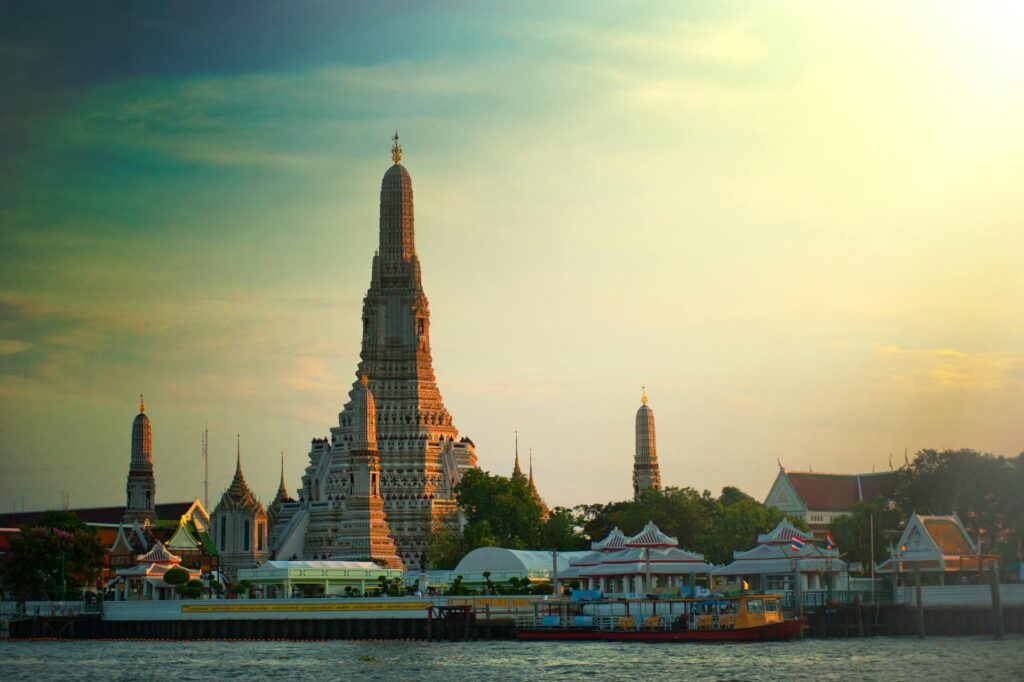
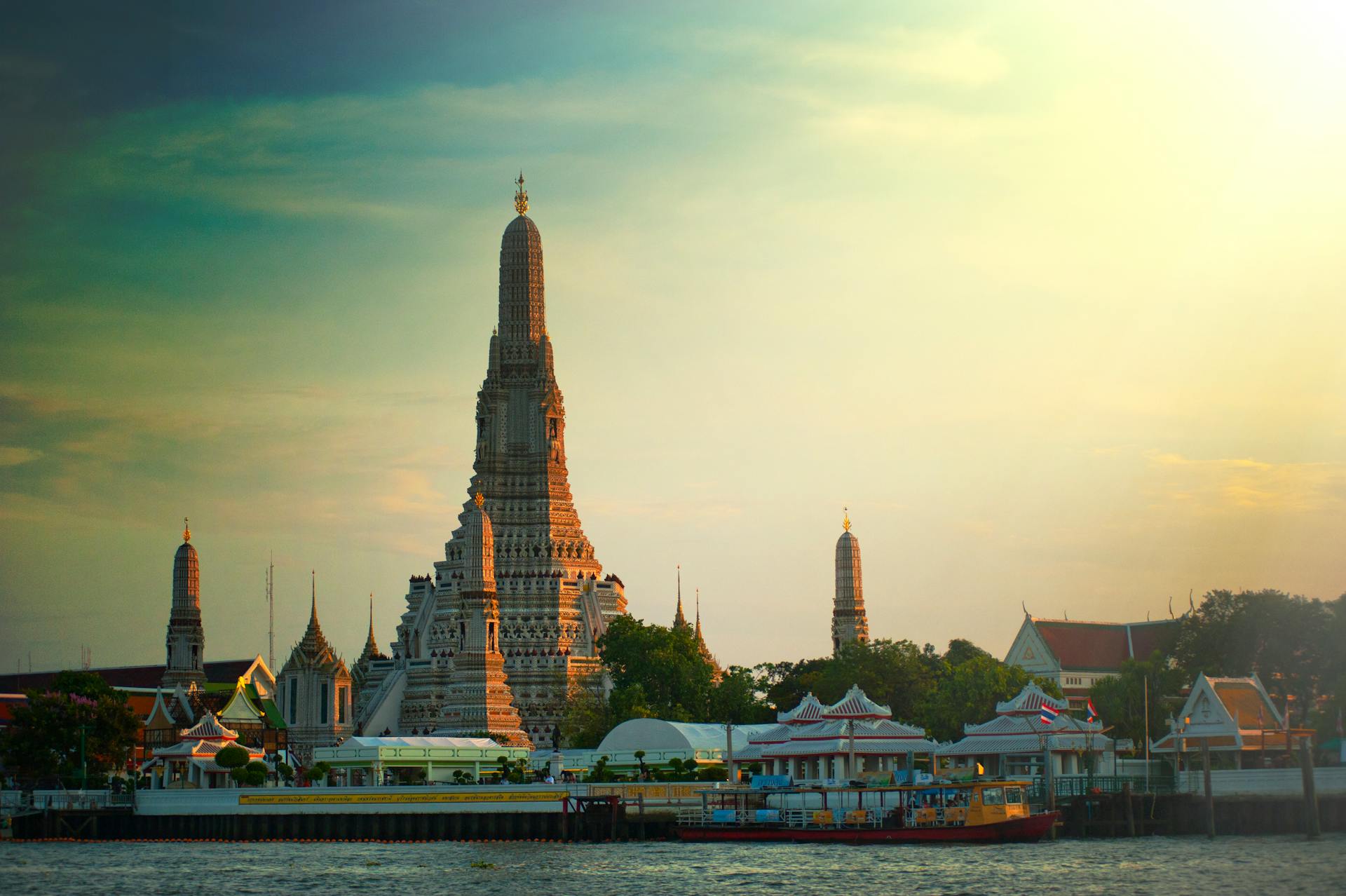
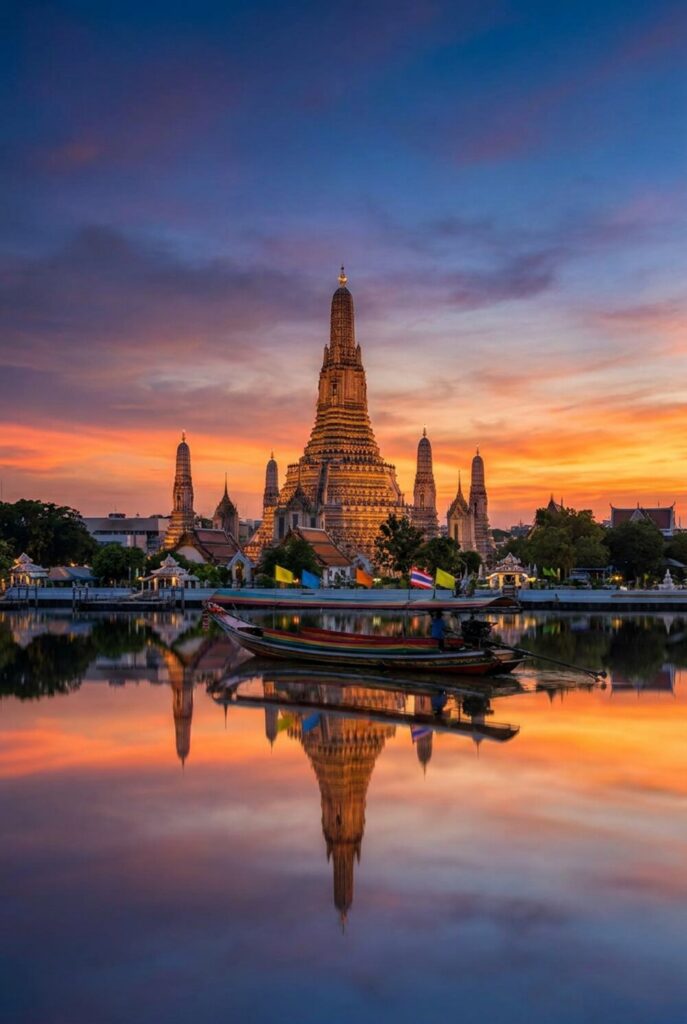
- Wat Arun at sunset from across the Chao Phraya; longtail-boat cruise through the Thonburi khlongs
- Chatuchak Weekend Market, Yaowarat (Chinatown) night-food crawl, BTS Skytrain through Sukhumvit
- Signature: pad Thai, boat noodles, green curry, mango sticky rice
🏯 Chiang Mai
Thailand’s northern cultural capital and former seat of the Lanna Kingdom (founded 1296) — a moated Old City of more than 300 wats, cool highland air from November to February, and the springboard for ethical elephant sanctuaries, hill-tribe villages, and the Mae Hong Son loop. This is the country’s slower counterpoint to Bangkok, and for many travellers the single best reason to book the domestic flight north.
- Wat Phra That Doi Suthep viewpoint and Wat Chedi Luang inside the moat
- Sunday Walking Street on Ratchadamnoen Road and the Saturday Wualai night market
- Ethical elephant sanctuaries (Elephant Nature Park) and Doi Inthanon summit day trips
- Signature: khao soi, sai ua (northern sausage), nam prik ong, nam ngiao
🏝️ Phuket
Thailand’s largest island and biggest beach hub — 543 square kilometres in the Andaman Sea, linked by road bridge to the mainland. A mix of the Patong Beach party strip, the UNESCO-adjacent Old Town Sino-Portuguese shophouses, quieter southern beaches (Kata Noi, Nai Harn, Freedom Beach), and the launch pad for Phang Nga Bay and Phi Phi day tours.
- Patong, Kata, and Karon beaches plus James Bond Island (Phang Nga Bay) day tours
- Phuket Old Town Sunday Walking Street and Thalang Road’s Sino-Portuguese façades
- Big Buddha (45 m marble statue) at Khao Nakkerd and Wat Chalong
- Signature: Hokkien mee, moo hong pork belly, southern yellow curry, fresh seafood
⛰️ Krabi & Phi Phi Islands
Limestone karst country on the Andaman coast — the classic postcard Thailand of sheer cliffs rising directly out of turquoise water. Railay Beach is accessible only by longtail boat (15 min from Ao Nang) and is widely considered one of the world’s best rock-climbing venues. Phi Phi Leh’s Maya Bay reopened in 2022 under strict visitor caps of 375 people per hour.
- Railay Beach climbing, Phra Nang Cave Beach, and the Tonsai deep-water solo scene
- Phi Phi Leh (Maya Bay) and Bamboo Island snorkelling day trips from Ao Nang
- Tiger Cave Temple (Wat Tham Suea) 1,237-step summit climb; Khlong Thom hot springs
- Signature: massaman curry, southern-style tom yum, grilled squid
🗿 Ayutthaya
The former Siamese capital from 1351 to 1767 and a UNESCO World Heritage site — a ruined brick-prang city 80 km north of Bangkok, reachable in 1 hr 30 min by minivan or 2 hr on the third-class train for ฿20. The landmark shot is the stone Buddha head wrapped in banyan roots at Wat Mahathat.
- Wat Mahathat (Buddha head in tree roots) and Wat Phra Si Sanphet triple chedi
- Sunrise bicycle circuit of Ayutthaya Historical Park
- Chao Phraya–Pasak River boat loop with Bang Pa-in Royal Palace
🕊️ Sukhothai
The first capital of Siam (1238–1438) and a second UNESCO site — a lotus-pond open-air museum 425 km north of Bangkok, with serene seated Buddhas and far fewer tour buses than Ayutthaya. Best paired with Si Satchanalai satellite ruins.
- Sukhothai Historical Park central zone: Wat Mahathat, Wat Si Chum’s seated Buddha
- Si Satchanalai Historical Park and the ancient kiln archaeology
- Sunset bicycle loop through the old moated city walls
Thai Culture & Etiquette — What to Know Before You Go
The Essentials
- The wai is the greeting. Palms pressed together at chest level with a slight bow — the higher the hands, the greater the respect. You are not expected to initiate a wai with service staff, but always return one offered by an elder or monk.
- Feet are the dirty end, head is sacred. Never point your feet at a person, a Buddha image, or a monk. Do not touch anyone on the head, including children — it is the most spiritually elevated part of the body.
- Remove shoes indoors. Entering temples, most homes, many guesthouses, and small shops in the north means taking shoes off at the threshold. Slip-ons save friction.
- Respect the monarchy — always. Stand still when the royal anthem plays in cinemas and at BTS stations. Never deface Thai currency (it bears the King’s portrait). See the callout below for why this is genuinely serious law.
- Tipping is appreciated, not obligatory. Round up taxi fares, tip ฿20–50 for hotel porters, and leave ฿50–100 at sit-down restaurants without a service charge.
Temple & Buddhist Etiquette
- Cover shoulders and knees. Sleeveless tops, short shorts, and miniskirts are not allowed inside the Grand Palace, Wat Phra Kaew, or most major wats — scarf cover-ups and rental sarongs are often available at the gate.
- Women do not touch monks. Even handing an item directly to a monk is off-limits; place it within reach or pass it through a male intermediary.
- Never climb on Buddha images or chedis. Posing with your head above a Buddha’s head for photos is considered deeply offensive and has led to arrests and deportations.
- Sit feet-tucked-back. When seated on temple floors, tuck your feet behind you, never pointing at the altar or the principal Buddha image.
A Food Lover’s Guide to Thailand
Thai food is the delicate balance of five tastes — hot, sour, salty, sweet, and umami — pushed to the edge of each in every bite. A properly built tom yum should make your eyes water from the chilli, pucker from the lime, soothe from the coconut, and sing from the galangal and lemongrass all in the same spoonful. Regional cooking is as varied as the country’s geography: fiery sour curries in the south, fragrant curry pastes and Chinese-influenced noodles in the central plains, sticky-rice-and-herb-based cooking in the northeast Isaan region, and coconut-heavy northern Lanna dishes in Chiang Mai. Street food is the default — you can eat a proper full meal for ฿50–120 in any Thai city.
Must-Try Dishes
| Dish | Description |
|---|---|
| Pad Thai | Stir-fried rice noodles with tamarind-based sauce, egg, peanut, bean sprouts, and a wedge of lime — Thailand’s unofficial national dish, best at the open-wok stalls in Bangkok’s Chinatown. |
| Tom Yum Goong | Hot-and-sour prawn soup with lemongrass, galangal, kaffir lime leaves, chilli, and fish sauce — the single most identifiable Thai flavour profile in a bowl. |
| Green Curry (Gaeng Keow Wan) | Coconut-milk curry built on a green-chilli and coriander-root paste with chicken or beef, Thai eggplant, and sweet basil; milder than the red curry, richer than the yellow. |
| Som Tam | Pounded green-papaya salad from the Isaan northeast — palm sugar, lime, fish sauce, dried shrimp, peanut, and as many bird’s-eye chillies as you dare. Order “mai phet” for mild. |
| Mango Sticky Rice (Khao Niao Mamuang) | Warm glutinous rice with fresh nam dok mai mango and salty-sweet coconut cream, served in season (Mar–Jun) and a legitimate national obsession. |
| Khao Soi | Chiang Mai’s signature curry-noodle soup — coconut-based yellow curry with egg noodles, crispy noodle nest on top, pickled mustard greens, and lime; a legacy of Yunnanese-Muslim trade routes. |
| Massaman Curry | A mild, Persian-influenced southern Thai curry with beef, potato, peanut, and star anise — repeatedly ranked by CNN as one of the world’s most delicious dishes. |
Street Food & Night Market Culture
The Thai street food economy is the default eating mode, not a novelty. Every city has a rotating cast of morning, afternoon, and night markets; Bangkok alone hosts more than 40 recognised food streets, from Yaowarat (Chinatown) at night to Bang Rak at lunch. Point, nod, and pay ฿40–120 per dish — a proper Thai dinner usually means three or four small plates to share. Look for stalls with a line of locals, a single specialty (never a 40-item menu), and fresh ingredients visibly turning over.
- Chains worth knowing: 7-Eleven (cheap toasties and onigiri-style Thai snacks), Family Mart, CP Fresh Mart for late-night eats on the islands
- Signature street items: khanom buang (crispy Thai crepes), moo ping (grilled pork skewers ฿10 each), kluay tod (fried banana), roti with condensed milk, khao man gai (Hainanese chicken rice ฿50–80), guay jub (peppery noodle soup in Yaowarat)
Regional food tourism is worth planning around. Isaan (northeast) is the spiritual home of som tam, larb (minced-meat salad), gai yang (grilled chicken), and sticky rice — simpler, fierier, and fermented in a way central-Thai food is not. Southern cooking leans into turmeric, sour fruit, and seafood — the Phuket Hokkien noodle and Trang dim sum traditions are worlds away from Bangkok. Northern Lanna food (Chiang Mai, Chiang Rai) features the milder, coconut-rich khao soi, sai ua herbal sausage, and the famous khantoke communal meal served on low lacquered trays.
Off the Beaten Path — Thailand Beyond the Guidebook
Pai & the Mae Hong Son Loop
A 600-km motorbike loop through the cool northern mountains bordering Myanmar — 1,864 switchback curves, hot springs, Shan-Thai border towns, and the hippie valley town of Pai. Three to five days on a rented 150cc scooter (about ฿250 per day) is the classic itinerary; buses work too but miss the roadside stops. Best from November to February when temperatures stay at 12–22°C and skies are dry.
Koh Lanta & Koh Kradan
Two quieter southern islands that most package tourists skip. Koh Lanta’s 20-km west coast is a string of long sandy beaches connected by a single road; Koh Kradan (85 minutes by ferry from Trang) won the 2023 World Beach Awards Best Beach title and still has fewer than a dozen accommodations on the whole island. Combine both in a 5–7-day Andaman-south itinerary skipping Phi Phi entirely.
Kanchanaburi & Erawan National Park
Two hours northwest of Bangkok — the River Kwai, the Death Railway’s WWII bridge, and Erawan’s seven-tiered emerald waterfall 65 km beyond. Erawan’s turquoise pools and limestone tiers rank among Thailand’s most beautiful freshwater swims. Overnight at a River Kwai raft house, day-trip Hellfire Pass and the Thai-Burma Railway Museum, and pair with the pre-Angkor Khmer ruins at Muang Sing.
Koh Phayam, Ranong
A small Andaman island 2 hr by speedboat from Ranong port — cashew plantations, two main beaches (Ao Yai and Ao Khao Kwai), no ATMs, mostly 4G-only mobile data, and almost no concrete. The 2018–2019 Rough Guide first-mover crowd left when Koh Lipe filled up; Phayam is now where that vibe has retreated to. Plan four nights, bring cash, rent a scooter.
Chiang Khan, Loei
A Mekong-river town in the far north-east on the Laos border — wooden shophouses, a 2-km riverside walking street that fills with lantern-lit food stalls every evening at 5pm, and early-morning monk almsgiving that has almost none of Luang Prabang’s overnight tour-bus pressure. Best from October to February when temperatures drop to 8–15°C and river mist hangs over the water at dawn.
Practical Information
| Currency | Thai Baht (THB / ฿); 1 USD ≈ 34.8 THB (April 2026) |
| Cash needs | Cards accepted at hotels and mid-range restaurants; cash rules street food, tuk-tuks, songthaews, and island ferries. Carry ฿1,000–3,000 daily. |
| ATMs | Plentiful; Bangkok Bank, Kasikorn, and SCB most reliable. Foreign-card fee is a flat ฿220 per withdrawal; pull larger amounts less often. |
| Tipping | Not obligatory. 10% service charge often on the bill; tip porters ฿20–50, round up taxi fares. |
| Language | Thai is the sole official language. English is widely used at hotels, airlines, and tourist restaurants; less so in rural Isaan. |
| Safety | Most areas safe. Foreign governments advise against travel to Yala, Pattani, Narathiwat, and parts of Songkhla due to insurgency. |
| Connectivity | AIS and TrueMove H lead mobile networks; 4G is ubiquitous, 5G in Bangkok, Chiang Mai, and Phuket. |
| Power | Type A, B, C, and O plugs; 220V, 50Hz. |
| Tap water | NOT potable anywhere — stick to bottled, filtered, or boiled water. Ice at reputable restaurants is generally safe. |
| Healthcare | Bangkok and Phuket have world-class private hospitals (Bumrungrad, Samitivej, Bangkok Hospital Phuket). Travel insurance with medevac is essential. |
Budget Breakdown — What Thailand Actually Costs
💚 Budget Traveller
Around ฿1,000–1,800 (US$29–52) per day. Hostel dorm beds in Bangkok, Chiang Mai, and Phuket run ฿250–500; street-food meals are ฿50–120; BTS, MRT, and songthaew rides are ฿17–50 a trip; an overnight 2nd-class A/C sleeper train Bangkok–Chiang Mai starts at ฿941 if booked 30 days ahead. Second-hand scooters rent for ฿200–300 per day across the north.
💙 Mid-Range
Around ฿3,500–7,000 (US$100–200) per day. Three- and four-star hotels run ฿1,800–4,500 a night in Bangkok and Chiang Mai, beachfront bungalows in Krabi or Koh Samui ฿2,500–5,500; sit-down restaurant dinner ฿400–900 per person; a four-island Phi Phi speedboat day tour runs ฿1,500–2,400 per person with lunch included.
💜 Luxury
From ฿12,000 (US$345) per day upward. Iconic stays like The Siam Hotel, Mandarin Oriental Bangkok, Amanpuri Phuket, and Four Seasons Chiang Mai start at ฿18,000–75,000 a night; private longtail-boat charters from Railay run ฿3,500–5,000 a day; Michelin-starred fine dining at Le Du, Sorn, and Gaggan Anand in Bangkok lands at ฿5,500–10,000 per head with pairings.
What you’ll actually spend: Two weeks of mid-range travel across Bangkok, Chiang Mai, and one Andaman island (Krabi or Phuket) typically costs US$1,800–2,800 per person excluding international flights, with domestic flights and island transfers the biggest line items. A two-week budget-backpacker version is achievable at US$700–1,000 per person using sleeper trains, hostels, and street food.
| Tier | Daily (USD) | Accommodation | Food | Transport |
|---|---|---|---|---|
| Budget | US$29–52 | Hostel dorm ฿250–500 | Street food & night markets | BTS, MRT, songthaew, sleeper train |
| Mid-Range | US$100–200 | Boutique ฿1,800–4,500 | Restaurants & cafés | Grab + budget domestic flights |
| Luxury | US$345+ | 5-star resort ฿18,000+ | Fine dining ฿5,500–10,000 | Private transfers & charters |
Planning Your First Trip to Thailand
- Pick two regions, not four. The classic combinations are Bangkok plus Chiang Mai, Bangkok plus Phuket or Krabi, or Chiang Mai plus Koh Samui. Adding Sukhothai and Pai in ten days usually ruins the pace.
- File your TDAC before you fly. The Thailand Digital Arrival Card at tdac.immigration.go.th is mandatory for all foreign arrivals within 72 hours of departure.
- Match season to region. November–February for the north and Andaman; June–September for the Gulf (Koh Samui, Koh Phangan). Flip coasts to dodge the monsoon.
- Book sleeper train and domestic flights early. The Bangkok–Chiang Mai 2nd-class A/C sleeper sells out six to eight weeks ahead in peak season; lock in via 12Go Asia or the SRT site.
- Temple dress code and light packing. Shoulders and knees must be covered at the Grand Palace and most major wats. Bring a 40-litre pack, one temple-appropriate outfit, and quick-dry clothing.
Classic 14-Day Itinerary: Days 1–3 Bangkok (Grand Palace, Chinatown, Chao Phraya); Day 4 Ayutthaya; Days 5–8 Chiang Mai (Doi Suthep, elephant sanctuary, cooking class); Days 9–13 Krabi or Phuket (Railay, Phi Phi day tour, rest day); Day 14 return via Bangkok.
Frequently Asked Questions
Is Thailand expensive to visit?
No — Thailand remains one of Southeast Asia’s best-value destinations. Budget travellers spend around US$29–52 a day, mid-range US$100–200, and Bangkok luxury still comes in 30–40% cheaper than Singapore or Tokyo. Real cost drivers are long-haul flights and domestic hops between Phuket, Koh Samui, and Krabi. Eat street food, ride the sleeper train north, and book flights 6–8 weeks ahead.
Do I need to speak Thai?
No. English is widely used at hotels, airlines, major restaurants, and dive shops across Bangkok, Chiang Mai, Phuket, Krabi, and the popular islands. A few phrases (sawasdee for hello, khop khun for thank you, aroi for delicious) earn warmer treatment. In rural Isaan and small fishing villages English drops off — download an offline Google Translate Thai pack.
Is a Thailand Rail Pass worth it?
No national rail pass exists — SRT tickets are sold route-by-route and remain one of Asia’s best-value overnight options. A 2nd-class A/C sleeper on the Bangkok–Chiang Mai flagship costs ฿941–1,453 and doubles as your bed. Book via 12Go Asia or the SRT e-ticket site at least 30 days ahead in peak season.
Is Thailand safe for solo travellers?
Yes, with normal precautions. Thailand is one of Asia’s most established solo-travel destinations including for solo women, and hubs like Bangkok, Chiang Mai, Krabi, and Koh Lanta see year-round solo traffic. Watch for petty theft, never leave drinks unattended, and skip the four southernmost provinces (Yala, Pattani, Narathiwat, parts of Songkhla).
When is Songkran?
Songkran — the Thai New Year and the world’s biggest water fight — falls on 13–15 April every year. Chiang Mai’s Old City moat is the most atmospheric; Bangkok’s Khao San Road and Silom the loudest. Expect hot heat and triple hotel prices. Loy Krathong and Yi Peng fall on the November full moon (5 November 2026) as quieter counterpoints.
Can I get by as a vegetarian or vegan?
Easier than most of Southeast Asia, but not automatic. Central Thai cooking leans on fish sauce and shrimp paste, so “no meat” does not mean vegan by default. Look for the jay (เจ) sign for strict Buddhist vegan cooking; learn “gin jay” and “mai sai nam pla.” Bangkok and Chiang Mai have strong plant-based scenes; Phuket’s September Vegetarian Festival turns the Old Town fully vegan.
What about dress code at temples?
Covered shoulders and knees at the Grand Palace, Wat Phra Kaew, Wat Pho, Doi Suthep, and most major wats — tank tops, short shorts, and see-through fabrics are refused entry. Rental sarongs are usually at the gate for ฿40–100. Remove shoes and hats at the inner hall. Women should never touch a monk.
📘 Book Your Thailand Trip — curated hotel, train, and tour partners.
Ready to Explore Thailand?
Thailand rewards travellers who pick two regions deeply over those who try to stitch together six provinces in twelve days. Start with Bangkok plus Chiang Mai for temples and cultural north, add Krabi or Phi Phi for the Andaman cliffs, and come back later for Sukhothai, Pai, and the Gulf islands — this is a country built for repeat visits.
Explore More
Cities we cover in Thailand
Cities to explore in Thailand
Deep-dive guides to specific cities, neighbourhoods, and food scenes — written with the same magazine voice.
More country guides you might like
Plan your trip to Thailand
The booking tools we use ourselves. FFU may earn a commission at no extra cost to you.
Plan & book your trip to Thailand
Booking through these searches supports our guides at no extra cost to you.