
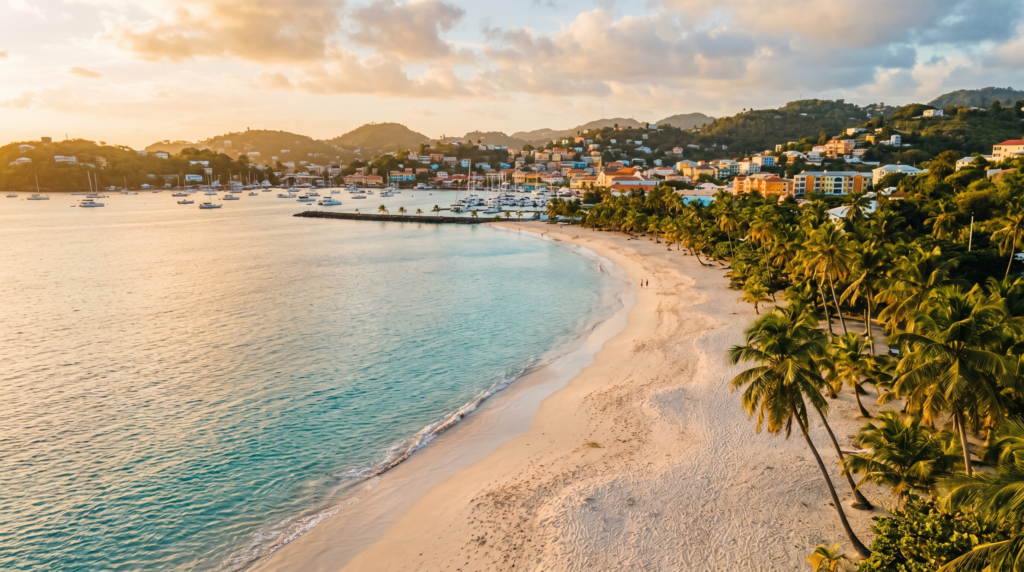
Grenada Travel Guide — The Spice Isle: Nutmeg, Grand Anse Beach & an Underwater Sculpture Park
Grenada — the “Spice Isle” — is one of the Caribbean’s most rounded and authentic islands: the scent of nutmeg in the air, one of the region’s most beautiful beaches at Grand Anse, a picture-perfect harbour capital, rainforest waterfalls, the world’s first underwater sculpture park and a tree-to-bar chocolate scene. Lush, laid-back and still relatively under-the-radar, it offers the classic Caribbean trifecta of beach, nature and culture without the over-development.
📋 In This Guide
- Overview — The well-rounded Caribbean island
- The Spice Isle & the Underwater Sculpture Park
- Best time to visit (season by season)
- Getting there
- Getting around
- Where to go — St George’s, Grand Anse, the interior & Carriacou
- Culture & people
- A food lover’s guide to Grenada
- Off the beaten path
- Practical information
- Budget breakdown — what Grenada costs in 2026
- Planning your first trip
- Frequently asked questions
Overview — The Well-Rounded Caribbean Island
At the southern end of the Windward Islands, Grenada is a three-island nation — Grenada itself plus little Carriacou and Petite Martinique — that punches well above its size. The main island packs a mountainous, rainforested interior of crater lakes and waterfalls, a coastline of fine beaches led by the famous Grand Anse, and a harbour capital, St George’s, widely rated among the prettiest in the Caribbean.
What sets it apart is the spice. Grenada is one of the world’s great nutmeg producers — the spice even features on its flag — and the scent of nutmeg, cloves and cinnamon, plus a thriving cocoa-and-chocolate industry, gives the island a sensory identity all its own. It’s lush, friendly and still refreshingly low-key compared with the big-resort islands.
The Spice Isle & the Underwater Sculpture Park
Two things make Grenada unmistakable. The first is spice: nutmeg and mace, cloves, cinnamon, ginger and cocoa grow across the island, and a visit to a nutmeg processing station or a tree-to-bar chocolate estate is part of the experience. The second is the Underwater Sculpture Park in Molinere Bay — the world’s first — where eerie submerged figures double as an artificial reef, explorable by snorkel, dive or glass-bottom boat. Pair them with Grand Anse Beach, rainforest waterfalls and the historic rum at River Antoine, and you have a remarkably varied island.
Best Time to Visit Grenada (Season by Season)
December–May — Dry season (best)
Warm, sunny and dry — the prime window, with December a particular sweet spot between the rains and the peak winter crowds. Calm seas and reliable weather for beaches, diving and hiking.
May & early June — Shoulder (best value)
After the high-season crowds leave but before the rains set in — warm, quieter and cheaper, arguably the best value-to-weather window of the year.
June–November — Wet/hurricane season
Hotter, wetter and the lowest prices (up to 40% off in August–September). Grenada lies at the southern edge of the hurricane belt and is hit less often than islands further north, but the risk is real — travel insurance is wise.
Getting There
Maurice Bishop International Airport (GND) near the south coast handles nonstop flights from the US (Miami, New York, Atlanta, Charlotte), Canada and the UK, plus regional connections across the Eastern Caribbean.
- Visa: US citizens don’t need a visa for stays of up to 90 days; bring a valid passport and a return or onward ticket.
- From the airport: Grand Anse and the south-coast hotels are 10–20 minutes by taxi (fixed rates).
- Cruise & sail: ships dock at St George’s, and Grenada is a popular sailing base for the Grenadines.
Getting Around
- Buses: cheap, lively shared minibuses run set routes from St George’s — a fun, local way to reach Grand Anse and the towns.
- Taxis & tours: plentiful with set rates; island and spice/chocolate tours are easy to book and a good way to see the interior.
- Rental car: worthwhile for exploring the waterfalls, estates and north at your own pace — driving is on the left, with a temporary local permit.
- To Carriacou: by ferry or a short flight from the main island.
Where to Go — St George’s, Grand Anse, the Interior & Carriacou
St George’s & Grand Anse
The horseshoe Carenage harbour and hilltop Fort George, the colourful capital’s markets and the spice scent, plus the two-mile sweep of Grand Anse Beach and the south-coast hotels just minutes away.
The Rainforest Interior
Grand Etang National Park’s crater lake and mona monkeys, and a string of waterfalls — Annandale, Seven Sisters and Concord — for swimming and short hikes.
The Spice & Chocolate Trail
Nutmeg processing stations at Gouyave, cocoa estates like Belmont, tree-to-bar chocolate makers, and the historic River Antoine rum distillery with its working water wheel.
Carriacou & Petite Martinique
The sleepy sister islands — sailing, boat-building heritage, quiet beaches and superb diving — a step back in time off the main island.
Culture & People
Grenadian culture is warm, musical and rooted in African, French and British heritage. Spice and the sea shape daily life, and the island’s biggest celebration is Spicemas, the August Carnival, with its calypso, soca, steel-pan and the dramatic oil-covered “Jab Jab” tradition. English is official, spoken alongside a lilting Grenadian Creole.
It’s a friendly, unhurried place where community and faith matter, and where the food, music and craft traditions feel genuinely local rather than packaged for tourism. A respectful, easy-going traveller is met with real warmth — just keep normal travel sense, as noted below.
A Food Lover’s Guide to Grenada
- Oil down — the national dish: a one-pot stew of breadfruit, salted meat, dumplings, callaloo and coconut milk, simmered with spices.
- Fresh seafood & provisions — grilled fish and lobster (in season) with ground provisions, Creole-seasoned.
- Spices & chocolate — nutmeg in everything from ice cream to rum punch, and superb estate-grown, tree-to-bar chocolate.
- Rum & nutmeg syrup — River Antoine’s overproof rum and local rum punches, plus nutmeg jams and syrups to take home.
Off the Beaten Path
- Underwater Sculpture Park — snorkel or dive the world’s first underwater art gallery in Molinere Bay.
- The Bianca C wreck — the “Titanic of the Caribbean,” a giant cruise-ship wreck and one of the region’s best dives.
- River Antoine Rum Distillery — the oldest functioning water-wheel rum distillery in the Caribbean.
- Levera & the north — wild beaches, mangroves and turtle-nesting sites away from the resorts.
- Carriacou’s reefs & Sandy Island — a tiny castaway cay and superb snorkelling off the sister island.
Practical Information
- Money: the East Caribbean dollar is fixed at US$1 = EC$2.70 and US dollars are widely accepted (change may come in EC dollars). Cards work at hotels and restaurants; carry cash for buses, markets and stalls.
- Safety: the U.S. raised Grenada to Level 2 (exercise increased caution) in January 2026, noting that violent crime can occur. Take standard precautions — avoid isolated areas after dark, don’t flash valuables, and use registered taxis at night.
- Driving: on the left; a temporary local permit is required (sold with car hire); roads are narrow and winding.
- Power: 230V, mostly UK-style three-pin plugs — US travellers need an adapter (some hotels have US outlets).
- Tipping: 10–15%; a service charge is often added — check the bill.
- Hurricane season runs June–November — insurance is sensible for summer trips.
Budget Breakdown — What Grenada Costs in 2026
Grenada spans budget guesthouses to upscale resorts. Rough per-person, per-day estimates in USD:
| Style | Accommodation | Food | Total / day |
|---|---|---|---|
| Budget | $50–90 guesthouse | $25–40 (local) | ~$140 |
| Mid-range | $130–250 hotel | $45–75 | ~$330 |
| Luxury | $300–800+ | $80–150+ | $500–900+ |
Buses cost a couple of dollars, spice and chocolate tours are inexpensive, and local eateries are great value. The southern resorts and diving are where costs climb; shoulder-season travel saves up to 40%.
Planning Your First Trip
A relaxed week: base near Grand Anse or the south coast for the beach and easy access to St George’s, then mix in a rainforest-and-waterfalls day in Grand Etang, a spice-and-chocolate tour, and a snorkel or dive at the Underwater Sculpture Park. Add a day trip or overnight to Carriacou for the quiet life. Travel in the December–May dry season (or May–June for value), keep standard safety sense, and leave room to simply slow down — Grenada rewards an unhurried pace.
Frequently Asked Questions
Do US citizens need a visa for Grenada?
No visa is required for stays of up to 90 days — just a valid passport and a return or onward ticket. Extensions beyond 90 days are handled by the Immigration Division.
Is Grenada safe to visit?
It’s a generally friendly, easy-going island, but the U.S. raised it to Level 2 (exercise increased caution) in January 2026, noting that violent crime can occur. Take normal precautions — avoid isolated areas at night, keep valuables discreet, and use registered taxis — and check the current advisory before you go.
When is the best time to visit?
December to May for dry, sunny weather (December is ideal), or May–June for warm weather and the best value before the rains.
What is Grenada famous for?
Nutmeg and spices (the “Spice Isle”), Grand Anse Beach, the world’s first Underwater Sculpture Park, rainforest waterfalls, tree-to-bar chocolate, and the Spicemas Carnival.
Can I use US dollars?
Yes — US dollars are widely accepted at the fixed rate of US$1 = EC$2.70, though change may be given in East Caribbean dollars. Cards work in established places.
Ready to Explore Grenada?
Spice-scented hills, a world-famous beach and an underwater art gallery — the Spice Isle is the Caribbean at its most authentic. Tell us your dates and travel style and we’ll help you plan it. Plan your trip →
Explore More
How This Guide Was Built
Researched and written by the Facts From Upstairs team, last updated . Prices, advisories and entry rules change — always confirm current details with official sources before you travel.
More country guides you might like
Plan your trip to Grenada
The booking tools we use ourselves. FFU may earn a commission at no extra cost to you.
Plan & book your trip to Grenada
Booking through these searches supports our guides at no extra cost to you.