
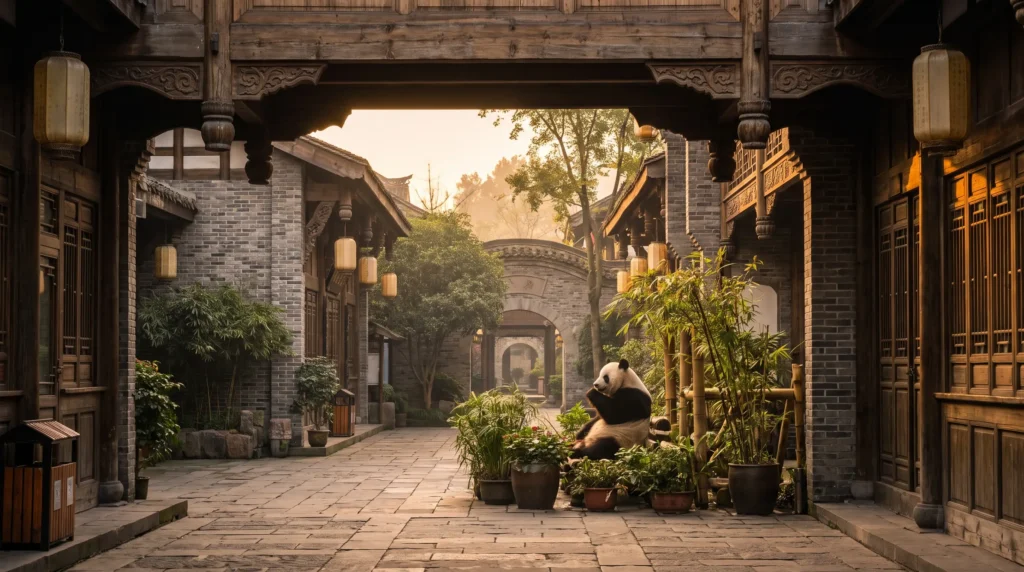
Chengdu Travel Guide — Pandas, Hot Pot & the Most Laid-Back City in China
Chengdu is the city that breaks everyone’s idea of what a 20-million-person Chinese metropolis is supposed to feel like. Beijing moves like a capital that knows it’s a capital; Shanghai moves like it’s late for a meeting in Hong Kong. Chengdu moves like it’s already had two pots of tea and sees no reason to rush the third. This is a city built on a river-fed plain so fertile the locals have called it “Heaven’s Storehouse” for centuries, where the local sport is sitting in a bamboo chair in a public park getting your ears cleaned, and where the food is hot enough to make you understand why nobody here is in a hurry to do anything else. Oh, and there are pandas — really, genuinely, dozens of pandas, doing panda things, forty minutes from your hotel. I’ve sent people to Chengdu expecting a panda pit stop before Tibet or the Silk Road, and had them come back saying it was the best three days of the whole trip. That’s the pitch. Here’s the honest version, catches included.
In This Guide
- Overview — Why Chengdu Is China’s Most Livable City
- Panda Cubs, Tea Houses & the Best Season to See Both
- Best Time to Visit Chengdu (Season by Season)
- Getting There — Two Airports & High-Speed Rail
- Getting Around — Metro, Bikes & Didi
- Neighborhoods — Where to Base Yourself
- Culture & People — Tea, Opera & the Slow Life
- A Food Lover’s Guide to Chengdu
- Off the Beaten Path
- Day Trips — Pandas, Buddhas & Mountains
- Practical Information
- Budget Breakdown — What Chengdu Actually Costs in 2026
- Planning Your First Trip to Chengdu
- Frequently Asked Questions
Overview — Why Chengdu Is China’s Most Livable City
Chengdu is the capital of Sichuan Province, sitting at around 500 metres elevation on a river plain so consistently fertile that it’s been feeding China’s interior for over two thousand years. The city itself is one of the rare places in China that has kept the same name through the imperial, republican and communist eras — it was already called Chengdu when it was capital of the ancient Kingdom of Shu, and it was Liu Bei’s base during the Three Kingdoms period that a thousand years of Chinese opera, novels and video games have since mythologized.
Today it’s a genuine megacity — 20.9 million people as of the 2020 census, making it China’s fourth most populous city — but it doesn’t perform “megacity” the way Shanghai or Shenzhen do. UNESCO named it a “City of Gastronomy” in 2011, and that designation tells you what the locals actually prioritize: eating well, drinking tea slowly, and not being in a rush. It also happens to host over 315 Fortune 500 company branches and a tech and finance sector that ranks among China’s biggest, so “laid-back” doesn’t mean “sleepy” — it means a city confident enough not to need to prove anything.
The headline reason most people book the flight is pandas — Chengdu is the unofficial world capital of them, home to the breeding-and-research base most captive pandas trace back to. But the reason people extend their stay is everything around the pandas: hot pot that will genuinely rearrange your relationship with spice, Three Kingdoms history at every turn, a 2,250-year-old irrigation system that still waters the fields it was built for, and a pace of life that, after Beijing or Shanghai, feels like exhaling.
Panda Cubs, Tea Houses & the Best Season to See Both
Panda viewing has a real “golden hour” — arrive at the Chengdu Research Base of Giant Panda Breeding right at opening (typically 7:30am) because pandas are most active in the cool morning and tend to nap through the afternoon heat, especially in summer. Spring (March–May) is also when cubs born the previous autumn are old enough to be out tumbling around the nursery enclosures, which is the single most requested sight in the whole city.
Pair the morning panda visit with an afternoon at a proper Chengdu teahouse — People’s Park’s Heming Teahouse is the classic, chairs scattered under trees, an ear-cleaner working the crowd, retirees playing mahjong at the next table. It’s not staged for tourists; it’s just what a Tuesday afternoon looks like here, and spring and autumn are when sitting outside all afternoon is actually pleasant rather than a humidity endurance test.
Best Time to Visit Chengdu (Season by Season)
March – May · Spring (best overall)
Mild temperatures, the year’s clearest skies (relatively — more on that below), blooming parks, and panda cubs at their most active. This is the sweet spot most seasoned Chengdu visitors pick.
June – August · Summer
Warm and distinctly humid, with July and August averaging around 25°C but feeling stickier thanks to the basin’s poor air circulation. Good for long teahouse afternoons in the shade; less good for midday sightseeing without a hat and patience.
September – November · Autumn
The other favorite window — cooling temperatures, fewer crowds than spring, and the best conditions for day trips to Mount Qingcheng and Leshan. Hot pot season unofficially starts as soon as the first cool evening hits.
December – February · Winter
Mild by northern-China standards — January averages a manageable 5.9°C — but Chengdu’s basin geography traps cloud cover, and the city is famously one of the least sunny in China. There’s a local saying that Chengdu dogs bark at the sun because they see it so rarely; take that as your winter packing cue and bring a warm layer plus low expectations for blue-sky photos.
Getting There — Two Airports & High-Speed Rail
Chengdu is one of the few Chinese cities with two full international airports. Chengdu Shuangliu International Airport (CTU), the older of the two, now handles mostly domestic routes, while the newer Chengdu Tianfu International Airport (TFU), opened in 2021, has taken over the bulk of international connections and ranked as China’s fifth-busiest airport by passenger traffic in 2023, with over 44.7 million passengers that year. Combined, the two airports moved nearly 75 million passengers in 2023, making Chengdu the third-busiest dual-airport city system in China. Double-check which airport your flight uses — they’re roughly an hour apart, and getting the wrong one wrong is an expensive mistake.
China’s high-speed rail network makes Chengdu an easy add-on to almost any itinerary: direct high-speed trains connect to Chongqing in about an hour, to Xi’an in roughly three to four hours, and onward to Beijing, Shanghai, Kunming and beyond. If you’re already touring China by rail, Chengdu slots in without ever needing a domestic flight.
The visa catch: unlike a growing list of countries on China’s unilateral visa-free list — the UK among them, with 30-day visa-free entry confirmed through the end of 2026 — US passport holders still need to apply for a visa in advance for a standard tourist visit. The workaround some travelers use is China’s 240-hour (10-day) visa-free transit policy, but that only applies if you’re passing through to a third country with a confirmed onward ticket through one of the designated entry ports — it does not cover a standalone Chengdu holiday. Check your own passport’s current status before booking; policies here have shifted more than once in the last two years.
Getting Around — Metro, Bikes & Didi
Chengdu Metro is enormous and still growing — 17 subway lines plus a tram line covering over 720 kilometres and 447 stations as of late 2025, making it one of the longest metro systems in the world, carrying an average of nearly 6 million riders a day. It is clean, cheap, air-conditioned, and the fastest way to cross a city this size — download an app (Alipay’s transit QR code works well for visitors) rather than fumbling with cash ticket machines.
Shared bikes (Hello Bike, Meituan) are everywhere and brilliant for short hops between the teahouse-and-alleyway districts, most of which are genuinely walkable once you’re inside them. For everything else, Didi — China’s Uber equivalent — works with a foreign phone number and card in most cases and is dramatically cheaper than a taxi hailed on the street, where language barriers can be a real friction point. Bring an eSIM or local SIM before you land; without mobile data, both Didi and mobile payment (which has functionally replaced cash in Chengdu) are much harder to use.
Neighborhoods — Where to Base Yourself
Kuanzhai Xiangzi (Wide and Narrow Alleys)
Three parallel Qing-dynasty alleyways turned into Chengdu’s most photogenic tourist district — courtyard teahouses, craft shops, snack stalls, and enough lantern light at night to make it worth a second visit after dark. It’s touristy and everyone knows it, but it’s a genuinely good introduction to Sichuan snack food in one walkable strip.
Jinli Ancient Street
Attached to the Wuhou Shrine complex, Jinli is a reconstructed Ming/Qing-style street of red lanterns, skewer stalls, sugar-painting vendors and Sichuan opera face-changing shows. Go for the atmosphere and the snacks, not expecting untouched antiquity — most of what you’re walking through was rebuilt in the 2000s.
Wuhou Shrine District
The temple complex honoring Three Kingdoms statesman Zhuge Liang and the state of Shu Han, one of China’s most important Three Kingdoms-era sites and a pilgrimage stop for anyone who grew up on the Romance of the Three Kingdoms. Quiet, shaded, and directly connected to Jinli next door.
Chunxi Road & Taikoo Li
Chengdu’s glossy commercial core — malls, flagship stores, and Taikoo Li’s low-rise, laneway-style shopping district built around a preserved Buddhist temple, which somehow makes luxury retail feel almost tasteful. Good base if you want nightlife and restaurants on your doorstep.
People’s Park & Tianfu Square
The city’s civic heart and the most reliable place to find a genuine, unstaged teahouse scene — Heming Teahouse’s lakeside chairs are the classic Chengdu photo, but the appeal is sitting in one for two hours, not photographing it for two minutes.
Panda Base Area (Northern Suburbs)
Not a neighborhood to sleep in, but worth knowing the geography: the Chengdu Research Base of Giant Panda Breeding sits about 40 minutes north of downtown by metro and taxi combined, so plan a morning slot rather than trying to bolt it onto an already-packed day.
Culture & People — Tea, Opera & the Slow Life
Chengdu people have a well-earned reputation across China for prioritizing leisure — the local shorthand is that life here runs on tea, mahjong and hot pot, in roughly that order of daily frequency. Teahouse culture isn’t a tourist performance; public parks across the city are full of locals playing cards, having their ears professionally cleaned (a genuine, centuries-old local trade), or simply reading the paper over a refillable glass of jasmine tea for the price of admission.
Sichuan opera is the other cultural signature, most famous internationally for “face-changing” (bianlian), where performers swap elaborate masks in a blink through sleight of hand kept as a closely guarded craft secret. Catch a show at a Jinli or Kuanzhai teahouse theater, ideally paired with shadow puppetry and tea service in the same evening. Mandarin is universal, but Sichuanese dialect — tonally distinct enough that Mandarin speakers from other provinces sometimes struggle with it — is what you’ll actually hear on the street.
A Food Lover’s Guide to Chengdu
UNESCO named Chengdu a Creative City of Gastronomy in 2011, and the city takes the honor seriously. Sichuan cuisine’s defining trick is málà — the numbing, tingling buzz of Sichuan peppercorn stacked against the heat of dried chilies — and Chengdu hot pot is the format that showcases it best: a divided pot of clear broth and blistering-red mala broth, into which you dunk thin-sliced beef, lotus root, tofu skin and whatever else is on the conveyor or menu. Go with people, go hungry, and order the mild side of the pot first if you haven’t built up a tolerance.
Beyond hot pot, build a meal around mapo tofu (silken tofu in a fiery minced-pork chili-bean sauce), dan dan noodles (a street-food staple, smaller portions than the westernized export version), kung pao chicken (invented in Sichuan, not the sweet version served abroad), and Chengdu-style rabbit head for the adventurous — a genuine local bar snack, not a novelty stunt. Street snacks worth hunting down in Jinli or Kuanzhai include dòuhuā (savory tofu pudding), sugar-painting candy, and skewered everything.
Wash it down with local tea culture rather than alcohol during the day — jasmine green tea is the default pour in every teahouse — and save baijiu, China’s fierce grain liquor, for a dinner where someone local is doing the toasting and pacing for you.
Off the Beaten Path
Wenshu Monastery
Chengdu’s best-preserved Buddhist temple complex, still an active place of worship with incense smoke drifting over the courtyards, and a genuinely excellent vegetarian restaurant inside serving temple-style food to a mostly local lunch crowd rather than tour groups.
Anshun Bridge & the Jin River walk
An evening river walk past the reconstructed Anshun covered bridge, lit up after dark, gives you a quieter, less-photographed version of the lantern-lit atmosphere everyone goes to Jinli for.
Luodai Ancient Town
A Hakka settlement town on Chengdu’s eastern outskirts, easily reached by bus or Didi, with none of the crowds of the central old streets and a much stronger sense of actually being a town people live in rather than a reconstructed set.
Sichuan University West China campus & the old town remnants nearby
Wander the lanes around here for glimpses of pre-redevelopment Chengdu — low brick housing, neighborhood markets — that are disappearing fast as the city modernizes.
Day Trips — Pandas, Buddhas & Mountains
Chengdu Research Base of Giant Panda Breeding
The reason a lot of people book this trip in the first place. The base is the leading captive breeding and research center behind China’s giant panda conservation success — a species reclassified from “endangered” to “vulnerable” in 2016, with a combined captive and wild population estimated around 2,657 individuals as of late 2024. Arrive at opening for active pandas; budget three to four hours including the walk between enclosures.
Dujiangyan Irrigation System
An hour or so from central Chengdu, this UNESCO World Heritage-listed hydraulic engineering system was built around 256 BC under the state of Qin and is still functioning today, still irrigating hundreds of thousands of hectares of the Chengdu Plain over 2,250 years after it was completed. Combine it with a cable-car trip up nearby Mount Qingcheng, one of Taoism’s most sacred mountains, for a full day out.
Leshan Giant Buddha
A roughly two-hour trip (less by high-speed rail) to see the 71-metre Leshan Giant Buddha, the tallest stone Buddha statue on Earth, carved into a cliff face above the confluence of three rivers starting in the 8th century — part of the UNESCO-listed Mount Emei Scenic Area. Pair it with Mount Emei itself, one of China’s four sacred Buddhist mountains, if you have an extra day; otherwise the Buddha alone is a full day trip from Chengdu.
Practical Information
Money. China runs on mobile payment — Alipay and WeChat Pay handle everything from street snacks to museum tickets, and both now offer foreign-card-linked tourist versions. Carry some cash as backup, since small vendors occasionally lack a working card reader, but expect to run almost entirely on your phone.
Safety. The US State Department rates China at Level 2 (“Exercise Increased Caution”) as of its most recent November 2024 update, citing risks around arbitrary enforcement of local laws, potential exit bans, and detention without transparent due process — concerns that mostly affect business disputes, sensitive research and dual nationals rather than typical tourists, but worth reading in full before you go. Day-to-day street crime in Chengdu is low by global city standards.
Health. The CDC recommends being current on routine vaccines plus considering Hepatitis A and B, typhoid (especially for rural stops), and rabies pre-exposure vaccination given the presence of infected stray dogs; tap water is not drinkable, so stick to bottled or boiled.
Connectivity. A VPN is effectively mandatory if you rely on Google, WhatsApp, Instagram or most Western apps — install and test it before you land, not after, since VPN provider sites are often blocked from inside China. Plugs: mostly Type A/I (some Type C), 220V. Time zone: China Standard Time, UTC+8, no daylight saving, used nationwide regardless of geography.
Budget Breakdown — What Chengdu Actually Costs in 2026
Chengdu is one of the better-value major Chinese cities — noticeably cheaper than Beijing or Shanghai for food and lodging, even as its metro and skyline have gone fully first-tier.
Budget (US$35–55/day): Hostel dorm or budget guesthouse, street food and small hot pot portions, metro and shared bikes, free/cheap temple and park entry.
Mid-range (US$80–160/day): Boutique hotel in Kuanzhai or Chunxi Road, sit-down Sichuan restaurants and a proper hot pot dinner, Didi rides, panda base entry plus a guided Dujiangyan/Qingcheng day trip.
Luxury (US$250+/day): Five-star hotel, private guided panda-base VIP experience, high-speed rail in premium class to Leshan or Xi’an, fine-dining Sichuan tasting menus.
Fixed costs to expect: panda base entry (modest, cash or mobile pay), Dujiangyan/Mount Qingcheng combined entry and cable car fees, and a private driver or organized tour for day trips if you don’t want to navigate rural bus transfers. Tipping is not customary in mainland China and can even confuse service staff — skip it.
Planning Your First Trip to Chengdu
The classic first-timer split is city + pandas + one big day trip: land at TFU, spend a full day at the panda base and Wenshu Monastery, a second day around Kuanzhai, Jinli and Wuhou Shrine with an evening river walk, and a third day out to Dujiangyan and Mount Qingcheng or the Leshan Giant Buddha. Three to four nights covers it comfortably; five lets you add Mount Emei as an overnight. Chengdu also makes an easy high-speed rail add-on to a wider China itinerary — pair it with Xi’an for the Terracotta Army a few hours east by train, or continue on to Beijing or Shanghai to bookend the trip with China’s two biggest capitals.
Frequently Asked Questions
Is Chengdu safe for tourists in 2026?
Day-to-day, yes — street crime is low and the city is easy to navigate. The US State Department’s Level 2 advisory for China as a whole flags risks around arbitrary law enforcement and potential exit bans, which mostly concern business disputes, sensitive research topics and dual nationals rather than typical short-stay tourists; read the current advisory before you travel regardless.
Do I need a visa to visit Chengdu?
It depends on your passport. UK citizens currently get 30-day visa-free entry to mainland China, a policy confirmed through the end of 2026; US citizens generally need to apply for a tourist visa in advance, since the US is not on China’s unilateral visa-free list. Check your specific nationality’s current rules — this list has expanded rapidly and keeps changing.
How many days do I need in Chengdu?
Three full days covers the pandas, the old-town alleys and one major day trip (Dujiangyan or Leshan). Add a fourth or fifth day if you want to do both day trips or add an overnight on Mount Emei.
Will I need a VPN in Chengdu?
Yes, if you use Google, WhatsApp, Instagram, most Western news sites or social media — all are blocked in mainland China. Install and test a VPN before you arrive, since VPN provider websites are themselves often inaccessible from inside the country.
Chengdu or Beijing for a first trip to China?
They’re not really substitutes — Beijing gives you the Forbidden City, the Great Wall and imperial-scale history; Chengdu gives you pandas, food culture and a genuinely relaxed pace. If you can only do one Chinese city, pick based on whether you want monuments (Beijing) or lived-in culture and food (Chengdu). Most itineraries do both via high-speed rail.
Is the food in Chengdu too spicy for most travelers?
Sichuan food leans hard into chili heat and numbing peppercorn, but menus and hot pot broths almost always offer a mild option, and staff are used to adjusting spice levels for visitors. Start mild, especially with the peppercorn “mala” numbing — it catches people off guard more than the straightforward heat does.
Ready to Explore Chengdu?
Cubs tumbling in the morning mist, an irrigation system older than most nations still doing its job, and a bowl of hot pot that will make you understand an entire province’s personality in one sitting. Chengdu doesn’t need to shout to be one of the best three days you’ll spend in China — it just needs you to slow down enough to notice.
Explore More
- China Travel Guide — the full country picture beyond Chengdu
- Xi’an City Guide — the Terracotta Army, a few hours east by high-speed rail
- Beijing City Guide — the Forbidden City and Great Wall
- Shanghai City Guide — China’s glossiest skyline, bookend the trip
How this guide was built
Published as part of Facts From Upstairs’ city guide series. Built from authoritative sources — Wikipedia entity pages for Chengdu, Chengdu Metro, the Dujiangyan Irrigation System and the giant panda; UNESCO’s World Heritage listing for the Mount Emei/Leshan Giant Buddha Scenic Area; China’s Ministry of Foreign Affairs visa-policy announcement; the US State Department’s China travel advisory; the US CDC traveler page for China; Britannica’s China currency and banking page; and Yicai Global’s reporting on Chengdu’s two airports. Numeric claims carry inline citations.
Sources cited on this page
- Wikipedia — Chengdu
- Wikipedia — Chengdu Metro
- Wikipedia — Dujiangyan Irrigation System
- Wikipedia — Giant Panda
- UNESCO — Mount Emei Scenic Area, including Leshan Giant Buddha Scenic Area
- Yicai Global — Chengdu Tianfu Airport passenger throughput
- China Ministry of Foreign Affairs — visa-free policy remarks
- US State Department — China Travel Advisory
- US CDC — China traveler page
- Britannica — China: Currency and banking
More city guides you might like


Plan your trip to Chengdu
The booking tools we use ourselves. FFU may earn a commission at no extra cost to you.
Plan & book your trip to Chengdu
Booking through these searches supports our guides at no extra cost to you.