
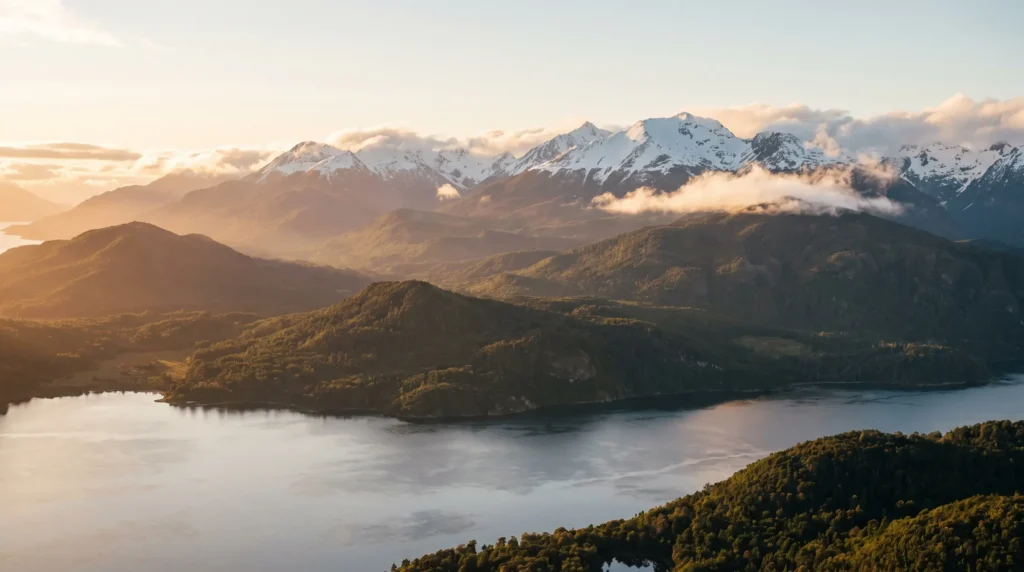
Ushuaia Travel Guide — Argentina’s End-of-the-World City on the Beagle Channel
I’ve flown into a lot of airports that oversold their view, but Ushuaia isn’t one of them: you descend between snow-streaked peaks straight into the Beagle Channel, and the runway sign genuinely says you’ve landed at the world’s southernmost international airport. This is a working port city of around 80,000 people squeezed onto a narrow shelf between the Martial mountains and the channel, and it wears its “fin del mundo” nickname sincerely — this is genuinely the last real city before Cape Horn and, for most travelers, the last one before Antarctica. I’ll say upfront that Ushuaia’s honesty cuts both ways: the town itself is smaller and scrappier than the postcards suggest, prices run high because everything gets shipped or flown in, and the “southernmost city on Earth” title is actually disputed by a Chilean town across the water. But spend three days here and you’ll understand why people fly fourteen hours just to stand on this particular dock.
In This Guide
- Overview — Why Ushuaia Is Argentina’s Most Improbable City
- The Longest Night — Ushuaia’s Winter Solstice Festival
- Best Time to Visit Ushuaia (Season by Season)
- Getting There — USH Airport, Ferries & the Long Drive South
- Getting Around Ushuaia
- Neighborhoods & Key Areas
- Culture & People — Yaghan Roots, Penal Colony Past
- A Food Lover’s Guide to Ushuaia
- Off the Beaten Path
- Best Day Trips From Ushuaia
- Practical Information
- Budget Breakdown — What Ushuaia Actually Costs in 2026
- Frequently Asked Questions
Overview — Why Ushuaia Is Argentina’s Most Improbable City
Ushuaia sits on Isla Grande de Tierra del Fuego, on the northern shore of the Beagle Channel, hemmed in by the Martial mountain range so tightly that the whole city runs as a narrow strip along the water. It was founded on 12 October 1884 as a naval outpost and later grew around a notorious penal colony — Argentina’s answer to Devil’s Island — whose former inmates literally built the town’s first roads and railway. Today the economy runs on three legs that have nothing to do with romance: offshore gas and oil, a tax-advantaged electronics-assembly zone that has quietly made Tierra del Fuego one of Argentina’s fastest-growing provinces, and tourism.
The tourism draw is simple: this is the launch point for the overwhelming majority of Antarctica cruises, and it sits at the doorstep of Tierra del Fuego National Park, a 63,000-hectare wilderness of peat bog, lenga forest and glacier-carved coastline just outside town. You can genuinely go from a hotel breakfast to a boat full of penguins and sea lions to a mountain trailhead in the same morning, all without a rental car.
Here’s the honest catch: Ushuaia calls itself the world’s southernmost city, and most travel writing repeats it uncritically, but the claim is actually contested. Puerto Williams, a small Chilean town directly across the Beagle Channel on Isla Navarino, sits further south and was upgraded to official city status by Chile in 2019 specifically to take the title. Ushuaia remains the far bigger, better-connected, more infrastructure-rich option — which is exactly why nearly every ship, flight and traveler still ends up here instead.
The Longest Night — Ushuaia’s Winter Solstice Festival
Time a late-June trip around Argentina’s austral winter solstice: the Fiesta de la Noche Más Larga (“Festival of the Longest Night”) runs three days, roughly 20–22 June, and has been a recognized national celebration since 1986. The Municipal Culture Secretariat programs live music, dance and food stalls through the shortest-daylight stretch of the year, building to a fireworks display set off over the Beagle Channel itself — a genuinely striking scene given how dark and close the water sits to downtown.
It also lands square in the middle of Ushuaia’s ski season at nearby Cerro Castor, so you can spend the day on snow and the night at the waterfront festival. This is a genuinely different Ushuaia than the summer cruise-ship version — quieter streets, real winter light for a few hours around midday, and a much more local crowd.
Best Time to Visit Ushuaia (Season by Season)
December – February · Austral summer (peak)
This is the trekking and cruise-season sweet spot: nearly 17 hours of daylight, average temperatures nudging toward the mid-teens Celsius on a good day, and every ship, hotel and Beagle Channel tour running at full capacity. Book Antarctica cruises and National Park lodges months ahead — this is also when cruise-ship day-trippers flood downtown between roughly 10am and 4pm.
March – May & September – November · Shoulder seasons
Fewer crowds, falling or budding lenga forest color depending on direction, and noticeably lower hotel rates. Weather turns changeable and windy — Ushuaia’s Beagle Channel gusts are a running local joke — but this is when serious hikers and photographers prefer to come.
June – August · Winter
Average temperatures hover just above freezing (the city’s July average is about 1.3°C against a January average near 9.7°C) — cold, but rarely brutal thanks to the ocean-moderated climate. This is ski and snowshoe season at Cerro Castor, home to the Longest Night festival, and by far the cheapest, least crowded time to see the city itself. Antarctica cruises effectively stop; that’s a summer-only trip.
Getting There — USH Airport, Ferries & the Long Drive South
Ushuaia – Malvinas Argentinas International Airport (USH) sits about 4 kilometres south of downtown and holds the distinction of being the world’s southernmost international airport. Nearly everyone arrives via connecting flights through Buenos Aires (roughly 3.5 hours nonstop), with additional seasonal links through Córdoba, El Calafate and Trelew, the latter useful for pairing Ushuaia with the Perito Moreno Glacier or Peninsula Valdés.
Overland, Ruta Nacional 3 is the only road in — a genuinely epic multi-day drive or bus ride down through Patagonia via Río Grande, crossing into and back out of Chilean territory around the Strait of Magellan along the way, passport stamps included. Very few travelers do the full drive; most fly in and treat Ushuaia as a standalone leg. For the truly committed, ferries and light aircraft connect across the Beagle Channel to Puerto Williams, Chile, though this crossing requires clearing both countries’ border formalities and is usually arranged through a local operator rather than independently.
Getting Around Ushuaia
Downtown Ushuaia is compact and walkable — Avenida San Martín, the main commercial spine running parallel to the waterfront, covers most restaurants, outfitters and souvenir shops within about ten blocks. The airport, port and downtown core all sit within a short taxi or remise ride of each other.
For Tierra del Fuego National Park, 11 kilometres west of the city, regular tourist shuttle buses run from downtown throughout the day, timed loosely around the vintage End of the World Train departures if you want to combine both. Renting a car opens up Ruta 3 toward Lago Escondido, Lago Fagnano and the Garibaldi Pass viewpoint at your own pace, and is genuinely worth it if you have two or more days outside the city. There’s no local rail or metro system — this is a taxi-and-tour-bus town, and most excursions (Beagle Channel boats, the ski hill, Estancia Harberton) include pickup as part of the price.
Neighborhoods & Key Areas
Downtown & Avenida San Martín
The commercial heart: outdoor-gear shops, chocolate and dulce de leche stores, seafood restaurants and the bulk of budget-to-midrange hotels, running a few blocks back from the port on a noticeable uphill slope.
The Port & Waterfront
Where the Antarctica expedition ships and Beagle Channel tour boats dock, alongside the old Muelle Turístico pier. This strip gets loudest when a cruise ship is in port and dead quiet the rest of the time — check what’s docked before assuming the whole town is that busy.
Glaciar Martial & the Hillside
The uphill neighborhoods toward the Martial Glacier chairlift give the best panoramic views back over the Beagle Channel, plus access to the Martial Glacier hike itself, a half-day round trip above the ski-lift base.
Cerro Castor & the Valley
About 26 kilometres from downtown along Ruta 3, Argentina’s southernmost ski resort and the base for winter sports and the Longest Night festival’s torch-lit ski descent tradition.
Tierra del Fuego National Park
Technically outside the city (11 km west), but functionally Ushuaia’s most important “neighborhood” for visitors — the only Argentine national park combining coast, forest and mountain, with the End of the World Train dropping you inside it.
Bahía Encerrada & Playa Larga
Quieter residential coastline east of downtown with calmer water views and fewer tourists, popular for an evening walk away from the cruise-ship bustle.
Culture & People — Yaghan Roots, Penal Colony Past
The region’s original inhabitants were the Yaghan (Yámana), a canoe-based people who lived along the Beagle Channel for thousands of years before European contact; their culture and language survive today mainly across the water in Puerto Williams, Chile, where the last fully fluent native Yaghan speaker, Cristina Calderón, passed away in 2022 at age 93. It’s a sobering fact worth sitting with on the Ushuaia side of the channel — the “end of the world” framing that sells the region as a tourism product sits directly on top of a culture that very nearly disappeared entirely.
Modern Ushuaia’s population is a mix of Patagonian settlers, Chilean and Bolivian immigrant communities, and — increasingly — younger Argentine families drawn south by the province’s tax-advantaged industrial zone and its electronics-assembly jobs. The city’s penal-colony history is preserved (rather than hidden) at the old Presidio, now a maritime and prison museum, and it’s one of the more thoughtful, unflinching historical sites in the country.
A Food Lover’s Guide to Ushuaia
The signature dish is centolla — Southern king crab, pulled from the Beagle Channel and served every way imaginable, from simple grilled legs to baked gratin. Order it as close to the water as you can; it’s the one splurge nearly every visitor budgets for. Lamb is the other pillar: cordero fueguino, whole lamb slow-roasted on a metal cross over an open wood fire, is a Patagonian institution rather than an Ushuaia-only thing, but the local versions are excellent.
Beagle Channel salmon and trout show up smoked, cured and grilled across menus, and the region’s cold-climate specialty dessert is anything built around calafate berries — a tart local blueberry relative, usually in a sauce over ice cream or baked into pastries (local legend says eating one guarantees you’ll return to Patagonia). Ushuaia also claims the title of the world’s southernmost brewery, and a handful of small craft beer bars downtown lean into the “end of the world” branding without much irony. Teahouses (casas de té) inland toward Tolhuin serve enormous Welsh-Patagonian-style spreads if you’re driving Ruta 3.
Off the Beaten Path
Laguna Esmeralda
A muddy, boardwalk-and-boot day hike through peat bog and lenga forest to a strikingly turquoise glacial lake, roughly a half-day round trip from a trailhead a short drive out of town. It’s become popular enough that “off the beaten path” is relative — go early to have the water to yourself.
Museo Marítimo y del Presidio
The former national penitentiary, now a combined maritime and prison museum inside the actual cell blocks — a genuinely unsettling, well-curated look at the penal colony that built much of early Ushuaia.
Isla Martillo Penguin Colony
A mixed Magellanic and (in season) gentoo penguin rookery reached by boat, usually paired with a stop at Estancia Harberton, one of the oldest ranches in Tierra del Fuego and still run by descendants of its original missionary founders.
Refugio Almanza & the Beagle Channel Backroads
East of the city along the coast, a scattering of small lodges and trails see a fraction of the National Park’s foot traffic — good for travelers who’ve already done the postcard hikes and want quieter coastline.
Best Day Trips From Ushuaia
Tierra del Fuego National Park & the End of the World Train
The essential day trip: 63,000 hectares of coastal and mountain wilderness 11 km from downtown, with the revived heritage railway (relaunched in 1994) running a short scenic route into the park as a novelty add-on to hiking the coastal and forest trails.
Beagle Channel Boat Excursion
Half-day catamaran trips out past the Les Éclaireurs lighthouse (the real-life inspiration for the “Lighthouse at the End of the World”), sea lion colonies on rocky islets, and cormorant rookeries, with the Chilean mountains of Isla Navarino as a backdrop the whole way.
Estancia Harberton & Isla Martillo
A full-day combination of Tierra del Fuego’s oldest ranch and a penguin-colony boat landing — usually booked as a single package and one of the better wildlife days in the region without leaving the mainland.
Lago Escondido & Lago Fagnano
An inland detour along Ruta 3 over the Garibaldi Pass, trading coastal views for lake-and-forest scenery and a noticeably different, more continental feel than the Beagle Channel side of the mountains.
Antarctica
Not a day trip, but worth flagging here: Ushuaia’s port is the embarkation point for the large majority of the world’s Antarctica cruises, typically 10–11 day round trips crossing the Drake Passage to the Antarctic Peninsula, roughly 1,100 kilometres south. Prices vary enormously by ship class, cabin and season — treat it as the trip’s headline splurge and shop well ahead of the October–March sailing season.
Practical Information
Money. The Argentine peso floats under a managed exchange-rate band overseen by the Banco Central de la República Argentina, and its value has been volatile in recent years — expect the rate to move noticeably even during a single trip. By early 2026 the rate sat around 1,400 pesos to the US dollar. Cards are widely accepted in tourist-facing Ushuaia, but clean US dollar cash is genuinely useful and often gets a better effective rate than card payments — check current practice on arrival rather than assuming.
Visa & safety. US citizens don’t need a visa for tourism visits up to 90 days; Argentina overall sits at a Level 1 “Exercise Normal Precautions” advisory as of May 2026, with the one flagged exception being the city of Rosario, roughly 3,000 km north and irrelevant to a Tierra del Fuego trip. Petty street crime is a bigger-city concern more than an Ushuaia one, but the advisory’s most relevant local note for hikers: US authorities specifically discourage solo hiking in Argentina’s backcountry, citing past disappearances and injuries among solo trekkers — worth heeding on quieter Tierra del Fuego trails like Laguna Esmeralda. The UK’s FCDO advisory was last confirmed current in July 2026, with a recent addition flagging hantavirus in its health section.
Health. Routine vaccinations (including MMR) should be current, and the CDC recommends hepatitis A and typhoid coverage for most travelers to Argentina; yellow fever is only relevant for Corrientes and Misiones provinces, nowhere near Tierra del Fuego. Hantavirus risk is described as extremely low for most travelers but is spread by rodent contact in rural areas, and leptospirosis can occur in untreated freshwater — skip swimming in wild lakes and rivers.
Connectivity & logistics. A regional eSIM covers downtown reliably; expect gaps on boat excursions and remote trails. Plugs are typically Type C/I at 220V. Time zone: UTC−3 year-round, no daylight saving. Weather gear matters more than in almost any other FFU city guide — layers, a proper windproof shell and broken-in boots aren’t optional, even in summer.
Budget Breakdown — What Ushuaia Actually Costs in 2026
Ushuaia is expensive by Argentine standards — everything travels a long way to get here — though still generally cheaper than equivalent Antarctic-gateway towns elsewhere in the world.
Budget (US$55–95/day): Hostel dorm or basic guesthouse, empanadas and set-menu lunches, National Park shuttle bus plus entry fee, walking the downtown waterfront.
Mid-range (US$130–230/day): Midrange hotel, a centolla dinner, a half-day Beagle Channel boat tour, the End of the World Train, one guided hike like Laguna Esmeralda.
Luxury (US$400+/day): View-facing hotel on the hillside above the channel, private Estancia Harberton and Isla Martillo penguin day, helicopter or scenic flight options where available — and, as the category-defining splurge, an Antarctica cruise itself, which is priced entirely separately from a normal day-trip budget and should be shopped and booked months in advance.
Tipping around 10% is customary at sit-down restaurants where it isn’t already included. Given peso volatility, price everything in US dollars mentally and expect posted peso prices to look different trip to trip even if the dollar cost is stable.
Planning Your First Trip to Ushuaia
The standard first-timer shape is fly in, base three to four nights, decide on Antarctica separately: land at USH via Buenos Aires, spend a day on the Beagle Channel boats and a day in Tierra del Fuego National Park, add Estancia Harberton and the penguin colony if you have a fourth day, and treat any Antarctica sailing as its own multi-week trip bolted onto the end. Most itineraries pair Ushuaia with wider Patagonia — El Calafate and Perito Moreno Glacier to the north, or a swing through Chile via the Beagle Channel crossing to Puerto Williams for travelers chasing the “actual” southernmost-city title. Bookend the trip with a couple of nights in Buenos Aires before flying south, or continue into Chile and Santiago for a two-country Patagonia loop — our full Argentina guide covers the rest of the country in depth.
Frequently Asked Questions
Is Ushuaia really the southernmost city in the world?
It’s the most commonly cited answer and by far the largest, best-connected city with that claim — but Puerto Williams, Chile, sits further south across the Beagle Channel and was formally upgraded to city status in 2019 specifically to contest the title. Most travelers won’t notice the distinction; purists chase both.
Do I need a visa to visit Ushuaia?
US passport holders can enter Argentina visa-free for tourism, typically for up to 90 days. Rules vary by nationality, so confirm your own passport’s current requirements before booking flights.
Is Ushuaia the only way to reach Antarctica?
It’s the departure point for the large majority of Antarctica cruises, thanks to its short Drake Passage crossing and its status as the world’s southernmost international airport. A smaller number of trips depart from Chilean Patagonia or fly directly to the continent, but Ushuaia dominates the route.
How cold does it actually get?
Milder than most people expect for the latitude — the ocean moderates things, with a January average near 9.7°C and a July average around 1.3°C. Wind and rapid weather changes are the bigger factor than raw cold, in any season.
How many days do I need in Ushuaia?
Three to four days covers the city, Tierra del Fuego National Park and a Beagle Channel boat trip comfortably. Add a day for Estancia Harberton and the penguins, and treat any Antarctica sailing as a separate, much longer commitment.
Is it safe to hike alone in Tierra del Fuego?
US State Department guidance specifically discourages solo hiking in Argentina’s backcountry due to past disappearances and injuries among solo trekkers. Popular routes like Laguna Esmeralda are well-trafficked in summer, but going with at least one other person is the safer call, especially outside peak season.
Ready to Explore Ushuaia?
A working port town wedged between glacier-carved mountains and the Beagle Channel, with penguins, sea lions and a national park a shuttle-bus ride away — and, if your budget and calendar allow it, the actual white continent a few days further south. Ushuaia doesn’t dress itself up as anything other than what it is: the last real city before the ice. Go for that honesty as much as the views.
Explore More
- Argentina Travel Guide — the rest of the country beyond Patagonia’s southern tip
- Buenos Aires City Guide — the connection nearly every flight to Ushuaia passes through
- Chile Travel Guide — Patagonia’s other half, across the Andes and the channel
- Santiago City Guide — Chile’s capital and a common Patagonia-loop gateway
How this guide was built
Published as part of Facts From Upstairs’ city guide series. Built from authoritative sources — Wikipedia entity pages for Ushuaia, its international airport and Tierra del Fuego National Park; the US State Department’s Argentina travel advisory; the UK FCDO’s Argentina advisory; the US CDC’s Argentina traveler health page; Argentina’s central bank (BCRA) exchange-rate page and the Federal Reserve’s FRED database for currency figures; Tierra del Fuego’s official tourism site (findelmundo.tur.ar) for festival dates; and secondary reporting from Euronews and Agenda Malvinas for the southernmost-city debate and the Longest Night festival. Numeric and checkable claims carry inline citations.
Sources cited on this page
- Wikipedia — Ushuaia
- Wikipedia — Ushuaia–Malvinas Argentinas International Airport
- Wikipedia — Tierra del Fuego National Park
- Wikipedia — Southernmost settlements
- Wikipedia — Cristina Calderón
- US State Department — Argentina
- UK FCDO — Argentina
- US CDC — Argentina traveler page
- Banco Central de la República Argentina — Exchange rates
- Federal Reserve Bank of St. Louis (FRED) — ARS/USD exchange rate
- Tierra del Fuego official tourism site — Events
- Agenda Malvinas — Ushuaia’s Longest Night festival
- Euronews — Puerto Williams vs. Ushuaia
More city guides you might like
Plan your trip to Ushuaia
The booking tools we use ourselves. FFU may earn a commission at no extra cost to you.
Plan & book your trip to Ushuaia
Booking through these searches supports our guides at no extra cost to you.