
Petra, Jordan: Rose-Red City, Nabataean Wonder & Desert Canyons
Rose-red ancient city carved from desert canyons, Nabataean wonder and desert mystery
Petra, located in southern Jordan, ranks among the world’s most remarkable archaeological sites and stands as one of the New Seven Wonders of the World. The ancient city, carved entirely from rose-red sandstone cliffs, served as Nabataean capital controlling trade routes connecting Arabia, Mediterranean, and Indian Ocean regions. The city flourished between 300 BCE and 100 CE before declining as trade patterns shifted and Roman control expanded.
The site remained relatively unknown to Western scholars until Swiss explorer Johann Ludwig Burckhardt rediscovered it in 1812. Local Bedouin populations maintained knowledge of the site throughout the centuries of Western abandonment. This isolation preserved the site’s integrity and created sense of archaeological discovery rather than continuous habitation.
Walking through Petra transforms visitors’ understanding of architectural possibility. The facades carved into rock faces reach 40 meters in height with intricate decorative details executed in stone. Interior chambers suggest the space served religious, administrative, and funerary functions. The desert canyon setting creates visual experience of remarkable beauty and scale.
Table of Contents
The Treasury & Monumental Facades
The Treasury, called Al-Khazneh in Arabic, represents Petra’s most photographed structure. The facade rises 40 meters carved into rose-red sandstone with ornamental detailing. The monument likely served as temple or administrative building rather than treasury despite its name. The dramatic approach through narrow canyon creates anticipation throughout the entrance walk.
The Royal Tombs, monumental facades carved into the eastern cliff face, include the Urn Tomb, Palace Tomb, Corinthian Tomb, and Treasury Tomb. These structures range from 35 to 50 meters in height demonstrating architectural variety. The tombs served funerary and administrative functions for Nabataean elite, preserving status through monumental stone.
The High Place of Sacrifice, accessible by hiking trail, provides elevated perspective of the site and remaining ruins. The location features altar structures and platform areas suggesting ceremonial functions. The elevated perspective reveals how the city distributed across canyon system.
Treasury Facade
40-meter monumental facade with Nabataean architectural style
Royal Tombs
Facades housing funerary chambers for elite population
High Place Sacrifice
Elevated plateau with altars and ceremonial structure
Theater
Carved amphitheater hosting performances and civic gatherings
Nabataean Civilization & Trade Networks
The Nabataeans, an Arab people controlling Arabian and Levantine trade routes, created civilization of remarkable sophistication. Petra served as their capital controlling vital routes connecting Arabia, Mediterranean, India, and Africa. The Nabataean kingdom engaged in extensive commerce exchanging Arabian incense and spices for Mediterranean products.
The Nabataean kingdom maintained power through control of trade routes, careful water management in desert environments, and diplomatic relationships with surrounding powers. The city’s decline occurred as Roman sea trade routes replaced overland caravan routes. Roman annexation in 106 CE marked the final transition of Petra to Roman administration.
Water management innovation allowed Nabataean civilization to flourish in desert environments. Archaeological evidence reveals sophisticated cistern systems, channels, and reservoirs capturing scarce water resources. This technical achievement permitted population growth and agricultural production.
Trade Routes
Caravan routes connecting Arabia, Mediterranean, India, Africa
Water Systems
Sophisticated cisterns and channels managing desert water
Nabataean Pottery
Fine pottery with painted designs distributed throughout ancient world
Petra Museum
Historical context and archaeological artifacts from site
Canyon Hiking & Desert Exploration
Petra’s canyon geography creates spectacular hiking experiences varying in difficulty. The Siq provides the primary entrance requiring minimal exertion. More adventurous hikes access the High Place, the Monastery, and distant canyon systems. Multi-day hikes into surrounding desert extend exploration beyond the main site.
The surrounding Jordanian desert offers hiking opportunities revealing geological formations and wildlife. Multi-day treks provide immersive desert experience and access to sites beyond main tourist areas. Extended explorations require hiring local guides familiar with water sources and desert conditions.
Seasonal variations dramatically affect hiking conditions. Spring and fall offer ideal temperatures. Summer heat makes extended hiking dangerous. Winter remains mild but occasional rain creates slippery conditions on stone surfaces.
Siq Entrance
1.2km narrow canyon walk with dramatic approach
High Place Trail
Moderate hike to elevated plateau with sacrifice altar
Monastery Hike
Strenuous 2-hour ascent to largest carved monument
Desert Treks
Multi-day hikes exploring surrounding desert regions
Monastery & High Place Sites
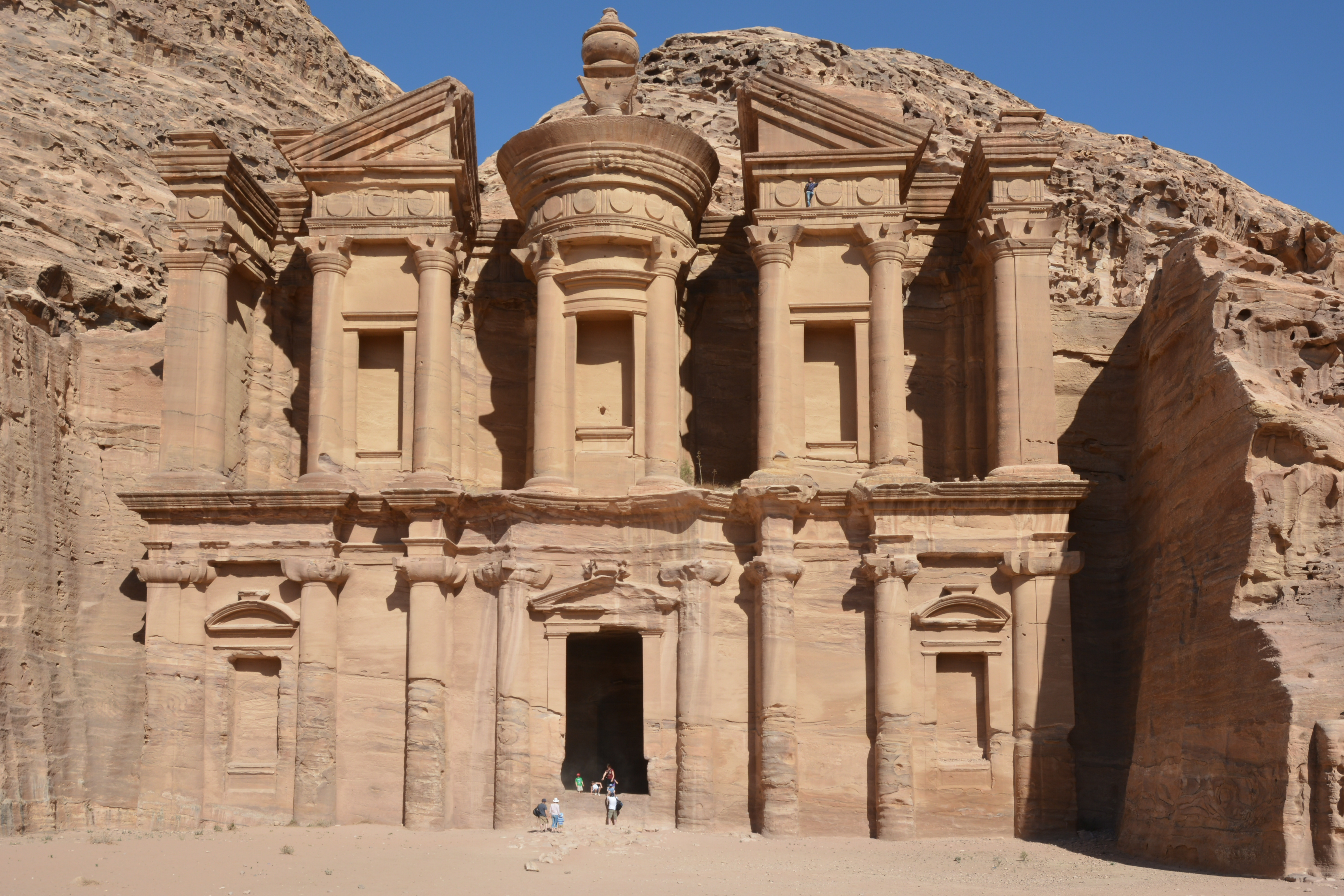
The Monastery, carved from sandstone at the highest accessible elevation, impresses through sheer scale and artistic execution. The facade measures approximately 50 meters in height with ornamental detailing. The interior chamber suggests religious or administrative functions. The challenging climb adds to sense of accomplishment and exclusivity.
The High Place of Sacrifice features dramatic rectangular platforms where ritual practices likely occurred. The structures include altars and basins suggesting libation rituals. The elevated position overlooks the entire site providing ceremonial significance.
The Temple of the Winged Lions, partially excavated structure, reveals Nabataean religious architecture and complexity of religious practices. The temple’s decoration provides insights into Nabataean religious beliefs and artistic traditions.
Monastery Facade
50-meter carved monument, largest carved structure
High Place Sacrifice
Elevated platforms with altars and ceremonial function
Temple Lions
Excavated temple with sculptural decoration
Kasr al-Bint
Standing temple structure with preserved columns
Planning Your Visit
Petra is located in southern Jordan, approximately 250 kilometers south of Amman. The site is accessible by car, bus, or organized tour from Amman (approximately 3-4 hours driving). Wadi Musa, the town adjacent to Petra, provides accommodations and tourist services. International flights connect Amman with major worldwide cities.
Entry to Petra requires payment at the visitor center. Guides provide historical context and navigation assistance. Single-day tickets allow exploration of primary sites. Multi-day tickets enable extensive exploration. Entrance is approximately 15 kilometers from Wadi Musa accommodations.
Wadi Musa offers accommodation options from luxury hotels to modest guesthouses. Many provide local guides and trip planning. Vacation rentals provide longer-term options. Restaurants serve Jordanian and international cuisine. Limited English outside tourist establishments may require translation assistance.
Wadi Musa Town
Tourist center with hotels, restaurants, guides
Petra Museum
Historical context and archaeological artifacts
Dead Sea
300km north, lowest point on Earth with salt bathing
Amman Capital
250km north with museums and cultural institutions
Getting Around Petra & Wadi Musa
Wadi Musa is the small town adjacent to Petra’s entrance, where most hotels, restaurants, and services are located. The town is walkable along its main street, with the Petra Visitor Centre at its lower end. From the visitor centre, the Siq (narrow canyon entrance) is a 1.2-kilometer walk before you even reach the Treasury—plan for extensive walking throughout your visit.
Inside Petra, the archaeological site covers a vast area. Walking is the primary means of exploration, with distances of 8–15 kilometers typical for a full day. Horse rides are included in the ticket price for the stretch from the entrance gate to the Siq. Donkey and camel rides are available within the site for additional fees, though animal welfare concerns have led many visitors to walk instead.
Getting to Petra from Amman takes approximately 3 hours by car via the Desert Highway or the more scenic King’s Highway. JETT buses run direct services from Amman to Petra daily. From Aqaba on the Red Sea coast, the drive takes about 2 hours. Many visitors hire a driver for flexibility to stop at Dana Nature Reserve and Shobak Castle along the way.
Where to Eat & Drink
Wadi Musa’s restaurant scene caters to the steady flow of Petra visitors with a mix of traditional Jordanian cuisine and international options. Al-Wadi Restaurant and My Mom’s Recipe are local favorites serving mansaf (lamb cooked in fermented dried yogurt, served over rice—Jordan’s national dish), maqluba (upside-down rice and vegetable dish), and fresh mezze platters.
The Basin Restaurant, located inside the Petra archaeological site near the Museum, provides the only sit-down lunch option within the ruins—useful for a midday break during long exploration days. For atmospheric evening dining, several hotels including the Movenpick and Petra Guest House offer restaurants with terraces overlooking the surrounding valley.
Jordanian hospitality extends to tea culture—Bedouin tea stalls within the Petra site offer sweet sage tea as a welcome refreshment during hot hikes. Arabic coffee with cardamom is served throughout Wadi Musa’s cafes. For budget meals, shawarma and falafel shops along the main street provide quick, affordable, and delicious fuel for Petra exploration days.
Frequently Asked Questions
What is the best time to visit Petra in 2026?
March through May and September through November offer ideal weather with comfortable temperatures for extensive walking. Summer (June–August) brings extreme heat exceeding 35°C, making the exposed trails grueling. Winter (December–February) can be cold with occasional rain that makes the Siq slippery, but visitor numbers are lower.
How many days do I need for Petra?
A minimum of two full days is recommended. Day one covers the Siq, Treasury, Street of Facades, Royal Tombs, and the Colonnaded Street. Day two allows time for the Monastery (Ad Deir)—an 800-step climb rewarded with a massive carved facade—plus the High Place of Sacrifice trail and less-visited areas. A single day feels rushed and leaves major sites unseen.
Is the Petra by Night experience worth it?
Petra by Night runs Monday, Wednesday, and Thursday evenings, illuminating the Siq and Treasury with 1,500 candles while Bedouin musicians play traditional instruments. Opinions vary—some find it magical and atmospheric, while others consider it crowded and overhyped. Book in advance if interested, and manage expectations—it’s a 20-minute seated experience, not an exploration of the illuminated site.
Do I need to be physically fit to visit Petra?
Basic fitness is needed for Petra’s core sites (4–6 km of mostly flat walking). Reaching the Monastery requires climbing approximately 800 uneven steps—demanding but manageable at a slow pace. The High Place of Sacrifice involves steeper terrain. People with mobility limitations can still enjoy the Treasury and main street. Start early to avoid midday heat regardless of fitness level.
Can I combine Petra with Wadi Rum?
Absolutely—this is one of Jordan’s classic travel combinations. Wadi Rum is about 1.5 hours south of Petra by car. Many travelers visit Petra for 2 days then spend a night in a Bedouin desert camp at Wadi Rum with jeep tours, camel rides, and stargazing before continuing to Aqaba or returning to Amman.
Explore More Destinations
Discover Petra’s Ancient Wonder
Petra invites you to walk through the dramatic Siq canyon into one of the world’s most remarkable archaeological achievements, hike to the Monastery for unprecedented perspectives, explore Nabataean civilization’s monuments, and experience desert landscape of surpassing beauty and historical significance.
Start planning your Petra adventure today with Facts From Upstairs.