
Languages of India
All languages of Southern Asia →fluent beta classical · classes by phone with Maya at ranas.ai/maya
India Travel Guide — Mughal Forts, Monsoon Coasts & a Thousand Colours
India Travel Guide
📋 In This Guide
- Overview — Why India Belongs on Every Bucket List
- 🎨 Holi & the Dry-Season Window 2026
- Best Time to Visit India (Season by Season)
- Getting There — Flights & Arrival
- Getting Around — Trains, Flights & Auto-Rickshaws
- Top Cities & Regions
- Indian Culture & Etiquette
- A Food Lover’s Guide to India
- Off the Beaten Path
- Practical Information
- Budget Breakdown
- Planning Your First Trip to India
- Frequently Asked Questions
Overview — Why India Belongs on Every Bucket List
India is not a country you visit so much as a civilisation you enter — a subcontinent of roughly 1.43 billion people, twenty-eight states, eight union territories, and 22 officially scheduled languages, making it the world’s most populous nation as of 2023. Here, a Mughal emperor’s marble tomb sits a few hours from a Hindu cremation ghat older than most European capitals, and a bustling tech campus in Bengaluru shares a ring road with temple elephants.
The geographic scale reshapes first-time expectations. India stretches roughly 3,200 km from Kashmir’s Karakoram foothills in the north to Kanyakumari at the southern tip, and about 2,900 km from the deserts of Kutch to the tea forests of Arunachal Pradesh — a spread that covers high-altitude Buddhist valleys, Thar desert dunes, Indo-Gangetic plains, coastal mangroves, and tropical backwaters inside one national border. It is also one of only seventeen countries classified as “megadiverse,” harbouring tigers, one-horned rhinos, Asiatic lions, snow leopards, and more than 1,300 bird species.
The cultural mix is just as wide. India is Hindu-majority but home to one of the world’s largest Muslim populations, alongside meaningful Sikh, Christian, Jain, Buddhist, Parsi, and Jewish communities — a pluralism that shapes food, festivals, dress, and daily public space. Regional languages change every few hundred kilometres: Hindi and Punjabi in the north, Bengali in the east, Marathi and Gujarati on the west coast, Tamil, Malayalam, Kannada, and Telugu across the south. English operates as a bridge language in hotels, airports, and urban workplaces.
India currently holds 43 UNESCO World Heritage sites — the sixth-largest total in the world — ranging from the Taj Mahal and Red Fort to the rock-cut cave temples of Ajanta and Ellora, the ruined Vijayanagara capital at Hampi, and the Western Ghats mountain range. Expect food that rewards curiosity: a plate of butter chicken with naan in a Delhi dhaba for ₹250–400, a crisp masala dosa in a Chennai tiffin room for ₹80–150, a brass thali in Rajasthan for ₹300, and a glass of cutting chai at a Mumbai kiosk for ₹15. Few destinations deliver this spread of desert, ocean, temple, mountain, and megacity — and few demand so much honest pacing to see any of it well.
🎨 Holi & the Dry-Season Window 2026 — The Year to Go
If you’re picking dates for India in 2026, two holidays should anchor the calendar: Holi, the spring festival of colours, falls on 4 March 2026, and Diwali, the autumn festival of lights, lands on 8 November 2026. Between them stretches the long dry-season window — November through March — when most of northern, central, and western India is cool, clear, and the single best period for travel. Republic Day on 26 January 2026 fills New Delhi’s Rajpath with a military and cultural parade, and the rotating Kumbh Mela, the world’s largest religious gathering, draws tens of millions of pilgrims across Haridwar, Prayagraj, Nashik, and Ujjain depending on the cycle.
- Holi — Festival of Colours: 4 March 2026 — nationwide, with the most famous celebrations at Mathura & Vrindavan
- Diwali — Festival of Lights: 8 November 2026 — Jaipur, Varanasi, and Amritsar all host spectacular illumination
- Republic Day Parade: 26 January 2026 — Kartavya Path, New Delhi
- Kumbh Mela: rotating cycle across Haridwar, Prayagraj, Nashik, and Ujjain — check annual schedule before booking
- Dry-season peak: November 2026 – March 2026 for Rajasthan, the Golden Triangle, and Kerala
- Pushkar Camel Fair: typically early November — Rajasthan desert festival with livestock trading and folk performance
Best Time to Visit India (Season by Season)
Winter / Dry Peak (Nov–Feb)
The classic foreign-tourist season, and the only truly comfortable window for Rajasthan, the Golden Triangle (Delhi–Agra–Jaipur), and the northern plains. Daytime highs in Delhi and Jaipur range from 20–28°C, with cool evenings that occasionally dip below 10°C in December and January; Delhi fog can ground flights in the first two weeks of January. Kerala backwaters and Goa beaches are at their driest and sunniest, humidity is low, and visibility at monuments like the Taj Mahal and Amer Fort is at its yearly best. Expect peak prices across Rajasthan heritage hotels and Kerala houseboats, especially around Christmas, New Year, and Pongal.
Summer (Mar–May)
The northern plains become punishing — Delhi, Agra, and Varanasi regularly pass 40°C by May, and Rajasthan desert towns can touch 45°C. This is the natural window to head uphill: Himachal Pradesh (Shimla, Manali, Dharamshala), Uttarakhand (Rishikesh, Nainital), Ladakh (accessible from June), Sikkim, and the Nilgiri Hills around Ooty and Coonoor all come into season. South Indian hill stations in Kerala’s Munnar and Tamil Nadu’s Kodaikanal offer tea plantations and cool mornings while the plains swelter.
Monsoon (Jun–Sep)
India’s southwest monsoon arrives on the Kerala coast around 1 June and sweeps northward, reaching Delhi by early July. Rainfall is heavy and often flooding: Mumbai, the Konkan coast, Kerala, and the Northeast see the highest totals, while Rajasthan and Gujarat turn unexpectedly green. Monsoon is a poor time for Rajasthan deserts and Goa beaches, but a genuine window for Kerala Ayurveda retreats, Karnataka’s Western Ghats, and serious photographers who want dramatic skies over Hampi or Orchha. Travel insurance with trip-disruption cover is sensible.
Post-Monsoon / Autumn (Oct)
The sharpest shoulder-month of the year. Rain has cleared, air pollution in northern cities has not yet peaked (Delhi’s smog season runs late October through early February), and festival density is highest — Dussehra, Navratri, and early Diwali preparations fall in October. Expect 25–32°C across the plains, excellent visibility, and Kerala backwater rates 15–25% below the Christmas peak.
Shoulder-season tip: Target mid-October through mid-November, or the last two weeks of February. You will catch comfortable temperatures, clear skies, and festival overlap, and you will avoid both the punishing summer and the post-Diwali pollution spike in Delhi and the northern plains.
Getting There — Flights & Arrival
India has six major international gateways. Most long-haul visitors arrive through Delhi (DEL) or Mumbai (BOM), with Bengaluru, Hyderabad, and Chennai handling large shares of Gulf and intra-Asian traffic. Flag carrier Air India flies nonstop to North America, the UK, Europe, and the Gulf, alongside IndiGo, British Airways, Lufthansa, Emirates, Qatar, and Singapore Airlines.
- Indira Gandhi International (DEL) — Delhi; 16 km to Connaught Place; Airport Express Metro 20 min to New Delhi Railway Station
- Chhatrapati Shivaji Maharaj International (BOM) — Mumbai; 30 km to Colaba; taxi 45–90 min
- Kempegowda International (BLR) — Bengaluru; 40 km from MG Road; Vayu Vajra bus 60–90 min
- Rajiv Gandhi International (HYD) — Hyderabad; 24 km from Hitech City
- Chennai International (MAA) — Chennai; 21 km from centre; Metro Rail link
Flight times: London–Delhi about 8 hr 30 min; New York–Delhi about 14 hr 30 min; Singapore–Delhi about 5 hr 30 min on Air India.
Flag carrier: Air India, with IndiGo covering most domestic routes.
Visa / entry: More than 165 nationalities can apply online for the Indian e-Visa via indianvisaonline.gov.in; tourist fees run US$25–40 for 30-day, 1-year, or 5-year categories.
Getting Around — Trains, Flights & Auto-Rickshaws
Indian Railways is the beating heart of cross-country travel — one of the world’s largest rail networks, covering roughly 68,000 route kilometres and moving more than twenty million passengers a day. Long-distance travel is dominated by overnight sleeper trains on legacy mail-express routes and by the newer Vande Bharat semi-high-speed services between state capitals. Booking runs through IRCTC, which requires a verified account and mobile number.
- Vande Bharat Express: India’s flagship semi-high-speed service, maximum speed 160 km/h, running on select inter-state corridors
- Delhi ↔ Agra (Taj Mahal): about 1 hr 40 min on the Vande Bharat or Gatimaan Express
- Delhi ↔ Jaipur: about 4 hr 25 min on the Vande Bharat Express
- Mumbai ↔ Goa (Madgaon): about 9 hr on the Tejas Express along the scenic Konkan Coast route
Rail booking & passes: There is no universal national rail pass for most tourists; individual tickets are booked via the IRCTC portal or app. Foreign Tourist Quota (FTQ) and Tatkal emergency quotas open separate booking windows for otherwise sold-out trains.
Metro systems: Delhi Metro, Mumbai Metro, Bengaluru’s Namma Metro, Hyderabad Metro, Chennai Metro, and Kolkata Metro all operate contactless smart cards and QR-code tickets.
Ride-hailing & rickshaws: Ola and Uber cover every major city; both offer auto-rickshaw bookings at metered rates. For tuk-tuk rides in smaller cities and around monuments, haggling is expected — agree on the fare before you get in, or insist the driver runs the meter.
Domestic flights: IndiGo, Air India, Akasa Air, and SpiceJet link every major city; a Delhi–Goa fare booked three weeks ahead runs around ₹5,000–8,000, while Delhi–Kochi is typically ₹7,000–10,000.
Top Cities & Regions
📍 Map of India: Every Place in This Guide
🕌 Delhi
India’s layered capital — Mughal forts, colonial Lutyens avenues, and bustling Old Delhi bazaars stacked within the same ring road. It is the natural arrival city and the first point on the classic Golden Triangle with Agra and Jaipur.
- Red Fort and Jama Masjid in Old Delhi — UNESCO-listed Mughal power centre
- Humayun’s Tomb and Qutub Minar — two more UNESCO World Heritage sites within the city
- Chandni Chowk food walks — paranthe-wali gali, Karim’s kebabs, and jalebi wala
- Signature dishes: butter chicken, chaat (aloo tikki, pani puri), and roadside chai
🏙️ Mumbai
India’s financial capital and the heart of Bollywood, built on seven reclaimed islands along the Arabian Sea. Expect Gothic-Victorian train stations, Art Deco seafronts, and the country’s most cosmopolitan street-food and nightlife scene.
- Gateway of India, Colaba Causeway, and the Taj Mahal Palace Hotel waterfront
- Chhatrapati Shivaji Maharaj Terminus (UNESCO) and the Elephanta Caves by ferry
- Marine Drive sunset and Bandra-Worli Sea Link skyline
- Signature dishes: vada pav, pav bhaji, Bombay biryani, and Irani café chai
🏰 Jaipur (+ Agra & the Taj Mahal)
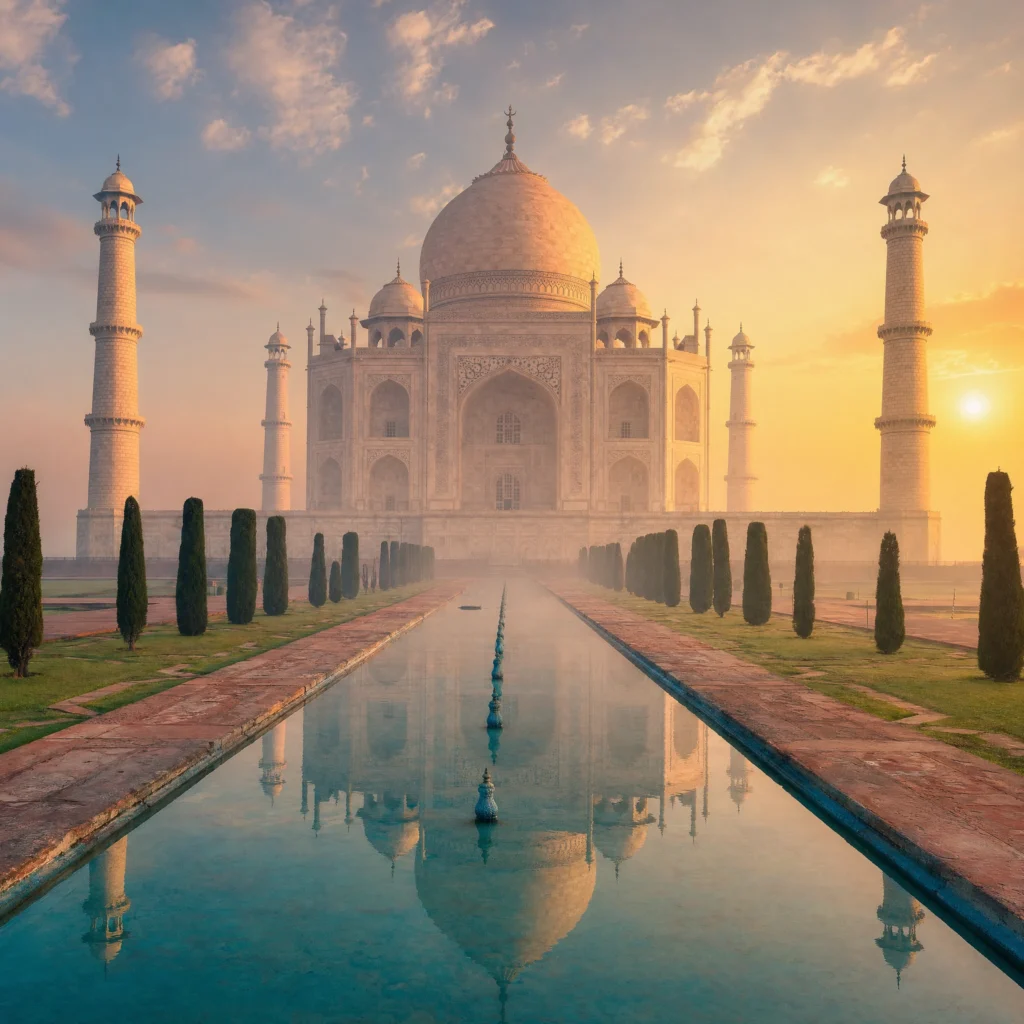
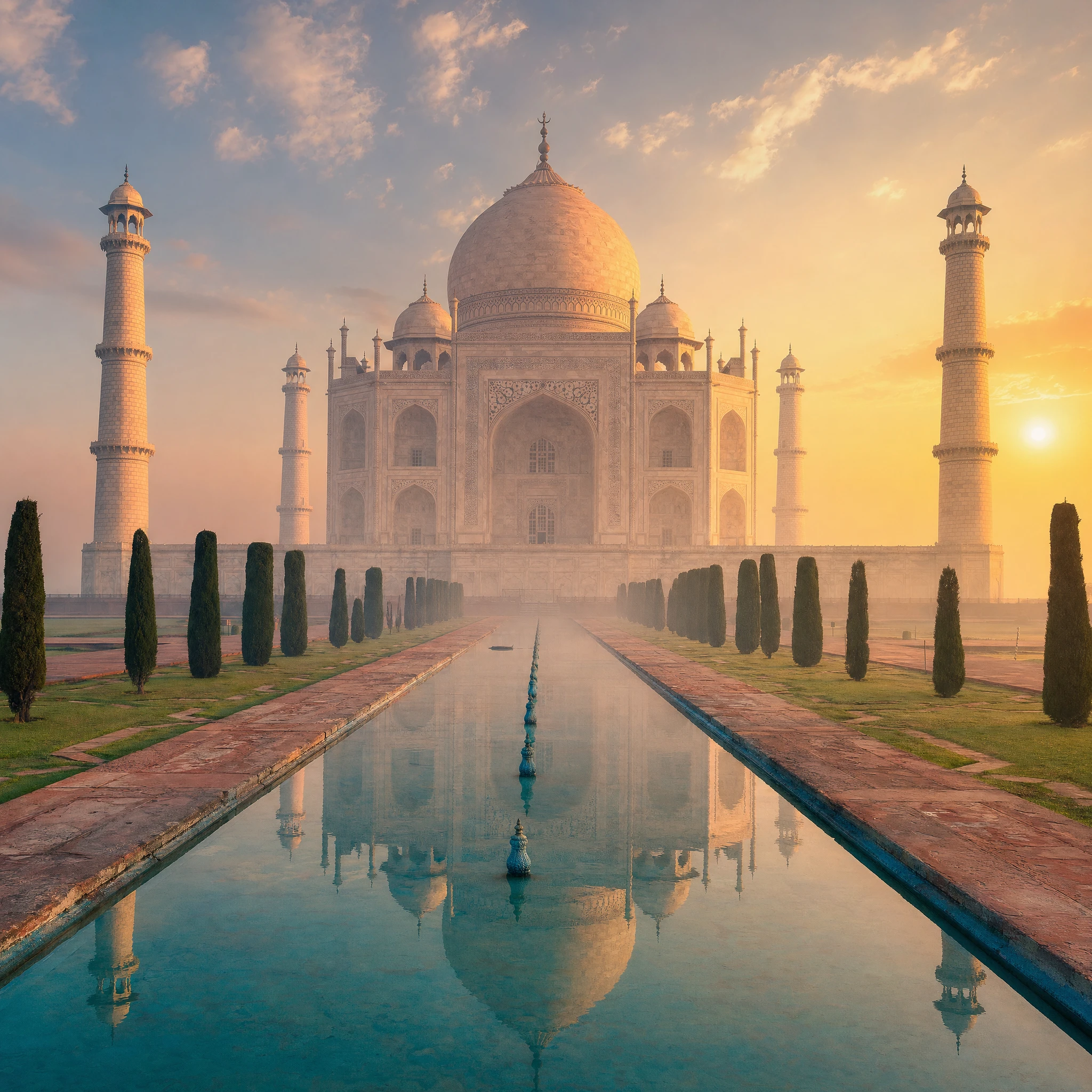
The Pink City of Rajasthan, built in 1727 on a grid plan and pair-visited with Agra for the Taj Mahal. Jaipur is the gateway to Rajasthan’s hill forts and the Thar desert beyond; Agra, three hours away by Vande Bharat, is a single-day or overnight pilgrimage to one of the world’s most recognisable buildings.
- Amer Fort, Hawa Mahal, and Jantar Mantar UNESCO observatory
- Taj Mahal at sunrise from the East Gate, plus Agra Fort across the Yamuna
- City Palace shopping — block-printed textiles, blue pottery, and silver jewellery
- Signature dishes: Rajasthani thali with dal baati churma, laal maas, and ghevar sweets
🕉️ Varanasi
One of the world’s oldest continuously inhabited cities and the spiritual heart of Hinduism, strung along the Ganges river in the state of Uttar Pradesh. The evening Ganga Aarti fire ceremony at Dashashwamedh Ghat is one of the most atmospheric spectacles in the subcontinent.
- Sunrise boat ride along the bathing ghats from Assi to Manikarnika
- Kashi Vishwanath Temple and the narrow old-city lanes around it
- Sarnath, 10 km away — where the Buddha delivered his first sermon
- Signature dishes: kachori sabzi, chaat, and malaiyo winter-morning foam
🌴 Kerala (Kochi & the Backwaters)
“God’s Own Country” on the southwest Malabar coast — a slower, greener, wetter India defined by Kochi’s spice-trade heritage, 900 km of interlinked inland backwaters, coconut-lined beaches, and some of the country’s best Ayurvedic retreats.
- Fort Kochi — Chinese fishing nets, the 16th-century St Francis Church, and Jew Town’s spice warehouses
- Alleppey and Kumarakom houseboats on the Kerala backwaters
- Munnar tea plantations and Periyar Tiger Reserve in the Western Ghats
- Signature dishes: masala dosa, appam with stew, Kerala fish curry, and sadya banana-leaf thali
🏖️ Goa
The former Portuguese colony turned beach state on the Konkan coast — Portuguese-baroque churches, whitewashed villas, long crescent beaches, and the country’s most relaxed visitor culture (known locally as susegad).
- Old Goa churches (UNESCO) including the Basilica of Bom Jesus
- North Goa beaches (Anjuna, Vagator) versus South Goa (Palolem, Agonda)
- Spice plantation tours and the Dudhsagar Falls day trip
- Signature dishes: Goan fish curry rice, pork vindaloo, bebinca, and feni palm spirit
Indian Culture & Etiquette — What to Know Before You Go
The Essentials
- Right hand only. Eat, pass, and receive money or business cards with the right hand; the left is considered unclean. This matters at dhabas (roadside eateries) and in homes.
- Shoes off indoors. Remove your shoes before entering homes, temples, mosques, gurdwaras, and many shops — watch for the shoe pile at the threshold.
- Dress modestly. Shoulders and knees covered for both men and women at religious sites; women should carry a light scarf for temple and mosque visits. Bikinis and swim shorts only at resort pools and Goa beaches.
- Haggle respectfully. Bargaining is standard in markets, with tuk-tuk drivers, and at souvenir stalls — start around half the asked price, stay friendly, and expect to settle at roughly 60–70% of the opening quote.
- Public affection is discouraged. India remains socially conservative outside major metros and tourist zones; no hand-holding, kissing, or displays of affection in public.
Temple & Religious-Site Etiquette
- Cover your head at gurdwaras and some temples. Scarves are provided free at Sikh gurdwaras like Delhi’s Bangla Sahib; Jain temples ask that leather belts and bags be left outside.
- No leather inside Jain and many Hindu temples. Store belts, wallets, and camera straps with the shoe attendant.
- No photography in sanctums. Courtyards are generally fine; inner sanctums (garbhagriha) are not. Follow posted signs at every site.
- Do not point your feet at people or statues. Tuck your legs when seated at temples; cross-legged is preferred.
Diversity and caste context: India’s social complexity is real. Caste remains a factor in some rural communities even after decades of constitutional protection, and conversations around caste, religion, and regional politics are best kept private. The country’s strength is its pluralism — Hindu-majority, but with the world’s third-largest Muslim population, alongside Sikh, Christian, Jain, Buddhist, Parsi, and Jewish communities each with their own festivals, foods, and sacred sites. Language shifts every state boundary; a traveller in Tamil Nadu, Kerala, or West Bengal may find Hindi far less useful than English or a handful of local phrases.
A Food Lover’s Guide to India
Indian food is not one cuisine — it is a family of regional kitchens divided roughly between the wheat-eating north and the rice-eating south, with Bengali, Goan, Mughlai, Parsi, and Northeast traditions layered on top. Punjabi and Mughlai cooking in the north leans rich, creamy, and tandoor-driven; South Indian cooking is lighter, with rice, lentils, and coconut dominant; Bengali food foregrounds fish and mustard; Gujarati thalis are predominantly vegetarian and sweetened with jaggery. Street food — chaat, kebabs, dosa carts, Bombay sandwiches — is the through-line that stitches it together, and you can eat extremely well for under US$5 a meal anywhere from Amritsar to Chennai.
Must-Try Dishes
| Dish | Description |
|---|---|
| Butter chicken (murgh makhani) | Tandoor-cooked chicken simmered in a creamy tomato-butter sauce with fenugreek; invented in Delhi in the 1950s at Moti Mahal and now the country’s flagship curry. A plate with naan runs ₹250–400 at a Delhi dhaba. |
| Biryani | Layered basmati rice with meat or vegetables, slow-cooked in spices; regional variants include Hyderabadi (dum-cooked, fiery), Lucknowi (subtle, saffron-led), and Kolkata (with potato and egg). One of India’s most-ordered dishes. |
| Dosa | A large, crisp South Indian crepe made from fermented rice-and-lentil batter, usually served with sambar and coconut chutney. Masala dosa adds a spiced potato filling; ₹80–150 at most Chennai and Bengaluru tiffin rooms. |
| Chaat | An umbrella term for savoury street snacks — pani puri (crisp shells filled with tamarind water), bhel puri (puffed rice and chutney), aloo tikki, and dahi puri. Every region has its own spin; expect to eat three or four ₹30–80 portions in a single street walk. |
| Thali | A composite platter with rice or roti plus six to twelve small bowls of curries, dals, vegetables, pickle, curd, and sweet — the ideal way to sample regional range at one sitting. Rajasthani, Gujarati, and Kerala sadya thalis are the most travelled. |
| Chai | Spiced milk tea brewed with cardamom, ginger, and sometimes clove, sold at every railway platform and street corner for ₹10–20 a glass — the daily rhythm-setter of Indian life. |
| Dal makhani & naan | Black lentils slow-cooked overnight with cream and butter, served with a puffed, clay-oven-baked bread; a Punjabi staple now on almost every Indian restaurant menu worldwide. |
Street Food & Dhaba Culture
The dhaba — a roadside trucker restaurant — is where highway India actually eats. Expect plastic stools, tandoor ovens out front, and half-a-dozen dishes served with endless cups of chai. Order dal makhani, paneer butter masala, butter naan, and a lassi for around ₹400–600 per person. For later eating, follow the smoke to a chaat-wala cart and a tawa griddle where paneer rolls and kathi kebabs get folded into roti to order.
- Chains worth knowing: Haldiram’s, Saravana Bhavan, Moti Mahal, Karim’s (Old Delhi), Britannia & Co (Mumbai)
- Signature street items: pani puri, vada pav, pav bhaji, pakora, jalebi, kulfi ice cream, and lassi
Vegetarianism is deeply embedded — roughly a third of Indians eat primarily vegetarian, and most restaurants mark menus “pure veg” or “non-veg.” Jain-compliant menus go further and exclude onion, garlic, and root vegetables. If you avoid beef, note that most Hindu-run restaurants will not serve it; equivalent dishes use mutton (goat) or chicken instead.
Off the Beaten Path — India Beyond the Guidebook
Hampi, Karnataka
The UNESCO-listed ruins of the Vijayanagara Empire — a 14th-to-16th-century Hindu capital spread across granite boulders and a green river valley in Karnataka. The Virupaksha Temple still functions after more than six centuries of continuous worship; the nearby Vittala Temple’s stone chariot is one of India’s most photographed monuments. Two to three days by rickshaw or bicycle are ideal; fly into Hubballi or take the overnight train from Bengaluru.
Ladakh & the Nubra Valley
India’s high-altitude Buddhist province in the far north, tucked between the Karakoram and the Himalaya. Leh sits at roughly 3,500 m, the Nubra Valley drops down to sand dunes with Bactrian camels, and monasteries at Thiksey, Hemis, and Diskit rival anything in Tibet. Open roughly June through October for road access (Manali–Leh and Srinagar–Leh highways); flights to Leh run year-round. Altitude acclimatisation is mandatory.
Northeast India: Meghalaya & Nagaland
The seven sister states east of Bangladesh — and among the least-travelled corners of the country. Meghalaya delivers the living-root bridges of Cherrapunji, one of the wettest places on Earth, and Mawlynnong (called “Asia’s cleanest village”); Nagaland’s annual Hornbill Festival in early December showcases sixteen tribal cultures. Both states require an inner-line permit for foreign visitors; apply online through the respective state tourism portal in advance.
Spiti Valley, Himachal Pradesh
A cold-desert valley in the Trans-Himalaya, ringed by 6,000-m peaks and dotted with monasteries at Key, Tabo, and Dhankar — the 10th-century Tabo complex is among India’s oldest continuously-active Buddhist monasteries. Access is via Shimla–Kinnaur (open year-round) or the Manali–Rohtang route (open June–October). Villages sit above 3,800 m; acclimatise in Kalpa or Kaza before pushing higher.
The Andaman Islands
An Indian archipelago in the Bay of Bengal, roughly 1,200 km east of Chennai, with some of the country’s clearest water and most-coral-rich reefs. Port Blair is the capital; Havelock (officially renamed Swaraj Dweep) delivers Radhanagar Beach, consistently voted one of Asia’s best. Foreign nationals need a Restricted Area Permit issued on arrival at Port Blair airport. Fly from Chennai or Kolkata; the sea crossing takes roughly 56 hours.
Khajuraho, Madhya Pradesh
The UNESCO-listed group of Hindu and Jain temples in Madhya Pradesh, dated between roughly 950 and 1050 CE and celebrated for the intricately carved apsaras and mithuna couples that cover their sandstone walls. Reached by direct flight from Delhi or by train from Jhansi, the site pairs well with a Varanasi–Orchha–Khajuraho central-India loop away from the Golden Triangle crowds.
Practical Information
| Currency | Indian Rupee (INR / ₹); 1 USD ≈ 83.5 INR (April 2026) |
| Cash needs | Urban India is largely digital (UPI, cards); cash still needed for rickshaws, dhabas, and rural markets. Carry small notes. |
| ATMs | Plentiful at airports, metro stations, and high streets. Most cap at ₹10,000–25,000 per transaction; SBI and HDFC are most reliable for foreign cards. |
| Tipping | 10% service is often on the bill. Otherwise round up taxi fares; tip ₹50–100 for porters, ₹200–500 per day for guides and drivers. |
| Language | Hindi and English are the Union’s working languages; 22 scheduled languages have constitutional recognition. English is widespread in tourist zones. |
| Safety | Generally safe; main risks are road traffic, petty theft in stations, and scams around monuments. See the callout below. |
| Connectivity | Airtel and Jio offer comprehensive 4G and 5G in metros. Local SIMs need passport and e-Visa copies; Airalo eSIMs are simpler. |
| Power | Type C, D, and M plugs, 230V, 50Hz. |
| Tap water | Data unavailable — tap water is not safe; use sealed bottled, RO-filtered, or boiled water only. |
| Healthcare | Private hospitals in Delhi, Mumbai, Bengaluru, and Chennai (Apollo, Fortis, Max, Manipal) are international-standard. Travel insurance with medical evacuation is strongly recommended. |
Budget Breakdown — What India Actually Costs
💚 Budget Traveller
Around ₹1,700–3,300 (US$20–40) per day. Hostel dorm beds in Delhi, Goa, and Varanasi run ₹500–1,200, dhaba meals are ₹150–300, and an auto-rickshaw across Old Delhi costs ₹80–150. Sleeper-class trains between major cities cost ₹500–1,500, and domestic LCC flights in shoulder season can drop below ₹4,000 if booked three weeks ahead.
💙 Mid-Range
Around ₹6,500–12,000 (US$80–150) per day. Three- and four-star hotels or heritage havelis in Jaipur and Udaipur cost ₹4,000–9,000 per night; a sit-down restaurant dinner runs ₹600–1,500 per person; a private driver with car for the Golden Triangle costs roughly ₹4,500–7,000 per day inclusive of fuel.
💜 Luxury
From ₹25,000 (US$300) per day upward. Iconic stays such as Taj Lake Palace Udaipur, Rambagh Palace Jaipur, Oberoi Amarvilas Agra, and Umaid Bhawan Palace Jodhpur run ₹35,000–120,000 per night; luxury rail journeys like the Maharajas’ Express or the Deccan Odyssey are ₹60,000–250,000 per night, all-inclusive. Fine dining at Delhi’s Indian Accent, Mumbai’s Masque, or Bengaluru’s Karavalli adds ₹4,000–8,000 per head. Private Ayurveda retreats in Kerala cost ₹25,000–65,000 per day all-in.
What you’ll actually spend: Two weeks of mid-range travel across the Golden Triangle plus Kerala typically lands between US$1,400 and US$2,400 per person excluding international flights, with the single biggest line items the private driver and domestic flight to Kochi. A two-week budget-backpacker version is achievable at US$500–800 per person if you stick to sleeper trains, dhabas, and guesthouses.
| Tier | Daily (USD) | Accommodation | Food | Transport |
|---|---|---|---|---|
| Budget | US$20–40 | Hostel dorm ₹500–1,200 | Dhabas & street food | Sleeper train + auto-rickshaw |
| Mid-Range | US$80–150 | Heritage haveli ₹4,000–9,000 | Mid-range restaurants | Private driver + Vande Bharat |
| Luxury | US$300+ | Palace hotel ₹35,000–120,000 | Fine dining ₹4,000–8,000 | Private car + luxury rail |
Planning Your First Trip to India
- Pick one region, not the whole country. The classic first-timer loop is the Golden Triangle (Delhi–Agra–Jaipur) over 7 days, or the Golden Triangle plus Kerala over 14. Trying to add Varanasi, Goa, and Ladakh in two weeks ruins the pace.
- Apply for the e-Visa online before you fly. Use the official indianvisaonline.gov.in portal; fees run US$25–40, and approval typically lands within 72 hours.
- Match season to region. November–March for Rajasthan, the Golden Triangle, Kerala, and Goa. May–September for Himalayan regions like Ladakh, Spiti, and Himachal. Avoid the June–September monsoon on the west coast unless you specifically want the green landscapes.
- Book trains and domestic flights early. Vande Bharat seats on the Delhi–Agra and Delhi–Jaipur corridors sell out weeks ahead in peak season. Create your IRCTC account before you arrive.
- Pack a stomach kit and dress modestly. Bring Imodium, ORS sachets, a probiotic, hand sanitizer, and two pairs of modest clothes for temples. A light scarf doubles as head-cover for mosques and gurdwaras.
Classic 14-Day Itinerary: Days 1–3 Delhi; Days 4–5 Agra & the Taj Mahal; Days 6–8 Jaipur & Rajasthan; Days 9–11 Kerala backwaters via Kochi; Days 12–14 Varanasi and fly out from Delhi. If you have only 10 days, cut Varanasi; if you have 21, tack on Udaipur and Jaisalmer in Rajasthan before flying south.
Frequently Asked Questions
Is India expensive to visit?
No — India is one of the cheapest large countries to travel in. Budget travellers spend US$20–40 a day, mid-range US$80–150, and the luxury tier runs 40–50% less than comparable stays in Europe. Eat at dhabas, ride sleeper trains, and use Ola or Uber instead of pre-booked tourist taxis.
Do I need to speak Hindi?
No. English is widely used in hotels, airports, metros, and tourist zones, and most menus and signage are bilingual. Hindi helps in the north, but in Tamil Nadu, Kerala, Karnataka, and West Bengal, regional languages dominate and English is more useful. Learn namaste, dhanyavaad (thank you), and kitna (how much).
Is the IRCTC railway booking worth the effort?
Yes — India’s trains are one of the great travel experiences on Earth, and learning the IRCTC portal pays for itself. Vande Bharat seats on Delhi–Agra and Delhi–Jaipur are cheaper and more reliable than a driver. Register a foreign-tourist IRCTC account, book Executive Chair (EC) or AC First (1A), and set Tatkal alarms for emergency seats.
Is India safe for solo and women travellers?
India is safe for most foreign travellers with common sense, but women face a higher baseline of harassment, especially on overnight buses. Steps that help: avoid night trains and buses where possible, use Ola or Uber, dress modestly, and book women-only railway coaches where offered. Report incidents to the 1091 women’s helpline; tourist police are present at major monuments.
When is the best time to visit India?
November through March for most travellers — the dry-season window covers Rajasthan, the Golden Triangle, Kerala, and Goa with comfortable temperatures and clear skies. Avoid June–September monsoon on the west coast. Late October and late February offer the sharpest shoulder weeks at lower prices.
Can I get by as a vegetarian or vegan?
Easily — India is the world’s best country for vegetarian travel. Restaurants mark menus “pure veg” or “non-veg,” and South Indian, Gujarati, and Jain cuisines are almost entirely plant-based. Vegan is harder because dairy is in everything; ask for “no dairy” explicitly. Dosa with coconut chutney, chana masala, and most South Indian thalis are reliably vegan.
How do I handle haggling in markets and tuk-tuks?
Bargaining is expected at bazaars, souvenir stalls, and with unmetered auto-rickshaws — not at supermarkets or fixed-price chains. Start at roughly half the opening price and settle around 60–70%. For tuk-tuks, agree the fare before you get in, or insist the driver runs the meter; booking an auto through Ola or Uber eliminates the negotiation entirely.
Ready to Explore India?
India rewards travellers who pick one region deeply over those who try to see the whole subcontinent in two weeks. Start with Delhi, Agra, and Jaipur for Mughal history and Rajasthani colour, add Kerala for the slower, greener south, and come back later for Varanasi, Ladakh, and the Northeast — this is a country built for a lifetime of return visits.
Explore More
More country guides you might like
Plan your trip to India
The booking tools we use ourselves. FFU may earn a commission at no extra cost to you.
Plan & book your trip to India
Booking through these searches supports our guides at no extra cost to you.