
Languages of Portugal
All languages of Southern Europe →fluent beta classical · classes by phone with Maya at ranas.ai/maya
Portugal Travel Guide — Azulejo Tiles, Port Wine & Atlantic Light
Portugal Travel Guide
📋 In This Guide
- Overview — Why Portugal Belongs on Every Bucket List
- 🎆 Santos Populares & São João 2026
- Best Time to Visit Portugal (Season by Season)
- Getting There — Flights & Arrival
- Getting Around — CP Trains, Metros & the Atlantic Coast
- Top Cities & Regions
- Portuguese Culture & Etiquette
- A Food Lover’s Guide to Portugal
- Off the Beaten Path
- Practical Information
- Budget Breakdown
- Planning Your First Trip to Portugal
- Frequently Asked Questions
Overview — Why Portugal Belongs on Every Bucket List
Portugal is Europe’s westernmost country and one of its oldest — a narrow Atlantic-facing slice of the Iberian Peninsula that has kept the same borders since 1297, almost 200 years before Columbus sailed. With roughly 10.4 million people spread across 92,212 square kilometres of mainland plus the volcanic archipelagos of Madeira and the Azores, it is both small enough to drive end-to-end in a long day and vast enough to contain nine climatic zones, 17 UNESCO World Heritage sites, and a coastline of 1,794 kilometres lit by some of the cleanest natural light in Europe.
Geography does the first half of the work. The mainland runs from the lush green vineyards of the Minho in the north, down through the granite Douro Valley (the world’s oldest demarcated wine region, dating to 1756), across the terracotta hills and cork-oak savannahs of the Alentejo, to the ochre limestone cliffs of the Algarve coast. West of all of it, the Atlantic. South-west again, 1,000 kilometres out, sits Madeira; further west still, at 1,400 kilometres from Lisbon, the nine volcanic Azores islands. You can surf at Nazaré in the morning (home to the largest wave ever surfed, 26.2 metres in 2020) and eat grilled sardines on a tile-terraced Lisbon rooftop the same evening.
Culturally, Portugal is Iberian but resolutely not Spanish. The language is distinct (closer to Latin than Castilian in several key ways); the cuisine runs on salt cod, olive oil and the Atlantic rather than olive oil and the Mediterranean; and the national mood is melancholic where Spain’s is extroverted. This is the country that invented the Age of Discovery under Henry the Navigator in the 15th century, sailed its way around the entire world from the Tagus estuary, and now carries the resulting complicated legacy of empire in its cities, its food and the 244 million Portuguese speakers across Brazil, Angola, Mozambique and East Timor. Fado — the mournful sung poetry UNESCO recognised as Intangible Cultural Heritage in 2011 — is the national soundtrack.
Practically, Portugal is one of Europe’s easiest, most affordable and safest entry points. It ranks 7th in the 2024 Global Peace Index, English is spoken fluently by anyone under 40, and prices remain markedly lower than Spain, France or Italy. An espresso (uma bica) at a Lisbon café is €0.80. A pastel de nata at Pastéis de Belém, baked from the 18th-century Jerónimos monks’ recipe, is €1.40. And a 2.5-hour Alfa Pendular train from Lisbon to Porto, covering the length of the country, is under €35.
🎆 Santos Populares & Festa de São João 2026 — Portugal’s Best Street Party
June is Santos Populares month — three overlapping saints’ festivals (Santo António in Lisbon, São João in Porto, São Pedro across the country) that turn Portuguese cities into open-air charcoal grills, balcony parties and basil-pot markets. If you visit Portugal in one month per year, this is it. The country’s two biggest nights are São João in Porto on June 23, drawing over one million people to the Douro riverside, and Santo António in Lisbon on June 12-13, when Alfama’s lanes fill with grilled sardines, improvised stages and paper lanterns.
- Santo António (Lisbon): peaks on the night of June 12 into June 13, 2026, with the Marchas Populares neighbourhood parade down Avenida da Liberdade
- São João do Porto: peaks on the night of June 23 into June 24, 2026 — one of Europe’s largest street festivals, closing with fireworks over the Douro from Ribeira
- Signature ritual: strangers gently bonk each other on the head with squeaky plastic hammers (martelinhos) or soft garlic flowers — a friendly Porto São João tradition
- Eat: charcoal-grilled sardines, pork bifanas, caldo verde, and endless jugs of vinho verde on every corner
- Cost: almost everything is free — the streets are the festival, and most neighbourhood stages are improvised by residents
Best Time to Visit Portugal (Season by Season)
Spring (Mar–May)
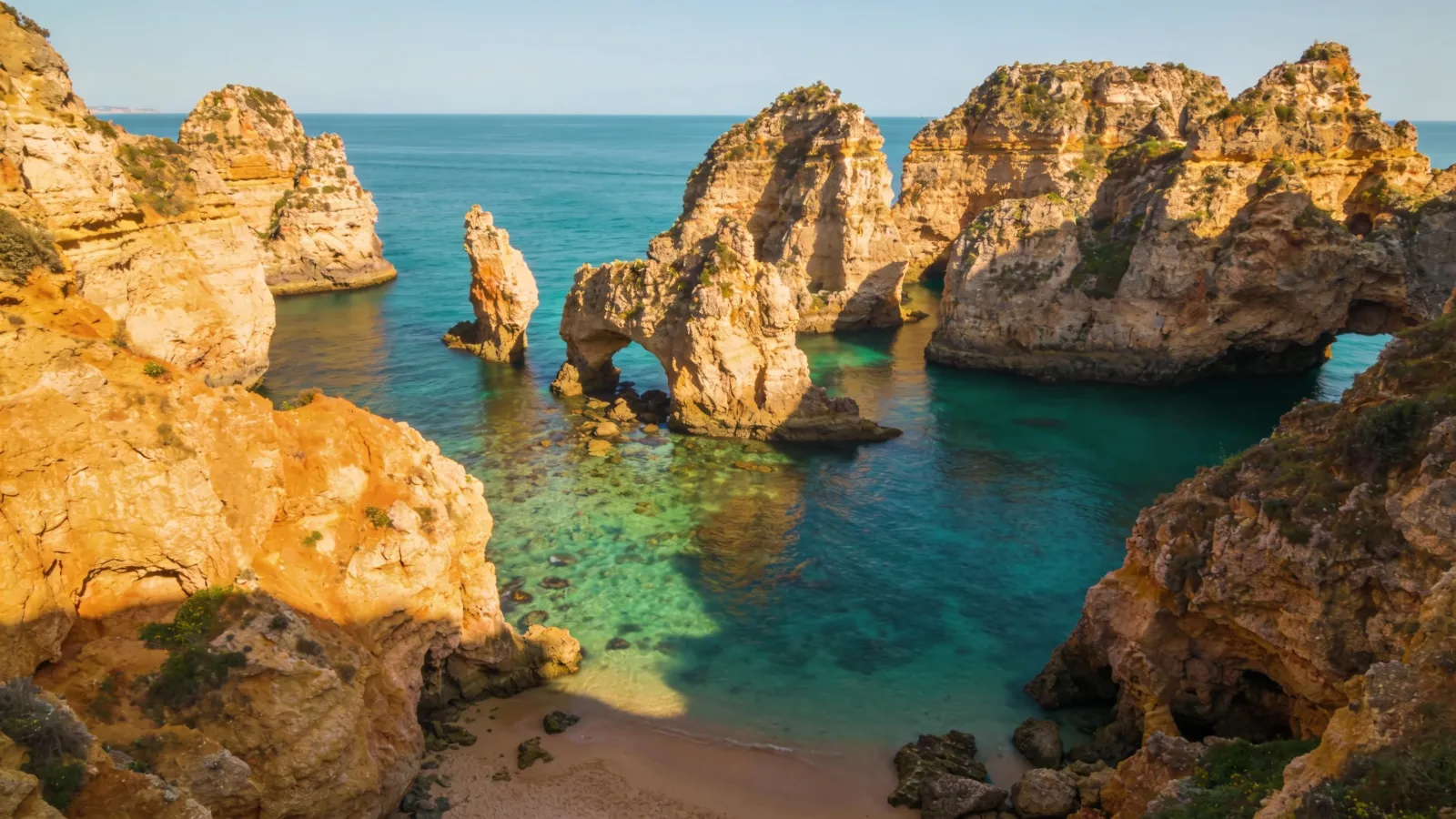
Portugal’s shoulder-season sweet spot. Daytime temperatures climb from 15°C in March to 22°C by late May in Lisbon, and the Algarve reaches 24°C with sea temperatures warming from a cold 16°C to a swimmable 20°C. Wildflowers blanket the Alentejo in March-April, and Holy Week (Semana Santa) processions — especially in Braga in the north — are solemn and visually striking. Downside: the Atlantic remains chilly for swimming until late May on the west-facing beaches north of Lisbon, and rain is still common in March.
Summer (Jun–Aug)
Peak season. Temperatures run 24-30°C in Lisbon and regularly spike to 35°C+ inland in the Alentejo and upper Douro; the Algarve coast is consistently 28-32°C with calm warm water. Santos Populares dominate June; sardine grills fill every Lisbon street on the 12th; July and August are full-tilt Algarve season (Lagos, Albufeira and Tavira at capacity), and Super Bock Super Rock and NOS Alive music festivals draw Lisbon crowds. Warnings: Algarve beach towns triple in price and population; central Alentejo hits dangerous heatwave levels; Lisbon’s tile-walled trams become saunas.
Autumn (Sep–Nov)
Portugal’s best-kept seasonal secret. September is practically still summer (warm sea, smaller crowds, prices dropping by 30%), and Douro vindima (wine harvest) runs mid-September to mid-October, with quintas welcoming guests to stomp grapes by foot — the traditional way. Temperatures drop from 26°C to 16°C over the three months; the Serra da Estrela mountains get their first dusting of snow by late November. For most travellers, September and early October are the single best weeks of the year to visit Portugal.
Winter (Dec–Feb)
Mild, green, and drastically cheaper. Lisbon averages 8-15°C, the Algarve stays a remarkable 10-17°C (Europe’s warmest winter mainland), and inland Alentejo mornings drop close to freezing. Rain is heaviest in December and January — expect six or seven wet days a month. Madeira is in its own warmer microclimate (18-20°C) and draws European winter sun-seekers. Carnival (Carnaval) peaks mid-February — Loulé in the Algarve and Torres Vedras north of Lisbon host the biggest parades.
Shoulder-season tip: Late April into early May (wildflowers, warm days, cold swim, half the crowds) and late September into mid-October (warm sea, vindima in the Douro, sunny Algarve without the July prices) are the two windows first-time travellers to Portugal routinely miss.
Getting There — Flights & Arrival
Portugal has two intercontinental hubs on the mainland plus three regional airports. Pick your entry by region: Lisbon (LIS) for the centre, Porto (OPO) for the north, Faro (FAO) for the Algarve.
- Humberto Delgado Lisbon Airport (LIS) — Portugal’s busiest hub and TAP’s main base. The Metro red line reaches the city centre in roughly 20 minutes for €1.90.
- Francisco Sá Carneiro Porto Airport (OPO) — Metro purple (E) line to Trindade station in downtown Porto in 30 minutes for €2.25-2.85.
- Faro Airport (FAO) — the Algarve gateway. Local buses (routes 14 and 16) reach Faro centre in 20 minutes for €2.55.
- Funchal Madeira (FNC) — the Cristiano Ronaldo Airport; aerobus to Funchal in 25 minutes.
- Ponta Delgada Azores (PDL) — São Miguel’s main entry; local bus to Ponta Delgada in 10 minutes.
Flight times: New York-Lisbon 7 hours direct on TAP; London-Lisbon 2 hours 40 minutes; São Paulo-Lisbon 10 hours 30 minutes.
Flag carriers: TAP Air Portugal (Star Alliance), SATA Azores Airlines, Ryanair.
Visa / entry: Schengen rules apply — citizens of the US, UK, Canada, Australia, Japan, Brazil and many other countries enter visa-free for up to 90 days in any 180-day window. From late 2026, visa-exempt travellers will need an ETIAS online pre-authorisation.
Getting Around — CP Trains, Metros & the Atlantic Coast
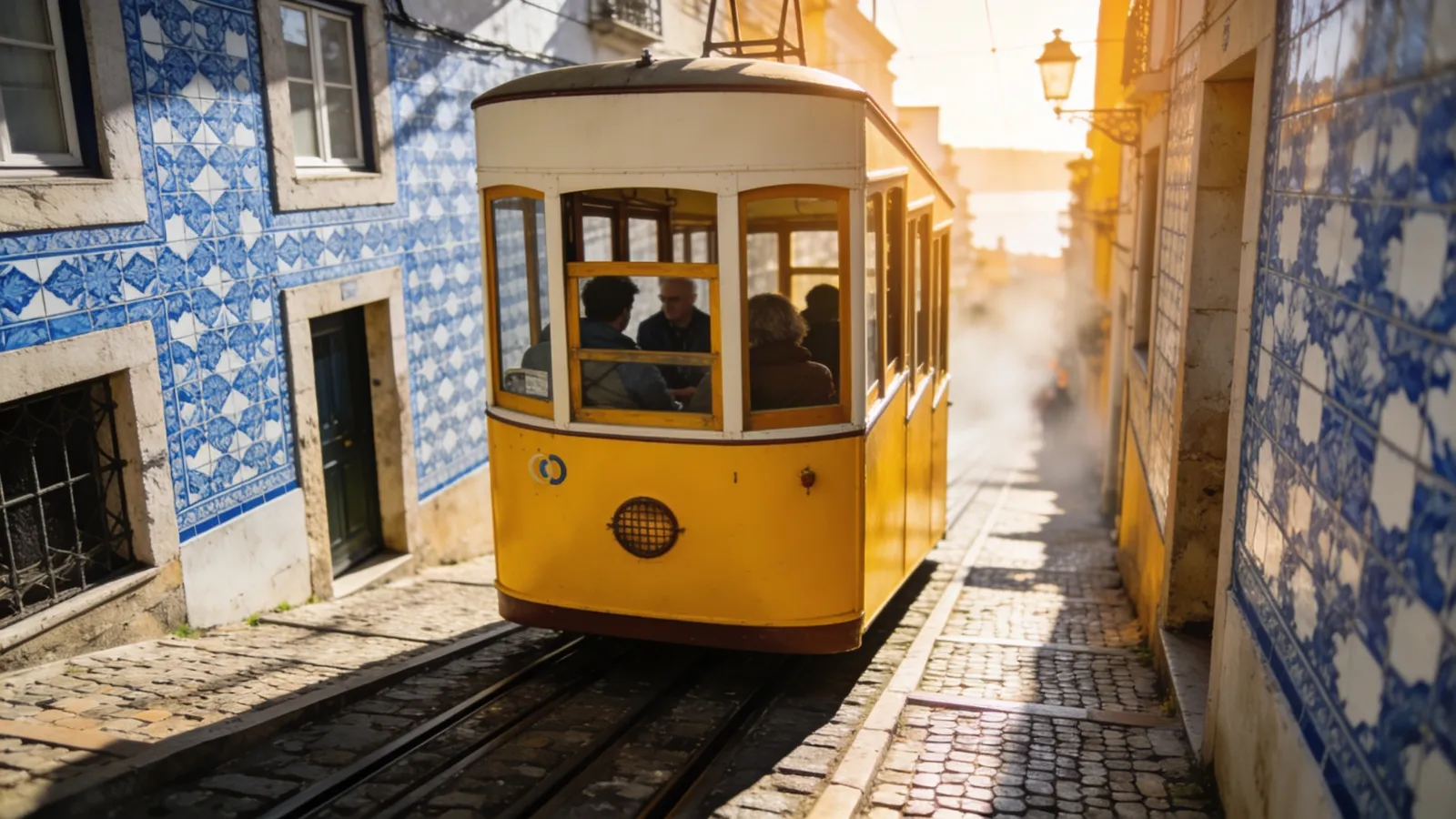
Portugal is small — 560 kilometres top to bottom on the mainland — and the national rail operator Comboios de Portugal (CP) connects the major cities efficiently. The tilting Alfa Pendular is Portugal’s fastest train, running at a top speed of 220 km/h on the Lisbon-Porto and Lisbon-Faro spines. A rental car is useful for the Douro Valley, the Alentejo and rural Algarve; the train handles almost everything else.
- Alfa Pendular (Portugal’s fastest train): top speed 220 km/h on the north-south spine.
- Lisbon → Porto: 2 hours 49 minutes on the direct Alfa Pendular (330 km).
- Lisbon → Faro: 3 hours 5 minutes by Alfa Pendular (Algarve line).
- Porto → Braga: 1 hour 5 minutes on the Urbano commuter line.
- Lisbon → Coimbra: 1 hour 45 minutes by Alfa Pendular.
Rail passes: Portugal Pass (Interrail) — a 3-days-in-1-month second-class adult pass costs €135 in 2026, and unlocks every CP train except a small supplement on the Alfa Pendular. For one-off journeys, CP Sparpreis-style Promo fares booked a week ahead drop Lisbon-Porto to €19.
City transit cards: Viva Viagem and Navegante (Lisbon), Andante (Porto), SMTUC card (Coimbra). Load-as-you-go; single urban ride €1.50-1.80, day pass €6.80 (Lisbon), €7 (Porto).
Apps: CP mobile (tickets and timetables), Google Maps (excellent for Lisbon’s Metro and Porto’s).
Top Cities & Regions
Picking a base? Our guide to where to stay in Portugal compares Lisbon, Porto and the Algarve neighbourhood by neighbourhood.
📍 Map of Portugal: Every Place in This Guide
🎡 Lisbon
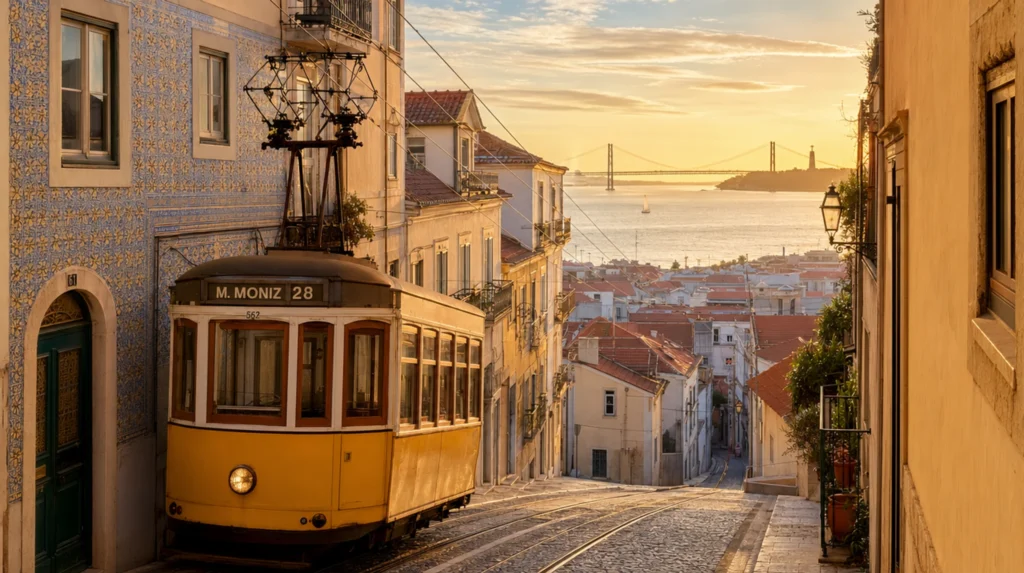
Portugal’s seven-hilled capital — tiled façades, fado cellars, and yellow trams rattling through Alfama’s cobbled lanes. Lisbon survived the 1755 earthquake that flattened most of the city and rebuilt the Baixa into Europe’s first grid-planned neighbourhood. Today it is the country’s most visited city and Europe’s digital nomad capital.
- Belém quarter — the Jerónimos Monastery and Belém Tower (both UNESCO-listed, 1983)
- Tram 28 through Graça, Alfama and Estrela; the Santa Justa Lift (1902)
- LX Factory, Time Out Market Ribeira, and sunset from Miradouro da Senhora do Monte
Signature eats: Pastel de nata at the original Pastéis de Belém (est. 1837), bifana pork sandwich at O Trevo, ginjinha cherry liqueur at A Ginjinha.
🍷 Porto
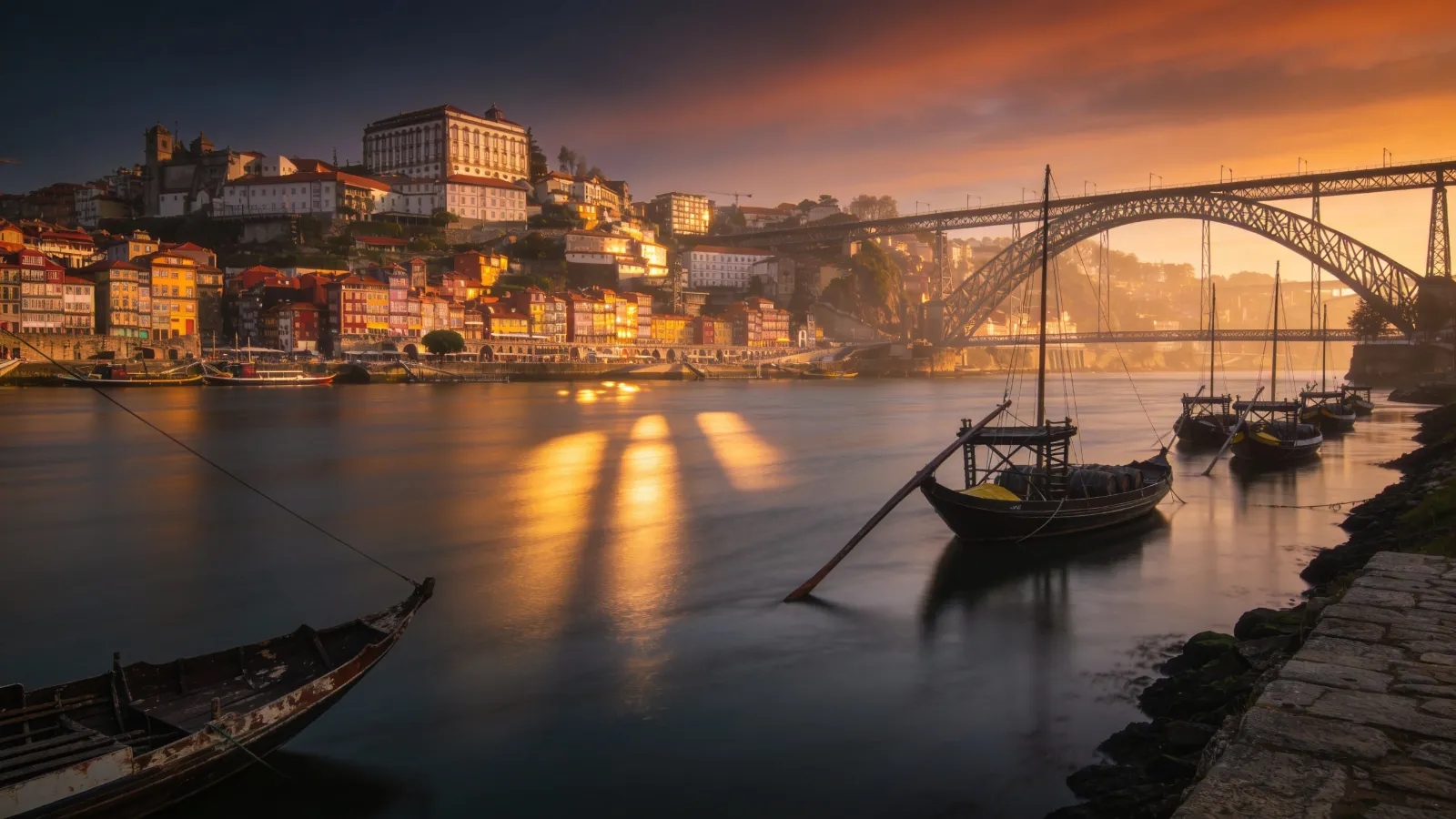
Portugal’s second city and the birthplace of port wine — granite-walled Ribeira tumbles down to the Douro, azulejo-tiled stations line the old town, and the river empties into the Atlantic an hour’s walk west. Vila Nova de Gaia, across the river, hosts every major port-wine house for cellar tastings.
- Ribeira waterfront (UNESCO-listed 1996) and the double-deck Dom Luís I Bridge (1886)
- Livraria Lello bookshop (1906) and São Bento Station’s 20,000-azulejo hall
- Vila Nova de Gaia port lodges — Graham’s, Taylor’s, Sandeman, Cálem — for cellar tours and tastings
Signature eats: Francesinha (Porto’s hangover sandwich, beer-and-tomato sauce) at Café Santiago, tripas à moda do Porto, port wine tasting across the river in Gaia.
🏰 Sintra
A cool, fern-wrapped microclimate in the hills north-west of Lisbon, studded with painted palaces and Moorish ruins. Sintra’s Cultural Landscape was UNESCO-inscribed in 1995; Byron called it a “glorious Eden”. Reachable by CP train from Lisbon’s Rossio station in around 40 minutes.
- Pena Palace (1854) — the yellow-and-red Romantic-era castle on the hilltop
- Quinta da Regaleira with its famous Initiation Well spiral staircase
- Moorish Castle (8th-9th century) and the Palácio Nacional de Sintra with its twin conical kitchen chimneys
Signature eats: Travesseiros de Sintra (flaky almond-cream “pillows”) at Casa Piriquita (est. 1862), queijadas de Sintra cheese tarts.
🏖️ Algarve (Lagos & Faro)
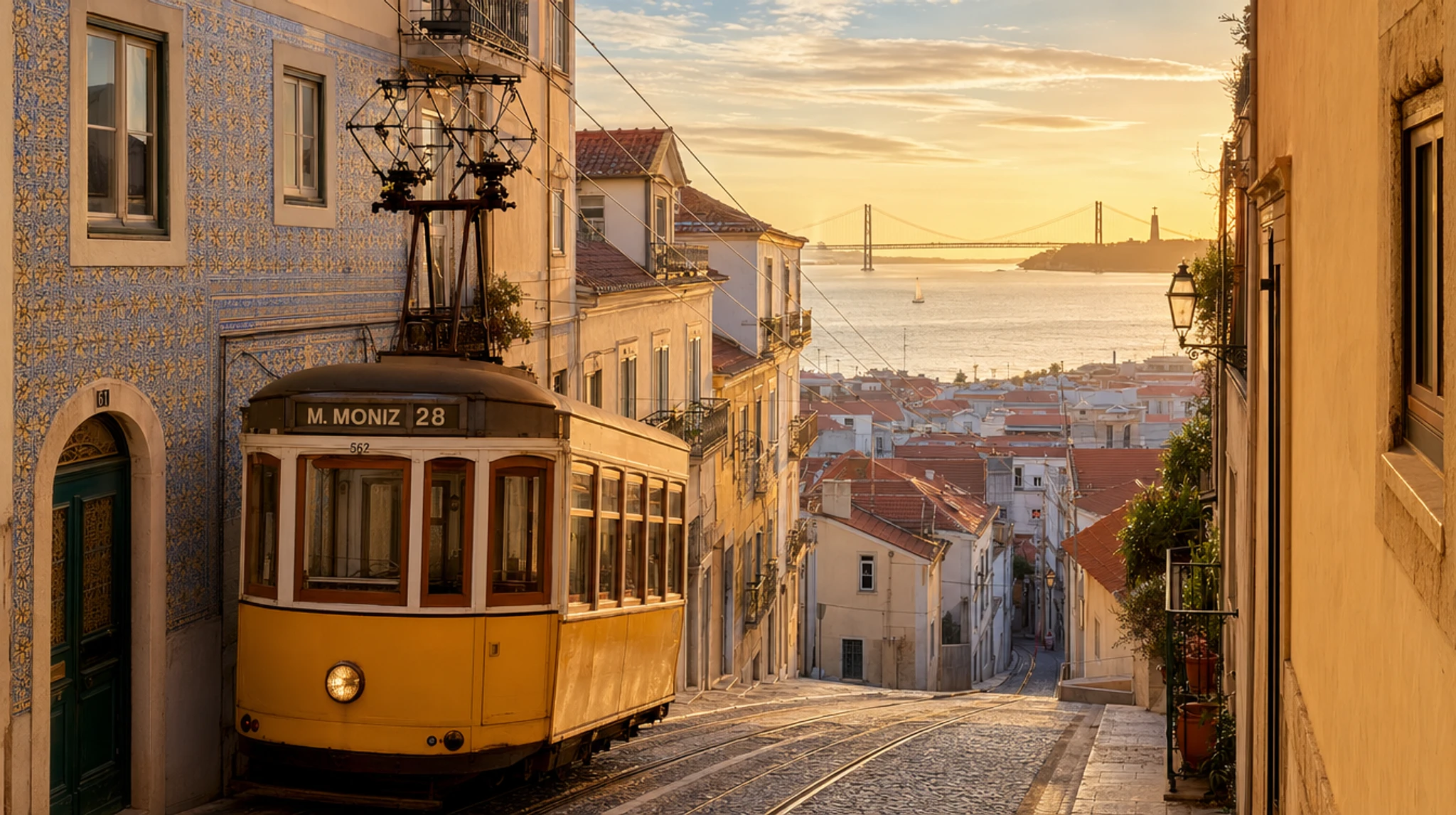
Portugal’s southern coast — ochre limestone cliffs, hidden coves, and the country’s biggest summer scene. Lagos is the party town on the west end; Faro is the walled, quieter, more authentic capital on the east; Tavira on the Spanish border is the underrated gem. The cliffs glow almost orange at sunset.
- Benagil sea cave (reached by kayak or stand-up paddleboard from Marinha beach)
- Ponta da Piedade cliff walks from Lagos; Praia da Marinha and Praia da Falésia
- Faro’s walled old town (Cidade Velha) and the Ria Formosa lagoon islands (Culatra, Farol)
Signature eats: Cataplana de marisco (copper-pan seafood stew), charcoal-grilled sardines, dom rodrigo almond-and-egg-yolk sweets.
🌋 Madeira
A subtropical volcanic island south-west of mainland Portugal — cliff-walled, year-round mild, and famous for its levada irrigation-channel walks. Madeira is NOT the Azores — it is warmer, drier, further south, and has one main urban centre (Funchal). Claimed by Portuguese sailors in 1419, the island never had an indigenous population.
- Funchal old town (Zona Velha) and the cable car up to Monte Palace Tropical Garden
- Pico do Arieiro to Pico Ruivo ridge hike — one of Europe’s great ridge walks
- Levada do Caldeirão Verde and the Cabo Girão glass skywalk (Europe’s highest sea cliff at 580 metres)
Signature eats: Espetada (garlic beef skewered on bay-leaf stakes over open coals), bolo do caco garlic flatbread, Madeira fortified wine at Blandy’s (est. 1811).
🌿 Azores
A nine-island volcanic archipelago in the mid-Atlantic — crater lakes, whale-watching, and almost no crowds. The Azores are wetter, greener, cooler and much less developed than Madeira; São Miguel is the main island, and the archipelago was uninhabited when Portuguese sailors arrived in 1427.
- São Miguel: Sete Cidades twin crater lakes (blue + green), the Furnas geothermal valley, and Lagoa do Fogo
- Pico Island: climb Mount Pico (2,351 m — Portugal’s highest peak)
- Faial Island’s Capelinhos volcano site and whale-watching from Horta marina
Signature eats: Cozido das Furnas (stew slow-cooked underground in geothermal steam), queijo São Jorge cheese, line-caught Atlantic tuna.
Portuguese Culture & Etiquette — What to Know Before You Go
Portugal is Iberian but decisively not Spanish. The language is closer to Latin in several key sounds, the cuisine is Atlantic and cod-based rather than Mediterranean, and the national mood runs on saudade — a bittersweet longing rather than the extroverted alegría next door. Nothing marks a visitor quicker than greeting a Portuguese shopkeeper with Spanish hola. A simple olá (hello), bom dia (good morning) and obrigado (thank you, spoken by men) or obrigada (by women) goes a long way.
The Essentials
- Meals run late. Lunch is 1-3pm, dinner rarely starts before 8pm, and 9-10pm is normal for sit-down restaurants. Anywhere serving dinner at 6:30pm is serving tourists.
- The couvert (bread, olives, cheese, butter placed on your table before you order) is optional and charged per item you eat. Politely decline with “não, obrigado/a” if you don’t want it.
- Greet with a handshake in formal contexts; two cheek kisses (right cheek first, then left) between women and in casual social settings.
- Coffee is serious. An espresso is uma bica in Lisbon and um cimbalino in Porto. A milky espresso in a tall glass is a galão. Don’t order a “latte” — it doesn’t mean what you think in Portuguese cafés.
- Fado is a UNESCO-listed art form, not background music. In a fado house, when the lights dim and the word silêncio is called, conversation stops entirely — clapping during a song is considered disrespectful.
Fado-House Etiquette
- Fado is sung in three-song sets (fados corridos). Clap only at the end of each complete set, never between individual songs.
- Tip the fadista or guitarists with a discreet note left on a nearby table, or handed over when you leave at the end of the evening.
- Order food and drinks during the breaks between sets — never while a fadista is performing.
- Traditional fado houses (Mesa de Frades, Clube de Fado, A Baiuca) have a minimum consumption — budget €30-50 per person.
A Food Lover’s Guide to Portugal
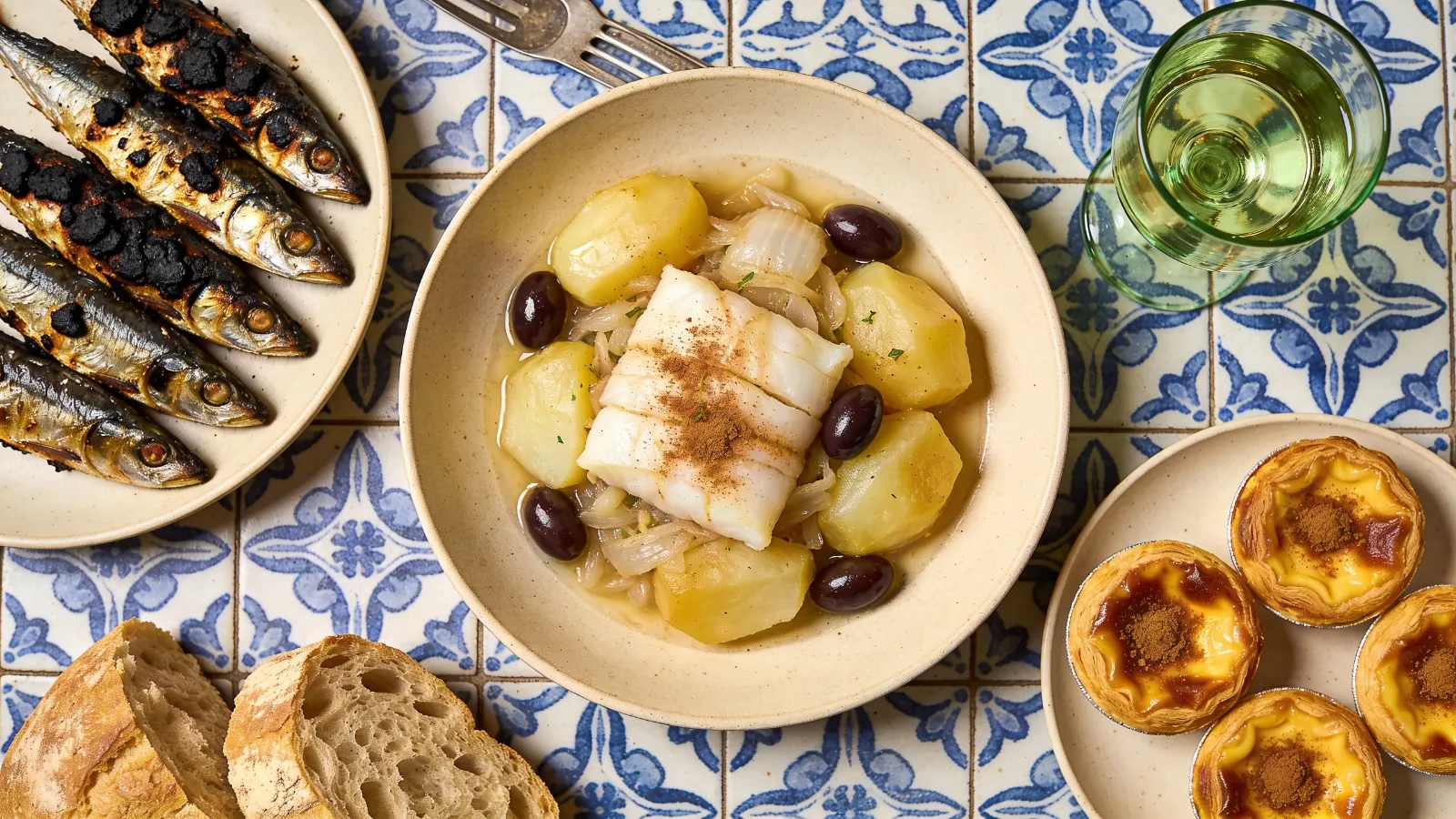
Portuguese food is Atlantic, regional, and quietly one of Europe’s great under-appreciated cuisines. The country runs on salt cod (bacalhau), olive oil, charcoal grills, fresh coriander, and a per-capita seafood consumption second only to Japan. Every region defends its variants — the Minho has caldo verde, the Douro has port, the Alentejo has pork-and-clam carne de porco à alentejana, the Algarve has cataplana, and Madeira has espetada. Everywhere there is pastel de nata.
Must-Try Dishes
| Dish | Description |
|---|---|
| Bacalhau | Salt-cured cod — Portuguese folklore claims one recipe for each day of the year. Signature versions: bacalhau à brás (shredded with onions, matchstick potatoes, scrambled eggs), bacalhau com natas (baked under cream), bacalhau à Gomes de Sá (Porto’s baked version with potatoes and olives), and pastéis de bacalhau (deep-fried cod croquettes). |
| Pastel de Nata | Custard tart in a laminated pastry shell, baked at roughly 300°C until the top blisters to caramelised dark spots. Invented in the 18th century by monks at the Jerónimos Monastery in Belém; the original recipe still belongs to Pastéis de Belém (est. 1837). |
| Francesinha | Porto’s hangover-era sandwich — layered ham, fresh sausage, linguiça, thinly sliced steak and melted cheese, drowned in a tomato-and-beer sauce, topped with a fried egg and chips. Invented at Café A Regaleira in the 1950s. Not eaten outside Porto. |
| Cataplana | The Algarve’s seafood stew (clams, shrimp, monkfish, chouriço, tomato, garlic, cilantro) cooked and served in its namesake hinged copper clam-shell pan. Sealed and steamed at the table — the pan opens to release a cloud of shellfish steam. Minimum two people. |
| Caldo Verde | A silky pale-green soup of shredded couve tronchuda kale, mashed potato, olive oil, garlic and a slice of smoky chouriço, originally from the Minho region. Served with broa (coarse corn bread) at every Santos Populares dinner. Portugal’s national soup. |
| Sardinhas Assadas | Whole fresh sardines charcoal-grilled over open flames and served on a slab of bread or on a plate with boiled potatoes and peppers. The street-food icon of Lisbon’s Santos Populares every June. |
| Bifana | Marinated thin pork cutlet sandwich in a crusty papo-seco bread roll, dressed with mustard or piri-piri — Portugal’s answer to the French dip. Eaten standing at a beer-tiled tasca counter with a small draft Super Bock or Sagres. |
Pastelaria & Tasca Culture
Portugal has no konbini or 24-hour convenience-store culture. Instead it runs on the pastelaria (neighbourhood pastry-café) and the tasca (no-frills tile-walled restaurant). A morning coffee — uma bica in Lisbon, um cimbalino in Porto — plus a pastel de nata and fresh-squeezed orange juice costs roughly €3, and a full tasca lunch of soup, main and wine lands at €10-14.
- Chains: Padaria Portuguesa (Lisbon-area bakery chain), Confeitaria Nacional (est. 1829), Pastéis de Belém (the original custard-tart source).
- Signature items: pastel de nata, bifana, prego beef sandwich, rissóis (half-moon fried turnovers), bola de Berlim (jam doughnut), galão (milky espresso), uma imperial (small draft).
At the top end, Portugal holds dozens of Michelin-starred restaurants, led by two-star Belcanto in Lisbon and two-star The Yeatman in Porto, which charge roughly €250-350 per person with wine pairings.
Off the Beaten Path — Portugal Beyond the Guidebook
Évora & the Alentejo Plains
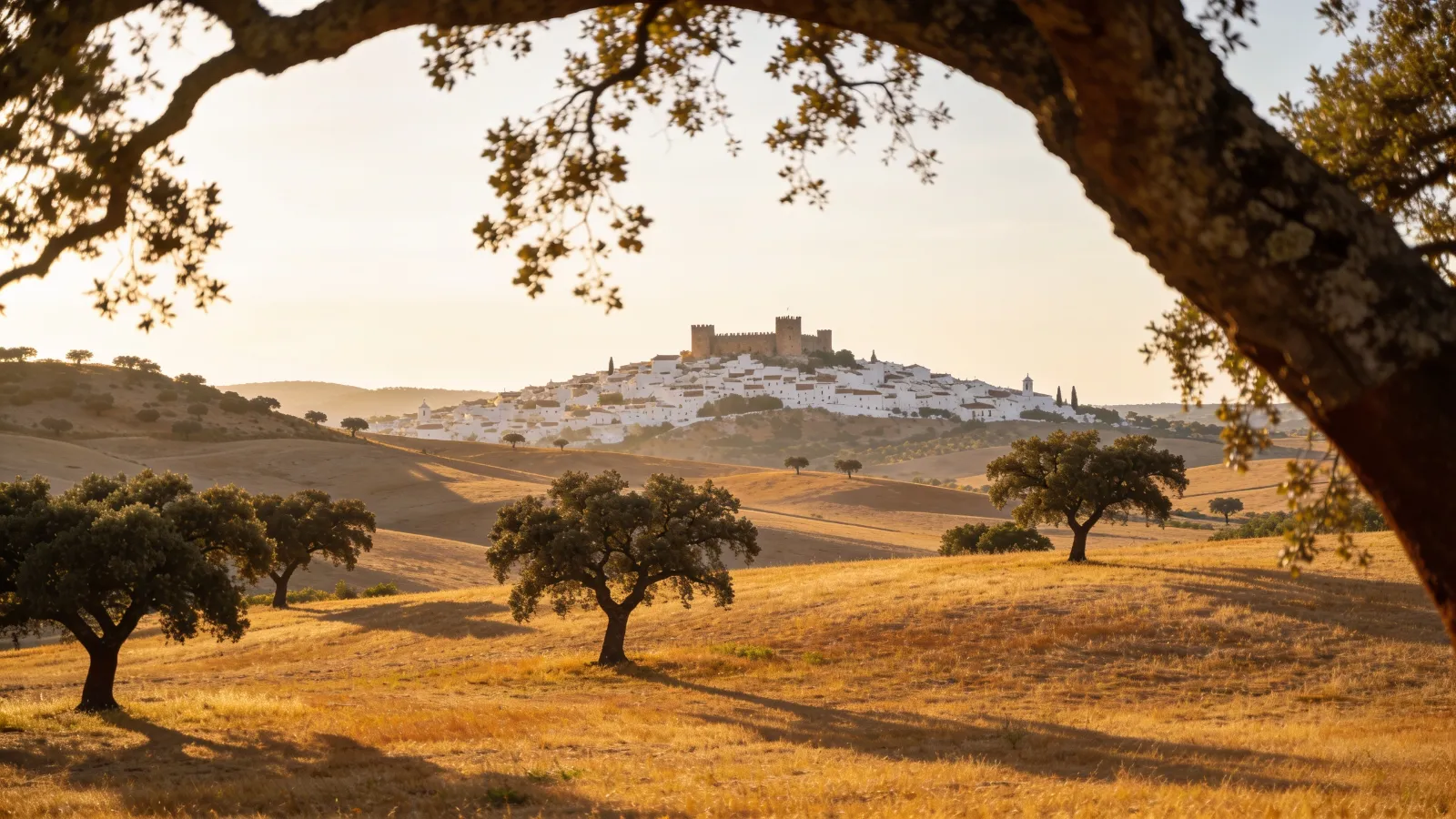
A UNESCO-listed walled Roman and medieval town in the rolling cork-oak plains east of Lisbon, reached by a 90-minute CP train from Oriente. Évora preserves a standing 1st-century Roman Temple (to Diana), a 16th-century Chapel of Bones (Capela dos Ossos) whose interior walls are tiled with the skulls and long-bones of an estimated 5,000 monks, and a whitewashed Moorish-era alley grid that survives almost untouched. The surrounding Alentejo region produces Portugal’s full-bodied red wines, breeds the black Iberian pig, and is where roughly half the world’s cork is harvested.
Douro Valley Wine Terraces
The world’s oldest officially demarcated wine region (marked out in 1756 by the Marquês de Pombal) — 250 km of hand-built terraced schist and slate slopes east of Porto, with the Douro river threading through. Take the CP train from Porto São Bento to Pinhão along the riverbank (one of Europe’s most beautiful two-hour rail rides), stay at a working quinta guest-house such as Quinta do Crasto or Quinta Nova, and time a September or early-October visit to help stomp grapes by foot during vindima.
Óbidos
A perfectly preserved walled medieval village 85 km north of Lisbon — whitewashed houses with blue or yellow trim, a 12th-century castle converted into a luxurious pousada hotel, and streetside stalls selling ginjinha cherry liqueur served in edible dark-chocolate shot cups. The main gate Porta da Vila is tiled with 17th-century azulejos; the town walls are fully walkable and just under 1.6 km in circumference. Visit mid-week outside July-August to dodge the day-trip tour buses.
Berlengas Archipelago
A protected UNESCO biosphere reserve of jagged granite islands 10 km off the coast from Peniche — reachable by 30-minute boat crossings from May to September, with a 17th-century star-shaped fort built on a sea stack. The water is some of the cleanest in mainland Portugal, ideal for diving and snorkelling. Daily visitor numbers are capped to protect the breeding colonies of Cory’s shearwaters and other Atlantic seabirds.
Monsanto
A granite village in the central Beira Interior region, built around and underneath 200-tonne boulders that form the roofs, walls and foundations of the houses. Declared the “most Portuguese village in Portugal” in a 1938 competition, Monsanto is crowned by a ruined castle on the peak with 360-degree views east into Spain. A few years ago it was used as a Game of Thrones filming location (the Iron Islands). Reachable only by rental car — the nearest train is at Castelo Branco, 40 km away.
Practical Information
| Currency | Euro (€ / EUR); 1 USD ≈ 0.94 EUR (April 19, 2026) |
| Cash needs | Portugal is card-friendly — contactless is accepted even at small tascas and neighbourhood markets. Keep €40-60 in small notes for rural Alentejo tascas, taxis outside the big cities, and tips at fado houses. |
| ATMs | Multibanco ATMs are ubiquitous; they charge no direct fee for foreign cards, though your home bank may. Decline dynamic currency conversion and always choose to be billed in euros. |
| Tipping | Not expected but appreciated — round up at cafés, leave 5-10% at sit-down restaurants if service was good, €1 per bag for hotel porters, and a discreet note on the table at a fado house. |
| Language | Portuguese. English is widely spoken in Lisbon, Porto, the Algarve tourist zones and among under-40s; thinner in small inland towns. Spanish is understood but NOT the same language — use Portuguese phrases where possible. |
| Safety | Very safe — Portugal ranks 7th worldwide in the 2024 Global Peace Index, one of the top-10 safest countries on Earth. The main risk is pickpocketing on Lisbon’s Tram 28 and around the Porto Ribeira waterfront. |
| Connectivity | Excellent 4G/5G coverage nationwide from MEO, NOS and Vodafone. eSIMs (Airalo, Holafly) activate on arrival; hotel and café Wi-Fi is standard. |
| Power | Type F (Schuko) plugs; 230V / 50 Hz |
| Tap water | Safe and palatable nationwide, though many Lisbon and southern locals prefer bottled (água sem gás / água com gás) on taste grounds. |
| Healthcare | EU-standard public hospitals; EHIC cards work for EU visitors, others need travel insurance. Green-cross farmácias have a duty-rotation roster — the nearest 24/7 pharmacy is posted on every closed pharmacy’s door. |
Budget Breakdown — What Portugal Actually Costs
💚 Budget Traveller
Hostels (The Independente in Lisbon, Yes! Porto, Lisb’on Hostel), supermarket stops at Pingo Doce or Continente, a city transit card plus CP Promo fares booked a week ahead, and the occasional long-distance Rede Expressos bus in place of Alfa Pendular. Doable at €60-90 per day (~US$65-100), with Porto and Coimbra noticeably cheaper than Lisbon or the Algarve coast. A pastel de nata and bica breakfast under €3, a tasca lunch-of-the-day menu (prato do dia) for €8-11, a bifana dinner with a beer for €6-8, and a half-bottle of vinho verde from a supermercado under €3.
💙 Mid-Range
3-star hotels or a centrally located Vrbo/Airbnb, one sit-down restaurant meal and one café meal per day, Alfa Pendular tickets booked 2-3 weeks ahead, and a couple of paid sights (Pena Palace full ticket: €20, a Douro Valley full-day tour from Porto: €75-110). Plan €130-210 per day (~US$140-230). Lisbon and the Algarve in peak July-August push the top of that range; shoulder season (April-May, September-October) holds comfortably at €140.
💜 Luxury
5-star hotels (Belmond Reid’s Palace in Madeira, Four Seasons Ritz Lisbon, Vila Joya on the Algarve), Alfa Pendular first-class (conforto) carriages, Michelin-starred tasting menus with pairings, and private driver transfers through the Douro or to Sintra. Plan €370+ per day (~US$400+). A 2-star Michelin tasting in Lisbon (Belcanto, Alma) with paired wines runs €250-350 per person; a stay in a converted Douro quinta with private vineyard tours is €450-900 per night in vindima season.
| Tier | Daily (USD) | Accommodation | Food | Transport |
|---|---|---|---|---|
| Budget | $65-100 | Hostel €20-35 / guesthouse €50-75 | €15-25/day | City pass €6-7/day or Andante/Navegante monthly €30-42 |
| Mid-Range | $140-230 | 3-star hotel €90-160 | €35-60/day | Alfa Pendular Lisbon-Porto €35-45 |
| Luxury | $400+ | 5-star hotel €300-600+ | €120-250/day | First-class Alfa Pendular / rental car €80-150/day |
Planning Your First Trip to Portugal
- Pick your regions. Choose TWO of: Lisbon + Sintra, Porto + Douro, the Algarve, or an Atlantic island. Three regions fit inside 10 days via Alfa Pendular; four means most of your trip in transit.
- Book Alfa Pendular tickets on cp.pt. CP Promo fares, booked two to three weeks in advance, drop a Lisbon-Porto ticket to roughly the price of a cocktail.
- Lock your seasonal pick early. Santos Populares (mid-June) and the Algarve summer both demand accommodation booked 4-6 months ahead; Douro vindima quinta stays sell out in late spring.
- Rent a car for the Douro, Alentejo or islands — NOT the cities. Lisbon and Porto have compact historic centres with steep narrow lanes where cars are actively in the way. Pick up any rental at the airport on the way out.
- Pack layers and a rain shell. Portugal’s Atlantic weather turns on a dime, and Porto is genuinely rainier than Lisbon year-round.
Classic 10-Day Itinerary: Days 1-3 Lisbon (Alfama, Belém, Bairro Alto) · Day 4 Sintra day trip · Day 5 Alfa Pendular to Porto · Days 6-7 Porto (Ribeira, Gaia port lodges, Livraria Lello) · Day 8 Douro Valley tour · Day 9 south to Faro · Day 10 Algarve coast and fly home.
Frequently Asked Questions
Is Portugal expensive to visit?
No — Portugal is one of Western Europe’s best-value destinations, cheaper than Spain, France, Italy or the UK. Budget travellers get by on hostel and tasca food; mid-range travellers plan for 3-star hotels and sit-down dinners. Lisbon and the Algarve in July-August are the priciest combinations; Porto, Coimbra and inland Alentejo are the most affordable.
Do I need to speak Portuguese?
No. English is widely spoken in Lisbon, Porto, the Algarve tourist zones and by almost anyone under 40. A little Portuguese is appreciated: olá, bom dia, obrigado/obrigada and por favor warm every interaction. Crucially, do NOT default to Spanish — Portuguese people understand it but find it slightly insulting. Google Translate handles the rest.
Is the Portugal Pass (Interrail) worth it?
Only for travellers making several long-distance rail journeys in a single week. The Portugal Pass breaks even against point-to-point Alfa Pendular tickets only if you’re hitting Lisbon-Porto-Faro-Braga in quick succession. For most visitors, CP Promo fares booked 2-3 weeks ahead come in cheaper.
Is Portugal safe for solo travellers?
Yes — one of the safest countries on Earth, ranking in the global top-10 of the Global Peace Index. Solo women report feeling comfortable on urban transit at night. Main risks: pickpocketing on Lisbon’s Tram 28, around Porto’s Ribeira, and in crowded Santos Populares streets in June.
When is the best time to visit the Algarve?
Late May and late September. The Algarve coast is warm enough to swim from June through early October, with the least crowded month being September and the least pleasant being a crushing July and August. Winter is Europe’s mildest mainland winter but too cool to swim — perfect for cliff hiking and golf.
Can I get by as a vegetarian or vegan?
Increasingly yes, especially in Lisbon, which has become one of Europe’s leading vegan cities. Dedicated vegan restaurants and vegan butchers cluster in Príncipe Real and LX Factory; Porto is a few years behind but catching up. Traditional tasca menus are meat- and fish-heavy, but sopa de legumes, arroz de tomate and caldo verde (ask to hold the chouriço) are reliable plant-based options.
What’s the difference between Madeira and the Azores?
Everything except the flag. Madeira is a single subtropical island south-west of Lisbon — warmer year-round, drier, cliff-walled, with Funchal as its one main city and a long tradition of fortified wine. The Azores are a nine-island mid-Atlantic archipelago west of Lisbon — cooler, much rainier, greener, far less developed, and known for whale-watching, crater lakes and volcanic geology. If you want beaches, levadas and a direct flight, pick Madeira. If you want remote volcanic hiking and no crowds, pick the Azores.
Ready to Explore Portugal?
Portugal rewards travellers who slow down. Pick two regions, book your Alfa Pendular tickets early, learn five Portuguese words, and let saudade, the Atlantic light and an €0.80 bica do the rest. Start in Lisbon for the fado, Porto for the port wine, the Algarve for the cliffs, or the Azores for the silence.
Explore More
Cities we cover in Portugal
More country guides you might like
Plan your trip to Portugal
The booking tools we use ourselves. FFU may earn a commission at no extra cost to you.
Plan & book your trip to Portugal
Booking through these searches supports our guides at no extra cost to you.