
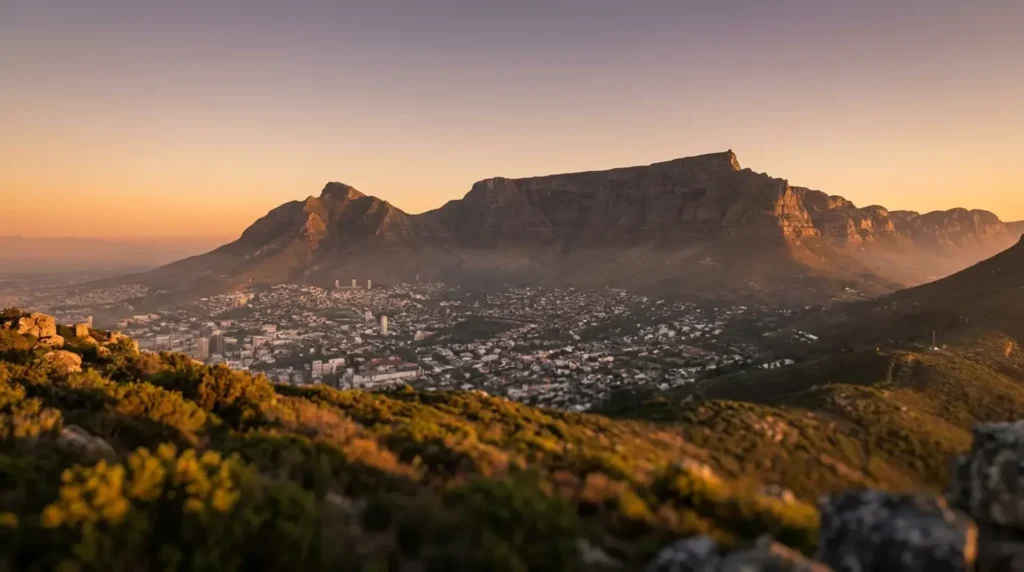
Cape Town, South Africa: Where Table Mountain Meets Two Oceans
Part of our South Africa travel guide.
Cape Town City Guide
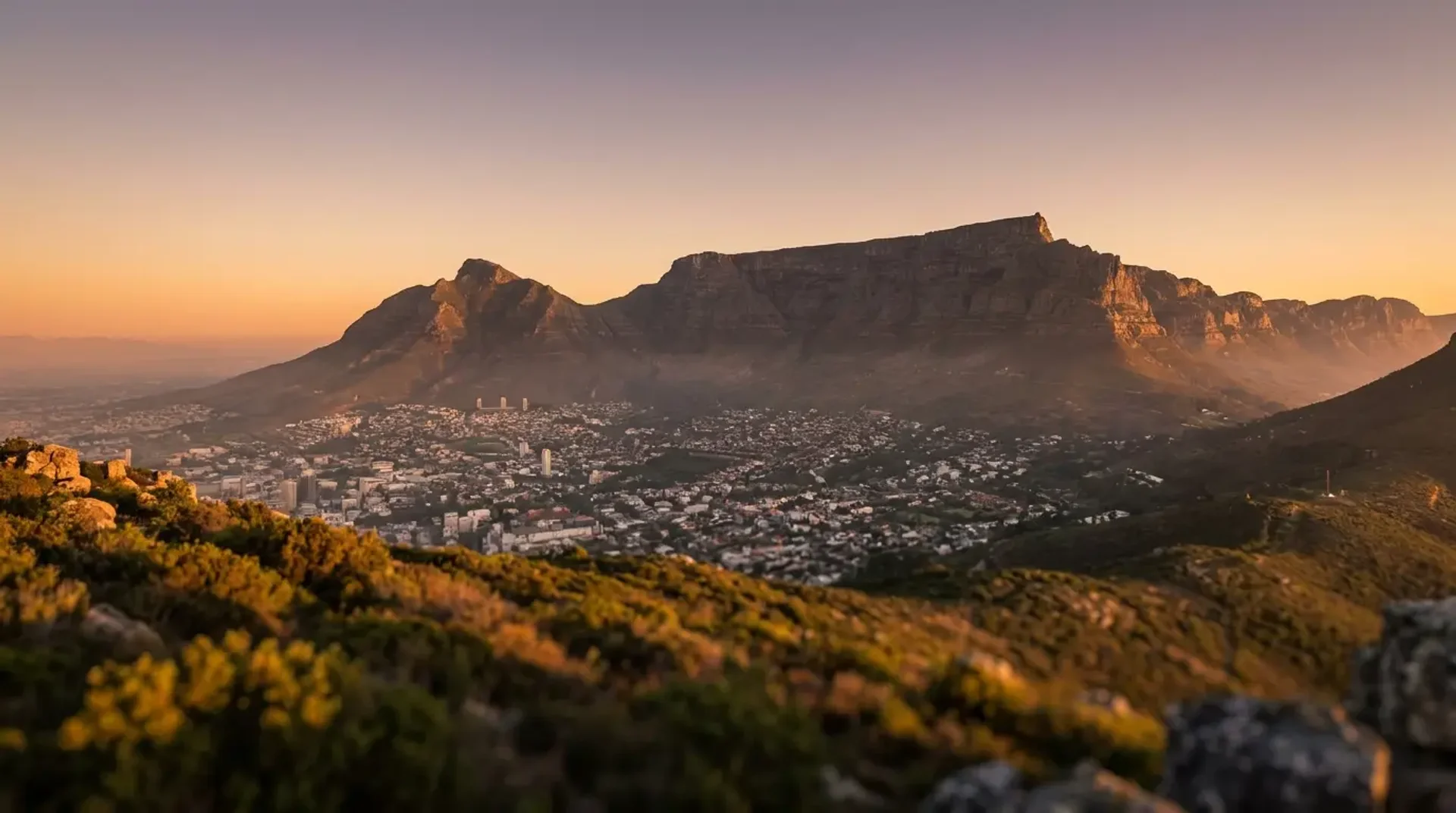
Table of Contents
Why Cape Town?
Cape Town is the only major city on earth where a UNESCO-listed natural wonder rises 1,086 m straight out of the central business district, two oceans collide at the city's southern tip, and the world's oldest wine appellation sits inside the municipal boundary. Few destinations compress this much landscape, history and cuisine into a single metro of roughly 4.8 million people — fewer still do it with a cold Atlantic on one side and the warm False Bay on the other, both patrolled by African penguins and great white sharks. From a single deck chair on Camps Bay beach you can watch sundown over the Twelve Apostles, turn your head, and see the cableway climb Table Mountain; drive half an hour east and you are tasting 340-year-old chenin blanc in a Cape Dutch cellar at Groot Constantia (est. 1685).
The contradiction the city hands every visitor is its layered, uneasy history. Cape Town is where the Dutch East India Company landed in 1652 to plant cabbages for scurvy-stricken sailors rounding the Cape; it is where apartheid forcibly removed 60,000 residents from District Six in the 1960s and imprisoned Nelson Mandela on Robben Island for 18 of his 27 years in a 2.4 m cell visible today on ferry-accessed UNESCO tours. It is also where Mandela walked free on 11 February 1990 and delivered his first public address from the balcony of City Hall on Grand Parade. The new Cape Town overlays luxury fynbos spa lodges, township mural projects, open-air jazz festivals and beach-pull-in fish-and-chip shops without fully reconciling any of them — and the result is the most visually beautiful and narratively dense city on the African continent.
Cape Town is also the only African city on the World's 50 Best Restaurants list, with FYN currently ranked Africa's best, and the V&A Waterfront draws more than 24 million visitors per year, making it the most-visited attraction in sub-Saharan Africa. Over the course of this guide you will get our route through the ten neighbourhoods worth structuring a visit around, a full working knowledge of Cape Malay cooking and the 1970s invention of the Gatsby, five day trips that together cover the Cape Peninsula and Winelands, and a practical read on load-shedding, visas and the 2018 Day Zero drought that reshaped how the city thinks about water. We will also map the Cape Town Cycle Tour (8 March 2026) and whale season at Hermanus (Jun–Nov) onto your planning calendar.
Neighborhoods: Finding Your Cape Town
📍 Cape Town Map: Every Place in This Guide
Cape Town sits on a narrow granite peninsula between Table Bay and False Bay, ringed by the 1,086-metre Table Mountain and its flanking peaks — Lion's Head (669 m) and Devil's Peak (1,000 m) — which act as the city's natural index. The ten neighbourhoods below cover every itinerary from a four-night first visit to a three-week deep-dive, and each is anchored to a specific MyCiTi route or coastal drive so you can plug it into your plan without a map. Together they cover the historic CBD, the entire Atlantic seaboard from Mouille Point to Cape Point's approaches, the Table Mountain back slope at Kirstenbosch and Constantia, and the industrial-design belt along the railway corridor.
City Bowl / CBD
The City Bowl is the historic commercial core, cradled between Table Mountain, Signal Hill and Devil's Peak — literally a bowl in the topography. Long Street runs the length of it as the backpacker bar strip; St George's Mall pedestrianises the financial spine; Company's Garden (planted 1652 as the Dutch East India Company's vegetable plot) is the shaded lung at the southern end. The Castle of Good Hope (1666–1679) and City Hall (site of Mandela's 1990 balcony speech) sit on the eastern edge facing Grand Parade. Adderley Street is the rush-hour artery, and the CBD works best on foot with Uber hops after dark.
- Company's Garden — 1652 VOC vegetable plot, now 8 hectares of oak-shaded paths with the National Gallery and Planetarium.
- Long Street — roughly two kilometres of Victorian iron-lace balconies, bookshops and late-night bars.
- Greenmarket Square — 1696 cobbled trading square; African craft market Mon–Sat 08:30–16:00.
- Iziko South African Museum — natural-history flagship with Karoo dinosaur fossils.
- Cape Town City Hall — Mandela's first public-speech balcony on 11 February 1990.
Best for: first-timers, history walks, central walking base. Access: MyCiTi A01 airport bus terminates at Civic Centre on Hertzog Boulevard; Cape Town Station on Adderley Street.
V&A Waterfront
The Victoria & Alfred Waterfront is a 123-hectare working harbour remade since 1992 into a retail, museum and hotel precinct that now draws more than 24 million visitors per year — more than any attraction in sub-Saharan Africa. The Alfred Basin is the original 1860 harbour and still home to a live Cape fur-seal colony visible from the jetty; the Nelson Mandela Gateway is where Robben Island ferries depart three times a day; the V&A Food Market inside the Watershed houses a Saturday-dense lineup of Cape Malay, seafood and cheesemaker counters. Zeitz MOCAA (2017) occupies a converted 1921 grain silo with a Thomas Heatherwick-carved atrium.
- Nobel Square — bronzes of South Africa's four Nobel Peace Prize winners (Luthuli, Tutu, Mandela, de Klerk).
- Two Oceans Aquarium — 3,000 marine animals, predator-tank feed at 15:00 daily.
- Nelson Mandela Gateway — Robben Island ferry departure quay, 09:00/11:00/13:00 sailings.
- Zeitz MOCAA — 42 grain-silo tubes carved into a cathedral atrium of contemporary African art.
- Watershed craft market — 365 days a year, 150+ curated African-design stalls.
Best for: families, evenings-alone safety, museum pairings, rainy days. Access: MyCiTi 104 from Civic Centre; 10-minute drive or 20-minute walk from CBD.
Camps Bay
Camps Bay is the Atlantic-seaboard cocktail strip beneath the Twelve Apostles — the 12-peak granite ridge that trails south from Table Mountain. The blue-flag beach is palm-lined, the Victoria Road promenade is one of the world's great sundown boulevards, and the restaurants along the sand run uninterrupted for 400 metres. The water is a genuinely cold 14–17°C year-round because of the Benguela upwelling, which is why people sunbathe rather than swim. Accommodation is luxury-leaning (Twelve Apostles Hotel, Atlantic House, The Bay Hotel) and prices climb 40–80% in December school holidays.
- Camps Bay Beach — Blue Flag sand with Twelve Apostles backdrop.
- The Bungalow — beachfront cocktail restaurant, sunset service is the ritual.
- Twelve Apostles Hotel spa — cliff-edge infinity pool, day-use passes R950.
- Maiden's Cove — protected tidal pools between Camps Bay and Clifton.
- Victoria Road scenic drive — roughly seven kilometres cliff-top stretch along the M6.
Best for: beach days, sunset dining, honeymoon stays, luxury seaside stays. Access: MyCiTi 108 or 109 from Civic Centre; about a quarter-hour by car over Kloof Nek pass.
Clifton
Clifton is four consecutive coves (1st, 2nd, 3rd and 4th Beach) tucked directly under Lion's Head and sheltered from the south-easter by high granite boulders. The water is the warmest on the Atlantic seaboard — still bracing at around 16°C — and the granite baffles mean Clifton beaches stay windless on the same afternoons that Camps Bay is blowing sand. Each beach has its own culture: 1st is surfer-heavy, 2nd is families, 3rd is LGBTQ-friendly, and 4th is the Blue Flag beach with the lifeguard and the most reliable shelter. Stair access descends from Victoria Road in three places.
- Clifton 4th Beach — most-sheltered, lifeguarded Blue Flag cove.
- Clifton 1st Beach — locals' surf break with an easy walk-out.
- Victoria Road viewpoints — sunset watching from the M6 verge.
- The Bungalow Clifton steps — linked food-and-drinks terrace.
Best for: beach lounging on windy days, photo-worthy swims. Access: MyCiTi 108 from Civic Centre; informal parking attendants collect R20/hour.
Sea Point
Sea Point is the dense beachfront residential strip along a 7 km paved promenade linking Mouille Point (with the 1824 red-and-white striped lighthouse) to Bantry Bay. The promenade is the city's morning jogging track, the Sea Point Pavilion 24-hour saltwater tidal pool is the sunrise swimmer's anchor, and Main Road is a cosmopolitan belt of kosher bakeries, Portuguese delis, Italian grocers and gelato counters. Sea Point hotels run mid-range (Winchester Mansions, President Hotel) and the neighbourhood is an easier-for-walking alternative to the CBD for solo travellers.
- Sea Point Promenade — 7 km paved waterfront walk, busy from 05:30 daily.
- Sea Point Pavilion — Olympic-length unheated tidal pool, open during extended daylight hours.
- Mouille Point Lighthouse — 1824 red-and-white-striped navigation tower.
- Giovanni's Deli — Italian grocer and long-standing deli counter.
- La Boheme — 1990s-era wine bar with small plates.
Best for: walkers and joggers, mid-range hotels, solo female travellers. Access: MyCiTi 104 from Civic Centre; 5-minute drive or 20-minute walk from V&A.
Woodstock
Woodstock is the former industrial quarter east of the CBD that reinvented itself across the 2010s as Cape Town's arts, design and street-food district. The Saturday Neighbourgoods Market at the Old Biscuit Mill (09:00–14:00) is the reason every traveller stops, with 100+ food stalls, Truth Coffee's sibling roasters and the surrounding Woodstock Exchange design block. Albert Road is painted end-to-end with legal street-art commissions by artists including Faith47, DALeast and Freddy Sam, curated annually by the Baz-Art mural festival. Metrorail to Woodstock runs in daylight only; Ubers from CBD are R45–75.
- Old Biscuit Mill — Saturday Neighbourgoods Market, Cape Town's best farmers' market.
- Woodstock Exchange — multi-floor design collective with furniture and jewellery studios.
- Albert Road street-art corridor — dense mural strip curated by Baz-Art.
- The Test Kitchen alumni restaurants — several chefs from Luke Dale-Roberts' closed flagship now run their own spots in the district.
- Mother City Hinterland coffee roasters — craft roastery with a tiny tasting counter.
Best for: design shopping, Saturday brunch, photography of murals. Access: Metrorail Southern Line to Woodstock Station (daylight only); 10-minute Uber from CBD.
De Waterkant
De Waterkant is the pastel-painted Cape Malay-era cottage quarter between the CBD and Green Point, with narrow cobbled streets and houses in pinks, yellows, turquoises and limes. Cape Quarter Lifestyle Village is the retail spine; Somerset Road is the restaurant-and-cocktail strip; and Prestwich Memorial houses the reburied 17th-century remains of enslaved people excavated during road-widening in 2003. The neighbourhood is Cape Town's LGBTQ-friendly hub and one of the city's best-preserved mixed-heritage precincts. It is also walking distance to the V&A, which makes it a good mid-range base.
- Cape Quarter Lifestyle Village — boutique mall with deli-restaurants and design shops.
- Prestwich Memorial — reburied remains of 17th-century enslaved Capetonians.
- Dias Tavern — Portuguese institution serving prego rolls and trinchado.
- Loop Street boutiques — independent Cape designers, closing weekends at 17:00.
- Somerset Road cafe strip — brunch-and-cocktail thoroughfare.
Best for: boutique shopping, LGBTQ nightlife, short walks to V&A. Access: MyCiTi 104 from Civic Centre or 10-minute walk north-west from Long Street.
Green Point
Green Point is the 2010 FIFA World Cup stadium district with the 55,000-capacity Cape Town Stadium, the 35-hectare Green Point Urban Park and the seaside Mouille Point promenade linking onward to Sea Point. The stadium now hosts the DHL Stormers Super Rugby franchise, concerts (Ed Sheeran and Coldplay in 2024) and Cape Town City FC football, and is the preferred event venue for the city. Green Point is quieter than Sea Point, family-oriented on the park lawn, and useful as a mid-range hotel base within walking distance of the V&A.
- Cape Town Stadium — 55,000-capacity 2010 FIFA World Cup venue, now the DHL Stadium.
- Green Point Urban Park — 35-hectare biodiversity garden with a wetland section.
- Mouille Point Promenade — links onward to the 7 km Sea Point walkway.
- Cape Town Cricket Club — 1875 club grounds for domestic cricket matches.
- Virgin Active Point — 24-hour gym with a rooftop pool, day passes R350.
Best for: sports events, morning runs, family-friendly outdoor space. Access: MyCiTi 104 or Stadium routes from Civic Centre.
Bo-Kaap
Bo-Kaap ("above the Cape") is the Cape Malay heritage neighbourhood rising up the lower slopes of Signal Hill, a short walk from Long Street. The cobbled streets are lined with one- and two-storey 18th-century houses painted in saturated candy colours — the tradition is said to have begun in the 1960s as a celebration of freedom after the end of the Cape Malay community's apartheid-era restrictions. The neighbourhood is still a living Muslim community — Auwal Mosque (1794) is the oldest mosque in South Africa and call-to-prayer sounds five times a day — and Atlas Trading on Wale Street has been Cape Town's first-stop spice merchant since 1946.
- Bo-Kaap Museum — 1760s townhouse at 71 Wale Street with period furnishings.
- Auwal Mosque — 1794 mosque, oldest in South Africa, founded by Tuan Guru.
- Chiappini Street photo row — the most-Instagrammed pastel-house block.
- Atlas Trading Company — 1946 Cape Malay spice merchant, bulk masala blends from R40.
- Bo-Kaap Kombuis — Cape Malay home-cooking restaurant with Table Mountain views.
Best for: photography, Cape Malay food, living-heritage walking tours. Access: 5-minute uphill walk from the top of Long Street; MyCiTi 101 to Rose Street.
Constantia
Constantia is the leafy southern-suburbs wine valley tucked on the back slope of Table Mountain, about half an hour by car from the CBD. The estate vines here date to 1685 and the 1680s cellar at Groot Constantia is the oldest in the Southern Hemisphere; the dessert wine Vin de Constance from Klein Constantia was famously shipped to Napoleon on Saint Helena (he requested a cask a month in his will) and Jane Austen name-checked it in Sense and Sensibility. Tastings range R75–140 per flight, lunches are long-table affairs on wrap-around verandas, and the Constantia Nek trailhead offers a 2.5-hour route up onto the Back Table of Table Mountain.
- Groot Constantia — 1685 Cape Dutch estate, oldest wine farm in the Southern Hemisphere.
- Klein Constantia — home of Vin de Constance, the dessert wine of Napoleon's Saint-Helena years.
- Beau Constantia — mountain-view tasting terrace over False Bay.
- Constantia Nek trailhead — 2.5-hour hike onto the Back Table of Table Mountain.
- Buitenverwachting — 1793 estate restaurant under century-old oaks.
Best for: wine tastings inside the city limits, long lunches, forested hiking. Access: Uber R180–260 from CBD (25 min); no direct MyCiTi route.
The Food
Cape Town's food culture is the most layered in sub-Saharan Africa because the city itself was founded as a food-supply station. Dutch-era cabbage gardens, Cape Malay enslaved-community kitchens, Xhosa and Khoi traditions, Huguenot wine cellars, British colonial chop-houses and a century of Portuguese peri-peri migration have all stacked onto the same pantry. The result is a coastal capital where you can eat R95 ($5) fish-and-chips on a harbour wall in the morning and an R2,395 ($127) Africa-best-ranked tasting menu in the evening without leaving the Atlantic seaboard. In 2025 Cape Town and neighbouring Franschhoek became the first African cities admitted to the Michelin Guide, an industry formalisation of what the Eat Out Top 10 list and World's 50 Best had been signalling for a decade.
Cape Malay Cuisine
Cape Malay cooking was developed by the Muslim enslaved community brought by the Dutch East India Company from Indonesia, Malaysia, Sri Lanka and Madagascar between 1658 and the 1830s, and it is the defining cuisine of Bo-Kaap and much of inner-city Cape Town. The register is sweet-savoury: turmeric, cinnamon, cardamom, cloves, allspice and fennel seeds run through most dishes, paired with dried apricots and raisins for contrast. The three canonical dishes are bobotie (spiced minced lamb or beef baked with a bay-leaf-studded egg-and-milk custard), denningvleis (sweet-tamarind braised lamb shank) and breyani (a Cape version of biryani with layered rice, meat, lentils and hard-boiled egg). The sweets — koesisters (syrup-soaked spiced doughnuts sold Sunday mornings) and koeksisters (plaited Afrikaans sugar-syrup twist) — share a name but are different recipes. Most menus also offer samoosas, chicken sosaties (skewers), and the roti-and-curry takeaway standard.
- Biesmiellah (Bo-Kaap) — reference Cape Malay restaurant on Wale Street since 1981. Bobotie and denningvleis platter R180 (~$9.60). Halal, BYOB-discouraged, open Mon–Sat.
- Bo-Kaap Kombuis — Cape Malay tasting plate with bobotie, samosas, atchar and rooibos R295 (~$15.70). Stunning Table Mountain view terrace.
- Bismillah Restaurant (Bo-Kaap) — lamb breyani with sambal R145 (~$7.70), takeaway-style service.
- Gold Restaurant (De Waterkant) — 14-dish pan-African tasting with Cape Malay koesisters, interactive djembe drumming R595 (~$31.70).
- Mariam's Kitchen (CBD, Longmarket Street) — Cape Malay lunch counter popular with office workers, samosa R12 (~$0.65) and bobotie plate R85 (~$4.50).
- Rosie's Cape Malay (Bo-Kaap pop-up dinners) — home-cooked six-course evenings on Thursday and Friday, R650 (~$34.60), advance booking only.
Seafood from the Cold Atlantic
The cold Benguela upwelling running north along the Atlantic seaboard makes the waters off Cape Town one of the five most productive fisheries on earth. The menus reflect it: West Coast rock lobster (kreef, in season Nov–Apr), black mussels scraped off the rocks at Cape Point, kingklip from 200-metre depths, yellowtail line-caught off Struis Bay, and the national fish-and-chips standard — hake in a thin batter, eaten on a harbour wall at Kalk Bay with slap chips (soggy fries) and malt vinegar. Oysters from Knysna arrive at R18–32 a piece; prawns from Mozambique-neighbouring Inhambane arrive frozen at R340/kg at Willoughby's. The cold-water species Cape salmon (geelbek) is actually a Cape Kob and the menu nomenclature is a charmingly honest mid-20th-century marketing flourish.
- Kalky's (Kalk Bay harbour) — beer-battered hake and chips with pickled onions R95 (~$5.05). Counter service, picnic tables on the harbour wall, cash-or-card.
- The Codfather (Camps Bay) — weighed-by-the-kilo line-fish plate R320/kg (~$17). No menu, you pick the whole fish from the ice counter.
- Harbour House (V&A Waterfront) — whole grilled West Coast sole with lemon butter R345 (~$18.35), dining-room views of the working harbour.
- Willoughby & Co. (V&A Waterfront) — long-queue sushi counter inside the mall; rainbow roll R245 (~$13.05) and yellowtail sashimi R185 (~$9.85). No bookings, arrive 12:00 or 19:00.
- Kalk Bay Harbour fish market — buy straight off the trawler, snoek R90/kg (~$4.80) in winter, yellowtail R160/kg (~$8.50) in summer.
- Panama Jacks (Table Bay Harbour) — rough-around-the-edges seafood institution inside the working docks; West Coast rock lobster R890 (~$47.30) for a full crayfish.
Cape Winelands on the Plate
Cape Town is the only major city on earth with an appellation of origin inside its own municipal boundary (Constantia) and another (Stellenbosch) reachable in under an hour. That proximity shows up on almost every restaurant wine list: expect the glass pour to come from a winery you can visit for lunch the next day. The big 2020s shift Shaheed flagged for this page is the so-called New Wave Cape movement away from heavy wooded chardonnay towards unoaked chenin blanc, grenache and lighter cinsault — championed by Swartland producers like Mullineux and Sadie Family and now on almost every serious city wine list. Chenin blanc is South Africa's most-planted white grape at 18.5% of national vineyard area, and Cape Town is its capital. The pairing shift for travellers is practical: open with a Swartland chenin or a Stellenbosch méthode-cap-classique sparkling rather than the default chardonnay, and you will be drinking what locals drink.
- La Colombe (Silvermist, Constantia Nek) — 8-course tasting with Klein Constantia pairing R1,995 (~$106). Consistently ranked top-50 in the World's 50 Best.
- FYN Restaurant (CBD) — Africa's #1 on 2024 World's 50 Best, Japanese-kaiseki technique applied to Cape pantry, R2,395 (~$127) with Mullineux Syrah pairing.
- Chefs Warehouse at Beau Constantia — tapas-for-two with mountain-view terrace R950/pp (~$50.55), unfussy paired Cape whites.
- Salsify at The Roundhouse (Camps Bay) — 10-course wild-foraged tasting inside an 1800s hunting lodge R1,750 (~$93).
- The Test Kitchen Fledgling (Woodstock) — alumni restaurant from Luke Dale-Roberts' closed flagship, R1,450 (~$77) six-course seasonal.
- Mulberry & Prince (CBD) — relaxed small-plates wine bar, most dishes R95–180 (~$5–10), strong unoaked-chenin list.
Beyond Bobotie and Crayfish
The city's pantry runs much further than the two headline categories. The braai (charcoal barbecue) is a weekly ritual rather than a cuisine and it runs across all Cape Town cultures — boerewors coiled sausage, lamb chops, peri-peri chicken, mielies (grilled corn) — typically cooked over seasoned rooikrans or kameeldoring hardwood. Biltong and droëwors are the air-dried-beef travel snack sold at every petrol station in portion bags from R35. Amasi (fermented milk, similar to buttermilk) with mielie pap (maize porridge) is the Xhosa breakfast. Peri-peri chicken from the Portuguese-Mozambican migration is everywhere — the Nando's chain is South African-born. And the Cape coloured community's salomie (roti wrap) and dhaltjies (chickpea-flour chilli bites) round out the street-corner repertoire.
- Boerewors roll — farmer's-sausage coil in a roll with chakalaka relish, R35–55 (~$1.85–2.95) from any braai stand.
- Biltong — air-dried and spiced beef strips, R35–60 (~$1.85–3.20) per 100 g bag, best at Frankie Fenner Meat Merchants or Woolworths.
- Bunny chow (Durban-import) — hollowed-out quarter loaf filled with curry, R80–140 (~$4.25–7.45) at Eastern Food Bazaar on Longmarket Street.
- Melktert — milk-tart Cape Dutch dessert with cinnamon, R40 (~$2.15) per slice at Charly's Bakery or Hazz Cakes.
- Amasi and pap — Xhosa fermented-milk-and-maize breakfast, on offer at Mzoli's in Gugulethu on township tours, R60 (~$3.20).
- Snoek smoorsnoek — smoked-snoek and onion flaking served on rye toast, R95 (~$5.05) at Beefcakes or the Old Biscuit Mill.
The Gatsby: Cape Town's Street-Food Classic
The Gatsby is the dish that defines Cape Town street food and one of the city's best unlikely-origin stories. In 1976 a fish-and-chip shop owner named Rashaad Pandy in Athlone — a Cape Flats neighbourhood forcibly populated by communities removed from District Six — ran out of fish at closing time and improvised a long Portuguese roll stuffed with chips, peri-peri masala, lettuce and sauce. He called it "a Gatsby smash" after the Robert Redford film then showing at the local cinema, charged R0.30, and the name stuck. The modern Gatsby is a 30 cm foot-long roll sized for four people, stuffed with polony, steak masala, peri-peri chicken or calamari, slap chips, achar and lettuce, and sold at fish-and-chip shops across the Cape Flats and into the CBD. It is the default order for football nights, taxi-rank Fridays and any shared family dinner under R200.
- Super Fisheries (Athlone) — original masala-steak Gatsby, four-person foot-long R160 (~$8.50), served wrapped in newspaper.
- Golden Dish (Athlone) — peri-peri chicken Gatsby R155 (~$8.25); Sunday queue is the sight.
- Mariam's Kitchen (CBD, Longmarket Street) — CBD Gatsby with chicken tikka and chakalaka R85 (~$4.50), single-person size.
- Eastern Food Bazaar (CBD, Darling Street) — mixed-grill thali with samosa and sosatie R120 (~$6.40), great vegetarian option.
- Salt River & Athlone drive-through fish-and-chip shops — family-run, open until midnight, R140–185 (~$7.45–9.85) per Gatsby.
Food Experiences You Can't Miss
- Saturday Neighbourgoods Market at the Old Biscuit Mill (Woodstock, 09:00–14:00) — 100+ stalls of Cape street food, craft beer and specialty coffee.
- V&A Food Market inside the Watershed — daily counter-dining across Cape Malay, seafood, charcuterie and Ethiopian injera stalls, open 10:00–20:00.
- Township food tour with Uthando or Coffeebeans Routes — shebeen stops, pap-and-chakalaka lunch at Mzoli's, registered guides only, around R950 (~$50.55) per person for a half-day.
- Sunset seafood at Chapman's Peak Hotel with a bottle of Cape Point Vineyards sauvignon blanc — book the seaward terrace for the 19:00 sitting.
- Stellenbosch wine-tram day-trip loop (Red Line) — R250 (~$13.30) for the tram, estates charge tasting fees of R75–140 separately.
- Oranjezicht City Farm Market on Saturdays at Granger Bay (09:00–14:00) — urban-farm vegetables, artisan breads, small-batch cheese and Cape craft cider beside the V&A breakwater.
- Truth Coffee Roasting on Buitenkant Street — The Telegraph's "World's Best Coffee Shop" in 2016, steam-punk fit-out and a flat white at R38 (~$2.05).
Coffee, Bakeries & Specialty Roasters
Cape Town's third-wave coffee scene is one of the deepest in the Southern Hemisphere and punches well above the city's size. Truth Coffee (Buitenkant Street) roasts in-house and operates the steam-punk flagship that The Telegraph named the world's best coffee shop in 2016; Rosetta Roastery in Woodstock runs Ethiopia-forward single-origins and supplies a third of the city's independent cafes; Tribe Coffee in Woodstock roasts daily and pours competition-grade flat whites at R38–45 (~$2.05–2.40). Jason Bakery on Bree Street is the sourdough anchor and also sells a breakfast "deep-pocket" croissant with bacon, cheese and egg at R95 (~$5.05). The Hemelhuijs on Waterkant Street is a long-lunch brunch pick. And Honest Chocolate's Wale Street cafe runs bean-to-bar drinking chocolate for R55 (~$2.95) with a view of the Bo-Kaap rise. For the travelling palate Cape Town is easier on caffeine than on wine — you will find a R35 (~$1.85) espresso with competition-level latte art on almost any residential street in the Atlantic Seaboard.
Cultural Sights
Cape Town's cultural sights are weighted toward natural UNESCO-scale landscape and the memorialisation of apartheid-era history — two categories that rarely overlap but both run through the city. The nine below are the non-negotiables; the cableway, Robben Island and District Six are the three that almost every first-timer hits, and the remainder round out three to four days of structured sightseeing. Pair the cableway with Kirstenbosch on the same clear-weather day, and reserve Robben Island and FYN lunch three weeks ahead.
Table Mountain & Aerial Cableway
Table Mountain is the UNESCO-inscribed flat-topped sandstone massif rising 1,086 m straight out of the CBD, with the Maclear's Beacon stone cairn marking the true summit. The Aerial Cableway's revolving cars complete the 5-minute ascent for R435 (~$23.15) return, adult (2026 rate). Hiking up via Platteklip Gorge takes 2.5 hours; Skeleton Gorge from Kirstenbosch takes 3 hours. Cableway operating hours are 08:00–18:00 in shoulder season, extended to 20:00 in peak summer. The Cape Floral Region inscription covers 1,094 plant families endemic to this mountain alone. Closed about 80 days a year for south-easter wind.
Robben Island (UNESCO 1999)
Robben Island is the UNESCO-listed former maximum-security prison 11 km offshore in Table Bay, inscribed in 1999 for its symbolic role in the end of apartheid. Ferries depart the Nelson Mandela Gateway at the V&A at 09:00, 11:00 and 13:00 for a 3.5-hour combined boat-plus-island tour, priced R600 (~$31.90) adult. Former political prisoners now lead the B-Section walking tour, which includes Mandela's 2.4 m x 2.1 m cell (cell 7) where he spent 18 of his 27 years. Book online two weeks ahead in peak season (Dec–Feb) — same-day tickets rarely available.
V&A Waterfront
The V&A Waterfront is free to enter and draws 24 million visitors a year, making it the most-visited attraction in sub-Saharan Africa. It overlays a still-working harbour from 1860 with a shopping-and-museum precinct opened in 1992. The Zeitz MOCAA (Museum of Contemporary Art Africa) inside the former 1921 grain silo is the architectural headline: Thomas Heatherwick carved a cathedral atrium out of 42 concrete tubes, and admission is R250 (~$13.30) with free first-Friday entry for Africans. Most shops are open 09:00–21:00 daily; the outdoor areas are 24/7.
Cape Point & Cape of Good Hope
Cape Point is the dramatic southern tip of the Cape Peninsula, 60 km from the CBD at the end of a 90-minute Chapman's Peak drive. The 238-metre cliff carries the original 1860 stone lighthouse, reached by the "Flying Dutchman" funicular from the car park. The Cape of Good Hope sign-post at the south-western corner is a 15-minute drive or a 2 km walk from Cape Point itself. Both sit inside Table Mountain National Park's southern section, which charges a SANParks day conservation fee of R400 (~$21.30) international / R100 (~$5.30) South African adult. Open Oct–Mar 06:00–18:00; Apr–Sep 07:00–17:00.
Kirstenbosch National Botanical Garden
Kirstenbosch was founded in 1913 as the world's first botanical garden devoted exclusively to indigenous flora, and now covers 528 hectares on the back slope of Table Mountain. Admission is R260 (~$13.80) foreign adult, R110 South African. The Boomslang canopy walkway — a 130 m steel-and-timber bridge rising 11.5 m above the Arboretum — is the architectural headline. The Sunday summer concerts (December to March) draw picnicking crowds of 6,000+ for acts ranging from Hugh Masekela to Goldfish; tickets R200–350 (~$10.65–18.60). Open 08:00–19:00 Sep–Mar, 08:00–18:00 Apr–Aug.
District Six Museum
District Six Museum occupies a former Central Methodist Mission Church near the CBD and memorialises the 60,000 residents forcibly evicted under apartheid's Group Areas Act in 1966. The main floor carries an enormous hand-drawn map of the bulldozed streets, and ex-resident docents lead tours Mon–Sat. Self-guided admission R60 (~$3.20); guided-by-a-former-resident tour R75 (~$4.00). A 10-minute walk from the CBD. Closed Sundays. The nearby Homecoming Centre extension at 15 Buitenkant Street opens for live theatre and music.
Castle of Good Hope
The Castle of Good Hope is the oldest surviving European building in South Africa, built 1666–1679 by the Dutch East India Company as a pentagonal star-fort. Admission R90 (~$4.80); open daily 09:00–16:00 with the Key Ceremony re-enactment at 10:00 and 12:00. The Military Museum on the Kat Balcony holds Dutch, British and South African regimental collections; the William Fehr Collection shows 17th-century Cape landscapes by painters working for the VOC.
Zeitz Museum of Contemporary Art Africa
Zeitz MOCAA opened in September 2017 inside the converted 1921 grain silo at the V&A and is the largest museum of contemporary African art in the world, with 9,500 m² of floor space across nine floors. Admission R250 (~$13.30); free for Africans on the first Friday of each month. Open Wed–Mon 10:00–18:00; closed Tuesdays. The permanent collection focuses on post-2000 African and diaspora artists — William Kentridge, El Anatsui, Kudzanai Chiurai, Zanele Muholi — with rotating temporary exhibitions.
Bo-Kaap Museum
The Bo-Kaap Museum at 71 Wale Street is set in an original 1760s Cape Malay townhouse, furnished to show a typical 19th-century Muslim family home. Admission R60 (~$3.20); open Mon–Sat 09:00–16:00. The adjacent Auwal Mosque, founded 1794 by the exiled imam Tuan Guru, is the oldest mosque in South Africa and still the Bo-Kaap Jumu'ah prayer site; visitors welcome outside prayer times and asked to remove shoes and dress modestly.
Entertainment
Cape Town's nightlife and performance scene runs on two parallel tracks: a low-key neighbourhood beer-and-live-music culture along Long Street, Bree Street, Kloof Street and Observatory, and a glossier festival-and-stadium circuit anchored by the Cape Town International Jazz Festival, Kirstenbosch Summer Concerts and the DHL Stadium in Green Point. Load-shedding occasionally dims the smaller venues (most now run generators) but the bigger-ticket events — jazz festival, summer concerts, Stormers rugby — reliably run. Uber is the default way home after 22:00.
Long Street & Kloof Street Nightlife
Long Street is Cape Town's bar-and-club spine, a roughly two-kilometre Victorian-balcony strip in the CBD with density peaking between Shortmarket and Church Streets. Beerhouse runs 99 taps of craft beer (R35–60 / ~$1.85–3.20) and opens onto the street; The Waiting Room is the rooftop jazz club above Royale Eatery; Mama Africa is the long-running live-music restaurant serving crocodile, kudu and ostrich with a nightly marimba band. Kloof Street, one block west and uphill, is the grown-up alternative — Cause Effect cocktail bar, Orphanage, and the rooftop at Kloof Street House. Cocktails run R75–130 (~$4.00–6.90). Wednesday through Saturday nights; most bars charge no cover before 22:00.
Live Music & Jazz
Cape Town is South Africa's jazz capital, a direct inheritance from the District Six-era Cape jazz scene and figures like Abdullah Ibrahim. The Crypt Jazz Restaurant in the basement of St George's Cathedral hosts six nights a week of live shows, R150–280 (~$8.00–14.90) cover plus dinner. Marco's African Place in Bo-Kaap blends jazz and marimba. The headline event is the Cape Town International Jazz Festival (late March / early April) at the Cape Town International Convention Centre, R2,100 (~$111.70) two-day pass, four stages, 40+ acts, typically 35,000 attendees.
Kirstenbosch Summer Concerts
The Kirstenbosch Summer Concerts are the most-loved event of the Cape Town calendar — Sundays at 17:00 from late November to early April, on the sloping amphitheatre lawn of the botanical garden with Table Mountain as the backdrop. Acts range from Hugh Masekela-tribute bands to Bongeziwe Mabandla and international acts like Jack Johnson. Gate tickets R200–350 (~$10.65–18.60); picnic baskets allowed; wine by the glass sold on site. Popular concerts sell out two weeks ahead. Bring a blanket, a sun hat and a jumper for when the sun drops.
Cape Town Comedy Club
Cape Town Comedy Club at the Pumphouse on the V&A Waterfront runs South Africa's flagship stand-up venue, Thursday through Sunday 20:30 shows, R180 (~$9.60) standard ticket. The founders Kurt Schoonraad and Stuart Taylor host rotating bills of South African and international acts; the Tuesday New Material nights (R80 / ~$4.25) are where Cape Town comedians test material. Walk-ins rarely possible on Friday and Saturday — book via Quicket three days ahead.
Rugby, Football & Cricket
Cape Town's sporting calendar is dominated by the DHL Stormers (United Rugby Championship and Super Rugby) at DHL Stadium in Green Point, R120–650 (~$6.40–34.60) per ticket, season February to June. PSL football runs August through May with Cape Town City FC home matches also at DHL Stadium, R60–180 (~$3.20–9.60). The 1888 Newlands Cricket Ground in the southern suburbs hosts the Cape Cobras domestic franchise and the occasional Proteas Test match (tickets from R120 / ~$6.40), with Table Mountain as the backdrop of arguably the most photogenic cricket venue on the planet.
Theatre & Opera
The Baxter Theatre on the University of Cape Town campus in Rondebosch is the city's flagship theatre, with three stages running South African drama, musicals and dance from R180–420 (~$9.60–22.35). The Fugard Theatre on Caledon Street in District Six (named for playwright Athol Fugard) hosts the smaller independent productions. Artscape Theatre Centre on the Foreshore is the municipal opera-and-ballet house, home to Cape Town Opera. Most productions run Tue–Sun with a Saturday matinee; book via WebTickets and Quicket.
First Thursdays & Gallery Nights
First Thursdays is the city's monthly art crawl — on the first Thursday of every month, galleries across the CBD, Bree Street and Loop Street stay open until 21:00 and spill their openings onto the pavement. Regulars include the Goodman Gallery (representing William Kentridge), SMAC on Buitensingel, and Everard Read (which hosts Angus Taylor and Lionel Smit solo shows). Entry is free across all participating venues; most galleries run a glass of wine or craft beer at the door, and the crowd moves in waves between Bree Street's Mother's Ruin gin bar and the pop-up DJ corners on Church and Long. A similarly structured First Fridays in Woodstock extends the same rhythm south towards the Old Biscuit Mill and Woodstock Exchange.
Day Trips
Cape Town's day-trip radius is unusually rich because the Cape Peninsula, the Winelands and the Overberg whale coast are all within 90 minutes of the CBD. The five below are the non-negotiables; doing all of them takes five days and will fill out the best week in the Western Cape. A rental car makes the difference — most destinations are beyond MyCiTi's reach — and Chapman's Peak Drive, the R61 toll road that links Hout Bay to Noordhoek, deserves a slow afternoon of its own.
Stellenbosch & the Cape Winelands (50 minutes by car via N1/R310)
Stellenbosch is South Africa's second-oldest European settlement (founded 1679) and the centre of the Cape Winelands — more than 200 wine estates sit within a 45-minute radius. Dorp Street has the densest concentration of Cape Dutch architecture anywhere, the Saturday morning Slow Market at Oude Libertas is the weekly produce anchor, and the Cape Wine Tram hop-on-hop-off runs six colour-coded routes through the surrounding farms for R250 (~$13.30) — estates charge tasting fees of R75–140 (~$4.00–7.45) separately. Must-visits: Delaire Graff for the mountain pass view, Spier for family-friendly cheetah outreach, Warwick for cabernet franc, and Jordan for long lunch. Most tasting rooms close 17:00 sharp. Return on the R310 for the sunset view of False Bay.
Boulders Beach Penguin Colony (45 minutes by car via M3/M4)
Boulders is a protected Table Mountain National Park section on the False Bay side of the peninsula at Simon's Town, home to about 3,000 African penguins — a species now listed Critically Endangered after the IUCN's October 2024 uplisting. Three wooden boardwalks lead to the viewing area at Foxy Beach; a separate gate on Bellevue Road gets you to Boulders Beach proper, where the granite boulders shelter a small cove in which penguins waddle among swimmers. SANParks admission R215 (~$11.45) foreign adult, R95 (~$5.05) foreign child. Arrive before 09:30 to beat tour-bus crowds and see the nesting chicks. Pair with a fish-and-chip lunch at Kalky's in Kalk Bay on the way back.
Cape Point & Cape of Good Hope (90 minutes by car via Chapman's Peak)
Cape Point is the cliff-edge southern tip of the Cape Peninsula, a 60 km drive south of the CBD via the spectacular Chapman's Peak Drive — a 9 km toll road (R61 per car) carved into the cliff face between Hout Bay and Noordhoek in 1915–1922. The 238-metre point carries the original 1860 stone lighthouse, reached via the "Flying Dutchman" funicular. The Cape of Good Hope signpost at the south-western corner is a 2 km walk or a short drive away. SANParks day fee R400 (~$21.30) international adult. Carry a hat, water and a windbreaker — the point is fully exposed. The full Cape Peninsula loop of 160 km takes a day including Boulders.
Hermanus Whale-Watching (1.5 hours by car via N2/R43)
Hermanus on the Overberg coast is the land-based whale-watching capital of the world between June and November, when southern right whales calve in Walker Bay within 20 m of the cliff path. A designated whale crier patrols the Old Harbour cliff and sounds a kelp horn when whales surface. The Hermanus Whale Festival on 25–27 September 2026 is free and draws about 100,000 people over three days. Extend the drive 45 minutes east to De Hoop Nature Reserve at Koppie Alleen for the densest Cape population (up to 100 whales visible). Boat trips from the New Harbour run R1,700–2,200 (~$90.40–117.00) per person, but the free cliff path gives better sightings on most days.
Franschhoek Fine-Dining Valley (1 hour by car via N1/R45)
Franschhoek ("French Corner") was founded by French Huguenot refugees in 1688 and is the 30 km oak-flanked valley with the densest concentration of Relais & Châteaux and Eat Out-ranked restaurants in Africa — all inside a village of about 18,000. Le Lude makes méthode-cap-classique sparkling, Leeu Estates and La Motte hold the top of the hotel lists, Haute Cabrière at the pass summit is the geographic bookend. Must-book: La Petite Colombe (R1,695 / ~$90.20 tasting), Protégé by Luke Dale-Roberts, and Babel at Babylonstoren. The Franschhoek Wine Tram extends from Stellenbosch for R250 (~$13.30). Book lunch two weeks out; the Franschhoek Pass viewpoint is unmissable at sunset.
Seasonal Guide
Cape Town sits in the Southern Hemisphere, so seasons are reversed from North America and Europe: December through February is summer, June through August is winter. Unlike the eastern half of South Africa, Cape Town has a Mediterranean climate — wet winters, dry summers — which is why most rain falls between May and September and the summer rain pattern of Johannesburg and Kruger does not apply.
Spring (September – November)
Spring brings rising temperatures of 14–24°C, the tail of the whale season and the West Coast wildflower bloom from late August into September. The south-easter "Cape Doctor" wind starts to pick up, which means Table Mountain Cableway closures become more frequent from October. Key 2026 events: Hermanus Whale Festival (25–27 September), Namaqualand wildflower bloom (late Aug–mid-Sep on the West Coast 2 hours north), and the Cape Town Marathon in mid-October. Shoulder-season pricing holds through October; accommodation prices begin their December climb from mid-November.
Summer (December – February)
Peak season with temperatures of 18–28°C (high 32–35°C on berg-wind days) and up to 14.5 hours of daylight on the Cape. Camps Bay and Clifton beaches are at their liveliest, New Year's Eve fireworks over Table Bay draw 100,000 onto the V&A, and Kirstenbosch Summer Concerts run every Sunday at 17:00. School holidays mid-December to mid-January push accommodation prices 40–80% above winter. Book Camps Bay and V&A hotels four to six months ahead.
Autumn (March – May)
The best-balanced window of the year. Temperatures ease to 14–24°C, wind drops, crowds thin after the first week of March, and the Cape harvest fills the Winelands with cellar events. The Cape Town Cycle Tour on 8 March 2026 brings 35,000 riders onto a 109 km loop from the CBD around the Peninsula. The Cape Town International Jazz Festival lands in late March or early April — Africa's biggest jazz festival with 35,000 attendees over two days at the CTICC.
Winter (June – August)
Cool, wet and windy with the bulk of the year's rainfall and temperatures of 8–18°C. Whale season is peaking at Hermanus (southern right calves in Walker Bay from June), and Cape Town Restaurant Week in July has 100+ venues running three-course lunch or dinner menus at fixed low prices. Hotel rates drop by as much as half — 5-star properties on the Atlantic Seaboard move from R7,000+ in December down to R2,200–3,500 per night in July. A rain jacket, an umbrella and a warm jumper are essential; bring waterproof shoes for the soggy Table Mountain trailheads and expect snow on the distant Cederberg peaks.
Getting Around
MyCiTi Bus Rapid Transit
MyCiTi is Cape Town's bus rapid transit network and the backbone of public transport across the Atlantic Seaboard, CBD and airport corridor. There are 40+ routes running on dedicated red-lane infrastructure with a tap-in, tap-out MyConnect prepaid card sold at every MyCiTi station for R35 (~$1.85). Fares are distance-based — a CBD-to-Camps-Bay trip costs R12.50 (~$0.65) off-peak, R18 (~$0.95) peak. The system is new (opened 2010 ahead of the World Cup), clean, safe and air-conditioned. Core routes: 104 (V&A–Sea Point), 108 (CBD–Camps Bay), A01 (airport). Buses run 05:00–21:30 weekdays, reduced weekends.
Metrorail Southern Line
Cape Town Metrorail operates the suburban commuter rail network, but the only line genuinely useful for tourists is the Southern Line, which runs from Cape Town Station along the False Bay coast to Muizenberg, Kalk Bay and Simon's Town. Fares are R12–22 (~$0.65–1.15) per trip. The Simon's Town-bound run is genuinely scenic — the track hugs the shoreline for 30 km and you will see dolphins and surfers. Daylight hours only; rebuilding is ongoing after the 2019–2023 vandalism and line closures. Avoid the Central Line services to Khayelitsha without local guidance.
MyConnect Prepaid Transit Card
The MyConnect card is the single prepaid tap-card that works on every MyCiTi route and can be topped up at any MyCiTi station, Shoprite, Checkers or selected petrol stations. The card itself costs R35 (~$1.85); minimum top-up is R20 (~$1.05). You tap in and tap out; fares deduct by distance. For a five-day trip budget R80–120 (~$4.25–6.40) for general city moves plus R240 (~$12.75) return for the A01 airport. Refunds on card balances are possible at the MyCiTi Civic Centre office — but almost never worth the paperwork for visitors.
Airport Access
Cape Town International Airport (CPT) is 22 km south-east of the CBD and the easiest access is the MyCiTi A01 Airport Bus. The A01 runs every 20 minutes 06:00–21:30, reaches Civic Centre in 25 minutes, and costs R120 (~$6.40) one way.
- MyCiTi A01 Airport Bus — 25 minutes, R120 (~$6.40), every 20 minutes, luggage racks on board.
- Uber / Bolt / inDrive — 25–40 minutes, R320–420 (~$17.00–22.35), 24/7, dedicated pick-up zone at arrivals.
- Hire car on-site — From R380/day (~$20.20) for a compact in April 2026, Budget / Avis / Europcar all at arrivals level.
Taxis & Ride-Hail
Metered street taxis do exist but are uncommon — flag-fall is roughly R30 (~$1.60) plus R14/km (~$0.75/km) — and ride-hail (Uber, Bolt, inDrive) has replaced them almost entirely. An Uber from the CBD to the V&A is R45–70 (~$2.40–3.70); CBD to Camps Bay R120–180 (~$6.40–9.60); CBD to the airport R320–420 (~$17.00–22.35). Drivers accept app payment and cash. Minibus taxis (the 15-seater shared commuter vans) run fixed routes at R10–25 (~$0.55–1.35) per trip but are not tourist-recommended — they are overcrowded, driven aggressively, and routes are not signed.
Navigation Tips
Apps: Google Maps, Uber, Bolt, EskomSePush (load-shedding schedule). Cape Town drives on the left, the M3 motorway and Ou Kaapse Weg are the fastest ways from the CBD to the southern peninsula, and Chapman's Peak Drive is a R61 (~$3.25) toll road between Hout Bay and Noordhoek. Traffic peaks 07:00–09:00 and 16:30–18:30 weekdays — add at least half an hour to the airport run during those windows. Treat every out-of-service traffic light as a four-way stop; they will be out often during load-shedding. An International Driving Permit alongside your home licence is technically required at most rental-car desks, though enforcement has been historically patchy; still, the document is cheap to get before you fly and saves the argument at the counter.
Budget Breakdown: Making Your Rand Count
Cape Town is one of the best-value world-class cities on earth right now for dollar-, pound- and euro-holders. The rand has softened steadily since 2021 — April 2026 reference rate is R18.80/USD — and what would be a $300 dinner in London lands at about R1,800 (~$96) in Cape Town at equivalent quality. The three-tier table below is for a single adult traveller and excludes international flights. All USD conversions use R18.80 per dollar (FX_DATE: 2026-04-10).
| Tier | Daily | Sleep | Eat | Transport | Activities | Extras |
|---|---|---|---|---|---|---|
| Budget | R1,130–1,690 ($60–90) |
Hostel dorm R320–480 (Long St / Green Point) | Pick n Pay self-catering + one Gatsby ~R200/day | MyCiTi MyConnect R30–50/day | Table Mountain hike free; Bo-Kaap walk free | Craft beer R60 at Beerhouse |
| Mid-Range | R3,385–6,015 ($180–320) |
3★ guesthouse Sea Point / V&A R1,800–2,800/room | Sit-down dinner + chenin R600–900 pp | Rental car R450–650/day + petrol R23.50/L | Cableway R435 + Robben Is. R600 + wine tram R250 | Kirstenbosch concert R300 |
| Luxury | R10,340–22,555 ($550–1,200+) |
Ellerman House / Cape Grace R9,500–18,000/night | La Colombe R1,995 + FYN R2,395 (~$106 + $127) | Private driver R3,200–4,800/day | Helicopter Cape Point flip R5,500; private Winelands R6,800 | Klein Constantia Vin de Constance R1,200/bottle |
Where Your Money Goes
At mid-range, the biggest line items are accommodation (40–45% of daily spend), rental car and fuel (15–20%), and restaurant dinners with wine (20–25%). Activities and cultural admissions are remarkably cheap by international standards: Table Mountain R435 (~$23.15) is about a third of the Jungfrau cable car in Switzerland, Kirstenbosch R260 (~$13.80) is cheaper than most botanical gardens in Europe, and Robben Island R600 (~$31.90) is one of the best value half-day UNESCO experiences in the world. Fine-dining is the other standout — FYN at R2,395 (~$127) is a third of an equivalent tasting in London or New York.
Money-Saving Tips
- The Table Mountain Cableway runs a "Sunrise Special" before 09:00 from November to February, R305 (~$16.20) return — about 30% off the day rate.
- Kirstenbosch is free on Wednesdays for South Africans and half-price for SADC residents; Zeitz MOCAA is free for Africans on the first Friday of the month.
- Robben Island tickets bought from the Nelson Mandela Gateway website are R140 (~$7.45) cheaper than the walk-up kiosk rate.
- Uber is almost always cheaper than metered taxis within the Atlantic Seaboard ring (CBD–V&A–Sea Point–Camps Bay). Expect R45–180 (~$2.40–9.60) per hop.
- Cape Town Restaurant Week (mid-July) offers 100+ venues running three-course menus at R250 / R400 / R550 fixed — the easiest way to eat at Salsify or La Colombe for a fraction of the tasting-menu price.
- SANParks WildCard annual membership (R930 / ~$49.50 for international visitors) covers unlimited entry to Cape Point, Boulders Beach and 20+ other parks — breaks even after just two Peninsula day trips.
What Things Actually Cost
For a grounded sense of on-the-ground prices as of April 2026: a 500 ml Castle Lager at a corner bar is R28–42 (~$1.50–2.25); a flat white at a third-wave roaster is R35–48 (~$1.85–2.55); a loaf of sourdough from Jason Bakery is R58 (~$3.10); a full tank of petrol at R23.50 per litre fills a compact rental for around R850 (~$45.20); and a one-hour foot-reflexology session at an Atlantic Seaboard day spa runs R550–780 (~$29.25–41.50). The big structural saving for international travellers is that almost every price tier shifts one rank cheaper than a European or North American equivalent — Cape Town at "mid-range" eats like London at "budget" and Cape Town at "luxury" eats like Paris at "mid-range".
Practical Tips
Language
English is the lingua franca in Cape Town and on all signage, and second-language proficiency is extremely high. Afrikaans is widely spoken as the first language of the white and coloured communities and reaches a higher share in the Western Cape than any other province. isiXhosa is the historic home language of the Langa, Gugulethu and Khayelitsha townships. A few Afrikaans phrases go a long way: "dankie" (thanks), "lekker" (nice/tasty), "braai" (barbecue), "eish" (mild exclamation), "hoesit" or "howzit" (hello/how are you).
Cash vs. Cards
Contactless Visa and Mastercard are accepted everywhere from petrol stations and supermarkets to minibus-taxi rank vendors via SnapScan and Zapper QR-code payments. Carry R200–400 (~$10.65–21.30) in cash for parking attendants, township tour guides, tips and the Chapman's Peak toll. ATM withdrawal fees from international cards run about R75 (~$4.00) per transaction; use a bank ATM (Standard Bank, FNB, Absa, Nedbank) inside a mall or petrol station — standalone ATMs are more skimmer-prone.
Safety
The US State Department places South Africa at Level 2: Exercise Increased Caution. Cape Town CBD, the V&A Waterfront, the Atlantic Seaboard and the main tourist strips are fine by day. Avoid deserted stretches (lower Long Street, Company's Garden paths, isolated bits of the Promenade) after dark. Townships (Langa, Gugulethu, Khayelitsha) should be visited with a registered guide only — never self-drive into a township. Night travel between neighbourhoods is by Uber or Bolt, not on foot. Keep phones out of sight at traffic intersections; smash-and-grab is the single most common tourist crime.
What to Wear
Cape Town is casual; smart-casual is the ceiling even at most fine-dining restaurants (La Colombe and FYN ask for no shorts or flip-flops and no enforced jacket). Layers are essential because a summer day can move from 28°C at noon to 14°C with a gale-force south-easter by 17:00. Pack a windbreaker, a warm jumper for Cape Point and cableway visits, closed shoes for the Platteklip Gorge hike, and swimwear for Clifton 4th Beach and the Sea Point Pavilion pool.
Cultural Etiquette
Greet people before asking for anything — "howzit" or "good morning" first, question second. When invited to a braai, bring meat and a bottle. Do not photograph people without asking — this applies doubly in Bo-Kaap and the townships. Tip guides and waiters generously; service industry wages are low and tipping is how the household budget is closed out. Do not take photographs inside mosques or during prayer.
Connectivity
Prepaid SIMs from Vodacom, MTN or Telkom cost R10–100 (~$0.55–5.35) for the card and R150–400 (~$8.00–21.30) per month for 20–40 GB of data, sold at airport arrivals with passport RICA registration. eSIM options through Airalo or Nomad bypass RICA altogether and start at about $9 for 3 GB. 5G coverage is solid across the Atlantic Seaboard, CBD, Winelands and Southern Suburbs; 4G is universal. Most restaurants, hotels and malls offer free Wi-Fi that usually still works through load-shedding on generator power.
Load-Shedding
Load-shedding — Eskom's rolling scheduled blackouts — returned to stages 2–4 in early 2026 after a relatively quiet 2025. Download the free EskomSePush app, enter your suburb to get your block schedule, and plan Uber-ordering and restaurant reservations around it. Most hotels, restaurants and malls now run on battery inverters and generators — the practical impact on visitors is dim lobbies, slower Wi-Fi and traffic lights out for the two-to-four-hour window your block is off. Carry a power bank; charge every device whenever power returns.
Health & Water
No yellow-fever vaccine required unless arriving from a yellow-fever country. Malaria is NOT present in the Western Cape — it is only an issue in low-veld Kruger and Limpopo. Sunburn is the real risk; the Cape UV index routinely hits 11+ in summer. Tap water is safe to drink everywhere in metro Cape Town and meets SANS 241 drinking-water standards. The 2018 Day Zero drought forced strict rationing (87 L/person/day) before dams recovered; as of April 2026 dams are above 85% of capacity and restrictions are long lifted. Carry a refillable bottle.
Luggage & Storage
Cape Town Tourism's V&A info kiosk holds day-bags for R50 (~$2.65). Most hotels hold luggage for free on the day of check-in and post-checkout. The V&A Waterfront Tourist Welcome Centre has 24-hour self-service lockers at R80 (~$4.25) per day. Cape Town International Airport has baggage storage at the International Arrivals hall (Excess Baggage counter) at R85 (~$4.50) per bag for a 24-hour period.
Frequently Asked Questions
How many days do I need in Cape Town?
Five full days is the minimum for Cape Town itself — one for Table Mountain and the CBD, one for Cape Point and Boulders Beach, one for Robben Island and the V&A, one for Stellenbosch or Franschhoek wine-tasting, and one flex day for weather (the Table Mountain Cableway closes about 80 days a year for wind). Seven to ten days is the sweet spot if you want to add Hermanus for whales and a leisurely Chapman's Peak coastal drive without feeling rushed. Two full weeks lets you extend along the Garden Route to Knysna.
Is Cape Town good for solo travellers?
Yes, Cape Town is one of the easier African cities for solo travellers provided you apply common-city caution. Use Uber or Bolt after dark rather than walking, stay in the CBD / Atlantic Seaboard / Southern Suburbs ring of neighbourhoods, and visit townships with a registered guide. Solo female travellers routinely report that the city feels less intimidating than Johannesburg. The Sea Point Promenade is busy and well-lit until late, Camps Bay restaurants are full of solo diners at the bar, and hostel culture on Long Street and in Green Point is strong.
Do I need a rental car in Cape Town?
For the CBD, V&A and Atlantic Seaboard only, no — MyCiTi, Uber and Bolt cover everything efficiently. For Cape Point, Chapman's Peak, Stellenbosch, Franschhoek, Hermanus and Kirstenbosch, yes — or join a guided day tour. Rentals from R380 (~$20.20) per day through Avis, Budget, Europcar or Around About Cars. You drive on the left (UK-style). An International Driving Permit alongside your home licence is technically required at the rental desk, though enforcement is uneven. Toll roads accept cash and card.
When is the best time to climb Table Mountain?
November through April gives the clearest weather, but always check the Cableway's live-wind page on the morning of your plan — the cableway closes on about 20% of summer days for the south-easter "Cape Doctor" wind. Early-morning hikes via Platteklip Gorge (2.5 hours, the easiest of the direct routes) beat the heat and the cloud; summit by 10:00 for best views. If you want to hike up and cable-car down, buy a one-way cable ticket at the top (R245 / ~$13.05) rather than a return at the bottom.
How does load-shedding affect my trip?
Install the free EskomSePush app, enter your suburb, and plan around the scheduled 2–4 hour power-off blocks per day. In practice most hotels, restaurants and shopping precincts (V&A, Canal Walk, Century City) run generators and the visitor impact is mild — dim lobbies, slower Wi-Fi, occasional lift outages. Traffic lights do go out — treat them as four-way stops — and some ATMs and petrol stations do too. Carry a phone power bank, charge every device whenever power returns, and keep a R200 note in your pocket for toll-booth operators whose card-reader may be down.
Is the tap water safe to drink in Cape Town?
Yes. Cape Town's municipal tap water meets SANS 241 drinking-water standards and is safe citywide. The 2018 "Day Zero" drought forced six months of strict rationing before the dams recovered; dam levels are above 85% of capacity as of April 2026 and restrictions have been lifted since 2021. Carry a refillable bottle and use the free refill points along the Sea Point Promenade and at Kirstenbosch. Outside of metropolitan Cape Town, in rural Western Cape towns and farmhouse B&Bs, bottled water is a safer default.
Can I visit a township responsibly?
Yes — go with a registered community-based operator like Uthando, Juma Art Tours or Coffeebeans Routes. Half-day tours start from about R850–1,200 (~$45.20–63.80) per person and usually include a shebeen stop, a visit to a Khayelitsha creche or youth project funded by tour income, and a local lunch (pap and chakalaka, often with amasi fermented milk). Do not self-drive or walk in without a guide. The political economy of responsible township tourism turns on spending with community-owned operators rather than large tour buses — ask operators what share of the fee flows back into the community before you book.
Do I need a visa to visit Cape Town?
Citizens of the US, UK, EU/Schengen, Canada, Australia, Japan, Brazil and most of the Commonwealth get 90 visa-free days on arrival. Other nationalities — including India, China, Nigeria and Kenya — use the new South African e-Visa system at ehome.dha.gov.za from 14 days before travel. Your passport must be valid at least 30 days beyond your planned exit date and have two blank pages. Customs allows 1 L of spirits and 2 L of wine duty-free, which matters if you are bringing a Vin de Constance home.
Ready to Experience Cape Town?
Cape Town rewards travellers who linger. Five days cover the headlines; a week or ten days turn it into one of the great trips of a lifetime. For the full country context — Kruger, the Garden Route, the Winelands beyond Stellenbosch, and the visa, safety and health details that cover the whole country — read the South Africa Travel Guide. And if you want the wider South African travel planning across seasons and regions, the South Africa country page pairs naturally with this Cape Town guide.
Explore More City Guides
Where to Stay
Cape Town hotels guide — our curated pick of Camps Bay, V&A and Sea Point properties across the three price tiers.
Alex the Travel Guru
Alex is FFU's travel editor and has been writing about the Cape since his first backpacking loop down from Kilimanjaro in 2012. He has climbed Table Mountain by four different routes, eaten at FYN twice and La Colombe three times, and once spent a New Year's Eve on Clifton 4th Beach after his Camps Bay hotel was mistakenly triple-booked. He rates Cape Town the single most photogenic city he has worked in — and has the windproof hat to prove it.
Sibling Cities
Other city guides we recommend for africa me-focused trip planning around Cape Town:
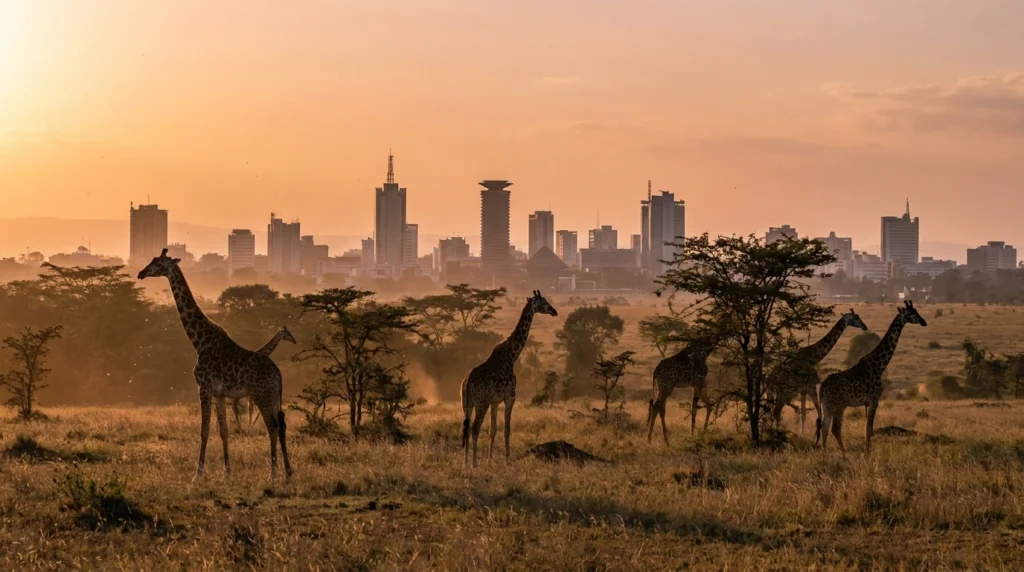
- Nairobi city guide — Kenya
- Zanzibar City city guide — Tanzania
- Marrakesh city guide — Morocco
- Jerusalem city guide — Israel
More city guides you might like
Plan your trip to Cape Town
The booking tools we use ourselves. FFU may earn a commission at no extra cost to you.
Plan & book your trip to Cape Town
Booking through these searches supports our guides at no extra cost to you.