
How to Experience Moraine Lake
- Reserve the shuttle: Private vehicles can’t drive to Moraine Lake. Book the Parks Canada Park & Ride shuttle (from the Lake Louise lot) well ahead — summer slots sell out weeks in advance.
- Best time for the blue: Come on a clear, calm morning in July or August. A sunrise departure gives you the glassy turquoise at its most electric — and far fewer people.
- The classic shot: Climb the short Rockpile Trail viewpoint for the full Valley of the Ten Peaks panorama (the one on the old $20 bill).
- On the water: Rent a canoe at the lakeshore, then pair the morning with nearby Lake Louise the same day.
What’s Happening at Moraine Lake & Lake Louise Right Now
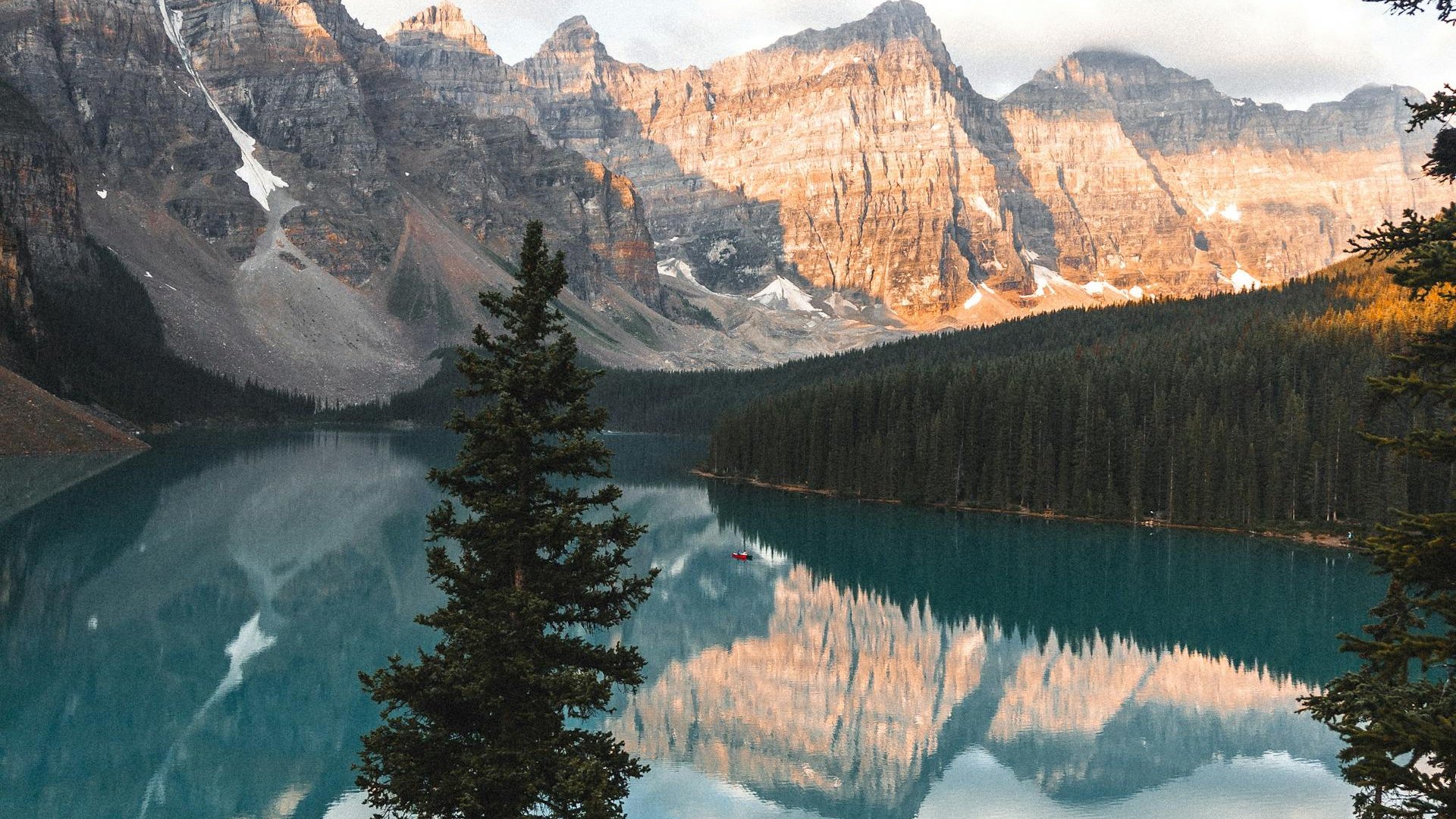
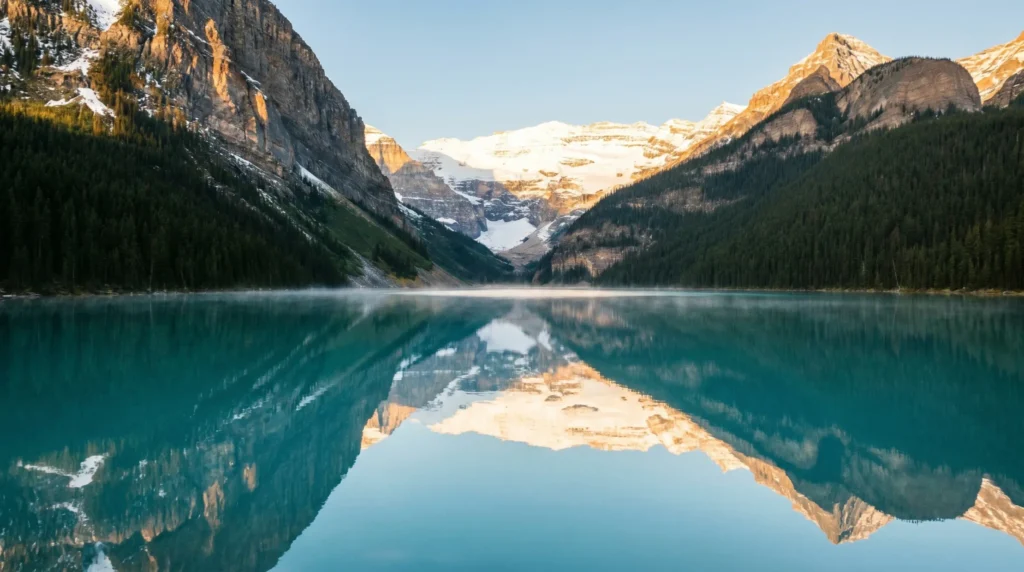
Updated June 21, 2026. Right now is peak season for the most photographed water in Canada — and there’s no longer a road you can drive to reach it. To protect the valley, Parks Canada has closed Moraine Lake Road to private vehicles; the only ways in are the reserved Parks Canada Park & Ride shuttle, a commercial tour, or by bike. The glacier-fed turquoise is most intense on calm, sunny mornings in July and August, so reserve a shuttle the moment your dates are set (slots sell out fast), aim for a sunrise departure, and pair it with nearby Lake Louise the same day. The road typically runs June through mid-October, weather permitting.
City Guide · Canada · Alberta
Banff, Alberta: Canada’s First National Park, the Lakes That Sell the Country & the One Mountain Town Worth Re-Arranging Your Itinerary For
Part of our Canada travel guide.
I have driven the Banff–Jasper corridor more times than is reasonable, and the line I keep coming back to is that Banff is not a city, it is a town that an entire country built a national-park system around in 1885. We tell first-time visitors to pick a single base — Banff townsite, not Lake Louise village — give themselves four full days, and resist the urge to do the Icefields Parkway and Jasper in the same trip; it is the most reliable way to actually see the lakes you flew here for. My favourite Banff hour is the 6 a.m. ROAM 8X bus pulling into the Lake Louise lakeshore before the parking lots even open; my hottest take is that Moraine Lake under July noon-light is the worst version of the photograph and the September shoulder is the best. The practical brief below is the one I would hand my own family before they boarded their flight into YYC.

Table of Contents
- Why Banff?
- Best Time to Visit Banff
- Getting There — YYC + Banff Airporter
- Getting Around — ROAM Transit & Park Shuttles
- Neighborhoods & Areas of Banff
- Cultural Sights & Must-See Landmarks
- Outdoor Things to Do
- Day Trips from Banff
- The Food — Where Banff Eats
- Practical Tips for Banff
- Budget Breakdown
- Frequently Asked Questions
Why Banff?
Banff is the original Canadian national park — established in 1885 around the Cave and Basin hot springs by an act of Parliament after three CPR railway workers stumbled onto the thermal pools two years earlier — and the model that the country now spreads across 37 national parks managed by Parks Canada. The park covers 6,641 km² of the Front and Main ranges of the Canadian Rockies, sits at the southern end of the Canadian Rocky Mountain Parks UNESCO World Heritage Site (inscribed 1984), and frames a townsite of roughly 7,800 permanent residents that swims with about 4 million annual visitors.
What makes Banff singular for visitors is the density of icon-grade landscape per square kilometre. Inside a 90-minute radius of Banff Avenue you can walk the lakeshore at Lake Louise under the Victoria Glacier, drive the shuttle road to Moraine Lake against the Valley of the Ten Peaks, ride the Banff Gondola up Sulphur Mountain to 2,281 m , hike Johnston Canyon’s catwalks past the Lower and Upper Falls, soak at the historic Cave and Basin, take a 1-hour cruise across Lake Minnewanka (the largest lake in the park at 28 km long) , and end the day on a Banff Avenue patio with Cascade Mountain (2,998 m) framed dead ahead.
The town is also the practical jumping-off point for the broader Canadian Rockies. Calgary International Airport (YYC) sits 130 km east on Highway 1 ; Lake Louise village is 60 km west; the Icefields Parkway runs 232 km north from Lake Louise to Jasper , and the Trans-Canada highway carries you straight through the park. Treat Banff as a four-day base, not a stopover — the lakes earn the time you give them, and the shoulder-season light is better than the July one most travellers come for.
Best Time to Visit Banff
Banff is a four-season town inside a high-altitude mountain park, so the calendar is the most important booking decision you make. Environment Canada’s climate normals for the Banff station show a January average daily high of -4.6°C and a July average high of 22.1°C, with measurable snow on the ground from late October through early May. The two windows worth re-arranging your year around are July–mid-September for hiking and lakes and late December–early April for SkiBig3 (Sunshine Village, Lake Louise, Norquay).
Spring (Apr–May)
The cheapest and quietest shoulder. Townsite hits 5–15°C in late April but Lake Louise stays frozen well into May; bears emerge from hibernation, and you’ll see far more wildlife than in July. Hotel rates run 30–40% off peak; many higher-elevation trails stay snowbound.
Summer (Jun–Aug)
Peak. Townsite 22–25°C, Lake Louise teal under full sun, but Moraine Lake and Lake Louise both require shuttle reservations, parking caps from 06:00, and accommodation books 4–6 months ahead.
Autumn (Sep–Nov)
Shoulder sweet spot. The Larch Valley trail above Moraine peaks gold mid-September to early October; first snow typically dusts the peaks in mid-October. Crowds collapse after Labour Day; rates fall 25–40%. The single best photographic window of the year.
Winter (Dec–Mar)
Ski season. Mt Norquay opens early November, Sunshine and Lake Louise from mid-November; SkiBig3 lift ticket runs CAD $169 single-day at the gate, with multi-day passes from CAD $399.
Getting There — YYC + Banff Airporter
Calgary International Airport (YYC) is the practical gateway. YYC sits 130 km east of Banff townsite on Highway 1; the drive is 1h 30min in clear conditions, with only one set of mountain passes on the route. Banff Airporter coach service runs the YYC–Banff route every 60–90 minutes, takes about 2 hours door-to-door, and costs CAD $80 one-way adult / CAD $145 return.
If you’d rather drive, every major rental brand operates an off-airport YYC desk; expect CAD $65–120 per day off-peak and CAD $120–200 in July. Coming from Vancouver, the Highway 1 drive is 850 km and 10–11 hours; the Rocky Mountaineer scenic train runs the same route over two days from CAD $1,800 in the GoldLeaf class. Park entry fees apply at the Banff gate: CAD $11 per adult per day or the Discovery Pass at CAD $75.25 annually for Parks-Canada-managed sites nationwide.
Getting Around — ROAM Transit & Park Shuttles
Banff townsite is small and walkable end-to-end in 25 minutes; for everything beyond it, the answer is ROAM Transit, the Bow Valley public bus operator. Single fares run CAD $2 in-town and CAD $5–10 to Lake Louise, and multi-day SuperPasses bundle unlimited rides on the regional routes. The five most useful routes:
Route 1 (Sulphur Mountain & Banff Gondola)
Townsite to the Banff Gondola lower terminal — CAD $2, every 30 minutes year-round.
Route 2 (Tunnel Mountain & Banff Centre)
Townsite to the Tunnel Mountain campground loop — CAD $2, every 30 minutes.
Route 3 (Banff ↔ Canmore)
Townsite to Canmore via Highway 1A and Highway 1 — CAD $5, every 30–60 minutes.
Route 6 (Lake Minnewanka)
Townsite to Lake Minnewanka cruise dock and Cascade Ponds — CAD $2, summer-only May to October.
Route 8X (Banff Express to Lake Louise) & Park Shuttles
Townsite to Lake Louise lakeshore in 45 minutes — CAD $10 return. From the Park & Ride at Lake Louise overflow lot, Parks Canada now runs mandatory shuttles to Moraine Lake — reservations from CAD $8 open at parkscanada.gc.ca two months out and sell out the same day. Private vehicle access to Moraine Lake has been closed since 2023.
Neighborhoods & Areas of Banff
Banff townsite is a 4 km² grid against Cascade Mountain; the broader park splits into eight distinct visitor zones you’ll move between by ROAM bus, shuttle or rental car.
Banff Avenue & Downtown
The 600-metre commercial spine: restaurants, gear shops, the Banff Centre’s outflow, and the Cascade Mountain backdrop you’ve seen on every postcard. Best for: first-time visitors, evening dining.
Tunnel Mountain & Bow Falls
The east edge of town: the Tunnel Mountain summit hike (4.3 km return, 1,690 m peak) and the wide-curving Bow Falls below the Fairmont.
Cave & Basin / Sulphur Mountain
South of the Bow River: the 1885 hot-springs site that founded the park, plus the Banff Gondola lower terminal at the foot of Sulphur Mountain (2,451 m).
Vermilion Lakes
Three shallow lakes 3 km west of townsite along the old 1A — the postcard “Mount Rundle reflected in the Bow River” view. Best for: sunrise photography, easy bike loops.
Lake Minnewanka & Cascade Ponds
10 km east of townsite: 28 km long, the largest lake in the park, with a 1-hour interpretive cruise and the Cascade Ponds picnic loop. Best for: half-day non-hiking visit.
Lake Louise Village
60 km west on Highway 1: the Fairmont Chateau Lake Louise on the lakeshore, plus the Samson Mall services hub. Best for: lakeshore-trail photographers, Plain of Six Glaciers hikers.
Moraine Lake Road
Shuttle-only access since 2023 from the Lake Louise Park & Ride. The Rockpile viewpoint over the Valley of the Ten Peaks is the photograph; the Larch Valley adds a 4.3 km hike behind it.
Sunshine Village & Sunshine Meadows
16 km west of townsite via the Bourgeau Parkway: the Sunshine ski resort straddles the continental divide; in summer the Sunshine Meadows alpine wildflowers run mid-July to early August.
Cultural Sights & Must-See Landmarks
Banff is a national-park town first and a museum town second — but five sights are worth carving out a half-day for indoors when the weather turns.
Cave and Basin National Historic Site (1885)
The thermal pool the park was created to protect. Indoor hot-spring viewing platform, museum, and the 1.6 km Sundance Trail behind. Adult admission CAD $4.50, daily 09:30–17:00.
Banff Park Museum (1903)
The oldest natural-history museum in western Canada, in a heritage log-frame building on Banff Avenue. Adult admission CAD $4.50, summer hours daily 10:00–18:00.
Whyte Museum of the Canadian Rockies (1968)
Rotating Indigenous, settler and mountaineering exhibitions plus heritage Banff cabin tours. Adult admission CAD $12, daily 10:00–17:00.
Buffalo Nations Luxton Museum (1953)
Indigenous Plains-First-Nations history at the south end of Banff Avenue. Adult admission CAD $12, daily 10:00–19:00 in summer.
Fairmont Banff Springs Hotel (1888)
“The Castle in the Rockies” — the CPR-built sandstone heritage hotel above the Bow River; the public lobby, terrace and Mount Stephen Hall are open to walk through for free if you arrive looking like you might have a reservation.
Outdoor Things to Do — Hiking, Lakes & Gondolas
The park earns its “things to do” budget on trails and lakes, not bars. These five are non-negotiable on a four-day visit.
Banff Gondola to Sulphur Mountain
Eight-minute cable-car to the 2,281 m summit ridge , with a 1 km boardwalk along Sanson’s Peak. Adult ticket CAD $74, daily 09:00–21:00 in summer.
Lake Louise & the Lakeshore Trail
The 4 km out-and-back lakeshore walk under the Victoria Glacier — flat, easy, and the canoe-rental dock at the Fairmont charges CAD $145 per hour for the iconic shot. Lake colour peaks late June through early September.
Moraine Lake (shuttle-only)
The Rockpile viewpoint is a 5-minute climb from the bus drop; the 13 km Larch Valley + Sentinel Pass loop above it is the gold-standard September hike. CAD $8 shuttle reservation from the Lake Louise Park & Ride.
Johnston Canyon Lower & Upper Falls
Catwalks bolted into the limestone slot canyon; Lower Falls 1.1 km return, Upper Falls 2.7 km return. Free, 30 km west of townsite on the Bow Valley Parkway.
Lake Minnewanka 1-hour cruise
Boat tour out to Devil’s Gap with on-board interpretive narration; CAD $66 adult, daily May through October.
Day Trips from Banff
Banff is the centre of a wheel: five day-trips earn the rental car you might have ducked, and four of them are within 90 minutes of the Bow River.
Lake Louise & the Plain of Six Glaciers (45 minutes by ROAM Route 8X)
The headline lake plus the 14 km out-and-back Plain of Six Glaciers hike to the historic teahouse under the Victoria Glacier. CAD $10 return on the 8X. Park & Ride opens 06:00.
Canmore (25 minutes by car or ROAM Route 3)
The unofficial overflow town for Banff: cheaper accommodation, a working brewery scene, and the Three Sisters peaks above the Bow Valley. Best for: dinner-and-back, secondary base.
Icefields Parkway to the Athabasca Glacier (3 hours by car)
The 232 km drive north to the Columbia Icefield with stops at Peyto Lake, Bow Lake and the Athabasca Glacier toe-walk. Plan it as a one-way drive to Jasper or a long round-trip; gas up at Lake Louise.
Yoho National Park & Emerald Lake (1 hour by car)
Across the BC border via Highway 1: Emerald Lake (canoe rentals on the lakeshore), Takakkaw Falls (one of Canada’s tallest at 384 m), and the Natural Bridge over the Kicking Horse River.
Calgary day-trip (1.5 hours by car)
Big-city reset: Calgary Tower, the Glenbow Museum, Stephen Avenue restaurants. Best paired with an YYC arrival or departure day so the drive is one-way only.
The Food — Where Banff Eats
Banff is a tourist-priced town — expect Calgary-plus-25% restaurant pricing — but four kitchens earn the bill on a four-day visit.
Park Distillery Restaurant + Bar
The Banff Avenue staple — campfire-themed wood-grilled mains, in-house spirits distilled on-site. Mains CAD $24–38, open daily 11:00–midnight. Walk-ins after 21:00 only.
Three Ravens Restaurant & The Maple Leaf — AAA Alberta Beef
Two of the better Alberta-beef rooms in town; Three Ravens sits on the Banff Centre campus with the best mountain view from a restaurant in the townsite, the Maple Leaf is on Banff Avenue. Mains CAD $32–58, dinner only.
Nourish Bistro & Tooloulou’s — Vegetarian + Cajun
Nourish is the vegetarian standout (small upstairs room, build-your-own bowls); Tooloulou’s brings a New Orleans gumbo-and-jambalaya menu to a town that desperately needed one. Mains CAD $18–28.
Fairmont Banff Springs Hotel Dining Halls
Four formal restaurants inside the Castle: 1888 Chop House (steak), Vermillion Room (French brasserie), Castello (Italian), and the Sunday brunch buffet at Bow Valley Grill. Mains CAD $48–95; reservations essential 2–4 weeks ahead in summer.
Practical Tips for Banff
Banff is one of the easiest national-park towns in the world for an international visitor, but the wildlife rules and the park-pass logistics will catch you out if you don’t read them once.
Park Entry Passes
The Banff park gate accepts the per-day Discovery Pass at CAD $11 per adult, or the annual Discovery Pass at CAD $75.25 covering Parks Canada sites nationwide. Buy at the gate, online, or any Parks Canada visitor centre.
Wildlife & Bear Safety (Bear Smart guidelines)
The park is active black-bear and grizzly habitat. Carry bear spray on every trail, hike in groups of four or more on Larch Valley and Moraine Lake trails (a Parks Canada legal requirement during peak bear season), make noise around blind corners, and never approach elk — the bull-elk rut runs September through October and they are genuinely dangerous.
Cash vs Cards
Cards (Visa, Mastercard, Interac) are accepted everywhere — restaurants, gondola, shuttle, gas station. Tap-to-pay is the default. Carry CAD $20–40 cash for tipping and the rare market.
Connectivity
Townsite has full 4G/5G on Bell, Rogers and Telus; coverage drops 5 km out of town and is patchy along the Bow Valley Parkway. Public Wi-Fi is free at the visitor centre and the library.
Plug Type & Power
Type A & B (two flat pins, optional grounding pin), 120 V / 60 Hz — identical to the United States.
Tap Water
Excellent everywhere, sourced from the Bow River watershed. Refill bottles at any tap; do not drink from streams without filtering.
Altitude & Weather Layering
Townsite elevation is 1,383 m and Sulphur Mountain summit is 2,281 m, so altitude is mild but sunburn risk is high. Pack three layers (base, fleece, wind shell) in any season — mountain weather changes in 20 minutes.
Parking & ROAM Transit Caveats
Townsite parking is paid CAD $4 per hour from May through October; the Lake Louise Park & Ride is free but fills before 07:00 in summer. Moraine Lake is shuttle-only, no exceptions.
Budget Breakdown
Banff is the most expensive base in the Canadian Rockies after the Fairmont — budget for Calgary-plus-25% across food and lodging.
Budget
HI Banff Alpine Centre dorm beds at CAD $50–80 a night, cook from the IGA grocery on Banff Avenue, ride ROAM in town.
Mid-Range
Three-star Banff Avenue hotels (Banff Aspen, Caribou Lodge, Tunnel Mountain Resort) run CAD $160–240 in summer; the Banff Gondola plus a casual dinner adds CAD $120 per person.
Luxury
Fairmont Banff Springs and Fairmont Chateau Lake Louise sit above CAD $500 per night in season, with peak-summer rates clearing CAD $700; a CAD $200+ heli-tour out of Canmore is the standard splurge.
| Tier | Daily | Sleep | Eat | Transport | Activities | Extras |
|---|---|---|---|---|---|---|
| Budget | CAD $90–140 | $50–80 HI Banff dorm | $25–40 grocery | $5 ROAM in-town | $11 park day-pass | $0–10 souvenirs |
| Mid-Range | CAD $220–360 | $160–240 3-star | $55–95 dining | $15 rental + gas | $74 gondola | $20–40 cocktails |
| Luxury | CAD $700+ | $500+ Fairmont | $120–250 dinner | $50 taxi | $200+ heli-tour | $80–200 spa |
Frequently Asked Questions
Do I need a Parks Canada pass for Banff?
Yes — the Banff park gate stops every vehicle on Highway 1 entering the park and verifies your day pass or Discovery Pass. The day pass is CAD $11 per adult; the annual Discovery Pass is CAD $75.25 and pays for itself in 7 days, so buy the annual if you’re combining Banff with Jasper, Yoho or Kootenay.
Banff or Jasper — which should I prioritize?
Banff first if you only have one stop — the iconic lakes (Louise, Moraine), the gondola, the townsite, and the closer access from Calgary. Jasper for a quieter, larger park with darker night skies (a designated Dark Sky Preserve) and the Maligne Lake / Spirit Island circuit. The 232 km Icefields Parkway between them is the answer if you have 5+ days and a rental car.
Best base for Lake Louise — Banff or Lake Louise village?
Banff townsite, almost always. Lake Louise village is essentially the Fairmont Chateau Lake Louise plus the strip-mall Samson Mall — there are six restaurants and one pub. Banff townsite has 50+ restaurants, the ROAM 8X bus reaches the lakeshore in 45 minutes for CAD $10 return, and the patio scene at the end of a hiking day is non-comparable. Stay at Lake Louise village only if you want to be on the lakeshore at 05:30 for sunrise.
How many days do I need in Banff?
Four full days is the realistic floor for a first visit. Day 1 townsite + Banff Gondola + Cave and Basin; Day 2 Lake Louise lakeshore + Plain of Six Glaciers; Day 3 Moraine Lake shuttle + Larch Valley; Day 4 Johnston Canyon + Lake Minnewanka cruise. Add days 5–6 for the Icefields Parkway to Jasper.
Is Banff visit-able in winter?
Yes — ski season (mid-November through April) is one of the best times to visit. SkiBig3 covers Sunshine Village, Lake Louise Ski Resort and Mt Norquay on a single multi-day pass; the Banff Gondola operates year-round; and Lake Louise turns into a free skating rink with mountain backdrops between mid-December and late February. Townsite restaurants and the Fairmont stay open.
How do I get to Moraine Lake?
You can no longer drive to Moraine Lake — the road has been closed to private vehicles since 2023. Two ways in: (1) the Parks Canada shuttle from the Lake Louise Park & Ride at CAD $8 per adult (reservation required, opens 2 months out at parkscanada.gc.ca, sells out within hours for July–August); (2) commercial operators (Moraine Lake Bus Company, Pursuit) at CAD $30–75 per person which can be booked closer to the date.
Ready to Experience Banff?
Banff rewards travellers who pick a single base, give the lakes the four days they actually deserve, and book the Moraine Lake shuttle the morning the slots open. Apply for the Canadian eTA early, buy the Discovery Pass at the gate, ride ROAM Transit instead of fighting for parking, and pack three layers no matter the season. Pair this guide with our Canada country guide for the bigger picture, then keep exploring with the sister-city guides below — Calgary is your YYC arrival day and Halifax is the Atlantic counterweight Banff has spent 140 years quietly outshining.
Explore More City Guides
- Calgary City Guide — the YYC gateway and Stampede city
- Halifax City Guide — Atlantic Canada’s anchor
- Montreal City Guide — bilingual festival capital
- Vancouver City Guide — Pacific gateway
- Canada Country Guide — the full continental brief
- All City Guides — index
More city guides you might like
Plan your trip to Banff
The booking tools we use ourselves. FFU may earn a commission at no extra cost to you.
Plan & book your trip to Banff
Booking through these searches supports our guides at no extra cost to you.