
How to Do the Stampede Like a Local
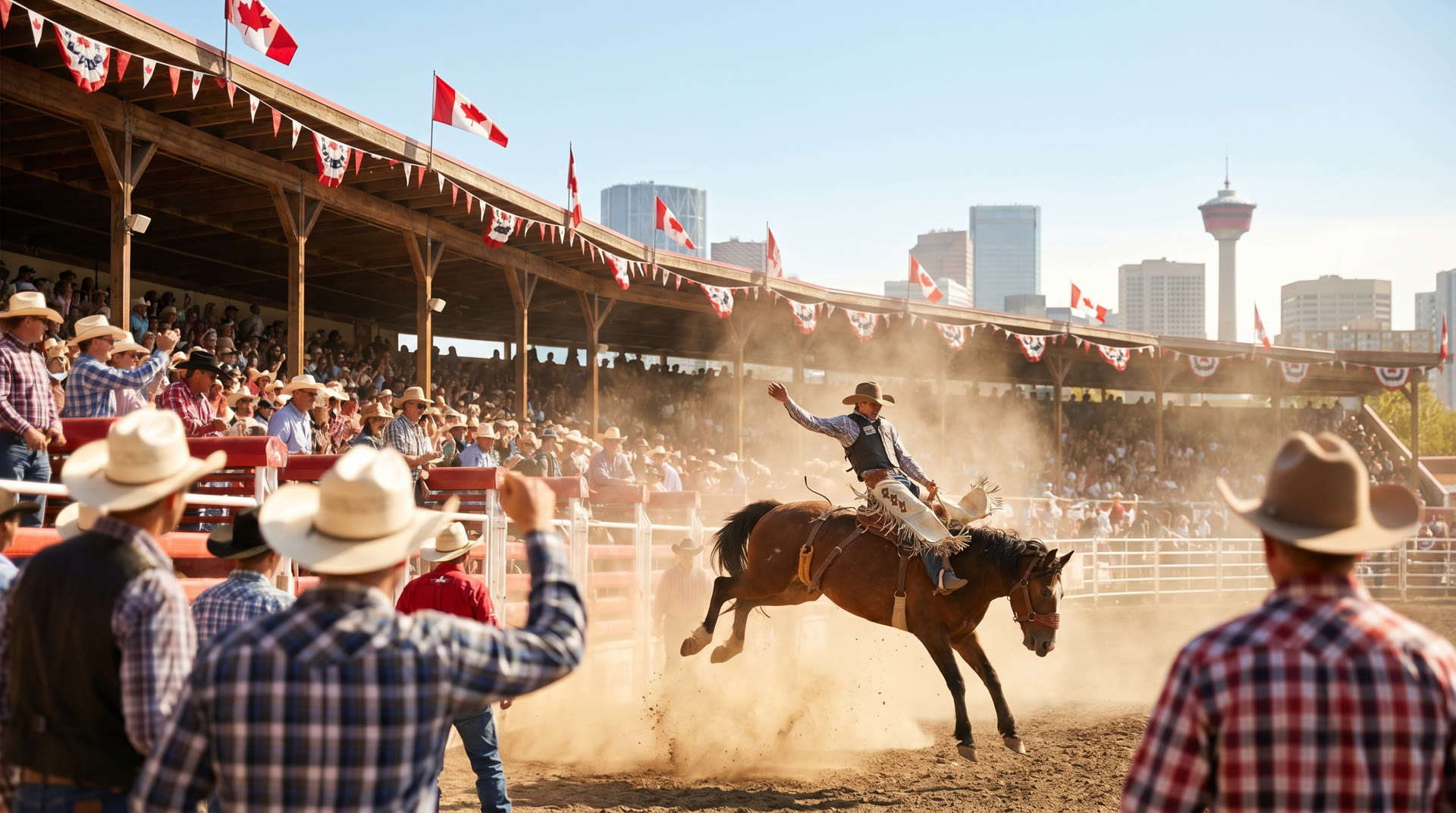
- Tickets: Gate admission gets you the grounds, the midway and the free stage shows. Book rodeo and evening Grandstand Show seats separately — they sell out, so reserve early.
- Free pancake breakfasts: Community breakfasts pop up across the city every morning of the Stampede. Chase one down for a free, very-Calgary start to the day.
- Getting there: Skip the parking headache — take the CTrain Red Line straight to Victoria Park/Stampede station, a two-minute walk from the gates.
- The local rhythm: Jeans, boots and a hat. Pancakes in the morning, the rodeo or chuckwagon races in the afternoon, the Grandstand Show and fireworks at night.
What’s Happening in Calgary Right Now
Updated June 21, 2026. For ten days every July, Calgary trades its glass towers for cowboy hats. The Calgary Stampede runs July 3–12, 2026 — the rodeo billed as “The Greatest Outdoor Show on Earth,” with chuckwagon races, a giant midway, free community pancake breakfasts across the city, and a nightly grandstand show. If you’re planning to be here for it, book a downtown hotel early (rooms vanish for Stampede week), grab rodeo or evening-show tickets ahead of time, and chase the free pancake breakfasts in the mornings — that’s how locals do it without spending a fortune.
City Guide · Alberta
Calgary, Alberta: Cowtown Reborn, Olympic Host City & the Mile-High Gateway to the Canadian Rockies
Part of our Canada travel guide.
I grew up looking at the Calgary Tower from the back of a Hyundai on Memorial Drive, and twenty-some years later it still holds the centre of my downtown. We tell first-time visitors that Calgary is three cities laminated together — the Cowtown stockyard origin that gave it the white hat ceremony and the Stampede , the 1988 Olympic host that built the Saddledome and Canada Olympic Park , and the modern energy-and-tech metro of about 1.6 million people that now anchors the prairie’s western edge an hour from the Rockies. The city sits at 1,048 m above sea level (the highest major city in Canada) , the Bow and Elbow rivers cut through the centre on their way out of the foothills , and on a clean winter morning you can stand on Centre Street Bridge and watch a Chinook arch break over the front ranges to the west. Treat this guide as the brief I would hand my own family before they boarded a WestJet flight into YYC.

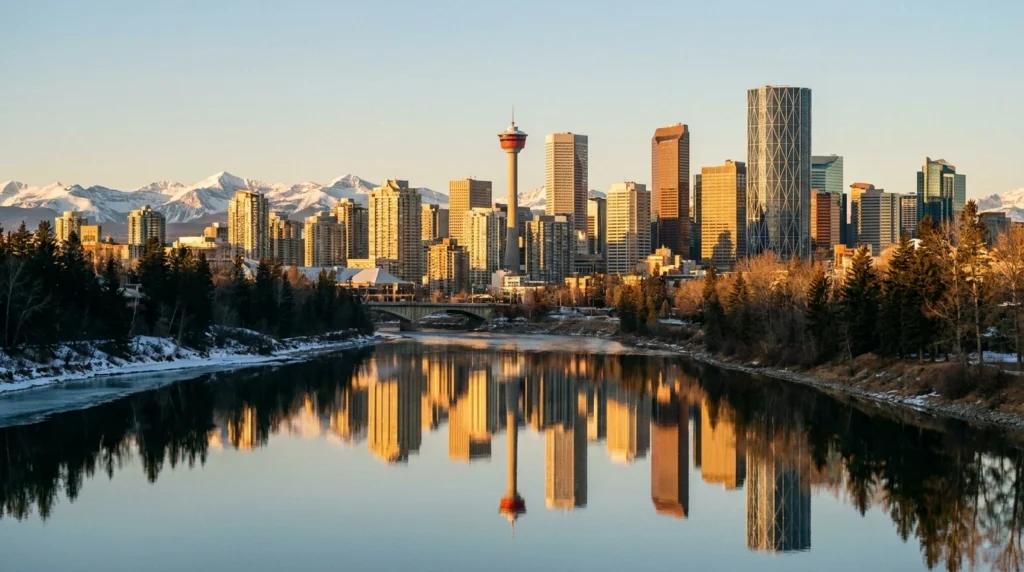
Table of Contents
Why Calgary?
Calgary is the only major Canadian city you can stand in the middle of and still see mountains. The Rockies sit fifty minutes west on the Trans-Canada, the prairie rolls flat to the eastern horizon, and the foothills hinge between them under a sky that is sunny for roughly 333 days a year — the highest figure for any major city in Canada per Environment Canada’s Calgary International normals. The metro population is about 1.6 million on Statistics Canada’s most recent census , which makes Calgary the third-largest census metropolitan area in the country, slightly larger than Ottawa and considerably larger than Edmonton.
The city was a North-West Mounted Police fort in 1875 and a stockyard town from the 1880s onwards, and the “Cowtown” nickname is not pure marketing — the actual stockyards used to sit on what is now East Village, before the Calgary Municipal Land Corporation began the post-2007 flood-resilience rebuild that turned the same ground into the Studio Bell / National Music Centre block, the new Central Library and the East Village riverside. The Calgary Stampede has run every July since 1912 and the city collapses around it for ten days — the parade closes downtown on the first Friday morning, the chuckwagon races and grandstand shows fill Stampede Park each evening, and free pancake breakfasts pop up across every neighbourhood from Bowness to Inglewood. Calgary’s tourism office bills it as “the Greatest Outdoor Show on Earth” and Britannica’s entry on the Stampede backs the language up.
The 1988 Winter Olympics — the XV Olympic Winter Games — left the city its second civic personality. Canada Olympic Park survives as WinSport, a working ski-hill and bobsled-luge venue you can use any day of the year ; the Saddledome is still the home of the Calgary Flames; and the Olympic Plaza downtown turns into a free outdoor skating rink every winter. The legacy is built into the everyday city — you can ride a luge sled at lunchtime and still make a 6 p.m. dinner reservation in the Beltline.
Modern Calgary is a tech-and-energy hybrid. The downtown towers are the corporate heads of the Western Canadian Sedimentary Basin oil and gas business, but the post-2014 oil-price slump pushed the metro into a deliberate diversification away from a single sector — into financial services, agribusiness, life sciences and a tech corridor that runs from the University of Calgary through the East Village. The city is also the most ethnically diverse in Western Canada outside Vancouver: Tagalog and Punjabi are the most common heritage languages after English, and the Vietnamese community on International Avenue (17th Avenue SE) is the largest in Western Canada.
What the guidebooks under-rate is Calgary’s scale — the downtown is genuinely walkable. The corridor from the Calgary Tower north to the Bow River, then west along Stephen Avenue to the Beltline, is roughly 1.5 km ; the Plus 15 skywalk network connects more than 100 downtown buildings on the second-floor level over 18 km of enclosed bridges, which is the longest such system on the planet and the reason Calgary’s downtown is functional in February. Add in the 850-km Bow River Pathway network — the largest urban pathway system in North America — and a city that visitors expect to be car-dependent turns out to be one of the easiest big-prairie metros to walk and bike.
And then the Rockies. Banff National Park starts 130 km west on the Trans-Canada and the gateway gondola at Banff is on a one-hour fifteen-minute drive door to door from downtown ; Lake Louise is a further 50 minutes; Kananaskis Country — the locals’ alternative with no cruise-bus traffic — is 35 minutes from Stoney Trail. Drumheller and the Royal Tyrrell Museum (the world’s most important dinosaur museum) sit 90 minutes east in the Red Deer River badlands. No other Canadian city this size puts a Tier-1 national park, a UNESCO buffalo-jump (Head-Smashed-In, 2.5 hours south) and a world-class palaeontology collection within day-trip reach. Calgary is the practical base camp for Canada’s most-photographed landscape; the city itself happens to deserve three full days as well.
Best Time to Visit Calgary

Calgary has four sharply distinct seasons and a meteorological wildcard you will not meet anywhere else in Canada. The Environment Canada climate normals for the Calgary International station show mean July highs around 23°C, January highs around −1°C, and roughly 412 mm of annual precipitation — about 60% of it concentrated in May, June and July. The wildcard is the Chinook: a westerly Pacific airflow that descends warm and dry off the Rockies and can swing the city’s temperature by 30°C in a few hours, sometimes overnight. The signature is a band of cloud arched over the western front range — the Chinook arch — and the city has built itself around the rhythm.
Spring (March – May)
The hardest season to predict and the most charming. April still carries snow risk — the city’s heaviest single-day snowfalls have all happened in late spring — but May warms quickly to mean highs near 17°C and the Bow River trail blossoms with crocuses on the south-facing banks. Hotel rates run at their off-season floor, museum lines are nonexistent, and the Banff shoulder season is the only time you can drive Lake Louise without a queue. Pack three layers and a raincoat, and assume one snow day per visit.
Summer (June – August)
The peak. July temperatures average a high of 23°C with cool dry evenings around 9°C , daylight stretches past 10 p.m. at solstice, and the Calgary Stampede absorbs the whole metro for ten days from the first Friday of July. Expect Stampede-week hotel rates to clear two and a half times the September baseline, with rooms booked out twelve months ahead in the worst-affected Beltline and Stephen-Avenue properties. July and August are also the only months when Banff and Kananaskis are reliably car-passable above the treeline.
Autumn (September – October)
The smartest non-Stampede window. September delivers Stampede-style sun without Stampede prices, the foothills aspens turn gold by the end of the month, and the Banff-area larches drop into peak colour for the first two weeks of October — a fixture on every Calgary photographer’s calendar. Mean September highs sit around 18°C, October trails back to 12°C; first hard frost is usually mid-October. The Banff and Kananaskis day-trip rotation is at its best in this window.
Winter (November – February)
The Chinook season. Mean January highs are −1°C but the day-to-day swing is enormous — you can wake to −25°C and walk to dinner at +12°C inside a Chinook event. Olympic Plaza turns into the city’s free outdoor skating rink, the Plus 15 skywalk network covers a full downtown day without a coat, and the Banff and Sunshine Village ski resorts open from early November. Ski-and-city combination weeks are the strongest November-to-March visitor pattern; pack for −30°C and be pleasantly surprised when a Chinook turns up.
Getting There — YYC, WestJet, Red Line
Calgary International Airport (YYC)
Calgary International Airport sits 17 km north-east of downtown off Deerfoot Trail and is the fourth-busiest airport in Canada by passenger traffic, with direct flights from across North America, the UK, the Netherlands, Germany and Iceland on the WestJet, Air Canada and Icelandair networks. YYC is the operational hub of WestJet — Canada’s second-largest airline, founded in Calgary in 1996 — and the daily WestJet schedule alone is denser than any other carrier serving Western Canada. The airport handles roughly 18 million passengers a year through a single combined domestic-international terminal opened in 2016.
From the terminal you have three good options into the city. Calgary Transit Route 300 (Airport BRT) runs every 20–30 minutes from the YYC bus loop on the Arrivals level to McKnight-Westwinds CTrain station and onwards to the downtown free-fare zone in roughly 45–55 minutes for a flat fare of CAD $11. Taxi or rideshare from YYC to most central-postcode hotels runs CAD $45–55 with no surge pricing under normal conditions. Rental cars are housed in a covered garage attached to the terminal — the right call only if you are leaving the city the same day for Banff or Drumheller; downtown Calgary is hostile to cars and overnight hotel parking averages CAD $40–55 per night.
By rail and road
VIA Rail does not currently serve Calgary — the Canadian Pacific transcontinental was shifted to Edmonton in 1990 and Calgary’s downtown station was demolished. The Rocky Mountaineer luxury tourist train runs Calgary–Vancouver and Banff–Vancouver routes in the summer season, with Calgary as one terminal. The Trans-Canada Highway (Hwy 1) runs through the centre of the metro east-west and is the practical road approach from Vancouver (10 hours), Regina (9 hours) or Edmonton (3 hours) ; Hwy 2 (the QEII) is the Edmonton-to-Lethbridge spine.
Getting Around
The CTrain free-fare zone
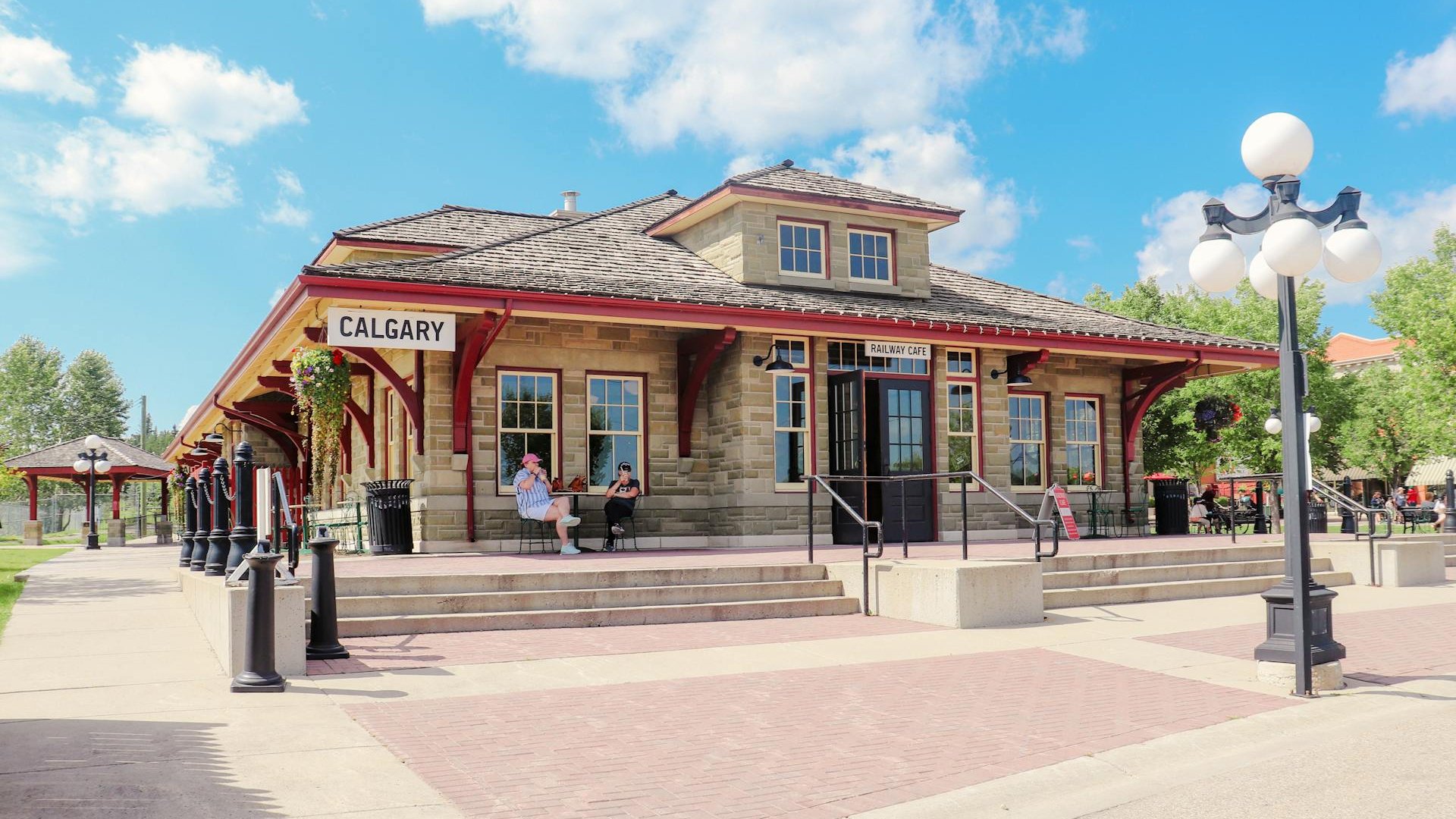
Calgary Transit’s CTrain is the largest LRT system in Canada by daily ridership, with two lines (Red and Blue) and 45 stations covering 60 km of track. The single-most-useful Calgary-traveller fact: the entire 7th Avenue downtown corridor is a free-fare zone — ride either the Red Line or Blue Line between City Hall, Centre Street, 1st Street SW, 4th Street SW, 6th Street SW, 7th Street SW, 8th Street SW and 10th Street SW with no fare at any time of day. Outside the free zone, single fares are CAD $3.80, day-passes CAD $11.50, paid via the My Fare app or contactless tap. The CTrain is the right call for the Stampede grounds (Erlton/Stampede station), the Saddledome, Stampede Park, the University of Calgary and the airport bus interchange.
The Plus 15 skywalk network
Calgary’s second-floor enclosed skywalk system is 18 km long, links over 100 downtown buildings, and is the largest pedestrian skyway network in the world. The system was conceived in 1969 to keep downtown functional through Chinook-and-cold-snap winters and now lets you cover most of the office core, Stephen Avenue, the +15-attached hotels, and most of the Telus Convention Centre without ever stepping outside. The local move on a January cold-snap is to park or CTrain in once, then walk the Plus 15 between meetings; visitors should treat it as the same kind of indoor circuit and use it for downtown sights, food courts and the East Village link. Most segments are open 6 a.m. to 6 p.m. on weekdays; about a third stay open evenings and weekends.
Cycling and the Bow River Pathway
Calgary’s urban pathway network — Bow River, Elbow River, Nose Creek, Fish Creek and the western tributaries — runs to roughly 850 km, the largest such system in North America. The Bow River Pathway is the headliner: a paved 48-km loop that runs both banks from Bowness through downtown to the Stampede grounds, used for commuting in summer and cross-country skiing in winter. The downtown segregated cycle-track grid (4 St SW, 5 Avenue SW, 12 Avenue S) opened in 2015 and is now the densest urban bike lane network west of Vancouver. Mobi bike-share points populate the central postcodes; pickup is by app.
Cars, taxis and the Chinook caveat
Downtown parking is punitive (CAD $20–30 day-rates in the City Centre). Take a cab or rideshare from the CTrain stations or use a flat-rate hotel garage. The Chinook caveat for drivers: a Chinook can drop the freezing line by 200 m, melt black ice off Crowchild Trail in two hours, and refreeze the same surfaces overnight — black-ice events on Deerfoot Trail are most common during the warm-cold transitions. Drive with winter tyres December through March and add an extra 20% to your trip-time estimates.
Neighborhoods: Finding Your Calgary
📍 Calgary Map: Every Place in This Guide
Downtown Core & Stephen Avenue
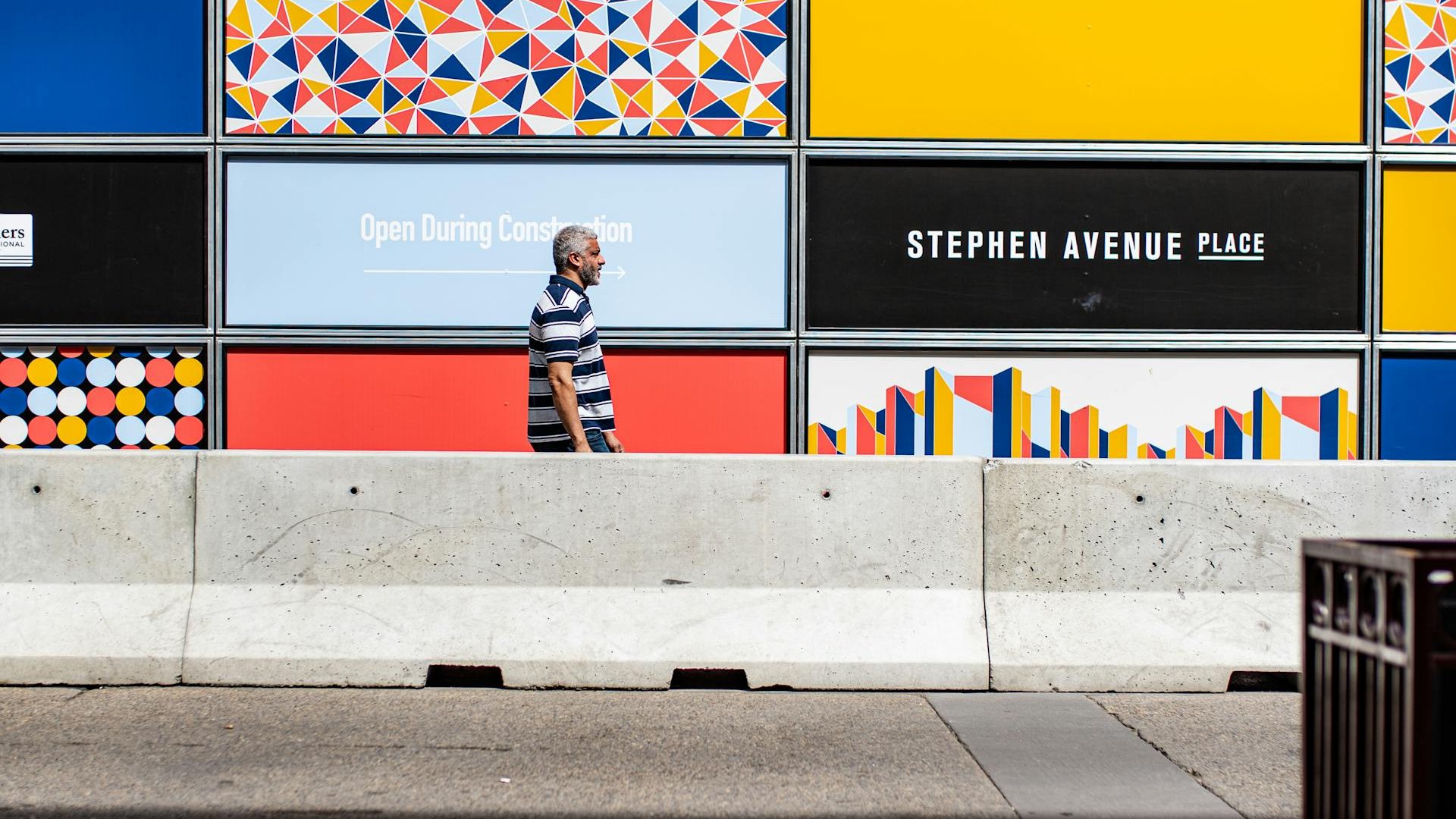
The 1.5 km commercial spine. Stephen Avenue (8th Avenue SW) is a pedestrian mall through the sandstone heritage block from City Hall west to 4th Street SW — the highest density of restaurants, after-work bars and Plus 15 entry points in the city. The Calgary Tower at 9 Avenue and Centre Street is the visual anchor; the Telus Convention Centre, the Glenbow Museum on Stephen Avenue and the Bow Tower (the Norman Foster commission that redrew the skyline in 2013) sit within five minutes’ walk. The downtown free-fare CTrain zone runs the length of 7 Avenue SW one block north and connects every part of the core in under ten minutes.
- Calgary Tower (191 m, 1968) and the 360 observation deck
- Stephen Avenue heritage sandstone block
- Glenbow Museum (re-opened post-2024 renovation)
Best for: first-time orientation, business travel, Plus 15 cold-day touring. Access: any downtown CTrain stop on 7 Avenue.
East Village
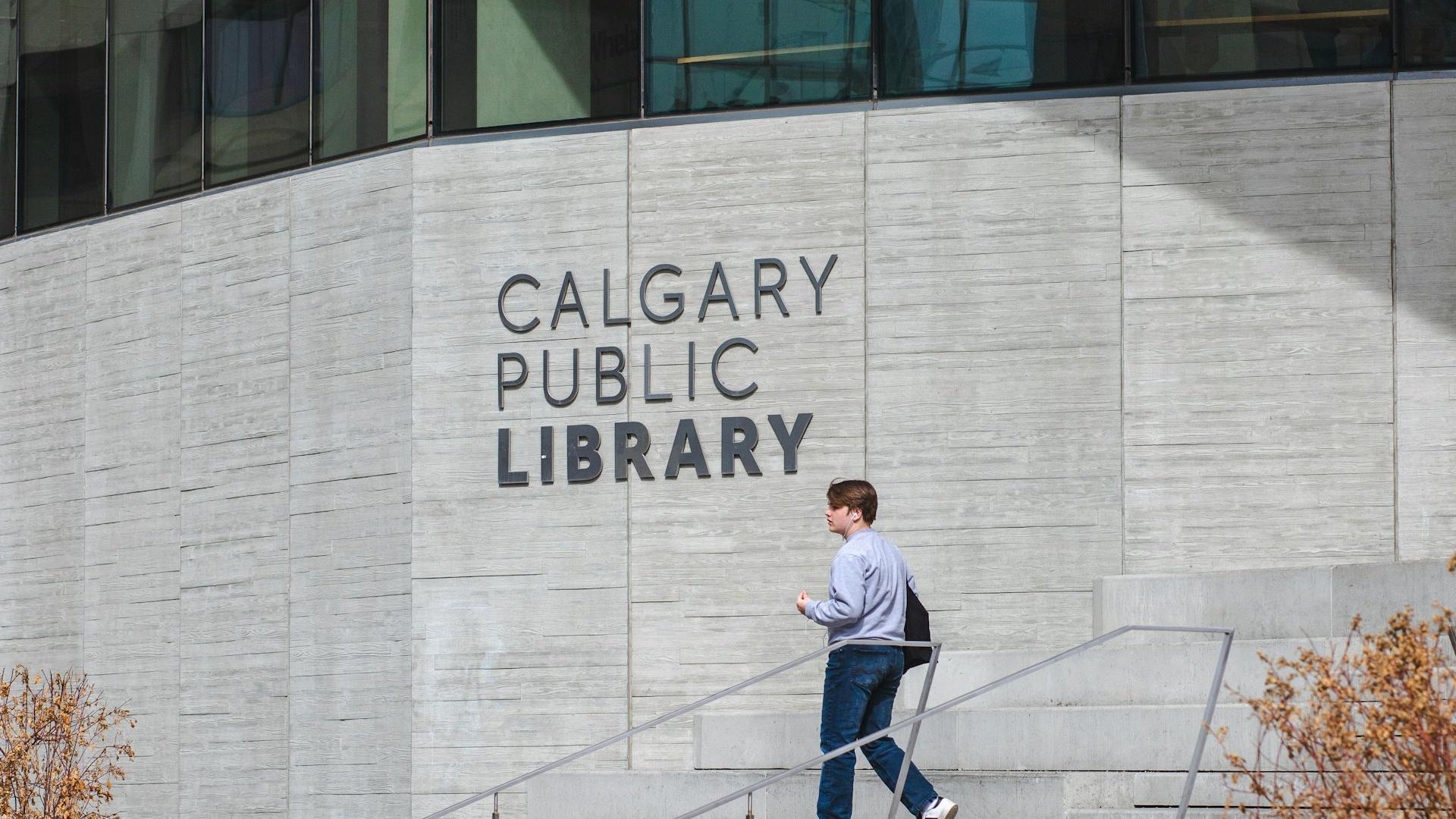
The biggest urban-redevelopment story in Western Canada in the last fifteen years. East Village is the riverside flat between the Bow and the Elbow that was the original 1880s townsite and the working stockyards, fell into 30 years of decline, and was rebuilt under the Calgary Municipal Land Corporation between 2007 and the present. The neighbourhood now contains Studio Bell / National Music Centre , the new Calgary Central Library (opened 2018, the city’s most-photographed contemporary building), the Simmons Building food hall (Charcut, Phil & Sebastian, Sidewalk Citizen) , and a continuous riverside pathway connection to St Patrick’s Island and Inglewood. The pre-2007 floodplain rebuild engineered the ground level above the 2013 flood line.
- Studio Bell — National Music Centre
- Calgary Central Library
- Simmons Building food hall
Best for: contemporary architecture, river-walking, post-2010 Calgary. Access: City Hall CTrain (free zone); 10-min walk east from the Calgary Tower.
Beltline (incl. 17th Avenue SW — the Red Mile)
The downtown-adjacent restaurant-and-bar quarter, immediately south of the railway tracks and the 9th Avenue SW corridor. 17th Avenue SW is the headline strip — a kilometre of restaurants, craft-beer bars, dance bars and patios from Macleod Trail west to 14th Street SW. The strip earned its “Red Mile” nickname during the 2004 Flames Stanley Cup playoff run, when the post-game crowds in red jerseys overflowed the bars onto the street. The Red Mile has reactivated for every Flames playoff run since. The cross-streets running south — 4 Street SW, 11 Street SW — carry the second tier of the Beltline restaurant scene; the streetscape between is dense low-rise apartments and a working LRT-adjacent grid.
- 17th Avenue SW — restaurants, bars, the Red Mile
- 4th Street SW restaurant strip
- Mount Royal University corridor (south end)
Best for: dinner-and-drinks nights, urban-energy stays, Flames playoff atmosphere. Access: 17 Ave bus 7; CTrain Erlton (south Beltline) or 4 St SW (north Beltline).
Inglewood
The oldest neighbourhood in the city — laid out 1875, eight years before the railway showed up. 9 Avenue SE between 9 Street and 13 Street is the heritage strip: independent restaurants (Rouge in the Cross House, the Nash, Without Papers Pizza), a deep run of antique stores, two bookshops, a working chocolatier, and the Cold Garden craft brewery on the eastern edge. The street still preserves its 1903 brick storefronts and is a designated heritage district under the city’s downtown plan. Inglewood Bird Sanctuary on the Bow River’s south bank is the city’s most popular birding site — a 32-hectare riparian reserve with deer and beaver year-round.
- Rouge Restaurant in the historic Cross House (1891)
- Inglewood Bird Sanctuary on the Bow River
- Cold Garden Beverage Company & the antiques row
Best for: heritage walks, indie restaurant nights, antiques and bookstore browsing. Access: bus 1 from downtown; 12-min walk from East Village across the 9 Avenue Bridge.
Kensington (Hillhurst — Sunnyside)
The hipster-and-microbrew strip on the north bank of the Bow, immediately across the Peace Bridge from downtown. The neighbourhood is two interlocking community districts — Hillhurst west and Sunnyside east — built on the streetcar grid in the 1910s and now a continuous strip of cafes, indie shops, vintage clothing, second-hand bookshops, the Plaza Theatre repertory cinema and a tight cluster of brunch rooms. The Sunnyside CTrain station (Red Line) puts the strip on a five-minute connection to downtown and the Stampede grounds. The Bow River pathway runs along the southern edge with a continuous bike path to the Olympic Park / WinSport entrance.
- Plaza Theatre repertory cinema (Kensington)
- Kensington Wine Market & the brunch strip
- Bow River Pathway access at Memorial Drive
Best for: Sunday brunches, indie shopping, walk-to-downtown stays. Access: Sunnyside CTrain; 12-min walk from downtown across Peace Bridge.
Mission & 4th Street SW
The food row immediately south of the Beltline, anchored by the Mission Bridge crossing of the Elbow River and the south-west run of 4 Street SW. Mission has been a French-Canadian and Italian heritage district since the 1880s — the original mission of Notre-Dame de la Paix — and runs Cite des Rosiers’ francophone cultural events out of the church complex on Mission Road. The 4 Street SW strip carries a dozen restaurants from the Italian-rooted Posto on the north end to Modern Steak on the southern stretch. The strip pairs naturally with a Stampede week or a Beltline night out.
- 4 Street SW restaurant strip
- Mission Bridge crossing of the Elbow
- Lindsay Park / Repsol Sport Centre on the river
Best for: dinner walks, Stampede-grounds-adjacent stays, francophone-heritage interest. Access: Erlton-Stampede CTrain; bus 3.
Bridgeland
The Italian-heritage neighbourhood on the north bank of the Bow, immediately east of Sunnyside. Bridgeland was the original Italian-immigrant district from the 1900s onwards and the food scene still leans that way — Lina’s Italian Market on 1 Avenue NE has been the city’s most reliable Italian deli since 1993, and the strip carries a dozen restaurants and the Bridgeland Market provisions counter. The Bridgeland-Memorial CTrain stop puts the neighbourhood on a four-minute downtown connection. The streetscape is dense low-rise apartments with the river on the south edge and the General Hospital site (now a green space and a future redevelopment block) on the eastern edge.
- Lina’s Italian Market & the 1 Avenue NE strip
- Bridgeland-Memorial CTrain station
- Tom Campbell’s Hill Natural Park views
Best for: Italian food walks, contemporary north-Bow stays. Access: Bridgeland CTrain; 8-min walk from downtown via 4 Avenue Bridge.
Mount Royal & Elbow Park
Old-money Calgary on the south side of the Elbow River, the residential heart of the early 20th century. The neighbourhood is two parts — Mount Royal proper, Calgary’s first restricted-covenant subdivision on the high ground, and Elbow Park along the river — and a quiet drive-through reveals turn-of-the-century mansions in stone, brick and arts-and-crafts wood. The 4 Street SW connection runs Mount Royal directly into Mission and the Beltline. The neighbourhood is the most expensive postcode in the city and Calgary’s answer to Vancouver’s Shaughnessy or Toronto’s Rosedale.
Best for: architecture walks, quiet residential anchoring, river paths. Access: bus 4 or 7; bike on the Elbow River pathway.
Bowness
The far-north-west river suburb on the Bow, originally a separate town until amalgamation in 1964. Bowness is the city’s closest neighbourhood to a river-village feel — the historic Bowness Park rowing-and-skating lagoon, the Bow Cycle paths, the Wild Rose Brewery and a strong run of indie cafes on Bowness Road NW make it a useful summer-Sunday destination. The neighbourhood is also the access point for Stoney Trail and the WinSport / Canada Olympic Park drive. The community lost ground in the 2013 flood and rebuilt; the riverside pathway is now continuously connected to downtown.
Best for: Sunday picnics, family travel, summer river days. Access: bus 1; 25-min drive from downtown.
Marda Loop & Ramsay
Two of the city’s most interesting smaller districts. Marda Loop — on 33 Avenue SW between 14 Street and 20 Street — is a low-rise commercial strip with a strong run of brunch rooms, the Marda Loop Justice Coffee bar and one of the city’s busiest weekend cycling pelotons. Ramsay sits east of Stampede Park, between 9 Avenue SE and the Bow, and has reinvented itself as a small-scale arts-and-crafts district with the Wild Wing Cafe, a working forge, and a quiet streetscape that visitors miss because it is buried behind the Stampede grounds. Ramsay is also where you find the Scotsman’s Hill viewpoint — a bench overlooking the entire Stampede grandstand.
- Marda Loop — 33 Avenue SW commercial strip
- Ramsay — Scotsman’s Hill viewpoint
- 9 Avenue SE link from Inglewood east
Best for: longer stays, locals’-rhythm visits, off-the-tourist-map afternoons. Access: bus 7 (Marda Loop); bus 1 + 5-min walk (Ramsay).
The Food

The Caesar — the cocktail Calgary invented
The Caesar cocktail was invented in 1969 by bartender Walter Chell at the Calgary Inn (now the Westin Calgary) for the opening of the hotel’s new Italian restaurant Marco’s Place. Chell’s recipe — clamato (clam-tomato juice), vodka, Worcestershire, Tabasco, celery salt rim, celery stalk, pickled bean — is now ordered an estimated 350 million times a year across Canada and is the country’s most-consumed cocktail by a wide margin. The Caesar is the one drink you cannot get done justice for outside Canada; outside this city, half the bartenders make a Bloody Mary and call it a Caesar. Order one on Day 1 from a bar that takes the cocktail seriously and you will understand the difference.
- Westin Calgary — lobby bar — the original ground; ask for “the original” and most veteran bartenders know the Chell recipe
- Charcut Roast House — East Village; the Caesar list goes to seven variations and the bar-team treats it as a regional cocktail discipline
- Modern Steak — 4 Street SW; brunch Caesar with prime-rib garnish (~CAD $18)
Alberta beef — the city’s steakhouse circuit
Calgary is the urban centre of Alberta beef. The province raises about 40% of Canada’s cattle and the steakhouse tier in this city is the strongest in Western Canada. The contemporary scene splits cleanly into three categories: the chef-driven new tier (Charcut, Charbar, Modern Steak), the special-occasion tier (River Cafe, Rouge), and the traditional steakhouse circuit (Caesar’s Steakhouse, Hy’s, the Saltlik). Pick one chef-driven and one special-occasion room for a 3-day visit.
- Charcut Roast House (East Village) — James Beard semifinalist Connie DeSousa’s open-flame whole-animal kitchen; pig-head poutine and dry-aged ribeye; expect ~CAD $90 for two courses
- Charbar (Simmons Building, East Village) — Argentine-grill sister to Charcut on the East Village riverside; rooftop patio in summer (~CAD $85)
- River Cafe (Prince’s Island) — the destination special-occasion room on the Bow; tasting menu (~CAD $130); foraged Alberta-ingredient program
- Modern Steak (Mission) — Alberta-beef-only steakhouse with breed-and-farm provenance on the menu (~CAD $110)
- Rouge (Inglewood) — tasting menu in the heritage Cross House (1891); foraged-Alberta program (~CAD $145)
The Vietnamese strip — International Avenue (17 Ave SE)
Calgary has the largest Vietnamese community in Western Canada outside Vancouver, concentrated along International Avenue — the eight-block stretch of 17 Avenue SE between Deerfoot Trail and 36 Street SE. The strip is also home to South-Asian, Salvadoran, Ethiopian and Korean kitchens, and the City of Calgary maintains it as a Business Revitalization Zone with multilingual signage and an annual Around the World festival. The Vietnamese-restaurant tier is genuinely deep — over thirty pho and banh-mi rooms inside the strip alone — and the city’s long-running consensus picks (Pho Hoai, Pho Anh Huyen, Banh Mi Anh Huong) outclass anything in Vancouver’s Chinatown for half the price.
- Pho Hoai (3215 17 Ave SE) — the city’s longest-running pho institution; pho dac biet ~CAD $14
- Banh Mi Anh Huong (3406 17 Ave SE) — baguette-and-pate banh mi (~CAD $7); cash preferred
- Cafe Bicyclette — La Cite francophone cultural centre on 4 Avenue SE; Vietnamese-French crossover and the city’s francophone-community hub
Craft beer — the post-2013 brewery boom
Alberta’s 2013 deregulation of small-brewery licensing turned Calgary into one of the densest craft-beer cities per capita in Canada. The Brewery District in Inglewood / Manchester is the southern cluster; Bridgeland and the Beltline carry secondary anchors. The city now supports more than fifty active production breweries; the consensus pick-five for a first visit:
- Last Best Brewing (Beltline) — the city’s most consistent production brewery + restaurant; pizzas + IPA flights
- Village Brewery (Manchester) — the original Calgary craft brand; lagers and the seasonal Coal Porter
- Cold Garden Beverage Company (Inglewood) — the playful experimental tap-room; sour-and-saison program
- Annex Ale Project (Manchester) — small-batch IPA-and-stout focus
- Tool Shed Brewing (Manchester) — veteran of the post-2013 wave; flagship lagers
- Eighty-Eight Brewing (Manchester) — the Olympic-themed creative-hops brewery (named for 1988)
Brunch & the Stampede pancake breakfast tradition
Stampede week (early-mid July) is the only time of year in Calgary when pancake breakfasts are free, ubiquitous and obligatory. The official Stampede schedule lists more than 250 free community pancake breakfasts every morning of the ten-day run — in parking lots, community centres, parks and the front porches of every neighbourhood from Bowness to Forest Lawn. The tradition descends from the 1923 Stampede chuckwagon-cook giveaway and is now Calgary’s defining hospitality ritual. Outside Stampede, the brunch scene runs year-round; the consensus picks for a non-Stampede-week visit:
- Diner Deluxe (Bridgeland) — the city’s long-running brunch institution; queues from 9 a.m.
- OEB Breakfast Co. (multiple, anchor at Bridgeland) — Alberta-egg brunch; the breakfast poutine is a Calgary specific
- Phil & Sebastian (multiple, anchor at Simmons Building) — the city’s most respected coffee roaster; brunch-grade pastries
Plus 15 food courts & downtown lunch
The Plus 15 skywalk system delivers a working downtown lunch on cold days. The two anchor food courts are TD Square (the third-floor food court above the Hudson’s Bay) and the Bankers Hall complex; both run twenty-plus quick-service kitchens and connect by Plus 15 to most of the office core. Sidewalk Citizen (Simmons Building, East Village) is the city’s most respected sandwich kitchen; Bridgeland Market (across the river in Bridgeland) is the locals’ lunch counter for office-tower workers who walk over the 4 Avenue Bridge.
Cultural Sights

Calgary Tower
The defining city sight. The Calgary Tower opened in 1968 as a Canadian Centennial project — 191 metres tall on the corner of 9 Avenue and Centre Street SW — and is still the second-tallest free-standing structure in the city after the Bow Tower. The observation deck has a 360-degree panorama, a glass-floor section that lets you stand directly over the Stephen Avenue mall, and the Sky 360 revolving restaurant on the upper floor that completes a full revolution every 45 minutes. Admission is roughly CAD $22 for adults, with timed entry slots through the Stephen Avenue lobby. The Tower’s flame on top — the Olympic Cauldron equivalent — is lit at full output for major civic events including Stampede week and Canada Day.
Heritage Park Historical Village
Canada’s largest living-history museum and the single-most-rewarding family attraction in Calgary. The 127-acre site on the south shore of the Glenmore Reservoir reconstructs a pre-1914 Western Canadian town, with 200+ heritage exhibits, a working steam train, the SS Moyie sternwheeler operating on the reservoir, and a 1900-era Main Street with costumed interpreters. Allow at least four hours; the steam-train ride is essential and the SS Moyie boat trip is a separate ticket. Heritage Park anchors the city’s Stampede-week alternative programming for visitors who want the heritage layer without the grandstand crowds. The Gasoline Alley Museum (vehicle collection, included in admission) is one of the strongest auto museums on the continent.
Studio Bell — National Music Centre
Canada’s national-scale music museum, opened in 2016 in the East Village in a Brad Cloepfil-designed building that has become one of the city&rsquo>most photographed contemporary structures. Studio Bell holds the Canadian Music Hall of Fame, the Canadian Songwriters Hall of Fame, the Canadian Country Music Hall of Fame and a working collection of 2,000+ instruments — including a hands-on Theremin, a 1950 Hammond B3, and Elton John’s 1967 Steinway grand. Admission is CAD $20; allow three hours; live concert programming runs in the King Eddy Hotel performance space attached to the building.
Glenbow Museum
The largest art and history museum in Western Canada, on Stephen Avenue at 1 Street SE in the Glenbow building (1976; a six-floor cube-and-stone landmark). The Glenbow holds 1.6 million artefacts spanning Indigenous art and material culture, Western Canadian history, the 1988 Olympics archive, and a 33,000-piece art collection with the largest holdings of contemporary Indigenous art in Canada. The museum closed for a complete renovation in 2019 and reopened on a phased basis through 2024 as the JR Shaw Centre for Arts and Culture. Admission is CAD $20; the Stephen Avenue location makes it the easiest free-day pairing with the Calgary Tower.
TELUS Spark Science Centre
Canada’s newest dedicated science centre, opened in 2011 on the eastern edge of downtown adjacent to Calgary Zoo. Spark targets a multi-generation audience with hands-on exhibits across health, energy, environment and digital fabrication, plus a dome theatre with rotating planetarium and IMAX-style programming. The 4-acre outdoor Brainasium — an exhibit-grade adult/child playground with 12-metre tower — is the only one of its kind in Canada. Admission is CAD $30 for adults; allow three hours minimum; pair with a Calgary Zoo half-day.
Olympic Plaza, Saddledome & Canada Olympic Park (WinSport)
The 1988 Olympic legacy is woven into the city, not parked in a single museum. Olympic Plaza is the downtown public square at the corner of Stephen Avenue and Macleod Trail — the original Olympic medal-presentation venue, now a free outdoor skating rink every winter (Dec–Mar) and a summer concert lawn. The Scotiabank Saddledome at Stampede Park is the original 1988 Olympic ice-hockey venue, still home of the Calgary Flames pending the new Scotia Place arena under construction next door. Canada Olympic Park — now WinSport, on the western edge of the city — is the original Olympic ski-jump and bobsled-luge venue and is open year-round for skiing, mountain-biking, summer luge, zipline and the Olympic Sports Hall of Fame. The combined Olympic-legacy circuit is a half-day on its own.
Peace Bridge & Stephen Avenue heritage walk
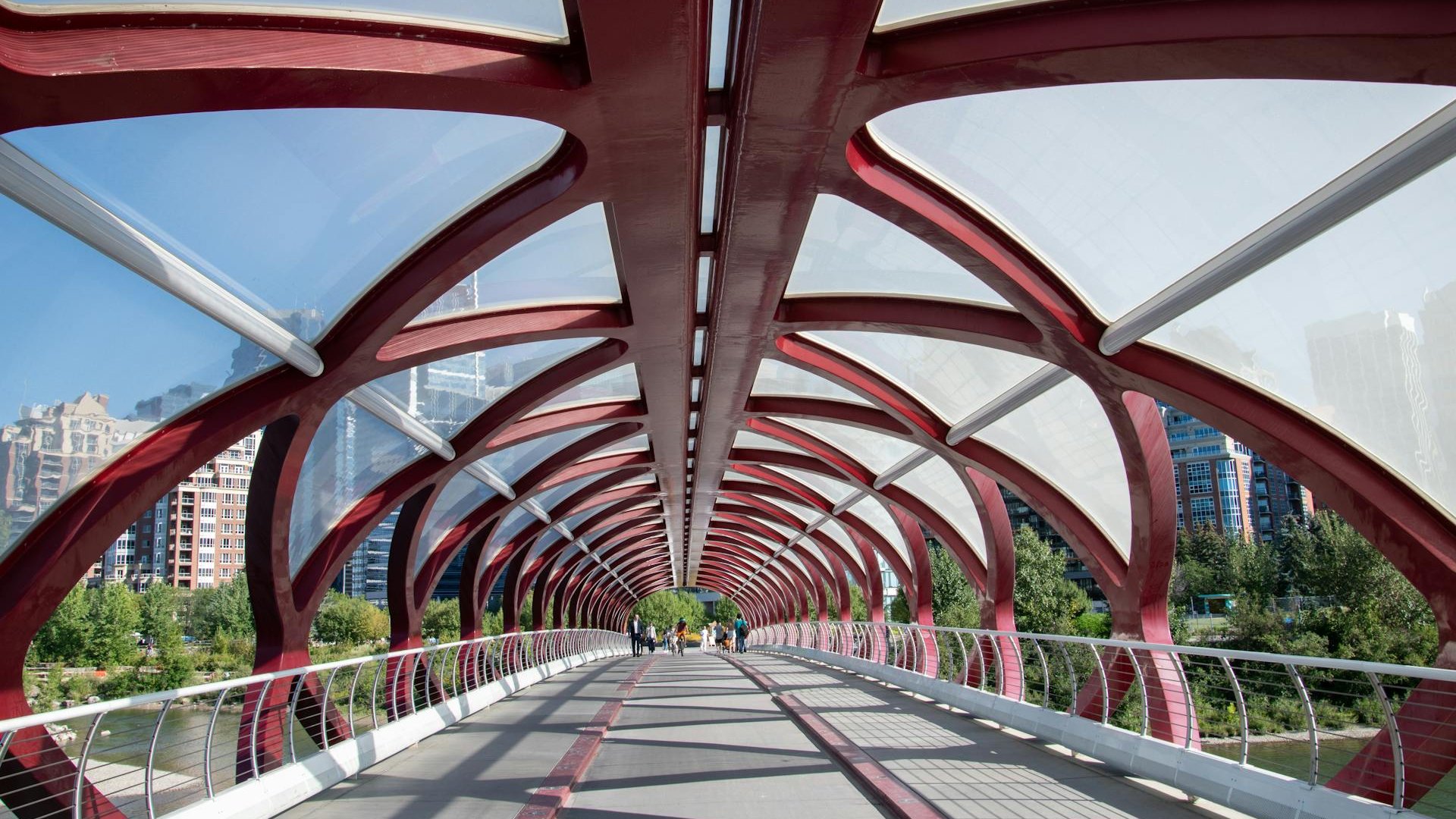
The Santiago Calatrava-designed Peace Bridge over the Bow River (opened 2012) is the city’s most-photographed contemporary architectural object and the pedestrian connector from downtown to Sunnyside / Kensington. A walking tour that anchors the bridge with Stephen Avenue and the East Village covers 90% of downtown’s heritage stock in 90 minutes — the post-1886-fire sandstone block on Stephen Avenue, the 1908 Hudson’s Bay department store, the 1909 Burns Building, and the 1912 Calgary Public Building. Pair with the Calgary Public Library (2018) and the Bow Tower (2013) for the contemporary layer.
Entertainment & Nightlife

Calgary’s entertainment calendar is anchored on five things: the Stampede in July, the Flames in winter, a strong producing-theatre and orchestra scene year-round, the Beltline 17 Avenue bar strip nightly, and the comedy circuit (Loose Moose, Yuk Yuks). The Calgary Stampede — the ten-day rodeo, midway, grandstand show and free pancake-breakfast circuit each July — is the headline event in the western Canadian entertainment calendar and the only fixture in the city worth booking flights around twelve months out. The Calgary Flames host roughly 41 NHL home games each winter at Scotiabank Saddledome (until Scotia Place opens in 2027) ; the Battle-of-Alberta rivalry with the Edmonton Oilers fills the building for every meeting, and the post-game Red Mile spillover onto 17 Avenue SW is the city’s most photogenic public-celebration moment. Beltline pubs and dance bars run to 2 a.m. on weekends; downtown jazz at the Ironwood Stage in Inglewood is the locals’ alternative.
Theatre, comedy and live music
Theatre Calgary at the Max Bell Theatre (Arts Commons, downtown) is the city’s producing theatre, with a year-round repertoire and an annual Christmas Carol that has run since 1987. Alberta Theatre Projects shares the Arts Commons site with the Martha Cohen Theatre. The Calgary Philharmonic Orchestra performs at the Jack Singer Concert Hall (also Arts Commons) with a season that runs September to May and a strong chamber-and-pop programme alongside the classical core. The Loose Moose theatre in Inglewood is the founding home of the international Theatresports format and runs improv every Friday and Saturday. The University of Calgary’s Rozsa Centre and Mount Royal University’s Bella Concert Hall round out the chamber-music circuit.
Day Trips from Calgary

Banff & Lake Louise (1h–2h by car — the headline)
Banff townsite is 130 km west of Calgary on the Trans-Canada Highway and is the gateway to Banff National Park — Canada’s first national park, established 1885 — covering 6,641 km² of front-and-main range Rockies. Drive time is one hour fifteen minutes door to door from downtown Calgary; the Banff townsite, the Banff Gondola up Sulphur Mountain, the Cave and Basin National Historic Site (the original 1883 hot spring), and the Fairmont Banff Springs Hotel make a full day. Lake Louise is a further 50 minutes west — the turquoise glacier-fed lake under the Victoria Glacier and the Fairmont Chateau Lake Louise. Moraine Lake, ten minutes further, has been closed to private vehicles since 2023; access is by Parks Canada shuttle from the Lake Louise overflow lot or by guided cycling tour. Banff alone deserves a separate guide; treat the Calgary day-trip as the introduction.
Drumheller & the Royal Tyrrell Museum (1h 30m by car — the dinosaurs)
The world’s most important palaeontology collection is 90 minutes east of Calgary in the Red Deer River badlands. The Royal Tyrrell Museum at Midland Provincial Park holds 130,000+ fossils across the Burgess Shale (Cambrian), Mesozoic dinosaur and Cenozoic mammal collections, with the largest dinosaur display in the world. The drive across the prairie out and the descent into the badlands at Horseshoe Canyon is the visual hook; the Tyrrell is a four-hour visit minimum. Pair with the Atlas Coal Mine NHS or the East Coulee School Museum for a full Drumheller day, and you can be back in Calgary by 7 p.m.
Kananaskis Country (35 min by car — locals’ alternative)
The Albertans’ alternative to Banff. Kananaskis Country — a provincial-park system west of Calgary covering roughly 4,000 km² — was created in 1977 as the locals’ mountain playground without Banff’s cruise-bus traffic. Highway 40 / 68 takes you off Stoney Trail in 35 minutes to the Kananaskis Village base, the Highwood Pass (the highest paved road in Canada at 2,206 m, open Jun–Oct) and the Nakiska ski hill (1988 Olympic alpine venue). Mount Yamnuska, Heart Mountain and Ha Ling Peak are the trio of one-day mountain hikes; the entry fee is the Kananaskis Conservation Pass at CAD $90 / year or CAD $15 / day per vehicle. The full day is the right call when Banff is over-crowded in July and August.
Head-Smashed-In Buffalo Jump & Bar U Ranch (2h–2h 30m southwest)
Two UNESCO and National Historic Site cluster destinations south of Calgary on Highway 2. Head-Smashed-In Buffalo Jump — UNESCO World Heritage Site #158 — is the world’s best-preserved buffalo-jump kill site, used by the Blackfoot peoples for nearly 6,000 years; the interpretive centre is built into the cliff face under the original kill zone. Drive time is two and a half hours; allow three hours inside. Bar U Ranch National Historic Site — ninety minutes southwest at Longview — preserves the late-19th-century working ranch that pioneered Western Canadian beef and is staffed by costumed interpreters with a working horse-and-buggy circuit. Pair the two for a full day — the cultural-heritage layer most visitors miss.
Calaway Park & Heritage Park (in-city, family-day)
If your day-trip needs to stay close to the city for kids, the alternatives are Calaway Park (Western Canada’s largest amusement park, 35 minutes west of downtown on the way to Banff) or a half-day at Heritage Park. Calaway Park runs May through September with 32+ rides; Heritage Park runs Victoria Day to Thanksgiving on the south Glenmore Reservoir.
Practical Tips
Visa — Canadian eTA
Visa-exempt fliers (US passport holders excepted; UK, EU, Australia, New Zealand, Japan, etc.) need a Canadian Electronic Travel Authorization before they board the plane. The eTA costs CAD $7, lasts up to five years or until passport expiry, and is valid for stays up to six months on each entry. Apply through the official Government of Canada eTA portal at least 72 hours before departure; processing is usually within minutes but can stretch to a few days. US passport holders entering by air do not need an eTA but do need a valid US passport at the YYC border.
Cash, cards & tipping
Calgary runs on contactless. Visa, Mastercard, Amex and mobile wallets are accepted at every cafe, restaurant, taxi, museum, transit kiosk and food-truck in the city. Cash is increasingly rare. Carry CAD $20–40 for street performers, the Stampede midway, and a few small independents that still go cash-only. The Canadian dollar trades at roughly USD $0.73 in 2026; the GST and Alberta-specific 5% sales tax are not included on menu prices and are added at the bill. Tipping in Calgary follows the Canadian standard: 18–22% in restaurants for table service, CAD $2–5 per drink at a bar, 15–20% on taxi fares. Do not under-tip 15% — restaurant servers in Alberta earn the regular minimum wage, not a sub-minimum tipped wage.
Plug, voltage and weather
Type A/B (NEMA 1-15 / 5-15), 120V / 60Hz — the same standard as the United States. UK and EU electronics will need both an adapter and a voltage check. The Chinook caveat is the single most important practical-weather decision: do not pack only for −25°C in winter, because a Chinook can land you in +12°C without notice and the city walks outdoors when it does. Pack a parka, a mid-layer fleece, a t-shirt and walking shoes that handle ice and slush. The 1,048-metre elevation drives short-term altitude headaches in 20–30% of first-time visitors; drink water on the flight and on Day 1.
Daylight Saving Time (still in effect)
Alberta is on Mountain Time (UTC−7 standard, UTC−6 during DST). The province debated abolishing DST in a 2021 plebiscite and the result was to keep DST — clocks still spring forward in March and fall back in November, the same as the rest of North America outside Saskatchewan and Yukon. Plan flight bookings around the standard DST shift; plan around it the same way you would Vancouver, Denver or Phoenix.
Safety, health & the Stampede booking buffer
Calgary is a safe city by North American standards. Police Service operates 911 (emergency) and 403-266-1234 (non-emergency); the Beltline 17 Avenue strip carries the standard late-night-bar pickpocket pressure but the city stays well below big-US-metro crime rates. For Stampede week (early July), book hotels at least four months ahead; downtown rates run two to three times the September baseline. For Banff in summer, book parks-pass entry and Lake Louise / Moraine Lake shuttle slots through Parks Canada at least one week ahead.
Budget Breakdown: What Calgary Costs in 2026
| Tier | Daily | Sleep | Eat | Transport | Activities | Extras |
|---|---|---|---|---|---|---|
| Budget | $90–135 | $45–75 hostel dorm / Airbnb shared | $30 (pho + Plus 15 lunch) | $11 day-pass CTrain | $15 free museums + Olympic Plaza skating | $12 craft-beer pint |
| Mid-Range | $180–280 | $140–220 boutique hotel | $70 mid-range dinner | $11 day-pass CTrain | $45 Calgary Tower + Glenbow | $25 Caesar at Charcut |
| Luxury | $480+ | $340+ Stephen Avenue 5-star (Stampede $700+) | $160 River Cafe tasting | $45 rideshare day | $120 Banff day-tour | $80 spa + bar |
Where your money goes
Sleep is the single biggest cost lever and the Stampede surge is real — mid-range Stephen Avenue rooms that run CAD $220 in September can clear CAD $600 during the ten-day Stampede window. Daily transit is CAD $11.50 with a Calgary Transit day-pass, or essentially free if you stay downtown and walk the Plus 15 / Stephen Avenue / East Village corridor (under 1.5 km end-to-end). Restaurants are mid-range by Canadian standards — cheaper than Vancouver, more expensive than Edmonton, with the Alberta-beef tier especially competitive. Tax on the bill is 5% GST only (Alberta has no provincial sales tax); tips are 18–22% on top.
Money-saving moves
- The CTrain free-fare zone covers the entire Stephen Avenue / Olympic Plaza corridor at no charge — ride the Red or Blue line between City Hall and 10th Street SW any time of day for free.
- The Glenbow Museum reopened on a phased basis through 2024 with admission held at CAD $20; pair with the free Plus 15 walk to the Calgary Public Library (also free) for a half-day urban-culture loop.
- Stampede pancake breakfasts — over 250 of them per day during the ten-day Stampede — are 100% free, run 7 a.m. to 10 a.m., and feed an entire breakfast budget for the visit.
- Stay in the Beltline or Bridgeland rather than Stephen Avenue / downtown core — rates run 25–35% lower with a 10-minute walk or one CTrain stop into downtown.
- Drive to Banff or Kananaskis off-peak (Sun–Thu, before 7 a.m. or after 5 p.m.) and skip the day-tour bus — rental cars from YYC start at CAD $50/day in shoulder season.
- The Calgary Tower at CAD $22 is the most expensive single attraction, but the Stephen Avenue heritage walk plus the Peace Bridge plus the East Village riverside plus the Plus 15 loop is a free four-hour day.
Frequently Asked Questions
How many days do I need in Calgary?
Three full days as an urban anchor is the realistic floor for first-time visitors — Day 1 Stephen Avenue, Calgary Tower and East Village, Day 2 Heritage Park and Inglewood, Day 3 day-trip to Banff or Kananaskis. Add a fourth day for Drumheller and the Royal Tyrrell Museum (the dinosaur badlands are 90 minutes east, and you will not forgive yourself for skipping them) , and a fifth day for Stampede if you are within forty days of early July.
Is the Stampede the only reason to visit Calgary?
Not at all — though Stampede week is the city in maximum extroverted gear and worth a trip on its own. The non-Stampede pull is the Banff / Kananaskis day-trip rotation, the Drumheller dinosaur day, the Heritage Park living-museum, the East Village rebuild and the food scene around Charcut, River Cafe and the International Avenue Vietnamese strip. September shoulder season is the smartest non-Stampede window: Stampede-style sun without the Stampede surge.
What is the best time of year to base in Calgary for Banff and Lake Louise?
Late June to mid-September for car-passable mountain access, late September to mid-October for larch-and-aspen colour without the cruise-bus crowds, and December through March for the ski-and-Chinook combination. Avoid mid-July and August Saturdays at Lake Louise (parking fills by 6 a.m.) and use Parks Canada’s shuttle system into Moraine Lake, which has been closed to private vehicles since 2023.
What are Chinook winds and how do they affect a visit?
A Chinook is a westerly Pacific airflow that descends warm and dry off the Rockies and can swing the city’s temperature by 30°C in a few hours. The signature is a band of cloud arched over the western front range — the Chinook arch — and the city schedules around it. Practical effect for a visitor: pack layers in winter, expect black-ice events on Deerfoot Trail during warm-cold transitions, and treat the Chinook as the city’s most reliable winter mood-shift. Migraines and sleep disruption are well-documented during fast-onset Chinooks.
Can I see the Northern Lights from Calgary?
Sometimes — though not as reliably as from Yellowknife, Whitehorse or even Edmonton. Calgary sits at 51 degrees north, which is on the southern edge of the auroral oval; on a strong geomagnetic-storm event (Kp 6+) the lights are visible from any of the city’s northern viewpoints (Nose Hill, Tom Campbell’s Hill, the WinSport hill). The 333-day-sun figure works against you in summer because the sky stays light past 11 p.m. at solstice; September through March is the practical aurora window. Drive an hour north or east of the city to escape the light dome for the strongest viewing.
Is Calgary good for solo travellers?
Among the easiest Western Canadian cities for it. The downtown is small enough to walk end to end in 30 minutes, the Plus 15 skywalk gives you a no-coat indoor circuit on cold days , the pub-and-craft-beer culture welcomes single drinkers at the bar, and women travelling alone report Calgary as one of the safer Canadian cities to walk after dark. The Beltline and Kensington are particularly comfortable on a solo Sunday afternoon.
Do I need a car in Calgary?
For the city itself, no — the CTrain free-fare zone, the Plus 15, and a downtown of about 1.5 km square mean you can do three full days without a car. For the day-trip rotation (Banff, Lake Louise, Drumheller, Kananaskis, Head-Smashed-In) a rental car is the right call — pick it up on the day you leave the city and drop it the day you return. Do not park a car downtown and pay CAD $40–55/night for hotel parking unless you need it the next morning.
Is Calgary expensive compared to Vancouver and Toronto?
Cheaper than Vancouver, similar to Toronto, more expensive than Edmonton or Winnipeg. Calgary’s mid-range hotel rates run roughly 20–30% below Vancouver in shoulder season; restaurant prices are similar to Toronto’s; the Alberta-no-PST 5% GST-only sales tax saves a few percent on every printed price compared to Ontario’s 13% HST or BC’s 12%. The single budget caveat is Stampede week; otherwise Calgary is a mid-tier-cost Canadian metro.
Ready to Experience Calgary?
Three full days for Stephen Avenue, the Calgary Tower, Heritage Park and a Banff or Kananaskis day-trip out to the Rockies; a fourth for the Royal Tyrrell Museum and the Drumheller badlands — that is the Calgary rhythm. For the full country context, read the Canada Travel Guide; for the next leg of any Western Canadian itinerary, pair Calgary with Vancouver via a 1h 30m WestJet flight or a 12-hour Trans-Canada drive through the Rockies.
Explore More City Guides
Domestic flight times below are typical published WestJet schedule durations from YYC.
- Vancouver City Guide — the Pacific peer, 1h 30m west by WestJet or a 12-hour Trans-Canada drive through Banff and Glacier National Park
- Toronto City Guide — Canada’s largest metro, 4h 10m east by WestJet
- Montreal City Guide — the French-Canadian peer, 4h 35m east by WestJet
- Quebec City Guide — the UNESCO Old Quebec walled city, the closest Canadian-capital peer for heritage and a non-Western counterweight
- Reykjavík City Guide — the FFU gold-standard reference and the closest North-Atlantic mountains-on-the-edge-of-the-city peer
- Edinburgh City Guide — the Festival-capital and Olympic-host-style heritage-and-events peer
- Canada Travel Guide — the country context for Calgary, Banff and the Western Rockies
Alex the Travel Guru
Alex has been writing destination guides for FFU since 2019. Calgary is the FFU founder’s hometown — the brief for this guide came directly from twenty-some years of growing up in the Bow Valley, Stampede pancake breakfasts in the back lane, Saturday morning Plus 15 walks to Heritage Park, and the Chinook winters that broke up January. The city is the closest thing FFU has to a hometown editorial brief; this guide is meant to read like the one you would hand a friend before they boarded the WestJet flight into YYC. For the full country context, read the Canada Travel Guide.
More city guides you might like
Plan your trip to Calgary
The booking tools we use ourselves. FFU may earn a commission at no extra cost to you.
Plan & book your trip to Calgary
Booking through these searches supports our guides at no extra cost to you.