
Bali, Indonesia: The Island of the Gods and Indonesia's Hindu Exception
Part of our Indonesia travel guide.
Bali City Guide
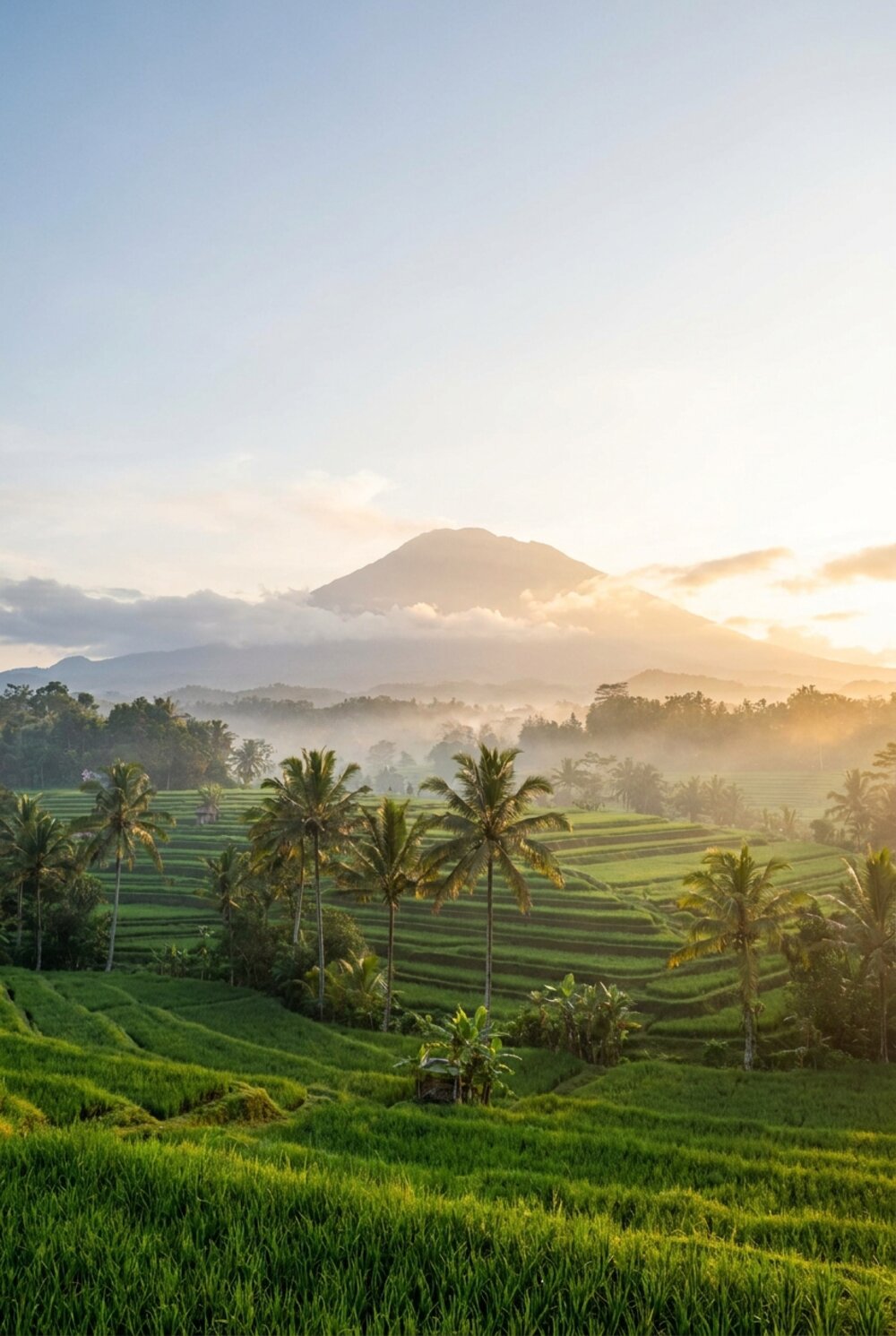
Table of Contents
Why Bali?
Bali is the one place in the world's largest Muslim country where more than eight in ten residents are Hindu, where every village maintains at least three temples, and where the morning starts with hand-woven palm-leaf offerings placed on the pavement before the first coffee is poured. More than 20,000 temples are recorded on an island that measures only 5,780 km² — roughly the size of Trinidad — which works out to about one temple for every 215 residents.
At 4.3 million permanent residents and roughly six million annual international visitors in 2024, Bali concentrates a volume of tourism that any European capital would recognise onto an island you can drive end-to-end in six hours. The contradiction that hits first-time visitors is the telescoping of worlds. In a single Tuesday you can watch a pre-dawn fishing fleet push off Amed's black-sand beach, take a yoga class in a bamboo-and-glass studio above a ravine in Ubud, order a rare natural wine at a Michelin-adjacent tasting room, and end the night at a Kecak fire dance on a 70-metre clifftop temple carved into the Bukit peninsula. The south-coast beach clubs pour sundowner cocktails while the village behind them still schedules weddings around the Saka lunar calendar.
Bali is also the island that closes — completely, for 24 hours — once a year. On Nyepi (19 March 2026), every road, every shop and Ngurah Rai International Airport itself shuts down in honour of Hindu self-reflection, the only airport in the world to close for a religious holiday. The island has been a major destination since the 1930s, when the Dutch government first marketed it to European travellers as the "last paradise", and more than 6.3 million international visitors landed at Ngurah Rai in 2024, a new all-time high. Over the course of this guide you will get our pick of the nine regions worth structuring a trip around, the full map of warungs versus beach clubs versus tasting menus, the ritual mechanics of the six great temples (Tanah Lot, Uluwatu, Besakih, Tirta Empul, Lempuyang, Taman Ayun), and the practicalities that actually bite first-time visitors — the IDR 150,000 tourist levy introduced in 14 February 2024, the scooter-safety reality check, Bali belly and dengue, the 30-day Visa on Arrival at IDR 500,000 (~$35), and the temple dress code. The 2026 calendar is particularly rich: Galungan falls on 18 February 2026 and again on 16 September 2026, Kuningan follows ten days later each time, the Ubud Writers and Readers Festival runs 21–25 October 2026, and the dry-season peak is April–October.
Neighborhoods & Regions: Finding Your Bali
📍 Bali Map: Every Place in This Guide
Bali is administratively one province divided into nine regencies and the capital city of Denpasar, spread across 5,780 km² on a volcanic spine that rises to 3,031 m at the summit of Mount Agung. Travellers only need to learn a shortlist. The south peninsula concentrates almost all international visitor traffic — Ngurah Rai International Airport (DPS) sits at its narrow waist, with the beach strip of Kuta, Seminyak and Canggu to the west and the gated resort enclave of Nusa Dua to the east. The Bukit peninsula drops south from DPS into clifftop surf country. Inland and north you pass through Ubud's rice-terrace river valleys into the central highlands of Munduk and the quieter black-sand coastlines of Amed (east) and Lovina (north). Distances look small on the map but the road network is single-carriageway, slow and often jammed: allow 90 minutes from Seminyak to Ubud, three hours from Ubud to Amed, and a full day to circumnavigate the island by car. The following nine regions cover every itinerary from a four-night first visit to a three-week deep dive. Each is anchored to a specific road and a driving time from DPS so you can drop it into your route without guessing.
Ubud
Ubud is the inland cultural capital of Bali, built around the former royal court of the Sukawati dynasty in the Tjampuhan river valley where two streams join. The town itself is walkable from the central Ubud Palace (Puri Saren Agung, still a functioning royal residence and free to enter between performances) out to the 2 km Campuhan Ridge Walk through an open grass savanna that photographs particularly well at sunrise. Ubud is the home of yoga Bali — the Yoga Barn alone teaches more than 130 classes a week across five shalas — and the anchor of the island's wellness, raw-food, and sound-healing economy. The Saraswati Temple (free) hides a lotus-pond forecourt behind an unmarked facade on Jalan Raya Ubud, and the Ubud Monkey Forest (Mandala Suci Wenara Wana) opens at the south end of Jalan Monkey Forest with around 1,260 long-tailed macaques in 12.5 hectares of protected nutmeg forest. Ubud is also the food-crafts capital: warung lunch anchors, the island's best cooking classes in the village of Laplapan, and Locavore NXT, the single most ambitious tasting menu in Indonesia.
- Ubud Palace (Puri Saren Agung) — working royal courtyard, free daytime entry.
- Ubud Monkey Forest — 12.5 ha reserve with three 14th-century temples.
- Campuhan Ridge Walk — 2 km grass-savanna path free at sunrise.
- Tegalalang Rice Terraces — 9 km north, part of the UNESCO Subak landscape.
- Saraswati Temple — lotus-pond water temple on Jalan Raya.
Best for: culture, yoga, first-time Bali. Access: 45–75 min by taxi from DPS, IDR 400,000–500,000 (~$24–30).
Seminyak
Seminyak is the upmarket beach-resort strip 9 km north of the airport that re-invented itself in the 2000s from a fishing village into Bali's designer-boutique and beach-club capital. The three parallel streets of Jalan Kayu Aya (locally "Eat Street"), Jalan Laksmana and Jalan Petitenget host most of the restaurants, while the beach between Petitenget Temple in the north and Double Six in the south is one continuous sunset strip with lounger-service from every hotel in between. Ku De Ta, the original Bali beach club that opened on Petitenget Beach in 2000, is still the default sunset booking, and Potato Head Beach Club three minutes up the beach sets the visual vocabulary of modern Bali (recycled shutters, infinity pool, a hillside of Balinese-made wooden sun beds). Seminyak is also the single densest cluster of villas with private pools in the 1 million–3 million IDR/night range and hosts most of the island's mid-tier spa brands (Bodyworks, Prana). The trade-off is traffic: Jalan Petitenget to Jalan Raya can take 40 minutes at 19:00 on a dry-season weekend.
- Petitenget Beach and Petitenget Temple — sunset strip.
- Ku De Ta — original Bali beach club, open since 2000.
- Potato Head Beach Club — landmark recycled-shutter facade.
- Seminyak Square — boutique-shopping courtyard.
- Jalan Kayu Aya — "Eat Street" restaurant row.
Best for: beach-club luxury, sunset cocktails, villa stays. Access: 20–40 min by taxi from DPS.
Canggu
Canggu is the coastal belt immediately north of Seminyak that has become, since roughly 2016, the digital-nomad capital of Southeast Asia. The sub-villages of Berawa, Batu Bolong and Echo Beach spread along a parallel-street grid where co-working cafes (Dojo Bali, Outpost, Tropical Nomad), third-wave coffee bars, Crossfit boxes, yoga studios, and surf schools have replaced much of the original rice paddy. Old Man's on Batu Bolong Beach still anchors the surfer nightlife Wednesdays and Sundays, La Brisa sets the tone for the reclaimed-wood oceanfront aesthetic, and the four surf breaks (Echo, Old Man's, Batu Bolong, Berawa) cater to absolute beginners through intermediate point breakers depending on the tide. The Canggu shortcut road through the Berawa rice paddies is so busy it is now a bottleneck in both directions — many long-stay visitors rent scooters precisely to beat the gridlock, which in turn is a major contributor to the scooter-accident statistics (see Practical Tips).
- Echo Beach — advanced surf break, sunset pubs.
- Batu Bolong Beach — beginner-friendly surf, Old Man's bar.
- Berawa Beach — family-leaning stretch with Finns Beach Club.
- La Brisa — oceanfront reclaimed-wood restaurant.
- Echoes Bali / The Lawn — sunset cocktail lawns.
Best for: surf, digital-nomad remote work, younger crowds. Access: 45–75 min by taxi from DPS depending on traffic.
Uluwatu (Bukit Peninsula)
Uluwatu is the clifftop southern tip of the limestone Bukit peninsula that drops 70–90 m straight into the Indian Ocean, producing a string of world-class left-handers (Uluwatu, Padang Padang, Bingin, Impossibles) that have been the backbone of Indonesia's surf reputation since the 1970s. The defining venue is Pura Luhur Uluwatu, the 11th-century sea temple carved into the clifftop and still a functioning Balinese royal temple; the sunset Kecak fire dance held nightly in its open-air amphitheatre is the single most visited performance on the island, with tickets around IDR 150,000 (~$9). Single Fin on the Uluwatu clifftop runs the landmark Sunday sunset surf-and-DJ sessions, Karma Beach uses a funicular to reach its cliff-cove beach club, and the Bukit hosts most of the island's trophy clifftop resorts (Six Senses, Bulgari, Alila Villas). Roads south of the airport are fast and empty outside surf-contest dates.
- Uluwatu Temple (Pura Luhur Uluwatu) — 11th-century clifftop sea temple.
- Padang Padang Beach — "Eat Pray Love" hidden cove.
- Bingin Beach — stepped warungs down a cliff stairway.
- Single Fin — Sunday sunset surf session.
- Karma Beach — funicular-access beach club.
Best for: advanced surfing, clifftop resorts, sunset temples. Access: 30–45 min by taxi from DPS.
Sanur
Sanur is the east-coast beach town that predates south-west Bali's tourism — the Belgian painter Adrien-Jean Le Mayeur lived here from 1932 to 1958, and the Le Mayeur Museum in his former beachfront home is one of the island's oldest. The 7 km beachfront boardwalk runs from Mertasari in the south past Sindhu Market and Sanur Beach Hotel out to the reef break at the north end, and the reef-protected shallows make Sanur the one stretch of mainland Bali that is genuinely family-safe for small children. Sanur Harbour is the ferry terminal for Nusa Penida, Nusa Lembongan and Nusa Ceningan, with fast boats departing hourly from 07:30 to 16:30. The town slants older and quieter than the west coast; restaurants close earlier, traffic is lighter, and rental villas run 30–40% cheaper than Seminyak on a like-for-like basis.
- Sanur beachfront boardwalk — 7 km paved path.
- Le Mayeur Museum — 1930s painter's beachfront villa.
- Sindhu Beach Market — morning fresh-fish market.
- Sanur Harbour — Nusa Penida and Lembongan fast boats.
- Mertasari Beach — shallow sunrise bay.
Best for: families, retirees, sunrise, Nusa-island day trips. Access: 20 min by taxi from DPS.
Nusa Dua
Nusa Dua is the gated five-star resort enclave on the southern peninsula, built in the 1970s as an Indonesian government-backed tourism zone under the name BTDC (Bali Tourism Development Corporation). The district sits behind security gates, with wide palm-lined avenues connecting the Bali Collection shopping complex, the Pasifika Museum, Bali National Golf Club and a string of branded resorts (Grand Hyatt, Mulia, Ritz-Carlton, St. Regis, Westin). The calm, reef-protected beach of Geger and the dramatic Waterblow blowhole at the tip of Peninsula Island book-end the enclave, and the shallow lagoon of Tanjung Benoa on the north edge is the hub of the island's watersports industry (parasailing, jet ski, banana boat). Nusa Dua is the quietest option on the south coast with the least local street life; the trade-off for all-inclusive convenience is a cocoon effect. Conference visitors and families dominate the demographic.
- Bali Collection — central shopping and dining cluster.
- Waterblow — cliff-edge blowhole on Peninsula Island.
- Geger Beach — reef-protected calm bay.
- Pasifika Museum — Pacific-Asian art gallery in the enclave.
- Tanjung Benoa — watersports hub on the north edge.
Best for: all-inclusive resorts, calm water, families. Access: 20–30 min by taxi from DPS.
Amed
Amed is the east-coast fishing-village strip of eight contiguous black-sand coves along 14 km of the Karangasem regency coast, framed by the south slope of Mount Agung at 3,031 m. The water off Jemeluk Bay holds one of the best shore-entry snorkel gardens in Indonesia, and the USAT Liberty, a US Army transport torpedoed by the Japanese in 1942 and beached at Tulamben 15 minutes up the coast, is one of the world's most accessible wreck dives — the top of the hull sits in four metres of water. Amed itself is deliberately low-rise: no beach clubs, no McDonalds, no shopping malls. The scene is a hundred small dive shops, warungs serving fresh reef-caught mahi, guesthouses on the black sand, and sunrise views of Lombok's Mount Rinjani across the strait. Three hours from DPS by car, and worth the effort.
- Jemeluk Bay — shore-entry snorkel garden and viewpoint.
- USAT Liberty wreck — Tulamben, 15 min north, shore-entry dive.
- Japanese Shipwreck — Amed village shore snorkel.
- Mount Agung viewpoint — sunrise over the volcano.
- Jemeluk Beach — main fishing-village sand.
Best for: dive and snorkel travellers, quiet east coast. Access: 3 hours by car from DPS.
Lovina
Lovina is the north-coast resort strip in Buleleng regency, 10 km west of the former Dutch-colonial capital of Singaraja and defined by a row of black-sand beaches sheltered by a broad reef. The iconic image is the 05:30 dolphin-watching boat: dozens of jukung outriggers push off Lovina Beach in pre-dawn light to find the resident spinner-dolphin pods that feed off the coast. Banjar Hot Springs, 10 km south-west, pipes sulphurous water at around 37°C through three tiered pools carved with naga serpents. Brahma Vihara Arama, Bali's largest Buddhist monastery, is a quiet reminder that Hinduism is only the majority religion — not the only one — on the island. The north coast is two to three hours from DPS over the mountain pass at Bedugul and draws budget travellers, backpackers and low-season discount hunters far more than the south.
- Lovina Beach dolphin monument — 05:30 dolphin-watching boats.
- Banjar Hot Springs — tiered sulphur pools.
- Brahma Vihara Arama — Bali's largest Buddhist temple.
- Singaraja old town — Dutch-colonial port quarter.
- Gitgit Waterfall — 35 m cascade on the mountain road south.
Best for: budget travellers, dolphin-watching, off-season. Access: 3 hours by car from DPS.
Munduk
Munduk is the central highland village in Buleleng regency at around 850 m elevation, set among cloud-forested coffee plantations on the caldera rim of the prehistoric Tamblingan volcano. This is Bali at 18–24°C overnight and with a totally different ecology from the south coast: cloves, coffee, vanilla, and tropical hardwoods grow through fog, and the twin crater lakes of Tamblingan and Buyan and the third caldera lake at Bratan anchor the central-mountain tourism circuit. The Ulun Danu Beratan Temple, 30 minutes south, appears to float on Lake Bratan and is printed on the IDR 50,000 banknote. Munduk proper is walking country — the village's four main waterfalls (Munduk, Melanting, Red Coral, Banyumala Twin) can be linked in a four-hour guided hike — and the ridge-road viewpoint at Gobleg frames all three lakes on clear mornings. Travellers use Munduk as a one or two-night cool-climate break between beach segments.
- Munduk Waterfall — 15 m main cascade, 15 min walk-in.
- Tamblingan and Buyan twin lakes — caldera circuit.
- Ulun Danu Beratan Temple — lake-shore temple 30 min south.
- Banyumala Twin Waterfall — double cascade 20 min west.
- Gobleg ridge viewpoint — three-lake panorama.
Best for: hikers, coffee-farm stays, cool-climate escape. Access: 2.5 hours by car from DPS.
The Food
Bali's cuisine is genuinely distinct from the rest of Indonesia. The pig — unthinkable in Muslim-majority Java — is the centrepiece of Balinese ceremonial cooking, and babi guling (whole spit-roast suckling pig) is the island's signature dish in a way that rendang belongs to West Sumatra or gudeg belongs to Yogyakarta. The grammar of a Balinese meal runs rice at the centre, a protein (pork, duck, minced fish, or chicken), two or three vegetable sides, a sambal, and the spice paste called basa gede (ginger, galangal, turmeric, lemongrass, kaffir lime, shallot, garlic, chilli, candlenut) that perfumes almost everything. The Michelin Guide launched in Indonesia in 2024 and at time of writing has only selected venues in Jakarta, Surabaya and Bandung, so there are no starred restaurants on Bali yet — but the island has a deep Michelin-adjacent fine-dining scene led by Locavore NXT in Ubud. What follows is structured the way most first-time visitors actually eat: Balinese signatures during the day, warungs for lunch, beach clubs at sunset, and one fine-dining splurge.
Balinese Signatures: Babi Guling, Bebek Betutu, Lawar
Babi guling is Bali in a single dish: a whole suckling pig stuffed with the island's base spice paste, then spit-roasted for three to four hours until the skin is shattering-crisp and the meat is perfumed through. The reference venue in the south is Warung Babi Guling Ibu Oka 3 in Ubud, on Jalan Suweta opposite the royal palace; a standard nasi campur plate with shoulder, skin, sausage, sate and rice runs IDR 75,000 (~$4.50). Bebek betutu is the slow-cooked-duck cousin, rubbed with basa gede, wrapped in banana leaf and buried under rice husks in a smoulder pit for eight to twelve hours; Bebek Bengil (the "Dirty Duck Diner") in Padang Tegal is the historic Ubud address, with bebek betutu at around IDR 160,000 (~$10). Lawar is the minced-meat salad that traditionally accompanies pork or chicken, tossed with grated coconut, long beans, and (in its ceremonial form) raw pig blood; most restaurants serve a tourist version without the blood. Sate lilit — Balinese satay in which the minced fish or chicken is pressed around a lemongrass stalk rather than skewered on wood — is ubiquitous as a starter. Nasi campur Bali is the umbrella plate that combines all of the above in warung portions.
- Warung Babi Guling Ibu Oka 3 (Ubud) — classic babi guling plate, IDR 75,000 (~$4.50). Queues by 12:15.
- Bebek Bengil / Dirty Duck Diner (Padang Tegal, Ubud) — bebek betutu IDR 160,000 (~$10), open since 1990.
- Warung Men Weti (Sanur) — lawar and nasi campur, IDR 45,000–60,000 (~$3–4).
- Naughty Nuri's Warung (Ubud) — BBQ pork ribs and martinis, IDR 165,000 (~$10).
- Warung Bu Oki (Jimbaran) — nasi campur Bali, IDR 40,000 (~$2.40).
- Gianyar Night Market — babi guling and lawar stalls, plates from IDR 20,000 (~$1.20).
Warung Culture: Where Locals Eat Every Day
The warung is Bali's equivalent of the hawker stall, the bistro and the canteen rolled into one — an owner-operated shophouse kitchen with five to twenty plastic-stool seats, a glass case of pre-cooked nasi campur components, and prices one-third to one-fifth of the tourist-strip restaurants. A full nasi campur lunch — rice, two vegetables, a meat, tempe, a sambal, a krupuk — runs IDR 35,000–60,000 (~$2–3.50). Warung Wardani on Jalan Yudistira in Denpasar is the reference Balinese canteen, busy from 10:00 with a nasi campur queue out the door; Warung Biah Biah in Ubud, open since 2008, is a rare tourist-friendly warung with menu English and pepes ikan (spiced fish in banana leaf) at IDR 45,000 (~$2.70). Nasi Ayam Kedewatan Ibu Mangku, 15 minutes north of Ubud in Kedewatan village, serves the definitive Balinese shredded chicken nasi campur at IDR 55,000 (~$3.30) and closes the moment the rice runs out, often by 14:30. In the south, Warung Nia on Jalan Lebak Sari in Seminyak occupies the space between warung and restaurant, with BBQ pork ribs at IDR 120,000 (~$7). Use warungs for lunches on driving days; most close by 21:00 or earlier, so plan dinner around the beach clubs and fine dining.
- Warung Nia (Seminyak) — BBQ pork ribs, IDR 120,000 (~$7).
- Warung Wardani (Denpasar) — nasi campur, IDR 50,000 (~$3).
- Warung Biah Biah (Ubud) — pepes ikan and Balinese set plates, IDR 45,000 (~$2.70).
- Nasi Ayam Kedewatan Ibu Mangku (Kedewatan) — Balinese chicken rice, IDR 55,000 (~$3.30).
- Warung Sopa (Ubud) — vegetarian Balinese, set plate IDR 70,000 (~$4).
- Warung Eny (Seminyak) — seafood BBQ, whole snapper IDR 180,000 (~$11).
Beach Clubs: The South-Coast Sunset Economy
The Bali beach club is a distinct institution: a hybrid of restaurant, infinity pool, day bed lounger, DJ stage and sunset bar that stretches over 30–100 metres of private beachfront, with a single cover minimum (usually IDR 250,000–500,000 food-and-beverage spend) that buys access for the whole day. Ku De Ta in Seminyak, open since 2000, is the original and still the reference for formal sunset dinners; Potato Head Beach Club — three minutes up Petitenget Beach — is the younger design-forward sibling, with Sunday brunch at IDR 750,000 (~$45) per head, and its Desa Potato Head compound has expanded upward into a 168-room sustainable hotel. Finns Beach Club in Berawa is the family-scale behemoth (three bars, four pools, a kids' club, 10,000 sq m), and La Brisa on Canggu's Batu Bolong Beach is the reclaimed-wood artisan option with the best food of the group (Mediterranean-leaning wood-fire grill). Single Fin on the Uluwatu clifftop runs the Sunday sunset surf session that is the single most concentrated social event on the island each week, and Karma Beach on the Bukit peninsula delivers its guests down a cliff face via funicular to a cove dayclub. Sunday is the default beach-club day; Saturday is a close second; weekday pricing and availability are dramatically easier.
- Potato Head Beach Club (Seminyak) — typical spend IDR 450,000 (~$27), Sunday brunch IDR 750,000.
- Ku De Ta (Seminyak) — typical spend IDR 500,000 (~$30), formal sunset dinners IDR 900,000+.
- La Brisa (Canggu) — typical spend IDR 350,000 (~$21), reclaimed-wood oceanfront.
- Finns Beach Club (Canggu) — typical spend IDR 300,000 (~$18), large family-friendly compound.
- Single Fin (Uluwatu) — typical spend IDR 250,000 (~$15), Sunday surf sunset DJ sessions.
- Karma Beach (Uluwatu) — typical spend IDR 400,000 (~$24), funicular down to cliff cove.
Michelin-Adjacent Fine Dining: Locavore, Cuca, Merah Putih, Mozaic
The Michelin Guide Indonesia has not yet published a Bali selection as of April 2026, so none of the island's fine-dining restaurants hold stars on paper Data unavailable — but a cluster of tasting-menu kitchens in Ubud and the south are routinely ranked on Asia's 50 Best Restaurants and the Tatler Dining lists. Locavore NXT, the 2023 successor to the original Locavore (which closed for a rebuild) runs a 14–18 course tasting menu at around IDR 2,700,000 (~$160) per head using 98% Indonesian-sourced ingredients, with signature courses built around Indonesian fermented produce (tempeh-aged koji, Javanese tuak palm wine). Cuca in Jimbaran is Spanish chef Kevin Cherkas's flavour-driven small-plates and cocktails address, with a seven-course tasting around IDR 1,200,000 (~$72). Merah Putih in Kerobokan serves contemporary Indonesian cuisine inside a dramatic bamboo-vault dining room (tasting menu IDR 800,000, ~$48). Mozaic in Sanggingan, Ubud, opened in 2001 as the pioneer of French-Balinese fine dining and still runs a IDR 2,000,000 (~$119) grand-discovery tasting. Room 4 Dessert Bali, the Will Goldfarb sweet-only tasting counter, is the outlier and the must-book for sugar specialists.
- Locavore NXT (Ubud) — tasting menu IDR 2,700,000 (~$160).
- Cuca (Jimbaran) — seven-course tasting IDR 1,200,000 (~$72).
- Merah Putih (Kerobokan) — Indonesian tasting IDR 800,000 (~$48).
- Mozaic (Ubud) — French-Balinese tasting IDR 2,000,000 (~$119).
- Room 4 Dessert (Ubud) — dessert-only tasting IDR 900,000 (~$54).
- Api Jiwa (Seminyak) — wood-fire tasting IDR 1,500,000 (~$90).
Food Experiences You Can't Miss
Beyond the four headline food categories above, a first-time visit should include at least three hands-on or place-specific food experiences. The list below is the shortlist used by most returning Bali travellers and restaurant-industry visitors; none require advance booking more than 24 hours ahead, and most can be slotted into a normal driving day. Costs range from IDR 60,000 for a night-market plate to IDR 700,000 for a private Balinese cooking class including pickup.
- A Paon Bali half-day cooking class in Laplapan village, 20 min from Ubud — IDR 450,000 (~$27) including market tour and six-dish meal.
- Gianyar Night Market (18:00–23:00 daily) for the single best babi guling price-to-quality trade on the island, with plates from IDR 20,000 (~$1.20).
- A Jimbaran fish-market dinner on Muaya Beach — pick your reef fish at dusk and eat it grilled on the sand, IDR 250,000–400,000 (~$15–24) per person.
- A Balinese coffee-and-cacao farm stay in Munduk with a tasting flight of arabica, robusta and civet-processed luwak coffee, typically IDR 100,000–150,000 (~$6–9) for the flight.
- The weekly Sindhu Beach morning fish market in Sanur at 06:00 for octopus, mahi-mahi and day-caught tuna, where local chefs pre-negotiate the best of the catch before the market opens at 06:30.
- An Ubud village rijsttafel at Mozaic Beach Club in Batu Belig — a 10-course Indonesian-Dutch tasting in beachfront surroundings at IDR 1,200,000 (~$72).
- A sunset seafood grill at the Kedonganan fish market beach warungs — the original Jimbaran-style pre-cook-it-for-you setup, cheaper than the polished Muaya Beach strip.
Markets, Night Food and the Vegetarian Scene
Three more food sub-categories deserve their own paragraph. Night markets (pasar malam) run in every major town between 18:00 and 23:00 — Gianyar is the most famous, but Sanur's Pasar Sindhu night market (Wednesdays) and the Canggu-area Samadi Market (Sunday mornings 09:00–14:00) serve similar price ranges with a more international vendor mix. The Sanglah Wet Market in Denpasar opens at 03:00 for the island's wholesale fish and produce trade and is where most Ubud-area chefs do their early-morning sourcing. Vegetarian and vegan options are unusually strong for a Southeast Asian island — Ubud in particular hosts Moksa, Earth Cafe, and the Sayuri Healing Food Lab, all serving creative raw-vegan tasting menus at IDR 150,000–350,000 (~$9–21). Balinese festival food (lawar, sate lilit, nasi campur) has vegetarian versions at most Ubud warungs under "lawar sayur". Fourth and finally: the single best coffee on the island is at Seniman Coffee Studio in Ubud, where the 2014 Indonesian Barista Championship winner still runs the espresso bar, with single-origin pour-overs at IDR 55,000 (~$3.30). Most Bali coffee shops now serve locally roasted beans from Kintamani, Pupuan or Munduk estates, and a flat-white culture that rivals Melbourne has developed across Canggu and Seminyak since 2018.
Cultural Sights
Bali's cultural geography is built on temples. The island's Hindu tradition distinguishes three temple types — village temples, directional sea temples, and mountain temples — and the seven sites below cover every tier. Sarong and sash are mandatory at all of them; most include the kit at the gate with admission. Opening hours track daylight, and ceremonial dates (especially the Galungan–Kuningan ten-day cycle in February and September 2026) close parts of each temple to tourists without warning.
Tanah Lot Temple (Pura Tanah Lot)
Tanah Lot is the most photographed sea-stack temple on the island, 20 km north-west of Seminyak. Founded in the 16th century by the priest Dang Hyang Nirartha, who travelled Bali's coast establishing the network of directional sea temples, it sits on an offshore rock that is reachable on foot only at low tide. The sunset silhouette against the Indian Ocean is the image that sells Bali. Admission IDR 75,000 (~$4.50). Open 06:00–19:00 daily; arrive 90 minutes before sunset to park and walk in.
Uluwatu Temple (Pura Luhur Uluwatu)
Uluwatu is the 11th-century clifftop sea temple on the southern tip of the Bukit peninsula, perched on a 70 m limestone headland above the Indian Ocean. Attributed to the sage Empu Kuturan and expanded by Dang Hyang Nirartha, it is one of the six directional (sad kahyangan) temples considered spiritual pillars of Bali. Admission IDR 50,000 (~$3). Open 09:00–19:00 daily. The main feature for visitors is the sunset Kecak fire dance, staged in the open-air amphitheatre at 18:00 with a chorus of around seventy men chanting "cak-cak-cak" (ticket IDR 150,000, ~$9). Macaques on the cliff path are notorious for snatching sunglasses — staff at the entry hand out rubber bands and will negotiate recovery for a small tip.
Besakih Mother Temple (Pura Besakih)
Besakih is the largest Hindu temple complex in Bali — 23 separate temples arranged on the south slope of Mount Agung at 1,000 m elevation, around two hours east of Ubud. Origins date to prehistoric stone terraces predating Indonesian history; the main Pura Penataran Agung was built in its current 14th-century form. It is the "Mother Temple" of Balinese Hinduism and the single site where all Balinese can trace their ritual genealogy. Admission IDR 150,000 (~$9) including a cart shuttle up the final ascent. Open 08:00–17:00 daily. Guides near the entrance will frequently insist visitors need a local escort; this is a soft scam — an official guide is not required, and the state-run ticket desk includes map and sarong.
Tirta Empul (Holy Spring Temple)
Tirta Empul is the 962 CE water temple in Tampaksiring, 15 km north-east of Ubud, built around a natural cold spring that has been considered holy for over a thousand years. The central feature is the bathing pool, fed by more than thirty carved fountainheads, where Balinese Hindus perform the melukat purification ritual. Visitors may participate (sarong and sash mandatory, head covering for entering the inner sanctum), queuing under each fountain in sequence. Admission IDR 75,000 (~$4.50), open 08:00–18:00 daily. Arrive before 09:00 to experience the ritual with minimal crowd; a change of wet clothes and a plastic bag are essential.
Ubud Monkey Forest (Mandala Suci Wenara Wana)
The Ubud Monkey Forest is a 12.5 hectare protected nutmeg forest and three-temple complex (Pura Dalem Agung, Pura Beji and Pura Prajapati) in the village of Padangtegal at the south end of Ubud's main street. The 14th-century temples are active places of worship; the 1,260 long-tailed macaques that populate the forest are semi-habituated and will aggressively snatch water bottles, sunglasses and loose pocket items. Admission IDR 80,000 weekday / IDR 100,000 weekend (~$5–6). Open 09:00–18:00 daily. Do not carry food, do not make eye contact, and do not attempt selfies with a macaque on your shoulder — the bite-to-rabies-shot pipeline at the Ubud medical centre is well-established and avoidable.
Tegalalang Rice Terraces
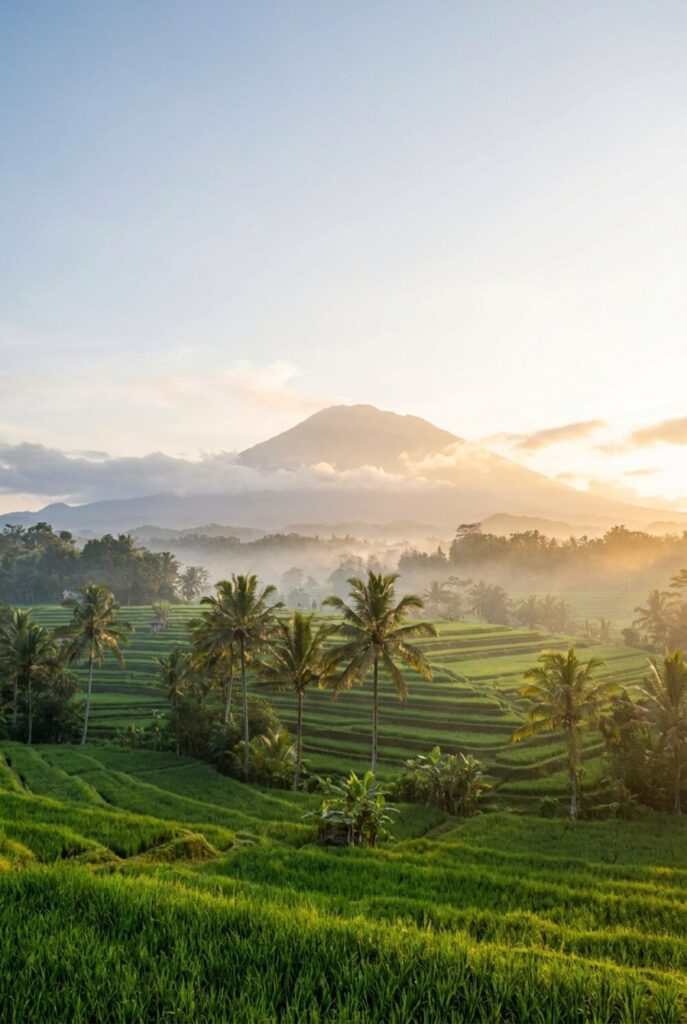
Tegalalang is the 9 km-north-of-Ubud ravine where Balinese subak (cooperative irrigation) terracing is cut into both walls of a narrow river valley, producing the stepped green amphitheatre that appears on most Bali marketing photography. The subak system here has been active since the 9th century and is part of the UNESCO Cultural Landscape of Bali Province inscription (2012). Admission to the terrace walking paths is IDR 25,000 (~$1.50), open 07:00–18:00 daily. Zipline operators at the ridge entrance run two parallel lines over the terraces for IDR 350,000 (~$21).
Taman Ayun Royal Temple
Taman Ayun is the 1634 royal water temple of the former Mengwi Kingdom, built under King I Gusti Agung Putu, and one of the five sites inscribed in the UNESCO Cultural Landscape of Bali Province (2012). A wide moat surrounds the temple compound, and a series of multi-tiered meru (pagoda-roofed shrines) rises inside the walls. Admission IDR 30,000 (~$1.80). Open 08:00–18:00 daily. Taman Ayun sits 40 minutes north-west of Seminyak and is almost always comparatively empty; an easy half-day pairing with Tanah Lot for sunset.
Entertainment
Bali's entertainment economy is shaped by two poles. On one side is the ceremonial culture — dance, ritual, craft — that predates tourism by a millennium. On the other is the beach-club, surf and yoga economy that arrived in the 1970s and accelerated after the 2002 bombing recovery. Almost every night of the year you can choose between a traditional Kecak dance at a cliff temple and a DJ set at a recycled-wood beach club within 30 minutes of each other. The seven categories below cover the reliable options; prices are for one visitor unless noted.
Surfing
Bali has been the surf engine of Indonesia since Alby Falzon's 1972 film Morning of the Earth first showed Uluwatu's left-handers to a world audience. Beginner and lower-intermediate surfers should head to Kuta Reef, Legian Beach, Batu Bolong (Canggu) or the inside bank at Old Man's; these waves are sand-bottomed, forgiving, and sit 200–400 m offshore. Advanced surfers head south to Uluwatu, Padang Padang, Bingin, Impossibles and Nusa Dua's outer reef, where reef-bottom point breaks and strong currents demand experience. Typical cost: a full-day board rental plus a two-hour lesson runs IDR 300,000–600,000 (~$18–36). Booking tip: the dry season (April–October) is the prime south-coast surf season, while the wet season (November–March) flips the consistent waves to the east coast at Sanur, Nusa Dua and Keramas.
Yoga & Wellness Retreats
Ubud is the single most concentrated yoga economy in Asia, with more than forty studios operating inside the town and over a hundred across the island. The Yoga Barn (Padangtegal) teaches roughly 130 classes a week in five shalas at IDR 150,000 (~$9) per drop-in, with multi-week retreats from IDR 15,000,000 (~$900). The Practice in Canggu specialises in pranayama and meditation; Radiantly Alive in Ubud runs 300-hour teacher-trainings; and Fivelements in Mambal offers seven-day healing retreats with Balinese Usada medicine at around IDR 60,000,000 (~$3,580) per person. Typical cost: IDR 150,000 per class, IDR 15,000,000+ per retreat week.
Beach Clubs
The beach club category deserves its own line in the entertainment budget. Sunday afternoon at Potato Head, Finns, Ku De Ta or La Brisa is a full afternoon-into-evening event with pool access, DJ sets and sunset dinner. Typical cost IDR 250,000–500,000 (~$15–30) per person as food-and-beverage minimum; day beds from IDR 500,000 for two up to IDR 3,000,000 for a private cabana with dedicated service. Booking tip: weekend day beds should be reserved 2–5 days ahead; Sundays at Potato Head and Finns sell out by Friday in dry season.
Traditional Dance (Kecak, Legong, Barong)
Balinese dance-drama is alive as a ritual form, not a museum piece. The three traveller-accessible formats are Kecak (the chanted-chorus fire dance, most famously staged at Uluwatu Temple at 18:00 nightly), Legong (the courtly female palace dance performed at Ubud Palace several nights each week) and Barong (the mythological lion-vs-demon drama staged in Batubulan village daily at 09:30). Ubud Palace hosts a different traditional dance each evening at 19:30; a calendar is posted at the palace gate and at the Ubud Tourist Information Office across the road. Typical cost IDR 100,000–150,000 (~$6–9). Arrive 30 minutes before the start to secure a front-row seat; open-courtyard benches fill quickly during peak season.
Nightlife & Clubs
Formal nightclubs concentrate on the south-coast strip. La Favela on Jalan Laksmana in Seminyak is the long-running design-forward club inside a maze of Brazilian-favela-inspired rooms. Shishi in Canggu runs the standard late-night venue for the surf-and-nomad crowd. Bounty Discotheque in Kuta is the budget mega-club. Savaya (formerly Omnia) on the Uluwatu clifftop is the trophy-DJ beach-club-at-night venue, with international sets on Friday and Saturday nights and entry from IDR 500,000 (~$30). Typical cost IDR 250,000+ cover or minimum.
Cooking Classes
Balinese cooking classes are universally half-day and include a morning market tour, a village-kitchen session producing six to nine dishes, and the lunch you have cooked. Paon Bali Cooking Class in Laplapan village, 20 minutes from Ubud, is the classic, at IDR 450,000 (~$27) including pickup. Bumbu Bali in Nusa Dua, run by Australian chef Heinz von Holzen since 1997, is the upscale option at IDR 700,000 (~$42). Typical cost IDR 450,000–700,000 (~$27–42).
Spa & Balinese Massage
The Balinese massage — a hybrid of acupressure, deep-tissue kneading and long flowing strokes — is the single most-requested spa treatment in Southeast Asia, and Bali has perhaps the widest price range of anywhere: a 60-minute treatment at a neighbourhood warung-spa costs IDR 150,000–250,000 (~$9–15), while Fivelements in Mambal, Karsa Spa above the Campuhan Ridge and Bodyworks in Seminyak run signature treatments from IDR 800,000 up to IDR 2,000,000 (~$48–119). Typical cost IDR 200,000–1,200,000.
Day Trips
The best day trips from Bali leave the island entirely. Four of the five below involve a fast-boat crossing or a pre-dawn car departure; only the Lempuyang pilgrimage is a same-day Bali round-trip. Always carry your passport for boat crossings between islands.
Nusa Penida (45 minutes by fast boat from Sanur)
Nusa Penida is the jagged limestone island 20 km south-east of Bali, reached by a 45-minute fast boat from Sanur Harbour. Kelingking Beach — the T-Rex-shaped headland with a 200 m switchback trail to a turquoise cove — is the signature photograph. Broken Beach (Pasih Uug) and Angel's Billabong are 45 minutes west, a natural arch and a tidal rock pool respectively. Diamond Beach in the east and Atuh Beach next door complete the big-four circuit. Practicality: fast boats run hourly 07:30–16:30, return ticket IDR 250,000–400,000 (~$15–24). A scooter on Penida costs IDR 100,000/day; book a driver with SUV for IDR 700,000 (~$42) because the west-side roads are brutal. One day works; two nights is better.
Mount Batur Sunrise (2 hours by car plus 2-hour climb)
Mount Batur is the 1,717 m active stratovolcano on the north-central caldera rim, and the standard Bali sunrise hike. Pickup is 02:00–03:00 from Ubud (90 min drive), with the climb starting in pitch dark at 04:00 and the summit reached for the 06:00 sunrise over Lake Batur and across to Mount Agung. A certified mountain guide is mandatory under the Trunyan Guide Association monopoly, and the standard package runs IDR 500,000–750,000 (~$30–45) per person including pickup, guide, headlamp, breakfast on the rim and drop-off by 10:00. Practicality: wear layered clothes (it is 12–15°C at the summit before sunrise), carry 1.5 L water, and book the evening before through any Ubud travel agency. Fitness level: moderate; 1,000 m ascent over two hours.
Gili Islands (1.5–2.5 hours by fast boat from Padangbai or Serangan)
The three Gili islands — Trawangan, Meno and Air — sit off the north-west coast of Lombok and are reached by fast boats from Padangbai (east Bali, 2 hours) or Serangan (south Bali, 2.5 hours). No motor vehicles are allowed on any of the Gilis; transport is by foot, bicycle or cidomo pony cart. Trawangan is the party island, Air is the family island, Meno is the snorkel-and-quiet island. Practicality: return fast boat around IDR 700,000 (~$42), carry your passport, and expect a half-day each way. Day trips are possible but tight; two nights is the sweet spot.
Lombok (2 hours by fast boat from Padangbai)
Lombok is the Muslim-majority island immediately east of Bali, reached by a 2-hour fast boat from Padangbai to Bangsal or Senggigi. The southern surf coast at Kuta Lombok (not to be confused with Kuta Bali) holds the empty white-sand beaches of Tanjung Aan, Selong Belanak and Mawun, and the volcanic Mount Rinjani at 3,726 m is Indonesia's second-tallest volcano and a serious two or three-day trek. Practicality: Lombok International Airport (LOP) offers the Bali-alternative entry point, and an overnight stay is strongly recommended; day trips are tight given the boat schedule.
Lempuyang Temple / Gates of Heaven (2.5 hours by car from Ubud)
Pura Lempuyang Luhur is the sunrise-pilgrimage mountain temple at 1,175 m elevation on Mount Lempuyang in east Bali, and the "Gates of Heaven" — the split-gate view framing Mount Agung in the distance — is among the most photographed frames in Southeast Asia. The full pilgrimage ascends six separate temples by stairway, a five-hour round-trip; most visitors shoot the gate and descend. Practicality: arrive before 07:00 to beat both the crowds and the cloud cover that typically envelops Agung by 09:00. Ticket queue is organised, but wait times can still exceed 90 minutes by 10:00 in high season. Sarong and sash mandatory.
Seasonal Guide
Bali sits 8° south of the equator and does not have the four temperate seasons the template implies. The local calendar runs on a dry season (April–October) and a wet season (November–March), with temperatures holding in a narrow 23–32°C band all year. The H4 blocks below map to the calendar months visitors use to plan, with the monsoon reality noted inside each.
Spring (March – May)
Shoulder-into-peak-dry season, with daytime highs of 30–32°C and rainfall tapering through April to around 80–150 mm across the month. Nyepi 2026 falls on 19 March — a complete 24-hour island-wide shutdown with DPS airport closed. The ten-day Galungan–Kuningan festival cycle of 18 February–28 February 2026 carries into early March, with temples, roads and families all running ceremonial visits. Swell on the south coast (Uluwatu, Canggu) picks up from late April. Accommodation rates are still shoulder-priced through April before jumping for the dry-season peak in July.
Summer (June – August)
Peak dry season and peak tourism. Temperatures are actually cooler than the rest of the year, with highs of 28–29°C, humidity at its annual low, and rainfall dropping to 30–60 mm per month. The Bali Arts Festival runs mid-June to mid-July across Denpasar, with nightly dance, gamelan and craft showcases at the Art Centre (Taman Werdhi Budaya). The Ubud Village Jazz Festival takes over central Ubud in mid-August. Surf is at its south-coast best (Uluwatu, Padang Padang) — and hotel and villa prices in Seminyak and Uluwatu routinely run 40–80% above off-season rates. Book accommodation two to four months ahead for July and August arrivals.
Autumn (September – November)
Second shoulder season. Temperatures climb back to 30–31°C highs and rainfall steps up from 60 mm in September to around 180 mm in late November as the monsoon turns. The Ubud Writers and Readers Festival runs 21–25 October 2026, five days of panel discussions, author readings, and film screenings at venues across Ubud. The second Galungan–Kuningan cycle of the year falls on 16–26 September 2026. The first half of September is arguably the best single month to visit Bali — dry weather, smaller crowds, lower rates.
Winter (December – February)
Full wet season. January and February are the wettest months of the year, with 260–320 mm of rain, afternoon tropical thunderstorms, and occasional 48-hour downpours. Temperatures hold at 24–32°C. Rates soften except for the Christmas-to-New-Year two-week spike when both Seminyak and Uluwatu run luxury peak-peak pricing. The east coast (Sanur, Nusa Dua) takes over from the south-west for clean surf. Galungan falls again on 18 February 2026. Pack a proper rain jacket and build flexibility into any scooter plans.
Getting Around
Scooter and Moped Rental (Read This First)
The scooter is how most long-stay visitors and almost all backpackers move around Bali, and the honest truth is that scooter crashes are the number-one cause of tourist injury, evacuation and death on the island. The usual rental is a Honda Vario 125 or Yamaha NMAX at IDR 70,000–120,000 per day (~$4–7) or IDR 350,000–600,000 per week (~$21–36). Helmet is mandatory under Indonesian law and the police run regular stops on the Seminyak–Canggu and Ubud–Kintamani roads. A foreign driver must carry an International Driving Permit endorsed for motorcycles; a car-only IDP is not valid for scooters and most travel-insurance policies will deny coverage without the correct endorsement. Wear closed shoes, never ride after alcohol, avoid night rides outside the south, and do not ride in flip-flops.
Private Driver
A private driver is the default day-trip transport for most first-time visitors. The standard 8–10 hour day with an English-speaking driver and an air-conditioned seven-seater runs IDR 600,000–900,000 (~$36–54), fuel included, with pickup and drop-off at any hotel. Hotel concierges, Klook and GetYourGuide all book the same pool of drivers at roughly the same price. A private driver makes sense for any day that involves two temple visits, a waterfall, and a drive longer than two hours; it does not make sense inside a single neighbourhood.
Gojek and Grab (Ride-Hailing)
GoJek and Grab are the two ride-hailing apps that function across southern Bali, Ubud, Seminyak, Canggu and Sanur. Both operate car and motorbike services, with car rides in the south starting around IDR 25,000 (~$1.50) for short hops and motorbike rides starting at IDR 10,000. Coverage is uneven: many villages have no-pickup zones enforced by the local ojek (motorbike-taxi) cooperative, marked with painted signs at village entrances — in those zones, drivers will often meet passengers 50–200 m away. Ubud in particular has ongoing tension between traditional drivers and app platforms.
Taxis (Blue Bird Group)
The trustworthy metered-taxi brand on Bali is Blue Bird (Bali Taksi), with a flag-fall of IDR 7,500 (~$0.45) and a per-km rate of IDR 6,500 (~$0.40). Blue Bird cars have the company logo on the door, a blue bird-shape emblem on the roof, and a meter that runs from the moment the door closes. Dozens of imitators use the same blue paint scheme with marginally different logos; insist on the meter being on and look for the Bluebird Group branding. Airport transfers from DPS use a fixed-price counter outside arrivals — IDR 150,000 to Kuta, IDR 200,000 to Seminyak and IDR 400,000–500,000 to Ubud (~$24–30).
Fast Boats to the Nusas and Gilis
Fast boats run from Sanur Harbour (Nusa Penida, Nusa Lembongan, Nusa Ceningan) and from Padangbai (Gili Trawangan, Lombok). Sanur-to-Nusa-Penida one-way runs IDR 125,000–200,000 (~$7–12), hourly departures from 07:30 to 16:30. Padangbai-to-Gili-Trawangan return is typically IDR 700,000 (~$42) with operators including Eka Jaya, Blue Water Express and Scoot Cruise. Buy tickets through your accommodation or online at 12GoAsia; dock-side purchase can be 20–40% more expensive.
Airport Access (DPS)
Ngurah Rai International Airport (DPS) sits 3 km south of central Kuta and handled 24.6 million passengers in 2024. The airport taxi counter outside the international arrivals hall operates on a published fixed-price grid; ignore the freelance drivers who solicit arriving passengers at the curb.
- DPS to Kuta — 15 min by taxi, IDR 150,000 (~$9) on the airport fixed-price counter.
- DPS to Seminyak — 25 min by taxi, IDR 200,000 (~$12).
- DPS to Ubud — 60–90 min by taxi, IDR 400,000–500,000 (~$24–30).
- DPS to Uluwatu — 30–45 min by taxi, IDR 300,000 (~$18).
- DPS to Sanur — 20 min by taxi, IDR 175,000 (~$10).
- DPS to Nusa Dua — 20–30 min by taxi, IDR 200,000 (~$12).
The GoJek and Grab apps work for airport pickup from a designated off-site parking area roughly 500 m outside the terminal — the per-trip price is 30–40% lower than the fixed-price counter, at a cost of a short walk with luggage. For groups of three or more with heavy bags, the counter taxi is the easier trade.
Budget Breakdown: Making Your Rupiah Count
Bali remains one of the cheapest major international beach destinations in the world at the budget end, while quietly running luxury prices equal to Capri or the Maldives at the top. The three-tier table below reflects April 2026 prices; the exchange rate assumed is IDR 16,750 per USD.
| Tier | Daily | Sleep | Eat | Transport | Activities | Extras |
|---|---|---|---|---|---|---|
| Budget | IDR 650,000–950,000 (~$40–57) | IDR 200,000–350,000 guesthouse / hostel dorm (~$12–21) | IDR 150,000 warungs (~$9) | IDR 80,000 scooter+fuel (~$5) | IDR 100,000 temple admissions, yoga drop-in (~$6) | IDR 150,000 levy + SIM + laundry (~$9) |
| Mid-Range | IDR 1,700,000–2,700,000 (~$100–160) | IDR 900,000–1,500,000 3-4 star villa (~$54–90) | IDR 400,000 warung + beach club lunch (~$24) | IDR 700,000 private driver (~$42) | IDR 400,000 spa, dance show, cooking-class share (~$24) | IDR 300,000 levy amortised + tips (~$18) |
| Luxury | IDR 6,500,000+ (~$388+) | IDR 4,500,000+ private-pool villa, five-star (~$269+) | IDR 1,500,000 Locavore NXT / Cuca (~$90) | IDR 1,200,000 private SUV driver + airport limo (~$72) | IDR 1,200,000 helicopter, private Kecak, spa day (~$72) | IDR 500,000 villa service surcharges (~$30) |
Where Your Money Goes
The biggest swing factor on a Bali budget is accommodation. A clean guesthouse room in Ubud or Canggu in April 2026 runs IDR 350,000–500,000 (~$21–30) per night, a mid-range pool villa in Seminyak runs IDR 1,500,000–2,500,000 (~$90–150), and five-star cliff-villa resorts in Uluwatu such as Bulgari, Alila or Six Senses run IDR 12,000,000–40,000,000 (~$717–$2,390) per night. Food is unusually elastic: you can eat exceptionally well for IDR 60,000 (~$3.60) at a warung or IDR 2,700,000 (~$160) at Locavore NXT — a 45× spread inside the same city, from a plastic-stool lunch to one of Asia's 50 Best tasting menus. Transport is usually the hidden cost — if you plan four full day-trip days with a private driver at IDR 700,000 per day, that alone adds IDR 2,800,000 (~$167) to the week; a week-long scooter at IDR 500,000 (~$30) is the alternative. The mandatory IDR 150,000 (~$10) tourist levy is one-time, not daily, and a 30-day Visa on Arrival is IDR 500,000 (~$35). A 10% government tax plus 5–10% service charge is typically added to hotel and restaurant bills at the mid and luxury tiers; check receipts for the "++" notation that indicates taxes are not included in listed prices. Tipping is not obligatory but IDR 20,000–50,000 (~$1.20–3) per service visit to drivers, massage therapists and room attendants is the local norm.
Money-Saving Tips
- Base for five nights in a single region rather than moving every two nights — driver transfers cost IDR 400,000–700,000 each.
- Eat two of three meals at warungs and spend the saved rupiah on a single fine-dining dinner.
- Book scooter or driver by the week rather than by the day (30% savings).
- Skip the beach-club day bed and order drinks at the bar for access at a quarter of the cost.
- Pay the IDR 150,000 tourism levy online in advance at lovebali.baliprov.go.id to avoid a 20–40 minute queue at DPS arrivals.
- Visit cultural temples (Tanah Lot, Uluwatu, Tirta Empul) during weekday morning slots — weekend admission is identical but wait times can double in peak dry season.
- Buy your local eSIM online from Airalo or Holafly before arrival for IDR 150,000 (~$9) — airport kiosks charge a 30% premium.
- Shop at BCA or Mandiri ATMs rather than the standalone kiosks on tourist strips; the latter sometimes charge an additional IDR 50,000 (~$3) service fee on top of your home bank's international withdrawal fee.
Practical Tips
Language: Bahasa Indonesia and Balinese
Two languages matter on Bali. Bahasa Indonesia is the national language used in schools, government and most media; Basa Bali (Balinese) is the regional mother tongue spoken at home and in temples, with three formal registers (low, polite, high) historically tied to caste. Hotel and restaurant staff across the south speak workable English. A handful of phrases goes a long way: terima kasih (thank you), selamat pagi (good morning), selamat sore (good afternoon), tidak pedas (not spicy), berapa harganya (how much). Balinese Hindu greetings use palms together at the chest — Om Swastiastu is the formal greeting with a temple context.
Cash vs. Cards: Still Cash-First
Cash (IDR) remains king in warungs, at temples, in most markets, and for scooter rentals. Credit cards work at hotels, malls, beach clubs and most mid-range restaurants. ATMs are dense across the south (BCA, Mandiri, BNI) and in Ubud; skim-tape scams have been periodically reported, so prefer a bank-lobby ATM during business hours over a standalone kiosk. Currency exchange at the informal kiosks on Jalan Legian can be slippery — use authorised PVA counters (look for the "authorised" sign with a government permit number) or withdraw at an ATM. Keep IDR 500,000–1,000,000 on you at all times.
Health: Bali Belly, Dengue and the Monkey Forest
Bali belly (traveller's diarrhoea) is the single most common ailment — drink only sealed bottled or hotel-filtered water, avoid ice from street stalls that looks crushed rather than cubed, and pack oral rehydration salts. Dengue fever cases rose in 2024; use DEET repellent at dawn and dusk, and wear long sleeves at Ubud-area dinner terraces that back onto rice paddies. Rabies is endemic in Bali dogs and in the Monkey Forest macaques; any bite or deep scratch requires post-exposure prophylaxis within 24 hours at Sanglah Hospital in Denpasar or BIMC Nusa Dua.
Visa on Arrival and e-VoA
Most nationalities receive a 30-day Visa on Arrival at DPS for IDR 500,000 (~$35), extendable once at an Imigrasi office for a further 30 days. The e-VoA via molina.imigrasi.go.id can be completed online in advance, paid by card and scanned on arrival to skip the payment counter queue. Passport validity: six months minimum from the date of entry.
Temple Dress Code: Sarong and Sash Mandatory
Every Hindu temple on the island requires a sarong (kain) tied at the waist and a sash (selendang) tied over the top. Shoulders must be covered. Most major temples (Tanah Lot, Uluwatu, Besakih, Tirta Empul, Lempuyang) rent the kit at the gate included with admission; some village temples will ask visitors to bring their own. Menstruating women are traditionally asked not to enter the temple inner sanctum; this is a religious rule and temple staff may ask. Step over (never step on) the small palm-leaf canang sari offerings placed on pavements three times a day.
Nyepi: The Day the Island Goes Silent
Nyepi (19 March 2026) is the Balinese Hindu Day of Silence, observed across the entire island for 24 hours: no flights in or out of DPS (the airport closes 06:00 18 March to 06:00 20 March local time), no vehicles on public roads, no lights visible from the street after dusk, no beach access, and in most hotels no staff beyond a skeleton kitchen crew. Hotels confine guests to the grounds, and pecalang (traditional Balinese community police) patrol the streets to enforce the observance. Arrive 19 March is not possible; arrive 20 March and you will find the island in an unusually slow recovery mode. Stock cash, water, snacks and a good book the day before.
Alcohol: The Arak Warning
Bintang beer, imported spirits and wine are widely available at hotels, restaurants and supermarkets. Arak (traditional palm-spirit) is drunk legitimately throughout the island, but unlabelled home-brew arak sold by unknown vendors has historically been contaminated with methanol, with traveller fatalities most recently reported in clusters from 2009 onward. Only drink arak at established bars and restaurants that source it from licensed distilleries; if a cocktail price seems too cheap to be true, treat the base spirit as suspect.
Connectivity
Local eSIMs from Telkomsel (the largest and most reliable) and Indosat cost IDR 150,000–300,000 (~$9–18) for 20–30 GB of 4G data, with no ID paperwork required for the eSIM. 4G coverage is universal across the south coast and Ubud; it thins noticeably in Munduk, Amed, inland Karangasem, and along the Canggu Shortcut road. International roaming works but will be 5–10 times the local SIM cost.
The 2024 Tourist Levy
Since 14 February 2024, every international visitor to Bali pays a one-time IDR 150,000 (~$10) tourism levy, separate from the visa fee. Funds are earmarked for cultural preservation, waste management and environmental programmes. Pay online at lovebali.baliprov.go.id before arrival (recommended) or at the DPS arrivals counter; the receipt is a QR code that may be requested at some hotels and temples.
Frequently Asked Questions
How many days do I need in Bali?
Seven to ten days is the sweet spot for a first visit. Our recommended split is three nights in Ubud for culture, temples, rice terraces and the yoga economy; three nights on the south coast — pick one of Seminyak (beach clubs and fine dining), Canggu (surf and nomad cafes), or Uluwatu (clifftop resorts and surf); one or two nights on Nusa Penida or the Gilis for reef snorkelling; and the remainder in Amed (east-coast diving) or Munduk (highland coffee country) if you have the time. Bali rewards slowing down: two-night minimums in each base are better than moving every night, because driver transfers between regions eat 60–120 minutes each. Under five days, stick to just the south coast; a day of Ubud is a teaser only.
When is Nyepi 2026, and can I still travel then?
Nyepi falls on 19 March 2026 this year. DPS airport closes for 24 hours (06:00 18 March to 06:00 20 March local time), all roads close to traffic, and hotels confine guests to their grounds. You cannot fly in or out on 19 March. If you are already at a Bali hotel on the day, it is a profound experience to witness an island in total silence and to see the stars without any light pollution after dark — hotels run shortened-menu room-service meals and keep one low-light pool area open. If you need to travel on 19 March, choose a different week; plan arrivals for 20 March only if you accept a slow restart day.
Is the scooter really as dangerous as people say?
Yes, unfortunately. Road-traffic injuries are the leading cause of foreign-tourist hospitalisation and medical evacuation on Bali, and the combination of potholed roads, unpredictable right-of-way, mixed truck-scooter-pedestrian traffic, and untrained tourist riders (most of whom have never ridden a two-wheeler before renting one) makes the Canggu–Seminyak and Ubud roads genuinely hazardous. Wear a helmet (mandatory under Indonesian law), carry an International Driving Permit with the motorcycle endorsement, never ride after drinks, never ride in flip-flops, and avoid night riding outside the lit south-coast strip. Most travel insurance policies deny claims without the correct IDP endorsement. A private driver at IDR 600,000–900,000 per day is an honest cost-benefit trade against an emergency evacuation.
Do I need to pay the Bali tourist levy?
Yes. Since 14 February 2024, every international visitor to Bali pays a one-time IDR 150,000 (~$10) tourism levy, separate from the Visa on Arrival fee. The preferred payment route is lovebali.baliprov.go.id online in advance (takes about five minutes, credit card accepted); you can also pay at a dedicated desk in DPS arrivals. Keep the QR receipt — some hotels and major temples may ask to see it.
Do I really need to wear a sarong at temples?
Yes. A sarong and sash are mandatory at every Hindu temple, and shoulders must be covered. Major temples (Tanah Lot, Uluwatu, Besakih, Tirta Empul, Lempuyang) rent the kit at the gate included with the admission ticket; village temples sometimes expect visitors to bring their own. It is not a tourist-pricing trick — it is a genuine religious dress code, and temple pecalang (community security) will turn you away without it. Menstruating women are asked not to enter temple inner sanctums; staff may enquire.
Is Bali safe for solo female travellers?
Yes, broadly. Violent crime against tourists is rare, and female-owned yoga studios, warungs, co-working spaces, and guesthouses are abundant in Ubud, Canggu and Seminyak. The main risk is petty theft, specifically bag snatches from the open front basket of a parked scooter — keep valuables off the seat, out of the basket, and ideally on your person or inside a closed under-seat compartment. Solo female digital nomads make up a significant share of long-stay visitors in Canggu and Ubud, which has produced a deep support network of meet-up groups, co-working memberships and women-only retreats.
Can I use credit cards everywhere?
Cards work fine at hotels, malls, beach clubs, most mid-range restaurants, cooking-class schools, and tour operators. Warungs, temples, local markets, and most scooter rentals remain cash-only, and many small shops add a 2–3% card surcharge. Carry IDR 500,000–1,000,000 on you; ATMs (BCA, Mandiri, BNI) are easy to find south of Ubud, less easy in Munduk, Amed, and Lovina. Withdraw at a bank-lobby ATM during business hours where possible.
Is Bali good for families with young kids?
Yes — especially Sanur and Nusa Dua, where the reef-protected shallow beaches, calm seas, and resort kids' clubs are designed for young children. Ubud is also a solid family base, with flat pool villas, gentle rice-terrace walks, and the Monkey Forest (supervise carefully with small children — macaques can be aggressive). Canggu and Seminyak skew younger and have more steep-beach surf. Avoid the high-surf months (June–August) on the west coast with small swimmers, and pick east-coast or Nusa Dua waters instead. Baby formula, nappies and international paediatric care (BIMC, Siloam) are all available in the south.
Ready to Experience Bali?
The Island of the Gods rewards the traveller who slows down enough to let its rhythm show — a morning on a temple-strewn rice terrace, an afternoon yoga class, a sunset Kecak dance on a cliff, a plate of babi guling at a Gianyar night market. Plan around Nyepi if you are arriving in March 2026, book a private driver rather than a scooter for day-trip heavy days, and split your week between Ubud culture and one south-coast beach base. For the full country context, read the Indonesia Travel Guide for visa mechanics, inter-island flights, and the rest of Indonesia's 17,000 islands.
Explore More City Guides
Where to Stay
Bali hotels and villa guide — our curated list of villas in Ubud, Seminyak, Canggu and Uluwatu, plus the five-star trophy resorts on the Bukit peninsula.
Alex the Travel Guru
Alex is the Facts From Upstairs travel guru — a multi-decade wanderer who has returned to Bali every year since 2008, watched Seminyak turn from a fishing village to a beach-club strip, and sat through three Nyepi days at three different hotels in three different regencies. Alex writes the FFU city and country guides with a focus on real prices, real travel times, and the local knowledge that does not make it into the brochures. When not drafting guides, Alex is usually eating babi guling in Gianyar or waiting for a Padang Padang set.
Sibling Cities
Other city guides we recommend for asia-focused trip planning around Bali:
- Tokyo city guide — Japan
- Seoul city guide — South Korea
- Busan city guide — South Korea
- Taipei city guide — Taiwan
More city guides you might like

Plan your trip to Bali
The booking tools we use ourselves. FFU may earn a commission at no extra cost to you.
Plan & book your trip to Bali
Booking through these searches supports our guides at no extra cost to you.