
City Guide · Emilia-Romagna · The Food Valley
Bologna, Italy: La Dotta, La Grassa, La Rossa — the World’s Oldest University, Italy’s Food Capital & the UNESCO Porticoes
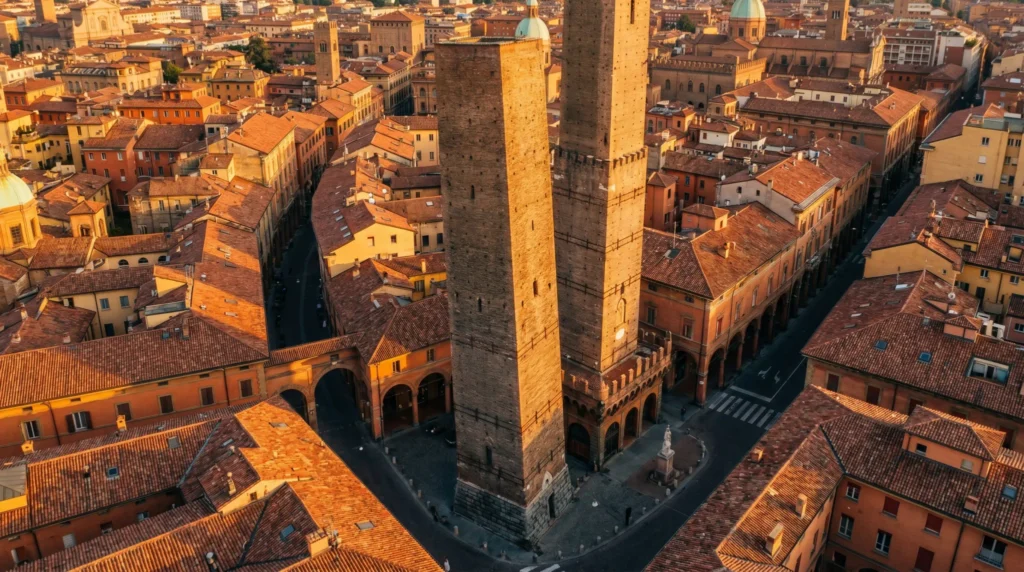
I came to Bologna expecting a quick stopover between Florence and Venice and ended up staying four days, mostly because I kept following the porticoes one more block. Bolognesi have nicknamed their city for nine centuries — la dotta, la grassa, la rossa: the learned, the fat, the red. The learned, because the University of Bologna, traditionally dated to 1088, is the oldest university in continuous operation in the world. The fat, because this is the undisputed food capital of Italy — tagliatelle al ragù, tortellini in brodo and mortadella are all from here. And the red, for the terracotta rooftops and the 62 kilometres of porticoes — 42 of them inside the historic centre — that UNESCO inscribed as a World Heritage Site in July 2021. The city proper holds about 390,000 people beneath the leaning Two Towers and the vast unfinished facade of San Petronio. Treat this as the brief I’d hand my own family before they boarded a Frecciarossa, and read it alongside our Italy country guide.
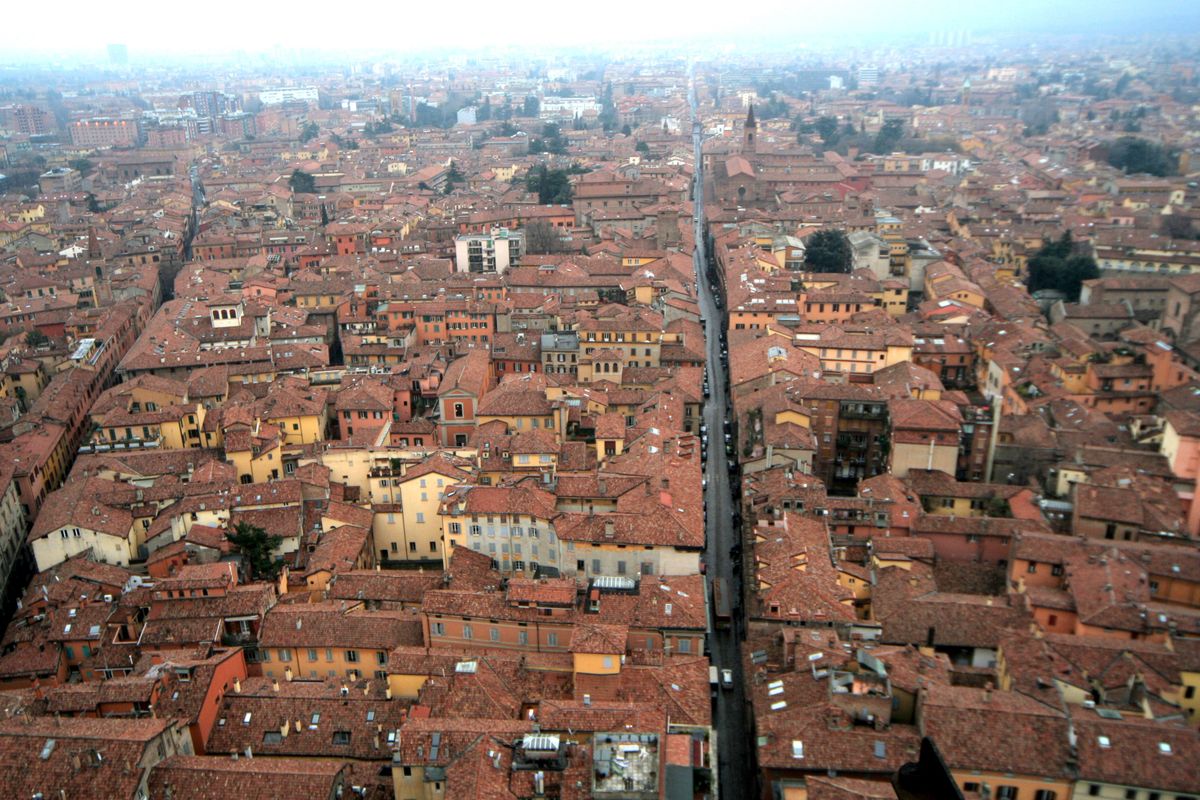
Table of Contents
Why Bologna?
Bologna is the great Italian city that most foreign travellers skip — and that is precisely why it rewards. While Florence and Venice strain under day-trippers, Bologna stays a working university town with one of the lowest tourist-to-resident ratios of any major Italian centre. Its university, traditionally dated to 1088, is the oldest in continuous operation in the world and effectively gave us the very word universitas; tens of thousands of students still pour through the porticoes each term, keeping the aperitivo bars cheap, the bookshops busy and the whole city feeling far younger than its medieval bones suggest. You feel it the moment you step out of Bologna Centrale: this is a place that lives for its residents first and visitors second.
The city wears three identities at once, captured in its old nicknames. La dotta — the learned — for that university and the medieval scholars whose demand for housing helped fill the city with arcades and gave Bologna its scholarly, slightly bookish soul. La grassa — the fat — because Emilia-Romagna is the larder of Italy, and Bologna its capital: this is the home of ragù, tortellini, mortadella and the surrounding “food valley” of Parmigiano-Reggiano, balsamic vinegar and prosciutto, much of it carrying protected-origin status. And la rossa — the red — for the terracotta roofs and ochre walls that glow at sunset, and (later) for the city’s long left-wing politics and its postwar reputation as a model of civic administration.
What ties it all together is the portico. Bologna has about 62 kilometres of covered walkways, 42 of them inside the historic centre alone, far more than any other city on earth; from 1288 the comune required that new houses be built with one and that it remain for public use, and in July 2021 UNESCO inscribed the porticoes as a World Heritage Site. The practical upshot is delightful: you can cross the entire medieval core in a downpour or under the August sun without ever reaching for an umbrella or losing the shade. The arcades also blur the line between street and building, so cafes, bookshops and market stalls spill out under cover, and the city feels permanently sociable.
This guide covers the city’s three signatures in depth — Piazza Maggiore and the Basilica di San Petronio, the leaning Two Towers and the UNESCO porticoes, and the food of the Quadrilatero market and the surrounding Emilia-Romagna valley — plus neighbourhoods, day trips, transit, budgets and the practical detail you need to plan a trip. Read it as the brief a local friend would give you before you arrive.

Neighborhoods: Finding Your Bologna
📍 Bologna Map: Every Place in This Guide
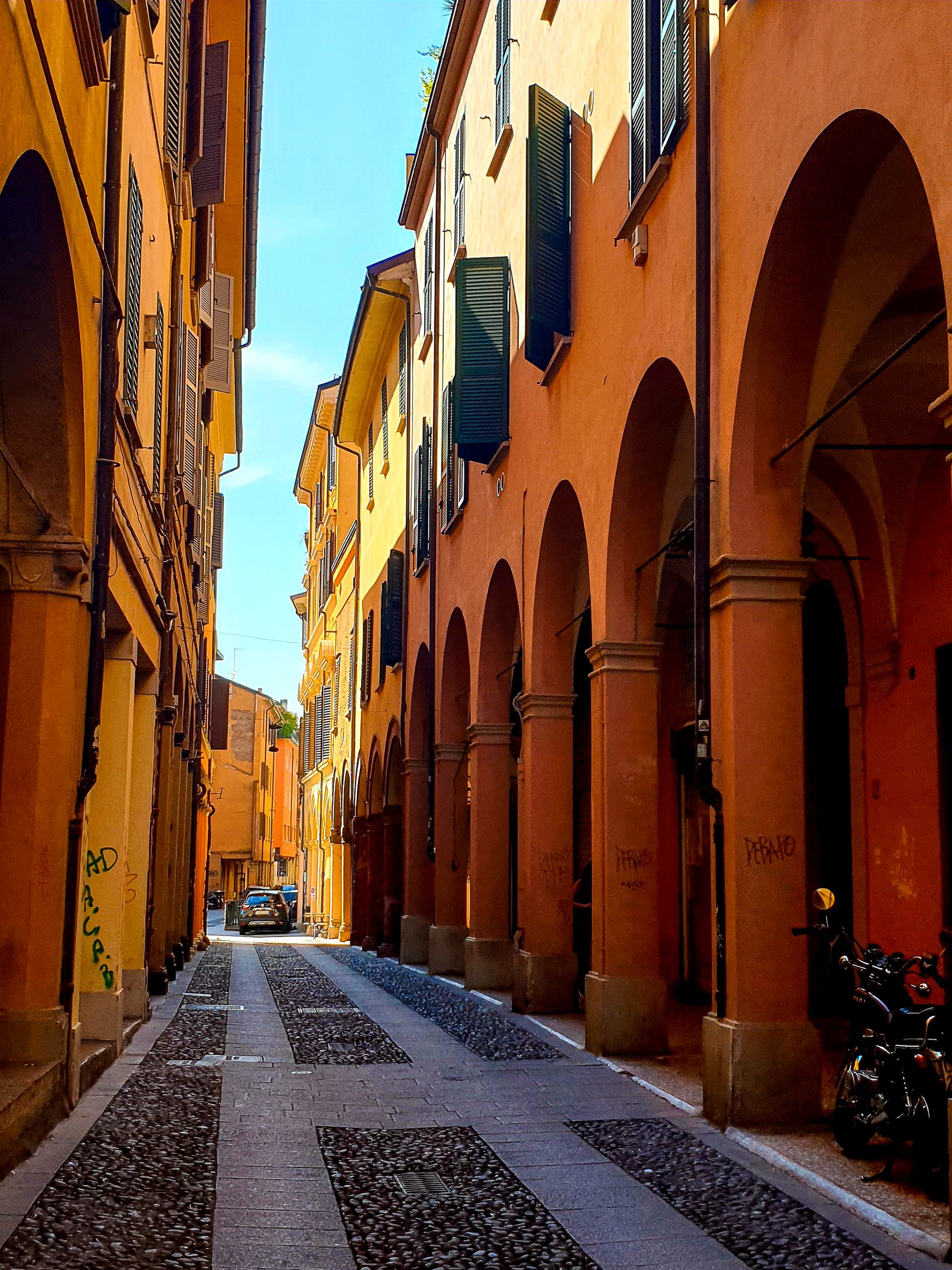
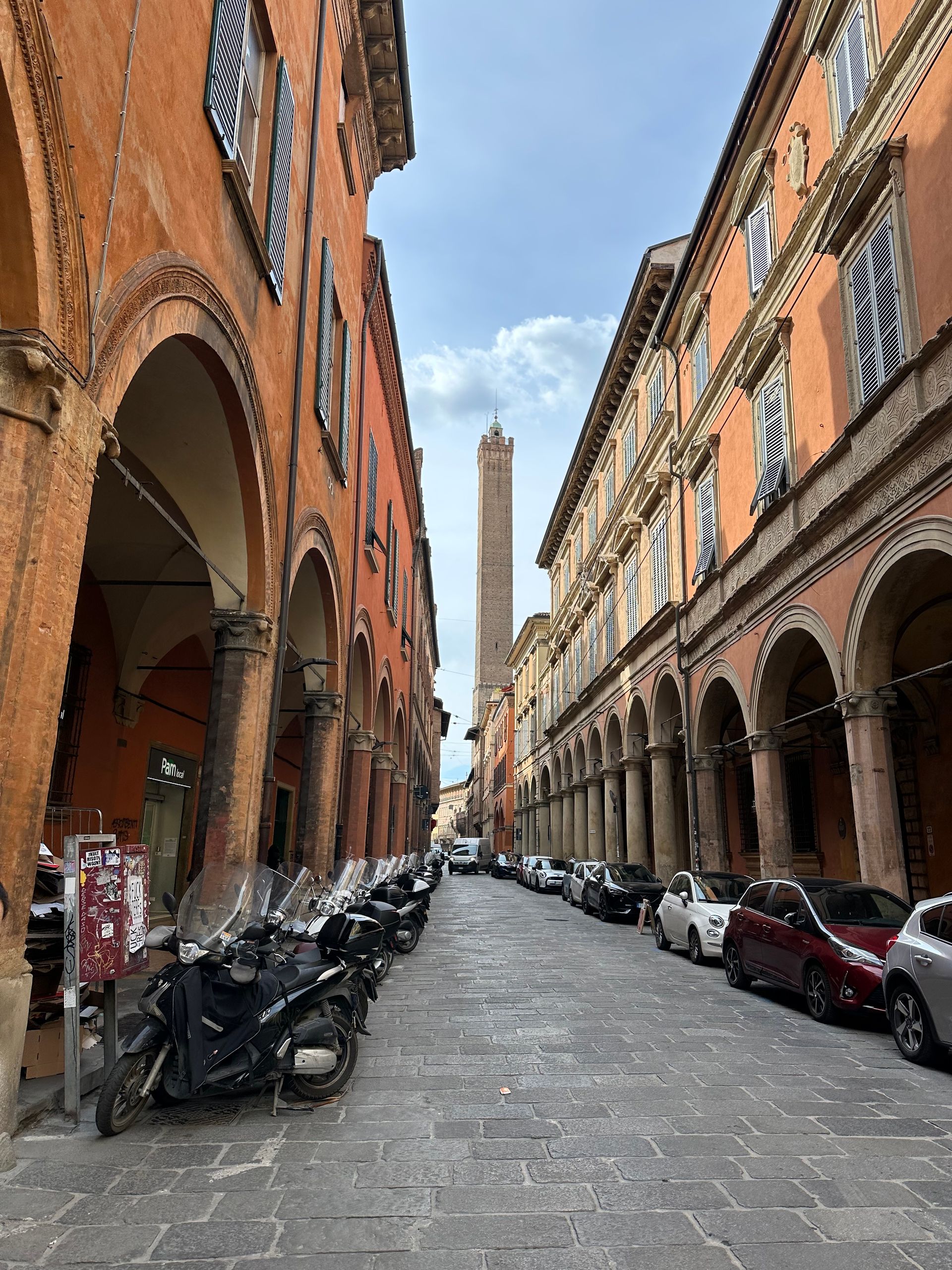
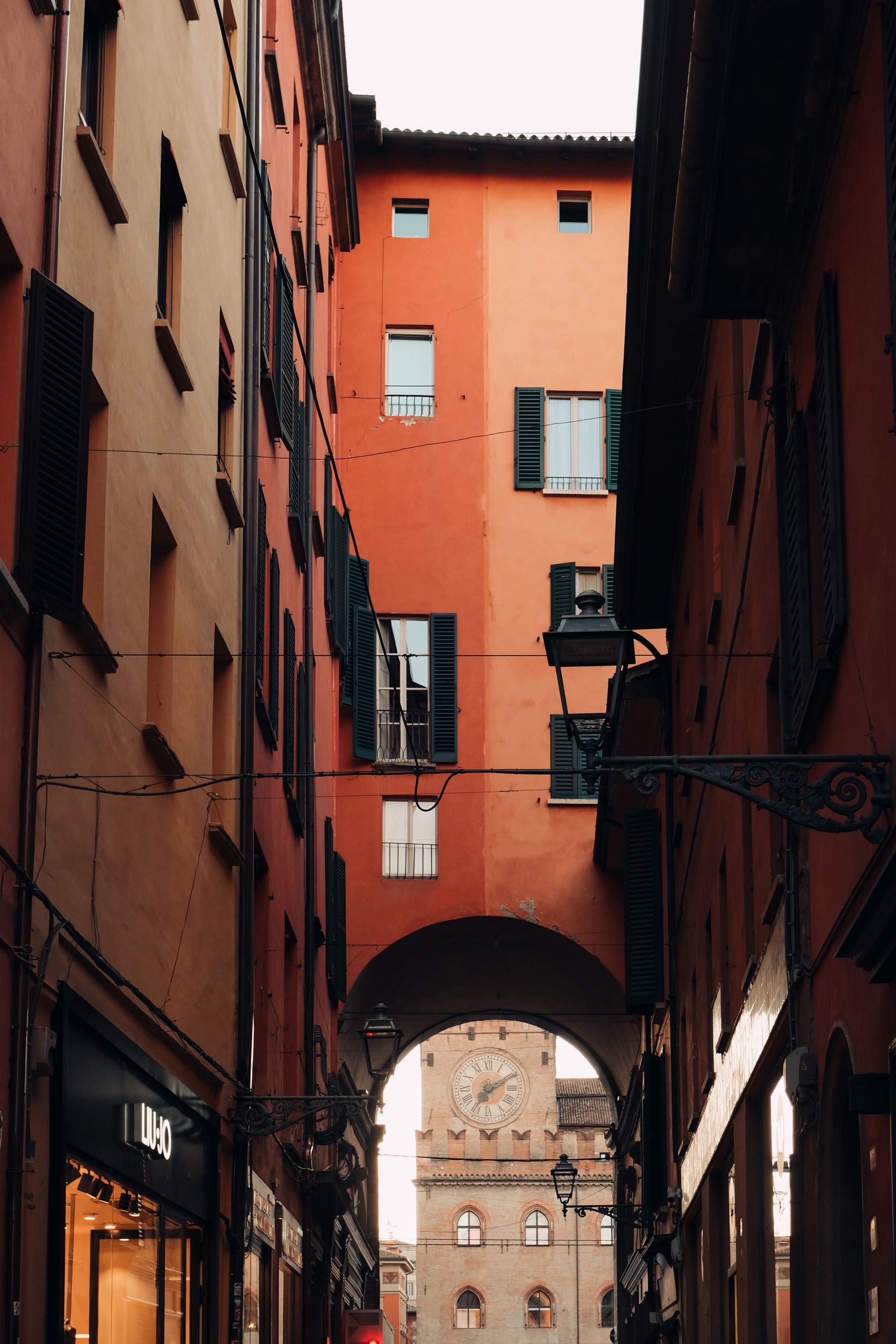
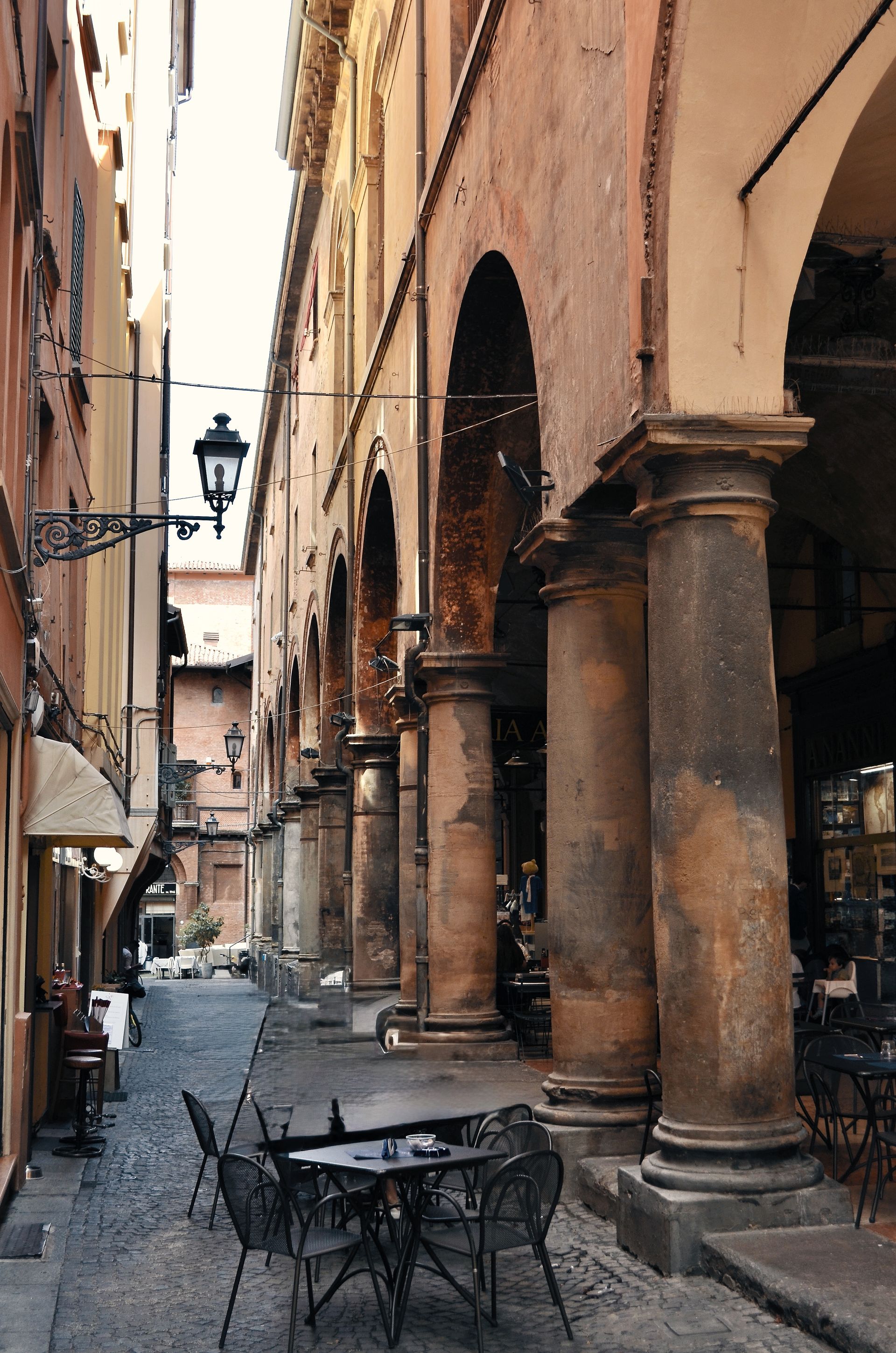
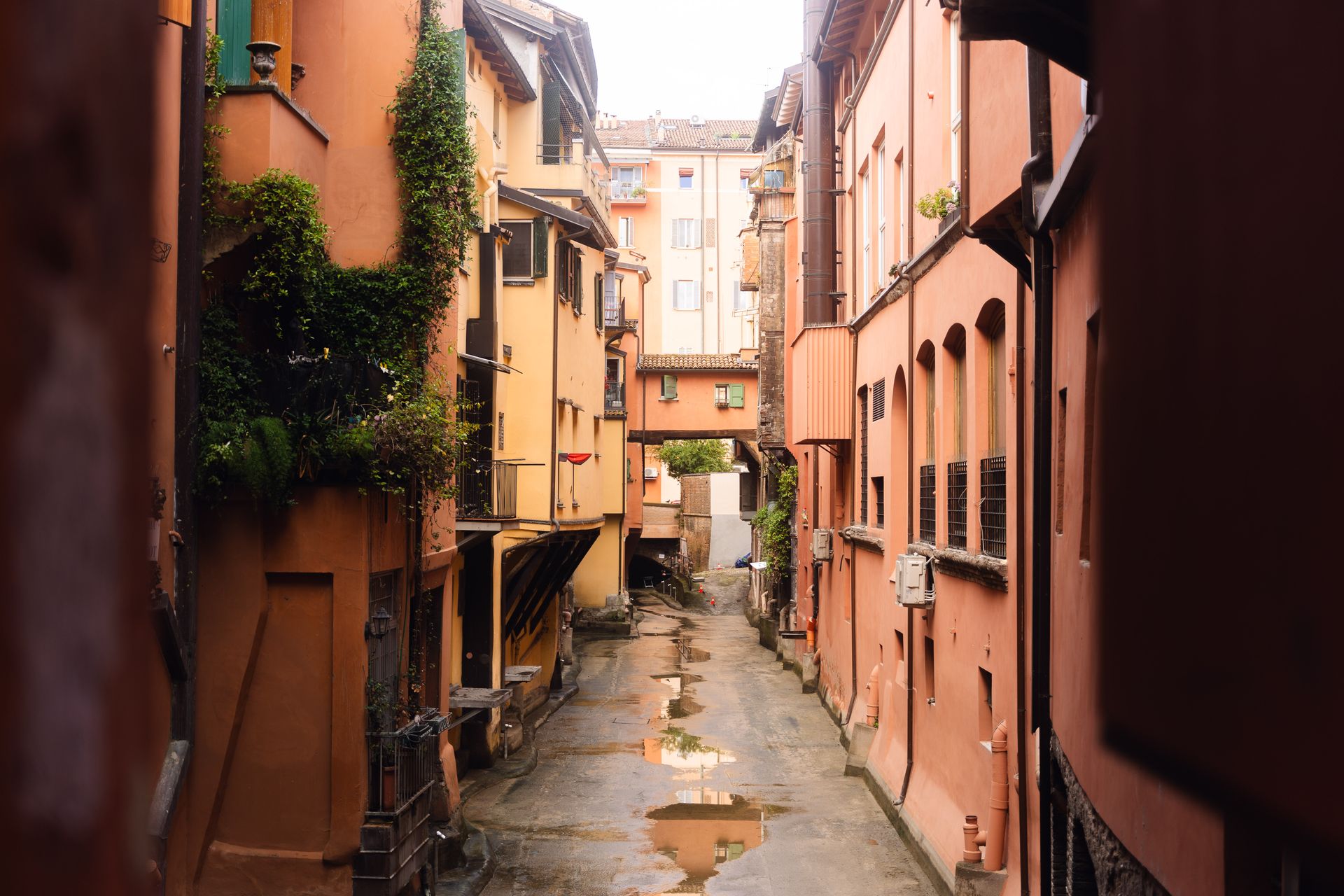
Bologna’s historic centre is small, dense and almost perfectly walkable, ringed by the line of the old city gates and threaded throughout by its porticoes. Rather than discrete, far-flung districts, the city reads as a series of overlapping quarters that flow into one another within a 20-minute walk of Piazza Maggiore — the monumental core, the market lanes, the student streets, the church quarters and the western nightlife strip — with a few set-piece destinations like San Luca on the hills above. Here is how to read them, and what each is best for.
One thing to understand before you set out: Bologna is built on three colours, captured in the old nickname la dotta, la grassa, la rossa — the learned, the fat and the red. La dotta is the university, the oldest in the Western world and the reason the streets fill with students and the porticoes exist at all. La grassa is the food, concentrated in the market lanes of the Quadrilatero. La rossa is partly the warm terracotta of the rooftops and partly the city’s long left-wing political tradition. You feel all three as you move between the quarters below, and the porticoes — some 62 kilometres of them, UNESCO-listed since 2021 — tie the whole centre into a single sheltered walk. Because everything is so close, you don’t so much choose a base as choose a mood; almost any central address puts the major sights within a quarter of an hour on foot.
Piazza Maggiore & the Historic Core
The monumental heart of the city, anchored by the vast Piazza Maggiore and its neighbour Piazza del Nettuno with Giambologna’s muscular bronze Neptune Fountain of 1567, the trident-bearing sea god who has become an unofficial city emblem. This is where you orient yourself and where almost every walk begins: the looming brick facade of San Petronio on one side, the arcaded Palazzo del Podestà opposite, the Renaissance Palazzo d’Accursio (the city hall) along another, and cafe tables spilling out under the porticoes. By day it fills with students sprawled on the steps and tour groups craning at the basilica; by evening it becomes the city’s open-air living room, and in summer it doubles as the screen for the free open-air cinema. Stand on the slightly raised central platform, the crescentone, to take it all in.
- Basilica di San Petronio — the unfinished brick giant
- Fountain of Neptune (1567), Giambologna’s bronze
- Palazzo d’Accursio (city hall) and its art collections
Best for: first-time visitors, monuments, people-watching over an aperitivo. Access: fully pedestrianised; about 10 minutes’ walk south from Bologna Centrale, or a few minutes from anywhere in the centre.
The Quadrilatero
A dense, atmospheric grid of medieval lanes just east of Piazza Maggiore, the Quadrilatero is Bologna’s oldest market quarter, where butchers, fishmongers, cheesemongers, bakers and salumerie have traded on the same narrow streets since the Middle Ages. The covered Mercato di Mezzo sits at its centre — a market since medieval times, transformed into a covered hall after Italian unification and reborn after a 2014 redevelopment as a place to both buy and eat regional delicacies. Come hungry: the streets are lined with mortadella counters, fresh-pasta windows, fish stalls and tiny wine bars where the after-work crowd gathers for a Pignoletto and a plate of cured meats. It is loud, fragrant and gloriously unpretentious.
- Mercato di Mezzo (covered food hall)
- Via Pescherie Vecchie — the old fish street
- Historic salumerie and fresh-pasta shops
Best for: food shopping, standing-up snacks, the evening aperitivo crowd spilling out of the wine bars. Access: a two-minute walk east of Piazza Maggiore.
The University Quarter (Zamboni)
Northeast of the Two Towers, Via Zamboni runs as the spine of the university district — a string of lecture halls, faculty palazzi, the Teatro Comunale opera house, cheap student bars and the city’s most boisterous nightlife. This is the engine room of la dotta, and it shows: bookshops, cheap eats, flyers for concerts and lectures, and a young crowd that keeps prices down and energy high until late. The grand Archiginnasio, the university’s first unified seat from 1563 with its courtyards papered in carved student coats of arms, sits just south near the basilica. By night the action centres on Piazza Verdi, where students gather with takeaway drinks before fanning out to the bars.
- Via Zamboni and the university palazzi
- Archiginnasio and the 17th-century Anatomical Theatre
- Piazza Verdi student aperitivo scene
Best for: nightlife, budget eating and drinking, bookshops and live music. Access: a few minutes’ walk northeast from Piazza Maggiore via the Two Towers.
The Two Towers & Strada Maggiore
The symbolic crossroads of medieval Bologna, where the leaning Asinelli and Garisenda towers stand at the meeting of the old roads. The taller Asinelli rises 97 metres and can be climbed; its squat, dramatically tilted neighbour the Garisenda was lowered to 48 metres in the 14th century when the ground gave way. From this junction Strada Maggiore runs southeast beneath one of the city’s grandest and best-preserved porticoed stretches toward the church of Santa Maria dei Servi, while Via Rizzoli leads back to Piazza Maggiore. It is the single most photographed spot in Bologna, and the natural pivot between the monumental centre and the student quarter.
- Asinelli Tower (97 m, climbable by reservation)
- Garisenda Tower (48 m, dramatically leaning)
- The grand portico of Strada Maggiore
Best for: the tower climb and the rooftop view, photogenic porticoes. Access: five minutes’ walk east of Piazza Maggiore.
Santo Stefano & the Seven Churches
One of Bologna’s most atmospheric corners: a wedge-shaped, gently sloping piazza fronting the Basilica of Santo Stefano, known as the “Seven Churches” for the labyrinth of interlinked Romanesque chapels, cloisters and courtyards behind its modest facade. The square itself, lined with elegant porticoes and cafe terraces, is among the prettiest in the city and a favourite for a slow morning coffee or a weekend brunch. On some weekends an antiques and vintage market sets up among the arcades. The whole quarter rewards aimless wandering — quiet lanes, craft shops and a sense of the medieval city that the busier centre can mask.
- Santo Stefano (Sette Chiese) complex
- The sloping Piazza Santo Stefano cafes
- Weekend antiques market under the porticoes
Best for: quiet wandering, medieval architecture, an unhurried brunch. Access: a short walk southeast of the Two Towers.
Via del Pratello & the Western Centre
West of Piazza Maggiore, Via del Pratello is the bohemian, slightly scruffy spine of Bologna’s alternative nightlife — a long street of trattorie, craft-beer bars, osterie and occasional live music, more local and less polished than the student crush around Zamboni. This is where Bolognesi go for a relaxed dinner and a long evening, and where you’ll often find cheaper, more honest plates of ragù and tigelle. The mood is left-leaning and convivial, the décor unfussy, and the conversation lively; it’s the best place in the centre to feel like a resident rather than a visitor.
- Via del Pratello bar and trattoria strip
- Local osterie with cheaper, honest ragù
- Evening passeggiata energy away from the crowds
Best for: dinner and drinks with locals, slower, more authentic nights. Access: a ten-minute walk west of the centre.
San Luca & the Hill Porticoes
The city’s most extraordinary portico climbs from Porta Saragozza up the Colle della Guardia to the Sanctuary of the Madonna di San Luca — an almost four-kilometre run of 666 arches, the longest covered walkway in the world, ending at a domed hilltop basilica with sweeping views over the city and the Po Valley plain beyond. The walk up is a genuine Bologna rite of passage and a surprisingly stiff climb in the final stretch; pilgrims have made it for centuries, and an annual procession still carries an icon of the Madonna down to the city and back. Do it in the cool of the morning, reward yourself with the panorama at the top, and you’ll understand why the portico is the city’s defining structure.
- Portico di San Luca (666 arches)
- Sanctuary of the Madonna di San Luca
- Panorama over Bologna and the Po Valley
Best for: a half-day walk, big views, a workout. Access: bus or the tourist “San Luca Express” road-train to Porta Saragozza, then on foot up the hill.
Bologna Centrale & the Northern Edge
Around the main station the city turns modern and practical — useful for late arrivals, early trains and day trips, with the Marconi Express monorail running to the airport in about seven minutes, though with less old-world charm than the centre. Just south, the leafy Montagnola park hosts a sprawling Friday and Saturday market, and a string of budget hotels makes the area handy for travellers on a tight schedule. It’s a ten-to-fifteen-minute walk from here to Piazza Maggiore, mostly under porticoes, so even a station-side base keeps you close to the action.
- Bologna Centrale (the rail hub)
- Marconi Express monorail terminal
- Montagnola park and its weekend market
Best for: transit convenience, budget hotels, day-trip launches. Access: the station; 10–15 minutes’ walk north of Piazza Maggiore.
Saragozza & the Western Gate
The leafy western edge of the centre around Porta Saragozza is the launch point for the great pilgrimage walk up to San Luca, and a quieter, more residential side of the city. The grand gate marks where the hill portico begins its climb, and the surrounding streets mix handsome residential porticoes with local shops and cafes away from the tourist core. It’s a pleasant area to stay if you want a calmer base within easy walking distance of the centre, and the obvious starting point for anyone planning the San Luca hike.
- Porta Saragozza and the start of the San Luca portico
- Residential porticoed streets
- Local cafes and neighbourhood shops
Best for: a quieter base, the San Luca walk, a local feel. Access: a 10-minute walk or short bus ride southwest of Piazza Maggiore.
Bolognina & the Modern North
North of the railway tracks, Bolognina is Bologna’s most diverse and rapidly changing quarter — historically working-class and industrial, now a multicultural neighbourhood of markets, ethnic eateries and a growing creative scene. It lacks the porticoed grandeur of the centre but offers a glimpse of the contemporary, lived-in city, with some of the best-value and most international food in Bologna. Adventurous eaters and travellers curious about the modern city will find it worth a wander, especially around its covered market.
- Mercato Albani and local food shops
- Multicultural eateries and cafes
- Emerging creative and arts spaces
Best for: diverse food, a contemporary, residential vibe, value. Access: just north of Bologna Centrale, across the tracks.
The Food

This is the reason many travellers come and the reason most stay an extra day. Emilia-Romagna is widely considered the gastronomic heart of Italy, and Bologna sits squarely at its centre, surrounded by the “food valley” that produces Parmigiano-Reggiano, traditional balsamic vinegar, prosciutto and mortadella — a concentration of protected-origin products unmatched anywhere in the country. The cooking here is rich, generous and resolutely traditional: egg-and-flour fresh pasta rolled into sheets of sfoglia, slow-simmered meat sauces, butter and cheese rather than the olive oil and tomato of the south. Eating well in Bologna takes no effort at all; eating badly takes real talent.
Bologna’s nickname la grassa — “the fat one” — is worn with pride, not embarrassment, and it captures a city organised, more than almost any other in Italy, around the pleasures of the table. The richness has deep roots: the surrounding plain is some of the most fertile farmland in Europe, the medieval trade routes brought spices and techniques, and the university kept a moneyed, demanding clientele in town for nine centuries. The result is a cuisine of butter and lard rather than olive oil, of egg pasta rather than the dried durum-wheat pasta of the south, and of long, patient cooking. Tasting it properly is less about ticking off famous dishes than about settling into the local rhythm — a long lunch, a slow aperitivo, a market graze — and letting the city feed you the way it feeds itself.
The Bolognese Classics
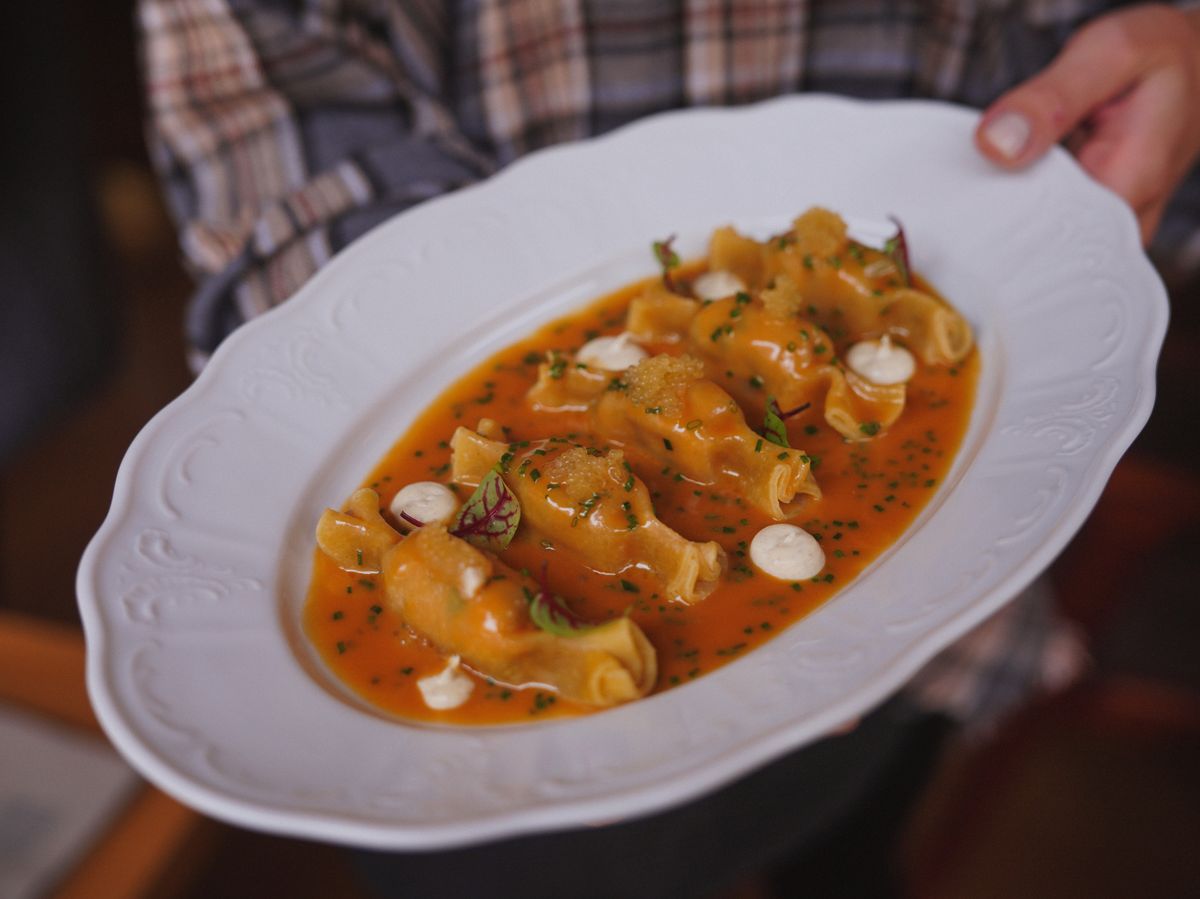
Forget “spaghetti bolognese” — it does not exist here, and ordering it will mark you instantly as a tourist. The city’s defining dish is tagliatelle al ragù: a slow-cooked meat sauce of beef and pork, soffritto, a little tomato and milk, served over fresh flat egg-pasta ribbons that the sauce clings to far better than any strand of spaghetti could. Alongside it sit the two other pillars of the Bolognese table: tortellini in brodo, the tiny navel-shaped meat-stuffed parcels traditionally eaten in a clear capon broth, especially at Christmas; and lasagne alla bolognese, layered with green spinach pasta, ragù and béchamel until it is almost a cake. Add tortelloni stuffed with ricotta and herbs in butter and sage, and you have the canon. Most osterie roll their pasta by hand each morning, and a serious sit-down meal with wine runs roughly €25–40 a head.
- Trattoria-style osterie in the Quadrilatero — tagliatelle al ragù (typically €10–15, ~$11–16)
- Historic trattorie off Via Pescherie — tortellini in brodo (~€12–16, ~$13–17)
- Classic family osterie — lasagne verde (~€10–14, ~$11–15)
The Quadrilatero & Mercato di Mezzo
The medieval market quarter east of Piazza Maggiore is where Bologna eats standing up. The covered Mercato di Mezzo — a market since medieval times, a covered hall since after Italian unification and reborn after a 2014 redevelopment — now mixes traditional grocers with eat-in counters and is open daily. Around it, the narrow lanes of the Quadrilatero are crowded with butchers, fishmongers, bakers and salumerie whose windows are hung with mortadella and prosciutto. The move is to graze: a few slices of mortadella, a wedge of Parmigiano, a square of fried gnocco or a tigella stuffed with cured meat, washed down with a glass of cold, faintly fizzy Pignoletto from a stand-up wine bar. It is the cheapest and most enjoyable way to eat in the city, and at aperitivo hour the streets become one big open-air party.
- Mercato di Mezzo — mortadella & cheese counters (snacks ~€5–10)
- Quadrilatero salumerie — sliced cured meats to go (~€6–12)
- Via Pescherie Vecchie wine bars — aperitivo with cicchetti (~€8–14)
Beyond Tagliatelle and Tortellini
The wider Emilian table is just as important as the pasta, and much of it carries protected-origin (DOP/IGP) status and comes from towns a short train ride away. These are the products that have made the region’s name around the world, and tasting them at source — or at the Quadrilatero counters — is a highlight in itself. Buy a little of each to build a picnic, or seek out the tasting flights that several shops and tours now offer.
- Mortadella di Bologna — the original, the smooth pork sausage studded with pistachios that gave the world “baloney” (sold by weight at the deli)
- Parmigiano-Reggiano — the king of cheeses, aged 24–36 months, from nearby Parma and Reggio Emilia (~€25–35/kg)
- Aceto Balsamico Tradizionale — barrel-aged for years or decades in Modena, syrupy and sweet, sold by the tiny bottle
- Crescentine, tigelle & gnocco fritto — little breads and fried dough eaten with cured meats and soft squacquerone cheese
Wash it down with the local wines: the white, lightly sparkling Pignoletto of the Bolognese hills, and the famously fizzy red Lambrusco from around Modena and Reggio — dry, food-friendly and nothing like the sweet export version. A meal here is as much about the surrounding valley as the city itself, which is why so many visitors build a day trip around it.
It is worth dwelling on the ragù itself, because it is so often misunderstood abroad. The official recipe lodged with the Bologna Chamber of Commerce is built on coarsely chopped beef and pancetta, a soffritto of onion, carrot and celery, a splash of white or red wine, a modest amount of tomato (a little passata or concentrate, never a sea of sauce) and a finishing touch of milk or cream, simmered gently for hours until it is thick, glossy and barely liquid. It is a condiment for the pasta, not a soup the pasta sits in — which is exactly why it belongs on broad, porous tagliatelle and never on spaghetti. Order it once at a serious osteria and the export-version “bolognese” will never taste the same again.
Coffee, Sweets & Gelato
Bologna takes its coffee culture seriously and its sweets even more so. Start the day with a quick espresso or cappuccino standing at the bar of a historic cafe — sitting at a table costs more — and pair it with a pastry. The city’s sweet tooth runs to torta di riso (a baked rice cake), pinza and the almond-rich biscuits of the region, while gelaterie across the centre churn excellent gelato; look for places labelling their gelato artigianale and using seasonal flavours. In autumn, keep an eye out for chestnut and new-harvest specialities. A coffee at the bar costs around €1–1.50, a scoop or two of gelato €2.50–4.
The wine deserves a paragraph of its own. The Bolognese hills produce Pignoletto, a crisp, lightly sparkling white that is the default aperitivo pour across the city and pairs beautifully with cured meats and fried gnocco. To the west, around Modena and Reggio Emilia, comes Lambrusco — the genuinely good, bone-dry, faintly fizzy red that locals drink with rich, fatty food and that bears no resemblance to the sweet supermarket bottles exported in the 1970s. Both are inexpensive, food-friendly and best drunk young and local; order a glass of the house version in any osteria and you will rarely go wrong. Round off a meal with a nocino, the dark local walnut liqueur, or a shot of strong espresso rather than a heavy dessert.
The Osteria, the Trattoria & the Aperitivo
Understanding the kinds of places you can eat makes navigating the city far easier. An osteria was historically a simple wine house that grew to serve food, and in Bologna it still tends to mean an unfussy, often family-run room with a short handwritten menu of the day’s fresh pasta and a carafe of local wine — the spiritual home of honest ragù and the best value in the city. A trattoria is a step up in formality but still firmly traditional, the place for a proper multi-course lunch of antipasto, primo (the pasta), secondo (the meat) and dolce. A ristorante is grander and pricier and, in a city this traditional, often less rewarding than the humbler options. Cutting across all of them is the aperitivo: the early-evening ritual of a drink — a spritz, a glass of Pignoletto or Lambrusco — served with snacks, which in the Quadrilatero spills out into the lanes and becomes a sociable, standing-up street scene. Learn these four words and you can read any Bologna menu and pick the right place for the moment.
A few ordering habits will smooth your meals. Italians eat the pasta as a first course, not a main, so a classic lunch is a primo followed by a small secondo rather than a single huge plate; you can absolutely order just a primo, but don’t expect garlic bread or a side salad as standard. Bread arrives with a small cover charge (the coperto), water is ordered still or sparkling, and the bill won’t come until you ask for it — lingering is the whole point. Tap into the local rhythm and a meal in Bologna becomes the centrepiece of the day rather than a refuelling stop.
Where to Eat: A Strategy
Bologna’s eating scene rewards a simple plan. Reserve dinner at a proper trattoria or osteria a day or two ahead, especially on weekends, since the best places are small and fill up; the streets around Via Pescherie, Via del Pratello and Santo Stefano are all reliable hunting grounds. Use the Quadrilatero for cheaper, faster lunches and aperitivo grazing. Be wary of any restaurant on the main tourist drags advertising “spaghetti bolognese” in multiple languages with photos of the dishes — that is the universal sign of a tourist trap in this city. Instead, look for short, Italian-only menus, hand-rolled pasta of the day, and a room full of locals. Many kitchens close one or two days a week and for several weeks in August, so check before you set out. Build at least one long, unhurried lunch into your trip; in Bologna the midday meal is often the main event.
Food Experiences You Can’t Miss
- A morning food tour of the Quadrilatero, tasting mortadella, Parmigiano-Reggiano and balsamic at the historic counters
- A hands-on fresh-pasta class learning to roll sfoglia and fold tortellini and tortelloni by hand
- An evening aperitivo with Pignoletto and crescentine on the porticoed terraces of Piazza Santo Stefano
- A day trip to a Parmigiano dairy or a Modena acetaia to see the cheese and balsamic made at source
Cultural Sights

Bologna’s cultural riches are unusually concentrated and unusually under-visited: a UNESCO-recognised set of porticoes, the oldest university in the Western world, a clutch of major churches and a serious art gallery, almost all within the medieval ring and most either free or only a few euros to enter. Because the city draws a fraction of the crowds of Florence or Venice, you can stand alone beneath a Gothic vault or a Baroque dome that would be three-deep with tour groups elsewhere. Here are the sights worth building a day or two around.
Basilica di San Petronio
The vast Gothic church dominating Piazza Maggiore is the largest brick-built church in the world and one of the biggest churches anywhere — 132 metres long, 60 metres wide and with a vault 45 metres high, capable of holding around 28,000 people. Construction began in 1390 and the marble facade remains famously unfinished to this day, its lower half clad and its upper half raw brick — legend has it the church was deliberately kept from outgrowing St Peter’s in Rome. Inside, the astronomer Cassini’s meridian line of 1655, 67 metres long, is set into the floor and still tracks local noon as a beam of sunlight crosses it. Admission to the basilica is free; small fees apply for the rooftop terrace and the side chapels. Visit early morning for the quietest light, and look up at the soaring brick vaults.
The Two Towers (Le Due Torri)
Bologna’s emblem and its most photographed sight: the Asinelli Tower, built between 1109 and 1119 and standing 97 metres tall, and its dramatically leaning neighbour the Garisenda, now 48 metres after being lowered in the 14th century when the ground beneath it gave way. The Asinelli’s long staircase of nearly 500 wooden steps rewards the climb with the best panorama in the city, out over the red rooftops to the hills of San Luca. Admission to climb the Asinelli is a few euros by timed reservation only, and slots sell out in peak season, so book online before you arrive. The Garisenda is not climbable and has been fenced for stabilisation work.
The Archiginnasio & Anatomical Theatre
The university’s first unified seat, built from 1563, with walls and ceilings papered in thousands of carved and painted coats of arms left by centuries of students. Its showpiece is the 17th-century Anatomical Theatre, an intimate amphitheatre of carved spruce where public dissections were once performed beneath statues of famous physicians. Admission is a few euros. Open daytime hours, with reduced hours on Sundays; allow half an hour to an hour.
Santo Stefano (the Seven Churches)
A labyrinth of interlinked Romanesque churches, chapels, cloisters and courtyards on its own gently sloping piazza — one of the oldest and most evocative religious complexes in the city, layered up over centuries on what may once have been a pagan temple. It is a place to wander slowly rather than tick off, with quiet courtyards and a working monastic atmosphere. Admission is free. Quietest in the early morning, before the cafe terraces on the square fill up.
Basilica of San Domenico
The burial place of St Dominic, founder of the Dominican order, whose remains lie in the magnificent “Arca di San Domenico” — a marble tomb carved over generations by Nicola Pisano, Niccolò dell’Arca and, remarkably, the young Michelangelo, who sculpted a small angel and a saint here early in his career. A working basilica; entry is free, with modest hours arranged around services. Look for the inlaid wooden choir stalls too.
Sanctuary of the Madonna di San Luca
The domed hilltop basilica reached by the world’s longest portico — an almost four-kilometre run of 666 arches climbing from Porta Saragozza up the Colle della Guardia. The covered walk up is the real experience, a centuries-old pilgrimage route, and the sweeping panorama over the city and the Po Valley plain is the reward at the top. Entry is free; allow a half-day for the round trip on foot, or take the road-train up and walk down.
Pinacoteca Nazionale
Bologna’s national picture gallery, in the university quarter, is especially strong on the Bolognese school — the Carracci, Guido Reni, Guercino and Domenichino — whose dramatic Baroque canvases shaped European painting. It is rarely crowded and makes a calm, art-focused counterpoint to the busy centre. Admission is a few euros; closed Mondays.
The Porticoes (UNESCO World Heritage)
Not a single monument but the whole fabric of the city: in 2021 a selection of Bologna’s porticoes was inscribed on the UNESCO World Heritage list, recognising roughly 62 kilometres of covered walkway that thread through the historic centre and climb the hills beyond. They began as medieval timber overhangs built to squeeze extra living space above the streets for the swelling student population, were later codified in law and rebuilt in brick and stone, and today shelter pedestrians from sun, rain and snow alike. Walking them — from the grand arcades of Strada Maggiore to the marathon climb up to San Luca — is the single most distinctive thing you can do in Bologna, and it costs nothing.
Entertainment

For a city of its size, Bologna punches far above its weight after dark — a consequence of its huge student body, its UNESCO Creative City of Music status and a deep-rooted culture of the aperitivo and the long evening. The entertainment is rarely flashy or expensive; it is sociable, spontaneous and spread across the porticoed lanes rather than concentrated in a club district. Whether you want a cheap student spritz, an opera at a historic theatre or a classic film projected onto the wall of a medieval square, the city delivers, and most of it costs very little.
Student Nightlife on Via Zamboni & Piazza Verdi
The university quarter is the cheapest and liveliest night out in the city. Around Piazza Verdi and along Via Zamboni, students gather with takeaway drinks before fanning out to the bars, and the energy runs late on term-time evenings. This is where you go for an unpretentious, low-budget night out among locals rather than tourists, and where a drink costs a fraction of what you’d pay in the polished centre. Typical cost: a spritz or beer €4–7. Arrive after 9pm for the buzz, and expect the square itself to fill up in warm weather. The scene quietens noticeably outside term time and over the summer holidays, so expect the biggest crowds from autumn through late spring.
Aperitivo in the Quadrilatero
The classic early-evening ritual and the most Bolognese thing you can do: a glass of local Pignoletto, a spritz or a Lambrusco with a plate of cured meats, crescentine and cheese, taken standing or perched in the market lanes as the after-work crowd builds. The Quadrilatero comes alive between roughly 6 and 9pm, and many bars throw in generous snacks with the price of a drink. It is sociable, atmospheric and easy to do alone. Typical cost: €8–14 with snacks.
Via del Pratello
The bohemian western strip of trattorie, craft-beer bars, osterie and occasional live music, more local and less touristed than the centre. The mood here is relaxed and left-leaning, the kind of place where a dinner slides easily into a long evening of wine and conversation. It draws an older, more residential crowd than the student quarter and rewards anyone wanting to feel like a Bolognese for the night. Typical cost: €5–9 a drink.
Teatro Comunale & Classical Music
Bologna is a UNESCO Creative City of Music, and it takes the title seriously. The historic Teatro Comunale stages opera and symphony seasons, while churches and the Oratorio di San Filippo Neri host concerts year-round, from early music to contemporary. It is a genuinely cultured city with deep musical roots — the composer Rossini studied and worked here, and Mozart sat his examinations at the Accademia Filarmonica as a teenager. The city’s jazz and contemporary-music scenes are lively too, with clubs and festival nights scattered through the centre and the university quarter. Typical cost: opera tickets from around €15 upward; book well ahead, as the best seats sell out, and dress smartly for the Teatro Comunale.
Cinema & the Cineteca
The Cineteca di Bologna is a world-renowned film archive and restoration laboratory, and in summer it runs the much-loved open-air “Sotto le Stelle del Cinema” screenings on Piazza Maggiore, projecting classics onto a giant screen in the square under the stars. The associated Il Cinema Ritrovato festival each summer draws cinephiles, archivists and directors from around the world to celebrate rediscovered and restored films, and is one of the city’s cultural highlights. Even outside festival time the Cineteca’s two cinemas run a year-round programme of restorations and classics. Typical cost: the piazza screenings are free or low-cost; arrive early with a cushion for a good seat, and check the night’s programme in advance since it changes daily.
Seasonal Festivals
The calendar is busy all year: the summer cinema and music on the square, autumn food and truffle fairs across Emilia-Romagna, the lights and markets of the Christmas season, and a steady stream of art exhibitions and university events. The city is also a major trade-fair and conference hub, and events like the children’s book fair and various design and food expos bring an international crowd at intervals through the year. There is almost always something on, and much of it is free or cheap. Typical cost: many events free; festival passes vary. Check the Bologna Welcome events listings when you plan your dates, both to catch what’s on and to anticipate the hotel-price spikes that big fairs bring.
Day Trips

Modena (about 20–30 min by train)
The home of balsamic vinegar, Ferrari and the tenor Luciano Pavarotti, and one of the easiest day trips in Italy. Its UNESCO-listed Romanesque cathedral and the leaning Ghirlandina bell tower anchor a handsome, walkable centre. The fastest trains from Bologna reach Modena in around 17–20 minutes, so you can be there before the markets open. Tour a family acetaia to taste true barrel-aged Aceto Balsamico Tradizionale, then visit the Enzo Ferrari museum or the nearby Ferrari and Lamborghini collections for the motoring side of the “Motor Valley.”
Parma (about 50 min by train)
The gentle, elegant city behind two of Italy’s most famous foods — Parmigiano-Reggiano and prosciutto di Parma — with a frescoed cathedral, an octagonal baptistery and a strong operatic tradition tied to Verdi. The fastest trains take around 46 minutes. Book a morning visit to a cheese dairy or a ham-curing house in the surrounding countryside to see the products made at source, then enjoy a long lunch in the refined, under-touristed centre.
Ferrara (about 25–30 min by train)
A flat, cycle-friendly Renaissance city with a moated Este castle at its heart and a UNESCO-listed old town of broad streets and Renaissance palaces, easily done in a day. Trains take roughly 20–30 minutes. Rent a bike — the city is famous for cycling — and ride the largely intact circuit of Renaissance walls, then explore the castle’s dungeons and frescoed halls.
Ravenna (about 1 hr 10 min by train)
Italy’s mosaic capital, with eight UNESCO-listed early-Christian and Byzantine monuments whose interiors glitter with gold and jewel-toned tesserae — among the finest mosaics anywhere in the world. It is a comfortable day trip for art lovers, and the tomb of the poet Dante lies here too. Allow a full day to take in the main basilicas and mausoleums at an unhurried pace.
Florence (about 35–40 min by fast train)
The Tuscan capital is barely half an hour away on the Frecciarossa high-speed line — close enough for a long day trip, though it deserves far longer than a day. If you only have time for a taste, focus on the Duomo, the Ponte Vecchio and one major gallery, and book your return seat in advance. Pair this guide with our Florence city guide for the full picture.
Venice (about 1 hr 30 min by fast train)
The floating city is a comfortable 90 minutes northeast on the high-speed line, making it a long but very doable day out from Bologna — arrive early, head straight for the Grand Canal, San Marco and the Rialto, and let the back canals surprise you before an evening return. Venice rewards far more than a day, but using Bologna as a base lets you sample it without paying lagoon-city prices for your bed. For the full picture, read our Venice city guide; and since most rail journeys north or south pass through Bologna, the capital makes an easy add-on too — see our Rome city guide.
Why Bologna Is the Perfect Base
No Italian city is better placed for day-tripping. Bologna Centrale sits at the meeting point of the country’s main north–south and east–west high-speed lines, so Florence, Venice, Milan and even Rome are all within easy reach, while cheap regional trains fan out to the food-valley towns every half hour or so. That central position, combined with hotel prices well below those of its glamorous neighbours, is exactly why savvy travellers increasingly sleep in Bologna and ride out from it — eating better and paying less than they would anywhere else in the region.
Seasonal Guide
Bologna sits inland on the Po Valley plain, which gives it a more continental climate than coastal Italy: warm-to-hot summers, cold and famously foggy winters, and two glorious shoulder seasons in between. The good news for visitors is that the porticoes work in every season — shade in the heat, shelter in the rain and snow — so the city is genuinely worth visiting year-round. What changes is the rhythm: the prime windows of spring and autumn for sightseeing and food fairs, the shuttered, cinema-lit summer, and the cosy, tortellini-and-fog stillness of winter. Here is what to expect across the year.
Spring (March – May)
The sweet spot. Early March can still be cool and damp, but from mid-April the weather warms reliably into the low-to-mid 20s°C, the porticoes fill with students and terrace life, and the food markets are at their freshest. Mid-April to mid-June is widely considered the ideal window to visit, with comfortable walking weather and crowds that never reach the levels of Florence or Venice. Pack a light layer for cooler evenings and the occasional spring shower.
Summer (June – August)
Hot and increasingly humid, with July and August highs around 31°C and sticky, close evenings; August in particular sees many family-run restaurants close for the traditional holidays. The upside is real, though: the free open-air cinema on Piazza Maggiore, long light evenings for the passeggiata, and the cool shade of the porticoes that make the heat far more bearable than in most Italian cities. Plan sightseeing for the morning and save the afternoons for shade and gelato.
Autumn (September – November)
September and October are excellent — warm, settled days, thinner crowds and the start of the food-fair season across Emilia-Romagna, with truffles, new-season cheeses and the grape harvest. This is arguably the best time for a food-focused trip, when the whole region celebrates its larder. November turns noticeably cooler, greyer and foggier as winter approaches, though the eating only gets heartier. If a food-led trip is your aim, this is the season to target: the markets brim with porcini, chestnuts, new wine and fresh-pressed olive oil, and the surrounding towns host a near-continuous run of sagre (village food festivals) celebrating everything from truffles to tortellini.
Winter (December – February)
Cold and often blanketed in the Po Valley fog, with temperatures hovering near freezing at night and short, grey days. But winter has its own appeal: the porticoes keep you dry whatever the weather, the tortellini in brodo and rich ragù are at their seasonal best, the museums are empty, and the Christmas markets and lights give the centre a cosy glow. Bundle up and lean into the indoor pleasures.
Getting Around
Getting around Bologna is refreshingly simple: the historic centre is small enough to cross on foot in under half an hour, there is no metro to learn, and the few times you need wheels — the airport run, the hills, a day trip — are handled by a monorail, a bus network and one of Italy’s best rail hubs. The single rule worth memorising is to leave the car outside the centre, which is a camera-enforced limited-traffic zone. Below is how each option fits together.
On Foot
Bologna’s historic centre is compact, flat and almost entirely walkable — and thanks to about 62 km of porticoes, much of it is covered against both sun and rain, so you can cross the city in any weather without an umbrella. Most visitors barely use public transit inside the centre at all; the major sights — Piazza Maggiore, the Quadrilatero, the Two Towers, Santo Stefano and San Domenico — all sit within a 20-minute walk of each other. Walking is genuinely the best way to experience the city, since the porticoes reveal new courtyards and shopfronts at every turn.
Buses (TPER)
The city has no metro or tram; surface transport is run by TPER buses, which are useful mainly for the hills, the climb out to San Luca, and the outer neighbourhoods beyond comfortable walking range. Services are frequent on the main corridors. Single tickets are cheap and bought from machines, tobacconists (tabaccherie) or the app, and must be validated on board the moment you step on.
Tickets & Passes
Buy single rides or day passes through the TPER app, at tobacconists or from station machines. For a centre-only stay you’ll rarely need a ticket at all; a day pass only pays off if you’re shuttling out to San Luca, the suburbs or the trade-fair district. If you do plan to use buses, the app is the simplest option and saves hunting for change. Remember to validate paper tickets the moment you board — inspectors do check, and an unvalidated ticket counts as no ticket and carries a fine. App tickets activate automatically and sidestep the problem entirely.
Airport Access
- Marconi Express monorail (airport ↔ Bologna Centrale) — about 7 minutes, €12.80 one-way
- Taxi from the airport to the centre — roughly 15–20 minutes by metered fare, depending on traffic
Taxis
Metered and reliable, and genuinely useful late at night or when you’re hauling luggage to the station. Order by app or phone, or pick one up at the ranks outside Bologna Centrale and on the major piazzas; street-hailing is uncommon in the Italian style, so head for a rank or call ahead. Fares are reasonable for short city hops.
Trains
Bologna Centrale is one of Italy’s busiest and best-connected rail hubs, sitting at the crossroads of the high-speed network. Frecciarossa and Italo services link it fast to Florence, Rome, Milan and Venice, while a dense web of regional trains puts Modena, Parma, Ferrara and Ravenna all within an hour. Buy regional tickets at the station machines and validate them; reserve high-speed seats in advance for the best fares.
Navigation Tips
Apps: Google Maps for walking and the TPER app for buses. The porticoes and landmarks make orientation easy — line yourself up off the Two Towers and the bulk of San Petronio and you’ll rarely get lost. Crucially, do not try to drive into the centre: it is a camera-monitored ZTL (limited-traffic zone) and entering without a permit triggers automatic fines.
Budget Breakdown: Making Your Euro Count
| Tier | Daily | Sleep | Eat | Transport | Activities | Extras |
|---|---|---|---|---|---|---|
| Budget | $70–100 | $30–55 hostel/B&B | $20–30 | $3–6 | $5–15 | $10 |
| Mid-Range | $150–240 | $90–150 3–4★ hotel | $40–65 | $8–15 | $20–40 | $25 |
| Luxury | $350+ | $220+ boutique | $90+ | $25 taxis | $60+ tours | $50+ |
Bologna is one of the best-value major cities in northern Italy, and the gap between what you spend here and what the same trip costs in Florence or Venice is real and noticeable. The figures above are rough per-person daily ranges in US dollars, excluding flights; your actual outlay will swing most on where you sleep and how you eat. Below is how to think about each lever, and where the easy savings are.
Where Your Money Goes
Bologna is noticeably cheaper than Florence, Rome or Venice, especially on food and accommodation, thanks in large part to its big student population and the fact that it isn’t a mass-tourism magnet. Your single biggest variable is dining. You can eat superbly for very little by grazing at the Quadrilatero counters — a few euros for mortadella, gnocco fritto and a glass of wine — or spend €25–40 a head on a full sit-down trattoria meal with wine, which by Italian big-city standards is excellent value. Accommodation is the other lever: hostels and B&Bs keep budgets low, while central boutique hotels push the luxury tier up. Rates spike around the city’s big trade fairs — Bologna is a major exhibition centre — so check the fair calendar before you book, as a convention week can double room prices. Many of the best things to do — walking the porticoes, the piazzas, the free basilicas — cost nothing at all, which keeps the activities line of any budget pleasantly low.
Sample Daily Budgets
A backpacker grazing the markets, walking everywhere and sleeping in a hostel dorm can have a brilliant day for well under $100. A mid-range couple in a comfortable central hotel, eating one proper trattoria dinner and taking a day trip by regional train, will land somewhere around $150–240 each. At the top end, a boutique room, tasting menus, guided food tours and taxis push past $350 a day — still less than the equivalent indulgence in Italy’s headline cities. Because so much of Bologna’s pleasure is free or cheap, even a modest budget here buys a genuinely rich experience.
Money-Saving Tips
- Eat your main meal standing in the Quadrilatero markets — mortadella, gnocco fritto and a glass of Pignoletto for under €10, and you’ll be eating exactly what locals do.
- Walk everywhere; the covered porticoes mean you almost never need to pay for a bus inside the centre.
- Visit the free sights — San Petronio, Santo Stefano, San Domenico — and save the paid Asinelli tower climb for a clear day when the view is worth it.
- Drink the house Pignoletto or Lambrusco rather than imported wines; the local stuff is good and cheap.
- Use regional trains, not high-speed, for the food-valley day trips to Modena and Ferrara — they cost only a few euros each way and the journeys are short.
- Take coffee standing at the bar rather than sitting at a table, where the same espresso can cost two or three times as much.
- Avoid booking over a big trade-fair week if you can, when central hotel rates spike sharply; check the fair calendar before fixing your dates.
Practical Tips
Bologna is an easy, low-friction city for visitors — safe, walkable, English-friendly and well organised — but a handful of local habits and rules are worth knowing before you arrive, from meal-time conventions to the camera-enforced driving zone in the centre. The practical notes below cover the questions travellers most often ask, so you can spend your time eating and wandering rather than puzzling over logistics.
Language
Italian is the language of the city; English is widely understood in hotels, restaurants and the university quarter, a little less so with older locals, some of whom still speak the Emilian dialect among themselves. A handful of polite words — buongiorno, grazie, per favore, il conto — go a long way and are warmly received, and because Italian is a Latin-based Romance language, menus and signs are often guessable. A translation app covers anything that slips through.
Cash vs. Cards
Cards and contactless are accepted almost everywhere, including small bars and many market stalls, and you can comfortably travel nearly cashless. Still, it’s worth carrying a little cash for very small purchases, market snacks, tipping or rounding up, and the occasional cash-only osteria. ATMs are plentiful throughout the centre and around the station, so topping up is never a problem.
Safety
Bologna is a safe city by European standards, and violent crime against visitors is rare; the main risk is petty pickpocketing around Bologna Centrale, on busy buses and in crowded markets and nightlife areas. Standard urban caution — zip your bag, keep your phone secure, watch your pockets in a crush — is enough. Solo travellers, including women, generally find the city relaxed and easy.
What to Wear
Comfortable, sturdy shoes are essential for the cobbles and especially for the long climb up the Asinelli tower’s wooden stairs. Bring layers for cool evenings even in summer, and a light raincoat in spring and autumn (though the porticoes will shelter you). To enter the basilicas you’ll need modest cover — shoulders and knees — so pack a scarf or light top if you’re sightseeing in summer dress.
Cultural Etiquette
Meals run to set hours: lunch around 12.30–2.30pm and dinner from about 7.30pm, with kitchens closed in between, so don’t expect a full meal mid-afternoon. Coffee is usually taken quickly, standing at the bar, and a cappuccino after late morning will raise eyebrows — locals switch to espresso after lunch. Tipping is modest and not expected — rounding up or leaving a euro or two is plenty, and a coperto (cover charge) on the bill is normal, not a scam. Greet shopkeepers with a buongiorno on entering and a buonasera in the evening; it’s simple courtesy and warmly received. Dress is relaxed but put-together, and modest cover is required to enter the basilicas.
Connectivity
Wi-Fi is widespread in cafes, bars and hotels, and an EU roaming plan or a travel eSIM works seamlessly across the city. Mobile coverage in the centre is excellent, so navigation, transit apps and translation tools are all reliable on the move. Buying a local or EU eSIM before you arrive is the easiest option for non-EU visitors.
Health & Medications
Pharmacies (marked by a green cross) are common, and staff are knowledgeable and can advise on minor ailments; some open late or overnight on a rota. EU/EEA visitors should carry an EHIC/GHIC, and everyone else should travel with insurance. Tap water is safe and good to drink, and public fountains in the centre run cold and clean — bring a refillable bottle.
Luggage & Storage
Left-luggage and bag-storage services operate at Bologna Centrale and through private storage apps and shops dotted around the centre — handy if you arrive before hotel check-in or want to explore on your last day before a late train. Booking a slot via an app is usually cheaper and quicker than the station office at peak times.
Frequently Asked Questions
How many days do I need in Bologna?
Two full days covers the headline city — Piazza Maggiore and San Petronio, the Quadrilatero, the Two Towers and Santo Stefano on Day 1, with the San Luca portico or a deeper food crawl on Day 2. Add a third day to fold in a food-valley day trip to Modena, Parma or Ferrara, all under an hour by train. Many travellers treat Bologna as a one-night stop between Florence and Venice, but it genuinely rewards two or three nights — it is one of Italy’s most under-touristed major cities and an excellent base for the whole Emilia-Romagna region. Beyond three days, use it as a hub for the wider food valley rather than stretching the city itself.
Is Bologna good for solo travellers?
Excellent — it is compact, walkable, very safe and full of students, which keeps the energy young and the eating-out scene welcoming to people dining alone. Aperitivo culture and the Quadrilatero markets make it easy to graze and people-watch on your own, and the university quarter’s bars are sociable and cheap. As anywhere, keep an eye on your belongings around the station and in crowded markets, but solo travellers — including women — generally find Bologna relaxed and easy.
Do I need transit passes, or can I just walk?
You can almost entirely walk. The historic centre is flat, compact and lined with covered porticoes, and every major sight sits within a 20-minute stroll of Piazza Maggiore, so most visitors never buy a bus ticket. You’ll only want a TPER bus ticket for trips out to San Luca or the suburbs, and the Marconi Express monorail for the airport. Skip the rental car — the centre is a restricted ZTL.
What about the language barrier?
Minimal. English is widely understood in hotels, restaurants, the university quarter and at the major sights, and Italian is a Latin-based Romance language so menus and signs are often guessable. A handful of polite phrases — buongiorno, grazie, il conto, per favore — are warmly received, and a translation app covers anything else. Older locals may default to Italian or the Emilian dialect, but you’ll never be stuck.
When is the best time of year to visit?
Mid-April to mid-June and September to October are the prime windows — warm, dry days in the low-to-mid 20s°C with the lightest crowds and the food markets at their best. July and August are hot, humid and partly shuttered as restaurants close for holidays, though the free open-air cinema on Piazza Maggiore is a summer treat. Winter is cold and foggy but atmospheric, with the porticoes keeping you dry and tortellini in brodo at its seasonal best.
Can I use credit cards everywhere?
Almost — cards are accepted in the vast majority of restaurants, shops, bars and even market stalls, and contactless is standard. Still, carry a little cash for very small purchases, a few cash-only osterie, and tipping or rounding up. ATMs are plentiful throughout the centre, so topping up is never a problem.
Is “spaghetti bolognese” really not a thing here?
Correct — you will not find “spaghetti bolognese” on a serious Bologna menu. The city’s authentic dish is tagliatelle al ragù: a slow-cooked meat sauce served over fresh flat egg-pasta ribbons, never over spaghetti, because the ragù clings to the wider ribbons. Other local icons include tortellini in brodo (in capon broth), lasagne alla bolognese with green spinach pasta, and mortadella — the original of what Americans call “baloney.” Order those and you’re eating like a Bolognese.
Should I climb the Asinelli Tower, and do I need to book?
Yes on both counts if you want the best view in Bologna. The Asinelli is the taller of the Two Towers at 97 metres, and the climb up its nearly 500 wooden steps ends with a sweeping panorama over the red rooftops to the hills. Entry is by timed online reservation only and costs a few euros; slots are limited and sell out in peak season, so book ahead through the official Bologna Welcome channel rather than turning up. The leaning Garisenda is not climbable and has been fenced off for stabilisation work. Wear sturdy shoes and skip it if you have serious mobility or vertigo concerns.
How do I get from the airport to the centre?
The fastest, simplest option is the Marconi Express monorail, which connects Bologna Airport directly to Bologna Centrale station in about seven minutes for €12.80 one way. From the station it is a covered ten-to-fifteen-minute walk to Piazza Maggiore, mostly under porticoes, or a short taxi or bus ride. A metered taxi from the airport to the centre takes roughly 15–20 minutes depending on traffic. There is no need for a rental car — in fact a car is a liability in the centre’s restricted-traffic zone.
Ready to Experience Bologna?
Bologna is the rare Italian city that locals quietly hope you’ll skip — the food capital of the country, the home of the world’s oldest university, and 62 km of UNESCO porticoes, all without the crush of Florence or Venice. Book a central room, climb the Asinelli, and eat your way through the Quadrilatero. For the full country context, read the Italy Travel Guide.
Explore More City Guides
- Rome City Guide — the eternal capital, under two hours south by Frecciarossa
- Florence City Guide — the Tuscan Renaissance city, barely 35 minutes away on the fast train
- Venice City Guide — the floating city, around 90 minutes northeast by high-speed rail
- Italy Country Guide — the wider Italian frame: the euro, the regions, the rail network (see also the Italy guide)
- All City Guides
Alex the Travel Guru
Alex has been writing Facts From Upstairs city guides for a decade, with a soft spot for under-touristed food cities. He walked all 666 arches up to San Luca for this guide, ate tagliatelle al ragù in four different osterie in the name of research, and maintains that Bologna is the most quietly perfect city break in Italy. When not on a train he is arguing that mortadella is criminally underrated abroad.
More city guides you might like
Plan your trip to Bologna
The booking tools we use ourselves. FFU may earn a commission at no extra cost to you.
Plan & book your trip to Bologna
Booking through these searches supports our guides at no extra cost to you.