
City Guide · Indian Ocean port capital
Colombo, Sri Lanka: Indian Ocean Port Capital of Colonial Forts, Curry-and-Hopper Mornings, and a Rising Lotus-Tower Skyline
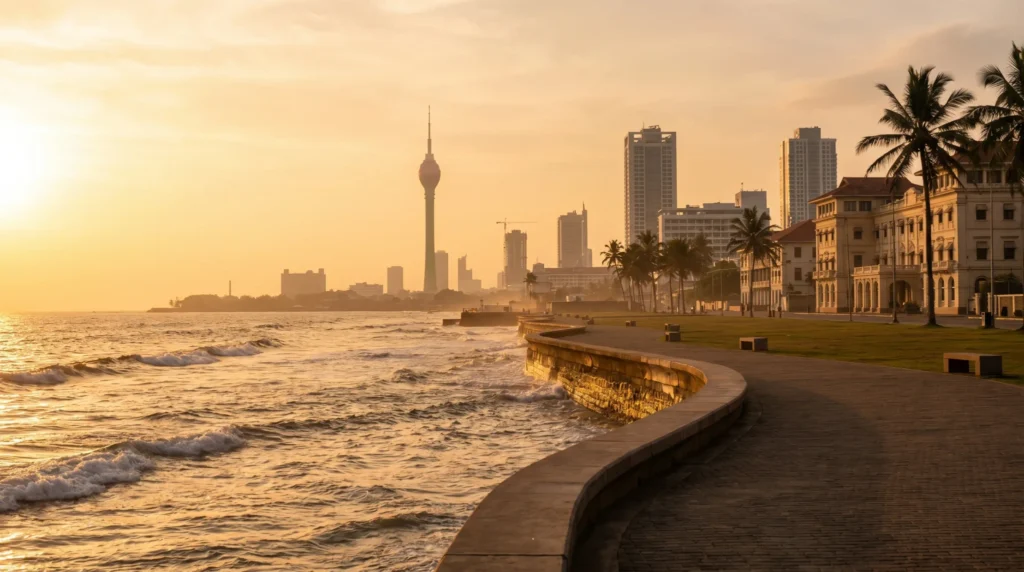
I have lost more late afternoons than I can count on the long lawn of Galle Face Green in Colombo, watching kite-flyers and isso-vadai sellers work the Indian Ocean breeze while the Lotus Tower blinks on behind the skyline. We tell first-time travellers that this is a compact, low-rise capital — only about 292,000 people inside the municipal limits, though the wider metropolitan region holds roughly 5.6 million, around a quarter of the whole country — and that the part you will actually walk, between Fort, Pettah and the Galle Face seafront, fits inside a single humid afternoon of tuk-tuk hops. My favourite Colombo ritual is a plate of egg hoppers and a milky cup of Ceylon tea at a Fort kade before the heat lands, then the slow walk through Pettah’s market lanes while the wholesale crowds are still thin. Treat this guide as the brief I would hand my own family the day before they landed at Bandaranaike International — the colonial-era Fort, the market chaos of Pettah, the temples and the seafront, the rupee-cash habits, the new expressway, and the rest .
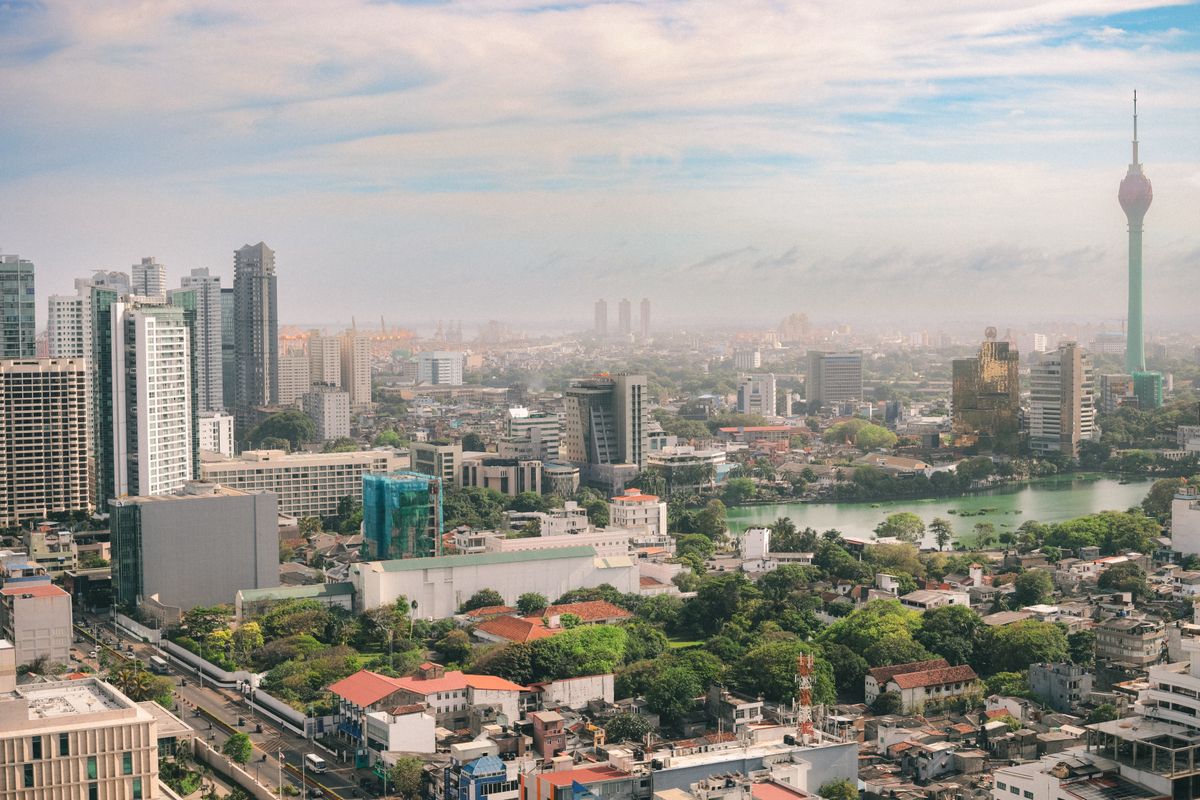
Table of Contents
Why Colombo?
Colombo is the port capital that most Sri Lanka itineraries treat as a one-night arrival stop on the way to the beaches and the hill country — and the one that quietly rewards a traveller who lingers a day longer. It has been a trading harbour for more than two thousand years, coveted in turn by Arab, Portuguese, Dutch and British merchants for its sheltered natural port on the Indian Ocean spice routes; the British made it the island’s capital in 1815 and laid down the colonial Fort district that still anchors the city . Today it is a humid, low-rise, fast-modernising city where Buddhist, Hindu, Muslim and Christian quarters press up against one another within a few square kilometres.
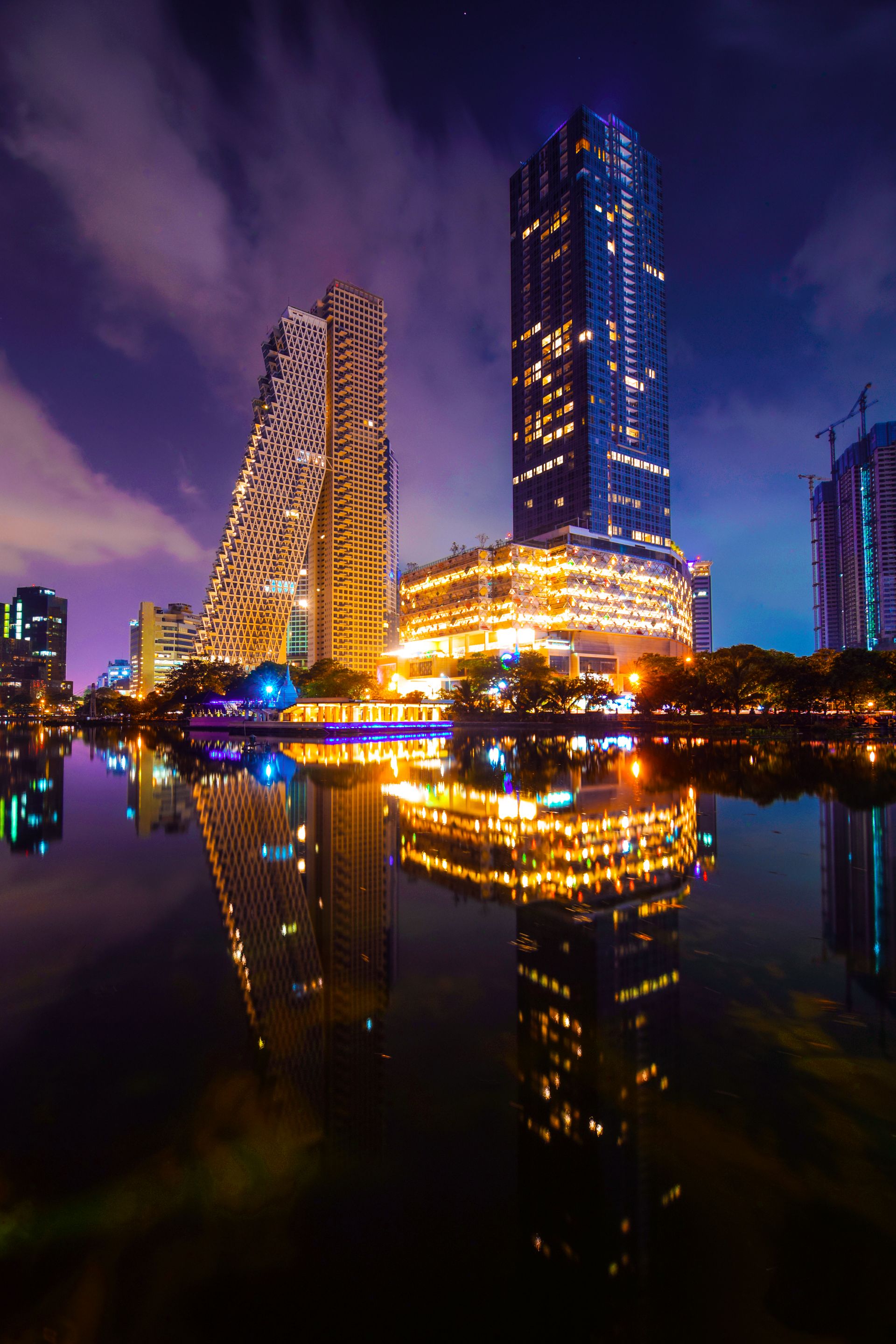
The city reads as a study in compression and contrast. Only about 292,000 people live inside the municipal limits, but the wider metropolitan region holds roughly 5.6 million — close to a quarter of Sri Lanka’s whole population — and the central visitor core is genuinely small: the Fort district, the Pettah bazaar, the Galle Face seafront and the temples of Slave Island and Cinnamon Gardens all sit within a short tuk-tuk hop of one another . Around that old colonial core, the Port City reclamation and a ring of glass towers have gone up in barely a decade, while Pettah keeps the lived-in, hand-cart-loud texture of an older Colombo.
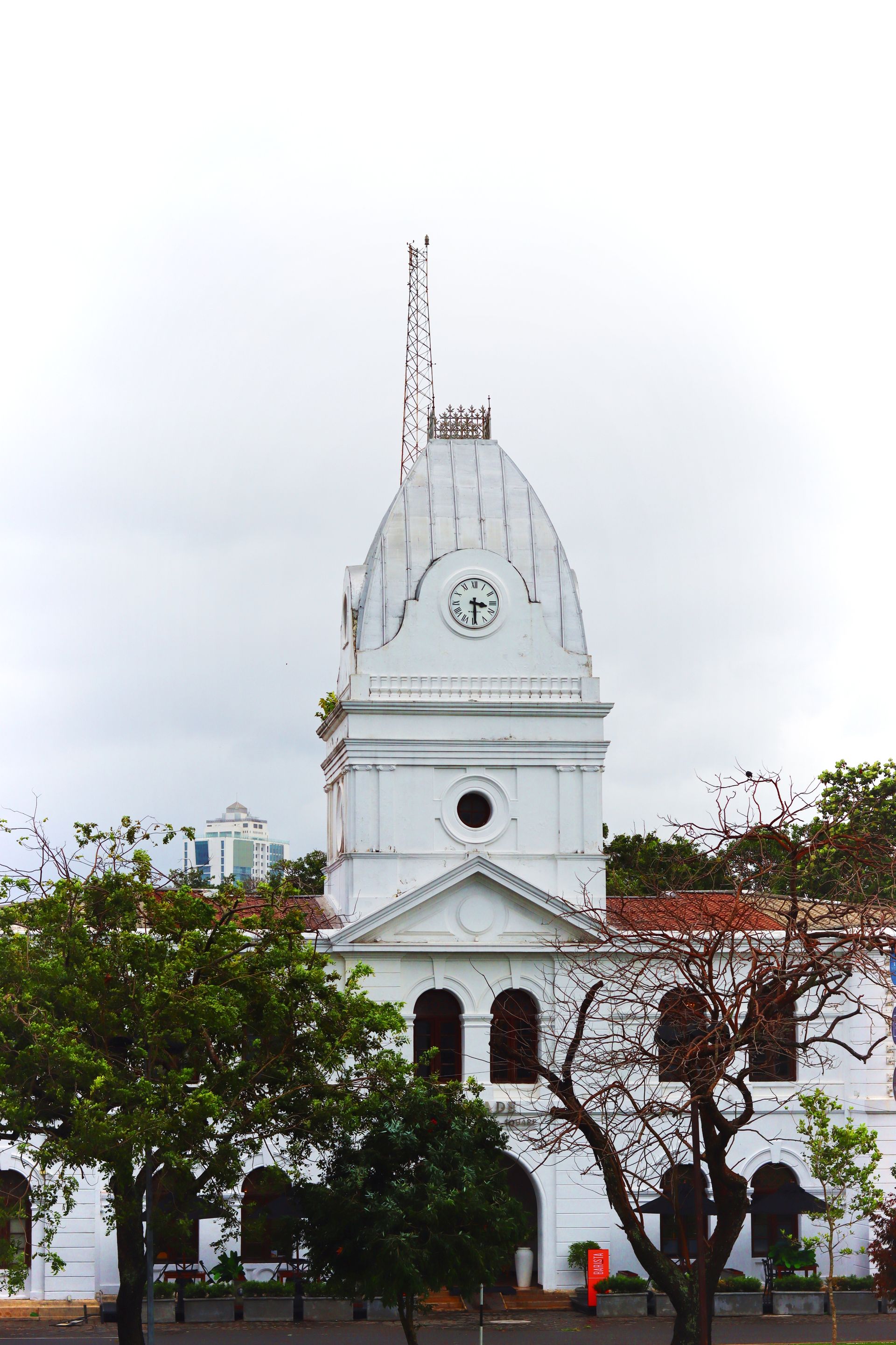
What makes the city worth a proper stop rather than a dash through is its layered, multi-faith density. Within a single morning you can stand inside the white stupa of the Gangaramaya temple complex, the red-and-white striped Jami Ul-Alfar mosque in Pettah, a Hindu kovil hung with garlands, and a Dutch-era Wolvendaal church — a compressed lesson in the island’s plural history that few capitals offer so walkably. The colonial Fort, with its restored Dutch Hospital courtyard and the British-era clock tower lighthouse, ties the whole story together.
But the capital is far from only its monuments. It is also a young, energetic, food-obsessed city — one with a serious rice-and-curry and short-eats culture, a Galle Face seafront that turns into an open-air kite field and street-food strip every dusk, rooftop bars looking out over the Indian Ocean, and some of the best-value seafood in South Asia. The Bandaranaike International Airport and the Southern Expressway have made the city and its day trips easier to reach than ever. This guide covers the seafront and the neighbourhoods worth your time, the hoppers and kottu and rice-and-curry that define the food, the temples and colonial sights, the day trips Colombo families actually take on weekends, and the practical realities of rupee cash, tuk-tuk apps, monsoon timing and the tropical heat. Give the city a full day or two; it repays the patience.

Neighborhoods: Finding Your Colombo
📍 Colombo Map: Every Place in This Guide
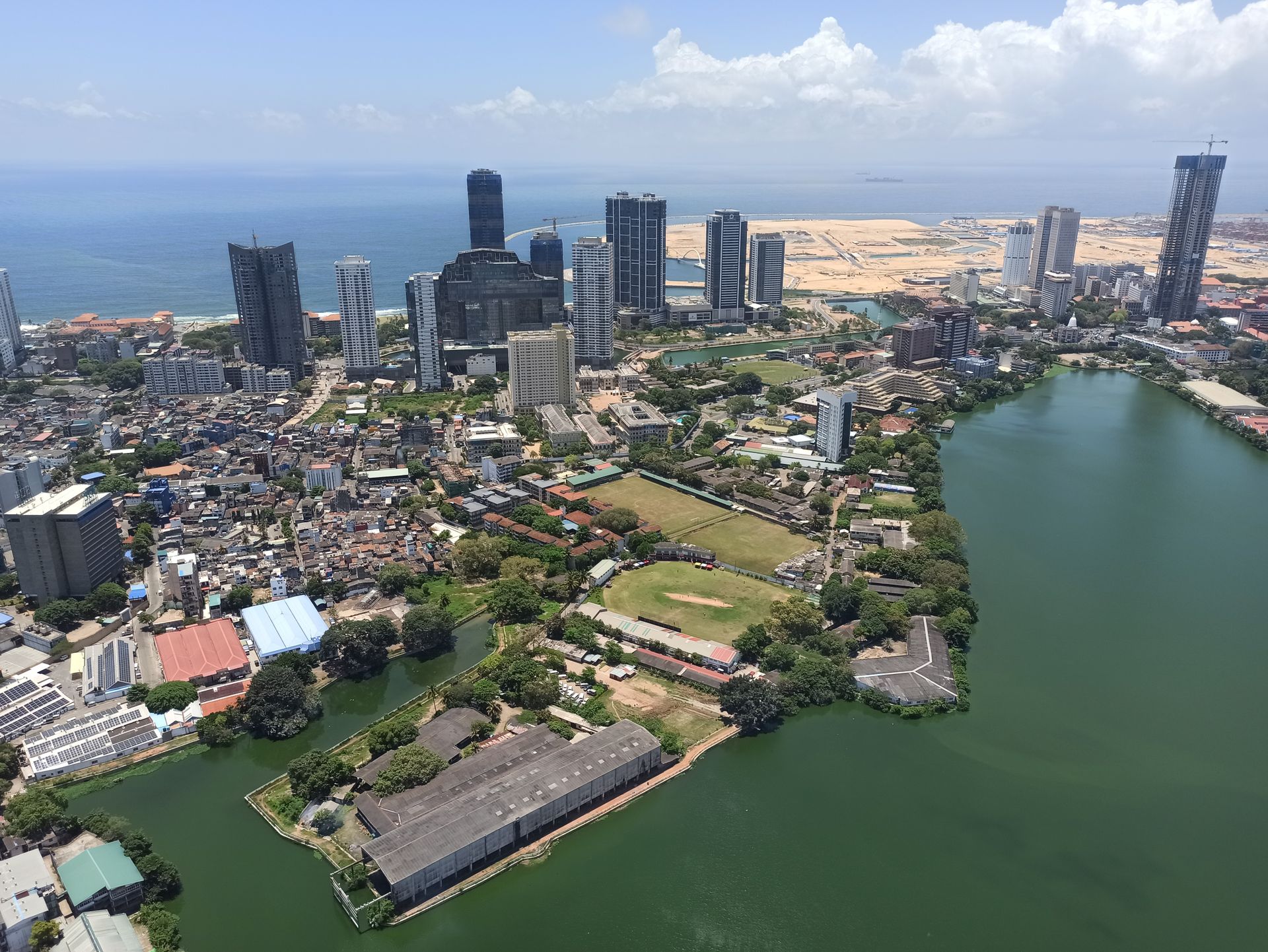
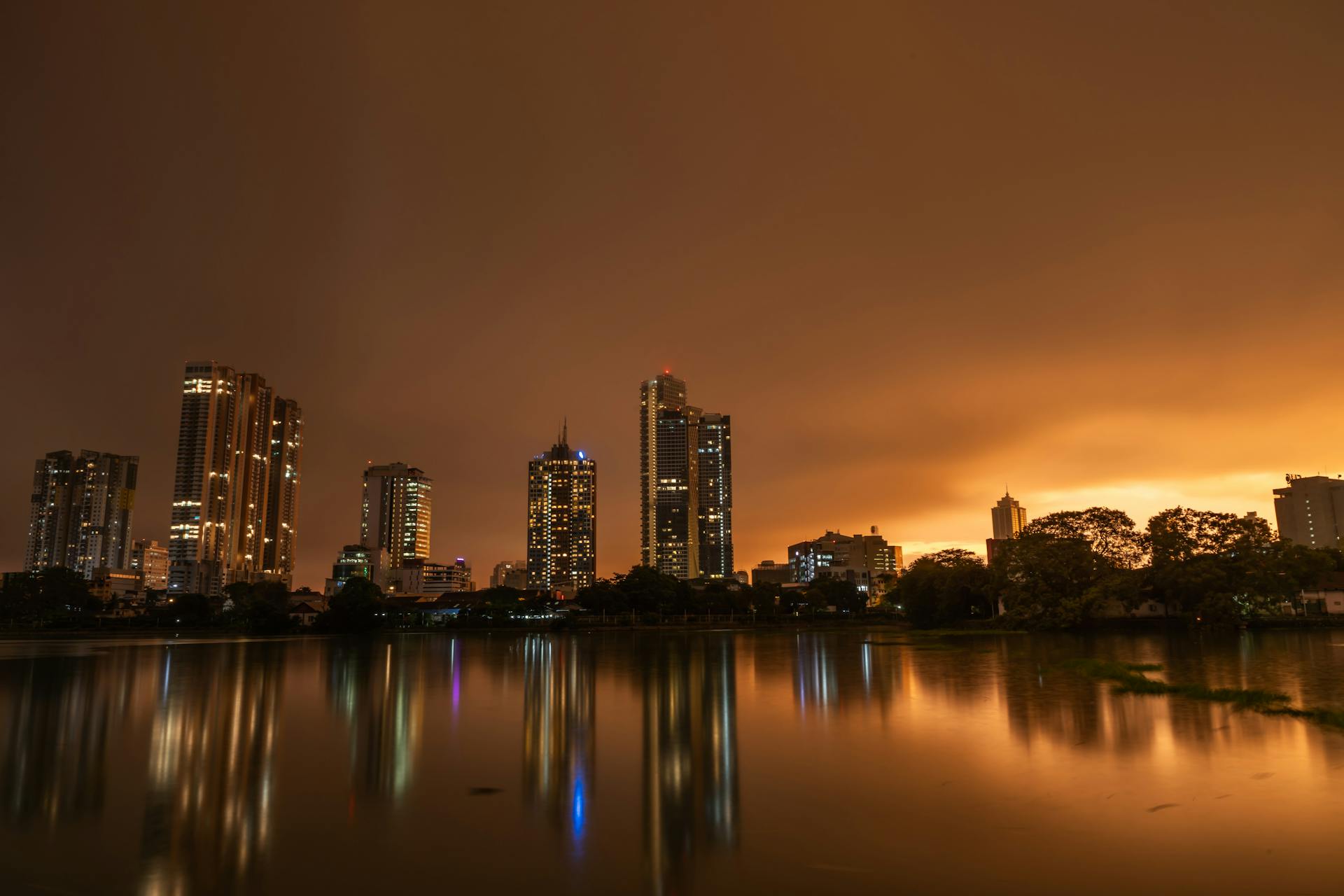
Colombo has no metro and no formal arrondissement system; instead it is divided into 15 numbered postal districts (Colombo 1 through Colombo 15), and travellers navigate by the named quarters those numbers map onto — Fort (Colombo 1), Pettah (Colombo 11), Galle Face and Slave Island (Colombo 2), Kollupitiya (Colombo 3), Bambalapitiya (Colombo 4) and the leafy embassy district of Cinnamon Gardens (Colombo 7). The central core holds the colonial architecture, the bazaar and the seafront; the southern Colombo 3–7 belt holds the best cafés, hotels and restaurants. Distances are short — almost everything central is a 300–800-rupee tuk-tuk ride apart — so where you base yourself matters less than in a big metro, and most first-time visitors stay around Galle Face, Kollupitiya or Cinnamon Gardens .
A quick mental map helps. Picture the Indian Ocean running down the western edge of the city; Fort and the Galle Face seafront hug that edge, with Pettah’s bazaar pressed in just behind the harbour to the north. Push south along the coast and you reach Kollupitiya, Bambalapitiya and Wellawatte — the long Galle Road retail-and-hotel spine. Push inland and you reach the green, low-traffic streets of Cinnamon Gardens, the embassy-and-museum quarter. Because the whole visitor zone is only a few kilometres across, you can switch quarters several times a day without it ever feeling like a journey — a morning in Pettah, an afternoon in Cinnamon Gardens, and a Galle Face sunset are an easy single day’s loop.
This section walks the quarters you will actually use, grouped by character: the historic core (Fort, Pettah), the seafront and the central business strip (Galle Face, Slave Island, Kollupitiya), the leafy interior (Cinnamon Gardens), and the long southern coastal stretch (Bambalapitiya, Wellawatte) where the city feels least curated for visitors. For a first trip, base yourself either around Galle Face for the seafront and easy walking to Fort, or in Cinnamon Gardens for the best food, quiet and a calmer night’s sleep — both put you within a cheap tuk-tuk of everything else.
Fort (Colombo 1)
The administrative and commercial heart of the city, built by the British on the footprint of the old Portuguese and Dutch fortifications — this is where the restored Dutch Hospital courtyard, the colonial-era clock tower lighthouse, the old parliament and the Grand Oriental Hotel all sit within a few blocks of one another. Once a high-security zone during the civil war, Fort has reopened and been steadily restored, and its low colonial profile of arcaded shophouses and bank buildings is the most architecturally coherent part of the city. This is also where most first-time visitors spend their daylight, ticking off the signature sights on foot before the midday heat. The Dutch Hospital shopping precinct — the oldest building in the district — now holds the city’s most atmospheric cluster of restaurants and bars.
- The Old Dutch Hospital shopping and dining precinct
- The colonial clock tower lighthouse and the Old Parliament building
- The Grand Oriental Hotel and the working harbour edge
For visitors, Fort is best treated as a morning walking museum: start at the Old Dutch Hospital before the cafés get busy, loop past the clock-tower lighthouse and the colonnaded bank buildings of Chatham and Janadhipathi Mawatha, and finish at the harbour edge or the new Port City reclamation, where the contrast between the restored colonial low-rise and the rising glass towers is at its sharpest. Note that parts of Fort remain government and high-security zones — the Presidential Secretariat occupies the old parliament building — so photography is restricted in places and you may be waved on by guards; take the hint and move along. By the afternoon the heat and the office-worker traffic make Fort less pleasant, so it rewards an early start.
Best for: first-time visitors, colonial architecture, walkers. Access: central seafront; most tuk-tuks reach it from anywhere in the city in under 20 minutes .
Pettah (Colombo 11)
The frenetic wholesale bazaar district immediately east of Fort — a dense grid of market streets where each lane specialises in its own trade: textiles on one, electronics on another, gold and spices and hardware on the next. It is the loudest, most overwhelming and most rewarding quarter in the city, threaded with hand-carts, hawkers and the call of the muezzin from the striking red-and-white candy-striped Jami Ul-Alfar mosque. Few visitors sleep here, but everyone should walk it once, ideally early before the wholesale crush peaks. The Pettah Floating Market and the old Dutch-era Wolvendaal Church sit at its edges.
- The Pettah market lanes — textiles, electronics, gold, spices
- The red-and-white Jami Ul-Alfar (Red) Mosque
- The Pettah Floating Market and the colonial Dutch Period Museum
A few practical notes make Pettah far less daunting. Come early — before about 10:00 — when the wholesale crush and the heat are both more bearable, and the morning light is best for photographs. Walk it rather than ride, since the lanes are too narrow and clogged for a tuk-tuk to be anything but a frustration, but keep your phone and bag secure against the snatch-theft that is the one real risk here. Each street has a speciality, so navigate by trade: Main Street and Front Street for textiles and household goods, 1st Cross Street for electronics, Sea Street for gold and the Hindu kovils, and Gabo’s Lane for the heaped sacks of Ayurvedic herbs and spices that perfume the whole quarter. It is overwhelming by design, and the trick is to surrender to it for an hour rather than try to be efficient.
Best for: market-lovers, photographers, street-food grazers. Access: walkable from Fort; a few hundred metres east of the Fort railway station.
Galle Face & Slave Island (Colombo 2)
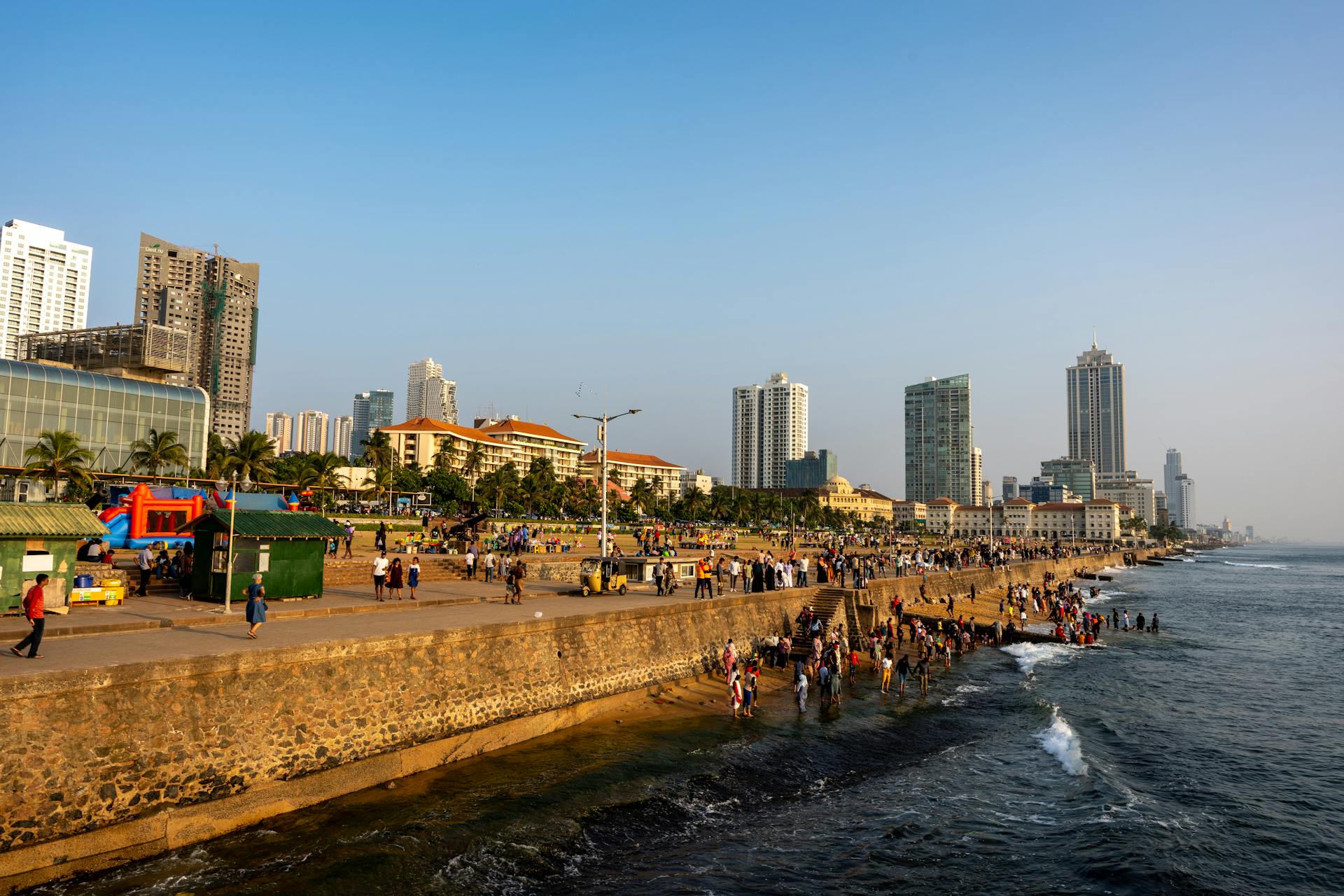
The seafront heart of the city, anchored by Galle Face Green — a 500-metre lawn along the Indian Ocean shore, laid out by the British in 1859 and now the capital’s great democratic open space, where families fly kites, couples watch the sunset and isso-vadai (prawn fritter) sellers work the crowd every dusk . Inland from the green, Slave Island (Kompannaveediya) is a fast-gentrifying district of new towers, the Gangaramaya temple complex and the serene Seema Malaka temple set on Beira Lake. The colonial Galle Face Hotel, one of the oldest in Asia east of Suez, presides over the southern end of the green.
- Galle Face Green and the nightly seafront street-food strip
- The Gangaramaya Temple and the lake-set Seema Malaka
- The historic Galle Face Hotel and the rising Port City towers
For visitors, this is the most atmospheric base in the city: you can walk to Fort, roll out of bed onto the seafront, and never be more than a few minutes from a meal or a sunset. The trade-off is traffic noise along the busy Galle Road edge, and the green itself can get crowded and litter-strewn on weekend evenings. Staying here puts you in the thick of the city’s most photogenic, most local stretch of waterfront.
Best for: first-time visitors, sunset-seekers, seafront walkers. Access: central seafront; walkable from Fort along the green.
Kollupitiya (Colombo 3)
The dense commercial-and-hotel strip running south from Galle Face along Galle Road — home to the city’s biggest shopping malls, a long row of five-star hotels, the Pettah-to-south rail line and the bustling Kollupitiya market. It is less charming than Fort but more practical: this is where many visitors actually sleep, eat and shop, with everything from rooftop bars to supermarkets within walking distance. The seafront railway runs right along the coast here, and a sunset walk south along the shore toward Bambalapitiya is a local ritual.
- The big malls and the five-star seafront hotels
- Kollupitiya market and the coastal railway walk
- Rooftop bars and a wide spread of restaurants
For visitors, Kollupitiya is most useful as a comfortable, well-connected base: the malls, the hotels and the restaurants are all here, the coastal rail line makes it easy to reach the southern beaches, and the seafront promenade gives you the sunset without the Galle Face crowds. It trades atmosphere for convenience, and it is where modern, moneyed Colombo most visibly does its shopping and dining.
Best for: comfort-first travellers, shoppers, longer stays. Access: south of Galle Face along Galle Road; 10-minute tuk-tuk from Fort.
Cinnamon Gardens (Colombo 7)
The leafy, low-traffic embassy-and-museum quarter inland from the coast — Colombo’s most genteel district, named for the cinnamon plantations the Dutch once grew here. Tree-lined avenues hold the grand colonial mansions, the embassies, the National Museum, the Viharamahadevi Park and the city’s best independent cafés, galleries and boutiques. One-acre garden plots and quiet streets make it the calmest, greenest base in the capital .
- The Colombo National Museum and Viharamahadevi Park
- Independent cafés, galleries and design boutiques
- Colonial mansions and the city’s quietest, greenest streets
It is also the most comfortable base for anyone planning to stay more than a couple of days: the tree cover genuinely cools the streets, the pavements are walkable, and you are within a short ride of the museum, the park and dozens of restaurants. The trade-off is that Cinnamon Gardens can feel a little detached and moneyed, a few minutes’ tuk-tuk from the seafront and the market chaos that give Colombo its texture.
Best for: café culture, longer stays, families, quiet nights. Access: inland east of Galle Face; 10-minute tuk-tuk from the seafront.
Bambalapitiya & Wellawatte (Colombo 4 & 6)
The long southern coastal stretch of Galle Road, running down toward Mount Lavinia — a dense, lived-in, less touristy ribbon of apartment blocks, Tamil and Muslim eateries, sari shops and the Majestic City mall. Wellawatte in particular, sometimes called “Little Jaffna,” has the city’s best South Indian and Jaffna-Tamil food. The coastal railway hugs the shore the whole way, and the rocky beaches here fill with local families at dusk.
- Majestic City mall and the Galle Road retail strip
- Wellawatte’s Jaffna-Tamil and South Indian restaurants
- The coastal railway and the local-family evening beaches
Best for: authentic eating, longer-stay budget travellers, South Indian food. Access: south of Kollupitiya along Galle Road and the coastal rail line.
Choosing Your Base
If this is your first visit and you want to be in the thick of it, stay around Galle Face or Fort: you will walk to the colonial sights, the seafront and the temples, and never be more than a few minutes from a meal or a tuk-tuk. If you value good coffee, quieter nights and a wider spread of restaurants — and especially if you are staying more than two or three days — base yourself in Cinnamon Gardens, accepting that you trade a little atmosphere for calm and green. Comfort-first travellers and shoppers tend to pick Kollupitiya for its malls, hotels and rail access. Whatever you choose, the city’s compactness means no single base locks you out of anything; a few-hundred-rupee ride reaches the rest. Avoid committing to the far northern or outer districts, which add traffic time without adding much you will actually want.
The Food

Sri Lankan food is hotter, more coconut-rich and more sour-forward than its South Indian neighbour — built on coconut milk, curry leaves, pandan, cinnamon, the roasted spice blend that gives “black curry” its colour, and a fierce love of chilli and the tart fruit goraka. Colombo, as the capital, gets the fullest version of it: the great daily ritual of rice and curry, the lacy fermented hoppers eaten at breakfast, the chopped-roti-and-egg thunder of kottu from the night stalls, and a colonial-era short-eats culture of fried snacks eaten with milky tea. Prices are low by any standard — a rice-and-curry plate runs 400–900 rupees (about $1.50–3), a sit-down meal 1,500–3,000 — and the cash habit means you will pay in rupee notes for almost everything below the hotel tier.
The city’s eating geography is simple. Fort and the southern Colombo 3–7 belt hold the sit-down restaurants and the international spread; the markets — Pettah, Kollupitiya and the Good Market on Saturdays — hold the cheap, authentic street food; and the seafront, especially Galle Face Green at dusk, becomes the city’s great open-air food court of isso vadai, kottu and grilled corn. A confident traveller eats best by pointing at what looks busy, but a first-timer can ease in through the rice-and-curry “hotels” (as local lunch canteens are confusingly called) before braving the stalls. Either way, the food is one of the genuine pleasures of the city.
A few practical habits make eating here easier. Carry small rupee notes for stalls and markets, since few carts take cards. Eat your street food where it is busiest and freshly cooked — turnover is your best guide to safety. Lunchtime is the great rice-and-curry mealtime, so the best “hotels” sell out their spread by mid-afternoon; go before 13:00. And do not let the plastic stools and bare-bulb lighting put you off: in Colombo, as across the region, the cheapest and least polished kitchens routinely serve the best food in the city.
It is worth understanding what makes Sri Lankan food distinct from the South Indian cooking it is often lazily lumped with. The island leans harder on coconut — coconut milk thickens the curries, scraped coconut goes into the fierce pol sambol, and coconut oil fries almost everything — and on souring agents such as goraka (a dried fruit) and tamarind that give the famous “black curry” its dark, almost smoky depth. Curry leaves, pandan (rampe), cinnamon (a Sri Lankan native), cardamom and dried Maldive fish flakes round out a flavour profile that is at once hotter, more aromatic and more sour than anything on the mainland. The result is a cuisine of small, intense dishes eaten together: a single rice-and-curry plate might carry a creamy dhal, a dry-roasted jackfruit, a coconut-rich fish curry, a fiery sambol and a cooling mallung of shredded greens, all combined by hand at the table into endless variations. Once you understand that logic — many small contrasting curries, not one big bowl — the whole cuisine opens up.
Sri Lankan Classics — Where to Start
The plates that define Sri Lankan cooking are all easy to find in the capital, and a handful of well-run kitchens make a reliable introduction without sending you straight to the deep end of street stalls. Start with rice and curry — a mound of rice ringed by five to a dozen small curries of dhal, jackfruit, beans, fish or chicken, plus a fierce sambol of grated coconut and chilli — and an egg hopper, the bowl-shaped fermented rice-flour pancake with a runny egg cradled in its centre. From there, branch into kottu, string hoppers and the seafood the island does so well. The restaurants below run from upscale to honest local canteens, all serving genuine Sri Lankan food.
- Upali’s by Nawaloka — a Colombo institution for authentic rice and curry, lamprais and kottu in a smart setting (mains ~1,800Rs, ~$6)
- Ministry of Crab — the celebrated Dutch Hospital restaurant for Sri Lankan mud crab and prawns, a global name (crab market price, ~$40–80)
- Nuga Gama at Cinnamon Grand — a recreated village setting for a full traditional rice-and-curry buffet (~4,500Rs, ~$15)
Street Stalls & Markets
The real eating happens at market food courts, roadside carts and the seafront, and it is where Colombo’s food is at its cheapest and most honest. Galle Face Green at dusk is the easiest entry point, with a long line of carts selling isso vadai, kottu and grilled corn to the sunset crowd; the Pettah market lanes do a brisk trade in short eats and fresh juice; and the Saturday Good Market in Cinnamon Gardens brings together small organic and artisan vendors. Carry small rupee notes, point at what looks busy, and do not be put off by plastic stools — the best food in the city is often the cheapest.
- Galle Face Green seafront carts — isso vadai (prawn fritters), kottu and grilled corn at dusk (~200–500Rs, ~$0.75–1.75)
- Pettah short-eats stalls — fish rolls, cutlets, vadai and fresh wood-apple juice (~100–300Rs, ~$0.40–1)
- Good Market (Saturdays, Cinnamon Gardens) — artisan and organic vendors, hoppers and curries (~300–800Rs, ~$1–3)
Beyond Rice and Curry
Once you are past the headline plates, the everyday Sri Lankan repertoire opens up — and much of it is breakfast-and-snack food rather than dinner-table cooking. Kottu — roti chopped on a hot griddle with egg, vegetables and meat, to a clattering rhythm you can hear down the street — is the great late-night dish. String hoppers (steamed rice-noodle nests) eaten with dhal and coconut sambol are a classic breakfast, and lamprais — a Dutch-Burgher legacy of rice, curries and a frikkadel meatball baked in a banana leaf — is Colombo’s most distinctive colonial dish. These are the everyday flavours that define how the city actually eats.
- Kottu roti — chopped roti griddled with egg, vegetables and meat, the city’s signature late-night dish (~500Rs, ~$1.75)
- String hoppers — steamed rice-noodle nests with dhal and coconut sambol, a classic breakfast (~300Rs, ~$1)
- Lamprais — Dutch-Burgher banana-leaf parcel of rice, curries and frikkadel (~700Rs, ~$2.50)
- Isso vadai — crisp lentil fritters topped with whole prawns, the Galle Face seafront snack (~150Rs, ~$0.50)
- Pol roti & pol sambol — coconut flatbread with a fiery grated-coconut-and-chilli relish (~250Rs, ~$0.90)
Tea, Coffee & the Café Scene
Sri Lanka is one of the world’s great tea nations — Ceylon tea is grown in the hill country a few hours inland — and Colombo drinks it hard, traditionally as a strong, sweet, milky cup poured from a roadside kade, increasingly as single-estate loose-leaf in the city’s smart tea lounges. A third-wave coffee scene has also taken root in Cinnamon Gardens and Kollupitiya, with local roasters and design-led cafés that double as reliable spots for fast Wi-Fi and air-conditioning when the heat gets too much. Try the same island leaf two ways — a sweet, milky roadside plain tea and a delicate single-estate pot in a tea lounge — to taste how far the culture has travelled. Expect about 50–100 rupees for a roadside tea and 600–900 for a café coffee.
For visitors this matters practically as well as culturally. The smart tea lounges — several of them attached to the colonial-era hotels and the heritage tea brands — are an air-conditioned refuge in the heat and an easy, comfortable introduction to the island’s tea grades, from the brisk high-grown BOP to the delicate silver-tip white teas; many will walk you through a tasting and sell loose leaf to take home, which makes a far better souvenir than anything in the markets. The third-wave cafés of Colombo 7 and Colombo 3, meanwhile, are where the city’s young professionals and the growing community of remote workers settle in for the day, and they are your most reliable bet for strong Wi-Fi, a quiet table and a flat white when the seafront heat or the Pettah crush gets too much. Between the two, you can chart the whole arc of how a tea-and-coffee culture modernises without losing its roadside soul.
Sweets, Snacks & the Adventurous End
Sri Lankan desserts lean on the tropical pantry — jaggery (palm sugar), coconut, treacle, buffalo-milk curd and the bright flavours of the island. Look for curd and treacle (thick buffalo-milk curd drizzled with kithul-palm syrup), watalappam (a Malay-Muslim coconut-and-jaggery custard, especially at Ramadan), and kavum and kokis (the fried oil cakes and crisp rosettes of festival season). The markets also sell tropical fruit you may not know — rambutan, mangosteen, wood apple, the spiky soursop, and the famously pungent durian. For the adventurous, the seafront and Pettah carts sell fierce chilli-laced snacks and the acquired taste of jaadi (salted fish). None of it is a tourist gimmick; locals eat these by the bagful.
To drink, beyond the tea, the everyday choice is king-coconut water (thambili) drunk straight from the orange husk at roadside stalls, and fresh wood-apple or lime juice. Local beer is cheap and ubiquitous — Lion Lager is the dominant brand — and arrack, the island’s coconut-flower spirit, is the local pour, mixed with ginger beer for a “lion’s blood.” Tap water is not safe to drink anywhere in the city; stick to the bottled and filtered water sold on every corner.
Food Experiences You Can’t Miss
- A full rice-and-curry lunch at a local “hotel” before 13:00, eaten by hand with a dozen small curries and sambols
- A dusk graze along Galle Face Green — isso vadai, kottu and grilled corn with the sunset crowd
- Sri Lankan mud crab at Ministry of Crab in the colonial Dutch Hospital, the dish that put Colombo on the global food map
- A roadside milky plain tea, then a single-estate pot in a tea lounge — the same island leaf, two worlds apart
Cultural Sights

Colombo’s sights divide cleanly into two registers: the multi-faith religious Colombo of temples, mosques and churches, and the colonial-and-modern Colombo of Fort architecture, the National Museum and the Lotus Tower. A complete visit needs both. The religious and colonial sights cluster in the walkable Fort–Slave Island–Cinnamon Gardens belt within a short tuk-tuk of one another. Below, the sights are ordered roughly as you might tackle them, with opening hours and current admission prices where they apply.
One thing to grasp before you start is that Colombo is not a city of grand stand-alone monuments in the way of Delhi or Bangkok; its appeal is cumulative and lies in the density and variety of its sights rather than any single show-stopper. Within a short walk you can move from a Buddhist temple to a Hindu kovil to a colonial-Dutch church to a candy-striped mosque, each still in active use, and that compressed religious plurality — the living evidence of two millennia of trade and three waves of colonisation — is the real attraction. Plan a cool-morning walking loop through Fort, Pettah and Slave Island for the historic and religious core, keep the National Museum and the Cinnamon Gardens monuments for a separate, calmer half-day, and save the Lotus Tower for dusk. Dress modestly throughout, since most of these sites are places of worship, and budget small amounts of cash for the temple and museum entries, which are inexpensive but rarely take cards.
Gangaramaya Temple & Seema Malaka
Colombo’s most important and most visited Buddhist temple, founded in the late nineteenth century beside Beira Lake — a working temple, museum and monastic school rolled into one, crammed with an eccentric, magpie collection of Buddha images, vintage cars, gifts and curios from around the world. Its serene companion, the Seema Malaka, is a meditation pavilion set on platforms over Beira Lake, designed by the celebrated Sri Lankan architect Geoffrey Bawa. Admission about 400 rupees (~$1.30) to the temple; Seema Malaka is free. Open daily roughly 06:00–22:00; dress modestly, with knees and shoulders covered, and remove shoes before entering the shrine.
Colombo National Museum
The island’s largest and oldest museum, housed in a grand white Italian-style colonial building of 1877 in Cinnamon Gardens, holding the regalia of the last king of Kandy, ancient bronzes, royal thrones and a comprehensive run of Sri Lankan art and history. It is the single best place to make sense of the island’s two-and-a-half-thousand-year story before you head into the country. Allow at least two hours. Admission about 2,000 rupees (~$6.50) for foreign adults. Open daily 09:00–17:00.
Lotus Tower
The 350-metre Lotus Tower, opened in 2019 and shaped like a stylised lotus flower, is the tallest self-supported structure in South Asia and the defining feature of the modern skyline; an observation deck near the top gives the best panorama of the city, the harbour and the Indian Ocean. It is floodlit a shifting palette of colours after dark and has become the city’s signature night-time landmark. Admission to the observation deck about 2,500 rupees (~$8). Open daily roughly 10:00–22:00; go near sunset for the best light.
Jami Ul-Alfar (Red) Mosque
The striking candy-striped red-and-white mosque at the heart of the Pettah bazaar, built in 1908 in an exuberant Indo-Saracenic style that makes it one of the most photographed buildings in the city. It is a working mosque, so visitors are welcome outside prayer times with modest dress and, for women, a headscarf. The contrast of its fairytale facade against the hand-cart chaos of Pettah is pure Colombo. Free to enter; closed to non-worshippers during the five daily prayers.
Old Dutch Hospital & Fort
The oldest building in the Fort district, the Old Dutch Hospital dates to the seventeenth-century Dutch colonial period and is now beautifully restored as a courtyard precinct of restaurants, bars and shops — the most atmospheric spot in the old town for a meal or a drink. The surrounding Fort streets hold the British-era clock tower lighthouse (1857), the Old Parliament, the Cargills Main Street arcade and the grand old banking houses. Free to wander; best explored on a cool morning on foot.
Independence Memorial Hall & Viharamahadevi Park
The Independence Memorial Hall (1953), modelled on the audience hall of the Kandyan kings, commemorates Sri Lanka’s independence from Britain in 1948 and anchors a ceremonial avenue in Cinnamon Gardens; the adjacent Independence Arcade is a restored colonial warehouse now full of shops and cafés. A short walk away, Viharamahadevi Park — the city’s largest, laid out in the British era — gives a green, shaded break with a golden Buddha statue and flowering trees. Both are free. They are best in the cool of early morning or late afternoon, when locals come to walk and exercise.
Entertainment

Colombo’s nightlife is friendlier and lower-key than Bangkok’s or Mumbai’s — there is no single party district — and it is all the better for it. The action concentrates in three pockets: the colonial Dutch Hospital and Fort, where the crowd is a mix of tourists and well-off locals; the rooftop bars of the southern five-star hotels, with their Indian Ocean views; and the casual seafront and Cinnamon Gardens lounges. Everything is cheap by Western standards, distances are short, and a single evening can run from a sunset seafront walk to a Fort cocktail to a late kottu graze without spending much. A word on getting home: arrange your ride back through PickMe or Uber rather than flagging a street tuk-tuk late at night, when quoted fares climb steeply.
Set your expectations correctly and Colombo’s evenings are a genuine pleasure. This is not a city for clubbing into the small hours — most bars wind down by midnight or one, and the licensing is conservative, with alcohol sales banned outright on the monthly Buddhist poya full-moon holidays — but it does relaxed, sociable, good-value nights extremely well. The pattern most visitors fall into is a slow one: a sunset on Galle Face Green or a hotel rooftop, dinner somewhere in Fort or Colombo 7, and a drink or two in the Dutch Hospital courtyard or a Bassac-style cocktail bar to finish. Because the whole entertainment zone is compact and a tuk-tuk home costs a dollar or two, you can string several scenes together in one evening without it ever feeling like an effort, and the mix of colonial-era grandeur, ocean views and cheap street food gives the city’s nights a flavour all their own.
Dutch Hospital & Fort Bars
The restored Old Dutch Hospital courtyard is the social heart of the old town after dark — a cluster of bars and restaurants in seventeenth-century colonial arcades, from craft-beer spots to the famous Ministry of Crab. It is the easiest, most atmospheric place in the city for an evening drink, with the colonial architecture floodlit and the courtyard buzzing. Typical cost 600–1,200 rupees for a Lion Lager, 1,500–2,500 for a cocktail. No booking needed for most bars; the headline restaurants fill up, so reserve those ahead.
Rooftop Bars
Colombo’s skyline has sprouted a crop of rooftop bars in the last decade, most atop the southern five-star hotels along Galle Road and in Fort, with sweeping views over the Indian Ocean and the lit-up Lotus Tower. They are the city’s most glamorous night out — sunset is the prime slot — and a smart-casual dress code applies at most. Typical cost 1,800–3,000 rupees a cocktail; arrive before sunset to claim the sea-view tables, which fill fast on weekends.
Galle Face Green at Dusk
The seafront green is the city’s great free evening entertainment: every dusk it fills with kite-flyers, families, courting couples and a long line of street-food carts, with the sun dropping straight into the Indian Ocean. It is a family-friendly, alcohol-light affair — more about grazing isso vadai and people-watching than drinking — and it is where you will see the most local, least touristy side of a Colombo evening. The kite-and-snack ritual is a lovely, unforced way to spend a warm evening. Typical spend 300–600 rupees for a full graze.
Live Music & Cinema
Colombo has a small but genuine live-music scene — jazz, blues and Sinhala pop at hotel lounges and Fort bars, with a handful of venues hosting local and visiting acts most weekends. For a quieter night, modern multiplex cinemas at the big malls (Majestic City, One Galle Face, Colombo City Centre) screen current international releases in air-conditioned comfort, a welcome refuge during a monsoon downpour. Typical cost: live music free–1,000 rupees cover; cinema tickets around 800–1,500 rupees.
Theatre & Cultural Shows
The Nelum Pokuna Mahinda Rajapaksa Theatre — a striking modern hall shaped like a lotus pond — and the older Lionel Wendt Art Centre host the city’s classical and contemporary performance: Sri Lankan dance, drama, orchestral concerts and the occasional Kandyan dance show aimed at visitors. It is the most meaningful way to see the island’s performing-arts traditions in the capital. Typical cost 1,000–3,000 rupees; book a day or two ahead for the bigger productions.
Casinos & Malls
Colombo has a handful of licensed casinos clustered in the Fort and Kollupitiya area, open to foreign visitors and free to enter, more a curiosity than a highlight. The newer malls — One Galle Face and Colombo City Centre — double as all-weather entertainment, with cinemas, food courts and arcades, and are a reliable, fully air-conditioned evening when a monsoon storm rules out the seafront and you simply want to be somewhere dry, bright and busy.
Day Trips

Colombo sits at the centre of a flat coastal plain on the island’s west coast, and the day trips fan out in three directions: south down the coast toward the beach towns and the historic Galle Fort, east into the low hills toward the sacred temples, and north toward the ancient former capital sites. None requires more than a couple of hours each way thanks to the Southern Expressway and the coastal railway, so each works comfortably as a half- or full-day excursion. The most efficient approach is to take the train or expressway south for the coast and Galle, and keep the inland temples for a separate hired-car day. Below are the five trips Colombo families and visitors actually take, with rough travel times and how to do each.
Galle Fort (1.5 hours by expressway, 2.5 by train)
The best day trip from the city: a perfectly preserved seventeenth-century Dutch fortified town on the south coast, a UNESCO World Heritage Site of ramparts, colonial villas, boutiques and cafés that you can walk end to end in an afternoon . The Southern Expressway gets you there in about 90 minutes by car; the slow coastal train, hugging the shore the whole way, is one of the world’s great rail journeys and worth the extra hour. Go for the day, walk the ramparts at sunset, and either train back or stay a night.
Mount Lavinia & the South Coast Beaches (30–60 minutes by train)
The closest proper beach to the city, Mount Lavinia, lies just south along the coastal railway, with a long golden strand, the colonial Mount Lavinia Hotel, and a row of seafood shacks that fire up at sunset. Continue south and the beaches improve — Bentota, Hikkaduwa and Unawatuna are all an easy train or expressway hop. It makes a relaxed half- or full-day: take the cheap coastal train, swim, eat grilled seafood on the sand, and ride back at dusk. Best in the December–March dry season, when the west-coast sea is calmest.
Kelaniya Raja Maha Vihara (40 minutes by car)
One of the most sacred Buddhist temples in the country, lying about 10 km northeast of the centre on the bank of the Kelani River, believed in tradition to have been hallowed by a visit of the Buddha himself. Its image house is covered in some of the finest temple murals on the island, and the great annual Duruthu Perahera procession in January draws huge crowds. It makes an easy half-day from the city and a gentler, less harrowing temple visit than the inland pilgrimage sites. Dress modestly and remove shoes at the shrine.
Kandy (3 hours by car or train)
The hill-country royal capital and home of the Temple of the Sacred Tooth Relic, a UNESCO World Heritage Site and the spiritual heart of Sri Lankan Buddhism, lying about 115 km inland . At three hours each way it is a long day trip — better as an overnight — but the scenic hill train from Colombo Fort is one of the most beautiful rail journeys in Asia, climbing through tea estates and tunnels. If you only have a day, the train up and a car back makes the most of it.
Negombo & the Airport Coast (40 minutes by expressway)
The fishing-and-beach town of Negombo, just north of the Bandaranaike airport, makes an easy first or last day in the country: a wide beach, a lively fish market and auction, Dutch-era canals and a cluster of colonial churches that earned it the nickname “Little Rome.” Many travellers base their first or last night here rather than in Colombo to be near the airport. A half-day visits the fish market in the morning and the beach in the afternoon. It is the obvious stop to bookend a trip.
Seasonal Guide

Colombo has a tropical monsoon climate with no real temperature seasons — it is hot and humid year-round, with daytime highs in the low 30s every month — but two monsoons and two inter-monsoon storm periods shape the rain. For visitors the practical takeaway is simple: aim for the December-to-March dry stretch if you can, expect the heaviest rain in the May–June southwest monsoon and the October inter-monsoon, and plan around the predictable afternoon storms of the wet months. The framing below maps the familiar four seasons onto that pattern, with what to expect from the weather, the festivals and the crowds in each.
Spring (March – May)
March is the tail of the best dry season and one of the most pleasant months; by April and especially May the southwest monsoon builds, bringing the year’s heaviest rain to Colombo’s west coast and high humidity . Daytime highs hold around 31–32°C throughout. The Sinhala and Tamil New Year in mid-April is the biggest holiday of the year — the city quietens as families head to home villages, and many businesses close for several days. Plan indoor sights for the wet afternoons of May.
Summer (June – August)
The southwest monsoon eases through June and the weather improves into July and August, with daytime highs around 30–31°C, lower humidity than May and shorter showers. It is a reasonable, less-crowded time to visit the west coast. The grand Esala Perahera festival in nearby Kandy (July or August) is the island’s most spectacular, drawing visitors inland. Pack a light rain layer for the occasional downpour, but most days are fine.
Autumn (September – November)
October and into November bring the second inter-monsoon, the wettest, stormiest stretch for Colombo, with frequent heavy afternoon thunderstorms and occasional street flooding in low-lying areas . September is a transitional, drier month. The Hindu festival of Deepavali (the festival of lights) falls in October or November and lights up the Tamil quarters of Pettah and Wellawatte. Carry an umbrella and plan flexibly around the storms.
Winter (December – February)
The dry season and the best time to visit, hands down. The northeast monsoon falls mainly on the other side of the island, leaving Colombo and the west coast warm, sunny and comparatively dry, with daytime highs around 31°C and pleasant, breezy evenings . This is peak tourist season — clear skies for the seafront, the beaches and the coastal train, and the busiest, priciest hotels. The Duruthu Perahera at Kelaniya in January is a highlight. Book accommodation and any hill-country trip well ahead for December and January, when the best-value rooms sell out first.
Getting Around
Getting around Colombo is, with one big caveat, fairly simple: there is no metro, the central core is compact, and a smartphone with two ride apps solves nearly every transport problem you will have. The caveat is the traffic, which is genuinely heavy on the main arteries and turns short distances into long crawls at rush hour. The one rule that matters most — flag it now — is to use the apps rather than negotiating with street drivers, both for honesty of pricing and for the logged, traceable route. Below is everything you need, from the workhorse tuk-tuk to the airport transfer.
Tuk-Tuks (Three-Wheelers)
The workhorse of getting around Colombo is the tuk-tuk — the three-wheeled auto-rickshaw that swarms every street. A short central ride costs about 300–500 rupees; almost any cross-town trip stays under 1,000 . Metered tuk-tuks exist and are the honest option, but if you flag an unmetered one on the street, always agree the fare before you set off — and expect a foreigner premium of roughly double until you do. Drivers parked outside hotels and tourist sites quote the highest; one walked a block away is usually cheaper.
Ride-Hailing Apps (PickMe, Uber)
The single best travel hack in Colombo is to download the apps. The locally built PickMe and the regional Uber both dispatch tuk-tuks and cars with fixed, upfront fares — no haggling, a logged route, and roughly half what a street driver quotes a foreigner. PickMe is the local favourite and cheapest for tuk-tuks; Uber is handy for air-conditioned cars. Both take cash, and both accept cards in-app .
Trains & Buses
Colombo’s coastal railway is genuinely useful for visitors: cheap, scenic and traffic-free, it runs right along the shore from Colombo Fort station south through Mount Lavinia toward Galle, and is the best way to reach the southern beaches. Fares are trivial — a few hundred rupees at most — though trains can be crowded at rush hour. The city’s bus network is dense, dirt-cheap (often under 50 rupees) and bewildering, with private and government buses on overlapping routes; most visitors skip it in favour of tuk-tuks, but it is an option for long, straight runs down Galle Road. For intercity travel, the air-conditioned expressway buses from the Makumbura terminal are fast and comfortable.
Airport Access (Bandaranaike International Airport)
Sri Lanka’s main gateway, Bandaranaike International Airport (code CMB), sits at Katunayake about 35 km north of the city . Allow 45–75 minutes for the transfer depending on traffic; the airport expressway has cut the journey considerably.
- PickMe / Uber car — 45–75 min, ~$15–25
- Airport expressway bus to Fort — 60–90 min, ~$1–2
Taxis
Colombo has metered taxi fleets (Kangaroo Cabs, Budget) you can call, but the ride apps have largely replaced them for visitors. Flag-fall for an app car is effectively the upfront fare you see before you confirm. Use PickMe or Uber rather than the unmarked cars that approach arriving foreigners at the airport, where quoted fares trend much higher.
Navigation Tips
Apps: PickMe, Google Maps. The city is organised by its 15 numbered postal districts (Colombo 1 to 15), which locals use constantly — knowing that Fort is Colombo 1, Kollupitiya is Colombo 3 and Cinnamon Gardens is Colombo 7 will help you and every driver enormously. Pin your destination on the map in the app rather than relying on a street name alone, since many roads have both a colonial and a renamed post-independence name.
Budget Breakdown: Making Your Rupees Count
| Tier | Daily | Sleep | Eat | Transport | Activities | Extras |
|---|---|---|---|---|---|---|
| Budget | $25–35 | $8–15 dorm/guesthouse | $5–10 rice & curry | $3–6 tuk-tuk | $5–12 temple/museum | $3–5 water/snacks |
| Mid-Range | $60–110 | $30–55 private AC room | $15–30 mix of local & Western | $8–18 PickMe cars | $15–30 tours/shows | $8–15 drinks |
| Luxury | $200+ | $110–300 four/five-star | $40–80 fine dining | $25–45 private driver | $30–70 private guides | $20+ spa/bar |
Where Your Money Goes
Colombo is an inexpensive capital by global standards, and the gap between a frugal day and a comfortable one is smaller than in most of Asia’s big cities. Street meals run 200–900 rupees ($0.75–3), temple and museum entries $1–8, and a clean private room with air-conditioning is easy to find under $50. The biggest variable is how you sleep and drink — imported wine and rooftop cocktails carry near-Western prices, while a local Lion Lager is a dollar or two and a roadside tea is a few cents. Budget travellers can comfortably do the city on $25–35 a day, mid-range travellers on $60–110, and only genuine luxury — a five-star seafront room, a private guide and a driver — pushes a daily spend past $200 .
The single biggest lever on your daily cost is accommodation. A dorm bed runs $8–15, a private fan room in a guesthouse $20–35, a smart air-conditioned mid-range room $30–55, and the four- and five-star seafront hotels start around $110 and climb steeply. Food, by contrast, barely moves the needle: even if you eat every meal at a sit-down restaurant you will struggle to spend $30 a day, and if you graze the markets and rice-and-curry hotels you can eat superbly for under $10. Transport is similarly cheap — most cross-town tuk-tuk rides through the apps cost a couple of dollars, so a whole day of getting around rarely tops $8 unless you hire a private car for a day trip ($45–70). The places that quietly drain a budget are imported alcohol, rooftop cocktail bars and Western-style cafés, all of which carry prices closer to Singapore than to the rest of Colombo.
Two practical quirks shape spending here. First, Sri Lanka is largely a cash economy below the hotel tier — carry rupee notes for stalls, tuk-tuks and markets, since cards are accepted only at hotels, malls and mid-range-and-up restaurants, and ATMs charge a fee of a few dollars per withdrawal. Second, since the 2022 economic crisis prices have risen and the rupee has fluctuated, so check current exchange rates and expect some volatility; that said, for foreign visitors the city remains very good value. Plan to carry a working float of rupee cash at all times.
Money-Saving Tips
- Use PickMe or Uber for every ride — fixed app fares undercut street quotes by roughly half and remove the haggling entirely
- Eat your big meal as rice and curry at lunch at a local “hotel”; a $2 plate beats any tourist restaurant and is more authentic besides
- Take the cheap coastal train rather than a car for the southern beaches and Galle — it costs a few hundred rupees and is far more scenic
- Withdraw larger amounts less often to spread the fixed ATM fee, and carry small rupee notes for stalls and tuk-tuks
- Drink local — a Lion Lager is a dollar or two, while an imported cocktail can be ten times the price
- Many temples charge only a small foreigner entry ($1–3); build them into your daily activity budget rather than treating them as extras
Practical Tips
Language
Sinhala and Tamil are the two official languages, each written in its own distinctive script. English is widely spoken in business, tourism and hospitality — a legacy of British rule — and most signage in the capital is trilingual. A few words of Sinhala — ayubowan (hello), istuti (thank you) — go a long way, but you will rarely be stuck for English in the visitor core.
Cash vs. Cards
Sri Lanka runs largely on cash below the hotel tier. The Sri Lankan rupee (LKR) is the currency; carry small and medium notes for stalls, tuk-tuks and markets . Cards work at hotels, malls and mid-range-and-up restaurants; ATMs are plentiful and dispense rupees, usually with a per-withdrawal fee of a few dollars. Since the 2022 crisis, keep an eye on the exchange rate and carry a cash buffer.
Safety
Colombo is generally safe for visitors, with little violent crime directed at tourists, but petty crime — bag-snatching, pickpocketing in crowded markets, and occasional scams around taxis and gem shops — is the real and common risk. The classic scenarios are a phone or bag snatched in the Pettah crush, an inflated tuk-tuk fare, or a friendly stranger steering you to a “special” shop for a commission. Keep bags worn across the body and zipped, use the ride apps rather than unmetered street tuk-tuks, decline unsolicited “tours” and gem-shop invitations, and be alert in the densest market lanes. Your government’s travel advisory is the authoritative source for current conditions, including any post-crisis political demonstrations.
What to Wear
Light, breathable, modest clothing for the heat and humidity. Cover knees and shoulders for temples and mosques or you will be refused entry; carry a scarf or light layer, and women should bring a headscarf for mosques. You must remove shoes (and hats) at Buddhist and Hindu shrines. Otherwise the city is relaxed and casual, though smart-casual is expected at rooftop bars and fine-dining restaurants.
Cultural Etiquette
Greet with a slight bow and the word ayubowan, palms together, rather than always reaching for a handshake. Remove your shoes before entering temples and homes, dress modestly at all religious sites, and never turn your back on a Buddha image to pose for a photo — taking selfies with your back to or pointing at a Buddha statue is considered deeply disrespectful and has led to tourist arrests. Use your right hand for eating, giving and receiving. Be aware that alcohol sales are restricted on poya (full-moon) days, which are also public holidays. Above all, treat the island’s many active places of worship as living religious sites, not photo backdrops.
Connectivity
Mobile data is cheap, fast and one of the best deals in the region — a local Dialog or Mobitel tourist SIM loaded with generous data costs only a few dollars at the airport or any phone shop, and you will want it for the ride apps and maps from the moment you land. Bring an unlocked phone, or buy a supported eSIM before you arrive. Coverage is strong across the city, and Wi-Fi is reliable in hotels, malls and the better cafés.
Health & Medications
Do not drink the tap water; bottled water is everywhere and cheap. The CDC recommends routine vaccinations plus typhoid and hepatitis A for most travellers; dengue is present year-round in Colombo, so use mosquito repellent, especially around dawn and dusk . The private Nawaloka and Asiri hospitals handle most issues to a good standard; serious cases may be evacuated to Singapore or India.
Luggage & Storage
Most guesthouses and hotels will store bags for free on check-out day, which covers the common case of a late-evening onward flight or train after you have checked out. The Fort railway station has a cloakroom for left luggage, useful if you want to spend a day in the city between trains. If you are continuing south or to the hill country, the intercity buses and trains will let you stow larger bags for the journey.
Frequently Asked Questions
How many days do I need in Colombo?
One full day covers the essentials; two lets you do it properly. Day one walks Fort and the Old Dutch Hospital, the Pettah market and its Red Mosque, and the Gangaramaya temple, ending with a Galle Face sunset. Day two adds the National Museum and Cinnamon Gardens, the Lotus Tower at dusk, and time to slow down and eat well. Many travellers treat Colombo as a one-night arrival or departure stop on the way to the beaches and hill country, but it rewards a proper day or two.
Is Colombo good for solo travellers?
Yes — it is friendly, cheap, and English is widely spoken, which makes it an easy soft landing in Asia. Solo women travellers generally report feeling comfortable, with the usual caveats: dress modestly, avoid walking alone late at night, use the ride apps rather than unmetered street tuk-tuks after dark, and keep bags secure against snatch-theft in the crowded Pettah lanes. The expat and backpacker scene around Fort and the south makes meeting people easy.
Do I need to haggle for tuk-tuks, or use an app?
Use the app. PickMe and Uber both give fixed, upfront fares for tuk-tuks and cars that are roughly half what a street driver will quote a foreigner, with no haggling and a logged, traceable route. Download both before you arrive; they take cash and cards. If you do flag a tuk-tuk on the street, insist on the meter or agree the fare first, and expect the opening quote to be roughly double what an app would charge. The apps also solve the address problem, since you pin your destination on the map rather than relying on Colombo’s confusing dual road names.
What about the language barrier?
Minimal in the visitor core. English is widely spoken in hotels, restaurants, shops and tourist areas thanks to the British colonial legacy, and most signage in the capital is trilingual (Sinhala, Tamil and English). The ride apps remove most navigation friction by letting you pin a destination on a map. Outside the central districts and at market stalls you will encounter more Sinhala- or Tamil-only situations, but pointing, smiling and a translation app cover the gaps. Learning ayubowan (hello) and istuti (thank you) is genuinely appreciated, but you will rarely be truly stuck.
When is the best time to visit weather-wise?
December to March — the dry season for Colombo and the west coast — has the most pleasant weather: warm, sunny days around 31°C, lower humidity and little rain, making it ideal for the seafront, the beaches and the coastal train. It is peak tourist season for good reason. The heaviest rain falls in the May–June southwest monsoon and again in the October inter-monsoon, when frequent heavy afternoon thunderstorms and occasional street flooding are likely, though the city is hot and humid year-round regardless of season.
Can I use credit cards everywhere?
No — Colombo is largely a cash city below the hotel tier. Cards work at hotels, malls and mid-range-and-up restaurants, but street stalls, markets, tuk-tuks and small shops are cash only. Carry Sri Lankan rupee notes in small and medium denominations; ATMs are plentiful and dispense rupees with a per-withdrawal fee of a few dollars. Since the 2022 economic crisis it is wise to keep a cash buffer and check the current exchange rate.
Is Colombo worth visiting, or should I head straight to the beaches?
It is worth at least a day. Many travellers skip Colombo entirely for the beaches and hill country, and the city will never be Sri Lanka’s prettiest destination — but it offers something the rest of the island does not: a compressed, walkable lesson in the country’s plural history, with Buddhist, Hindu, Muslim and Christian quarters, colonial Fort architecture and a genuinely excellent food scene all within a few square kilometres. Give it a day to walk Fort and Pettah, eat rice and curry, watch a Galle Face sunset and see the temples, and you will understand the country better before you head south.
Do I need an ETA before I arrive, and how much is it?
Yes. Since 15 October 2025 Sri Lanka no longer grants visas on arrival, so every visitor must obtain an Electronic Travel Authorization (ETA) online before they fly; airlines may deny boarding without one. The standard tourist ETA costs about $50 for a 30-day, double-entry stay, valid six months from issue. Apply only on the official eta.gov.lk site rather than a paid lookalike third party, complete it a few days before travel, and carry a printout or screenshot of the approval. Travellers from a small set of countries are eligible for a fee waiver, but most visitors should budget the standard fee.
How do I handle money, and is Colombo still affordable after the 2022 crisis?
Carry cash. Colombo runs largely on Sri Lankan rupee notes below the hotel tier — street stalls, markets, tuk-tuks and small shops are cash only, while cards work at hotels, malls and mid-range-and-up restaurants. ATMs are plentiful and dispense rupees with a per-withdrawal fee of a few dollars, so withdraw larger amounts less often. Since the 2022 economic crisis prices have risen and the rupee has been volatile, so check the current exchange rate before you go; that said, for foreign visitors the city remains very good value, with street meals at a dollar or two, cheap tuk-tuk rides and inexpensive temple entries. Keep a working cash buffer for the days the cards do not work.
Ready to Experience Colombo?
Colombo is the port capital that rewards travellers who give it a day before the beaches — walk Fort and Pettah, eat rice and curry at lunch, watch the sun drop into the sea at Galle Face, and read the city’s plural history in its temples and forts. For the full country context, read the Sri Lanka Travel Guide.
Explore More City Guides
Where to Stay
Alex the Travel Guru
Alex has spent two decades on the ground across South and South-East Asia, from the Mekong delta to the Sri Lankan coast, writing the kind of practical, honest guides he wishes he’d had on his own first trips. He believes the best travel days start with a street-stall breakfast and end with a long seafront walk, and that a city like Colombo is best understood slowly, with its plural history taken seriously.
More city guides you might like
Plan your trip to Colombo
The booking tools we use ourselves. FFU may earn a commission at no extra cost to you.
Plan & book your trip to Colombo
Booking through these searches supports our guides at no extra cost to you.