
City Guide · South-East District
Gaborone, Botswana: A Quiet Diamond Capital and the Gateway to the Kalahari, the Okavango and Chobe
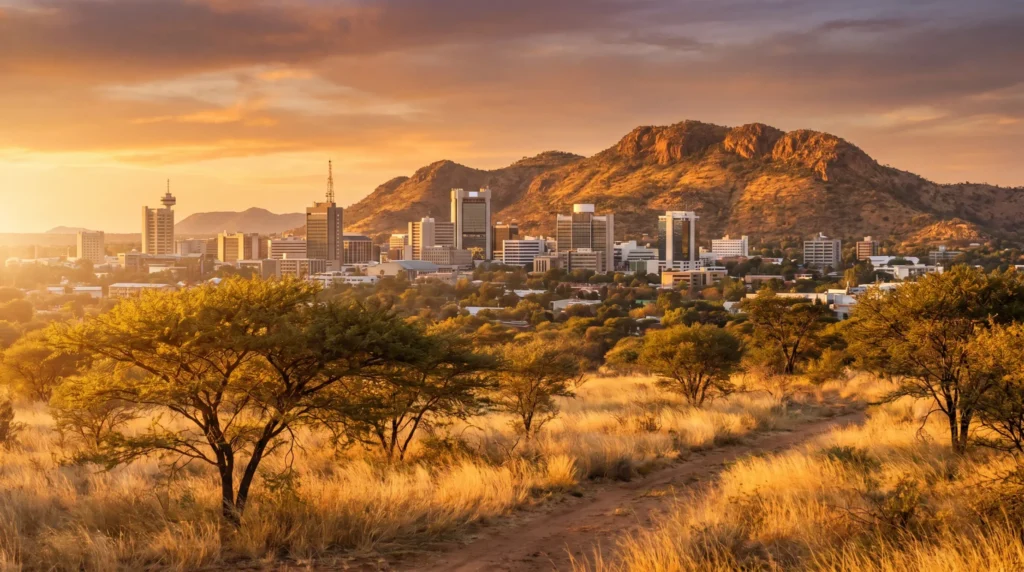
I will be honest with you in a way most travel sites are not: nobody flies halfway around the world for Gaborone itself. We tell every traveller the same thing — Botswana’s capital is a calm, low-rise administrative city of roughly 246,000 people, the headquarters of a country that turned diamonds into one of Africa’s great development stories, and almost everyone who passes through is really here to reach the wildlife beyond it . And yet I keep coming back to “Gabs.” I like the early-morning quiet of the Government Enclave, the braai smoke drifting over the suburbs on a Saturday, the giraffes you can actually walk up on at Mokolodi fifteen kilometres south, and the way Kgale Hill turns gold at sunset over a city that genuinely feels safe and unhurried. Treat this guide as the brief I would hand my own family the night before they landed at Sir Seretse Khama International: how to use Gaborone as a comfortable two-day base, what is genuinely worth your time in the city, and how to launch from here toward the Kalahari, the Okavango Delta and Chobe — the reasons you really came to Botswana .

Table of Contents
Why Gaborone?
Let us set expectations honestly, because that is the most useful thing a guide can do here. Gaborone is not Cape Town or Nairobi; it is a quiet, planned administrative capital that most travellers experience as a comfortable launch pad rather than a destination in its own right. It holds about 246,000 residents within the city and roughly 535,000 across the metropolitan area as of the 2022 census, making it home to about one in ten Batswana and one of the fastest-growing cities on the continent, expanding at around 3.4% a year . It sits at about 1,014 metres on the south-eastern plains, close to the South African border, an hour’s flight from Johannesburg.
The city is young by world-capital standards. When the Bechuanaland Protectorate became independent Botswana on 30 September 1966, the new nation needed a capital inside its own borders — the colonial administration had been run from Mafikeng, across the line in South Africa — and a brand-new city was laid out beside the small village of Gaborone from 1964 . What followed is one of Africa’s most remarkable success stories: the discovery of diamonds the year after independence funded decades of stable, democratic government and turned one of the world’s poorest countries into a solidly middle-income one. Gaborone is the calm, functional face of that story — government ministries, the University of Botswana, the diamond-sorting offices, and the head offices of the safari industry all sit here.
That history explains the city’s character. Gaborone reads as low-rise, green and spread out, organised around a handful of shopping malls and the formal Government Enclave rather than a dense historic core. There is no ancient old town, few must-see monuments, and a downtown that empties after office hours. What it offers instead is ease: it is widely considered one of the safer and more relaxed capitals in the region, English is spoken everywhere, the infrastructure works, and you can be tracking white rhino on foot at Mokolodi or watching zebra inside a city game reserve within thirty minutes of your hotel.
Because Botswana built its tourism model around low-volume, high-value wilderness, Gaborone’s real value to a traveller is as a gateway. This is where you clear immigration, stock up, sort a SIM card and a rental car, and connect onward by air to the great wildlife regions in the north and west: the Central Kalahari Game Reserve, the Okavango Delta around Maun, and the elephant herds of Chobe near Kasane . Many safari itineraries skip the capital entirely, transiting straight through the airport. But give Gaborone a day or two and you get a genuine, unfiltered sense of how modern Botswana actually lives — which is its own kind of worthwhile.
This guide is built around that reality. It covers how to arrive and get around a car-dependent city, the handful of neighbourhoods and malls you will actually use, where to eat seswaa and braai with locals, the cultural sights that are genuinely worth your time (the Three Dikgosi Monument, the National Museum, Kgale Hill, the Gaborone Game Reserve), the wildlife day trips that justify the stop, and an unsentimental read on seasons, budget and safety. For the wider national picture — the Delta, the Kalahari, Chobe and how to plan a full Botswana trip — pair this with our Botswana Travel Guide.
Getting There

Almost everyone arrives by air at Sir Seretse Khama International Airport (GBE), about 11 kilometres north of the city centre and the largest airport in Botswana . The single passenger terminal is modern and easy to navigate. The busiest international route by far is the short hop to and from Johannesburg — roughly a one-hour flight — with other links to Harare, Nairobi, Cape Town and seasonal European connections; many travellers reach Gaborone via a connection in Johannesburg .
Critically for safari travellers, Gaborone is also where you connect onward by domestic flight to the wildlife hubs — Maun (for the Okavango Delta) and Kasane (for Chobe) — on Air Botswana and charter operators. If your whole trip is a northern safari, you may never leave the airport here; if you want to see the capital, build in a night.
By land, Gaborone is well connected to South Africa: it is about a 4-to-5-hour drive from Johannesburg via the Tlokweng or Pioneer Gate border posts, and intercity coaches and combis run the route daily. There is also a slow cross-border rail link southward, but for most visitors the Jo’burg road or the short flight is the practical choice.
Getting Around
Be realistic: Gaborone is a car city with very limited public transport, and most visitors get around by rental car, hotel transfer, metered cab or ride-hail. The city is spread out and low-density, the heat is real, and the sights and reserves you will want to reach are scattered across the metro and just beyond it. There is no metro or tram system and no tourist-friendly bus network — the main public option is the shared combi minibus, which is cheap but locals-oriented and not designed for first-time visitors.
Rental Cars and Driving
A rental car is the single most useful thing you can arrange in Gaborone, and the major agencies have desks at the airport. Botswana drives on the left, roads in and around the city are generally good, and a car lets you reach Mokolodi, Kgale Hill and the Gaborone Dam on your own schedule. Watch for livestock on roads outside the city, avoid driving rural routes after dark, and keep doors locked at intersections — “smash-and-grab” opportunism is the main petty-crime risk .
Combis (Shared Minibuses)
The blue-and-white combi minibuses are the backbone of local transport, running fixed routes between the malls, the central bus rank and the suburbs for a few pula a ride. They are cheap and authentic but crowded, route-coded by colour and destination boards in ways outsiders find opaque, and run on no fixed timetable — they simply depart when full. Drivers and conductors are generally friendly and will point you to the right vehicle if you name your destination, but you’ll need to know the rank layout and have small change ready. Useful if you are confident, patient and on a tight budget; most short-stay visitors skip them in favour of a hotel-arranged car, because the time saved and the reduced hassle are worth far more than the modest fare difference on a two-day trip.
Taxis and Ride-Hail
Metered “special” taxis exist but are not abundant cruising the street, so it is usually easiest to have your hotel or restaurant call one rather than expecting to flag a cab. App-based ride-hail options from local operators have a growing presence in Gaborone and are the simplest, most transparent way for a visitor to move around, especially after dark when walking is best avoided. Always agree a fare up front or confirm the meter before setting off, keep some pula in cash as a backup in case an app or card reader fails, and ask your accommodation to recommend a trusted driver you can call directly — many visitors end up using the same driver for airport runs and evening outings across their whole stay.
Airport Access
- Hotel shuttle or pre-booked transfer from GBE to the centre — about 15–20 minutes, roughly P150–250 (USD ~$11–$18)
- Airport taxi to the CBD or Government Enclave — about 15–20 minutes, roughly P150–300 depending on operator
Navigation Tips
Google Maps covers Gaborone well, and the city’s layout is logical once you orient by the malls — Game City, Riverwalk, Airport Junction and the Main Mall are the landmarks locals navigate by. Kgale Hill, the city’s “Sleeping Giant,” is visible from much of town and makes a reliable visual anchor. Distances feel short on the map but the heat and the spread mean walking between districts is rarely practical.
Neighbourhoods: Where to Base Yourself
📍 Gaborone Map: Every Place in This Guide
Gaborone is organised less around historic quarters than around malls, the Government Enclave and a ring of residential suburbs, so “where to stay” is really a question of which mall and which road you want to be near. The city is compact enough that nowhere is truly far, but its car-dependence means proximity to the airport, the CBD or your day-trip reserves matters more than neighbourhood charm. Here are the areas first-time visitors actually consider.


The CBD and Government Enclave
The newer Central Business District — with its cluster of glass office towers, hotels and the iconic three-pronged office block — is the closest Gaborone has to a downtown, and it sits beside the formal Government Enclave of ministries and the Three Dikgosi Monument. Stay here for business, easy access to the monument and the museum, and a short hop to the airport; expect it to be quiet in the evenings.
The Main Mall and The Village
The original Main Mall is a pedestrian commercial strip that was the city’s first centre, lined with shops, vendors and the parliamentary buildings nearby. Adjacent, the older settlement called The Village retains some of the pre-capital character. This area is central and walkable by Gaborone standards, good for a feel of daily civic life.
Broadhurst and the Northern Suburbs
Broadhurst, north of the centre, is a large residential and commercial district anchored by Riverwalk and other malls, with a good spread of mid-range hotels, restaurants and supermarkets. It is a practical, comfortable base if you have a car and want shops and food on your doorstep.
Phakalane
About 13 kilometres north of the centre, Phakalane is Gaborone’s affluent golf-estate suburb, with the upmarket hotels, a golf course and the calmest, leafiest setting in the metro. Convenient for the airport and a quiet, secure stay, though you will drive for everything.
Food and Drink: Seswaa, Braai and the Mall Food Court
Gaborone’s food scene is unpretentious and mall-centred, but the local Setswana cooking is genuinely worth seeking out, and the city’s braai (barbecue) culture is a delight. Eating here is informal: a plate of seswaa with pap at a no-frills local diner, a Saturday braai in the suburbs, or an international meal in one of the malls. Do not expect fine dining as the headline — expect honest, hearty plates and a relaxed pace.

What to Order
- Seswaa — slow-boiled, pounded beef or goat, salted simply, the Botswana national dish.
- Pap (bogobe) and samp — maize or sorghum porridge, the staple starch under almost everything.
- Morogo — wild leafy greens, cooked down, a standard side.
- Braai meat — beef and boerewors over coals; Botswana beef is famously good.
- Mopane worms (phane) — the adventurous local protein, dried or stewed.
Where to Eat
The malls — Game City, Riverwalk and Airport Junction — hold the densest cluster of restaurants, from South African chains to independent cafes and steakhouses. For traditional Setswana food, look for a local diner serving a daily seswaa-and-pap plate, often best at lunch. The CBD has a handful of sit-down restaurants catering to the office and hotel crowd.
Drinks and Etiquette
Local lagers and the South African brands dominate; bojalwa, traditional sorghum beer, is part of social life in the townships and villages. Tipping around 10% is appreciated in sit-down restaurants. Service runs at a relaxed pace — settle in rather than rush, and remember many kitchens wind down earlier than in big global capitals.
Cultural Sights: A Half-Day of Genuine Highlights
Gaborone’s sights are modest in number but a few are genuinely worth your time, and several can be seen in a single half-day. The honest list is short: the Three Dikgosi Monument, the National Museum, Kgale Hill and the in-city Gaborone Game Reserve. None will eat a whole day, which suits the capital’s role as a brief, comfortable stop.

Three Dikgosi Monument
The city’s signature landmark, in the CBD, honours the three paramount chiefs — Khama III, Sebele I and Bathoen I — who travelled to Britain in 1895 to petition against the territory being handed to Cecil Rhodes’s company, a journey credited with helping preserve the future Botswana . The three large bronze statues stand in a landscaped plaza. It is open daily from 8:00 to 17:00, and admission is free.
Botswana National Museum and Art Gallery
The national museum, near the Main Mall, gives the best single overview of the country’s natural history, San (Bushman) heritage, ethnography and contemporary art, with an adjoining art gallery and botanical garden. It is compact, free or low-cost to enter, and a good orientation to Botswana before you head into the bush .
Kgale Hill

Nicknamed the “Sleeping Giant,” Kgale Hill rises to about 1,287 metres on the city’s south-western edge and is Gaborone’s favourite walk, a roughly one-to-two-hour climb rewarded by a panorama over the city, the dam and the plains . Go in a group and in daylight; the trail has seen opportunistic crime, so do not climb alone or carry valuables .
Gaborone Game Reserve and the Dam

One of the smaller reserves in Botswana but among its busiest by visits, the Gaborone Game Reserve sits inside the city and shelters zebra, impala, wildebeest, kudu and abundant birdlife on a few hundred hectares — a quick, easy wildlife fix on a tight schedule . Nearby, the Gaborone Dam, the city’s main water source and one of the largest in Botswana, draws sailors, anglers and weekend picnickers.
Entertainment: Malls, Braais and the Bush on the Doorstep
Gaborone’s entertainment is low-key and locally oriented rather than tourist-spectacle. There is no flamenco-equivalent headline act; instead, social life revolves around the malls, the braai, live-music bars, the cinema and sport — plus the genuine novelty of having game reserves a short drive from the bars. Set your expectations to “relaxed weekend” rather than “big-city nightlife.”

Malls, Cinemas and Live Music
The big malls double as the city’s evening hubs: cinemas, casual restaurants, sports bars and cafes cluster at Game City, Riverwalk and Airport Junction. Independent bars and live-music venues across Broadhurst and the CBD host local jazz, kwaito and house DJs, busiest at weekends. It is friendly and safe-feeling in groups; arrange a known taxi or ride-hail home rather than walking late.
Festivals and Culture
Gaborone hosts a calendar of music and cultural events — jazz festivals, the Maitisong performing-arts festival, and national-day celebrations around 30 September — that are worth catching if your dates align. The National Museum and the art gallery anchor the visual-arts scene.
Sport and the Outdoors
Football is the national passion, and a league match at the National Stadium is a lively, affordable evening. Golf is big in Phakalane, and the Gaborone Dam draws sailing and angling crowds on weekends. The real “entertainment” edge, though, is the bush: sundowner game drives at Mokolodi are an evening out that few capitals can match.
Day Trips and Onward Travel: The Real Reason You Came
This is where Gaborone earns its place on an itinerary. The capital is a launch pad, and the experiences that justify a Botswana trip lie beyond it — some within a day’s reach, most a short flight north. Here is how to think about getting out into the wild.
Mokolodi Nature Reserve (about 30 minutes by car)
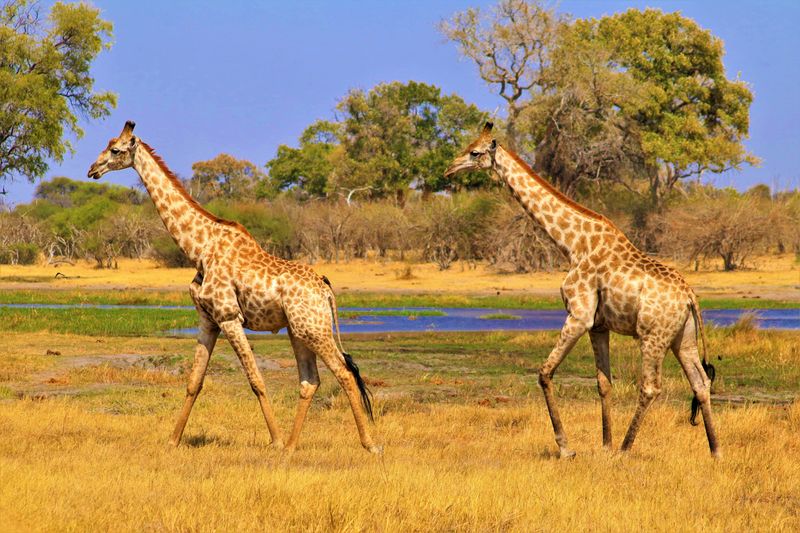
The easiest genuine wildlife day trip: a private reserve about 15 kilometres south of the city with giraffe, zebra, hippo, white rhino and cheetah, offering game drives, rhino tracking on foot and a bush braai. It is the single best half- or full-day escape from the capital .
The Okavango Delta & Maun (short flight north)

The Okavango — a vast inland delta and UNESCO World Heritage site — is the headline of any Botswana trip, explored by mokoro canoe and game drive from camps around Maun. It is a flight, not a drive, from Gaborone.
Chobe National Park & Kasane (flight via the north)

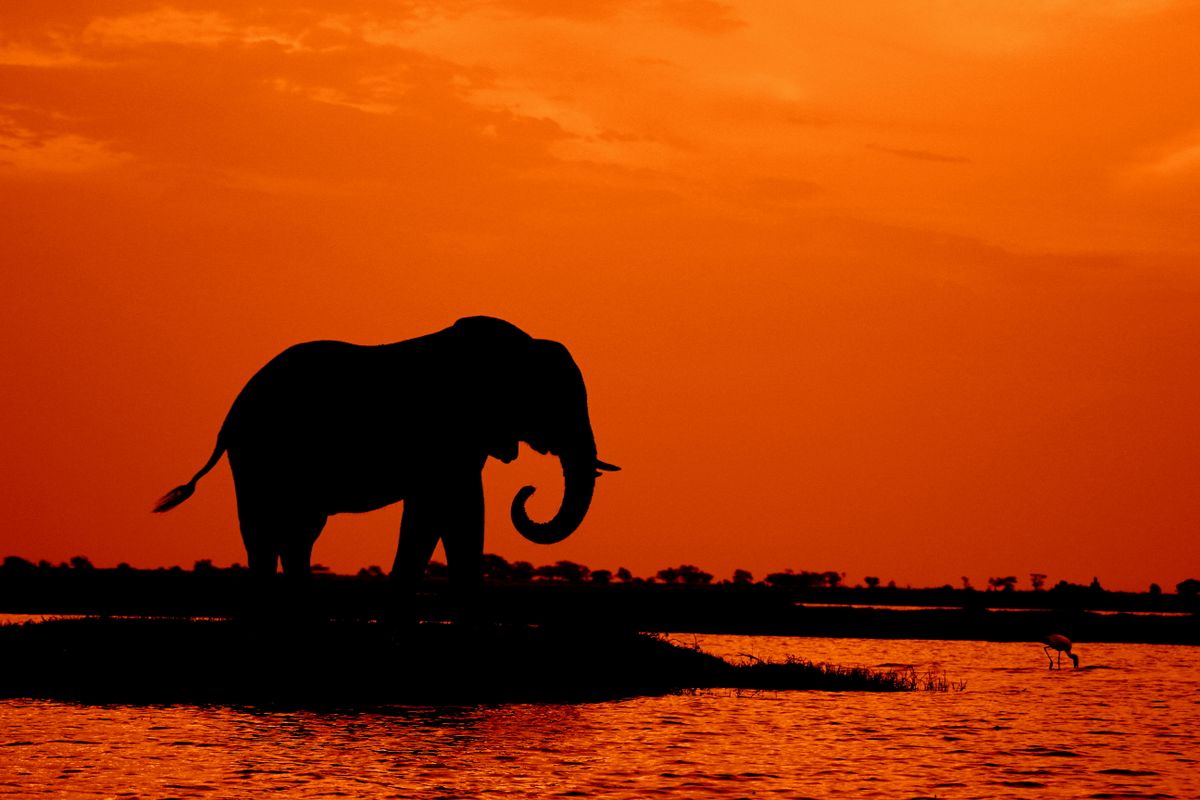
Chobe, in the far north near Kasane, is famous for enormous elephant herds and superb river cruises, and pairs naturally with Victoria Falls across the border.
The Central Kalahari (fly-in or expedition)

The Central Kalahari Game Reserve, one of the largest protected areas on earth, offers remote desert wildlife and famous black-maned lions — a fly-in safari or a serious self-drive expedition rather than a casual day trip.
When to Visit: A Season-by-Season Guide
Gaborone sits in a hot semi-arid climate, with a hot wet summer and a mild dry winter, and your timing should be driven as much by the onward safari as by the city itself. The rains fall roughly October to April; the dry winter months are the most comfortable in town and the best for wildlife everywhere . Note that Botswana sits in the southern hemisphere, so the seasons run opposite to Europe and North America.
Spring (September–November)
Hot and increasingly humid as the year’s heat builds toward the rains, with daytime highs climbing into the 30s°C. October is one of the hottest months. Early-season thunderstorms arrive late in the period. For the city it is bearable with air-conditioning; for safari it is excellent game-viewing as animals concentrate at water before the rains.
Summer (December–February)
The wet, hottest season: afternoon thunderstorms, lush green landscapes and highs in the low-to-mid 30s°C. Gaborone records on average around forty thunderstorm days a year, most of them now . It is the low season for classic safaris but beautiful for birding and dramatic skies; pack for heat and sudden downpours.
Autumn (March–May)
The rains taper off and temperatures ease into a pleasant transition. Late autumn — April and May — is one of the nicest windows: warm, drying out, with thinning vegetation that improves game-viewing. A comfortable, uncrowded time to be in the capital.
Winter (June–August)
The dry season and the prime time to visit: warm, sunny days in the low 20s°C and cold nights that can drop near or below freezing, with crisp, clear air. This is peak safari season across Botswana — animals gather at shrinking waterholes — so it is the best season both for Gaborone’s mild weather and for the wildlife trips beyond. Bring warm layers for early-morning game drives.
Budget Breakdown: What Gaborone Actually Costs
Gaborone is mid-priced by African-capital standards — cheaper than the safari camps to the north, but not a backpacker bargain. The figures below are per-person daily estimates excluding flights, in Botswana pula, with rough US-dollar equivalents at about 14 pula to the dollar in 2025–2026 .
Budget (P450–700 / USD ~$32–$50 per day)
A guesthouse or budget hotel room, local seswaa-and-pap meals and mall food courts, and combi or shared rides keep costs low. The city’s free or cheap sights — the monument, Kgale Hill, the museum — help a lot.
Mid-Range (P900–1,800 / USD ~$65–$130 per day)
A comfortable three-star hotel or guesthouse, restaurant meals in the malls, a rental car or regular taxis, and paid activities such as a Mokolodi game drive. This is the typical comfortable-visitor band.
Comfort (P3,000+ / USD ~$215+ per day)
An upmarket hotel in the CBD or Phakalane, fine dining and a hire car with extras push the day well past P3,000. Note that genuine luxury in Botswana is in the bush camps, where rates run many times higher.
Key Fixed Costs
- Three Dikgosi Monument — free entry
- Kgale Hill walk — free
- National Museum — free or nominal entry
- Mokolodi game drive — from roughly P200–400 per person
- Airport taxi to the centre — about P150–300
Practical Tips and Safety
Gaborone is one of the calmer, easier capitals in the region for visitors, but Botswana’s governments-issued advice is clear that opportunistic and sometimes violent crime has been rising in the larger towns, so a few sensible habits matter. None of this should put you off — it is the ordinary common sense of any city.
Money and Payments
The currency is the Botswana pula (P), divided into 100 thebe; the word means “rain,” a national blessing in a dry land. Cards are widely accepted in malls, hotels and supermarkets, but carry pula in cash for combis, markets, tips and smaller vendors. ATMs are plentiful at the malls and banks .
Safety and Scams
Both the UK and US governments advise increased caution: violent crime such as muggings, home invasions and “smash-and-grab” thefts from vehicles has been rising in Gaborone, Francistown and Maun, though attacks on tourists remain rare . Avoid walking alone after dark, keep valuables out of sight, lock car doors at intersections, and do not climb Kgale Hill alone. Women should take extra care at night.
Health and Water
Tap water in Gaborone is generally treated and considered safe, though many visitors prefer bottled water; malaria risk is low in the capital itself but real in the northern wildlife areas, so seek medical advice on prophylaxis before heading to the Delta or Chobe . Carry travel insurance and bring any regular medication with you.
Practical Essentials
- Language: Setswana and English; English is spoken everywhere in the city.
- Plugs: Type D/G/M, 230V — bring UK-style and South-African-style adapters.
- Driving: on the left; a rental car is the easiest way around.
- Tipping: around 10% in restaurants is appreciated.
- Connectivity: buy a local Mascom or Orange SIM at the airport or a mall for cheap data.
Frequently Asked Questions
How many days do you need in Gaborone?
One to two days is plenty. The city’s worthwhile sights — the Three Dikgosi Monument, the National Museum, Kgale Hill and the Gaborone Game Reserve — fit comfortably into a single full day, and a second day lets you add a Mokolodi game drive before flying north. Gaborone is a base, not a destination; save your real time for the wildlife regions.
Is Gaborone worth visiting, or should I skip it?
Be honest with yourself about why you’re in Botswana. If your trip is purely a Delta-and-Chobe safari, you can transit through the airport and skip the capital with no regret. But if you want to understand modern Botswana — one of Africa’s great stability-and-diamonds success stories — a calm day or two in Gaborone, plus a Mokolodi visit, is genuinely rewarding.
How do I get from Gaborone to the Okavango Delta or Chobe?
By air. Gaborone is the national gateway, but the wildlife hubs are far to the north: you connect onward by domestic flight on Air Botswana or charters to Maun (for the Okavango Delta) and Kasane (for Chobe). Driving is possible but long; most safari travellers fly.
Is Gaborone safe for tourists?
It is one of the calmer capitals in the region, but both the UK and US governments advise increased caution because opportunistic and sometimes violent crime has been rising. Attacks on tourists are rare. Avoid walking alone at night, don’t climb Kgale Hill alone, keep valuables hidden and car doors locked, and you’ll very likely have a trouble-free visit.
Do I need a visa for Botswana?
Most Western passport holders — US, UK, EU, Canada, Australia, New Zealand — do not need a visa for tourist stays of up to 90 days within a 12-month period; you’re stamped in on arrival. Always confirm current rules with an official source before you travel, as requirements change.
What’s the best time of year to visit?
The dry winter, roughly May to August, is best: pleasant warm days, cool nights, and — most importantly — peak wildlife-viewing season across Botswana. The summer (December–February) is hot, wet and green, with frequent thunderstorms; spring builds toward serious heat in October. Pack warm layers for cold winter dawns.
Can I use credit cards everywhere?
Cards work fine in malls, hotels, supermarkets and most restaurants, but carry Botswana pula in cash for combi minibuses, markets, tips and small vendors. ATMs are easy to find at the malls and banks. A local SIM with mobile data is cheap and worth buying on arrival.
What is there to actually do in Gaborone itself?
The realistic highlights are the Three Dikgosi Monument and Government Enclave, the National Museum and Art Gallery, a climb up Kgale Hill for the view, the small in-city Gaborone Game Reserve, the Gaborone Dam for weekend boating, and the malls for food and people-watching. For real wildlife, Mokolodi Nature Reserve, fifteen kilometres south, is the standout.
Was This Guide Helpful?
We update our Gaborone guide as prices, transit and safety advice change. Let us know if it helped — your feedback shapes the next revision.
Ready to Experience Gaborone? Use It as Your Gateway
Gaborone rewards a traveller who arrives with the right expectations. It is not a grand sightseeing capital — it is a calm, safe, modern city that gives you a real feel for how Botswana works, plus a surprisingly easy taste of wildlife at Mokolodi and the city game reserve, before you fly north to the wonders that brought you here. Give it a day or two, eat the seswaa and the beef, climb Kgale Hill at golden hour, then point yourself toward the Delta, Chobe and the Kalahari. For the full national picture, read our Botswana travel guide, and pair Gaborone with our African city guides for Cape Town, Nairobi and Zanzibar.
Explore More City Guides
Gaborone is one stop in our growing library of African city and country guides. Keep planning with these companion pages:
More city guides you might like
Plan your trip to Gaborone
The booking tools we use ourselves. FFU may earn a commission at no extra cost to you.
Plan & book your trip to Gaborone
Booking through these searches supports our guides at no extra cost to you.