Bolivia Travel Guide — Salt Flats, Andean Peaks & Amazon Frontiers
Bolivia Travel Guide
📋 In This Guide
- Overview — Why Bolivia Belongs on Every Bucket List
- 🎭 Oruro Carnival & Uyuni Mirror Season 2026
- Best Time to Visit Bolivia (Season by Season)
- Getting There — Flights & Arrival
- Getting Around — Buses, Flights & Altitude Logistics
- Top Cities & Regions
- Bolivian Culture & Etiquette — What to Know Before You Go
- A Food Lover’s Guide to Bolivia
- Off the Beaten Path — Bolivia Beyond the Guidebook
- Practical Information
- Budget Breakdown — What Bolivia Actually Costs
- Planning Your First Trip to Bolivia
- Frequently Asked Questions
Overview — Why Bolivia Belongs on Every Bucket List
Bolivia is the country where a capital city sits at 3,640 metres above sea level, where a salt flat the size of Jamaica turns into the world’s largest mirror after a rain shower, and where a single bus ride can carry you from glaciated 6,000-metre peaks down into flooded Amazon rainforest in under twelve hours. It is the Andes at its most unapologetic — high, indigenous, landlocked and proud — and one of the last corners of South America where the tourist trail still feels genuinely improvised.
Wedged between Peru, Chile, Argentina, Paraguay and Brazil, Bolivia covers 1,098,581 square kilometres — roughly twice the size of France — and stacks three entirely different countries on top of each other. The western altiplano is a cold high-desert plateau between two Andean ranges that hosts Lake Titicaca and the salt flats. The central valleys around Cochabamba and Sucre drop to a mild Mediterranean-style climate at 2,500 metres. And the eastern lowlands — the Yungas cloud forest, the Chaco scrub, and the Amazon basin — cover more than two-thirds of the territory in jungle and savanna that still holds uncontacted peoples.
The cultural layering is just as dense. Bolivia is the most indigenous country in the Americas: roughly 41% of the population identifies as indigenous, and close to 62% have indigenous ancestry, with Quechua and Aymara the two largest groups alongside 34 other recognised peoples. The 2009 constitution renamed the country the Plurinational State of Bolivia and made Spanish plus 36 indigenous tongues co-official. Walking through a market in La Paz you’ll hear Aymara traded across stalls, watch cholitas in bowler hats and layered polleras counting coca leaves, and pass chicherías pouring home-brewed maize beer exactly as communities have for five centuries.
And then there is the scale. Bolivia has seven UNESCO World Heritage sites, including the silver-mining colonial city of Potosí that once bankrolled the Spanish empire and the Jesuit mission circuit of Chiquitos. Salteñas at a morning bakery run Bs 8 (about USD 1.15), a plate of pique macho big enough for two costs Bs 45 in Cochabamba, and a three-day jeep trip across the salt flats to the Chilean border rarely breaks USD 180 all-in. For travellers willing to handle altitude, bouncy highland buses and a slower logistical pace, Bolivia delivers the most astonishing landscape-to-dollar ratio on the continent.
🎭 Oruro Carnival & Uyuni Mirror Season 2026 — You’re Right on Time
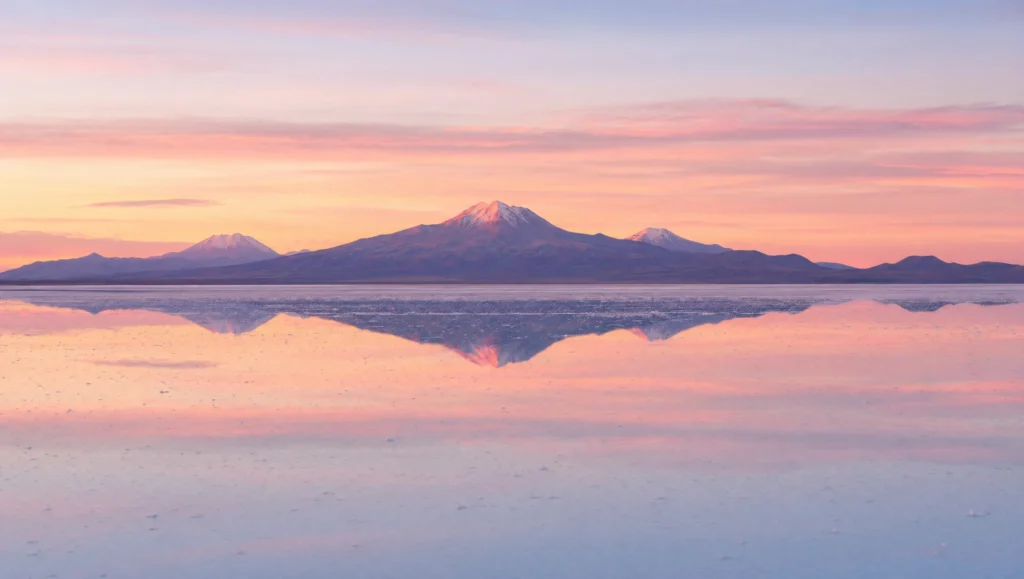
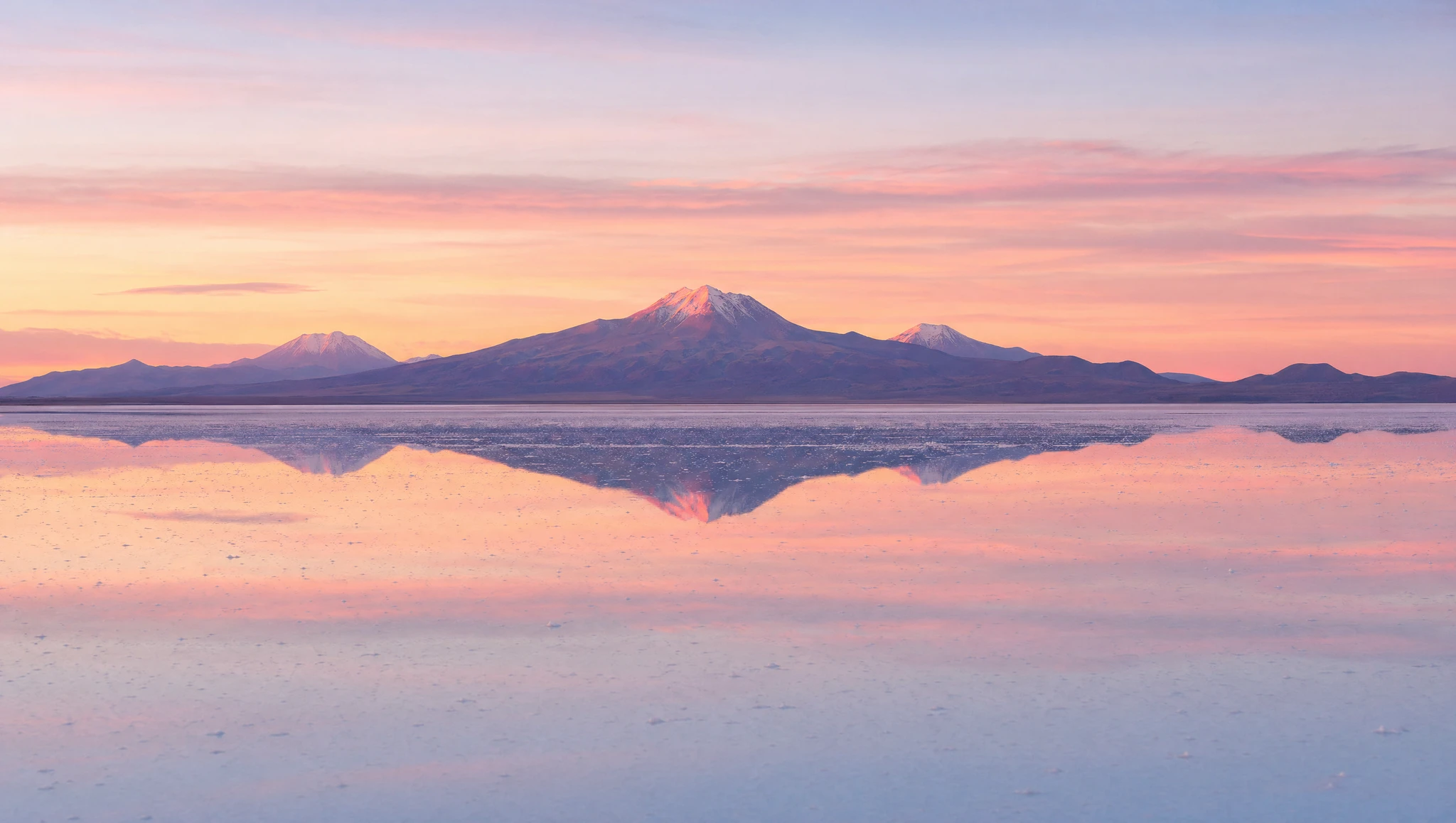
If you’re planning Bolivia for 2026, two time-sensitive events define the calendar. The Oruro Carnival — proclaimed a UNESCO Masterpiece of the Oral and Intangible Heritage of Humanity in 2001 — runs 14–17 February 2026 in the mining city of Oruro, and draws roughly 400,000 spectators to watch 28,000 dancers and 10,000 musicians parade through the streets for 20 continuous hours on the Saturday. The headline is the Diablada — Devil Dance — an Aymara-Catholic syncretic performance where masked dancers in crystal-crusted devil costumes process to the Sanctuary of the Virgin of the Socavón. Overlapping this window is Salar de Uyuni’s famous mirror season, when the rainy season (December through April) lays a thin film of water over the salt crust and the 10,582 km² plain becomes the world’s largest natural mirror.
- Oruro Carnival main day: Saturday 14 February 2026, Entrada parade 7am–3am the next morning
- Carnival dates (full window): 14–17 February 2026 across Oruro, La Paz and Tarija
- Uyuni mirror window: December 2025 through April 2026 — peak reflections late January through March
- Día del Mar: 23 March 2026 — national day marking Bolivia’s loss of coastline in the 1879 War of the Pacific
- Pujllay (Tarabuco): Third Sunday in March 2026 — UNESCO-inscribed Yampara harvest festival near Sucre
Best Time to Visit Bolivia (Season by Season)
Dry Season / Andean Winter (May–Oct)
This is Bolivia’s travel high season and the classic window for the altiplano. Days in La Paz run 14–17°C with brilliant blue skies; nights plunge to –5°C at 3,640 m and down to –20°C on the salt flats. The Salar de Uyuni is bone-dry in this period — no mirror — but fully drivable, meaning you can cross to Isla Incahuasi and camp under the stars. June and July are the peak trekking months for the Cordillera Real above La Paz, and Lake Titicaca is at its sunniest. Downside: everyone is here in July–August, and hotel rates in Uyuni climb 30–50%.
Shoulder (Apr & Nov)
The sweet spot for travellers who want both salt-flat mirror reflections and dry trekking. April catches the tail of the rains — the altiplano is green, flowers bloom around Copacabana, and standing water on the salt crust still produces occasional mirror days. November brings dry-season skies back without the July–August crowds. La Paz afternoons hover around 16°C and nights are tolerable. Risk: jeep routes south from Uyuni to the Chilean border can still close briefly after spring storms.
Wet Season / Andean Summer (Nov–Mar)
This is when the Salar de Uyuni becomes the mirror the photos promise. A thin layer of water sits over the salt crust from roughly mid-December through early April, turning the flat into a horizonless reflection of the sky. The price is access: the southern jeep circuit to Laguna Colorada sometimes floods out, rain in La Paz triggers landslides on the old Yungas Road, and Death Road cycling can be genuinely dangerous in wet conditions. Cochabamba and Sucre stay warm and green at 20–25°C by day. February is carnival month — Oruro tops the bill from 14 February 2026.
Amazon Counter-Cycle (May–Oct dry, Nov–Apr wet)
The lowlands around Rurrenabaque, Madidi and the Pantanal flip the altiplano calendar. May–October is the dry-season sweet spot for jungle lodges — lower rivers expose clay licks where macaws gather, trails are walkable, and mosquitoes are tolerable. November–April floods the forest and opens canoe routes deep into the igapó that 4WDs can’t reach in July. Pick your season by whether you want to walk or paddle.
Shoulder-season tip: If you can only pick one month, choose late March or early April. You get mirror reflections at Uyuni, the Pujllay festival in Tarabuco, green altiplano skies, and rack rates 20–30% below July in La Paz. Book Oruro Carnival accommodations six months ahead — the city’s 2,000 hotel beds sell out in September for February Carnival.
Getting There — Flights & Arrival
Most international visitors land at La Paz or Santa Cruz. Direct flights from North America and Europe are rare — you’ll connect via Lima, Bogotá, Panama City or São Paulo. Overland entry from Peru via Copacabana and from Chile via San Pedro de Atacama is common and straightforward.
- El Alto International Airport (LPB) — La Paz’s airport at 4,061 m, the highest major international airport on Earth; passengers feel altitude on arrival.
- Viru Viru International (VVI) — Santa Cruz, Bolivia’s busiest airport and the gateway for Amazon and Chiquitania trips.
- Jorge Wilstermann International (CBB) — Cochabamba, well-placed for valleys and the Toro Toro dinosaur footprints.
- Joya Andina Airport (UYU) — Uyuni, seasonal domestic service on BoA and Amaszonas.
Flight times to La Paz: Miami 7h, Lima 2h, Santiago 3h 30m, Bogotá 4h, Madrid 13h (via Lima).
Major carriers: Boliviana de Aviación (BoA), Amaszonas, Ecojet, and LATAM on long-haul.
Visa / entry: Roughly 100 nationalities (UK, EU, Australia, New Zealand) enter visa-free for up to 90 days. US and Canadian citizens need a visa; available on arrival for USD 160 with a passport photo, yellow fever certificate, hotel booking and proof of onward travel — but an advance visa from a consulate is recommended.
Getting Around — Buses, Flights & Altitude Logistics
Bolivia has no bullet train, no national rail pass, and no point-to-point infrastructure you’d call modern by European standards. What it does have is an intricate long-distance bus network, a reliable domestic flight grid centred on Boliviana de Aviación (BoA), and — uniquely — the world’s highest urban cable-car system. Understanding the combination is the difference between a seamless trip and two lost travel days per week.
- Mi Teleférico (La Paz–El Alto cable cars): 10 colour-coded lines spanning 33 km; max speed 18 km/h, fare Bs 3 per ride (about USD 0.45); the fastest way between La Paz basin and El Alto rim.
- La Paz → Uyuni by bus: 10–11 hours overnight on Trans Omar or Panasur; tickets Bs 180–250 (USD 26–36)
- La Paz → Copacabana by bus: 3h 30m including the Tiquina ferry crossing of Lake Titicaca
- La Paz → Sucre by air: 55 minutes on BoA; overland alternatives 12 hours by bus via Potosí
Domestic flight pricing: BoA and Amaszonas price one-way tickets between La Paz, Santa Cruz, Cochabamba, Sucre and Tarija from roughly Bs 400–900 (USD 57–130), with Uyuni routes at the higher end in peak season. Flights save 8–10 hours over bus on every domestic leg and are the obvious choice for time-constrained trips.
City transit: La Paz combines the Mi Teleférico cable cars with minibuses and shared taxi-trufi minivans that run fixed routes at Bs 2–5 per passenger. Santa Cruz is flat enough for a normal micro bus system and Uber operates in most major cities. Sucre and Potosí are walkable; just mind the altitude.
Apps: Uber (La Paz, Santa Cruz, Cochabamba), InDrive (nationwide), Maps.me for offline highland hiking, and the Mi Teleférico app for cable-car timings.
Top Cities & Regions
🏔️ La Paz
Bolivia’s seat of government and the highest administrative capital on Earth at 3,640 metres, spilling down a canyon from the El Alto rim at 4,150 m into the milder Zona Sur. A pressurised, fast-talking city where cable cars replace metros.
- Mercado de las Brujas — the Witches’ Market on Calle Linares, selling coca leaves and Andean amulets for house-blessing offerings
- Plaza Murillo — the colonial heart, with the presidential palace and congressional buildings
- Mi Teleférico Red Line to El Alto — a sprawling Sunday market and a panorama of Illimani at 6,438 m
Eat: salteñas at Paceña La Salteña, anticuchos on Plaza Avaroa, and api con pasteles at Rodríguez street market at dawn.
🧂 Uyuni & Salar de Uyuni
The world’s largest salt flat at 10,582 square kilometres, at 3,656 metres on the southern altiplano — a blinding white hexagonal crust in dry season, the world’s largest mirror when water sits on top.
- Isla Incahuasi — a coral-and-cactus island rising out of the salt, with 1,200-year-old giant cacti
- Laguna Colorada — a blood-red mineral lake at 4,278 m, thick with James’s flamingos
- Geyser Sol de Mañana & Termas de Polques — sulphur fumaroles at dawn, then a 38°C hot-spring soak
Eat: quinoa soup and llama steak at roadside hostels along the jeep route; carry cash in bolivianos.
🏛️ Sucre
Bolivia’s constitutional capital and UNESCO-listed whitewashed colonial city at 2,810 metres — gentler on the lungs than La Paz, with cobbled streets and the best Spanish-language schools on the continent. Bolivia was founded here in 1825.
- Casa de la Libertad — the building where the 1825 Declaration of Independence was signed
- Mercado Central & Recoleta viewpoint — the best market breakfasts in Bolivia
- Tarabuco Sunday market & Pujllay festival — indigenous weaving village 65 km east
Eat: chorizo chuquisaqueño at the central market, salteñas at El Patio, chicha de maní at Joyride Café.
🌴 Santa Cruz de la Sierra
Bolivia’s largest city and economic powerhouse, at 416 metres on the eastern lowlands — tropical, flat, culturally closer to São Paulo than to La Paz. Springboard for Chiquitos missions, Amboró cloud forest and the Pantanal.
- Plaza 24 de Septiembre — the shaded colonial main square with sloths in the trees
- Jesuit Missions of Chiquitos — 6 UNESCO-listed 17th-century churches on a 5-day loop east
- Biocentro Güembé & Amboró National Park — private reserve plus cloud-forest park 3 hours west
Eat: silpancho cruceño at Los Hierros, majadito de charque at Tía Lía, street salchipapas everywhere.
🛶 Lake Titicaca & Copacabana
The Bolivian shore of the world’s highest navigable lake, at 3,812 metres and shared with Peru. Copacabana is the pilgrimage town; Isla del Sol and Isla de la Luna lie a boat ride offshore.
- Isla del Sol — mythological birthplace of Manco Cápac, with Chincana ruins and a 7 km ridge walk
- Basílica de la Virgen de Copacabana — the 1583 pilgrimage church where Bolivians bring vehicles to be blessed
- Cerro Calvario — a 45-minute uphill hike to the Stations of the Cross with the lake behind you
🌿 Madidi Amazon & Rurrenabaque
Bolivia’s Amazon access point — a 45-minute flight or 20-hour bus from La Paz to Rurrenabaque, gateway to Madidi National Park (18,958 km²) and the Pampas del Yacuma. Some of the most biodiverse rainforest on Earth.
- Chalalán Ecolodge — community-owned lodge inside Madidi, reached by 5 hours of dugout canoe
- Pampas del Yacuma — 3-day boat trips through flooded savanna with pink dolphins and caiman
- Rurrenabaque town — frontier port on the Beni River with salchipapa stalls and hammock hostels
Bolivian Culture & Etiquette — What to Know Before You Go
The Essentials
- Greetings are physical and formal. Expect a single cheek kiss between women and between men and women; men shake hands with a firm grip. Always open with “buenos días” or “buenas tardes” — Bolivians value the courtesy more than almost any other Latin American country.
- Tipping is not obligatory but appreciated. Leave 10% at sit-down restaurants if service isn’t on the bill, round up for taxis, and tip jeep drivers and cooks on the Uyuni circuit Bs 80–150 per traveller from the group at the end.
- Spanish opens every door, Quechua and Aymara open hearts. In the altiplano, a few words of Aymara — kamisaraki (how are you), jallalla (cheers) — earn real warmth from market vendors and bus drivers.
- Photographs of people are never free. In Oruro, La Paz and the altiplano markets, cholitas expect a small tip (Bs 2–5) if you photograph them. Ask first; a refusal is a refusal.
- Time runs slower. Social invitations and informal appointments run 30–60 minutes late as standard. Tours, flights, buses and Carnival parades run on strict clock time — treat those like contract.
Indigenous & Coca Cultural Context
- Coca leaves are sacred, not a drug. Chewing coca (acullicar) and drinking mate de coca is legal, traditional, medicinally useful at altitude, and protected in the 2009 constitution. Accept an offering with both hands; never crush the leaves carelessly.
- Respect Pachamama. Before drinking in the highlands, spill a small splash on the ground as an offering to the earth mother. Miners in Potosí make offerings (ch’alla) to El Tío, the devil of the underground.
- Don’t climb Inca stonework. At Tiwanaku and Isla del Sol, guards enforce this strictly; the pre-Inca ruins of Tiwanaku are 1,500 years old and fragile.
- Textiles encode identity. Every Tarabuco or Jalq’a weaving carries village, family and crop-cycle symbols. Buy direct from women’s co-operatives in Sucre (ASUR) rather than from middlemen on the street.
A Food Lover’s Guide to Bolivia
Bolivia’s cuisine is the unshowy poor cousin of Peru’s global fame, and that’s part of its charm — the food here is cheap, hearty and shaped by four centuries of indigenous staples (potatoes, quinoa, maize, llama, coca) fused with Spanish colonial imports (beef, wheat, pork). You will not find Central and Maido here; what you will find is a plate of silpancho the size of a hubcap for Bs 30 (USD 4.30), and a salteña at 10am that will spoil bakery empanadas for you forever.
Must-Try Dishes
| Dish | Description |
|---|---|
| Salteñas | Juicy baked empanadas filled with beef or chicken, potato, olive, egg and a slightly sweet-spicy broth; a uniquely Bolivian morning snack eaten standing up, Bs 6–12 per salteña. |
| Silpancho | Cochabamba classic — a thin pounded breaded beef cutlet served over rice and boiled potatoes, topped with a fried egg and a chopped tomato-onion salsa. |
| Pique Macho | A communal platter of chopped beef, sausage, potato, tomato, onion and locoto chili piled high and shared with toothpicks; born in 1970s Cochabamba. |
| Api con Pasteles | Hot purple-corn drink spiced with cinnamon and clove, paired with a deep-fried cheese pastry dusted in sugar; the altiplano breakfast of choice. |
| Salchipapas | Street-corner staple of sliced sausage tossed with thick-cut fries, drowned in mustard, mayo and spicy llajwa; Bs 10–15 a plate. |
| Anticuchos | Marinated beef-heart skewers grilled on every city corner after dark, served with a boiled potato and peanut sauce. |
| Sopa de Maní | Creamy peanut soup with beef, noodles, potatoes and fried potato matchsticks on top — the national comfort bowl. |
| Chicharrón de Cerdo | Slow-cooked pork belly deep-fried crisp, served with mote (giant white corn) and boiled potato; a Cochabamba Sunday ritual. |
Markets & Everyday Eating
Bolivian food culture lives in markets, street stalls and neighbourhood almuerzo (set-lunch) joints, not in fine-dining rooms. A three-course almuerzo — soup, main and a drink, often dessert — at a standard family restaurant runs Bs 15–25 (about USD 2–4) and is how most Bolivians eat midday. Anywhere with a queue of office workers is a safe bet, and the almuerzo almost always reflects what the cook actually shopped for at dawn.
- Markets to prioritise: Mercado Lanza (La Paz, for salteñas and api), Mercado Central (Sucre, for chorizo chuquisaqueño), Mercado La Cancha (Cochabamba, the continent’s largest open-air market). Go hungry, arrive before 10am, and sit at the juice counter for a fresh-blended papaya-pineapple-banana breakfast under Bs 15.
- Must-drink items: singani (the national grape brandy, basis for the chuflay cocktail with ginger ale), chicha cochabambina (fermented maize beer drunk from a ceramic jarrón), mate de coca (hot coca-leaf tea, the first thing every La Paz hotel offers on arrival), and Paceña beer (the national lager, cheaper than bottled water).
- Regional specialties: majadito cruceño (Santa Cruz rice with jerky), fricasé paceño (spicy pork and hominy soup, a La Paz hangover cure), sajta de pollo (La Paz chicken in yellow chili and peanut sauce), and charque kan (jerky and corn platter from Tarija). For the adventurous: cuy (guinea pig) roasted whole in Potosí.
Save room for dessert: helado de canela (cinnamon ice cream) in Sucre, tawa-tawas (fried pastry strips with honey) during Carnival, and a simple plate of cut tropical fruit with condensed milk at any Santa Cruz corner. Coffee culture is young but rising — single-origin beans from the Yungas valleys are now roasted across La Paz and Sucre at Typica, Alexander Coffee and Beni.
Off the Beaten Path — Bolivia Beyond the Guidebook
Potosí & Cerro Rico
The colonial silver-mining city at 4,090 metres that once bankrolled the Spanish empire — and one of the highest cities in the world. Potosí’s entire UNESCO-listed historic centre sits in the shadow of Cerro Rico, the “rich mountain” whose silver built Habsburg Europe and killed an estimated 4–8 million indigenous and African labourers in three centuries of forced mining. Cooperative mines still operate today; guided visits descend the shafts where miners chew coca and pour singani for El Tío.
Toro Toro National Park
A canyon-riddled corner of Potosí department reachable only by a jaw-rattling 5-hour jeep from Cochabamba. Toro Toro preserves dinosaur footprints dating back 68 million years, a 300-metre-deep limestone canyon inhabited by red-fronted macaws, and the Umajalanta cave system. The town itself is a dusty village of 1,200 people; you’ll overlap with maybe two other travellers a night.
Chiquitos Jesuit Missions
A 5-day loop east of Santa Cruz through six UNESCO-listed 17th-century mission churches built by Jesuit fathers and Guaraní craftsmen between 1696 and 1760. San Xavier, Concepción, Santa Ana and San Rafael still hold the original Baroque altars, hand-painted wooden ceilings and pre-Columbian wood carvings. The annual International Festival of American Renaissance and Baroque Music is held here every April in even years — a genuine musical pilgrimage.
Sajama National Park
Bolivia’s first national park, protecting Nevado Sajama — the country’s highest peak at 6,542 metres — plus the world’s highest forest (queñua trees up to 5,200 m), thermal geysers, and the Chullpas de Macaya, painted pre-Inca burial towers. The pueblo of Sajama has roughly 100 inhabitants, three basic hostels, and no mobile signal. Come for three nights of night-sky photography unmatched anywhere south of Atacama.
Samaipata & El Fuerte
A mellow backpacker town at 1,650 metres, three hours west of Santa Cruz, with a year-round spring climate and a UNESCO-listed pre-Inca archaeological site a 10 km taxi ride away — El Fuerte, an enigmatic hilltop ceremonial platform carved with serpents and jaguars between 300 CE and 1520 CE. The surrounding Amboró cloud forest is one of the most biodiverse on Earth, protecting over 800 bird species. Hostel rates run USD 8–20 a night; the food-and-coffee scene punches well above the town’s 4,000-person size.
Practical Information
| Currency | Boliviano (Bs or BOB); 1 USD ≈ Bs 6.96 (19 Apr 2026). US dollars accepted at upper-end hotels and Uyuni tour agencies, but bolivianos needed everywhere else. |
| Cash needs | Bolivia runs on cash. Carry small bills in bolivianos for taxis, markets, rural buses and Uyuni jeep-tour tips. ATMs limit withdrawals to around Bs 2,000 per transaction. |
| ATMs | BCP, Banco Nacional, BISA and Banco Unión have ATMs at airports and in every provincial capital. Expect USD 3–6 per foreign-card withdrawal plus your home bank’s fee. |
| Tipping | 10% in sit-down restaurants if no servicio is added; round up taxis; Bs 80–150 per jeep driver/cook on multi-day Uyuni circuits from a group. |
| Language | Spanish (official), plus 36 indigenous co-official languages — Quechua and Aymara are dominant in the altiplano, Guaraní in the Chaco lowlands. English is patchy outside tourist zones. |
| Safety | Petty theft is the main risk — pickpockets on La Paz’s Prado and around Cemetery area. Violent crime against tourists is rare. Avoid unregistered taxis; use radio-dispatch or Uber. Political protests occasionally block highways. |
| Connectivity | 4G/LTE is solid in cities but drops across the Uyuni flats and southern Lipez. Entel and Tigo offer prepaid SIMs; Airalo/Holafly eSIMs from USD 10–15 are simpler. |
| Power | Type A and C plugs, 220V / 50 Hz (La Paz runs 115V). Dual-voltage chargers work; check single-voltage appliances. |
| Tap water | Not potable anywhere in Bolivia. Drink bottled, filtered or boiled only; brush teeth with bottled water in rural areas. |
| Healthcare | Private clinics in La Paz (Clínica del Sur, Clínica Alemana) and Santa Cruz (Foianini) are reliable. Carry travel insurance with altitude-evacuation coverage; altitude complications account for the bulk of tourist hospital visits. |
Budget Breakdown — What Bolivia Actually Costs
💚 Budget Traveller
Bolivia is the best-value country in South America for shoestring travellers. Expect USD 30–45 per day: a hostel bed in La Paz at Bs 70–110 (USD 10–16), two almuerzos at Bs 20 each, a long-distance overnight bus at Bs 180, and entry tickets that rarely top Bs 50. The one-time hits — a 3-day Uyuni jeep tour at USD 160–200, a 45-minute BoA flight to Rurrenabaque at USD 120 — blow the daily budget but are worth protecting around.
💙 Mid-Range
USD 80–130 per day buys a well-located boutique hotel (Hotel Rosario in La Paz or Parador Santa María la Real in Sucre at USD 55–90), table-service restaurants twice a day, domestic flights instead of buses, and guided half-day tours in each city. This is the tier most visitors land on, and Bolivia’s price-to-quality curve is sharpest here — you eat pique macho at La Casona del Molino rather than at a Prado tourist trap.
💜 Luxury
USD 250+ per day unlocks the top end: Hotel de Sal Luna Salada on the Uyuni salt flats at USD 180–280, Atix Hotel in La Paz’s Calacoto at USD 180, private guided 4x4s across the Lipez circuit at USD 1,200 for three days, and Chalalán Ecolodge in Madidi at USD 350 per person per night all-inclusive. A 10-day luxury guided itinerary with private transfers, domestic flights and Salt Flats plus Madidi runs USD 4,500–7,000 per person all-in.
| Tier | Daily (USD) | Accommodation | Food | Transport |
|---|---|---|---|---|
| Budget | 30–45 | Hostel dorm, Bs 70–110 | Almuerzo Bs 20 ×2 | Local bus + overnight bus |
| Mid-Range | 80–130 | Boutique hotel USD 55–90 | Sit-down restaurants USD 15–25/day | Domestic flights + private transfers |
| Luxury | 250+ | Salt hotels, Atix, Chalalán USD 180+ | Tasting menus USD 40–80 | Private 4×4, charter flights |
Planning Your First Trip to Bolivia
- Acclimatise in La Paz first. El Alto International sits at 4,061 metres — you feel altitude on arrival. Plan two full days before strenuous activity, drink coca tea, skip alcohol on day one.
- Book your Uyuni tour as a package. Reputable operators (Red Planet, Quechua Connection, Cordillera Traveller) run three-day circuits at USD 160–220; cheap street tours cut corners on jeeps.
- US and Canadian travellers, get your visa early. A passport photo, yellow fever certificate, hotel booking and onward travel are required; airport visas work but eat 90 minutes.
- Fly BoA between cities. La Paz–Sucre is 55 minutes by air vs 12 hours by bus for Bs 350 (USD 50) more — worth it.
- Pick two regions, not four. La Paz + Uyuni + Sucre works in 10 days; adding Madidi needs 14.
Classic 10-Day Itinerary: La Paz 3 nights → overnight bus to Uyuni → 3-day salt flats circuit → fly to Sucre 2 nights → fly back to La Paz 1 night. Extends to 14 days with Copacabana or a Madidi Amazon add-on.
Cities & Regions to Explore
Frequently Asked Questions
Is Bolivia expensive to visit?
No — Bolivia is the cheapest country in South America. Budget travel runs USD 30–45 per day and mid-range USD 80–130; only the 3-day Uyuni jeep tour (USD 160–220) and the Rurrenabaque flight (USD 120) push the budget. An almuerzo at a family restaurant costs Bs 20 (USD 3).
Do I need to speak Spanish?
In La Paz, Sucre, Copacabana and Uyuni you’ll get by with English at hostels and agencies. Elsewhere — markets, rural towns, long-distance buses — Spanish is essential. Sucre’s language schools charge USD 8–10 per hour for one-on-one tuition.
How do I handle altitude sickness at La Paz?
La Paz sits at 3,640 metres and El Alto at 4,150 m — higher than most ski resorts. Plan 48 hours of slow-paced acclimatisation: drink coca tea (mate de coca), skip alcohol on arrival day, eat light meals, and walk slowly. Your hotel will offer oxygen on demand. If symptoms worsen beyond two days, descend to Cochabamba (2,570 m) or Santa Cruz (416 m). Acetazolamide (Diamox) is sold over the counter at Bolivian pharmacies — consult your doctor first.
Is Bolivia safe for solo travellers?
Broadly yes, with standard urban precautions. Petty theft is the main issue in La Paz’s Prado and around the Cemetery bus terminal; violent crime against tourists is rare. Use registered radio-taxis or Uber, don’t flash phones, and take reputable overnight bus companies (Trans Omar, Panasur, Flota Copacabana). Political protests occasionally block highways — check local news before travel days.
Is the Death Road cycling trip worth it?
Yes, with the right operator. The old Yungas Road descends roughly 3,600 metres over 64 km from La Cumbre (4,650 m) to Coroico and is genuinely dangerous — fatalities occur most years, usually from unvetted operators. Book only with established operators (Gravity Bolivia, Vertigo, Barracuda) who provide full-suspension bikes and radio vans. Avoid wet-season descents.
Can I get by as a vegetarian or vegan?
Easier than you’d think in La Paz, Sucre and Cochabamba, where vegetarian restaurants are common (Namas Té, Ali Pacha). In rural areas and Uyuni jeep tours expect heavy meat-and-potato plates — arrange vegetarian meals with your operator at booking. Quinoa soup, humintas (sweet corn tamales), pan amasado, and fresh tropical fruit are reliable meat-free staples.
When is Salar de Uyuni at its most photogenic?
Late January through March is peak “mirror effect” — a thin film of water reflects the sky. June–August is the dry hexagonal-pattern season and the only window to drive to Isla Incahuasi. For both in one trip, visit in mid-April. Avoid the transition weeks in May and November.
Ready to Explore Bolivia?
Bolivia rewards travellers who build in altitude days, carry cash in bolivianos, and let the logistical friction settle into the trip’s rhythm rather than fighting it. Lock in your Uyuni jeep tour, your Oruro Carnival accommodations and your yellow fever shot early — then leave the market breakfasts, the cable-car sunsets over Illimani, and the silence of the salt at dawn to themselves. Our La Paz, Uyuni and Sucre city guides go deep on each, and the Bolivia trip-cost guide breaks down every major line item.