
Santo Domingo Travel Guide — The First City of the Americas, Still Wide Awake
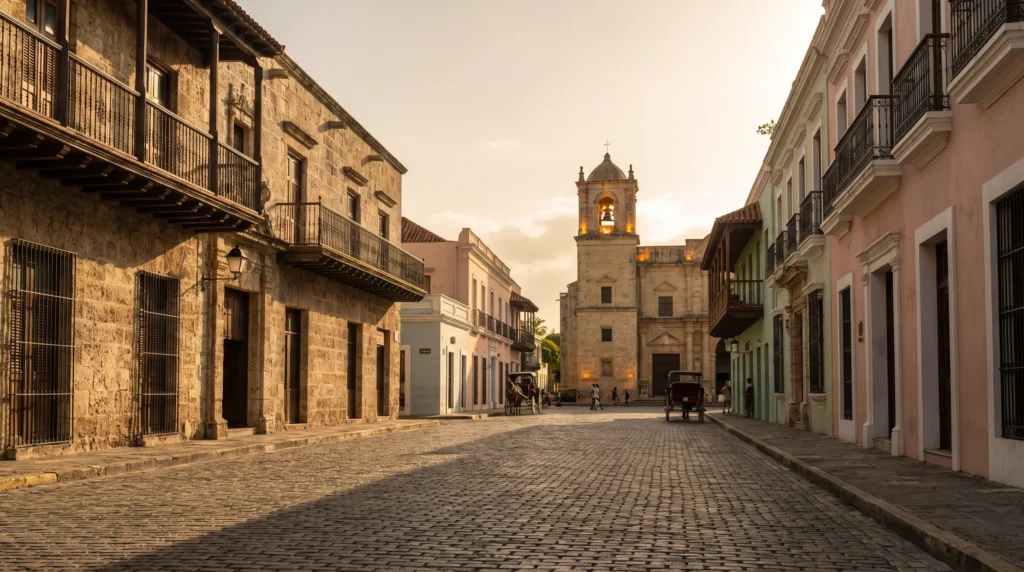
I keep meeting people who’ve done a week at a Punta Cana all-inclusive and never set foot in Santo Domingo, and every time I hear it I feel a little sad on their behalf. This is the oldest continuously inhabited European-founded city in the Americas — Bartholomew Columbus laid it out in 1496, before Mexico City, before Havana, before anywhere else on this side of the ocean had a cathedral, a paved street, or a fort. And unlike a lot of “historic centers” that feel embalmed for tourists, the Zona Colonial is a living neighborhood — mopeds buzz past 16th-century convents, kids play baseball against fortress walls, and a merengue band might strike up in a courtyard bar three blocks from ruins that predate the Mayflower by more than a century. Add a metro system, a serious food scene, and a Malecón that turns into the city’s living room every evening, and you have a capital that rewards three or four days far beyond what most itineraries give it. The honest catch: this is a big, real Caribbean city with big-city crime concerns, not a resort bubble, so you travel here a little differently than you would in Punta Cana. Worth it anyway.
In This Guide
- Overview — Why Santo Domingo Is the Americas’ Original Capital
- Merengue Festival & the City’s Party Calendar
- Best Time to Visit Santo Domingo
- Getting There — AILA, La Herradura & the Border
- Getting Around — Metro, Guaguas & Taxis
- Neighborhoods — Zona Colonial to the Malecón
- Culture & People — Merengue, Bachata & Dominican Identity
- A Food Lover’s Guide to Santo Domingo
- Off the Beaten Path
- Day Trips from Santo Domingo
- Practical Information
- Budget Breakdown — What Santo Domingo Actually Costs in 2026
- Frequently Asked Questions
Overview — Why Santo Domingo Is the Americas’ Original Capital
Every “first” in the hemisphere seems to trace back here. Santo Domingo has the first cathedral built in the Americas, the first paved street, the first fortress, and the first university — all packed into the walled Zona Colonial that UNESCO recognized as a World Heritage Site in 1990, praising it as one of the finest surviving examples of a 16th-century Spanish colonial layout in the Caribbean. The zone itself is compact — a little over one square kilometer within its old walls — but it holds more than 300 historic sites, so you genuinely can spend three days there and still find a courtyard you missed.
Beyond the cobblestones, this is a proper Latin American capital of just over a million people in the city proper and more than four million across the metro area — the political, financial, and cultural engine of the entire country. That means real museums, a symphony, a baseball stadium where you can watch the same league that feeds MLB rosters, high-rise business districts, and a restaurant scene that ranges from RD$150 street-cart mangú to white-tablecloth tasting menus.
What Santo Domingo doesn’t have is the manicured resort bubble of Punta Cana or La Romana. Traffic is real, sidewalks are uneven, and street crime is a genuine planning consideration rather than a footnote. But that’s also why it stays underrated: you get an actual Dominican city, not a beach-adjacent stage set, and the history-per-square-block ratio is unmatched anywhere else in the Caribbean.
Merengue Festival & the City’s Party Calendar
If you can time a trip around one thing, make it the Santo Domingo Merengue Festival, typically held along the Malecón in late July or early August, when the seafront closes to traffic for free open-air concerts, food stalls, and dancing that runs well past midnight. Merengue itself — the music and the couple’s dance that goes with it — was inscribed by UNESCO on the Representative List of the Intangible Cultural Heritage of Humanity in 2016, official recognition of what’s basically the national heartbeat. Expect accordion, tambora drum, and güira scraper on every corner, not just at the festival.
Carnival season (February, building to Independence Day on the 27th) is the other big calendar marker, with elaborate devil-mask parades along the Malecón. Late in the year, the Colonial Zone’s Christmas lighting turns the old town into one of the prettiest festive walks in the Caribbean, minus the crowds you’d find in bigger cities.
Best Time to Visit Santo Domingo
December – April · Dry season (peak)
The most reliable weather, with lower humidity and the least rain, plus the Merengue Festival’s smaller sibling events and Carnival in February. This is also when hotel rates in the Colonial Zone run highest.
May – July · Shoulder season
Warmer and more humid with short afternoon showers, but still very workable — and it lines up with the Merengue Festival in late July, one of the best reasons to brave the heat.
August – November · Hurricane season, lowest prices
Santo Domingo sits on the Caribbean’s hurricane belt; peak storm risk runs roughly August through October, so travel insurance with weather coverage is non-negotiable in this window. Direct hits on the capital itself are relatively infrequent, but tropical storms bringing heavy rain are common. Hotel prices drop noticeably, and the city itself — as opposed to the coast — is generally less exposed to the worst of it than beach resort areas.
Getting There — AILA, La Herradura & the Border
Las Américas International Airport (AILA) sits roughly 20 kilometers east of the city center, across the Ozama River via an expressway and suspension bridge, and handled about 5.5 million passengers in 2024 — the country’s second-busiest airport after Punta Cana, and the busiest cargo hub in the Caribbean and Central America. JetBlue is the largest carrier, alongside American, Delta, and the Dominican startup Arajet, with direct routes to New York-JFK, Miami, Newark, Madrid, and Panama City among others. A second, smaller airport, La Isabela (Dr. Joaquín Balaguer), handles some domestic and regional charter traffic closer to the city’s north side.
Overland, Santo Domingo connects by highway and long-distance bus (Caribe Tours, Metro) to every major Dominican city — Santiago, Puerto Plata, Punta Cana, and the Haitian border crossings further west. If you’re combining destinations, the bus network is comfortable and cheap; just budget extra time, since Dominican highways carry heavy truck and moped traffic.
Getting Around — Metro, Guaguas & Taxis
Santo Domingo has the most extensive rapid-transit system in the insular Caribbean: the Santo Domingo Metro, whose Line 1 opened in January 2009 and Line 2 in April 2013, now running two lines across 39 stations and carrying an average of roughly 285,000 riders a day. Single tickets cost around RD$15–20 (about US$0.25–0.35), making it one of the cheapest, safest ways to cross town, especially useful for avoiding the notorious traffic on Máximo Gómez and John F. Kennedy avenues.
Beyond the metro, “guaguas” (shared minibuses) and motoconchos (motorbike taxis) run everywhere for pocket change but reward local knowledge; as a visitor, ride-hailing apps are the easiest, safest option for door-to-door trips, and they’re widely used in the capital. The Zona Colonial itself is entirely walkable — in fact walking is the only sane way to see it, since many streets are one-lane cobblestone. Rental cars are more trouble than they’re worth inside the city; save them for day trips outside the metro area.
Neighborhoods — Zona Colonial to the Malecón
Zona Colonial (Ciudad Colonial)
The reason most people come. Calle Las Damas, the Americas’ oldest paved street, runs past the Alcázar de Colón (Diego Columbus’s viceroyal residence), Fortaleza Ozama, and the Catedral Primada de América. Stay here for atmosphere: boutique guesthouses in converted colonial homes, rooftop bars, and restaurants spilling onto plazas like Plaza España and Parque Colón.
Malecón / George Washington Avenue
The seafront boulevard that becomes the city’s social hub every evening — joggers, food vendors, couples on scooters, and, during festival season, a full outdoor concert stage. Good hotels line this stretch with Caribbean Sea views.
Piantini & Naco
The modern business core — glass towers, malls (Ágora, Blue Mall), international restaurant chains, and the city’s best fine dining. This is where Santo Domingo’s professional class lives and works, and it’s the safest, most polished part of town after dark.
Gazcue
A leafy, historic residential district just outside the colonial walls, home to the National Palace, the National Theater, and the National Botanical Garden nearby. Quieter than the Zona Colonial, walkable, and popular with longer-stay visitors.
Bella Vista & Mirador Sur
Upscale residential neighborhoods anchored by Mirador Sur Park, a long green ribbon of parkland popular for evening exercise, food trucks, and weekend family life — a good gauge of everyday Dominican middle-class leisure away from the tourist track.
Los Tres Ojos / Parque Mirador del Este
On the city’s eastern edge near the airport road, this park hides a series of open-air limestone caves with crystalline underground lakes — one of the more unusual urban natural attractions anywhere in the Caribbean.
Culture & People — Merengue, Bachata & Dominican Identity
Dominican identity runs through music in a way few countries can match. Merengue, born in the 19th century and recognized by UNESCO as intangible cultural heritage in 2016, remains the accordion-and-tambora soundtrack of everyday life — weddings, colmado bars, political rallies. Bachata, its slower, guitar-driven cousin born in the capital’s poorer barrios mid-century, has since gone fully global, and Santo Domingo still claims to be its spiritual home.
The country’s roughly 11.5 million people are a mix of European, African, and Indigenous Taíno heritage, and that layered history shows up everywhere in the Colonial Zone’s architecture and in national holidays. Dominicans are famously warm and direct — expect to be greeted, teased, and fed by strangers — and baseball is close to a second religion, with the national league’s winter season packing Estadio Quisqueya on weekend nights.
A Food Lover’s Guide to Santo Domingo
Breakfast means mangú — mashed boiled plantain — served “los tres golpes” style with fried eggs, salami, and fried cheese. Lunch, especially on Sundays, is la bandera dominicana (“the Dominican flag”): white rice, stewed red beans, meat, and fried plantain, all on one plate. Sancocho, a hearty multi-meat stew, is the celebration dish; chicharrón and tostones show up as street snacks everywhere.
The Colonial Zone is where the food scene gets serious — restaurants tucked into 500-year-old buildings serve everything from home-style Dominican cooking to contemporary tasting menus. Wash it down with Presidente, the ubiquitous national lager, or try mamajuana, a rum-wine-honey infusion steeped with tree bark and herbs that Dominicans will earnestly tell you cures whatever ails you. Dominican coffee, grown in the country’s mountain interior, is excellent and cheap — a real “flat white for a dollar” kind of city.
Off the Beaten Path
Ruinas de San Francisco
The roofless ruins of the first monastery built in the New World, now a moody backdrop for occasional live music nights — far quieter than the Cathedral just a few blocks away.
Mercado Modelo
A sprawling, unpolished crafts and produce market a short walk from the Colonial Zone — bargain hard, and go for the atmosphere as much as the souvenirs.
Villa Mella & the Congos de la Villa Mella
A working-class neighborhood across the Ozama River known for Afro-Dominican religious drumming traditions — a deeper cultural layer than the postcard version of the capital.
Parque Mirador Sur at dusk
Skip the guidebook sights for one evening and just join Dominicans doing what they actually do after work: walking, biking, and eating from food trucks along this long green park.
Day Trips from Santo Domingo
Boca Chica
A calm, shallow, reef-protected beach town just east of the city near the airport — the closest proper Caribbean beach day for anyone based in the capital, popular with both locals and visitors on weekends.
San Cristóbal
A short trip west into the country’s interior, historically significant as the birthplace of the 20th-century Trujillo era, with caves and countryside worth a slower half-day.
Jarabacoa & the Cordillera Central
A longer haul into the mountains — pine forests, rivers, and noticeably cooler air, a total change of pace from the coastal capital and popular with Dominicans as a weekend escape.
La Romana & Altos de Chavón
Further east, a recreated 16th-century Mediterranean-style village built as an artists’ colony, plus access to Casa de Campo’s resort coastline — doable as a long day trip or better as an overnight.
Practical Information
Money. The Dominican peso trades at roughly RD$58–59 to the US dollar as of mid-2026. Cards are widely accepted in hotels, malls, and Zona Colonial restaurants; carry small peso bills for guaguas, motoconchos, and street food, where USD either isn’t accepted or gets a poor exchange rate.
Safety. The US State Department rates the Dominican Republic as Level 2 — “Exercise Increased Caution” — citing crime including robbery and, less commonly, more serious violent crime. In Santo Domingo specifically, that translates to practical street sense: avoid displaying phones, jewelry, or cash in the open, take rideshares rather than walking alone at night outside the Zona Colonial and Piantini, and keep valuables minimal. Tourist police (POLITUR) patrol the main tourist zones. The UK FCDO maintains its own current travel advice for the country, worth checking before you fly.
Visa. US, UK, EU, and Canadian passport holders enter visa-free for stays up to 30 days; the tourist card fee is typically bundled into airline tickets, and passports should be valid at least six months beyond arrival.
Health. The CDC recommends Hepatitis A and Typhoid vaccination for most travelers, plus routine and Hepatitis B coverage, and flags dengue and Zika as mosquito-borne risks worth DEET-based repellent. Antimalarial precautions are recommended for travelers heading to certain rural and border provinces rather than the built-up capital itself — check the current CDC guidance for your specific itinerary. Stick to bottled or filtered water and avoid swimming in untreated freshwater.
Connectivity & logistics. An eSIM or local SIM gives cheap data across the metro; hotel Wi-Fi is generally reliable. Plugs: US-style Type A/B, 110V. Time zone: UTC−4 (Atlantic Standard Time) year-round, no daylight saving.
Budget Breakdown — What Santo Domingo Actually Costs in 2026
Santo Domingo runs noticeably cheaper than the resort corridor around Punta Cana, since prices here follow a real domestic economy rather than an all-inclusive markup.
Budget (US$45–80/day): Guesthouse or hostel bed in the Zona Colonial or Gazcue, street food and comedor lunches, metro and guagua rides, walking tours of the historic center.
Mid-range (US$110–200/day): Boutique colonial-building hotel, sit-down restaurant meals, rideshares around town, a Boca Chica or Los Tres Ojos day trip with a driver.
Luxury (US$350+/day): Malecón-front five-star hotels, Piantini fine dining, private guided Colonial Zone history tours, an overnight extension to Casa de Campo or La Romana.
Tipping 10% is standard practice and often already added as a service charge on restaurant bills — check before tipping twice.
Planning Your Trip to Santo Domingo
Two to three nights covers the essentials: a full day walking the Zona Colonial (Alcázar de Colón, the Cathedral, Calle Las Damas, Fortaleza Ozama), a half-day for Los Tres Ojos and the Malecón, and an evening given over to merengue and dinner in Piantini or the old town. Add a day for Boca Chica if you want beach time without leaving the metro area, or extend toward Santiago or Puerto Plata if you’re combining the capital with the rest of the country. If you’re building a wider Caribbean or Latin itinerary, our Dominican Republic guide covers the beach resorts and interior, our Havana guide pairs well for a two-city colonial Caribbean trip, and our Cartagena guide is the closest mainland cousin in look and feel.
Frequently Asked Questions
Is Santo Domingo safe for tourists in 2026?
The US State Department rates the whole country Level 2, “Exercise Increased Caution,” due to crime concerns. In practice, the Zona Colonial, Piantini, and the Malecón are well-trafficked and generally fine with normal city precautions — keep valuables low-key, use rideshares at night, and avoid isolated streets. Check your government’s current advisory before you travel.
Do I need a visa?
US, UK, EU, and Canadian citizens can enter visa-free for stays up to 30 days; the tourist card cost is usually folded into your airfare, and stays beyond 30 days require a visa arranged in advance.
How many days do I need in Santo Domingo?
Two full days covers the Colonial Zone and a taste of the modern city; three to four lets you add Boca Chica beach or a mountain day trip without rushing.
Is Santo Domingo walkable?
The Zona Colonial is entirely walkable and best explored on foot. The wider city is much more spread out and car- or transit-dependent — the metro is cheap, clean, and useful for longer hops.
Santo Domingo or Punta Cana?
Choose Santo Domingo for history, culture, food, and city life; choose Punta Cana for an all-inclusive beach resort with minimal logistics. Plenty of visitors do both — the capital as a two-to-three-night add-on before or after beach time.
What’s the best way to see the Colonial Zone?
On foot, ideally with a local guide for at least a couple of hours to unpack the “firsts” — cathedral, fortress, paved street, university — that are easy to walk past without context. Early morning or late afternoon avoids the worst of the midday heat.
Ready to Explore Santo Domingo?
A 500-year-old cathedral, a metro that costs less than a coffee, and a Malecón sunset with a merengue beat behind it — Santo Domingo packs more history per city block than almost anywhere else in the hemisphere, and most visitors to the Dominican Republic still skip it entirely. Don’t be one of them.
Explore More
- Dominican Republic Travel Guide — beaches, mountains and the rest of the country
- Havana City Guide — another Caribbean colonial capital frozen in time
- Cartagena City Guide — Spanish colonial walls on the Caribbean’s mainland side
- Miami City Guide — the closest major US gateway and a common stopover
How this guide was built
Published as part of Facts From Upstairs’ city guide series. Built from authoritative sources — the Dominican Republic’s official tourism board (godominicanrepublic.com), UNESCO’s Colonial City of Santo Domingo and Merengue intangible-heritage inscriptions, the Central Bank of the Dominican Republic, the US State Department and UK FCDO country pages, the US CDC traveler page for the Dominican Republic, and Wikipedia entity pages for Santo Domingo, the Dominican Republic, the Santo Domingo Metro, and Las Américas International Airport. Numeric claims carry inline citations.
Sources cited on this page
- Dominican Republic Tourism Board — Santo Domingo
- Wikipedia — Ciudad Colonial (Santo Domingo) / UNESCO listing
- UNESCO ICH — Merengue Music and Dance
- Central Bank of the Dominican Republic
- US State Department — Dominican Republic
- UK FCDO — Dominican Republic
- US CDC — Dominican Republic traveler page
- Wikipedia — Santo Domingo
- Wikipedia — Dominican Republic
- Wikipedia — Santo Domingo Metro
- Wikipedia — Las Américas International Airport
More city guides you might like
Plan your trip to Santo Domingo
The booking tools we use ourselves. FFU may earn a commission at no extra cost to you.
Plan & book your trip to Santo Domingo
Booking through these searches supports our guides at no extra cost to you.