
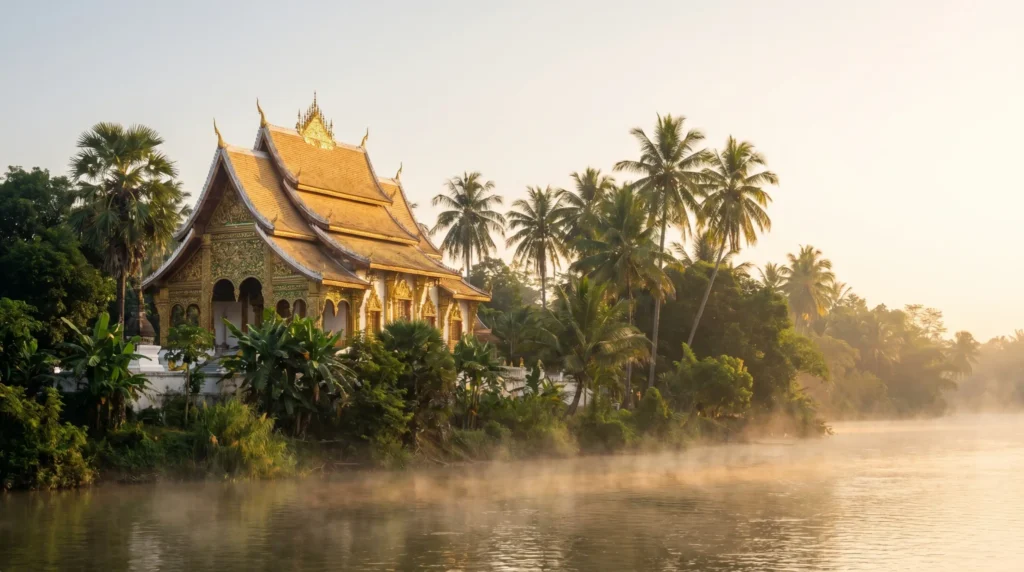
City Guide · UNESCO peninsula on the Mekong
Luang Prabang, Laos: The Slow, Saffron-Robed Heart of the Mekong Where Time Was Asked to Wait
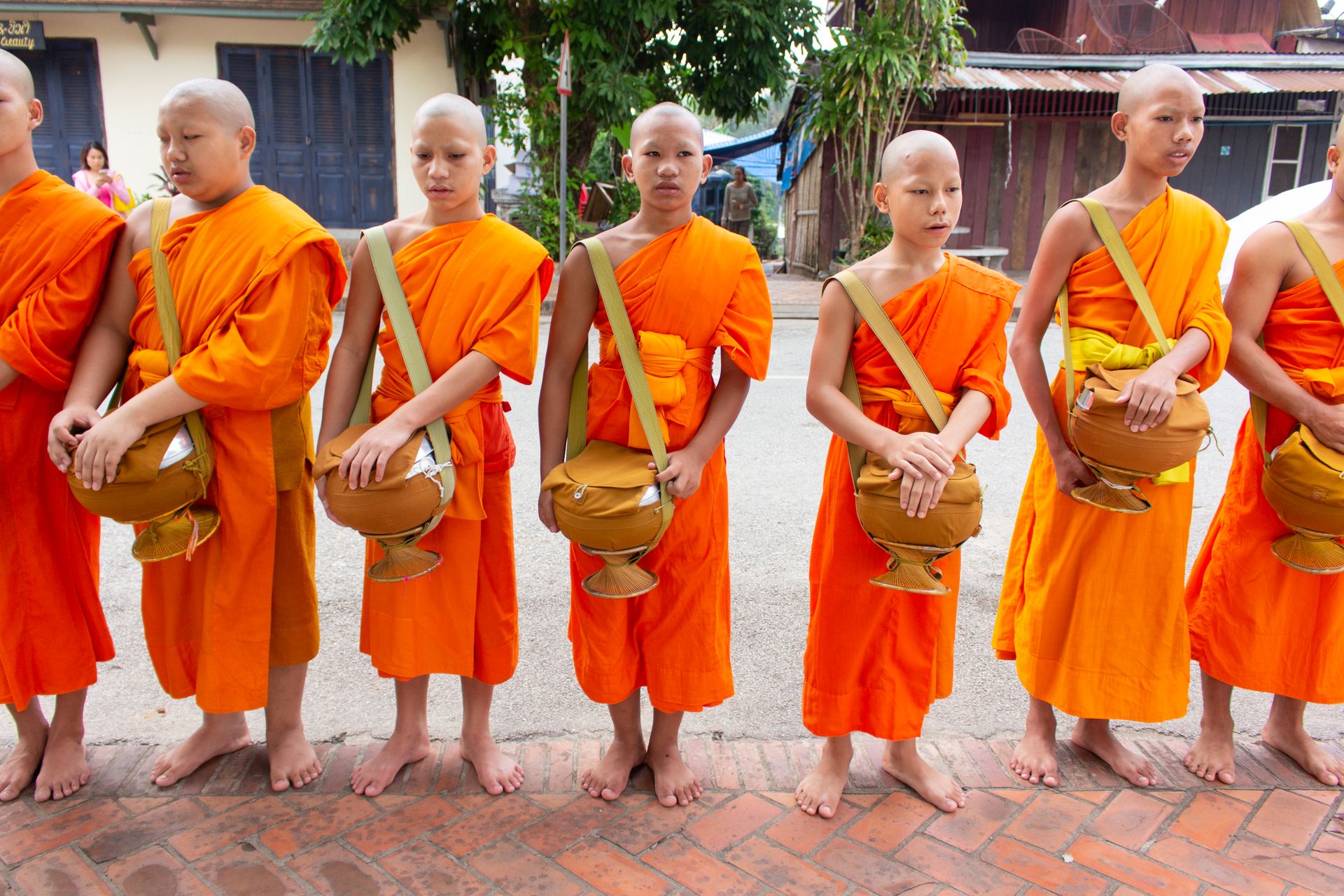
I have woken before dawn in Luang Prabang more times than my body ever wanted to, and I would do it again tomorrow. We tell first-timers the same thing every time: this is a small town — barely 56,000 people on a narrow peninsula where the Nam Khan slips into the Mekong — and the part you will actually walk fits inside a single morning of bare feet on cool flagstones. My favourite ritual here is the silent tak bat at first light, when hundreds of saffron-robed monks file past kneeling almsgivers, followed by a bowl of khao soi and a thick Lao coffee at the morning market before the heat climbs. The whole UNESCO-protected old town — French-colonial shophouses, more than thirty gilded temples, the royal palace under Mount Phousi — was inscribed on the World Heritage list in 1995, and it has been guarded jealously ever since. Treat this guide as the brief I would hand my own family the night before they flew into the new high-speed-rail town: the temples, the waterfall you cannot skip, the night market, the dawn rituals, the cash habits, and the rest .

Table of Contents
Why Luang Prabang?
Luang Prabang is the town most South-East Asia itineraries promise themselves and too few actually reach — a former royal capital tucked into the mountains of northern Laos where the Nam Khan river joins the Mekong on a narrow, temple-dense peninsula. It was the seat of the Lao monarchy for six centuries, the spiritual heart of the kingdom, and since 1995 a UNESCO World Heritage Site protected as one of the best-preserved towns in South-East Asia, a rare fusion of traditional Lao timber-and-brick architecture and the French-colonial buildings layered over it from the 1890s .
The town reads as a study in deliberate slowness. Only about 56,000 people live here, and the protected old town — the part you came to see — is barely two kilometres long and a few hundred metres wide, walkable end to end in under half an hour . There are no high-rises, no traffic lights worth the name, and a strict heritage code that keeps the rooflines low and the signage modest. Mount Phousi rises 100 metres from the middle of it all, and from its summit at dusk the whole peninsula unfolds: gilded spires, the brown sweep of the Mekong, and forested karst hills in every direction.
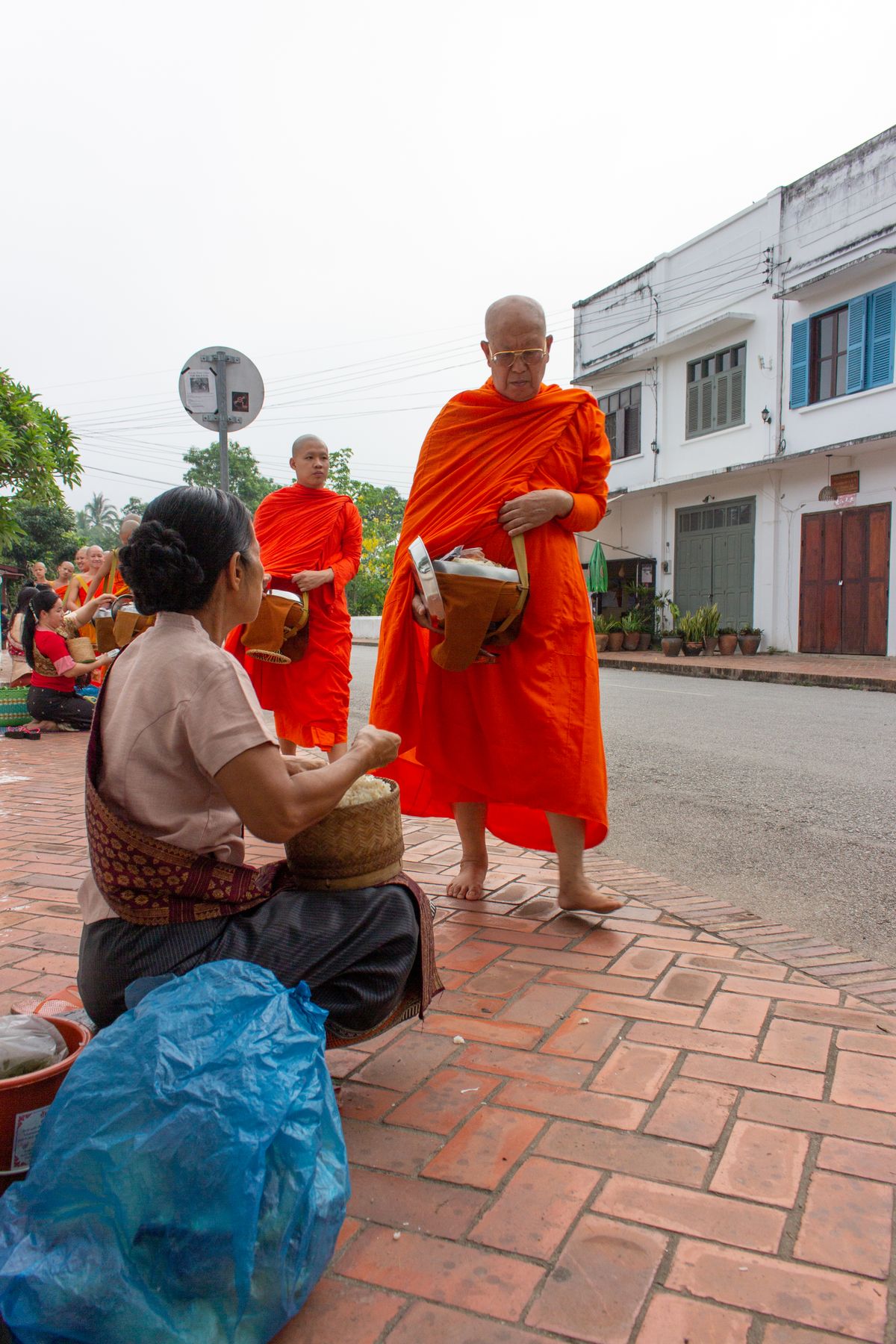
What makes the town essential rather than merely pretty is that it is still a living religious centre, not a museum. More than thirty active Buddhist temples — wats — share the peninsula with the guesthouses and cafés, and every dawn hundreds of monks still walk the tak bat, the silent alms-giving procession that has defined Luang Prabang’s mornings for centuries. To stand quietly at first light as the saffron line moves past is to understand why people fall hard for this place.
But the town is far more than its rituals. It has become northern Laos’s most rewarding base: the spectacular turquoise tiers of the Kuang Si waterfall an hour south, the sacred Pak Ou caves up the Mekong, a celebrated night market of hand-woven textiles, a French-Lao food scene that punches absurdly above the town’s size, and — since the China–Laos railway opened in December 2021 — far easier access by high-speed train. This guide covers the peninsula and the quarters worth your time, the Lao plates and morning-market stalls that define the food, the temples and the royal palace, the waterfalls and caves you should not miss, and the practical realities of cash, the new railway and the heritage rules. Give the town three full nights at minimum; it repays the slowness more than almost anywhere in the region.

Neighborhoods: Finding Your Luang Prabang
📍 Luang Prabang Map: Every Place in This Guide
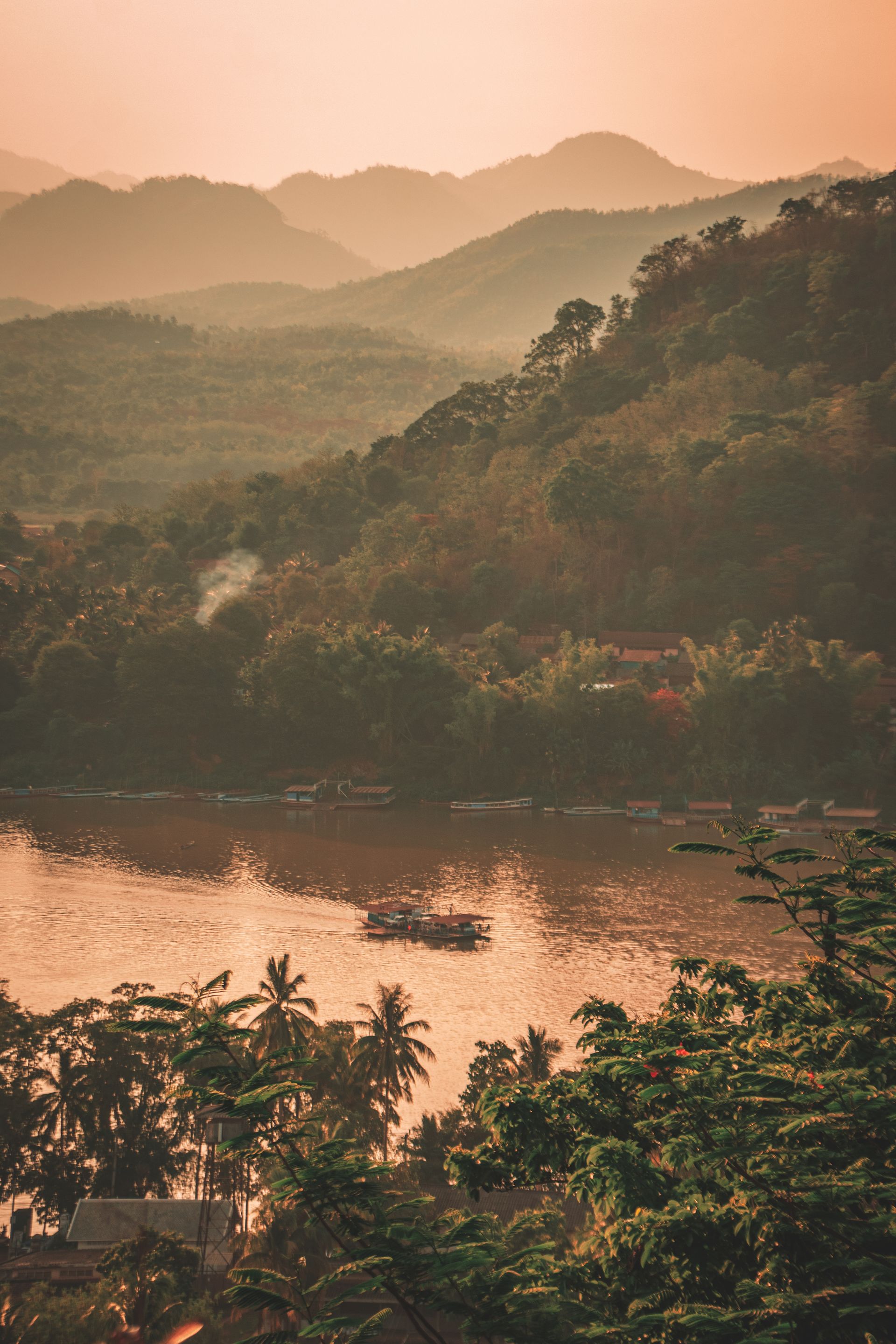
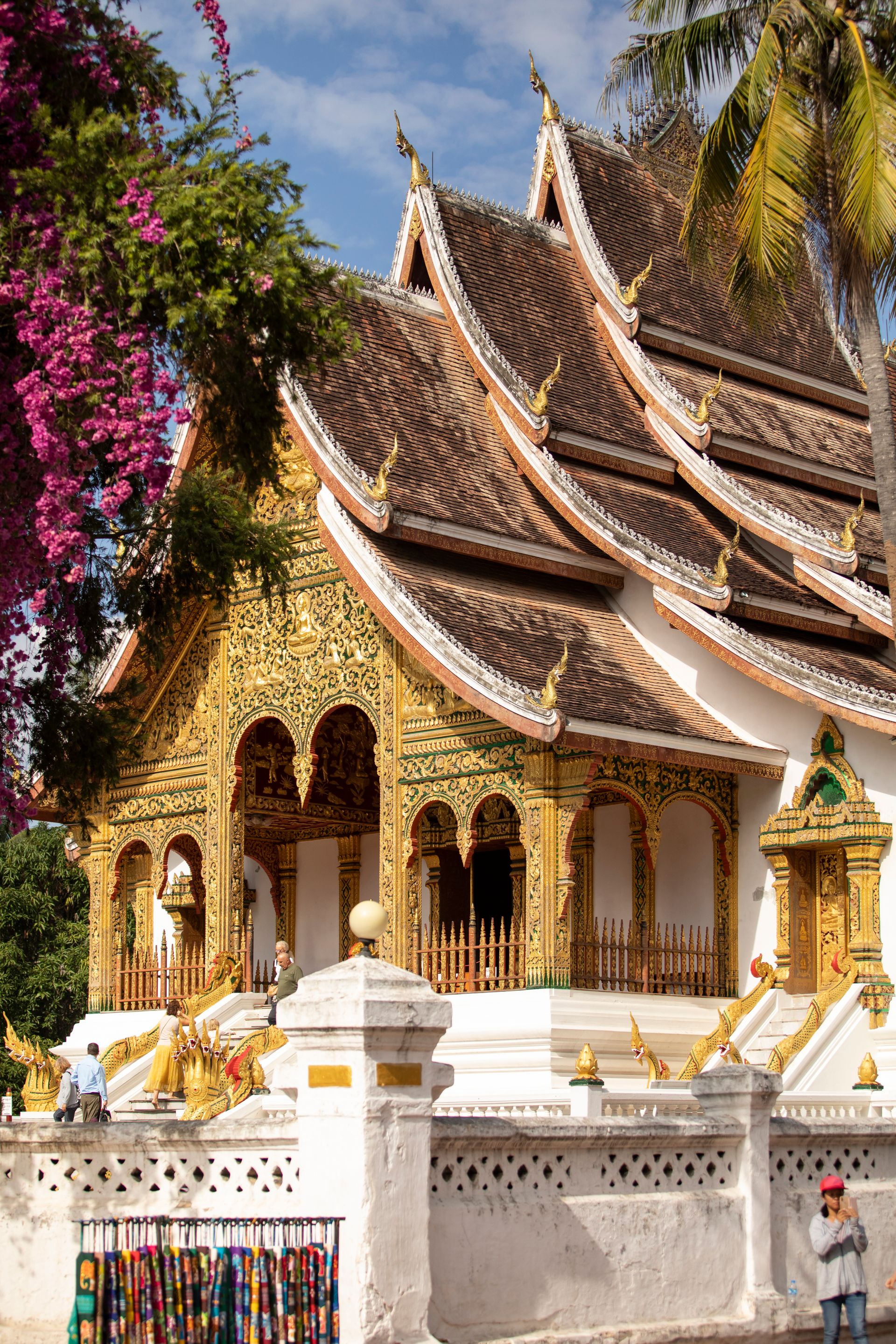
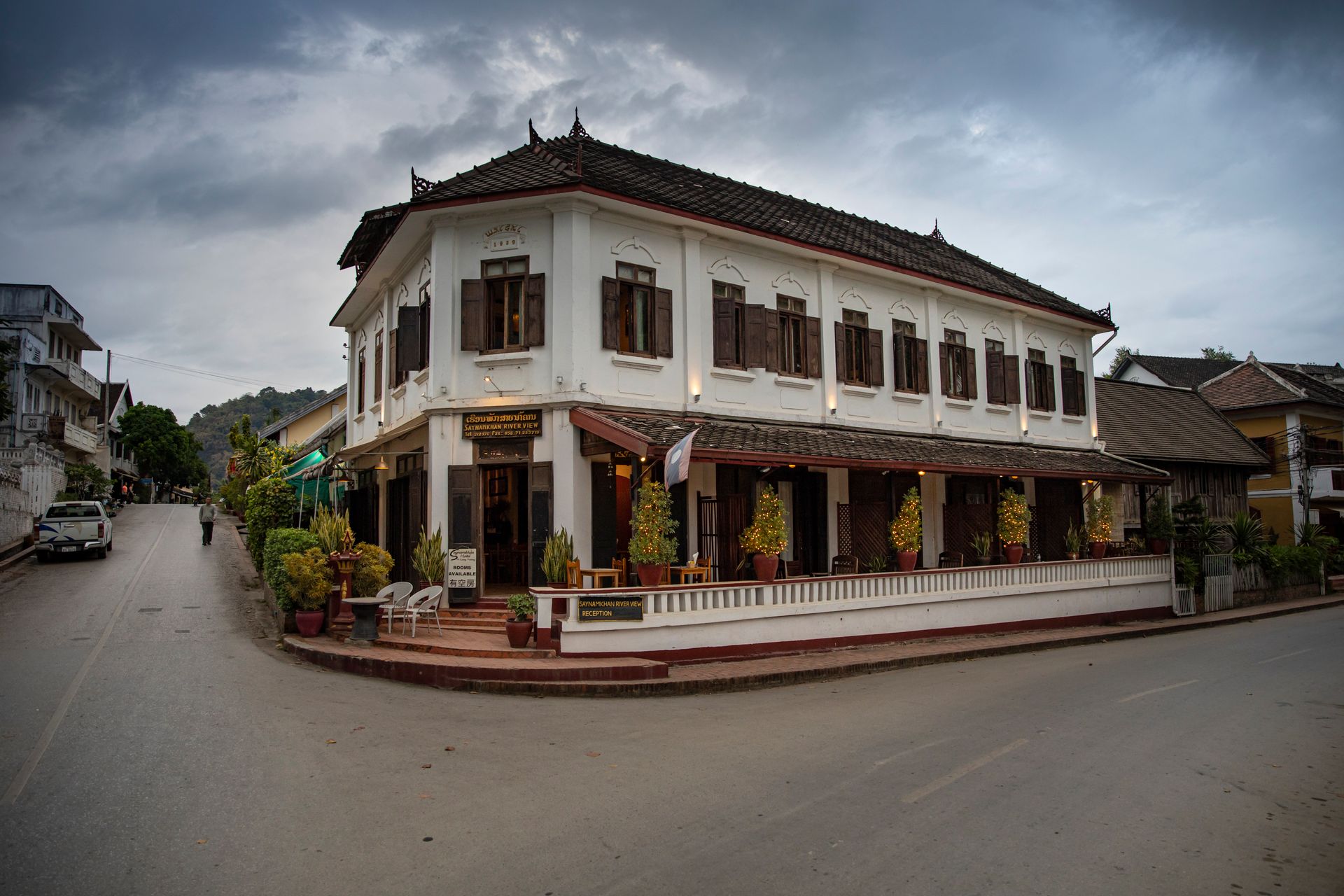
Luang Prabang has no metro, no districts in any formal sense, and no need for them — the whole protected town is small enough to cross on foot. Travellers navigate instead by a handful of natural zones: the historic peninsula tip around Wat Xieng Thong, the central old town along the main street under Mount Phousi, the two riverfronts (Mekong and Nam Khan), and the quieter handicraft villages and newer quarters spreading inland and across the rivers. Distances are tiny — almost everything on the peninsula is a flat ten-minute walk apart — so where you base yourself matters less than the river view you want and how far from the night-market bustle you prefer to sleep .
A quick mental map helps. Picture the peninsula as a long thin finger pointing north-east, with the Mekong running down its western side and the Nam Khan curling around the east before the two meet at the tip. The main street — Sisavangvong Road — runs the length of it, lined with temples, the Royal Palace, cafés and the nightly handicraft market; Mount Phousi rises from its middle. Push off the peninsula and inland and you reach the newer town, the bus stations and the road to the airport and railway; cross the rivers by footbridge or ferry and you find the weaving villages and a slower, more rural Laos. Because the whole heritage zone is barely two kilometres long, you can wander its full length several times a day without it ever feeling like a journey.
This section walks the zones you will actually use, grouped by character: the sacred peninsula tip, the central old town and main street, the two riverfronts, Mount Phousi and the market heart, and the handicraft villages beyond. For a first visit, base yourself anywhere on the peninsula for the atmosphere and the walkable temples, accepting that the central blocks get the night-market crowds; or pick a quieter Nam Khan riverside guesthouse for calm and a short stroll into the action.
The Peninsula Tip (Wat Xieng Thong quarter)
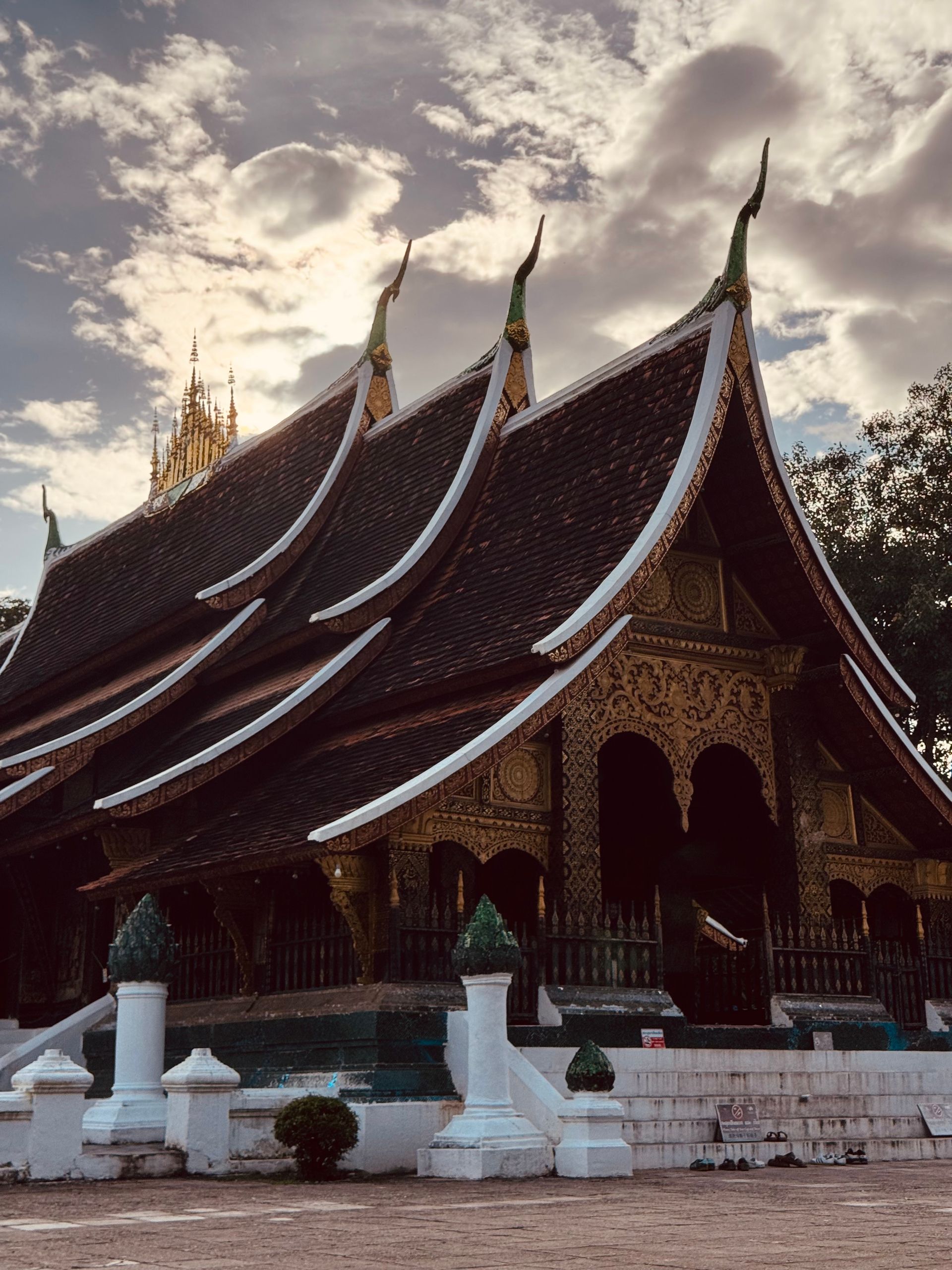
The north-eastern tip of the peninsula, where the Nam Khan meets the Mekong, is the town’s spiritual and most atmospheric corner — anchored by Wat Xieng Thong, the sixteenth-century royal temple widely held to be the finest in Laos. The lanes here are the quietest on the peninsula, lined with old timber houses, a clutch of upscale heritage guesthouses, and gentle steps down to both rivers. Mornings here are magical and the evenings genuinely peaceful, a world away from the market crowds a few hundred metres south.
- Wat Xieng Thong and its mosaic-clad “tree of life” rear wall
- Quiet Mekong and Nam Khan riverbank steps and sunset spots
- Heritage boutique guesthouses in restored timber houses
What sets the tip apart is the density of sacred sites and the absence of through-traffic: with the rivers closing in on both sides, the lanes here simply run out, so the only people you meet are heading to the same handful of temples and guesthouses you are. It is the part of town where the dawn alms procession is at its most concentrated and most atmospheric, the saffron line emerging from Wat Xieng Thong’s gates into the half-light. Sleep here and you trade a slightly longer walk to the market for genuine quiet and the best mornings in Luang Prabang.
Best for: temple-lovers, quiet luxury, slow mornings. Access: a flat 10-minute walk from the night market along the main street.
Central Old Town & Sisavangvong Road
The spine of the peninsula and the busiest part of town — the main street that runs from the Royal Palace and Mount Phousi up toward Wat Xieng Thong, lined with temples, tour agents, cafés, restaurants and, each evening, the famous handicraft night market. This is where most first-time visitors stay and spend their days, ticking off the central sights on foot. It is genuinely walkable, flat and shaded, though the central blocks fill with browsers once the market sets up after dusk.
- The Royal Palace Museum (Haw Kham) and the adjacent Wat Mai
- The nightly handicraft market along Sisavangvong Road
- Dozens of cafés, bakeries and Lao-French restaurants
The street has a clear daily rhythm worth learning. In the cool of early morning it belongs to the alms procession and the bakeries opening their shutters; by mid-morning the tour groups are at the palace and the temples; the afternoon goes quiet and hot; and from dusk the whole central stretch transforms as the night-market vendors unroll their parasols and the food alley fires up. Staying on or just off this stretch means you are never more than a couple of minutes from a temple, a coffee or a meal — at the cost of some evening footfall outside your door during peak season.
Best for: first-time visitors, walkers, market-goers, dining. Access: central; everything on the peninsula radiates from here.
The Mekong Riverfront
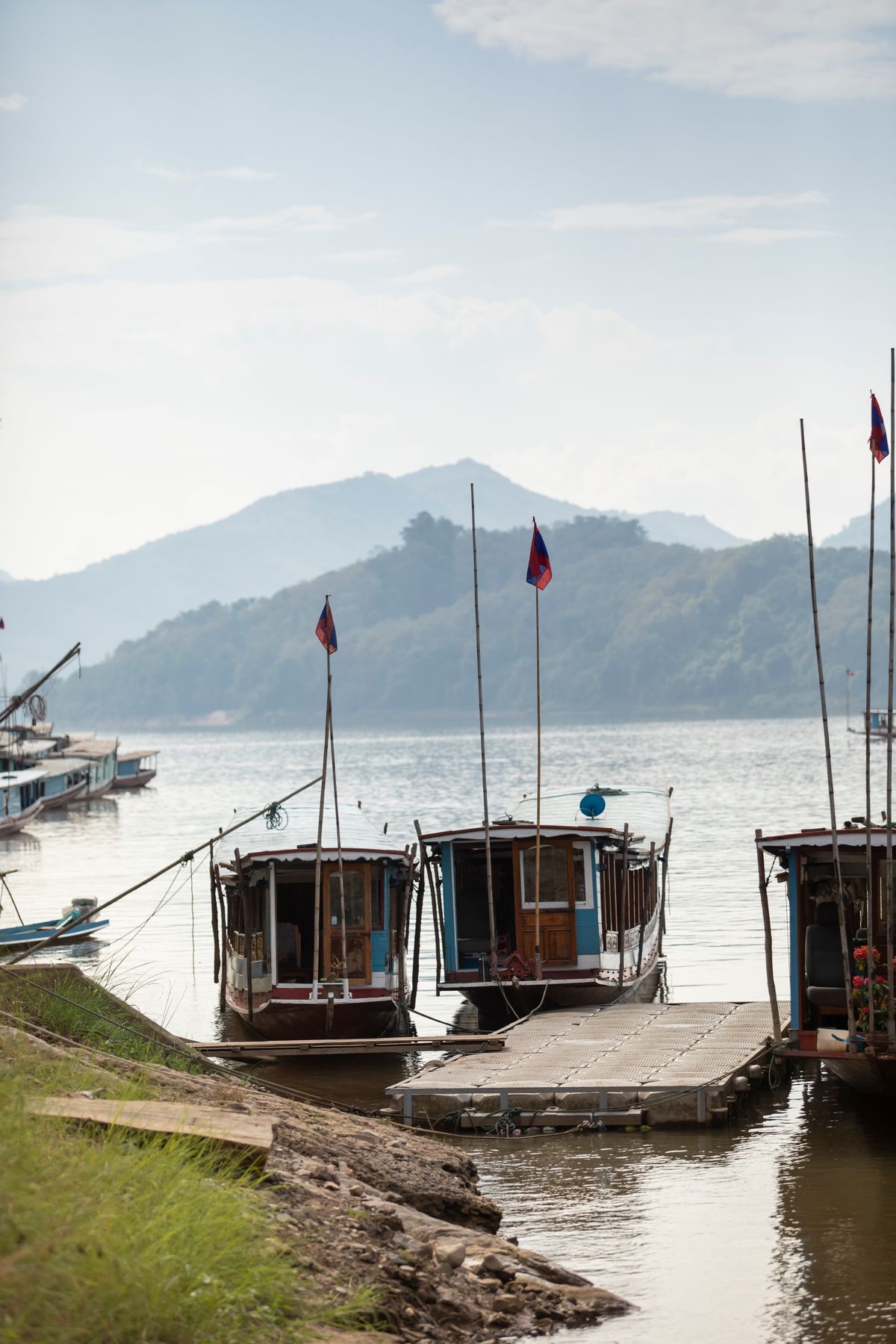
The western edge of the peninsula drops down to the Mekong, where a string of guesthouses, restaurants and bars line a low bluff above the river — the prime sunset-watching strip in town, and the launch point for slow boats up to the Pak Ou caves and beyond. The riverfront road is quieter and breezier than the main street, and the west-facing terraces here are the classic spot for a cold Beerlao as the sun drops behind the far hills.
- Sunset bars and restaurant terraces on the Mekong bluff
- The boat landing for Pak Ou caves and slow-boat trips
- Quiet riverside guesthouses with west-facing balconies
Best for: sunset-seekers, river-trip starters, slower stays. Access: the western edge of the peninsula, a few minutes’ walk from the main street.
The Nam Khan Riverside
The eastern, calmer side of the peninsula along the smaller Nam Khan river is the town’s most tranquil quarter, crossed in the dry season by a seasonal bamboo footbridge to the far bank’s cafés and quiet guesthouses. It is leafier and more residential than the Mekong side, popular with longer-stay visitors and anyone who wants river views without the sunset crowds. The bamboo bridge itself — rebuilt by hand each dry season after the rains wash it away — is one of the town’s small, recurring wonders.
- The seasonal bamboo footbridge across the Nam Khan
- Quiet riverside cafés and yoga-and-wellness guesthouses
- Utopia, the long-running riverside bar and lounge
The Nam Khan side has quietly become the town’s wellness-and-creative corner: yoga shalas, herbal-sauna spas, a couple of art spaces and the long-running Utopia lounge all cluster along this bank, drawing the travellers who stay a week rather than a night. Crossing the hand-built bamboo bridge — a small toll, paid to the family that rebuilds it each year — to a riverside café on the far bank is one of those simple Luang Prabang pleasures that lingers. In the wet months the bridge is gone and you cross by a short ferry instead, a reminder that the river still sets the terms here.
Best for: longer stays, calm, riverside cafés. Access: the eastern edge of the peninsula, walkable from the main street.
Mount Phousi & the Market Heart
The 100-metre hill of Mount Phousi rises from the centre of the peninsula, crowned by the gilded That Chomsi stupa and ringed by shrines — the town’s natural viewpoint and its symbolic centre. Around its base sit the Royal Palace, the morning fresh market, and the nightly handicraft market that spills along the main street. This is the busy, beating heart of visitor Luang Prabang: climb the hill for sunrise or sunset, browse the morning market for breakfast, and return for the night market after dark.
- The 328-step climb up Mount Phousi to That Chomsi and the views
- The early-morning fresh market behind the Royal Palace
- The handicraft night market along Sisavangvong Road
Best for: viewpoints, markets, photographers. Access: dead centre of the peninsula.
Handicraft Villages & the Far Banks
Beyond the rivers and a short ride from the peninsula lie the weaving and craft villages that supply the night market — Ban Xang Khong for saa paper and silk, Ban Phanom for cotton weaving — along with the newer town, the bus stations and the road out to the airport and the railway. These are not where you sleep, but a half-day among the looms and paper-makers is one of the more rewarding short trips from town, and it puts the night-market goods in context.
- Ban Xang Khong — saa-paper and silk-weaving workshops
- Ban Phanom — traditional cotton weaving
- The newer town, bus stations and the road to airport and railway
Visiting the villages also closes the loop on the night market: the hand-woven scarves, the indigo-dyed cotton and the textured saa-paper lampshades you browse under the parasols are made here, on looms and drying racks you can watch in action, often by the same families who sell them in town. Buying direct from a weaver, after watching the thread go onto the loom, is both cheaper and more meaningful than haggling at a stall — and it puts your money straight into the rural economy that keeps these crafts alive. A half-day by bicycle or tuk-tuk through two or three of the villages is an easy, rewarding contrast to the temples.
Best for: craft-buyers, weaving demonstrations, a rural half-day. Access: a short tuk-tuk ride off the peninsula across the rivers.
Choosing Your Base
If this is your first visit and you want to be in the thick of it, stay on the central peninsula near the main street: you will walk to every temple, the palace and the night market, and never be more than a few minutes from a meal. If you value quiet, pick the peninsula tip near Wat Xieng Thong or a Nam Khan riverside guesthouse — both are a short, flat stroll from the action but far calmer at night. Sunset-chasers should look at the Mekong riverfront for its west-facing terraces. Whatever you choose, the town’s smallness means no base locks you out of anything; the entire heritage zone is a walk away. Avoid the newer town inland near the bus stations, which trades all the atmosphere for nothing you actually want.
The Food
Lao food is the quiet, herb-heavy cuisine that most travellers meet for the first time in Luang Prabang — and fall for. Built on glutinous sticky rice eaten by hand, fiery jeow dipping pastes, fresh river fish, and great fistfuls of dill, mint, coriander and lemongrass, it is closer to north-eastern Thai (Isan) cooking than to anything further south, but with its own pungent, fermented character. The signature local dish is khao soi — not the Chiang Mai curry-noodle soup of the same name, but a Luang Prabang specialty of rice noodles in a clear broth topped with a fermented soybean-and-pork sauce. Prices are gentle by any standard — a market bowl runs 15,000–30,000 kip (about US$0.70–1.50), a sit-down Lao meal 60,000–120,000 kip — and the town’s French-colonial past has left it with bakeries and a baguette habit that punch far above the size of the place.
The town’s eating geography is simple. The morning fresh market behind the Royal Palace and the riverside food stalls hold the cheapest, most authentic Lao food; the night market’s “buffet alley” off Sisavangvong Road serves the famous pile-your-plate vegetarian spread for a few dollars; and the main street and the riverfronts hold the sit-down Lao-French restaurants and the cafés. The morning belongs to the markets and the bakeries; a confident traveller eats best by pointing at what looks busy, but a first-timer can ease in through the restaurants below before braving the stalls. Either way, the food is one of the genuine pleasures of the town.
A few practical habits make eating here easier. Carry small kip notes for stalls and markets, since few carts take cards and change can be awkward. Eat your street food where it is busiest and freshly cooked, and use the bottled or refill water rather than the tap — Luang Prabang has good refill stations to cut plastic. Mornings are the great Lao mealtime, so set an alarm at least once and join the fresh-market breakfast crowd; the best stalls sell out and pack up by mid-morning. And do not skip the night-market buffet on grounds of polish — the bare-bulb vegetarian spread is one of the best-value meals in South-East Asia.
Lao Classics — Where to Start
The plates that define Lao cooking are all easy to find in town, and a handful of well-run kitchens make a reliable introduction without sending you straight to the deep end of the markets. Start with khao soi (the local fermented-soybean noodle soup), laap (the national dish — a zingy minced-meat or fish salad with herbs, lime and toasted rice powder), and or lam — the bitter, peppery Luang Prabang stew of buffalo meat, eggplant and the tongue-numbing sakhan wood. Eat them, as Lao people do, with a basket of sticky rice rolled into balls by hand. The restaurants below run from heritage fine dining to honest local kitchens, all serving genuine Lao food rather than watered-down tourist versions.
- Tamarind — the town’s benchmark for modern Lao cuisine, with tasting platters of jeow, laap and stuffed lemongrass (sharing platters ~120,000 kip, ~US$6)
- Manda de Laos — refined Lao classics around a lotus-pond garden on a UNESCO-listed site (mains ~90,000 kip, ~US$4.50)
- Khaiphaen — a TREE Alliance social-enterprise training restaurant for at-risk youth, serving polished modern Lao plates (mains ~70,000 kip, ~US$3.50)
Markets & Street Stalls
The real eating happens at the markets, and it is where Luang Prabang’s food is at its cheapest and most honest. The morning fresh market behind the Royal Palace lays out grilled fish, sticky rice, jeow and jungle vegetables for the breakfast crowd; the night market’s vegetarian “buffet alley” off the main street lets you pile a plate from a long spread of stir-fries and noodles for around 15,000–25,000 kip (under US$1.50); and the riverside stalls grill skewers and whole fish at dusk. Carry small kip notes, point at what looks busy, and do not be put off by plastic stools — the best food in town is often the cheapest.
- Night-market buffet alley — pile-your-plate vegetarian spread off Sisavangvong Road (~15,000–25,000 kip, ~US$0.75–1.25)
- Morning fresh market — grilled fish, sticky rice and jeow behind the Royal Palace (dishes ~15,000–30,000 kip, ~US$0.70–1.50)
- Riverside grill stalls — skewers and whole grilled fish at dusk along the Mekong (~20,000–40,000 kip, ~US$1–2)
Beyond Khao Soi and Laap
Once you are past the headline dishes, the everyday Lao repertoire opens up. Khao niaw (sticky rice) is the foundation of every meal, eaten by hand from its little woven basket. Ping pa is whole river fish stuffed with lemongrass and grilled over coals; tam mak hoong is the fierce green-papaya salad pounded to order; and sai oua is the herby Lao-style grilled sausage. The French legacy survives most visibly on the plate as the khao jee paté — a crisp baguette split and filled with paté, herbs and chilli for a dollar or two — and in the bakeries’ croissants and tarts. These are the everyday flavours that define how the town actually eats.
- Ping pa — whole river fish stuffed with lemongrass and grilled over coals (~40,000–60,000 kip, ~US$2–3)
- Tam mak hoong — pounded green-papaya salad, fiery and fresh (~20,000 kip, ~US$1)
- Sai oua — herby Lao grilled sausage of pork, lemongrass and kaffir lime (~25,000 kip, ~US$1.25)
- Khao jee paté — the Lao baguette sandwich, a French-colonial legacy with paté, herbs and chilli (~20,000 kip, ~US$1)
- Jeow bong — the sweet-hot Luang Prabang chilli paste with buffalo skin, eaten with sticky rice (a few thousand kip a scoop)
One habit defines how Luang Prabang eats more than any other: everything is built around sticky rice. Lao people eat khao niaw by hand at nearly every meal, pinching off a small ball, rolling it between the fingers, and using it to scoop up jeow, laap or grilled fish — there is no need for a fork, and the rice itself is the utensil. Get this one technique right and you unlock the whole cuisine, because almost every Lao dish is designed to be eaten with it rather than with rice on a spoon. The basket of sticky rice arrives at the table covered, and you are meant to keep it covered between handfuls so it stays warm and pliable; a half-dried basket is a sign the meal has gone on too long. Watching a Lao family share a spread — several jeow, a laap, a soup, grilled meat, raw herbs and one big communal basket of rice — is the clearest lesson in how the food is meant to work.
Coffee, Cafés & the Bakery Scene
Laos grows its own well-regarded arabica and robusta on the Bolaven Plateau in the south, and Luang Prabang drinks it hard — traditionally as a thick, sweet iced coffee with condensed milk, increasingly as third-wave espresso in the town’s growing crop of design-led cafés. The French-colonial past also left a real bakery culture: croissants, baguettes, tarts and proper espresso are easy to find on the main street and the riverfronts. For visitors this matters practically — the cafés are the town’s most reliable spots for fast Wi-Fi, a cool table and a flat white when the midday heat gets too much. Try the same Lao bean two ways on one morning: a sweet condensed-milk iced coffee from a market cart and a clean pour-over in an air-conditioned café. Expect about US$1 for a market iced coffee and US$2.50–4 for a café espresso drink.
Sweets, Snacks & the Adventurous End
Lao desserts lean on the tropical pantry — coconut, sticky rice, palm sugar, banana and the bright purple of black sticky rice — rather than dairy or chocolate. Look for khao niaw mak muang (sticky rice with mango and coconut cream), nam van (sweet coconut-milk dessert soups piled with jelly, beans and tapioca), and grilled banana brushed with coconut. The morning market also sells khao nom kok, little coconut-rice pancakes cooked in dimpled pans. For the genuinely adventurous, the markets sell the riverweed snack kaipen — Mekong algae pressed into crisp sheets, studded with sesame and tomato and fried, served with jeow bong — a true Luang Prabang specialty you will find almost nowhere else.
To drink, beyond the coffee, the everyday choice is fresh sugarcane and fruit juices and ice-cold coconut water. Local beer is cheap and excellent — Beerlao, brewed since 1973, is one of the better lagers in the region and a genuine point of national pride — and the riverfront bars pour it for a dollar or two. The local rice spirit lao-lao appears in markets and at festivals, often infused with herbs or, more alarmingly for visitors, snakes and scorpions. Tap water is not safe to drink; use the bottled and refill water sold across town.
Food Experiences You Can’t Miss
- A morning bowl of khao soi or grilled fish at the fresh market behind the Royal Palace before the heat lands
- The night-market vegetarian buffet — pile a plate from the long spread off Sisavangvong Road for about a dollar
- A half-day Lao cooking class with a market tour, learning to pound laap and roll sticky rice
- A crisp Mekong-riverweed kaipen snack with jeow bong and a cold Beerlao on a sunset terrace
Cultural Sights

Luang Prabang’s sights are, overwhelmingly, sacred ones: more than thirty active Buddhist temples share the small peninsula with the former Royal Palace and the hill of Mount Phousi, and almost everything you came to see clusters within a flat, walkable kilometre. A complete visit needs the headline temples, the palace museum and the dawn alms ritual; the rest is a pleasure of wandering. Below, the sights are ordered roughly as you might tackle them, with opening hours and current admission prices. Dress modestly at every temple — covered shoulders and knees — and remove your shoes before entering any shrine.
Wat Xieng Thong
The town’s most important and most beautiful temple, built in 1559–1560 under King Setthathirath at the very tip of the peninsula where the rivers meet. The low, sweeping roofs that almost touch the ground are the masterwork of classic Luang Prabang temple architecture, and the rear wall of the main sim is famous for its glittering “tree of life” mosaic set in red. The compound holds a royal funerary carriage and several smaller chapels. It was the temple where Lao kings were crowned. Admission about 20,000 kip (~US$1). Open daily roughly 08:00–17:00.
Royal Palace Museum (Haw Kham)
The former royal palace, built 1904 under the French for King Sisavang Vong, is now the national museum and the symbolic heart of the town, sitting at the foot of Mount Phousi. Its blend of Lao and French Beaux-Arts design houses the royal throne room, the king’s living quarters left as they were, and — in a separate ornate pavilion (the Haw Pha Bang) — the sacred Phra Bang Buddha that gives the town its name. Photography inside is forbidden and a modest dress code is enforced. Admission about 30,000 kip (~US$1.50). Open daily except Tuesday, roughly 08:00–11:30 and 13:30–16:00.
Mount Phousi & That Chomsi
The 100-metre wooded hill in the centre of the peninsula, climbed by about 328 steps to the gilded That Chomsi stupa at the summit — the town’s natural viewpoint and a place of pilgrimage. The 360-degree panorama over the temple roofs, the two rivers and the surrounding hills is the classic Luang Prabang sunset, though it gets crowded; many regulars climb at sunrise instead, or for the quieter views. Shrines and a Buddha footprint dot the slopes. Admission about 20,000 kip (~US$1). Open dawn to dusk.
Wat Mai Suwannaphumaham
The large temple beside the Royal Palace, founded in the late eighteenth century and one of the town’s most richly decorated, with a five-tiered roof and a celebrated golden bas-relief facade depicting scenes from the life of the Buddha and rural Lao life. It once housed the Phra Bang itself, and remains central to the Pi Mai (Lao New Year) celebrations each April. Admission about 10,000 kip (~US$0.50). Open daily during daylight hours.
Wat Visoun & That Makmo
The oldest continually operating temple in Luang Prabang, first built in 1512, notable for the distinctive watermelon-shaped stupa beside it — That Makmo, the “watermelon stupa” — and a collection of ancient wooden Calling-for-Rain Buddha images. Quieter and less visited than the peninsula’s headline temples, it rewards a short walk to the southern end of the old town. Admission about 10,000 kip (~US$0.50). Open daylight hours.
The Dawn Alms-Giving (Tak Bat)
Not a building but the town’s most moving sight: at first light, hundreds of monks from the peninsula’s temples walk in a long saffron line to receive offerings of sticky rice from kneeling almsgivers. It is a genuine living ritual, not a performance, and it asks for respect — watch quietly from a distance, do not block the procession or use flash, dress modestly, and only participate (buying rice from a reputable vendor, not a market tout) if you understand the etiquette. Tourism authorities and monks have repeatedly asked visitors to be unobtrusive. Free; daily around 05:30–06:30.
A practical word on temple-visiting. The peninsula’s thirty-plus wats are active monasteries, home to resident monks and novices — many of them teenage boys from poor rural families for whom the monastery is also a school — so they ask for the same quiet respect you would give any place of worship. Buy a single combined attitude rather than a ticket: cover your shoulders and knees, take your shoes and hat off before stepping into a sim, keep your voice down, do not point your feet at the Buddha images or turn your back on them for photos, and ask before photographing monks. A handful of the headline temples charge a small entry fee; most of the smaller neighbourhood wats are free to enter, and wandering into one at random — to find novices sweeping the courtyard or chanting at dusk — is often more memorable than the ticketed sights. Late afternoon, when the heat eases and the monks gather for evening chanting, is the loveliest time to visit.
Entertainment

Luang Prabang’s nightlife is gentle, early and low-key — there is a town-wide curfew that sees most venues close by around 23:30, in keeping with its sacred, slow character — and it is all the better for it. The evening is built around the night market, a sunset drink, a quiet dinner and an early bed before the dawn alms. The action concentrates on the main street and the two riverfronts, everything is cheap by regional standards, and a single evening can run from the market to a riverside terrace without much spending or any sense of hurry. What follows are the scenes worth your evenings.
The Handicraft Night Market
The nightly market that fills Sisavangvong Road after dusk is the town’s signature evening — hundreds of vendors lay out hand-woven Hmong textiles, saa-paper lanterns, silver and lacquerware along the main street under a canopy of red parasols, with the vegetarian buffet alley running off to one side. It is calm, hassle-light haggling rather than hard sell, and a genuine pleasure to wander. Typical spend whatever you choose; the buffet plate is under US$1.50. Sets up around 17:00 and runs to about 22:00.
Riverside Sunset Bars
The Mekong-facing terraces on the western edge of the peninsula are the classic sunset spot — cold Beerlao, low tables and the sun dropping behind the far hills. The Nam Khan side is quieter still. These are relaxed, early-evening affairs rather than late nights. Typical cost 15,000–25,000 kip (~US$0.75–1.25) for a Beerlao, a little more for cocktails. No booking; arrive before sunset to claim a river-view table, which fill fast in high season.
Utopia
The long-running riverside bar and lounge tucked above the Nam Khan is the closest the town has to a social hub for younger travellers — cushioned low platforms, a volleyball court, river views and a relaxed crowd. It serves food and drinks through the day and into the evening, closing with the town curfew. Typical cost US$2–5 a drink; no booking, just wander down the lane.
Traditional Dance & Puppet Shows
The Royal Ballet Theatre beside the Royal Palace stages performances of the Lao Ramayana (the Phralak Phralam) in classical costume on select evenings, the most formal way to see the tradition; the Garavek storytelling theatre runs intimate evening sessions of Lao legends told with a traditional khene mouth-organ. Both are gentle, early and well suited to a slow Luang Prabang night. Typical cost US$8–15; book a day ahead in high season.
Cinema, Wellness & Quiet Evenings
There is no multiplex; the town’s evenings tilt instead toward wellness and rest. Several spas offer Lao herbal massage and traditional herbal-steam saunas (the hom yaa) for a few dollars, and a handful of riverside places run sunset yoga. For many visitors the best “entertainment” is simply a climb up Mount Phousi for the sunset, a slow dinner, and an early night before the 05:30 alms. Typical cost: massage from US$6–10 an hour; yoga US$5–8 a class.
Bowling & the Late Crowd
When the town curfew shuts the riverside bars, the one place that stays open late is, famously, the Lao Bowling Centre on the edge of town — an only-in-Luang-Prabang institution where travellers and locals end up for late beers and gloriously chaotic ten-pin once everything else has closed. A tuk-tuk runs you out and back for a few dollars. Typical cost a few dollars a game plus drinks; no booking.
One thing to set expectations on: Luang Prabang is emphatically not a party town, and that is by design. The town curfew, the heritage rules and the deeply Buddhist character of the place all pull in the same direction — toward early, gentle evenings. There are no clubs, no late bars on the peninsula, and the loudest thing you will hear after 22:00 is usually the cicadas. Travellers arriving from the full-moon circuit elsewhere in the region sometimes find this dull on the first night and then, by the third, realise it is exactly the point: the early nights make the dawn alms possible, and the rhythm of market, sunset, dinner and bed is the whole texture of a Luang Prabang stay. Lean into it rather than fighting it.
Day Trips

Luang Prabang sits in a fold of forested northern mountains, and its day trips fan out in two directions: south by road to the waterfalls, and out onto the Mekong by boat to the caves and weaving villages. None requires more than a couple of hours each way, so each works comfortably as a half- or full-day excursion. The most rewarding approach is to give the spectacular Kuang Si waterfall most of a day, and keep the river caves for a separate, gentler outing. Below are the five trips visitors actually take, with rough travel times and how to do each.
Kuang Si Falls (1 hour by minivan or tuk-tuk)
The standout day trip and one of the most beautiful waterfalls in South-East Asia — a multi-tiered cascade about 29 km south of town tumbling over limestone into a series of brilliant turquoise pools you can swim in. A boardwalk climbs alongside to the main 60-metre drop, and the lower pools are perfect for a cool swim; the adjacent free-the-bears sanctuary rehabilitates rescued Asiatic black bears. A shared minivan runs about 50,000–60,000 kip return; go early to beat the tour crowds and the midday heat. Entry about 25,000 kip.
Pak Ou Caves (2 hours by slow boat up the Mekong)
Two riverside caves set into a limestone cliff where the Nam Ou joins the Mekong, about 25 km upriver, crammed with thousands of small Buddha images left by pilgrims over the centuries. The journey is half the point: a slow boat up the Mekong past riverside villages and karst scenery, often stopping at the Ban Xang Hai “whisky village” that distils lao-lao rice spirit. Allow most of a day for the round trip by boat; faster by road-and-short-boat. Boat trips run from around 150,000 kip a head shared; cave entry about 20,000 kip.
Living Land Farm & Weaving Villages (30–45 minutes by tuk-tuk)
A cluster of easy half-day visits close to town: the Living Land community rice farm, where you can try the full cycle of Lao rice cultivation behind a water buffalo; and the handicraft villages of Ban Xang Khong (saa paper and silk) and Ban Phanom (cotton weaving), where you can watch the looms and buy direct. These are gentle, hands-on, family-friendly outings that put the night-market goods in context. Costs vary; the rice-farm experience runs around US$30 including lunch.
Tad Sae Waterfall (45 minutes by road plus short boat)
A lower, wider, multi-tiered waterfall about 18 km from town , reached by a short boat hop across the Nam Khan — broader and gentler than Kuang Si, with calcite terraces and pools, and an elephant-care project nearby. It runs strongest in and just after the wet season and can dry to a trickle in the late dry months, so check conditions before going; when it is flowing it is a quieter alternative to Kuang Si. Entry about 15,000 kip plus the boat.
Nong Khiaw (3–4 hours by minivan or boat up the Nam Ou)
A dramatic riverside village set among towering limestone karst cliffs about 140 km north , a longer day or — far better — an overnight escape into deeper northern Laos. The viewpoints above the village over the Nam Ou and the karst are among the finest in the country, and the slow pace makes a fine contrast to the temples. Doable as a very long day, but it genuinely rewards a night or two if your itinerary allows. Minivans run several times daily; budget a full travel day each way.
Seasonal Guide
Luang Prabang has a tropical-monsoon climate with two real seasons: a cool-dry stretch from roughly November to February and a hot-then-wet stretch from March to October, moderated a little by its 700-metre elevation, which gives the dry-season nights a welcome chill. For visitors the takeaway is simple — aim for November to February if you can, accept the heat and the Lao New Year crowds in April, and plan around the predictable afternoon storms of the rainy months. The framing below maps the familiar four seasons onto that pattern.
Spring (March – May)
The hottest stretch and the run-up to the rains, with daytime highs climbing toward the high 30s by April, the peak of the heat . Smoke from agricultural burning across northern Laos can haze the air and dull the views in March and early April. But mid-April brings Pi Mai (Lao New Year, Boun Pi Mai Lao) — the biggest festival of the year, three-plus days of temple processions, the ritual bathing of Buddha images, and joyful water-throwing in the streets. Book well ahead and expect the town to be packed.
Summer (June – August)
The early-to-mid wet season. Daytime highs settle around 31–33°C with high humidity and short, heavy afternoon downpours that usually clear within an hour. Rain rarely ruins a day if you plan around the afternoon storms. The hills green up beautifully, the rivers rise, the waterfalls run full, and hotel rates dip from the dry-season peak. Pack a light rain layer and quick-dry shoes.
Autumn (September – November)
September is among the wettest months, with the Mekong high and occasional disruption to river trips . But October and especially November are the reward: the rains taper, the air cools and clears, the countryside is at its greenest, and the festival of Boun Awk Phansa (the end of Buddhist Lent, with candlelit processions and a riverboat-racing festival) lights up the riverfront. November is arguably the single best month to visit.
Winter (December – February)
The cool-dry season and the best time to visit. Daytime highs sit in the high 20s to low 30s, nights drop to a genuinely cool 14–18°C (bring a layer — the dawn alms can be chilly), humidity falls away and rain is rare . This is peak tourist season for good reason: clear skies, the most pleasant walking weather of the year, and the busiest, priciest rooms. Book accommodation and any private day-trip transport well ahead for December and January.
Getting Around
Getting around Luang Prabang is, refreshingly, almost a non-issue: the whole protected old town is small, flat and walkable, and you will spend most of your time on foot. There is no metro, no city bus to learn, and no traffic to speak of. Where you do need wheels — the airport, the railway, the waterfalls and the river landings — a bicycle, a tuk-tuk or a shared minivan covers it. The one rule worth flagging is to agree any tuk-tuk fare before you set off, since meters do not exist. Below is everything you need.
Walking
The single best way to get around. The entire UNESCO peninsula — every temple, the palace, Mount Phousi, the markets and the riverfronts — is a flat, shaded ten-to-twenty-minute walk end to end, and the heritage rules keep it quiet and pedestrian-friendly. Wear comfortable shoes you can slip off easily at temple entrances, and do your walking in the cooler morning and evening hours.
Bicycles & Motorbikes
Guesthouses and shops rent bicycles for around 20,000–30,000 kip (US$1–1.50) a day — ideal for the flat peninsula and gentle rides out to the weaving villages. Motorbikes and scooters rent for around 80,000–120,000 kip (US$4–6) a day for trips further afield such as Kuang Si, but ride carefully: roads are narrow, your travel insurance may not cover you without the correct licence, and police checks happen. A helmet is required by law.
Tuk-Tuks & Shared Minivans
The town’s tuk-tuks (here often called jumbos) handle longer hops — to the airport, the railway station, the bus terminals and the waterfalls. There are no meters, so agree the fare before you get in; a short ride around town runs 20,000–40,000 kip, and most drivers will quote a shared per-head rate to popular spots like Kuang Si. Shared minivans, booked through any guesthouse or agent, are the standard way to reach the falls and onward towns .
Airport & Railway Access
Luang Prabang International Airport (LPQ) sits about 4 km north-east of the centre, a 10-minute ride; the China–Laos Railway station, on the high-speed line that opened in December 2021, is about 11 km south of town, a 20–30 minute ride . The fast train has transformed access, putting Vientiane around two hours away and the Chinese border within reach. Allow time for the transfer to the out-of-town railway station.
- Airport (LPQ) tuk-tuk / minivan transfer — 10–15 min, ~40,000–60,000 kip
- Railway station shared minivan — 20–30 min, ~40,000–50,000 kip per head
River Boats
Slow boats and longtails leave from the Mekong landing for Pak Ou caves, the weaving villages and longer river journeys up to Pak Beng and the Thai border. Trips are arranged through agents or at the landing; agree the route and price in advance. The classic onward journey is the two-day slow boat up the Mekong to Huay Xai on the Thai frontier, overnighting in Pak Beng — a slow, scenic rite of passage for overland travellers, though the cargo-style public boats are basic and the faster speedboats noisy and best avoided on safety grounds.
Navigation Tips
Apps: Maps.me (works offline) and Google Maps. The peninsula is small and easy to read on foot, but a downloaded offline map helps in the weaving villages and on day trips where data coverage thins out. There is no Grab or ride-hailing app in town, so cash and a pre-agreed tuk-tuk fare are the norm.
Budget Breakdown: Making Your Kip Count
| Tier | Daily | Sleep | Eat | Transport | Activities | Extras |
|---|---|---|---|---|---|---|
| Budget | $25–35 | $8–14 dorm/guesthouse | $5–9 markets & stalls | $2–5 bike/tuk-tuk | $5–10 temple & falls entry | $3–5 water/snacks |
| Mid-Range | $55–95 | $25–45 boutique room | $15–25 Lao & French | $6–12 minivans | $15–25 tours/classes | $8–12 drinks/spa |
| Luxury | $170+ | $90–300 heritage hotel | $40–70 fine dining | $25–40 private driver | $30–60 private guides | $20+ spa/bar |
Where Your Money Goes
Luang Prabang is one of the cheaper towns in the region for the basics, though its heritage-hotel and fine-dining end runs surprisingly upscale. Market meals cost US$1–2, temple entries US$0.50–1.50, and a clean guesthouse room is easy to find under US$30 — but the town’s restored boutique hotels and celebrated Lao-French restaurants can cost as much as anywhere in Asia. Budget travellers can comfortably do the town on US$25–35 a day, mid-range travellers on US$55–95, and only genuine luxury — a heritage suite, a private guide and a driver — pushes a daily spend past US$170 .
The biggest lever on your daily cost is accommodation. A dorm bed runs US$8–14, a private fan room US$15–25, a smart boutique room US$25–45, and the restored heritage hotels climb from US$90 well into the hundreds. Food barely moves the needle if you eat local: the night-market buffet and the morning market keep you under US$10 a day, while a couple of sit-down Lao-French dinners and the bakeries push it higher. Transport is trivial in town — a bike is a dollar a day and most walking is free — with the real costs being the day-trip minivans and any private driver for the waterfalls.
Two quirks shape spending here. First, the kip is a soft, low-denomination currency, so you carry thick wads of notes; many tourist-facing businesses also quote and accept US dollars and Thai baht, and ATMs dispense kip with a fee of around 20,000–40,000 kip per withdrawal. Second, card acceptance is patchy: hotels and the smarter restaurants take cards, but markets, stalls, tuk-tuks and most guesthouses are cash-only. Plan to carry a working float of kip plus some clean US dollars for visa and emergencies. Note too that the kip has weakened sharply against the dollar in recent years, so check a current rate before you travel and treat any older guidebook prices quoted in kip with caution — the dollar and baht figures here are the more stable guide.
Money-Saving Tips
- Eat the night-market vegetarian buffet and the morning market — a heaped plate for under US$1.50 is the best-value meal in town
- Rent a bicycle rather than taking tuk-tuks around the flat, compact peninsula
- Share minivans and boats to Kuang Si and Pak Ou — per-head rates undercut a private hire by far
- Withdraw larger amounts less often to spread the fixed ATM fee, and carry small kip notes for stalls
- Drink local — a Beerlao is under a dollar, while imported wine and cocktails carry near-Western prices
- Climb Mount Phousi at sunrise instead of sunset — the same view, cooler air and far fewer people
- Many of the smaller neighbourhood temples are free to enter — you only pay at the headline wats, so wander widely
- Refill your water bottle at the town’s filtered-water stations rather than buying single-use plastic — cheaper and greener
Practical Tips
Language
Lao is the official language, written in its own script and closely related to Thai. English is widely spoken in guesthouses, restaurants and tourist areas, and many older residents speak some French from the colonial era. A few Lao phrases — sabaidee (hello), khop jai (thank you) — go a long way and are warmly received, but you will rarely be stuck for English in the visitor core.
Cash vs. Cards
Luang Prabang runs largely on cash. The Lao kip is the main currency, though US dollars and Thai baht are widely accepted in tourist businesses; carry small kip notes for markets, stalls and tuk-tuks . Cards work at hotels and smarter restaurants; ATMs are common on the main street but cap withdrawals and charge a per-transaction fee of around 20,000–40,000 kip. Bring clean US dollar bills for your visa on arrival and as a backup.
Safety
Luang Prabang is one of the safest towns in South-East Asia for visitors, with very little crime directed at tourists. The real risks are road safety on rented motorbikes, the strong currents and slippery rocks at the waterfalls, and the occasional opportunistic theft from unlocked rooms. Use common sense, lock your valuables, swim within your depth at Kuang Si, and check your government’s travel advisory for current conditions, including any rural-area cautions. One specific caution worth knowing: bootleg or methanol-tainted spirits have caused serious poisonings of travellers elsewhere in Laos, so stick to sealed, branded drinks and treat free-flowing local spirits and suspiciously cheap cocktails with care.
What to Wear
Light, breathable, modest clothing for the heat, plus a layer for cool dry-season mornings. Cover shoulders and knees for every temple and the Royal Palace or you will be refused entry; carry a scarf or sarong. Wear shoes you can slip off easily, since you remove them at every shrine.
Cultural Etiquette
Greet with the nop — palms pressed together at chest height with a slight bow — rather than a handshake, particularly with elders and monks. Remove your shoes before entering temples and homes, dress modestly at religious sites, and never touch anyone’s head or point your feet at people or Buddha images. Women must never touch a monk or hand anything to one directly. Above all, treat the dawn alms-giving with deep respect: watch quietly from a distance, do not use flash or block the procession, and only offer rice if you genuinely understand the ritual.
Connectivity
Mobile data is cheap and a local Unitel or Lao Telecom SIM with generous data costs only a few dollars at the airport or any phone shop; bring an unlocked phone or buy an eSIM before arrival. Coverage is good in town and along the main roads but thins in the hills and on river trips. Wi-Fi is reliable in cafés, guesthouses and hotels, making the town a comfortable, if deliberately slow-paced, base for a few days of remote work.
Health & Medications
Do not drink the tap water; bottled and refill water is everywhere and cheap. The CDC recommends routine vaccinations plus typhoid and hepatitis A for most travellers, and antimalarials for some rural areas; dengue is present, so use mosquito repellent . Medical facilities are basic — there is a provincial hospital and clinics, but serious cases are evacuated to Thailand (Udon Thani or Bangkok), so carry good travel insurance.
Luggage & Storage
Most guesthouses and hotels store bags for free on check-out day, which covers the common case of a late train or overnight bus after you have checked out. There is no central left-luggage office in town, so plan storage around your accommodation. The airport and the railway station have limited facilities; if you are continuing by minivan or boat, operators will stow bags for the journey.
Frequently Asked Questions
How many days do I need in Luang Prabang?
Three full nights is the sweet spot for most visitors. Day one covers the peninsula temples, the Royal Palace and a Mount Phousi sunset; day two is the Kuang Si waterfall and the night market; day three adds the Pak Ou caves or the weaving villages, plus at least one dawn alms-giving. Many travellers treat it as a quick one-night stop, but the town’s whole appeal is its slowness — it genuinely rewards three or four unhurried days.
Is Luang Prabang good for solo travellers?
Yes — it is one of the easiest and safest towns in South-East Asia for solo travel. It is small, walkable, friendly and very low-crime, with a well-worn traveller scene around the night market, the cafés and riverside spots like Utopia that make meeting people easy. Solo women travellers generally report feeling very comfortable; the usual sensible caution around rented motorbikes and waterfall currents applies more than any personal-safety concern.
Should I watch or join the dawn alms-giving (tak bat)?
Watch, respectfully and from a distance — and only join if you genuinely understand the etiquette. The tak bat is a living religious ritual, not a tourist show, and it has been damaged by disrespectful behaviour: visitors blocking the monks, using flash, or buying poor-quality rice from touts to hand out for photos. If you want to watch, stand quietly across the street, stay silent, do not use flash, and dress modestly. If you want to offer rice, buy good sticky rice from a reputable source the day before, kneel lower than the monks, and follow a local’s lead. Many travellers find simply observing from a respectful distance is the better choice.
What about the language barrier?
Minimal in the visitor core. English is widely spoken in guesthouses, restaurants, shops and tourist areas, many menus carry English, and offline maps remove most navigation friction. Older Laotians may speak some French. Outside the central streets and at markets you will meet more Lao-only situations, but pointing, smiling and a translation app cover the gaps. Learning sabaidee (hello) and khop jai (thank you) is genuinely appreciated, but you will rarely be truly stuck.
How do I get to Kuang Si Falls, and is it worth it?
Absolutely worth it — it is the single most spectacular thing near town. Kuang Si lies about 29 km south, an hour by shared minivan (around 50,000–60,000 kip return) booked through any guesthouse, or by chartered tuk-tuk. Go early, around 09:00, to beat the tour buses and have the turquoise swimming pools to yourself for an hour. Bring a swimsuit, water shoes for the slippery rocks, and cash for the roughly 25,000-kip entry.
When is the best time to visit weather-wise?
November to February — the cool-dry season — is the best, with warm clear days, comfortably cool nights and little rain; November in particular is glorious. April is the hottest month and also Pi Mai (Lao New Year), a wonderful festival but a very crowded one. The August–September peak of the rains brings the wettest weather and some smoke from agricultural burning lingers in March, so those are the months to avoid if your dates are flexible.
Can I use credit cards everywhere?
No — Luang Prabang is largely a cash town. Cards work at hotels and the smarter restaurants, but markets, stalls, tuk-tuks and most guesthouses are cash only. Carry Lao kip for everyday spending (US dollars and Thai baht are also widely accepted in tourist businesses), and use the main-street ATMs, which charge a per-transaction fee. Bring clean US dollars for your visa on arrival.
How do I reach Luang Prabang — is the new train worth using?
Yes, the high-speed railway has transformed access. Since the China–Laos Railway opened in December 2021, fast trains link Luang Prabang to Vientiane in about two hours and run north toward the Chinese border . The station sits about 11 km south of town, a 20–30 minute minivan transfer, so allow time and book train tickets a day or two ahead in high season as they sell out. Flights into Luang Prabang International Airport (LPQ), 4 km from the centre, are the other main option, with regional connections to Bangkok, Chiang Mai, Hanoi, Siem Reap and Chinese cities. A third option for the adventurous is the slow boat up the Mekong from the Thai border at Huay Xai — two scenic days with an overnight in Pak Beng — which arrives by river rather than road or rail and remains a beloved if basic overland route into town.
Ready to Experience Luang Prabang?
Luang Prabang is the rare town that asks you to slow down and rewards you for it — give it three full nights, rise once for the dawn alms, swim at Kuang Si, and watch a sunset from Mount Phousi. For the full country context, read the Laos Travel Guide.
Explore More City Guides
Where to Stay
Alex the Travel Guru
Alex has spent two decades on the ground across South-East Asia, from the Mekong delta to the Lao highlands, writing the kind of practical, honest guides he wishes he’d had on his own first trips. He believes the best travel days start before dawn and end with a slow river sunset, and that a town like Luang Prabang is best understood unhurried, with its rituals taken seriously.
More city guides you might like
Plan your trip to Luang Prabang
The booking tools we use ourselves. FFU may earn a commission at no extra cost to you.
Plan & book your trip to Luang Prabang
Booking through these searches supports our guides at no extra cost to you.