
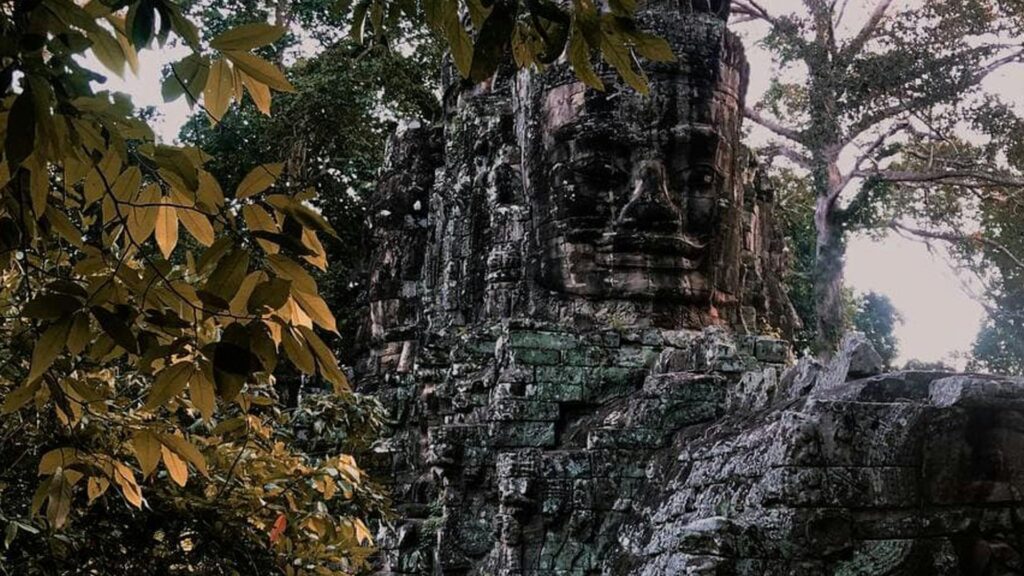
City Guide · Cambodia · Siem Reap Province
Siem Reap, Cambodia: Gateway to Angkor, the World’s Largest Religious Monument and a 400 km² Archaeological Park
Part of our Cambodia travel guide.
I have woken up in Siem Reap before sunrise more times than in any other Asian city, and the routine never gets old. The pre-dawn tuk-tuk hum, the moat-side crowd that thins out by 7:30 a.m., the five lotus-bud towers of Angkor Wat coming out of the dark in silhouette: it remains the single most rewarding sunrise on the global tourism map. Siem Reap is a small, walkable provincial capital — under 200,000 people in the urban core — wrapped around a 400 km² archaeological park that contains the magnificent remains of the Khmer Empire’s capitals from the 9th to the 15th century . The new Siem Reap Angkor International Airport (SAI) opened in October 2023 about 50 km east of the city and replaced the old Soviet-era REP airfield to ease pollution pressure on the temples . Treat this guide as the brief I would hand a friend the night before they cleared customs at SAI for a four-day temple-and-night-market trip.

Table of Contents
Why Siem Reap?
Siem Reap is the small provincial capital that sits 6 km south of the southern boundary of the Angkor Archaeological Park, the largest religious-and-archaeological landscape in Southeast Asia and a UNESCO World Heritage Site since 1992 . The park stretches over roughly 400 km² and contains the remains of the different capitals of the Khmer Empire from the 9th to the 15th century . The headline monument is Angkor Wat itself — the largest religious monument in the world by area, built by King Suryavarman II in the early 12th century — but the park also contains the 9 km² walled royal city of Angkor Thom (with the Bayon’s 216 stone faces at its centre) and roughly seventy other major temples spread across what is functionally an archaeological state-park the size of central Los Angeles.
What makes Siem Reap singular is the contrast register between town and temples. The town itself is genuinely small — under a quarter-million people in the urban district per the Cambodian National Institute of Statistics population figures — and is built around a single tree-lined river, three night markets and a dense colonial-era grid that you can walk end-to-end in twenty minutes. Step out of that grid and within a ten-minute tuk-tuk ride you are at the south gate of Angkor Thom passing under a 23-metre causeway of stone deities. The Tonle Sap, Southeast Asia’s largest freshwater lake and a UNESCO Biosphere Reserve since 1997 , sits 12 km south at the end of a flat road and floods to seven times its dry-season size each monsoon.
Siem Reap is also the entry point for most international visitors to Cambodia. The new Siem Reap Angkor International Airport (SAI) opened on 16 October 2023 with a 3,600 m runway and 38 gates, replacing the old REP airport that sat too close to the temples and contributed to airborne pollution damage . Cambodia welcomed roughly 6.7 million international arrivals in 2024 according to Ministry of Tourism figures, and Siem Reap accounts for the largest share of those visits . Plan four full days here — two for the Angkor “small circuit” and Angkor Wat sunrise, one for the “grand circuit” plus Banteay Srei, and one for the Tonle Sap and the night-market town itself.

Best Time to Visit Siem Reap
Siem Reap has a tropical wet-and-dry climate with two clean seasons. The dry season runs roughly November to April, and the wet (monsoon) season runs roughly May to October . Average year-round temperatures sit between 25°C and 31°C ; April and May are the peak-heat shoulder, with daytime highs regularly above 35°C and short spikes above 39°C as the monsoon builds . The clean travel window is November to early March — dry, sunny, low humidity, and the 3-day Angkor Pass holds its full value because every sunrise will be photogenic .
Cool Dry (November – February)
The best season by a wide margin and the global tourism peak . Daytime highs settle into the 28–32°C band, humidity drops below 70% , and the monsoon rice paddies still carry the green of the late wet season. Sunrise at Angkor Wat clears about 06:15 in November and 06:25 in January . Book accommodation 6–8 weeks ahead for late-December and Khmer New Year overlap weeks; pre-pandemic crowding at the Angkor Wat western reflection pool has rebuilt since 2023 .
Hot Dry (March – Early May)
The hottest weeks of the year . April highs in Siem Reap regularly clear 35°C and can reach 39–40°C in the temple courtyards, where the radiant heat off the sandstone is genuinely difficult before 09:00 . The Khmer New Year (Chaul Chnam Thmey) falls 13–16 April annually and is the single largest domestic travel week of the Cambodian calendar ; the temples are crowded but the city has a festive parade-and-water-throwing energy that is genuinely worth seeing if you can handle the heat. Book everything 8+ weeks ahead.
Wet (May – October)
The monsoon . May and June are warm and showery; July and August see daily afternoon thunderstorms; September is the wettest month and the Tonle Sap is at peak flood — the only time of year you can boat between the half-submerged forest of Kampong Phluk on a kayak rather than a longtail . The trade-off is glassy moats, brilliant green rice paddies, and 30–40% lower hotel rates. The Siem Reap weather pattern is a typical Southeast Asian monsoon — heavy rain rarely lasts more than two hours and the morning windows usually stay dry .
Shoulder (Late October – Early November)
The most under-rated window. Rain has tapered, the rice paddies are still green, the Tonle Sap is still at high water for floating-village access , and accommodation rates have not yet hit December-January peaks. The Bon Om Touk Water Festival in early November in Phnom Penh is the year’s second-largest domestic celebration ; Siem Reap quiets by comparison and you can have a near-empty Angkor Wat sunrise on a Tuesday morning.
Getting There — Siem Reap Angkor International Airport (SAI)
The new Siem Reap Angkor International Airport (SAI) opened on 16 October 2023 in Sotr Nikum District, roughly 50 km east of central Siem Reap. The airport replaced the old REP airfield (which closed to commercial traffic the same day) and operates a 3,600 m runway and 38 gates capable of handling wide-body aircraft including the A350-900 and B777-300ER . Direct flights connect Siem Reap to Bangkok, Singapore, Kuala Lumpur, Ho Chi Minh City, Hanoi, Hong Kong, Seoul-Incheon, Guangzhou and Phnom Penh, with seasonal additions to Taipei and Doha . The airport-to-town transfer runs 45–60 minutes by taxi (US $30–35 fixed) or 60–75 minutes by shared shuttle (US $10).
Most travellers arrive on an eVisa issued by the Ministry of Foreign Affairs and International Cooperation; the official portal is evisa.gov.kh and the fee is US $36 for a 30-day single-entry tourist visa . The MFAIC publishes a list of fraudulent eVisa lookalike sites; only use the .gov.kh domain . Visa-on-Arrival at SAI is available for most nationalities at US $30 plus one passport photo; bring small US-dollar bills. Overland buses from Bangkok via Poipet (10–12 hours, around US $25) and from Phnom Penh (5–6 hours, US $13–18) are the alternative gateways. The Phnom Penh–Siem Reap road is now the new Phnom Penh–Sihanoukville-grade expressway and the journey is far smoother than its 2010s reputation.
Getting Around — Tuk-Tuks, PassApp and the Temple Circuit
Tuk-Tuks (Remorks)
The Cambodian tuk-tuk (more accurately a remork — a covered passenger trailer pulled by a small motorbike) is the single most common form of city transport and the default temple-circuit vehicle . A typical small-circuit day-rate (Angkor Wat → Bayon → Ta Prohm) runs US $18–25 for a half-day, US $25–35 for the full day with a sunrise start, and US $35–45 for the grand-circuit-plus-Banteay-Srei loop including the 35 km outbound run to the pink-sandstone temple . Most guesthouses arrange a regular driver; the same driver across three days is the norm and the tipping standard is roughly 10–15% on top of the daily rate.
PassApp and Grab
For inside-town point-to-point trips, PassApp (Cambodia’s domestic ride-hailing app) and Grab both operate in Siem Reap . PassApp tends to undercut tuk-tuk drivers for short hops by 20–30% — a Pub Street-to-Old Market run typically costs US $1.50–2.50 by PassApp versus US $3–4 by street-flagged tuk-tuk. The drivers are the same fleet of remorks; the app simply meters the fare and removes the negotiation. Both apps accept linked international Visa/Mastercard cards.
Bicycles and Walking
The town centre is genuinely walkable end-to-end in 20 minutes. The Old Market → Pub Street → Wat Bo → Royal Gardens loop covers the main grid in an hour. Bicycles rent for US $2–4 per day from most guesthouses and remain a popular Angkor option for fit travellers in the cool-dry season; expect to ride 25–35 km on a full-loop temple day, which is real work in 32°C. The Grand Circuit by bicycle is about 26 km, the Small Circuit about 17 km, and the run out to Banteay Srei is too far for most riders.
Hire-Cars and Private Drivers
For multi-temple days at the outer edges of the park (Beng Mealea, Koh Ker, Phnom Kulen), a private air-conditioned car with English-speaking driver runs US $55–75 per day and is the right call once daytime temperatures clear 33°C. Hotel travel desks book these and most have a standing rate-card. The Angkor temples open from 05:00 (sunrise temples) to 17:30 (sunset cut-off); the Bakong, Phnom Bakheng and Pre Rup sunset windows close at 19:00 specifically to manage tail-end crowds .
The Angkor Temples
The Angkor Pass — How Tickets Work
Every visitor over 12 needs an Angkor Pass to enter the park. The 2026 official prices, set by the state-owned Angkor Enterprise, are US $37 for a 1-day pass, US $62 for a 3-day pass (valid on any 3 days within a 10-day window), and US $72 for a 7-day pass (valid on any 7 days within a 30-day window) . The 1-day pass requires no photo; the 3- and 7-day passes are individually photographed at the time of purchase and laminated with your face on the front. Children under 12 enter free with a passport for proof of age. Buy passes at the main Angkor Ticket Centre on Apsara Road (open 04:30–17:30 daily) or online at ticket.angkorenterprise.gov.kh; self-service kiosks at the Heritage Walk Mall in town are the third option .
Angkor Wat (12th Century)
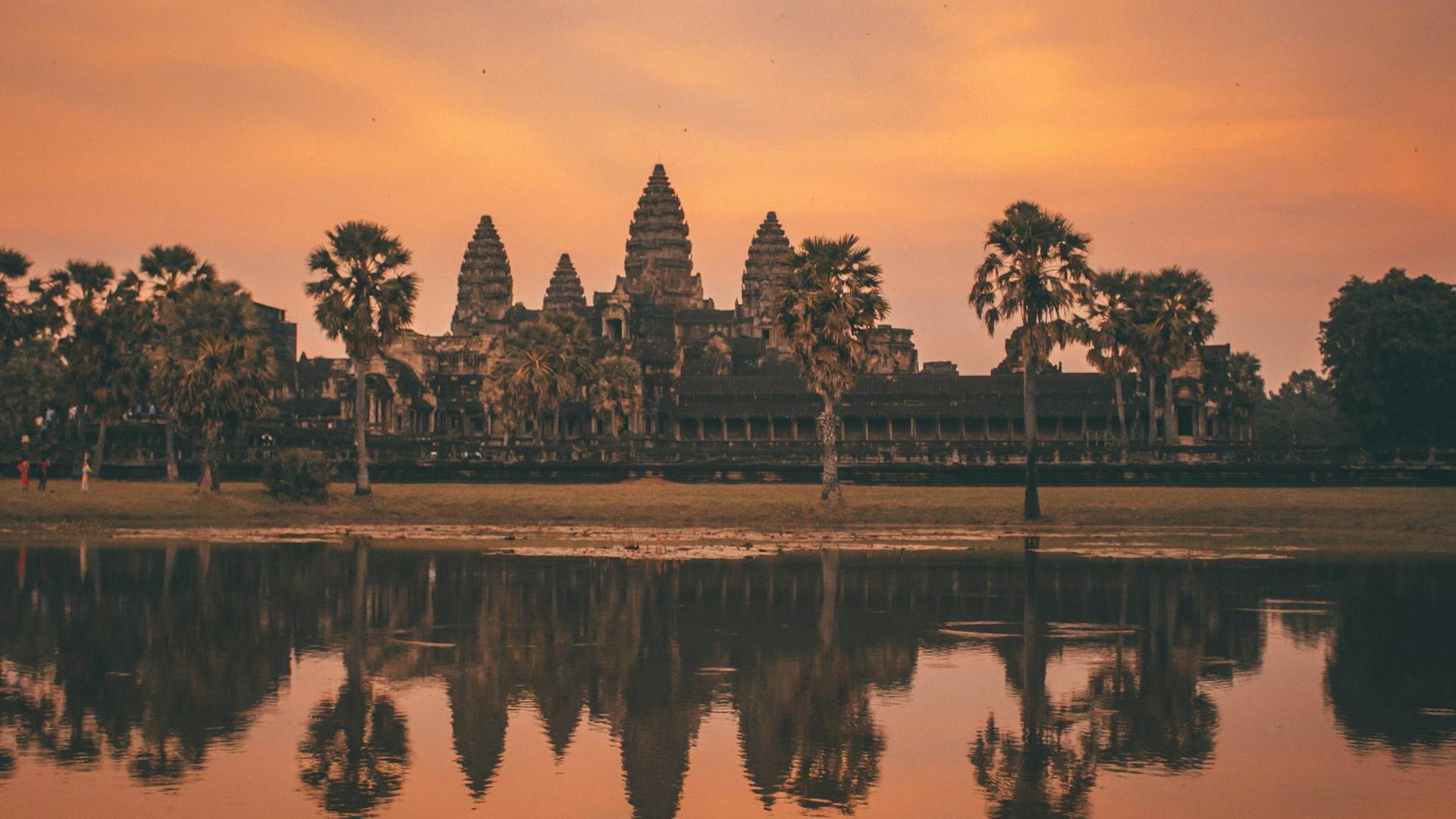
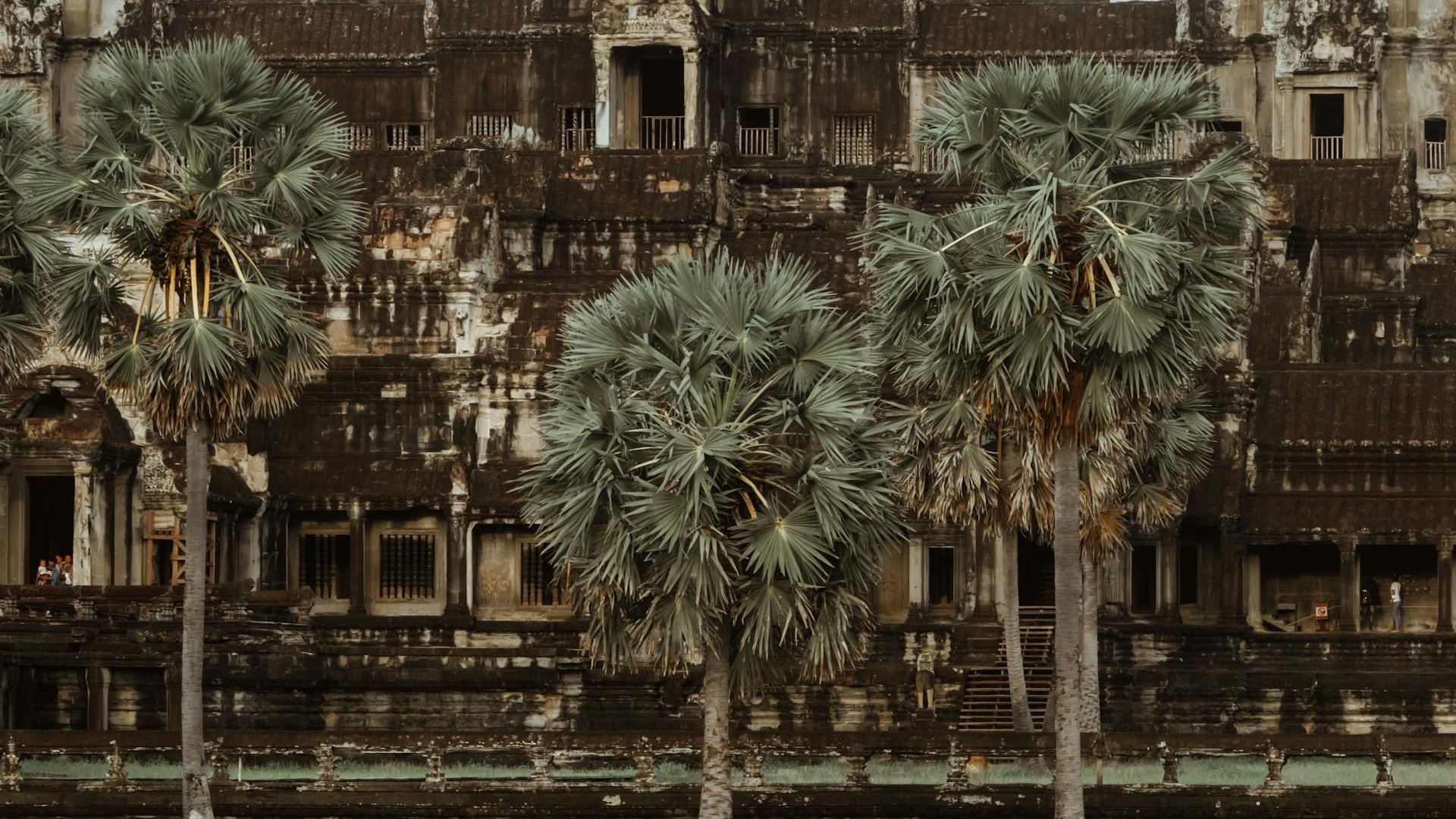
Built by King Suryavarman II between roughly 1113 and 1150 CE, Angkor Wat is the largest religious monument in the world by area — a 162-hectare complex enclosed by a 1.5 km × 1.3 km moat . The five lotus-bud towers represent Mount Meru, the cosmic mountain at the centre of Hindu and Buddhist cosmology; the temple was originally dedicated to Vishnu but converted to a Theravada Buddhist site in the 13th–14th centuries and has remained in continuous Buddhist use since. The eastward-facing reflection-pool sunrise photograph (the canonical Cambodia tourist image) is taken from the north pool 100 m inside the western entrance gate; the southern reflection pool is the lesser-known and far less crowded alternate angle. Allow 2.5–3 hours inside the complex even on a fast pass.
Angkor Thom and the Bayon (Late 12th Century)
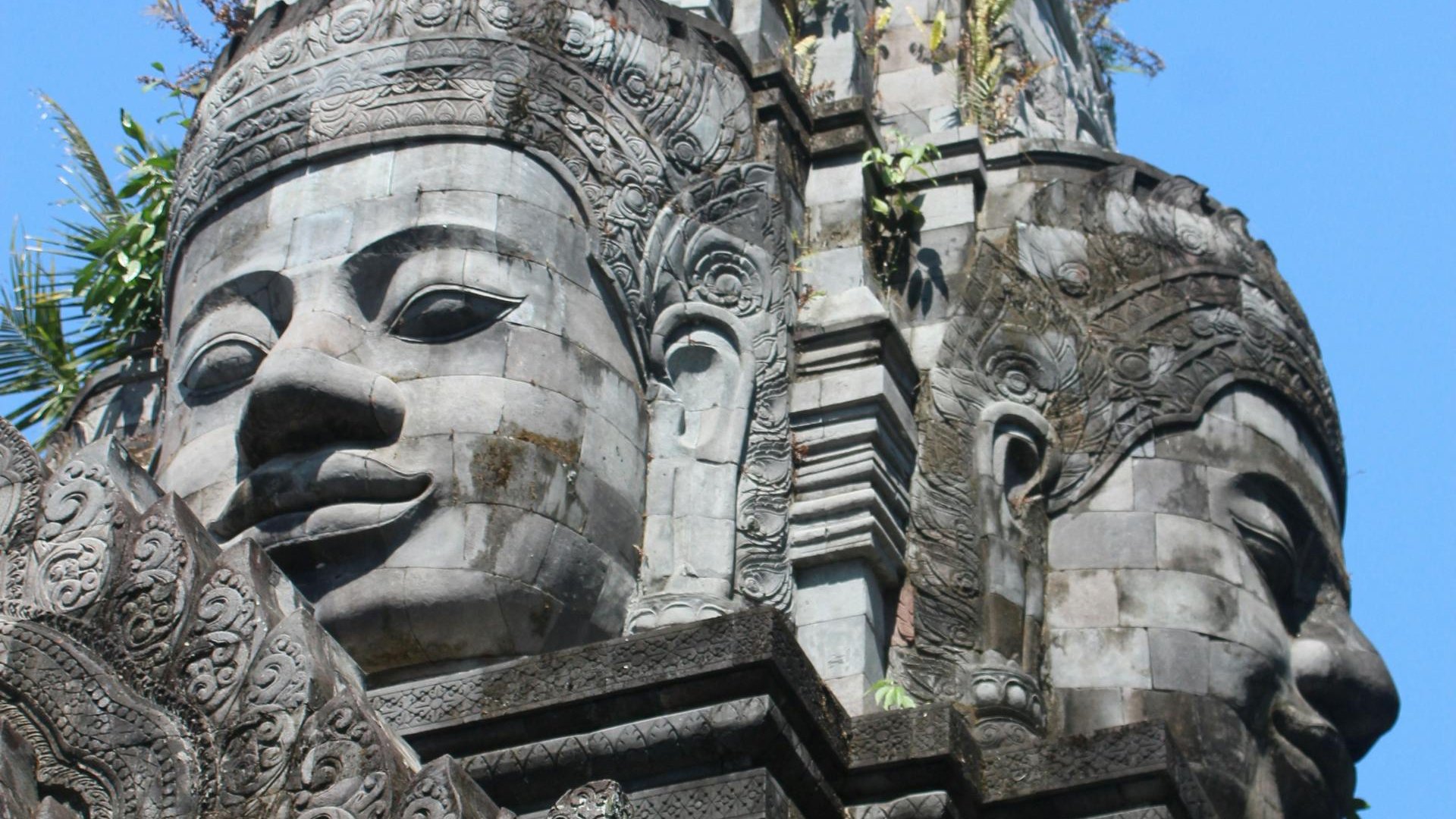
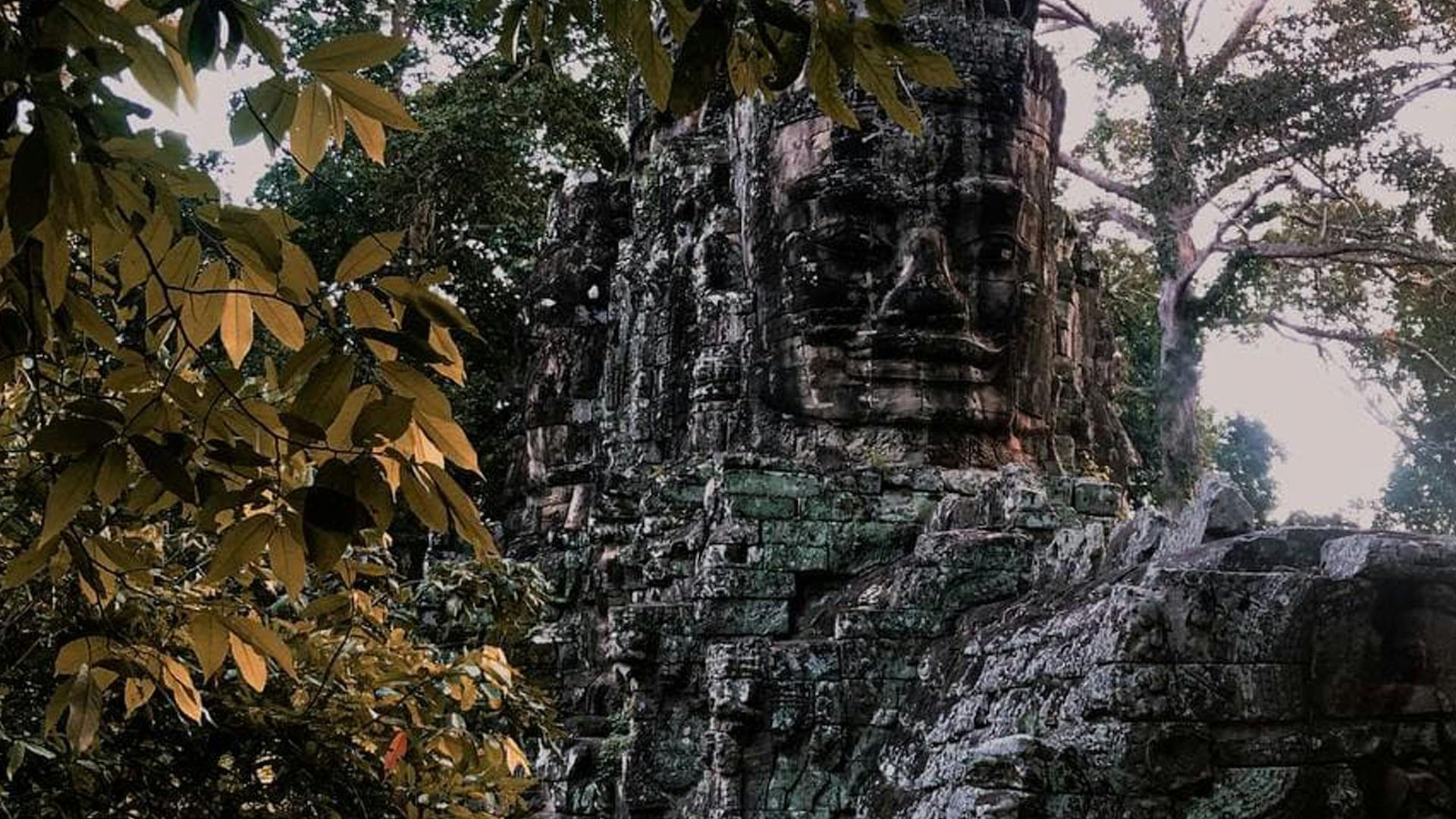
Angkor Thom is the 9 km² walled royal city built by King Jayavarman VII around 1190 CE, and the Bayon at its centre is the most distinctive temple in the entire Angkor complex — 54 towers carved with 216 enigmatic stone faces gazing in the four cardinal directions . The faces are widely interpreted as the bodhisattva Avalokiteshvara fused with the king’s own portrait; whatever the iconography, the Bayon’s middle-terrace face-to-face encounter is the single best 30 minutes in the park. The south gate of Angkor Thom is the iconic causeway flanked by 54 stone deities (devas on the left, asuras on the right) pulling on the body of a giant naga — the “Churning of the Sea of Milk” mythology rendered as a 200 m approach.
Ta Prohm (Late 12th Century)
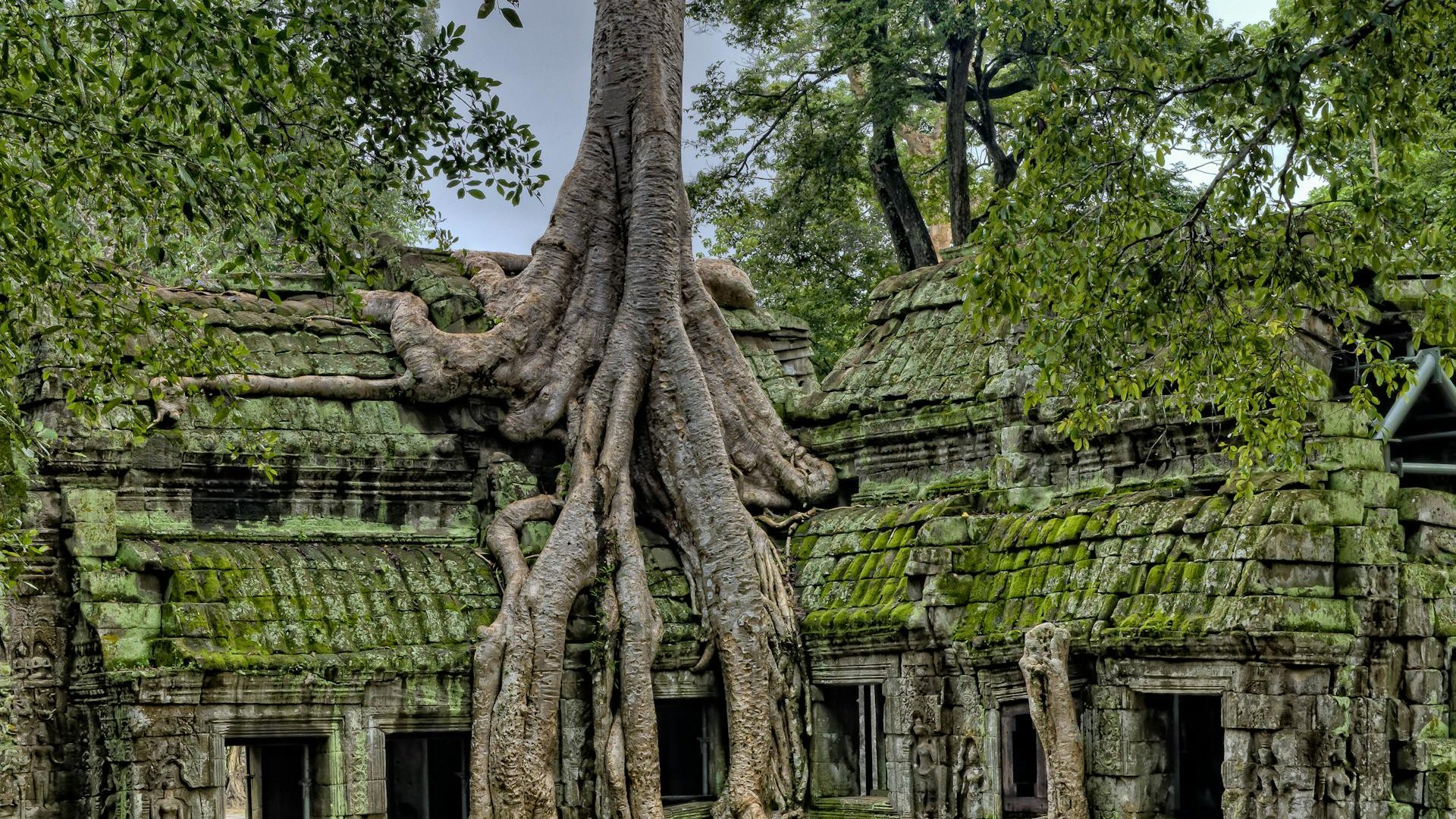
The “Tomb Raider temple” — its strangler-fig and silk-cotton tree roots have grown into and through the sandstone walls and are themselves now structural . APSARA Authority and the Archaeological Survey of India have intentionally left the trees in place as a deliberate conservation choice, making Ta Prohm the canonical visualisation of jungle reclaiming a temple. Crowded between 09:30 and 14:30; the 16:30 golden-hour window after the tour-bus wave clears is the best slot.
Banteay Srei (10th Century, Pink Sandstone)
The 967 CE “Citadel of the Women” sits 35 km north-east of Siem Reap, takes about 55 minutes by car or 75 minutes by tuk-tuk to reach , and is built almost entirely from a hard pink sandstone unique to the region. The relief carvings are the most intricate and best-preserved in the entire Angkor canon — French explorer Henri Marchal described them as the work of a master jeweller working in stone. Pair Banteay Srei with the Cambodia Land Mine Museum on the same outbound run.
Other Temples Worth a Stop
- Preah Khan — Late-12th-century “sacred sword” temple, less crowded, walkable in 60 minutes
- Banteay Kdei & Sras Srang — Smaller monastic temple plus the royal bathing pool; perfect 16:00 sunset stop
- Pre Rup — 961 CE pyramid-temple; one of the official sunset platforms (alongside Phnom Bakheng)
- Beng Mealea — 60 km east, partly collapsed and unrestored, the “raw” temple experience
- Koh Ker — 120 km north-east, brief 10th-century capital with a 36 m stepped pyramid (Prasat Thom)
Neighborhoods of Siem Reap
Old Market & Pub Street (Central Grid)
The colonial-era core, four blocks each side of the Siem Reap River . The Old Market (Phsar Chas) is the authentic produce-and-fabric market that opens by 06:00 and closes by 17:00 ; the back lanes around it have the highest density of independent restaurants, family-run massage parlours and tuk-tuk pickups in the city. Pub Street itself — the pedestrianised one-block stretch between the Old Market and Wat Damnak bridge — is the night-market anchor and turns into a moving river of LED signs, cocktail buckets and street-food carts after 19:00. Not subtle but emphatically authentic; almost every traveller spends at least one evening here.
- Old Market — produce + fabric, 06:00–17:00
- Pub Street — night-market spine, 19:00 onwards
- Alley West — quieter restaurants, craft cocktails
Best for: first-time visitors, late-night arrivers, shopping. Access: walking distance from any central hotel.
Wat Bo District
The east bank of the Siem Reap River, anchored by the 18th-century Wat Bo pagoda — the oldest Buddhist temple in town and home to a unique set of mural paintings depicting the Reamker (the Khmer Ramayana) . The neighbourhood is residential, leafier than the central grid, and has the city’s strongest concentration of mid-tier boutique hotels and quietly excellent independent restaurants (Banlle, Pou Restaurant, Sister Srey).
- Wat Bo pagoda — Reamker murals
- Banlle (East) — vegan Khmer fine dining
- Pou Restaurant — modern Khmer tasting menus
Best for: mid-trip slowdown, coffee culture, food-focused stays. Access: 10-minute walk or US $1.50 PassApp from Pub Street.
Kandal Village (Hap Guan Street)
The boutique-lifestyle pocket: independent fashion, third-wave coffee, design studios and hand-bound book shops along the 200-metre stretch of Hap Guan Street north-west of the Royal Gardens . The vibe is closer to Hoi An or northern Bangkok than to the Pub Street grid; expect higher price points and more deliberately styled cafés. Anchor stops include Sister Srey Café, Footprint Café (a non-profit bookshop), and the Trunkh design store.
- Sister Srey Café — Khmer breakfast, social-enterprise model
- Footprint Café — non-profit bookshop and library
- Trunkh — handmade design and homewares
Best for: coffee crawls, gift shopping, slow mornings. Access: 15-minute walk north-west of the Old Market.
Royal Gardens & Charles de Gaulle Axis
The leafy boulevard stretching north from the city centre to the Angkor Wat south gate, lined by colonial-era heritage hotels (Raffles Grand Hotel d’Angkor, Park Hyatt) and the city’s most ambitious civic-park infrastructure . Walk it at sunset for the bat-roost spectacle — the Royal Gardens trees host an enormous fruit-bat colony that takes flight at dusk in a 20-minute swirl. The strip is also the spine for most luxury accommodation and several of the city’s best fine-dining rooms (1932 at Raffles, The Living Room at Park Hyatt).
- Royal Gardens — fruit-bat colony at sunset
- Raffles Grand Hotel d’Angkor — 1932 Elephant Bar
- Park Hyatt Siem Reap — Living Room afternoon tea
Best for: luxury stays, sunset walks, heritage-hotel drinks. Access: 10-minute walk north of Pub Street.
Sok San Road
The west-side “new” nightlife strip — bigger clubs, longer happy hours, more late-night kebab. Less photogenic than Pub Street but cheaper for late drinks (50¢ draft Angkor and US $1 cocktails are the standard offer). The road has been cleaned up considerably since 2023 and is now the default for the city’s expat and long-term-traveller crowd.
- Sok San Hostels — backpacker dorms US $7–12
- Late-night kebab and shawarma stretch
- Angkor Beer happy-hour spine
Best for: backpackers, long-stay expats, late-night appetites. Access: 10-minute tuk-tuk west of Old Market.
The Food

Khmer cuisine is the most under-rated of the major Southeast Asian food cultures . It shares a vocabulary with Thai and Vietnamese cooking — fish sauce, lemongrass, kaffir lime, palm sugar — but the flavour profile is distinct: less heat than Thai, more herb-forward than Vietnamese, and built around the fermented-fish paste prahok as the umami base of almost every traditional dish. Siem Reap has more accessible high-quality Khmer cooking per square metre than any other city in the country, in large part because international tourism funds the kind of restaurant economics that lets serious chefs work outside Phnom Penh. The official Cambodian tourism ministry puts Khmer cuisine at the centre of the country’s soft-power positioning .
Amok
The national dish — fish (or sometimes chicken) steamed in a banana-leaf cup with a coconut-and-kroeung curry paste (lemongrass, galangal, turmeric, kaffir lime, garlic, shallot, chili) . Authentic amok trei uses freshwater snakehead from the Tonle Sap and is custard-textured rather than soupy; the Pub Street tourist-grade version often substitutes coconut-cream-heavy chicken curry, which is a legitimate dish but is not amok.
- Cuisine Wat Damnak — Joannès Rivière’s 6-course tasting menus, US $30 per person, the city’s most ambitious modern Khmer kitchen
- Pou Restaurant — Modern Khmer in a restored 1930s villa, US $35 tasting menu
- Marum — TREE Alliance social-enterprise restaurant, US $5–9 mains, training kitchen for at-risk youth
Kuy Teav (Khmer Noodle Soup)
The Cambodian breakfast bowl — clear pork-bone broth, rice noodles, sliced pork, bean sprouts, fried garlic, lime and fresh herbs . The Khmer answer to Vietnamese pho, with a less-aniseed, more-pork-forward profile. Best eaten at the Old Market food court between 06:00 and 09:00 for US $1.50–2.50 per bowl.
- Old Market food court (Phsar Chas) — Roughly twelve kuy teav stalls, all under US $2.50
- Bayon Noodles (Wat Bo) — The local-favourite kuy teav for early shifts and tuk-tuk drivers
- Khmer Family Noodle — Sok San Road, late-night version with extra herbs
Lok Lak
Stir-fried beef in a black-pepper-and-soy sauce, plated over lettuce-and-tomato salad, served with a lime-pepper dipping sauce on the side . The most universally accessible Khmer dish for first-time visitors and the one most likely to convert sceptics. US $4–7 at any sit-down restaurant.
Nom Banh Chok (Khmer Rice Noodles)
The breakfast-of-the-rural-fields dish — fresh rice noodles served cold with a yellow fish-curry gravy poured over them and a fistful of raw banana flower, mint, basil and bean sprouts on top . Best eaten before 09:00 from the rolling carts that set up around the Royal Gardens and outside Wat Damnak. US $1–1.50 per bowl.
Markets and Street Food
Siem Reap has three major night markets that turn on between 17:00 and 18:00 daily . The Angkor Night Market (the original) sits on Sivatha Boulevard and skews craft-and-textile; the Made in Cambodia Market at Kandal Village is the best for ethically-sourced gifts; and the Noon Night Market across the river is the food-cart anchor — at least forty grills, fryers and noodle stalls operating under string lights until midnight. Expect to spend US $5–8 per person for a full grill-and-fruit-shake plate.
Khmer Iced Coffee & Sugarcane Juice
The standard street drink of any Cambodian city — strong dark-roast Vietnamese-style coffee filtered through a phin, hit with a generous spoon of sweetened condensed milk, and poured over ice . US $1–1.50 from any cart. Sugarcane juice (tuk umpov) sold from the bicycle-mounted hand-cranked presses is the daytime alternative — US $0.50 a glass and reliably non-dodgy if the ice is from a sealed bag.
Cooking Classes
Half-day Khmer cooking classes run US $15–35 per person and are one of the city’s consistent traveller highlights . Most include a market visit (Phsar Chas), four standard dishes (typically amok, lok lak, fresh spring rolls and a green papaya salad) and a take-home recipe booklet. Recommended operators: Ahaa Cooking, Khmer Cooking Class with Sokha, and Champey Cooking Class.
Culture, Phare Circus & the Tonle Sap
Phare, The Cambodian Circus
The single best non-temple evening in Siem Reap. Phare is a contemporary circus-and-theatre company performing nightly under a dedicated big-top tent off Sok San Road; the performers are graduates of Phare Ponleu Selpak, the social-enterprise arts school in Battambang founded in 1994 by nine young Cambodians returning from a Thai border refugee camp . The 60-minute show blends acrobatics, modern dance, live music and visual storytelling drawn from Cambodian history, folklore and contemporary social issues; ticket prices run US $18–38 with the proceeds funding the Battambang school . Showtime is 20:00; pre-show food-and-drink window opens at 17:30. Book at least 48 hours ahead in cool-dry season.
Tonle Sap and the Floating Villages
The Tonle Sap is Southeast Asia’s largest freshwater lake — roughly 2,500 km² in dry season expanding to 16,000 km² at the September flood peak — and a UNESCO Biosphere Reserve since 1997 . The lake’s annual reverse-flow (the Tonle Sap River literally changes direction twice a year as the Mekong floods up into the lake basin) is one of the most distinctive hydrological systems on Earth and supports about 60% of Cambodia’s freshwater fish supply.
Three floating-village experiences are accessible from Siem Reap as half-day trips:
- Kampong Phluk — 22 km south, technically a stilted-house village rather than a fully floating one; the wet-season approach via flooded mangrove forest by rowboat is the best of the three. Best September–January.
- Kampong Khleang — 50 km east, the largest of the lake-edge villages with roughly 6,000 residents and a more authentic working-village atmosphere; a half-day trip rather than a quick stop.
- Chong Kneas — The closest floating village to Siem Reap (15 km) and the most heavily visited; the high tourist density has made it the worst-value option for most travellers and we no longer recommend it.
Choose Kampong Phluk in October–January for the mangrove rowboat, Kampong Khleang in February–April for the dry-season working-village walk, and skip Chong Kneas regardless of season.
Apsara Dance Performances
Apsara is the classical Khmer court dance, choreographed around the celestial dancers carved into the Angkor temple walls and registered on the UNESCO Representative List of the Intangible Cultural Heritage of Humanity in 2008 . Most large hotels run a buffet-and-dance evening (US $25–40 per person, mid-range) which is the easiest exposure but is heavily abridged. The serious option is the dedicated Apsara Theatre at the Angkor Village Resort or the Royal University of Fine Arts performances in Phnom Penh (Saturday evenings, US $15).
Angkor National Museum
The 20,000 m² archaeological-context museum on Charles de Gaulle Boulevard. Eight permanent galleries cover the Hindu and Buddhist iconography of Angkor, the rise and decline of the Khmer Empire, and a stunning 1,000-Buddha-images hall. Two-hour visit; US $12 entry plus US $5 for English audio guide. Best done before the temples to give the carvings their context.
Cambodia Land Mine Museum
The non-profit museum founded by Aki Ra, a former Khmer Rouge child soldier turned demining advocate. Located 30 km north-east of Siem Reap on the road to Banteay Srei, the museum displays roughly 5,000 disarmed mines and ordnance and runs an on-site relief centre for child amputees. US $5 entry, all proceeds fund clearance work; most Banteay Srei tuk-tuk drivers will pair the two stops on a single outbound day.
Day Trips from Siem Reap
Banteay Srei + Land Mine Museum (35 km, half-day)
The pink-sandstone “Citadel of the Women” consecrated in 967 CE is the most exquisite carving anywhere in the Angkor canon and the standard outer-loop day trip . Pair it with the Cambodia Land Mine Museum (10 km closer to Siem Reap on the same road) for a half-day round trip. Tuk-tuk hire: US $25–35; private car US $45–60.
Phnom Kulen National Park (50 km, full day)
The sandstone plateau north-east of Siem Reap that hosted the Khmer Empire’s 9th-century “first capital” (Mahendraparvata, recently mapped by LiDAR) , a major Buddhist pilgrimage temple at Preah Ang Thom (a 7-metre reclining Buddha carved into the bedrock), and a series of seasonal waterfalls that double as the city’s favourite hot-day swimming spot . Entry US $20 per person on top of any temple pass. The 1,000 Linga Riverbed (Kbal Spean) is a pre-Angkorian site of ritual carvings on a streambed; visible in the dry season only.
Beng Mealea (60 km, half-day)
The half-collapsed, fig-covered temple 60 km east of Siem Reap that gives you the Ta Prohm experience without the crowds . Roughly the same era and similar scale to Angkor Wat, intentionally left in a partially-restored state, and reachable in about 90 minutes by private car. A wooden walkway navigates the centre of the ruin. Entry US $5; included in Phnom Kulen day-trip combos.
Koh Ker (120 km, full day)
The 10th-century Khmer capital under King Jayavarman IV (928–944 CE), a brief 21-year imperial seat in the northern jungle that still hosts a 36-metre seven-tier sandstone pyramid (Prasat Thom), several smaller temples and a network of partly-cleared paths . UNESCO inscribed Koh Ker as a separate World Heritage site in September 2023 . Entry US $15. Two-hour drive each way; combine with Beng Mealea for a long-but-rewarding 12-hour day.
Battambang (170 km, overnight)
Cambodia’s second-largest city in the colonial-architecture sense — 19th-century French shophouses, the original Phare Ponleu Selpak campus , the bamboo-train (norry) heritage line, and the Phnom Sampov bat-cave evening spectacle. Three-hour drive each way, best as an overnight rather than a long day-trip. The city is the source of most Khmer fine-art and circus performers including the Phare troupe .
Practical Tips
Visa & Entry
Most nationalities can use the official eVisa (US $36, 30-day single entry) issued by the Ministry of Foreign Affairs and International Cooperation; processing takes 3 business days and the portal is evisa.gov.kh . The MFAIC publishes warnings about lookalike scam sites — only trust the .gov.kh domain . Visa-on-Arrival at SAI is US $30 plus one passport photo; bring small US-dollar bills and arrive with a printed onward-ticket itinerary. Passport must be valid 6+ months from the date of entry. Children under 12 enter Angkor free with a passport for proof of age.
Currency & Payments
Cambodia operates a dual-currency system. The Cambodian riel (KHR, ៛) is the official currency at a long-standing unofficial peg around 4,100:1 to the US dollar . The US dollar is universally accepted at restaurants, hotels and tour operators, and is in fact the dominant currency in Siem Reap — most price-tags are quoted in USD. Bring crisp small bills (US $1, $5, $10); notes with tears or marks are routinely refused. Riel is used as “change” for sub-dollar amounts (US $0.50 = 2,000 riel). ATMs at ABA Bank, ACLEDA and Canadia all dispense USD; the standard withdrawal fee is US $4–5 per transaction. Card acceptance has grown rapidly since 2023; most mid-range hotels, restaurants and tour operators now take Visa/Mastercard with a 3% surcharge.
Plug, Voltage, Frequency
230V at 50Hz; sockets accept Type A (two flat pins, US/Japan), Type C (two round pins, EU) and Type G (three rectangular pins, UK). Most modern phone/laptop chargers are dual-voltage and work directly. Power cuts of 5–30 minutes are still occasional in the wet season; mid-range and luxury hotels run automatic generators.
Tap Water & Health
Tap water is not safe to drink. Use bottled or filtered water everywhere — including for tooth-brushing if you are sensitive. The CDC’s Cambodia destination page lists routine vaccines (MMR, Tdap, hepatitis A and B, typhoid) plus Japanese encephalitis for long-stay rural travellers . Malaria is essentially absent from Siem Reap and the temple zone but present in remote north-eastern provinces; consult a travel doctor before extended rural stays. Dengue is the more relevant urban risk year-round; use DEET-based repellent and long sleeves at dawn and dusk.
Tipping & Etiquette
Tipping is appreciated but not strictly expected. The standard tip is 10% in mid-range and luxury restaurants, US $1–2 per bag for porters, and US $5–10 per day on top of the tuk-tuk daily rate. Dress modestly at all temples — covered shoulders and knees are required at Angkor Wat’s upper Bakan level (the central tower) and refused at the entrance check otherwise. Remove shoes before entering active Buddhist pagodas. Do not photograph monks without asking, do not point feet at Buddha images, and never touch a child’s head — a Theravada Buddhist taboo.
Budget Breakdown: What Siem Reap Costs in 2026
| Tier | Daily | Sleep | Eat | Transport | Activities | Extras |
|---|---|---|---|---|---|---|
| Budget | $30–55 | Hostel dorm $7–12 | Phsar Chas + street food $8–12 | Tuk-tuk day rate $20 | 1-day Angkor Pass $37 (split over 3-day pass for $20.70/day) | 50¢ Angkor Beer happy hour |
| Mid-Range | $80–140 | Boutique hotel $40–80 | One Pou tasting + walk-in dinners $40 | Private tuk-tuk + 1 Tonle Sap boat | 3-day Angkor Pass $62 + Phare Circus $28 | Massage US $8/hr; cooking class US $25 |
| Luxury | $300+ | Park Hyatt / Raffles / Amansara $400+ | Cuisine Wat Damnak + Embassy $60+ pp | Private car + English-speaking guide | Private guide + sunset Phnom Bakheng | Spa, helicopter Angkor flyover ($180/15min) |
Where Your Money Goes
Siem Reap is one of the cheapest major-tourist destinations in Southeast Asia at the budget tier and one of the best-value mid-range stays anywhere in Asia . The four big-ticket items — accommodation, the Angkor Pass, restaurant meals at the top end, and the airport transfer — together rarely exceed US $400 across a four-day mid-range trip. The 3-day Angkor Pass at US $62 is the single most important spend on the entire trip and the per-day cost falls dramatically if you split it across the full 10-day validity window .
Money-Saving Tips
- The 3-day Angkor Pass at US $62 is US $20.70 per temple day — half the daily rate of the 1-day pass
- Hire one tuk-tuk driver for your full trip; the multi-day rate is roughly 70% of the per-day rate
- Eat dinner from the Phsar Chas night market three of four nights — full plate plus drink for US $5
- Cooking classes (US $25) are the best-value “rainy afternoon” activity and replace lunch
- 50¢ draft Angkor Beer happy hour at every Pub Street and Sok San bar from 17:00–19:00
Frequently Asked Questions
How many days do I need in Siem Reap?
Four full days is the realistic floor for a temple-and-town trip — one for Angkor Wat sunrise plus the small circuit (Bayon, Ta Prohm, Banteay Kdei) , one for the grand circuit (Preah Khan, Neak Pean, Pre Rup), one for Banteay Srei plus the Cambodia Land Mine Museum , and one slow day for the Tonle Sap, Phare Circus and the night markets . Three days works at a stretch (skip Banteay Srei); two days is too short and the temples blur together. Six days is the comfortable sweet-spot for a non-rushed trip and lets you split mornings and afternoons.
Is the 3-day Angkor Pass worth it over the 1-day?
Almost always yes. The 3-day pass costs US $62 and is valid on any 3 days within a 10-day window — meaning roughly US $20.70 per temple day, versus US $37 for the 1-day pass . The savings only matter if you actually spread the days; the bigger benefit is that you can bail on a hot afternoon at 11:00, return for a 16:00 golden-hour second visit, and use the third day for Banteay Srei without juggling tickets. Over 90% of travellers staying 4+ nights buy the 3-day pass.
Is Siem Reap safe?
Among the safer cities in Southeast Asia, with the standard tourist-city caveats . Petty theft (bag-snatching from tuk-tuks, opportunistic pickpocketing on Pub Street) is the realistic risk; violent crime against foreign visitors is rare. Walk on the inside of the pavement away from the road, hold bags on the inside arm of a tuk-tuk, do not flash a phone after 23:00 on a dark street, and do not engage with confrontational scams (the “orphanage charity” tout in particular). Female solo travellers consistently report Siem Reap as a comfortable solo destination.
What about the language barrier?
Lower than its reputation. Khmer is the official language , but English is near-universal in tourism, hospitality and tuk-tuk driving — most drivers and guesthouse staff speak conversational English well above neighbour-country averages. Older heritage-hotel staff often have working French. Learning arkun (thank you), chum reap suor (formal hello) and som tor (please / excuse me) is appreciated and noticeably warms tuk-tuk driver relationships.
Can I drink the tap water?
No . Use bottled or filtered water everywhere, including for tooth-brushing if you have a sensitive stomach. Most mid-range and luxury hotels provide two bottles per room per day at no charge; many cafés and zero-waste shops in Kandal Village offer free refill stations for reusable bottles to reduce plastic. Ice in mid-range and tourist-grade restaurants is made from filtered water and is safe; rural roadside stalls are the realistic risk.
Is Siem Reap good for solo travellers?
Among the best in Asia . The town is small and walkable, English-language tourism infrastructure is mature, hostel social scenes are active on Sok San Road, organised group tours fill any gap on temple days, and tuk-tuk drivers function as informal guides for solo riders. Female solo travellers report Siem Reap as a comfortable destination with the standard developing-country caveats (modest dress at temples, no late-night solo walks far from Pub Street).
What about the temples in monsoon season?
Genuinely good if you can handle wet feet . May–October Angkor is dramatically less crowded — typical Bayon tour-bus density drops by 60–70% relative to December — and the moats and reflecting pools are at peak photogenic. The trade-off is a daily 14:00–16:00 thunderstorm window and slick stone steps at Ta Prohm and Pre Rup. Bring waterproof walking shoes (not flip-flops), a packable rain shell and a dry bag for camera gear. The morning windows usually stay dry and the afternoon storm clears within 90 minutes .
Cambodia or Thailand for a temple trip?
Different products. Thailand’s Sukhothai and Ayutthaya temple parks are sparser, drier and closer to one-day visits; Angkor is denser, wilder, larger and rewards a multi-day commitment . Most travellers benefit from doing both as a regional combination — fly Bangkok to SAI on AirAsia or Vietjet (US $80–150 one-way) , spend four days at Angkor, then continue to Phnom Penh by overland bus or fly back to Bangkok. The 10–12 hour overland border crossing at Poipet is functional but slower than flying; many travellers regret the long-bus option.
Ready to Experience Siem Reap?
Four full days, one 06:00 sunrise tuk-tuk, three temple mornings, one Tonle Sap rowboat afternoon, and a Phare Circus evening — that is the Siem Reap rhythm. For the full country context, read the Cambodia Travel Guide; for the second half of any Southeast-Asia loop, pair Siem Reap with the Bangkok City Guide via a 75-minute direct AirAsia flight.
Explore More City Guides
- Bangkok City Guide — Thailand’s capital, the standard regional gateway, 75 min by direct AirAsia flight
- Hanoi City Guide — Vietnam’s capital and the closest peer for Old Quarter atmospherics
- Luang Prabang City Guide — UNESCO sister-city across the border in Laos
- Reykjavík City Guide — Tier-A peer guide and the FFU gold-standard reference
- Cambodia Country Guide
Alex the Travel Guru
Alex has been writing destination guides for FFU since 2019, with three Siem Reap trips on the docket and a 04:30-tuk-tuk-to-Angkor-Wat habit that survives jet-lag. Siem Reap is the one Asian city where the headline attraction over-delivers on every single visit; the temples grow in proportion to the time you spend with them, and the town itself becomes the unexpected pleasure on the second trip rather than the first. For the full country context, read the Cambodia Travel Guide.
More city guides you might like
Plan your trip to Siem Reap
The booking tools we use ourselves. FFU may earn a commission at no extra cost to you.
Plan & book your trip to Siem Reap
Booking through these searches supports our guides at no extra cost to you.