
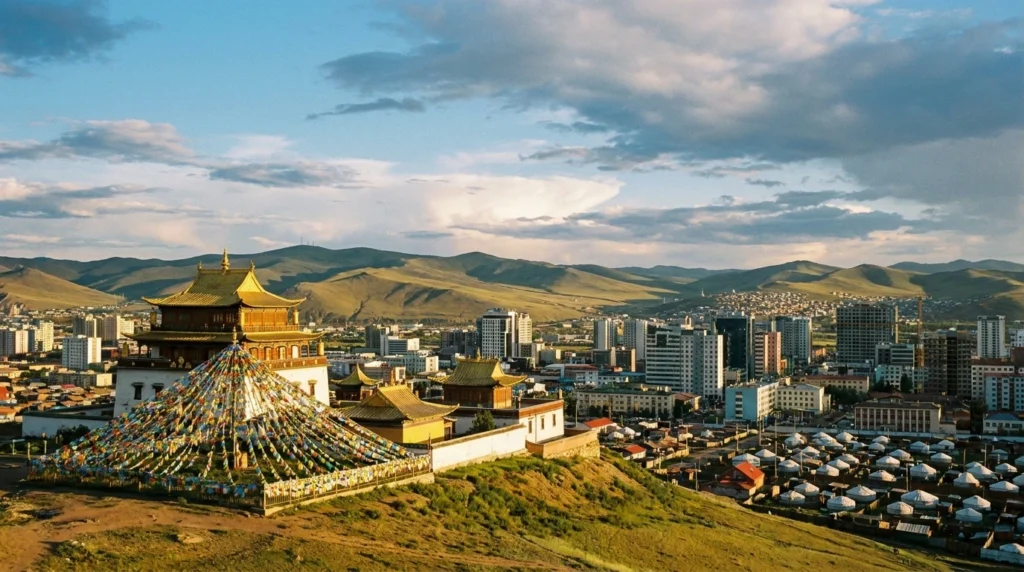
City Guide · Mongolia · The Tuul Valley
Ulaanbaatar, Mongolia: Gateway to the Steppe and the World’s Coldest Capital
I have landed at Chinggis Khaan in the thin gold light of a September afternoon and stepped off the same plane in January into a cold so absolute it felt like a physical wall, and the first thing I tell anyone flying into Ulaanbaatar is that this city is a paradox you have to lean into rather than resolve. It is a low-rise Soviet grid colliding with glass towers, a traffic-choked valley capital that empties straight onto open grassland, and the place where almost half of all Mongolians now live within sight of the steppe their grandparents rode across. We treat UB — everyone shortens it — as the front door to the whole country: the spot where every Gobi expedition, every horse trek, and every Naadam summer is provisioned, permitted, and celebrated. Treat this guide as the briefing I hand my own friends before they fly into the Tuul valley.

Table of Contents
Why Ulaanbaatar?
Ulaanbaatar is the capital of Mongolia and overwhelmingly its largest city, with roughly 1.7 million people in the metropolitan area — close to half the entire national population packed into a single valley. It sits at about 1,300 metres on the Tuul River, ringed by four sacred mountains at the south-western edge of the Khentii range, and it holds the unusual distinction of being the coldest capital city in the world by average annual temperature. That combination — a high, cold, fast-growing city dropped into the middle of one of the emptiest countries on Earth — is the whole story of the place.
The history is brisk and improbable. The city began in 1639 as a movable Buddhist monastic camp and shifted location dozens of times before settling permanently on the Tuul in 1778; it took its present name, meaning “Red Hero,” only in 1924 when the Mongolian People’s Republic was proclaimed and made it the capital. Seven decades of close alliance with the Soviet Union left the bones you still walk through today — the wide ceremonial square, the apartment blocks, the theatres — while the post-1990 democratic era added the glass towers, the traffic, and the sprawling ger districts climbing the surrounding hills.
The scale claim that matters most to a traveller is this: almost everyone who visits Mongolia passes through Ulaanbaatar, because it is effectively the country’s only major international gateway. Mongolia welcomed a record 727,400 foreign tourists in 2024, generating around US$1.5 billion in revenue, and roughly a quarter of all arrivals came in through the new Chinggis Khaan International Airport south of the city. Whatever you have come to Mongolia for — the Gobi, the Khangai, a horse trek, the eagle hunters of the far west — your trip very likely begins and ends here.
The contradiction underneath those numbers is what makes UB worth a couple of days rather than a single overnight on the way to the steppe. This is at once a deeply Buddhist city — Gandantegchinlen monastery never fully closed even under communism — and a young, hard-partying, rapidly modernising capital where cashmere flagship stores sit a block from a 17th-century temple. It is also a city with real growing pains: winter air pollution from coal-burning ger districts is among the worst in the world, and the valley’s traffic can turn a short hop into a long crawl.
This guide covers the central districts you will actually use, from Sukhbaatar Square and the Peace Avenue spine to the ger districts climbing the hills; the food scene behind buuz, khuushuur, and the new wave of cafes; the monasteries, museums, and monuments worth your limited city time; the day trips that turn UB into a base camp for the Genghis Khan statue, Terelj’s rock formations, and the open steppe; and the transit, budget, altitude, pollution, and seasonal details first-time visitors need to plan a trip in any month.

Neighborhoods: Finding Your Ulaanbaatar
📍 Ulaanbaatar Map: Every Place in This Guide
Ulaanbaatar reads less like a city of distinct quarters than like a single dense valley core surrounded by an enormous, informal apron of ger districts climbing the hills. The fastest way to make sense of it is to think in two layers. At the centre sits the Soviet-planned downtown — Sukhbaatar Square, the Peace Avenue spine, and the museum and theatre district around them — where almost everything a short-stay visitor wants is within walking distance. Around and above it spread the residential districts, from the apartment blocks of Bayanzurkh and Khan-Uul to the sprawling ger settlements where new arrivals from the countryside still pitch their felt tents on plots of bare hillside. A willingness to combine walking the centre with short taxi or ride-app hops will get you through everything below.


Read the districts below as a sweep from the planned centre outward to the ger districts and the residential suburbs. Most visitors base themselves in or just off the central downtown, within walking distance of Sukhbaatar Square, and day-trip out to the monasteries and the countryside; whichever base you choose, plan your days by geography rather than by checklist, because the valley’s traffic punishes back-and-forth crossings at rush hour.
Sukhbaatar Square & the Civic Centre
The ceremonial heart of the city and the country: a vast paved square dominated by the colonnaded Government Palace, with its seated bronze of Chinggis Khaan (Genghis Khan) gazing south, and the equestrian statue of revolutionary hero Damdin Sukhbaatar at its centre. The surrounding blocks hold the National Museum of Mongolia, the State Opera and Ballet Theatre, the Central Post Office, and the smart cafes and offices of the modern capital. It is the obvious orientation point, walkable end to end, and the stage for the Naadam opening ceremony each July. By day the square fills with office workers crossing on their lunch break, wedding parties posing for photographs, and children chasing pigeons across the granite; by night it is floodlit and quiet, a good place to feel the scale of the capital after the traffic has died down. Almost every first-time visitor ends up here within an hour of arriving, and it is the natural place to begin and end a day of sightseeing.
- Government Palace and the Chinggis Khaan statue
- The Damdin Sukhbaatar equestrian statue at the centre
- The State Opera and Ballet Theatre on the south-east corner
Best for: orientation, museums, photography, civic grandeur. Access: central and walkable; most downtown hotels are within ten minutes.
Peace Avenue (Enkh Taivny Örgön Chölöö)
The long east–west boulevard that is the city’s commercial spine, running past the State Department Store, the cashmere flagships, the cafes, and the embassies. This is where the modern, consumer Ulaanbaatar shows itself most clearly — international brands, coffee chains, and the State Department Store’s top-floor supermarket where you stock up before a countryside trip. It is also the easiest place to feel the city’s traffic, so cross at the lights and budget time for short hops. The avenue is at its best on foot in its central stretch, where the pavements widen and the cafes spill out in summer; the farther ends are better tackled by ride app, especially in the cold months. Many of the city’s tour operators, money changers, and outdoor-gear shops sit on or just off Peace Avenue, which makes it the practical errand-running street for any traveller preparing for the steppe.
- The State Department Store (Ikh Delgüür) for supplies and souvenirs
- Cashmere flagship stores (Gobi, Goyo) for the city’s signature buy
- The cafe and restaurant strip around the centre
Best for: shopping, cashmere, cafes, provisioning. Access: walkable along its central stretch; ride apps for the longer ends.
Gandan Hill (Gandantegchinlen)
The Buddhist quarter on a low hill west of the centre, built around Gandantegchinlen monastery — the spiritual heart of Mongolian Buddhism and the one great monastery that survived the communist purges, reopening as the country’s only functioning monastery from the 1940s. The lanes around it have an older, quieter feel than Peace Avenue, with prayer-wheel walls, pilgrims, and the towering Migjid Janraisig statue inside its temple. Come in the morning for the chanting. The hillside around the monastery is one of the few parts of central UB that still feels stitched to the older city, with low houses, small shops selling ritual offerings, and elderly Mongolians making the circuit of the prayer wheels. It is an easy and rewarding place to slow down for an hour after the bustle of the avenue, and the walk back down toward the centre takes you through a less polished, more lived-in slice of the capital.
- Gandantegchinlen monastery and the Migjid Janraisig statue
- The prayer wheels and pilgrim circuit around the temples
- Quiet older lanes leading down toward the centre
Best for: Buddhist culture, quiet mornings, photography. Access: a short ride or 20-minute walk west of Sukhbaatar Square.
Zaisan & the Southern Riverside
The leafier, increasingly upmarket strip south of the centre toward the Tuul River, where new apartment complexes, the Zaisan Memorial hill, and the Buddha Park cluster below the slopes of Bogd Khan mountain. The Soviet-era Zaisan Memorial, reached by a long staircase, rewards the climb with the city’s best panorama; the surrounding district has become a fashionable residential and dining area. It is calmer and greener than the centre and a pleasant base for travellers who want comfort over buzz. Bogd Khan mountain behind it is one of the world’s oldest protected areas, a strictly conserved forest reserve that has shielded the southern skyline from development and gives the district its unusual sense of countryside-on-the-doorstep. Expect to pay more for a room here and to spend longer getting into the centre at rush hour, but for travellers who value air, views, and quiet over walkability it is the most appealing base in the city.
- The Zaisan Memorial and its hilltop city panorama
- The Buddha Park and the Tuul riverside
- Newer cafes and restaurants in the Zaisan complexes
Best for: panoramas, comfort, quieter stays. Access: ~5 km south of the centre; taxi or ride app.
The Ger Districts
The vast, informal settlements of felt tents and small houses that climb the hills around the planned city, home to a large share of UB’s population — many of them families who left the countryside after harsh winters wiped out their herds. The ger districts are where you see the living collision of nomadic tradition and urban poverty most starkly: traditional gers with satellite dishes, unpaved lanes, and the coal stoves whose winter smoke gives the city its notorious air pollution. They are not a tourist attraction and should be approached with respect, ideally with a local guide or community-tourism project rather than as a spectacle. Understanding them, though, is central to understanding modern Ulaanbaatar: the dzud, the catastrophic winters that kill livestock by the millions, has driven waves of herders into the city over the past two decades, and the districts have grown faster than the infrastructure to serve them. The result is the paradox of the capital — a fast-modernising downtown of glass towers ringed by hillsides of felt tents heated by raw coal — and the source of the winter air pollution that visitors notice immediately and that the city is struggling to solve.
- Hillside felt gers alongside small brick houses
- Community-tourism and social projects worth supporting
- The clearest window onto UB’s rural-to-urban migration story
Best for: understanding the real city (respectfully, ideally guided). Access: ring the centre on all sides; visit with a local contact. Several reputable social-enterprise and community-tourism projects run respectful visits that channel money back to residents.
How the Valley Fits Together
It helps to picture Ulaanbaatar as a bowl. At the bottom sits the planned Soviet centre — Sukhbaatar Square and Peace Avenue — a compact, walkable grid that holds almost everything a short-stay visitor needs, from the National Museum to the cashmere shops. Gandan monastery rises on a low hill to the west; the Zaisan Memorial and the riverside districts spread south toward Bogd Khan mountain; and the ger districts climb the slopes on every side, fading into the bare ridges where the steppe begins. The genius of this layout, and its frustration, is that the core is small enough to cross on foot in twenty minutes, yet the valley’s single main avenues clog so badly at rush hour that a five-kilometre taxi hop to Zaisan can take forty minutes. The travellers who enjoy UB most are the ones who walk the centre, ride between the outlying sights in the quiet of mid-morning rather than the morning and evening crush, and treat the city as a two-day base rather than a destination to exhaust. Get the geography into your head on the first day, and the rest of the trip — including the long drives out to the countryside — flows from it.
Where to Base Yourself
For a first visit, the central downtown around Sukhbaatar Square and Peace Avenue is the most logical base — it is walkable, packed with the hotels, restaurants, tour operators, and shops you will need before and after a countryside trip, and it puts the National Museum, the monasteries, and the cafes within easy reach. Travellers who prize calm and good views gravitate south to Zaisan, accepting a longer ride into the centre in exchange for green surroundings and the city’s best panorama. Backpackers will find a cluster of hostels and budget guesthouses near the centre, many of which double as tour-booking hubs for the Gobi and Terelj. Wherever you land, plan your days by geography: cluster the central museums and the square together, pair Gandan with a walk down Peace Avenue, and give the southern sights and any countryside day trip their own slots, so you spend your time inside temples and on the steppe rather than stuck in cross-valley traffic.
The Food

Ulaanbaatar eats like the capital of a herding nation that spent seventy years inside the Soviet orbit and has spent the last three decades opening to the world. At its heart is Mongolian food — mutton, beef, and dairy in endless variation, built for a hard climate and a nomadic life — carried into the city from the steppe. Layered on top are the Russian and Central Asian dishes of the socialist era, a large and excellent Korean presence, and, since the 2000s, a genuine wave of third-wave coffee shops, craft beer, and international restaurants aimed at a young, increasingly affluent crowd. Prices below are indicative and were current at the time of writing; treat them as ranges, not quotes.
Mongolian Classics: Buuz, Khuushuur & Mutton
The two dishes every visitor meets first are buuz — steamed dumplings of minced mutton or beef — and khuushuur, their fried, flattened cousin, eaten by the plateful at Naadam. Both are cheap, filling, and genuinely local, and the best are at unfussy canteens (guanz) rather than tourist restaurants. Mongolian cooking is, at its core, a cuisine of meat and dairy adapted to a brutal continental climate and a nomadic life: lamb and mutton above all, with beef, goat, and horse, simmered, boiled, or steamed and rarely fussed over with spice. The flavours are clean and direct rather than complex, and the portions are built for people who work outdoors in the cold. Soups thick with mutton and hand-cut noodles, boiled meat eaten off the bone, and the dumplings in their two forms make up the everyday repertoire you will meet in any canteen.
- Buuz — steamed mutton or beef dumplings, the national comfort food (MNT 500–1,200 each, ~$0.15–0.35)
- Khuushuur — deep-fried meat pastries, the Naadam staple (MNT 1,500–3,000, ~$0.45–0.90)
- Tsuivan & budaatai huurga — stir-fried noodles or rice with mutton (MNT 8,000–15,000, ~$2.50–4.50)
Dairy, the “White Foods” & Drinks
Mongolia’s “white foods” — the dairy products of the herds — are central to the culture and unavoidable in summer: dried curds (aaruul), clotted cream (öröm), and the famous fermented mare’s milk, airag, which appears everywhere in the warm months. They are an acquired taste but a real window onto the country. Dairy carries a status in Mongolian culture that meat does not: the white foods are the foods of summer plenty, offered first to guests and tied to ideas of purity and good fortune. Airag in particular is more ritual than refreshment — lightly fizzy, sour, and faintly alcoholic, it is the drink of the open season, and being handed a bowl in a countryside ger is a gesture of welcome you should accept even if you only manage a sip. The dried curds, hard as pebbles and faintly sour, double as the original travel snack, designed to keep for months on the move.
- Airag — lightly alcoholic fermented mare’s milk, the summer drink of the steppe (often gifted/sampled free; market price varies)
- Aaruul & öröm — dried curds and clotted cream sold at markets (MNT 5,000–15,000, ~$1.50–4.50)
- Süütei tsai — salty milk tea, served constantly and with everything (MNT 1,000–3,000, ~$0.30–0.90)
Beyond Buuz and Khuushuur
UB’s restaurant scene runs far past the dumpling: a deep Korean presence, Russian and Central Asian holdovers from the socialist era, and a fast-growing wave of modern Mongolian and international kitchens make the centre genuinely good to eat in. The Korean influence is the most striking surprise for first-time visitors — decades of migration, study, and trade between the two countries have left central Ulaanbaatar dense with excellent Korean barbecue houses, stew joints, and bakeries, to the point that it is one of the strongest Korean food cultures anywhere outside Korea itself. Add the Russian and Central Asian dishes that linger from the socialist decades, a handful of genuinely good Indian, Japanese, and Italian kitchens, and the new generation of modern-Mongolian restaurants reinventing the national larder, and the centre offers far more variety than the country’s remoteness would suggest.
- Khorkhog — mutton cooked with hot stones, a celebration dish best out in the countryside (MNT 30,000+, ~$9+)
- Korean food — bibimbap, BBQ, and stews; UB has one of Asia’s strongest Korean food cultures outside Korea (MNT 12,000–30,000, ~$3.50–9)
- Modern Mongolian — upscale restaurants reinventing mutton, dairy, and wild herbs (MNT 25,000–60,000, ~$7–17)
- Russian & Central Asian — borscht, pelmeni, and plov from the socialist legacy (MNT 10,000–25,000, ~$3–7)
Food Experiences You Can’t Miss
- A plate of fresh khuushuur and a cup of salty milk tea at a busy downtown guanz
- A khorkhog (hot-stone mutton) cooked over a fire on a countryside day trip or ger-camp stay
- A modern-Mongolian tasting dinner in the centre, reinterpreting mutton, dairy, and steppe herbs
- A morning grazing through a city market or the State Department Store food hall on dried curds, clotted cream, and boortsog
- A Korean barbecue dinner in the centre, a reminder of UB’s deep and delicious Korean food culture
None of these need to be expensive or planned far ahead; the joy of eating in Ulaanbaatar is how easily a couple of dollars and a willingness to point at what looks good will carry you through the whole repertoire, from a steaming plate of buuz to a bowl of airag pressed on you by a stranger.
How a Herding Nation Feeds Its Capital
To eat well in Ulaanbaatar is to understand that this is the kitchen of a herding people who only recently moved to town. The deep tradition is mutton, beef, horse, and dairy — foods that travel, keep, and sustain through a savage winter — and even in a glass-tower restaurant the soul of the cooking is the steppe. The socialist decades added a Russian layer (the bread, the dumplings called pelmeni, the cabbage and beet soups) and an enduring love of imported staples, while the post-1990 opening brought Korean migrants and traders, then a generation of young Mongolians who came home from study abroad with a taste for espresso, craft beer, and global food. The smartest approach is to treat each meal as a chance to taste a different layer rather than chasing one definitive UB dish: a guanz lunch of buuz, a Korean dinner, a modern-Mongolian splurge, and a market morning grazing on dried curds will travel you across the whole story in a couple of days. The city also rewards curiosity over caution — the most memorable food is rarely in the hotel dining room but in the canteens, the markets, and, above all, out in a countryside ger where a family feeds you what they have.
One practical note on value: meat and dairy are cheap and abundant, vegetables less so, which shapes the whole cuisine and can surprise visitors used to a green plate. Vegetarians and vegans should plan ahead — the new-wave cafes and Korean and Indian restaurants in the centre cater well, but traditional Mongolian food is built around the herds and offers little for them, and out in the countryside the options narrow sharply. If you are nervous about local food on a first trip, the modern restaurants of the centre are an easy on-ramp, and a guided food walk or a meal in a reputable guanz is the best way to taste the real thing without gambling on hygiene. Go hungry, accept the offered milk tea, and treat the meal as the introduction to a culture that measures hospitality in how much it can feed you.
A Day of Eating, Hour by Hour
Start with a hotel or cafe breakfast — the new-wave coffee scene around the centre does excellent espresso and pastries — then graze through a market or the State Department Store food hall on dried curds and aaruul if you want the traditional flavours. Lunch is the moment for a guanz: a plate of steaming buuz or fresh khuushuur with a cup of salty milk tea, the cheapest and most genuinely Mongolian thing you can order. Take an afternoon break with coffee and a cake in one of the Peace Avenue cafes, then go Korean or modern-Mongolian for dinner — a sizzling BBQ or a tasting menu reinventing mutton and steppe herbs — before a craft beer at one of the city’s growing number of microbreweries. This rhythm spaces out the heavy, meat-forward food and keeps you eating where each part of the city does its best work.
Markets, Sweets & the Milk-Tea Ritual
The city’s sweet and snack tradition leans on dairy and grain: boortsog (fried dough biscuits) eaten with cream and jam, the dried-curd aaruul that doubles as a hard travel snack, and the ubiquitous salty milk tea that is offered the moment you enter a home or a guanz and is impolite to refuse. The State Department Store’s top-floor supermarket and the city’s markets are the places to assemble a countryside picnic and to buy the boxed dairy, instant noodles, and chocolate that fuel every long drive. For drinks, local lager and a fast-growing craft-beer scene sit alongside Russian vodka and, in summer, the fermented mare’s milk airag that is as much ritual as refreshment. The salty milk tea, süütei tsai, deserves a word of its own: brewed with milk and a pinch of salt rather than sugar, it is poured constantly throughout the day and is the single most ritualised thing on the Mongolian table, the first thing a host offers and the thread that runs through every meal. Coffee culture, by contrast, is a recent arrival but a thriving one, and the centre’s third-wave cafes pull espresso to a standard that would not embarrass a European capital — a reminder of how fast the city’s food scene has changed in a single generation.
Cultural Sights

Gandantegchinlen Monastery
The most important monastery in Mongolia and the beating heart of the country’s Buddhist revival. Founded in 1809, Gandan was closed in the 1939 purges that devastated Mongolian Buddhism but reopened in 1944, and through the rest of the communist era it remained the country’s only active monastery — a single tolerated window onto a faith the state had tried to erase — which is why it carries such enormous symbolic weight today. Its great hall shelters the towering 26-metre gilded Migjid Janraisig statue, rebuilt in 1996 with public donations after the original was carried off and reportedly melted down in 1937. Walk the prayer-wheel galleries, watch the monks at their morning rituals, and feed the resident pigeons that wheel above the courtyard. Modest entry and photo fee; come early in the morning for the chanting and the best light.
Sukhbaatar Square & the Government Palace
The vast ceremonial square at the heart of the capital, named for the revolutionary hero Damdin Sukhbaatar, whose equestrian statue stands at its centre, and fronted on its north side by the colonnaded Government Palace with its monumental seated bronze of Chinggis Khaan flanked by his generals. This is where the nation gathers: the stage for the Naadam opening ceremony, for state occasions, and for the daily life of a capital, with skateboarders, wedding parties, and office workers crossing the great paved expanse. It is the obvious orientation point for the whole city, ringed by the National Museum, the opera house, and the smart cafes of the modern centre. Free to walk at any hour; the palace interior is not generally open to casual visitors, though the Chinggis Khaan statue makes the definitive UB photograph.
National Museum of Mongolia
The country’s flagship museum and, for most visitors, the single best primer for understanding everything else they will see. Its galleries walk you briskly and rewardingly through Mongolian history — from prehistory and the nomadic Xiongnu, through the world-shaking Mongol Empire of Chinggis Khaan and his successors, to the Buddhist theocracy, the socialist century, and the peaceful 1990 democratic revolution — with a genuinely superb collection of traditional costumes and deel from the country’s many ethnic groups. Visit it early in your stay so the monasteries, monuments, and countryside that follow make sense in context. Admission around MNT 15,000–20,000; allow at least a couple of hours, more if the deel collection draws you in.
The Zaisan Memorial
A Soviet-era monument on a hill south of the centre, built to honour Soviet and Mongolian soldiers and ringed by a circular mosaic depicting scenes of socialist friendship and shared sacrifice. Most visitors come less for the politics than for the climb and the view: a long staircase delivers you to the city’s best panorama, the whole Tuul valley and its sprawl of towers, blocks, and ger districts laid out below, and the bare mountains rising beyond. Time it for late afternoon, when the light softens and the city glows. Free to visit; combine it easily with the nearby Buddha Park and a wander through the increasingly fashionable Zaisan district at its foot.
Bogd Khan Palace Museum
The former winter palace of the Bogd Khan, Mongolia’s last theocratic ruler, preserved as a museum of temples and the strange, eclectic treasures of the early-20th-century court — gifts from foreign dignitaries, ceremonial robes, religious art, and, most famously, a ceremonial ger lined with the skins of 150 snow leopards. It offers a quieter, more atmospheric, slightly melancholy counterpoint to the civic grandeur of Sukhbaatar Square, and a window onto the vanished world of pre-revolutionary Mongolia. The temple buildings themselves, in the Chinese-influenced style of the period, are worth the visit alone. Admission around MNT 10,000–15,000; allow an hour or so.
Choijin Lama Temple Museum
A beautifully preserved early-20th-century temple complex marooned, almost surreally, among the glass downtown towers, once home to the Choijin Lama — the state oracle and brother of the Bogd Khan — and now a museum of religious art, ceremonial masks, sculpture, and thangka paintings. It is one of the rare survivals of pre-socialist Buddhist Ulaanbaatar to escape the purges, and stepping from the traffic of Peace Avenue into its quiet courtyards is one of the city’s great small pleasures. The collection of tsam dance masks is especially striking. Admission around MNT 10,000; an easy, rewarding stop in the very centre of town. Because it sits a two-minute walk from Sukhbaatar Square, it is the simplest of all the city’s temple museums to slot into a downtown morning, and the contrast between its hushed wooden courtyards and the glass towers crowding in on every side is one of the most quietly memorable images of modern UB.
Entertainment

The State Opera & Ballet Theatre
The salmon-pink neoclassical theatre on the south-east corner of Sukhbaatar Square is the grand option for an evening out, staging opera, ballet, and orchestral concerts at prices that would be unthinkable in a Western capital. Mongolia has a serious classical tradition inherited from the Soviet era, and the standard of the productions is high; even if opera is not normally your thing, an evening here is a glimpse of the cultured, formal side of the capital that the daytime traffic hides. Typical cost MNT 15,000–40,000 (~$4–12). Check the schedule and book a day or two ahead for the popular performances, as the better seats go quickly.
Tumen Ekh Song & Dance / Folk Performances
The classic introduction to Mongolian culture for visitors: an hour of khoomei (throat singing), the morin khuur (horsehead fiddle), astonishing contortion, and folk dance, staged most evenings in season at venues such as the Tumen Ekh ensemble. It is touristy but genuinely good, and it packs the country’s most distinctive performing arts into a single sitting — the eerie, double-toned throat singing alone is worth the ticket. A perfect first or last night in the city before or after a countryside trip. Typical cost MNT 30,000–45,000 (~$9–13); shows run roughly an hour, so it pairs well with a dinner before or after.
Craft Beer & Bars
UB has a surprisingly deep bar scene for its size, with several microbreweries and a cluster of pubs, sports bars, and cocktail lounges around the centre catering to a young, sociable, increasingly cosmopolitan crowd. The craft-beer movement in particular has taken off, and a brewery crawl through the centre is a low-key, enjoyable way to spend an evening among locals rather than tourists. Irish-style pubs and rooftop bars round out the options. Typical cost MNT 8,000–15,000 a drink (~$2.50–4.50); most bars cluster within walking distance of Sukhbaatar Square, so you can move between them on foot.
Live Music & Clubs
Mongolia’s music scene punches far above its weight — from the globally successful folk-metal of The Hu, who fuse throat singing and the morin khuur with heavy rock, to a lively home-grown pop, rock, and hip-hop circuit — and the centre’s clubs and live venues run late on weekends. Catching a local band is one of the more memorable nights out, and the energy of a young, music-hungry capital is infectious. Typical cost MNT 10,000–30,000 cover (~$3–9); dress smart-casual for the clubs and use an app-booked taxi to get home. The success of The Hu on the world stage has given the whole scene a confidence boost, and on any given weekend you can find everything from throat-singing folk fusion to electronic and indie acts within a few blocks of the centre, played to a crowd that takes its music seriously.
Cinemas & Cashmere Shopping
Modern multiplexes in the malls show international releases, often in the original language with subtitles, and make an easy escape on a cold or polluted day. For many visitors, though, the real retail entertainment is cashmere: Mongolia is one of the world’s great cashmere producers, and the flagship stores of Gobi and Goyo offer genuinely high-quality knitwear at prices well below Western boutiques — the signature Mongolian buy and a souvenir that actually lasts. Typical cost MNT 12,000–20,000 for a film; budget far more if the cashmere tempts you, and set a limit before you go in.
Naadam (July)
If your visit falls in the second week of July, the Naadam festival is the entertainment, eclipsing everything else: the “three manly games” of wrestling, horse racing, and archery fill the National Sports Stadium and the surrounding plains over three days (11–13 July), opening with a spectacular ceremony and a state-flag procession from the Government Palace. It is the heart of the Mongolian year and an unforgettable spectacle of colour, horsemanship, and national pride. Stadium tickets for the opening ceremony and wrestling finals sell out far ahead, so book through a tour operator months in advance, and pair the stadium events with the open-plains horse races outside the city.
Day Trips

Genghis Khan Equestrian Statue (1.5 hrs by car)
The 40-metre stainless-steel colossus of Chinggis Khaan on horseback at Tsonjin Boldog, east of the city, is Mongolia’s most photographed monument and an unmissable day trip. You ride a lift up through the body and the horse’s chest and step out onto the head itself for a sweeping steppe panorama, while the base houses a museum and a vast symbolic boot. The whole complex is gloriously over the top, a monument to national pride built on the spot where legend says Chinggis found a golden whip. It is almost always combined with Gorkhi-Terelj on a single long day out from the capital.
Gorkhi-Terelj National Park (1.5–2 hrs by car)
The most accessible slice of classic Mongolian wilderness and the standard first taste of the countryside for visitors short on time. Within a couple of hours of the city you reach dramatic granite formations — including the famous Turtle Rock — alpine meadows thick with wildflowers in summer, the hillside Aryapala Buddhist meditation temple reached by a scenic walk, and dozens of ger camps where you can ride horses, hike, and stay overnight in a felt tent under the stars. It is the easiest place to swap the city’s traffic for silence and space, and a perfect overnight if you cannot commit to a longer expedition.
Hustai (Khustain Nuruu) National Park (2 hrs by car)
The reserve where the wild Przewalski’s horse (takhi in Mongolian) — the last truly wild horse species on Earth, never domesticated — was successfully reintroduced to its native steppe after going extinct in the wild. Seeing these stocky, dun-coloured horses run free is a genuine conservation success story and a moving sight. A dawn or dusk visit, when the animals come down to drink and graze, gives the best chance of seeing the herds, alongside red deer, marmots, and birds of prey. It makes a rewarding full-day trip west of the city.
Manzushir Monastery & Bogd Khan Mountain (1–1.5 hrs by car)
The atmospheric ruins of a once-great monastery destroyed in the 1937 purges, set among forested granite hills on the southern flank of sacred Bogd Khan mountain — one of the world’s oldest protected areas, declared off-limits to logging and hunting back in 1783. A small museum and a reconstructed temple survive amid the foundations, there are rock inscriptions and good hiking through the larch and birch, and the whole place has a quiet, melancholy beauty far from the city noise. A gentle, scenic escape that pairs well with a short walk.
The Open Steppe & a Ger Stay (varies)
The real reason to come to Mongolia, and the thing Ulaanbaatar exists to launch. Drive an hour or two beyond the valley and the grassland opens to the horizon in every direction, dotted with grazing herds and the white domes of felt gers, with barely a fence or a road in sight. An overnight ger stay with a herding family or at a camp — sharing khorkhog cooked over hot stones, riding the famously hardy Mongolian horses, drinking salty milk tea, and lying back under a sky thick with more stars than you have ever seen — is the single most memorable experience the country offers. Arrange it through a UB operator, and give it at least one night, ideally more.

Seasonal Guide
Spring (March – May)
A short, dusty, unpredictable shoulder season and the hardest to plan around. The snow melts into mud, the steppe is still brown and bare, and dust storms can blow up off the Gobi and across the city for days at a time. The compensations are low prices and a quiet, uncrowded capital, and by late May the grassland finally begins to green and the countryside camps start to reopen. Pack for cold mornings and mild afternoons and expect big day-to-day temperature swings, sometimes 20 degrees within a single day, so layering is essential.
Summer (June – August)
The peak season and by far the best time to visit. The steppe turns a vivid green, days are warm (often 20–25°C) and very long, the countryside ger camps are all open, and the Naadam festival fills the second week of July with wrestling, horse racing, and archery. It is also the one time the city feels genuinely lively outdoors, with festivals, terraces, and weekend exoduses to the countryside. The trade-off is crowds and price: book accommodation, domestic flights, and countryside tours well ahead, especially around Naadam, when the city is busiest and priciest and beds can sell out entirely. Afternoon thunderstorms are common, so carry a light waterproof.
Autumn (September – November)
A beautiful, underrated window and the connoisseur’s choice. September in particular brings clean, clear skies, golden grassland, comfortable days, and far fewer crowds than July, making it arguably the best single month for countryside trips and photography. The light is extraordinary and the herds are fat before winter. By October the cold sharpens and the first snows dust the hills; by November the tourist infrastructure is winding down, camps are closing, and the city begins its long retreat indoors. Come in early autumn for the sweet spot of good weather and low crowds.
Winter (December – February)
Brutally cold — UB is the world’s coldest capital by average temperature, with January lows routinely −25 to −40°C — and choked with coal smoke from the ger-district stoves, giving the city some of the worst winter air quality on Earth, a genuine health concern for anyone with respiratory issues. It is also starkly beautiful, very cheap, and culturally rich: this is the season of the ice festivals on frozen lakes, dog-sledding and reindeer trips in the far north, and the great Tsagaan Sar lunar new year, when the city empties as families gather. Come in winter only if you are genuinely prepared for serious, sustained cold and pack accordingly — this is expedition-grade weather, not a brisk walk in the park.
Getting Around
Walking the Centre
The good news is that the central core — Sukhbaatar Square, Peace Avenue, the museums, Gandan — is compact and walkable, and on foot is genuinely the best way to see it. Footpaths can be rough and crossings hectic, so watch the traffic, but you can cover the main downtown sights in a day on foot. The bad news is that anything beyond the centre, like Zaisan, needs wheels. Drivers do not always yield at crossings, so wait for the lights and cross with a group rather than dart across the avenue; in winter, watch for ice underfoot on the broken pavements, which is a more common cause of trouble for visitors than the traffic itself.
Buses
Ulaanbaatar has an extensive city bus network that is very cheap (a flat fare of a few hundred tögrög), paid with a rechargeable U-Money / smart card rather than cash. Routes are dense but signage is almost entirely in Mongolian Cyrillic, so most short-stay visitors find ride apps easier; if you do take the bus, use a transit app and have your card topped up. Buses can be extremely crowded at peak hours and are a known haunt of pickpockets, so keep your bag in front of you and your phone secure. For most travellers on a short stay, the buses are best treated as a cheap backup rather than the primary way around — the savings over a ride app are small in absolute terms, and the convenience of door-to-door pickup in a city of vague addresses is worth the few extra dollars.
No Metro (Yet)
There is no subway or tram in Ulaanbaatar — a metro has been discussed for years but is not running. The practical implication is that surface traffic carries everything, and the valley’s congestion at rush hour is the defining transit fact of the city. Plan cross-town trips for the quieter mid-morning and early-afternoon windows.
Ride Apps & Taxis
- Ride-hailing apps (UBCab and similar local apps) — the easiest option for visitors; book in-app, prices are clear
- Informal taxis — almost any car may stop for a flagged fare, charged roughly by distance; agree the basis before getting in
Airport Access
- Chinggis Khaan International Airport (UBN) sits ~52 km south of the city in the Khöshig valley, opened in 2021 — pre-arranged hotel transfer or app/taxi, ~45–70 min, roughly MNT 60,000–100,000 (~$17–29)
- Airport shuttle bus — a cheaper scheduled coach into the centre when running, a few thousand tögrög
Taxis
There is no real flag-fall meter culture; fares are charged roughly by the kilometre and are best agreed or app-booked in advance. Use taxis and ride apps for anything beyond the walkable centre, and for the long airport run.
Navigation Tips
Apps: 2GIS (excellent offline maps of UB), Google Maps. The city is laid out on a rough grid around Peace Avenue and Sukhbaatar Square, but addresses are notoriously vague, so navigate by landmarks and save your destination’s pin to show drivers. Learn to recognise a few Cyrillic place names; it helps enormously with buses and signs. Most journeys within the centre take only a few minutes by car outside peak hours, but the same trip can triple in the rush-hour crush, so it pays to front-load your cross-town errands into the calmer middle of the day and keep the walkable downtown sights for the morning and evening peaks.
Budget Breakdown: Making Your Tögrög Count
| Tier | Daily | Sleep | Eat | Transport | Activities | Extras |
|---|---|---|---|---|---|---|
| Budget | ~$26–43 | Hostel dorm $8–15 | Guanz meals $5–10 | Buses/walking $2–5 | 1 museum $5–7 | $3–5 |
| Mid-Range | ~$57–120 | 3–star hotel $40–80 | Restaurants $15–30 | Ride apps $8–15 | Sights + show $15–25 | $10–20 |
| Luxury | ~$200+ | Top hotel $150+ | Fine dining $50+ | Private driver $40+ | Private tours $60+ | $30+ |
Where Your Money Goes
Ulaanbaatar is inexpensive by global-capital standards: food, local transport, and museum entries are cheap, and a budget traveller can see the city comfortably on under US$45 a day, sleeping in a hostel dorm, eating at guanz canteens, riding buses, and paying a few dollars at each museum. The currency is the tögrög (MNT), which trades at several thousand to the US dollar, so prices look alarming in their number of zeros but are modest in real terms; carry a rough conversion in your head and you will rarely be shocked at the till.
The real money in a Mongolia trip is not the city at all but the countryside. The multi-day Gobi, Khangai, or western tours — with their drivers, fuel, guides, cooks, and ger-camp nights — are the dominant spend, often US$80–150 a day per person, and they can dwarf everything you pay inside Ulaanbaatar. That single fact reshapes how to budget for Mongolia: keep your city days lean, because the city is cheap, and concentrate your spending on the countryside, because that is what you actually came for. A sensible split for a two-week trip is a handful of inexpensive city days bookending one or two longer, pricier excursions.
The other budget surprises are worth planning around. The airport transfer is long and fuel-heavy — 52 km each way — so it costs far more than a typical city-airport hop; share it if you can. City hotel prices and countryside-camp rates spike sharply around the Naadam festival in mid-July, when demand peaks, so book early and expect to pay a premium for travel in that window. Cashmere, the city’s signature buy, can also quietly become a major line item: the flagship stores are tempting and the quality is genuinely high, so set a limit before you walk in. Tipping is not deeply ingrained but is increasingly expected for guides and drivers on multi-day tours, where a few dollars a day per traveller is the norm.
Money-Saving Tips
- Eat at guanz canteens (buuz, khuushuur, tsuivan) rather than tourist restaurants — a full meal for a couple of dollars, and more authentic besides
- Share countryside tours: the per-person cost of a private driver, guide, and vehicle drops sharply with three or four travellers splitting it, so use a hostel notice board to find trip-mates
- Carry cash in tögrög for small shops, buses, canteens, and the countryside, and change money at banks or city exchanges rather than the airport, where rates are poor
- Travel in September rather than at Naadam: the steppe is still beautiful, the skies are clear, and prices and crowds drop away once the July peak passes
- Use the city buses and walk the compact centre instead of taking ride apps for every short hop, and stock countryside snacks at a supermarket rather than buying them piecemeal on the road
Practical Tips
Language
Mongolian, written in Cyrillic, is the official language; Russian is common among older people, and English is spreading fast among the young and in tourist services. Few signs outside the centre carry Latin script, so learning to sound out Cyrillic and a few polite phrases (sain baina uu — hello; bayarlalaa — thank you) goes a long way.
Cash vs. Cards
Cards are widely accepted in central hotels, restaurants, and shops, but UB is still substantially a cash city for taxis, markets, guanz canteens, and anything in the countryside, where cards are useless. Carry tögrög in small notes, withdraw from bank ATMs in the centre, and change foreign cash at banks rather than the airport.
Safety
Mongolia is broadly safe and the US State Department advises only normal precautions, but petty crime — pickpocketing and bag-snatching — rises in crowded places and peaks during Naadam in July and Tsagaan Sar in winter. Watch your belongings in markets, on buses, and in nightlife areas, avoid walking alone late at night, and use app-booked rather than flagged taxis after dark.
What to Wear
Pack for extremes and for big daily swings. Summer days are warm but evenings (and steppe nights) are cold, so layer; winter demands serious thermal gear, a heavy coat, hat, and gloves. Dress is casual in the city; cover shoulders and knees and remove hats inside monasteries. Sitting at over 1,300 metres, Ulaanbaatar has a sharp continental climate where the temperature can swing twenty degrees between midday and night even in summer, so a warm layer in your day pack is wise year-round. For any countryside trip, bring sturdy footwear, sun protection for the high, clear-aired steppe, and far warmer clothing than the city weather alone would suggest.
Cultural Etiquette
Mongolian customs around the ger and hospitality matter: accept offered food and milk tea with the right hand (or both), never step on a threshold, do not point your feet at the altar or the fire, and receive things with the right hand supported at the elbow by the left. A small gift for a host family is appreciated.
Connectivity
Mobile coverage and 4G are good in and around the city, and a local SIM (Mobicom, Unitel) is cheap and easy to buy with a passport — well worth it for maps and ride apps. Coverage thins fast in the deep countryside, so do not rely on data once you leave the valley. Buy your SIM at an official carrier shop or the airport rather than a street kiosk, download offline maps and any translation tools while you still have a strong connection in the city, and tell your tour operator if you will be out of contact for days at a time in the Gobi or the far west, where even the best networks fade to nothing.
Health & Medications
Bring any prescription medication with you, as pharmacy stock can be limited. Use bottled or filtered water, ease into rich, meat-heavy food, and be aware that UB’s winter air pollution is genuinely hazardous for those with respiratory conditions. Travel insurance covering medical evacuation is essential for any countryside travel.
Luggage & Storage
Most hotels and hostels will store bags while you are out on a multi-day countryside tour, which is the normal arrangement — take a small duffel for the steppe and leave the main case in town. Confirm storage before you book if you plan to come and go. A soft duffel packs and stows in a tour vehicle far better than a hard suitcase, and keeping your valuables, documents, and a spare layer in a daypack you carry yourself means a left-behind bag never strands you. Many travellers deliberately base themselves at the same property before and after their tour precisely so the storage hand-off is seamless.
Frequently Asked Questions
How many days do I need in Ulaanbaatar?
Two full days covers the city itself — one for the centre (Sukhbaatar Square, the National Museum, the Choijin Lama Temple) and one for the Buddhist and panoramic belt (Gandan monastery, the Zaisan Memorial, the Bogd Khan Palace). Most travellers add a day trip to the Genghis Khan statue and Terelj, and use UB as the bookends of a longer countryside trip rather than a destination in itself. A common and sensible itinerary is two city days on arrival to arrange logistics and beat jet lag, a week or more out in the countryside, and a final day back in UB to shop for cashmere, eat a good last meal, and catch the long transfer to the airport.
Is Ulaanbaatar good for solo travellers?
Yes — it is an easy and friendly city for solo and first-time travellers, with a cluster of hostels that double as tour-booking hubs, making it simple to join a group for the Gobi or Terelj and split the cost. Petty theft rather than violent crime is the main risk; watch your bag in crowds, use app-booked taxis after dark, and take normal night-time precautions.
How do I get from the airport into the city?
Chinggis Khaan International Airport sits about 52 km south of Ulaanbaatar and opened in 2021, so the transfer is a real journey of 45–70 minutes. The simplest options are a pre-arranged hotel pickup or an app-booked car, roughly MNT 60,000–100,000; a cheaper scheduled shuttle coach runs into the centre. Leave at least two and a half hours before an international departure.
What about the language barrier?
It is manageable but real. Mongolian is written in Cyrillic and English is far from universal, though it is spreading fast among young people and in tourist services. Learn to sound out Cyrillic, save destinations as map pins to show drivers, and pick up a few polite phrases; tour operators and central hotels speak good English.
When is the best time to visit Ulaanbaatar?
June to September is the window — warm days, green steppe, open countryside camps, and the Naadam festival in mid-July — with September especially good for clear skies and fewer crowds. Winter (December to February) is brutally cold and badly polluted, beautiful but only for the well-prepared; spring is short, dusty, and unpredictable. If your trip can flex, aim for late June or September to dodge both the July price spike and the worst of the summer rains; if you are chasing the festival, accept that mid-July books out months ahead and costs a premium across hotels, tours, and flights.
Can I use credit cards everywhere?
No — cards work in central hotels, restaurants, and shops, but Ulaanbaatar is still substantially a cash economy for taxis, markets, canteens, and especially the countryside, where cards are useless. Carry tögrög in small notes, withdraw from bank ATMs in the centre, and change foreign cash at banks rather than at the airport.
Is Ulaanbaatar a good base for exploring Mongolia?
It is the base. Almost every trip into the country — the Gobi, the Khangai, Terelj, the western eagle hunters — is organised, permitted, and provisioned from Ulaanbaatar, which holds the tour operators, the gear, and the only major international airport. Allow a day or two in the city to arrange logistics, then let it hand you off to the steppe.
Do I need a guide and a tour, or can I travel independently?
You can move around Ulaanbaatar itself perfectly well on your own, but the countryside is a different matter. Mongolia has almost no public transport between regions, addresses and roads barely exist on the steppe, and distances are enormous, so the overwhelming majority of visitors travel beyond the capital on an organised tour with a driver and guide, or hire a private 4×4 with a driver. Self-drive is possible but genuinely demanding — you need off-road experience, navigation skills, and a tolerance for breakdowns far from help. For a first trip, book a reputable operator in UB, share the cost with other travellers from a hostel board, and let local experts handle the logistics; it is safer, usually cheaper than it looks once split, and far less stressful than going it alone.
Is the air pollution a problem for visitors?
In winter, yes — from roughly November to February the coal stoves of the ger districts blanket the valley in some of the worst seasonal air pollution of any capital on earth, and visitors with asthma or other respiratory conditions should think carefully before travelling in those months or pack the medication and masks to cope. In the summer travel season, when most people visit, the air is far cleaner and the issue largely disappears. If you do come in winter, limit time outdoors on the worst days, choose accommodation in the centre or the greener south, and keep an eye on the daily air-quality readings.
Ready to Experience Ulaanbaatar?
Ulaanbaatar rewards travellers who treat it not as a checklist but as a threshold — a couple of days to acclimatise, see the great monastery and the museums, and arrange the trip that really brought you to Mongolia. Its Buddhist heart at Gandan, the civic grandeur of Sukhbaatar Square, and its role as the only real gateway to the Gobi and the steppe make it both worth your time and the natural launch point for the country beyond. For the full country context — visa rules, regional routes, festival timing, and the broader cultural picture — read the Mongolia Travel Guide before booking. Give the city two or three days, time your visit to summer for the green steppe and Naadam, and arrange any countryside trip through a reputable local operator.
Explore More City Guides
Where to stay: backpacker hostels and tour-booking hubs near the centre, mid-range and business hotels around Sukhbaatar Square and Peace Avenue, and quieter, greener stays out toward Zaisan and the riverside.
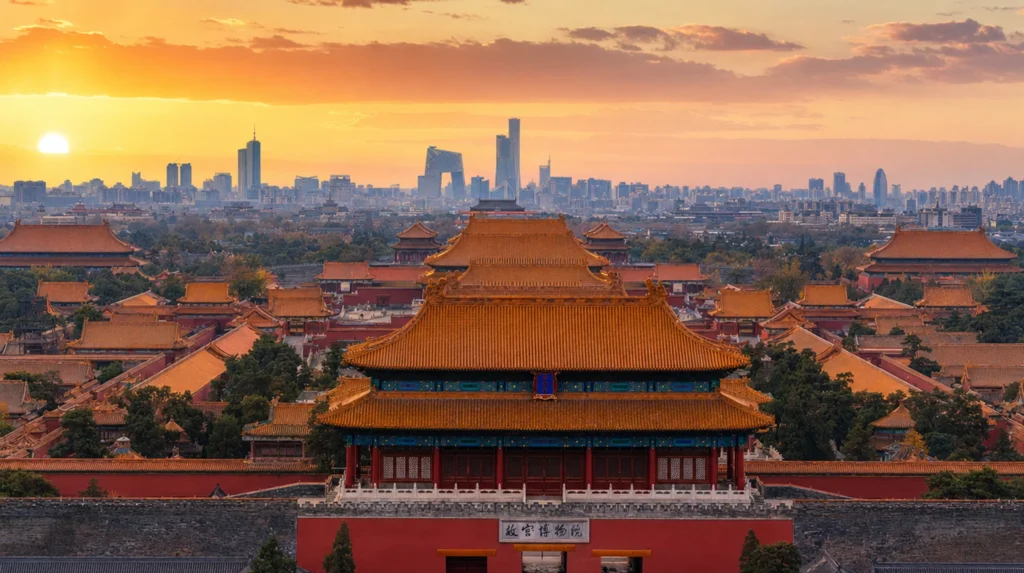
- Beijing City Guide — the Chinese capital and the most common air and overland gateway into Mongolia from the south
- Seoul City Guide — a major hub for flights into Ulaanbaatar and the source of much of UB’s strong Korean food culture
- Tokyo City Guide — another key East-Asian connection point on a wider regional itinerary
- Mongolia Travel Guide — national context for visas, regional routes, Naadam timing, and the bigger cultural picture
- Mongolia Country Guide
- All City Guides
More city guides you might like
Plan your trip to Ulaanbaatar
The booking tools we use ourselves. FFU may earn a commission at no extra cost to you.
Plan & book your trip to Ulaanbaatar
Booking through these searches supports our guides at no extra cost to you.