
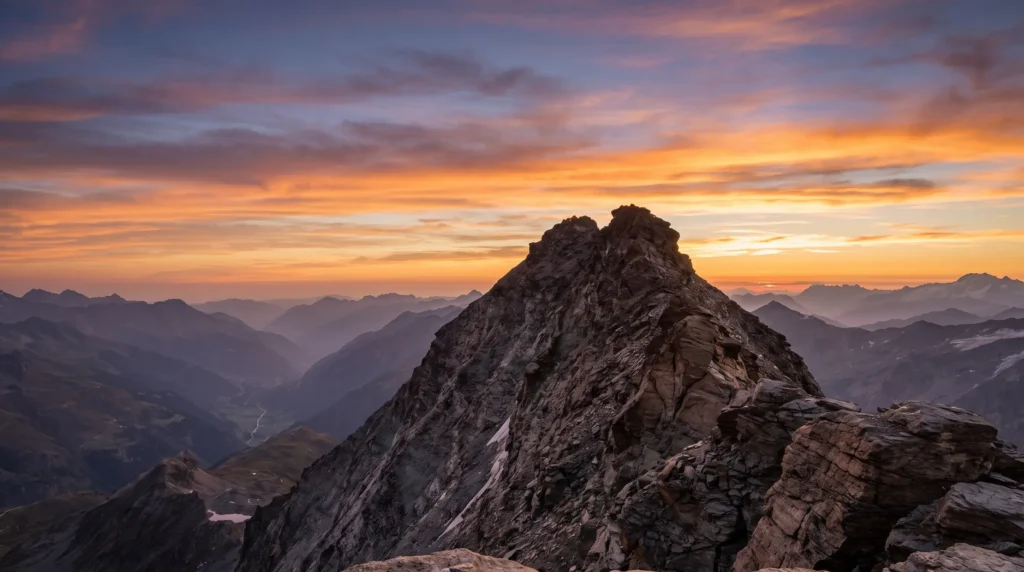
Zermatt Travel Guide — The Car-Free Alpine Village Under the Matterhorn
Zermatt is the rare mountain town that actually looks like the postcard. No cars grind up the main street — the village banned combustion engines outright, so what you hear instead is electric taxis humming past cowbells and the Gornervispa river. And then there’s the reason everyone came: the Matterhorn, a 4,478-metre wedge of rock so precisely triangular it looks unreal even in person. Stand on the Bahnhofstrasse at dusk and watch that summit turn from grey to pink to black — even repeat visitors reach for their phones every time, forty near-identical photos in. Zermatt isn’t cheap and it isn’t a secret — but for a village of under 6,000 year-round residents, it delivers an outsized amount of genuinely jaw-dropping alpine terrain, and it does it without a single tailpipe.
In This Guide
- Overview — Why Zermatt Is Worth the Price Tag
- Folklore Music Weeks & Zermatt’s Festival Calendar
- Best Time to Visit Zermatt (Season by Season)
- Getting There — No Roads, Just Rails
- Getting Around a Car-Free Village
- Zermatt’s Neighborhoods & Hamlets
- Culture & People — Walser Roots, Alpine Guides
- A Food Lover’s Guide to Zermatt
- Off the Beaten Path
- Day Trips from Zermatt
- Practical Information
- Budget Breakdown — What Zermatt Actually Costs in 2026
- Planning Your First Trip
- Frequently Asked Questions
Overview — Why Zermatt Is Worth the Price Tag
Zermatt sits at the head of the Mattertal valley in the canton of Valais, at 1,608 metres above sea level, ringed by 38 peaks over 4,000 metres — more than anywhere else in the Alps. The one everybody comes for is the Matterhorn, 4,478 metres of near-perfect pyramid straddling the Swiss-Italian border, first summited on 14 July 1865 by Edward Whymper’s party — a triumph turned tragedy when four of the seven climbers died on the descent, a story that put Zermatt on the tourist map permanently.
What makes Zermatt different from other big-name Alpine resorts is the ban: no combustion-engine vehicles are allowed in the village at all. Everything that moves — taxis, hotel shuttles, delivery carts — runs on electric battery power, so the main street is close to silent aside from footsteps and the odd bell around a cow’s neck. That single rule shapes the whole visit: you arrive by train, you walk everywhere in the village core, and the mountains stay the loudest thing around.
None of this comes cheap. Zermatt has leaned hard into five-star chalets and Michelin-adjacent dining, and prices reflect a resort that knows exactly what it has. But the payoff is real: a car-free glacier at nearly 3,900 metres reachable by cable car, a rack railway climbing to over 3,000 metres that opened in 1898, and hiking trails that put the most photographed mountain in the world directly in your face for hours at a stretch.
Folklore Music Weeks & Zermatt’s Festival Calendar
If you’re reading this in mid-July, you’ve timed it well: Zermatt’s Folklore Music Weeks kick off around 10 July each summer, with alphorn groups, brass bands and traditional Valais costume filling the village squares through the following weeks. It’s an unpretentious, family-friendly counterpoint to the resort’s five-star reputation — free concerts most evenings, and a good excuse to linger over a beer on Bahnhofstrasse instead of racing for the first lift.
Later in summer, the village hosts a Kitchen Party pairing dozens of top chefs with mountain-restaurant settings, and a Goats’ Tour that walks the town’s traditional black-neck goats through the streets — genuinely one of the odder, more charming small-town spectacles in the Alps. Winter has its own calendar built around ski-season openings and the Zermatt Unplugged music festival each April, but summer is when the village feels most like a working alpine community rather than a ski-industrial complex.
Best Time to Visit Zermatt (Season by Season)
Late December – early April · Ski season (peak)
Zermatt’s ski area connects to Cervinia in Italy, and skiing continues year-round on the glacier above Klein Matterhorn for racers and summer-camp skiers. Christmas/New Year and February half-term are the most expensive and most crowded weeks — book accommodation months out.
May & November · Shoulder shutdown
Many lifts, hotels and restaurants close for maintenance in these transition windows between ski and hiking seasons. Check specific lift and hotel schedules before booking — this is the one time Zermatt genuinely quiets down, for better or worse.
June – September · Hiking season
The high trails open, wildflowers hit the alpine meadows, and the classic Matterhorn views from Riffelsee and the Five Lakes Walk are at their best. July and August are warmest and busiest; September brings clearer air, thinner crowds and cooler nights.
October · Late-autumn quiet
Golden larches, thinning crowds, and some of the year’s best light on the peaks before the shoulder-season closures hit — a favorite window for photographers who don’t mind a chance of early snow.
Getting There — No Roads, Just Rails
There is no road into Zermatt for private cars — the village is reached entirely by rail. Most visitors fly into Zurich or Geneva and take the Swiss rail network to Visp or Brig, then change onto the Matterhorn Gotthard Bahn up the Mattertal valley. If you’re driving any part of the way, you park in Täsch, the last road-accessible town about 5km below Zermatt, and finish the trip on a shuttle train that runs every 20 minutes and takes roughly 12 minutes.
Zurich Airport is the more common international gateway, with the train journey to Zermatt taking around three and a half hours with one or two changes; Geneva is a similar total journey time via Visp. There’s no need to rent a car for the Zermatt leg of any trip — in fact you can’t drive it — so budget the rail journey as part of the adventure rather than a chore. Swiss trains run frequently and reliably enough that connections rarely need more than a 20–30 minute buffer.
Getting Around a Car-Free Village
Inside Zermatt, you walk. The village core is small enough to cross on foot in 20–25 minutes end to end, and the only wheeled traffic is a small fleet of electric taxis and hotel shuttles — nearly silent, since diesel and petrol engines are banned outright. Larger suitcases usually go by electric luggage cart from the train station to your hotel; most properties arrange this automatically.
To get up the mountains, you’ll use one of several rack railways and cable cars radiating out from the village: the Gornergrat Railway climbs to 3,089 metres and has run since 1898 as Switzerland’s first electric rack railway, while the Matterhorn Glacier Paradise cable car reaches roughly 3,883 metres near Klein Matterhorn, among the highest cable-car stations in the Alps. A multi-day lift pass is worth it if you’re doing more than one of these — single return tickets on the high lifts add up fast.
Zermatt’s Neighborhoods & Hamlets
Bahnhofstrasse & the village core
The main pedestrian artery running from the train station, lined with hotels, ski shops, watch boutiques and restaurants. It’s the busiest strip in town and the obvious place to base yourself for first-time convenience, though it’s also the priciest and most touristed stretch.
Hinterdorf (the Old Village)
Tucked just behind the modern main street, Zermatt’s Old Village preserves more than 30 wooden barns, stores and houses built between the 16th and 18th centuries, many raised on flat stone slabs to keep mice out of the grain stores. It’s the fastest way to see what Zermatt looked like before mountaineering tourism arrived — a five-minute detour that feels like a different century.
Winkelmatten
A quieter hillside district on the southern edge of the village at around 1,670 metres, once a separate hamlet in its own right and now a residential and lower-key lodging area a short walk or shuttle ride from the center. Good for travelers who want some distance from the Bahnhofstrasse buzz without giving up walkability.
Findeln
A cluster of alpine hamlets on the sun-facing slopes above the village, reachable by the Sunnegga funicular, with the blackened-timber Walser barns and houses of Eggen and Ze Gassen dating back to the area’s use as a summer grazing settlement. Several of Zermatt’s best mountain restaurants sit right in Findeln, making it a natural lunch stop on a Sunnegga hike.
Furi & the Zmutt valley
Furi is the junction hamlet for cable cars heading toward Klein Matterhorn and Schwarzsee, and also the trailhead for the walk into the Zmutt valley — a slower, greener approach to the Matterhorn’s western face away from the Gornergrat crowds.
Culture & People — Walser Roots, Alpine Guides
Zermatt’s year-round population is around 5,850, and German remains the dominant language at roughly 68%, though Portuguese and Italian communities — many tied to the hospitality and construction workforce — make up a notable share of residents, alongside English used constantly in the tourism trade. The valley’s roots trace to Walser settlers, German-speaking alpine farmers who moved into these high valleys centuries ago and whose timber barns still stand in hamlets like Findeln.
Mountain guiding is practically a civic institution here — Zermatt’s guides’ association predates most of the resort infrastructure, born directly out of the Matterhorn’s dangerous allure after 1865, and the profession still carries real local prestige. Expect a village that takes mountain safety seriously: rescue helicopters are a normal part of the summer soundtrack, and locals will not hesitate to tell you when conditions are wrong for a route.
A Food Lover’s Guide to Zermatt
You’re in Valais, the canton that claims raclette as its own — melted cheese scraped onto boiled potatoes with pickles and onions, a dish documented in the region since at least the 16th century and formally promoted as a national Valais specialty from 1909 onward. Order it in any mountain hut or village restaurant; it’s the single most authentic thing you can eat here, traditionally washed down with black tea or a glass of local Fendant wine.
Fondue is the other constant, along with hearty Swiss-German staples like rösti (fried shredded potato) and air-dried Valais meats — dried beef and dried ham served thin-sliced as a starter. Mountain restaurants at Findeln, Riffelalp and Sunnegga are genuinely worth the lift ticket on their own; many run their own dairy herds and serve alpine cheese made a few hundred metres from your table. For a splurge, Zermatt has a real fine-dining scene tucked into its five-star hotels — reserve ahead in peak weeks.
Off the Beaten Path
The Zmutt Valley walk
Most visitors ride straight up to Gornergrat or Klein Matterhorn; far fewer walk the gentler trail west into the Zmutt valley, past the hamlet of the same name, for a quieter angle on the Matterhorn’s north and west faces.
Riffelsee
A short detour off the Gornergrat line, this small alpine lake produces the classic mirror-image Matterhorn reflection photo — arrive early or late in the day to get it without a queue of tripods.
Hörnli Hut approach
You don’t need to be a climber to hike up to the Hörnlihütte, the staging hut for Matterhorn ascents at the base of the standard route. Watching mountaineers gear up at dawn, without attempting the climb yourself, is its own kind of spectacle.
The Gorner Gorge
A boardwalk trail through a narrow glacial gorge carved by the Gorner glacier’s meltwater — cool, shaded and almost entirely ignored by the cable-car crowds heading straight up the mountain.
Day Trips from Zermatt
Cervinia, Italy. The connected ski lift system means you can cross into Italy on skis in winter, and Cervinia’s cable cars link back to the Klein Matterhorn side of the border in summer too — a genuine two-country day out under the same mountain, best combined with our Italy travel guide if you’re extending the trip south.
Saas-Fee. The neighboring glacier village over the ridge, reached by bus via Visp — a quieter, equally car-free alternative resort if you want to compare Alpine villages without switching countries.
Gornergrat & Rotenboden. Technically within Zermatt’s own lift network rather than a separate town, but the rack-railway ride to 3,089 metres and back is a full half-day outing in itself, with the option to hop off at Rotenboden for the Riffelsee reflection shot on the way down.
Practical Information
Money. Switzerland uses the Swiss Franc (CHF), not the euro, even though it sits inside the Schengen area — euros are sometimes accepted in tourist businesses but change typically comes back in francs. Cards are widely accepted; carry some cash for smaller mountain huts.
Safety. The US State Department rates Switzerland Level 1 — Exercise Normal Precautions, its lowest advisory tier, with crime against tourists mostly limited to pickpocketing at busy sites. The real risk in Zermatt is alpine, not urban: weather changes fast at altitude, and mountain rescue can be extremely expensive if you’re uninsured — a dedicated rescue/medevac policy (or Swiss Alpine Club membership) is genuinely worth arranging before any high-altitude hike or climb.
Health. No special vaccinations are required beyond routine immunizations; the CDC lists tick-borne encephalitis as worth considering only for extensive rural outdoor activity, and otherwise flags standard precautions like sun protection at altitude. Tap water is safe to drink throughout.
Connectivity. Mobile coverage and hotel Wi-Fi are reliable in the village and surprisingly good on most lift-served mountain terraces. Plugs: Switzerland uses its own Type J socket (230V, 50Hz) rather than the standard European Type C/E plug, so a Swiss-specific adapter is worth packing. Time zone: Central European Time (UTC+1, UTC+2 in summer).
Budget Breakdown — What Zermatt Actually Costs in 2026
Zermatt is one of the more expensive alpine resorts in Europe — Swiss prices generally, plus a resort premium.
Budget (US$130–200/day): A basic guesthouse or hostel bed, self-catered or bakery meals, one shared lift ticket used carefully, hiking rather than lift-riding where possible.
Mid-range (US$280–500/day): A comfortable 3–4 star hotel, restaurant meals including a proper raclette dinner, a day pass on the Gornergrat or Klein Matterhorn lifts, maybe a half-day mountain guide for an easier peak.
Luxury (US$700+/day): Five-star chalet-style hotels, private mountain-guide days, heli-skiing or heli-sightseeing, and Zermatt’s higher-end dining rooms.
Fixed costs to expect: lift tickets are priced per route or as multi-day passes and add up quickly if you’re doing Gornergrat one day and Klein Matterhorn the next; the Täsch–Zermatt shuttle train is a small add-on if you drove in. Tipping is not obligatory in Switzerland — service is included by law — though rounding up is appreciated.
Planning Your First Trip to Zermatt
Three to four nights is enough to do Zermatt properly: a day on the Gornergrat Railway with a stop at Riffelsee, a day on the Klein Matterhorn/Matterhorn Glacier Paradise side, a hiking day around Sunnegga and Findeln, and a buffer day for weather. Fly into Zurich or Geneva, and if you have extra time, break the train journey with a night in Bern, Switzerland’s compact, arcaded capital, on the way in or out. Skiers and hikers extending into Italy can push on to Cervinia and beyond — see our Italy travel guide for what’s on the other side of the mountain, or our broader Switzerland travel guide for pairing Zermatt with the rest of the country.
Frequently Asked Questions
Can I drive to Zermatt?
No — Zermatt bans private combustion-engine vehicles entirely. Drive as far as Täsch, park there, and take the shuttle train the rest of the way; the ride takes roughly 12 minutes and runs every 20 minutes.
Do I need a visa to visit Switzerland?
US, UK, EU, Canadian and most Commonwealth passport holders enter visa-free for stays up to 90 days within the Schengen area; check your specific nationality’s current rules before travel.
Is Zermatt safe?
Yes — Switzerland carries the US State Department’s lowest advisory tier, and street crime against tourists is limited mostly to pickpocketing. The real hazard is the mountains themselves: weather turns fast at altitude, and unguided high routes carry real risk, so build in a rescue-insurance policy if you’re hiking or climbing seriously.
Can beginners climb the Matterhorn?
Not safely, and most guiding outfits won’t take you without solid prior alpine and via ferrata experience plus a fitness test — the Hörnli ridge route typically takes around six hours up and involves serious exposure, and the mountain has claimed more than 500 climbers’ lives over its history. Hiking to Hörnli Hut to watch climbers depart at dawn is the accessible version of the experience.
Zermatt or Chamonix?
Choose Zermatt for the car-free village experience and that one unmistakable peak; choose Chamonix for a livelier, more affordable base with easier road access and a broader spread of terrain. Zermatt trades convenience for atmosphere — that’s the whole point of the no-cars rule.
What’s the cheapest way to see the Matterhorn up close?
Skip the priciest lift tickets and hike from the village toward Zmutt or up to Riffelalp — you’ll get postcard views without paying for Gornergrat or Klein Matterhorn access, though you’ll trade altitude for cost.
Ready to Explore Zermatt?
A village with no engines, a mountain that looks hand-drawn, and cheese melted the same way it has been for centuries — Zermatt earns its reputation, and its prices, honestly. Book the train, not a rental car, and go while the Folklore Weeks are still filling the squares with brass bands instead of ski traffic.
Explore More
- Switzerland Travel Guide — pair Zermatt with the rest of the country
- Zurich City Guide — the most common international gateway in
- Bern City Guide — Switzerland’s arcaded, laid-back capital
- Italy Travel Guide — cross the border at Cervinia and keep going south
How this guide was built
Published . Built from authoritative sources — Zermatt’s official tourism site (zermatt.swiss), the US State Department’s Switzerland travel advisory, the US CDC traveler page for Switzerland, Switzerland Tourism’s official electricity page, and Wikipedia entity pages for Zermatt, the Matterhorn, the Gornergrat Railway, Findeln, raclette and Switzerland. Numeric claims carry inline citations.
Sources cited on this page
More city guides you might like
Plan your trip to Zermatt
The booking tools we use ourselves. FFU may earn a commission at no extra cost to you.
Plan & book your trip to Zermatt
Booking through these searches supports our guides at no extra cost to you.