
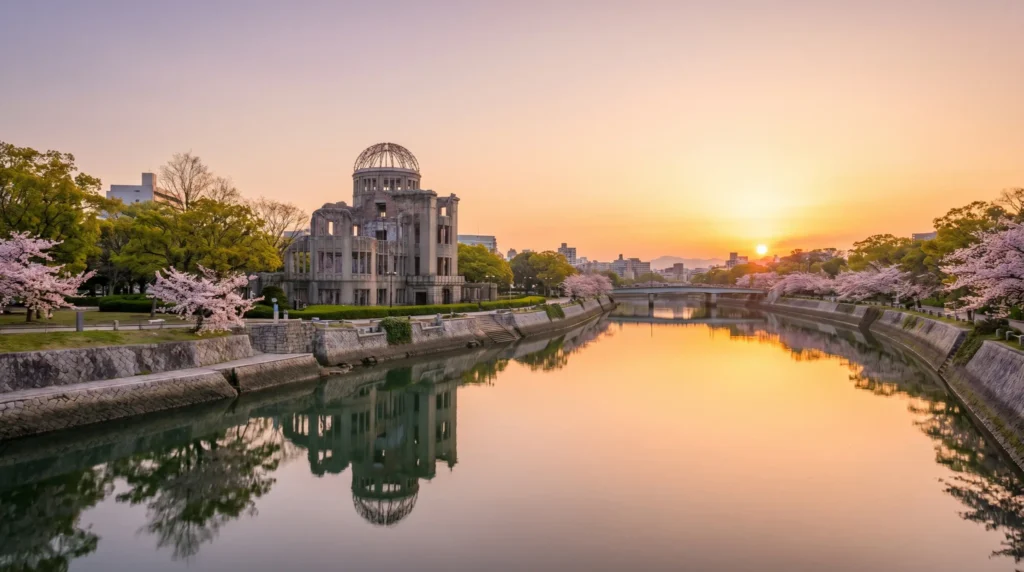
City Guide · Western Honshu
Hiroshima, Japan: A City of Peace, a Floating Torii, and the Best Okonomiyaki in the Country
I have visited Hiroshima three times now, and every time I tell first-timers the same thing: come for the history, but stay long enough to meet the living city, because Hiroshima is far more than the single morning in 1945 that the world remembers. This is a confident, green, river-laced city of roughly 1.18 million people on the Seto Inland Sea , rebuilt from the ground up after the atomic bombing into one of the most welcoming places I have travelled in Japan. My own ritual is to spend a quiet, unhurried first morning in the Peace Memorial Park and Museum — and I mean it when I say to give it the gravity and the time it deserves — then cross the river for a sizzling plate of Hiroshima-style okonomiyaki, and finish with the late-afternoon ferry out to Miyajima to watch the great “floating” torii gate catch the light at high tide. We tell visitors not to treat this as a half-day stopover between Kyoto and Kyushu: give it two or three days, ride the historic streetcars, walk the castle moat and the Shukkeien garden, and you will leave understanding why Hiroshima has become a global symbol of peace rather than only of loss. Treat this guide as the brief I would hand my own family before they stepped off the Shinkansen .

Table of Contents
Why Hiroshima?
Hiroshima is one of the most quietly remarkable cities in Japan, and the reason to visit is the same reason it is so often misunderstood: the world knows it for a single morning in 1945, but the city you actually walk through is green, modern, river-threaded, and overwhelmingly at peace with itself. Built on a delta where the Ota River fans into the Seto Inland Sea — the name Hiroshima literally means “broad island” — it is the largest city in western Honshu’s Chugoku region, home to roughly 1.18 million people, and the political and cultural anchor of a region that stretches from the mountains to the islands . It was almost entirely destroyed on 6 August 1945, when it became the first city in history to suffer an atomic bombing, and the way it chose to rebuild — as a deliberate, internationally minded “City of Peace” — is central to understanding everything you will see .
The city reads as a study in contrasts that it has learned to hold gracefully. At its heart is the Peace Memorial Park, a solemn, beautifully designed green space built around the skeletal A-Bomb Dome, drawing visitors from around the world to reflect — and a short walk away the same district hums with department stores, covered shopping arcades, streetcars, and the sizzle of okonomiyaki griddles. It is a city of water, with six rivers and a string of bridges, yet its single most famous image lies offshore, where the great “floating” torii of Itsukushima Shrine rises from the sea on the island of Miyajima. It is at once one of the most moving places you can travel and one of the most genuinely easy-going, friendly, and liveable.
The geography makes it a pleasure to navigate. The compact, grid-like centre sits between the rivers, the surviving network of vintage streetcars (the “Hiroden”) trundles along the main avenues, and the rebuilt Hiroshima Castle and the Shukkeien strolling garden anchor the northern edge of downtown. Everything central is walkable or a short tram ride apart, and the Shinkansen puts the city barely 90 minutes from Osaka and under two hours from Kyoto, which is why so many travellers can — and too often do — try to see it in a rushed half-day .
This guide covers the neighbourhoods you will actually use, the Hiroshima-style okonomiyaki and oyster culture that define its table, the Peace Park and Museum handled with the care they deserve, the castle and the Shukkeien garden, the unmissable day trip to Miyajima, and the practical realities of the streetcars, the JR lines, and the Shinkansen. Start at the Peace Park, end on the island, and let the city reveal the rest.

Neighborhoods: Finding Your Hiroshima
📍 Hiroshima Map: Every Place in This Guide
Hiroshima is best understood as a compact, walkable downtown laid out across the delta islands between the rivers, ringed by the green of the castle grounds and the garden to the north and opening to the sea and the islands to the south. The single biggest mistake first-timers make is collapsing the city into one morning at the Peace Park, when the rewards of an extra day are real — a streetcar ride to a residential quarter, a long lunch over a griddle, an evening among the bars of Nagarekawa, and the half-day pilgrimage out to Miyajima. The centre fans out from the Hondori covered arcade and the Kamiya-cho crossing, with the Peace Park to the west, the castle and Shukkeien to the north, the entertainment district just east, and the Shinkansen station across the river to the north-east .
This section walks the seven districts you will actually use, grouped by character: the solemn west (the Peace Memorial Park), the commercial core (Hondori & Kamiya-cho), the green north (the Castle & Shukkeien district), the nightlife belt (Nagarekawa), the transit gateway (Hiroshima Station & Ekimae), the port (Ujina), and the island day trip that no visit is complete without (Miyajima).
Peace Memorial Park (Naka-ku)
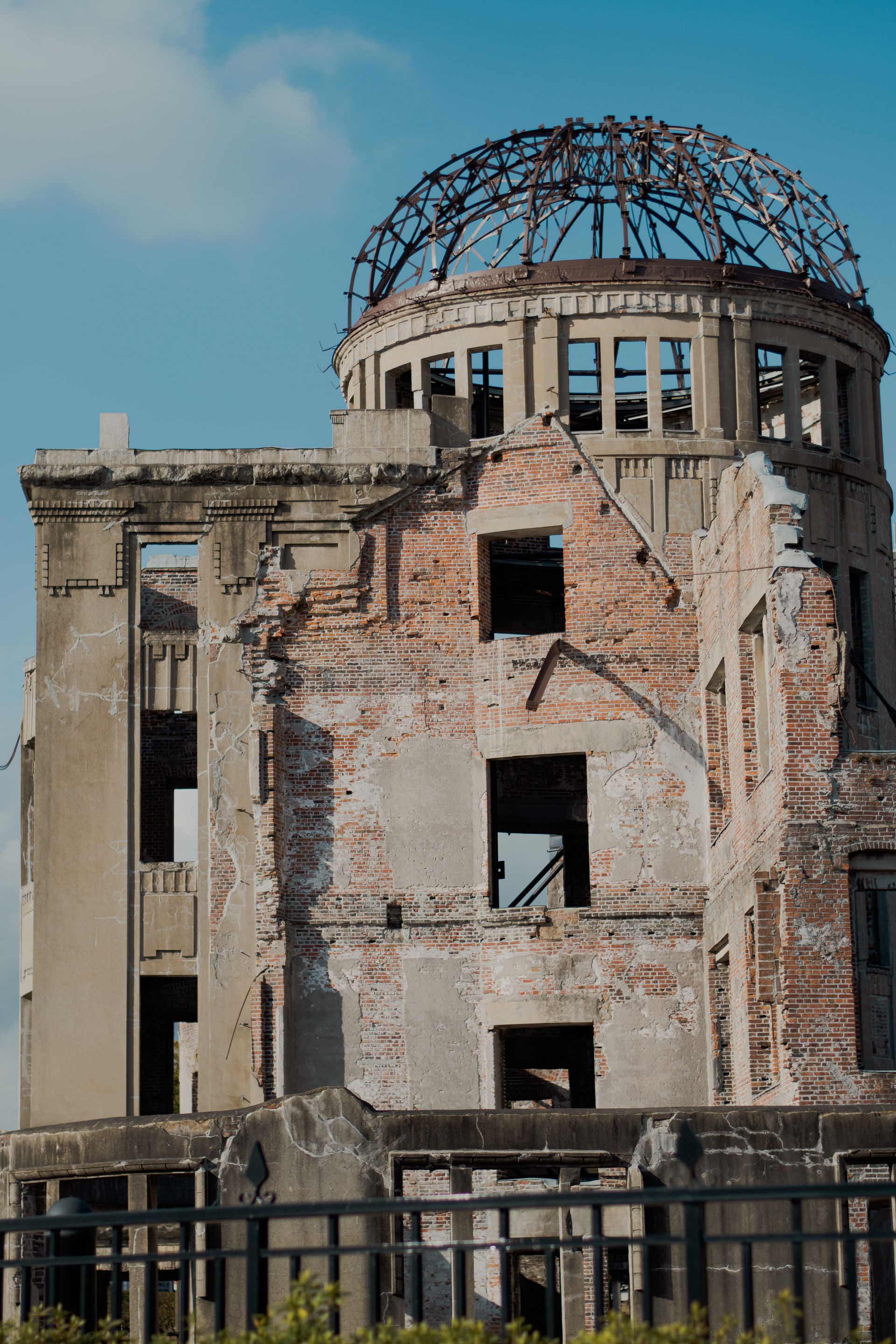
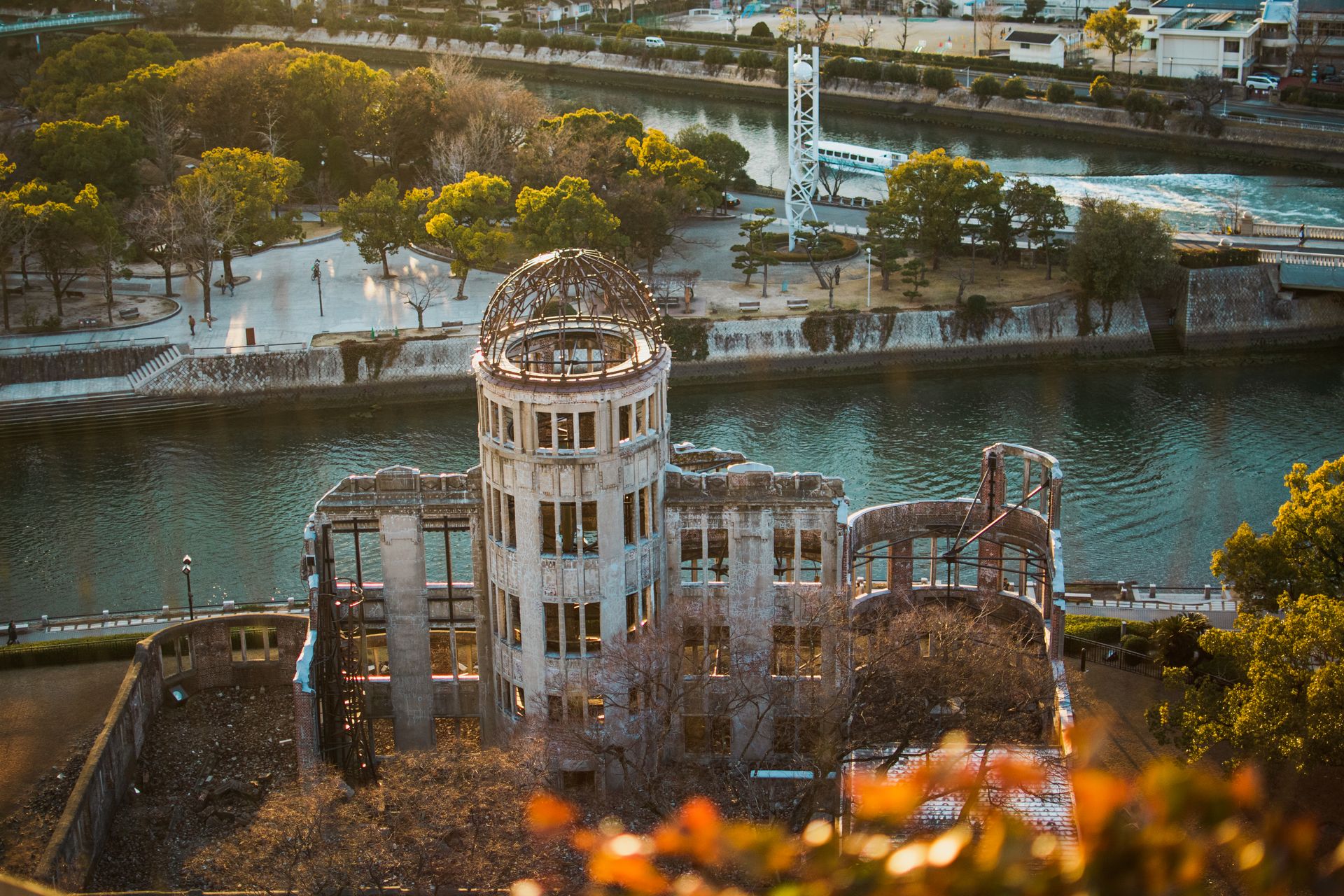
The green, river-bounded heart of the modern city and the reason most travellers come — a broad, deliberately tranquil park laid out across the hypocentre district, holding the A-Bomb Dome, the Peace Memorial Museum, the Cenotaph, the Children’s Peace Monument, and the Flame of Peace. It is a place to slow down, not to tick off.
- The A-Bomb Dome (Genbaku Dome), preserved as it stood after the bombing
- The Peace Memorial Museum and the Cenotaph for the A-bomb victims
- The Children’s Peace Monument, hung with thousands of paper cranes
Best for: first-time visitors, reflection, history. Access: Hiroden streetcar to Genbaku Dome-mae stop.
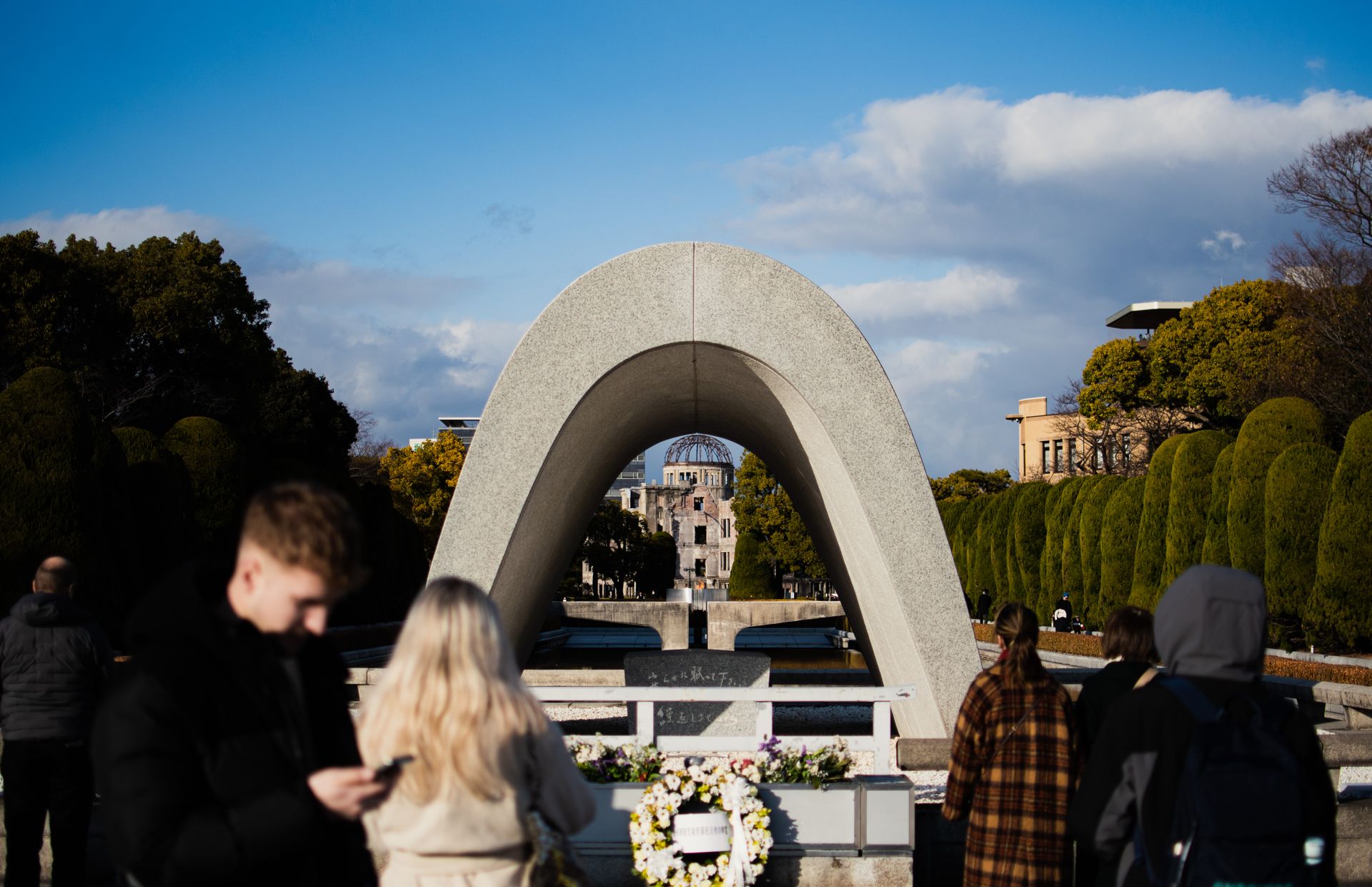
Approach the Peace Park with the gravity it asks for. Most visitors begin here, and it deserves a slow, quiet morning rather than a rushed circuit — the Peace Memorial Museum, in particular, is a sober and unflinching account that many people find profoundly moving and that benefits from being seen before the crowds build. The park itself, designed by the architect Kenzo Tange and opened in the 1950s, is a beautifully composed green space framed by the Motoyasu and Ota rivers, with sightlines that draw the eye from the museum across the Cenotaph and the Flame of Peace to the skeletal Dome beyond. Give it half a day, treat it with respect, and let it set the tone for everything else you see in the city.
Hondori & Kamiya-cho
The commercial and shopping core, a few minutes east of the Peace Park — the long covered Hondori arcade and the Kamiya-cho crossing form the busy, lively centre of everyday Hiroshima, lined with department stores, fashion, electronics, cafés, and a dense run of okonomiyaki restaurants. It is the most convenient base for a first trip.
- The covered Hondori shopping arcade and the Sun Mall
- The department stores and Parco around the Kamiya-cho crossing
- Okonomi-mura, the multi-floor okonomiyaki “village” nearby
Best for: first-timers wanting shops and food on the doorstep, central basing. Access: Hiroden to Kamiya-cho or Hondori stops.
Hondori and Kamiya-cho are where the modern, everyday city is at its liveliest, and they make the most practical base for a short stay. The covered Hondori arcade keeps the rain off year-round and runs for several hundred metres of shops, cafés, and restaurants, while the surrounding blocks hold the big department stores and, crucially, much of the city’s okonomiyaki scene — including Okonomi-mura, a building packed with rival griddle stalls. It is a short walk from here to the Peace Park in one direction and the castle in the other, and the streetcar lines all converge nearby, which makes this the logical centre of gravity for a first visit to Hiroshima.
Castle & Shukkeien District (Naka-ku North)
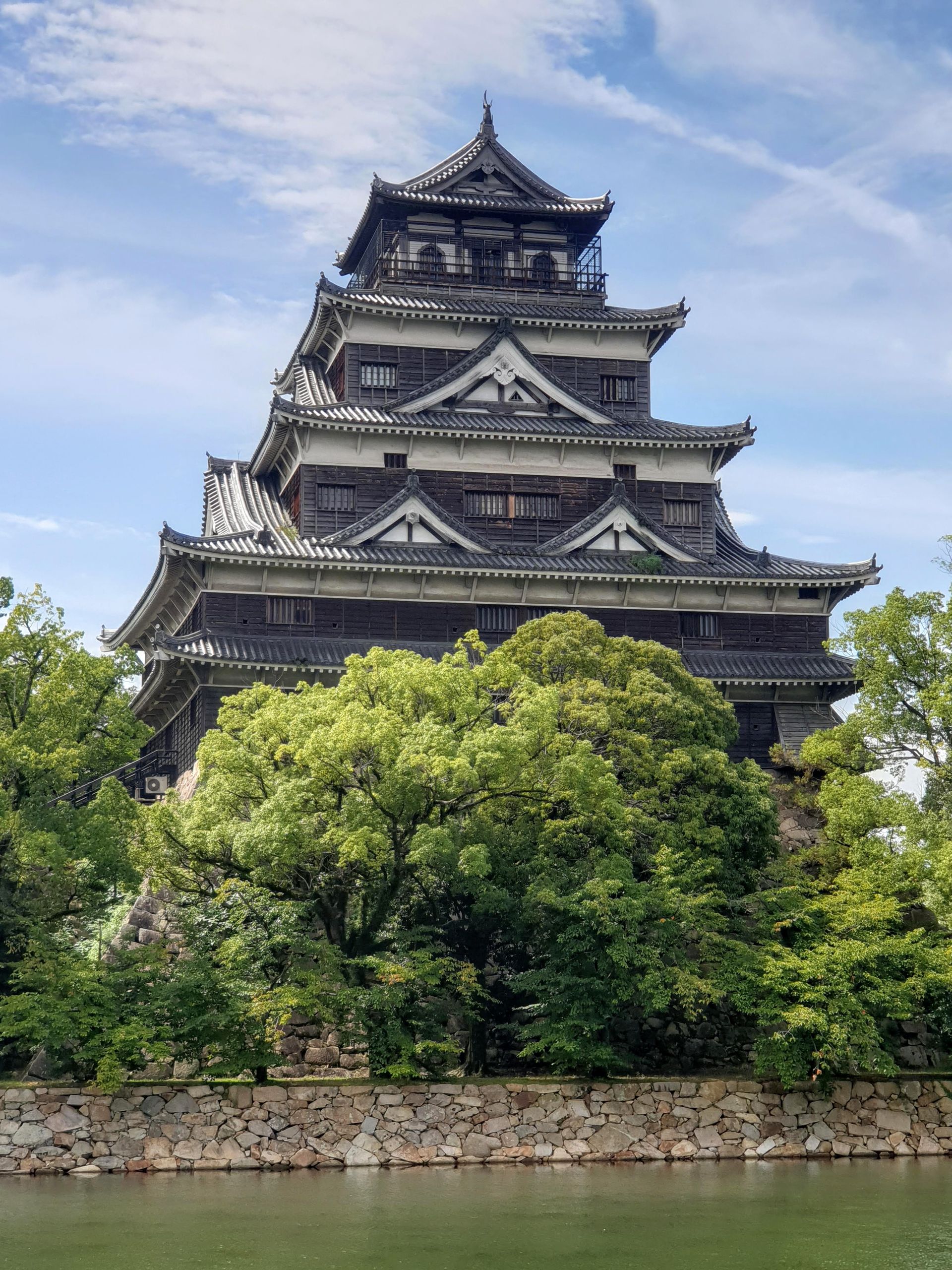
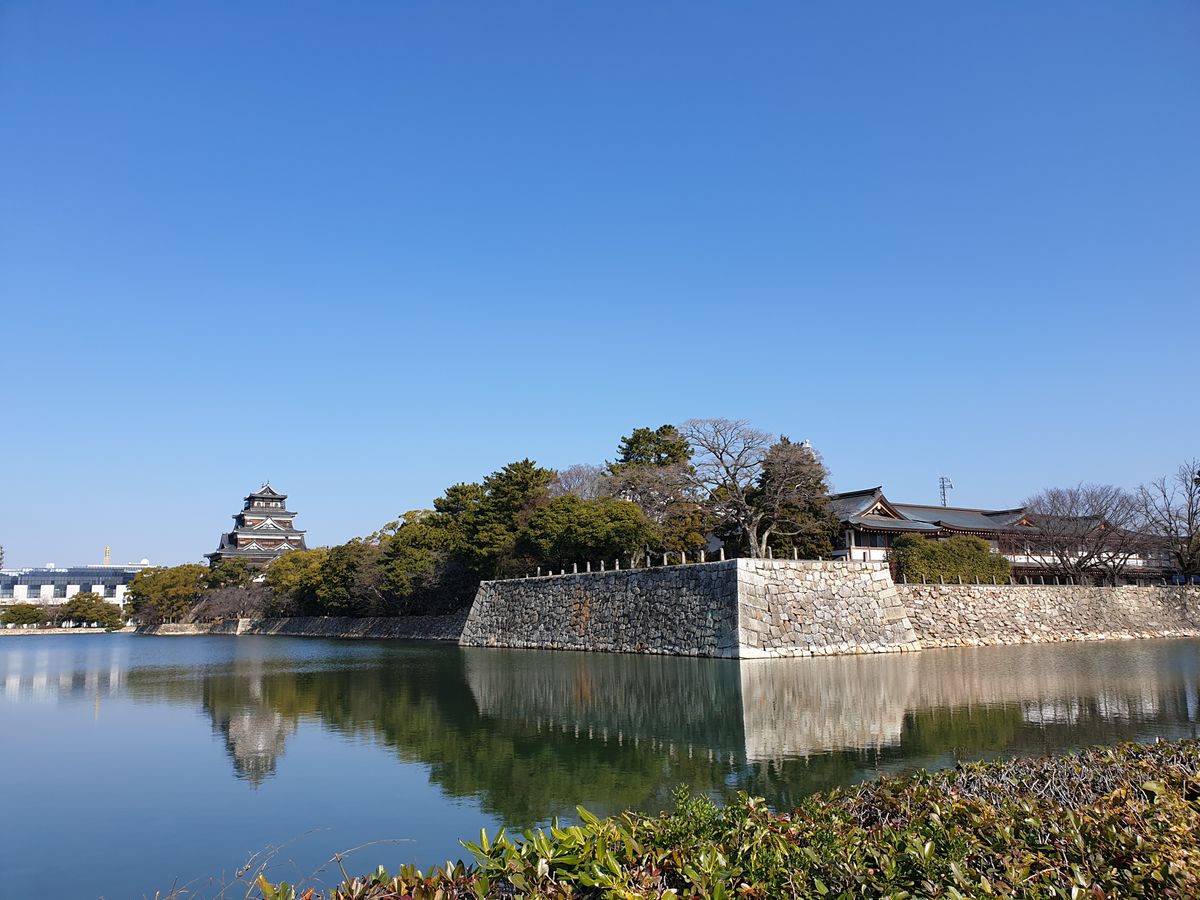
The green northern edge of downtown, where the rebuilt Hiroshima Castle sits in its broad moat and the exquisite Shukkeien strolling garden lies a short walk east — a calm, leafy counterpoint to the shopping core, and the city’s window onto its feudal past.
- Hiroshima Castle, the reconstructed keep and its wide moat
- Shukkeien, the 17th-century “shrunken-scenery” strolling garden
- The Hiroshima Museum of Art and the prefectural museums nearby
Best for: gardens and history, a slower afternoon, photographers. Access: Hiroden to Shukkeien-mae; or a walk north from Kamiya-cho.
The castle-and-garden district is the part of the city that returning visitors come to love. Hiroshima Castle, founded in 1589 by the warlord Mori Terumoto and rebuilt in concrete after the bombing destroyed the original, sits in a wide, carp-filled moat with a reconstructed keep that houses a museum of the city’s feudal history . A short walk east, the Shukkeien garden is the real treasure — a compact, perfectly composed Edo-period strolling garden of ponds, islets, bridges, and tea houses, laid out in 1620 and lovingly restored after 1945 . Together they make a gentle, green half-day away from the intensity of the Peace Park.
Nagarekawa & Yagenbori
The compact entertainment and nightlife belt just east of Hondori — a dense grid of izakaya, bars, and small restaurants that comes alive after dark, the place locals head for an evening out after a day of sightseeing.
- Izakaya and standing bars packed into the Yagenbori lanes
- Live-music bars, craft-beer spots, and late-night okonomiyaki
- An easy walk from the central hotels around Hondori
Best for: nightlife, izakaya-hopping, evening dining. Access: walkable from Hondori and Kamiya-cho.
Nagarekawa and the adjoining Yagenbori lanes are where Hiroshima goes out at night, and they reward an evening of wandering. The area packs an enormous number of izakaya, small bars, and restaurants into a few compact blocks, ranging from polished cocktail rooms to no-frills standing bars and late-night okonomiyaki counters. It is well within walking distance of the central hotels, which makes it easy to fold an evening here onto the end of a sightseeing day; just note that, as in most Japanese cities, some smaller bars carry a modest seating or table charge, so it is worth checking before you settle in.
Hiroshima Station & Ekimae
The transit gateway to the north-east of the centre, where the Shinkansen, the JR lines, and the streetcars all meet — a redeveloped station district with the Ekie shopping-and-dining complex, big hotels, and the easiest connections to the rest of Japan.
- The Shinkansen and JR platforms, plus the Hiroden tram terminus
- The Ekie food-and-shopping complex, strong for okonomiyaki and souvenirs
- Convenient station hotels for early departures
Best for: arrivals and departures, early Shinkansen starts. Access: Shinkansen, JR, and Hiroden streetcars all terminate here.
Hiroshima Station is the practical front door to the city and a sensible base for travellers prioritising connections. Heavily redeveloped in recent years, it brings together the Shinkansen and conventional JR lines, the streetcar terminus, and the Ekie complex of restaurants and shops, including a dedicated “okonomiyaki” floor that is a convenient first or last meal. It sits a little north-east of the sightseeing core, about ten to fifteen minutes from the Peace Park by streetcar, so it is the strongest choice if you value an easy onward journey to Osaka or Kyoto over being in the thick of the downtown shopping district.
Ujina & the Port
The waterfront district to the south, where the city meets the Seto Inland Sea — the departure point for ferries to the islands, with parks, the prefectural port, and a relaxed, breezy edge that few short-stay visitors reach.
- Hiroshima Port ferries to Miyajima and the Inland Sea islands
- The Hiroshima Prefectural Art Museum is downtown, but the port has sea views
- A streetcar ride straight down from the centre on the Hiroden
Best for: island ferries, sea air, slower travellers. Access: Hiroden streetcar to Ujina terminus.
Ujina and the port area are the city’s outlet to the Inland Sea, and while they are not a sightseeing destination in their own right, they are worth knowing about. The Hiroden streetcar runs straight down to the Ujina terminus, from where high-speed boats and ferries serve Miyajima and the scattered islands of the Seto Inland Sea, offering an alternative — and often more scenic — route to the floating torii than the standard JR-plus-ferry combination from the centre. The breezy waterfront and its parks make a pleasant detour for travellers with time to spare and a taste for sea air.
Miyajima (Itsukushima) — the essential day trip
Strictly an island off the coast rather than a city district, but the neighbourhood every visitor must build in — home to the great floating torii and the Itsukushima Shrine, tame wild deer, mountain trails up Mount Misen, and a charming village of street-food stalls.
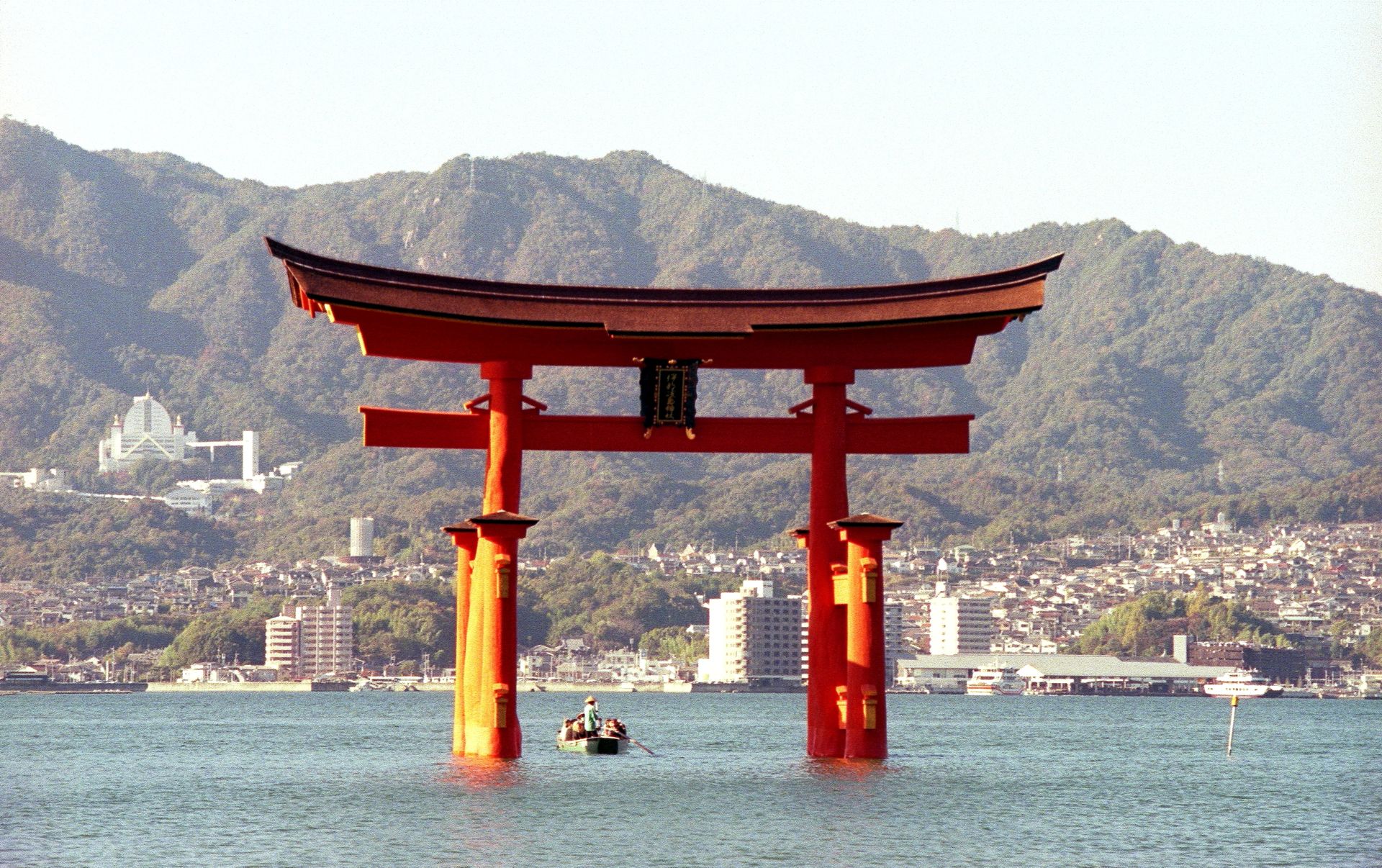
- The “floating” torii gate and the over-water Itsukushima Shrine
- The ropeway and hiking trails up Mount Misen
- Free-roaming deer and the grilled-oyster and momiji-manju stalls
Best for: everyone — it is the unmissable half-day. Access: JR to Miyajimaguchi, then the ferry; or the boat from the centre.
Miyajima — officially Itsukushima — is the day trip that completes any visit, and it deserves a generous half-day rather than a rushed dash. The island is dominated by the UNESCO-listed Itsukushima Shrine, built out over the water on stilts so that at high tide both the vermilion shrine complex and its great offshore torii gate appear to float on the sea . Beyond the shrine, tame deer wander the lanes, a ropeway and hiking trails climb the sacred Mount Misen for sweeping Inland Sea views, and the village streets fill with the smoke of grilled-oyster stalls and the smell of fresh momiji-manju, the maple-leaf-shaped cakes the island is famous for. Time your visit to the tide tables if you can — the floating effect needs high water — and the island rewards you with the single most beautiful scene in the region.
The Food
Hiroshima is one of Japan’s most distinctive eating cities, and it owes that to two things above all: a savoury pancake it does like nowhere else, and the oysters of the Seto Inland Sea. Where Osaka mixes its okonomiyaki batter and fillings together, Hiroshima builds its version in careful layers and folds in a nest of yakisoba or udon noodles, producing a heartier, more architectural dish that locals are fiercely proud of. The city is also Japan’s leading producer of oysters, farmed in the sheltered, nutrient-rich waters offshore, and in winter you will find them grilled, fried, and served raw across the city and on Miyajima. Approach the food the way locals do — make okonomiyaki a planned, sit-at-the-griddle event, eat oysters in season, and seek out the Inland Sea’s small fish and the island’s sweets — and the table becomes one of the highlights of a visit. If you organise even one meal of your trip around a proper Hiroshima-style okonomiyaki cooked in front of you, it will likely be a memory you keep.
Hiroshima-Style Okonomiyaki
This is the city’s defining dish and the one you cannot leave without eating. Unlike the Osaka style, where everything is mixed into the batter, Hiroshima-style okonomiyaki is layered: a thin crepe of batter, then a generous mountain of shredded cabbage, bean sprouts, pork, and toppings, then a layer of fried yakisoba or udon noodles, then egg, all pressed together on the griddle and lacquered with sweet okonomiyaki sauce. It is built and cooked in front of you on a teppan, often eaten straight off the hot plate with a small spatula, and it is heartier and more substantial than its Osaka cousin. The friendly rivalry between the two cities is real, and forming your own opinion is half the fun.
- Okonomi-mura — a multi-floor building packed with rival okonomiyaki stalls in the centre (¥850–¥1,300)
- Nagataya — a long-running favourite near the Peace Park, often with a queue (¥1,000–¥1,500)
- Hassho — a popular local chain known for a generous, classic Hiroshima-style pancake (¥900–¥1,400)
A few notes make the experience smoother. The pancakes take time to build and cook, so expect a wait at the busiest spots and settle in with a drink at the counter; sitting at the teppan rather than a table is part of the pleasure, letting you watch the cook layer and flip the dish. The default includes pork (buta-tama) and noodles, but you can usually add oysters, squid, cheese, or extra toppings, and the egg-and-noodle layers make a single pancake a full, filling meal for most appetites. Okonomi-mura, a building given over entirely to competing okonomiyaki stalls, is the most fun introduction — wander a floor, pick a stall with a cook you like the look of, and perch at the griddle. Many counters are happy to explain the order in simple English or by pointing, and a beer or a chuhai alongside is the local accompaniment of choice.
Oysters & the Inland Sea
Hiroshima is Japan’s oyster capital, supplying a large share of the country’s cultivated oysters from the calm, plankton-rich waters of the Inland Sea, and in the cooler months they are everywhere — grilled in the shell at street stalls on Miyajima, deep-fried as kaki-fry, simmered in a hot pot, or served raw with a squeeze of lemon. The wider Inland Sea also yields conger eel (anago), small whitebait, and a range of seasonal fish that turn up in the city’s izakaya and sushi counters. Winter is the prime oyster season, and a plate of plump, freshly grilled oysters with the sea air on Miyajima is one of the region’s great simple pleasures.
- Miyajima oyster stalls — grilled-in-the-shell oysters along the island’s main street (¥400–¥700 a pair)
- Kakiya (Miyajima) — a dedicated oyster restaurant by the waterfront (¥1,500–¥3,000)
- Anago-meshi Ueno (Miyajimaguchi) — the famous conger-eel rice box near the ferry pier (¥2,000–¥2,800)
Timing and a little planning pay off here. Oysters are at their best from late autumn through early spring, and if you are visiting in those months it is worth building a meal around them — the grilled stalls on Miyajima are the most atmospheric option, eaten standing with a view of the torii. The conger-eel rice (anago-meshi) at the historic Ueno restaurant near the Miyajimaguchi ferry pier is a regional speciality worth the short detour, though it is popular enough to draw a queue or sell out, so go early or buy the boxed version to take with you. For raw oysters and the Inland Sea’s smaller fish, the izakaya of Nagarekawa and the counters around Ekie at the station are reliable hunting grounds.
Beyond Okonomiyaki and Oysters
To stop at the two icons would be to miss the breadth of Hiroshima’s table. The city has its own tsukemen — a fiery, cold-noodle dish served with a spicy dipping sauce, quite distinct from the okonomiyaki story — and a strong ramen culture of its own. The Inland Sea brings lemons from the island of Setoda, which flavour everything from drinks to sweets, and Miyajima is famous for momiji-manju, the maple-leaf-shaped cakes filled with red-bean paste, custard, chocolate, or cheese that are the region’s signature souvenir. Sake from the nearby brewing town of Saijo and a growing craft-beer scene round out the drinks.
- Hiroshima tsukemen — cold noodles with a spicy chilli-and-sesame dipping sauce (¥800–¥1,200)
- Momiji-manju — maple-leaf cakes, best eaten warm and freshly griddled on Miyajima (¥100–¥200 each)
- Setoda lemons — Inland Sea lemons in drinks, sweets, and lemon ramen (varies)
- Saijo sake — from the famous brewing district one stop east by train (¥500+ a glass)
Coffee, Sweets & Cafés
Hiroshima does the gentle café side of Japanese city life well, and the arcades around Hondori hide a good run of independent coffee shops, kissaten (old-school coffee houses), and patisseries alongside the chains. The city’s lemon obsession shows up in cakes, tarts, and soft-serve, and the department-store basement food halls (depachika) are a reliable, air-conditioned stop for beautifully made sweets and bento. A slow mid-afternoon coffee and a lemon cake in a Hondori café is exactly the kind of pause a heavy sightseeing day in Hiroshima needs, and a depachika is the easiest place to assemble a picnic for a Miyajima ferry or a Shinkansen ride. The kissaten tradition runs deep here — these older, often family-run coffee houses serve thick siphon-brewed coffee, fluffy egg sandwiches, and the retro fruit-and-cream parfaits that have come back into fashion, and they make an ideal quiet refuge between the emotional weight of the Peace Park and the bustle of the arcades. Many open early, so a kissaten breakfast before the museum opens is a calm way to start a heavy day.
- Hondori arcade cafés — independent roasters and kissaten a few minutes from the Peace Park (coffee ¥400–¥700)
- Depachika at Sogo and Fukuya — basement food halls for sweets, bento, and gifts (varies)
- Lemon soft-serve and tarts — the Setoda-lemon theme on dessert menus citywide (¥300–¥600)
Markets, Depachika & Where to Drink
Two more institutions deserve a place on any itinerary. The first is the depachika culture of the big downtown department stores, whose basement food halls let you graze across sweets, prepared dishes, and regional specialities in one cool, polished sweep — ideal for travel snacks and gifts. The second is the city’s drinking culture, concentrated in Nagarekawa and Yagenbori: a dense, lively warren of izakaya, sake bars, standing bars, and an emerging craft-beer scene, where the local style is to order small dishes to share alongside the drinks. A nest of grilled skewers and oysters with a cold beer in a Yagenbori izakaya, or a flight of Saijo sake, both count as a quintessential Hiroshima night. The through-line across the whole food map is the same: this is a city that takes a few regional specialities very seriously and does them better than anywhere else.
Saijo, one stop east of the city on the JR Sanyo line, is one of Japan’s three great sake-brewing towns, its skyline dotted with the red-brick chimneys and white-walled storehouses of historic breweries, several of which open their doors for tasting along a compact walking route. If you cannot make the trip, the city’s izakaya and the depachika both stock the Saijo labels, so a glass of local junmai is never far away. For something more casual, the standing bars (tachinomi) around Nagarekawa pour generously for very little and are the easiest places to fall into conversation, while the riverside terraces that open in the warmer months turn a simple beer into one of the city’s nicest evenings.
Eating on a Budget & Practical Notes
Hiroshima rewards travellers who eat like locals, and you do not need a big budget to eat very well. A full Hiroshima-style okonomiyaki rarely tops ¥1,500 and is a meal in itself; a bowl of tsukemen or local ramen runs ¥800–¥1,200; and the conveyor-belt sushi counters around the station and downtown turn the Inland Sea’s catch into an affordable, fun lunch. Convenience stores and depachika cover early ferries and Shinkansen rides cheaply, and many sit-down restaurants offer set lunches (teishoku) that are far better value than the same kitchen’s dinner. Cash is still useful in the smaller okonomiyaki stalls and island stands, though IC cards and contactless are increasingly accepted; tipping is not practised anywhere, and a polite “gochisousama” as you leave is all the thanks a cook expects.
Food Experiences You Can’t Miss
- Sitting at the teppan counter for a layered Hiroshima-style okonomiyaki cooked in front of you
- Grilled oysters in the shell from a Miyajima street stall in winter
- A warm, freshly griddled momiji-manju on the island’s main street
- An izakaya crawl through the Yagenbori lanes with Inland Sea small plates
Cultural Sights

Hiroshima’s cultural sights divide cleanly into two registers — the sombre memorial landscape at the city’s heart, which asks to be approached with gravity, and the older feudal and spiritual heritage of the castle, the garden, and the island shrine. The practical advantage is that almost everything is compact and connected: the Peace Park, the castle, and Shukkeien are all within the central streetcar network, and Miyajima is a short, scenic trip beyond. Treat the Peace Park and Museum as the essential, unhurried first stop, then balance the day with the green calm of the garden and the castle, and the colour of the floating shrine.
The Peace Memorial Museum & the A-Bomb Dome (原爆ドーム)
The heart of any visit, and a place to be experienced with care and respect. The Peace Memorial Museum gives a sober, unflinching account of the atomic bombing of 6 August 1945 and its human cost, and is widely regarded as one of the most important and moving museums in the world; the adjacent A-Bomb Dome, the gutted shell of the former Industrial Promotion Hall left standing near the hypocentre, was inscribed as a UNESCO World Heritage Site in 1996. Museum admission is a modest ¥200 for adults; the Dome and the surrounding park are free and open at all times. Allow at least half a day and visit early .
Hiroshima Peace Memorial Park
The broad, river-framed park that holds the memorial landscape together, designed by Kenzo Tange and opened in the 1950s on the devastated hypocentre district. Beyond the Dome and the museum, it contains the arched Cenotaph for the A-bomb victims — framed so that the eye travels through it to the Flame of Peace and the Dome beyond — the Children’s Peace Monument hung with thousands of folded paper cranes, and the National Peace Memorial Hall. It is free and always open, and the daily life of the city flows quietly around it .
Itsukushima Shrine, Miyajima (厳島神社)
The spiritual counterpoint to the Peace Park and the region’s other UNESCO World Heritage Site, the over-water Shinto shrine on Miyajima dates in its present form to the 12th century and is built on stilts so that it and its great offshore torii appear to float at high tide. Shrine admission is around ¥300 for adults; the floating effect depends entirely on the tide, so check the tide tables before you go. Pair it with the ropeway up Mount Misen for sweeping Inland Sea views .
Hiroshima Castle (広島城)
Founded in 1589 by the warlord Mori Terumoto, the castle was the seat of the domain for centuries before the original keep was destroyed in the 1945 bombing; the present concrete reconstruction, completed in 1958, houses a museum of the city’s samurai-era history and offers views over the moat and downtown. Admission to the keep is around ¥370 for adults, and the surrounding park and moat are free to wander .
Shukkeien Garden (縮景園)
A compact, exquisite Edo-period strolling garden laid out in 1620, its name meaning “shrunken-scenery garden” for the way it compresses miniaturised landscapes — ponds, islets, bridges, and tea houses — into a small space. Devastated in 1945, it was painstakingly restored, and it is at its finest in cherry-blossom and autumn-colour seasons. Admission is around ¥260 for adults; it is a short walk or streetcar ride from the centre .
Mount Misen & the Miyajima Ropeway
The sacred 535-metre peak at the heart of Miyajima, reached by a ropeway and a final stretch of walking trail, rewards the climb with panoramic views across the Seto Inland Sea and its scattered islands. The mountain holds ancient temples and an “eternal flame” said to have burned for over a thousand years, and the ancient forest on its slopes is part of what earned the island its World Heritage status. The ropeway runs to a station near the summit; allow a couple of hours for the round trip and the walk.
The Hiroshima Museums of Art
For a quieter cultural afternoon, the city has a strong run of art museums clustered near the castle and the garden — the Hiroshima Museum of Art, with its Impressionist and modern Japanese collections, and the Hiroshima Prefectural Art Museum next to Shukkeien among them. They make an easy, air-conditioned pairing with the castle-and-garden district and a gentle counterweight to the intensity of the Peace Park. The Hiroshima City Museum of Contemporary Art, set on Hijiyama hill to the city’s east, is another worthwhile stop, both for its rotating exhibitions and for the hilltop park around it; it reopened after a major renovation and pairs well with the cherry trees that draw locals to Hijiyama in spring.
Planning Your Cultural Day
Because the central sights cluster so tightly, a single well-paced day can cover the essentials without rushing. A common rhythm is to arrive at the Peace Park early — when the museum is quietest and the light on the Dome is best — give it the unhurried half-day it deserves, then break for an okonomiyaki lunch downtown before walking or riding the streetcar north to the castle and Shukkeien in the afternoon, leaving a full separate day for Miyajima. Most central sights charge only a modest admission (the Peace Museum ¥200, the castle keep around ¥370, Shukkeien around ¥260), and combination and multi-attraction passes can trim the total . Photography is welcome almost everywhere, but the Peace Museum and memorial spaces ask for a quiet, respectful manner, and that consideration is the single most important thing to carry into the park.
Entertainment

Hiroshima’s entertainment is more low-key than Tokyo’s or Osaka’s, and that is part of its appeal — this is a city that does an evening well rather than loudly. Its passions run to a beloved baseball team, a dense and friendly izakaya-and-bar district, riverside strolls, seasonal festivals, and the quiet drama of a lantern-lit evening on Miyajima. The trick, as ever, is to cluster your night by area: baseball at the Mazda Stadium, drinking in Nagarekawa and Yagenbori, and the slower pleasures of the rivers and the island for those who prefer atmosphere to nightlife.
Baseball — the Hiroshima Carp
No team is more woven into a Japanese city’s identity than the Hiroshima Toyo Carp, the city’s much-loved baseball club, and catching a game at the Mazda Zoom-Zoom Stadium is one of the most joyful things you can do here. The crowd’s organised cheering, the red sea of fans, and the festival atmosphere make it a quintessential Hiroshima night even for those with no interest in the sport. Tickets typically run ¥1,800–¥5,000 depending on the seat, and games sell out in the popular summer months, so book ahead .
Izakaya & Bars in Nagarekawa
The Nagarekawa and Yagenbori district is the city’s nightlife engine, a compact warren of izakaya, sake bars, standing bars, and small live-music spots that fills up after dark. The local style is convivial and unpretentious — order small dishes of Inland Sea fish, oysters, and skewers alongside beer, sake, or chuhai, and move from bar to bar. Costs are modest, though some smaller bars carry a small seating charge, so a relaxed night of izakaya-hopping rarely runs to much.
Riverside Walks & Cruises
Hiroshima’s six rivers are one of its quiet pleasures, and the redeveloped riverbanks — particularly around the Peace Park and the Hondori side — are lovely for an evening stroll, with cafés and bars spilling out onto the water in the warmer months. Sightseeing boats run between the city centre and Miyajima, offering a scenic alternative to the train, and a sunset trip down the river and out toward the Inland Sea is a gentle way to end a day.
Miyajima After Dark
For those who stay overnight on the island — and it is worth it — Miyajima transforms once the day-trippers leave on the late ferries. The shrine and the floating torii are illuminated after dark, the deer settle, and the lanes fall quiet, leaving a handful of ryokan guests to enjoy one of the most atmospheric evenings in the region. An illuminated, near-deserted floating torii at night is a very different experience from the crowded midday version.
Festivals & Seasonal Events
Hiroshima’s calendar turns on a few significant events. The most solemn is the Peace Memorial Ceremony each 6 August, when the city gathers at the Peace Park and floats paper lanterns down the rivers in memory of the victims — a moving occasion, though the city is busy and reflective rather than festive. Beyond it, the cherry-blossom season brings hanami to the castle moat and Shukkeien, autumn lights the maples on Miyajima, and various local matsuri punctuate the year . The Hiroshima Flower Festival over the early-May Golden Week fills Peace Boulevard with parades, stages, and food stalls and is the city’s biggest annual celebration, while the Tokasan summer festival in June brings yukata-clad crowds to the downtown shrine district. On Miyajima, the Kangensai boat festival in summer carries Shinto rites out across the water in lantern-lit barges, one of the most beautiful spectacles in the region.
Live Music, Cinema & Culture After Hours
Beyond the bars, Hiroshima keeps a modest but real cultural nightlife. The downtown arcades and the Nagarekawa fringes hide live-music houses and jazz bars, the kind of small, smoky rooms where a local trio plays to a few dozen people, and the city’s concert halls and the prefectural cultural centre host classical and touring acts. Cinemas downtown screen both mainstream and arthouse fare, and the riverside in summer occasionally stages open-air events and beer gardens. None of it is on Tokyo’s scale, but it rounds out an evening nicely for travellers who want a little culture after dinner rather than a late club night, and it fits the city’s overall character — warm, unhurried, and quietly sociable.
Day Trips

Hiroshima’s position on the Sanyo Shinkansen line and the Inland Sea makes it a superb base for day trips, with the variety running from the world-famous floating shrine to quirky islands and historic towns. Several of the best are reachable entirely by train and ferry, so a rental car is rarely needed. The golden rule is to head out in the morning, check ferry and tide timetables in advance, and time your return to avoid the late-afternoon crush. Below are the five that consistently reward the effort, ordered roughly from the unmissable to the more adventurous.
Miyajima / Itsukushima (about 45 minutes by JR + ferry)
The essential trip and the region’s signature image — the over-water Itsukushima Shrine and its great floating torii, the tame deer, the ropeway up Mount Misen, and the oyster and momiji-manju stalls. Take the JR Sanyo Line to Miyajimaguchi and the short ferry across, or the sightseeing boat from the city centre . Time it to high tide for the floating effect, and consider staying for the illuminated, crowd-free evening.
Okunoshima — “Rabbit Island” (about 1.5 hours by train + ferry)
A small Inland Sea island near Tadanoumi, famous for the hundreds of friendly wild rabbits that roam it freely, alongside the sobering remains of a former poison-gas plant and its small museum. Reached by JR to Tadanoumi and a short ferry, it makes a gentle, unusual half-day that pairs an oddly delightful animal encounter with a quiet lesson in wartime history.
Onomichi (about 1.5 hours by JR)
A charming, hilly port town on the Inland Sea, beloved for its steep lanes of old temples, its literary and film heritage, and as the mainland start of the Shimanami Kaido cycling route. It is reachable directly by JR and makes a relaxed day of temple-walking, cat-spotting in the back lanes, and Inland Sea views from the hilltop ropeway.
The Shimanami Kaido (cycling, from Onomichi)
One of Japan’s great cycling experiences — a roughly 70-kilometre route of bridges hopping island to island across the Inland Sea from Onomichi to Imabari on Shikoku, with rental bikes and stunning sea views the whole way. You need not do the full route; even an hour or two of riding from Onomichi across the first bridge gives a taste of one of the country’s most scenic rides.
Iwakuni & the Kintaikyo Bridge (about 45 minutes by JR)
Just over the prefectural border, the town of Iwakuni is famous for the Kintaikyo, an elegant five-arched wooden bridge dating in its original form to 1673, set against a hillside castle and cherry trees. A quick JR ride from Hiroshima, it makes an easy half-day for travellers who want a classic Japanese landscape without the crowds of Miyajima. A small toll covers crossing the bridge, and a ropeway climbs to the reconstructed Iwakuni Castle for views over the river and town; the riverbanks are especially lovely under cherry blossom in spring and during the summer cormorant-fishing season.
Saijo Sake Town (about 40 minutes by JR)
For something different, the brewing town of Saijo sits a short hop east on the JR Sanyo line and packs nearly a dozen historic sake breweries into a few walkable blocks marked by red-brick chimneys and white storehouse walls. Several offer tastings, and the soft local water that makes the sake also flows from roadside wells you can sample. It is a low-key, grown-up half-day — best paired with a relaxed lunch — and a fine counterpoint to the bigger-name trips. The town comes alive in October for the Sake Matsuri, one of Japan’s largest sake festivals, when tens of thousands come to taste labels from across the country .
Seasonal Guide
Hiroshima has a mild, maritime-influenced climate softened by the Inland Sea, with four distinct seasons that shape a visit more than its gentle reputation suggests. The single most useful thing to understand is the early-summer rainy season and the late-summer typhoon risk, which can disrupt ferry crossings to Miyajima, and the contrast with the crisp, clear shoulder seasons that are by far the best times to come .
Spring (March – May)
The finest season to visit, as the cherry blossom sweeps the castle moat and Shukkeien in late March and early April and daytime highs climb from a cool 13°C into a pleasant 22°C . The weather is mild and largely dry, the gardens and the island are at their most beautiful, and the crowds are manageable outside the blossom peak. Pack layers for cool mornings, and book ahead if you are chasing the blossoms.
Summer (June – August)
Hot, humid, and complicated by weather — the rainy season (tsuyu) runs through much of June into July, and the typhoon season builds into August and September, both of which can disrupt the Miyajima ferries . Highs reach 31–33°C with high humidity. The season also holds the solemn 6 August Peace Memorial Ceremony, a moving but busy time. Carry rain gear, stay hydrated, and build in flexibility around the weather.
Autumn (September – November)
The other peak season, and a glorious one — once the typhoon risk eases, October and November bring clear, dry, comfortable days of 18–25°C and spectacular autumn colour, especially on Mount Misen and in Shukkeien . The light on the Inland Sea is at its sharpest, the gardens turn red and gold, and oyster season begins. It is the easiest season to recommend without caveats.
Winter (December – February)
Mild by Japanese standards thanks to the sea, with daytime highs around 9–11°C and only occasional light snow, though the wind off the water can feel raw . Winter is prime oyster season, the sights are uncrowded, and hotel rates ease. Come prepared with a warm coat for the exposed Peace Park and the Miyajima ferry, and you will have the city’s calm at its most reflective.
If you can choose your dates freely, the two shoulder seasons win comfortably: late March to early April for the cherry blossom and a mild, dry city, or October to November for clear skies, blazing autumn maples, and the start of oyster season. Summer rewards travellers with a specific reason to come — the 6 August ceremony, the festivals, the long daylight — but demands flexibility around rain and typhoons, while winter trades a little warmth for low prices, thin crowds, and the year’s best oysters. Whatever the season, the maritime climate keeps Hiroshima gentler than much of inland Japan, and a day in the city pairs neatly with a day on Miyajima in almost any month.
Getting Around
The Hiroden Streetcars
Hiroshima’s beloved streetcar network — the “Hiroden” — is the backbone of getting around the city and a pleasure in its own right, running a fleet that famously includes some of Japan’s oldest surviving trams alongside modern low-floor cars. Several lines fan out from Hiroshima Station through the centre, the Peace Park, and down to the port, and one line (the Miyajima Line) even continues all the way to the ferry pier for the island. A single ride in the central zone is a flat ¥190 for adults, paid in cash or by IC card as you exit . It is cheap, charming, and reaches almost everything a visitor needs.
JR Lines & Local Trains
The JR Sanyo Line and other local JR services connect the city to Miyajimaguchi (for the Miyajima ferry), Iwakuni, Onomichi, and the wider region, running from Hiroshima Station. For day trips this is usually faster than the streetcar, and the JR ferry to Miyajima is covered by the JR Pass and regional passes . Within the city, the streetcars and buses generally serve sightseeing needs better than the JR loop.
City Buses & the Sightseeing Loop
Local buses fill the gaps the streetcars miss, and for visitors the most useful is the hop-on hop-off “meipuru-pu” sightseeing loop bus, which links Hiroshima Station with the Peace Park, the castle, the art museums, and Shukkeien on a simple circular route. It runs frequently through the day, accepts IC cards, and is free for holders of certain regional passes, making it an easy, low-stress way to string the central sights together without working out individual bus numbers . For most first-time visitors the streetcars plus this loop bus cover everything in the city itself.
IC Cards & Prepaid Transit
Japan’s rechargeable IC cards make local transport seamless: nationwide cards such as ICOCA, Suica, and PASMO all work on the Hiroden streetcars, city buses, and JR trains, and you simply tap on and off. You can buy and top up an ICOCA at JR Hiroshima Station, or use a contactless option on your phone. For visitors leaning heavily on the streetcars and the Miyajima trip, a one-day Hiroden tram-and-ferry pass can be good value .
Airport Access
- Hiroshima Airport (HIJ) to the city — limousine bus, about 50 min, ~¥1,450
- From Osaka/Kyoto — Sanyo Shinkansen to Hiroshima Station, ~1.5–2 hrs (no city airport needed)
Taxis & Rideshare
Licensed taxis are plentiful at the station and downtown, with a flag-fall around ¥600–¥700; they are useful late at night or with luggage but rarely necessary given the streetcars. Ride-hailing in the Western sense is limited in Japan, with apps like GO mainly dispatching regular metered taxis rather than offering cheaper private rides.
Walking, Cycling & the Shinkansen
The central sights — the Peace Park, Hondori, the castle, and Shukkeien — are close enough to link on foot, and Hiroshima is flat and pleasant to walk. The city also has bike-share docks for longer hops along the rivers. Above all, remember the Shinkansen: Hiroshima Station sits on the high-speed Sanyo line, putting Osaka about 90 minutes away and Kyoto under two hours, which is what makes the city so easy to fold into a wider Japan itinerary .
Navigation Tips
Two apps cover almost everything: Google Maps gives excellent coverage of the streetcars, buses, and JR trains with real-time departures, while the Japan-specific Navitime or Jorudan apps are useful for detailed train and Shinkansen planning. The cardinal rule is to check the Miyajima ferry and tide schedules before you set out for the island, and to remember that the streetcars, though charming, are slower than the JR for longer hops.
Budget Breakdown: Making Your Yen Count
| Tier | Daily | Sleep | Eat | Transport | Activities | Extras |
|---|---|---|---|---|---|---|
| Budget | ¥8,000–¥13,000 (~$52–$84) | Hostel dorm ¥2,500–¥4,000 | Okonomiyaki ¥1,000, conbini meals, ramen ¥800 | Hiroden rides ¥190 / day pass | Peace Museum ¥200, Dome & park free | Coffee ¥400 |
| Mid-Range | ¥18,000–¥32,000 (~$116–$207) | 3-star hotel ¥10,000–¥18,000 | Izakaya dinner ¥3,000–¥5,000 | IC card + Miyajima ferry ¥600 | Castle ¥370, Shukkeien ¥260, Itsukushima ¥300 | Oysters, momiji-manju ¥1,000 |
| Luxury | ¥60,000+ (~$388+) | 4–5-star or Miyajima ryokan ¥30,000+ | Kaiseki / counter dinner ¥10,000+ | Taxis, private transfer ¥5,000+ | Carp premium seats, private guide | Spa, ryokan kaiseki ¥10,000+ |
Where Your Money Goes
Hiroshima is, by Japanese big-city standards, an affordable place to travel, and the single biggest lever is accommodation. Central business hotels around Hondori and the station are good value, while an overnight ryokan on Miyajima — well worth doing once — is where costs climb. Food, by contrast, is a genuine bargain: the city’s defining meal, a Hiroshima-style okonomiyaki, rarely tops ¥1,500, and a satisfying day of okonomiyaki, conbini breakfasts, and an izakaya dinner can be done cheaply. Best of all, the most important sight in the city is nearly free — the A-Bomb Dome and the Peace Park cost nothing, and the museum is just ¥200 — so the cultural heart of a visit barely registers on the budget.
The costs that catch first-timers are the day trips and the small admissions that add up. Individually the castle, Shukkeien, and Itsukushima Shrine are cheap, but together with ferries and ropeways a busy Miyajima day can run higher than expected, so a Hiroden tram-and-ferry pass or a JR Pass (if you already hold one) helps. The other variable is timing: cherry-blossom and autumn weekends push hotel rates up, while winter and the rainy season offer the lowest prices.
It is worth a quick word on the recent change to Miyajima itself. Visitors landing on the island now pay a small “visitor tax” (around ¥100) on top of the ferry fare, a modest levy that goes toward maintaining the island and its World Heritage shrine; it is collected at the ferry terminal and is easy to overlook when you budget the trip . None of this changes the headline, though: Hiroshima delivers an enormous amount of value for the money, with its single most important experience — standing before the A-Bomb Dome — costing nothing at all.
Money-Saving Tips
None of these requires sacrificing what makes Hiroshima worth visiting — the Peace Park, the okonomiyaki, and the floating torii are all cheap or free already. The savings come from where you sleep, how you move, and timing:
- Use the Hiroden streetcars (¥190) and a day pass rather than taxis
- Eat okonomiyaki and conbini meals — the best local food is inexpensive
- Lean on the free sights — the A-Bomb Dome and Peace Park cost nothing, the museum just ¥200
- If you hold a JR Pass, it covers the JR train and ferry to Miyajima
- Visit outside the blossom and autumn-colour weekends for lower hotel rates
Practical Tips
Language
Japanese is the language, and while English is far from universal, the tourist-facing essentials are well covered — the Peace Memorial Museum, Miyajima, and Hiroshima Station all have good English signage and materials, and staff at major hotels and sights can usually help. Away from the tourist core, a translation app and a few polite phrases go a long way, and locals are generally patient and welcoming with visitors.
Cash vs. Cards
Japan remains more cash-friendly than many Western travellers expect. Cards and IC-card payments work at hotels, department stores, chain restaurants, and the streetcars, but smaller okonomiyaki shops, market stalls, and some izakaya can still be cash-only. Carry several thousand yen in cash, and use the reliable ATMs at 7-Eleven conbini and post offices, which accept foreign cards.
Safety
Hiroshima is extremely safe, as is Japan generally — violent crime against tourists is very rare, and the usual concerns of a big city barely apply. Take normal sensible precautions with belongings, but you can walk almost anywhere at any hour with confidence. The main practical risks are weather-related: typhoons and heavy rain in late summer can disrupt ferries and trains, so monitor forecasts. The emergency numbers are 110 for police and 119 for fire and ambulance .
What to Wear
Dress for the season — light, breathable clothing for the humid summer, a warm coat for the raw winter wind off the sea, and layers for the mild shoulder seasons. Comfortable walking shoes are essential for the Peace Park, the castle grounds, and especially the trails of Mount Misen. Dress is casual; only the most formal restaurants and ryokan expect anything smarter.
Cultural Etiquette
Standard Japanese etiquette applies, with one place that asks for extra sensitivity: the Peace Memorial Park is a place of mourning, so keep your voice down, dress respectfully, and be thoughtful about photography around the monuments and inside the museum. Elsewhere, remember to remove your shoes where indicated (including at shrines and ryokan), do not tip (it is not customary and can cause confusion), and feed the Miyajima deer nothing — they are wild animals, and feeding them is discouraged.
Connectivity
4G/5G coverage is excellent across the city and on Miyajima. Visitors can rent a pocket Wi-Fi or buy a travel SIM or eSIM (from providers like Airalo or Sakura Mobile) that activate on arrival, starting around ¥1,000–¥2,000 for a short trip . Free Wi-Fi is widespread at the station, hotels, conbini, and major sights, so you are rarely offline.
Health & Medications
Japan has excellent, if not free, medical care, so travel insurance is strongly advised. Pharmacies (drugstores) are common downtown, though some Western medications are restricted or differently formulated, so bring a supply of anything essential. Tap water is safe to drink citywide .
Luggage & Storage
Hiroshima Station has coin lockers and a luggage-storage counter, useful for stashing bags between a Shinkansen arrival and check-in. For the Miyajima trip, travel light, and consider the takkyubin courier service to forward suitcases to your next city — a common, inexpensive Japanese convenience that spares you hauling luggage on the streetcars and ferries.
Where to Stay
For a first visit, base yourself centrally — around the Hondori arcades or between the Peace Park and the station — so you can walk to the main sights and the okonomiyaki, fall onto a streetcar easily, and reach the Shinkansen quickly for day trips. The downtown business hotels are good value and well run, while the area immediately around Hiroshima Station is the most convenient for late arrivals and onward travel. If you have the time, build in one night in a Miyajima ryokan to experience the island after the day-trippers leave; the illuminated, near-silent torii and a kaiseki dinner make it the single most memorable place to sleep in the region. Avoid booking too far from a streetcar line, and reserve well ahead for the cherry-blossom and autumn-colour weekends, when central rooms fill fast.
Accessibility
Hiroshima is comparatively easy for travellers with reduced mobility. The Peace Memorial Park is flat, paved, and barrier-free, the museum is fully accessible by lift, and the modern low-floor Hiroden trams and the sightseeing loop bus accommodate wheelchairs, though some of the network’s vintage trams do not. Hiroshima Station and the JR services are well equipped with lifts and staff assistance. Miyajima is trickier: the ferry and the shrine approach are largely manageable, but Mount Misen and some older lanes involve steep grades and steps, so plan the island around the lower, level areas if needed .
Frequently Asked Questions
How many days do I need in Hiroshima?
Two full days is the honest sweet spot — one for the Peace Memorial Park and Museum in the morning followed by the castle, Shukkeien, and downtown okonomiyaki, and a second full day for Miyajima, which deserves an unhurried half-to-full day of its own. A single rushed day, which is what many travellers attempt between Kyoto and Kyushu, lets you see the Peace Park or Miyajima but not both properly. With a third day you can add a quieter day trip like Onomichi or Okunoshima, or simply slow the pace.
Is Hiroshima good for solo travellers?
Yes, exceptionally so. Japan is one of the safest and easiest countries in the world for solo travel, and Hiroshima is compact, friendly, and well signposted in English at the major sights. The streetcars make getting around simple without a car, counter dining at okonomiyaki shops and izakaya makes eating alone completely normal, and the Peace Park and Miyajima are comfortable and rewarding to explore on your own. Hostels cluster near the station and the centre, and the city’s gentle pace makes it a relaxed solo destination .
Do I need a JR Pass for Hiroshima?
It depends on your wider itinerary rather than the city itself. Within Hiroshima you will mostly use the cheap Hiroden streetcars, which the JR Pass does not cover. But if you are reaching Hiroshima by Shinkansen from Tokyo, Kyoto, or Osaka and travelling onward, a JR Pass or a regional Sanyo–San’in pass can be excellent value, and it also covers the JR train to Miyajimaguchi and the JR ferry to Miyajima. Price the Shinkansen legs against the pass to decide .
What about the language barrier?
It is manageable and should not put you off. English is not widely spoken away from the tourist core, but the Peace Memorial Museum, Miyajima, and Hiroshima Station all have strong English signage and materials, major hotels have English-speaking staff, and a translation app handles the rest. The Japanese are famously patient and helpful with lost or confused visitors, and pointing, basic courtesy phrases, and a phone translator will get you through smaller okonomiyaki shops and izakaya with ease. If anything, the effort of a few words of Japanese is warmly appreciated rather than expected.
When is the best time to visit Hiroshima?
Spring (late March to May) and autumn (October to November) are the two peak-quality windows — mild, largely dry weather, the cherry blossom or the autumn colour at the castle moat, Shukkeien, and Mount Misen, and comfortable conditions for the Peace Park and the Miyajima ferry . Summer is hot and humid and complicated by the June rainy season and the late-summer typhoon risk, which can disrupt ferries, though it holds the solemn 6 August Peace Ceremony. Winter is mild for Japan, quiet, and prime oyster season, with the lowest hotel rates. For most visitors the shoulder seasons are the clear sweet spot.
Can I use credit cards everywhere?
Increasingly, but not universally. Cards and IC-card payments work at hotels, department stores, chain restaurants, major sights, and the streetcars, and contactless is growing fast. The reliable exceptions are smaller okonomiyaki shops, market stalls, some izakaya, and a few island vendors, which can still be cash-only — and they happen to serve some of the best food. Carry several thousand yen in cash and use the foreign-card-friendly ATMs at 7-Eleven and post offices to top up.
How should I approach the Peace Memorial Park and Museum respectfully?
Treat it as a place of mourning as much as a museum. Visit early before the crowds, keep your voice low, dress modestly, and be thoughtful and restrained with photography around the Cenotaph, the monuments, and inside the museum, which presents the human cost of the bombing unflinchingly and can be emotionally heavy. Give yourself time to sit and reflect rather than rushing through, and consider reading a little of the history beforehand. Many visitors find it the most moving experience of their entire trip to Japan, and approaching it with care is the right way to honour that .
Is Hiroshima worth visiting beyond the Peace Park?
Absolutely, and that is one of the most common surprises for first-time visitors. The Peace Memorial Park and Museum are the emotional core of any trip, but Hiroshima is also a relaxed, green, river-laced city with a genuinely distinctive food culture, a reconstructed feudal castle, the exquisite Shukkeien garden, and one of Japan’s most beloved baseball teams. Add the UNESCO floating shrine on Miyajima, the rabbit island of Okunoshima, the cycling bridges of the Shimanami Kaido, and the sake town of Saijo, and the area easily fills two or three rewarding days. Travellers who treat Hiroshima as a half-day stopover almost always wish they had stayed longer.
Is Miyajima a day trip or worth an overnight stay?
Either works, but an overnight transforms it. As a day trip from Hiroshima, Miyajima is about 45 minutes away by JR train and ferry, and a half-to-full day comfortably covers the floating torii, Itsukushima Shrine, the Mount Misen ropeway, and the oyster and momiji-manju stalls. Stay overnight, though, and you get the island after the day-trippers leave on the late ferries — the illuminated torii, the quiet lanes, the settled deer, and a ryokan kaiseki dinner — which many travellers rate as the highlight of the whole region. Check the tide tables either way, since the floating effect depends on high tide .
Ready to Experience Hiroshima?
Hiroshima rewards the traveller who gives it time — a quiet, reflective morning in the Peace Park, a layered okonomiyaki cooked at the griddle, an afternoon among the castle moat and the Shukkeien garden, and a late ferry out to the floating torii on Miyajima. Ride the streetcars, eat the oysters in season, and the city reveals itself as far more than a single date in history. For the full national context and a route that pairs Hiroshima with the wider trip, read the Japan Travel Guide, or the country overview at our Japan guide.
Explore More City Guides
- Tokyo City Guide — the electric capital
- Kyoto City Guide — the temple-and-geisha heart of old Japan
- Osaka City Guide — the street-food capital and okonomiyaki rival
- Japan Country Guide
- All City Guides
Alex the Travel Guru
Alex has spent the better part of two decades turning a battered notebook and a tolerance for long walks into the FFU city guide archive. In Hiroshima specifically, he has spent slow mornings in the Peace Memorial Museum, argued the Hiroshima-versus-Osaka okonomiyaki question over more griddles than he can count, ridden the vintage Hiroden streetcars to the port, and caught the last ferry back from a near-deserted, illuminated Miyajima more than once. He writes these guides to answer the questions he needed answered the first time — how much time the Peace Park really deserves, where locals actually eat, and why Hiroshima is so much more than the single morning the world remembers.
More city guides you might like
Plan your trip to Hiroshima
The booking tools we use ourselves. FFU may earn a commission at no extra cost to you.