
Languages of Honduras
All languages of Central America →fluent beta classical · classes by phone with Maya at ranas.ai/maya
Honduras Travel Guide — Maya Ruins, Whale Sharks & the Reef Everyone Forgets About
Honduras gets talked about less than any of its neighbors, and I genuinely think that’s the best argument for going. This is a country with a slice of the second-largest barrier reef system on Earth, one of the great Maya cities sitting quietly near the Guatemalan border, and a Caribbean island chain where you can get scuba certified for less than a nice dinner back home. It’s also a country I won’t oversell to you: parts of the mainland carry real safety concerns, the tourist trail is thinner and less polished than Belize or Costa Rica, and you have to be deliberate about where you go. But narrow your itinerary to the places the trail actually runs — Copán, Roatán, Utila, La Ceiba — and you get some of the best value diving and archaeology left in the Western Hemisphere, with a fraction of the crowds.
In This Guide
- Overview — Why Honduras Is Central America’s Quiet Underdog
- Feria Isidra & La Ceiba Carnival — Honduras’s Biggest Party
- Best Time to Visit Honduras (Season by Season)
- Getting There — Palmerola, San Pedro Sula & Roatán
- Getting Around — Buses, Domestic Flights & Ferries
- Top Regions — Bay Islands, Copán & the Mainland
- Culture & People — Lenca, Garifuna, Maya-Chortí & Miskito
- A Food Lover’s Guide to Honduras
- Off the Beaten Path
- Practical Information
- Budget Breakdown — What Honduras Actually Costs in 2026
- Frequently Asked Questions
Overview — Why Honduras Is Central America’s Quiet Underdog
Honduras sits between Guatemala, El Salvador and Nicaragua with coastline on both the Caribbean and, briefly, the Pacific via the Gulf of Fonseca — a geography that gives it mountains, rainforest and reef inside one mid-sized country of roughly 9.6 million people. Tegucigalpa is the capital and seat of government; San Pedro Sula, in the industrial north, is the larger economic engine and the gateway most travelers actually fly into.
The country holds two UNESCO World Heritage Sites: the Copán archaeological site, a Classic Maya capital inscribed in 1980, and the Río Plátano Biosphere Reserve, a vast rainforest wilderness on the eastern Mosquito Coast inscribed in 1982 — though it has spent much of the last three decades on the List of World Heritage in Danger due to illegal logging, encroachment and drug-trafficking pressure, which tells you honestly how remote and under-protected that region still is.
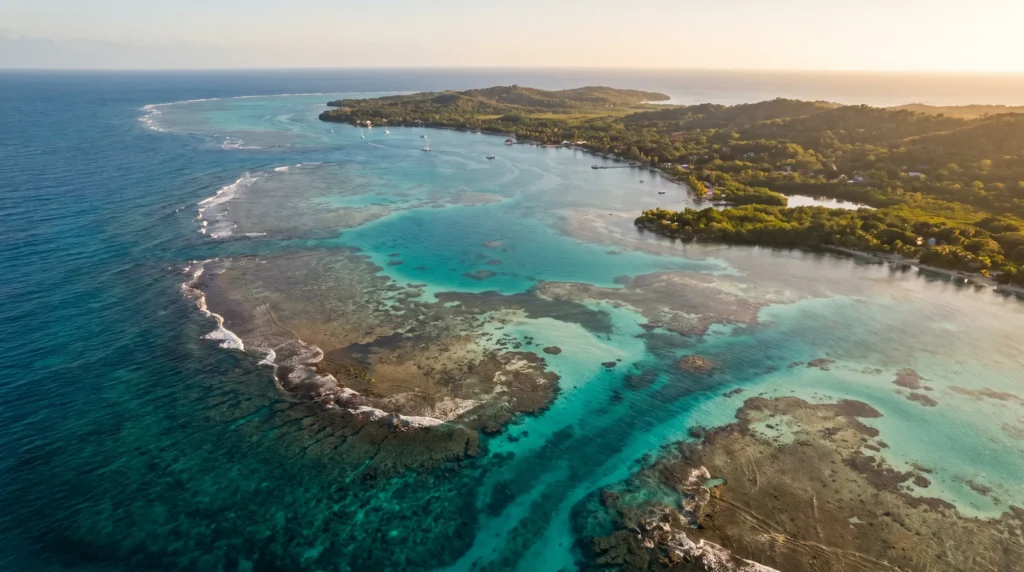
Offshore, the Bay Islands — Roatán, Utila and Guanaja — sit on the southern edge of the Mesoamerican Barrier Reef, the second-largest barrier reef system in the world, and have quietly built one of the most affordable, well-run dive scenes in the Caribbean basin. That combination — serious ruins, serious reef, low prices — is the pitch. The catch is that Honduras carries a heavier safety advisory than its neighbors, and the mainland’s tourist infrastructure is thinner and less signposted than Belize or Costa Rica’s. Go with a plan, stick to the established route, and it delivers in a way few countries this underrated still can.
Feria Isidra & La Ceiba Carnival — Honduras’s Biggest Party
If you can time a trip to mid-to-late May, the Caribbean port city of La Ceiba throws the largest annual festival in Central America. It began in 1917 as a small fair honoring the city’s patron saint, Isidore the Laborer, whose feast day of 15 May remains the one fixed date every year; the modern Feria Isidra has grown into roughly two weeks of neighborhood “carnavalitos,” queen coronations and food stalls, building to the Gran Carnaval Internacional — a full parade down Avenida San Isidro to the beach, held on the third or fourth Saturday of the month.
Book accommodation in La Ceiba well ahead if your dates overlap — hotels fill fast for a festival that has drawn crowds in the hundreds of thousands in past years. It also happens to be a smart jumping-off point for the Bay Islands ferry, so a carnival weekend pairs naturally with a week on Roatán or Utila right after.
Best Time to Visit Honduras (Season by Season)
February – April · Dry, cool, peak season
The most reliable stretch for both the mainland and the coast: lower humidity, minimal rain, and the best underwater visibility for diving on the Bay Islands. Copán and Roatán both get busiest in this window, especially around Easter (Semana Santa), when domestic travel spikes and prices climb.
May – June · Carnival & shoulder value
Hot and increasingly humid, but this is when La Ceiba’s Feria Isidra runs and whale sharks are most reliably sighted off Utila, feeding on plankton blooms that peak in these months. Rates on the islands are noticeably softer than in the winter high season.
July – November · Wetter season
Short, heavy afternoon downpours are typical, and the Caribbean hurricane season runs officially June through November with its statistical peak in August–October — direct hits on Honduras are infrequent but travel insurance covering trip interruption is worth having. This is also the cheapest and quietest window for diving on Roatán and Utila if you don’t mind a squall most afternoons.
Getting There — Palmerola, San Pedro Sula & Roatán
Honduras has three main international gateways. Ramón Villeda Morales International Airport (SAP) in San Pedro Sula is the busiest, with direct flights from the US, Mexico, El Salvador, Panama and Spain, and is the natural entry point for Copán and the north coast. Palmerola International Airport (XPL), about 70 kilometers from Tegucigalpa in Comayagua, took over all international traffic for the capital in November 2021 — the old in-town Toncontín Airport, once ranked among the world’s most extreme approaches for its short mountain-ringed runway, now handles domestic flights only. If your whole trip is the Bay Islands, Juan Manuel Gálvez International Airport (RTB) on Roatán has direct seasonal flights from several US cities, letting you skip the mainland entirely.
Overland, Honduras borders Guatemala, El Salvador and Nicaragua, and the El Florido crossing from Guatemala is the standard route into Copán for anyone combining it with Antigua or Tikal. Ferries also connect La Ceiba to Roatán and Utila in under two hours.
Getting Around — Buses, Domestic Flights & Ferries
On the mainland, comfortable first-class buses (Hedman Alas and similar operators) link San Pedro Sula, Tegucigalpa, Copán Ruinas and La Ceiba on paved highways, and are the sensible default over renting a car or riding local “chicken buses” between cities. Domestic flights connect Tegucigalpa, San Pedro Sula, Roatán and La Ceiba in under an hour and are worth the modest fare if your schedule is tight.
Getting to the Bay Islands means either a short domestic flight or the ferry from La Ceiba — the Utila and Roatán ferries run multiple times daily and are the budget-friendly option. Once on Roatán, taxis and rented scooters cover the island’s single coastal road; Utila is small enough to walk or cycle almost everywhere, which is a big part of its backpacker appeal.
Top Regions — Bay Islands, Copán & the Mainland
Roatán
The largest of the Bay Islands at about 83 square kilometers with a population near 110,000, Roatán is Honduras’s dive tourism engine, sitting directly on the Mesoamerican Barrier Reef with well over a hundred charted dive sites, cruise ports, and a built-out stretch of resorts around West Bay and West End.
Utila
The scrappier, cheaper island next door — about 45 square kilometers and just over 5,000 residents — famous as one of the least expensive places on Earth to get PADI-certified, and for reliable whale shark encounters offshore. It draws a younger backpacker crowd than Roatán and has a correspondingly looser, more social atmosphere.
Guanaja
The least developed and most expensive to reach of the three main Bay Islands, with pine-covered hills (a rarity in the Caribbean) and reef that gets a fraction of Roatán’s dive traffic. Worth it if remoteness is the point.
Copán Ruinas & Copán
A Classic Maya capital that flourished from roughly the 5th to 9th centuries AD, home to the Hieroglyphic Stairway — the longest known Maya hieroglyphic inscription — and elaborate portrait stelae considered among the finest Maya sculpture anywhere. The adjoining colonial town of Copán Ruinas is small, walkable, and a genuinely pleasant base with good coffee-country day trips nearby.
La Ceiba & the North Coast
The Caribbean coast’s main city and transport hub for Bay Islands ferries, plus the gateway to Pico Bonito National Park’s cloud forest and rivers, and the site of the Feria Isidra carnival each May.
Tegucigalpa
The capital, set in a mountain bowl, has colonial-era churches and museums worth a day, but most visitors treat it as a transit point rather than a destination in its own right.
San Pedro Sula
Honduras’s industrial and commercial capital, with a metro population over a million and the country’s busiest airport. Few travelers linger, using it instead as the road/rail hub to Copán and the north coast.
La Mosquitia
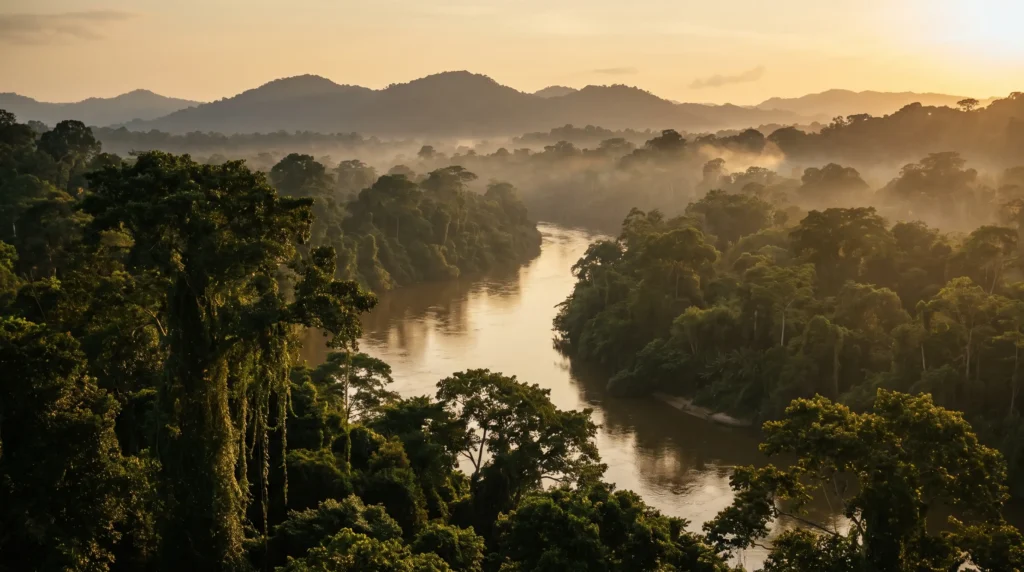
The wild eastern lowlands containing the Río Plátano Biosphere Reserve — vast rainforest, Miskito, Pech and Garifuna communities, and almost no tourism infrastructure at all. This is genuine expedition territory, best attempted with a specialist local operator rather than independently.
Culture & People — Lenca, Garifuna, Maya-Chortí & Miskito
Honduras is named, in its own currency at least, for a figure of resistance: the lempira is named after the 16th-century Lenca cacique Lempira, who led resistance against Spanish conquest and remains a national symbol. The Lenca, concentrated in the western highlands near Copán, are the country’s largest indigenous group, alongside Maya-Chortí communities, the Miskito and Pech of the eastern Mosquito Coast, and the Garifuna along the Caribbean shore.
The Garifuna story is a dramatic one: after defeat in the Second Carib War on the island of St. Vincent in the 1790s, thousands were deported by the British, and roughly 2,500 survivors landed at Roatán on 12 April 1797, later spreading along the Central American coast. Honduras today has the largest Garifuna population of any country, and in 2001 UNESCO recognized Garifuna language, dance and music as a Masterpiece of the Oral and Intangible Heritage of Humanity, shared across Honduras, Belize and Nicaragua. Garifuna drumming and punta dance are easiest to experience around La Ceiba, Trujillo and the smaller coastal villages — ask before photographing ceremonies, and prefer community-run cultural stops over staged tourist shows.
A Food Lover’s Guide to Honduras
The everyday plate is the baleada — a thick flour tortilla folded over refried beans, crema and crumbled cheese, sold from street carts and breakfast counters everywhere, endlessly upgraded with egg, avocado or shredded meat. Coastal menus lean into sopa de caracol (conch soup) and fresh-grilled snapper, while inland comfort food runs to plato típico — grilled meat, fried plantain, beans, tortillas and cabbage slaw on one plate.
In Garifuna communities, look for machuca: mashed plantain and cassava with a rich coconut-milk fish or seafood broth, close cousin to Belizean hudut. Honduras is also a serious coffee country — the western highlands around Copán and Santa Bárbara produce beans that rarely leave Central America, so a bag from a farm-direct roaster is a better souvenir than anything in a gift shop. Wash it all down with a Salva Vida or Port Royal, the two national beers.
Off the Beaten Path
Pico Bonito National Park
A cloud-forest range rising straight out of the Caribbean lowlands near La Ceiba, with waterfall hikes, river tubing and canopy tours that see a fraction of the visitors Copán or Roatán get.
Guanaja’s pine ridges
Caribbean island scenery without the Roatán crowds — quieter reef, higher prices to reach it, and a genuinely different feel from its two larger neighbors.
Lenca villages of the western highlands
Towns like Gracias and La Esperanza sit in coffee country near Celaque National Park, Honduras’s highest peak, with colonial architecture and Lenca weaving traditions that most Copán day-trippers never see.
Trujillo & the Garifuna coast east of La Ceiba
Founded early in the colonial period and later a haunt of pirates and filibusters, Trujillo today is a sleepy beach town with Garifuna villages nearby and none of the north coast’s cruise-port infrastructure.
Río Plátano Biosphere Reserve
Genuine wilderness: rainforest, Miskito river communities, jaguars and manatees, reachable only with serious logistics and a specialist guide — not a casual add-on to a Bay Islands trip, but the real deep-Honduras experience for travelers with time and an appetite for it.
Practical Information
Money. The lempira floats against the dollar and has traded around 26–27 to US$1 through 2026; US dollars are widely accepted in tourist areas but the lempira is standard elsewhere. Declare cash over US$10,000 on entry or exit — undeclared amounts risk substantial fines.
Safety. This is the section to read carefully. The US State Department rates Honduras Level 3, “Reconsider Travel,” citing violent crime including armed robbery and kidnapping, with the Gracias a Dios department (La Mosquitia) singled out at Level 4, “Do Not Travel.” In practice, the established tourist route — Copán, Roatán, Utila, La Ceiba, San Pedro Sula’s airport — sees comparatively few incidents involving visitors, but this is not Costa Rica or Belize: avoid Tegucigalpa and San Pedro Sula after dark outside your hotel, use registered tour operators and airport taxis, and check your government’s current advisory before booking.
Health. The CDC recommends being current on routine vaccines plus Hepatitis A and Typhoid for most travelers; malaria prophylaxis is worth discussing with a travel clinic if you’re heading to Roatán or the other Bay Islands, where transmission occurs, though not in San Pedro Sula or Tegucigalpa. Mosquito-borne dengue and Zika are present nationwide, so repellent matters everywhere, not just the jungle.
Connectivity & logistics. An eSIM covers the mainland and islands reasonably well; resort Wi-Fi is decent, rural Wi-Fi is not. Plugs: US-style, 110V. Time zone: UTC-6, no daylight saving.
Budget Breakdown — What Honduras Actually Costs in 2026
Honduras is one of the better-value countries left in Central America, especially set against Belize or Costa Rica next door.
Budget (US$35–70/day): Hostel dorms or basic guesthouses, baleadas and market food, first-class intercity buses, snorkeling over diving, Utila’s rock-bottom PADI open-water courses.
Mid-range (US$90–170/day): Boutique hotel in Copán Ruinas or a mid-tier dive resort on Roatán, restaurant meals, a two-tank dive (roughly US$60–90), guided Copán ruins tour, occasional domestic flight.
Luxury (US$300+/day): All-inclusive Roatán resorts, private Copán and coffee-country tours, live-aboard dive trips, chartered boat days to Guanaja.
Diving is Honduras’s best-value line item almost everywhere on the coast — certification and per-dive costs on Utila in particular run well below most Caribbean and Southeast Asian dive hubs. Tip 10% where service isn’t already included; airport departure taxes are generally folded into your ticket price.
Planning Your First Trip to Honduras
The classic first-timer route is ruins + reef: fly into San Pedro Sula, bus three hours to Copán Ruinas for two nights of ruins and coffee-country day trips, then head to La Ceiba to ferry across to Utila or Roatán for four to six nights of diving. Nine or ten days covers it comfortably; add La Ceiba’s Feria Isidra in May, or Pico Bonito’s cloud forest, if your dates and appetite allow. Pair it with our Guatemala guide for Tikal and Antigua across the El Florido border, our Belize guide for more of the same Mesoamerican reef system and Garifuna culture, or continue south into Nicaragua or El Salvador.
Frequently Asked Questions
Is Honduras safe for tourists in 2026?
The US State Department currently rates the country Level 3, “Reconsider Travel,” with the remote Gracias a Dios department at Level 4, “Do Not Travel.” The established tourist circuit — Copán, the Bay Islands, La Ceiba, airport transfers — is where the overwhelming majority of visitors travel without incident, but this is a genuinely elevated-risk destination compared with Belize or Costa Rica. Stick to registered operators, avoid the two big mainland cities after dark, and check current advisories before you book.
Do I need a visa?
US, UK, EU and Canadian passport holders can enter visa-free for stays of up to 90 days, provided your passport is valid at least six months and you can show onward travel.
Which airport should I fly into?
San Pedro Sula (SAP) for Copán and the north coast, Palmerola (XPL) near Comayagua for Tegucigalpa and the capital region, or Roatán (RTB) directly if the Bay Islands are your whole trip.
Is Utila or Roatán better for diving?
Utila is cheaper and more backpacker-social, with a strong reputation for low-cost PADI certification and reliable whale shark sightings offshore. Roatán has more dive sites, more resort infrastructure, and an easier direct-flight option if you’re short on time.
Honduras or Belize for ruins and reef?
Belize is more polished, pricier, and English-speaking; Honduras is cheaper, Spanish-speaking, and rougher around the edges but arguably has the more impressive single ruin site in Copán’s Hieroglyphic Stairway. Choose based on your risk tolerance and budget as much as the sights themselves.
What’s the cheapest way to see the Bay Islands?
Bus to La Ceiba, ferry to Utila rather than fly, stay in a hostel near the dock, and book your dive course through one of the island’s competing shops rather than a resort package.
Ready to Explore Honduras?
A Maya hieroglyphic stairway most people have never heard of, whale sharks off an island where certification costs less than a plane ticket, and a Caribbean carnival that fills an entire city for two weeks in May. Honduras rewards travelers willing to plan carefully and stay on the established route — do that, and you’ll wonder why more people aren’t already here.
Explore More
- Guatemala Travel Guide — Tikal and Antigua across the border from Copán
- Belize Travel Guide — more Mesoamerican reef and Garifuna culture
- Nicaragua Travel Guide — continue south along Central America’s spine
- El Salvador Travel Guide — the Pacific side of the isthmus
How this guide was built
Published as part of Facts From Upstairs’ country guide series. Built from authoritative sources — the US State Department’s Honduras country page, the UK FCDO’s Honduras travel advice, the US CDC traveler page for Honduras, UNESCO-inscribed entity pages for Copán and the Río Plátano Biosphere Reserve (via Wikipedia), current exchange-rate data via Trading Economics, and Wikipedia entity pages for Honduras, San Pedro Sula, Roatán, Utila, Toncontín Airport, the Honduran lempira, the Garifuna people and La Ceiba Carnival. Numeric claims carry inline citations.
Sources cited on this page
- Wikipedia — Honduras
- US State Department — Honduras
- UK FCDO — Honduras
- US CDC — Honduras traveler page
- Wikipedia — Copán
- Wikipedia — Río Plátano Biosphere Reserve
- Wikipedia — Roatán
- Wikipedia — Utila
- Wikipedia — San Pedro Sula
- Wikipedia — Toncontín International Airport
- Wikipedia — Honduran Lempira
- Wikipedia — Garifuna
- Wikipedia — La Ceiba Carnival
- Trading Economics — Honduran Lempira
More country guides you might like
Plan your trip to Honduras
The booking tools we use ourselves. FFU may earn a commission at no extra cost to you.
Plan & book your trip to Honduras
Booking through these searches supports our guides at no extra cost to you.