
Languages of Brunei
All languages of Southeast Asia →fluent beta classical · classes by phone with Maya at ranas.ai/maya
Brunei Travel Guide — Golden Mosques, a Stilt Water Village & Borneo’s Rainforest
Brunei — the small, oil-rich sultanate on the north coast of Borneo — is one of Southeast Asia’s quietest and most intriguing destinations. Its capital, Bandar Seri Begawan, pairs gleaming golden-domed mosques with Kampong Ayer, the world’s largest stilt-house water village, while inland the pristine rainforest of Ulu Temburong rivals anything in Borneo. Calm, clean, devout and easygoing, it’s a rewarding stop for travellers who like their adventures unhurried and crowd-free.
📋 In This Guide
- Overview — The quiet sultanate
- Golden mosques & rainforest in one trip
- Best time to visit (season by season)
- Getting there
- Getting around
- Where to go — Bandar Seri Begawan, Kampong Ayer & Temburong
- Culture & people
- A food lover’s guide to Brunei
- Off the beaten path
- Practical information
- Budget breakdown — what Brunei costs in 2026
- Planning your first trip
- Frequently asked questions
Overview — The Quiet Sultanate
Tucked onto the northern coast of Borneo and all but surrounded by Malaysia, Brunei Darussalam is one of the world’s last absolute monarchies and, thanks to its oil and gas wealth, one of Asia’s richest nations per head. It’s small — you can see the highlights in a few days — and it moves at a gentle, orderly pace, with grand mosques, manicured gardens and almost no tourist crowds.
The capital, Bandar Seri Begawan (“BSB”), is the heart of a visit: golden-domed mosques, the sprawling water village of Kampong Ayer, and an easy day-trip into the rainforest of the Temburong district. It’s a devout, conservative country — alcohol-free and governed by Islamic custom — but warm and welcoming to respectful visitors.
Golden Mosques & Rainforest in One Trip
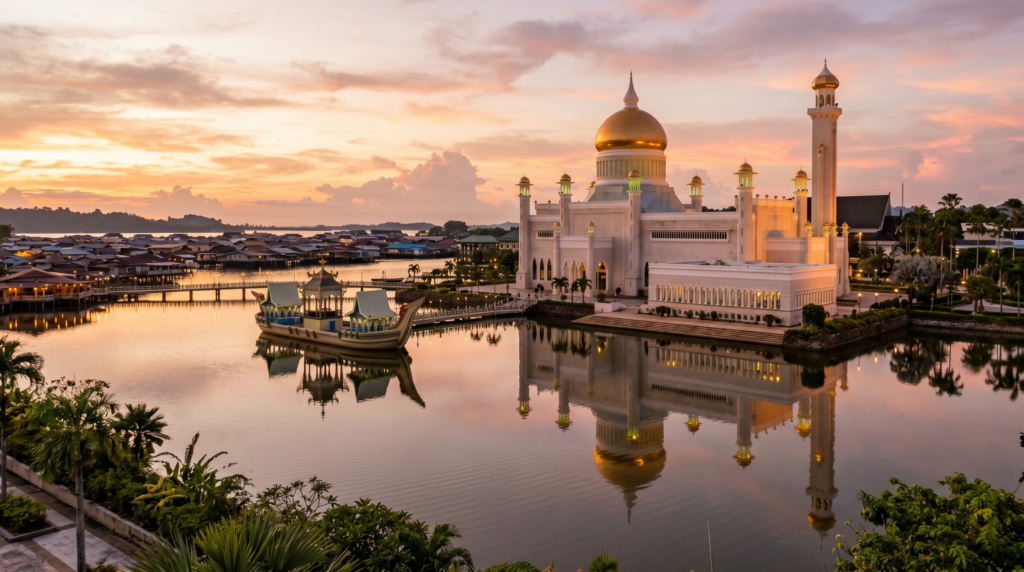
Brunei’s appeal is the contrast packed into a tiny country. In the morning you can admire the marble-and-gold Omar Ali Saifuddien Mosque mirrored in its lagoon and ride a water taxi through Kampong Ayer, the centuries-old stilt village often called the “Venice of the East.” By afternoon you can be deep in Ulu Temburong National Park, climbing a canopy walkway above untouched Bornean rainforest. Few places let you pair golden-age Islamic architecture with primary jungle so easily.
Best Time to Visit Brunei (Season by Season)
January–May — Drier season (best)
Brunei is hot and humid year-round, but these months are generally the driest and most comfortable for sightseeing and rainforest trips. March and April are ideal.
June–September — Shoulder
Still warm with scattered showers; quieter and a good time for the mosques, museums and city life, with rainforest day-trips between downpours.
October–December — Wettest
The wettest stretch, with heavier monsoon rain. River and jungle excursions can be affected, but the lush greenery is at its most vivid and the city sights remain easy.
Getting There
Brunei International Airport (BWN), just outside Bandar Seri Begawan, is served by Royal Brunei Airlines and regional carriers with connections through Singapore, Kuala Lumpur, Hong Kong and beyond.
- Visa: US citizens can enter visa-free for up to 90 days; passports should be valid for at least six months.
- From the airport: the city centre is a short 10–15 minute taxi or ride-hail trip away.
- Overland: buses and shared transport connect Brunei with Sabah and Sarawak (Malaysia), though the route crosses several borders.
Getting Around
- Water taxis: the classic way to reach and explore Kampong Ayer — cheap, fast longboats across the river.
- Ride-hailing & taxis: the Dart app and taxis cover the city; public buses are limited, so most visitors use cars.
- Car hire: useful for reaching outlying mosques, museums and the coast; roads are excellent and quiet.
- To Temburong: a scenic speedboat through mangroves (or the long bridge) reaches the rainforest district, usually as a guided day tour.
Where to Go — Bandar Seri Begawan, Kampong Ayer & Temburong
Bandar Seri Begawan
The two great mosques — Omar Ali Saifuddien and the larger Jame’Asr Hassanil Bolkiah — plus the Royal Regalia Museum, riverside markets and tidy gardens.
Kampong Ayer
The world’s largest stilt-house water village: wooden homes, mosques, schools and shops on the water, reached by darting water taxis, with a cultural gallery explaining centuries of river life.
Ulu Temburong National Park
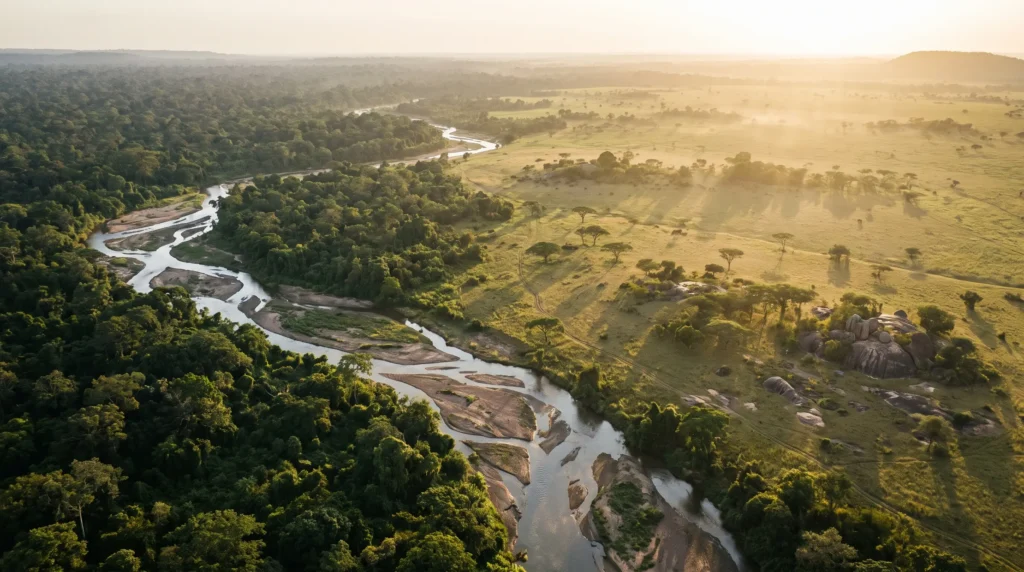
Brunei’s “green jewel”: pristine Bornean rainforest reached by speedboat, with a famous canopy walkway, jungle treks and river dips.
The Coast & Empire
Beaches at Muara and Jerudong, the lavish Empire hotel complex, and Jerudong Park — an easy half-day from the capital.
Culture & People
Brunei’s national philosophy is Melayu Islam Beraja (Malay Islamic Monarchy), and daily life is shaped by Islam, Malay tradition and reverence for the Sultan. It’s a calm, orderly, family-oriented society where mosques are central and hospitality is warm. Visitors should dress modestly — cover shoulders and knees, and women may be given a robe and headscarf to enter mosques.
Brunei is a “dry” country: the sale of alcohol is banned, though non-Muslim visitors may bring a small personal allowance declared on arrival. Public behaviour is conservative, and Friday midday is set aside for prayers when some sites close. Respect these customs and you’ll find Bruneians genuinely friendly and helpful.
A Food Lover’s Guide to Brunei
- Ambuyat — the national dish: a sticky sago starch eaten with a bamboo fork and dipped in tangy sauces, shared family-style.
- Nasi katok — Brunei’s beloved cheap eat: rice, fried chicken and sambal wrapped to go.
- Malay & Bornean fare — grilled fish, beef rendang, satay and fresh tropical fruit at the lively Gadong night market.
- Kuih & drinks — colourful Malay sweets and (alcohol-free) fresh juices, teh tarik and coconut.
Off the Beaten Path
- Gadong Night Market — the best street-food scene in the country, packed with grills and Malay snacks.
- Tasek Lama & Bukit Shahbandar — forest parks and waterfalls minutes from the city for easy hikes and views.
- Proboscis-monkey river cruises — evening boat trips on the mangrove rivers to spot Borneo’s big-nosed monkeys and fireflies.
- Jame’Asr Hassanil Bolkiah Mosque — the country’s largest, with 29 golden domes, often quieter than the riverfront landmark.
- Tutong & the white-sand coast — quiet beaches and a freshwater-meets-sea spit away from the capital.
Practical Information
- Money: the Brunei dollar is pegged 1:1 to the Singapore dollar, and Singapore notes are accepted interchangeably. Cards work in hotels and malls; carry cash for markets and water taxis.
- Alcohol: Brunei is dry — no bars or alcohol sales. Non-Muslim adults may import a small declared personal allowance.
- Dress & conduct: dress modestly, especially at mosques; public displays of affection and eating in public during Ramadan daylight are discouraged.
- Laws: Brunei enforces conservative laws and a strict Islamic legal code — respect local customs and check current rules; drug offences carry severe penalties.
- Power: 240V, UK-style three-pin plugs — US travellers need an adapter.
- Health: tap water is generally safe in the capital; bring sun and insect protection for rainforest trips.
Budget Breakdown — What Brunei Costs in 2026
Brunei is mid-priced for Southeast Asia — cheaper than Singapore, pricier than parts of Malaysia. Rough per-person, per-day estimates in USD:
| Style | Accommodation | Food | Total / day |
|---|---|---|---|
| Budget | $25–45 guesthouse | $8–15 (local) | ~$60 |
| Mid-range | $70–130 hotel | $20–35 | ~$130 |
| Luxury | $200–500+ | $45–90+ | $300–600+ |
Water taxis and nasi katok cost just a dollar or two, and the mosques and museums are free. The big-ticket item is a guided Temburong rainforest day tour, which is well worth it.
Planning Your First Trip
Three days is plenty for a first visit: a day in Bandar Seri Begawan for the mosques, Royal Regalia Museum and a Kampong Ayer water-taxi tour; a full day on a guided Ulu Temburong rainforest trip; and a relaxed third day for the coast, the night market and a proboscis-monkey river cruise. Brunei pairs naturally with Sabah or Sarawak in Malaysian Borneo if you want a longer trip. Travel in the drier January–May window, dress modestly, and embrace the calm.
Frequently Asked Questions
Do US citizens need a visa for Brunei?
No — US citizens can visit visa-free for up to 90 days. Your passport should be valid for at least six months, and you’ll need an onward or return ticket.
Is Brunei safe to visit?
Yes — it’s one of Asia’s safest and calmest countries, at U.S. advisory Level 1 (exercise normal precautions), with very low crime. The main thing to be aware of is the conservative laws and customs, which visitors should respect.
Can you drink alcohol in Brunei?
There are no bars and no alcohol sales — Brunei is a dry country. Non-Muslim adult visitors may bring a small personal allowance, which must be declared on arrival and consumed privately.
When is the best time to visit?
The drier months of January to May, with March and April ideal for both city sightseeing and rainforest trips.
How many days do you need in Brunei?
Two to three days covers the highlights — the capital’s mosques and water village plus a rainforest day-trip to Temburong.
Ready to Explore Brunei?
Golden mosques, a floating village and pristine Bornean rainforest — the quiet sultanate is one of Asia’s most distinctive short trips. Tell us your dates and travel style and we’ll help you plan it. Plan your trip →
Explore More
How This Guide Was Built
Researched and written by the Facts From Upstairs team, last updated . Prices, advisories and entry rules change — always confirm current details with official sources before you travel.
More country guides you might like
Plan your trip to Brunei
The booking tools we use ourselves. FFU may earn a commission at no extra cost to you.
Plan & book your trip to Brunei
Booking through these searches supports our guides at no extra cost to you.