
Languages of Kyrgyzstan
All languages of Central Asia →fluent beta classical · classes by phone with Maya at ranas.ai/maya
Kyrgyzstan Travel Guide — Alpine Lakes, Nomad Yurts & the Switzerland of Central Asia
Kyrgyzstan is the adventurer’s dream of Central Asia: a country that is almost entirely mountains, where Soviet cities give way to soaring Tian Shan peaks, turquoise alpine lakes and high summer pastures dotted with the white yurts of herders who still live the nomadic life. It’s visa-free, astonishingly cheap, gloriously uncrowded and one of the most welcoming places on Earth — the place to come for horse treks, lake camps and Silk Road history before everyone else catches on.
📋 In This Guide
- Overview — A country made of mountains
- Yurt season — summer on the jailoo
- Best time to visit (season by season)
- Getting there & entry
- Getting around
- Where to go — Song-Kol, Issyk-Kul, Karakol & Osh
- Culture & people — nomad heritage
- A food lover’s guide to Kyrgyzstan
- Off the beaten path
- Practical information
- Budget breakdown — what Kyrgyzstan costs in 2026
- Planning your first trip
- Frequently asked questions
Overview — A Country Made of Mountains
Landlocked in Central Asia between Kazakhstan, China, Tajikistan and Uzbekistan, Kyrgyzstan is roughly ninety percent mountains — a crumpled landscape of the Tian Shan and Pamir-Alay ranges, glaciers, gorges and high pastures. Its showpiece is Issyk-Kul, an enormous alpine lake that never freezes, ringed by snow peaks, and its soul is the jailoo: the summer high pastures where herders move their yurts and animals, and where travellers can sleep in a felt tent under the stars.
For visitors, the appeal is rare: world-class trekking and horse riding, living nomadic culture, Silk Road relics, and prices that make it one of the best-value adventures anywhere — all with no visa required and a genuinely warm welcome. It’s rugged and a little rough around the edges, which is exactly why those who go fall for it.
Yurt Season — Summer on the Jailoo
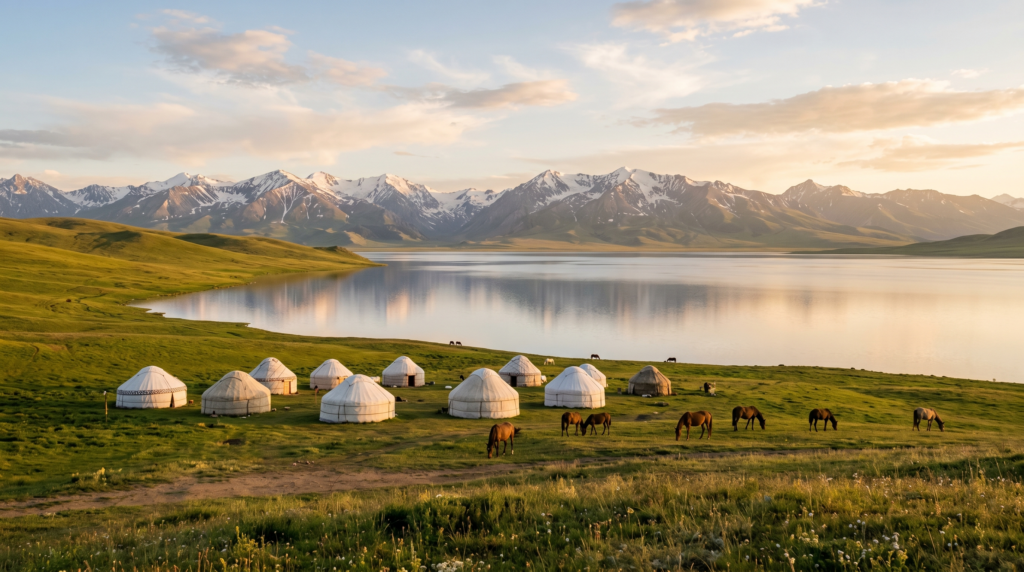
Kyrgyzstan’s magic peaks in summer. From late June, herding families move up to the jailoo and the high lakes — above all Song-Kol, a 3,000-metre lake on rolling green pastures where yurt camps welcome travellers for horse treks, kumis (fermented mare’s milk) and unforgettable starry nights. The mountain passes open, the wildflowers bloom, and the whole country tilts toward the outdoors. Note that 2026 brings the World Nomad Games (late August–early September) to the Issyk-Kul region — thrilling to witness, but book far ahead as prices spike.
Best Time to Visit Kyrgyzstan (Season by Season)
June–September — Summer (best for everything)
Warm days, open passes and the full jailoo experience: trekking, horse riding, lake swimming and yurt stays are all at their best. July–August is the height of the season, with Song-Kol and the high routes fully accessible.
May & October — Shoulder
Green spring valleys or golden autumn colour at lower altitudes, with fewer crowds — but high lakes like Song-Kol can be muddy in late May and closing by late September.
November–April — Winter
Cold and snowy, with the mountains closed for trekking but excellent, cheap skiing near Karakol and Bishkek for those who brave the chill.
Getting There & Entry
Manas International Airport (FRU) near Bishkek is the main gateway, with connections via Istanbul, Dubai, Almaty and Moscow; Osh (OSS) serves the south. Many travellers combine Kyrgyzstan with neighbouring Kazakhstan or Uzbekistan.
- Visa: US citizens travel visa-free for up to 60 days — no application or fee, just a passport valid at least six months.
- Overland: easy bus and shared-taxi crossings link Bishkek with Almaty (Kazakhstan) and Osh with the Fergana Valley (Uzbekistan).
- On arrival: arrange onward mountain transport through guesthouses or community-based tourism (CBT) offices.
Getting Around
- Shared taxis & marshrutkas: cheap minibuses and shared cars connect the main towns — the everyday way to travel.
- Hired driver: the most practical option for the mountains and lakes, where public transport thins out; arrange through guesthouses or CBT.
- Horse & foot: for the jailoo and high lakes, horse treks and multi-day hikes are the experience itself.
- In Bishkek: cheap taxis (Yandex app) and marshrutkas make the capital easy.
Where to Go — Song-Kol, Issyk-Kul, Karakol & Osh
Song-Kol Lake
The quintessential Kyrgyz experience: a vast high-altitude lake on summer pastures, with yurt camps, horse treks, herders and silence — reached by a spectacular drive over mountain passes.
Issyk-Kul & Karakol
The giant alpine lake for beaches and boat trips, plus Karakol at its eastern end — gateway to the Ala-Kul trek, the red rock formations of Jeti-Oguz, and the Altyn-Arashan hot springs in their mountain valley.
Bishkek & Ala-Archa
The leafy Soviet-era capital with its bazaars and Ala-Too Square, and the nearby Ala-Archa National Park — glaciers and day hikes barely an hour from the city.
Osh & the South
The 3,000-year-old Silk Road city of Osh, with its sacred Sulaiman-Too mountain (a UNESCO site) and a huge, ancient bazaar — plus the stone caravanserai of Tash Rabat on the route toward China.
Culture & People — Nomad Heritage
Kyrgyz culture is rooted in nomadism, and unusually for the modern world, it’s still lived: families move with their herds to the jailoo each summer, raise yurts, ride from childhood, and pass down the epic Manas, one of the longest oral poems on Earth. Eagle hunting and the wild horseback game of kok-boru remain proud traditions, celebrated at the World Nomad Games.
The people are predominantly Muslim but markedly secular, and hospitality is sacred — a guest is treated with real generosity, often with tea, bread and kumis. Kyrgyz and Russian are the main languages; English is limited outside tourism, so a few Russian phrases and a translation app go a long way. The welcome, especially in the mountains, is unforgettable.
A Food Lover’s Guide to Kyrgyzstan
- Beshbarmak — the national dish (“five fingers”): boiled meat over flat noodles, traditionally eaten by hand at celebrations.
- Laghman & manti — hand-pulled noodle soup and steamed dumplings, the Silk Road staples.
- Plov & samsa — fragrant rice with meat and carrots, and flaky baked meat pastries.
- Kumis & bread — fermented mare’s milk (a summer jailoo ritual), with fresh boorsok fried dough and round nan bread.
Off the Beaten Path
- Ala-Kul Lake trek — a classic multi-day hike from Karakol to a glacial turquoise lake and over a high pass to the Altyn-Arashan hot springs.
- Tash Rabat — a remote 15th-century stone caravanserai high on the old Silk Road toward the Torugart Pass.
- Jyrgalan — an emerging community-tourism valley for trekking and horse riding away from the crowds.
- Sary-Chelek — a biosphere reserve of forested lakes in the little-visited west.
- A homestay in a herder’s yurt — the real heart of a Kyrgyz trip, arranged through community-based tourism.
Practical Information
- Money: the som is the only currency in practice, and Kyrgyzstan is cash-centric — carry plenty of som for the mountains, where cards don’t work; ATMs are in the cities, and USD changes easily.
- Language: Kyrgyz and Russian; download an offline translator and learn a few Russian basics.
- Power: 220V, European two-pin plugs — US travellers need an adapter.
- Safety: generally safe and welcoming, with low crime; use normal city sense in Bishkek and Osh and check current advice for remote border zones.
- Altitude & weather: mountain weather changes fast and lakes sit high — pack warm layers even in summer, and acclimatise sensibly.
- CBT: Community-Based Tourism offices arrange yurt stays, guides and horses fairly and support local families.
Budget Breakdown — What Kyrgyzstan Costs in 2026
Kyrgyzstan is one of the best-value adventure destinations in the world. Rough per-person, per-day estimates in USD:
| Style | Accommodation | Food | Total / day |
|---|---|---|---|
| Backpacker | $10–20 yurt/hostel | $6–12 | $25–40 |
| Mid-range | $30–60 guesthouse/hotel | $12–25 | $50–90 |
| Organised tour | guided trips from ~$160/day all-in (transport, guide, yurt stays) | $160+ | |
Yurt camps include hearty meals, shared taxis cost a few dollars, and horse hire and guides are inexpensive. Independent travel with CBT keeps costs especially low.
Planning Your First Trip
A classic loop in summer runs Bishkek — Song-Kol (yurt stay and horse trek) — Issyk-Kul — Karakol (Ala-Kul or Jeti-Oguz and the hot springs), over ten days to two weeks by shared taxi and hired driver. Go between late June and early September for open passes and yurts, carry plenty of som in cash, book around the World Nomad Games dates, and arrange mountain logistics through community-based tourism for the most authentic (and affordable) experience.
Frequently Asked Questions
Do US citizens need a visa for Kyrgyzstan?
No — US citizens can visit visa-free for up to 60 days. Just bring a passport valid for at least six months; there’s no application or fee.
When is the best time to visit?
June to September for trekking, lakes and yurt stays, with July–August the peak when high passes and Song-Kol are fully open. Winter is for skiing only.
Is Kyrgyzstan safe to visit?
Yes, it’s generally safe and very welcoming, with low crime. Use normal city precautions in Bishkek and Osh, take sensible mountain-weather and altitude precautions, and check advice for remote border areas.
Is Kyrgyzstan expensive?
It’s one of the cheapest adventure destinations anywhere — yurt camps run $10–20 a night with meals, transport is cheap, and independent travel keeps daily costs low.
Do I need cash?
Yes — Kyrgyzstan is cash-centric and cards rarely work outside Bishkek. Carry plenty of som for the mountains; withdraw or exchange in the cities before heading out.
Ready to Explore Kyrgyzstan?
Alpine lakes, nomad yurts and the best-value adventure in Central Asia — all visa-free. Tell us your dates and travel style and we’ll help you plan the perfect mountain trip. Plan your trip →
Explore More
How This Guide Was Built
Researched and written by the Facts From Upstairs team, last updated . Prices and entry rules change — always confirm current details with official sources before you travel.
More country guides you might like
Plan your trip to Kyrgyzstan
The booking tools we use ourselves. FFU may earn a commission at no extra cost to you.
Plan & book your trip to Kyrgyzstan
Booking through these searches supports our guides at no extra cost to you.