
City Guide · Central Anatolia
Cappadocia, Turkey: Fairy Chimneys, Cave Churches, and the World’s Greatest Balloon Sunrise
I have watched the Cappadocian sunrise from a balloon basket, from a cave-hotel terrace, and from a ridge above Love Valley with a glass of local Emir wine, and I still get up at 04:30 every time I return. We tell first-time travellers that Cappadocia is not a single town — it is a region of soft volcanic rock, roughly an hour’s drive across, scattered with villages carved into stone: Göreme, the balloon-launch hub of about 2,000 people; Uçhisar with its castle-rock; the wine town of Ürgüp; and the pottery town of Avanos on the Red River . My favourite ritual is the dawn flight followed by a long Turkish breakfast on a rooftop, then an afternoon hike between the fairy chimneys before the light goes gold again. Treat this guide as the brief I would hand my own family before they flew into Nevşehir — the balloon booking, the Göreme Open-Air Museum frescoes, the underground city of Derinkuyu, and the practical realities of Turkish visas, the high-desert altitude and the brutal summer afternoons .
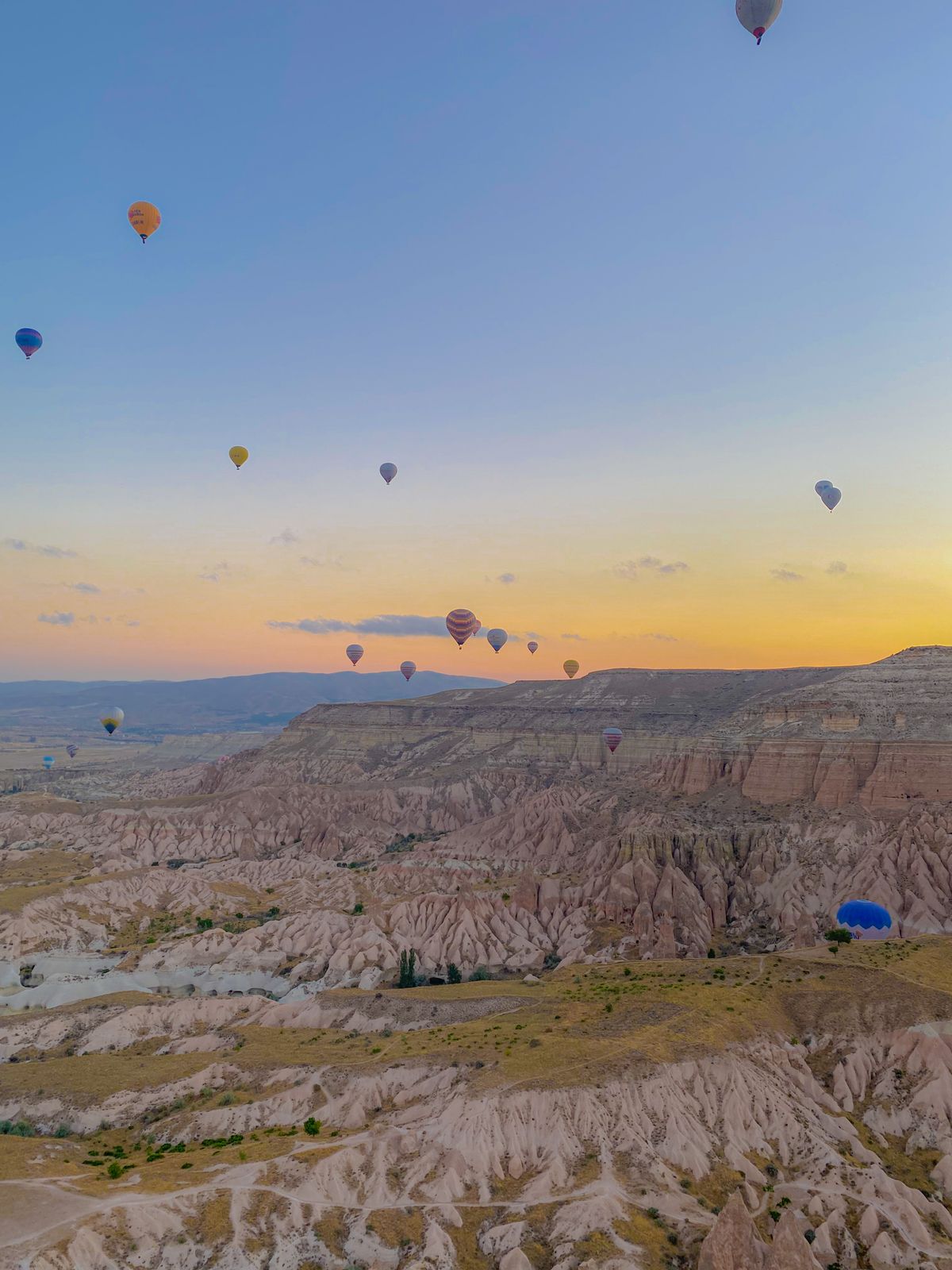
Table of Contents
Why Cappadocia?
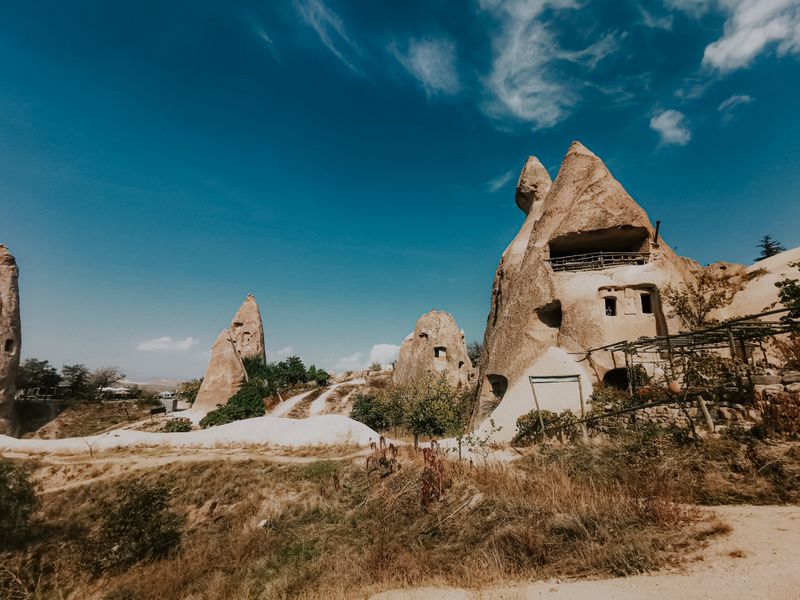
Cappadocia is the rare destination that looks invented — a landscape so strange that first-time visitors assume the photographs are exaggerated, then arrive to find them understated. It sits on the central Anatolian plateau at roughly 1,000 metres of elevation, a region of soft volcanic tuff laid down by ancient eruptions of the nearby Erciyes and Hasan volcanoes, then carved by ten thousand years of wind and water into the ridges, pinnacles and cones known as fairy chimneys . The whole Göreme National Park and the rock sites of Cappadocia were jointly inscribed as a UNESCO World Heritage site in 1985, recognised for both their natural drama and the human history layered into them.
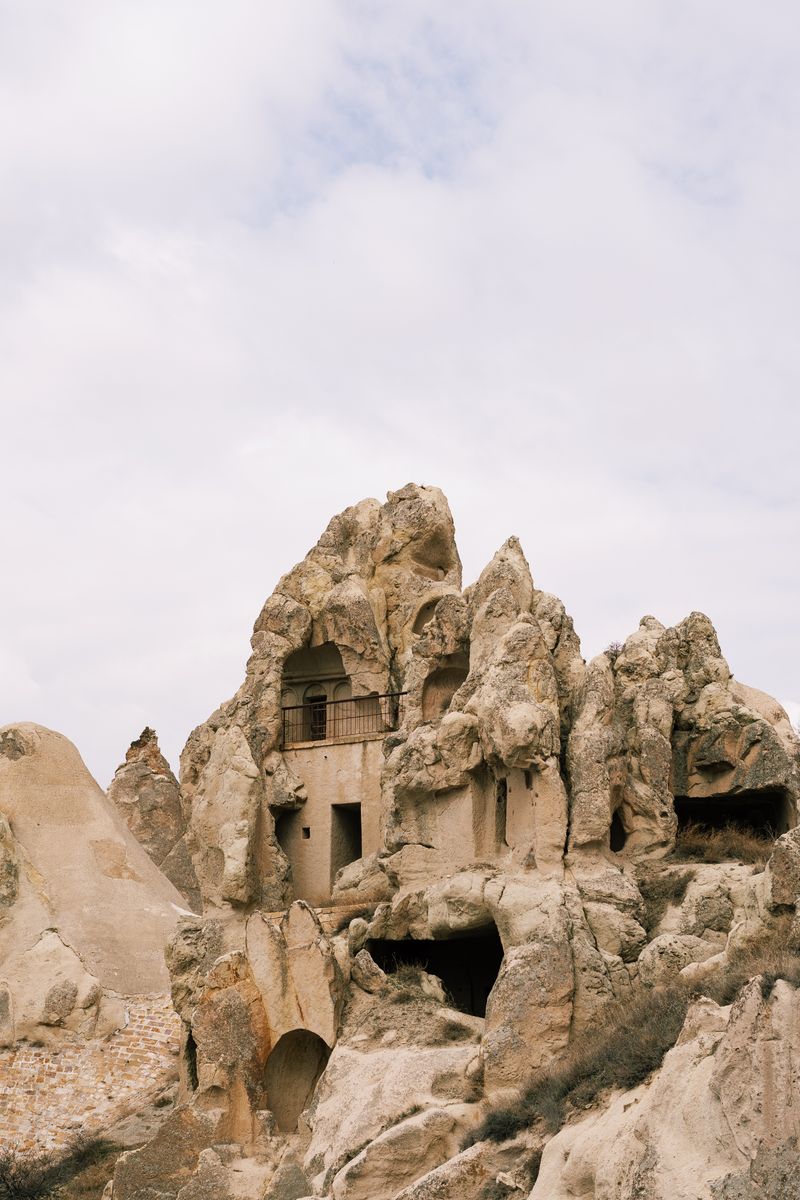
That history is the second surprise. Because the tuff is soft enough to carve with hand tools yet hard enough to hold a roof, people have lived inside these rocks for millennia. Early Christians cut churches, monasteries and entire villages into the cliffs, decorating them with Byzantine frescoes that survive in the Göreme Open-Air Museum to this day. When raiders came, whole communities retreated underground: the subterranean city of Derinkuyu descends through eight visitable levels to roughly 85 metres and could shelter as many as 20,000 people with their livestock and food stores . Nothing else in Turkey, and very little anywhere, combines a moon-like landscape with this depth of human ingenuity.
Cappadocia is not a city but a constellation of small towns, and understanding the geography is the key to a good trip. Most visitors base themselves in Göreme, a village of only about 2,000 people that sits in the centre of the valleys and launches the morning balloons . Around it cluster Uçhisar, crowned by a giant carved castle-rock; Ürgüp, the wine town with the largest hotel selection; Avanos, the pottery town on the Kızılırmak (Red River); and the administrative hub of Nevşehir, a working city of about 128,000 people with the region’s bus station . The villages are 10–20 minutes apart by car, and the valleys between them are laced with hiking trails.
This guide covers the towns you will actually sleep in, the cave-hotel and Turkish-breakfast culture that defines a Cappadocia stay, the balloon flight that everyone comes for, the unmissable sights (the Göreme Open-Air Museum, Derinkuyu, Uçhisar Castle), the valleys worth hiking (Love, Rose, Pigeon, Ihlara), and the practical realities of Turkish visas, the high-desert climate and the early starts. Above all it is built around the one immovable fact of a Cappadocia trip: the magic happens at dawn and dusk, when the light turns the rock gold and the balloons fill the sky.
One orientation point worth fixing early: Cappadocia rewards more time than people expect. The classic mistake is a single rushed night built around one balloon flight; the better trip is three nights, which buys you a weather buffer for the balloon (flights are weather-cancelled often, especially in winter), a full day for the underground cities and the open-air museum, and at least one slow morning of valley hiking. For the wider Turkish context, this guide pairs with our Turkey Travel Guide and the sibling Istanbul city guide.
Getting There

Cappadocia is served by two airports. Nevşehir-Kapadokya (NAV) is the closest, about 40 kilometres from Göreme — roughly a 30–40 minute transfer — but has limited flights. Kayseri Erkilet (ASR) is busier and better connected, about 75 kilometres east and a 60–90 minute drive to Göreme . Both run frequent domestic flights from Istanbul, with Turkish Airlines and Pegasus the main carriers; book the airport that offers the cheaper, better-timed flight and arrange a hotel shuttle either way.
From Istanbul, the flight is about 1 hour 20 minutes and usually the smartest inbound. The alternative is the overnight intercity bus, a Turkish institution: comfortable coaches run by operators such as Metro and Kamil Koç cover the roughly 730 kilometres to Nevşehir in 10–12 hours, often cheaper than the plane and saving a night’s accommodation. Buses arrive at Nevşehir’s otogar (bus station), where free or low-cost servis minibuses ferry passengers on to Göreme and Ürgüp.
Many visitors arrive as part of a wider Turkey loop — Istanbul, then Cappadocia, then the coast. There is no passenger rail directly into the region, so air or bus are the realistic options. Pre-arranged airport transfers run €15–25 per person and are worth it after an early flight; hotels in Göreme almost all offer pickup.
Getting Around
Cappadocia is a region, not a city, so getting around means hopping between villages that sit 10–20 minutes apart, plus reaching the valleys and the underground cities. There is no metro or tram; the options are local dolmuş minibuses, taxis, rental cars, scooters, e-bikes and your own feet. The good news is that the core triangle — Göreme, Uçhisar and the Open-Air Museum — is walkable or a very short ride, and the valley trails connect the villages on foot.
Dolmuş Minibuses
The dolmuş is the local shared minibus and the backbone of cheap regional transport. The main line runs roughly hourly between Nevşehir, Göreme, Avanos and Ürgüp, with a loop that also passes the Göreme Open-Air Museum; a single hop costs only a few lira. It is slow and infrequent compared with a car, and stops running in the evening, but for budget travellers connecting the main villages by day it works well. Pay the driver in cash and ask at your hotel for the current timetable, which shifts seasonally.
Rental Cars and Scooters
A rental car is the single best way to cover Cappadocia efficiently, especially for the underground cities and the Ihlara Valley, which the dolmuş does not reach. Small-car day rates run roughly €25–45 in shoulder season, plus fuel; the roads are good and quiet, and parking at the sights is easy and usually free. Scooters and ATVs are also widely rented in Göreme for short valley loops, though the latter are noisy and increasingly frowned upon in the protected valleys.
Organised Day Tours (Red and Green)
The standard alternative to driving is the colour-coded day tour. The Red Tour covers the northern sights close to Göreme — the Open-Air Museum, Uçhisar, Avanos pottery, the panorama viewpoints — while the Green Tour heads south to Derinkuyu underground city and the Ihlara Valley hike . Each runs a full day with lunch for roughly €35–55 and is the most efficient way to see the spread-out sights without a car.
Airport Access
- Hotel/agency shuttle from NAV airport to Göreme — about 30–40 minutes, roughly €15–20
- Shuttle or taxi from Kayseri (ASR) to Göreme — about 60–90 minutes, roughly €20–35
Taxis and Rideshare
Metered taxis are available in every village and useful for the pre-dawn balloon pickup or a late return, but they are not cheap by Turkish standards — a Göreme-to-Ürgüp hop runs €8–12. Agree the fare or confirm the meter before setting off. App-based rideshare is essentially absent in the region, so taxis booked through your hotel are the reliable default for point-to-point trips the dolmuş cannot cover.
Navigation Tips
Google Maps works well for driving and walking, but the valley trails are poorly signed and easy to lose — download an offline map and a hiking app such as Maps.me or AllTrails before you set out, and carry water. The landmark that orients the whole region is Uçhisar Castle, the tallest fairy-chimney rock, visible from most of the valleys and a reliable bearing back toward Göreme.
Neighborhoods: Towns and Valleys to Base Yourself
📍 Cappadocia Map: Every Place in This Guide
Choosing a base in Cappadocia shapes the whole trip, because the villages have genuinely different personalities, price points and noise levels. The historic core is small — you can drive across the main triangle in twenty minutes — but each town has its own rhythm. Below are the towns and valleys most first-time visitors actually consider, with an honest read on who each suits.


Göreme
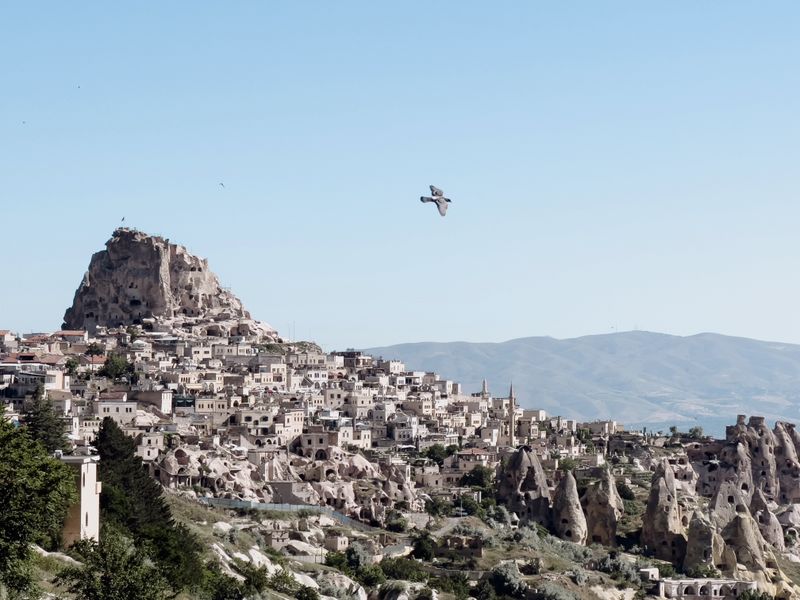
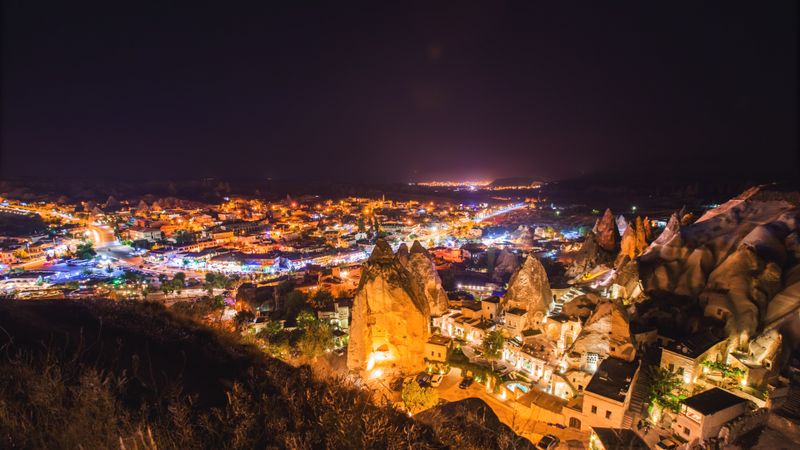
The default base and the heart of the action: Göreme is where the balloons launch, where most cave hotels and budget guesthouses cluster, and where the restaurants and tour agencies concentrate. It is the most convenient and the most social, but also the busiest and, in peak season, the noisiest. Stay here if it is your first visit and you want everything on your doorstep; look elsewhere if you want quiet evenings.
Uçhisar
A short drive uphill from Göreme, Uçhisar is built around its castle-rock and is the region’s highest point. It is quieter, more upmarket and home to some of Cappadocia’s finest boutique cave hotels, with sweeping valley views and the same easy access to the balloons. It is the choice for couples and slower travellers who will happily taxi the five minutes down to Göreme for dinner.
Ürgüp and Avanos
Ürgüp is the largest town for accommodation, a wine centre with more of a real-town feel and good mid-range hotels, about ten minutes from Göreme. Avanos, on the Red River, is the pottery town — clay has been worked here since Hittite times around 2000 BC — and makes a characterful, less touristy base with riverside restaurants . Both suit travellers who want a quieter night and do not mind a short hop to the balloon field.
The Hiking Valleys
You will not sleep in the valleys, but they are the reason to base nearby. Love and White Valleys link Göreme to Uçhisar in a 6–8 kilometre walk of 3–4 hours; Rose and Red Valleys glow at sunset; Pigeon Valley runs between Göreme and Uçhisar past cliff dovecotes . Choosing a base in Göreme or Uçhisar puts these trails on your doorstep, which is exactly the point.
Food and Drink: Pottery Kebabs and Volcanic Wine
Cappadocian cooking is hearty central-Anatolian fare built for a cold, high plateau, and it has two signature experiences you will not find elsewhere in Turkey: the testi kebab, a stew slow-cooked and sealed inside a clay pot that is cracked open at your table, and the local volcanic-soil wines made from grapes that grow almost nowhere else. Eat slowly, start the day with a sprawling Turkish breakfast, and leave room for the wine.

What to Order
- Testi kebab — lamb or beef slow-stewed in a sealed clay pot, cracked open tableside; the regional signature dish.
- Turkish breakfast (kahvaltı) — cheeses, olives, eggs, jams, honey and fresh bread, best on a cave-hotel terrace.
- Mantı — tiny Turkish dumplings in garlic yoghurt, a central-Anatolian staple.
- Gözleme — thin hand-rolled flatbread stuffed with cheese, spinach or potato, griddled to order.
- Pottery-pot desserts and local pekmez — grape-molasses sweets that nod to the region’s vineyards.
Where to Eat and Drink
Göreme has the densest run of restaurants, from terrace tourist spots to honest local lokantas; Uçhisar and Ürgüp hold the more refined cave restaurants. For wine, head to Ürgüp: the Turasan winery supplies a large share of Cappadocia’s wine and offers tastings in a rock-carved cellar, and the region’s signature white grape, Emir, grows almost exclusively on these volcanic, high-altitude soils .
Timing and Etiquette
The testi kebab usually must be ordered a few hours ahead because of the long slow cook, so call or order at lunch for dinner. Turkish tea (çay) is offered constantly and is part of the social fabric — accept it. Tipping is light: rounding up or 5–10% in a sit-down restaurant is plenty. Alcohol is available but more expensive than in coastal resorts, and some family restaurants do not serve it.
Cultural Sights: Cave Churches and Underground Cities
Cappadocia’s UNESCO listing — inscribed in 1985 — covers both the natural rock landscape and an astonishing density of human heritage carved into it, from frescoed Byzantine churches to multi-level underground cities . Two or three days of sightseeing barely scratches the surface; here are the sights no first-time visitor should miss.

Göreme Open-Air Museum
The single most important sight: a monastic complex of rock-cut churches, chapels and refectories carved between roughly the 10th and 12th centuries, many still vivid with Byzantine frescoes. The Dark Church (Karanlık Kilise), whose low light has preserved its colours, carries a small separate ticket and is worth it. A UNESCO-listed site, it sits a short walk or dolmuş ride from Göreme village and rewards a slow couple of hours .
Derinkuyu Underground City
The deepest of Cappadocia’s underground cities, Derinkuyu descends through eight visitable levels to roughly 85 metres and was carved to shelter as many as 20,000 people, complete with stables, wine presses, ventilation shafts and giant rolling-stone doors . The nearby Kaymaklı is shallower and wider, with four open levels reaching about 20 metres, and is the better choice if you are claustrophobic. Both are extraordinary; pick one unless you are a serious enthusiast.
Uçhisar Castle
The tallest fairy chimney in Cappadocia, a giant rock riddled with tunnels and chambers that served as a fortress and refuge. The climb to the top rewards you with the widest panorama in the region, taking in the valleys, the volcanoes on the horizon and Göreme below. Go at sunset for the best light, and combine it with a Pigeon Valley walk.
The Valleys and Viewpoints
Beyond the headline sights, the valleys are the soul of Cappadocia: Paşabağ (Monks Valley) with its mushroom-capped chimneys, Devrent (Imagination Valley) full of animal-shaped rocks, and the Göreme Panorama viewpoint for sunset. The Red Tour strings several of these together; on foot, the Love–White Valley walk between Göreme and Uçhisar is the classic .
Entertainment: Ballooning, Sunsets and After Dark
Cappadocia’s entertainment is unlike anywhere else: the headline act happens at dawn, in the air, and the evenings are about sunsets, valley views, and the occasional cave-bar or folklore show. This is not a nightlife destination — it is a sunrise-and-sunset one — and planning around the light is the whole game.
The Hot Air Balloon Flight
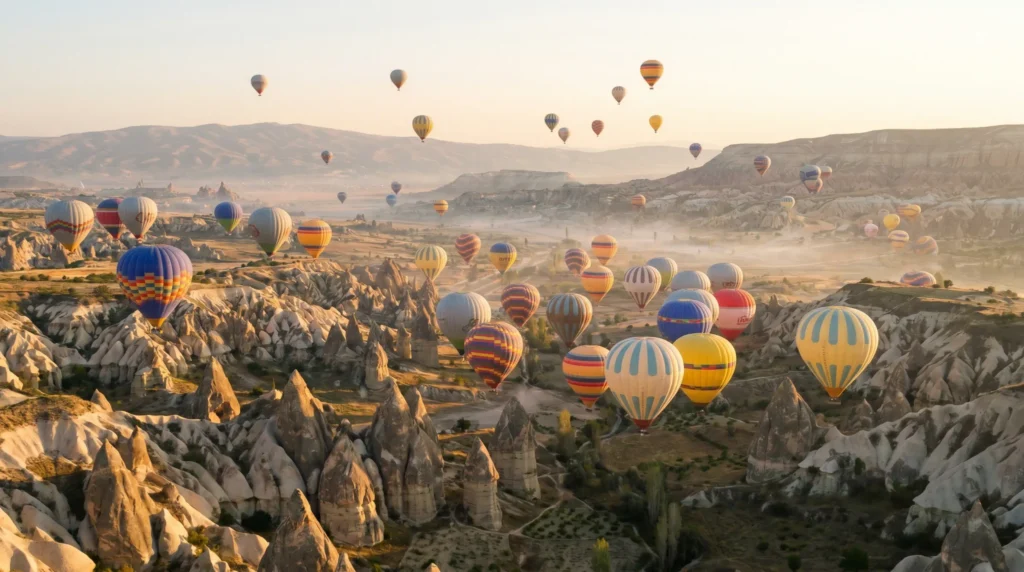
This is why most people come. Göreme is consistently ranked among the world’s top balloon-flight destinations, and on a clear morning more than a hundred balloons lift together at dawn over the fairy chimneys. Flights are licensed and safety-regulated, last about an hour, and must be booked with a certified operator; prices run roughly €150–300 per person depending on season and basket size, with peak months (May–June, September–October) at the top of that range . Flights are weather-dependent and cancelled often, so book for your first morning and keep a buffer day.
Sunset Hikes and Viewpoints
The free evening ritual is a sunset hike. The Göreme Panorama, the Red and Rose Valley ridge, and the top of Uçhisar Castle all glow at golden hour; Love Valley’s viewpoint is a short, flat 2–3 kilometre walk and free to enter at any hour . Bring a head torch for the walk back, and a glass of local wine if you are organised.
Cave Bars and Folklore Shows
After dark, Göreme has a handful of relaxed cave-bars and terrace lounges, and the region runs the classic Turkish-night dinner shows — whirling dervishes, folk dancing and belly dancing in a converted cave hall. These are touristy but genuinely fun in moderation; the dervish ceremony in particular is a serious spiritual tradition worth seeing once, ideally at a dedicated cultural venue rather than a dinner spectacle.
Day Trips From Cappadocia
Cappadocia’s headline sights are all within the region, but a few worthwhile excursions sit a little further out, and a car or a Green Tour opens them up. If you have more than two full days, give one to the southern valleys and underground cities.
Ihlara Valley
About 90 minutes south-west, the Ihlara Valley is a 16-kilometre canyon carved by the Melendiz River, around 120 metres deep, with cave churches cut into its walls and a shaded riverside trail . The popular short hike from the Ihlara entrance to Belisırma is about 3.5 kilometres and an easy 1–1.5 hours after the long staircase down. It is the green counterpoint to the dry fairy-chimney valleys and a Green Tour highlight.
Derinkuyu and Kaymaklı
The great underground cities lie south of Nevşehir, about 40 minutes from Göreme, and pair naturally with the Ihlara Valley on a single southern loop . Derinkuyu is the deepest, Kaymaklı the most spacious; together with the valley they make a full and varied day.
Avanos and the Red River
Closer to home, the pottery town of Avanos on the Kızılırmak — Turkey’s longest river entirely within the country — is a half-day trip. Watch a master throw clay on a kick-wheel, try it yourself, and walk the old town’s riverside streets .
Mount Erciyes
The snow-capped volcano that supplied the ash for Cappadocia’s rock, Erciyes rises to 3,917 metres near Kayseri and runs a ski resort in winter. It is more for the view and the contrast than a full day, but on the drive to or from Kayseri airport it frames the whole landscape.
When to Visit: A Season-by-Season Guide
Cappadocia’s high-desert climate and the all-important balloon weather make timing matter more than in most destinations. It bakes in summer, freezes in winter, and is at its glorious best in the shoulder seasons. Here is how the year actually feels on the ground.
Spring (March–May)
One of the two best windows: mild days, cool nights, blossom in the valleys and reliable balloon weather by April and May. It is also peak season, so book the cave hotels and the balloon well ahead. Early March can still be cold and grey with more flight cancellations, but late spring is close to ideal.
Summer (June–August)
Hot and busy. Afternoon highs climb past 30°C on the exposed plateau, and the midday sun is fierce with little shade in the valleys. Balloon mornings are the most reliable of the year, and the early starts and golden dawns are glorious — but plan hikes for early morning and late afternoon and treat the midday hours as downtime indoors.
Autumn (September–November)
The other sweet spot, and many travellers’ favourite: warm days, crisp mornings, golden light on the rock and excellent balloon weather through September and October. The summer crowds thin and prices ease into November, though late autumn brings the first risk of weather cancellations as the cold sets in.
Winter (December–February)
Cold, quiet and magical when it snows — the fairy chimneys under a dusting of white are unforgettable, and the cave hotels are cosy and cheap. The catch is the balloons: winter flights are frequently cancelled for wind and cold, so budget extra buffer days and treat any flight as a bonus rather than a certainty.
Budget Breakdown: What Cappadocia Actually Costs
Cappadocia is excellent value by European standards, with the one big exception of the balloon flight, which can equal several days of other spending. The figures below are per-person daily estimates excluding flights and the balloon, in US dollars, based on 2025–2026 prices.
Backpacker ($35–55/day)
A hostel dorm or basic guesthouse bed runs $12–25; lokanta meals and street food keep food to $10–18; the valleys are free to hike and the dolmuş is a few lira a hop. Add one paid sight a day and you stay comfortably under $55, before the balloon.
Mid-Range ($90–160/day)
A genuine cave room runs $60–120 for a double (more in peak season); add $25–40 for restaurant meals, a day tour and the occasional taxi. This is the typical comfortable-traveller band, and where most visitors land.
Luxury ($300+/day)
A boutique cave suite in Uçhisar runs $250–500+, fine cave-restaurant dining and private guides add $100–200, and premium experiences push the day well past $300 — before the balloon, which adds another $180–300 per person.
Key Fixed Costs
- Hot air balloon flight — about €150–300 per person, season-dependent
- Göreme Open-Air Museum — entry plus a separate Dark Church ticket
- Underground city (Derinkuyu or Kaymaklı) — modest single entry
- Red or Green day tour with lunch — about €35–55
- Bottled water — about ₺5–10 for 1.5 litres
Practical Tips and Safety
Cappadocia is a safe, easy, welcoming region for visitors, but the high-desert environment and the early starts call for a few specific habits. None of this is alarming — it is the ordinary common sense of a remote, high-altitude rural destination.
Money and Payments
Turkey uses the lira (TRY); the rate has been volatile, recently around ₺46 to the US dollar, so check before you travel and carry some cash for dolmuş fares, village shops and tips . Cards are accepted at hotels, tour agencies and larger restaurants; ATMs are in the towns. Many balloon operators and tours quote in euros or dollars.
Safety and Altitude
Violent crime is rare and Cappadocia is very safe for travellers; the realistic risks are sunburn, dehydration and twisted ankles on unmarked valley trails. The plateau sits near 1,000 metres, so the sun is strong — carry water, sunscreen and a hat. Wear proper shoes for the rocky trails, and tell your hotel your hiking plan if you head out alone .
Health and Water
Tap water is officially treated and safe, but locals prefer cheap bottled water for taste, and it is sensible for short-stay visitors to do the same . Pharmacies (eczane) are well stocked in the towns. Carry travel insurance; the nearest full hospitals are in Nevşehir and Kayseri.
Practical Essentials
- Visa: US/UK/EU/Canada visa-free 90/180; others apply at evisa.gov.tr before arrival .
- Plugs: Type C/F, 230V — bring an EU adapter.
- Tipping: light; round up or 5–10% in restaurants.
- Dress: modest cover for mosques; layers for cold dawns and underground cities.
- Connectivity: a local Turkish eSIM gives the cheapest data; hotel Wi-Fi is widespread.
Frequently Asked Questions
How many days do you need in Cappadocia?
Three full days is the sweet spot: one for the balloon flight and the Göreme Open-Air Museum, one for an underground city and the southern valleys, and one for hiking the valleys and a sunset at Uçhisar. Two days covers the essentials in a rush; the extra day buys you a vital weather buffer for the balloon.
What is the best time of year to visit Cappadocia?
Late September to October and late April to May offer the best balance of mild weather, golden light, reliable balloon flights and manageable crowds. Summer is hot and busy but has the most reliable balloon mornings; winter is cold, cheap and beautiful in snow but suffers frequent flight cancellations.
How much does the hot air balloon ride cost, and is it worth it?
Flights run roughly €150–300 per person depending on season and basket size, peaking May–June and September–October. It is the headline experience of the region and, for most visitors, worth every euro — just book a licensed operator and keep a buffer day in case of weather cancellation.
Where should I stay in Cappadocia?
Göreme is the convenient, social default and closest to the balloons; Uçhisar is quieter and more upmarket with the best views; Ürgüp and Avanos suit travellers wanting a real-town feel and a calmer night. For a first visit, book a genuine cave room in Göreme or a boutique cave hotel in Uçhisar.
Do I need a car in Cappadocia?
Not necessarily. A car is the most efficient way to reach the underground cities and Ihlara Valley, but a first-timer can manage well with one Red Tour, one Green Tour, the dolmuş minibus for the main villages, and their own feet for the valleys. Rent a car only if you want independence and the best light.
Do I need a visa to visit Cappadocia?
Cappadocia follows Turkey’s national rules. Citizens of the US, UK, EU and Canada are visa-free for up to 90 days in any 180; other nationalities apply online at evisa.gov.tr before travel, as walk-up visa-on-arrival windows no longer exist .
How deep are the underground cities?
Derinkuyu, the deepest, descends through eight visitable levels to about 85 metres and once sheltered as many as 20,000 people; Kaymaklı is shallower and wider at about 20 metres across four open levels . Choose Kaymaklı if you are claustrophobic, Derinkuyu for the deeper experience.
Is Cappadocia safe for tourists?
Yes, very. Violent crime is rare and the region is welcoming and easy. The realistic risks are sun, dehydration and unmarked trails rather than crime; carry water, wear proper shoes and a hat, and bring layers for cold dawns and the chilly underground cities.
What food is Cappadocia famous for?
The signature dish is testi kebab, a meat stew slow-cooked and sealed inside a clay pot that is cracked open at your table. The region is also known for its volcanic-soil wines — the Emir white grape grows almost exclusively here — and for sprawling Turkish breakfasts on cave-hotel terraces.
Was This Guide Helpful?
We update our Cappadocia guide as prices, transit and balloon operators change. Let us know if it helped — your feedback shapes the next revision.
Ready to Experience Cappadocia? Get Up Before Dawn
Cappadocia rewards the early riser. Its landscape is world-class at any hour, but the magic is at the edges of the day — the balloon launch in the cold blue light, the frescoed cave churches, the valleys glowing amber at sunset, a glass of Emir wine on a cave terrace as the last balloons land. Book the flight, sleep in the rock, and walk the valleys slowly. For the wider picture, see our Turkey travel guide, and pair Cappadocia with Istanbul for the classic Turkey loop.
Explore More City Guides
Cappadocia is one stop in our growing library of Turkish and eastern-Mediterranean guides. Keep planning with these companion pages:
More city guides you might like
Plan your trip to Cappadocia
The booking tools we use ourselves. FFU may earn a commission at no extra cost to you.
Plan & book your trip to Cappadocia
Booking through these searches supports our guides at no extra cost to you.